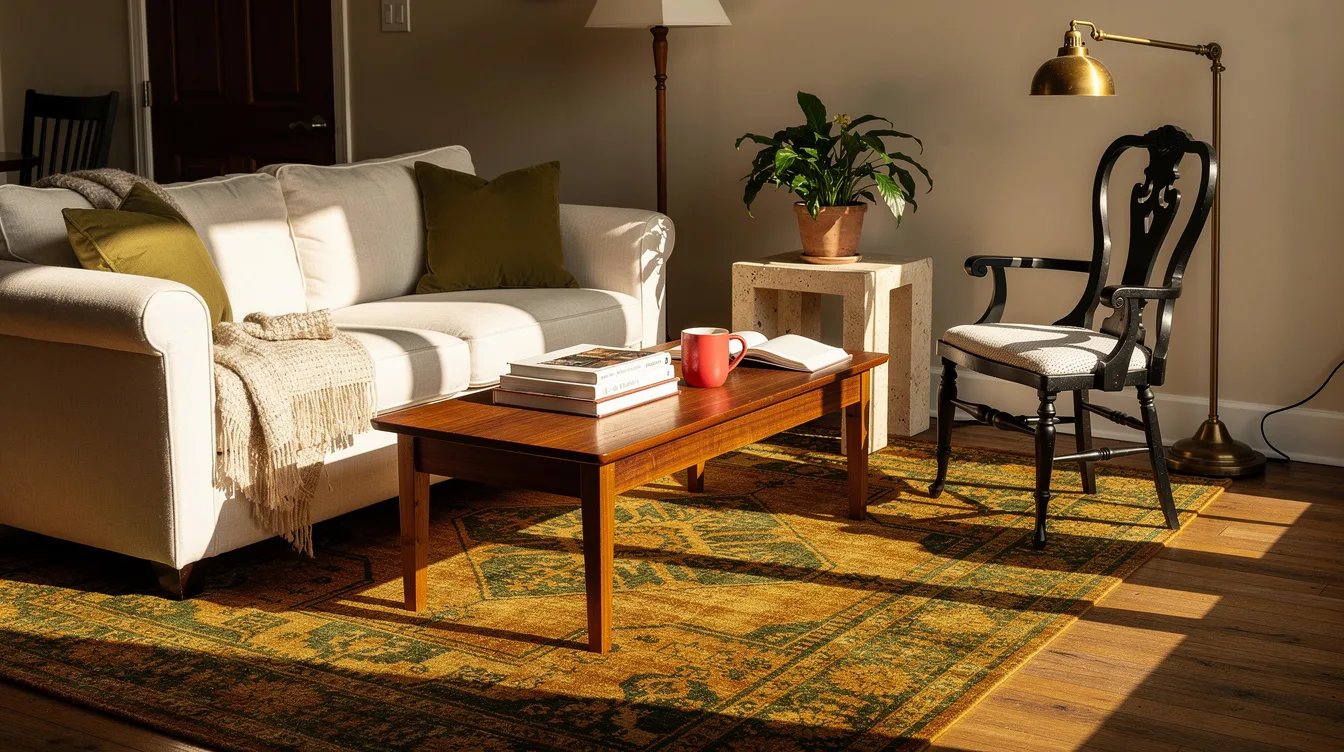
12 Designer Tricks That Make Mismatched Furniture Look Intentional
30 august 2026A room can go sideways fast when a honey-oak dresser lands beside a black metal lamp and a cream sofa, especially when every piece has a different story. The fix is not buying a matching set: use a roughly 70% compatible, 30% contrast formula so the room keeps its character without losing its rhythm.
We’re firmly on the side of layered rooms with richer wood, stone, metal, and tactile upholstery. A collected look needs rules you can actually see from across the room.
What you will find inside
- Choose One Quiet Anchor Piece
- Limit the Room to One Color Family
- Commit to a Main Wood Direction
- Repeat One Metal Finish
- Match the Scale Before the Style
- Use Unequal Side Tables on Purpose
- Bridge Eras With Stone and Glass
- Create a Fabric Story
- Keep Shape Language Consistent
- Add One Piece With Visible Age
- Use Lighting to Tie the Room Together
- Edit the Gaps Between Pieces
Choose One Quiet Anchor Piece
Give the room one large, visually calm foundation, such as a cream linen sofa, a warm-ivory bed, or a simple oak dining table. It should carry the biggest visual weight without demanding attention.
Then let the smaller pieces disagree a little. A low modern sofa can handle an antique chair, a carved stool, and a contemporary lamp because its plain upholstery gives the eye somewhere to rest.
Limit the Room to One Color Family
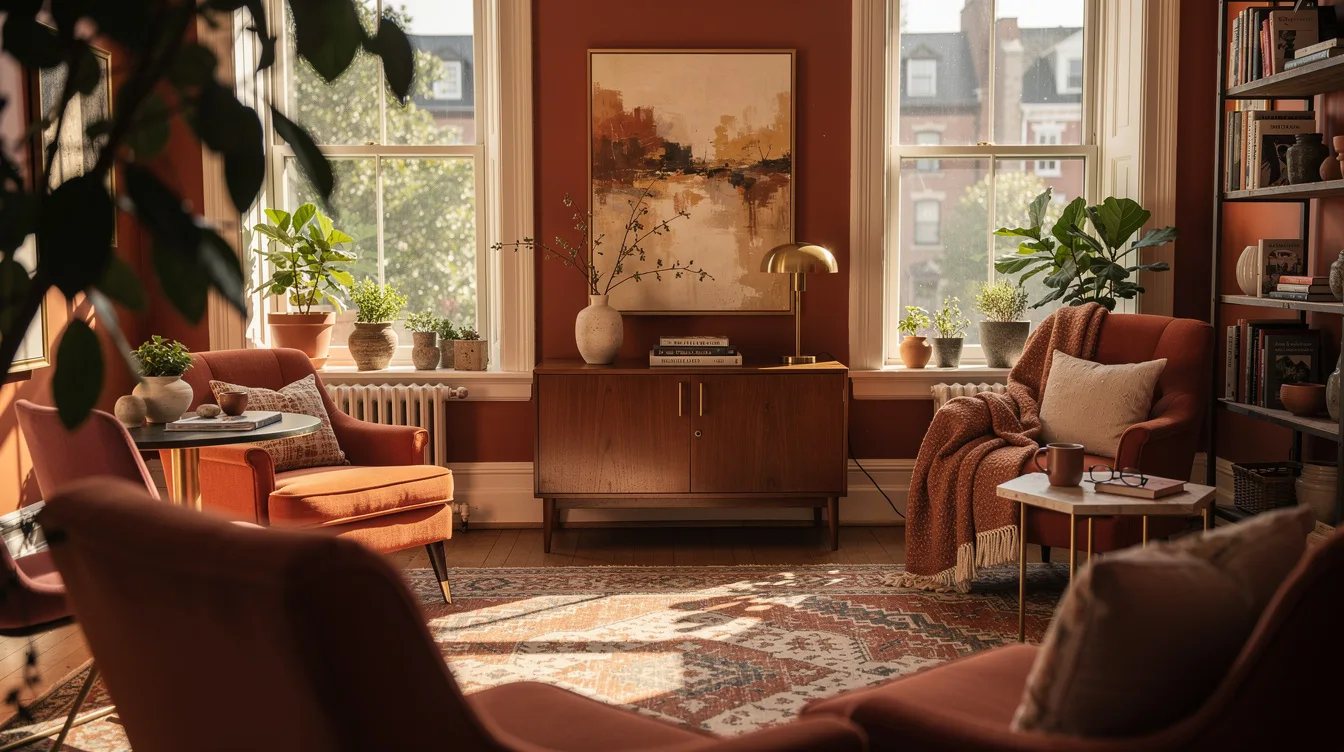
Pick a family before moving furniture: warm white and tobacco, faded blue and walnut, olive and black, or oxblood with cream. These colors do more unifying work than matching silhouettes ever could.
Repeat each major color at least twice through pillows, art, a rug border, or a painted chair. Black-painted wood is particularly useful because it can connect old furniture to newer pieces without making the room feel themed.
Commit to a Main Wood Direction
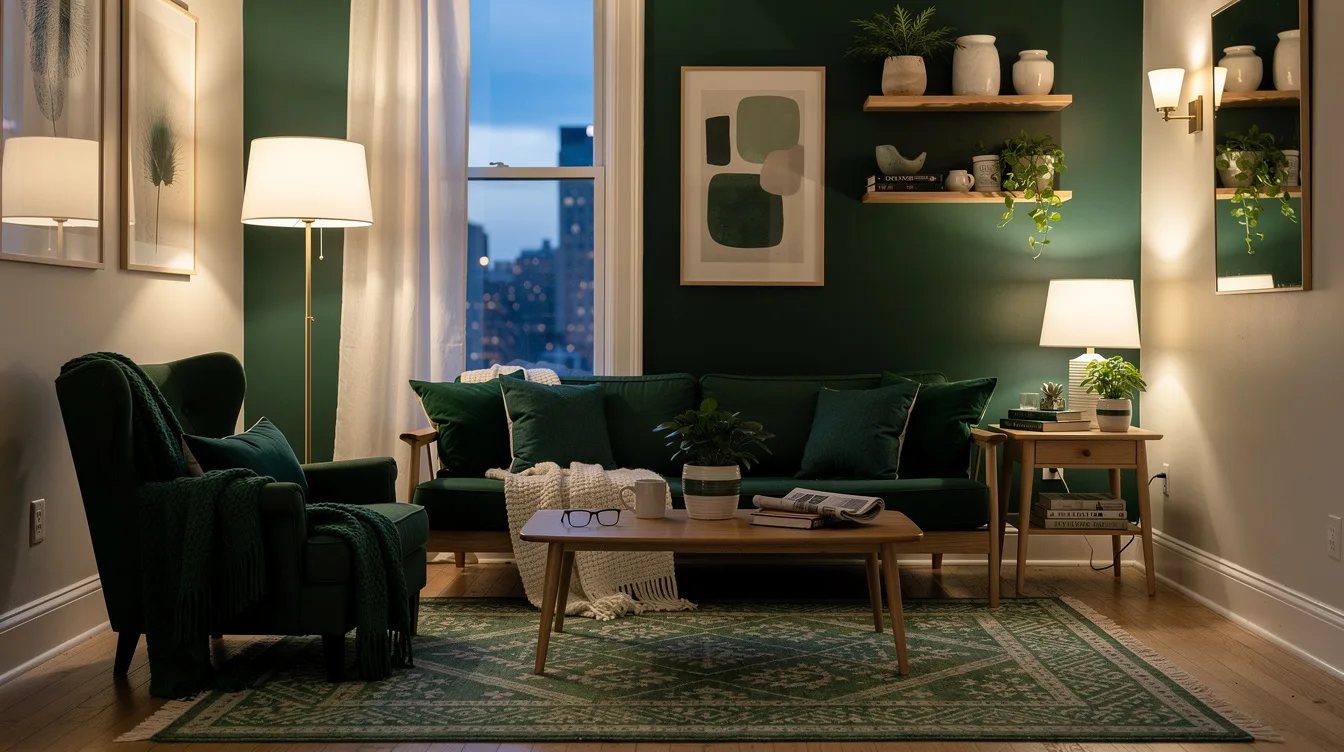
Random brown furniture is the fastest route to a room that feels accidental. Choose a dominant direction, mostly walnut and teak or mostly oak and pine, then allow one darker or lighter interruption.
A walnut coffee table works beautifully with a pale oak cabinet when the walnut shows up again in a frame, tray, or chair leg. Keep the undertones consistent, warm with warm, rather than trying to make every stain identical.
Repeat One Metal Finish
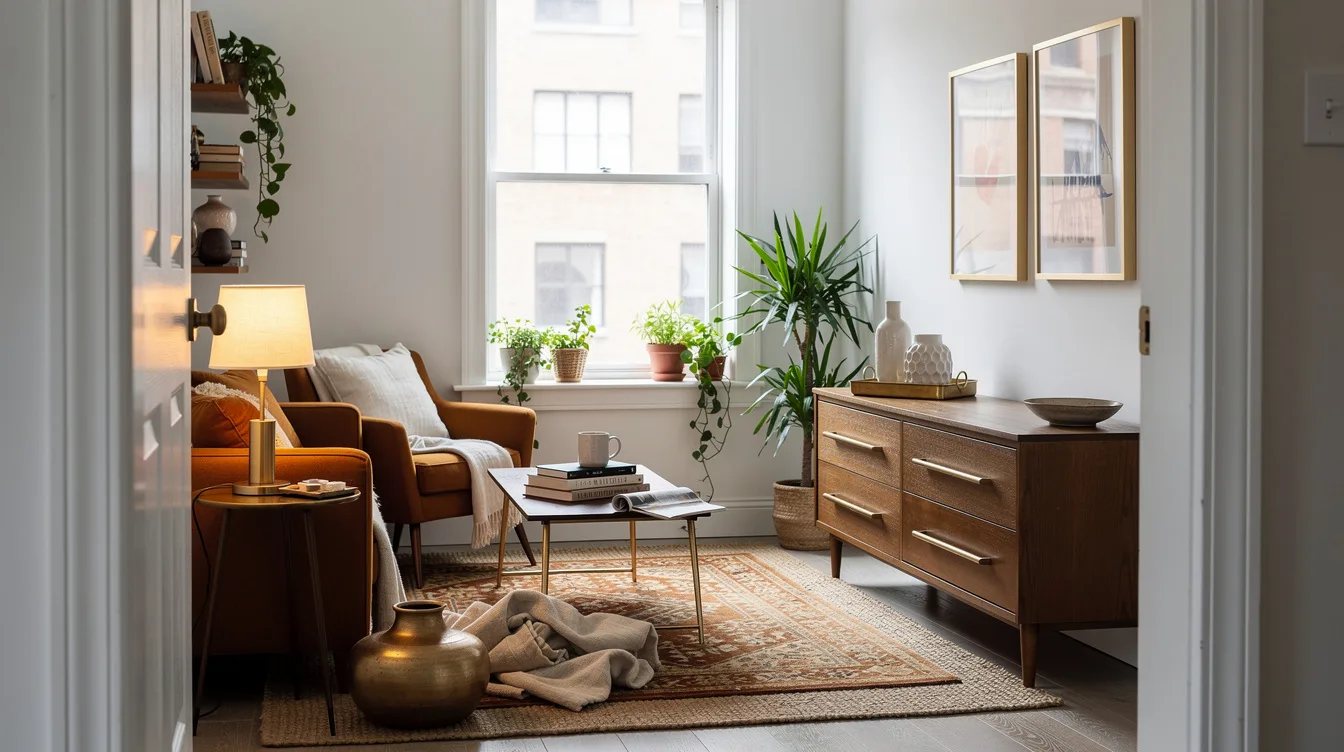
Use one metal as the room’s punctuation mark. Aged brass, blackened steel, chrome, or nickel can appear on lamps, cabinet pulls, picture frames, and a small table base.
Mixed metals can work, but only when one clearly leads. Let aged brass appear in several places, then use a single black steel accent instead of scattering four finishes around the room.
Match the Scale Before the Style
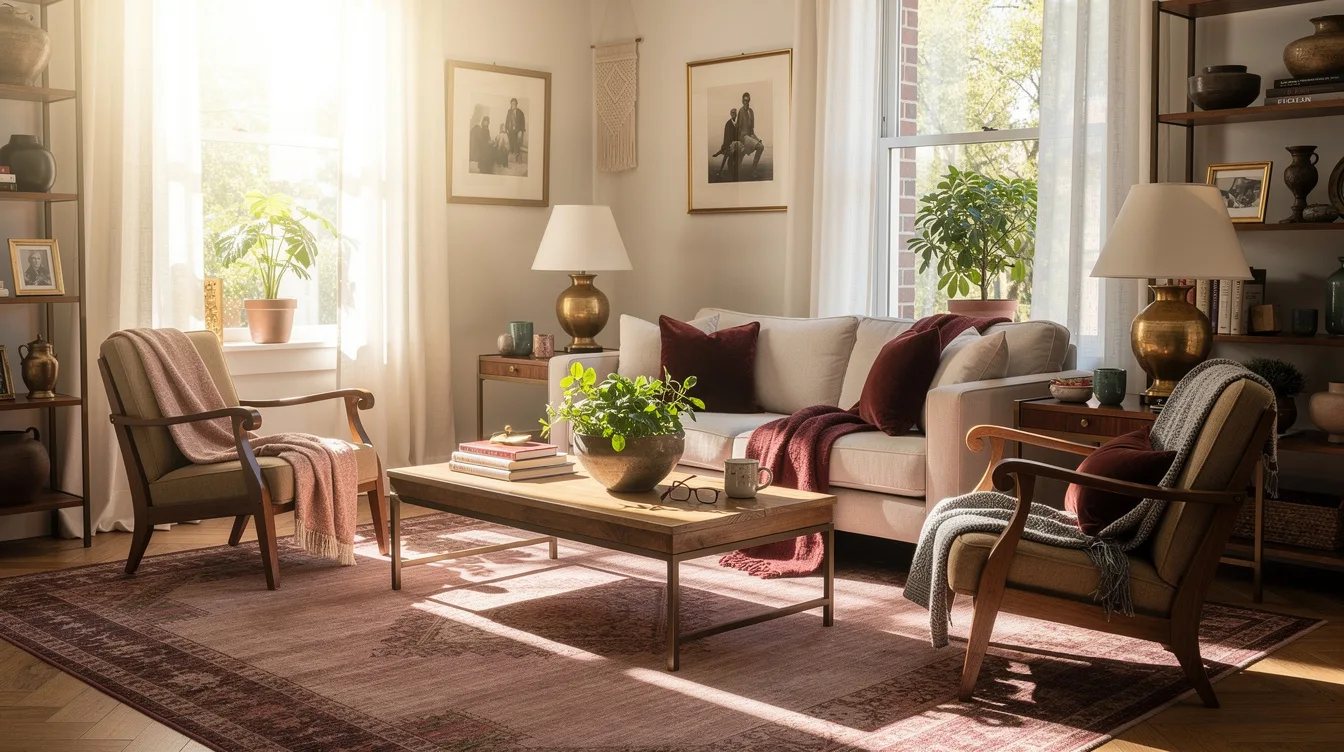
Furniture from different decades belongs together when its proportions make sense. A delicate spindle chair disappears beside an oversized sectional, while a bulky club chair can overwhelm a slim-legged table.
Keep chair backs, table heights, and visual mass in the same general neighborhood. Next to a 90-inch sofa, a coffee table around 50 to 60 inches wide usually feels more convincing than a tiny accent table stranded in the middle.
Use Unequal Side Tables on Purpose
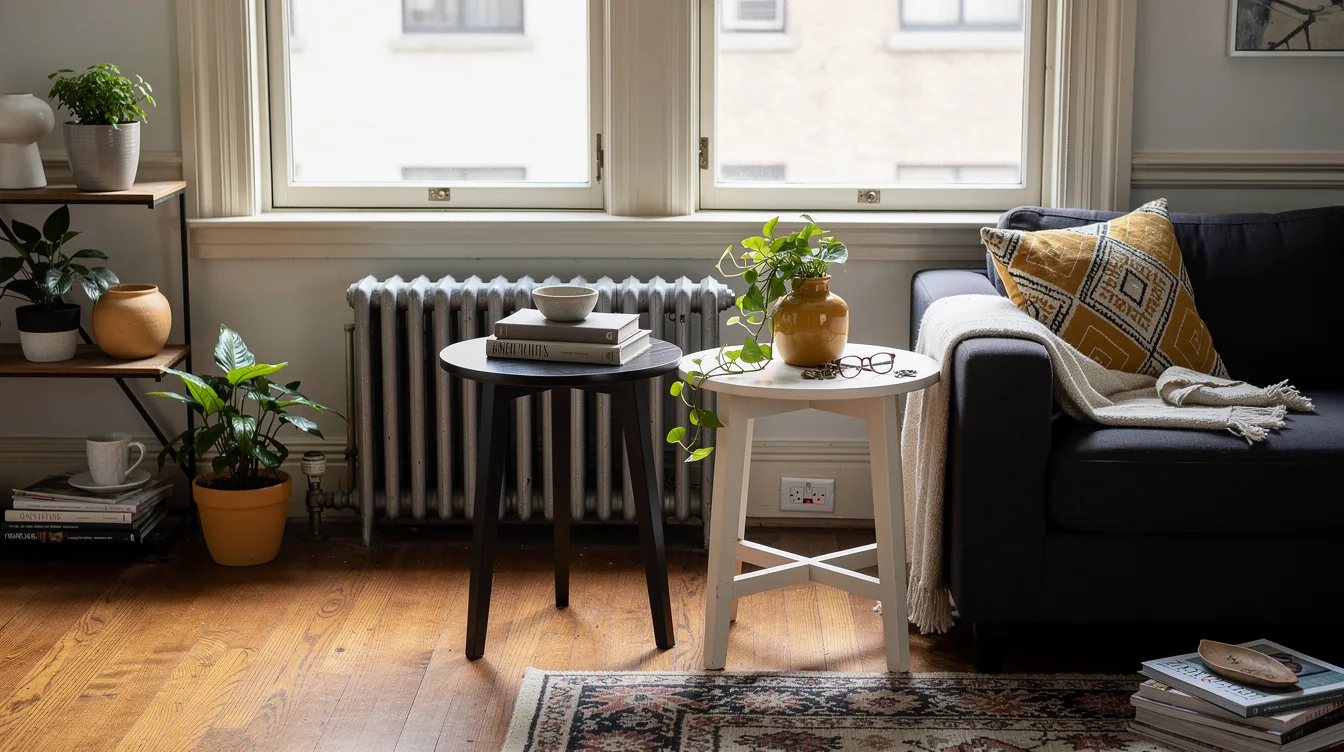
Skip the matched pair beside the sofa. Pair a round table roughly 16 to 20 inches wide on one side with a narrower 12- to 16-inch drink table, pedestal, or small antique chest on the other.
Make their relationship visible through one shared detail: similar height, a repeated lamp finish, or the same dark wood note. Smoked glass is a smart choice when the room already has several wood tones and needs visual breathing room.
Bridge Eras With Stone and Glass
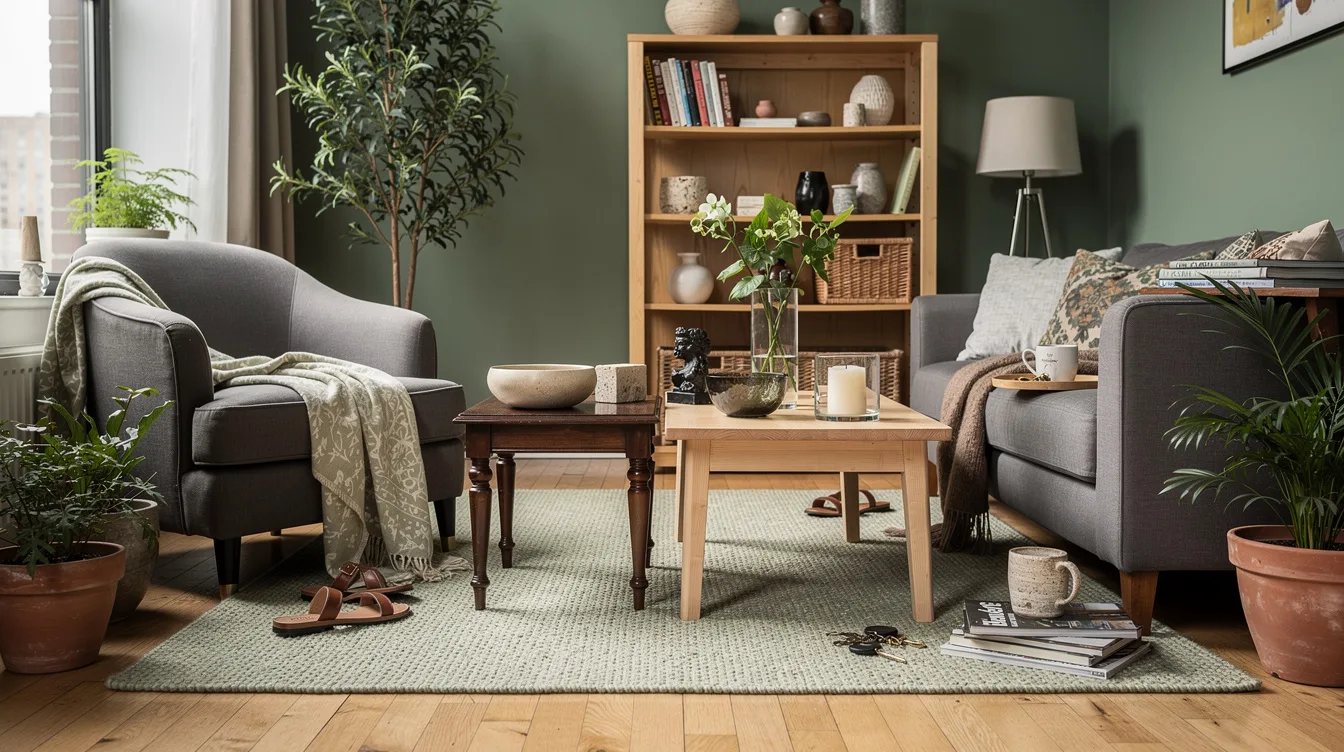
Stone and glass help very different furniture stop arguing. A travertine tabletop can connect a vintage wood chair to a newer upholstered sofa because it introduces texture without another competing stain.
Glass does the same job with less visual weight. Use it when a room has inherited wood furniture, a modern cabinet, and no appetite for adding yet another brown surface.
Create a Fabric Story
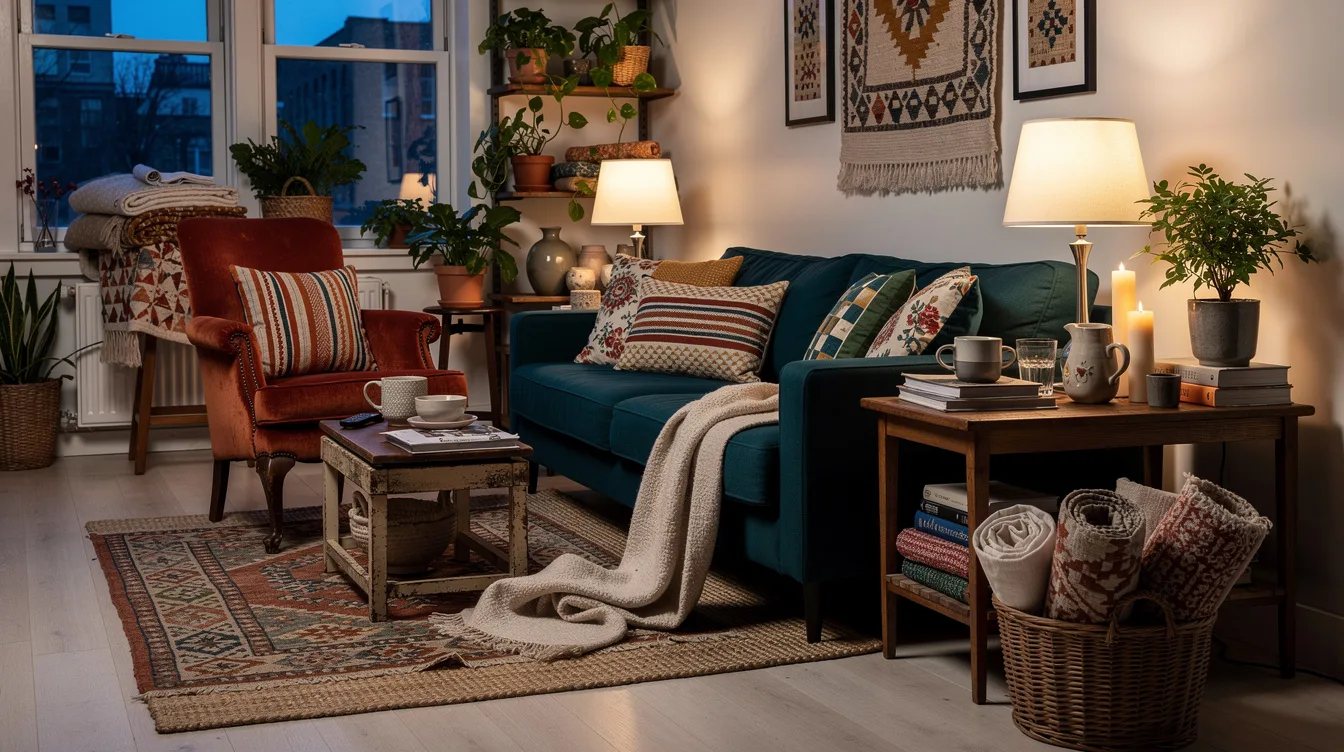
Choose two related upholstery textures and repeat them across the room. Linen with cotton canvas feels relaxed; bouclé with leather feels richer; velvet can bring depth to plain oak and painted furniture.
A tobacco leather chair earns its place beside a contemporary fabric sofa when the room also includes a brown throw, warm wood, or a framed sepia print. Fabric is often the most forgiving way to make different eras feel social.
Keep Shape Language Consistent
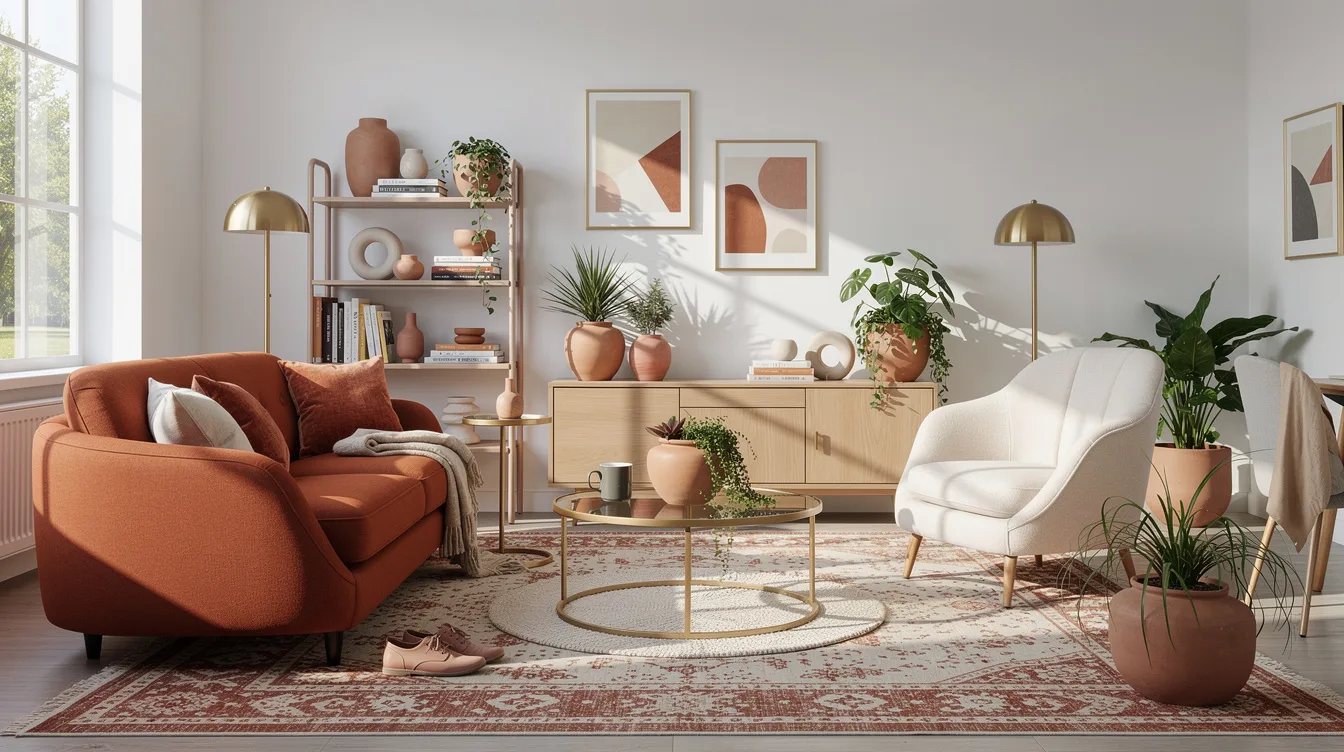
Decide whether the room leans soft and rounded or clean and rectilinear. You can mix periods freely when the silhouettes keep returning to the same basic language.
Rounded chairs, a drum table, and an arched lamp make a handsome group even if none came from the same store. For a sharper room, use squared arms, straight-backed chairs, and a rectangular oak console to keep the composition disciplined.
Add One Piece With Visible Age
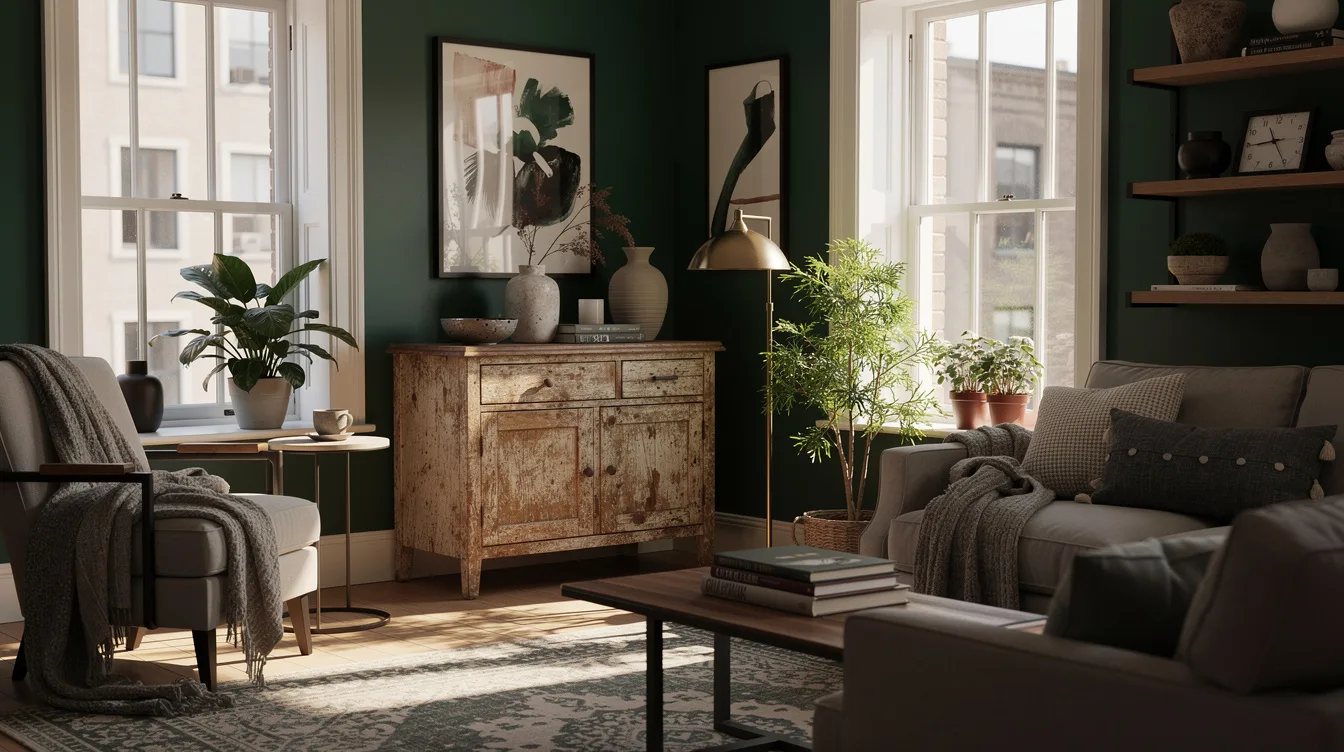
A collected room needs evidence that everything was not purchased in one afternoon. Bring in one piece with honest wear: a rubbed wood stool, old brass frame, painted cabinet, or handwoven basket.
Keep it meaningful, not cluttered. A single vintage-style mirror with a worn frame has more authority than five small faux-antique accessories lined along a shelf.
Use Lighting to Tie the Room Together
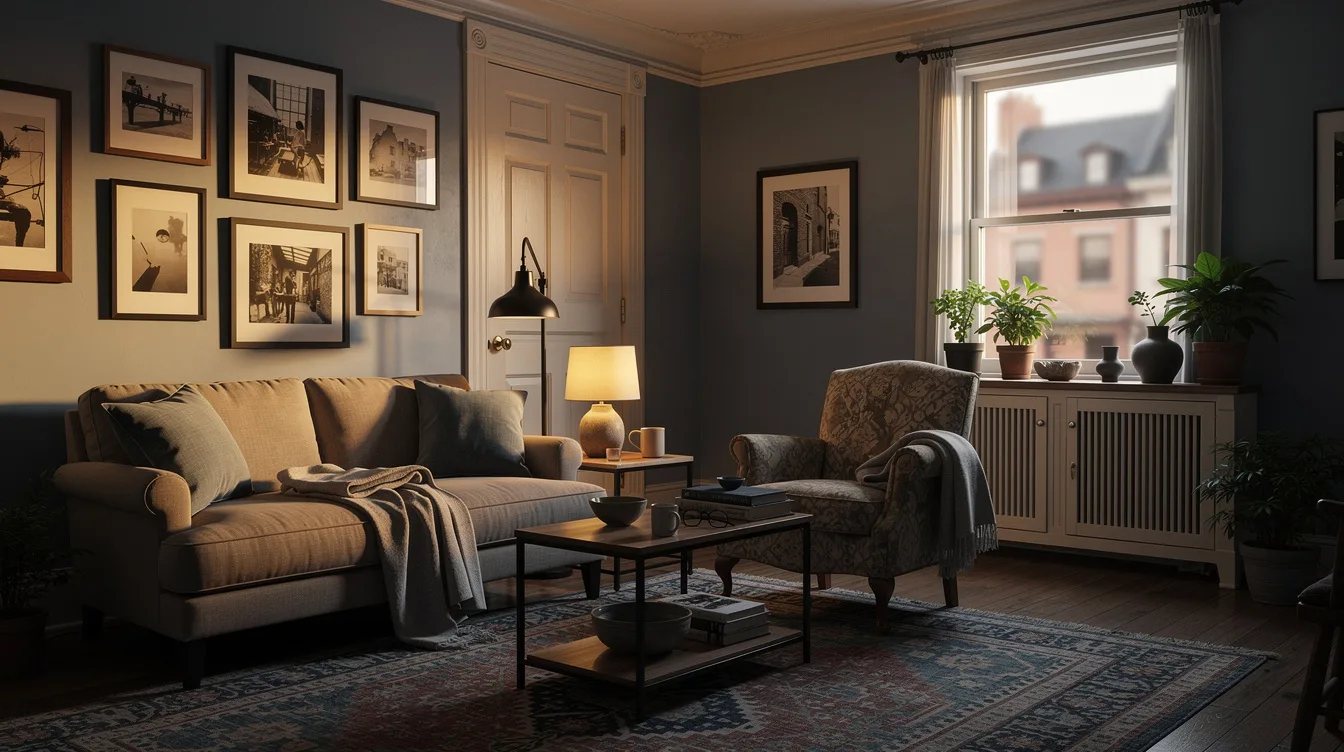
Lamps are the quiet diplomats of mismatched furniture. Repeat a finish or shade material across the room, then let bases vary in shape, from ceramic to brass to dark wood.
An IKEA SINNERLIG lantern, typically about $40 depending on size and availability, can add natural fiber to a room with metal and wood furniture. Place it where it echoes another woven element rather than treating it as a lonely accent.
Edit the Gaps Between Pieces
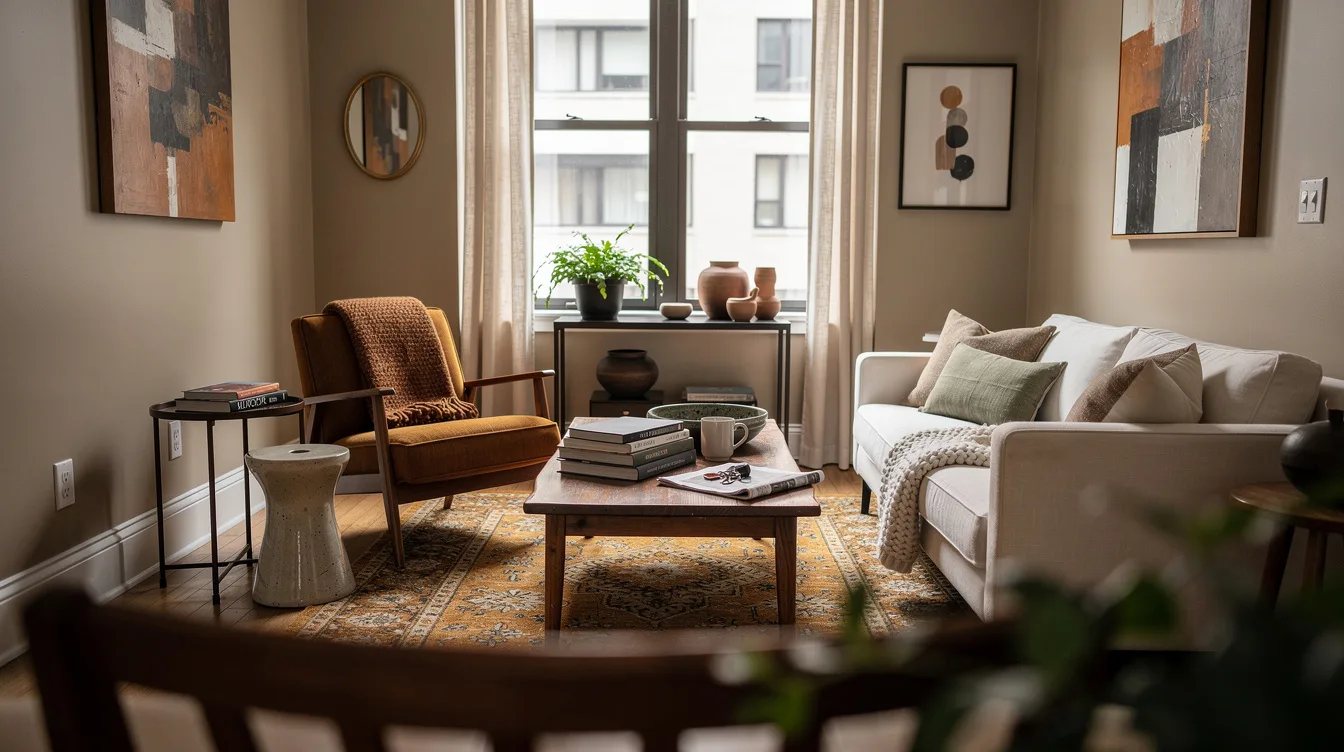
Collected does not mean packed. Leave enough floor visible around the major furniture so each piece reads as intentional, especially when woods, eras, and silhouettes differ.
Start by pulling the coffee table about 14 to 18 inches from the sofa, then remove any small table that has no job. A long, low IKEA STOCKHOLM walnut-veneer coffee table, typically around $450, can anchor a seating arrangement more effectively than several disconnected little surfaces.
Keep reading
- 12 Designer Curtain Tricks That Make Bedroom Ceilings Look Taller
- 12 Curtain Tricks That Make Small Rooms Look Instantly Taller
- 12 Designer-Approved Curtain Tricks That Make Small Rooms Feel Taller
Start with the largest neutral piece, then choose one wood direction and one metal finish before adding anything else. That small set of limits gives your most personal, unexpected furniture room to look deliberate.