12 Designer-Approved Curtain Tricks That Make Small Rooms Feel Taller
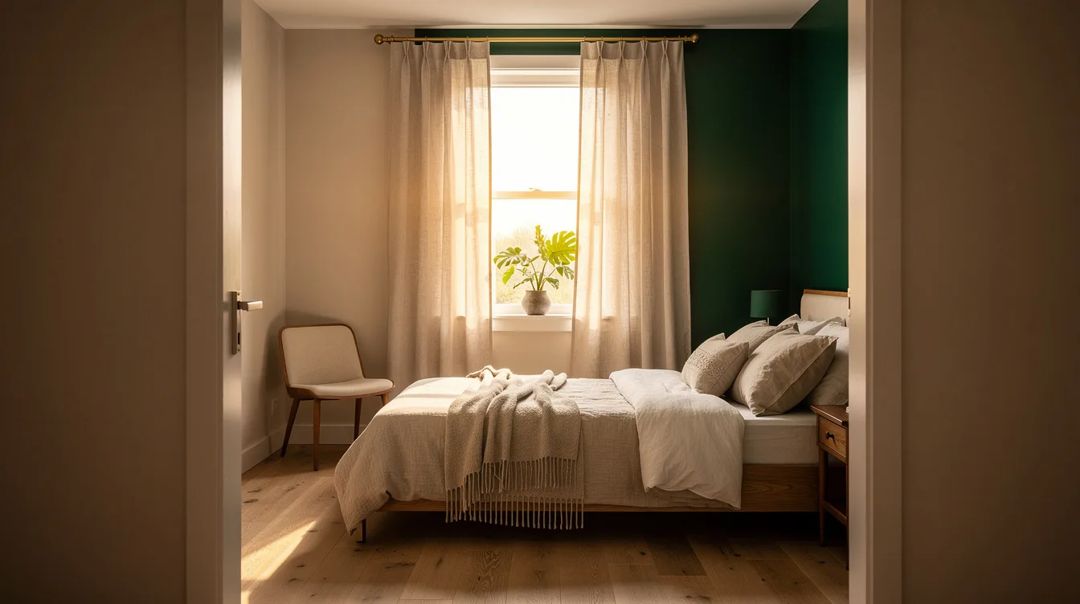
18 august 2026I once installed 84-inch curtains over a 54-inch-wide bedroom window and wondered why the room still felt squat. The rod sat just above the trim, leaving a plain strip of wall that visually pressed down on the whole space.
Then I moved the hardware near the ceiling and used floor-length panels. The window suddenly looked wider, the ceiling felt higher, and the fix cost far less than changing the room itself.
Start With the Entire Wall
I stopped treating a window as a small rectangle that needed dressing. The rod belongs to the wall, and that shift makes a compact room feel far less chopped up.
In my own small rental, the moment I raised the fabric line, the ceiling felt present again. A ceiling-height curtain gives the eye one long route from floor to top wall.
Raise the Rod Near the Ceiling
Mount the rod at least roughly 4 to 6 inches above the frame, then go higher when there is open wall above it. Halfway to the ceiling or directly below crown molding usually gives the strongest result.
With an 8-foot ceiling, a 96-inch panel often only works with a low rod. I plan around 108-inch panels when the hardware sits close to the ceiling.
Measure From Rod to Floor
Window height is a distraction when you are shopping. Measure from the proposed rod location to the floor, because that is the length the room will actually show.
Ready-made curtains commonly come in roughly 63-, 84-, 96-, 108-, and 120-inch lengths. Choose the next workable length and hem it, rather than accepting a short curtain panel that stops above the floor.
Let the Hem Kiss the Floor
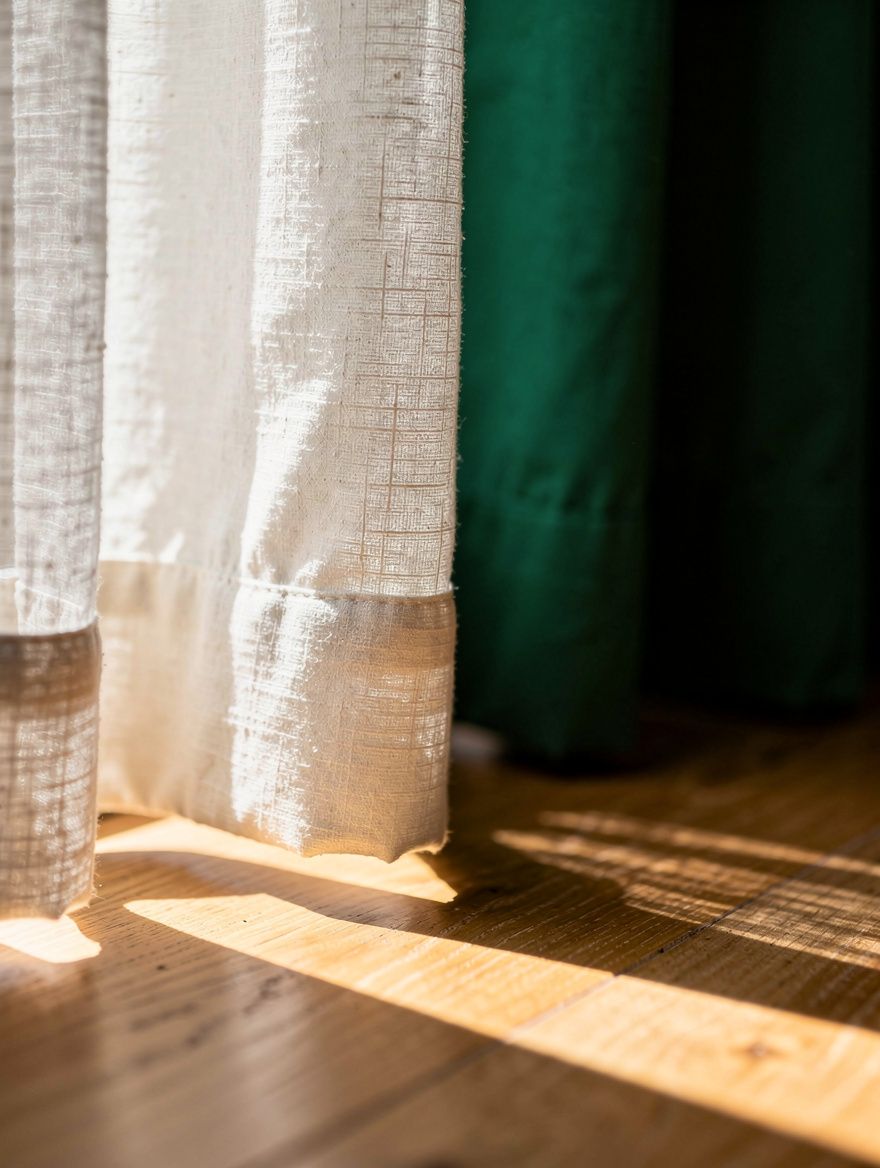
My favorite finish is fabric that barely touches the floor or hovers roughly half an inch above it. That clean vertical drop looks intentional and keeps everyday vacuuming reasonable.
Panels that land at the sill make even a generous window look undersized. Save a puddled linen drape for a spacious, low-traffic room, not a tight bedroom where the excess fabric becomes visual clutter.
Push the Rod Beyond the Frame
Extend the rod roughly 8 to 12 inches past each side of the frame. When the panels are open, they should rest mostly on wall, leaving the glass free for daylight.
A 36-inch window can look right on a rod around 52 to 60 inches wide. That extra span makes the window opening read wider without changing a single piece of glass.
Keep Hardware Visually Thin
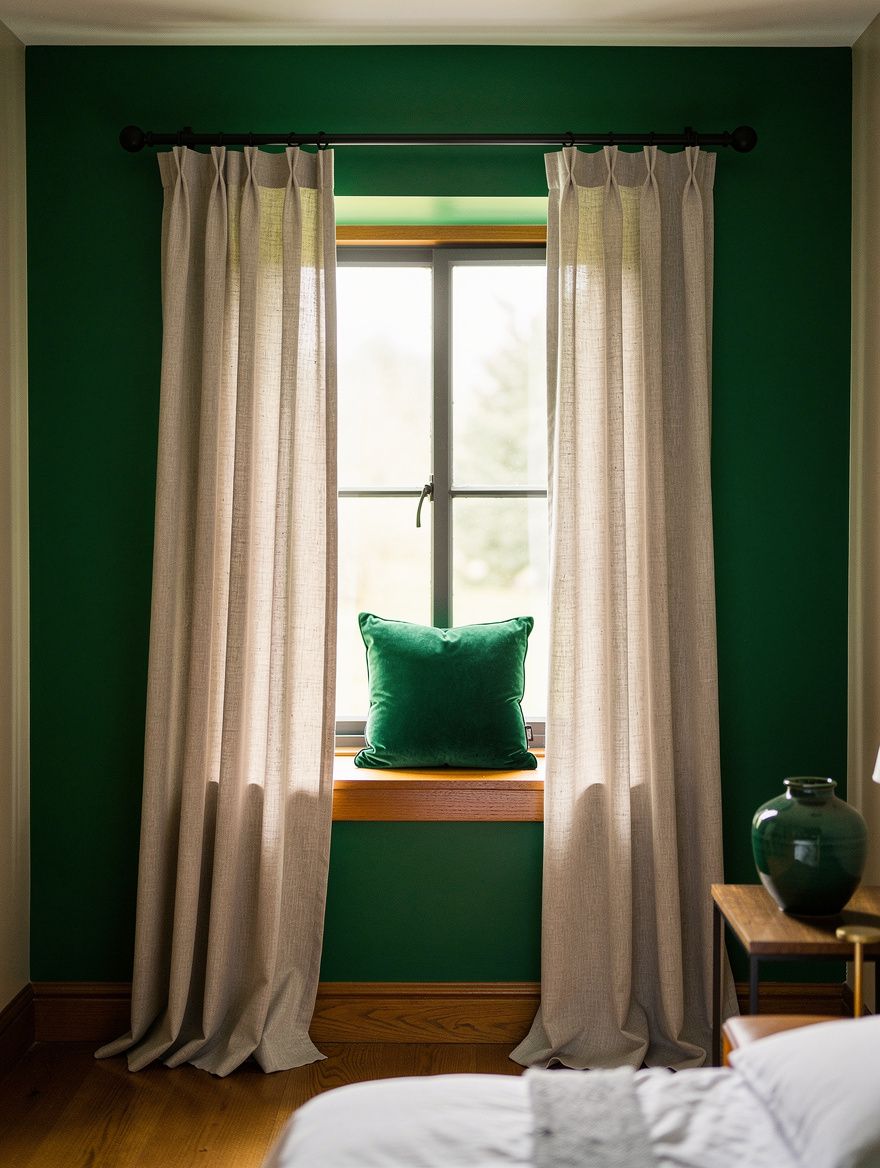
A thick decorative rod draws a dark horizontal line exactly where a small room does not need one. I prefer a slim finish that blends with the wall, or a restrained warm brass or matte black rod.
Matte black hardware works especially well when it repeats a lamp base or picture frame nearby. Let it be a quiet outline, not the main event over the window.
Choose Low-Contrast Fabric
Off-white, flax, oatmeal, pale greige, and a close wall match all help fabric feel like part of the architecture. High-contrast curtains can split a narrow wall into blocks and make the ceiling seem lower.
I reach for linen-blend panels because their texture has life without demanding attention. IKEA and Target both make the accessible end of this look easy to try before committing to custom work.
Use a Fine Vertical Stripe
A narrow, low-contrast vertical stripe can add height without turning the window into a costume. The stripe should disappear from across the room and reveal itself only when you get closer.
Skip bold cabana bands and broad horizontal patterns. A soft vertical stripe supports the upward line you built with the rod, while loud contrast interrupts it.
Pick Tailored Headings
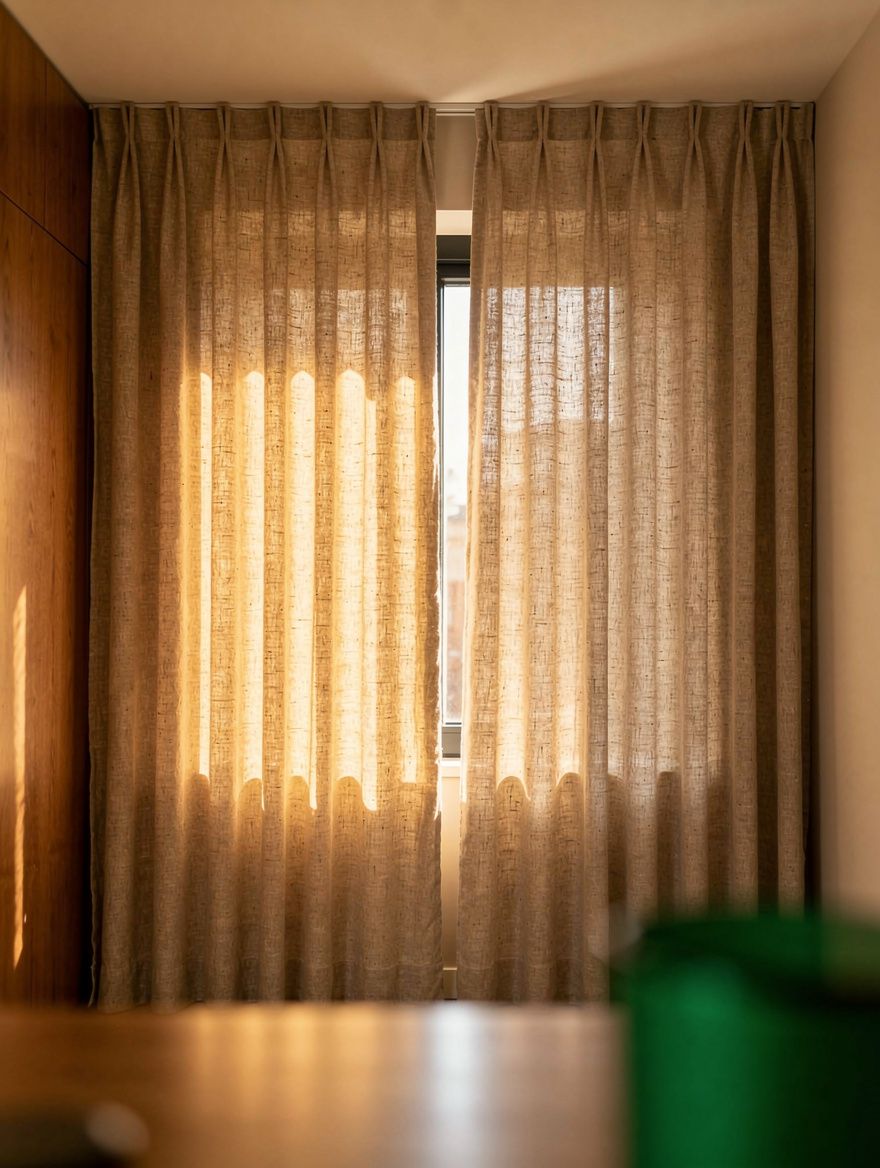
Pinch pleats and back tabs create vertical folds that look calmer than oversized grommets. Grommets are practical, but their repeated metal circles form a strong horizontal row at the top of the window.
For a polished ready-made option, I would choose pinch-pleat curtains from Wayfair or Amazon before adding elaborate tiebacks. The heading does more for the room than extra ornament ever will.
Control Fullness Before You Order
Use roughly 1.5 times the rod width in total fabric for a compact room. That gives enough fold for softness without creating a bulky stack on either side of the glass.
About twice the rod width feels fuller and more formal, but it can swallow precious wall space. A 50-inch-wide panel is useful only after you calculate how much fabric will remain visible when it is open.
Layer Sheers With Blackout Panels
A sheer layer keeps daylight moving through a small bedroom, while outer blackout panels handle privacy and sleep. The pair looks richer when both layers run from near the ceiling to the floor.
Keep the sheer close to the wall color and make the outer fabric similarly quiet. A blackout curtain in pale greige gives function without turning a small room into a dark box during the day.
Cover an Awkward Wall on Purpose
When a narrow bedroom has one undersized or off-center window, cover most of that wall with full-height fabric. The room begins to read as one generous window wall instead of an apology for awkward architecture.
On a roughly 10-foot wall, a 120-inch track with four 50-inch panels creates around 1.67 times fullness. A ceiling-mounted track is the clean answer when there is almost no space above the window frame.
Begin with rod height before you buy fabric: mark the highest practical position with painter's tape, then measure straight down to the floor. That one measurement prevents the short-panel mistake that makes small rooms feel smaller.