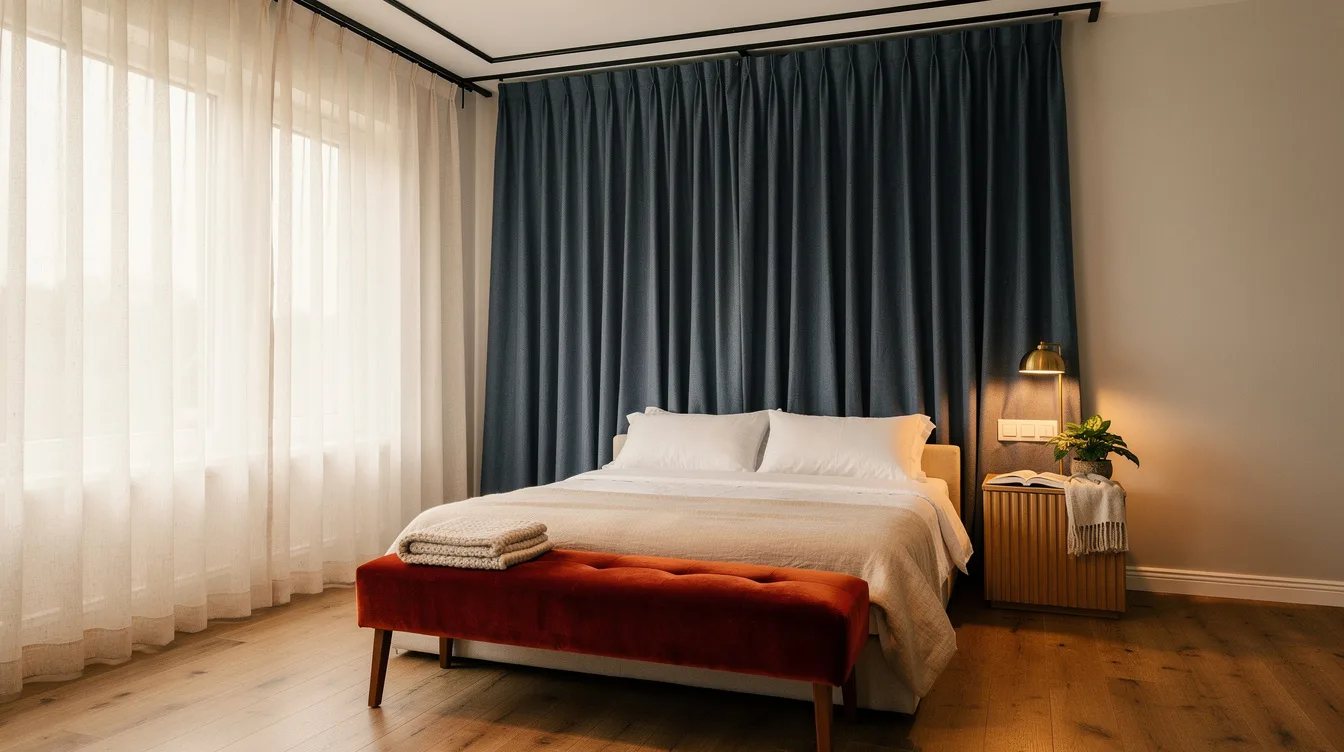
12 Designer Curtain Tricks That Make Bedroom Ceilings Look Taller
19 august 2026I once measured a bedroom window that was only 54 inches wide beneath an eight-foot ceiling, and the standard rod made the whole wall feel oddly squat. The fix was not expensive art or a new bed: it was drapery that started high, landed cleanly, and claimed more of the wall.
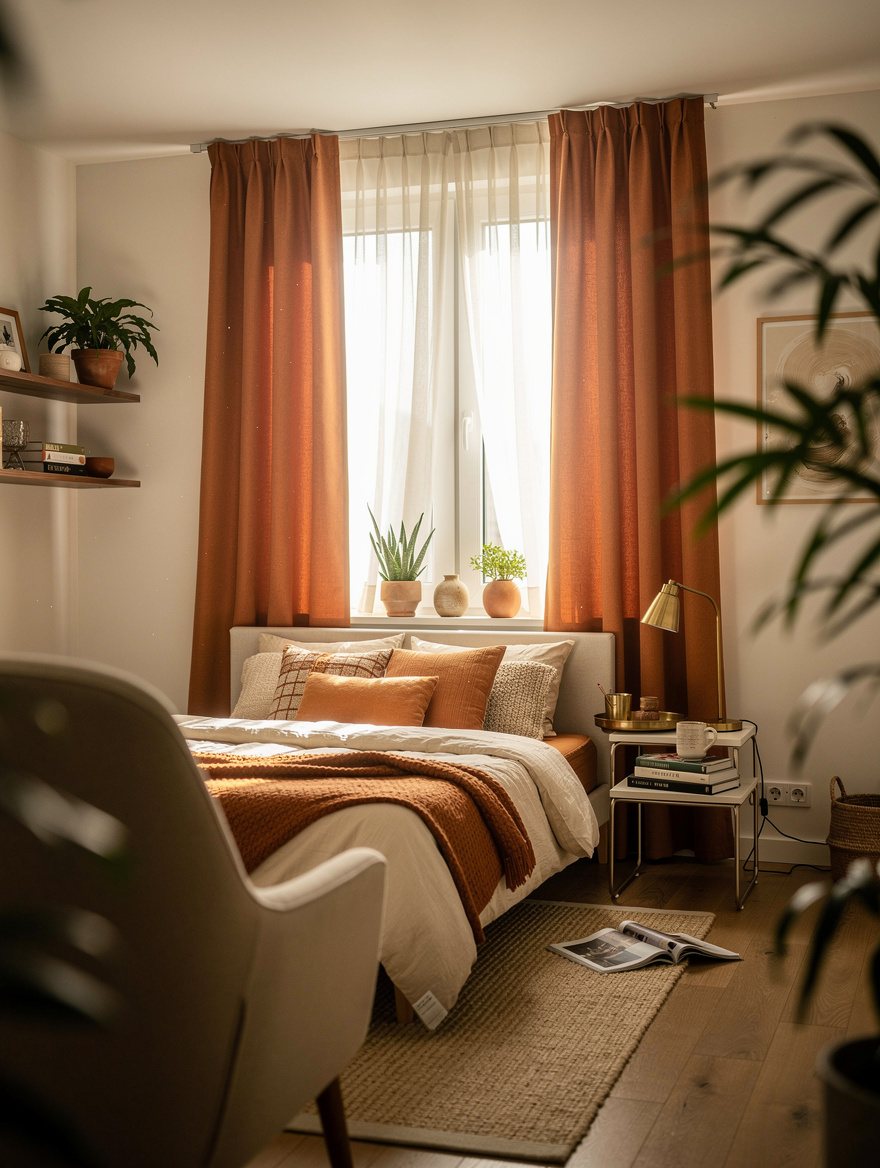
Designers treat curtains as architecture in a small bedroom. Give the fabric a continuous vertical route and the eye follows it upward.
What you will find inside
- Mount a Track at the Ceiling
- Let Panels Hover Above the Floor
- Push the Track Beyond the Window
- Cover the Entire Window Wall
- Layer Sheers Behind Blackout Panels
- Match Curtains to the Wall Color
- Choose Wave Folds Over Eyelets
- Calculate Fullness From the Track
- Hide Hardware Inside a Ceiling Pocket
- Use Taller Ready-Made Panels
- Keep the Track Projection Generous
- Skip Shiny Fabric and Busy Prints
Mount a Track at the Ceiling
Install a slim ceiling-mounted curtain track about 1 to 3 centimeters below the ceiling. That tiny gap disappears from normal view, while a rod mounted over the window leaves a horizontal break that cuts the wall short.
This is the most dependable height-making move in the entire room. A simple track from IKEA, Home Depot, or Wayfair can look far more custom than an ornate rod hung at the wrong height.
Let Panels Hover Above the Floor
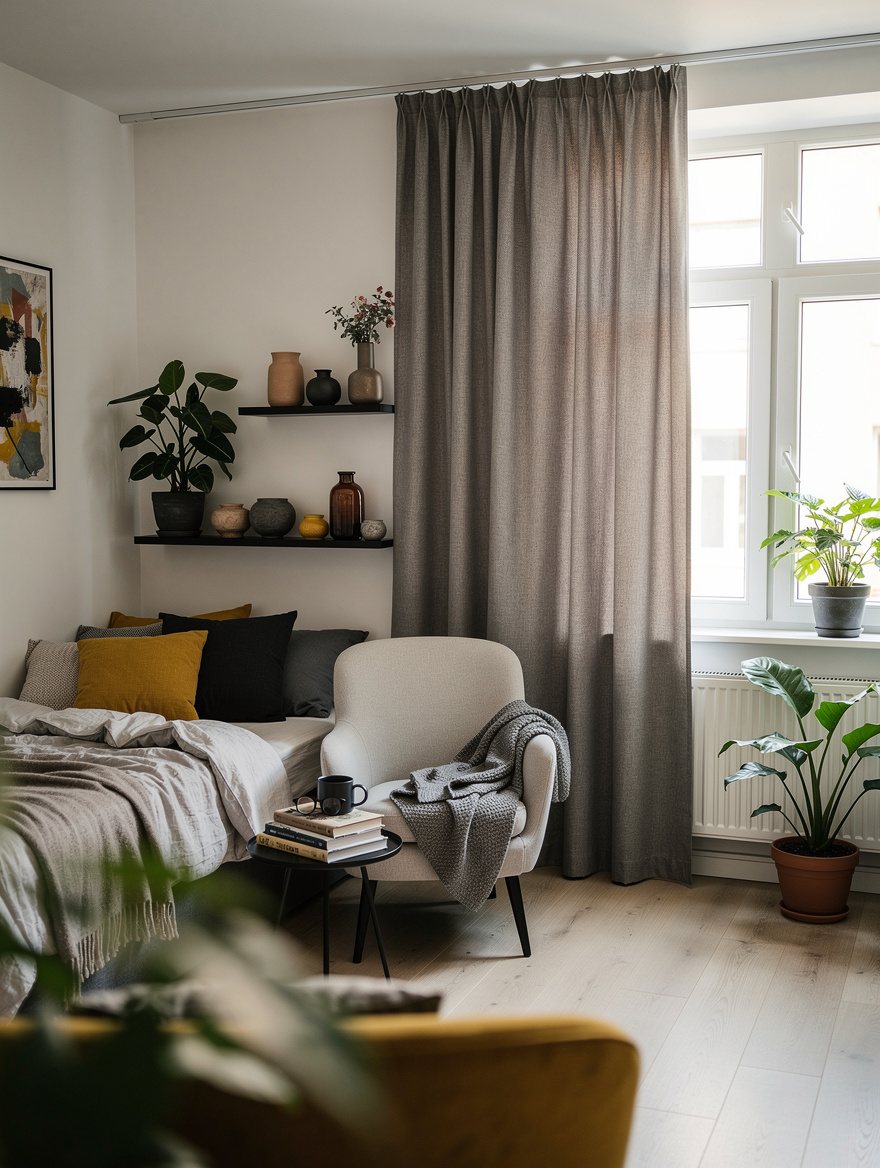
Order or hem panels so they stop roughly 1 centimeter above the floor. That clean hover makes the line feel intentional and keeps hems from collecting dust beside the bed.
A 2- to 4-centimeter puddle can suit a formal, low-traffic room, but I would skip it in a bedroom used every day. Linen-blend drapery looks sharper when it falls in one uninterrupted column.
Push the Track Beyond the Window
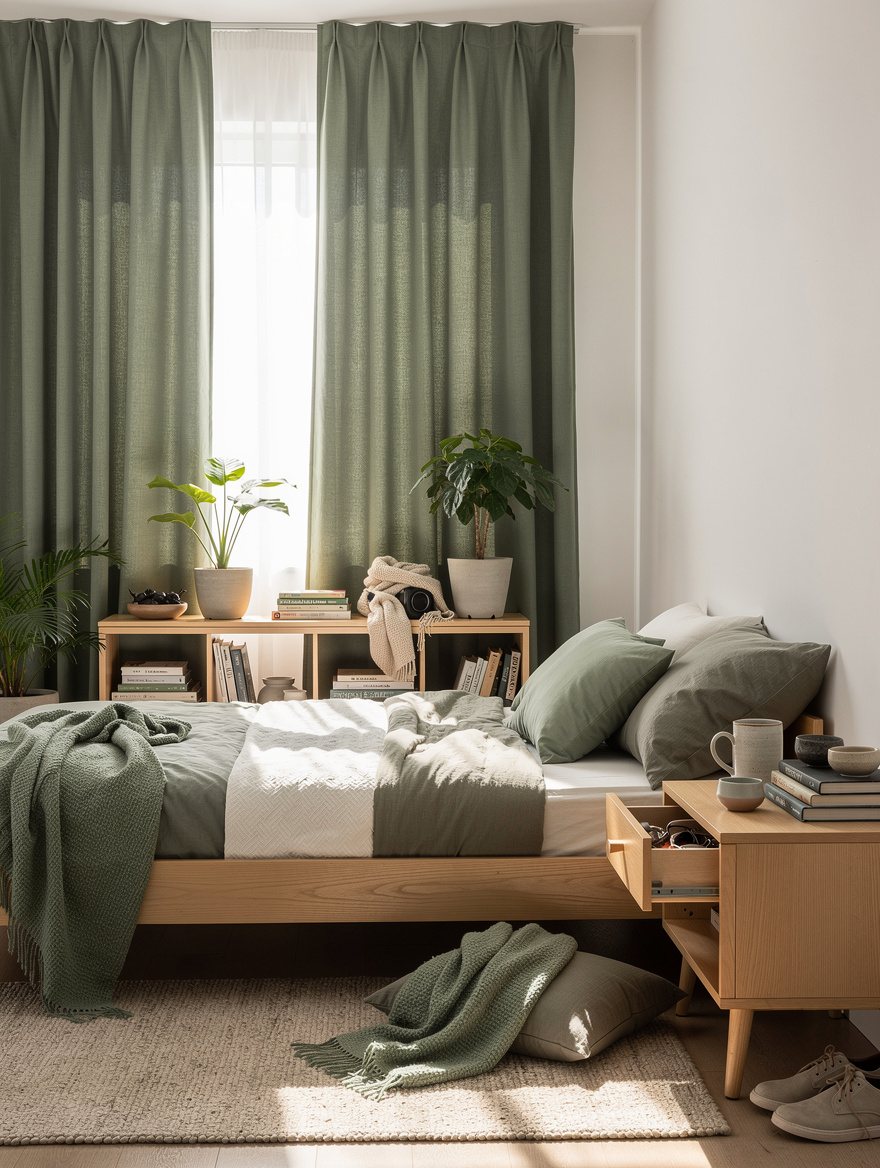
Extend the track about 20 to 30 centimeters past each side of the window, with wall-to-wall coverage as the stronger choice when the layout allows it. The extra width makes the glass read larger and the surrounding wall read taller.
For a 140-centimeter-wide window, a roughly 200- to 240-centimeter track is a practical minimum. When panels stack outside the glass, they stop stealing daylight and stop framing the window like a small picture.
Cover the Entire Window Wall
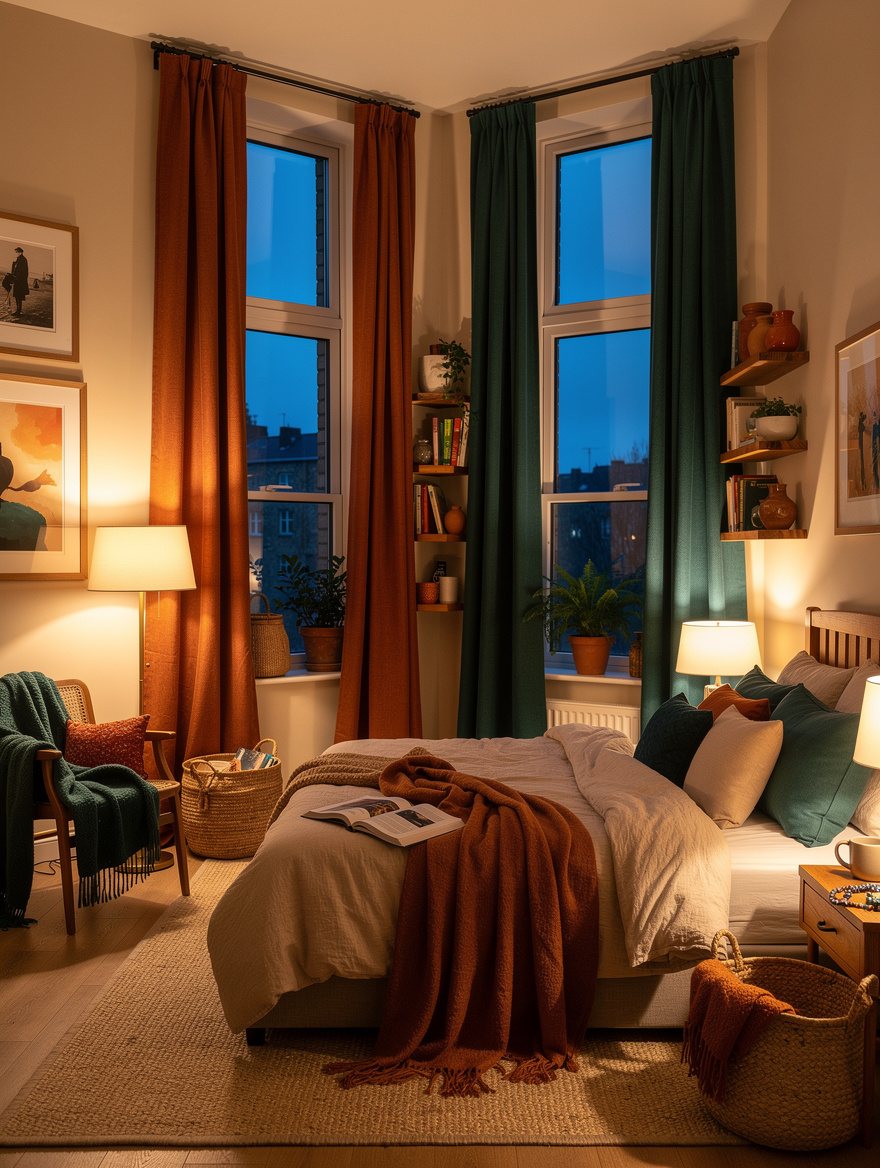
Run wall-to-wall curtains across a window wall, even when the window sits off center. This move turns an awkward opening into a calm backdrop and removes the temptation to center every piece of furniture on the glass.
Use a quiet fabric that relates to the wall, then let the bed sit confidently in front of the composition. The effect feels especially convincing with dark wood furniture, where a narrow set of curtains can otherwise look timid.
Layer Sheers Behind Blackout Panels
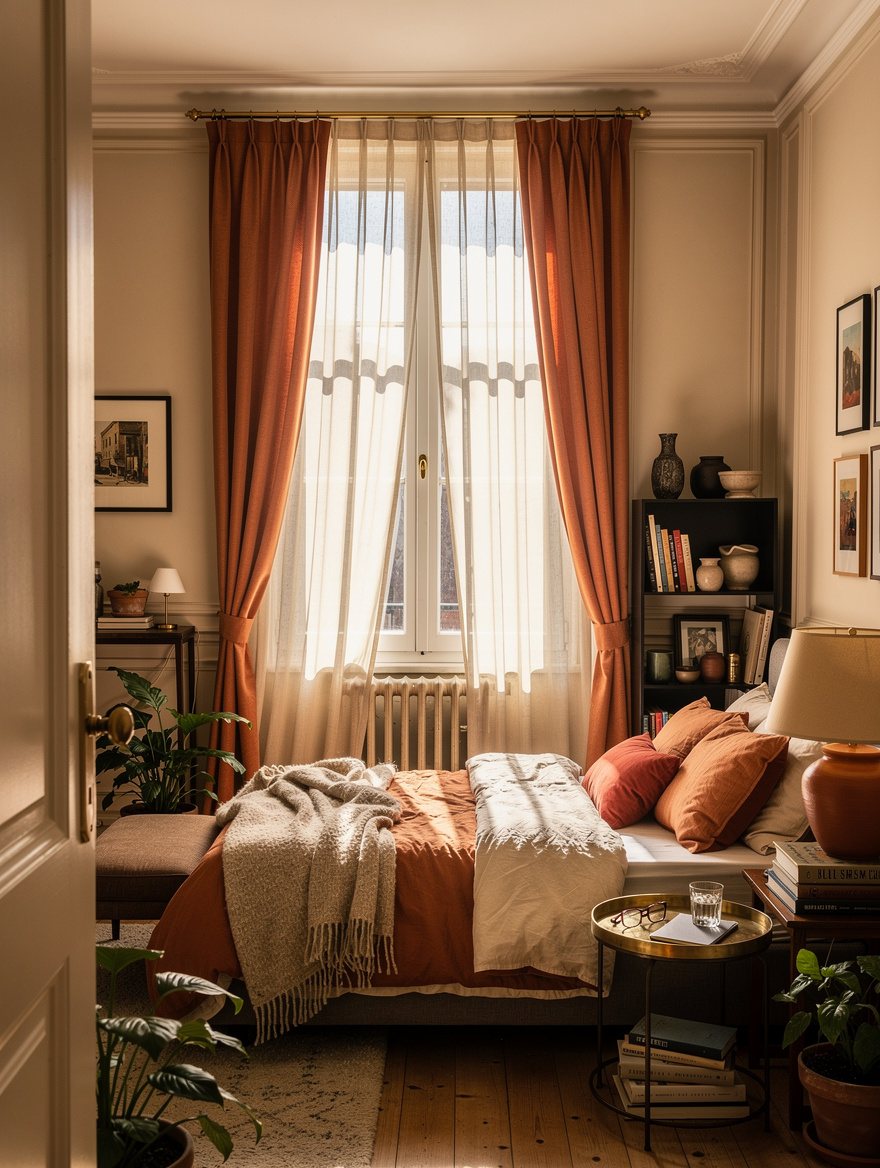
Use a double track: a sheer closest to the window and room-darkening panels in front. The layers add depth while preserving the ceiling-to-floor line, which is why hotel bedrooms often feel more generous than their square footage suggests.
Allow roughly 14 to 20 centimeters of projection from the wall for two layers, so fabric clears handles and does not look squeezed. A sheer linen paired with a matte blackout lining gives the room softness without a shiny, synthetic finish.
Match Curtains to the Wall Color
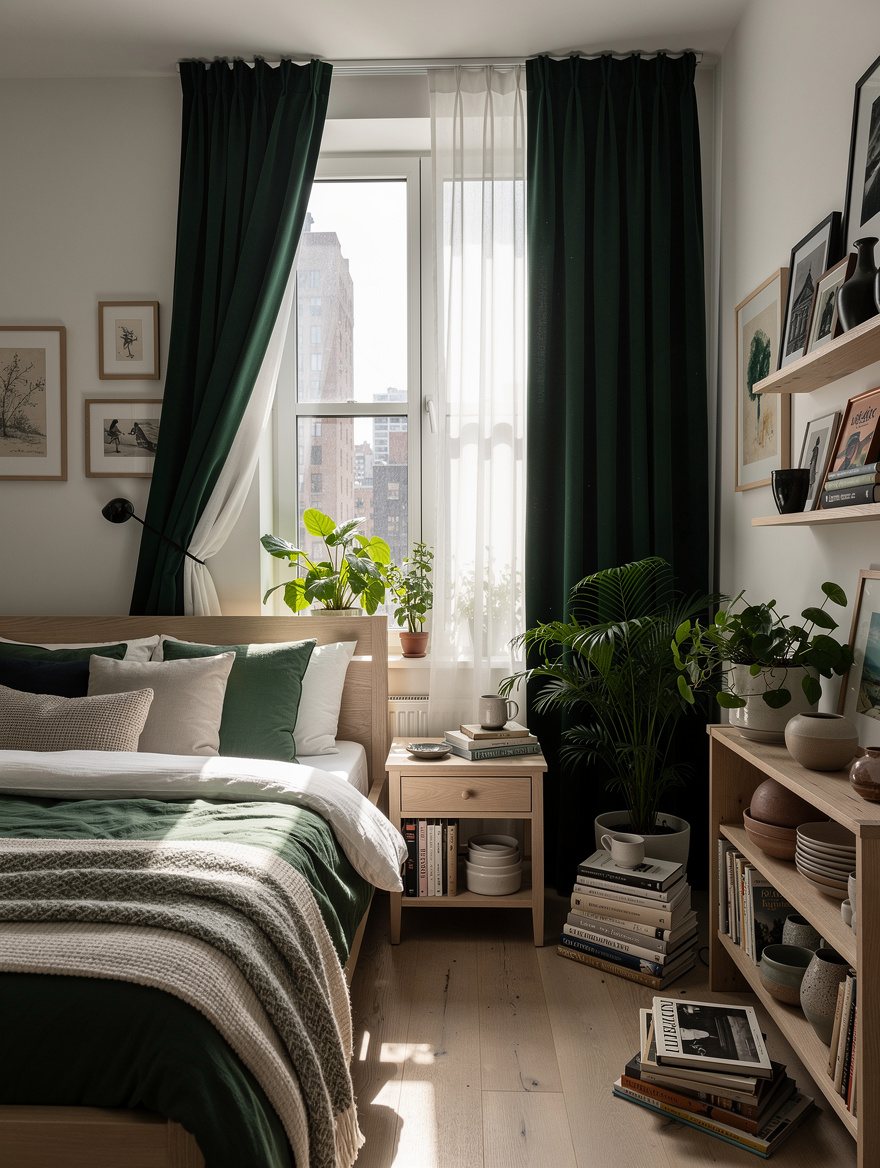
Choose curtains close to the wall color: warm white, sand, oatmeal, pale greige, or muted sage all work. Low contrast lets the fabric behave like an extension of the wall instead of a bold border around the window.
Save dramatic contrast for a room with genuinely high ceilings and generous light. In an average bedroom, oatmeal cotton-linen usually creates more height than crisp bright-white panels against beige paint.
Choose Wave Folds Over Eyelets
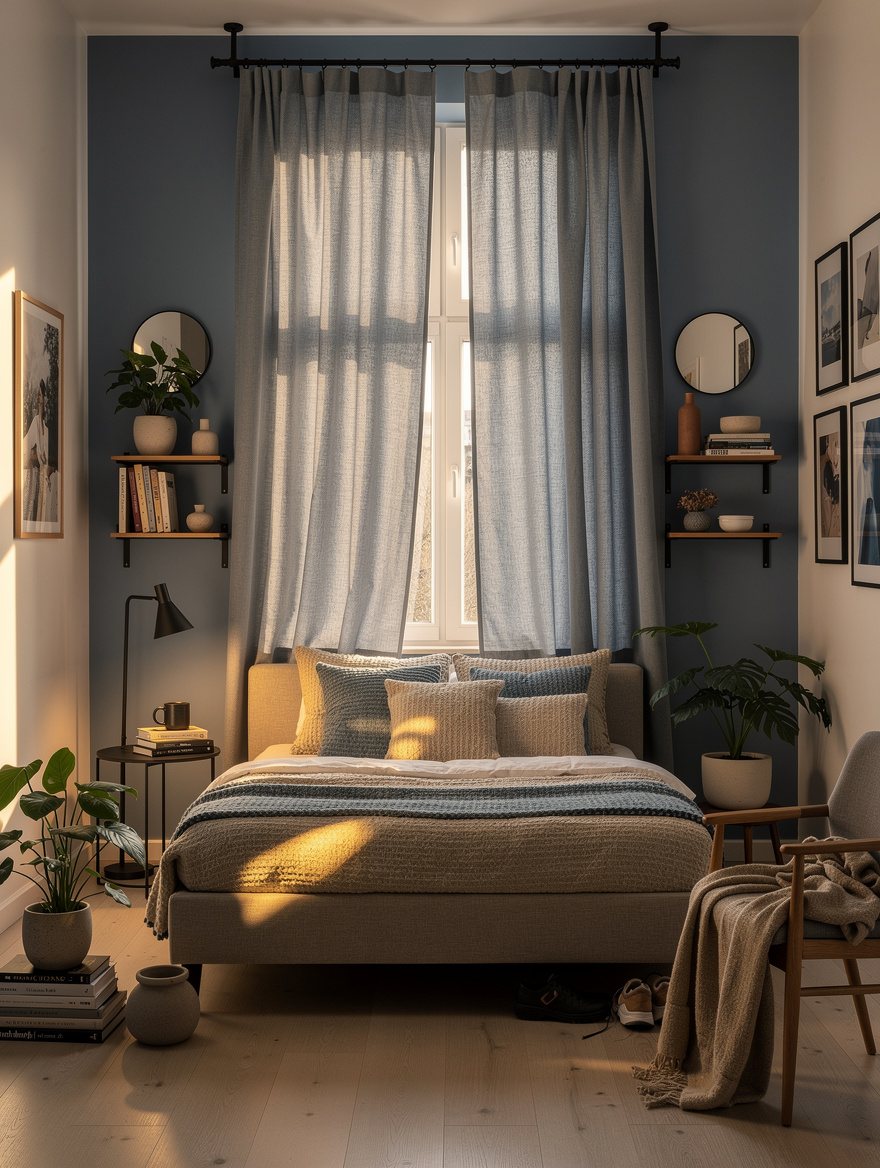
Specify S-fold, wave, or pinch-pleat headings rather than metal eyelets. Repeated folds create a measured vertical rhythm, while eyelets add chunky circles and a casual top edge that draws attention away from the ceiling.
Wave tape is a good modern choice for a track system, especially with matte linen. Pinch pleats bring more structure and are worth considering when the bedroom has traditional trim or a tailored upholstered headboard.
Calculate Fullness From the Track
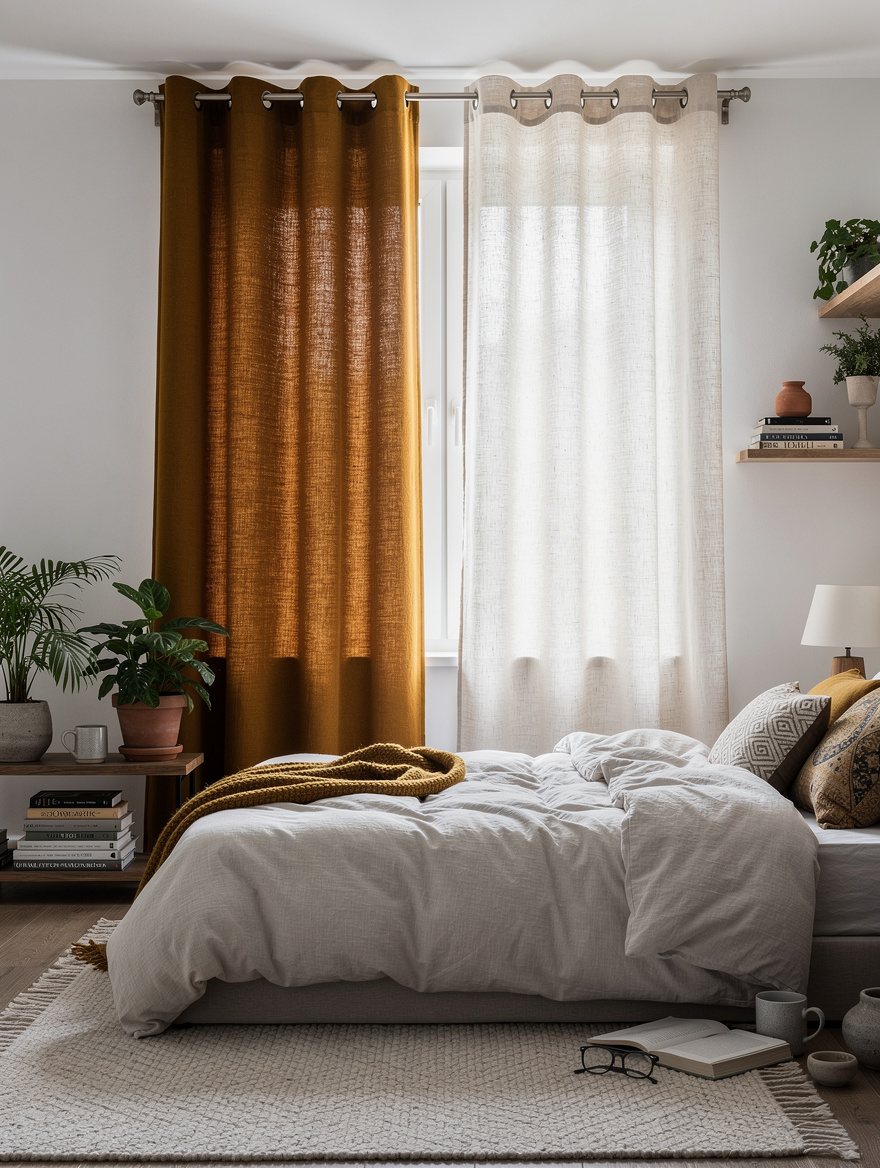
Measure fabric against the track width, never the glass width. Sheers generally need about 2.0 to 2.5 times the track width, wave drapes about 1.8 to 2.2 times, and pinch pleats about 2.0 to 2.5 times.
A 220-centimeter track therefore needs roughly 440 to 550 centimeters of sheer fabric. Underfilled panels are the fastest way to make a high installation look cheap, because they pull flat and lose their vertical folds.
Hide Hardware Inside a Ceiling Pocket
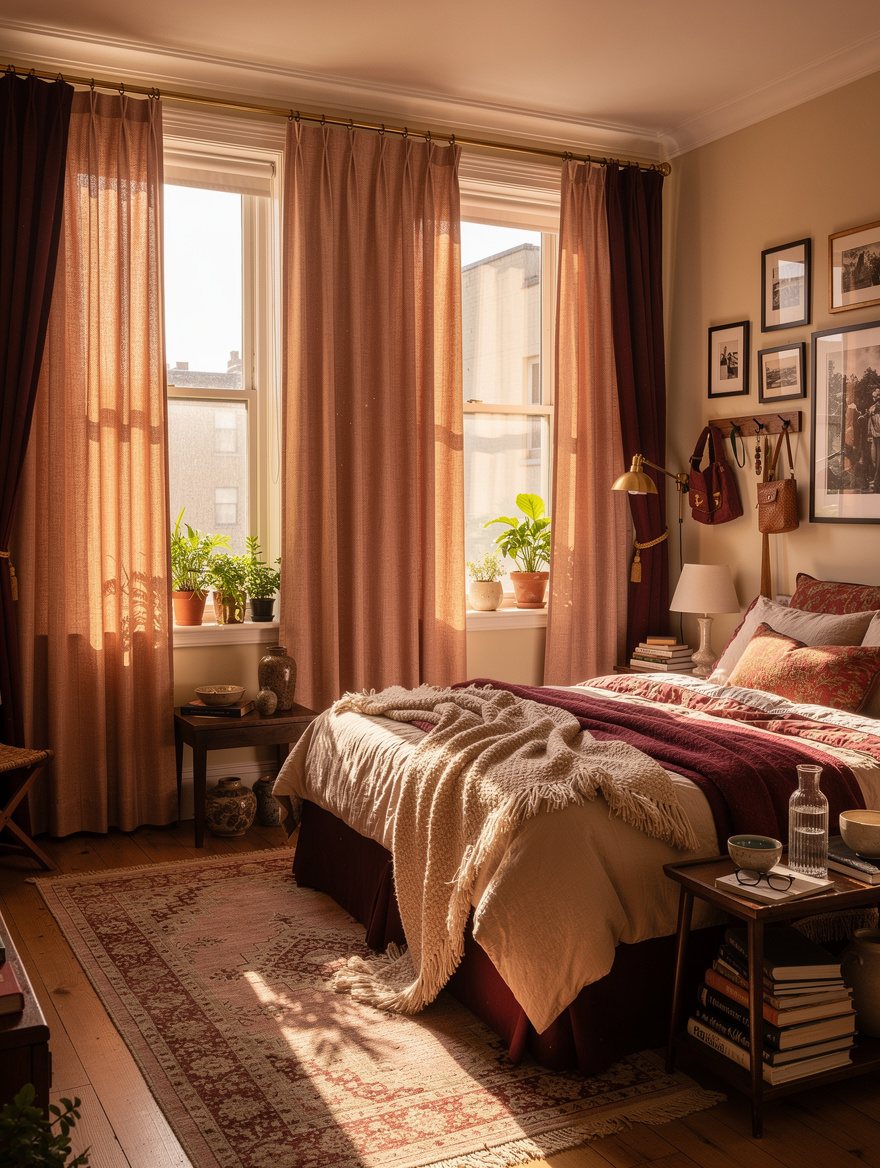
Build an 8- to 15-centimeter plasterboard pelmet or ceiling pocket when renovating. It creates the convincing impression that the curtains emerge directly from the ceiling, a particularly strong move in a lower bedroom.
Keep the pocket simple and paint it to match the ceiling. A hidden double-track system reads quieter than decorative hardware and gives sheers plus blackout panels enough room to move independently.
Use Taller Ready-Made Panels
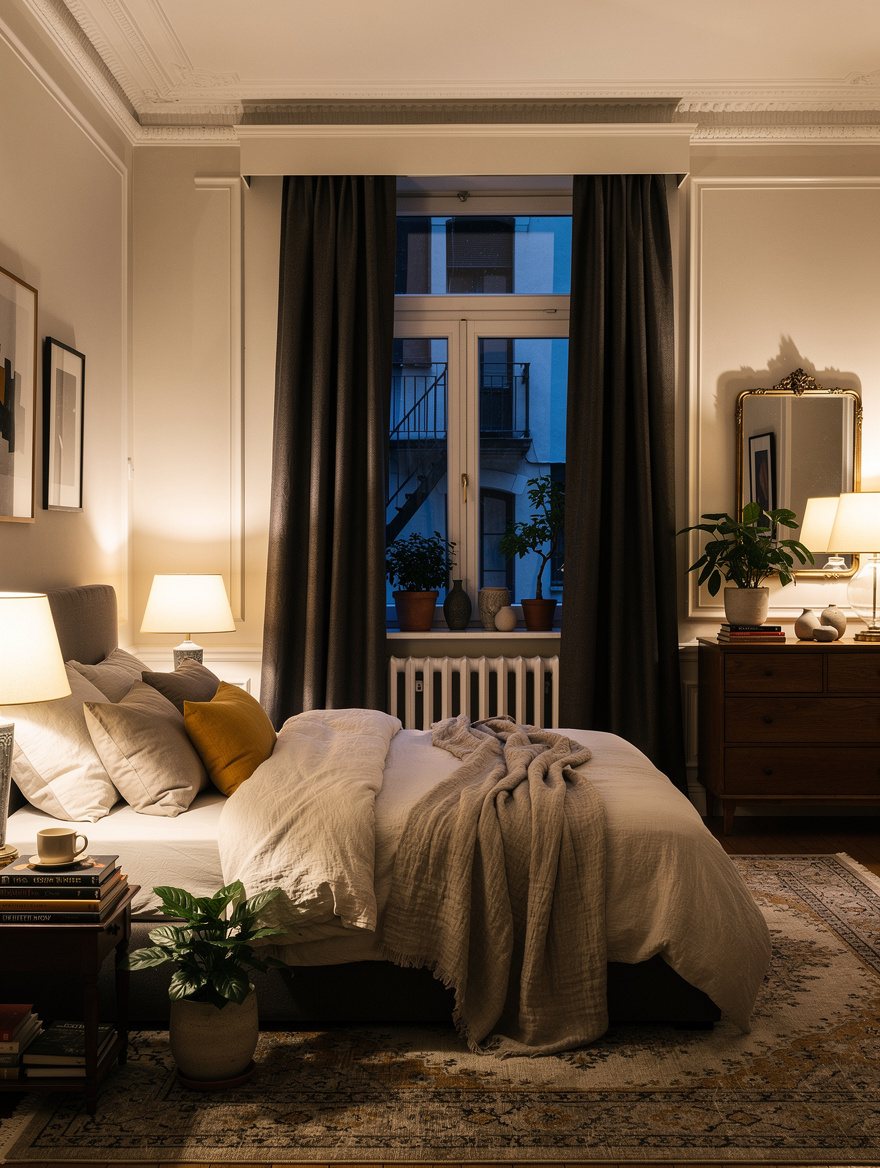
Buy the longest practical ready-made length, then hem from the bottom rather than accepting a short panel. A 274-centimeter, or 108-inch, length is useful for high-mounted tracks, while IKEA DYTÅG linen curtains are commonly offered in a 145-by-250-centimeter pair in a current market.
Check the finished drop before opening packaging or booking alterations. A panel that ends six inches above the floor can make even a well-mounted track look like an afterthought.
Keep the Track Projection Generous
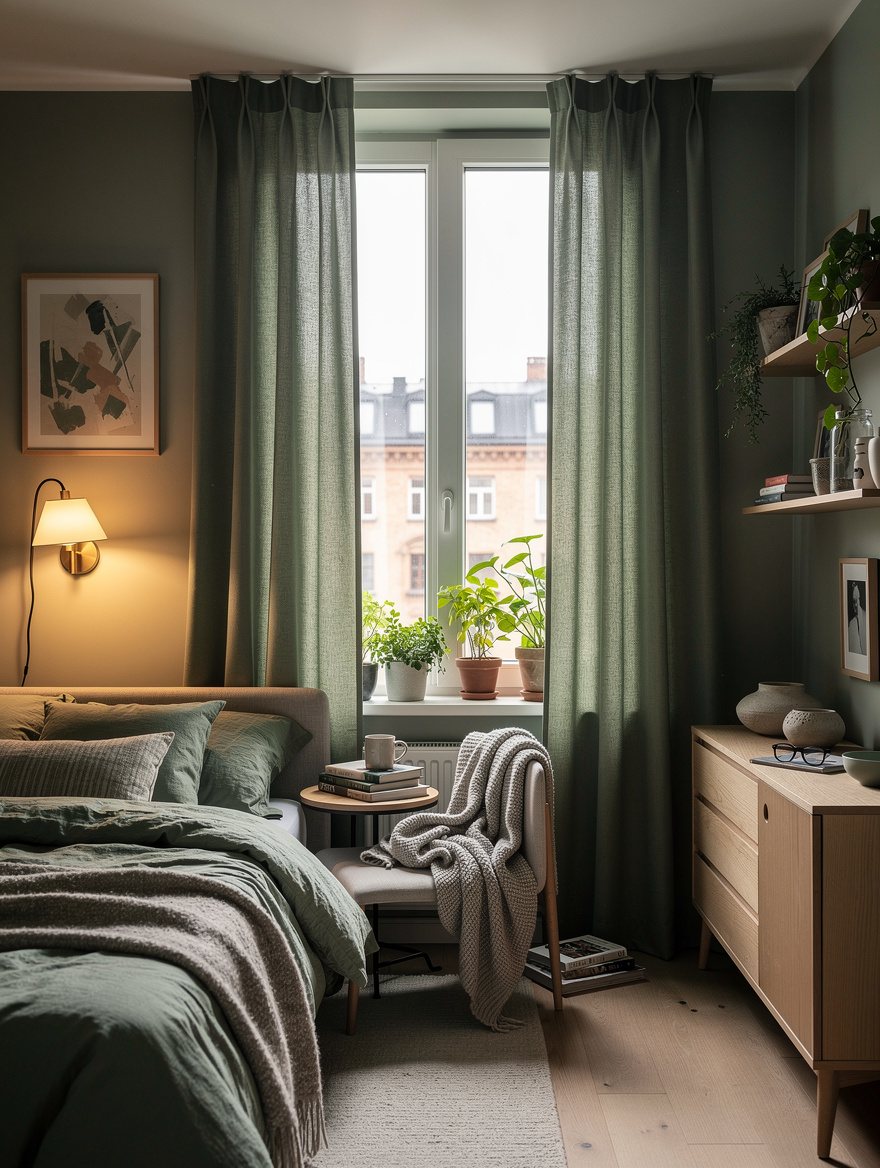
Set a single-layer track roughly 7 to 10 centimeters out from the wall. This modest clearance prevents the fabric from rubbing the window hardware and lets folds hang straight instead of bowing around handles.
Do not press curtains tight to the glass in the name of saving space. A properly projected black curtain track creates cleaner shadows, and those clean vertical shadows are part of what makes the wall feel taller.
Skip Shiny Fabric and Busy Prints
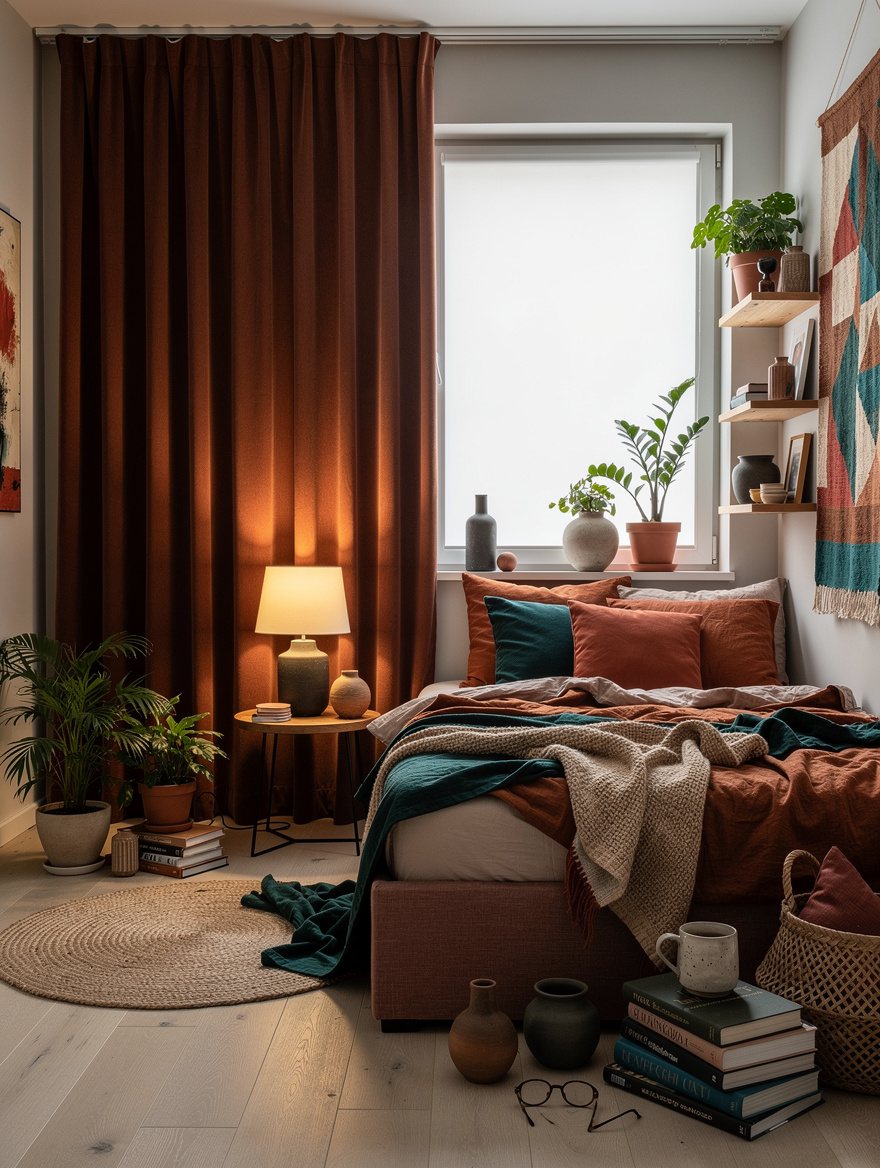
Avoid glossy polyester, loud contrast borders, and oversized prints when height is the goal. They catch the eye in scattered spots and turn the drapery into a visual object rather than a broad vertical plane.
Choose textured cotton-linen panels, washed linen, or a softly brushed room-darkening fabric instead. One restrained color field with real fullness will do more for a bedroom ceiling than any fussy pattern ever will.
Keep reading
- 12 Designer-Approved Curtain Tricks That Make Small Rooms Feel Taller
- 6 Designer Tricks That Make an Ugly Wall Disappear Without Damage
- 14 Parisian Small-Flat Tricks That Make Every Room Feel More Elegant
Start by measuring from the ceiling to the floor, then choose the track before choosing the fabric. Height comes from that first line, and every other curtain decision should protect it.