12 Open Shelving Mistakes Making Your Small Kitchen Feel Cluttered
30 august 2026Open shelves can rescue a narrow kitchen wall, but only when they read as breathing room instead of a pantry with the doors removed. On an 8-inch-deep shelf, one extra row of mugs is often enough to turn a useful display into visual traffic.
The tension is real: you want everyday dishes within reach, yet every exposed package, mismatched finish, and crowded stack gets amplified in a compact room.
What you will find inside
- Fill Every Inch of the Shelf
- Buy Shelves That Are Too Deep
- Crowd the Countertop From Above
- Repeat Tight Spacing on Every Tier
- Mix Every Finish Within One Sightline
- Leave Grocery Packaging on Display
- Turn All Storage Into Display
- Put Decor in the Best Reach Zone
- Store Heavy Stacks on Delicate Brackets
- Hang Shelves Beside Grease and Splash Zones
- Use Open Shelves as a Catchall
- Style for a Photo Instead of a Tuesday
Fill Every Inch of the Shelf
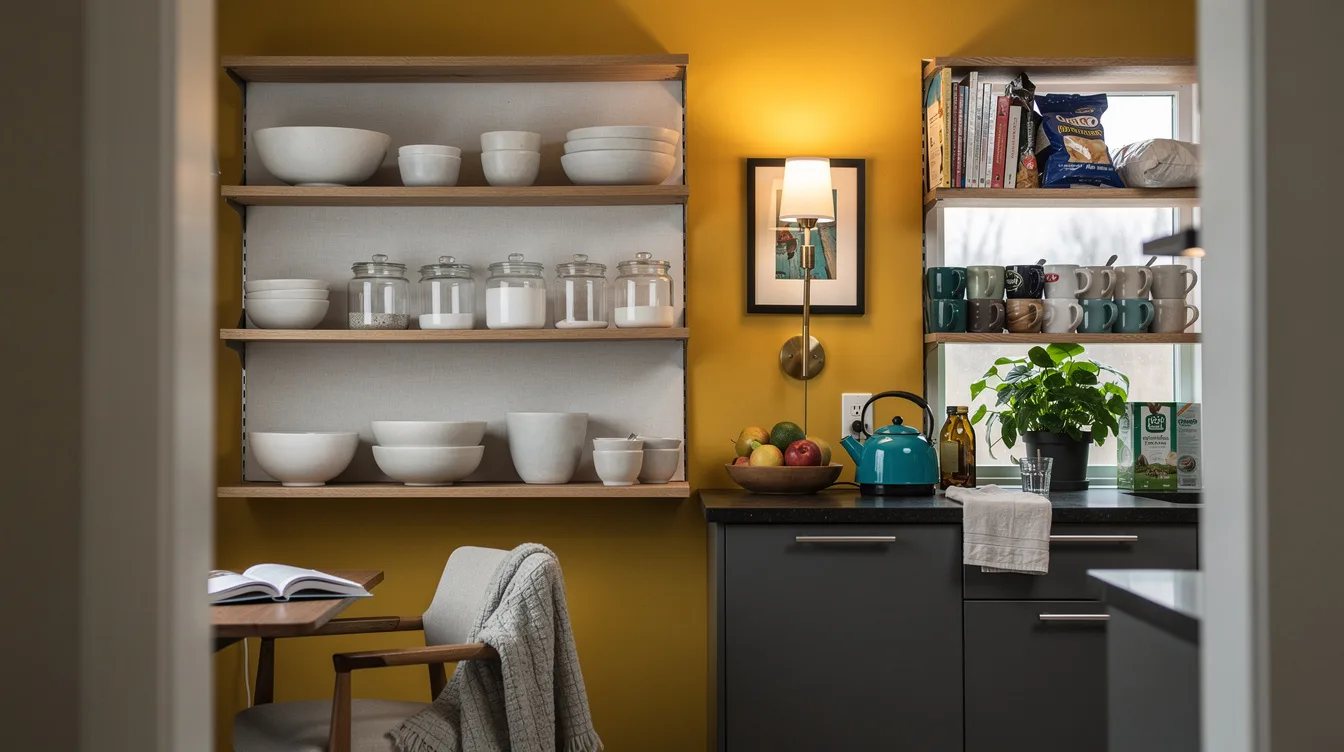
A shelf packed edge to edge with jars, mugs, and bowls reads like closed cabinetry missing its fronts. Leave roughly one-third of every shelf empty so the wall still feels open.
Group a few pieces with intention, then stop. A run of white stoneware bowls, a small stack of plates, and clear space between them looks calmer than a continuous lineup.
Buy Shelves That Are Too Deep
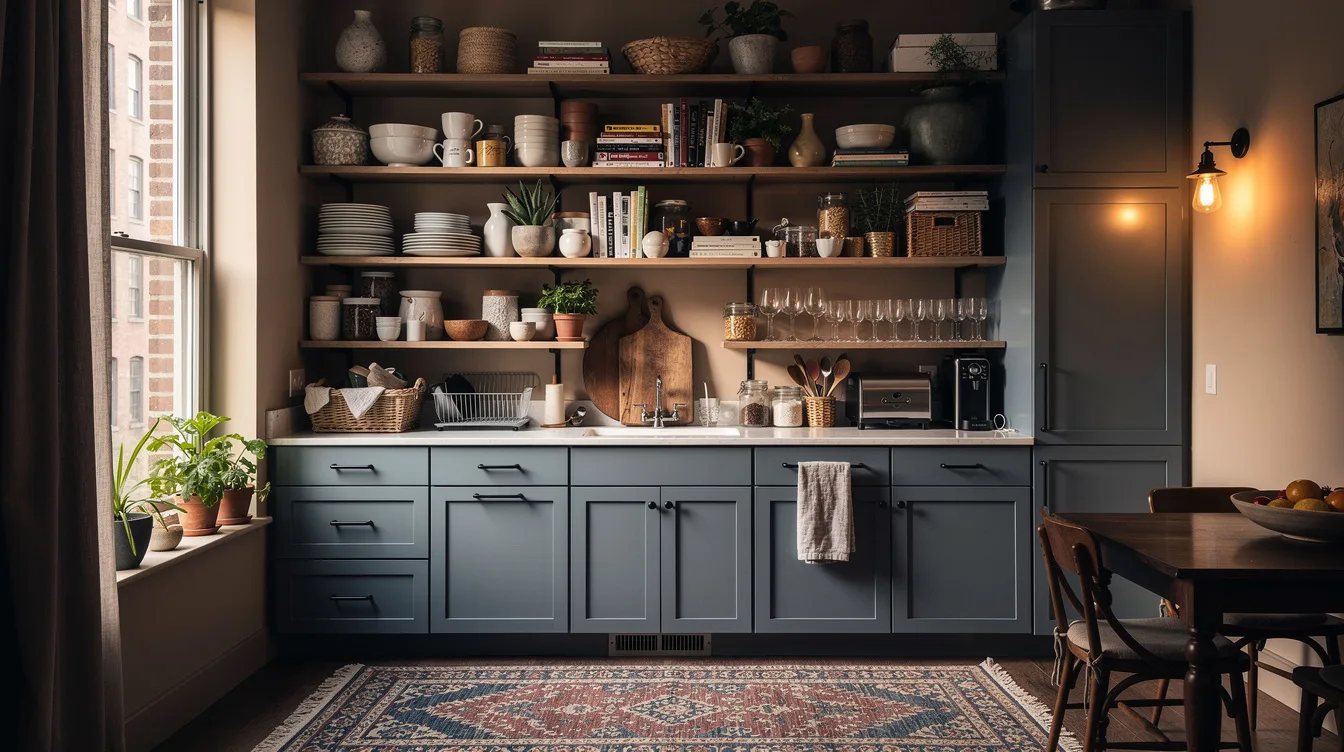
Deep shelves invite a second row of clutter, and that hidden back row quickly becomes a forgotten mess. In a compact kitchen, shelves about 8 to 10 inches deep usually hold plates, glasses, mugs, and canisters without acting like another countertop.
Reserve an 11- or 12-inch depth for a genuinely oversized everyday item you have measured. A slim sealed hardwood shelf is the more disciplined choice for most walls.
Crowd the Countertop From Above
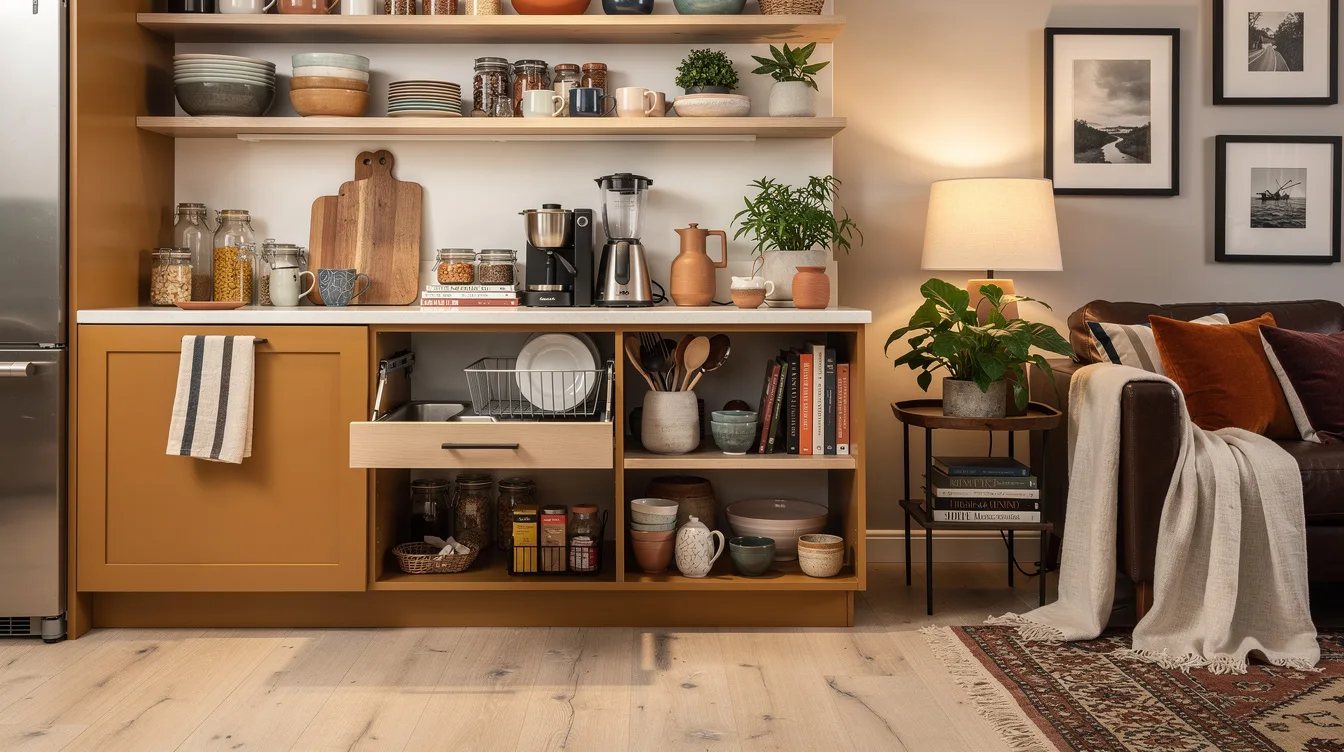
Mounting a shelf too close to the counter squeezes the backsplash into a narrow strip and makes coffee prep feel boxed in. Start roughly 18 to 20 inches above the countertop, then account for outlets, the faucet, and the tallest appliance you use daily.
A stainless steel coffee maker needs visual clearance as much as physical clearance. Let the counter work before asking it to support a styled shelf overhead.
Repeat Tight Spacing on Every Tier
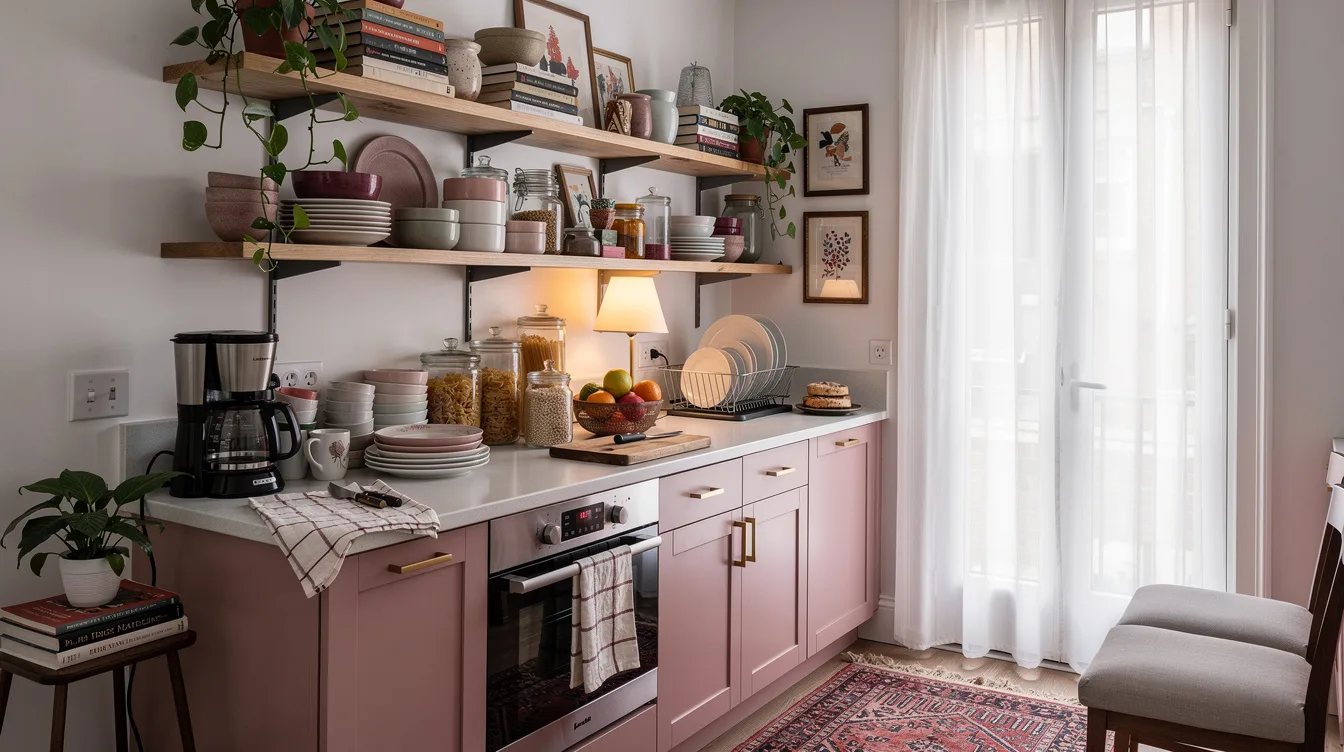
Identical shelf gaps may look orderly on paper, but they force pitchers sideways and make dish stacks awkward to lift. Allow about 12 inches of vertical clearance for everyday bowls and plates.
Give tall cereal containers, carafes, or a glass pitcher roughly 15 to 16 inches where needed. Varying the spacing also breaks up the rigid, retail-display look.
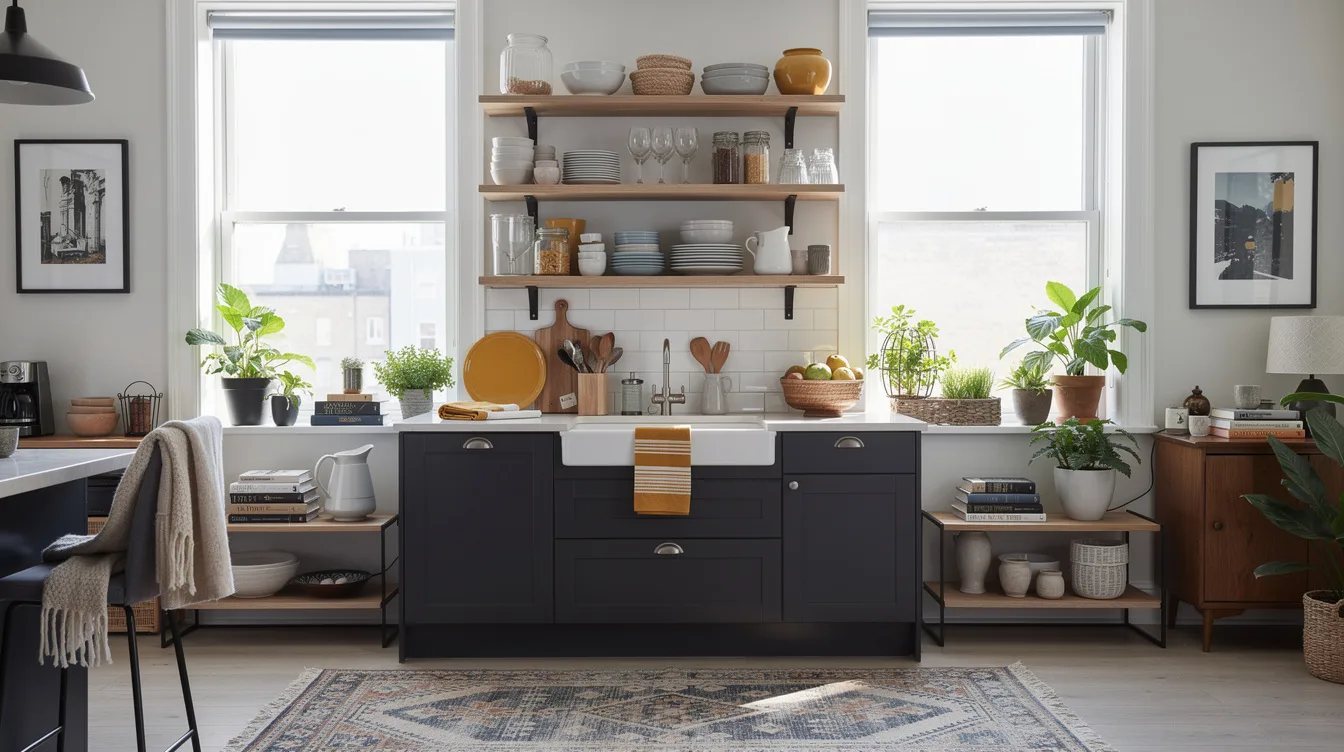
Mix Every Finish Within One Sightline
Chrome, brass, black metal, pale wood, dark wood, and patterned ceramics compete hard in a small kitchen. Keep the open zone to about three colors plus one metal finish.
Repeat a single anchor material, such as natural oak, across brackets, cutting boards, or a stool nearby. The room can still have personality without asking every object to introduce itself.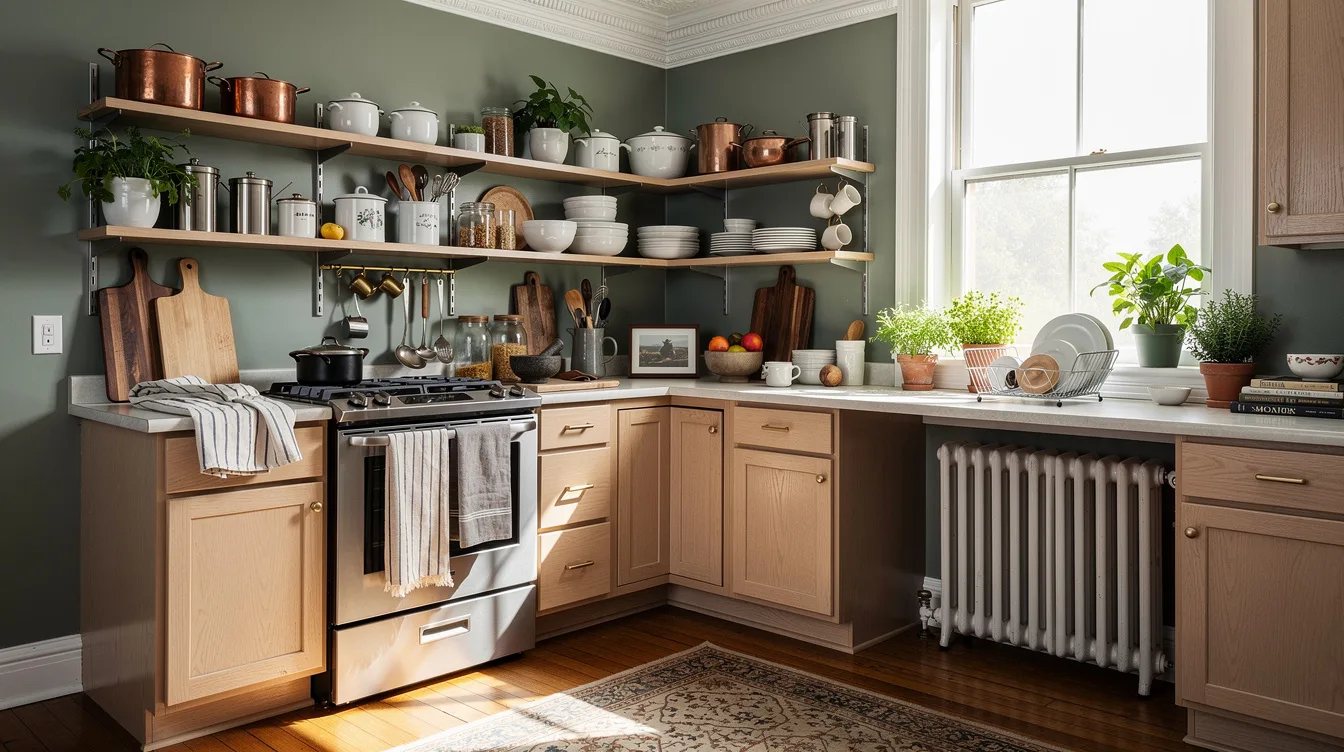
Leave Grocery Packaging on Display
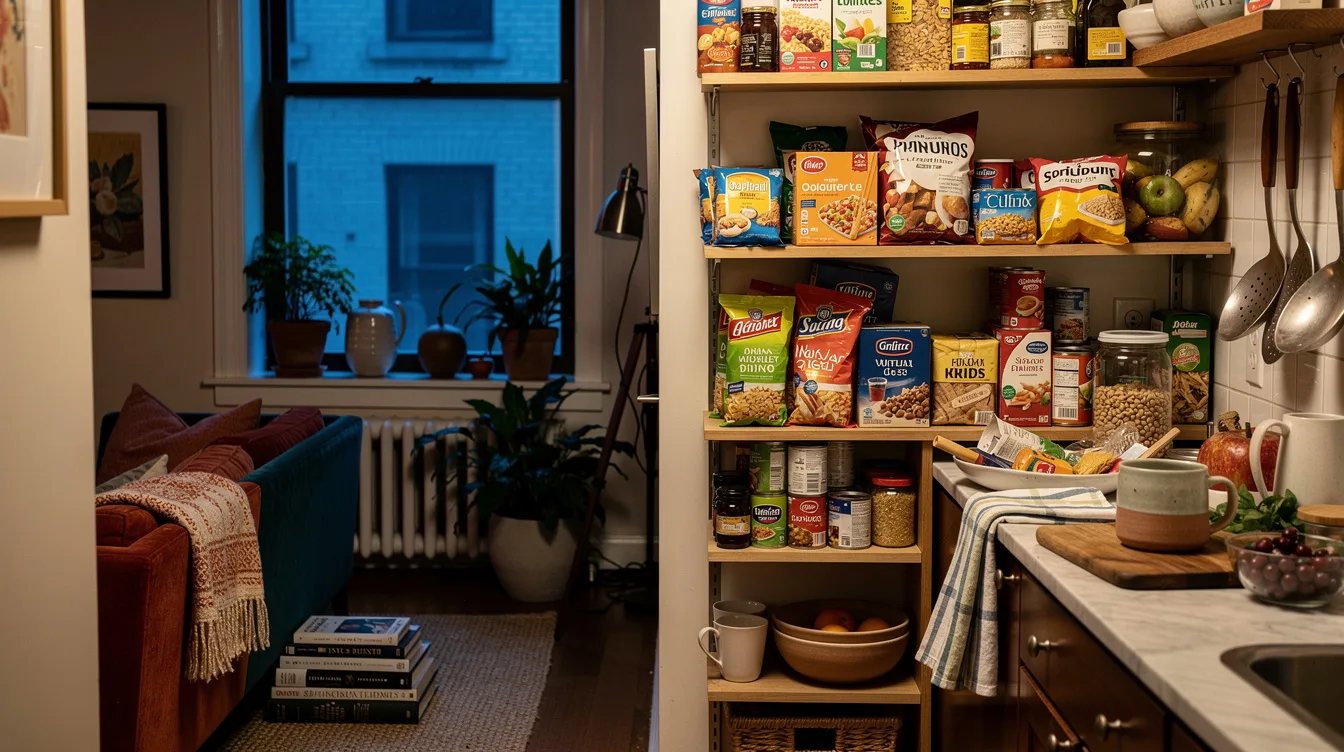
Original bags, pouches, labels, and half-used cartons create irregular shapes that never stay neat for long. Keep visually noisy groceries behind closed doors whenever possible.
Decant only staples you reach for often, such as coffee, rice, pasta, tea, or oats. A small matching group of airtight glass canisters earns its shelf space because it simplifies the daily routine.
Turn All Storage Into Display
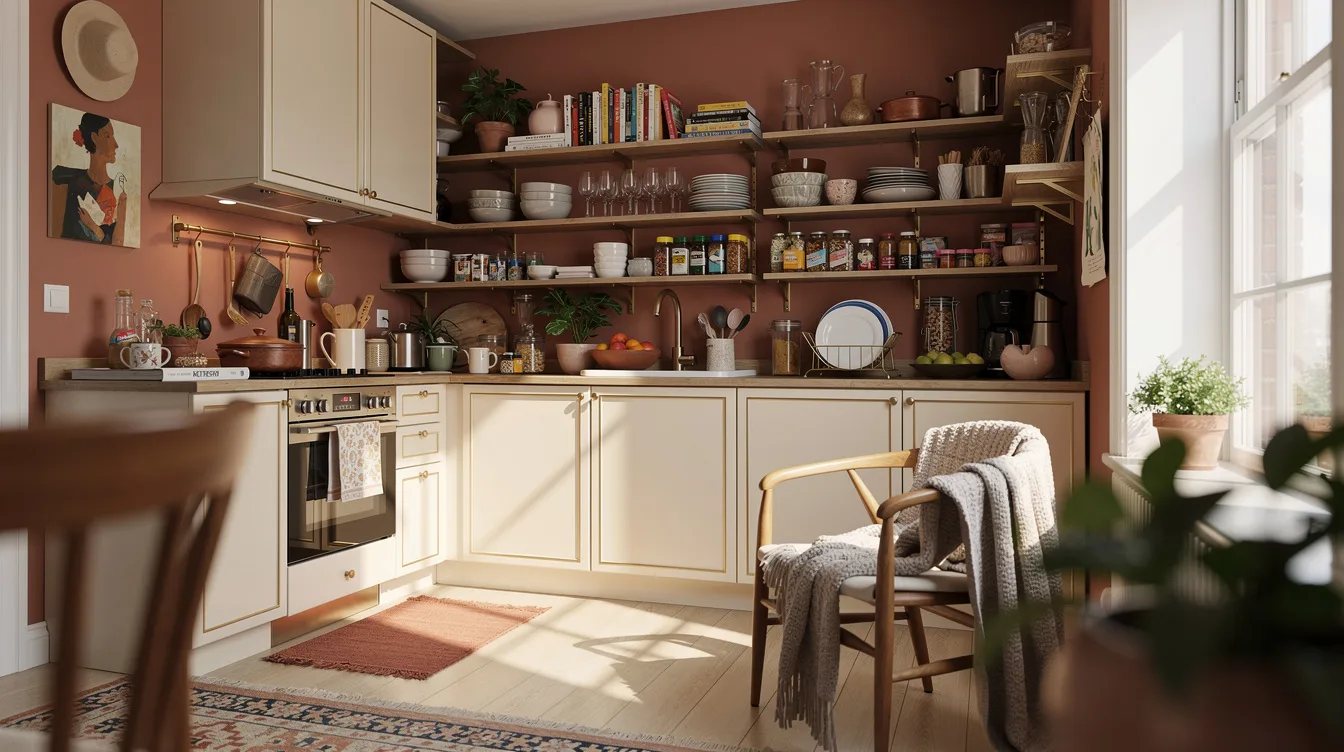
Open shelving cannot carry a compact kitchen alone. Food-processor attachments, spare containers, cleaning supplies, medicine, and delivery bags need a concealed home.
A useful target is roughly 70 percent practical daily-use items and 30 percent display. Let closed cabinets handle the visual leftovers, while everyday dinner plates make the open shelves feel active rather than staged.
Put Decor in the Best Reach Zone
The easy-reach area should belong to the dishes and seasonings you use, not fragile objects that get bumped during breakfast. Keep frequent-use items roughly 30 to 48 inches above the counter when the layout allows.
Place a light ceramic vase on a high shelf and heavy bowl stacks on the lowest sturdy shelf. That hierarchy keeps the arrangement intact through an ordinary busy week.
Store Heavy Stacks on Delicate Brackets
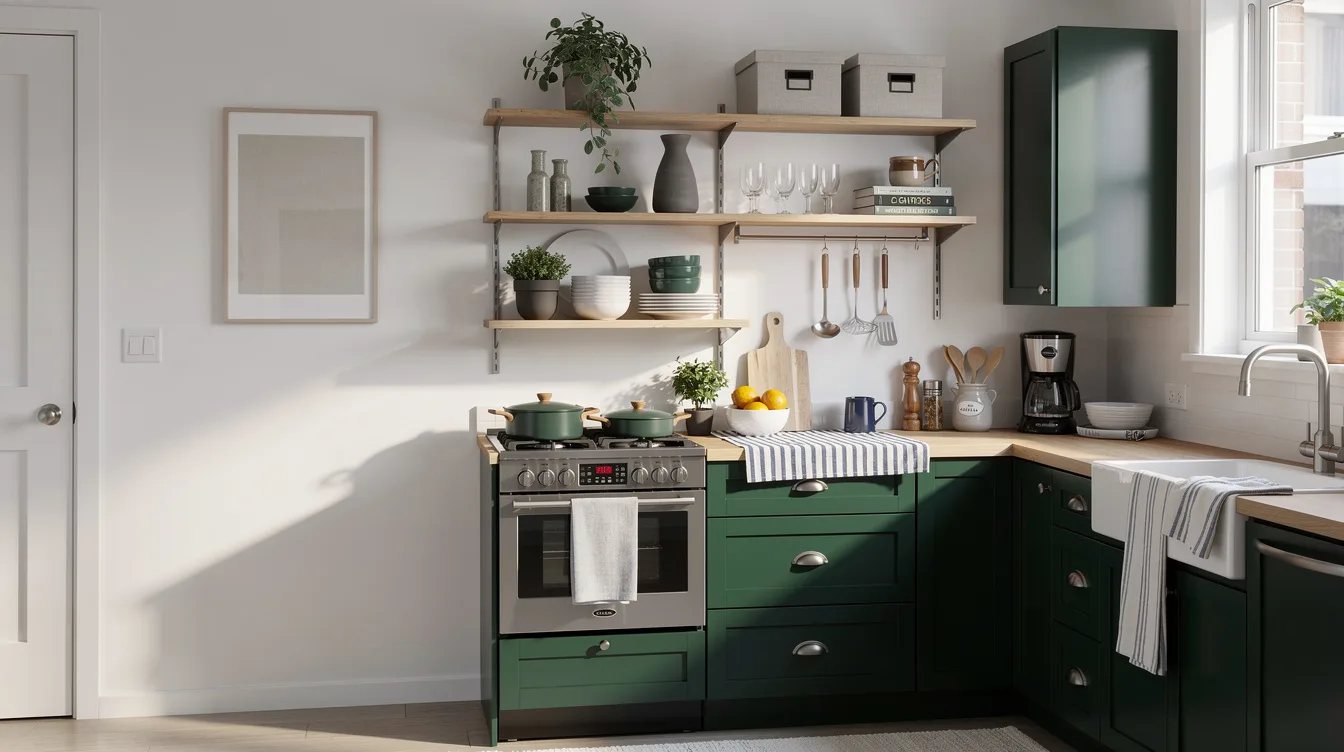
Open shelving looks airy only when it is genuinely secure. A tower of plates on undersized brackets makes a small kitchen feel nervous, even before it becomes a safety issue.
Use properly anchored steel shelf brackets and keep the heaviest everyday pieces low. Heavy cast iron, large serving platters, and bulk pantry goods belong in stronger closed storage unless the shelf system is rated and installed for them.
Hang Shelves Beside Grease and Splash Zones
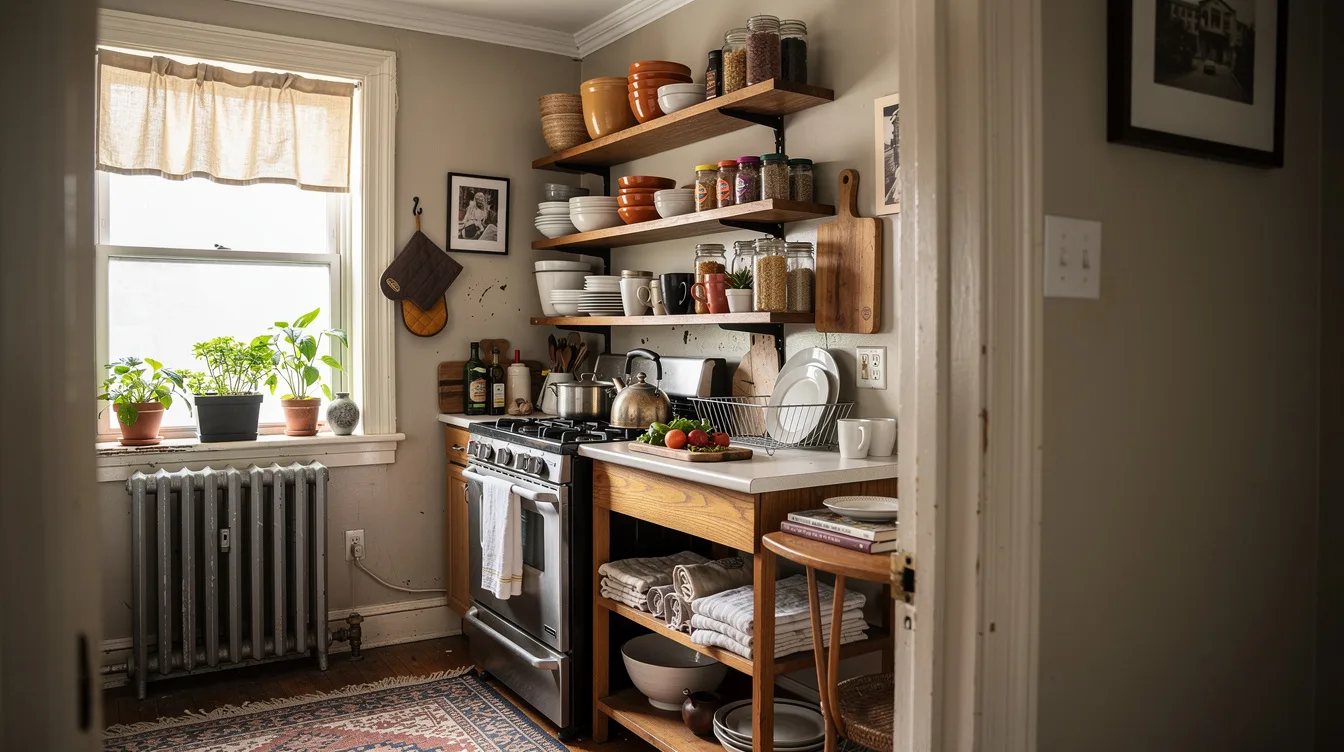
Items placed directly beside the range or within constant sink splash collect residue faster than anyone wants to admit. Untreated wood can stain, warp, and become difficult to wipe clean.
Choose powder-coated metal, sealed hardwood, stainless steel, laminate, or washable painted finishes where exposure is unavoidable. Better still, shift the display wall away from the direct path of steam, grease, and faucet spray.
Use Open Shelves as a Catchall
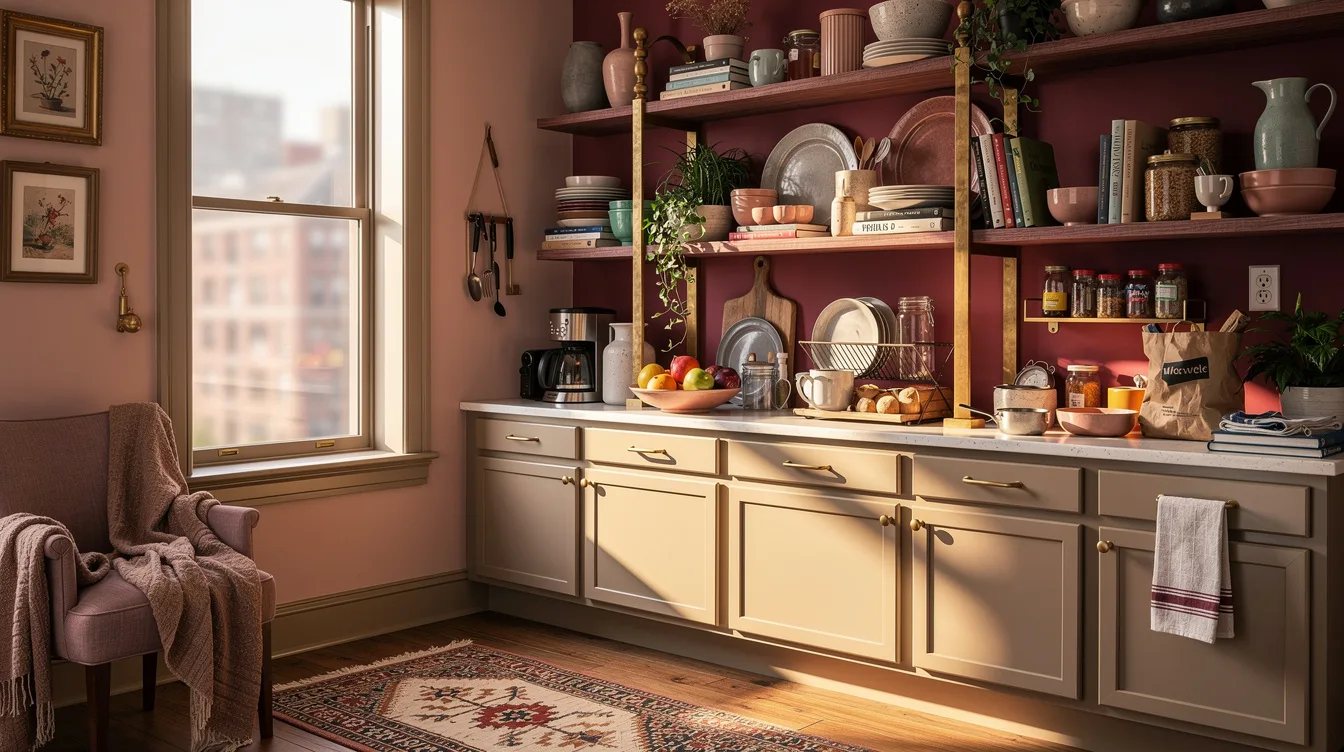
Mail, takeout menus, spare batteries, appliance manuals, and random tools do not become charming because they sit on a shelf. They become the first things the eye notices in a tight kitchen.
Give those items a closed drawer or a single lidded woven basket if they must stay nearby. Open shelving needs a firm edit, especially in a room where every wall is already working hard.
Style for a Photo Instead of a Tuesday
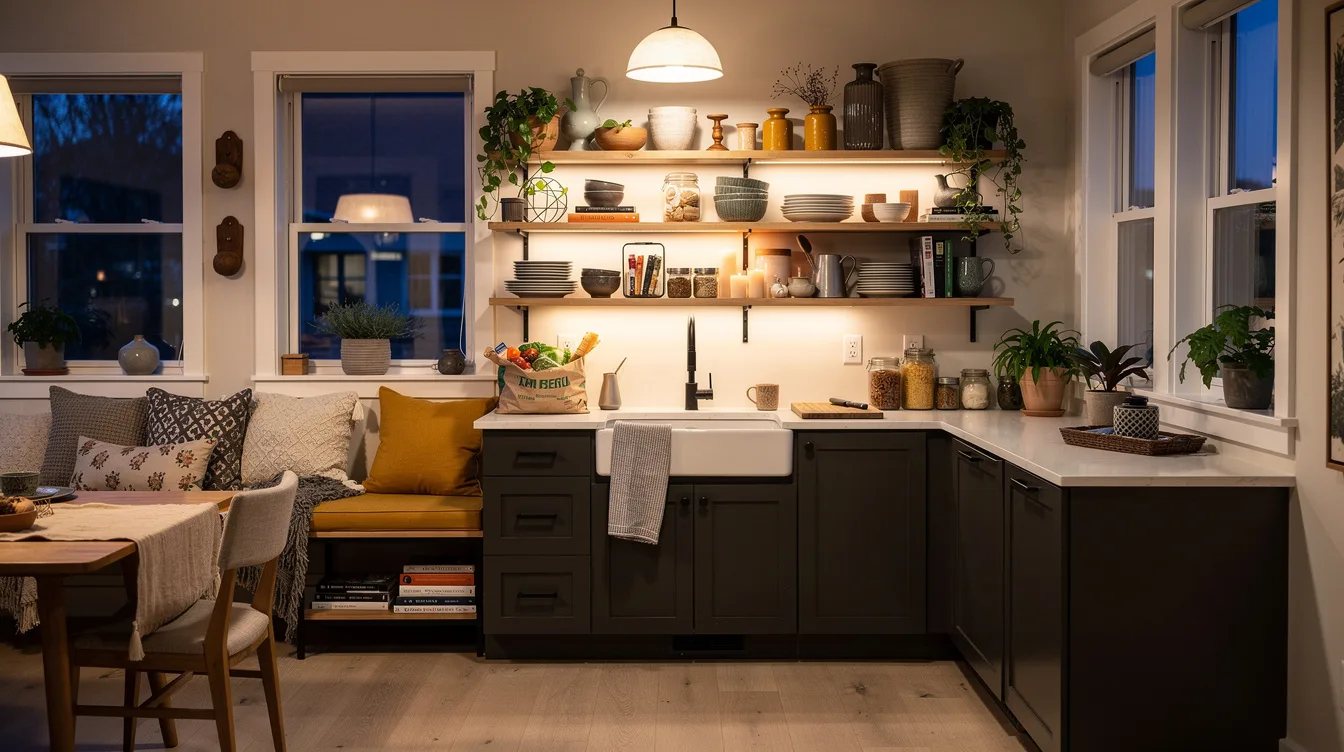
A shelf full of unused vintage glasses and decorative bowls may photograph well, but it fails when you need a cereal bowl before work. The best open shelves support the way your household actually cooks and cleans.
Build around a small rotation of durable stoneware, drinking glasses, and a few useful canisters, then reassess after a week. Start by clearing one shelf until about one-third is blank, because empty space is the fastest way to make a compact kitchen feel larger.
Keep reading
- 12 Living Room Lighting Mistakes That Make Your Space Feel Smaller
- 14 Parisian Small-Flat Tricks That Make Every Room Feel More Elegant
- 12 Designer-Approved Curtain Tricks That Make Small Rooms Feel Taller
Begin with the shelf closest to your main work area and keep only what you use several times a week. The rest belongs behind a cabinet door, where a compact kitchen can finally exhale.