12 Curtain Tricks That Make Small Rooms Look Instantly Taller
21 august 2026I once watched a small bedroom lose its best feature when its curtains were installed directly on the window trim: the ceiling was about 8 feet high, yet the wall suddenly looked squat. The fix was not new furniture or a brighter paint color, just a rod moved upward and outward.
High-hung curtains change the frame your eye uses. Instead of seeing a short rectangle of glass, you see fabric running in one uninterrupted vertical line from near the ceiling to the floor.
What you will find inside
- Mount the Rod Near the Ceiling
- Use the Trim-Height Rule When Ceiling Mounting Looks Odd
- Extend the Rod Beyond Both Sides
- Buy Length for the Installed Rod, Not the Window
- Let the Hem Touch the Floor
- Give the Panels Enough Fullness
- Choose Light Fabric for a Bright Small Room
- Use Linen Blends for Soft Vertical Texture
- Keep Blackout Panels Wide Enough to Drape
- Match the Hardware to the Wall, Not the Sofa
- Skip Bulky Valances and Fussy Top Treatments
- Hang Every Window at the Same Visual Height
Mount the Rod Near the Ceiling
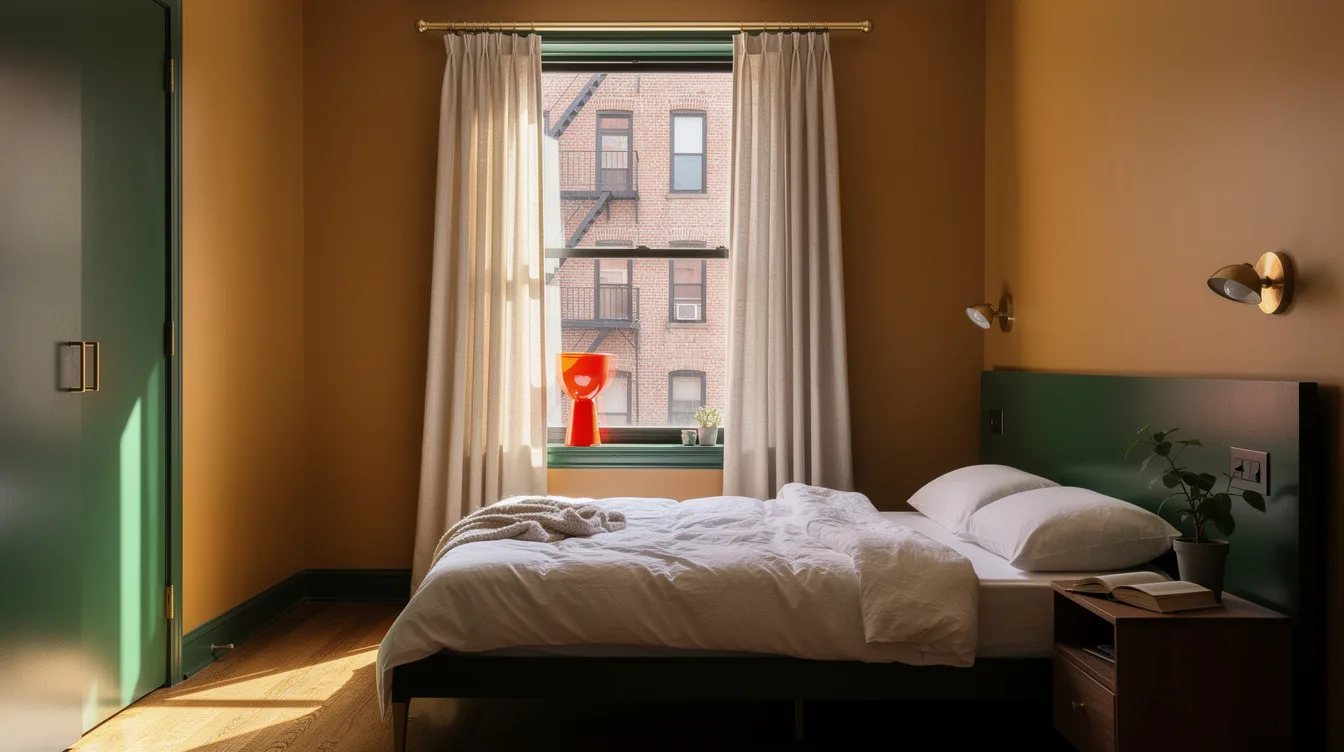
Put the rod about 2 to 6 inches below the ceiling or crown molding. That placement gives floor-length curtain panels a long vertical run, so the eye reads the entire wall instead of stopping at the window frame.
A rod fixed directly above the trim creates a hard horizontal cutoff. In a compact bedroom, that line can make an 8-foot ceiling feel noticeably lower before you even look at the furniture.
Use the Trim-Height Rule When Ceiling Mounting Looks Odd
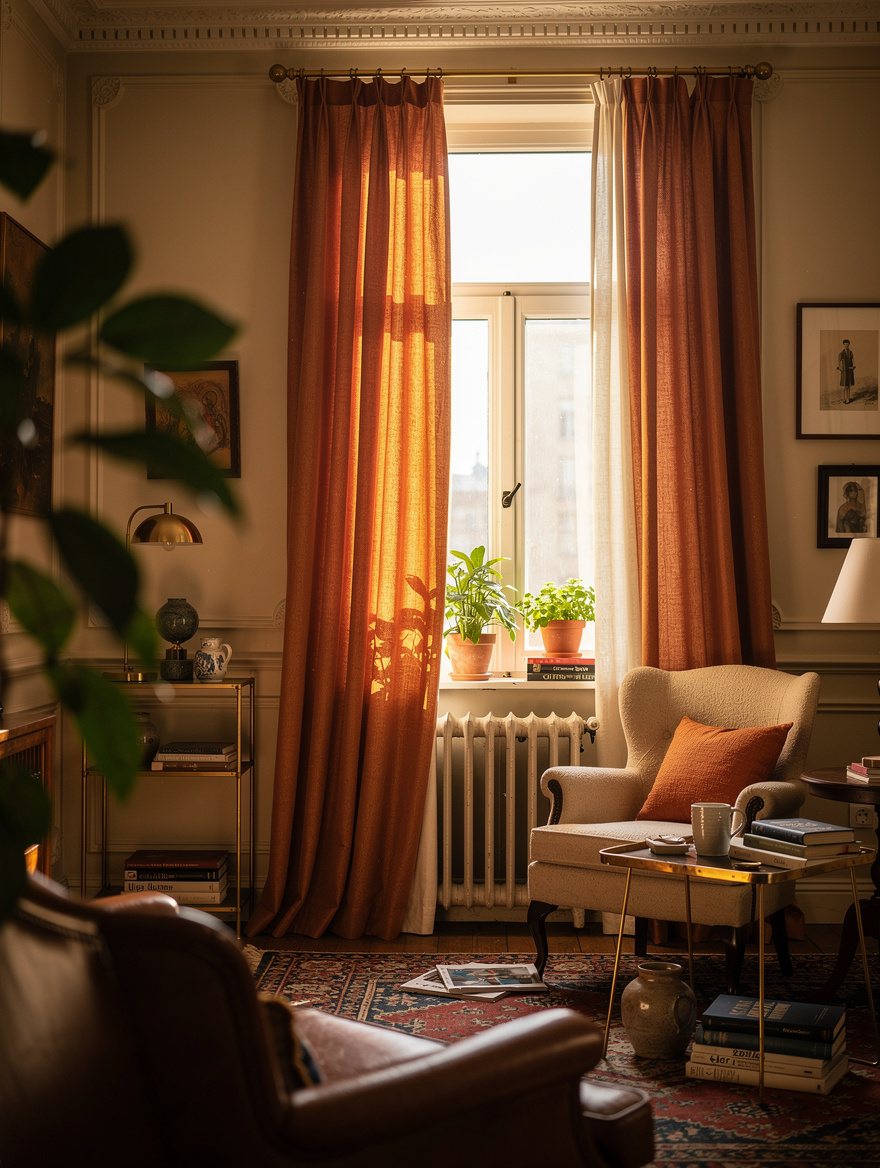
Some windows sit under soffits, vents, or a shallow band of molding, and forcing hardware into that space looks clumsy. Mount the rod roughly 6 to 12 inches above the trim instead, keeping the clearance visually intentional.
Choose a slim matte-black metal rod from Home Depot or Lowe's when the upper wall has little room. The hardware should support the long line, not become a dark stripe competing with it.
Extend the Rod Beyond Both Sides
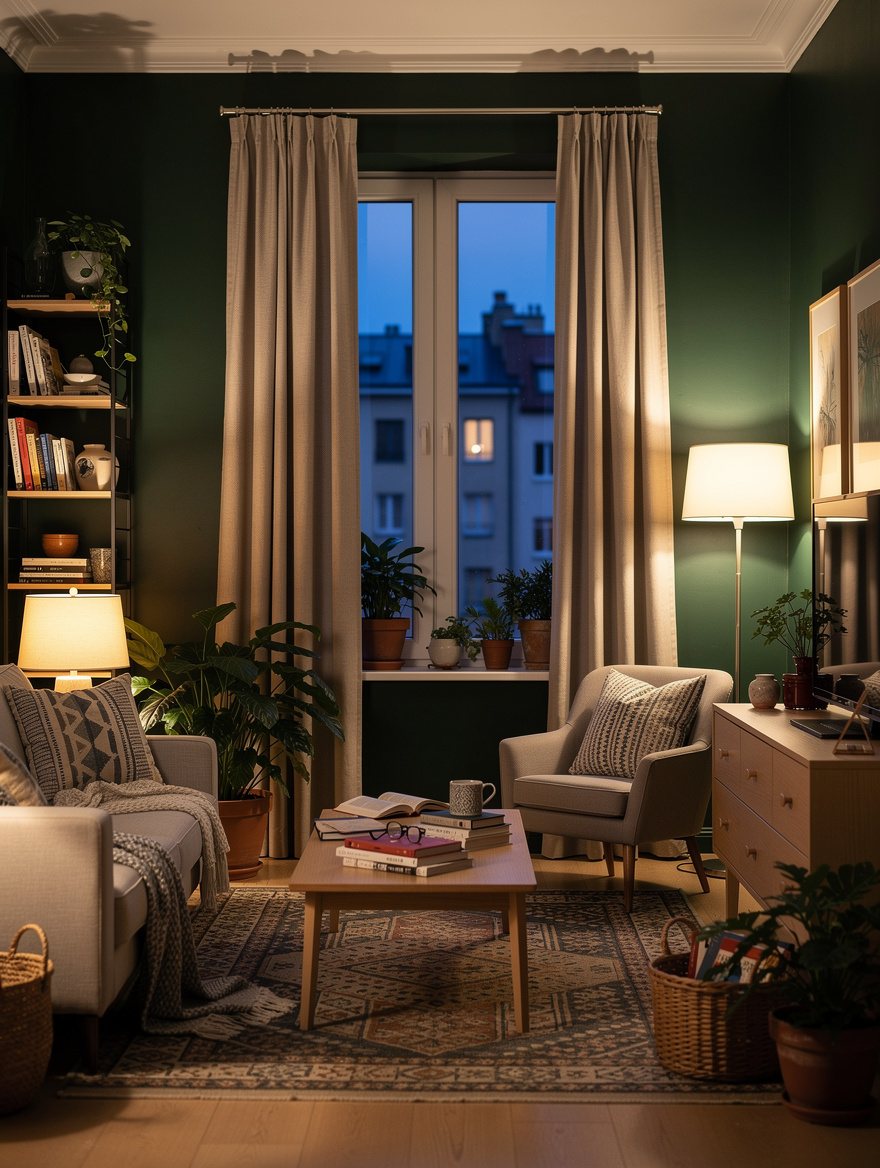
Run the rod about 6 to 12 inches past each side of the window casing. When the panels are open, they can rest on wall space and expose far more glass.
This is the second half of the taller-room effect: a wider-looking window opening makes the wall feel less boxed in. It also lets daylight reach deeper into a small living room, which matters more than adding another lamp.
Buy Length for the Installed Rod, Not the Window
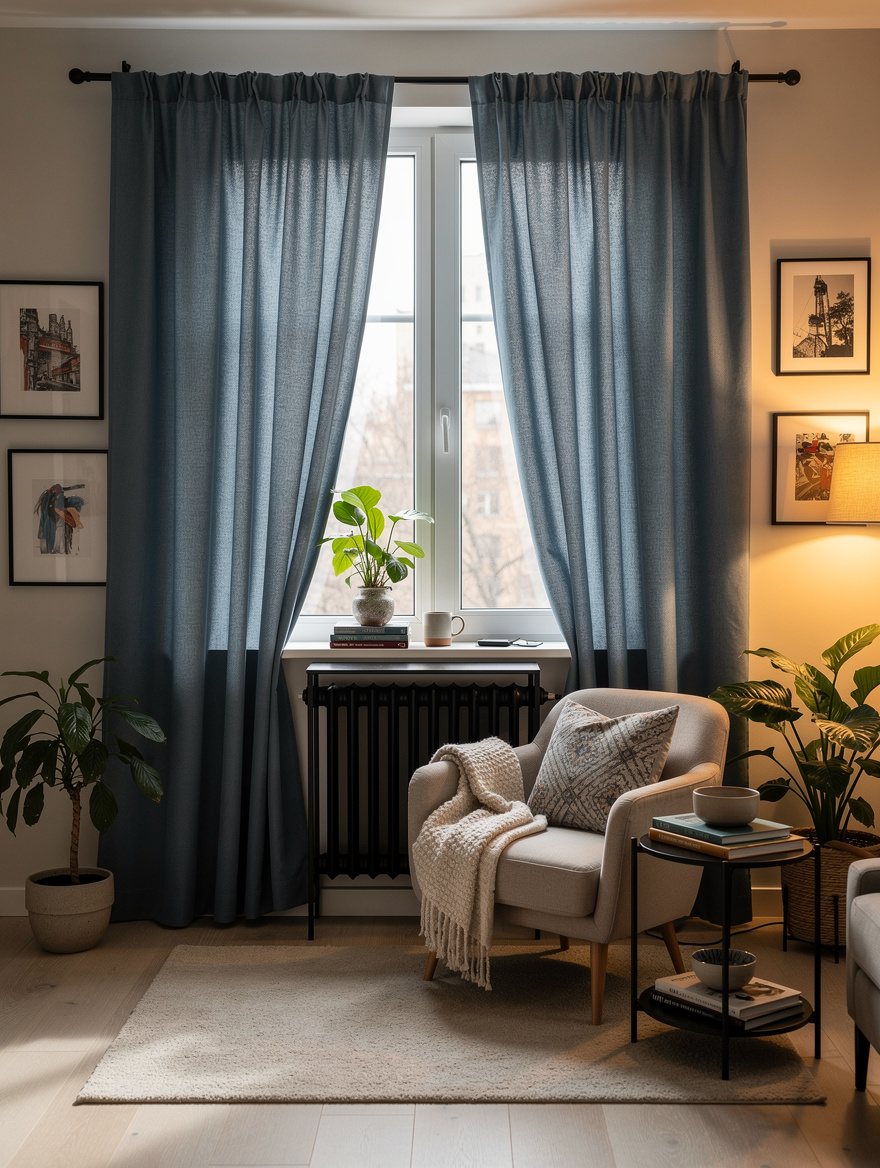
Measure from the top of the installed rod to the floor, then shop from that number. Ready-made panels commonly come in about 84-, 96-, and 108-inch lengths, and an 8-foot ceiling often calls for about 96-inch panels when the rod sits high.
A standard 84-inch pair can be too short the moment you lift the hardware. Check the actual finished length of IKEA curtain panels, not only the product photo, before bringing them home.
Let the Hem Touch the Floor
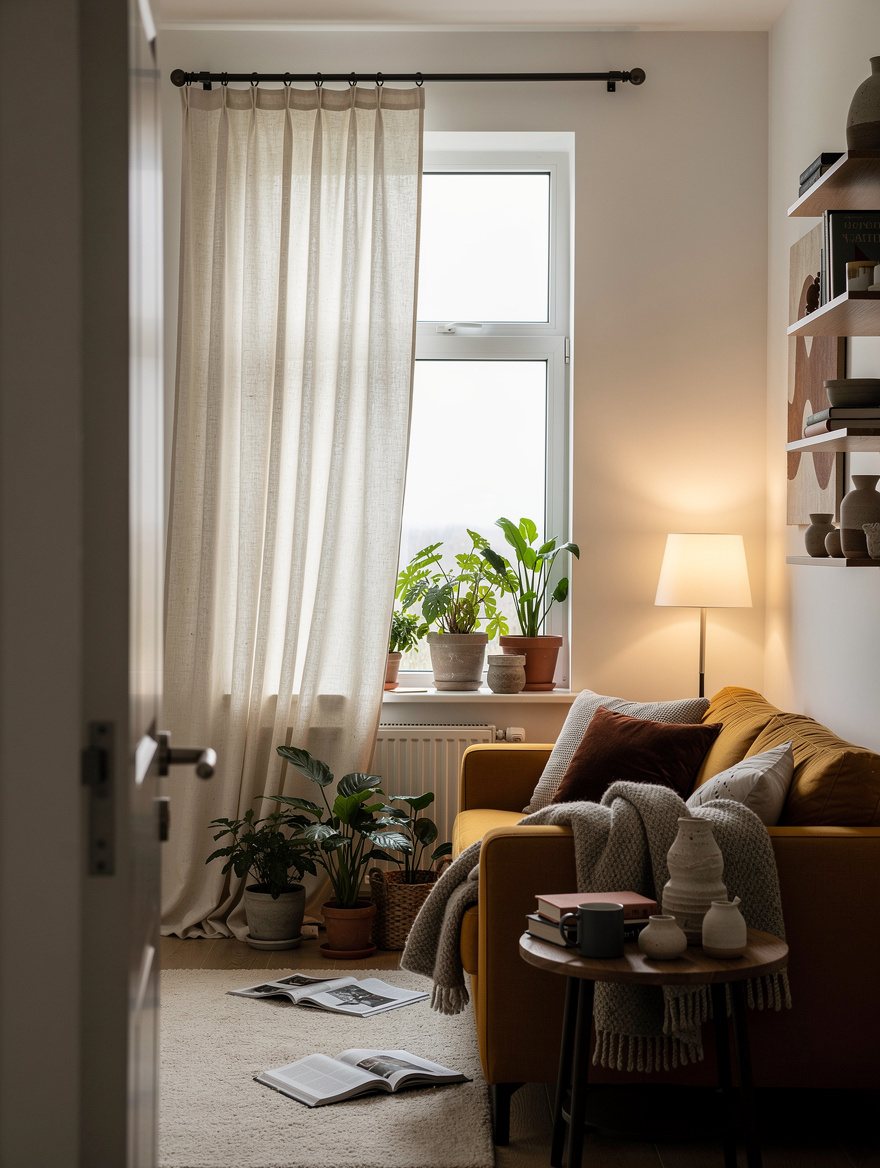
A finished hem that lands about 0 to one-half inch above the floor keeps the vertical line unbroken. A slight kiss of fabric on the floor also works in a low-traffic room, especially with softer materials.
Short curtains are the quickest way to make a small room look pinched. Skip puddles in a busy space, though, because a thick fold of cotton drapery gathers dust and makes the lower wall look crowded.
Give the Panels Enough Fullness
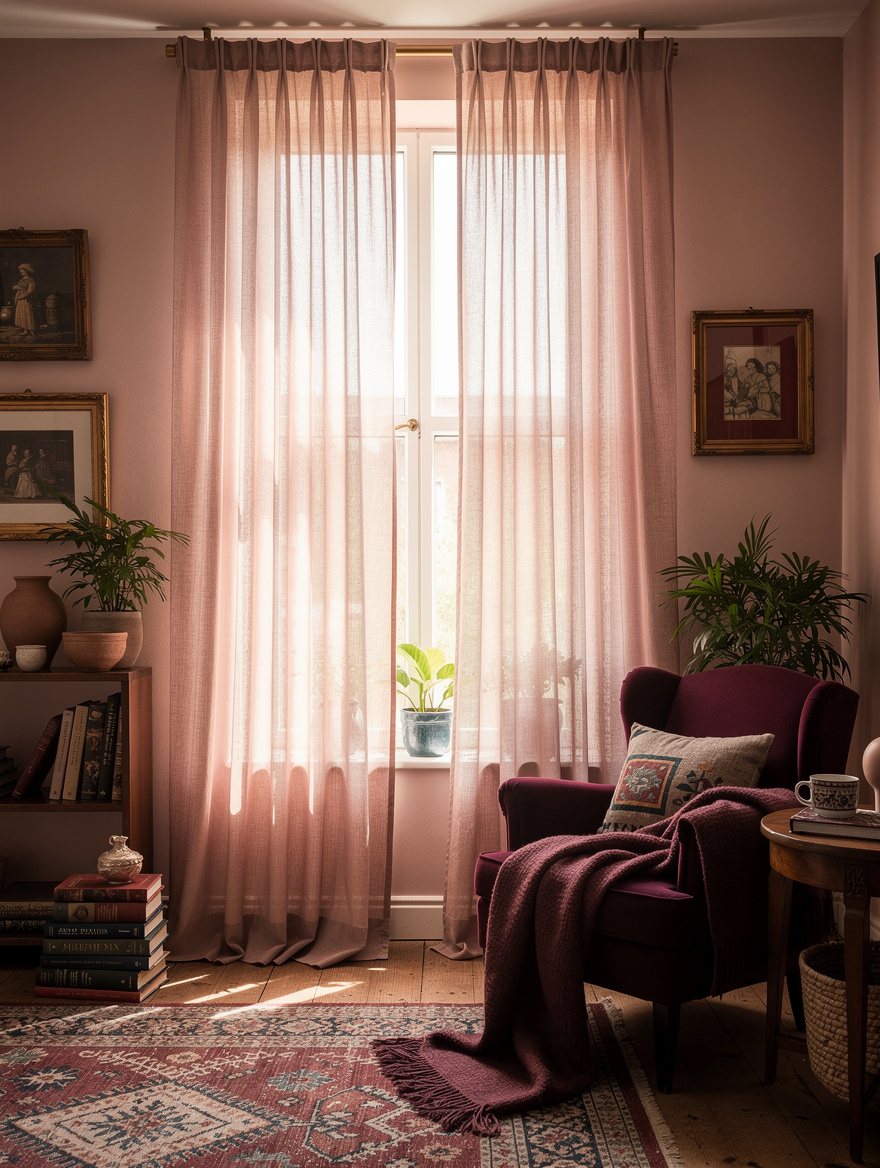
Plan for about 1.5 to 2 times the total rod width in fabric. A 2-times-full look has richer folds, while about 1.5 times is cleaner, lighter, and usually easier on the budget.
For a rod roughly 63 inches wide, aim for about 94 to 126 inches of fabric altogether. Two wide Wayfair linen-blend panels often look better than narrow bargain panels pulled flat across the glass.
Choose Light Fabric for a Bright Small Room
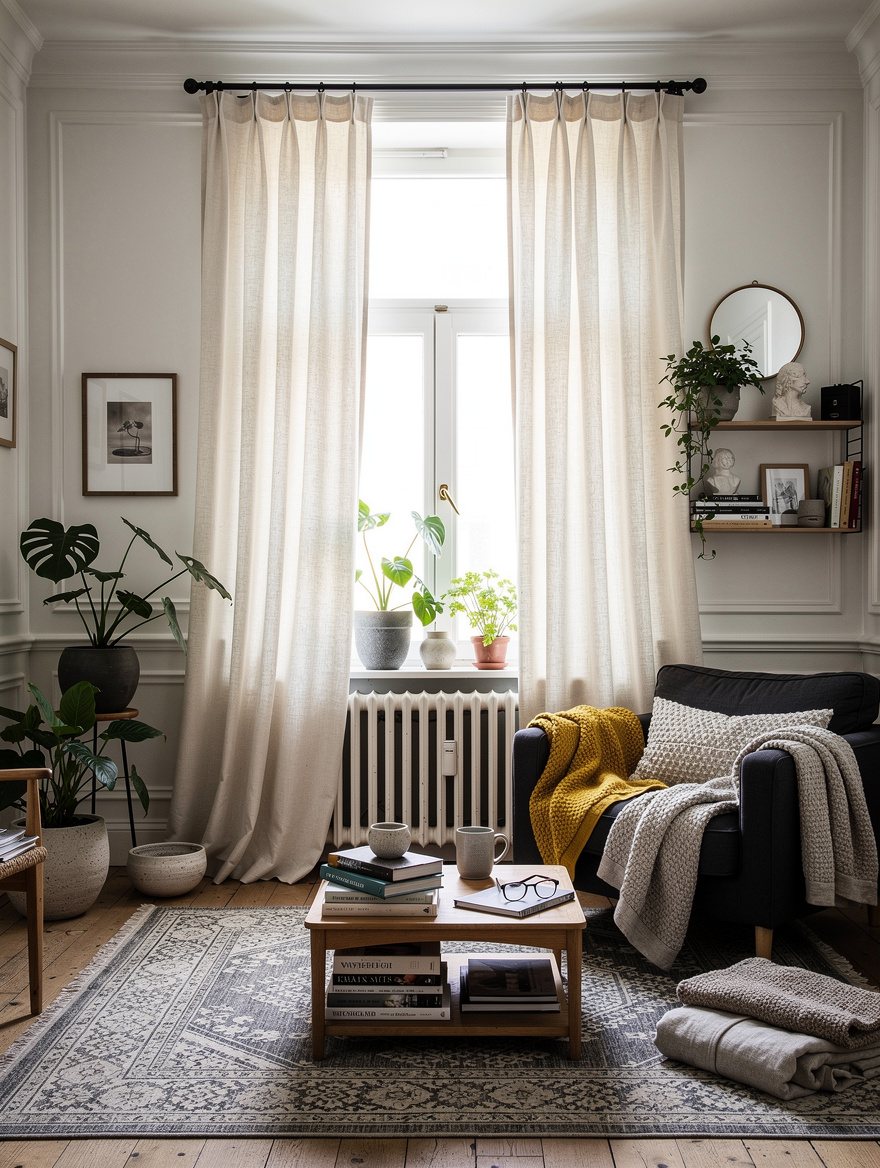
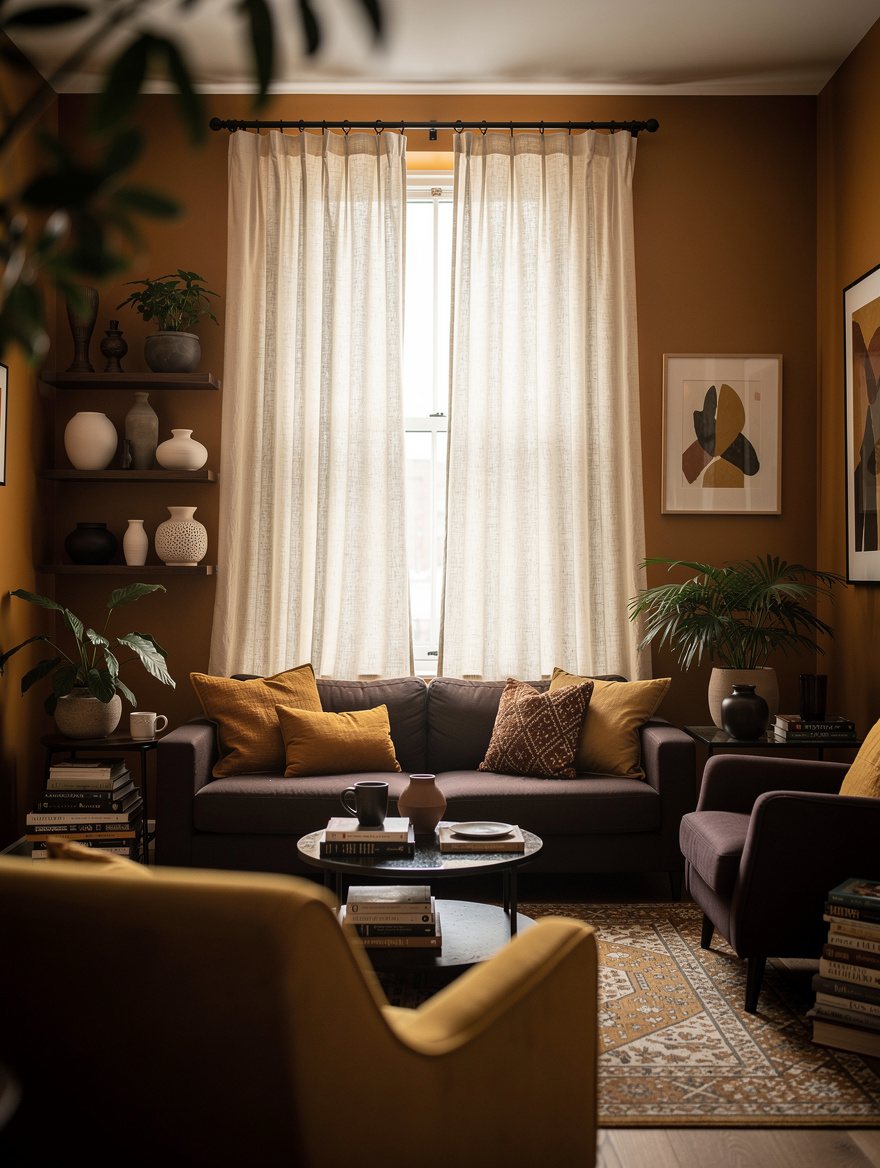
Sheer polyester or voile keeps privacy modest while allowing daylight through, and a typical pair can cost about $20 to $60. The fabric barely interrupts the wall, which is useful beside a desk or in a narrow breakfast nook.
Use white voile curtains when the room already has limited natural light. Their softness works because the folds remain visible without turning the window into a heavy block.
Use Linen Blends for Soft Vertical Texture
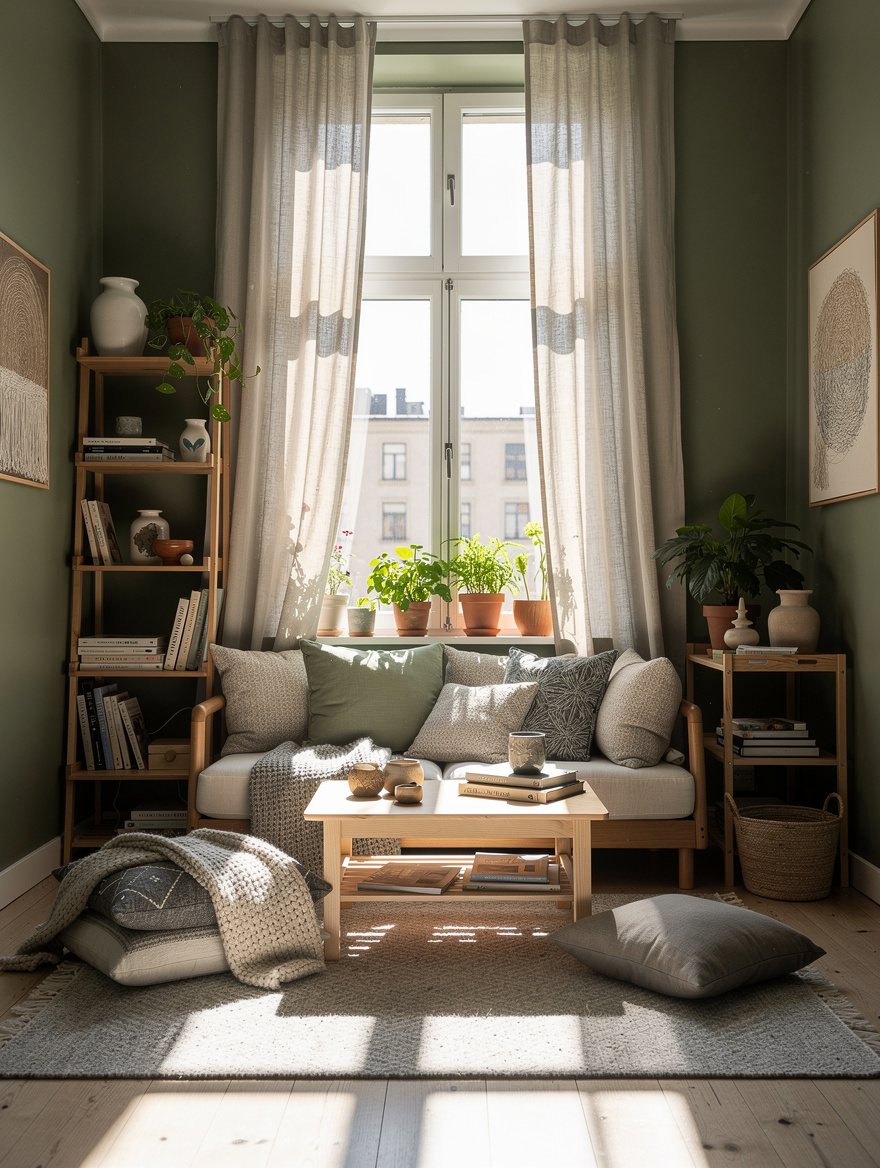
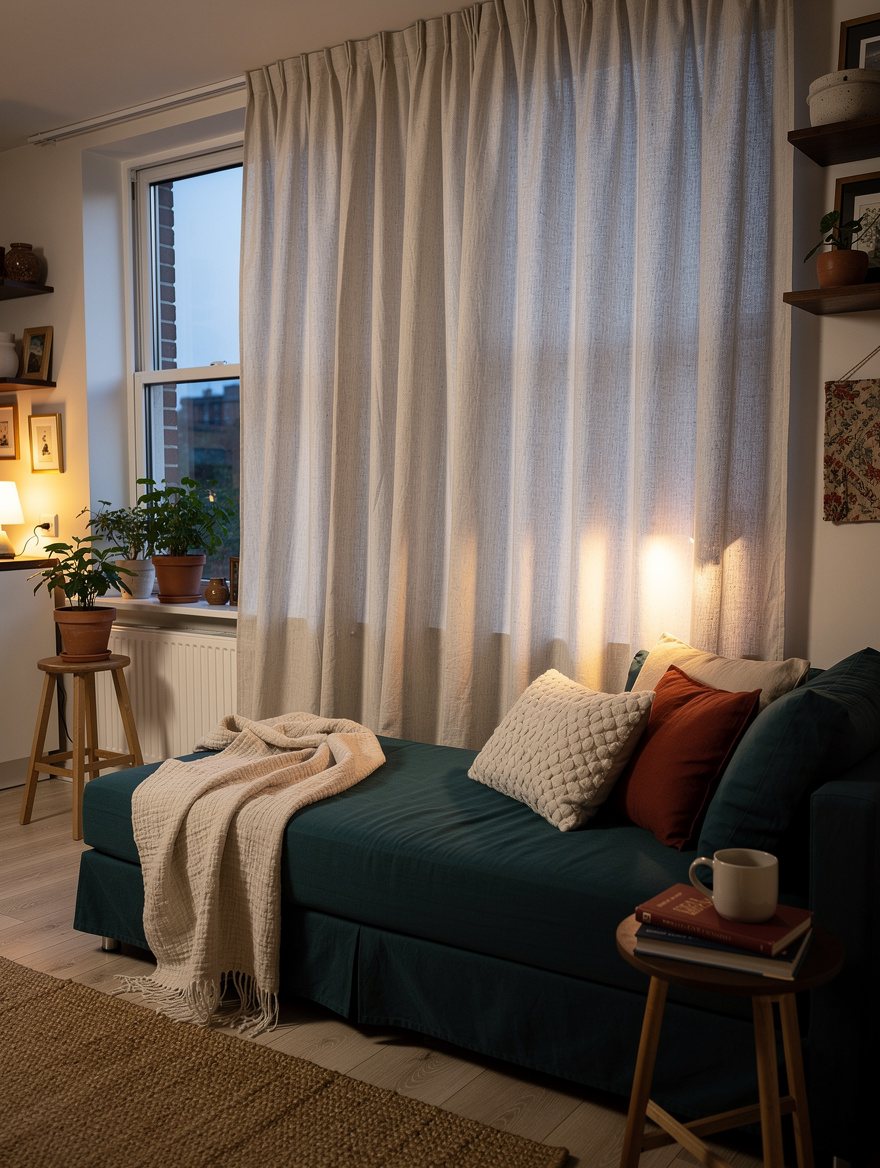
Linen and linen-blend curtains give a small room texture without the stiff, shiny finish that can feel cheap. A typical pair may cost about $80 to $350, depending on lining, width, and length.
Look for natural linen-blend panels at Target, Amazon, or Wayfair in an off-white, oat, or warm gray. Strong contrast is fine in the right room, but pale fabric makes the extra wall height read more easily.
Keep Blackout Panels Wide Enough to Drape
Blackout curtains earn their place in bedrooms, where light control and insulation matter. A typical pair runs about $50 to $220, but thin panels with too little width hang like cardboard and ruin the effect.
Choose full-width blackout-lined polyester curtains and let them stack outside the glass during the day. The room will feel taller only when the fabric falls in actual folds rather than a tight, flat sheet.

Match the Hardware to the Wall, Not the Sofa
The rod sits near the ceiling, so its finish should make sense with the wall color and nearby trim. A rod that sharply contrasts with a pale wall can redraw the very horizontal line you are trying to soften.
In a small neutral room, a brushed-brass curtain rod from Ace Hardware can add warmth without visual bulk. Use substantial brackets when the rod extends wide, because sagging hardware looks accidental from every angle.
Skip Bulky Valances and Fussy Top Treatments
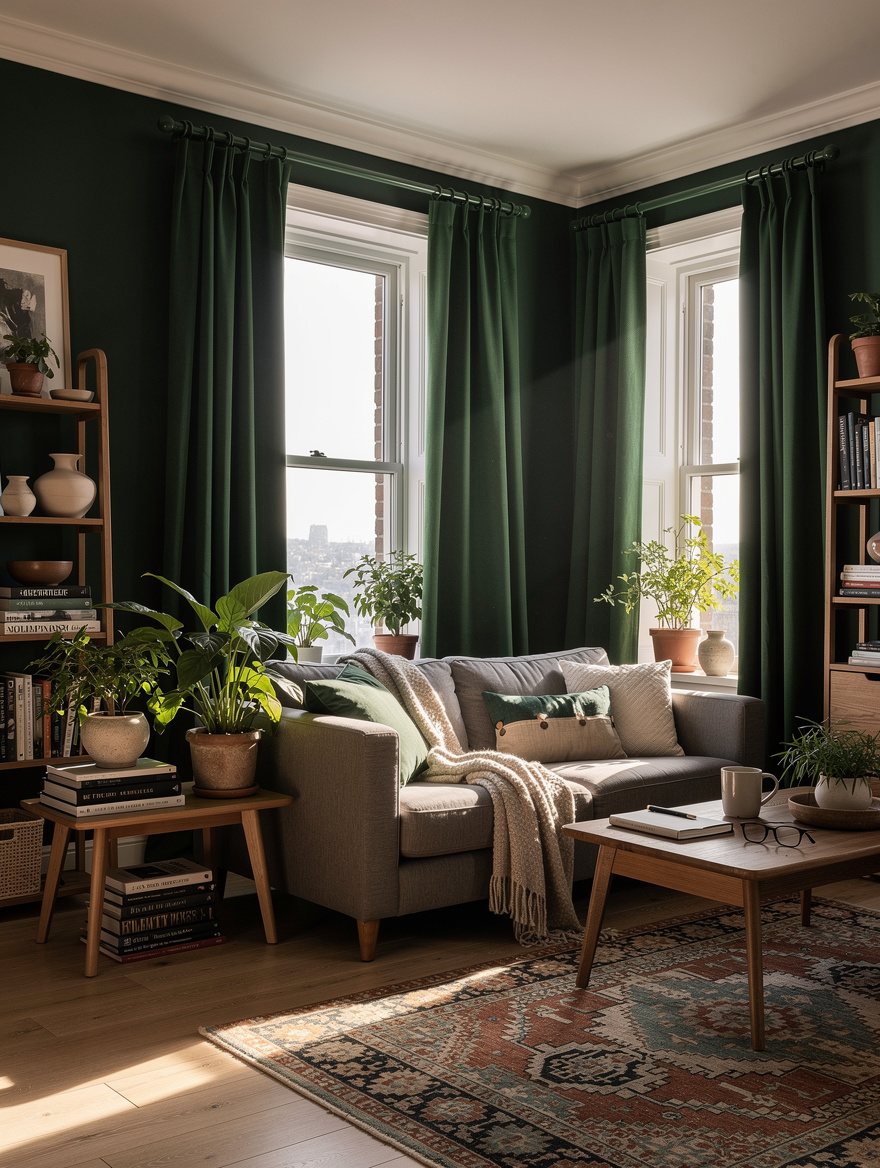
A deep valance eats into the open wall above the glass and brings the ceiling down visually. The same problem happens with oversized swags, thick tiebacks, and layered ruffles around an already small window.
Keep the top clean with simple pinch-pleat headers or back tabs. The folds should begin close to the rod and move straight toward the floor, giving the wall one calm, upward direction.
Hang Every Window at the Same Visual Height
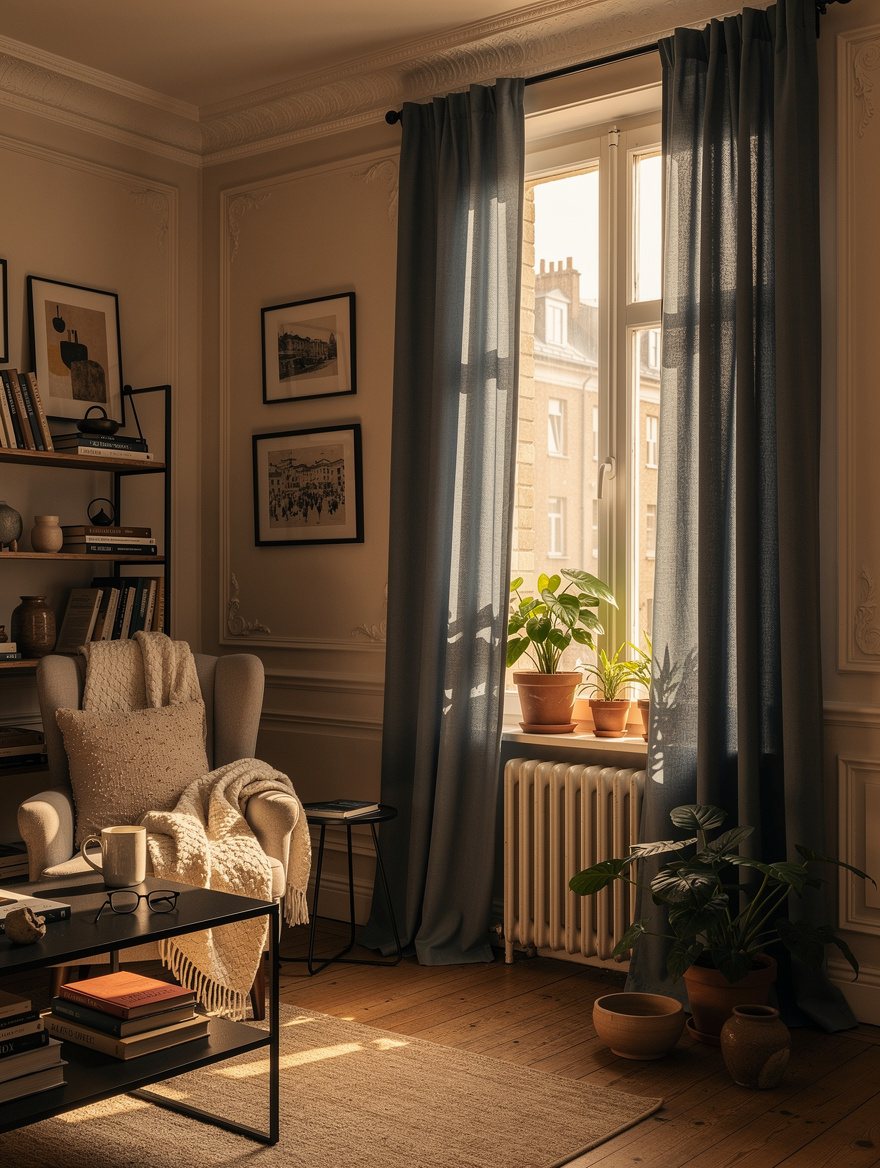
In a room with two or more windows, set rods at one consistent height whenever the architecture allows it. Matching high lines make the ceiling feel continuous, even when the window frames themselves are different sizes.
Start with the tallest practical placement, then use matching full-length drapery panels across the room. That single decision usually does more for a cramped space than buying another small accent piece.
Keep reading
- 12 Designer-Approved Curtain Tricks That Make Small Rooms Feel Taller
- 12 Designer Curtain Tricks That Make Bedroom Ceilings Look Taller
- 14 Parisian Small-Flat Tricks That Make Every Room Feel More Elegant
Begin with the rod height, then measure for panels that reach the floor before buying fabric. A high, wide installation will make the window work harder for the whole room, even on an ordinary weekday morning.