Builder Brass Taking Over Your Rental? These Amazon Lights Fight Back
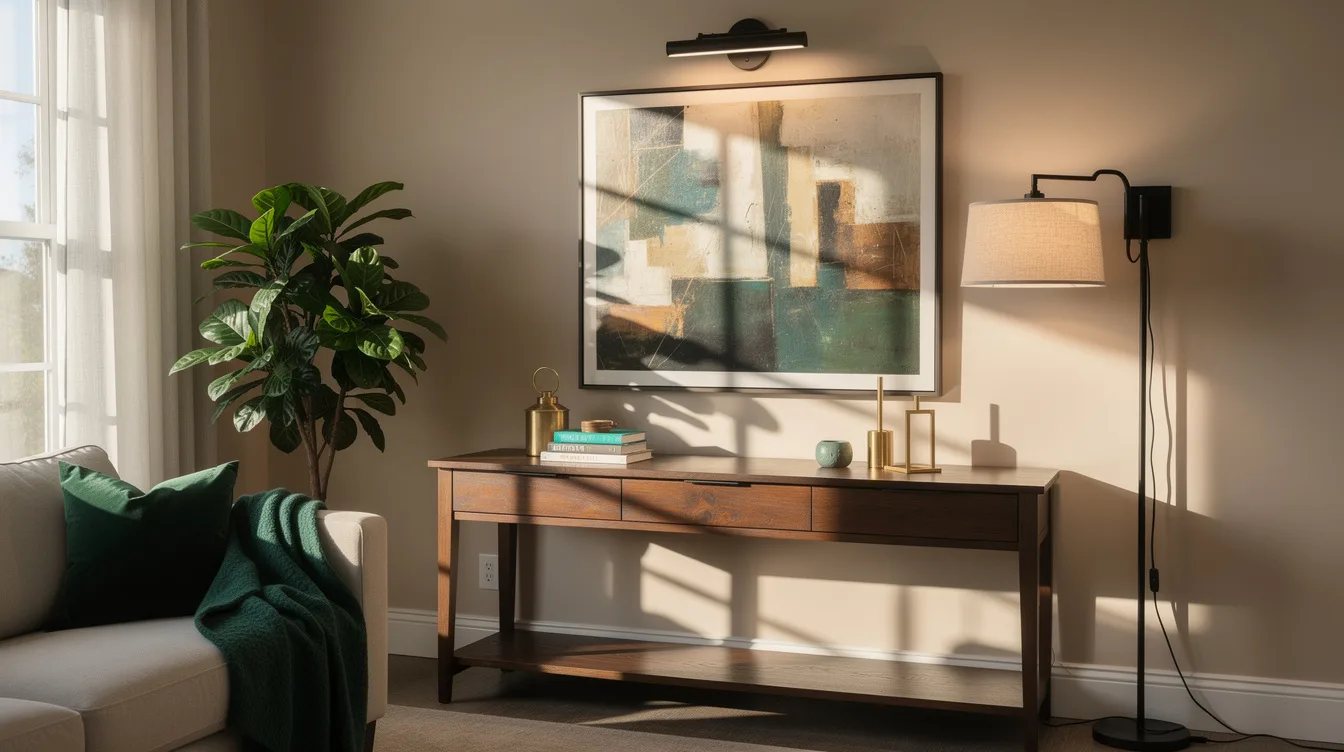
15 october 2026The rental had a 54-inch console, one harsh ceiling fixture, and enough builder brass to make every corner look yellow after sunset. A pair of Amazon plug-in lights changed the balance quickly, but only after the cords, bulb color, and mounting height were treated as part of the design.
Plug-in lighting is one of the easiest ways to work around a missing junction box. It is also easy to make it look temporary, so designers focus on the mistakes that expose the fix instead of making the room feel finished.
What you will find inside
- Mounting an Amazon Plug-In Sconce Too High
- Letting Builder Brass Set the Color Story
- Exposing a Bare Bulb in a High-Traffic Spot
- Treating the Cord Like a Problem to Hide
- Measuring the Outlet After Buying the Light
- Asking One Fixture to Do Every Job
- Mixing Warm Shades With Icy Bulbs
- Matching the Fixture to the Builder Trim
- Skipping a Dimmer on a Rental Light
- Aiming Light at the Wall Instead of the Room
- Using Temporary Hardware That Looks Temporary
- Stopping After the First Plug-In Light
Mounting an Amazon Plug-In Sconce Too High
A wall light should relate to the furniture beneath it, yet rental lighting often gets mounted near the ceiling because the first available hook seems convenient. Above a 54-inch console, place the center of an Amazon plug-in sconce close enough to the furniture that the arrangement feels connected.
For a reading chair, the shade should sit near shoulder height when someone is seated. A black metal arm light can look intentional at that level, while the same fixture hung a foot too high makes the wall feel vacant and the chair look stranded.
Letting Builder Brass Set the Color Story
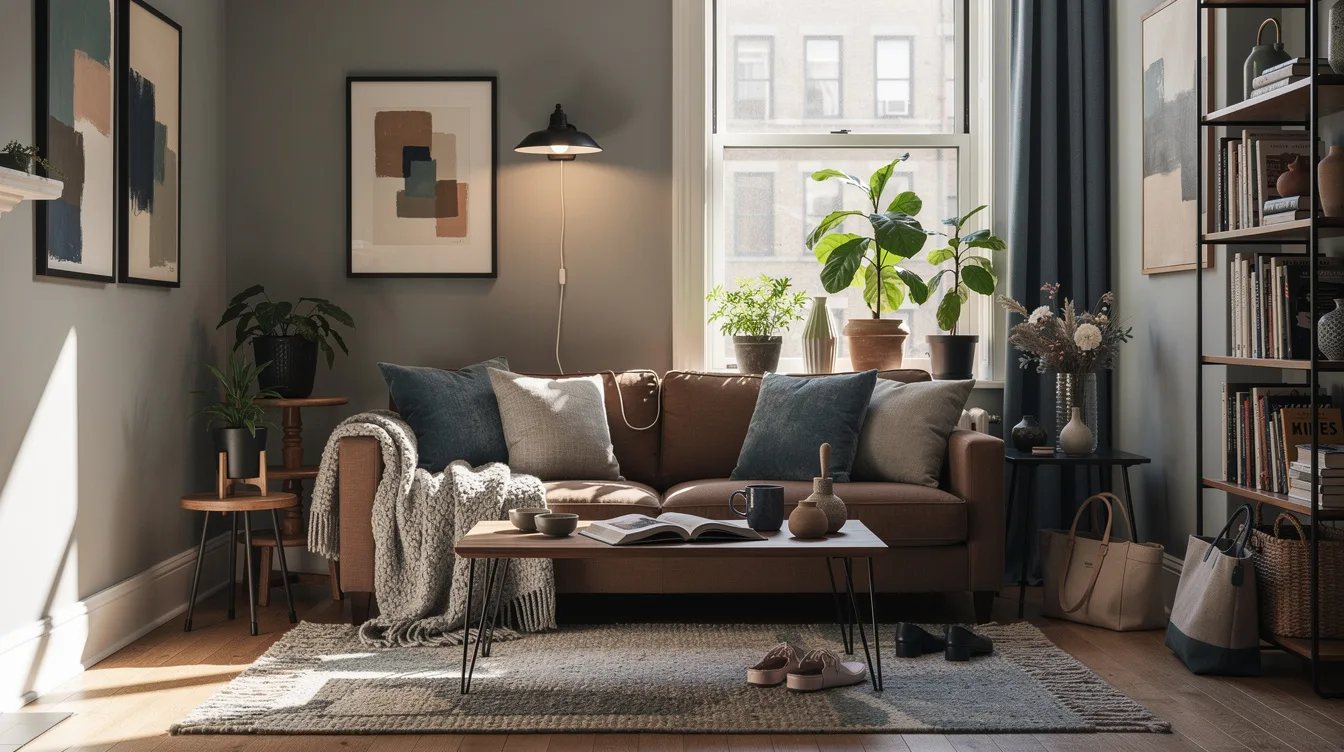
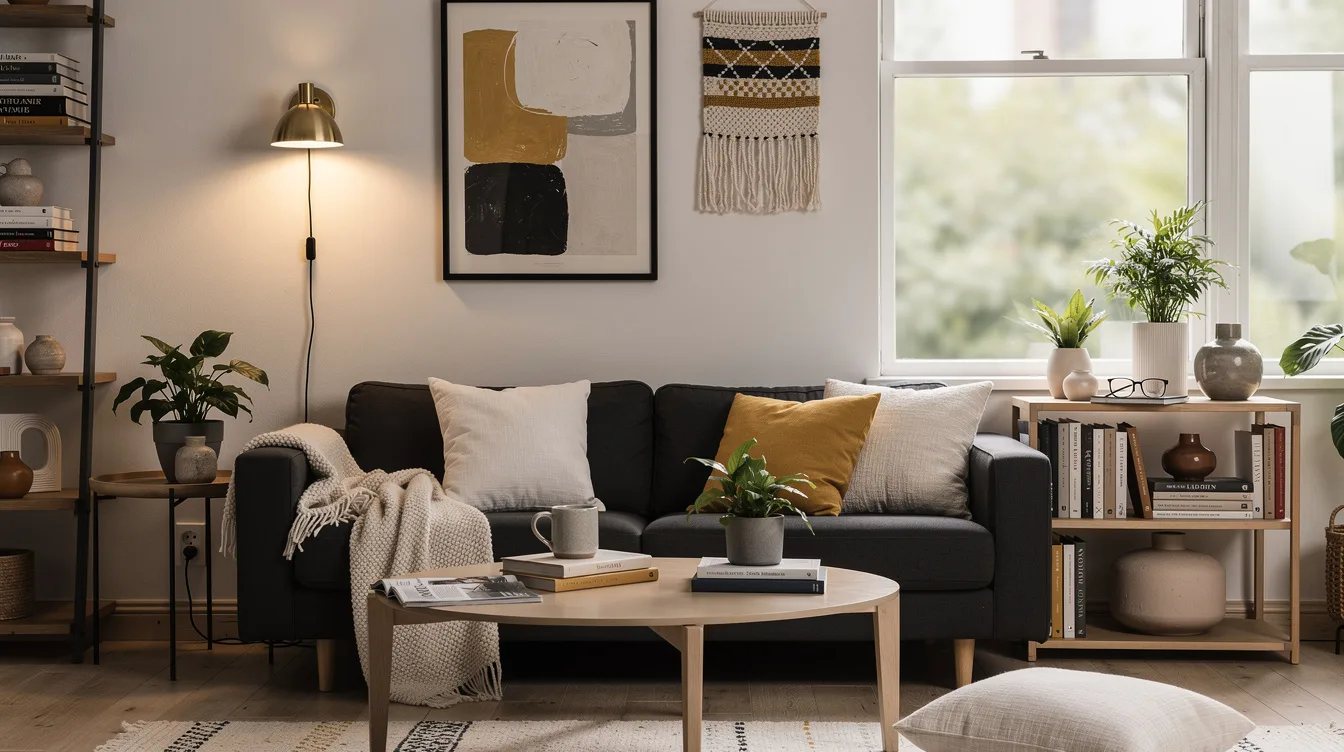
Builder brass becomes distracting when every other finish in the room is accidental. Keep the existing hardware if replacing it would create unnecessary work, then introduce a deliberate counterpoint with a matte black Amazon plug-in wall light and one matching frame or curtain rod.
Warm metal can still work, but it needs company. A brass picture light beside a walnut shelf feels considered; random yellow-gold door hardware beside cool gray paint feels like a leftover decision. Our preference is to repeat one finish twice and stop there.
Exposing a Bare Bulb in a High-Traffic Spot
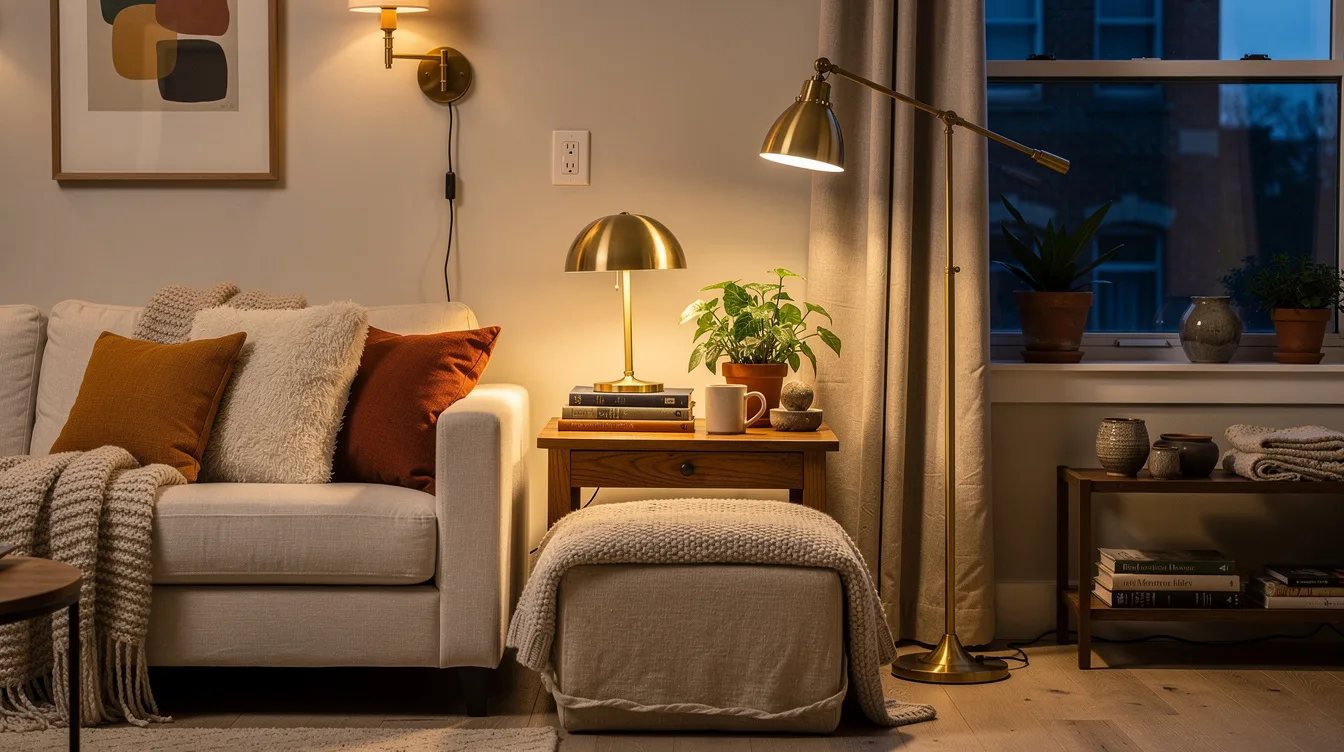
Bare bulbs throw sharp shadows across narrow rental hallways, especially when the fixture sits at eye level. Choose an Amazon linen shade or an opaque glass globe to spread the glow across the wall and keep the light comfortable when someone walks past it.
A fabric shade also makes an inexpensive plug-in fixture read as furniture rather than utility equipment. Skip glossy plastic, which catches every reflection, and look for a small shade with a soft weave or a frosted finish.
Treating the Cord Like a Problem to Hide
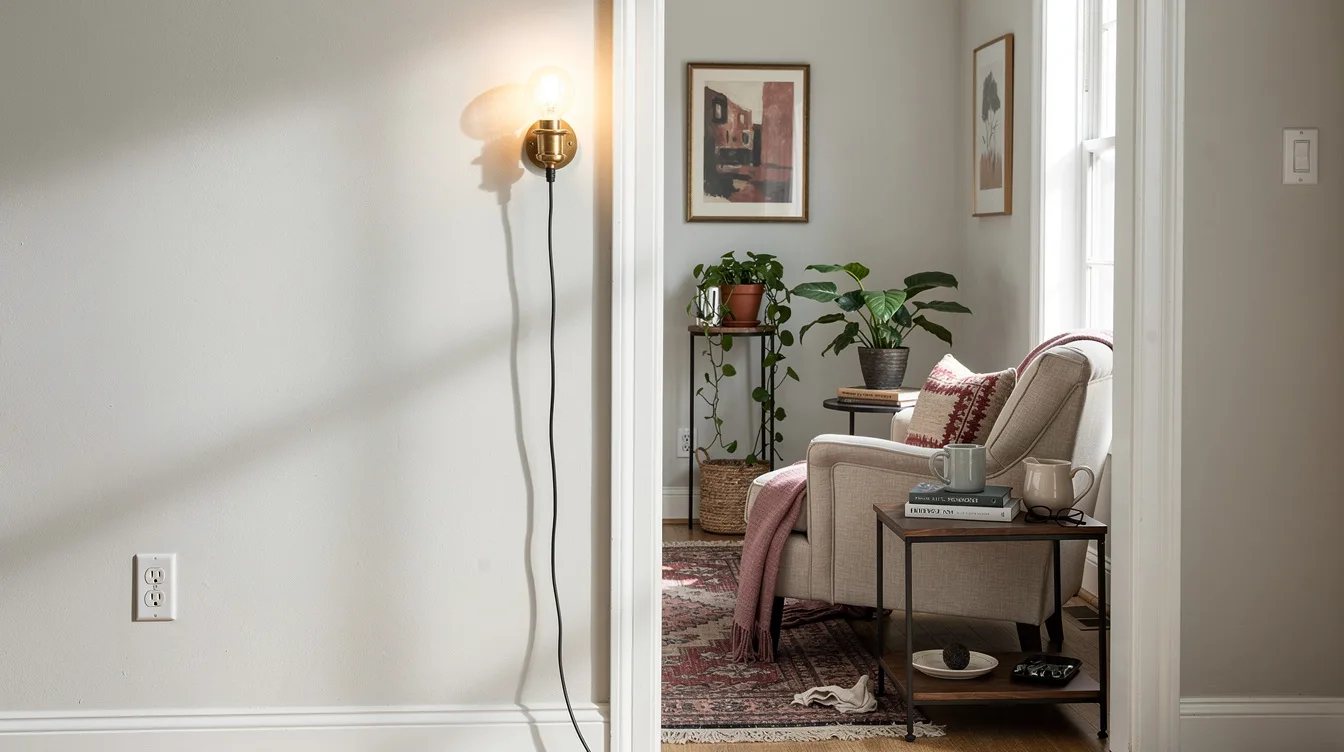
A cord disappears best when it follows a clear architectural line. Run the cable straight down from the black metal light, secure it with painted cord clips, and keep the route vertical before turning toward the outlet.
White cords work against darker walls, while black cords can look graphic on pale paint. For a warmer room, a fabric-covered cord adds texture, but the color should connect with something nearby, such as a wood frame or a dark table leg.
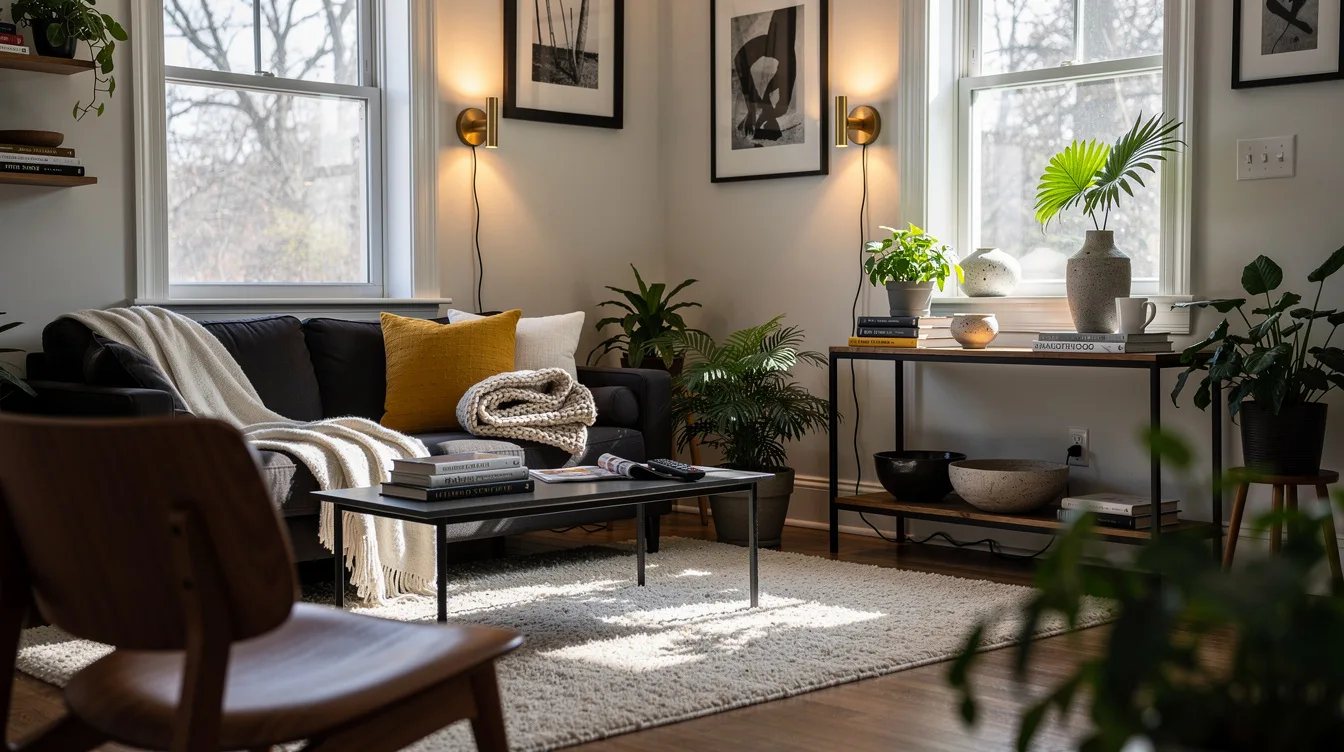
Measuring the Outlet After Buying the Light
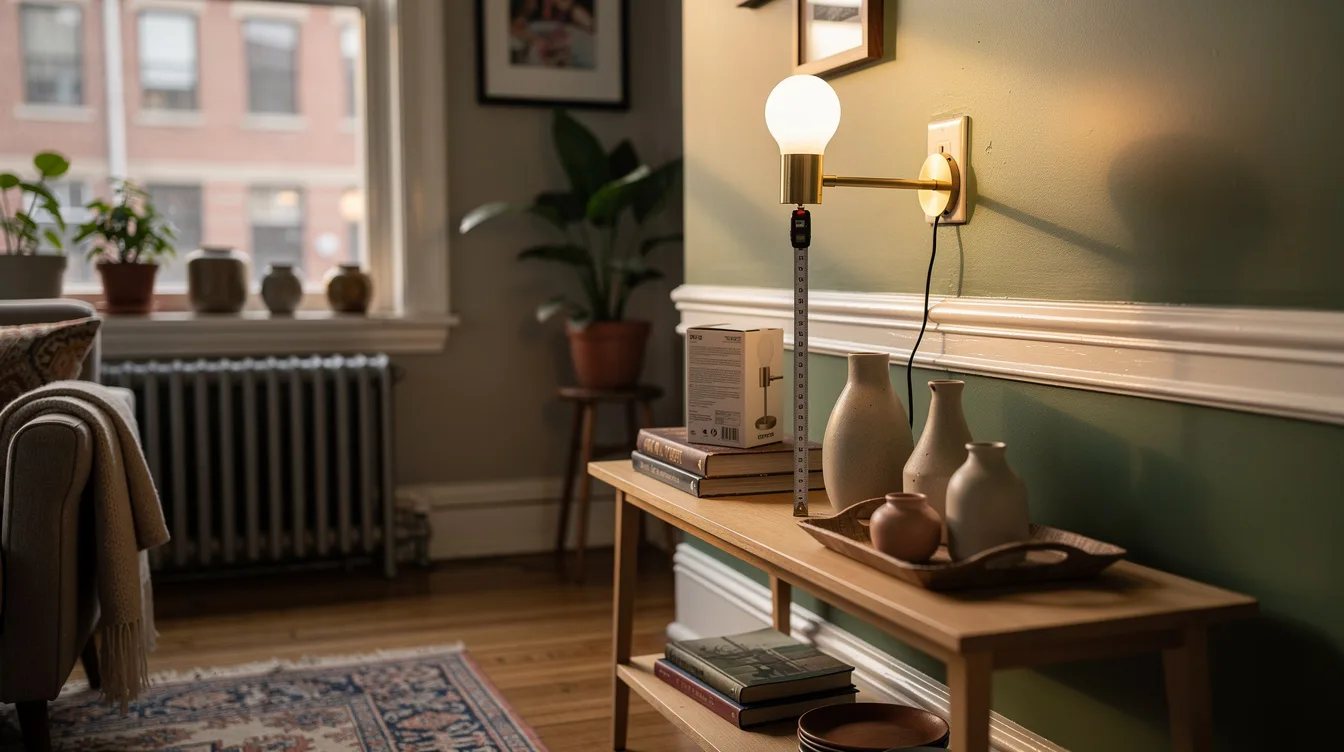
The most attractive rental light still fails when its cord stops short of the outlet or cuts across a doorway. Before ordering an Amazon plug-in sconce, map the outlet, furniture, and walking path, then allow roughly 6 feet of usable cord for a typical wall installation.
That measurement also reveals whether the fixture needs a cord cover. A paintable cover from Home Depot can cross a short stretch of wall cleanly, but a long diagonal run usually means the light belongs somewhere else.
Asking One Fixture to Do Every Job
One ceiling fixture rarely handles reading, dining, art, and evening atmosphere well. Use an Amazon plug-in picture light for a framed print, then let a floor lamp or table lamp handle the lower, warmer layer near the sofa.
Layering matters more than buying a dramatic fixture. A compact plug-in light beside a rental bed can provide useful light for a book, while a shaded lamp across the room keeps the space from feeling flat after dark.
Mixing Warm Shades With Icy Bulbs
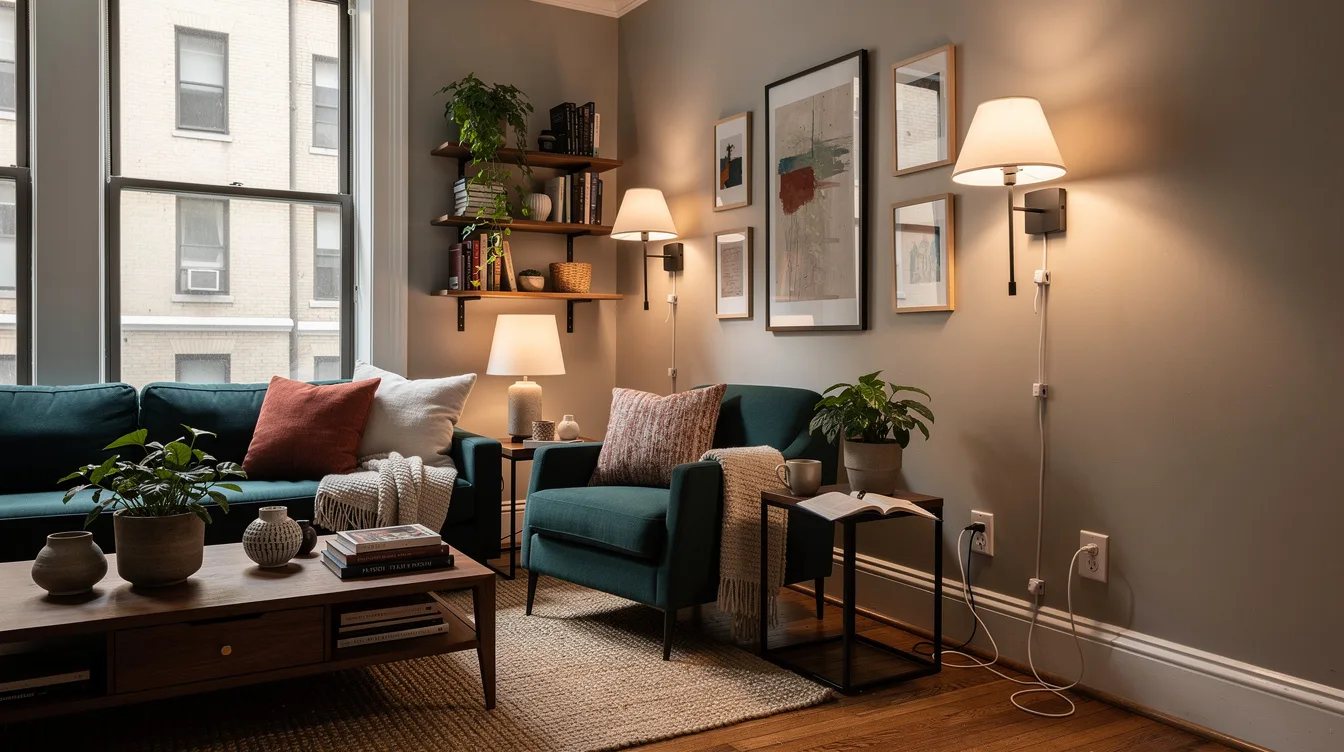
The shade controls the appearance of the fixture, but the bulb controls the room. Pair a cream linen shade with a warm LED around 2700K, and the Amazon plug-in light will produce a softer glow against white walls.
Cool bulbs can make builder brass look greener and beige paint look tired. If the room already has daylight-balanced task lighting, keep that bulb where precision matters and reserve warmer light for seating, artwork, and the bedroom.
Matching the Fixture to the Builder Trim
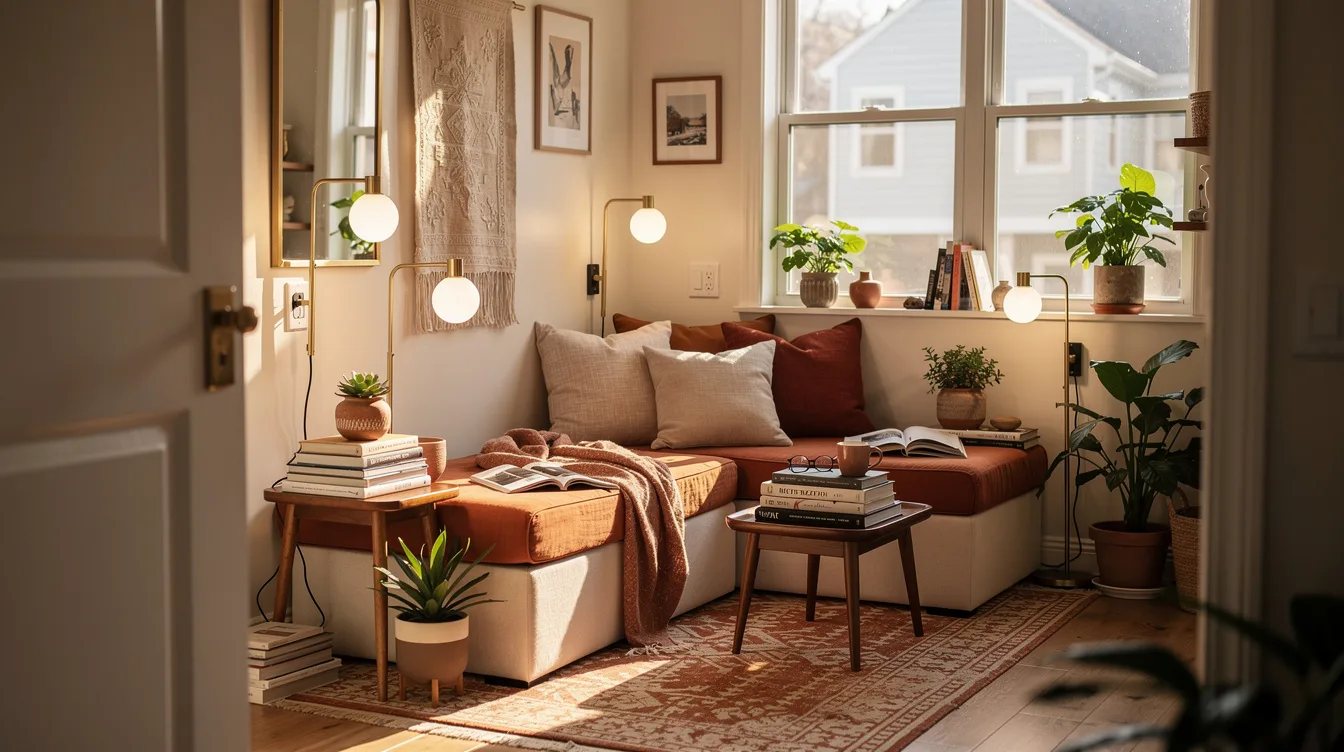
Matching every piece of rental trim usually makes the room look more generic. A simple brushed nickel plug-in light can separate the lighting layer from yellow brass door hardware, especially when the room already contains chrome or stainless steel.
Material is a stronger guide than a forced finish match. Wood, ceramic, linen, and aged metal each bring a different visual weight, so choose one that supports the furniture. A thin ceramic base suits a small rental bedroom; a heavier iron arm belongs over a substantial console.
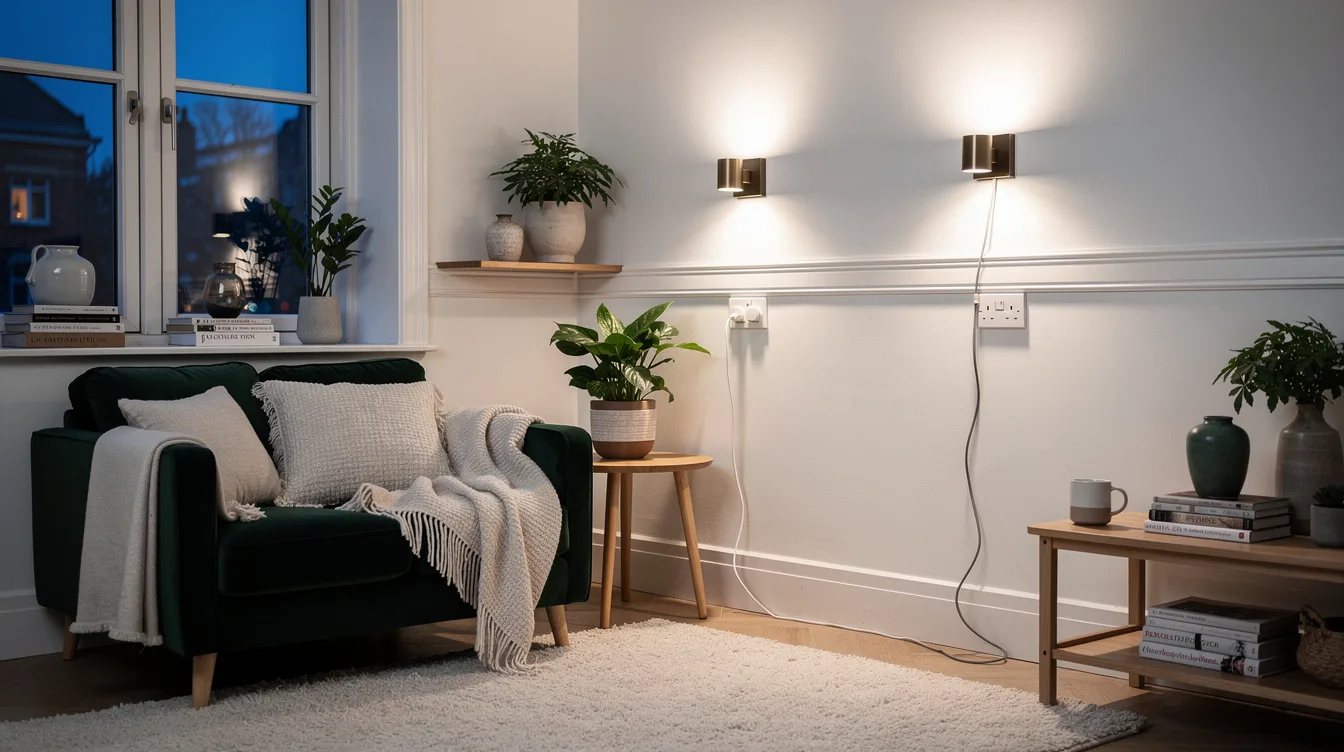
Skipping a Dimmer on a Rental Light
A plug-in fixture without dimming often has only two settings: too bright and switched off. Add a compatible plug-in dimmer to an Amazon wall lamp, then test it at the chair, sofa, or bedside rather than judging the brightness from across the room.
Check the bulb and fixture compatibility before connecting anything. An LED-rated dimmer is essential for LED bulbs, and a low setting should still provide a clean glow without flickering or buzzing.
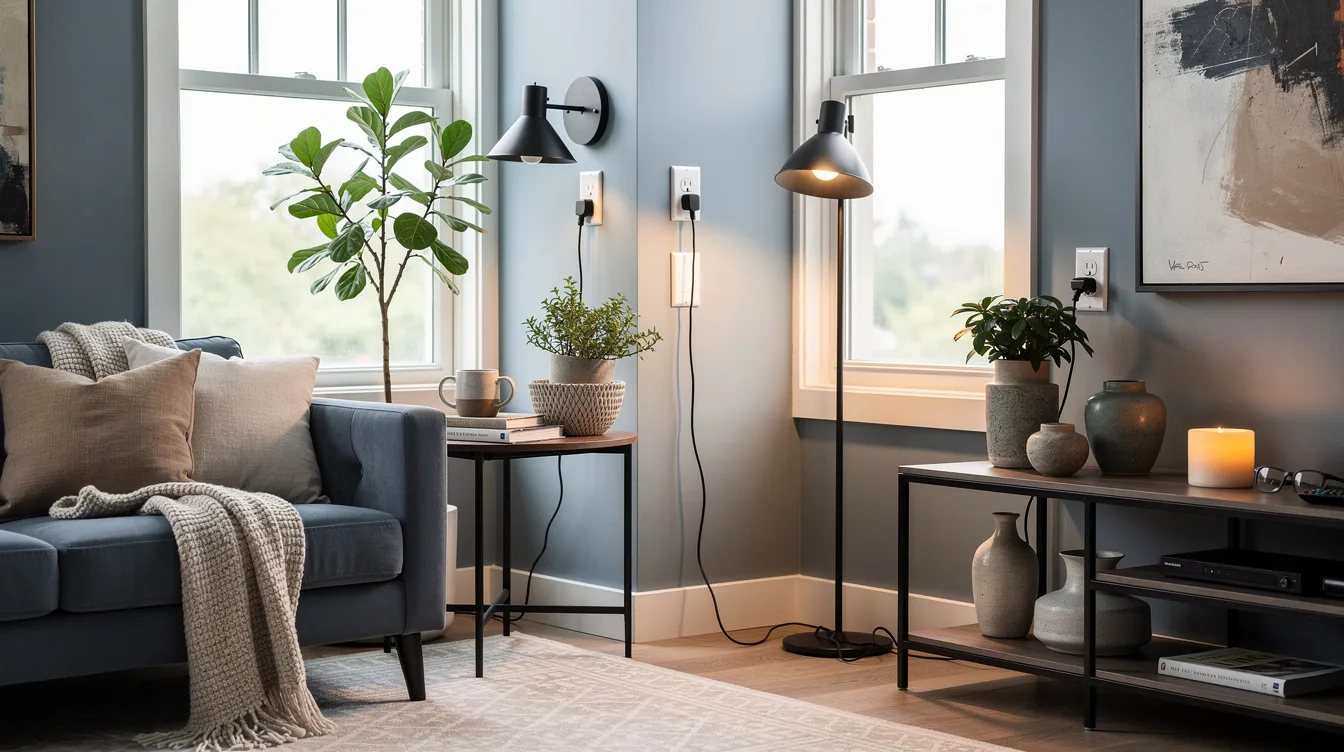
Aiming Light at the Wall Instead of the Room
Wall washing can be lovely, but a light that points only at paint wastes its best opportunity. Angle an adjustable black metal sconce toward the surface first, then let the reflected light reach the nearby seating area without shining directly into anyone's eyes.
For artwork, center the beam on the upper half of the frame and leave enough distance for the light to spread. For a desk or reading corner, choose a swing arm that can move between the wall and the task without requiring new holes.
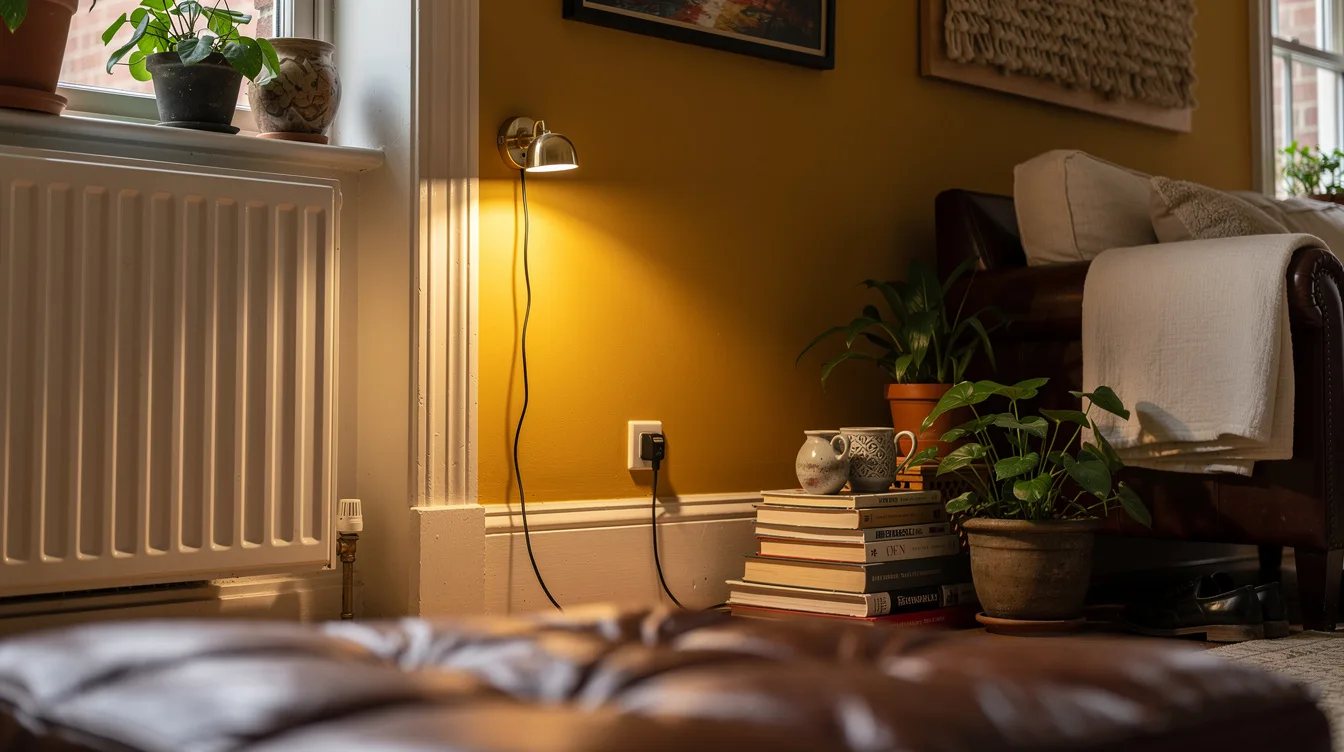
Using Temporary Hardware That Looks Temporary
Rental-friendly installation does not require flimsy-looking hardware. Small adhesive hooks, removable strips, and neat screw-in anchors can support an Amazon plug-in lamp while keeping the installation visually quiet.
Match the hardware to the wall and fixture whenever possible. A white cord clip on a white wall disappears; a bright plastic hook beside a bronze arm becomes part of the composition. Keep the attachment points evenly spaced so the cord reads as a planned line.
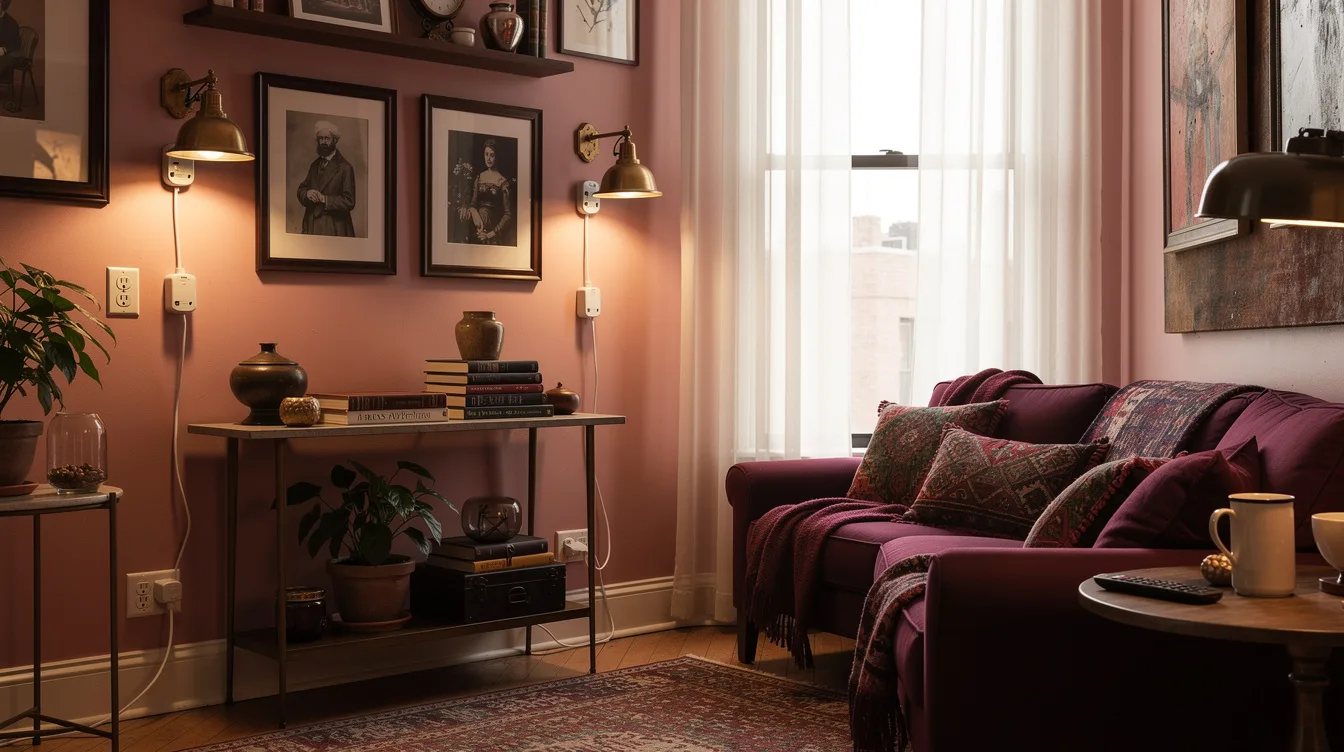
Stopping After the First Plug-In Light
One plug-in light can solve a dark corner, but it rarely fixes the whole room. Repeat the idea with a second linen-shade lamp at another height, such as a wall light beside the sofa and a small table lamp on a nearby cabinet.
Keep the fixtures related without making them identical. Matching shades with different bases create rhythm, while two unrelated finishes make the rental feel assembled from separate emergencies. This is where the builder brass finally recedes from attention.
Keep reading
Start with the darkest task area, measure the outlet route, and choose the bulb before ordering the fixture. Once that first light feels intentional, repeat its finish or shade in one more place and let the builder brass become background.
The goal is a rental that functions beautifully tonight and can still be packed away cleanly when the lease changes.


