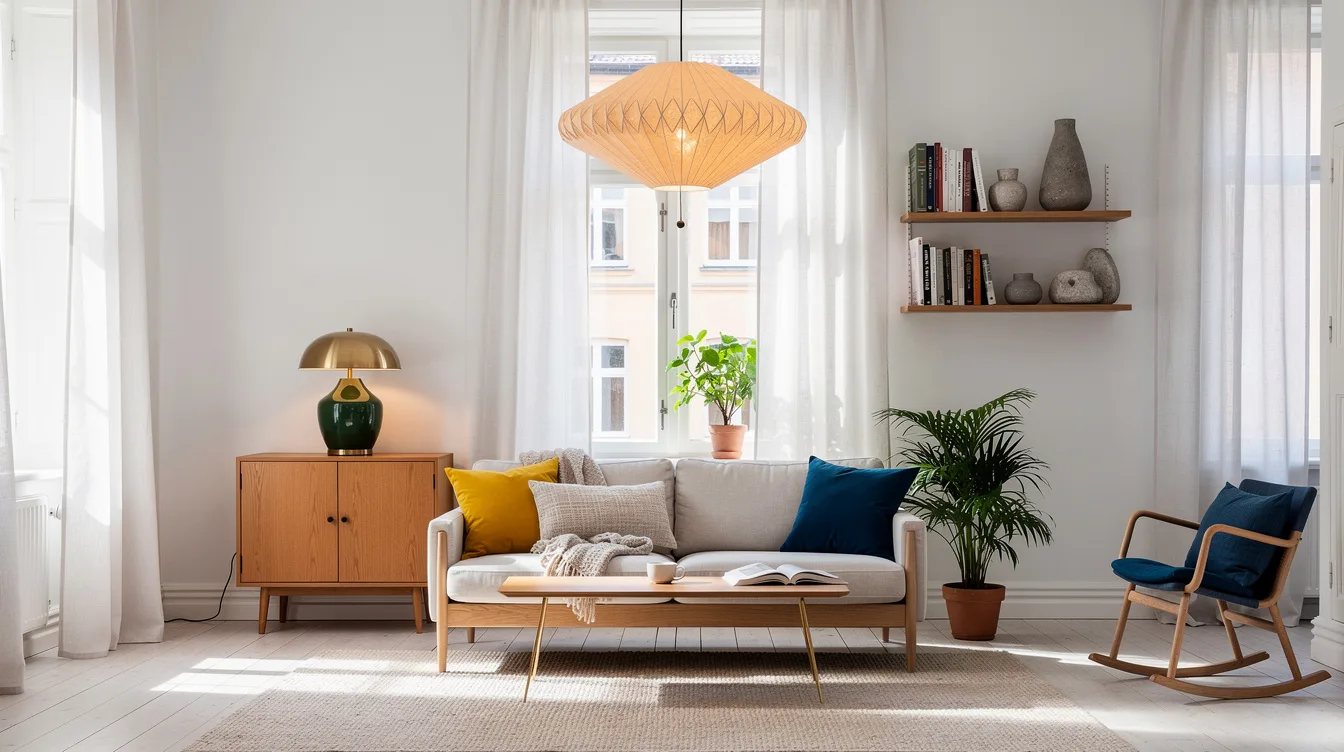
12 Stockholm Design Habits Behind That Calm Scandinavian Look
30 august 2026A calm room can fall apart when a 54-inch sofa blocks the only good window or a narrow path becomes a landing strip for bags, shoes, and chargers. The Stockholm approach starts with daylight and roughly 32 to 36 inches of open passage, then lets the furnishings do less.
It’s warmer than stark minimalism. Think pale oak, wool underfoot, practical closed storage, and a few objects that have a reason to be there.
What you will find inside
- Protect the Window Before Choosing Paint
- Keep the Main Walking Route Clear
- Choose One Properly Scaled Sofa
- Raise Furniture on Visible Legs
- Build a Small Material Family
- Make Closed Storage Do the Hard Work
- Use Open Shelves for Useful Things
- Layer Low-Glare Lamps
- Add Texture Instead of More Objects
- Anchor Seating With a Generous Rug
- Give One Colorful Piece a Job
- Edit Every Surface Before Buying More
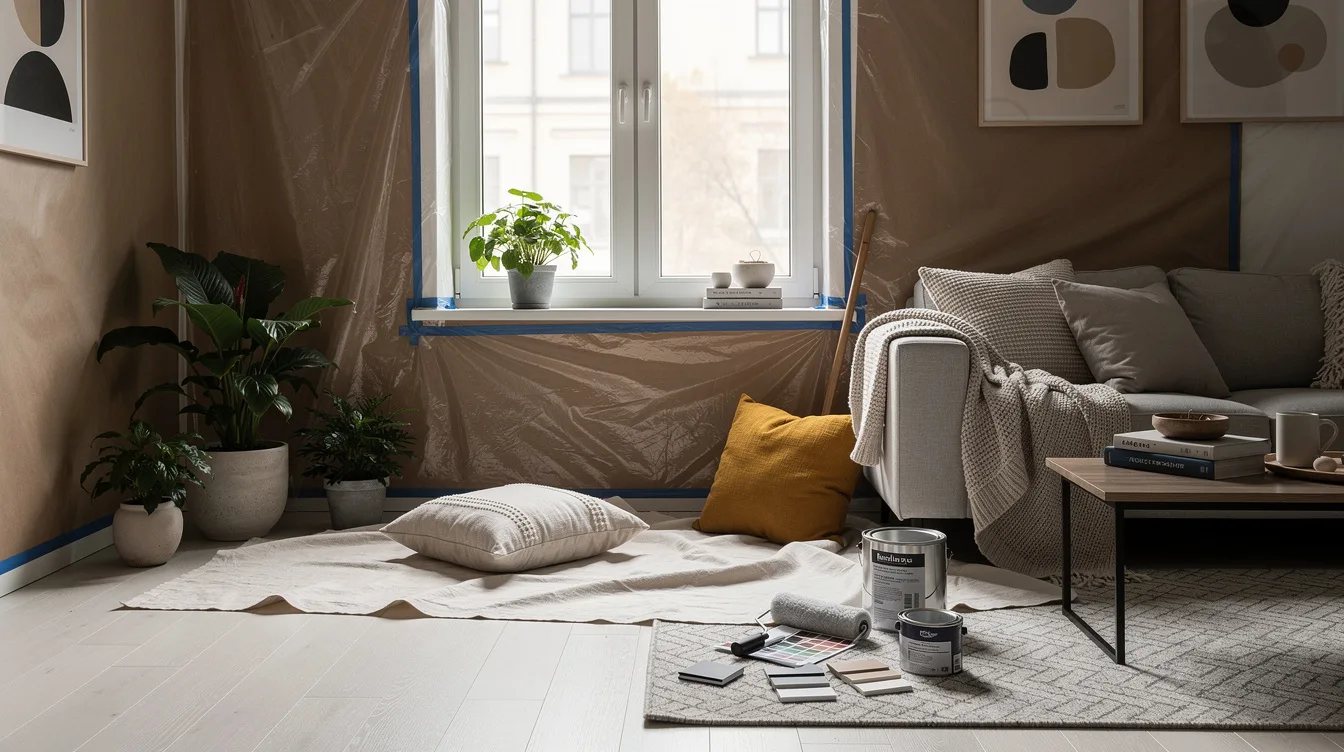
Protect the Window Before Choosing Paint
Start with the window wall, because daylight is the main decorating material in this look. Keep tall bookcases, hulking sectionals, and dark opaque panels away from it, then choose a quiet warm white, pale greige, or muted gray-green for the surrounding walls.
Hang linen curtains high and wide so they frame rather than shrink the glass. A light-filtering pair from IKEA or Target feels more convincing than heavy drapery, even in a room with modest finishes.
Keep the Main Walking Route Clear
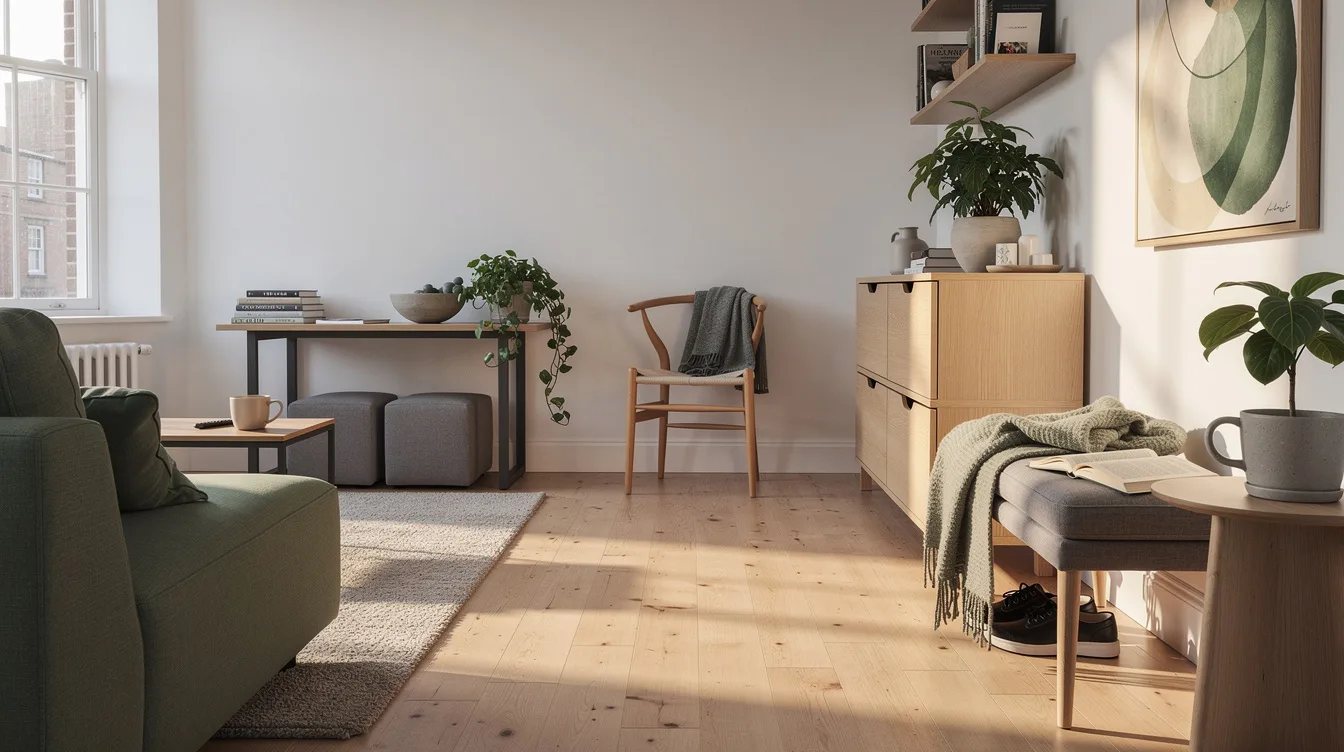
Calm often comes from empty floor, not another decorative purchase. Keep roughly 32 to 36 inches open between the front door and storage, the kitchen and table, or the sofa and window whenever the room allows it.
In tighter rooms, around 24 to 28 inches can work for a secondary route. Move the ottoman, reduce the side-table count, and let one corner stay empty, because every usable inch of circulation makes the whole room feel more settled.
Choose One Properly Scaled Sofa
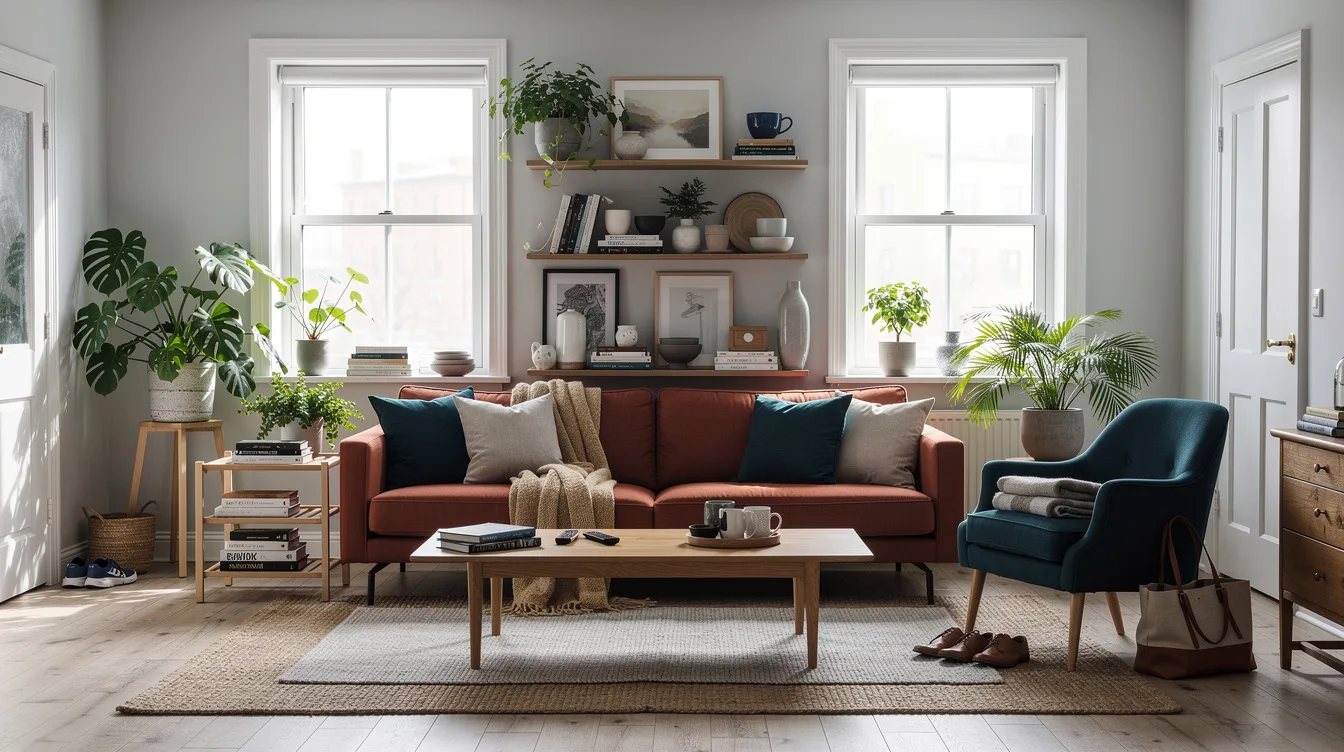
Pick one substantial sofa instead of building a crowded seating arrangement from undersized pieces. For a living room around 190 to 270 square feet, a sofa roughly 79 to 91 inches wide usually gives enough comfort without swallowing the floor.
A textured neutral upholstery from Wayfair, IKEA, or Costco works well with pale wood. Skip the extra-deep, overstuffed silhouette if the room is narrow, since visible floor around the sofa is part of the effect.
Raise Furniture on Visible Legs
Furniture with open legs lets daylight travel across the floor and keeps large pieces from reading as blocks. A sofa, cabinet, or reading chair with a slim wood or black metal base gives the room needed air.
Try a light oak media console rather than a bulky dark unit that sits flat on the floor. This is one of the easiest ways to make a rental living room feel less packed, and it costs nothing if you choose the right proportions first.
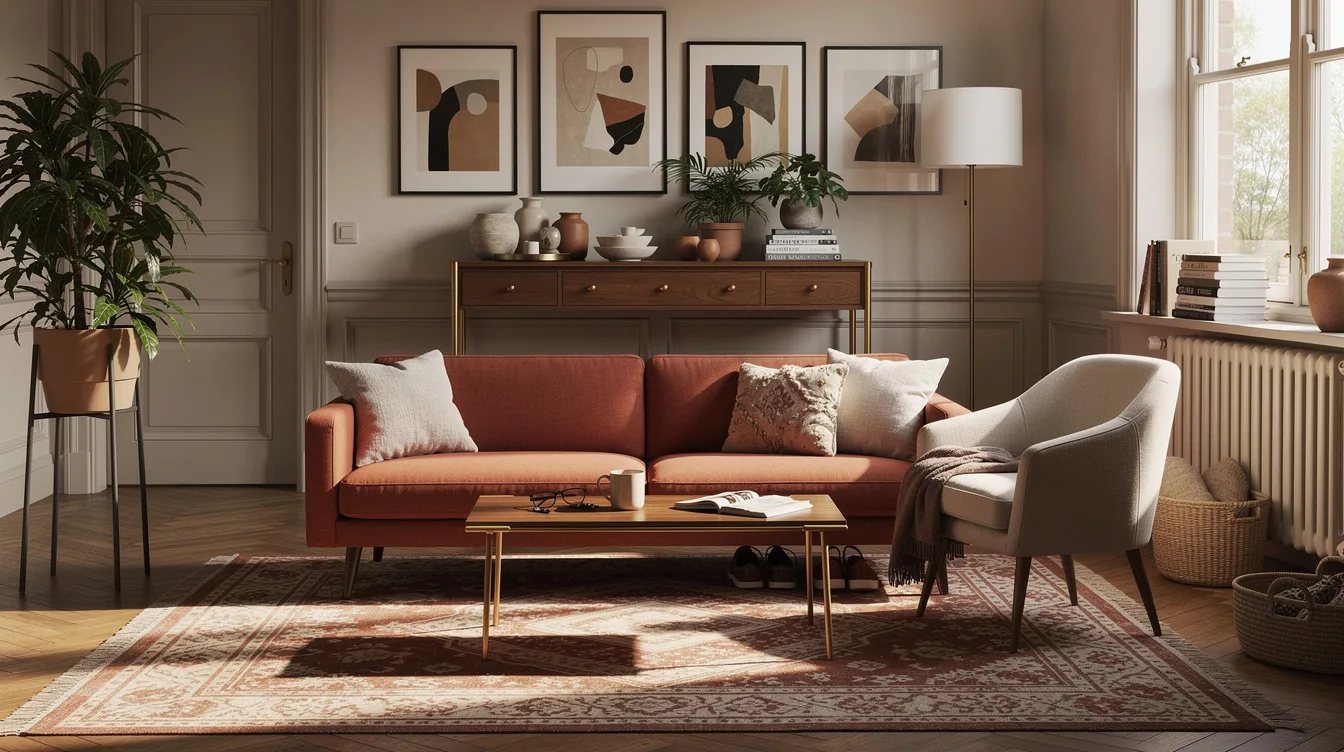
Build a Small Material Family
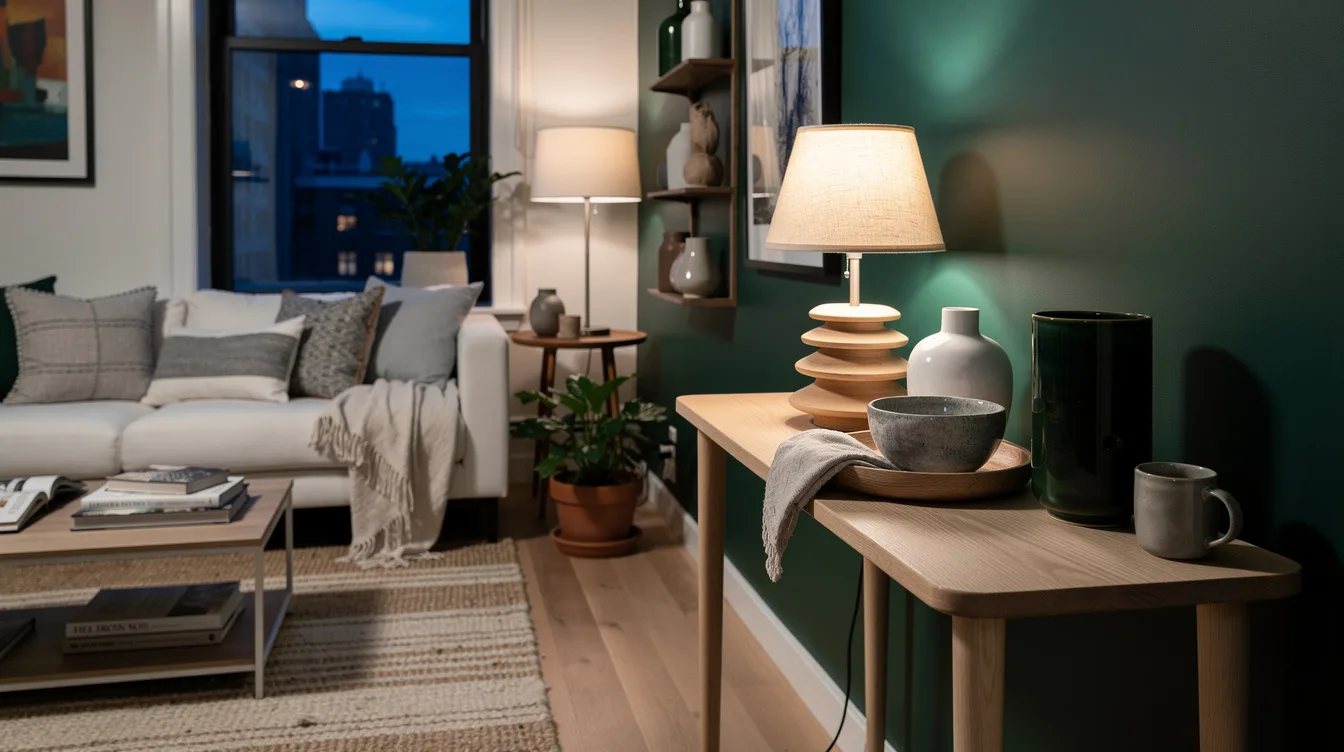
Use a short material palette: pale oak or ash, off-white fabric, matte walls, and one grounded dark note. Black, deep brown, forest green, or muted blue gives the room definition without turning it into a themed color story.
A wool flatweave rug, an oak table, and a charcoal lamp are enough contrast for most rooms. Matching furniture sets look too rehearsed here, while related materials create the quieter, lived-in result Stockholm rooms get right.
Make Closed Storage Do the Hard Work
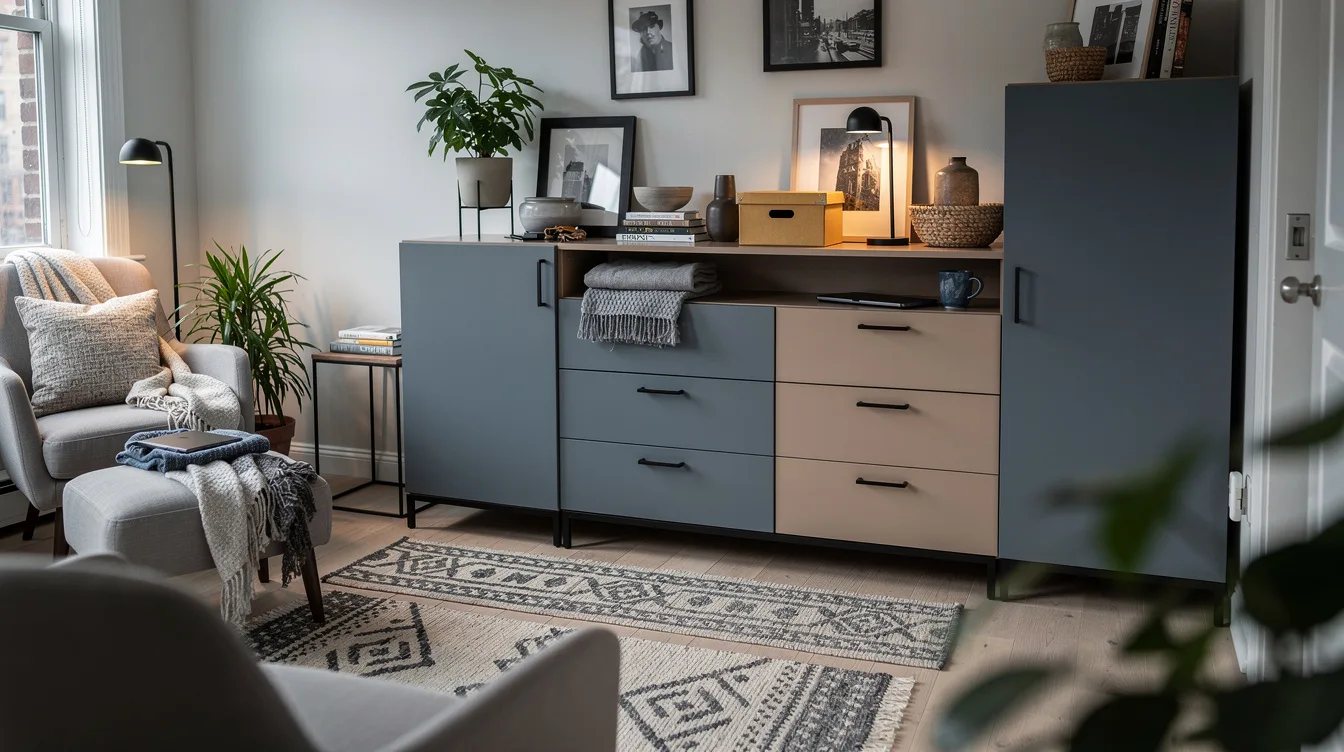
Put daily clutter behind doors before bringing in more decor. Closed storage for cables, mail, games, cleaning supplies, and small electronics protects the visual calm that open shelving can quickly ruin.
An IKEA BESTÅ cabinet or a low unit from Home Depot can handle the job without needing a wall of built-ins. Choose handles that disappear into the design, then reserve the top surface for a lamp and perhaps one useful tray.
Use Open Shelves for Useful Things
Open shelving needs an editing rule: show books, ceramics you actually use, a lamp, and a small personal object. It is not a staging zone for dozens of matching vases or souvenir collections.
A shallow shelf, roughly 6 to 12 inches deep, holds books and glassware without crowding a compact room. The IKEA LACK wall shelf can work when styled sparsely, but keep the shelf count low so the wall still has breathing room.
Layer Low-Glare Lamps
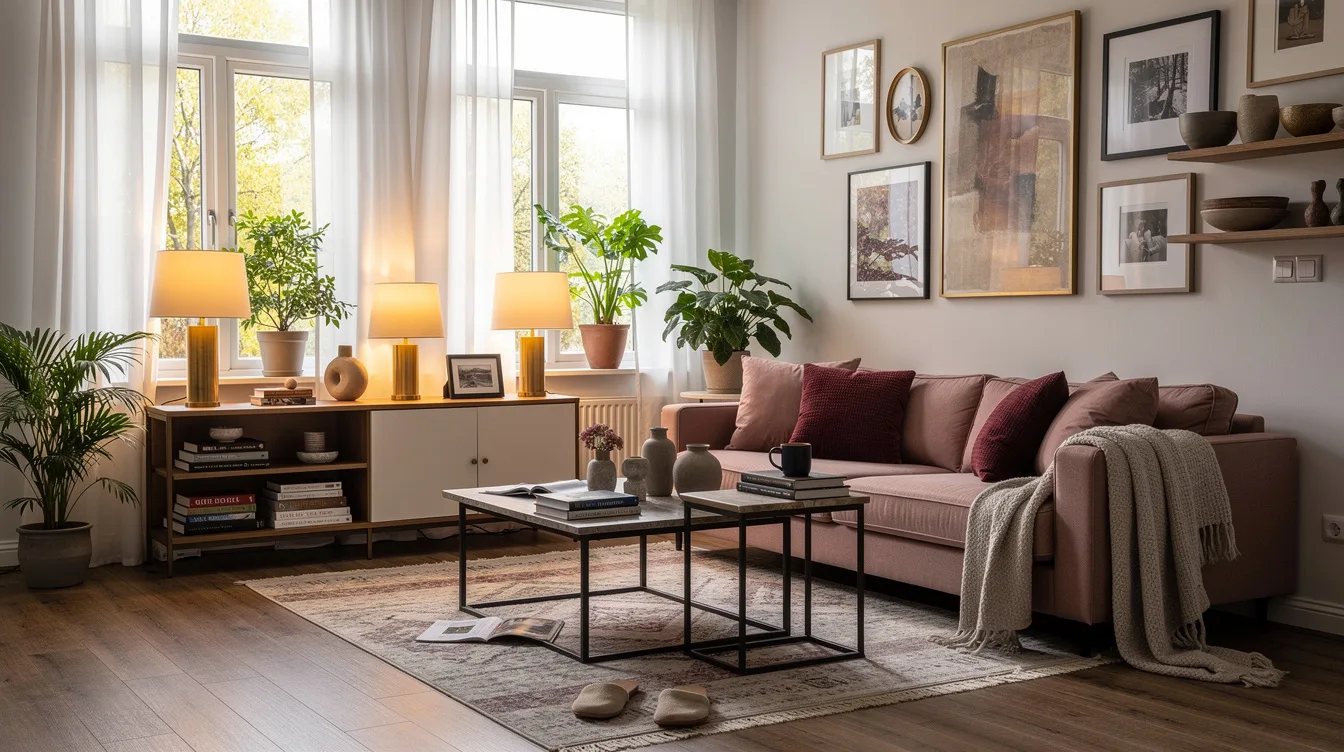
One bright ceiling fixture creates flat, impatient light. Use a floor lamp near the sofa, a table lamp by a shelf or window, and a focused reading light where someone actually sits.
A paper-shaded IKEA SINNERLIG lamp, typically priced around $70 depending on the version, brings softness without visual weight. Warm bulbs and shaded fixtures make the room more inviting after sunset, while exposed bright bulbs make it feel unfinished.
Add Texture Instead of More Objects
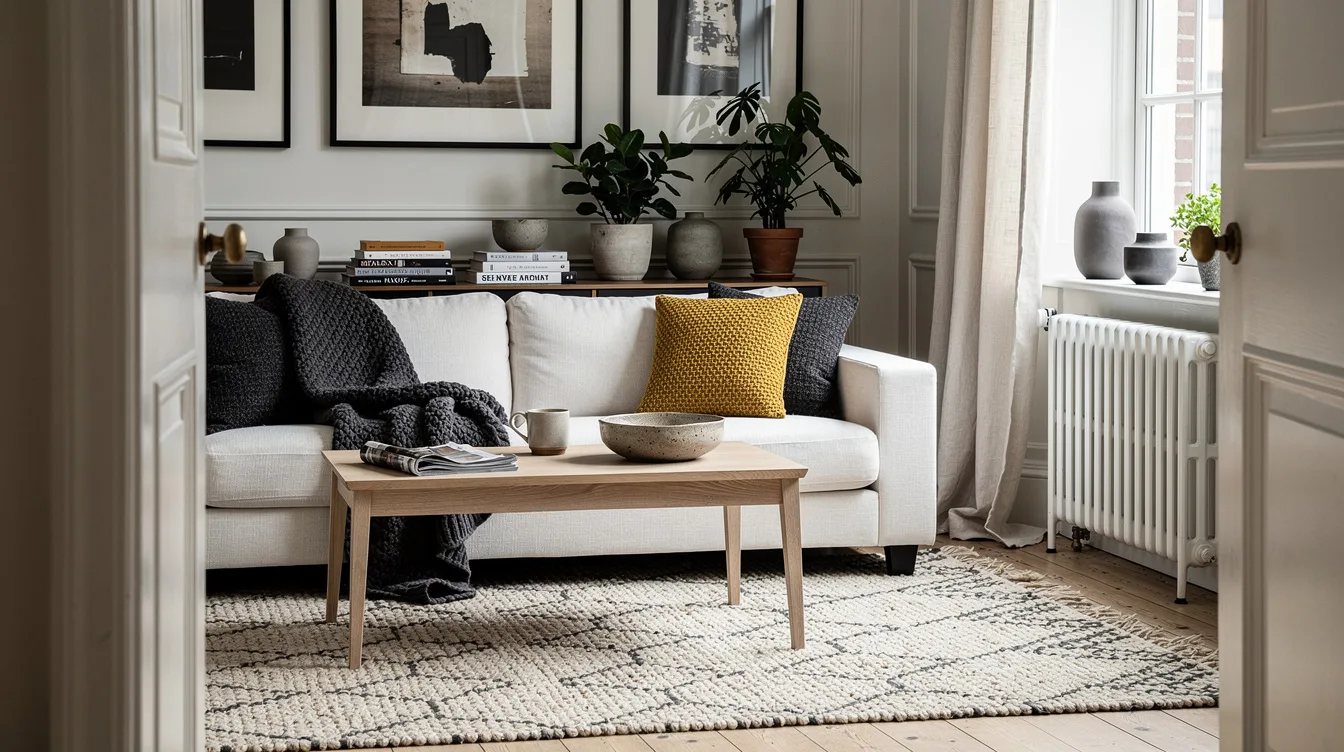
When a room feels bare, add touchable materials before adding accessories. Matte paint, wood grain, washed linen, stoneware, paper, and wool make a quiet palette feel full without making every surface busy.
A washed linen pillow cover, one wool throw, and a handmade-looking ceramic bowl are plenty. Glossy synthetic finishes and piles of tiny decor pieces fight the relaxed, useful character that makes this style believable.
Anchor Seating With a Generous Rug
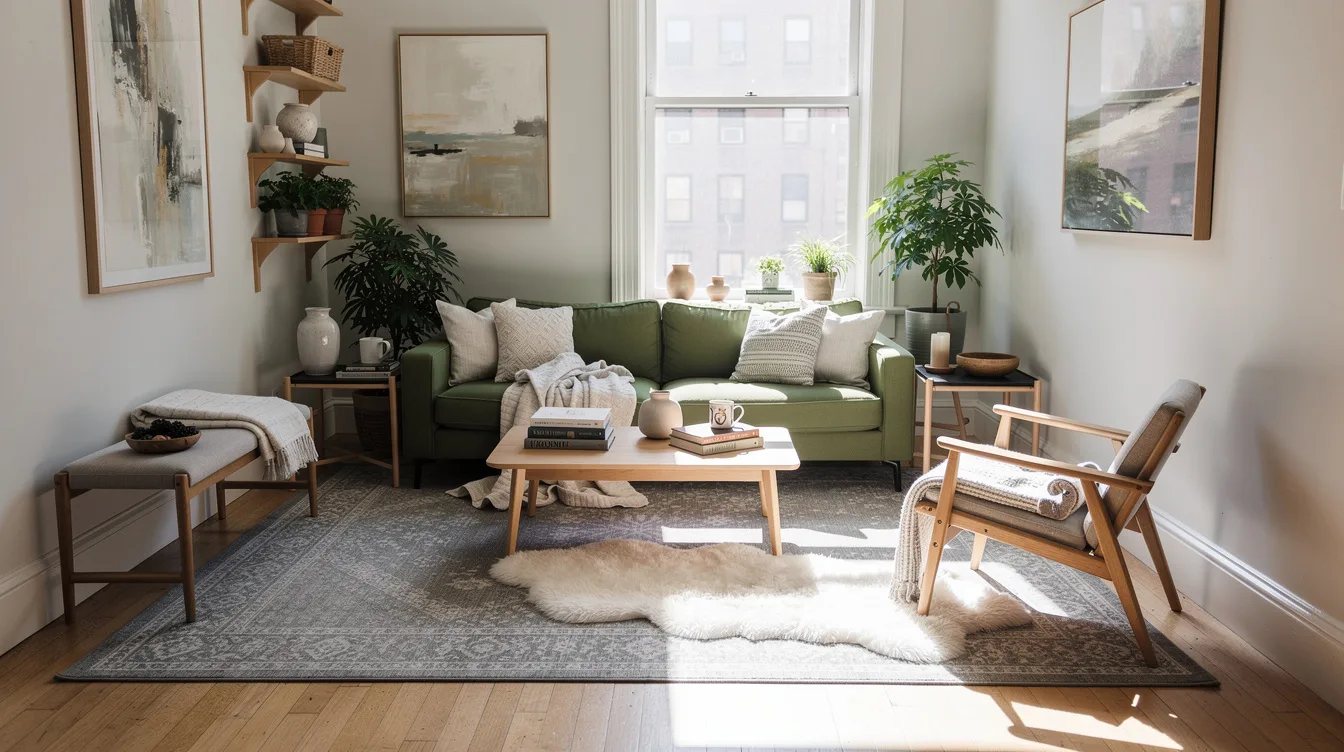
A rug that is too small makes furniture look scattered, even when every other choice is solid. In a typical apartment living room, an approximately 8-by-10-foot rug often gives the front legs of the sofa and chairs a shared foundation.
Choose a low-pile wool-blend rug in oatmeal, faded blue, or soft brown from Lowe’s, Wayfair, or Amazon. A subtle woven pattern has more staying power than a high-contrast geometric print that demands all the attention.
Give One Colorful Piece a Job
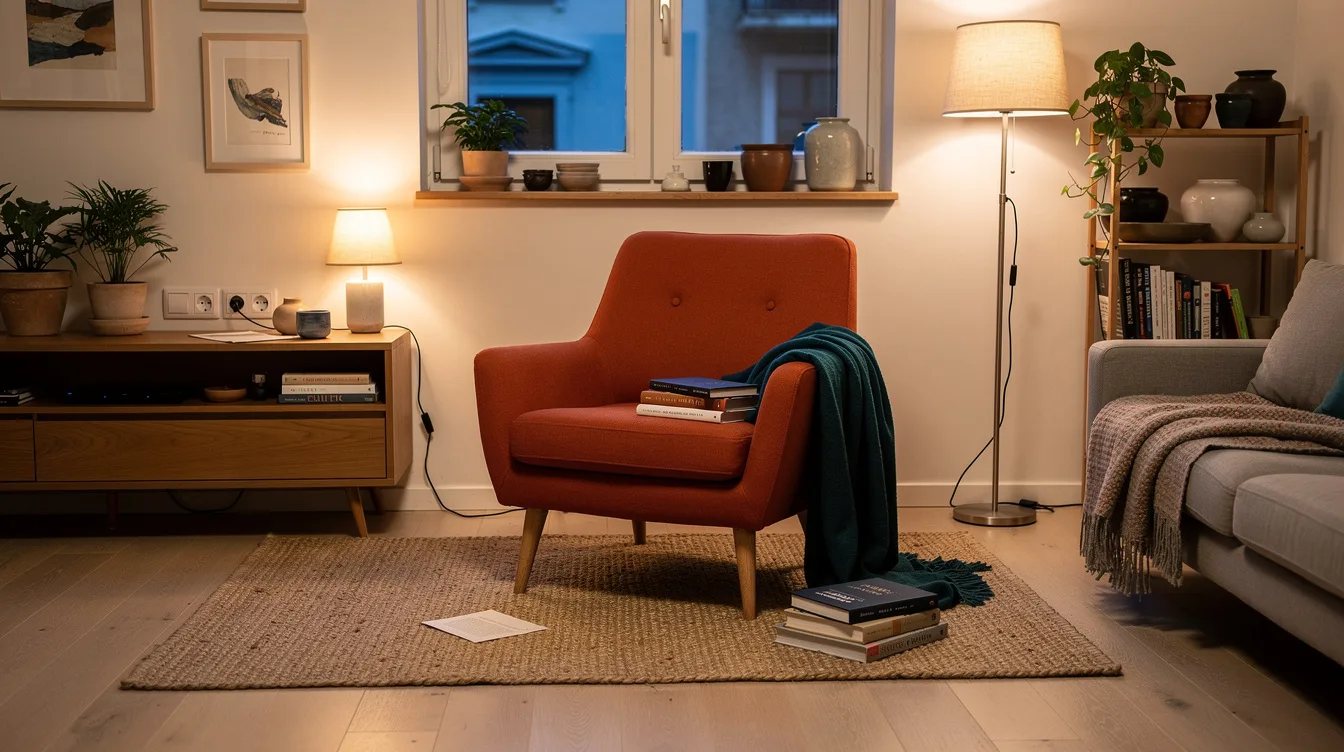
The Stockholm look does not require an all-white room. One purposeful accent, such as a rust pillow, muted blue chair, framed print, or green table lamp, makes the neutral base feel personal instead of vacant.
Keep that color connected to a real object rather than scattering it across every shelf. A forest green ceramic lamp from Target beside an oak chair is enough punctuation, and it leaves the larger surfaces calm.
Edit Every Surface Before Buying More
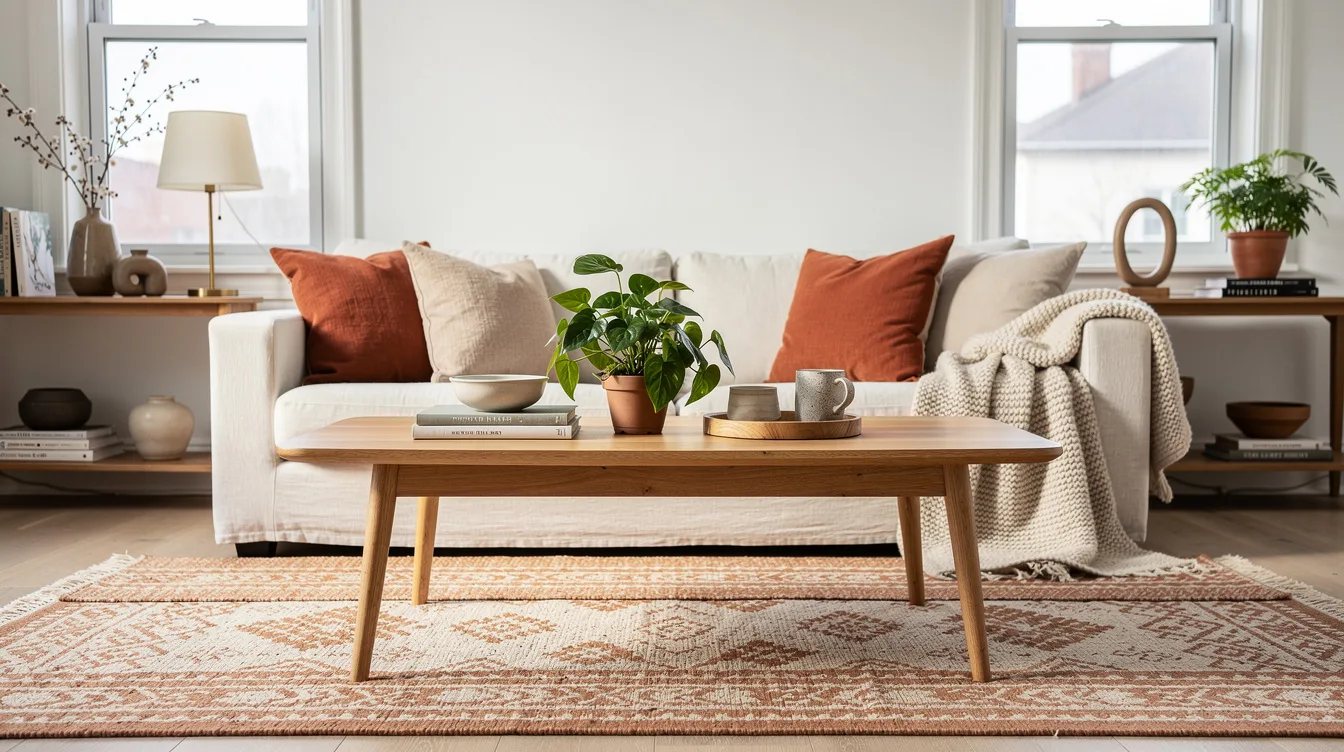
Give each tabletop a function. A coffee table might hold a stack of books and one candle, while an entry console needs a bowl for keys and a lamp, not a full collection of decorative fillers.
Use a wooden tray from Walmart or Ace Hardware to contain the small necessities that otherwise spread across the room. The final edit matters more than a fresh shopping cart, because empty space is an active part of this design habit.
Keep reading
Begin at the window: clear its path, soften it with light-filtering fabric, and remove one piece that blocks the floor. That single reset gives every later choice, from storage to color, a calmer place to land.