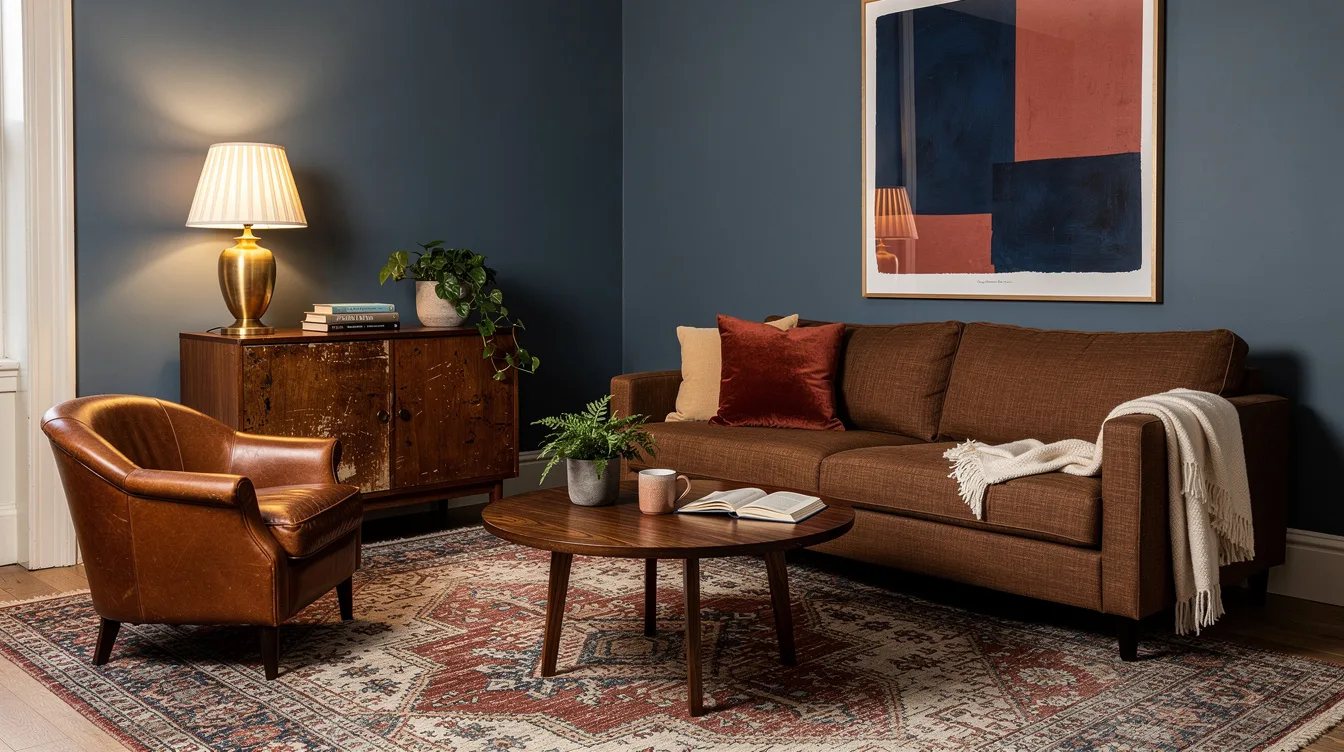
12 Soho House Living Room Ideas That Look Way More Expensive Than They Are
22 august 2026A normal apartment can lose its nerve fast when a 76-inch sofa, a tiny rug, and one bright overhead bulb are asked to create a lounge. The Soho House mood works best in roughly a 170-square-foot living room when it feels warm, collected, and genuinely used.
Think tactile surfaces, low pools of light, and furniture with some age in its face. A convincing room never needs a velvet costume.
What you will find inside
- Anchor the Room With a Proper Rug
- Choose a Sofa That Leaves a Walkway
- Pull the Coffee Table Close
- Trade Cold Gray for Muddy Warm Walls
- Mix Wood Tones With Restraint
- Build Low-Level Light After Dark
- Use Brass With a Patina
- Give the Chair a Job
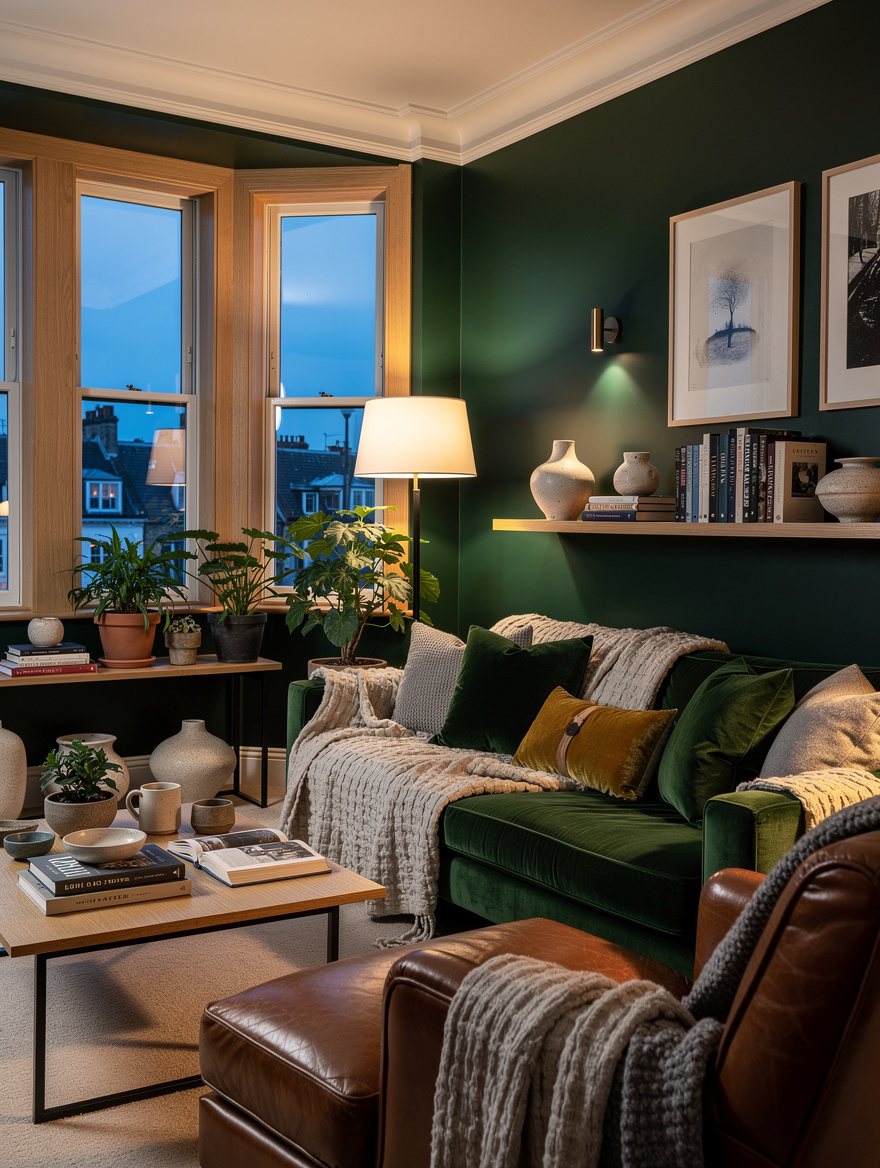
- Layer Linen, Velvet, and Leather
- Frame Art Bigger Than You Expect
- Style Surfaces Like Someone Lives There
- Let One Vintage Piece Set the Tone
Anchor the Room With a Proper Rug
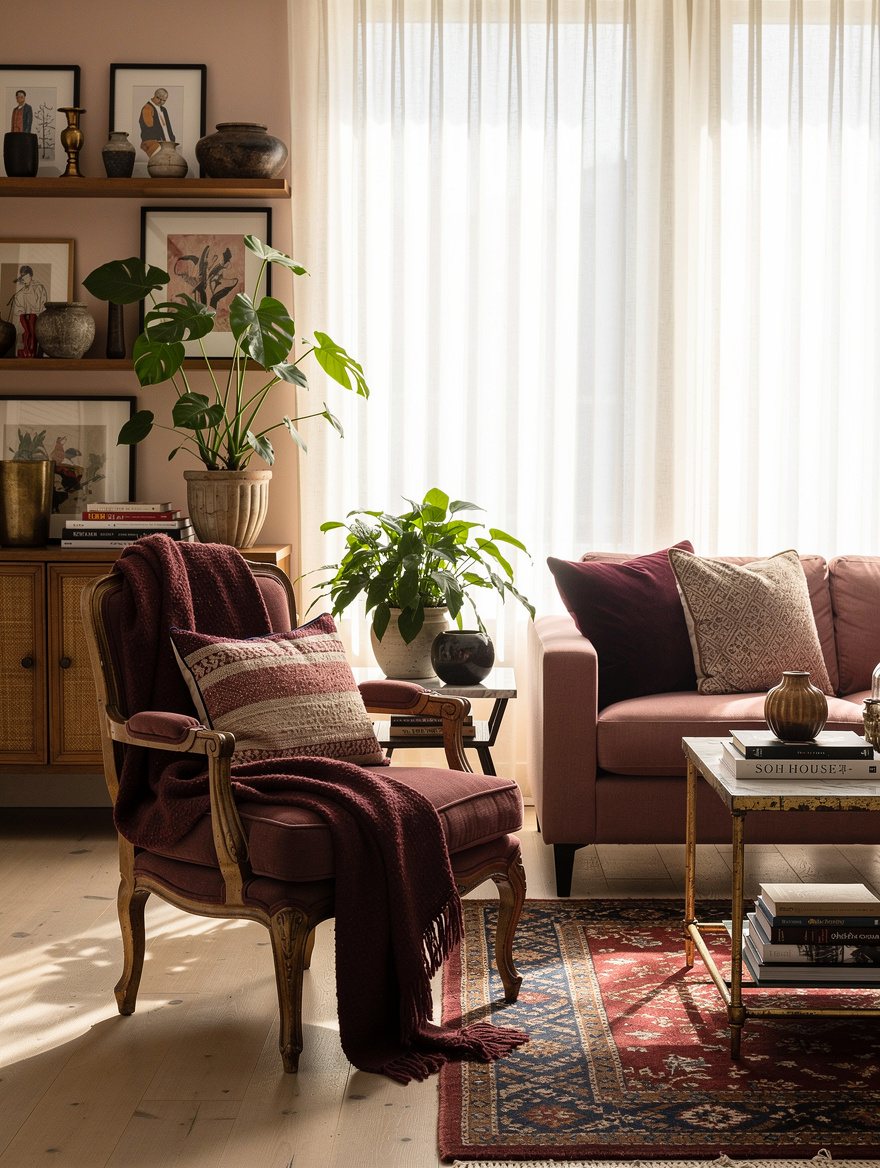
A small rug floating under a coffee table is the quickest way to make the room feel like a rental staging photo. Choose a 200-by-300-centimeter wool-look rug, or the closest size that lets the front legs of your sofa and chair land on it.
A faded Persian-style pattern brings the relaxed, slightly worn-in note people associate with Soho House interiors. Keep the rest of the patterns quiet, because competing prints make a compact room look busy rather than rich.
Choose a Sofa That Leaves a Walkway
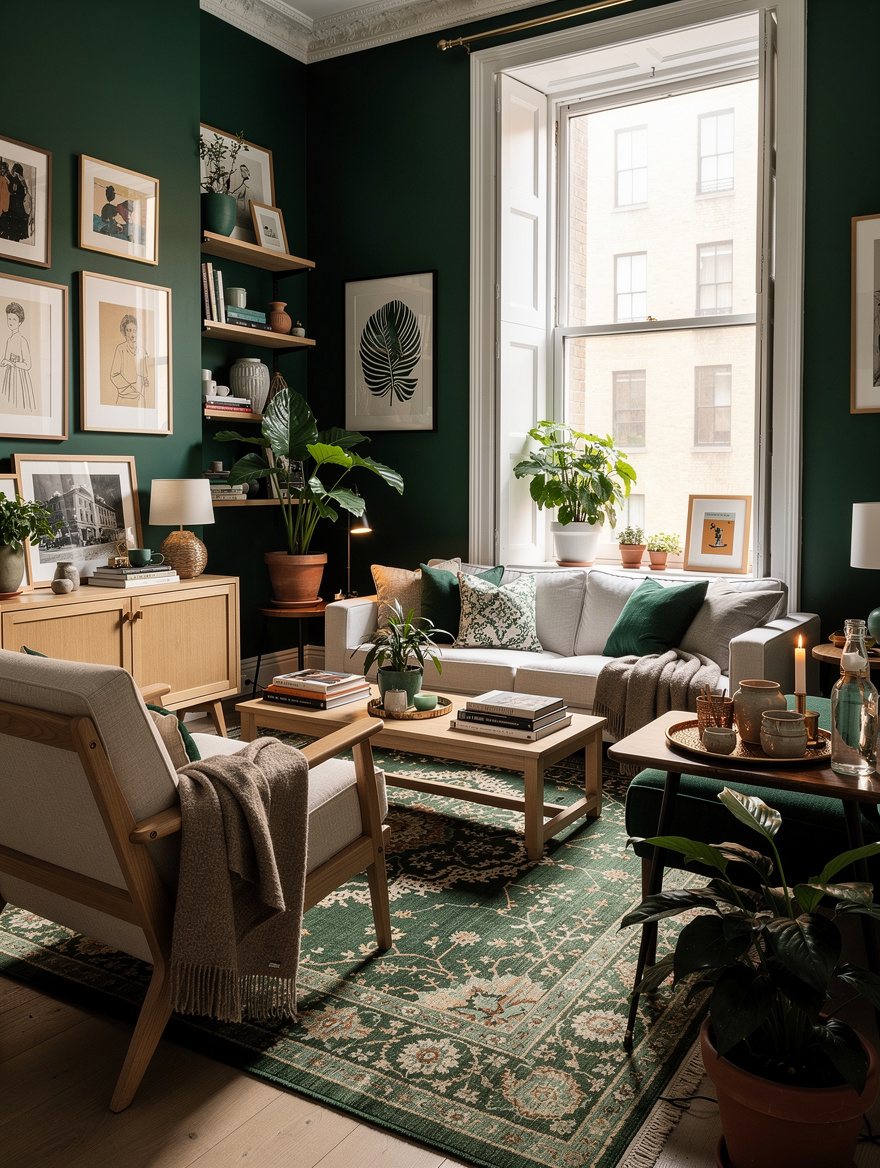
Don’t force an oversized sectional into a standard apartment just because club lounges look generous. A 72-to-82-inch upholstered sofa usually gives a small living room enough presence while preserving a clear main path.
Softly squared arms, an oatmeal linen look, tobacco chenille, or muted olive velvet all work. A typical clearance zone of roughly 30 inches for the main route matters more than an extra chaise.
Pull the Coffee Table Close
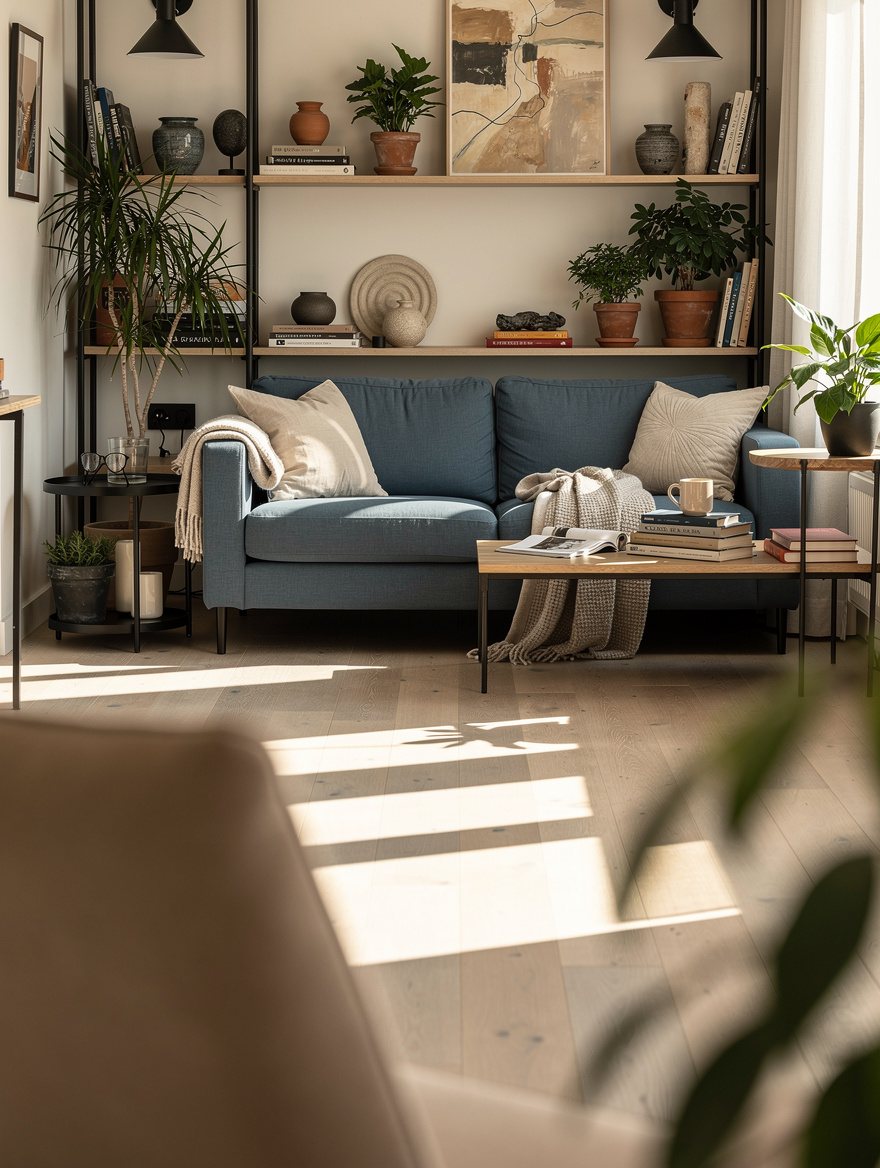
A coffee table stranded in the middle of the rug makes conversation feel awkward and the seating zone look unfinished. Keep roughly 14 to 18 inches between the sofa and a round mango-wood coffee table.
Designers favor rounded or organic forms here because they soften apartment traffic flow. A table around two-thirds the sofa width has the grounded, intentional scale that a tiny side table cannot deliver.
Trade Cold Gray for Muddy Warm Walls
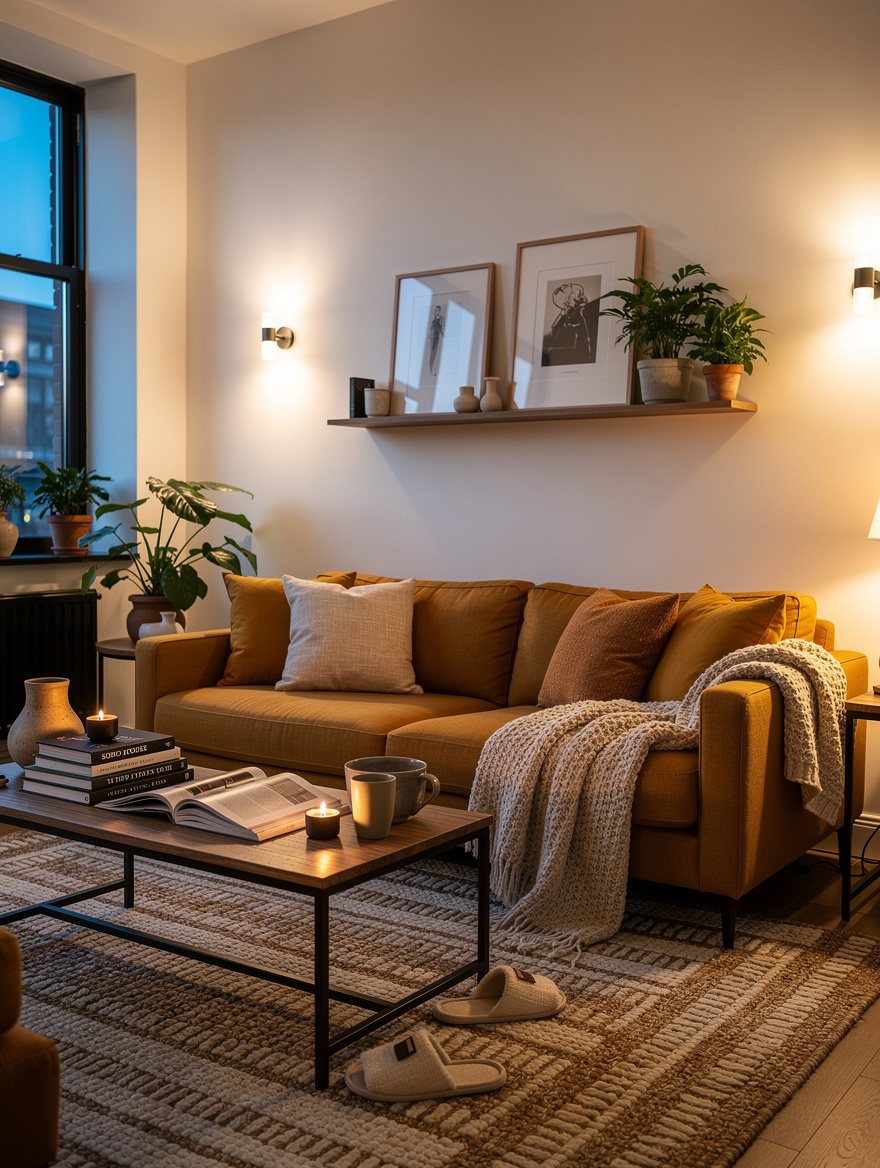
Cool gray walls flatten every material that should make this style appealing, especially brown wood and brass. Use warm off-white paint, mushroom, faded olive, clay beige, or softened tobacco instead.
The wall color should look good after sunset, when the room earns its keep. Test samples beside your sofa at night before committing, since daylight alone can make an undertone seem friendlier than it is.
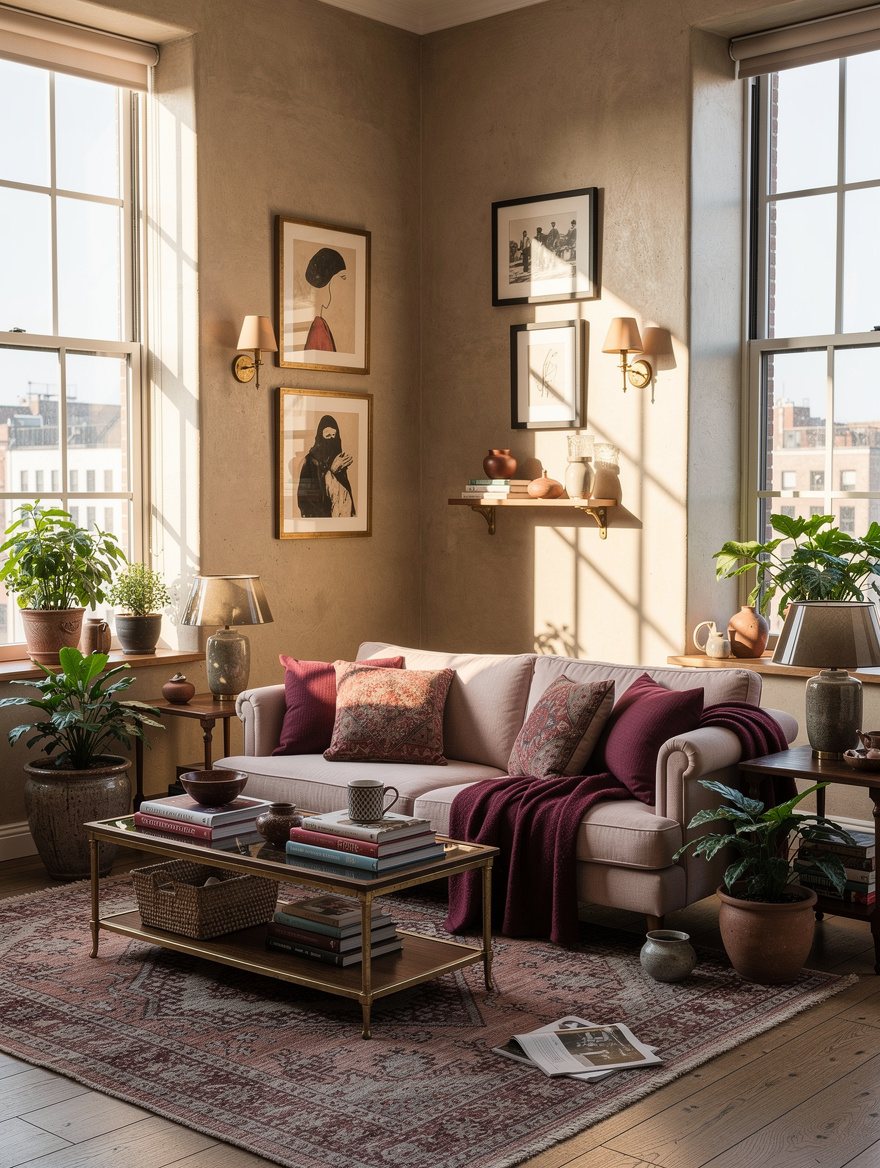
Mix Wood Tones With Restraint
Matching every wood finish makes the room read like one catalog collection. Let a medium oak media cabinet sit with walnut veneer, old teak, or a dark-stained side table, provided the tones share warmth.
Skip pale, icy blond wood if the rest of the room aims for a late-night lounge mood. One wood with visible grain, plus one deeper supporting tone, has more character than five nearly identical brown pieces.
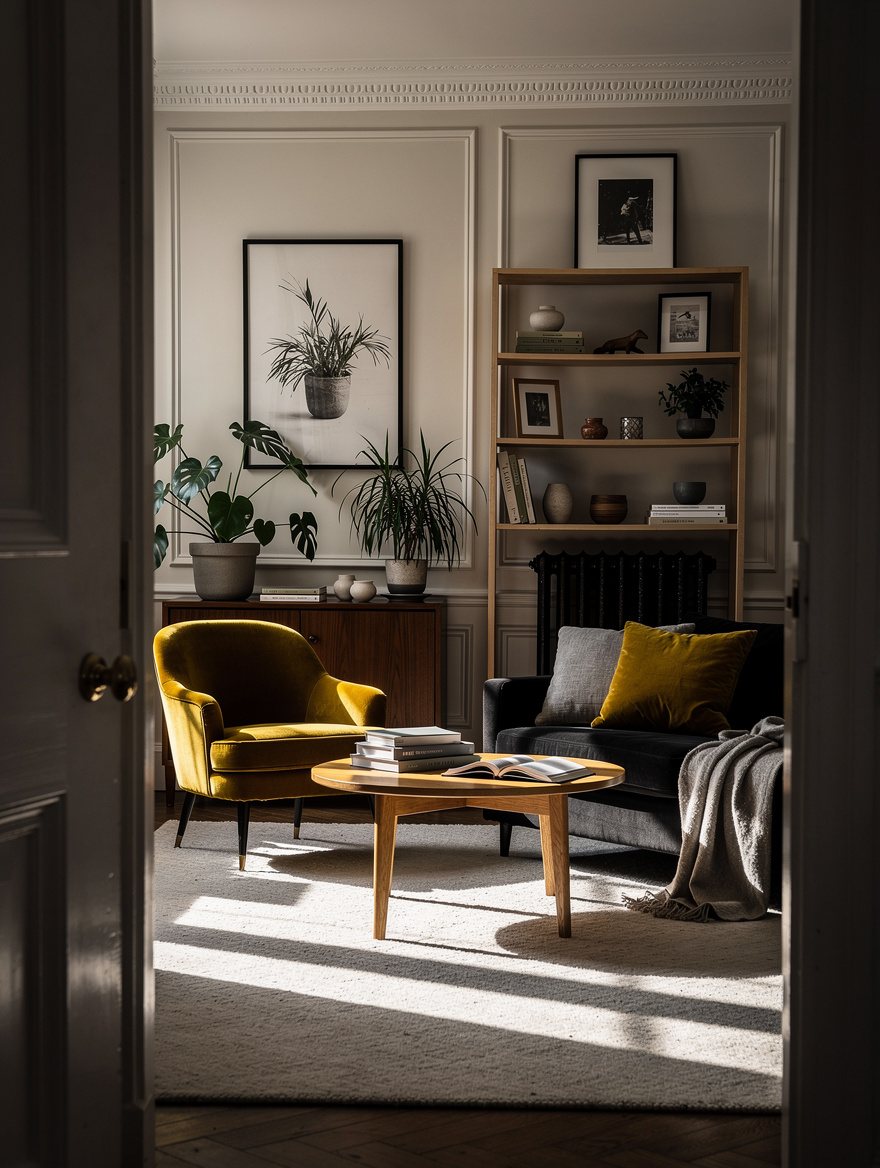
Build Low-Level Light After Dark
A single ceiling fixture gives even good furniture a waiting-room glare. Use two or three low light sources with 2700K warm bulbs, ideally on dimmers, across the sofa, reading chair, and cabinet.
A pleated shade, ceramic lamp base, and aged-brass floor lamp create atmosphere without buying themed decor. Table lamps are where this look becomes believable, because they put light on books, fabric, and faces rather than blasting the whole room.
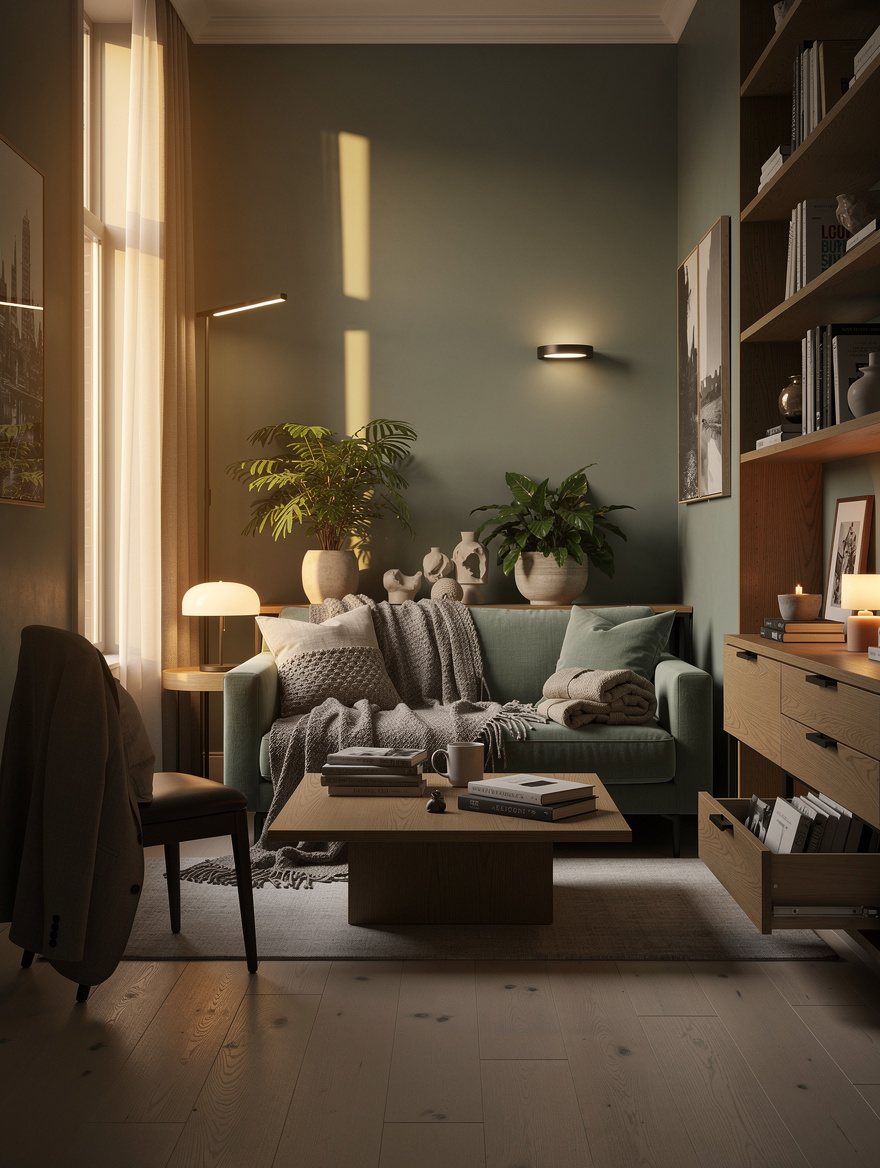
Use Brass With a Patina
Mirror-shiny chrome pulls the room toward a slick hotel lobby, which is a different look. Bring in aged brass hardware through a lamp, picture light, tray, or small table base.
Keep the metal doses small and purposeful. Brass needs a neighbor such as linen, dark oak, or marble-look stone, otherwise it can feel decorative in a way the rest of the room has not earned.
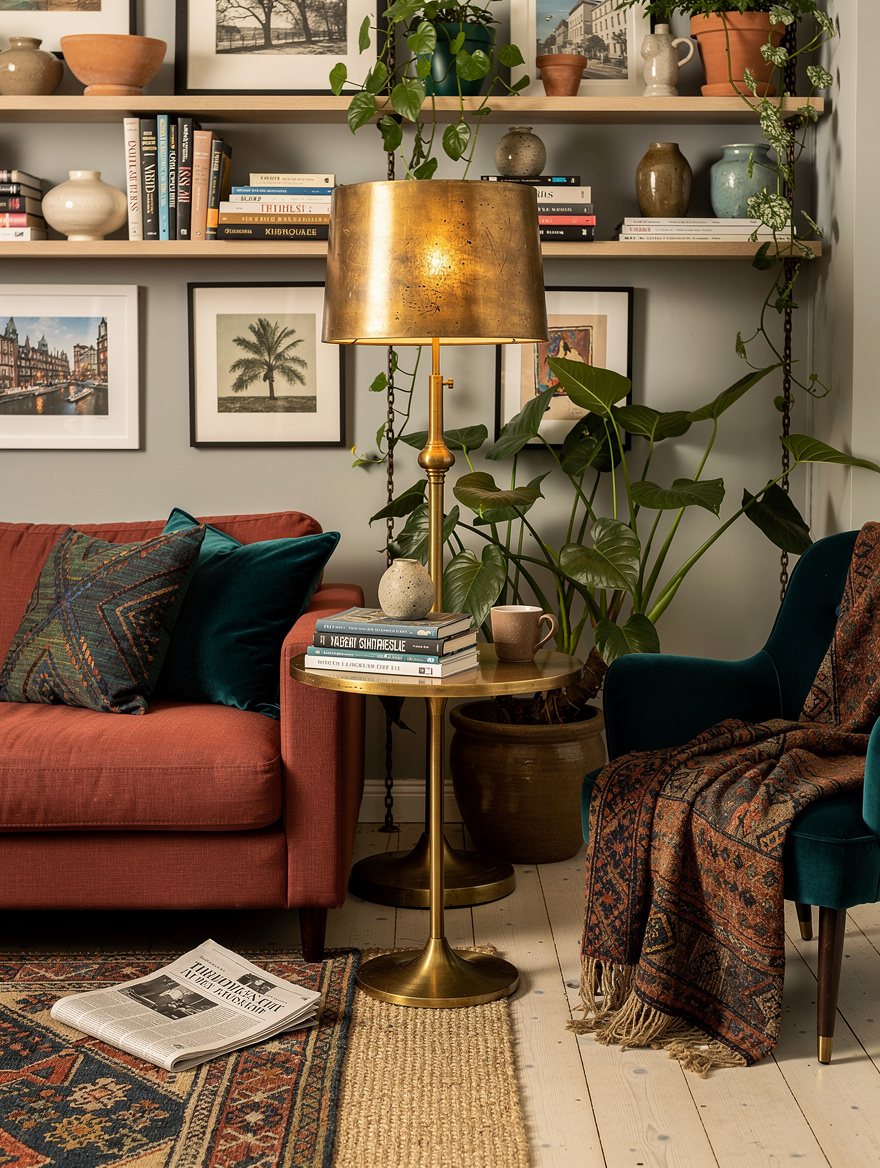
Give the Chair a Job
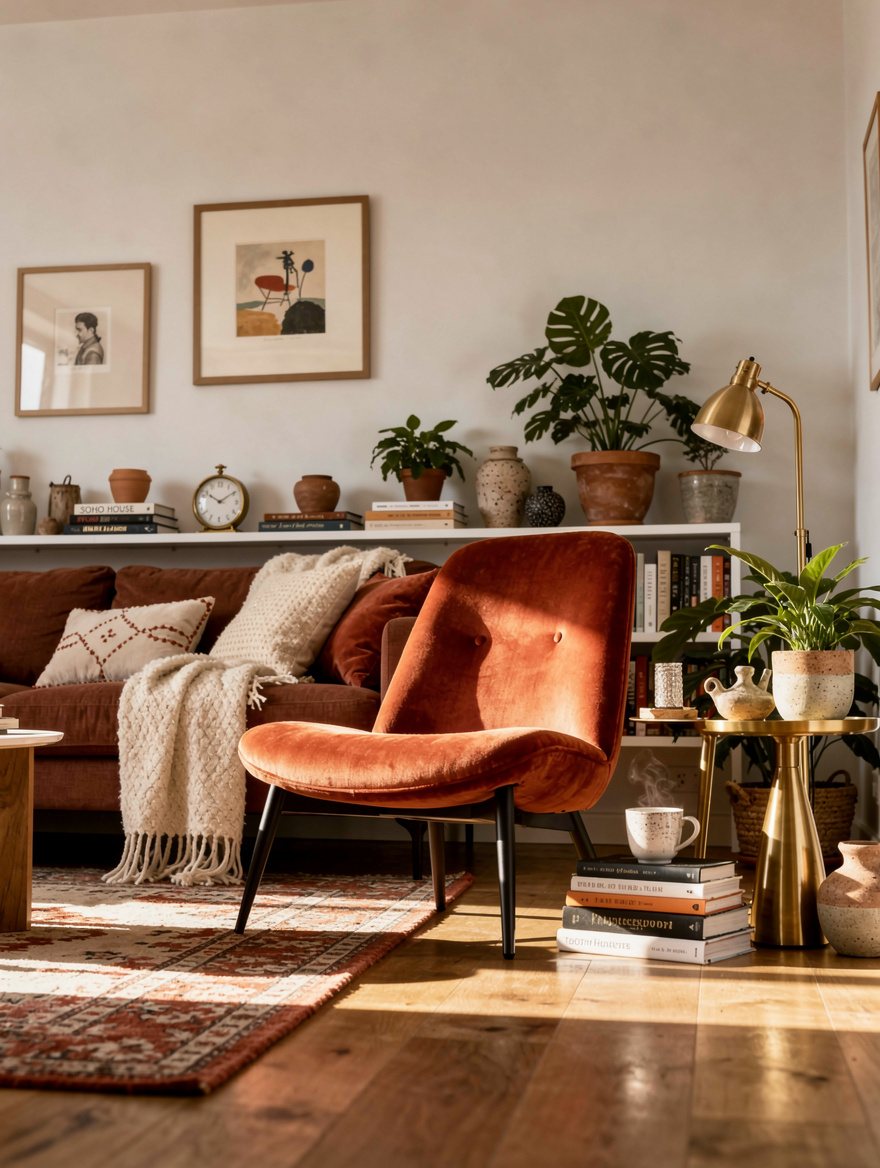
An accent chair shoved into a corner becomes expensive clutter. Place a low leather club chair or compact slipper chair near a lamp and a surface that can hold a drink or book.
That small reading position makes a living room feel occupied even when nobody is sitting there. In a tight layout, an armless chair is often smarter than a bulky swivel, which eats visual room from every angle.
Layer Linen, Velvet, and Leather
Buying every soft piece in velvet turns warmth into costume drama. Start with one tactile anchor, such as a rust velvet pillow, then add linen curtains, a leather seat, or a nubby throw.
The point is contrast under your hand, not an inventory of expensive fabrics. A chunky knit throw. One brass candleholder.
A slightly rumpled linen shade.
Frame Art Bigger Than You Expect
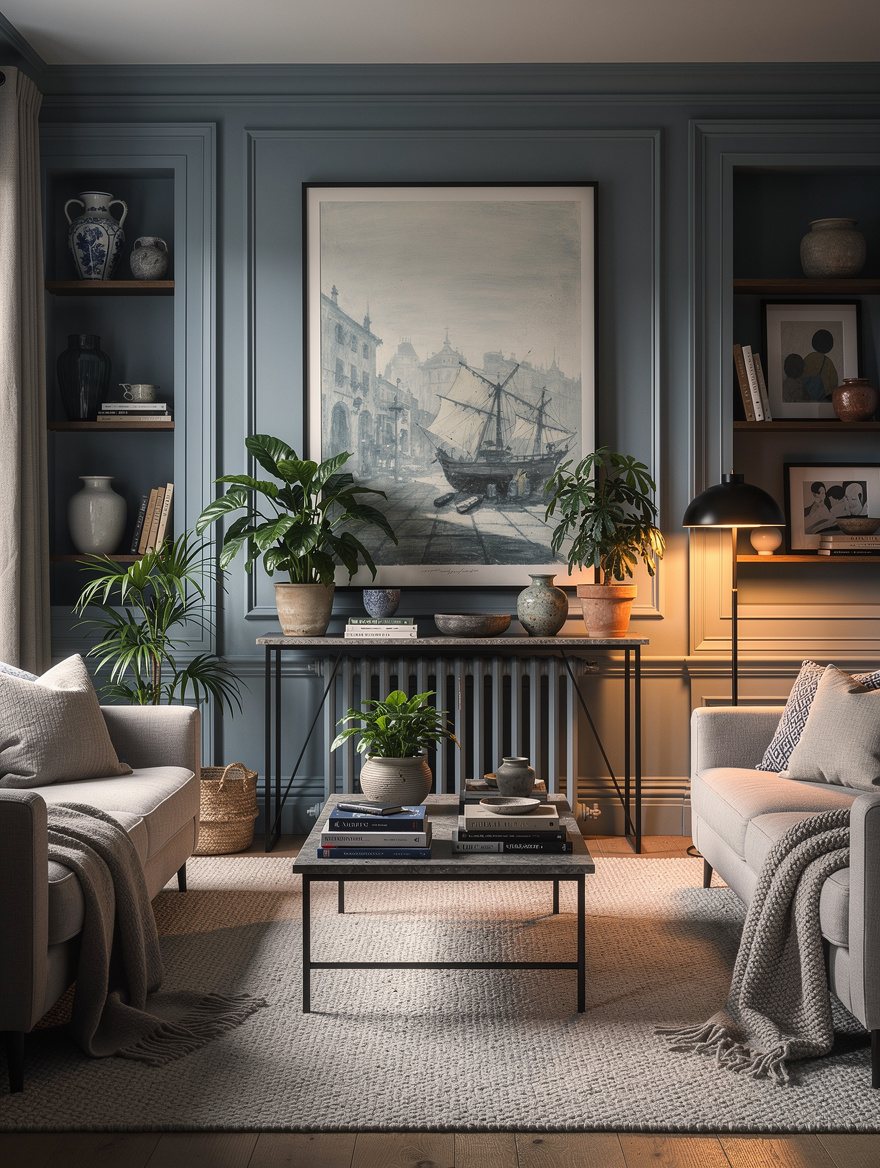
Small art scattered high across a wall can make a room feel apologetic. Hang one 24-by-36-inch wood-framed print above a low cabinet or sofa, with its center placed at a comfortable viewing height.
Choose photography, an abstract with deep color, or an old-looking landscape reproduction that you actually want to live with. A generous mat and a real frame create more impact than a gallery wall of unrelated bargain prints.
Style Surfaces Like Someone Lives There
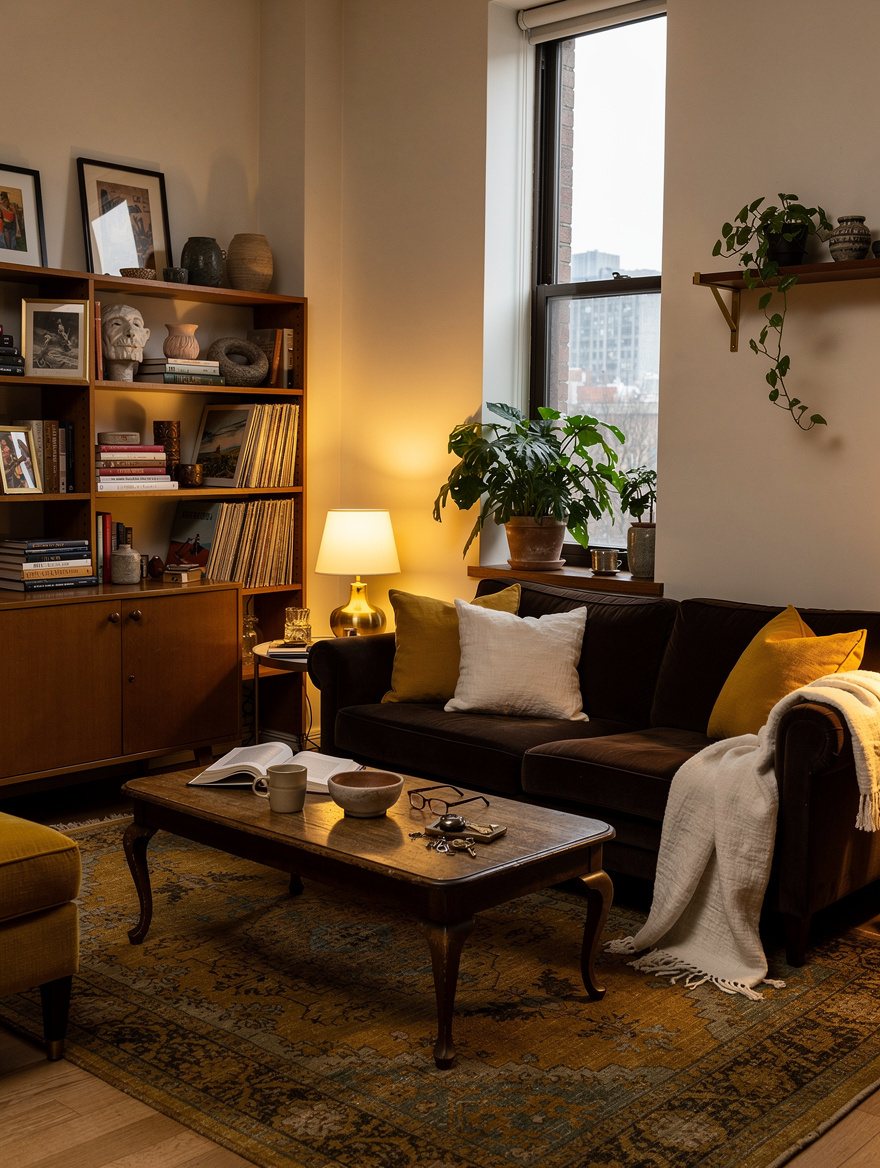
A coffee table covered edge to edge with decorative objects looks nervous, not layered. Leave breathing room around a marble-look tray, a book stack, and one ceramic vessel.
Books with worn jackets, matches, a small bowl, and a current magazine make sense because they invite use. Avoid placing identical objects at both ends of every shelf, since that symmetry feels more showroom than apartment.
Let One Vintage Piece Set the Tone
A room of only new furniture misses the imperfect ease that makes this style feel credible. Add one secondhand teak sideboard, older framed mirror, cane chair, or brass lamp with a little wear.
You do not need a museum-quality find. The best starting move is a large rug and two warm lamps, then bring in one older wood piece when the room needs a little history.
Keep reading
- Your Living Room Rug Is Making the Space Look Smaller
- 12 IKEA Storage Ideas That Look Like Built-Ins for Less
- 12 Tokyo Apartment Storage Tricks for Living Large in Tiny Spaces
Start by switching off the overhead light and assessing the room at night. The first purchase should solve the biggest gap you can see, usually a larger rug or a lamp with a warm shade.