Your Living Room Rug Is Making the Space Look Smaller
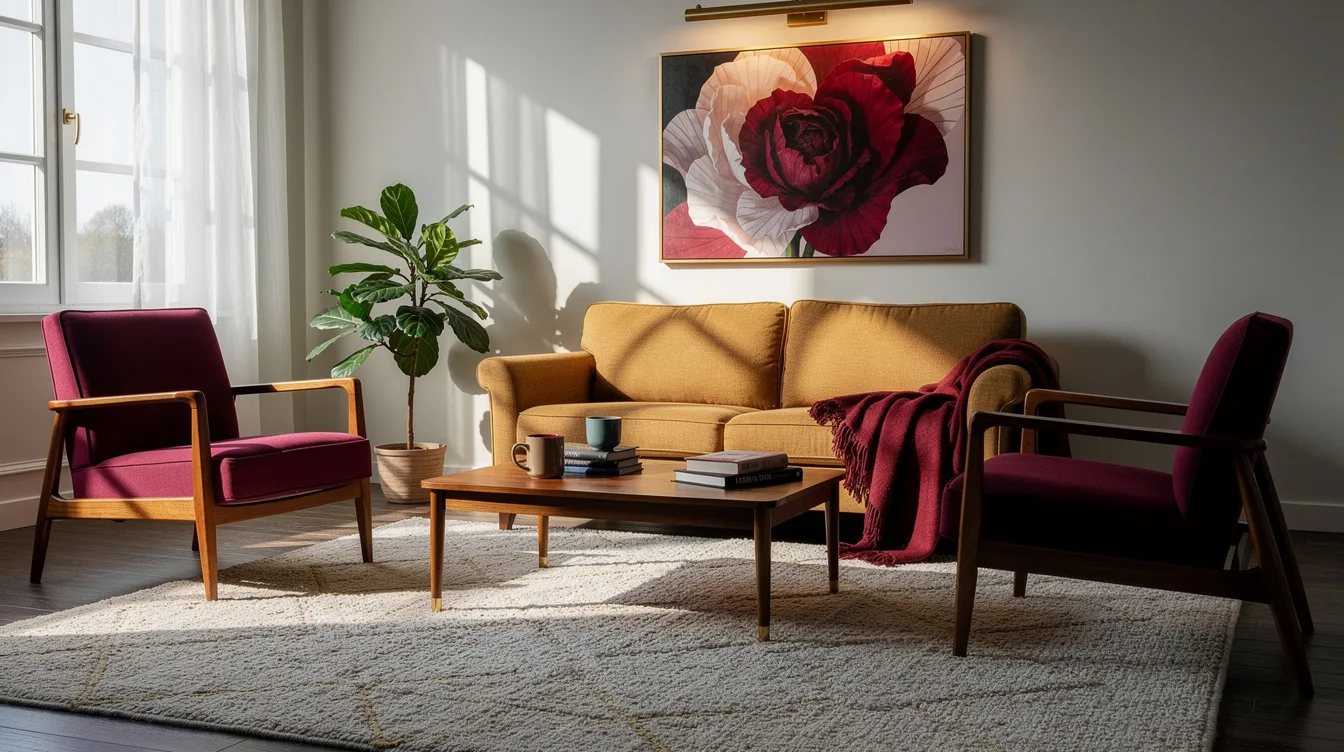
18 august 2026I once watched a 54-inch coffee table swallow nearly an entire 5-by-8-foot rug, while the sofa and chairs hovered around it like unrelated furniture. That single sizing choice made a perfectly usable living room feel tighter than it was.
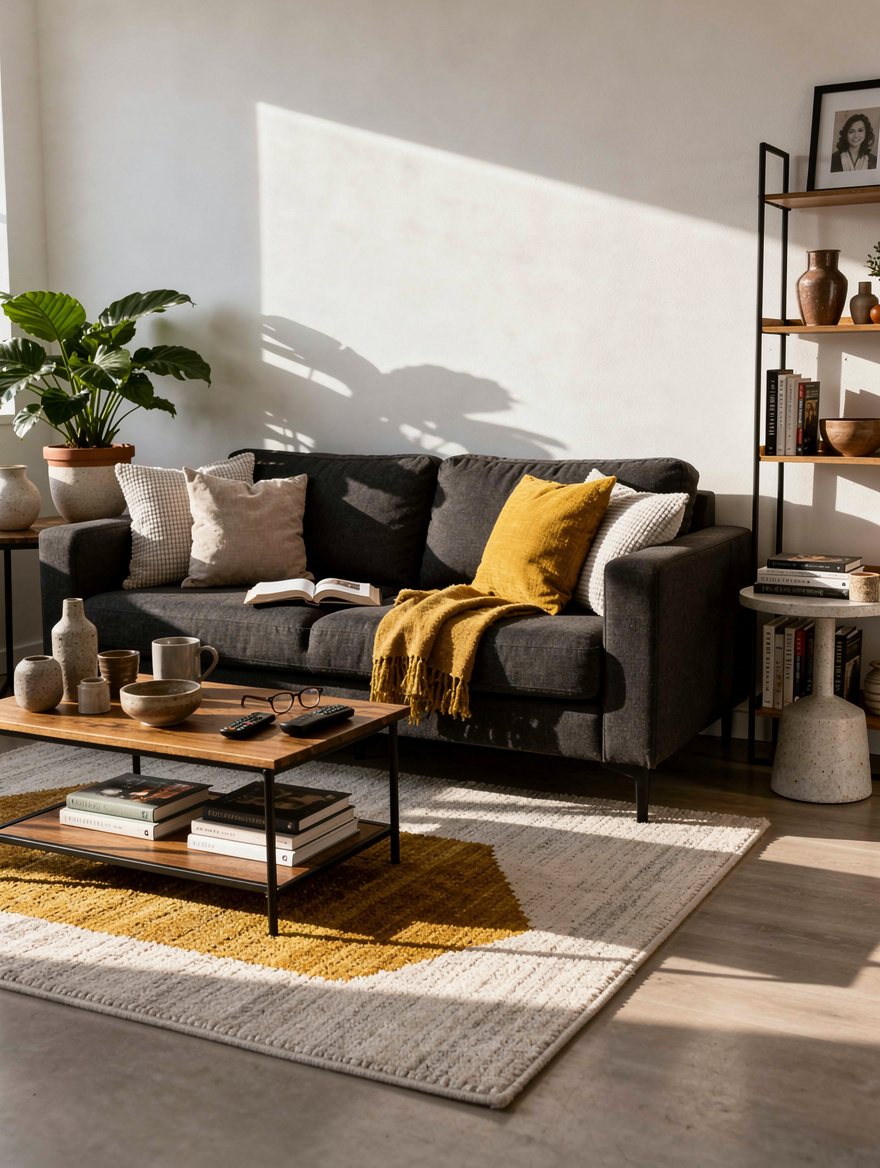
The problem is rarely the rug's color or pattern. A too-small rug breaks up the seating group, and the eye reads those gaps as a smaller room.
What you will find inside
- Stop Buying a Postage-Stamp Rug
- Measure the Seating Group First
- Catch Every Front Leg
- Give Sectionals More Ground
- Leave a Quiet Border at the Walls
- Choose a Low-Pile Foundation
- Use One Rug for One Conversation Area
- Center It on the Furniture, Not the Room
- Match the Rug Shape to the Layout
- Avoid Heavy Borders in Tight Rooms
- Scale the Coffee Table After the Rug
- Test the Upgrade Before You Commit
Stop Buying a Postage-Stamp Rug
A floating 5-by-8-foot rug under only the coffee table is the mistake designers spot first. It isolates the center of the room and leaves the sofa looking stranded.
Move up to an 8-by-10-foot rug for a typical apartment seating group when space allows. The larger field gives the furniture one clear boundary, which immediately makes the layout read wider.
Measure the Seating Group First
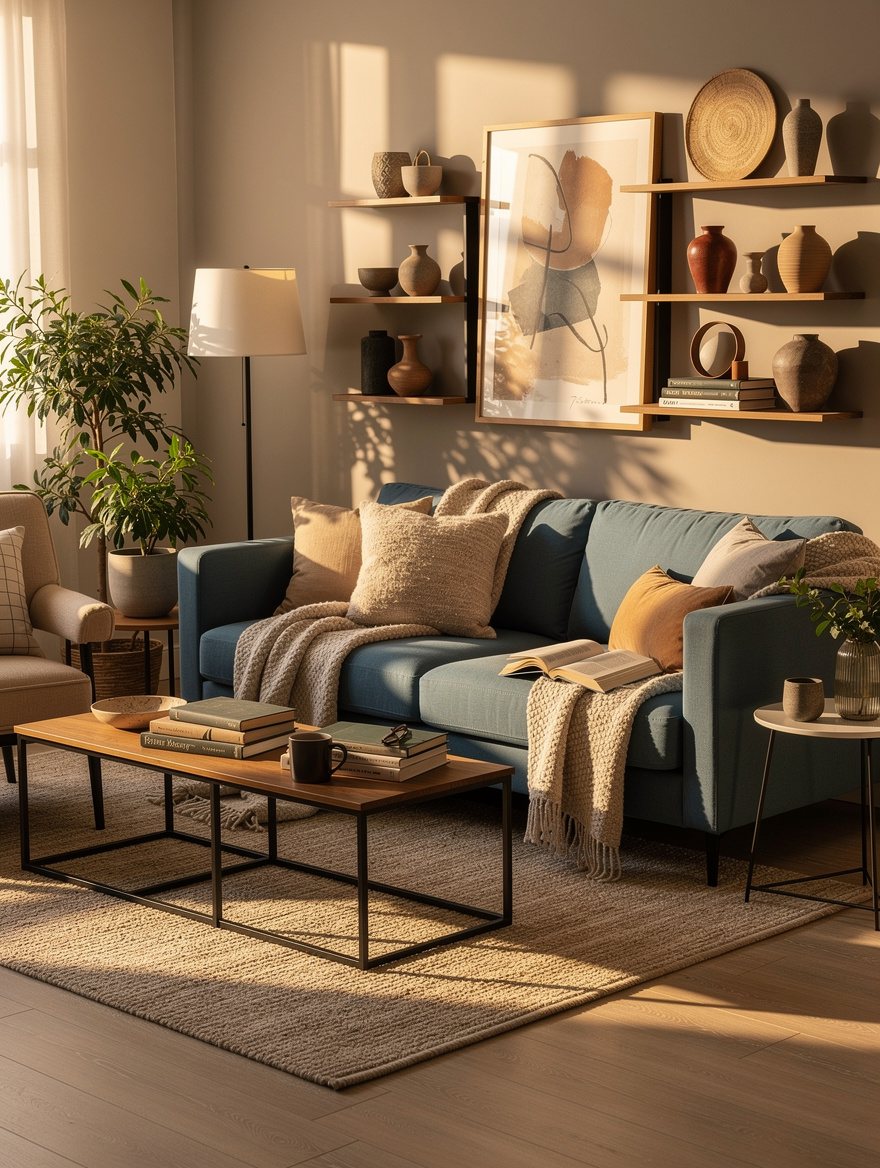
Do not size a rug from the bare patch of floor you can see. Measure the sofa, chairs, side tables, and the walking space around the conversation area.
Use painter's tape to mark an 8-by-10-foot rectangle before ordering. The taped outline reveals whether the rug connects the seats or merely decorates the coffee table.
Catch Every Front Leg
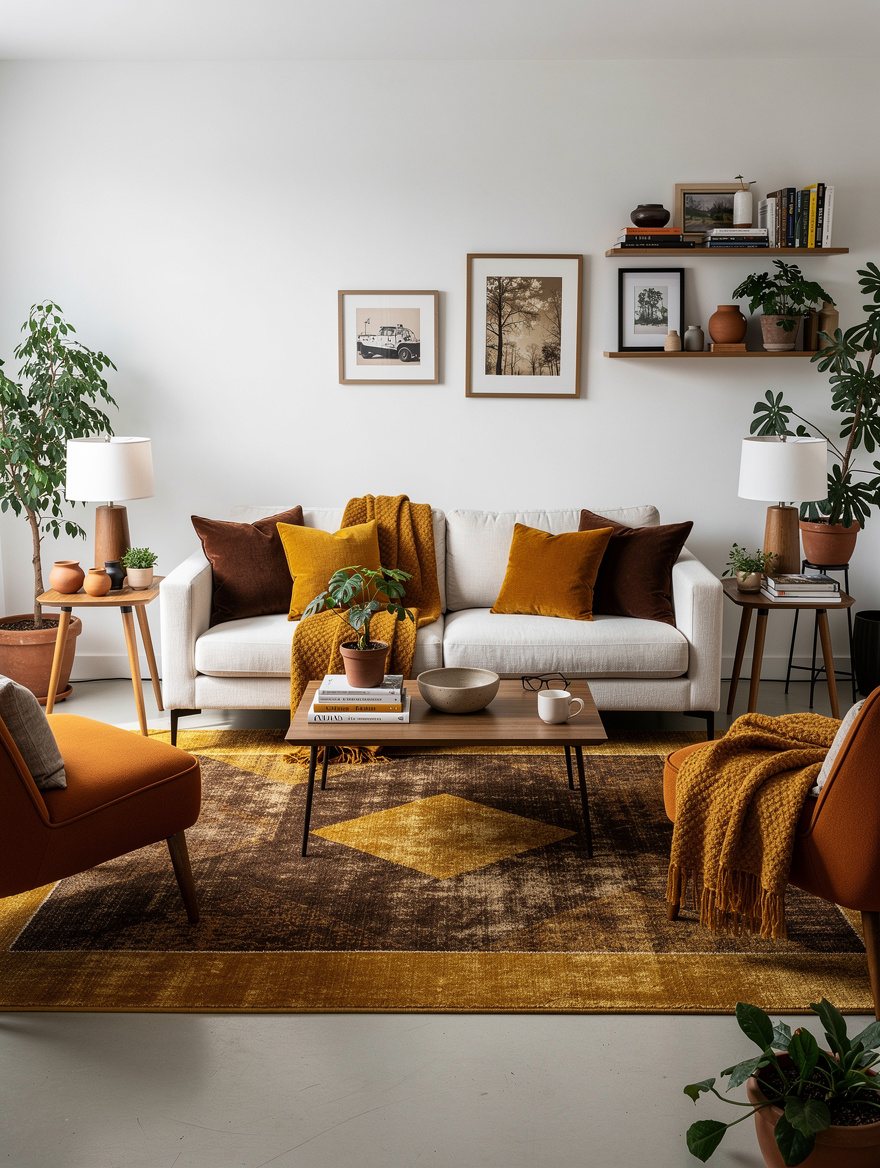
Let every major seat place its front legs on the rug. That overlap is what visually links a sofa, an armchair, and a bench into one generous zone.
Aim for roughly 6 to 8 inches of wool flatweave beneath each front leg. A smaller overlap can look accidental, especially with deep upholstered seating.
Give Sectionals More Ground
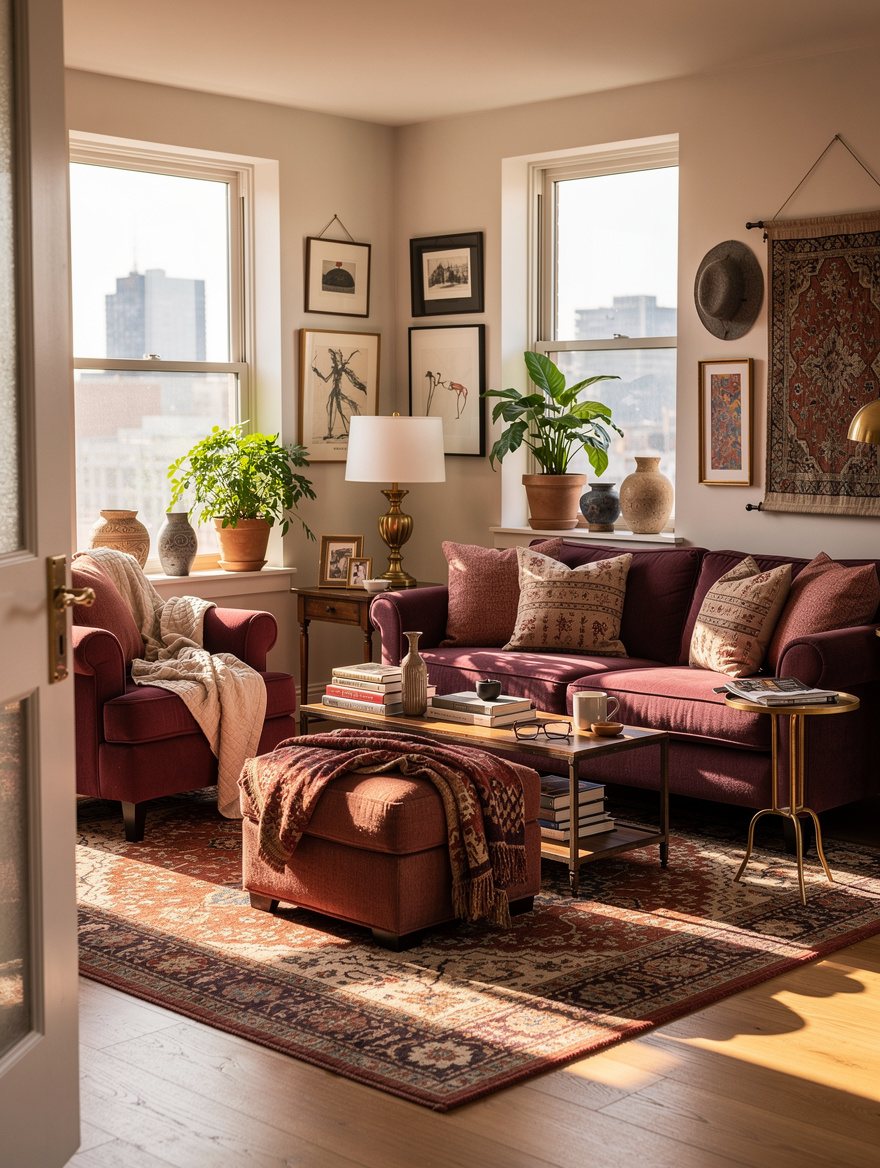
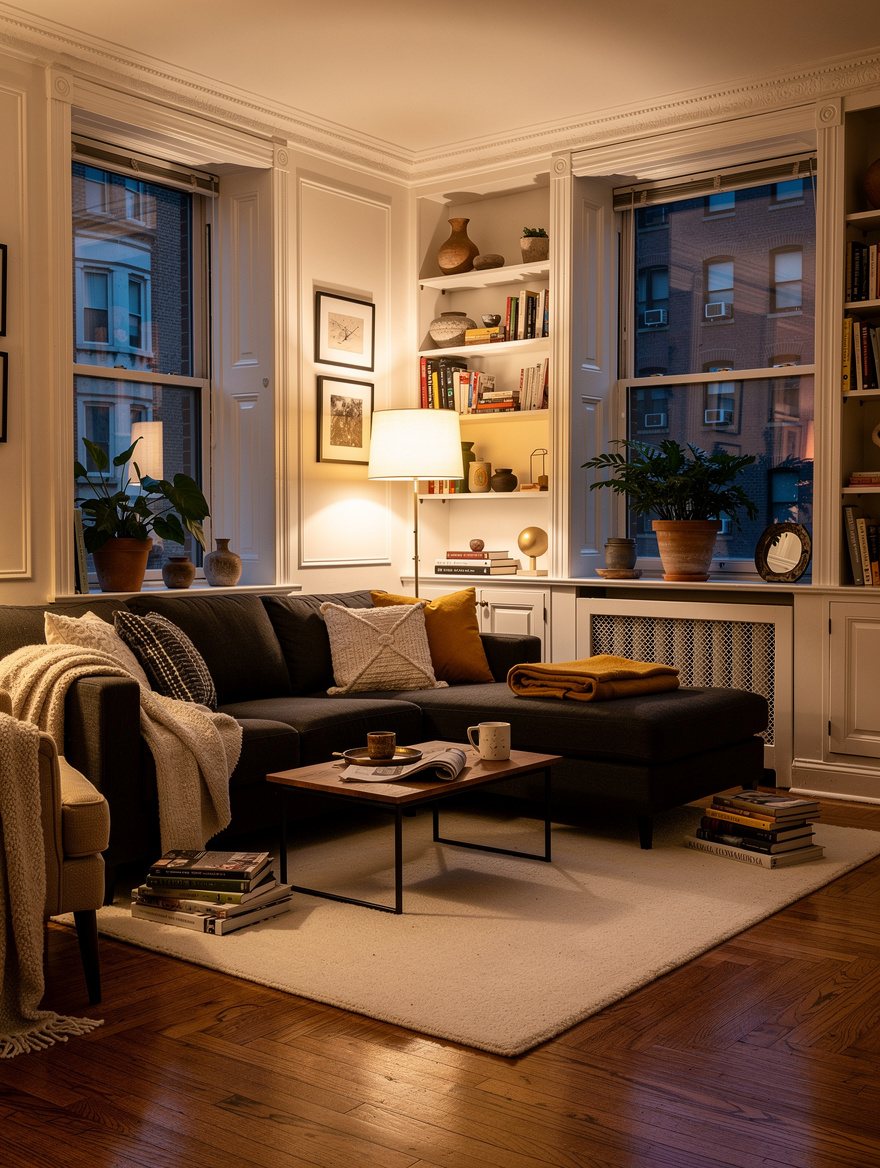
A sectional needs more rug than most people expect because its long inside corner creates a broad seating footprint. An 8-by-10-foot option often looks undersized beneath an L-shaped sofa.
Try a 9-by-12-foot rug as a starting point for a sectional with a coffee table and one extra chair. The rug should hold the whole conversation area together instead of clipping the sofa's edges.
Leave a Quiet Border at the Walls
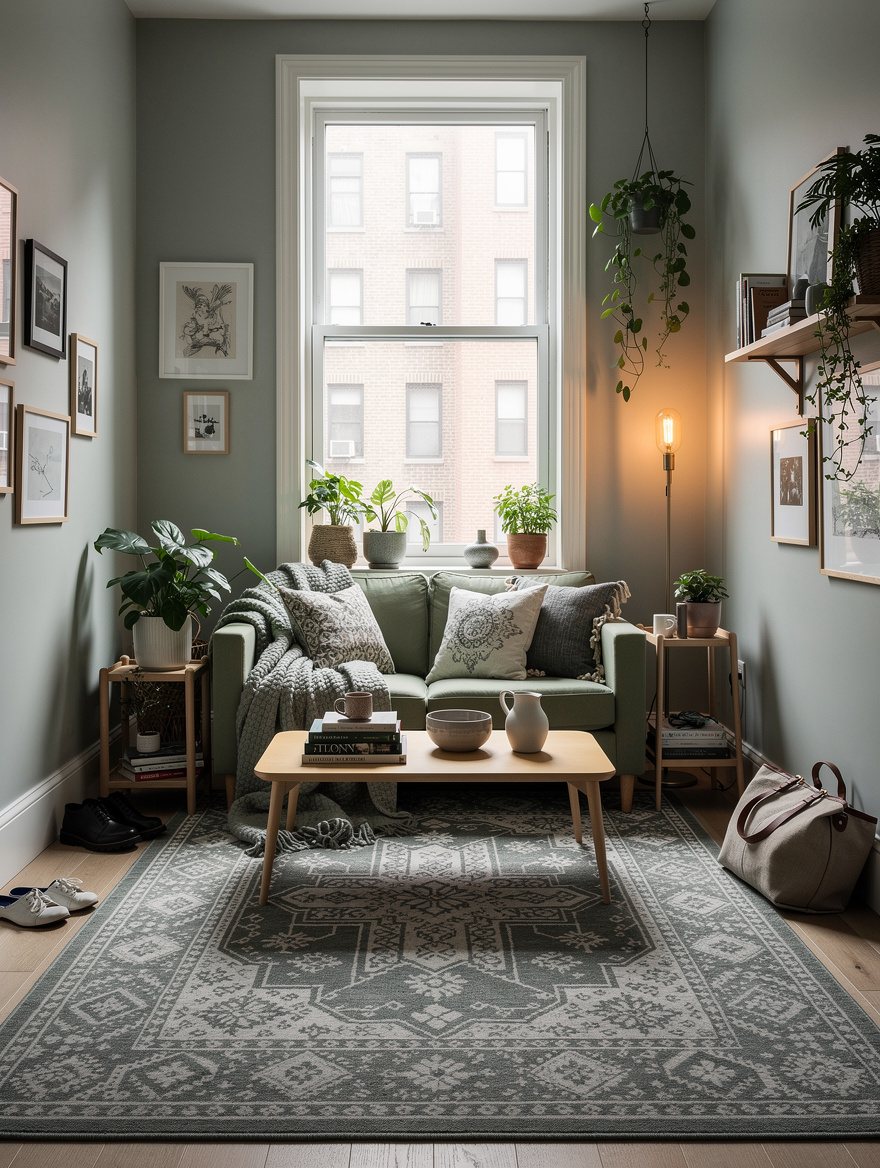
Bigger is better only until the rug nearly touches every wall. A thin, uneven strip of exposed floor can make the room feel squeezed.
Keep roughly 12 to 24 inches of visible hardwood flooring between the rug and walls where the room permits. That border frames the rug and lets the room's actual width show.
Choose a Low-Pile Foundation
A thick shag rug can add bulk precisely where a compact room needs visual calm. Tall pile also makes chair legs and table bases disappear into a fuzzy mass.
Choose a low-pile wool rug or a flatwoven option for the main seating zone. It has enough texture to feel finished, but the furniture silhouette remains easy to read.
Use One Rug for One Conversation Area
Two small rugs under one sofa-and-chair arrangement create a visual seam down the middle of the room. That division makes the furniture look scattered, even when every piece is well chosen.
Use one large jute rug under the whole grouping if you want an organic base. A tighter weave works best near a dining area or a frequently used pathway.
Center It on the Furniture, Not the Room
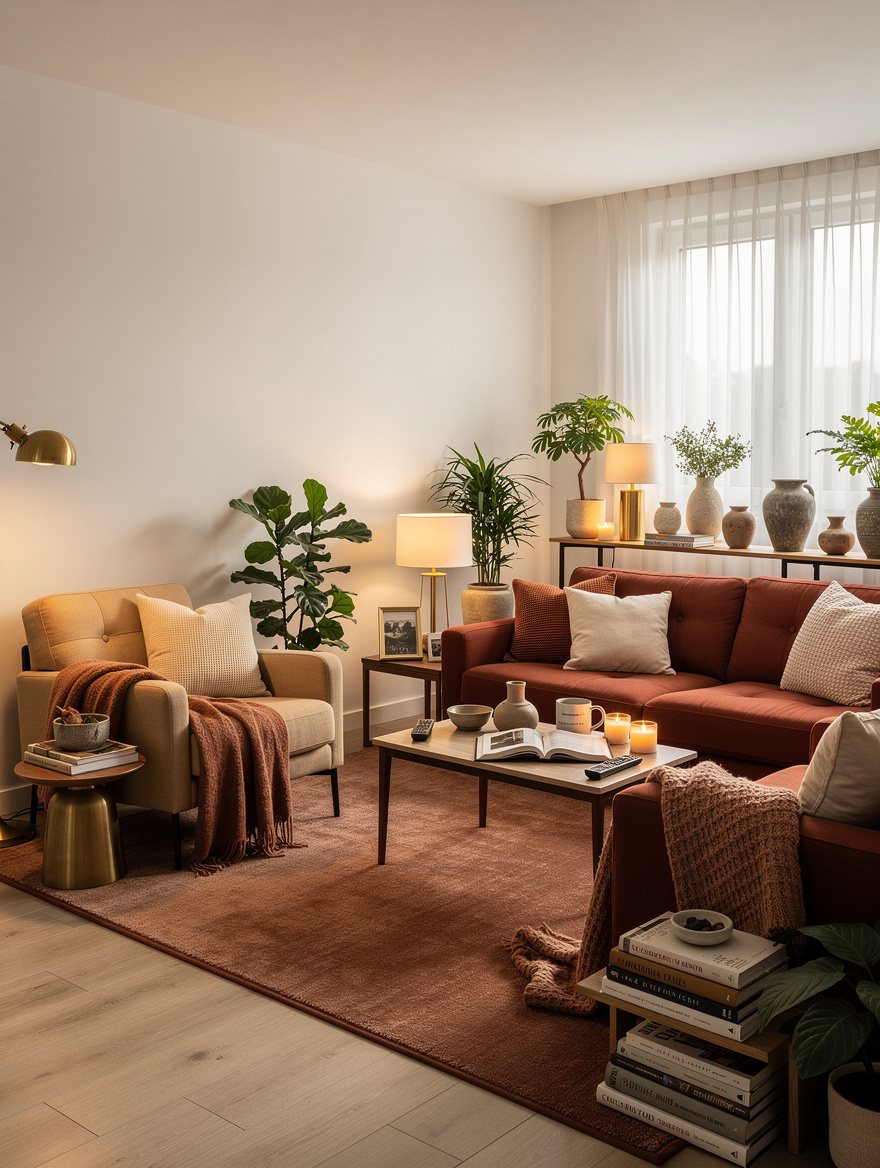
Rugs are often centered on ceiling lights or architectural walls, then left off-center under the actual seating. The result looks formal in the wrong way and wastes valuable floor coverage.
Center the rug on the sofa and armchairs first. In an open plan, that decision gives the living area a clear identity without needing a divider.
Match the Rug Shape to the Layout
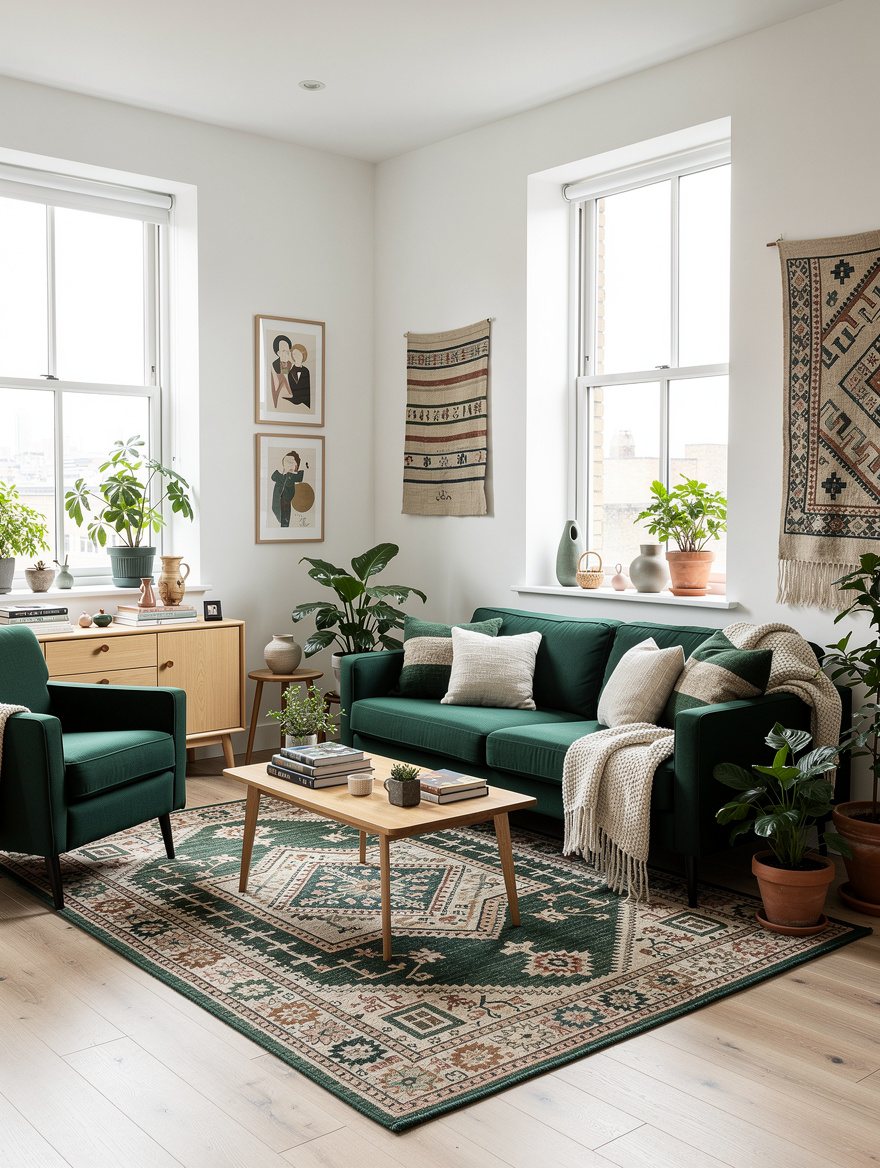
A round rug under a long rectangular sofa can leave awkward empty corners and make the furniture arrangement look compressed. Shape should reinforce the lines already present in the room.
Choose a rectangular rug for a standard sofa-and-two-chair plan. Save a round option for a compact pair of lounge chairs, a curved sectional, or a true circular seating arrangement.
Avoid Heavy Borders in Tight Rooms
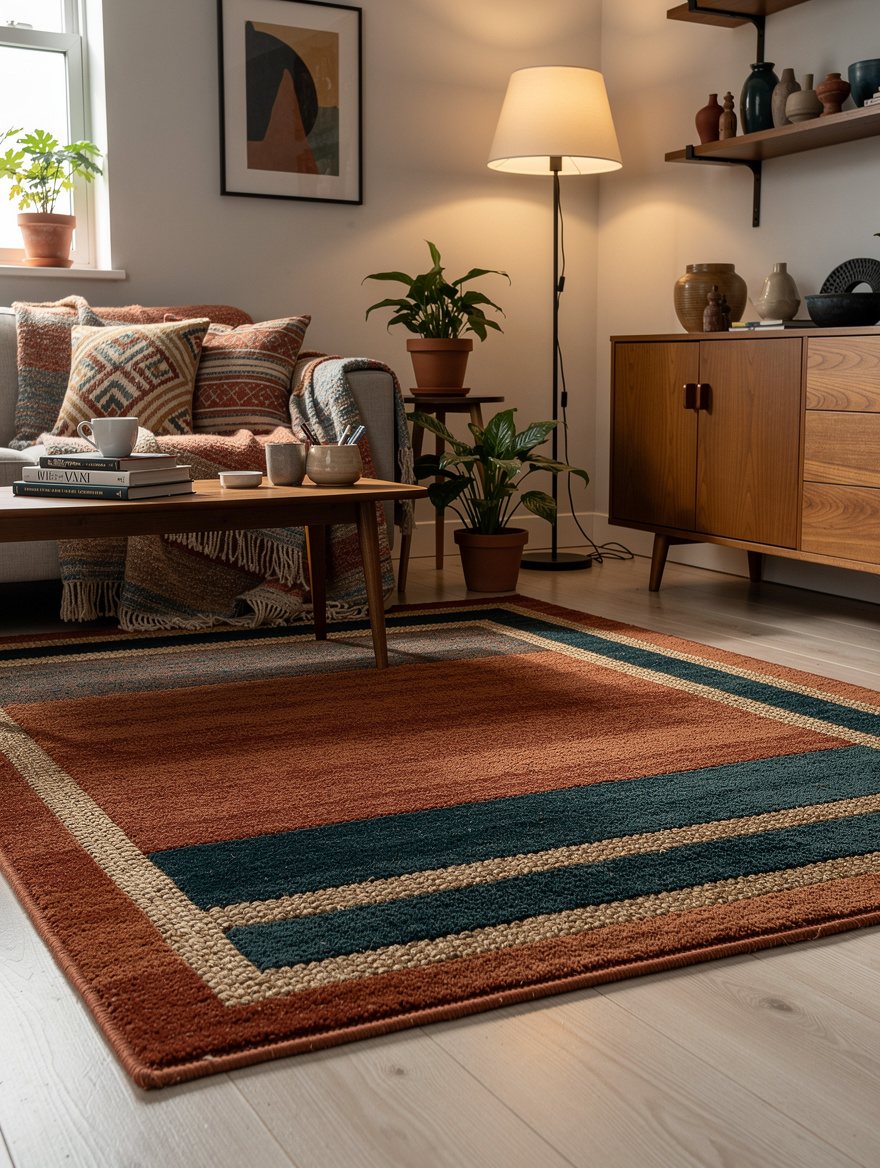
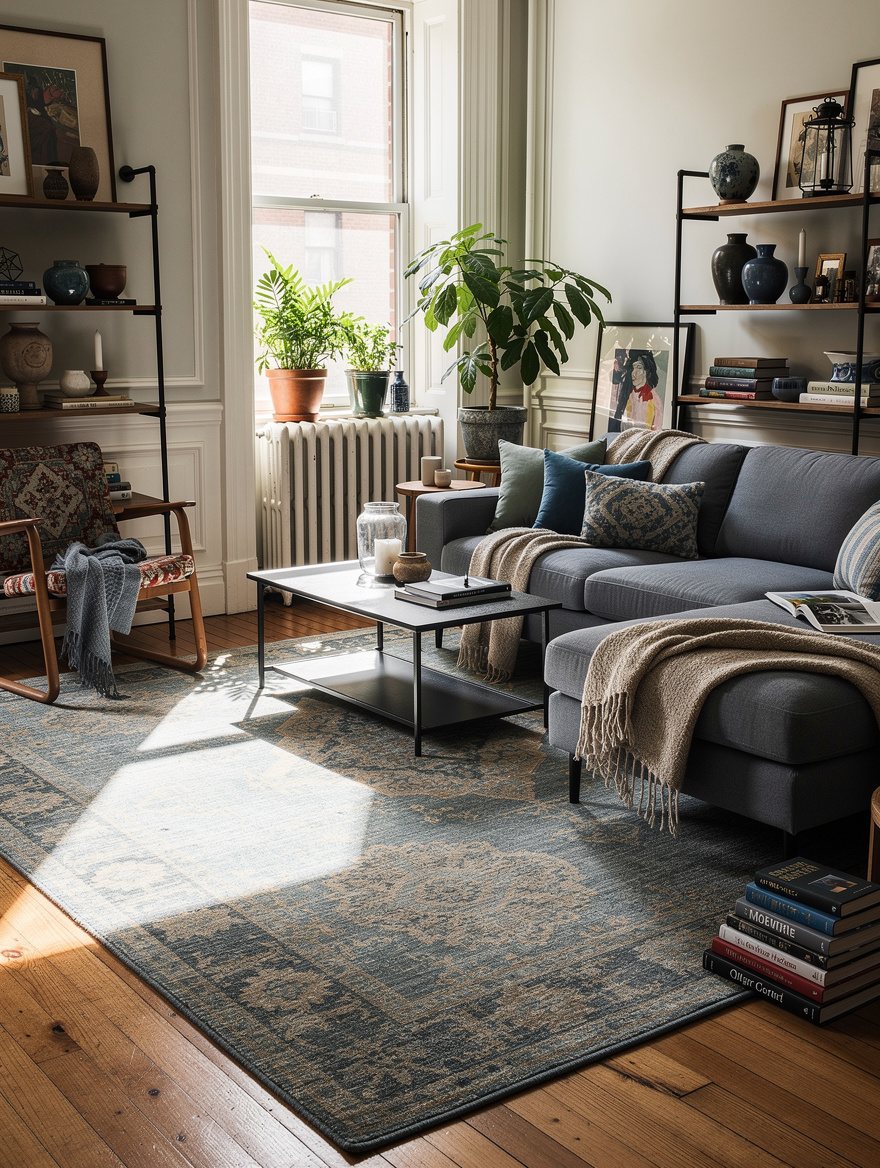
A broad dark border acts like a picture frame around a small patch of floor. It draws attention inward instead of letting the room feel continuous.
Pick an IKEA STOENSE rug in a subtle low-pile neutral when a quiet surface suits the room. Soft tonal variation gives the floor interest without chopping the seating area into a boxed-in island.
Scale the Coffee Table After the Rug
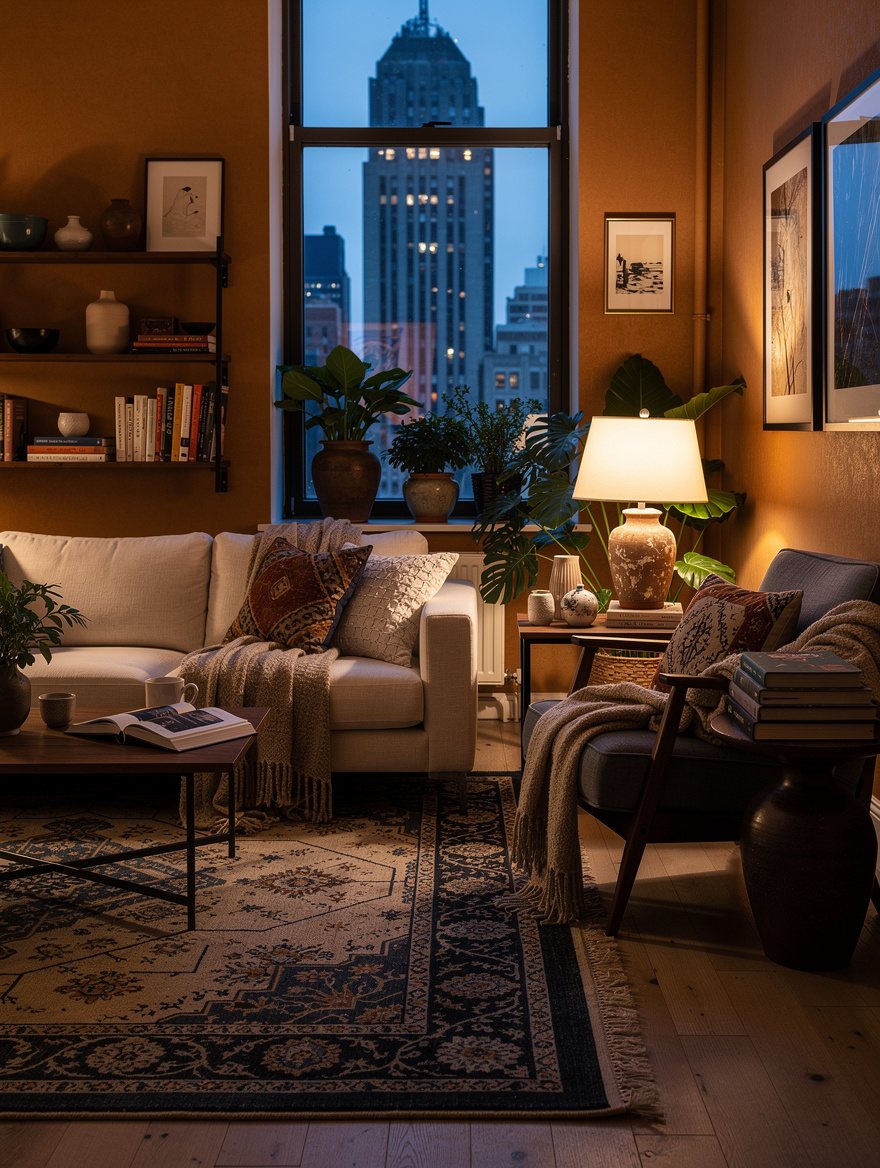
A coffee table should sit comfortably inside the rug's footprint, with room around it for feet and movement. A table that nearly fills a tiny rug makes both pieces look undersized.
Place a wood coffee table on a rug large enough to extend beyond it in every direction. The empty rug surface is useful visual breathing room, not wasted square footage.
Test the Upgrade Before You Commit
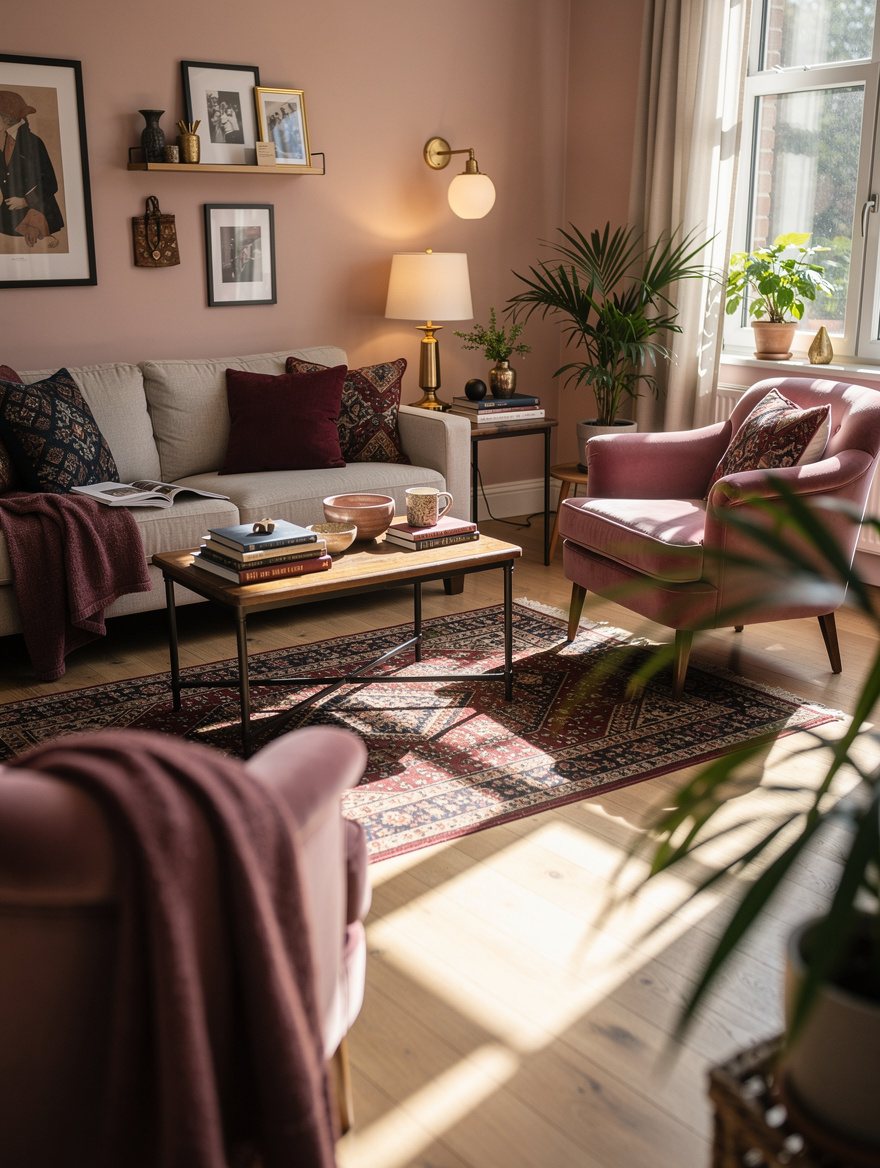
Rolls of kraft paper, painter's tape, or a folded blanket can show how a larger rug will change the room before you spend money. This is especially useful when moving from a 5-by-8 to an 8-by-10.
For a pale, textured option, consider an IKEA TIDTABELL wool rug in the closest available large size. The material gives a seating group weight without the glossy look that can make a room feel generic.
Keep reading
Start by taping out an 8-by-10-foot footprint beneath your current seating group. If the sofa and chair front legs finally land inside that outline, the room has been asking for a larger rug all along.