12 Tokyo Apartment Storage Tricks for Living Large in Tiny Spaces
20 august 2026I once tried laying out a 1K-style room on painter’s tape and realized why the usual American furniture plan fails fast. A typical 1K apartment is around 18 to 28 square meters, while its main room may be only about 10 to 13 square meters.
The appeal is not magic storage. Tokyo homes make every footprint earn a second job, then protect a clear route through the room with real discipline.
What you will find inside
- Let One Floor Area Change Jobs
- Choose a Storage Bed Before a Dresser
- Use a Daybed as Your Sofa
- Pull Your Desk Out Only When Needed
- Run Storage All the Way Upward
- Keep Every Shelf Shallow
- Mount the Small Stuff Off the Floor
- Turn the Entry Into a Working Zone
- Make Kitchen Cabinets Do More
- Use Tough Trunks as Flexible Storage
- Build a Narrow Utility Wall
- Set a Hard Limit on What Comes Home
Let One Floor Area Change Jobs
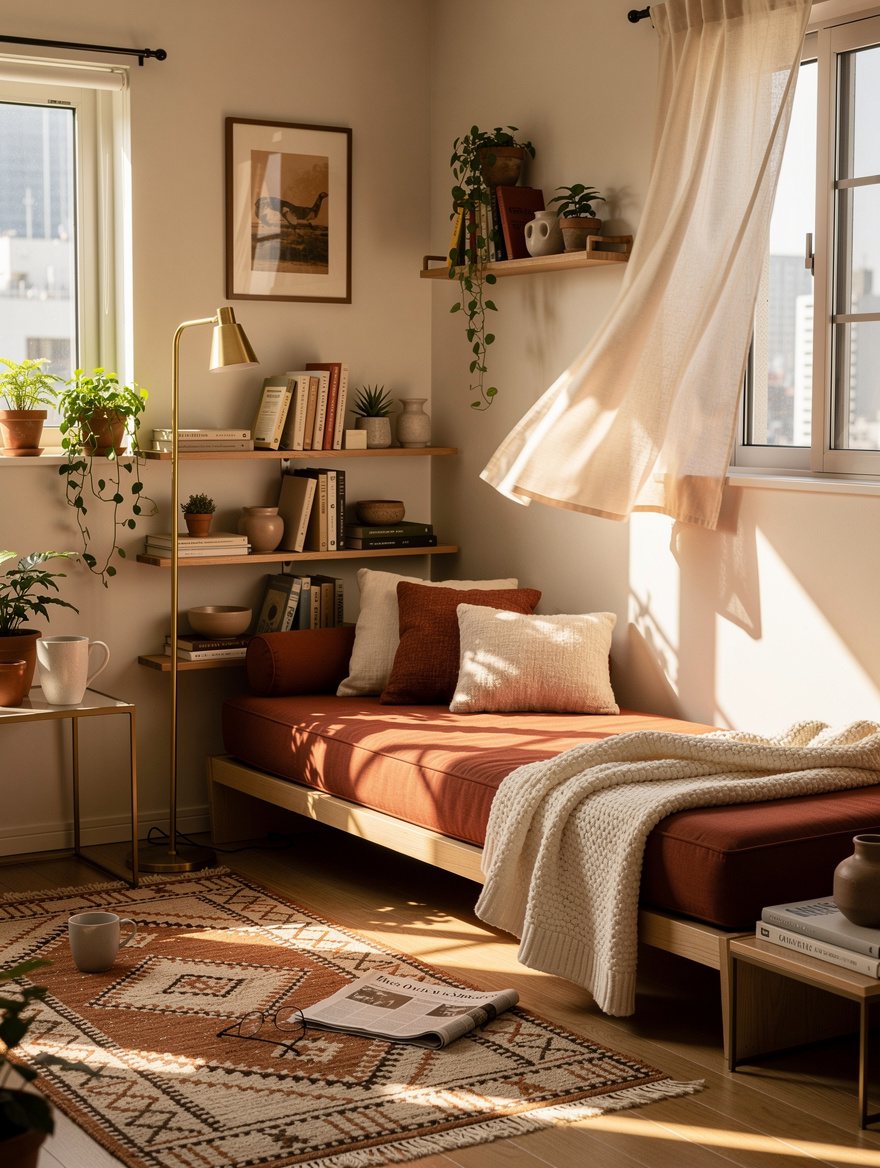
A cotton futon lets the center of a room become a sleeping spot at night and an open lounge by morning. That flexibility beats trying to wedge a permanent queen bed, sofa, and desk into one small rectangle.
Fold bedding into a closet or under-bed cases before breakfast, then put down a low table for work or dinner. The room feels larger because it actually is larger for most of the day.
Choose a Storage Bed Before a Dresser
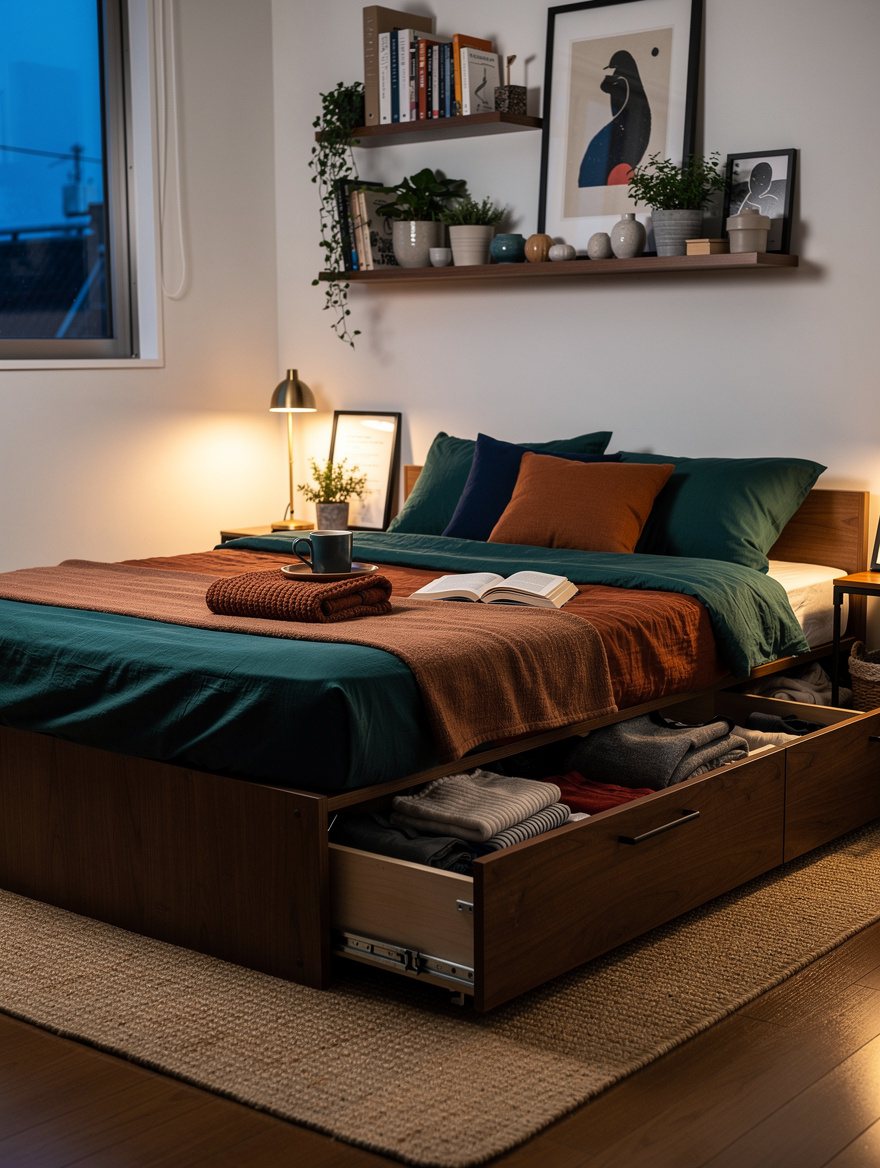
A drawer-base bed combines the jobs of a bed, dresser, and seasonal closet without claiming another wall. A Japanese single mattress is typically about 97 by 195 centimeters, a footprint that makes much more sense than an oversized bedroom set.
Use the drawers for linens, sweaters, and spare towels, not random household clutter. Keep daily clothing in the nearest closet so opening the bed storage does not become a nightly ritual.
Use a Daybed as Your Sofa
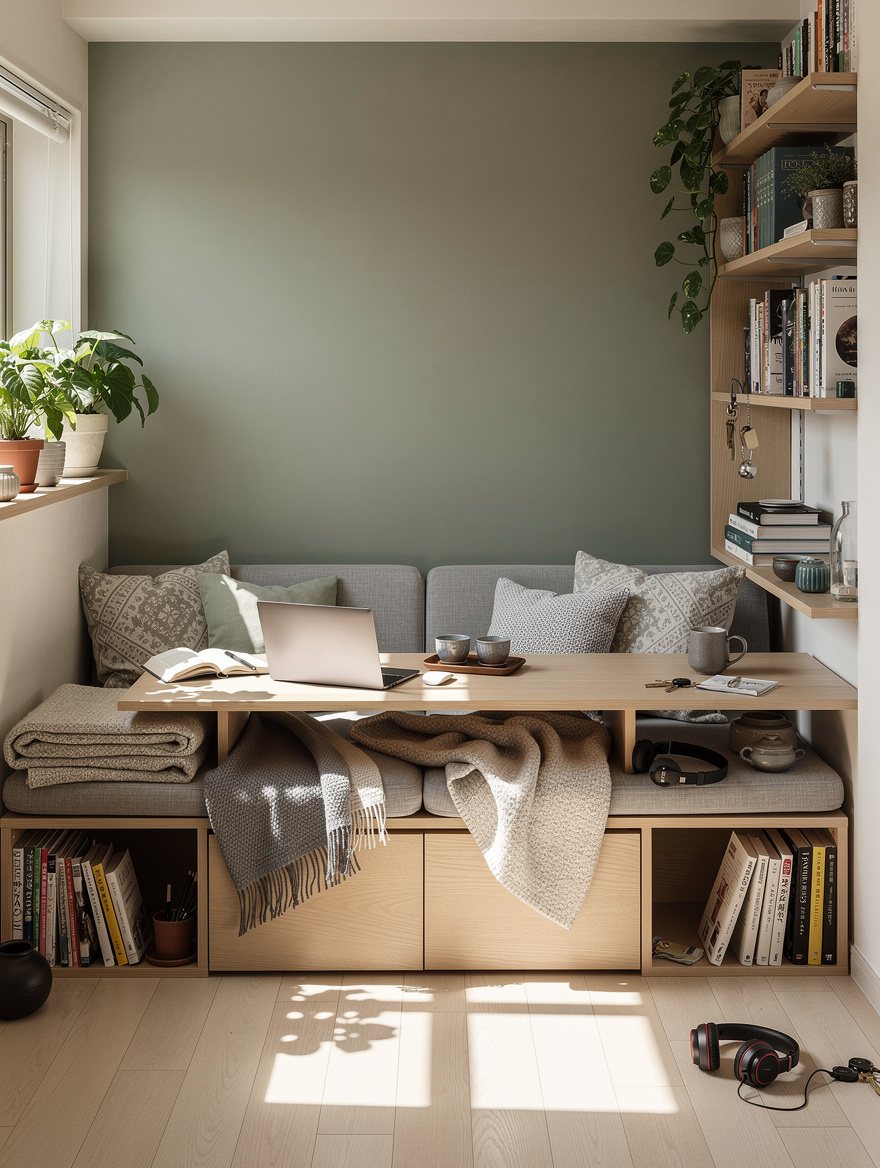
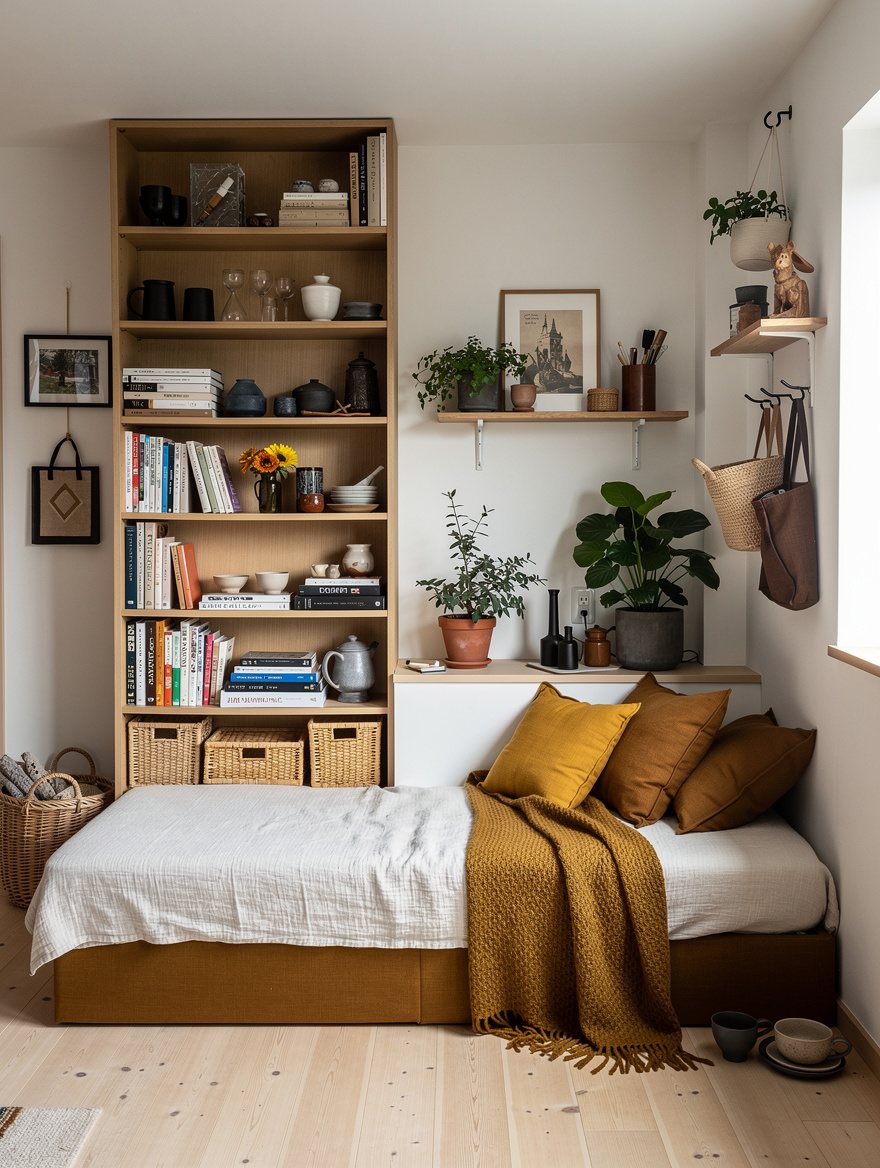
An IKEA VIHALS storage daybed is a convincing model for a room that cannot support separate seating and sleeping zones. Its roughly 80-by-200-centimeter sleeping surface can sit against a wall and read as a sofa when dressed with firm back cushions.
The listed price is about ¥26,990 in Japan, but the lesson travels better than the price. A daybed with drawers removes the need for a coffee table full of blankets and a second bulky seating piece.
Pull Your Desk Out Only When Needed
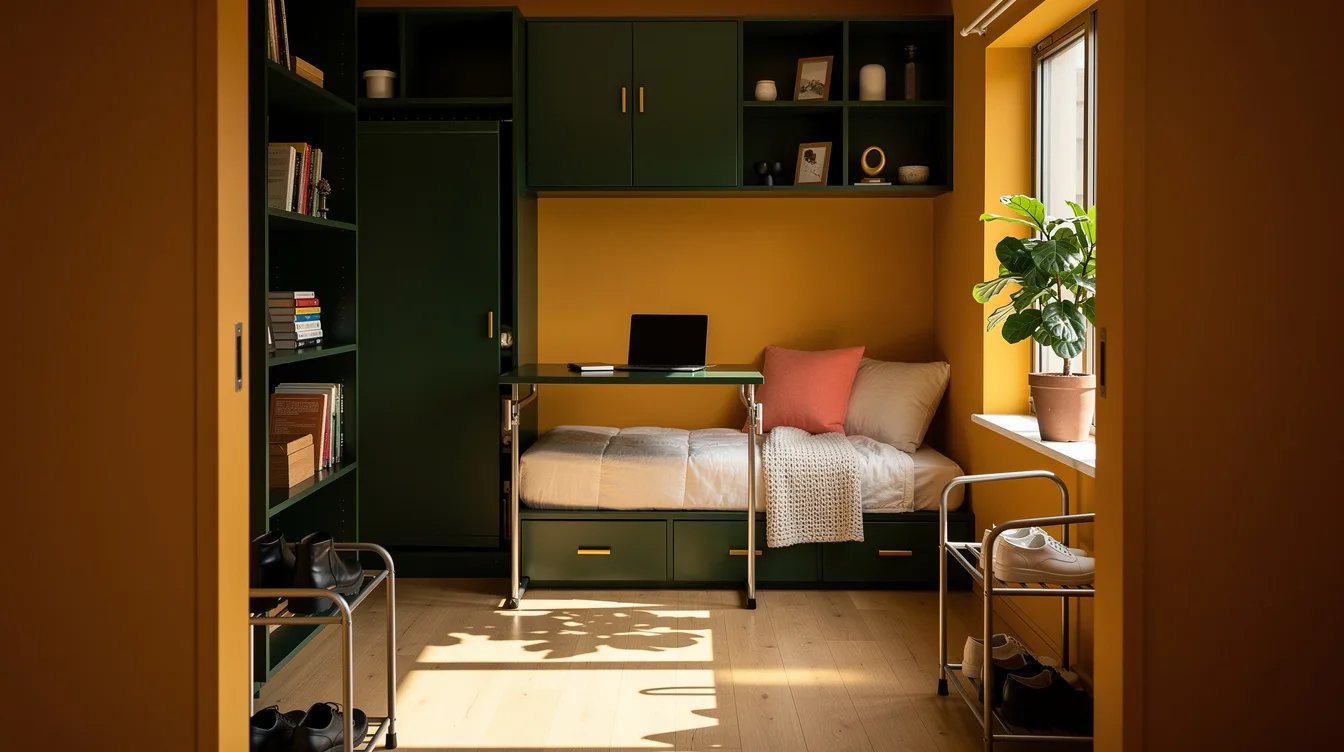
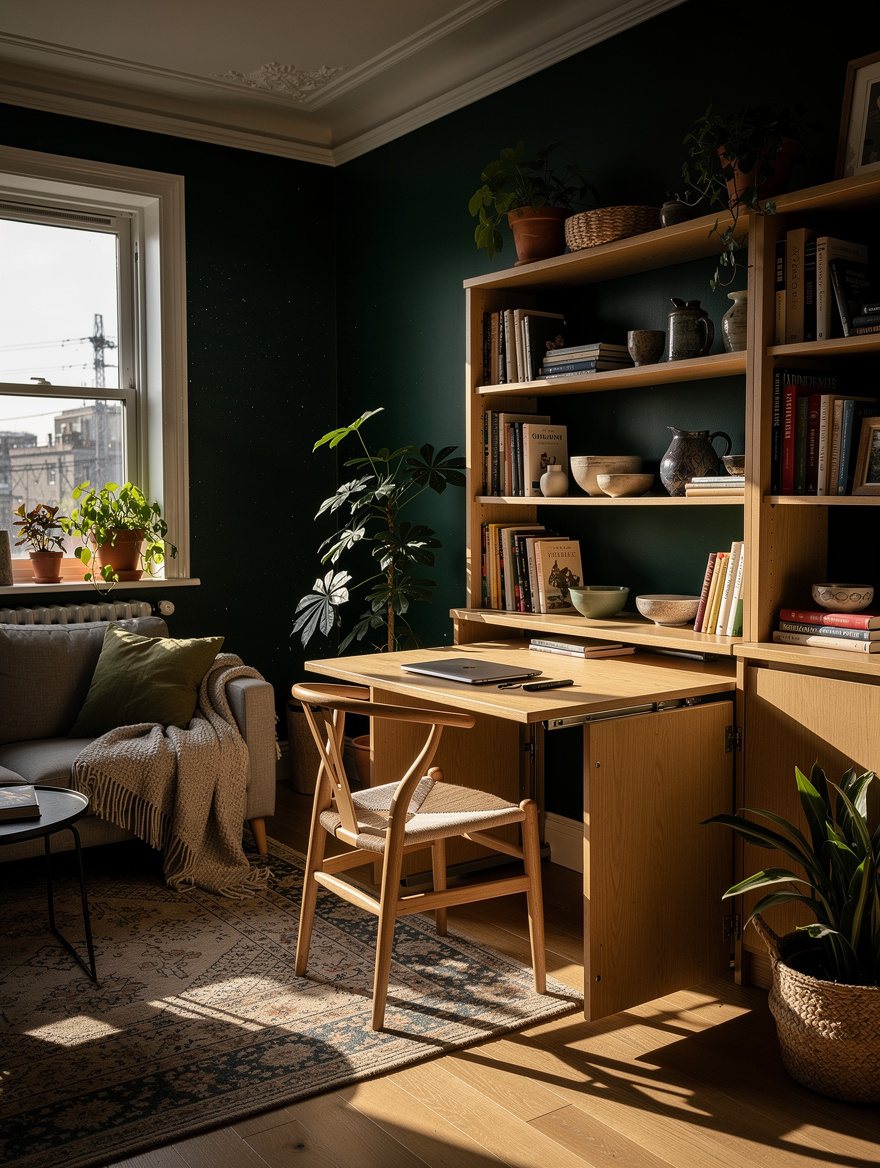
A dedicated desk can consume the best wall in a small room even when nobody is working. A pull-out desk with a closed depth of about 39 centimeters preserves that wall until you need a laptop, paperwork, or a proper meal.
IKEA’s LÄNGDHOPP-style format can extend to roughly 71 centimeters deep. Pair it with a folding chair that hangs on wall hooks, because a permanent desk chair is often the real circulation thief.
Run Storage All the Way Upward
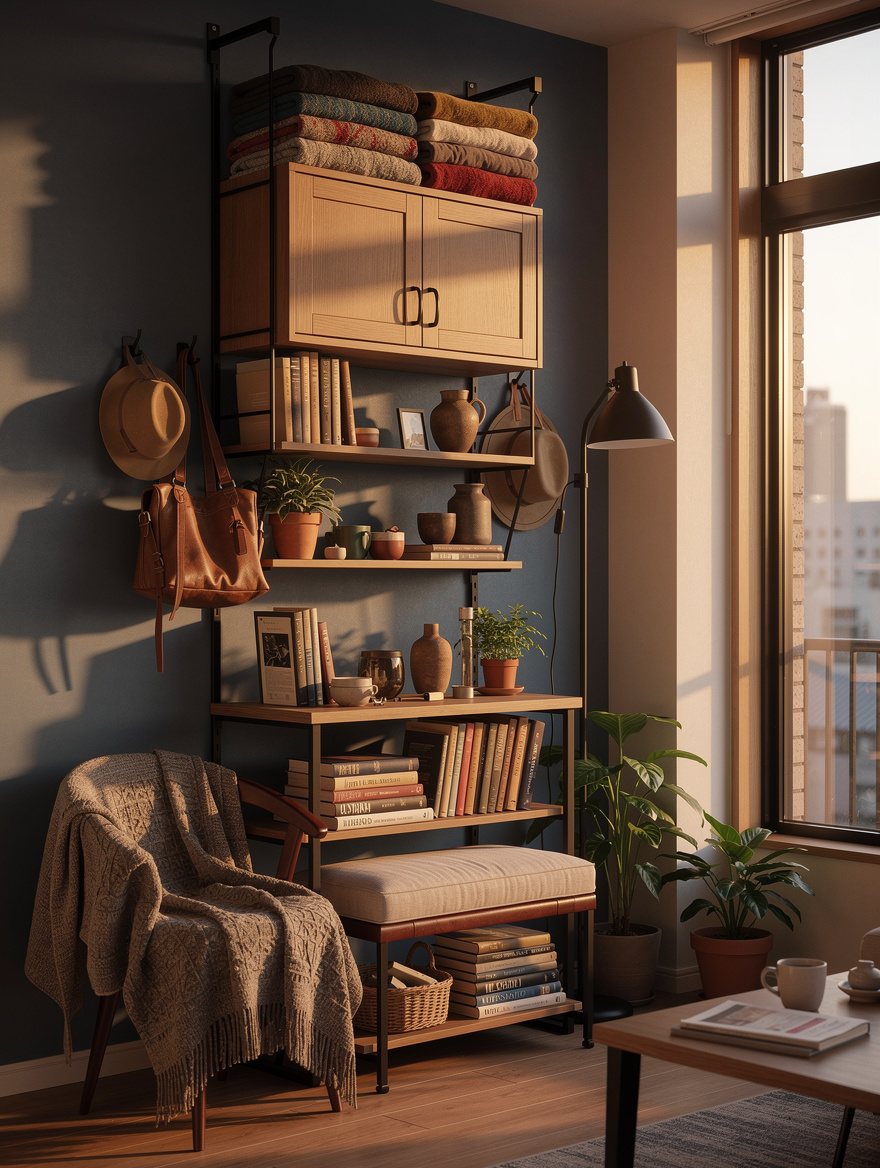
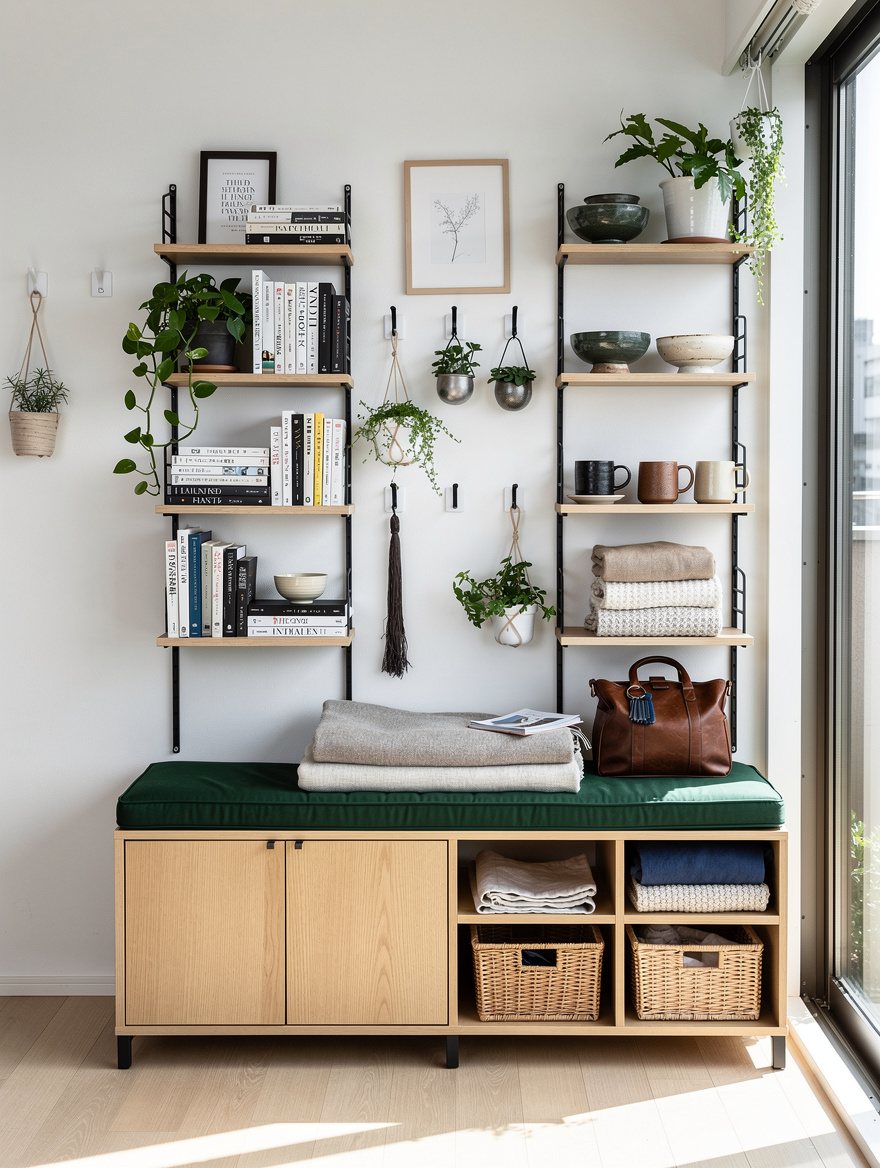
Tokyo apartments rely on wall height, often roughly 2 to 2.4 meters, because the floor must remain a walking surface. An IKEA BILLY bookcase measuring about 40 by 28 by 202 centimeters proves how much a shallow vertical piece can hold.
Put books, files, pantry overflow, and boxes above eye level, then reserve the lower shelves for frequent use. Skip decorative empty space on a shelf this narrow, it needs to carry its rent.
Keep Every Shelf Shallow
Deep furniture creates the illusion of storage while quietly swallowing the path around it. A 28-centimeter-deep shelf along one wall usually stores more usefully than a low, wide credenza that forces everyone to turn sideways.
In a room roughly 2.7 to 3.2 meters wide, aim to préservé a walking lane of about 60 to 75 centimeters. Measure from the furniture edge, not from the wall, before ordering anything.
Mount the Small Stuff Off the Floor
A stack of IKEA EKET wall cubes can replace a bedside table and a small drawer unit while leaving the floor easy to sweep. Each cube is about 35 by 35 by 35 centimeters, so the composition can follow the wall rather than the room’s awkward corners.
Use one cube beside the bed for chargers and reading glasses, then add higher cubes for papers or hobby supplies. Wall storage looks best when it has a purpose, not when it becomes a floating pile of mystery objects.
Turn the Entry Into a Working Zone
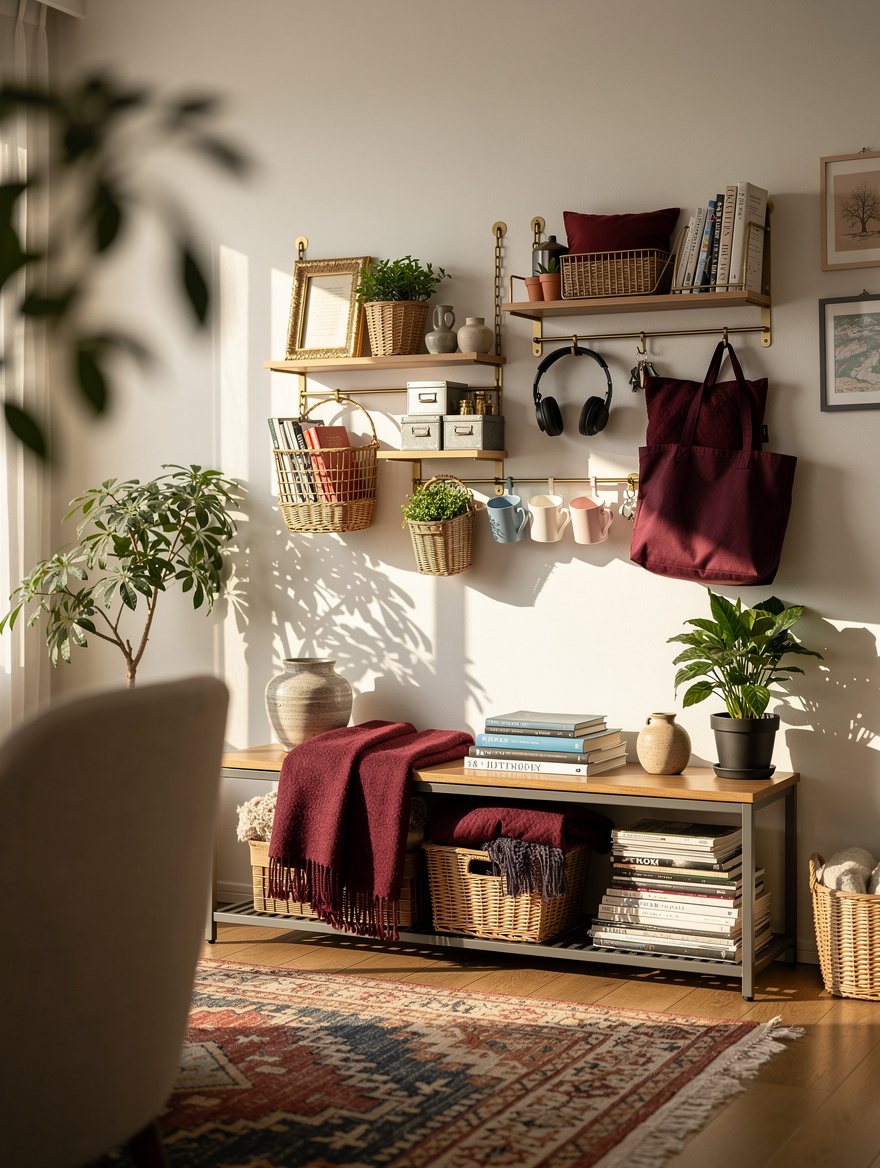
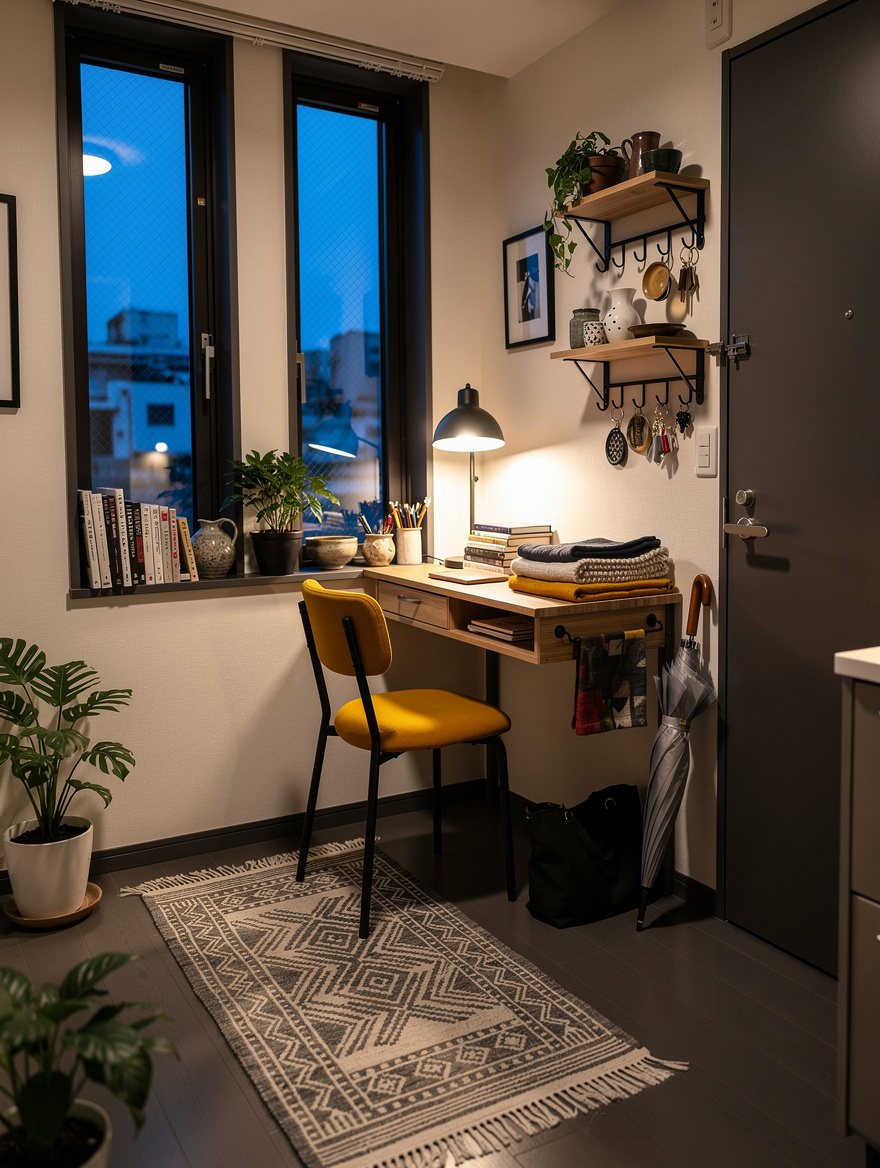
The small entry area should handle shoes, umbrellas, bags, and keys before they migrate into the main room. Add a slim powder-coated steel shoe rack, wall hooks, and one washable tray for wet footwear.
Choose closed shoe storage if the entry faces the room, especially in a studio. Open racks are useful in a mudroom-sized space, but visual noise arrives quickly in a compact apartment.
Make Kitchen Cabinets Do More
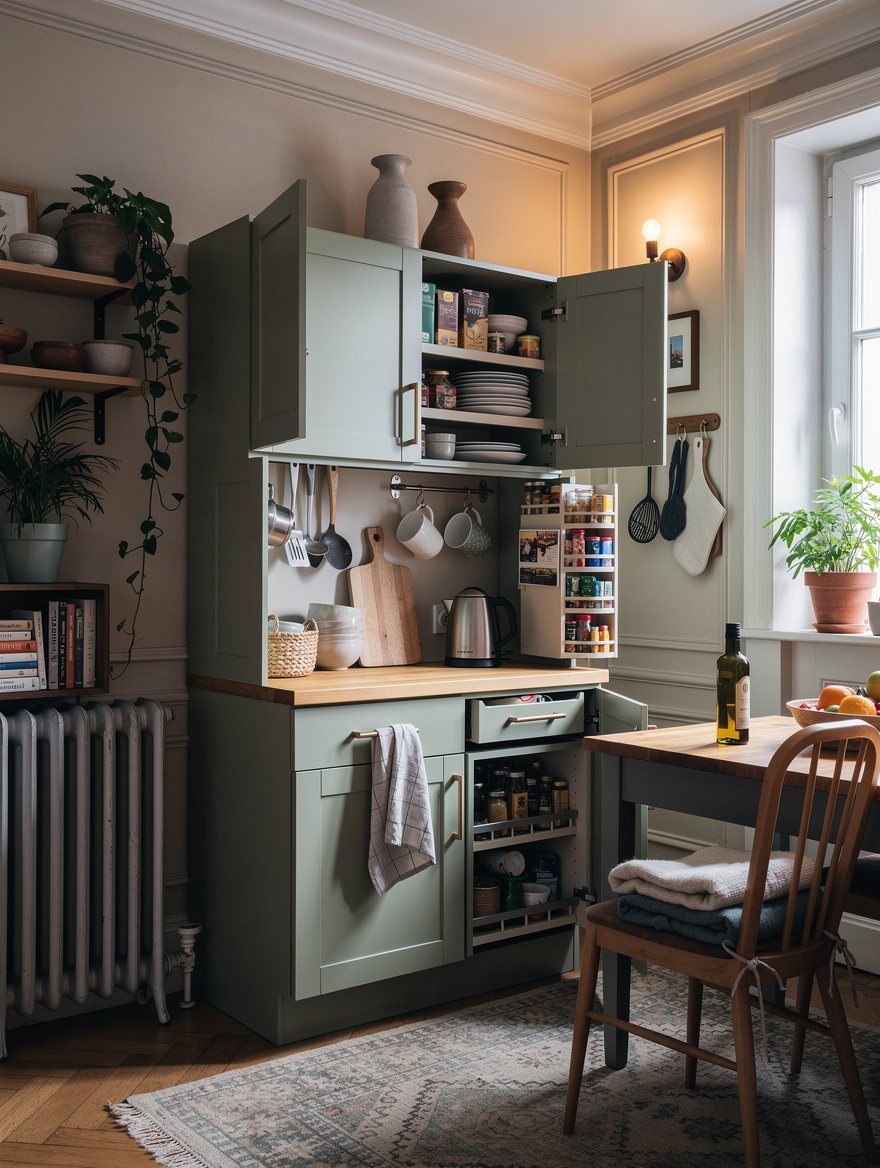
A separate kitchen corridor is one reason a 1K can feel calmer than a one-room layout with a kitchenette. Fill the cabinets with an edited set of stackable glass containers, vertical pan dividers, and a single shelf riser before buying any extra cart.
Keep countertop appliances limited to the ones used several times a week. An appliance that appears once a month belongs in a high cabinet or outside the apartment, not on the only food-prep surface.
Use Tough Trunks as Flexible Storage
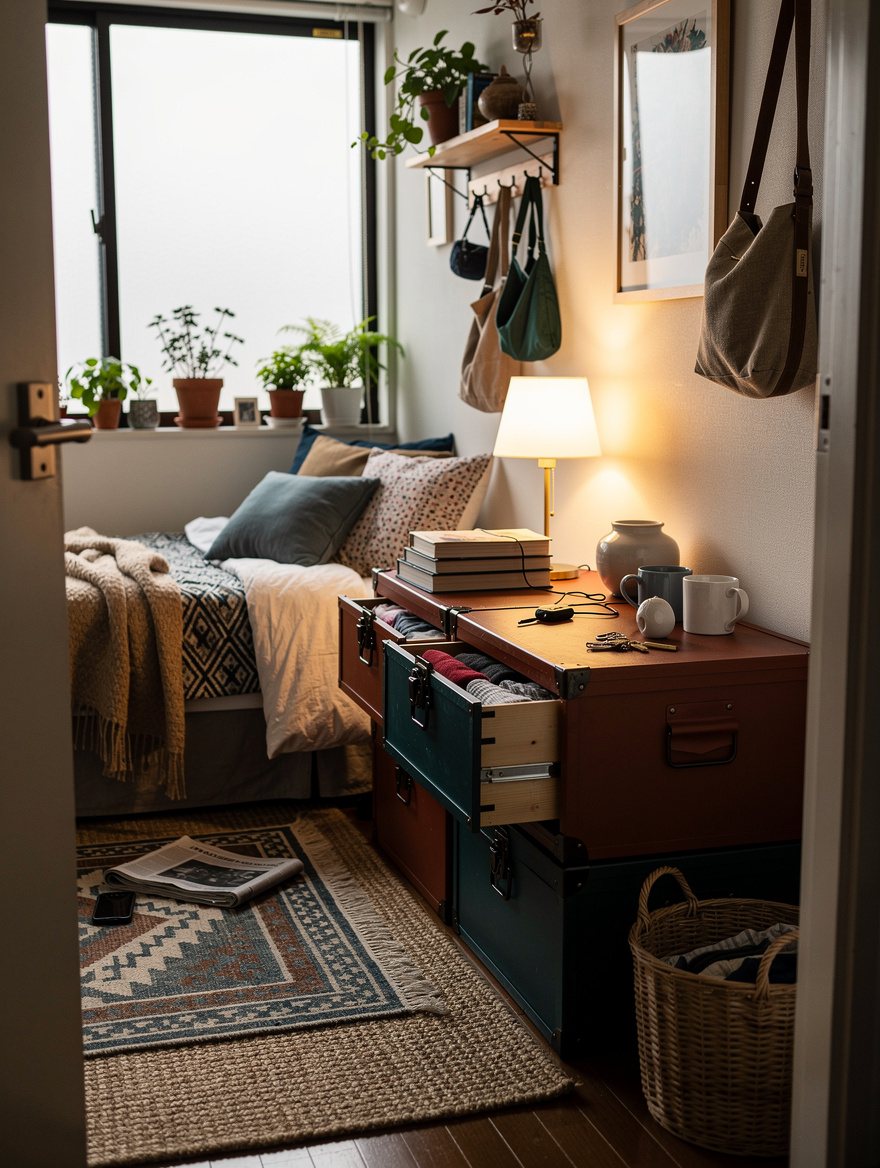
A recycled plastic storage trunk works under a table, at the foot of a bed, or as an occasional seat with a flat cushion on top. Typical small and large versions in this category hold around 30 or 50 liters, enough for seasonal textiles without the weight of a wood chest.
Choose opaque trunks for visual calm and label the underside of each lid. Transparent bins encourage you to scan possessions instead of deciding what deserves the room.
Build a Narrow Utility Wall
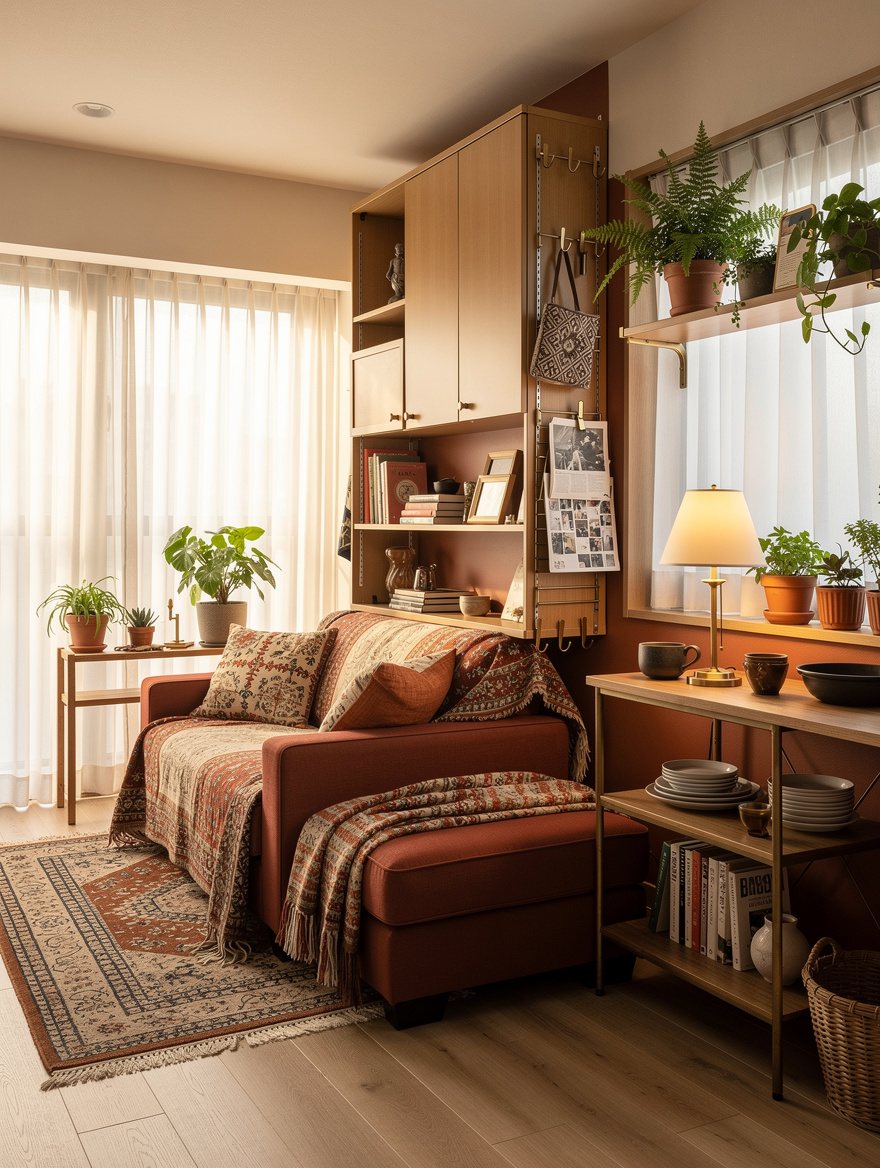
A wire mesh shelving system can create a laundry, pantry, or cleaning-supply station in the space beside a washer or refrigerator. Shelf depths around 40 centimeters are practical because detergent, baskets, and paper goods sit securely without blocking the room.
Use hooks on the side for a drying rack and dustpan, then put bulk packages on the top shelf. This is where practical materials win: washable steel and plastic tolerate real household mess.
Set a Hard Limit on What Comes Home
The least photogenic Tokyo lesson is also the one that makes every other idea work: possessions need a ceiling. Put off-season clothing in vacuum storage bags under the bed, inside luggage, or in external storage if it is rarely needed.
Before buying a chair, lamp, appliance, or decorative object, name its exact home first. A small apartment stays comfortable when incoming items replace something or solve a specific daily problem.
Keep reading
- 12 IKEA Kitchen Storage Finds Designers Use in Tiny Spaces
- Your Living Room Rug Is Making the Space Look Smaller
- 11 Design Tricks Stylish New Yorkers Use in Small Apartments
Start with the walking path: mark out a roughly 60-centimeter clear lane with tape, then remove or relocate anything that crosses it. Once that route is protected, the right shallow shelf or storage bed becomes obvious.