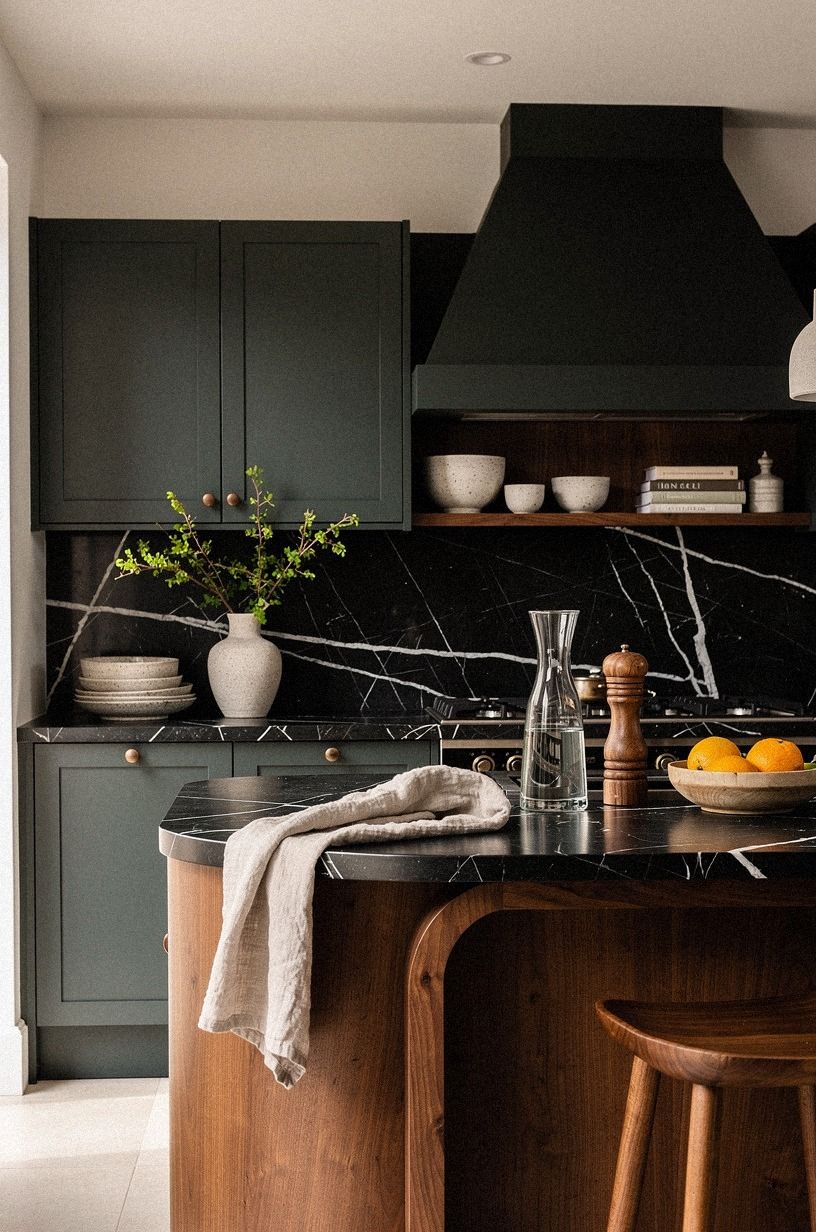
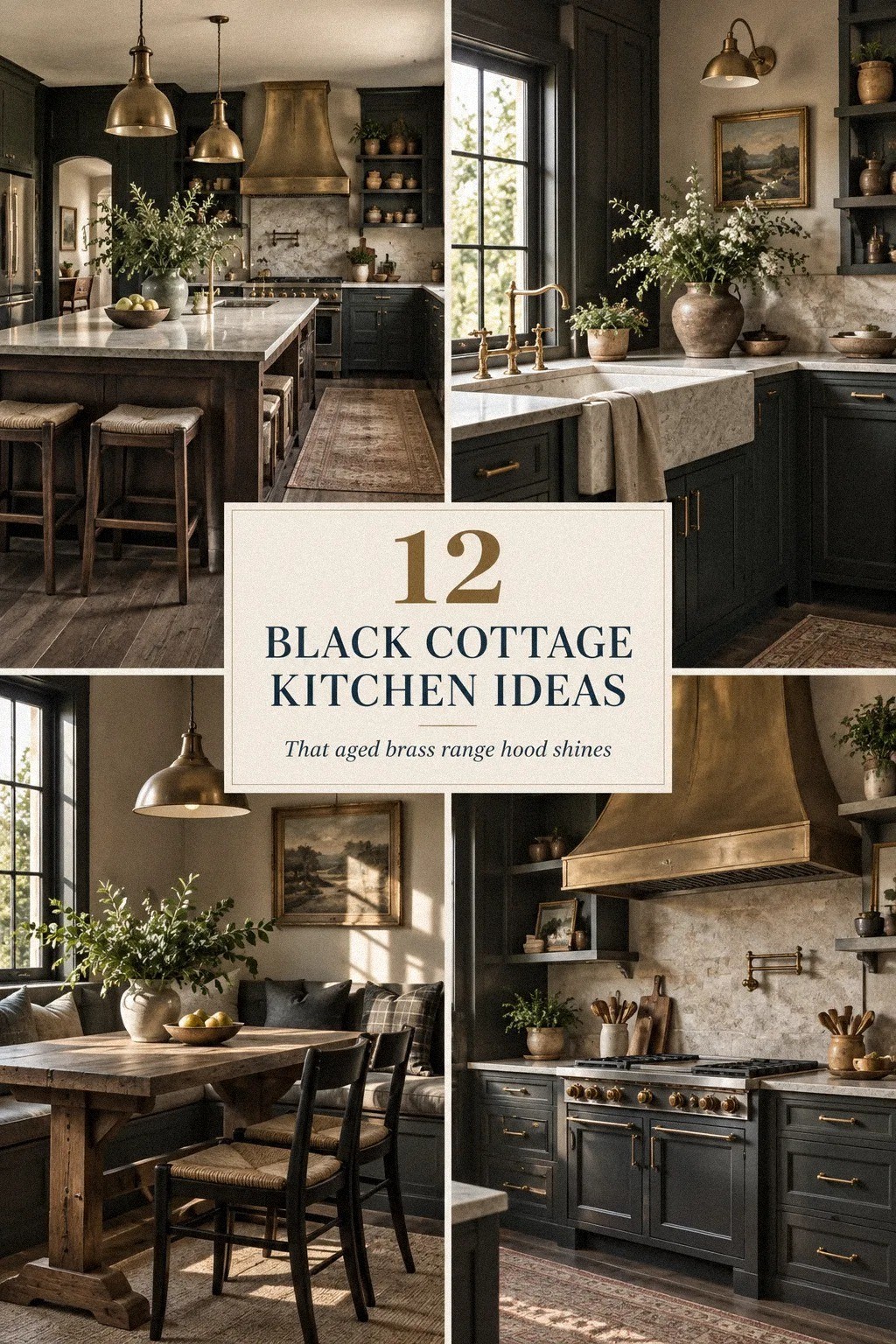
12 Black Cottage Kitchen Ideas for a Moody, Unexpected Twist
11 october 2026Black cottage kitchen ideas for a moody, unexpected twist work best when dark paint meets warm wood, soft light, and one surprising old-world detail. I once painted every cabinet black and wondered why the room felt flat. The fix wasn’t more decor. It was contrast, texture, and restraint. These ideas make the mood inviting.
- Paint the cabinets in a soft black with green undertones
- Why the Two-Wood Rule makes a vintage kitchen feel modern
- Choose aged brass over shiny chrome
- Build the Three-Height Light Stack
- Add a handmade backsplash with a quiet pattern
- Float open shelves beside the black cabinetry
- Frame the sink with a cottage-style window treatment
- The Softening Counterpoint: one warm layer against hard surfaces
- Mix vintage kitchen modern pieces with one old focal point
- Make a small kitchen feel airy with clearances
- Swap upper doors for ribbed or glass fronts
- Paint one unexpected surface in a soft contrast
1Paint the cabinets in a soft black with green undertones
A near-black cabinet color with a navy cast feels rustic rather than severe, especially beside old floors, warm walnut, and a Nero Marquina marble counter. Farrow & Ball Railings No. 31 is my favorite starting point because it shifts from deep blue-black in daylight to nearly black after sunset. You’ll want to test it beside your counters, since north-facing light can make dark colors look cooler.
Don’t paint the entire kitchen before you’ve watched the sample through one full day. I’d skip a green-black if your room already has gray tile, because the combination can feel cold and commercial. Your better move is a muted shade with a little blue depth in it.
For a budget refresh, paint only the lower cabinets and keep the uppers in Benjamin Moore White Dove OC-17. You’ll get the moody base without making a narrow kitchen feel boxed in. I’ve found that this split also gives your eye somewhere to rest.
If your cabinet doors have visible grain, a satin finish will preserve some character while making fingerprints easier to wipe away. A high-gloss finish can look dramatic, but it reflects every uneven patch and brush mark. I’d choose a durable waterborne alkyd in a low-sheen finish for a lived-in room that still needs to survive breakfast, homework, and Sunday cooking.
2Why the Two-Wood Rule makes a vintage kitchen feel modern
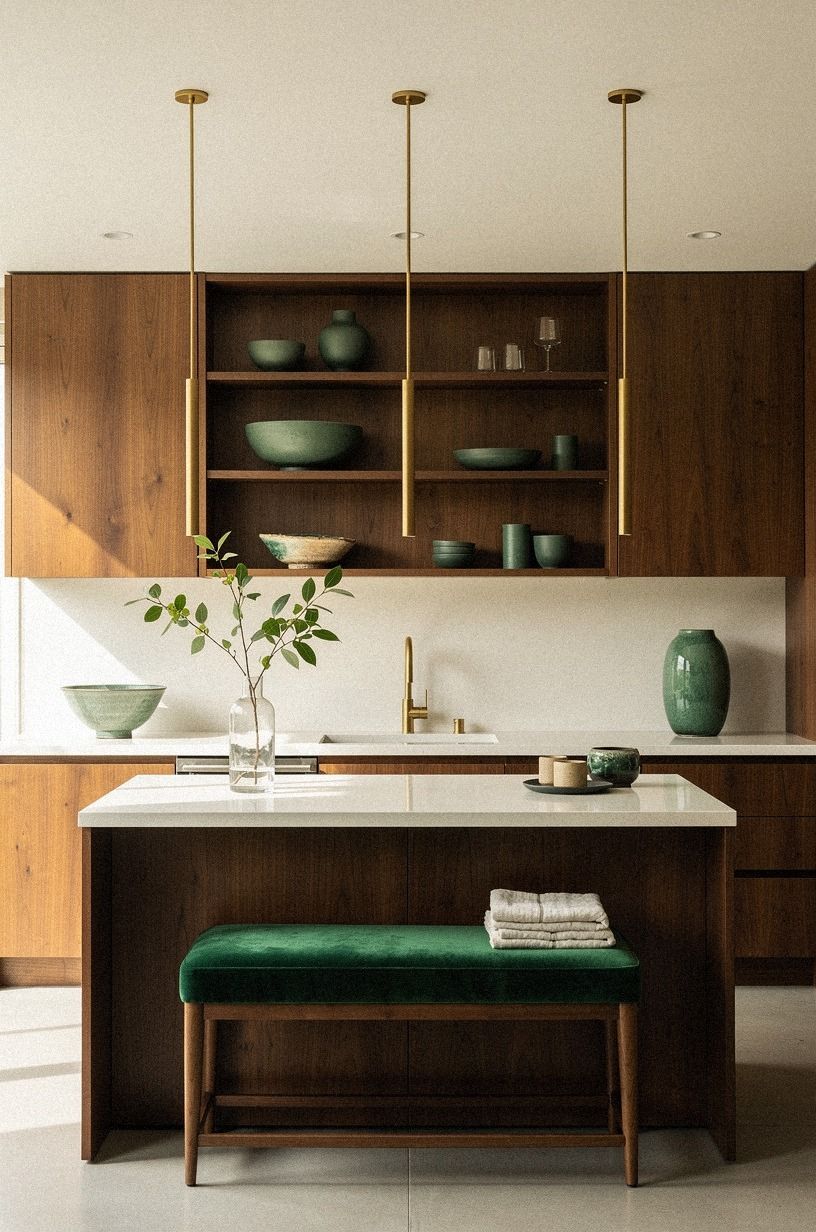
The Two-Wood Rule keeps a black cottage kitchen from looking like a showroom.
3Choose aged brass over shiny chrome
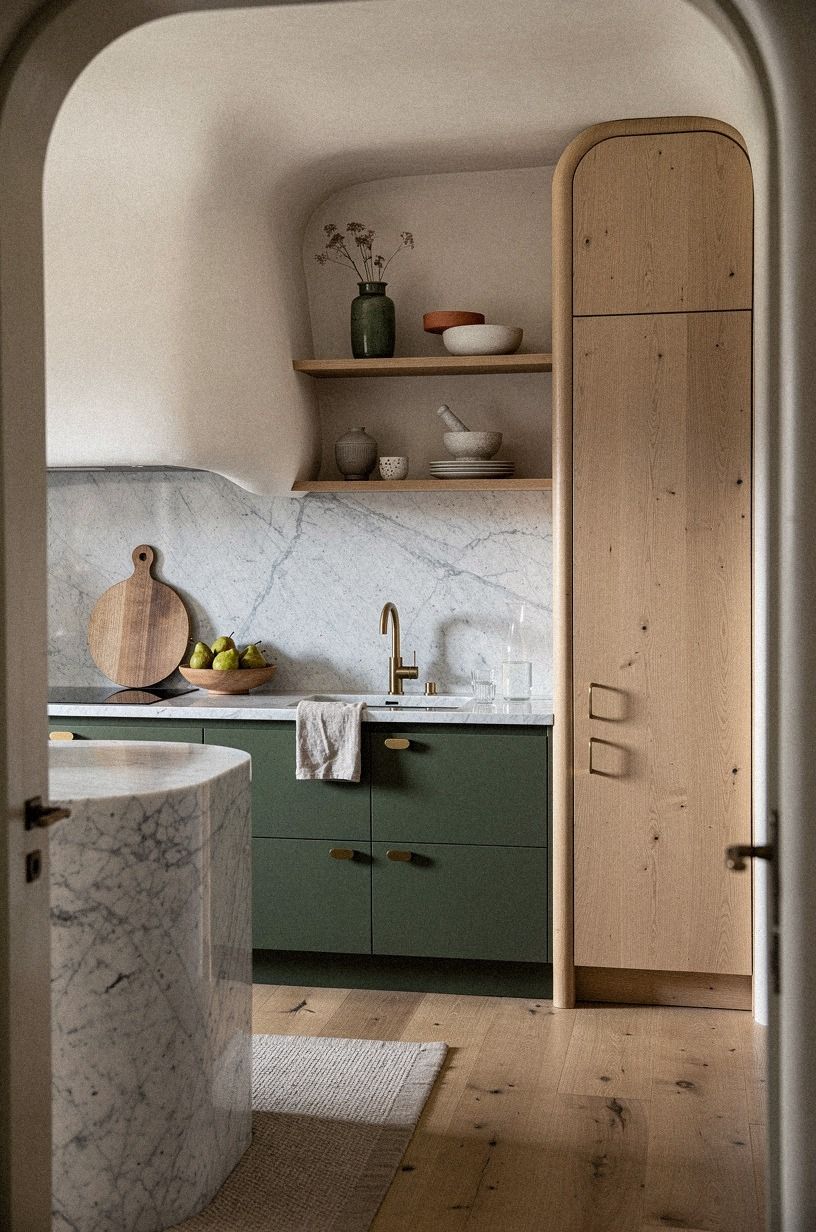
Aged hardware is the small decision that gives dark cabinetry its cottage character. Unlacquered brass develops a soft patina as you touch it, so your drawer pulls won’t stay visually frozen. That changing surface looks especially charming against black paint and handmade ceramics.
I’d skip polished chrome here. It’s crisp, sure, but the bright blue reflection fights the earthy mood you’re building.
Choose cup pulls on drawers and simple knobs on doors, then keep the finish consistent across the faucet and lights. You’ll save yourself from a patchwork look.
A bridge faucet can become the room’s jewelry when the rest of the hardware stays quiet. If your budget is tight, replace the most visible six pulls first and keep the rest temporarily. You’re not required to renovate every surface at once.
A secondhand brass mirror or thrifted candlestick can repeat the finish for almost nothing. I like a little variation in age, so your new faucet doesn’t have to match an antique frame exactly. The shared warmth matters more than a perfect finish match.
When you’re ordering pulls, measure the existing hole spacing before falling in love with a style. Your favorite cup pull may require filling and redrilling the doors. That small detail can add labor quickly, especially if you’re working with painted MDF or older cabinetry.
4Build the Three-Height Light Stack
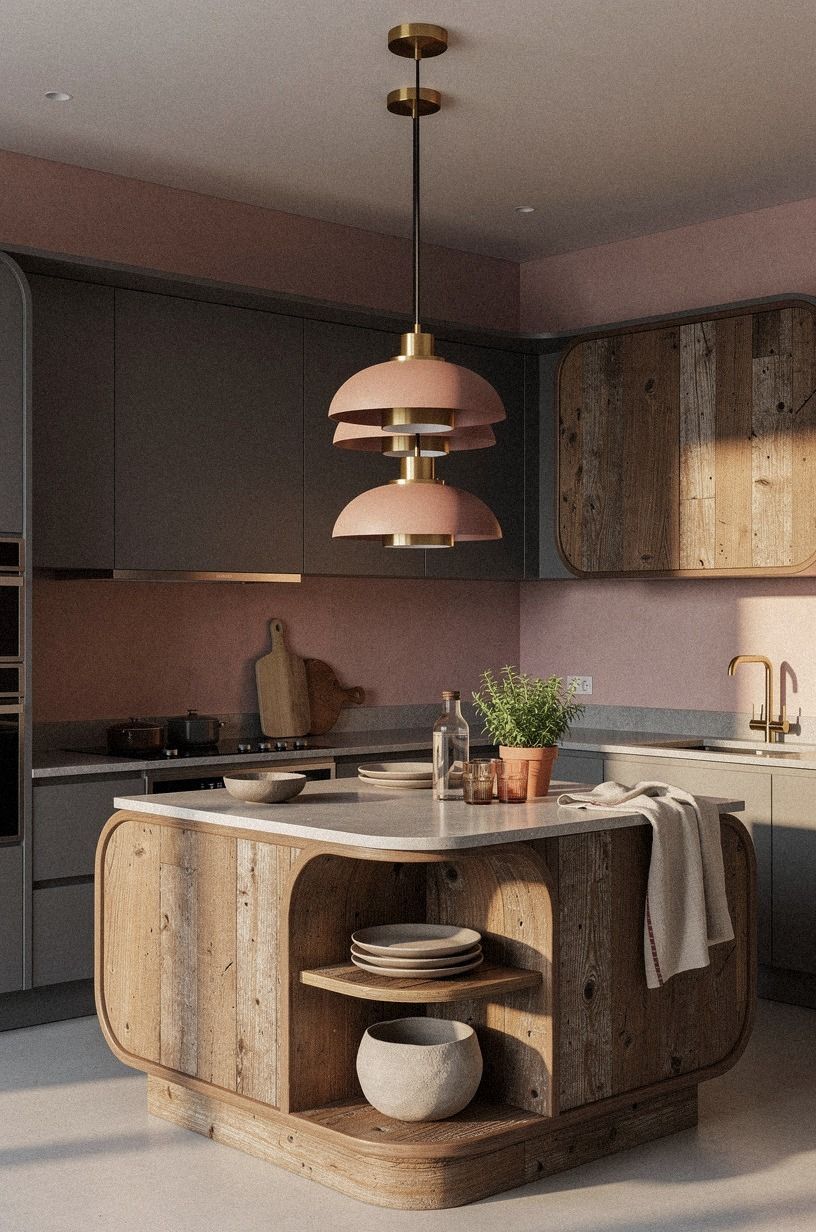
The Three-Height Light Stack gives a dark kitchen enough glow to feel warm after sunset. Start with a ceiling fixture, add a middle layer under the cabinets, and finish with a low lamp near the sink or a sideboard. Warm LED bulbs around 2700K keep black paint from looking harsh.
Don’t rely on one pendant to do every job. I made that mistake in my first dark kitchen, and the counters looked dramatic at noon but gloomy at dinner. Your task lighting should land directly on the work surface, while decorative light can sit slightly off-center.
A rechargeable lamp on an open shelf is useful if you’re renting or don’t want new wiring. You’ll get that soft pool of light without drilling through tile. Place it near a cookbook or fruit bowl, where the glow will catch the edge of a reclaimed weathered teak board.
Under-cabinet strips should sit toward the front edge of the cabinet rather than pushed against the wall. That placement sends light across the counter instead of creating a bright line at the backsplash. I’d use a warm-dim option if you cook late, because your kitchen can shift from practical workroom to relaxed gathering space.
For a ceiling fixture, look for aged metal, seeded glass, or a simple linen shade. Your light doesn’t need to resemble an antique lantern to support the cottage feeling. A clean fixture can keep the room current while the paint, wood, and hardware carry the history.
5Add a handmade backsplash with a quiet pattern
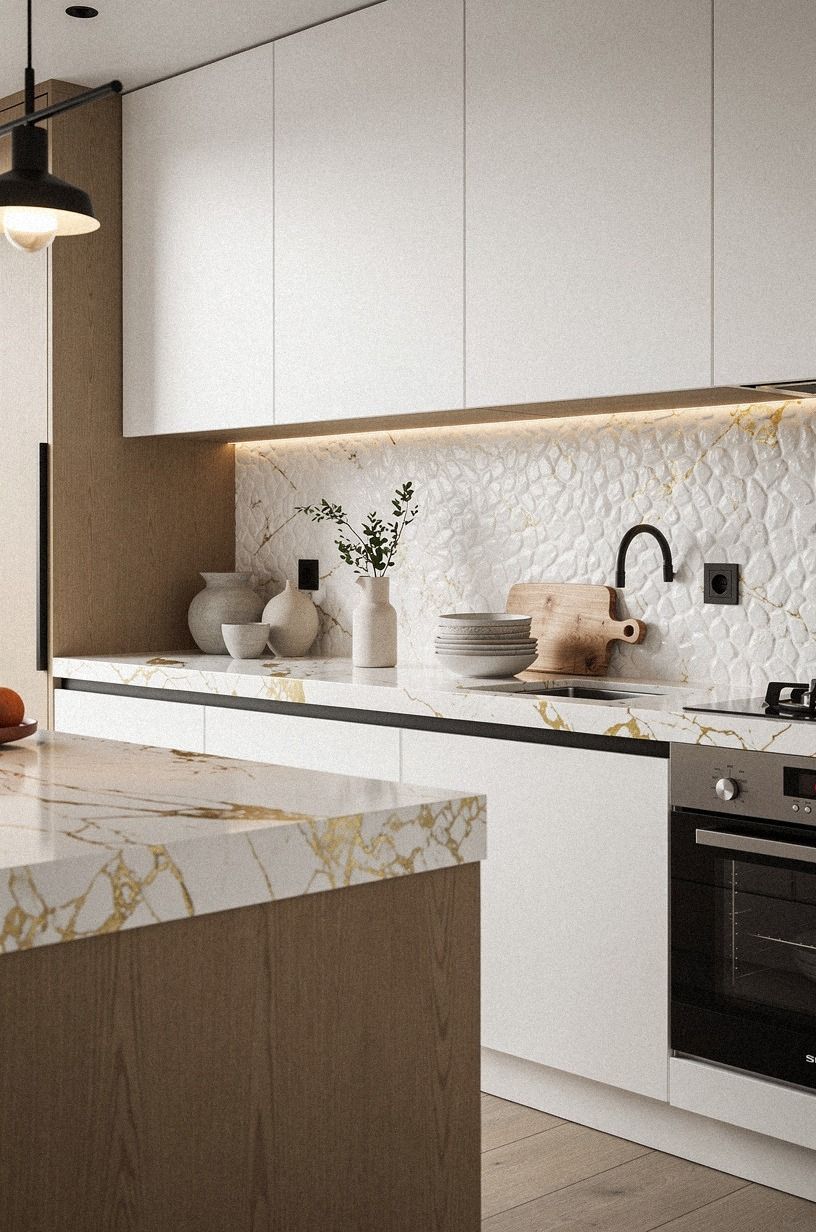
A dark kitchen needs a backsplash that adds movement without shouting for attention. Calacatta marble with gold veining brings a warm-white surface with subtle camel and black accents, so the wall catches light without competing with the cabinets. Its natural variation suits a cottage kitchen far better than a perfectly printed geometric pattern.
Use the standard 18-inch backsplash gap between the counter and upper cabinets as your planning reference. You’ll want the tile to stop cleanly beneath the uppers, especially if your cabinets are 30 to 42 inches tall. I’d avoid carrying a bold pattern across every wall, because your black cabinets already have visual weight.
Cream grout will soften the contrast and make the handmade edges feel intentional. Bright white grout can look graphic, while a very dark grout may turn the backsplash into another heavy plane. Test warm cream grout with the tile before ordering enough for the whole room.
Typical kitchen costs vary widely, so use these US ranges as planning markers rather than promises:
You can test the mood with a small peel-and-stick sample before committing. It won’t mimic every handmade edge, but it’ll show you whether the darker wall needs more cream, brass, or wood.
If tile feels too permanent, a painted beadboard backsplash can bring the same cottage rhythm at a lower cost. I’d use a washable eggshell enamel and keep the color close to the wall or cabinetry. Your eye will read the vertical texture before it reads the exact shade.
6Float open shelves beside the black cabinetry
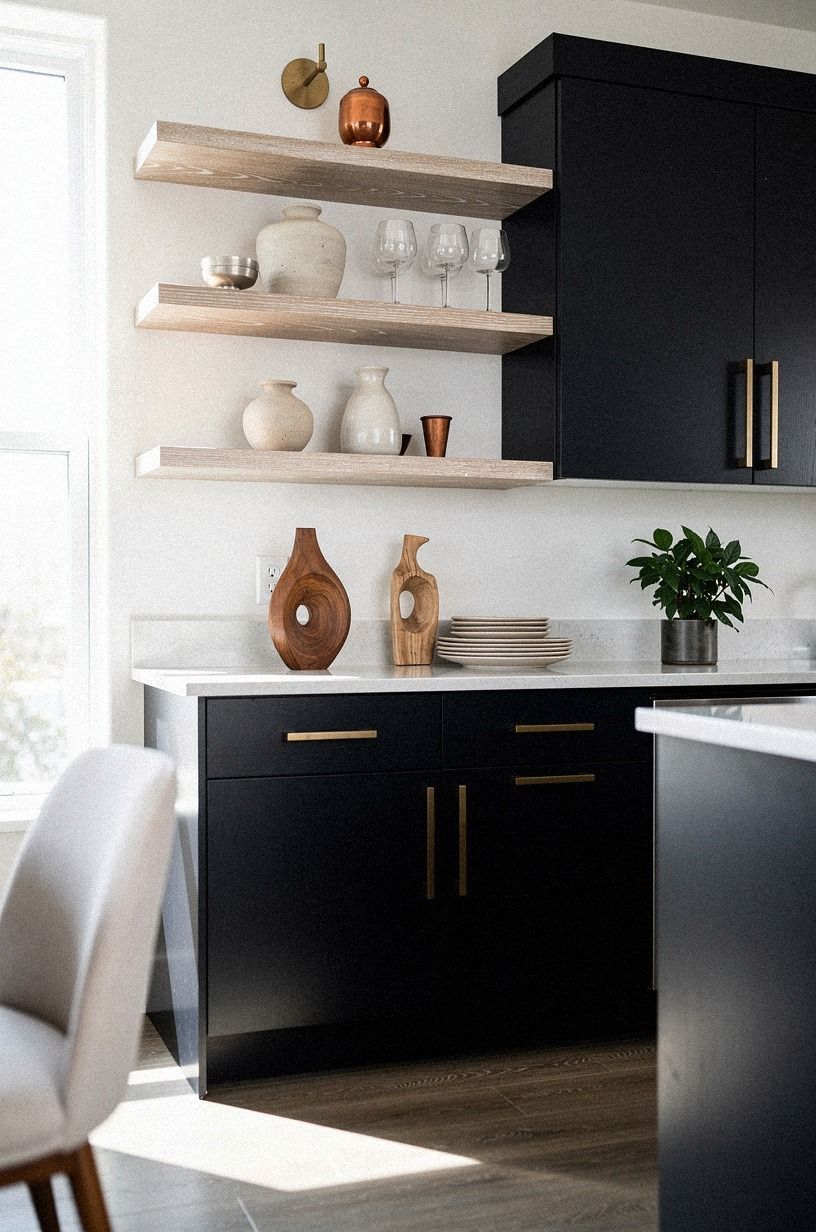
Open shelves keep a dark cottage kitchen from feeling closed off, particularly when the room has limited natural light. Cerused white oak floating shelves soften the upper wall while giving you space for everyday plates, cookbooks, and one slightly odd thrift-store vase.
Keep the shelf styling practical. You’ll want the pieces you reach for most often on the lower shelf, rather than a row of fragile objects that makes cooking annoying.
I’d skip filling every inch with ceramics. Empty space around a stack of bowls is what lets the room breathe.
For a smaller budget, use a stained pine shelf with sturdy brackets painted to match the cabinets. Your shelves don’t need to look expensive if the brackets are placed carefully and the wood has a real grain. A narrow 8-inch depth is often enough for mugs and plates without stealing workspace.
I like to leave at least a few inches between the shelf and the counter’s busiest zone. You’ll appreciate that breathing room when you’re chopping, unloading groceries, or wiping flour from the wall. The most beautiful shelf becomes irritating when it blocks the way you naturally move.
Choose objects with different heights but related colors. Ivory stoneware, copper-toned glass, and faded blue ceramics will connect to the rest of the room without looking arranged by a catalog. I’d add one useful woven basket, then stop before the shelf becomes a display case.
7Frame the sink with a cottage-style window treatment
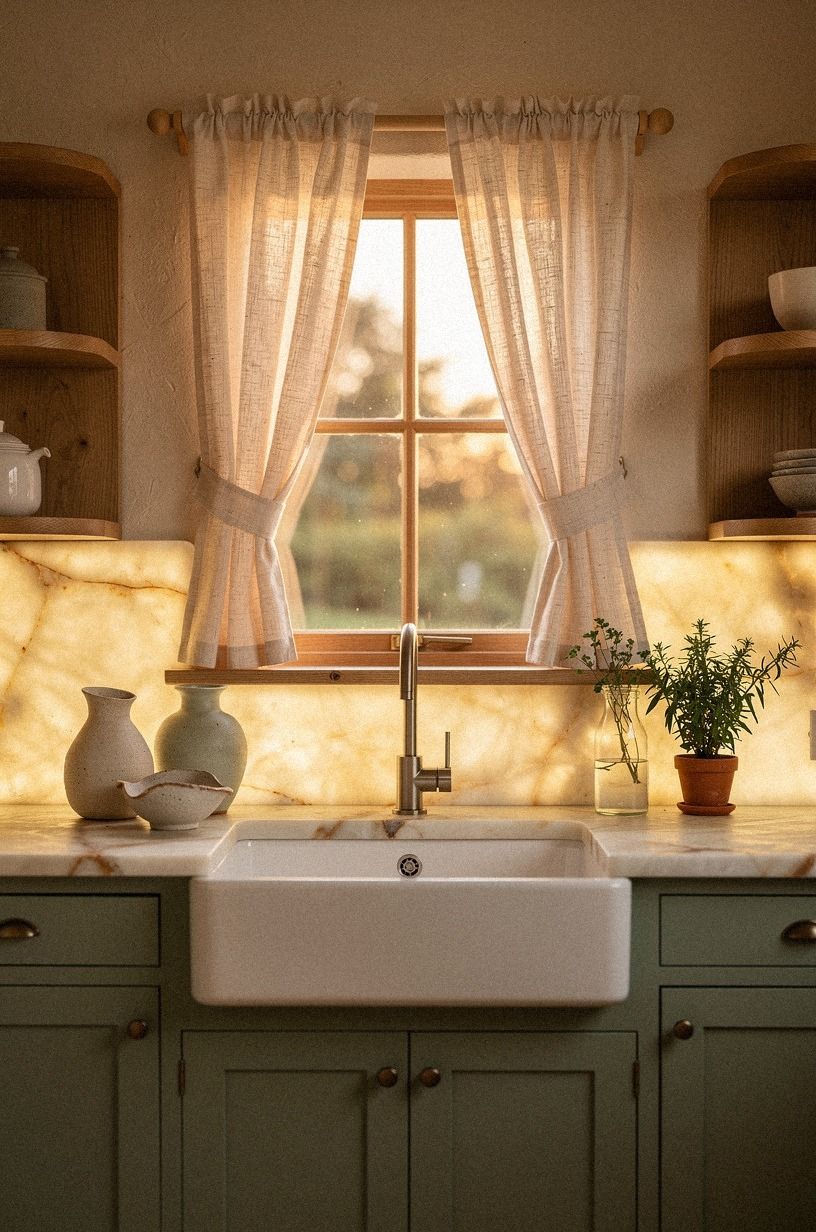
A simple fabric shade can make a black kitchen feel softer without adding clutter. Belgian flax linen has enough texture to stand up to dark cabinetry, and its loose weave lets daylight filter through rather than stopping it cold. Choose cream, oat, or sage green instead of bright white.
Your sink window should still be easy to use, so avoid long curtains that brush the faucet or collect splashes. A relaxed Roman shade mounted just above the trim gives you privacy while keeping the counter clear. I’d skip a busy floral if your backsplash already has irregular tile.
A café curtain can be wonderfully charming in the right room. Hang it inside the lower half of the frame, and you’ll keep the upper glass open for daylight. If you’re renting, a tension rod means you can change the fabric seasonally without leaving holes.
Washability matters more than people expect. Choose fabric you can remove easily, especially if your sink sits beneath a window used during messy prep. A cotton-linen blend will usually feel relaxed while handling everyday splashes better than a delicate sheer.
If your window trim is already dark, choose a lighter textile with a small woven stripe. If the trim is pale, a sage green or tobacco shade can pull the window into the composition. I’d keep the pattern quiet so the room’s strongest contrast remains the black cabinetry.
8The Softening Counterpoint: one warm layer against hard surfaces
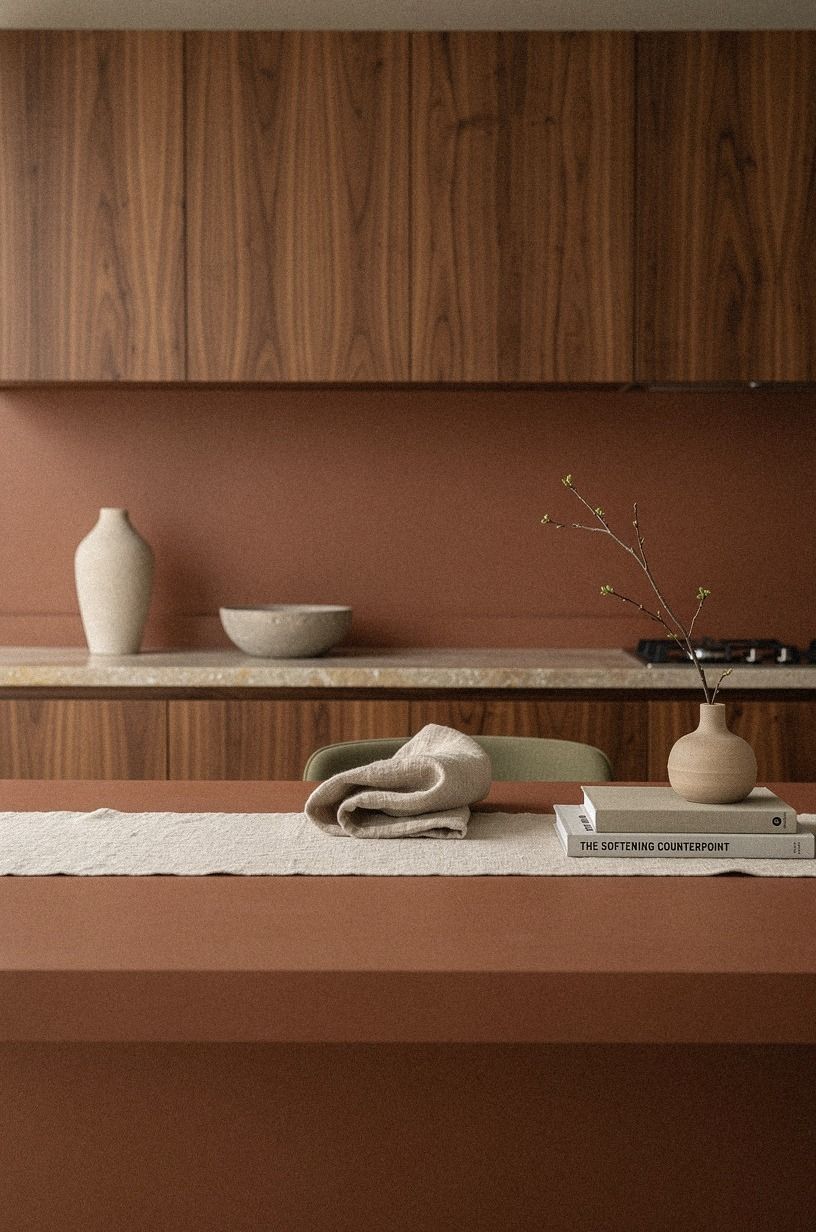
The Softening Counterpoint is one warm, touchable element placed against several hard surfaces.
9Mix vintage kitchen modern pieces with one old focal point
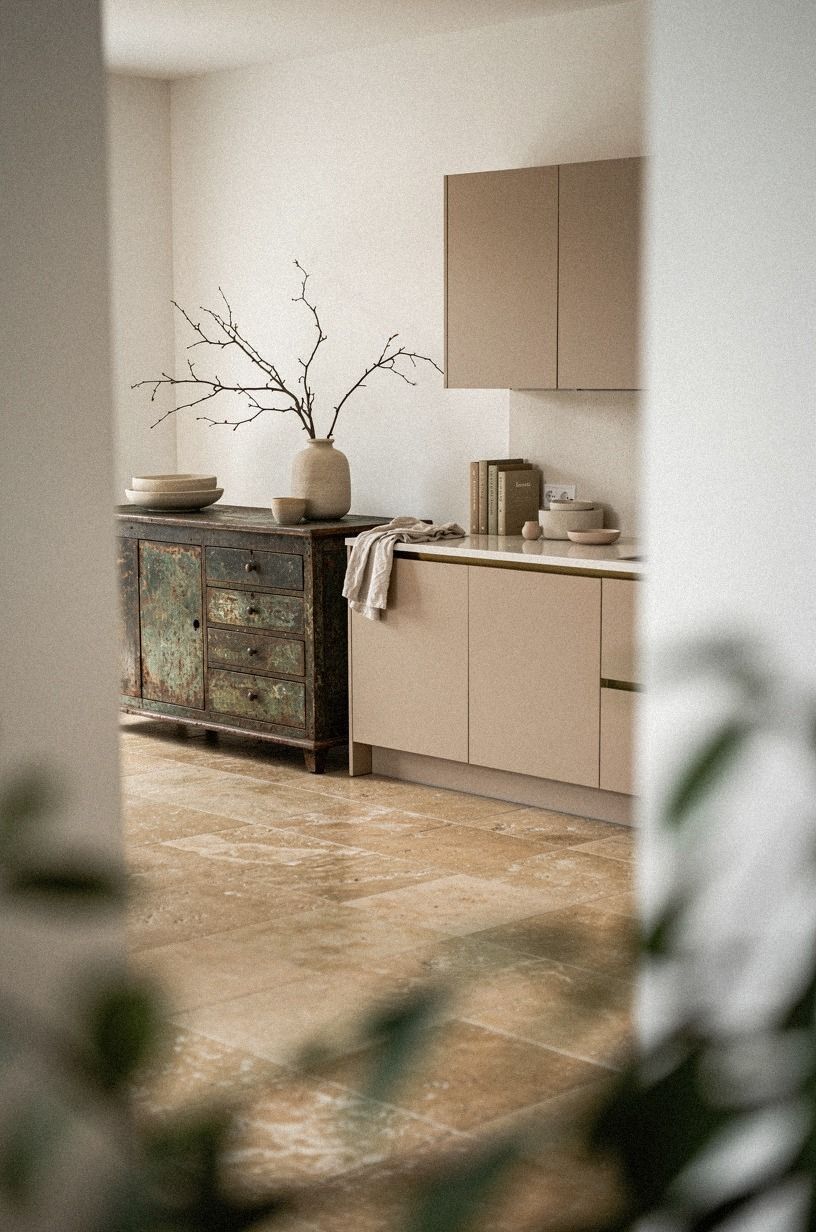
A cottage kitchen feels more believable when one piece has a history. Add a vintage pine hutch, an old stool, or a framed botanical print, then keep the newer elements simple. That contrast gives your black cabinets a story instead of making everything look newly purchased.
Don’t turn the room into a period set. You’ll want one or two modern shapes to keep the mood fresh, such as a slim pendant or a clean-lined faucet. I’d pair a flea-market table with an Article Seno dining chair rather than matching every chair to the same era.
Ask yourself what you’d keep if the room had only one special object. That question helps your eye find the anchor. A chipped ceramic pitcher may be more useful than three decorative signs, and you’ll enjoy it more if it can hold herbs or wooden spoons.
A vintage piece also gives you permission to leave some surfaces imperfect. The worn edge of a pine cabinet or small dent in an old stool can keep the room from feeling staged. Your newer purchases will look better when they have something with age nearby.
If the focal point is tall, let it occupy a quieter wall. You don’t want a hutch fighting with the range hood, open shelves, or window. I’d choose one dominant old piece and let the surrounding objects support it in smaller doses.
10Make a small kitchen feel airy with clearances
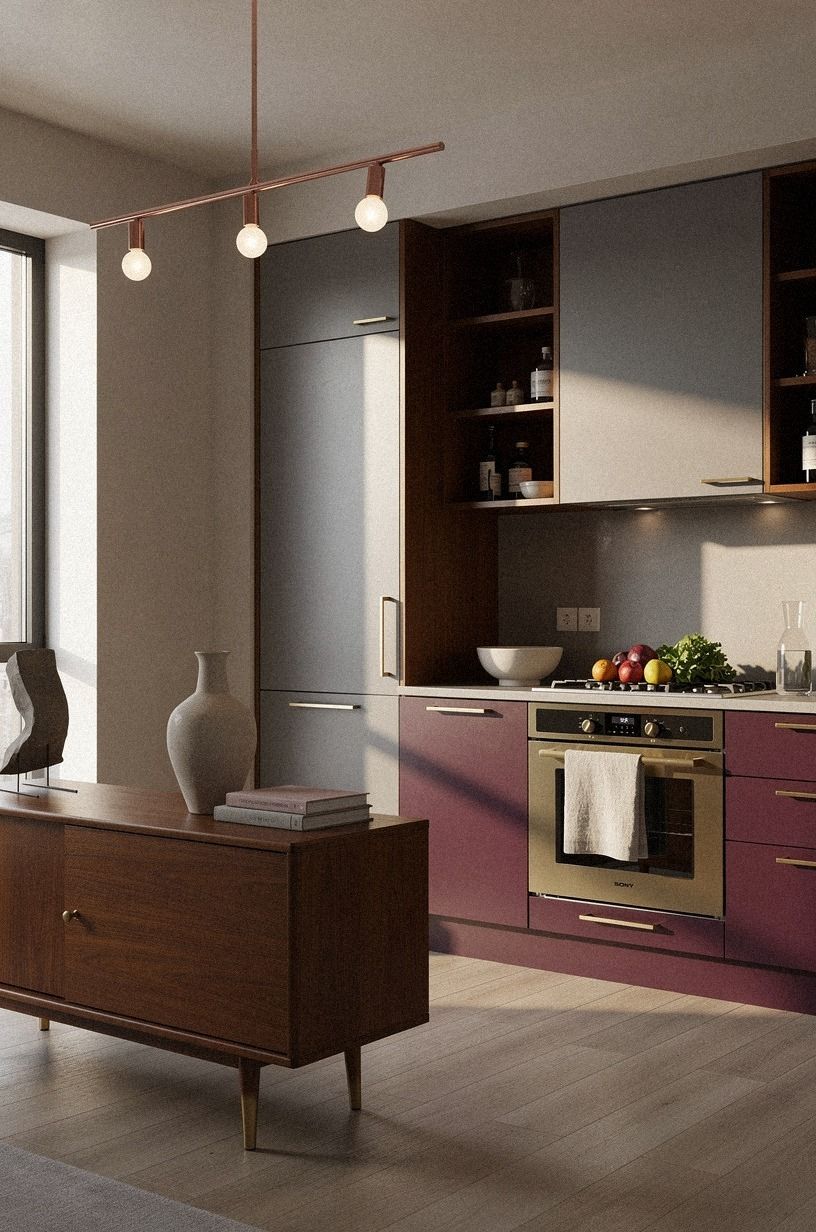
Black cabinets can work in a small kitchen when the circulation stays generous. Keep an island clearance between 42 and 48 inches all around if you’re adding one, and don’t sacrifice that space for a larger counter. A plum, gray, and rose-gold palette can look luxurious, but it won’t fix a cramped walkway.
Your counter height will usually sit around 36 inches, or 91 centimeters. That standard matters because a too-tall work surface can make a compact room uncomfortable fast. I’d rather see a smaller island with room to move than a massive block that makes two people bump elbows.
If you don’t have space for an island, use a narrow rolling cart that can leave when guests arrive. You’ll gain prep space without locking the floor plan into one arrangement. A black cart beside warm wood can look intentional, especially with unlacquered brass hardware developing a soft patina.
Keep the tallest storage on one wall whenever possible. Your eye will travel more easily across the room when tall cabinets, refrigerators, and pantry units don’t interrupt every sightline. Open shelving on the opposite wall can make the layout feel lighter.
Reflective surfaces can help, but use them with care. A small antique mirror on a side wall will bounce light and add character. A wall of glossy tile may make the kitchen feel busier than it feels spacious, especially beside dark cabinetry.
11Swap upper doors for ribbed or glass fronts
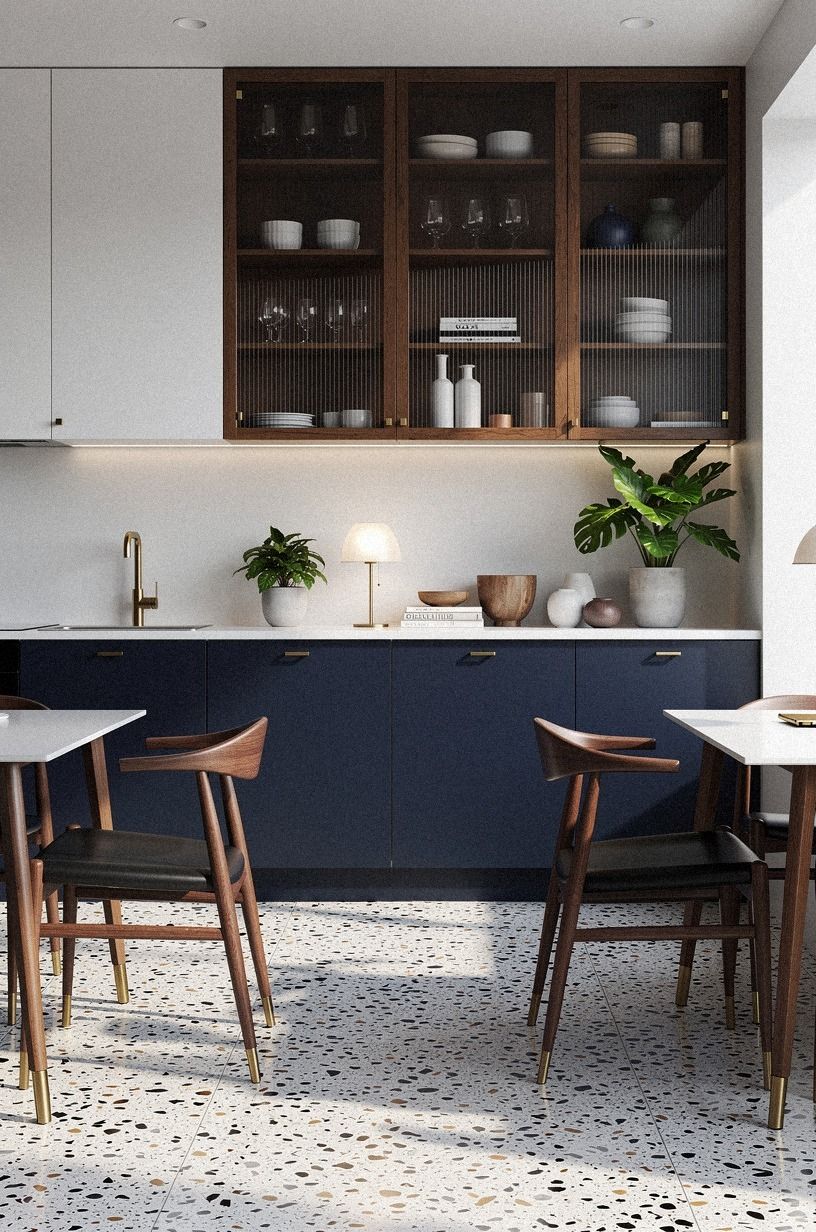
Glass fronts give dark cabinetry a lighter rhythm and let you display useful pieces.
12Paint one unexpected surface in a soft contrast
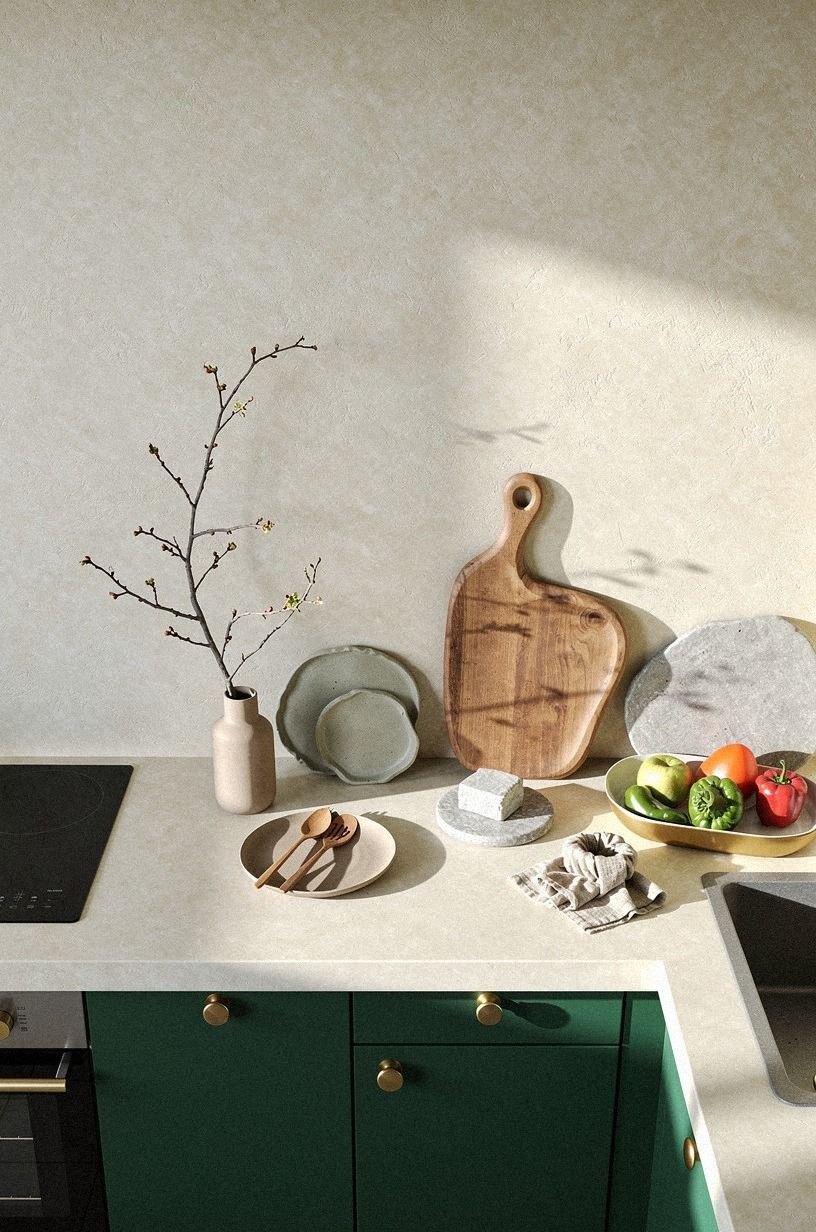
The most memorable black cottage kitchens usually have one detail that doesn’t match the obvious plan. Paint the ceiling pale cream, use emerald Venetian plaster inside a pantry, or give the island a warm gold finish. Your surprise should feel connected to the room, not dropped in from another house.
I’d avoid adding a second dramatic wall color if your cabinets and backsplash already carry the composition. Instead, choose a supporting shade that appears in a rug, dish, or piece of art. That small echo will make the unusual choice feel calm and intentional.
An unexpected ceiling can be especially effective in a kitchen with simple architecture. A deep emerald, soft gold, or warm cream overhead changes the way the room feels without taking away storage. You’ll notice it most when sunlight moves across the ceiling, which gives the space a gentle shift throughout the day.
For a renter-friendly version, use removable wallpaper inside cabinet backs or on a small appliance nook. You’ll get a moody, picturesque moment without repainting the whole room. If you change your mind next year, the experiment can leave with you.
Keep the surprise small enough that you can live with it. One painted pantry, gold-toned island, or unusual pendant gives your kitchen a point of view. Five surprises create a different problem, and your eye won’t know where to settle.
The Design Choice I’d Defend
I’ve tried the bright, all-white kitchen, and I understand why people love it. It photographs cleanly, reflects every scrap of daylight, and makes a small room seem larger.
Still, I think black cottage kitchens have more staying power when the dark color acts as an anchor. The room needs warmth around it.
My own mistake was assuming that black cabinets would create atmosphere by themselves. They didn’t.
Against a cold white counter and one ceiling bulb, they looked unfinished. Once I added aged brass, pale oak, and a linen shade, the room changed character.
The cabinet color stayed exactly the same, but the light began to land on something softer.
That’s the rule I’d give you: every dark surface needs a neighbor with texture. It might be a rough ceramic bowl, a woven runner, or a wood shelf with visible grain. You don’t need to buy twelve new objects.
You need to notice what your eye touches first, then make that point feel deliberate.
I’d also resist the pressure to make the kitchen look perfectly old. Cottage style should have a little friction.
A modern faucet beside a battered stool can feel more honest than a room where every hinge, plate, and lamp pretends to come from the same decade. If you’re choosing between matching and memorable, I’ll take memorable every time.
Before you commit, make a small palette board with your actual cabinet sample, floor tone, counter material, grout, and hardware. I’ve saved myself from several bad decisions by looking at those pieces together. Your kitchen will tell you what it needs once the samples stop competing for attention.
A Few Things Worth Answering
What is the best Black Cottage Kitchen Ideas for a Moody, Unexpected Twist for a small kitchen?
The best choice is dark lower cabinetry with open oak shelving above it. Pale wood keeps your sightline open, while black grounds the room. An IKEA KALLAX birch-effect unit can also provide flexible storage if you need a freestanding piece.
Keep your tallest storage against one wall, and you’ll preserve more visual space. Avoid filling every shelf, since your kitchen needs a little breathing room.
Where can I buy Black Cottage Kitchen Ideas for a Moody, Unexpected Twist pieces on a budget?
Look at IKEA, Wayfair, and Target for accessible lighting, stools, and hardware. Secondhand furniture from Facebook Marketplace or a local thrift shop can add the cottage character new pieces often lack.
Search for pine shelving, brass pulls, and old glassware rather than a complete matching set. You’ll spend less and get a more personal room.
How much does a Black Cottage Kitchen Ideas for a Moody, Unexpected Twist makeover cost?
A cosmetic refresh typically runs $300 to $1,500 in the US for paint, hardware, and a peel-and-stick backsplash. Paint and rearranging can cost almost nothing if you already have supplies.
A larger refresh with lighting, repainted fronts, and a new faucet may reach $3,000 to $12,000. Your cabinet condition will make the biggest difference.
Can I create a Black Cottage Kitchen Ideas for a Moody, Unexpected Twist on a budget?
Yes, and you can begin with three low-cost changes: paint the lower cabinets, replace the most visible pulls, and style one open shelf. A small color shift can do more than a room full of new decor.
Shop your home first. You may already own a wood cutting board, brass frame, or woven basket that can warm the black.
Is a Black Cottage Kitchen Ideas for a Moody, Unexpected Twist worth it in a small space?
Yes, because a small kitchen gives the dark color a clear boundary. A focused dark zone can feel intimate rather than overwhelming when you keep the counters light and the walkways open.
Use open shelves on one wall and maintain 42 inches of clearance where possible. Your room will feel more comfortable if movement stays easy.
Is a Black Cottage Kitchen Ideas for a Moody, Unexpected Twist a good idea for a rental?
Yes. Use removable wallpaper inside cabinet backs, a tension-rod café curtain, and peel-and-stick backsplash samples. No-damage changes can bring in the mood without permanent paint or drilling.
You can also swap cabinet knobs, add a rechargeable lamp, and use a freestanding IKEA TONSTAD piece. Keep the original hardware in a labeled bag for move-out day.
Where I’d Start First
If I had to pick one, I’d start with the lower cabinets in Farrow & Ball Railings. The navy undertone keeps black from feeling flat, and every wood, brass, and cream detail will look richer beside it. Test one door first, then live with it through dinner.
You’ll know quickly.