Kitchen Rug Eating Your Walking Route? 12 Target Placement Fixes
11 october 2026A typical 2-by-3-foot kitchen mat can look perfectly centered from the hallway and still miss the sink, block the dishwasher, or slide into the main walking path. That small placement error changes how the whole room works, especially in a narrow kitchen where every inch matters.
Designers focus on movement first: where feet land, where doors swing, and where crumbs and water collect. These are the kitchen rug mistakes worth correcting before buying another pattern.
What you will find inside
- Keep the Rug Under the Work Zone
- Center the Runner on Cabinet Lines
- Give the Sink a Proper Landing
- Protect Appliance Door Swings
- Clear the Main Walking Route
- Match Pile Height to the Kitchen
- Secure the Backing Before Styling
- Stop at the Right Cabinet Break
- Separate the Rug From the Dining Zone
- Use Color to Connect, Not Camouflage
- Size Around Stools, Not Just the Island
- Let Cleanup Decide the Placement
Keep the Rug Under the Work Zone
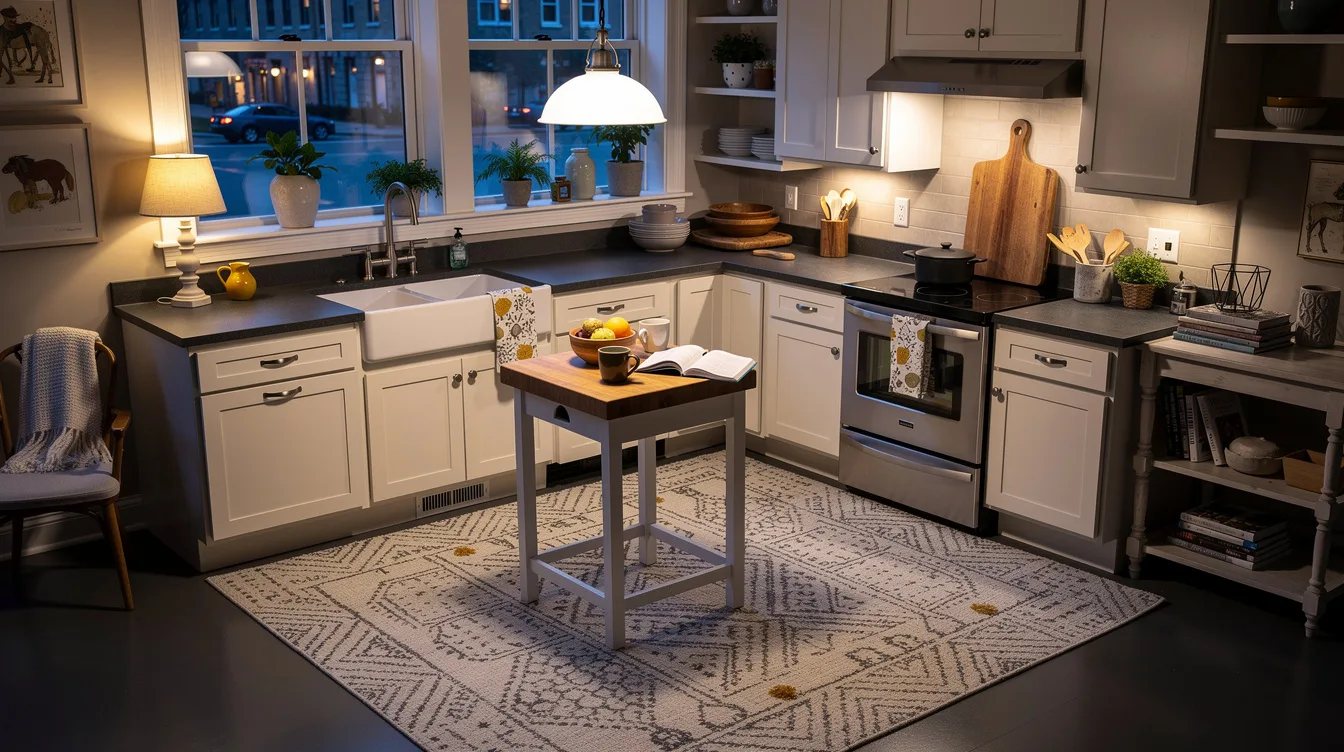
A common mistake is placing a small mat where it looks centered from the doorway, even though it misses the sink, prep counter, and cabinet doors you use most. The better target is the work zone, so your feet land on the rug during the tasks that create the most fatigue and splashes.
A flatweave cotton rug from IKEA works well when its long edge follows the counter. Let the pattern support the kitchen’s rhythm, but keep enough bare floor around it for cabinet doors to open freely.
Center the Runner on Cabinet Lines
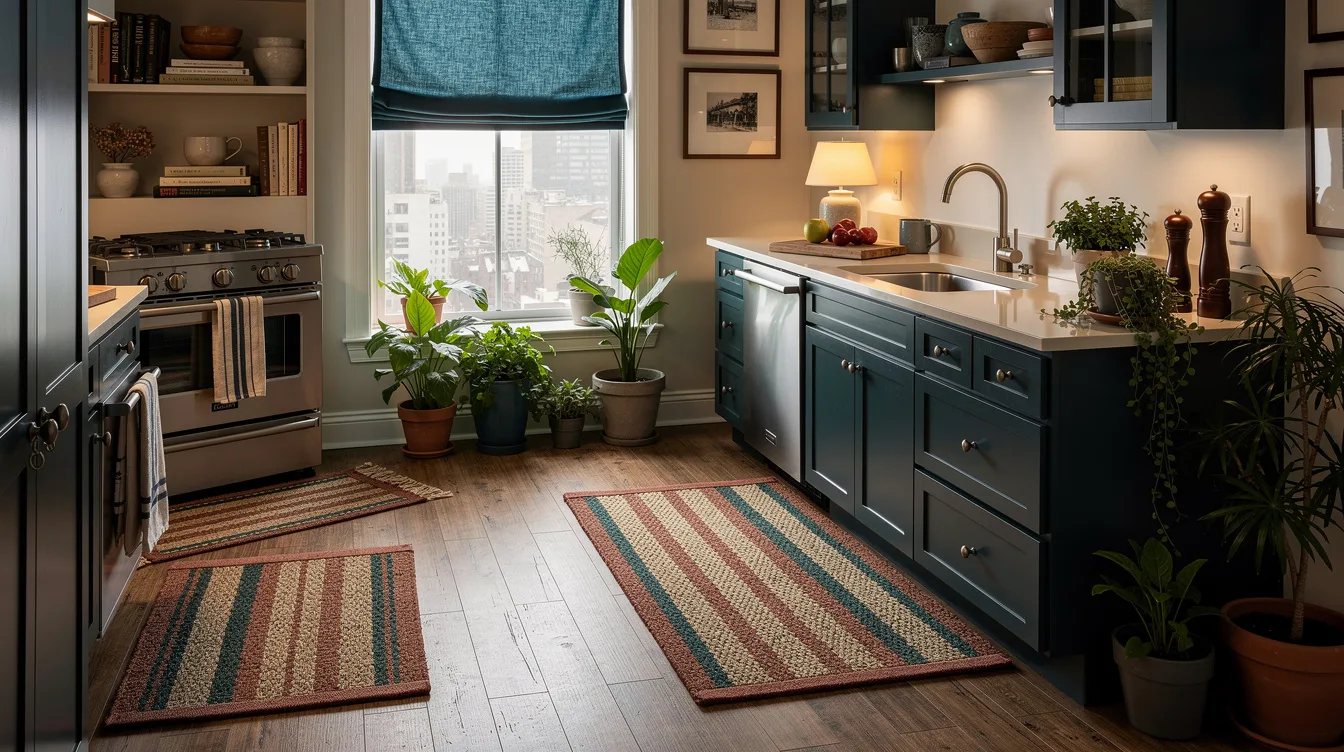
Runners often drift toward the room’s visual center while the cabinets sit several inches off that axis. That gap makes the rug feel accidental and leaves the cook standing on hard flooring along one entire counter.
Line the runner up with the cabinet run instead. A washable polypropylene runner from Wayfair can sit parallel to the cabinets, with roughly 3 to 5 inches of visible floor at each side when the aisle allows it.
Give the Sink a Proper Landing
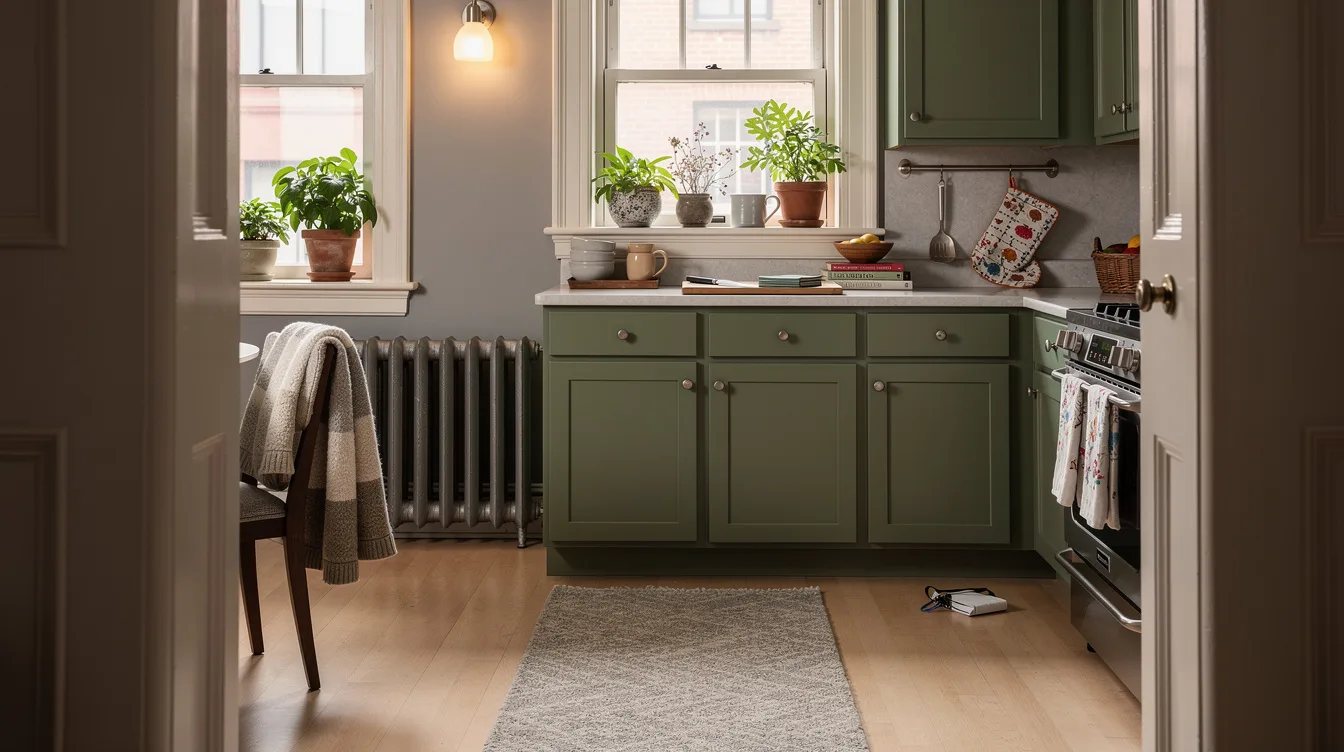
Stopping a rug short of the sink is one of the easiest placement errors to miss. Water lands on the floor, wet shoes track across the room, and the mat becomes a decorative strip instead of a useful landing place.
Place the center of a low-pile kitchen mat where your feet stand while washing dishes. A mat from Target in a muted rust, blue, or gray can handle the visual work, but the edge should stay clear of the dishwasher door.
Protect Appliance Door Swings
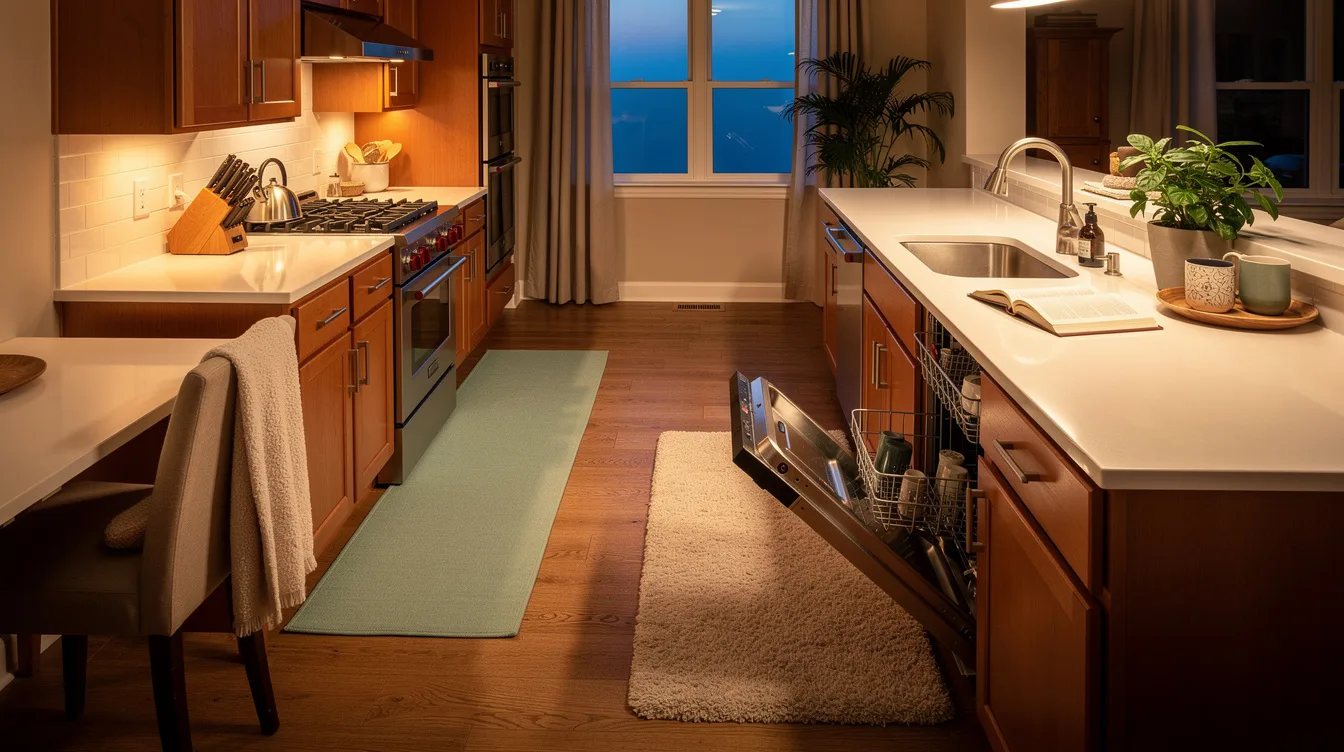
A thick rug placed in front of the dishwasher creates a daily collision. The door catches the pile, the rack becomes harder to pull out, and the rug slowly develops a curled edge.
Use a slim flatweave rug from Lowe’s, then test the full door swing before settling on the placement. Leave a clear strip of flooring where the door travels, especially in a narrow galley kitchen.
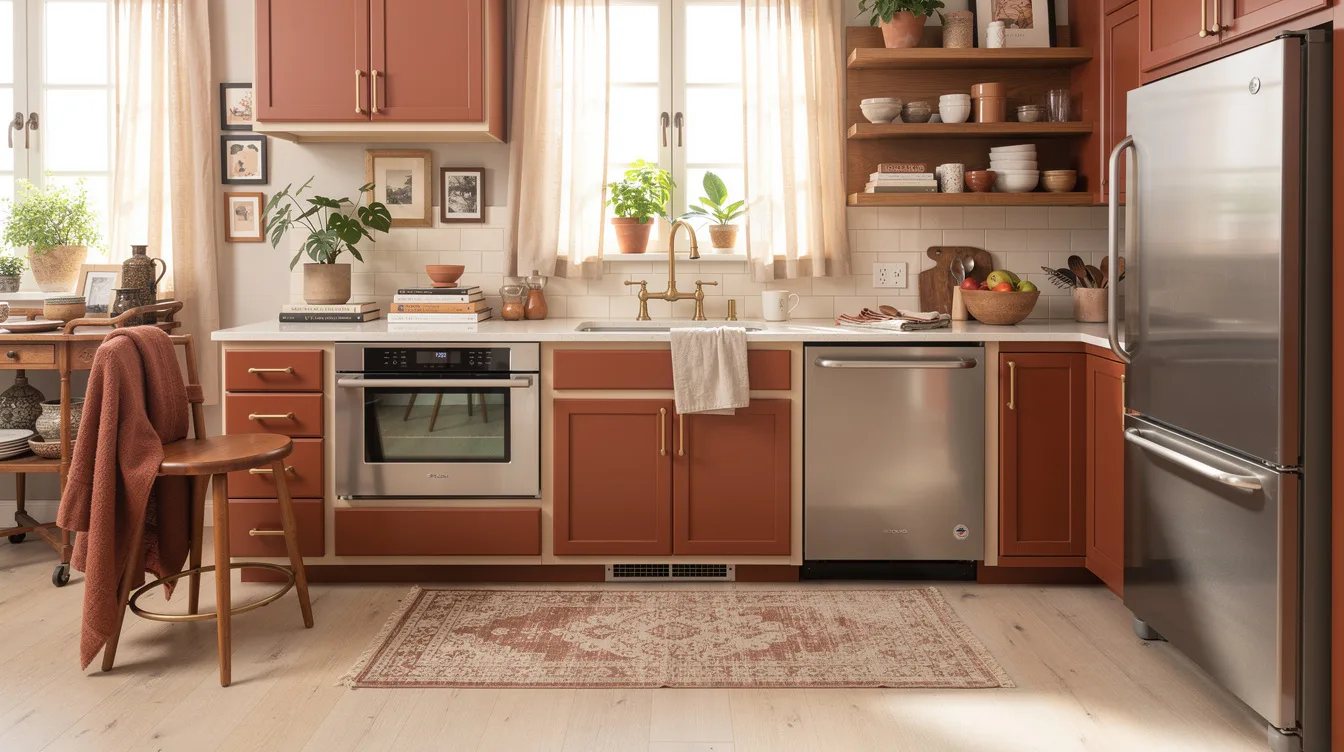
Clear the Main Walking Route
Designers avoid running a rug through the busiest path between the refrigerator, sink, and kitchen entrance. Constant foot traffic bunches the textile, carries crumbs underneath it, and makes the room feel tighter.
Shift the rug toward the counter and away from the doorway instead. A low-profile rubber-backed mat from Home Depot can define the cooking area while keeping the primary route open.
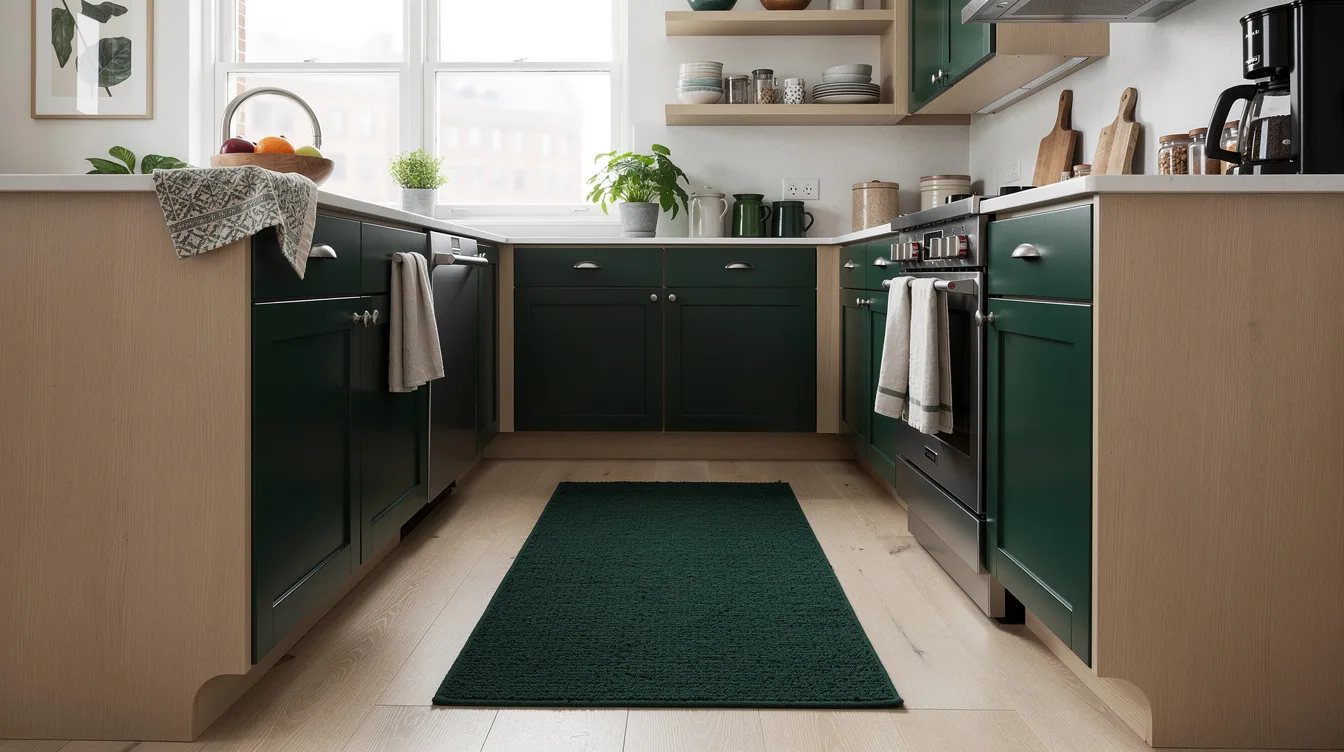
Match Pile Height to the Kitchen
High pile belongs on the short list of kitchen rug mistakes. It traps flour, catches chair legs, and makes a rolling cart or trash bin wobble as it crosses the floor.
Choose a washable flatweave wool rug or a tightly woven synthetic style from Amazon. The surface should feel stable underfoot and allow crumbs to be swept away without working a vacuum through deep loops.
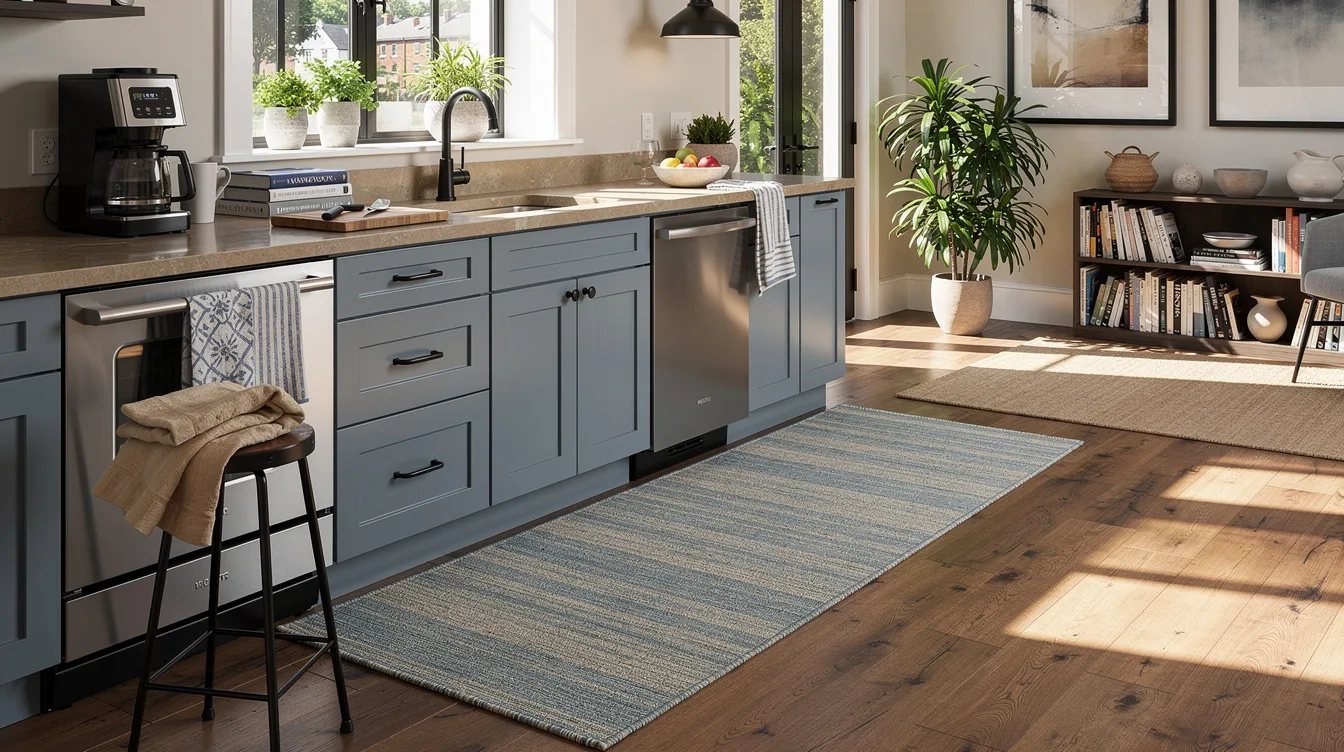
Secure the Backing Before Styling
A rug that slides a few inches each day is poorly placed, even when its dimensions look right. Movement becomes especially risky beside a range, where a quick turn can send a foot onto a loose corner.
Add a properly sized rug pad from Ace Hardware beneath the textile, trimming it so it stays hidden from view. Test the rug with clean, dry flooring first, because grease can defeat even a good grip.
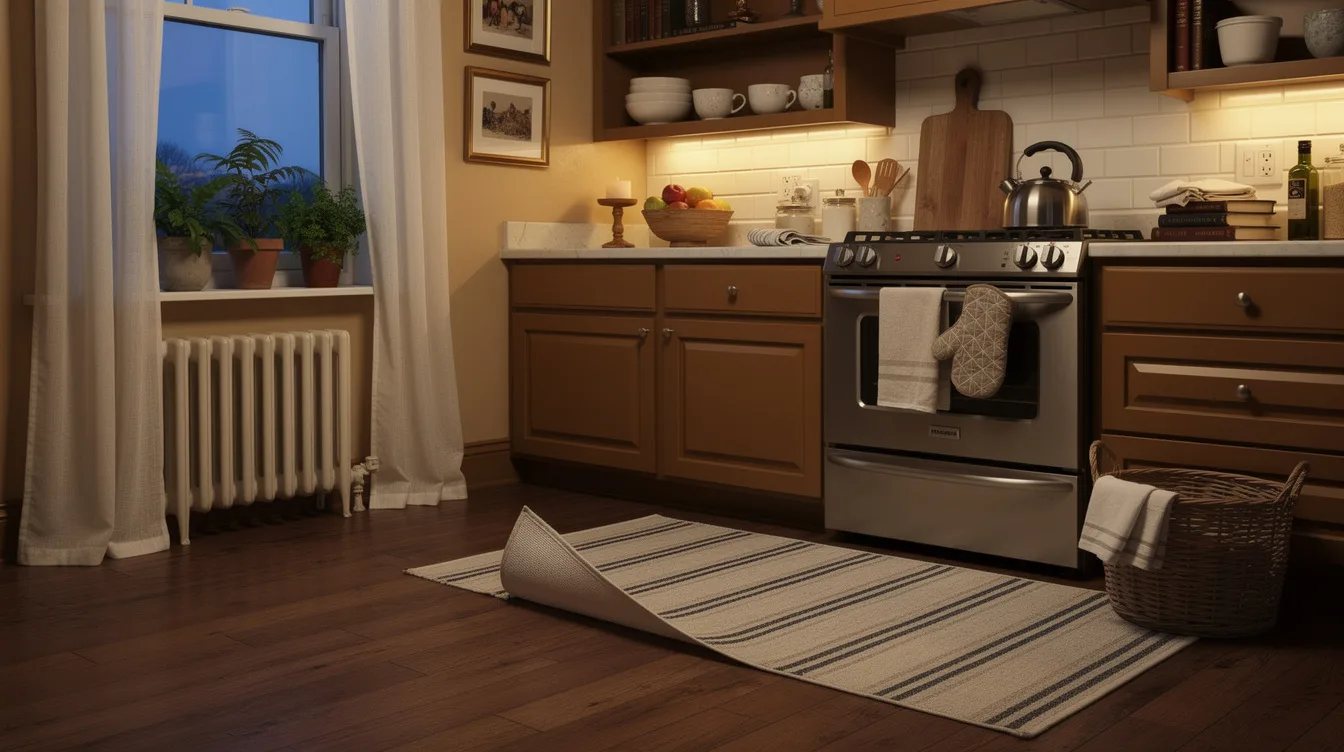
Stop at the Right Cabinet Break
Allowing a runner to continue past the end of the cabinet run creates a visual tail. The extra length often lands beneath a doorway or turns into a tripping point beside the refrigerator.
End the rug near a natural cabinet break, such as the end panel beside a pantry. A narrow jute runner from Walmart can add texture there, provided its fibers stay away from areas that receive frequent water.
Separate the Rug From the Dining Zone
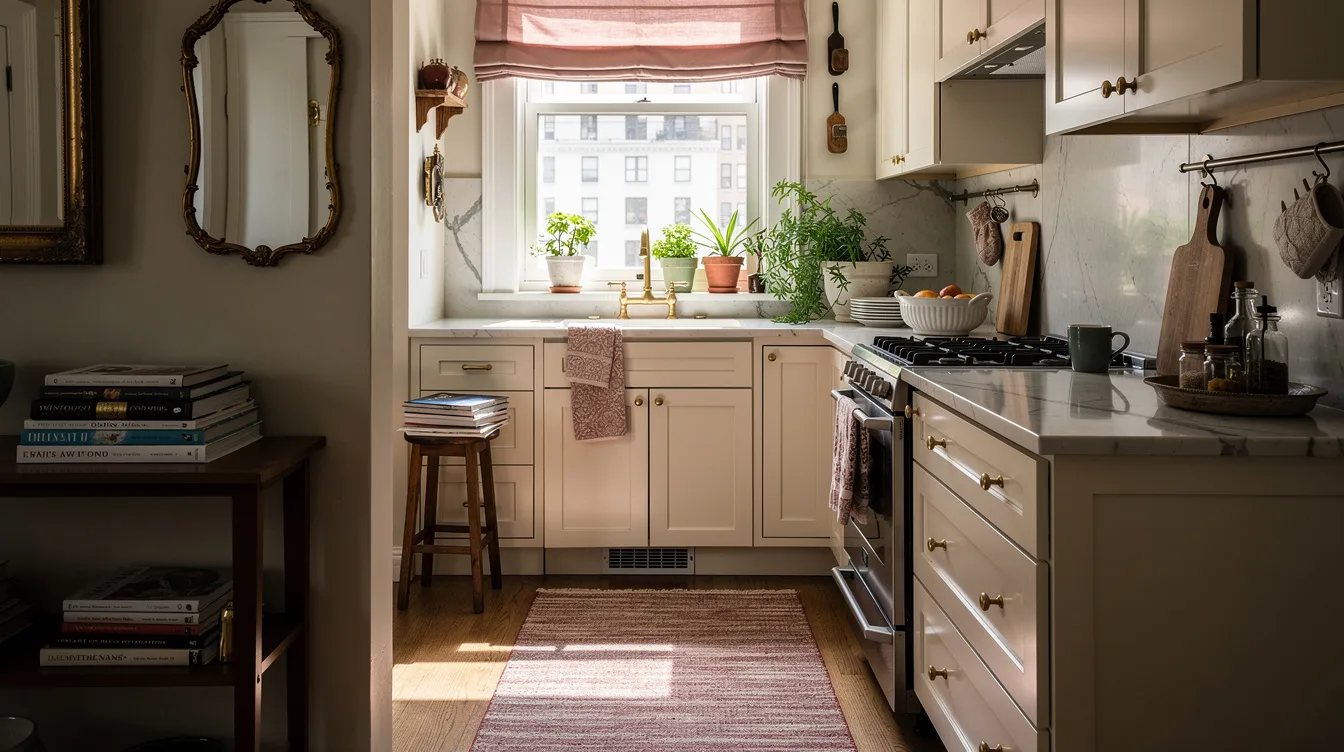
Open-concept kitchens need a clear boundary between cooking and dining. Letting one rug overlap both zones makes the room look unfinished and places food debris where it is harder to clean.
Keep the kitchen rug fully inside the cooking area, then give the dining table its own material and scale. A patterned indoor-outdoor rug from Costco can handle the kitchen side without competing with a nearby dining textile.
Use Color to Connect, Not Camouflage
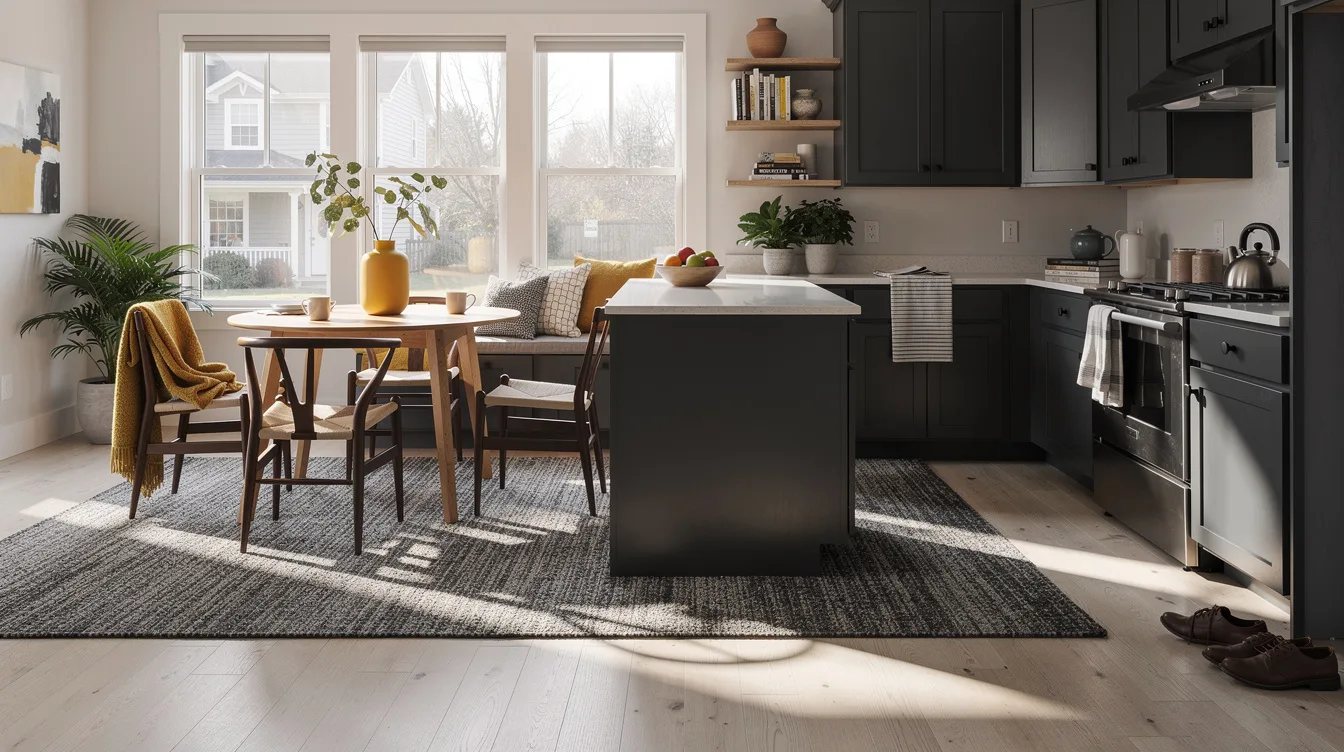
Matching the rug exactly to the floor is another placement mistake because the edges disappear. Without a visible border, the textile reads as a stain or shadow, especially beneath warm wood cabinets.
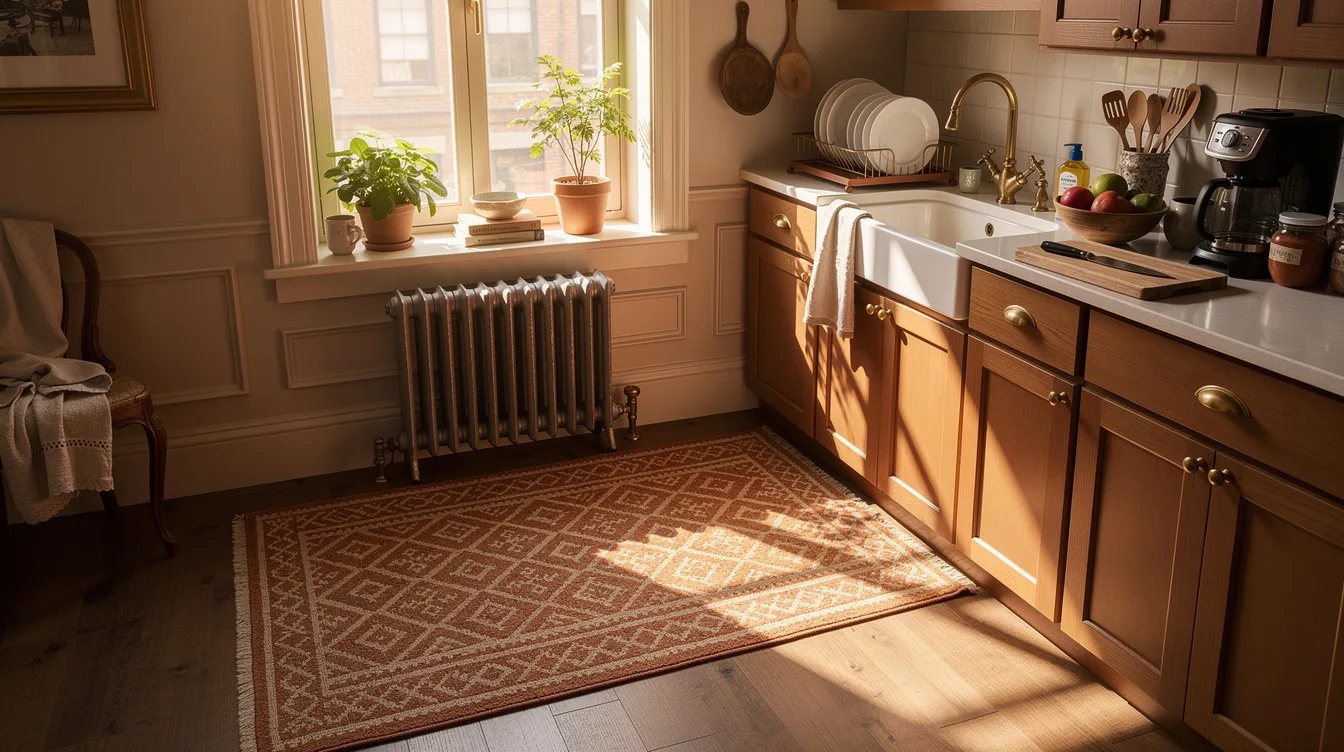
Choose a contrasting but related color, such as a faded terracotta pattern against oak. A blue-and-cream runner from Target can connect with cabinet hardware or backsplash tones while making its footprint easy to read.
Size Around Stools, Not Just the Island
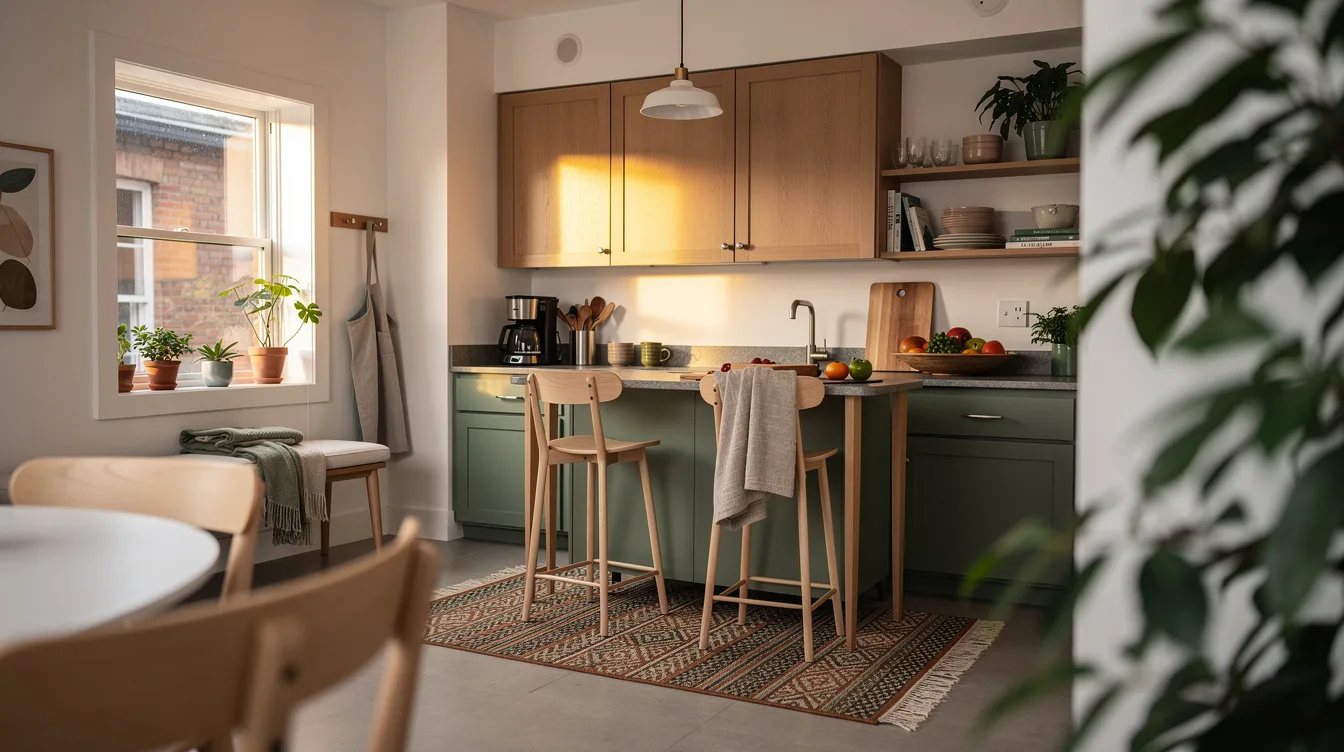
An island rug that ends directly behind the stools ignores how people sit, stand, and pull chairs backward. The rug may look centered while the chair legs catch its edge every morning.
For a seating side, measure the area used by the stools and allow about 24 inches of extra room behind them when the kitchen has space. A durable low-pile polypropylene rug from Home Depot is easier to slide chairs across than a loose-loop design.
Let Cleanup Decide the Placement
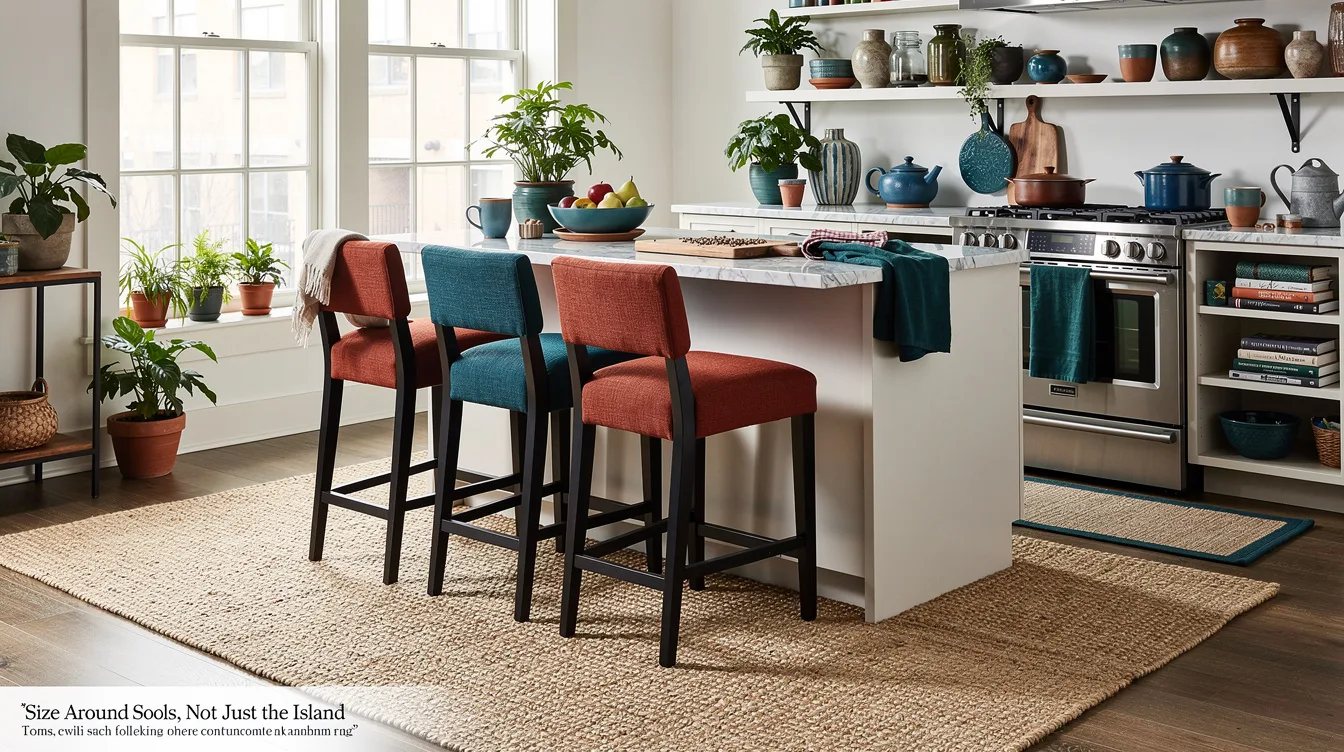
The most attractive spot for a rug may sit directly beneath the range, where oil, sauce, and dropped food land. Designers usually keep textiles out of the highest-splash zone unless the material can tolerate frequent cleaning.
Place a washable cotton runner along the sink or prep counter instead, where it can be lifted quickly for laundering. If the range is the only practical location, choose a small, thin mat and leave generous bare flooring around the burners.
Keep reading
- Target Bedroom Patterns Feeling Too Busy? These 12 Designer Fixes Help
- Dated Oak Kitchen? 14 Home Depot Fixes That Fake a Reno
- Target Lid Drawer Avalanching? 14 YouCopia Fixes Start at $10
Start by tracing the sink, appliance doors, and busiest walking route with painter’s tape. Once those paths are clear, choose the smallest rug that supports the work zone without fighting the kitchen’s movement.