Open-Concept Apartment Feeling Blurry? 12 Costco Rugs Define It
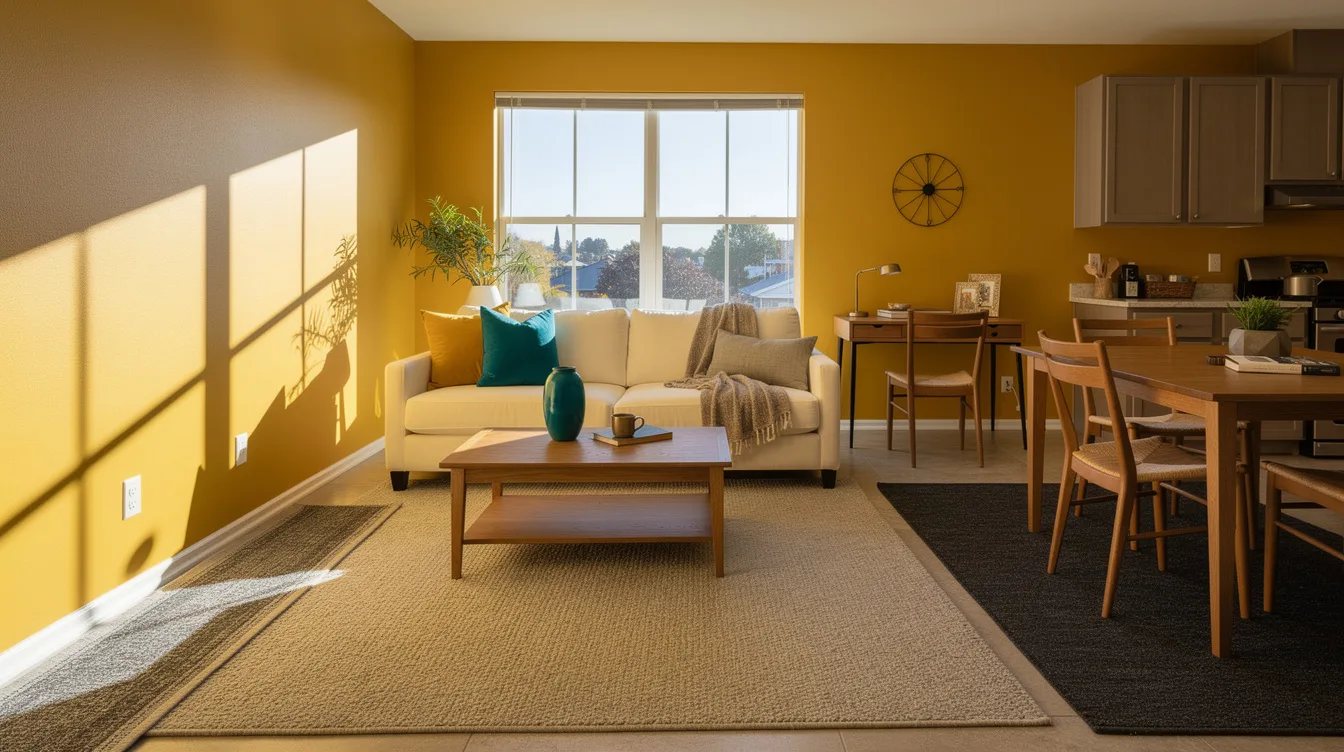
11 october 2026Open-concept apartments often have plenty of floor space and very little visual direction. A typical 8-by-10-foot rug can give the sofa and coffee table a proper home, but only when its edges, color, and texture work with the nearby kitchen and dining zone.
Costco rugs make the search practical, yet the right purchase depends on placement more than pattern. These twelve approaches show how to divide one shared floor into useful areas without adding walls or visual clutter.
What you will find inside
- Start With an 8-by-10-Foot Living Zone
- Turn the Sofa Into the Room's Edge
- Repeat One Rug Color Near the Kitchen
- Give the Dining Table a Wider Landing
- Use Low Pile Under Moving Chairs
- Separate Work From the Lounge
- Let a Runner Build the Traffic Path
- Choose Indoor-Outdoor Fiber Near the Entry
- Layer a Small Rug Over a Neutral Base
- Match the Rug Shape to the Architecture
- Use Contrast to Hold the Sightline
- Finish With a Consistent Rug Rhythm
Start With an 8-by-10-Foot Living Zone
For a sofa and coffee table, a typical 8-by-10-foot rug gives the lounge enough visual weight to read as a room. Center the front legs of the sofa on the rug, then let the coffee table sit fully inside its border so the seating group feels intentional.
A neutral Costco area rug works especially well when the kitchen, dining area, and living room share one sightline. Leave a clear strip of flooring around the arrangement, because that breathing room makes the rug look deliberate instead of undersized.
Turn the Sofa Into the Room's Edge
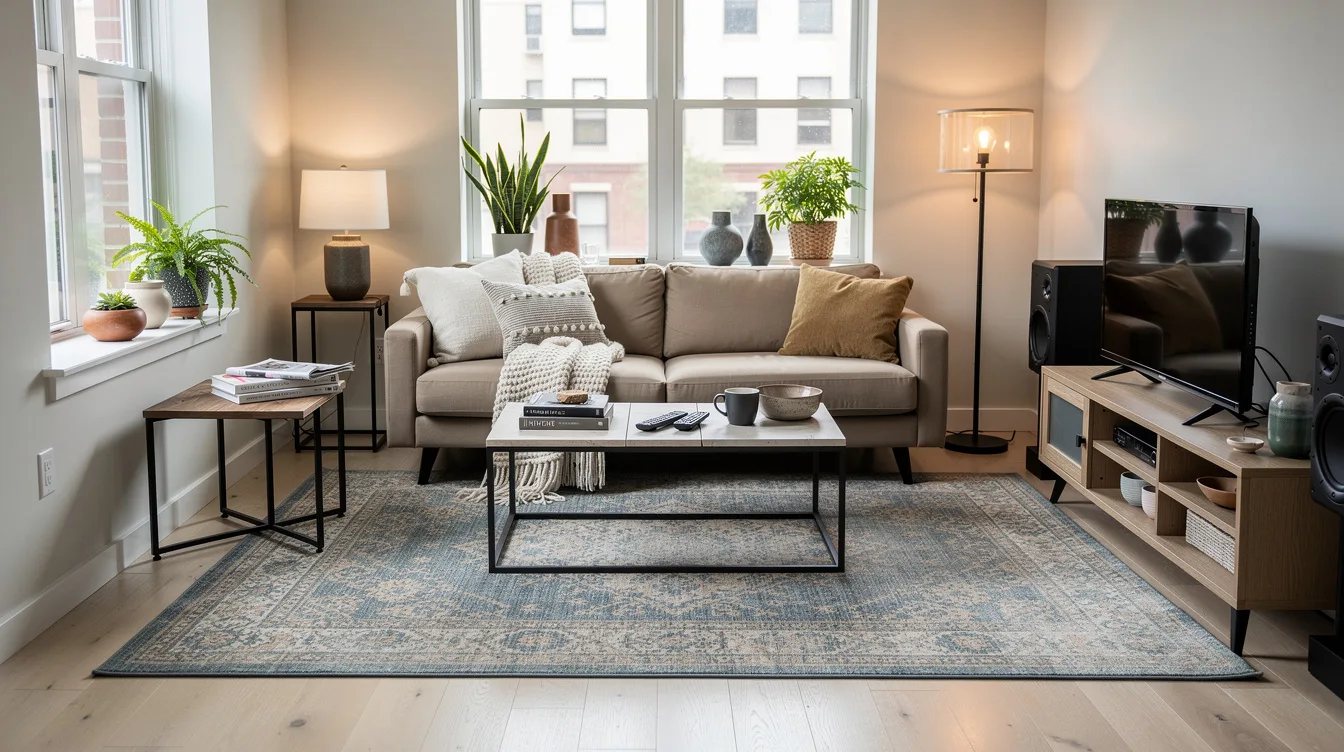
Use the sofa as a hard boundary between the lounge and the rest of the apartment. The rug should extend slightly beyond both sides of the sofa, creating a soft floor line that tells the eye where the living zone ends.
We like a textured wool rug for this job because its surface adds depth without demanding a loud pattern. Keep the sofa legs aligned with the rug rather than floating several inches behind it, which can make the furniture look disconnected.
Repeat One Rug Color Near the Kitchen
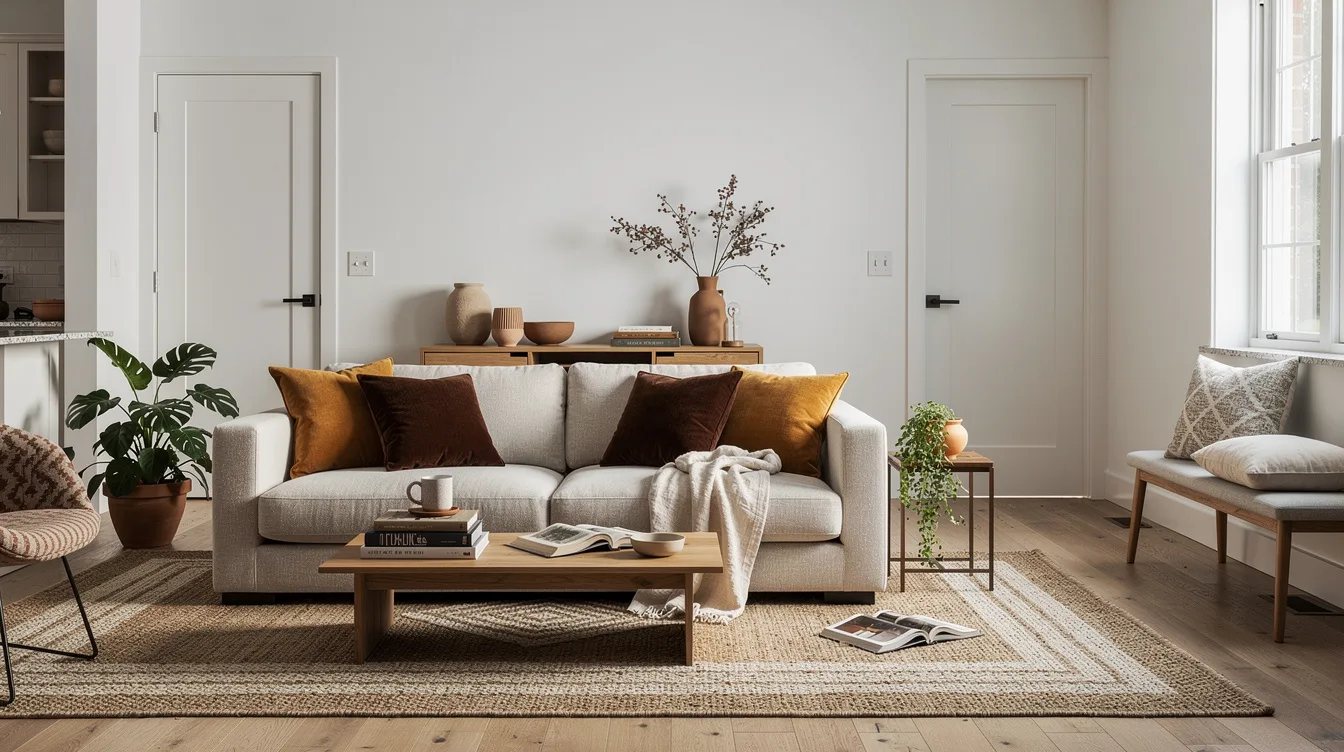
Open-concept rooms need visual links, and the easiest one is color. Pull one quiet shade from the living-room rug into a runner, barstool cushion, or kitchen towel so the zones feel related while keeping their own functions.
A soft ivory rug can echo pale cabinets, while a charcoal pattern can connect black hardware and dining chairs. Choose ivory or another forgiving neutral when the apartment receives uneven daylight, since very bright white can look harsh beside warm wood.
Give the Dining Table a Wider Landing
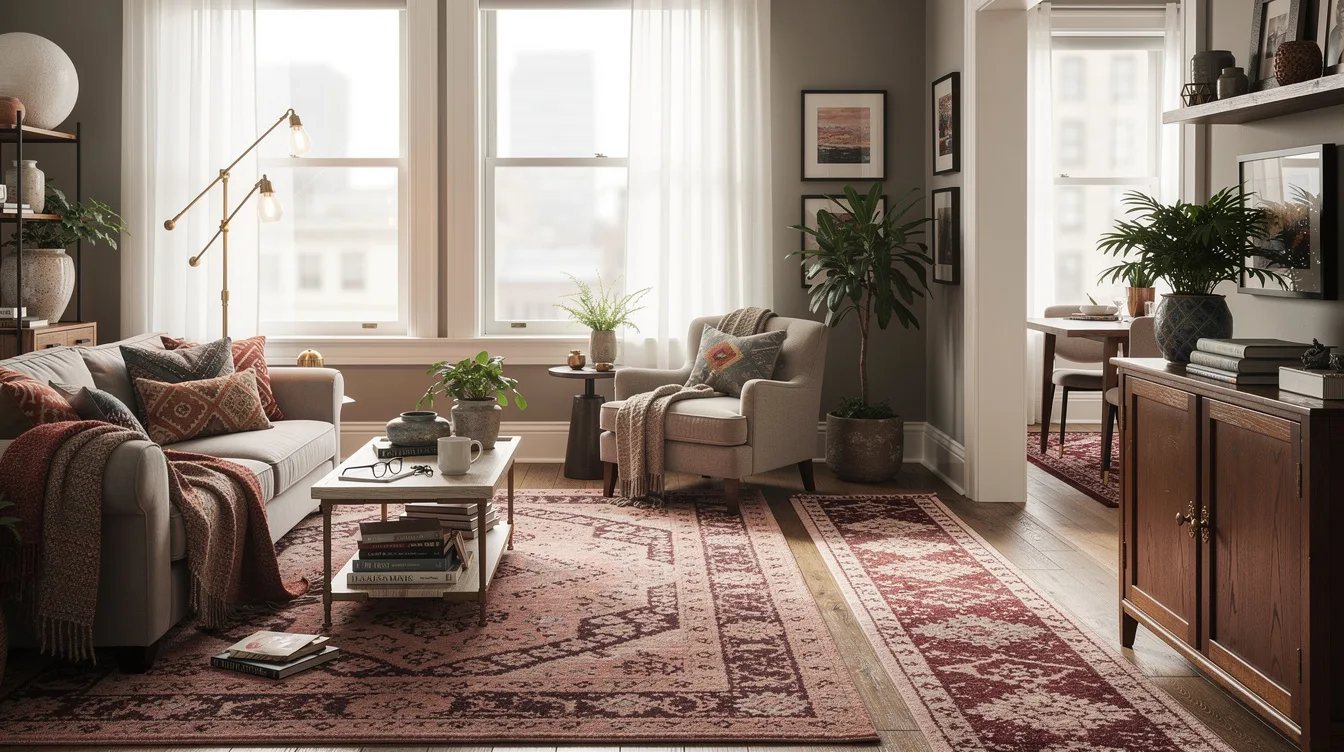
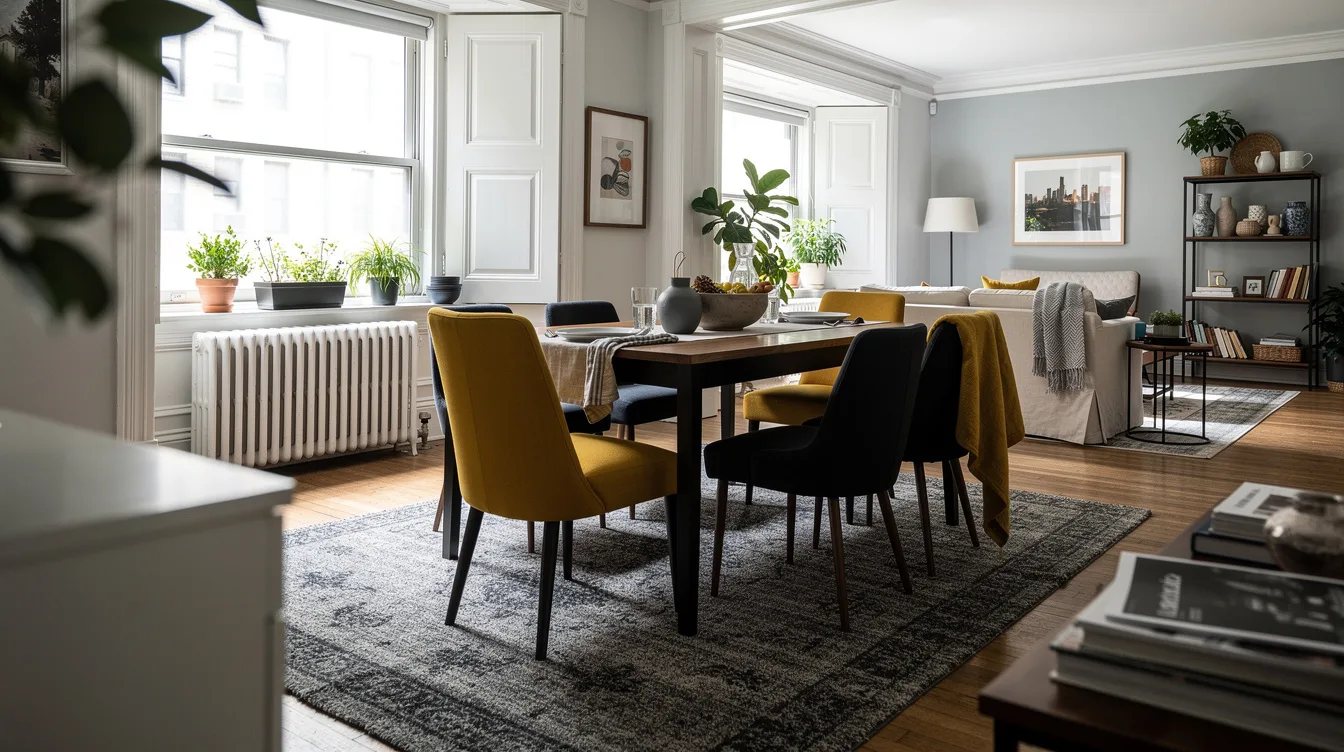
Place the dining table on a rug large enough to hold every chair, including when guests push back from the table. A useful test is to sit in each chair and check whether the back legs remain on the rug during normal movement.
For a compact apartment, a rectangular polypropylene rug gives the dining zone a clear footprint and handles regular chair movement. Avoid a narrow rug that ends directly under the tabletop, because it will look like a mat instead of a defined dining area.
Use Low Pile Under Moving Chairs
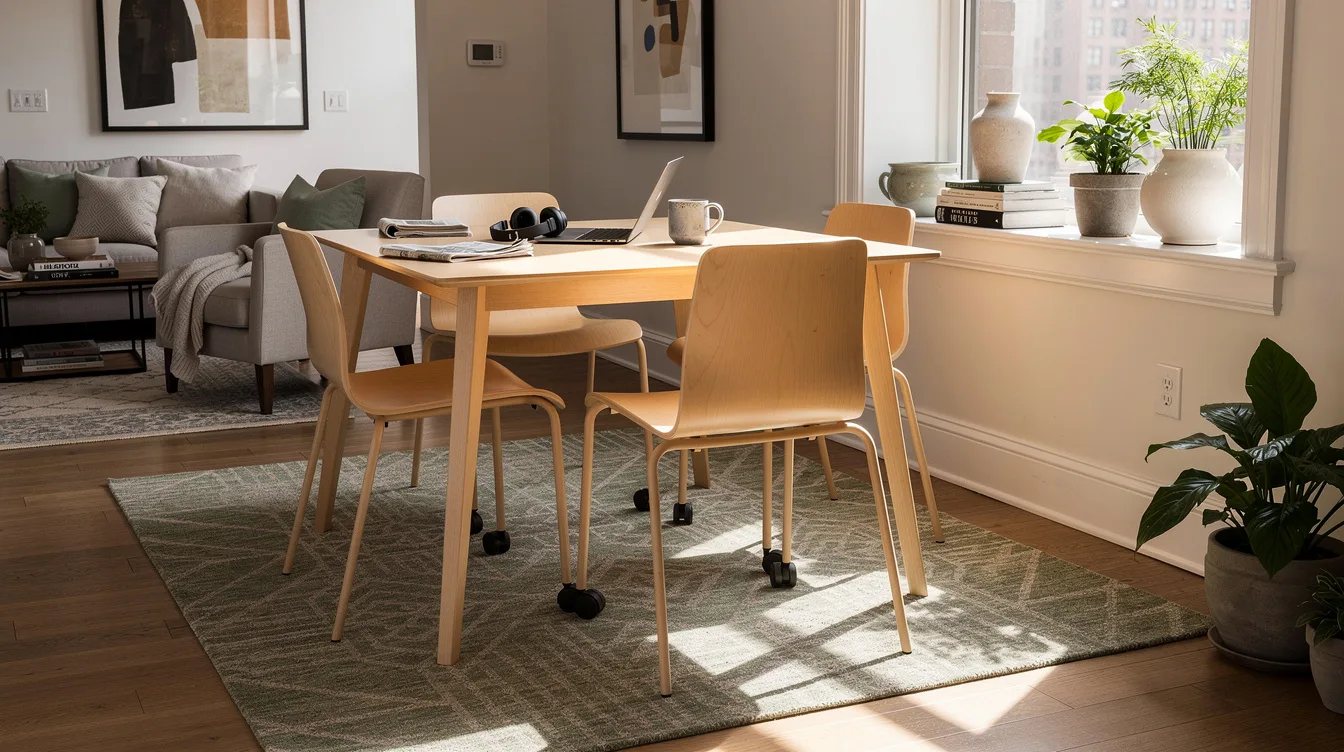
Dining chairs, desk chairs, and rolling office seats need a surface that stays easy to cross. A low pile keeps chair legs from catching and makes vacuuming simpler around crumbs, pet hair, and everyday dust.
Costco often carries practical rugs in flat, dense constructions, so check the product details for pile height before buying. A low-pile construction also keeps the apartment visually calm when several rugs share the same open floor.
Separate Work From the Lounge
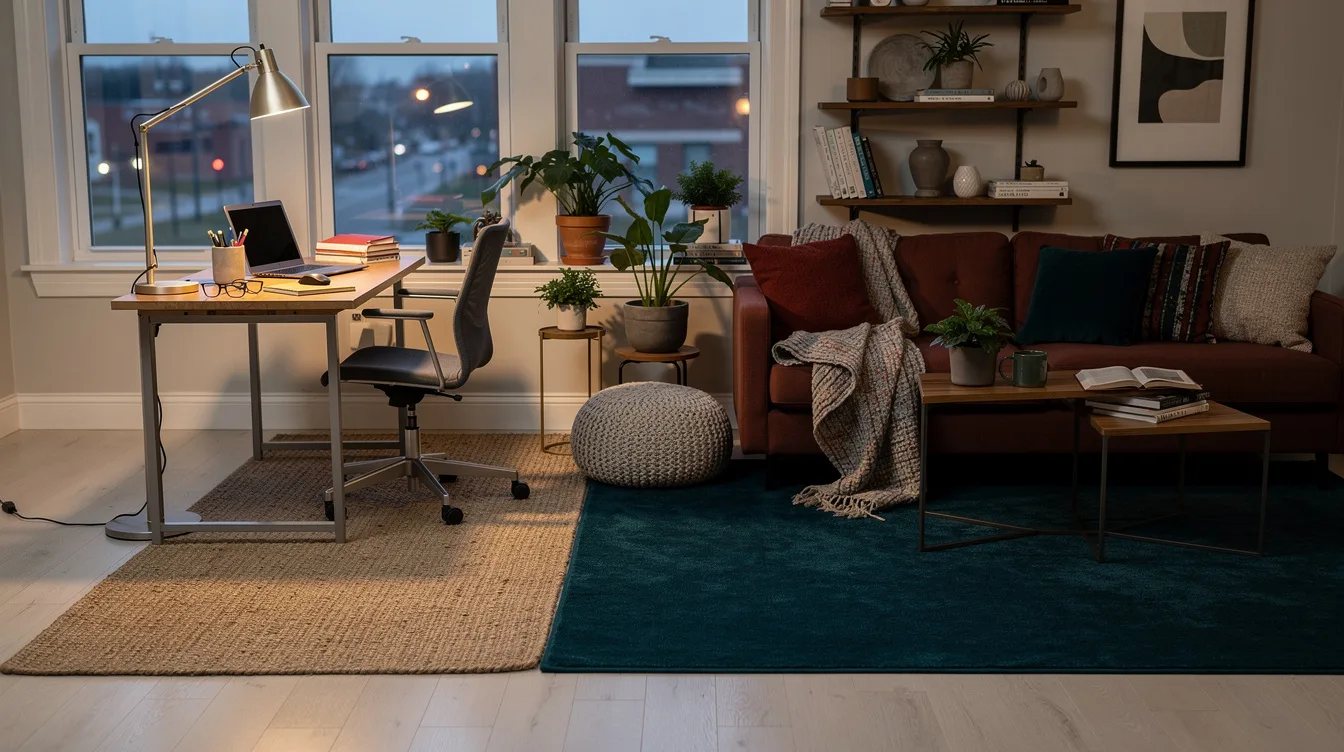
A small rug under a desk can establish a work zone without adding a wall or bulky divider. Align its front edge with the desk and chair, then keep the back edge parallel to the nearest major wall for a cleaner sightline.
Choose a restrained pattern when the desk already holds a monitor, lamp, and storage boxes. A gray geometric rug from Costco can ground the workspace while allowing the larger living-room rug to carry the room's warmer texture.
Let a Runner Build the Traffic Path
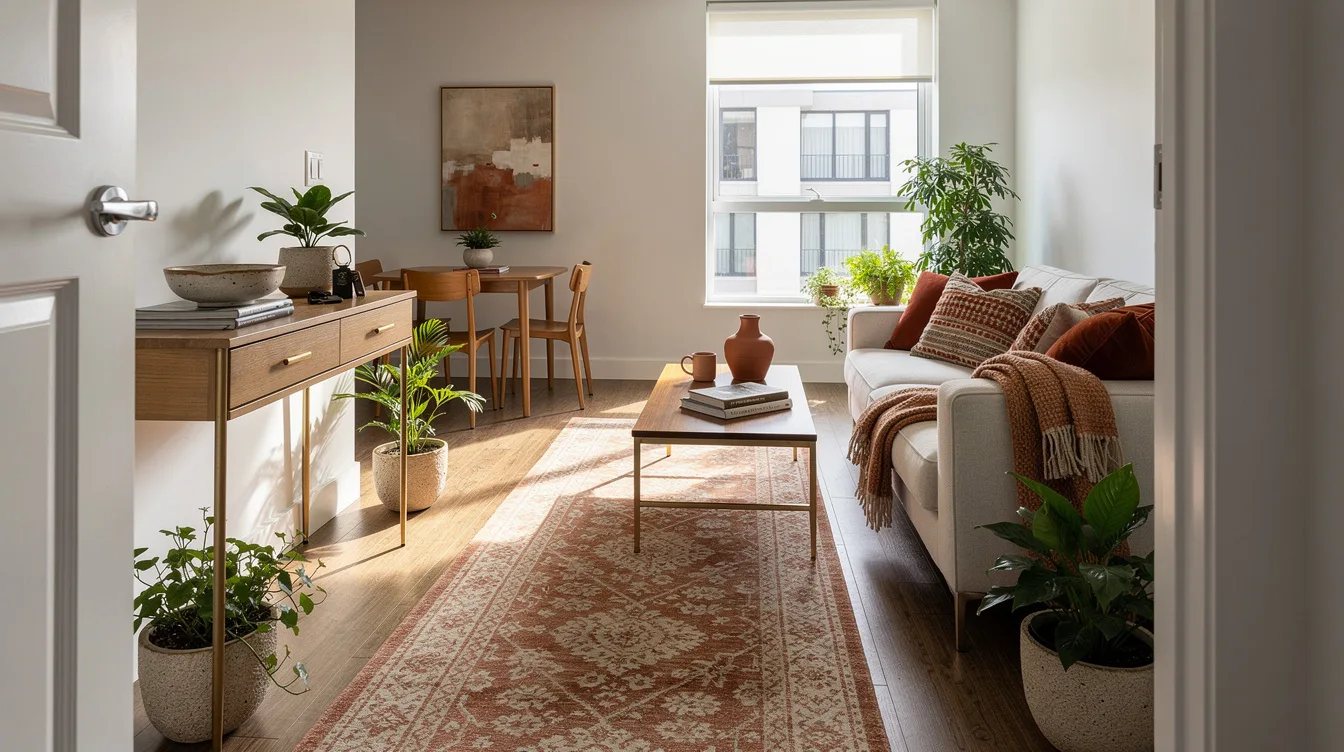
Use a runner to direct movement between the entry, kitchen, and living area. Its long shape can make a narrow apartment feel organized, especially when it follows the natural route instead of cutting across the seating group.
Keep at least a few inches of visible floor beside the runner so the walkway remains easy to read. A washable-looking flatweave style is a smart choice near the entry, where shoes bring in more grit and the rug receives constant foot traffic.
Choose Indoor-Outdoor Fiber Near the Entry
When the front door opens directly into the main room, choose a rug fiber that can handle dirt and repeated cleaning. Indoor-outdoor construction makes sense here because the entry needs durability before it needs softness.
Use a dark border or small-scale pattern to disguise ordinary marks, then place a slim mat outside the rug to catch heavier debris. A polypropylene fiber rug from Costco can bridge the entry and lounge without making the apartment feel overly formal.
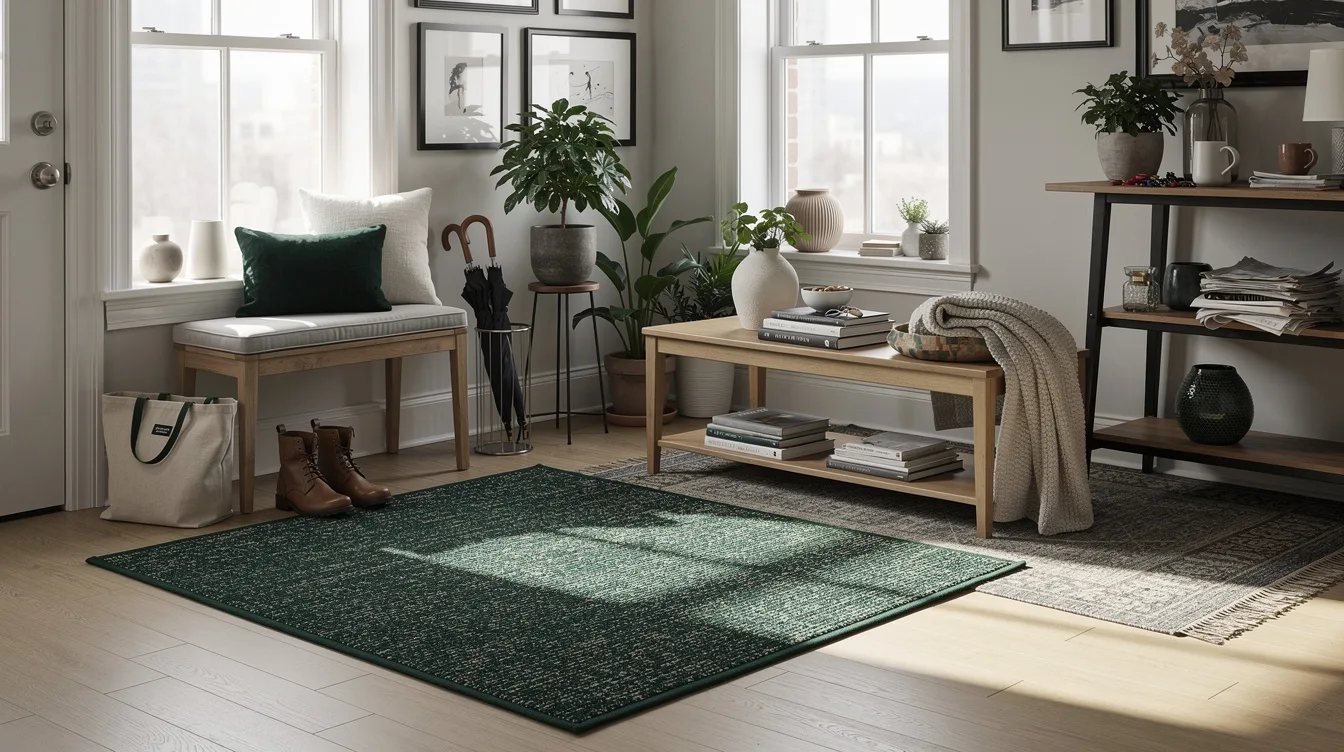
Layer a Small Rug Over a Neutral Base
Layering can solve a sizing problem when the ideal large rug is unavailable or too expensive for the room. Place a smaller patterned rug under the coffee table on top of a simple base rug, keeping both rugs aligned with the sofa.
Jute brings a firm, natural texture beneath a softer top layer, but it can feel rough under bare feet. Use a jute rug as the foundation only when the apartment's palette already includes wood, linen, or woven storage.
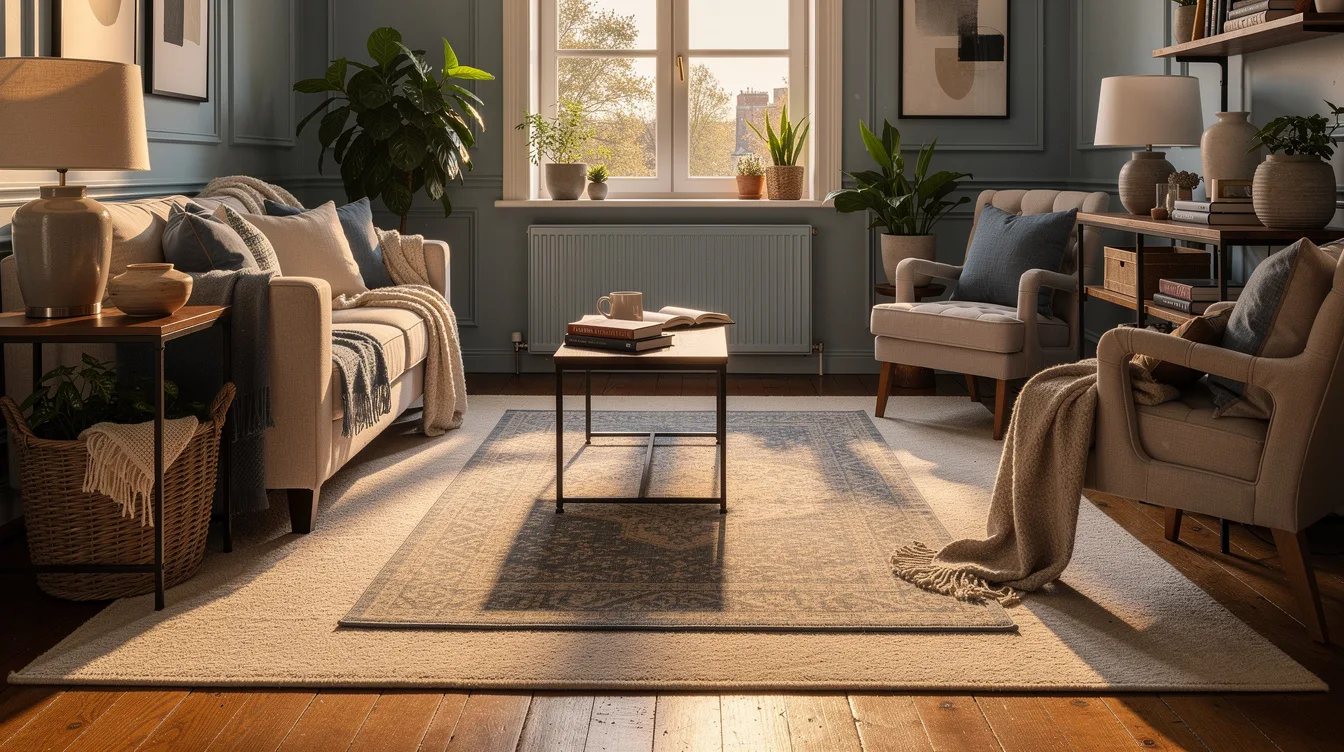
Match the Rug Shape to the Architecture
Let the room's geometry guide the rug shape. A rectangular rug supports a long sofa wall, while a round rug can soften a square breakfast corner or create a clear landing beneath a small pedestal table.
Place the round shape where it will be visible from more than one zone, rather than hiding most of it beneath furniture. A round rug can also make a tight dining nook feel separate from the main lounge without blocking the walking route.
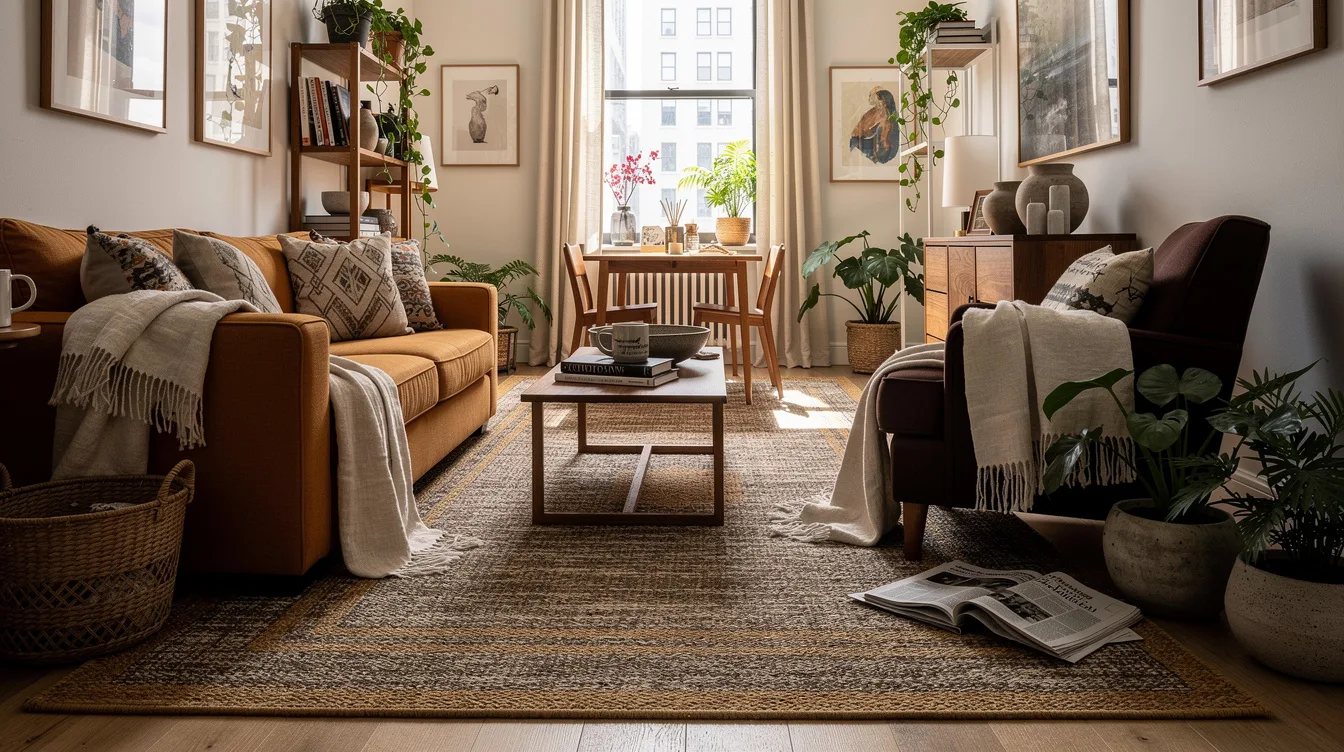
Use Contrast to Hold the Sightline
In a pale apartment, a deeper rug color can stop the eye from sliding across the entire floor. In a dark apartment, a lighter rug can open the lounge and give the sofa a clear visual base.
Keep the contrast measured by pairing one strong tone with quieter furniture. A charcoal rug works with oak, cream upholstery, and brushed metal, but skip a second dark floor covering nearby or the open plan may feel chopped apart.
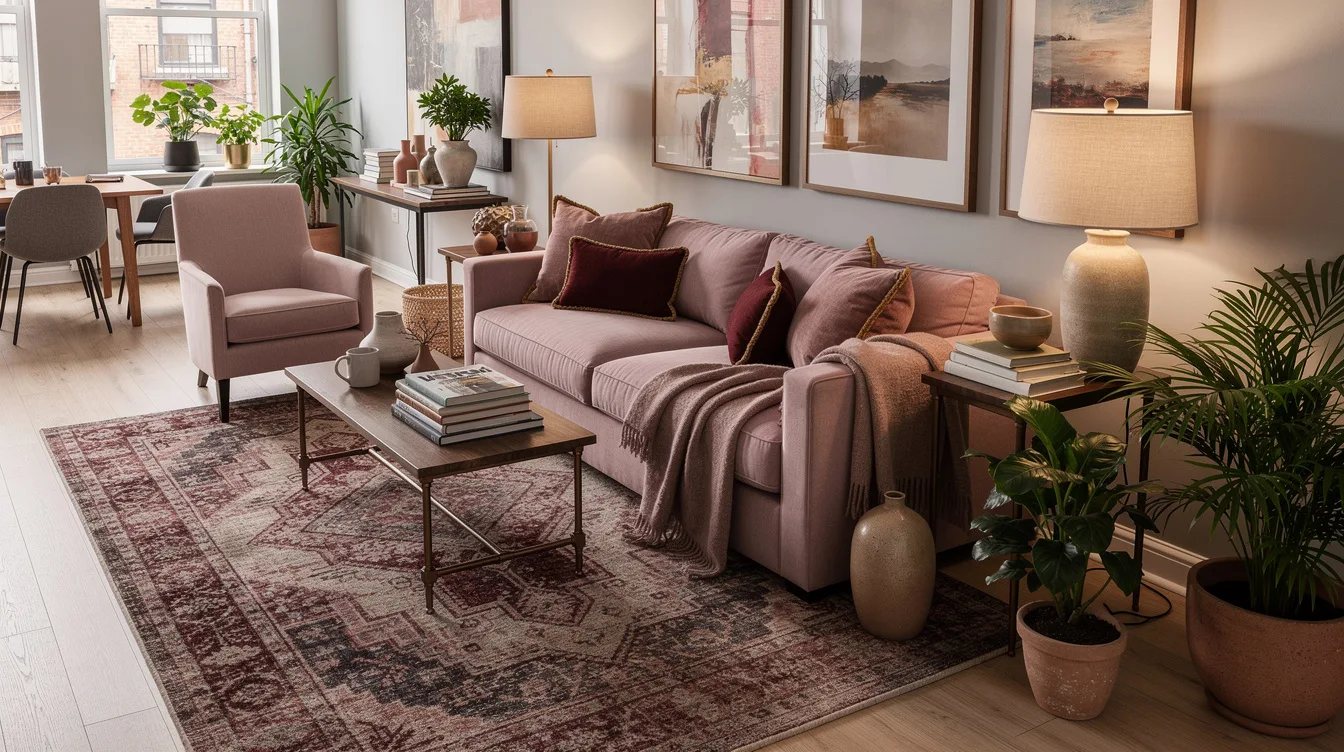
Finish With a Consistent Rug Rhythm
When an apartment needs several rugs, repeat one quality across the collection: similar borders, related colors, or the same low profile. The rugs can differ in pattern, but they should feel like members of one conversation.
Costco's changing selection makes it useful to compare measurements, fibers, and photos before committing to a full set. Start with the largest living-room rug, then choose smaller pieces that support its scale and finish rather than competing with it.
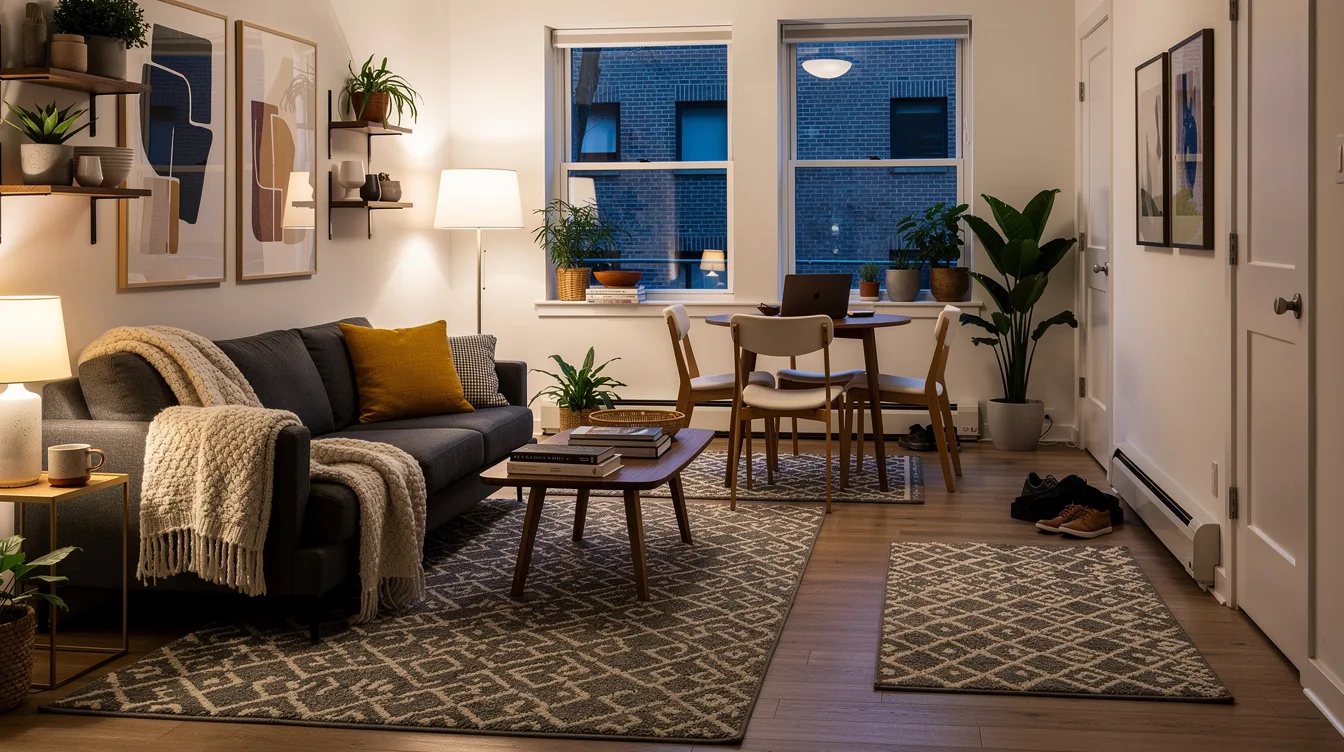
Measure the living zone first, then mark the rug's footprint with painter's tape before shopping. That small test will reveal whether the piece anchors the apartment or leaves the furniture floating.