Tiny Room Feeling Random? Try These 12 Color-Drenching Ideas
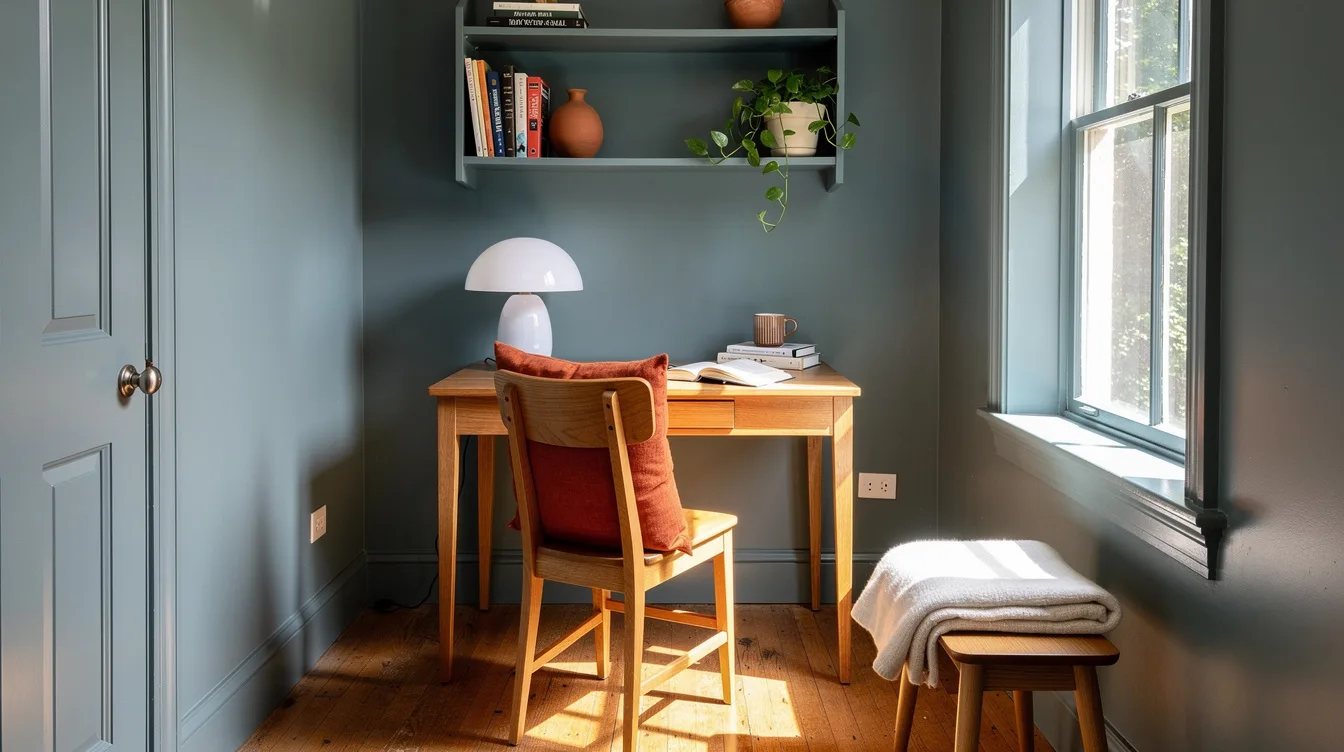
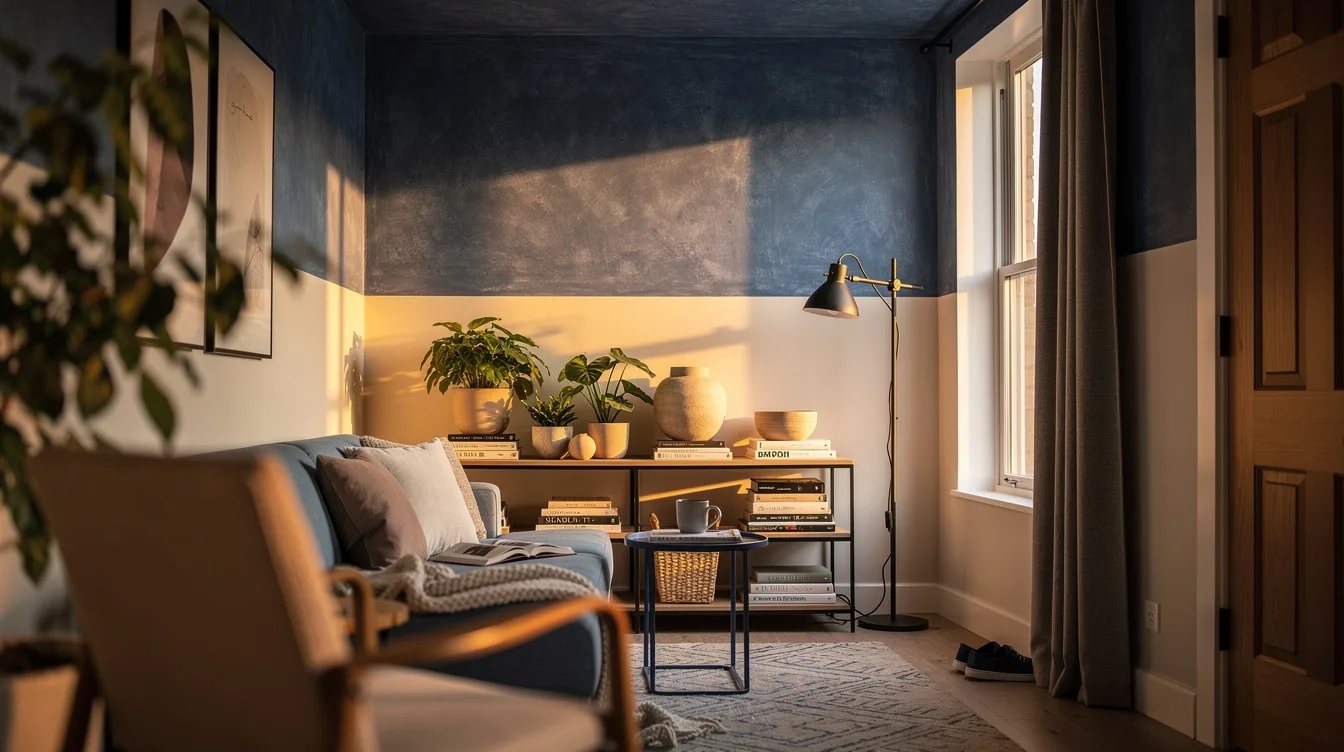
18 november 2026A tiny office about 6.5 by 8 feet can feel intentional when the ceiling, walls, baseboards, and room-facing door share one color. The key is the missing white line around the ceiling and door, not the darkness of the paint.
For a small office, our pick is Dix Blue, a muted blue-green used with matte walls, a matte ceiling, slightly shinier woodwork, and one piece of natural oak. The result feels cozy and cohesive without making an unrealistic promise about the room’s size.
What you will find inside
- Paint the Ceiling Into the Same Color Field
- Carry the Color Across Every Baseboard
- Turn the Room-Facing Door Into a Quiet Wall
- Make Built-Ins Disappear Into the Walls
- Choose Dix Blue for a Focused Small Office
- Use Sheen Changes Instead of Extra Colors
- Anchor the Color With One Natural Oak Piece
- Center a Small Bed Inside the Painted Envelope
- Repeat Setting Plaster for a Softer Bedroom
- Go Deliberately Dark in a Windowless WC
- Let White Ceramic Be the Only Bright Contrast
- Test the Ceiling Under Evening Light
Paint the Ceiling Into the Same Color Field
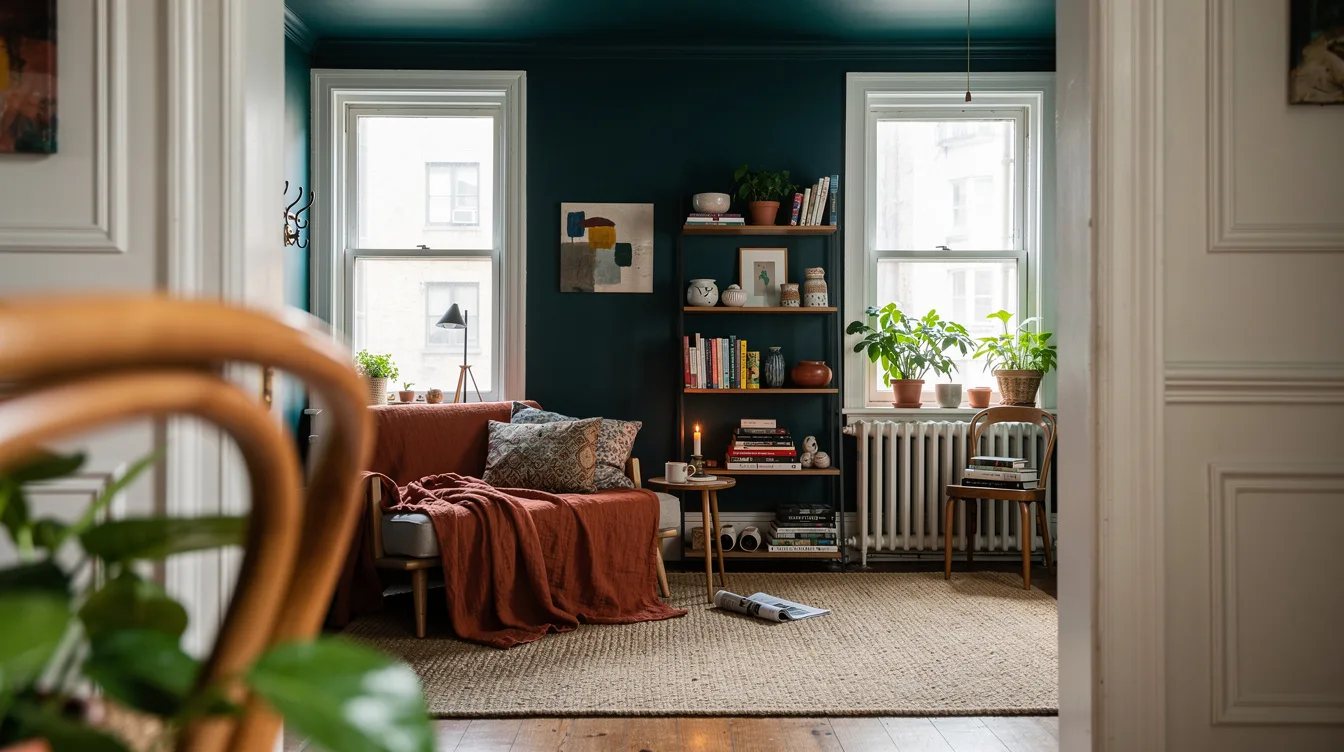
Begin with the ceiling, because a white strip above the walls breaks the visual field in a room that has very little space to spare. In an office about 6.5 by 8 feet, carrying the paint overhead makes the architecture feel deliberate from the doorway.
Use a matte finish on the ceiling and walls so light spreads softly across the small envelope. The room can feel cozy without pretending to be twice its size.
Carry the Color Across Every Baseboard
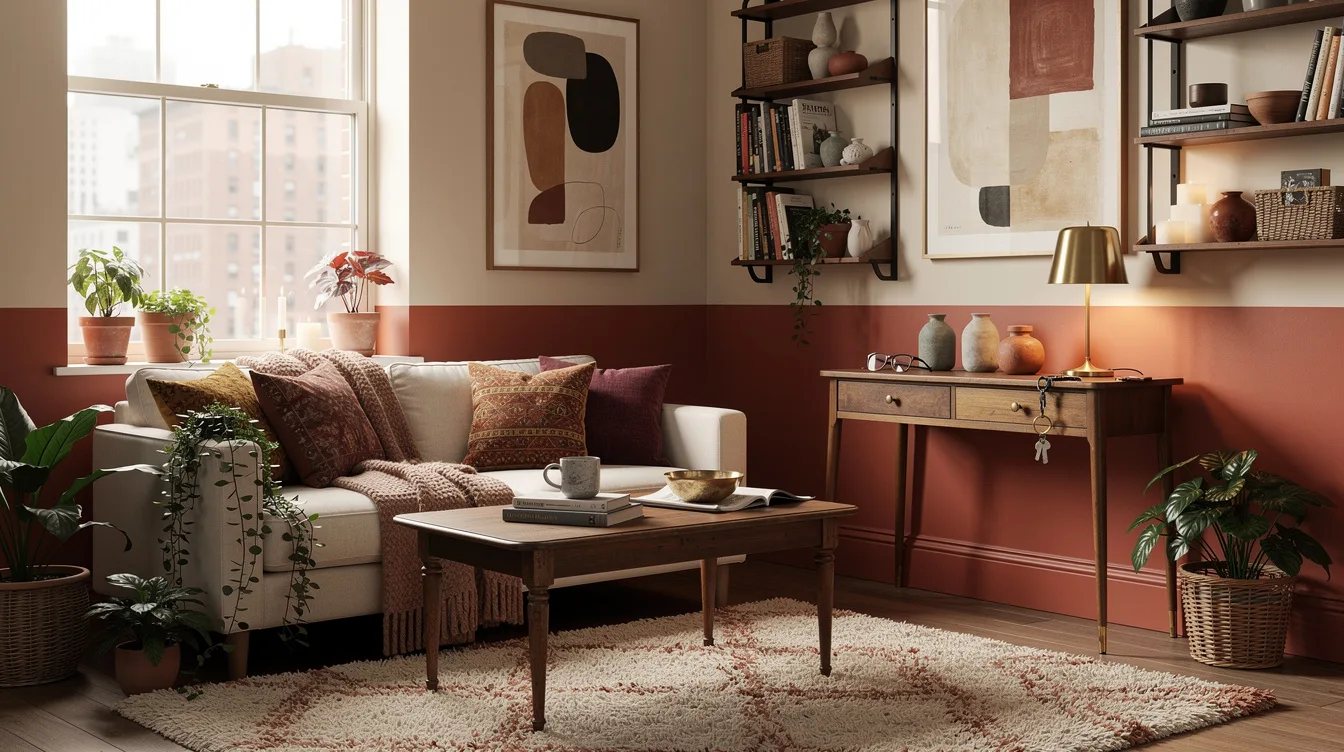
Paint the baseboards the same color as the walls instead of outlining the room with a bright border. That continuous band lets the eye read the wall, floor edge, and ceiling as one composed shape.
A low-sheen finish from Home Depot or Lowe’s can handle the walls, while a compatible trim finish gives the baseboards more resistance to scuffs. Keep the color identical even when the sheen changes.
Turn the Room-Facing Door Into a Quiet Wall
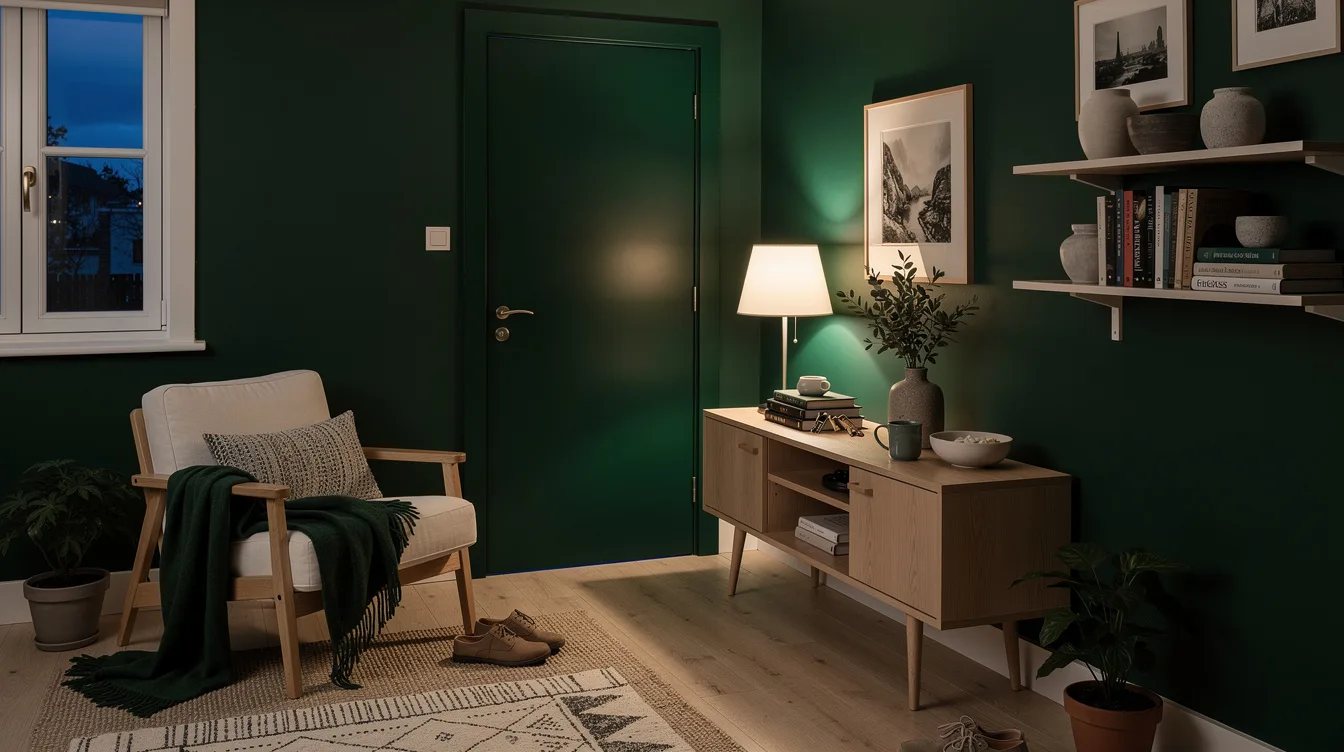
Paint the room-facing side of the door and its casing in the wall color. The door then recedes into the composition when closed, which matters in a tiny room where every vertical interruption gets noticed.
For a strong result, continue the color over the visible hinges only when the hardware is already painted, and leave the knob or lever as the functional contrast. A painted interior door has more impact here than decorative trim.
Make Built-Ins Disappear Into the Walls
If the room has shelves, cabinets, or a shallow closet, paint the fronts and side panels in the same blue-green as the walls. This makes storage feel architectural instead of like a separate object pushed into a corner.
In a compact office, matching built-in shelves to Dix Blue No. 82 keeps books and supplies visually calmer. Add baskets from IKEA only if they solve a real storage problem, since too many containers can make the wall look busy.
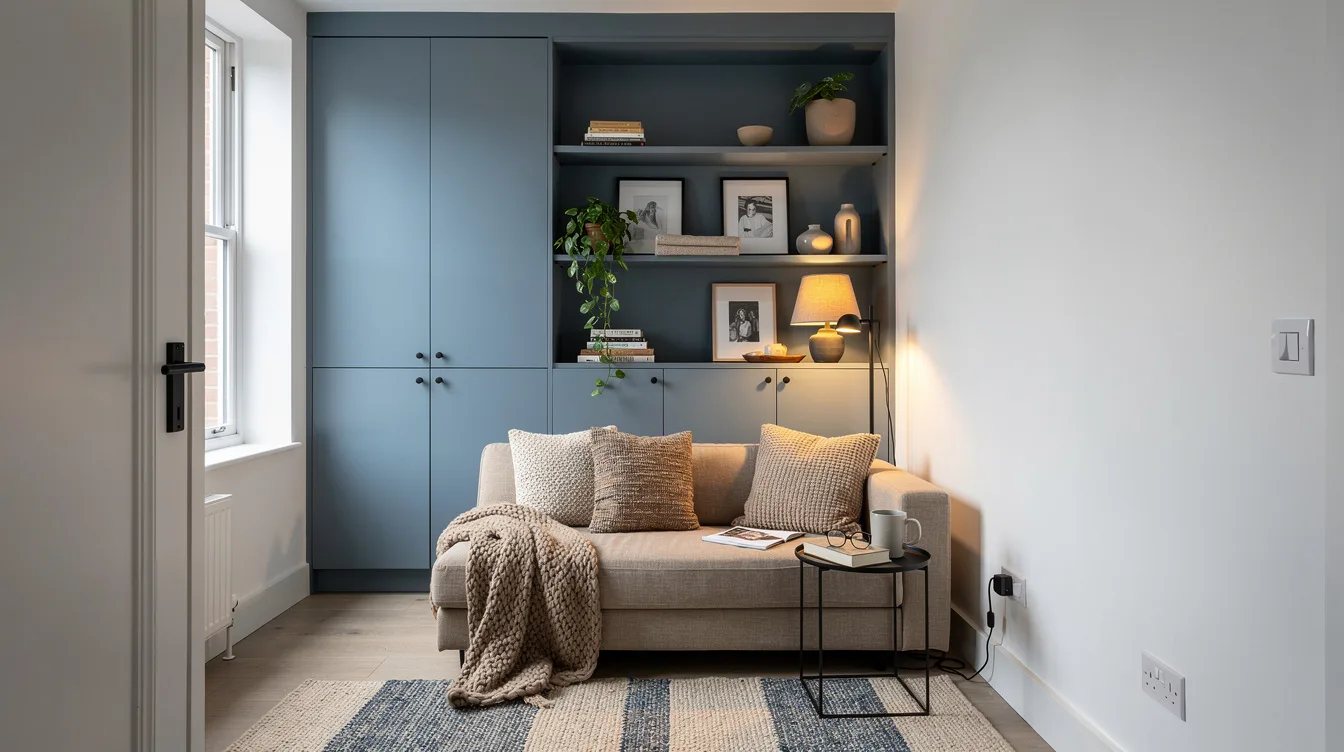
Choose Dix Blue for a Focused Small Office
Dix Blue No. 82 is a muted blue-green that gives a small office a clear mood without turning it into a themed room. It works especially well when the desk stays natural wood and the surrounding surfaces hold the color.
Pair the paint with an approximately 39-by-20-inch oak or oak-veneered desk and an opal-glass lamp. The Dix Blue wall color supplies cohesion, while the warm desk keeps the office from feeling flat or overly formal.
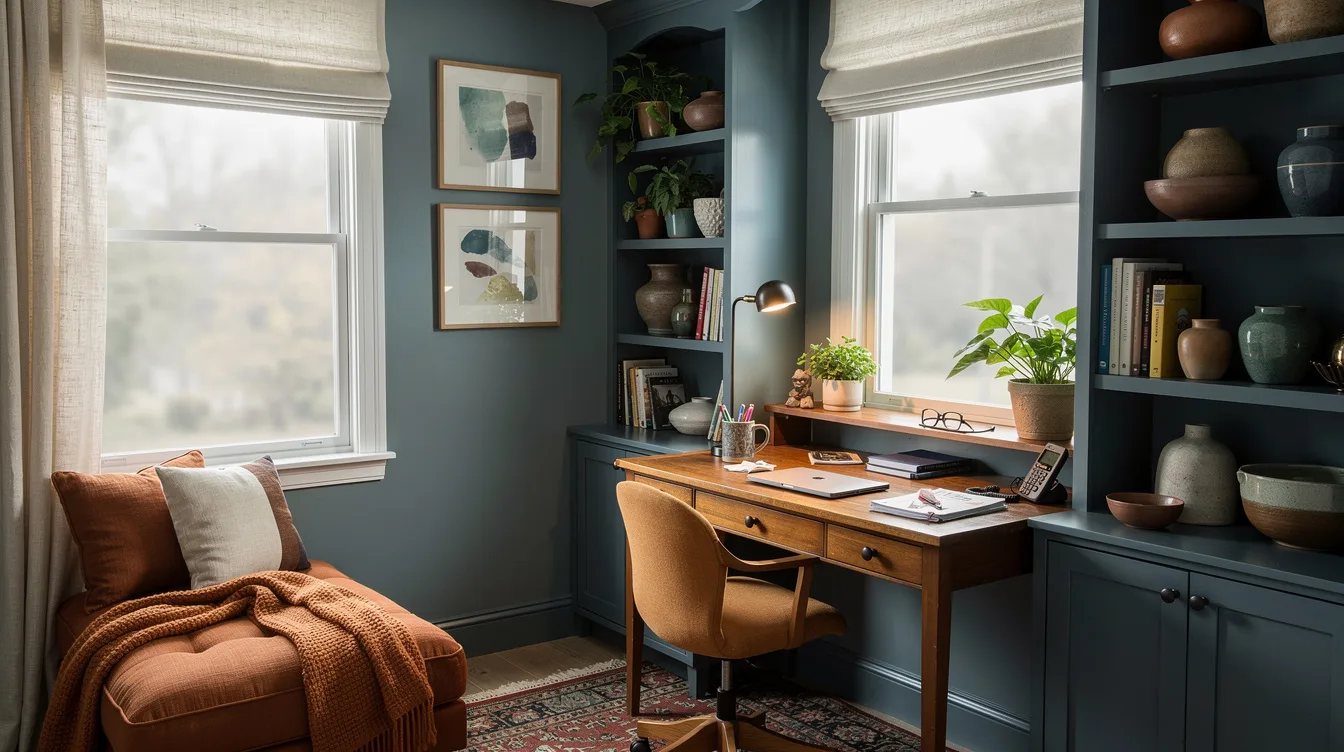
Use Sheen Changes Instead of Extra Colors
Keep the ceiling and walls matte, then make the baseboards and door slightly shinier. The difference gives the same color a quiet shift as daylight moves across the room.
That finish change is more controlled than adding a second trim color. For woodwork, choose a durable eggshell from Ace Hardware and test it beside the wall sample before committing.
Anchor the Color With One Natural Oak Piece
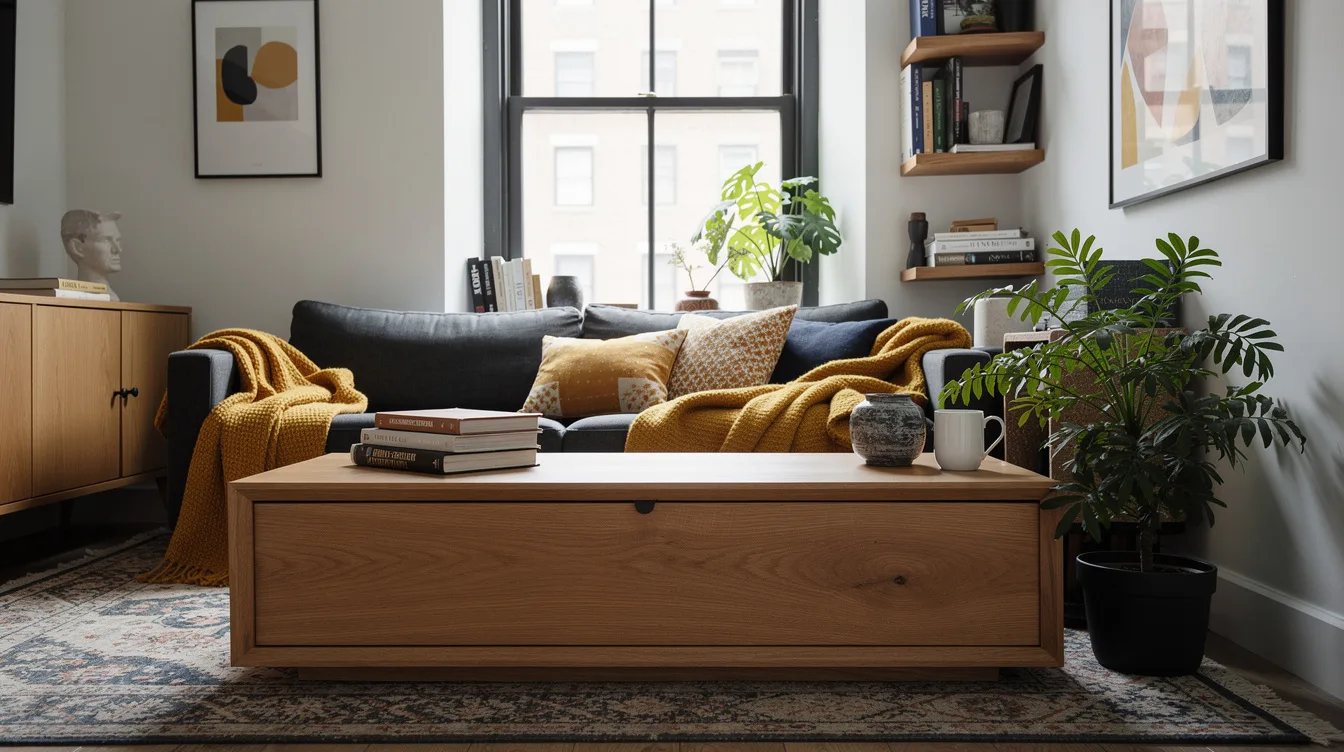
Color-drenching needs one grounded material to keep the room from becoming visually weightless. A natural oak desk, stool, or narrow shelf is enough when its grain remains visible.
We would choose one substantial natural oak desk instead of scattering several pale wood accessories around the room. Its warm tone gives the blue-green paint a reason to feel settled.
Center a Small Bed Inside the Painted Envelope
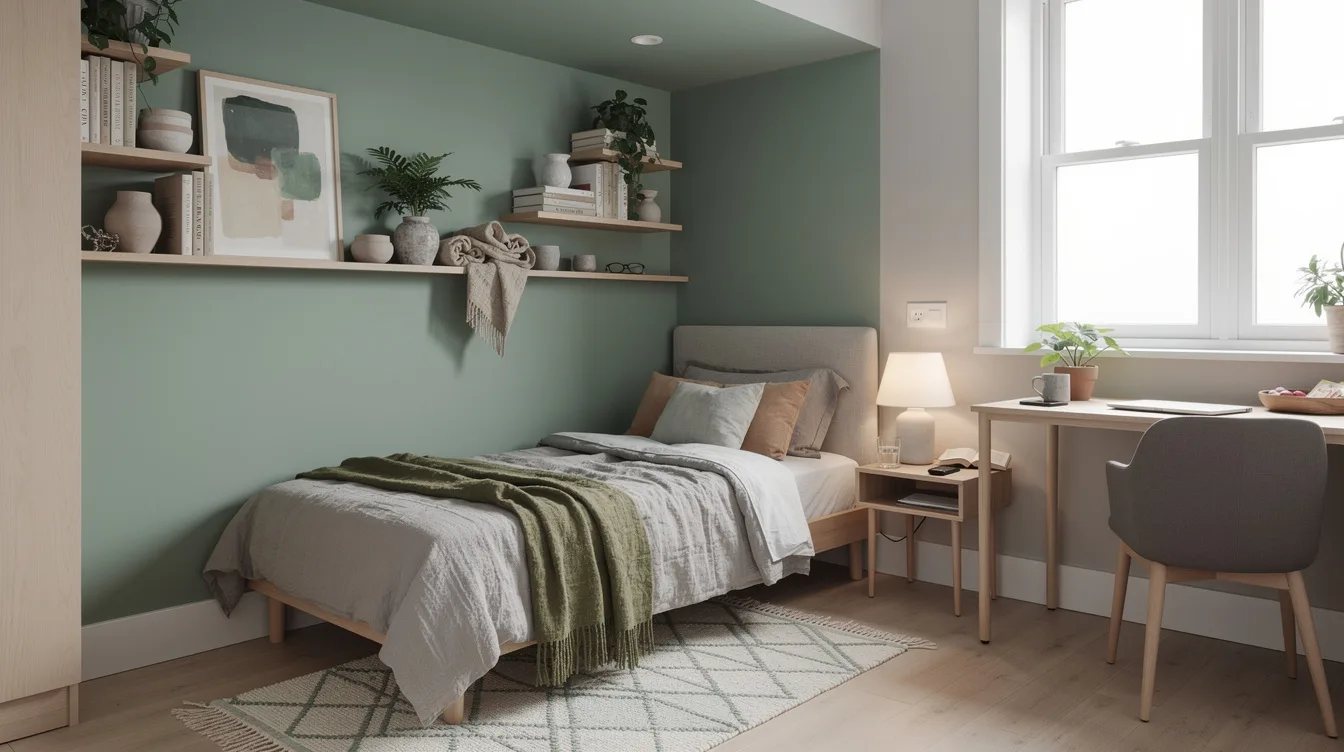
For a bedroom about 8 by 10 feet, center an approximately 55-by-75-inch bed across the shorter wall when the door and windows allow it. That leaves roughly 22 inches on either side before accounting for the frame, so measure the actual clearance before buying furniture.
Keep the oatmeal linen bedding simple and let the ceiling, walls, baseboards, and wardrobe fronts share one soft tone. The arrangement feels enveloping because the color surrounds the bed, not because the room is overloaded with accessories.
Repeat Setting Plaster for a Softer Bedroom
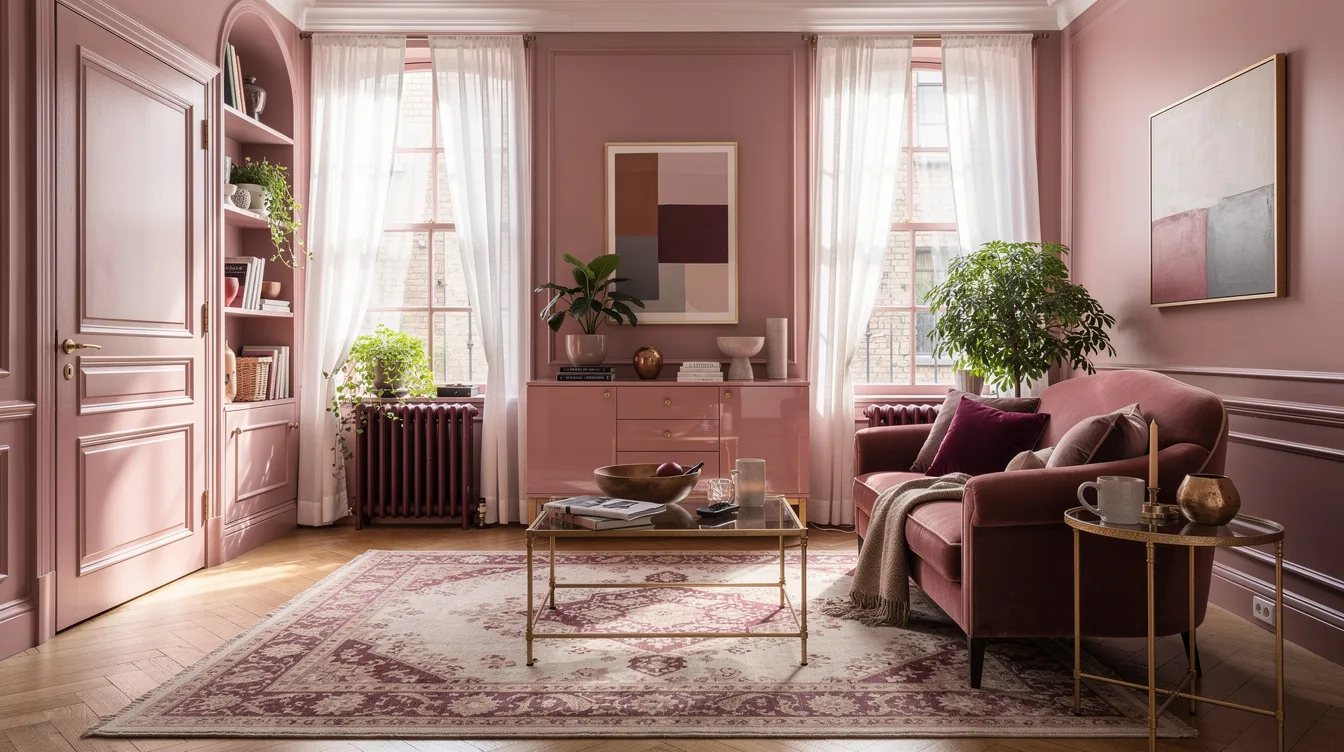
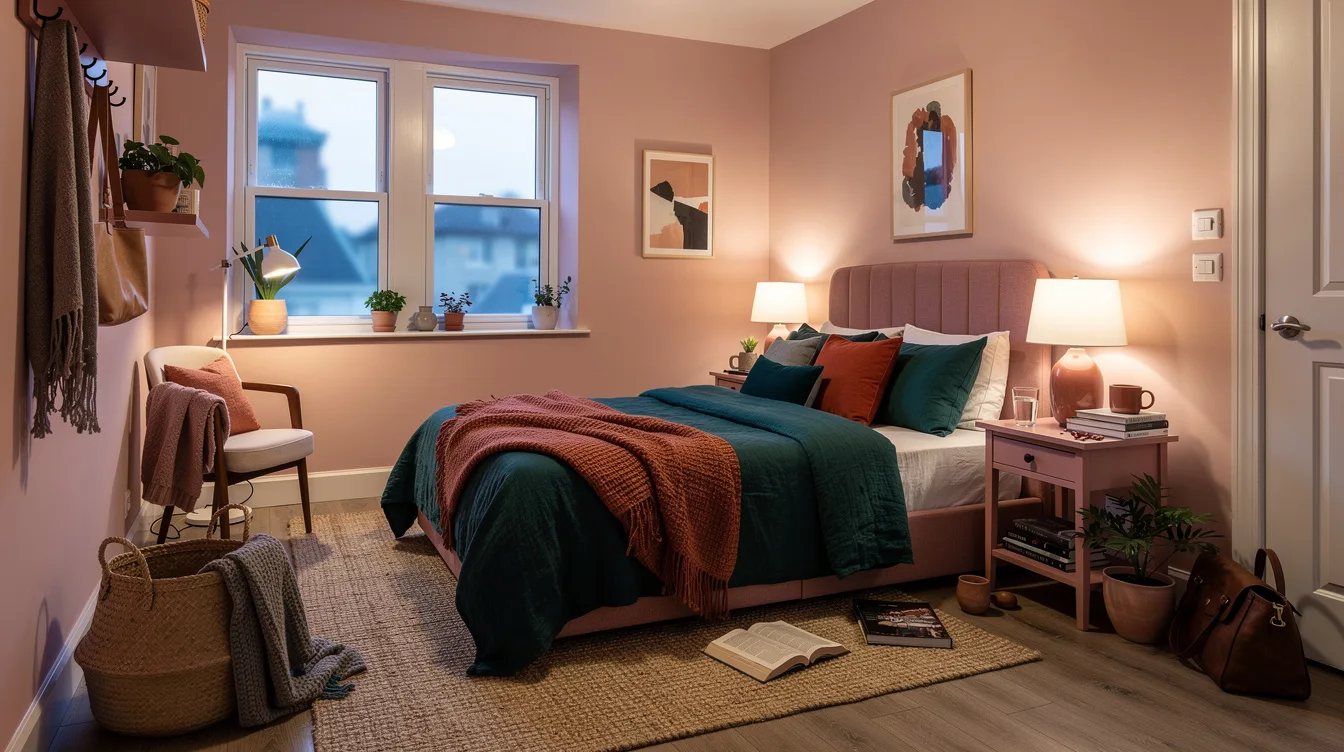
Setting Plaster is a dusty pink option for anyone who wants a wrapped-in feeling without using a deep shade overhead. Carry it across the ceiling and built-in wardrobe fronts so the color reads as the room’s structure.
Add an oatmeal linen duvet and a restrained wood nightstand from Target. The combination is gentle enough for daily living, but the continuous paint keeps it from drifting into a generic neutral bedroom.
Go Deliberately Dark in a Windowless WC
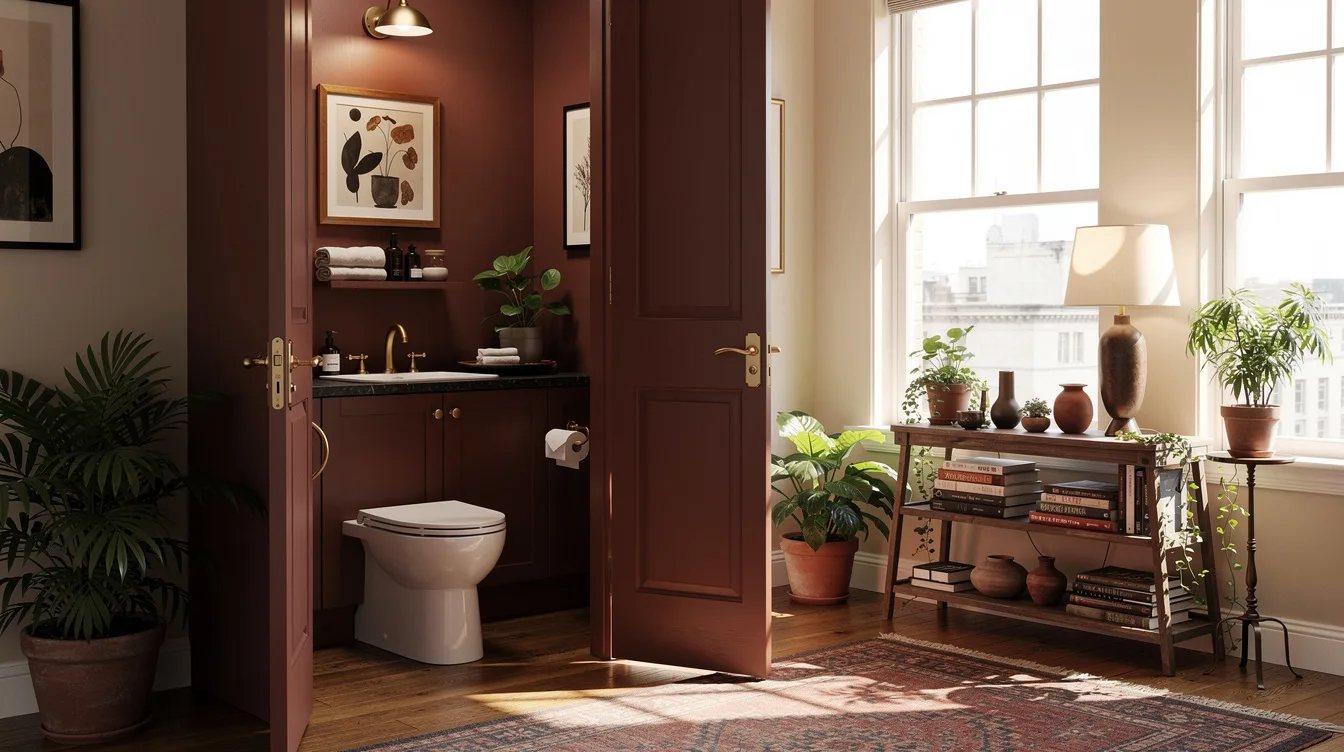
A windowless WC can take a dark color on every surface because there is no daylight to compete with. Brinjal on the ceiling and walls creates a compact jewel-box effect, while the room’s small footprint keeps the commitment manageable.
Use an approximately 16-by-10-inch basin only if the door swing and plumbing projection allow it. Pair the dark painted ceiling with opal glass and brushed brass so the fixtures provide focused points of reflection.
Let White Ceramic Be the Only Bright Contrast
When the walls, ceiling, door, and baseboards share one dark color, white ceramic becomes more purposeful. A toilet or compact basin can supply the crisp contrast without adding a separate white trim line around the room.
Choose a clean white ceramic basin and keep the surrounding accessories restrained. A pale towel from Walmart is enough; additional white shelves, frames, and storage can break the effect the paint created.
Test the Ceiling Under Evening Light
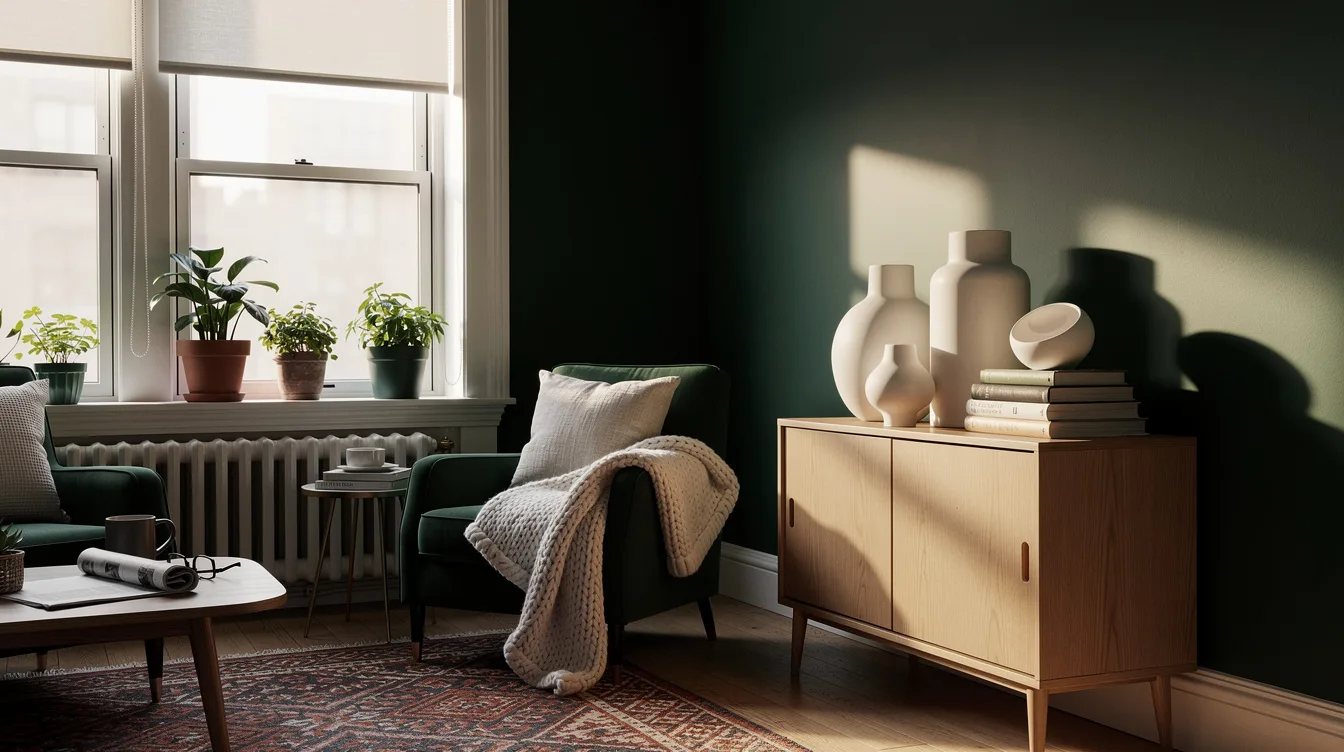
Before painting the full room, brush the chosen color onto a sample board and hold it flat against the ceiling after sunset. A shade that feels balanced on the wall can look heavier overhead once lamps replace daylight.
Test the paint sample board beside the floor, door hardware, and largest furniture piece. If the shade feels too intense above you, select a lighter color for the entire room instead of returning to a white ceiling.
Keep reading
- Small Kitchen Feeling Flat? 12 Color-Blocking Ideas Add a Custom Look
- No Floor Space for a Tree? 12 Tiny Living Room Ideas That Work
- 12 Berlin Altbau Ideas That Make High Ceilings Feel Intentional
Start with the ceiling sample, then commit to one color across the walls, baseboards, door, and any built-ins. Once that field is right, add one warm oak piece and let the room’s practical fixtures provide the contrast.


