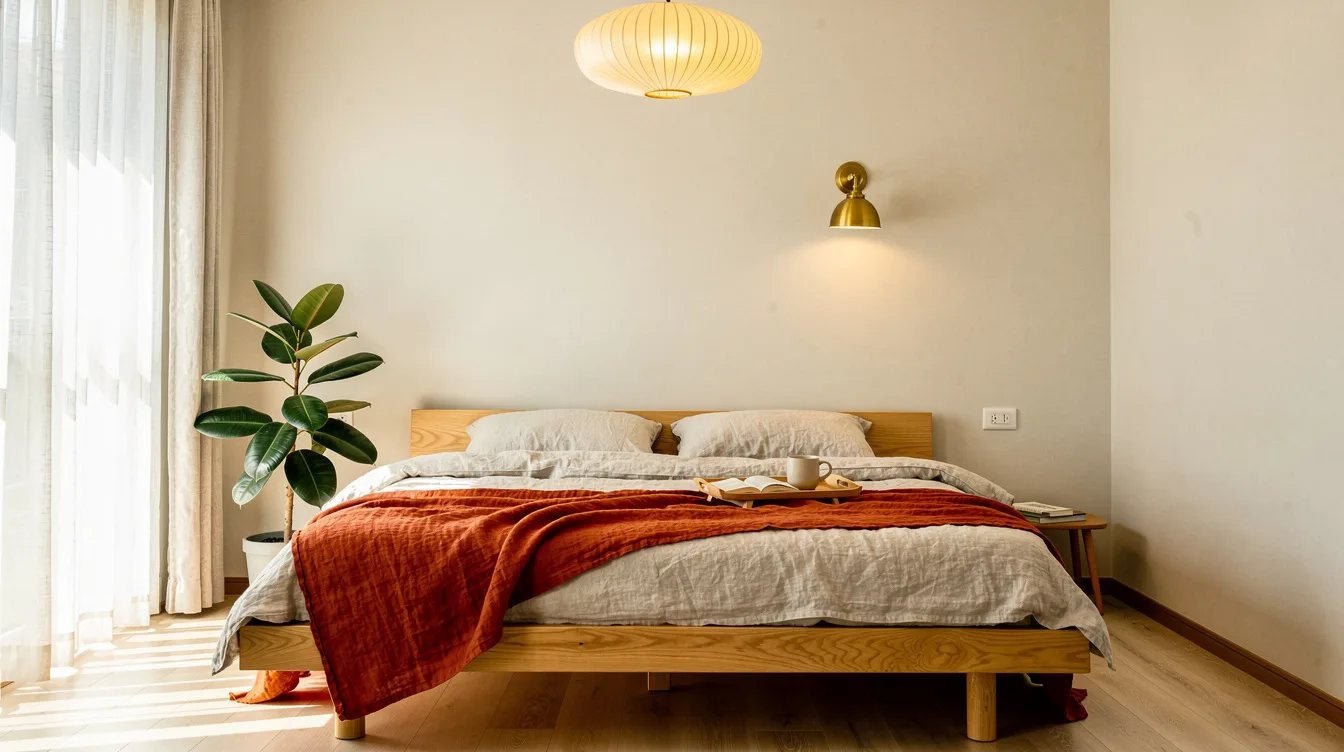
Your Bedroom Feels Chaotic? Try These 12 Kyoto-Inspired Habits
02 october 2026A mattress sitting about 16 inches above the floor can make a bedroom feel calmer before a single decorative object arrives. Kyoto-inspired design relies on low furniture, warm indirect light, tactile fabrics, and disciplined storage, so the eye has somewhere quiet to rest.
The mistake is adding lanterns, plants, and ceramics before removing the visual noise already crowding the room. Start with the bed, the walking space, and the nightly reset, then let a few honest materials carry the atmosphere.
What you will find inside
- Lower the Bed for Visual Quiet
- Protect the Walking Space
- Build a Nightly Reset Ritual
- Hide the Daily Overflow
- Set an Earthy Color Base
- Pair Light Wood With One Dark Note
- Layer Three Warm Light Sources
- Hide the Light Source
- Give Every Texture a Job
- Filter Daylight With Soft Fabric
- Choose One Structural Plant
- Edit the Room Every Week
Lower the Bed for Visual Quiet
Start with a low oak platform bed whose rails stay close to the floor and whose feet barely show. Aim for the top of the mattress to sit about 14 to 20 inches above the floor, with roughly 16 inches offering a practical middle ground for most Western bedrooms.
A simple frame from Wayfair or IKEA works better here than a tall upholstered headboard. The lower profile gives the eye fewer competing shapes and keeps the room feeling grounded.
Protect the Walking Space
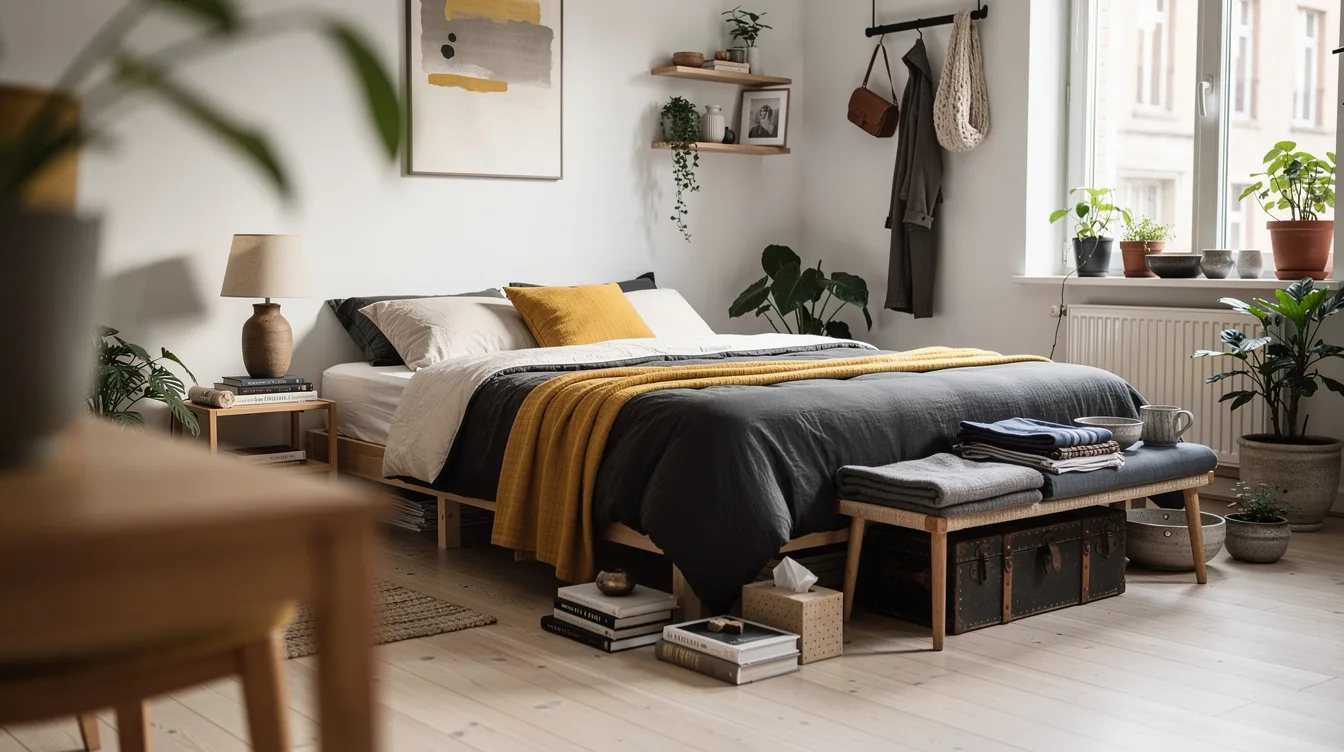
Calm depends on movement as much as appearance. Leave about 24 to 30 inches beside the bed and roughly 31 to 35 inches at the foot so opening drawers, changing sheets, and walking at night feel effortless.
Measure the room before buying a matte walnut nightstand or bench. A smaller piece with breathing room beats a larger piece that forces the bed against the wall.
Build a Nightly Reset Ritual
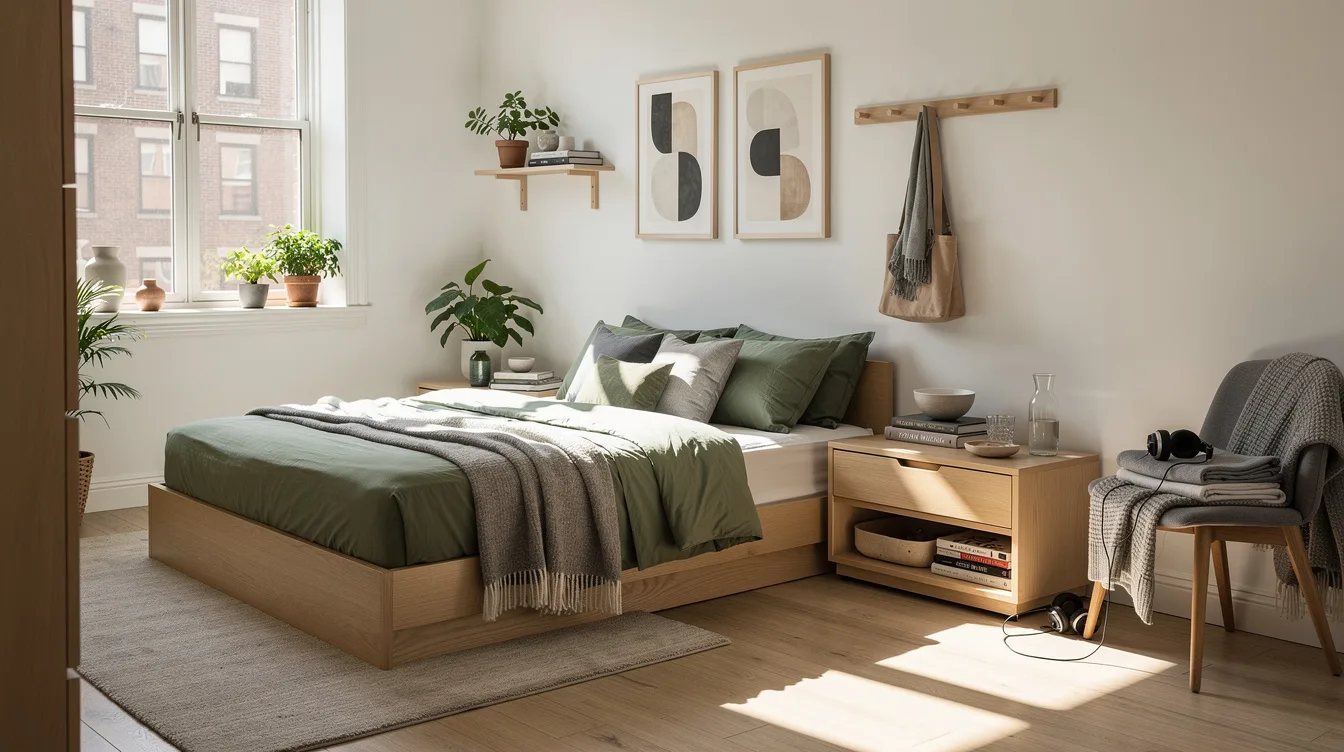
Give the final minutes of the day a fixed sequence: place the phone down, return the book, fold the throw, and clear the sleep surface. A small oak catchall tray keeps glasses, a watch, and keys from scattering across the nightstand.
We like a shallow tray from Target because it makes tidying visible and quick. The ritual matters more than the accessory, since the room should meet you with order each morning.
Hide the Daily Overflow
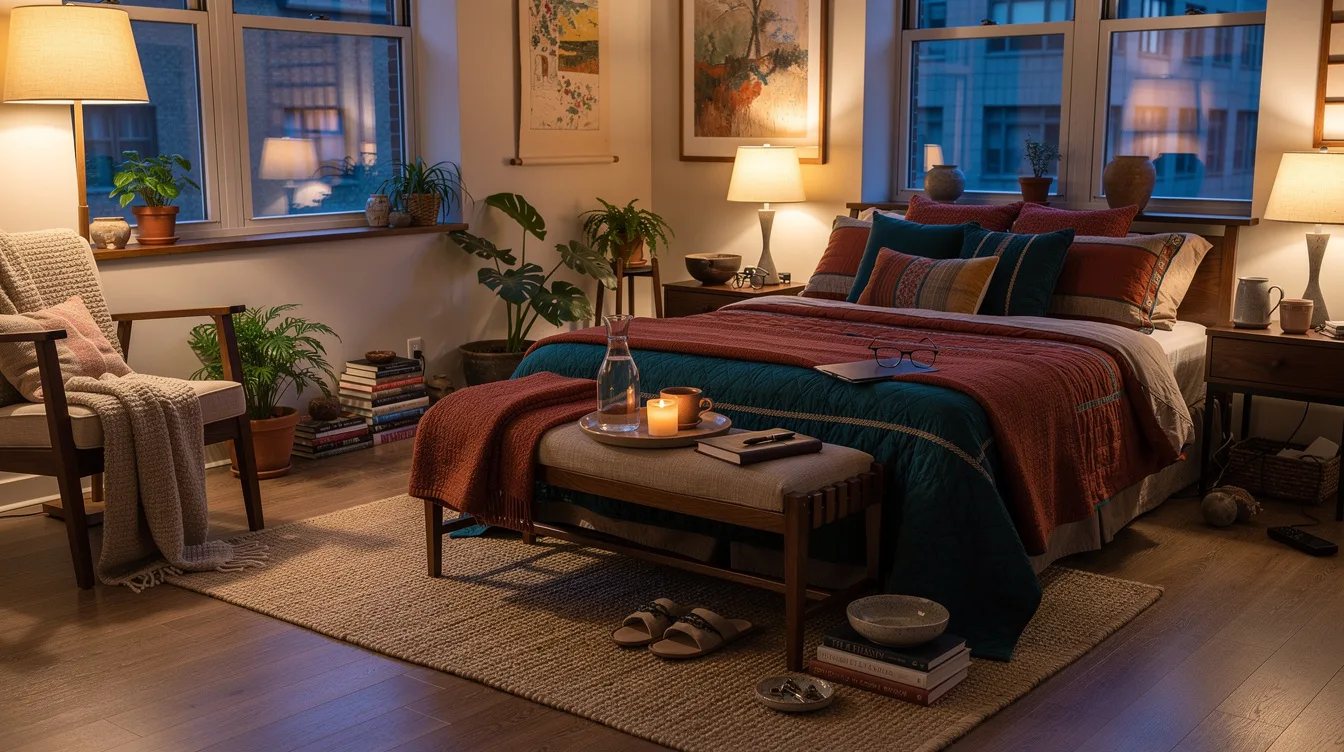
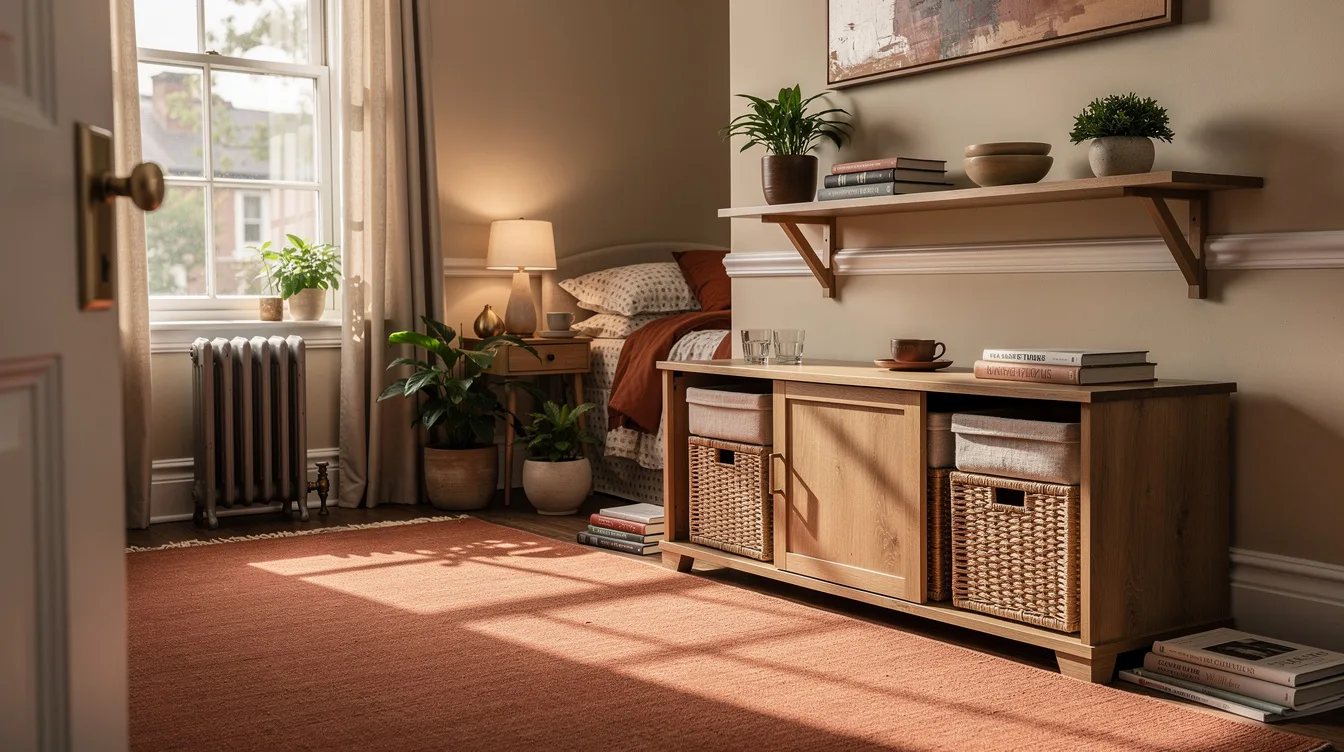
Use closed storage for the objects that make a bedroom feel busy. A narrow IKEA cabinet can hold chargers, spare linens, and folded clothing while keeping open shelves free for almost nothing.
Choose one woven cotton hamper with a lid for laundry instead of several loose baskets. Cables belong in one box, skincare belongs in one drawer, and every item needs a dependable address.
Set an Earthy Color Base
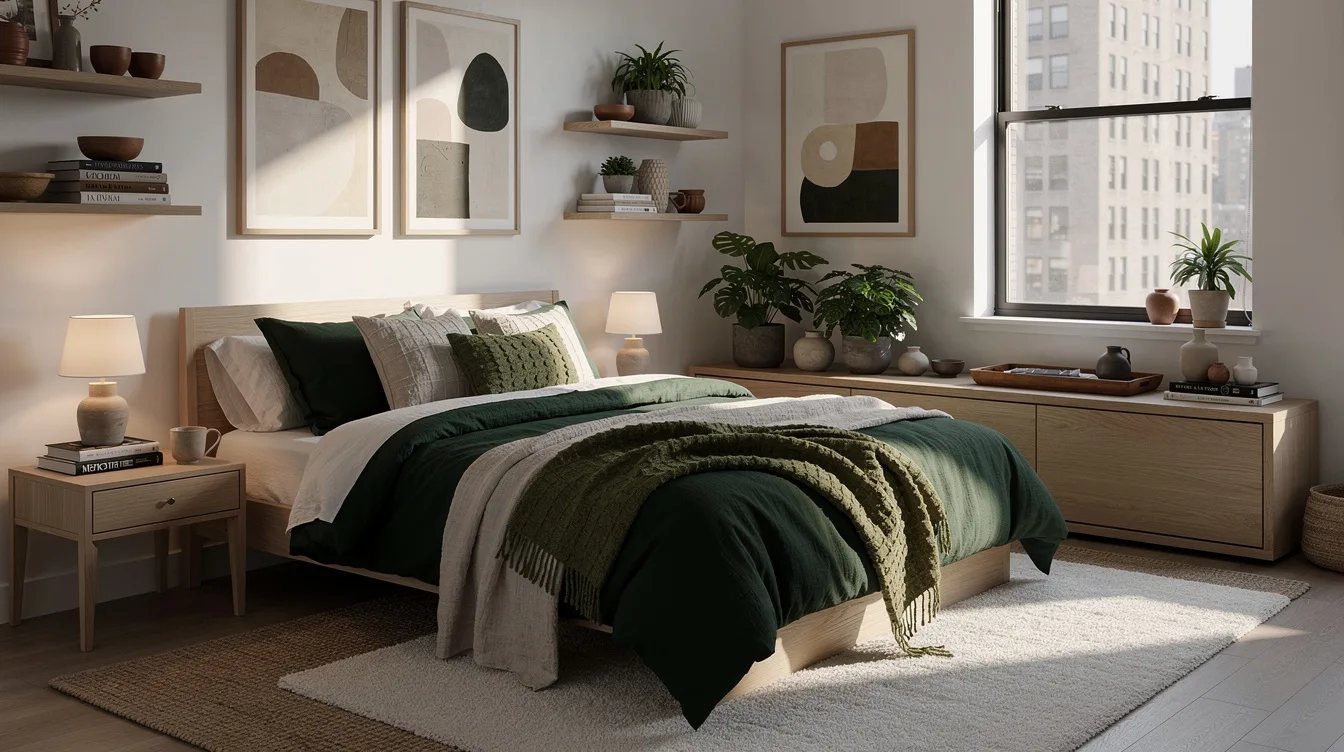
Build the palette around warm white, ivory, eggshell, soft taupe, or pale clay. A warm ivory wall color from the Home Depot paint aisle gives wood and linen room to register without making the bedroom look flat.
Add one anchoring shade, such as muted green tea, tobacco brown, ink, subdued rust, or charcoal. Keep the bedding quieter than the accent so the room feels collected over time rather than themed in one afternoon.
Pair Light Wood With One Dark Note
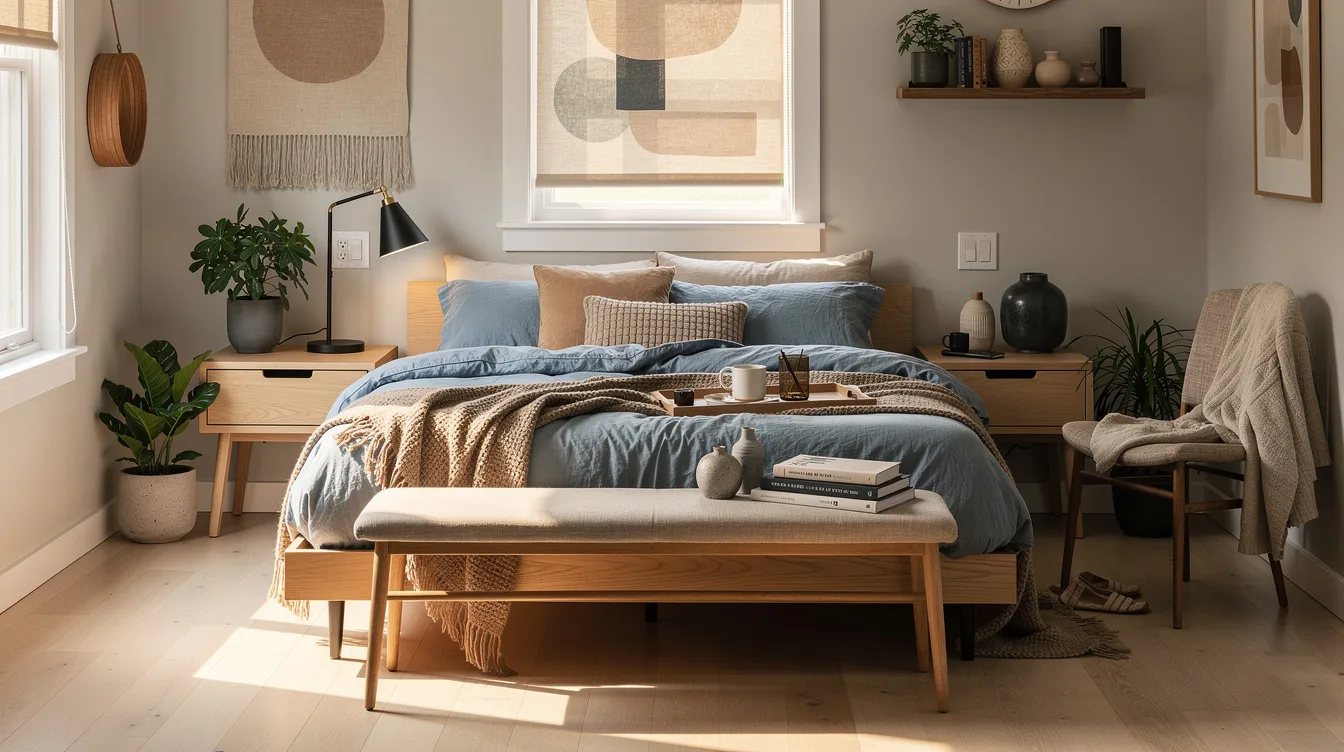
Choose natural oak, birch, ash, or lightly oiled pine for the bed and larger storage. Then introduce one darker element, such as an oiled walnut bench or a charcoal wool runner, to give the pale materials enough weight.
Skip glossy finishes and high-contrast grain patterns. A softly matte surface catches morning light gently and supports the restrained character associated with Kyoto interiors.
Layer Three Warm Light Sources
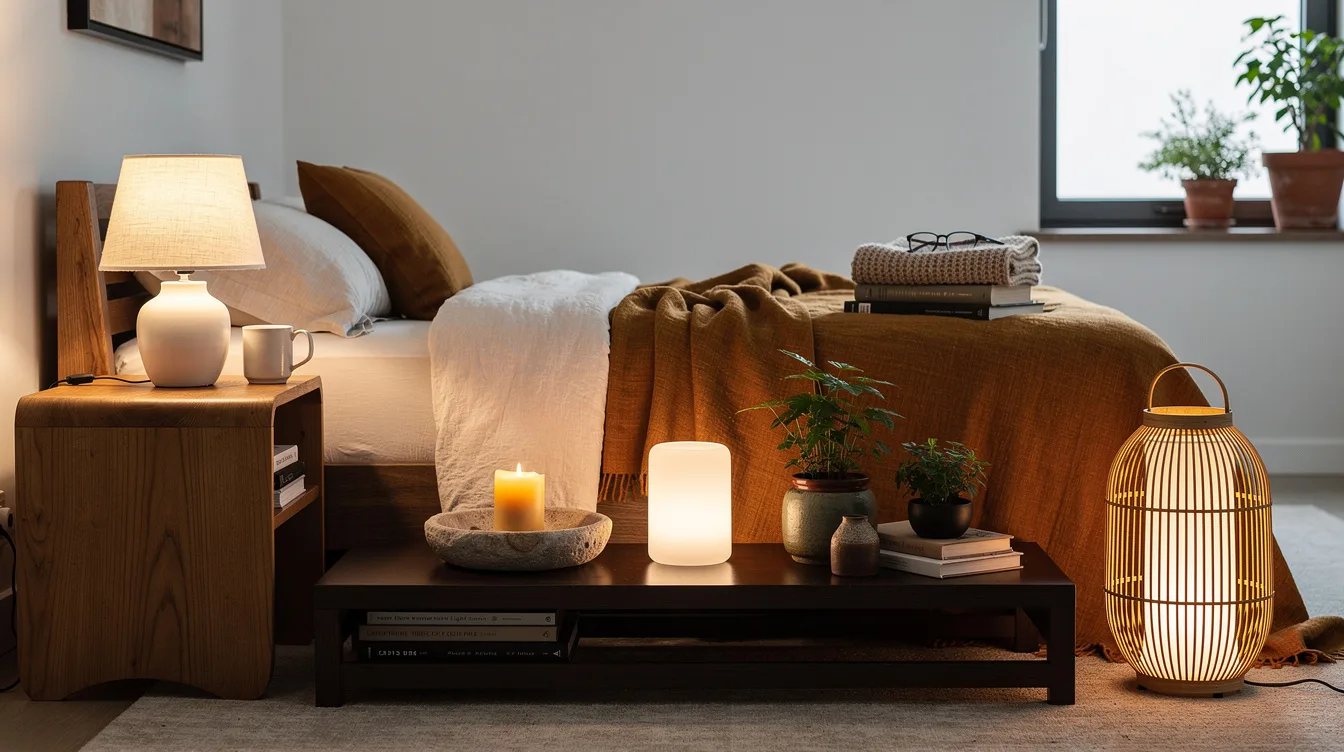
Use a diffuse central fixture, two low reading lights, and an optional glow behind the headboard or a curtain. An IKEA paper pendant can spread light across the ceiling while keeping the room soft at bedtime.
Choose bulbs around 2,200 to 2,700 K for evening use. Several modest pools of light feel more restful than one powerful ceiling fixture pointed straight at the bed.
Hide the Light Source
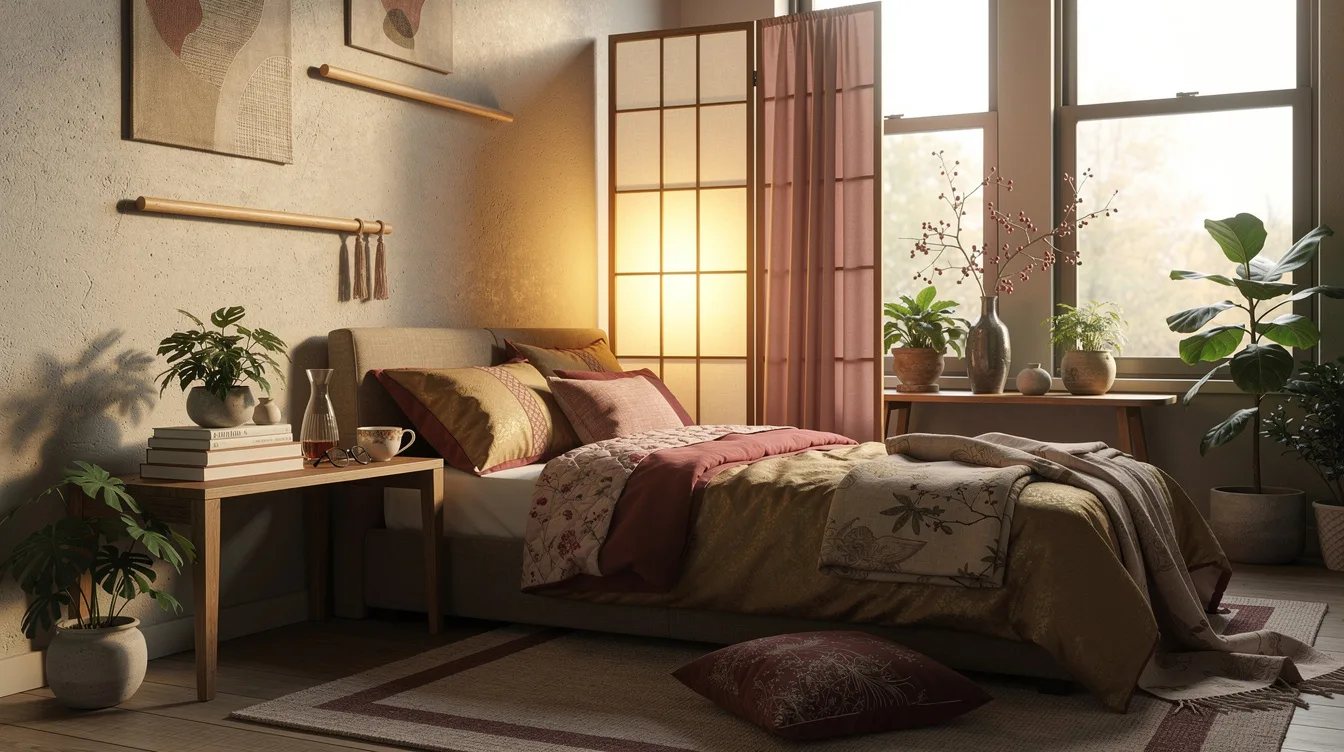
The fixture should be visible enough to feel intentional, while the bulb itself should disappear from normal sight lines. A brass picture light aimed at a blank wall or artwork can create a quiet wash without putting a bright point near your eyes.
For a small bedroom, place a frosted lamp behind a curtain edge, inside a shallow niche, or behind the headboard. Exposed cool-white LEDs introduce visual noise even when the furniture is beautifully restrained.
Give Every Texture a Job
Replace decorative buildup with tactile materials that perform a useful task. A washed linen duvet cover brings relaxed texture to the bed, while a cotton gauze throw adds softness without requiring another pattern.
Follow the simple rule of one material, one function, and one location. Linen belongs on the bed, wood belongs on the tray, paper belongs around the light, and handmade clay belongs where a small object is genuinely useful.
Filter Daylight With Soft Fabric
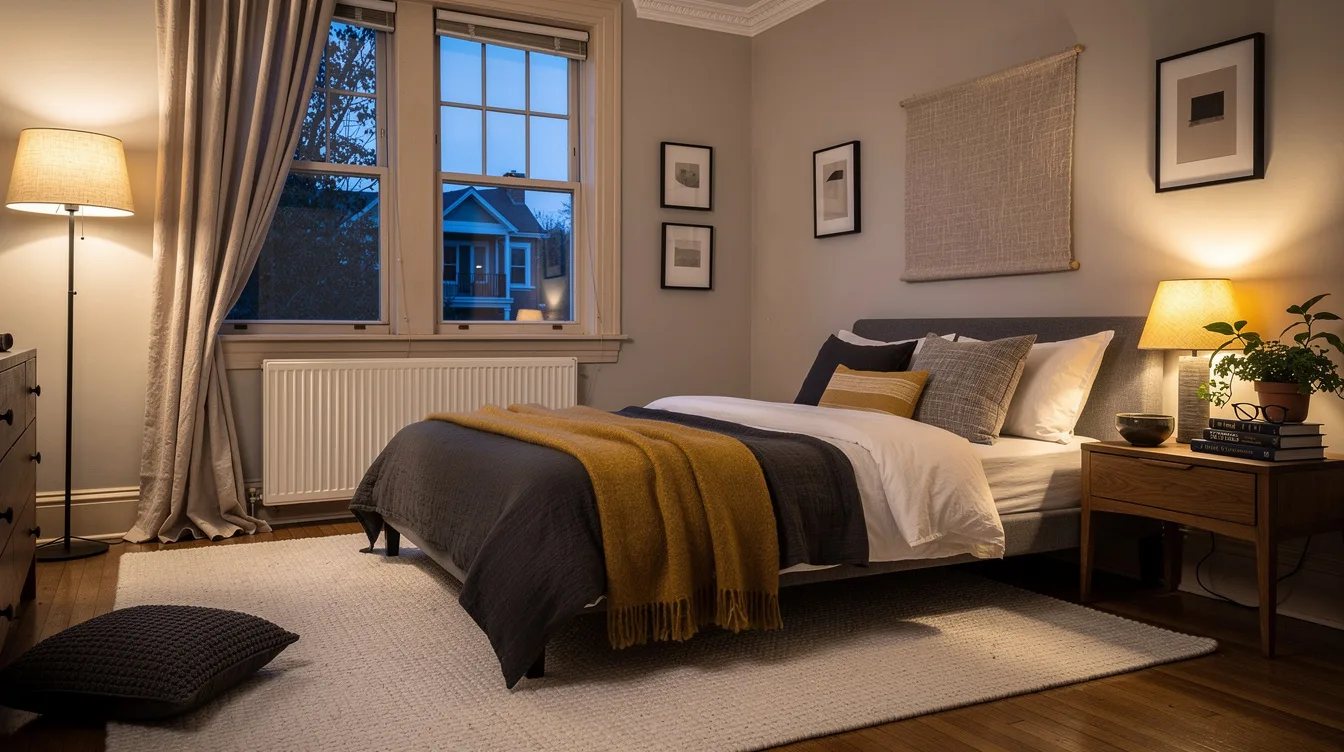
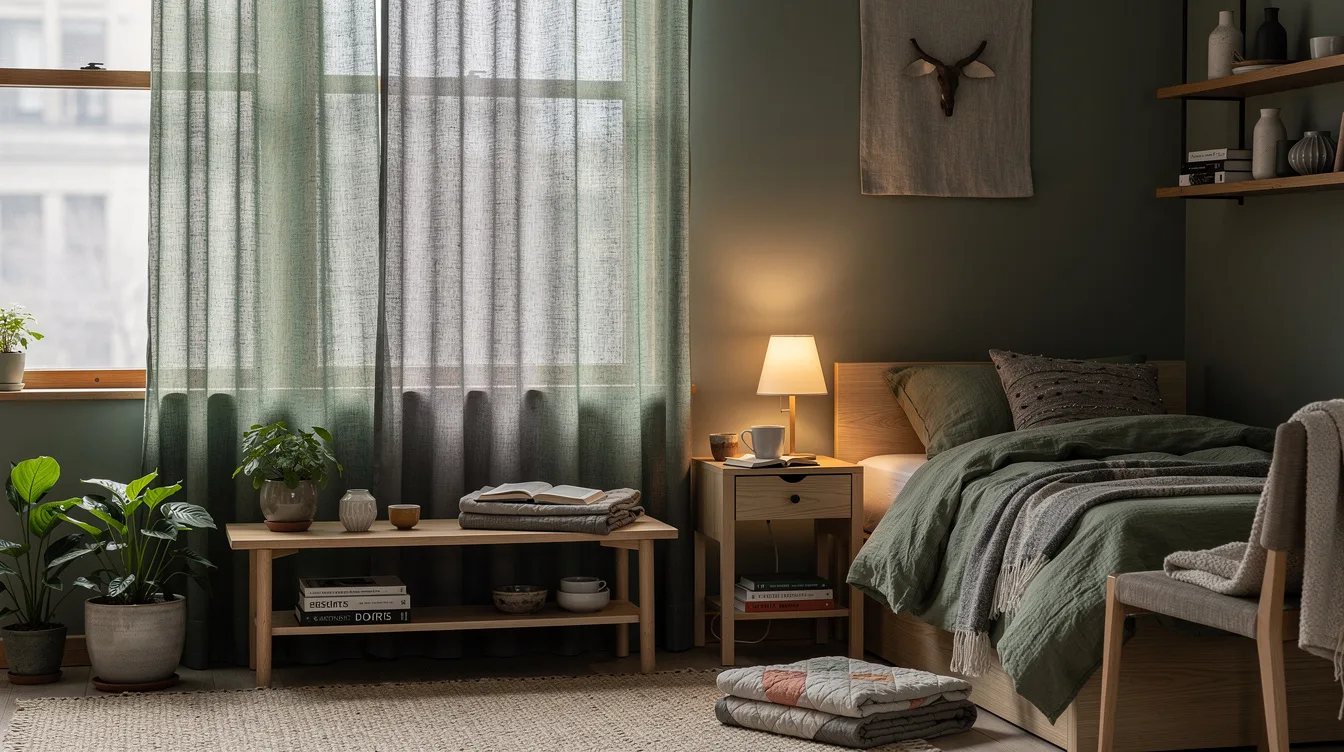
Hang linen curtains or cotton voile panels so daylight arrives filtered rather than harsh. The fabric should reach close to the floor and remain quiet in color, allowing the window to feel like part of the room's rhythm.
IKEA and Wayfair carry simple panel options that can be layered with existing shades when privacy demands it. Plastic blackout blinds alone tend to make the room feel technical, especially beside natural wood.
Choose One Structural Plant
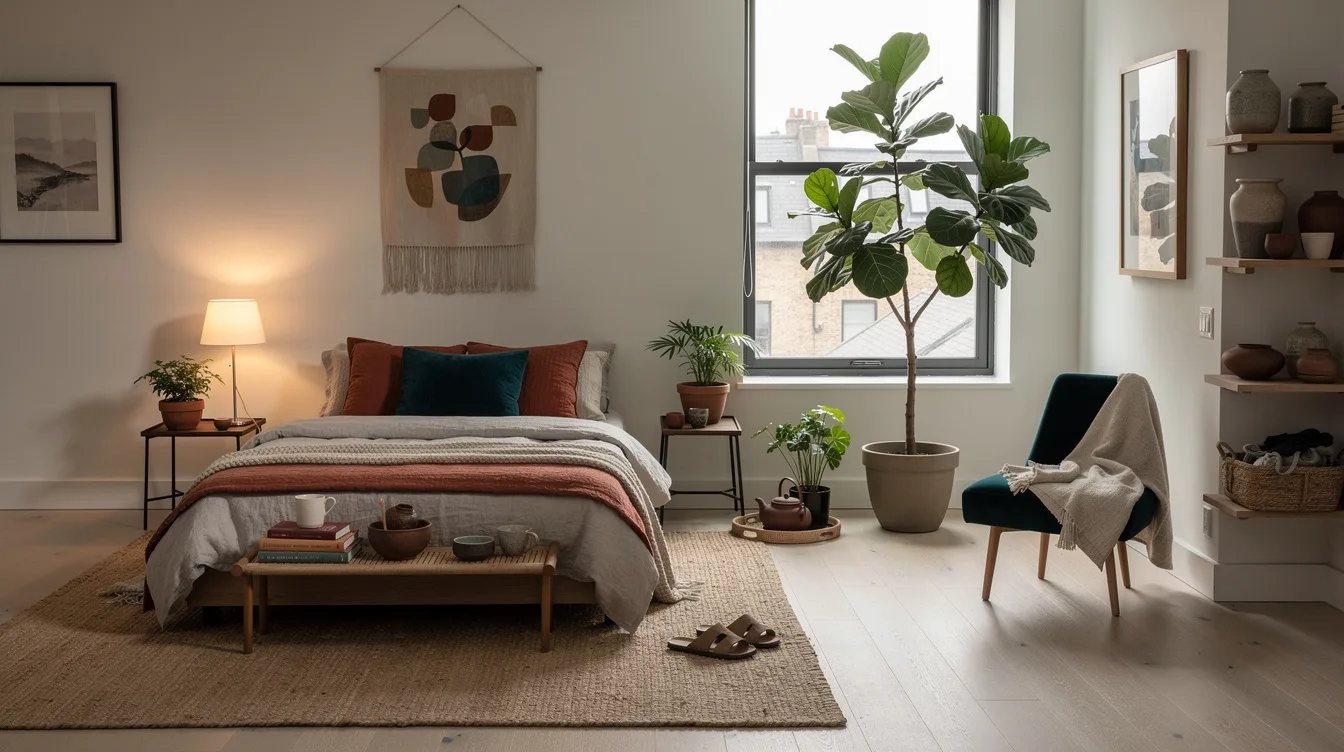
Let greenery appear as a single deliberate shape. A rubber plant, kentia palm, or zamioculcas in a simple ceramic pot can soften a corner without turning the bedroom into a collection of unrelated leaves.
Place the plant where it receives the light it needs, then stop there. A small Japanese maple can work when conditions allow, but the room should retain a contemplative feeling instead of a greenhouse mood.
Edit the Room Every Week
Once a week, remove anything that has drifted onto the dresser, floor, or nightstand. Keep one empty oak nightstand surface visible so the room has a clear pause point when the day ends.
Store seasonal items, unread books, and spare electronics elsewhere. Kyoto-inspired design becomes convincing when the room can return to silence quickly, with each remaining object earning its place through use, material, or meaning.
Keep reading
- 13 Vienna Apartment Design Habits That Look Custom, Not Costly
- 12 Stockholm Design Habits Behind That Calm Scandinavian Look
- 14 Copenhagen Design Habits That Make Dark Winters Feel Warmer
Begin tonight by clearing the nightstand and measuring the walking space around the bed. Once circulation feels easy, choose the warmest useful light source and let the rest of the room follow its lead.