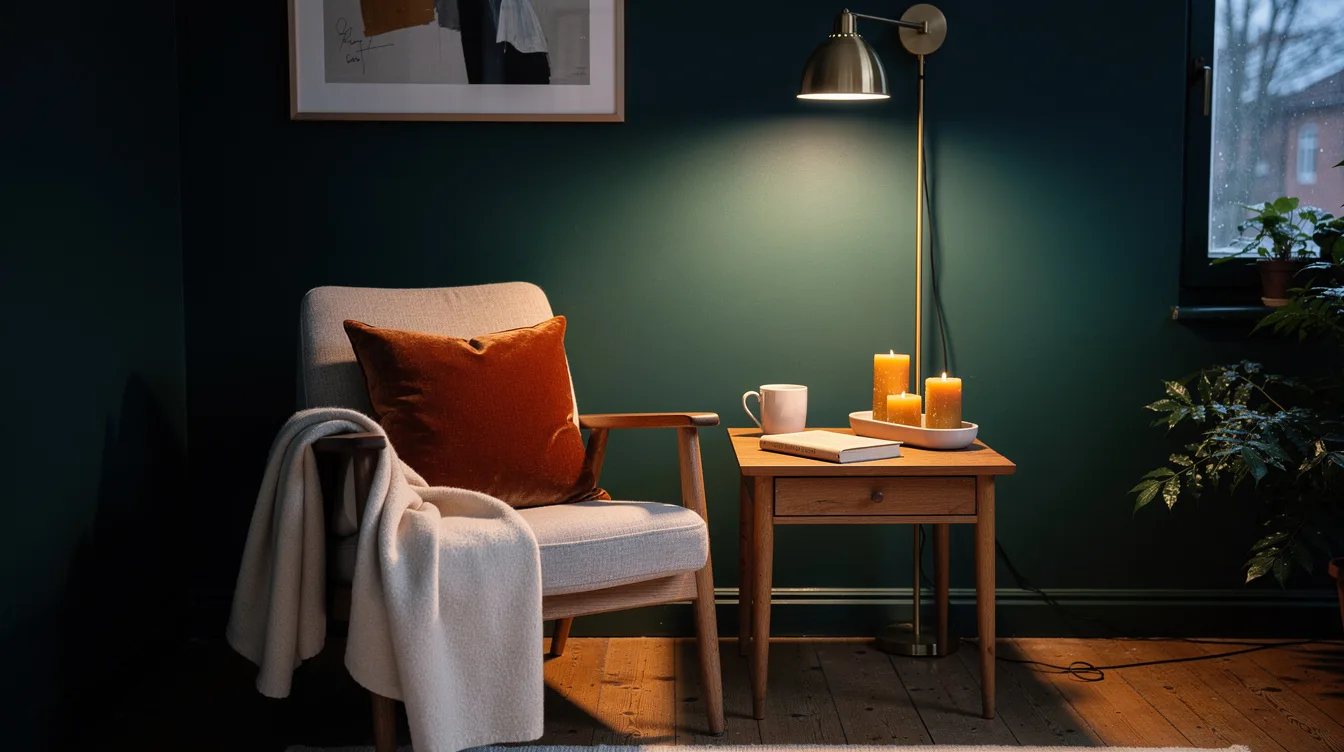
14 Copenhagen Design Habits That Make Dark Winters Feel Warmer
21 august 2026By 4:15 p.m., my living room used to feel like it had closed for the day, even though I still had dinner to make and a book waiting on the sofa. In a roughly 45-square-meter apartment, I learned that winter comfort begins with a few deliberate zones, not more decorative clutter.
Copenhagen rooms taught me to treat darkness as a reason to slow the lighting down, bring touchable materials closer, and give one corner a job worth sitting in.
What you will find inside
- Build Three Pools of Light
- Lower the Dining Pendant
- Move a Portable Lamp to Where Life Happens
- Soften Every Harsh Glow
- Gather Candles on One Grounded Tray
- Claim a Real Winter Seat
- Match the Side Table to the Armrest
- Keep a Properly Sized Throw Within Reach
- Let Oak Carry the Visual Warmth
- Bring in Matte Stoneware
- Use Deep Color Against the Low Light
- Add Texture Before More Furniture
- Make the Tea Setup Visible
- Leave One Surface Quiet
Build Three Pools of Light
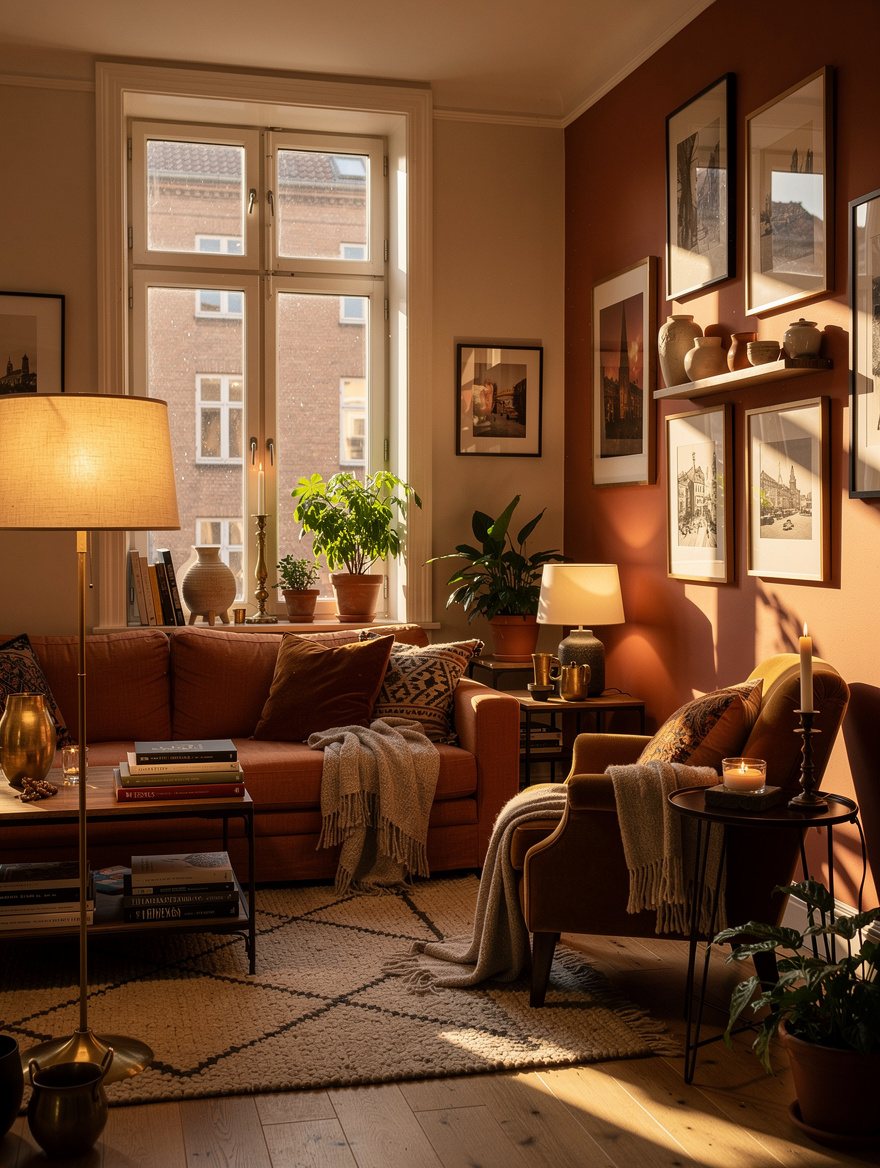
I stopped asking one ceiling fixture to carry the entire room. A pendant for the table, a reading lamp beside a chair, and a low candle or table lamp make darkness feel intentional instead of inconvenient.
Use warm-white bulbs around 2200 to 2700 K, then add dimmers where you can. The point is a usable room with softer edges, not a brightly lit room pretending it is summer.
Lower the Dining Pendant
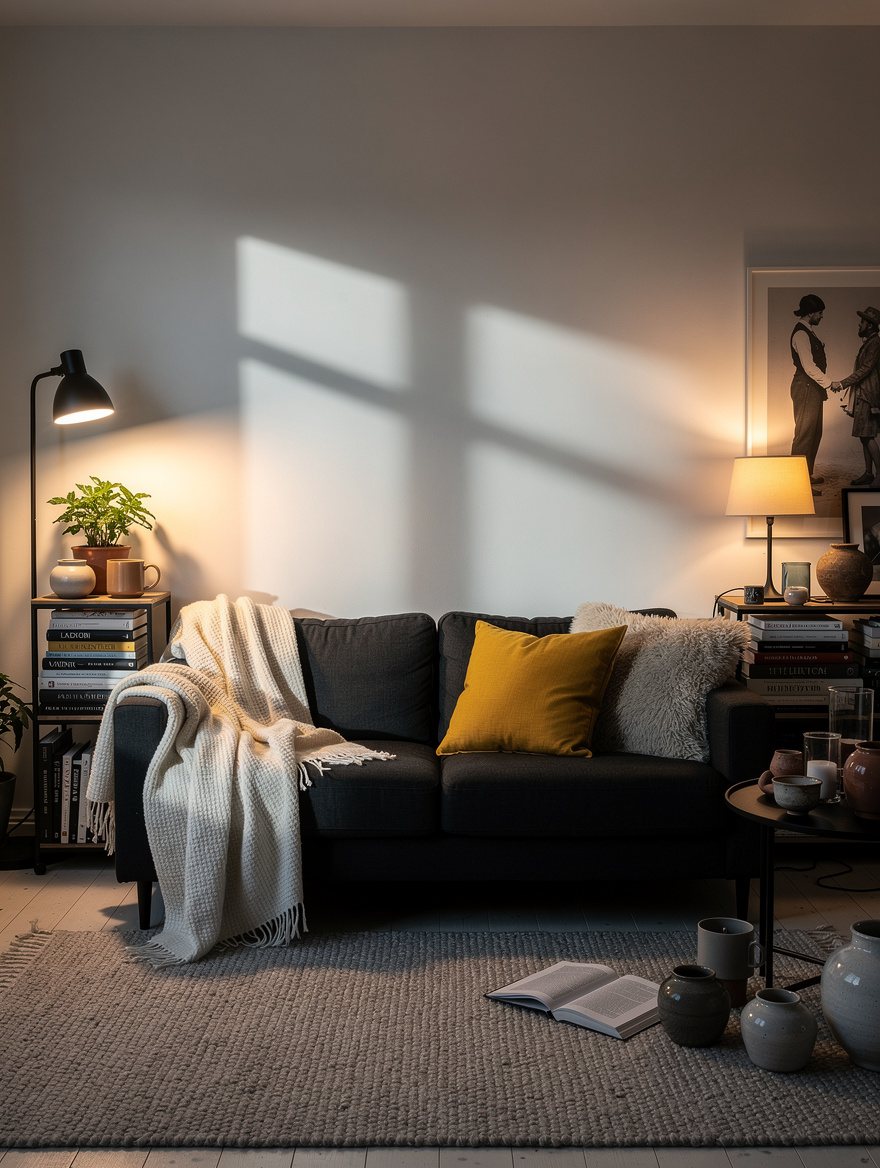
A dining lamp feels far more welcoming when it lights the meal rather than the ceiling. Hang a pendant with its lowest point roughly 60 to 75 cm above the tabletop, centered over the table.
The Louis Poulsen PH 5, at 50 cm wide, has the layered shade effect Copenhagen is known for, though it typically starts around 8,000 DKK. Its softer alternative is the HAY PC Pendant, typically from about 3,200 DKK, and both make a plain wood table look considered.
Move a Portable Lamp to Where Life Happens
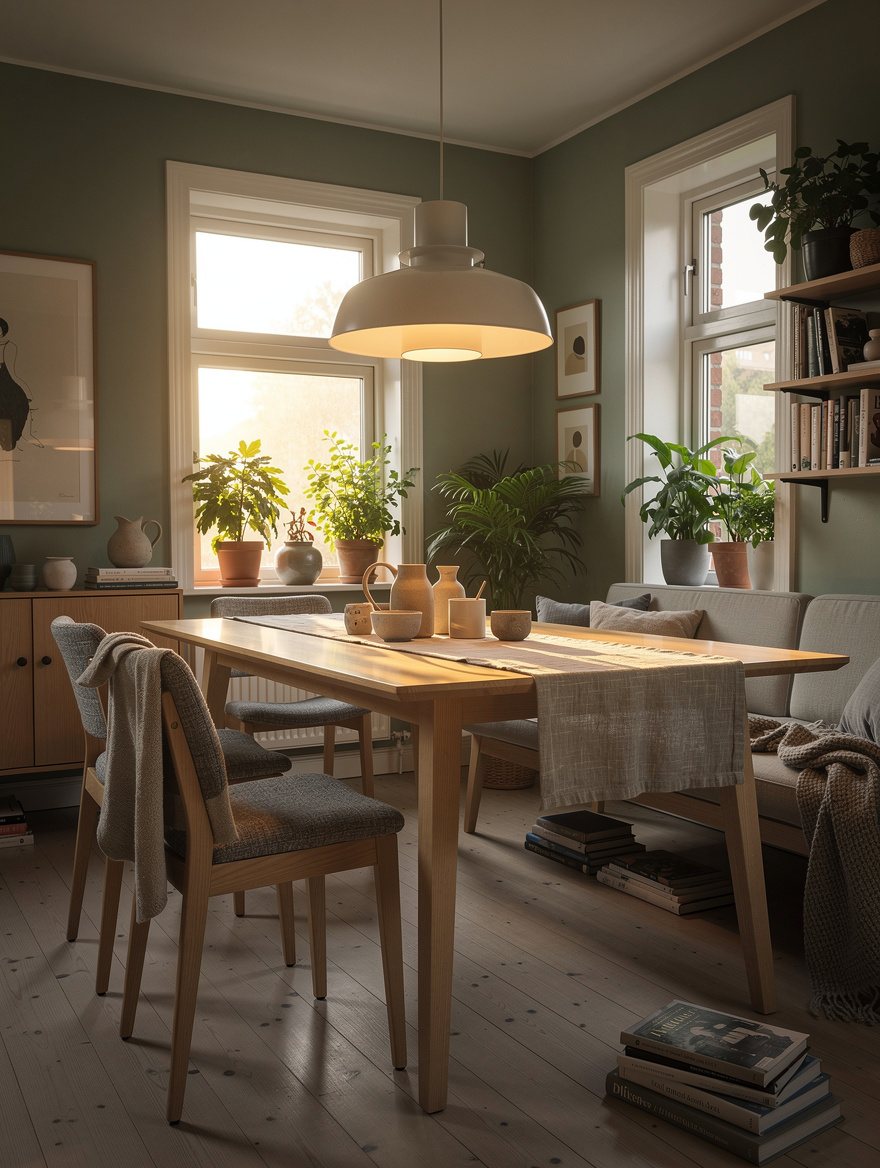
I like a rechargeable lamp because it follows the evening: bookshelf during a phone call, side table for reading, dinner table when friends linger. That small, low light changes the mood faster than any new wall color.
The natural-oak Audo Copenhagen Carrie lamp typically costs about $345 before local variation. It is an investment, but a portable warm pool is the Copenhagen habit I notice most in homes that feel genuinely lived in.
Soften Every Harsh Glow
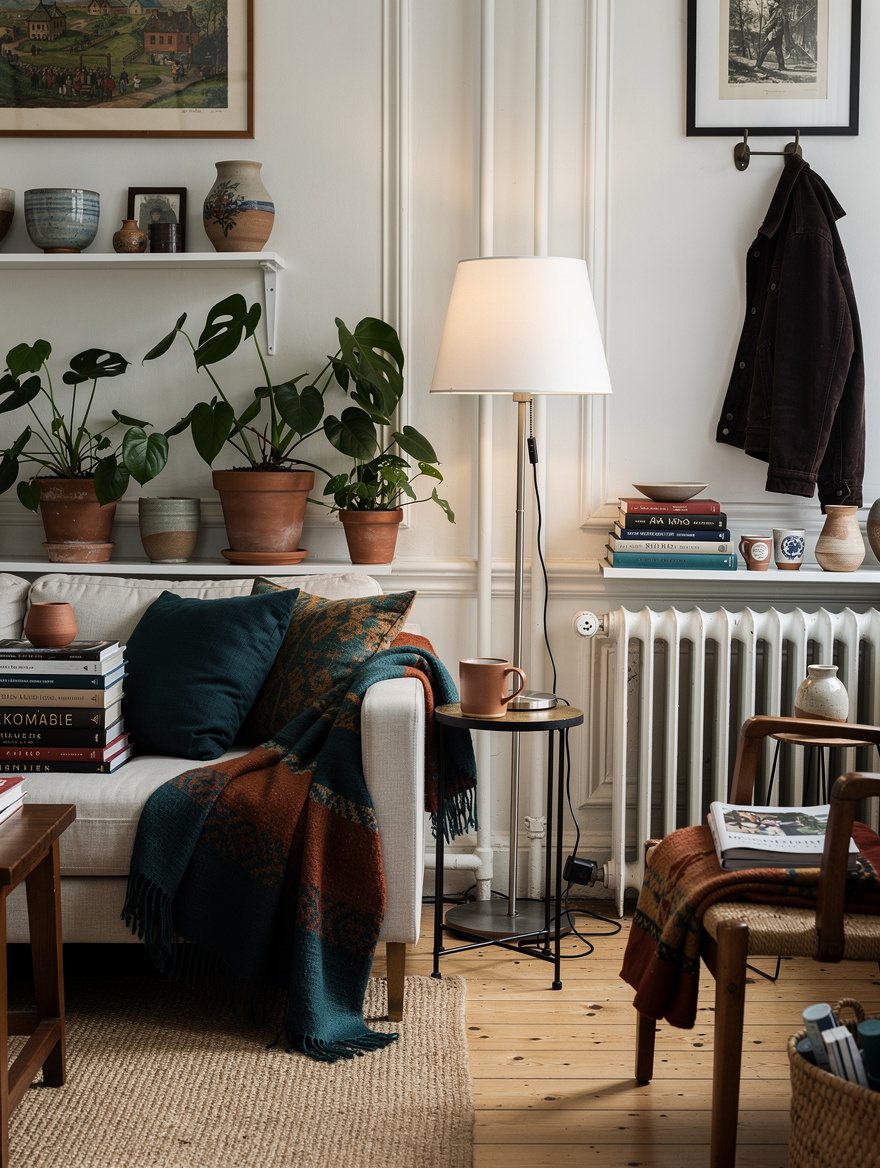
Clear exposed bulbs can look sharp when the sky is already blue-black at dinner. Paper, opal glass, textile, or layered-metal shades spread light across a surface and keep glare out of your line of sight.
A Le Klint paper lamp brings that soft diffusion without requiring a full Scandinavian redesign, and table lamps typically start around 1,200 DKK. I would skip cool white bulbs entirely here, because they flatten wood and make wool look oddly gray.
Gather Candles on One Grounded Tray
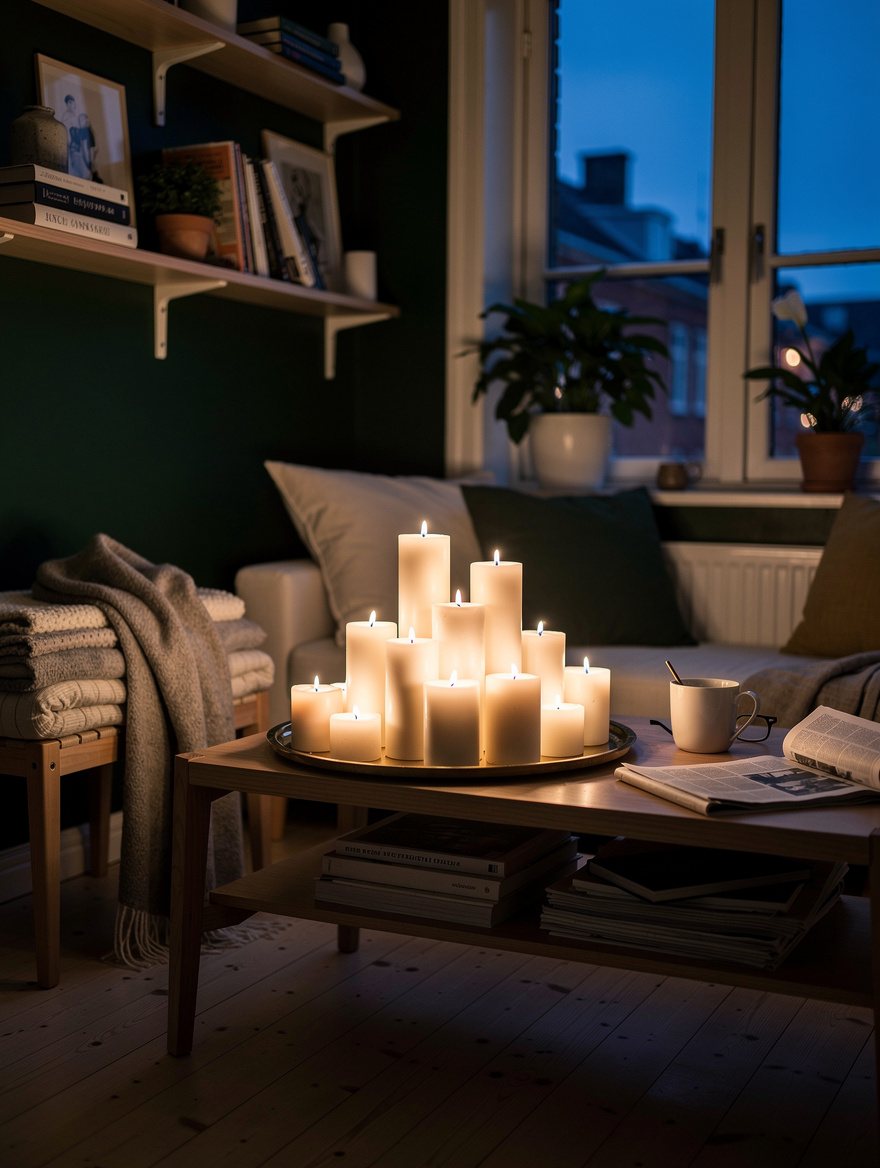
One lonely candle looks like an afterthought. A group of three to five unscented pillars on a ceramic tray gives the flame enough visual weight to anchor a coffee table or dining sideboard.
Try beeswax pillar candles with a matte stoneware dish, keeping every flame well away from throws and curtains. An accessible hygge setup of candles and a blanket can cost roughly 50 to 200 DKK, and it has more impact than another small ornament.
Claim a Real Winter Seat
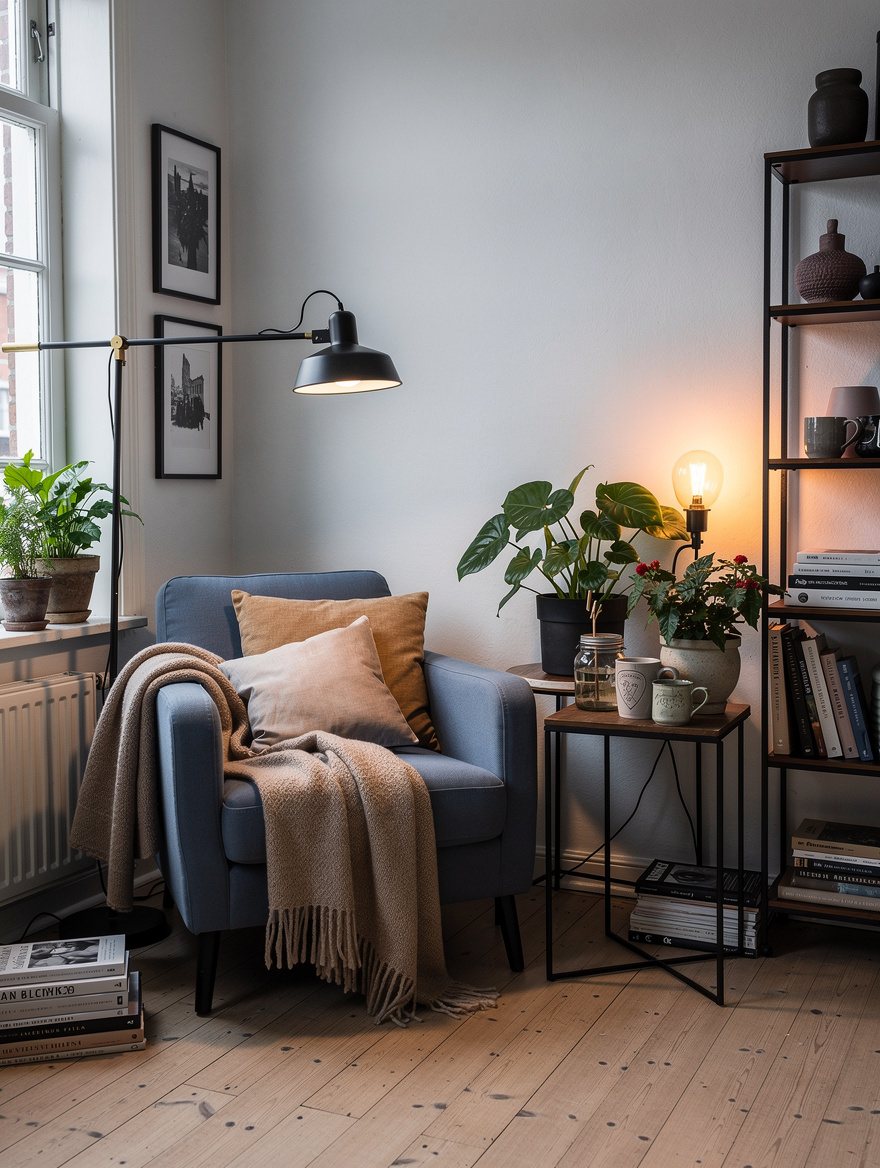
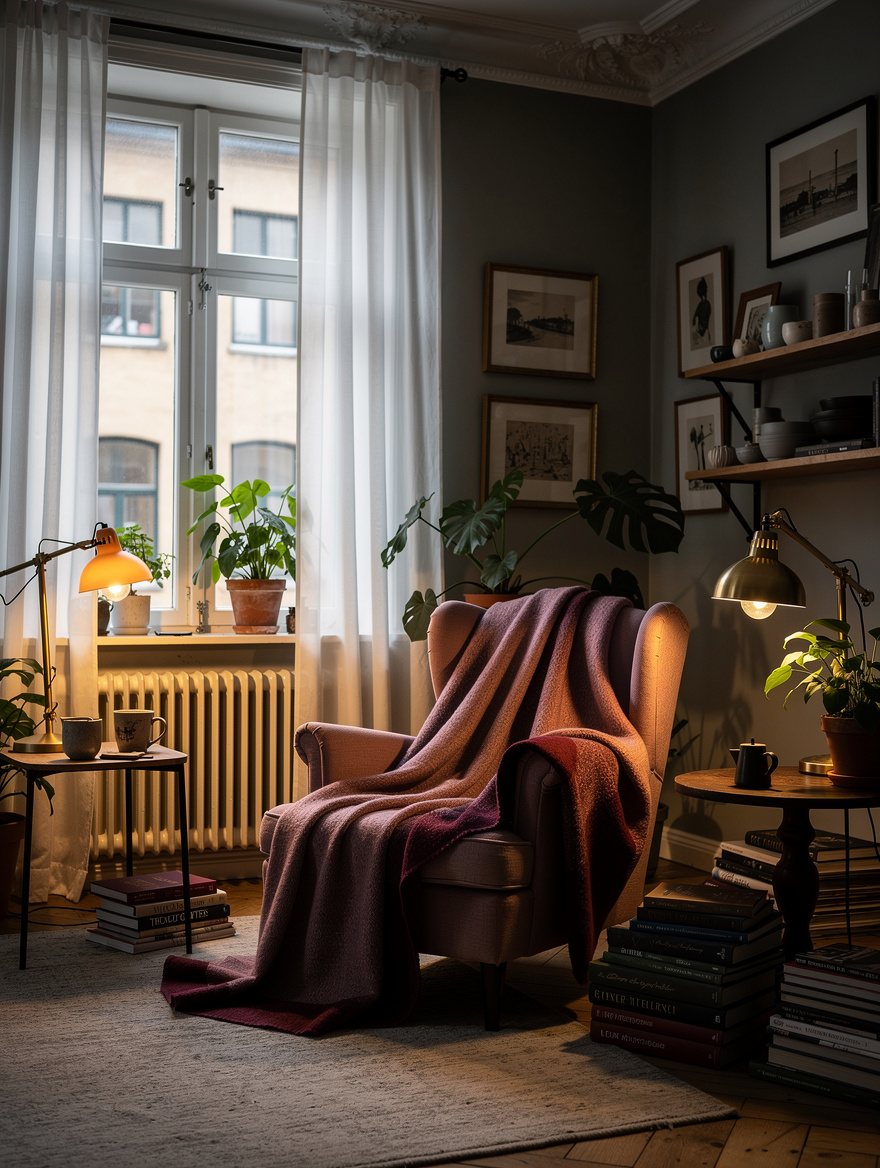
A warm room needs one chair that is ready before you are. Mine has an upholstered seat, a lamp at shoulder height, a small table for tea and a book, and a throw that never gets folded into a closet.
Allow a compact nook roughly 90 by 120 cm: a 70 to 80 cm chair, a 35 to 45 cm table, and enough room to enter it without sidestepping furniture. That modest footprint is more useful than an oversized accent chair stranded in a corner.
Match the Side Table to the Armrest
A side table should make settling in effortless, not force you to lean down for a mug every time. Choose one around 40 to 50 cm high, close to a typical chair armrest, with room for a drink, book, and lamp base.
An oak C-table from IKEA, Target, or Wayfair works beautifully when its grain is visible and the profile stays simple. I prefer a compact round or softly squared top over anything glossy, mirrored, or overly sculptural.
Keep a Properly Sized Throw Within Reach
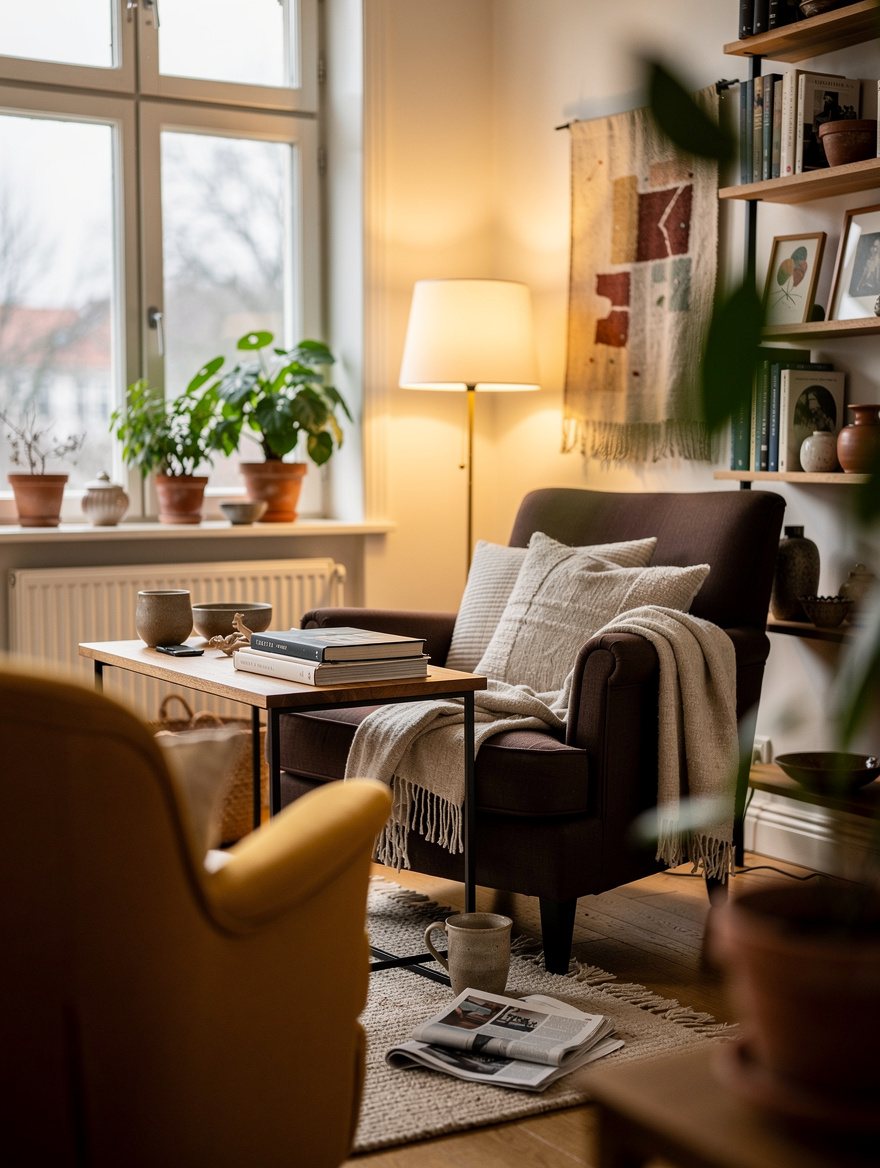
A throw is functional winter equipment, so I keep it on the chair instead of styling it into a rigid fold. About 130 by 170 cm usually covers one person well, while roughly 140 by 200 cm gives a sofa more generous coverage.
Choose wool, brushed cotton, bouclé, or a heavyweight knit that has visible texture in low light. Copenhagen design often uses restrained color, but the surface should still look rich enough to invite your hand.
Let Oak Carry the Visual Warmth
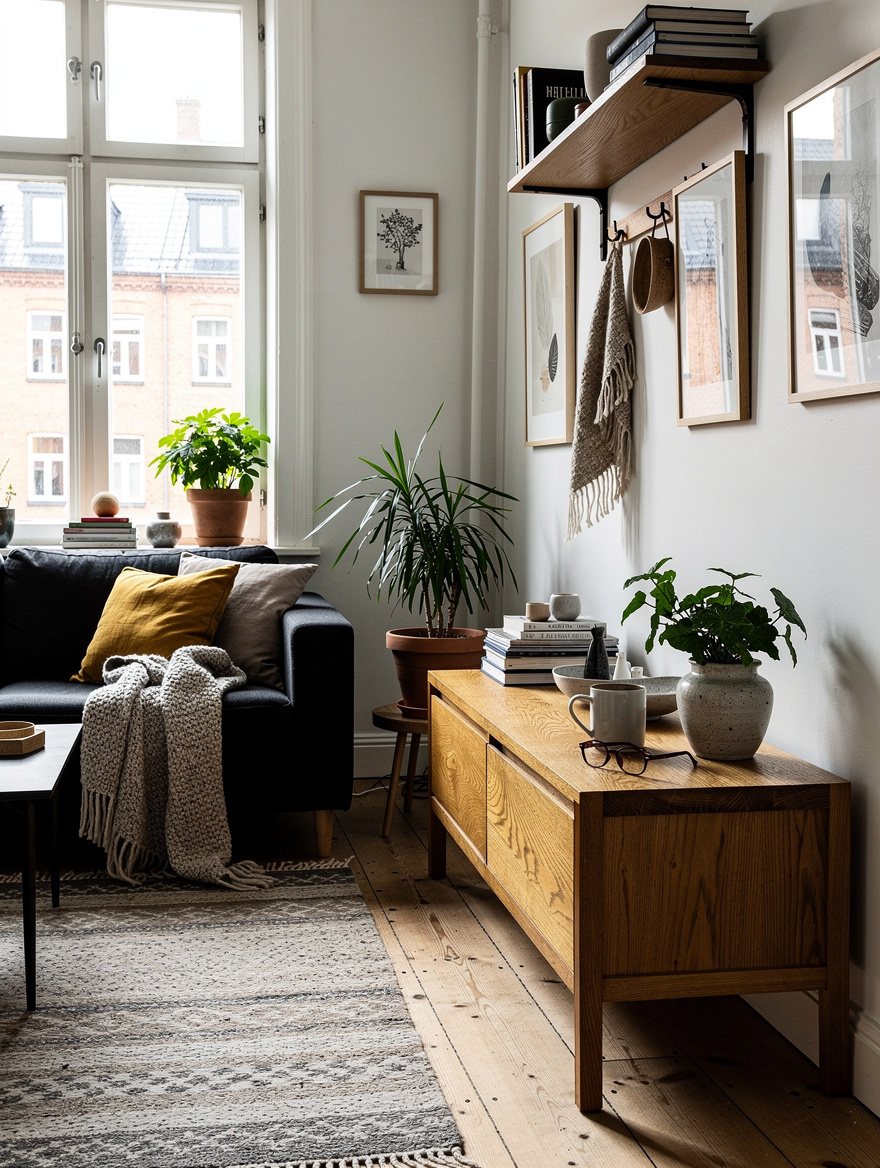
Dark months ask for surfaces that hold light gently, and oak does that better than slick white laminate. Oiled or untreated oak shows grain, gains patina, and makes even a small shelf feel less temporary.
Add a solid oak stool beside the sofa, use oak picture ledges, or choose a simple dining table with a matte finish. I would rather own one convincing wood piece than fill the room with pale imitation wood in five places.
Bring in Matte Stoneware
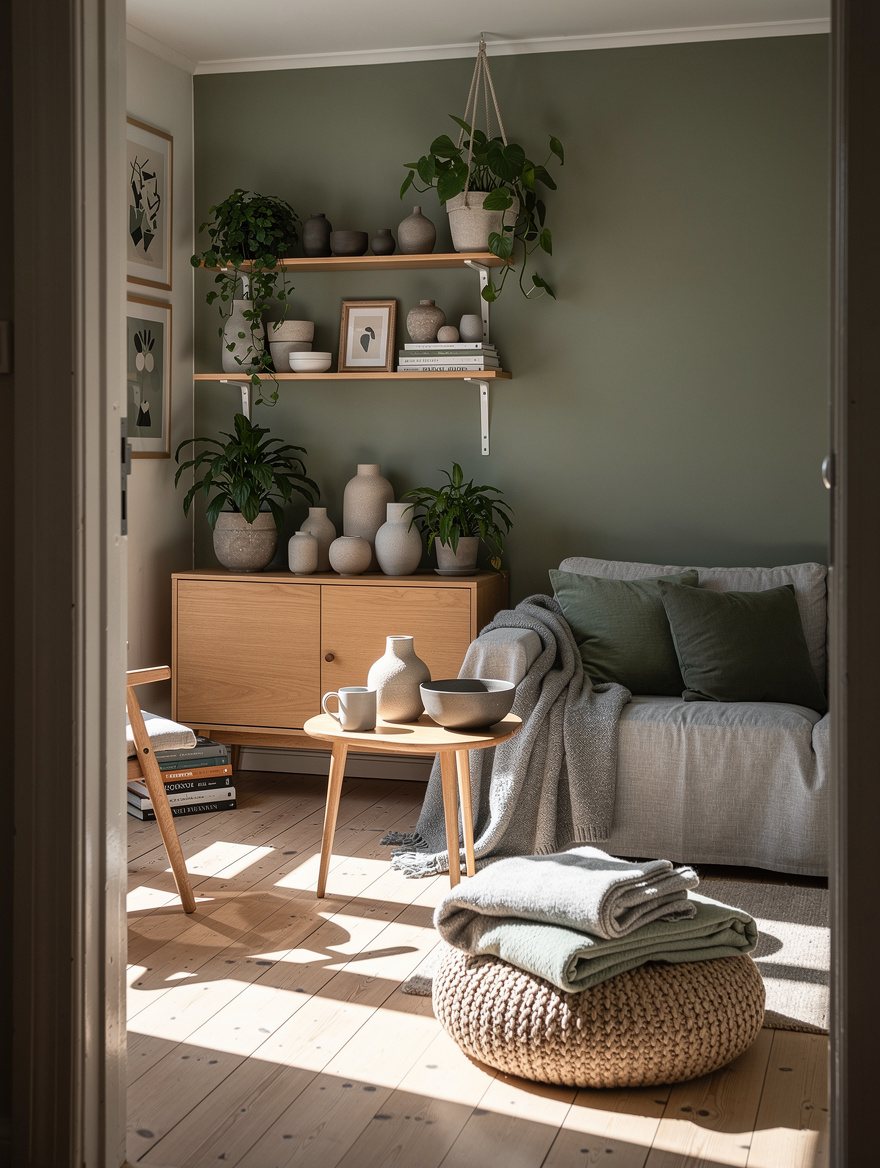
Glossy accessories reflect every lamp and can make a small room feel busy after sunset. Matte cups, bowls, candleholders, and bedside trays add quiet weight without calling attention to themselves.
A few pieces of matte ceramic stoneware from IKEA, Walmart, or Target are enough to begin. Put the mugs where you actually make tea, because a useful ritual reads warmer than a shelf arranged only for display.
Use Deep Color Against the Low Light
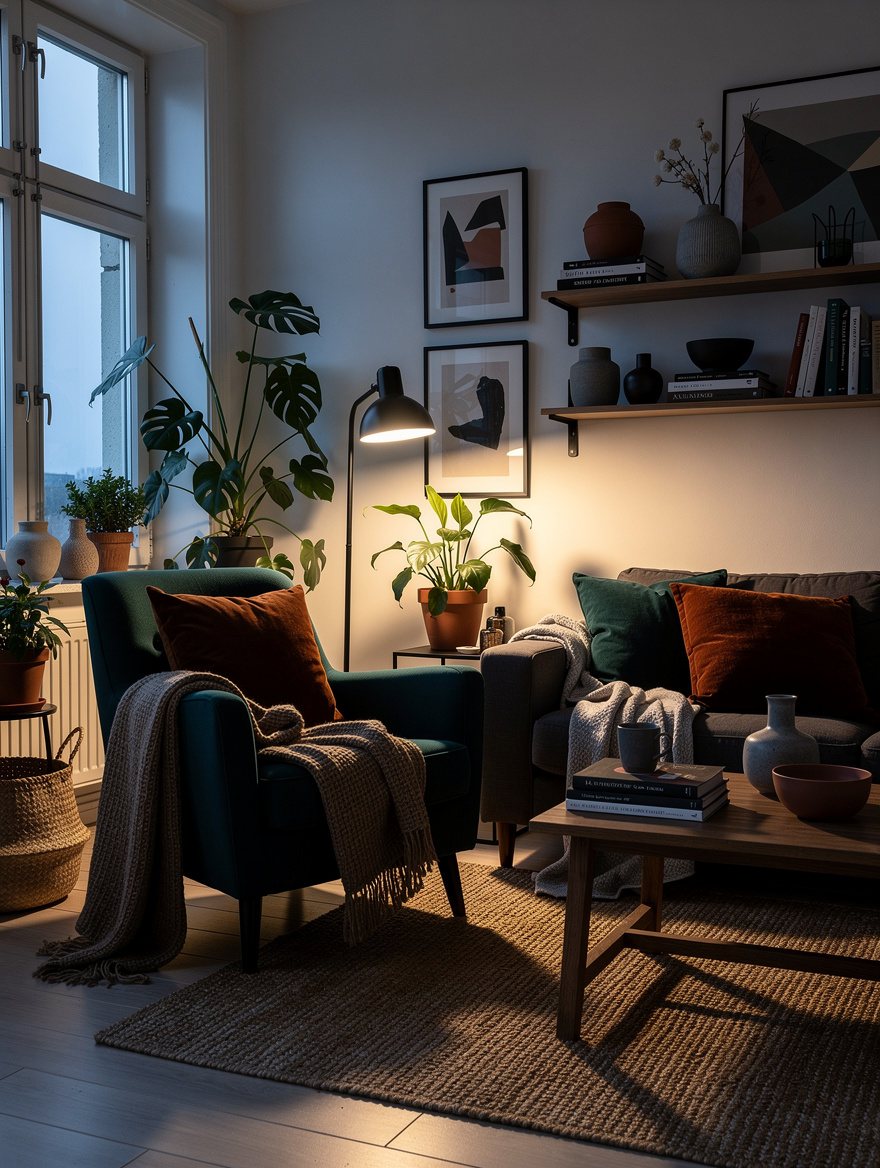
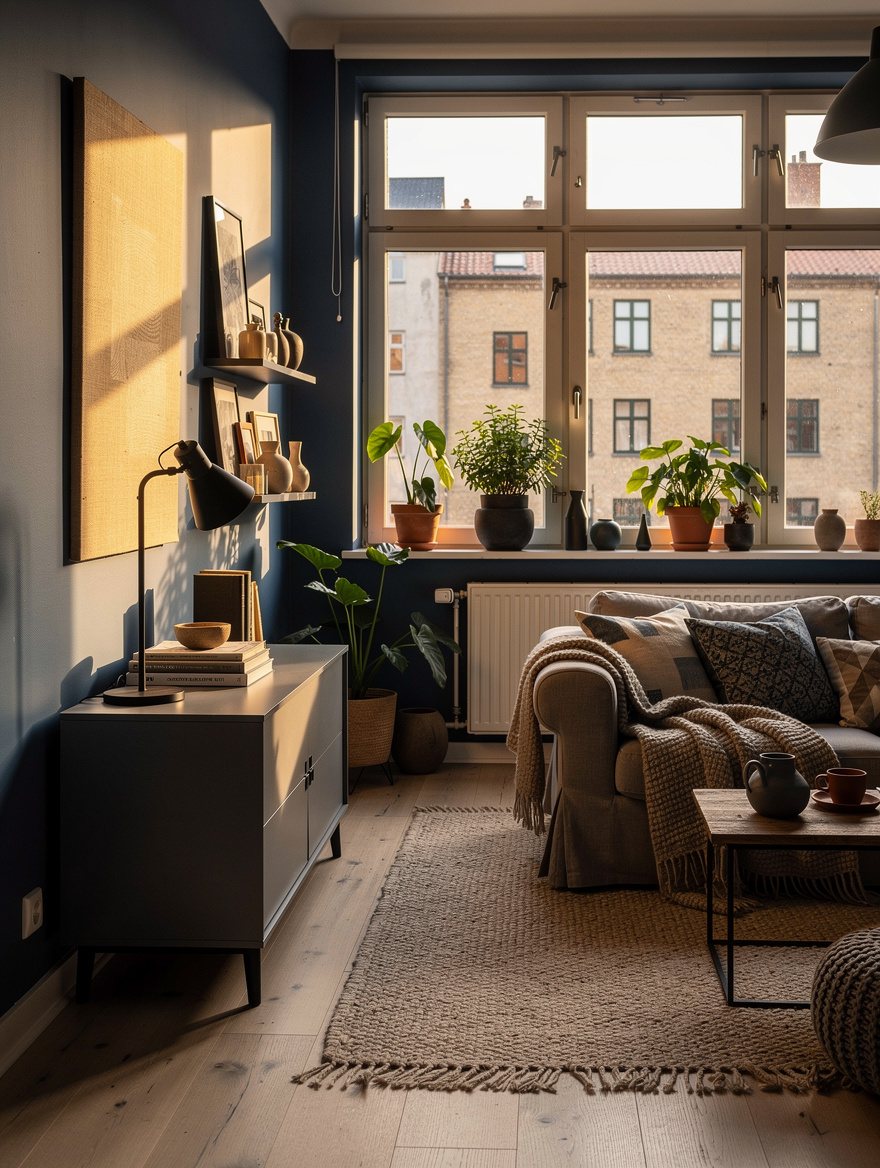
Copenhagen warmth is not a room washed in beige. Deep green, tobacco, rust, oxblood, navy, and charcoal make limited daylight feel atmospheric, especially when the materials have a dull, touchable finish.
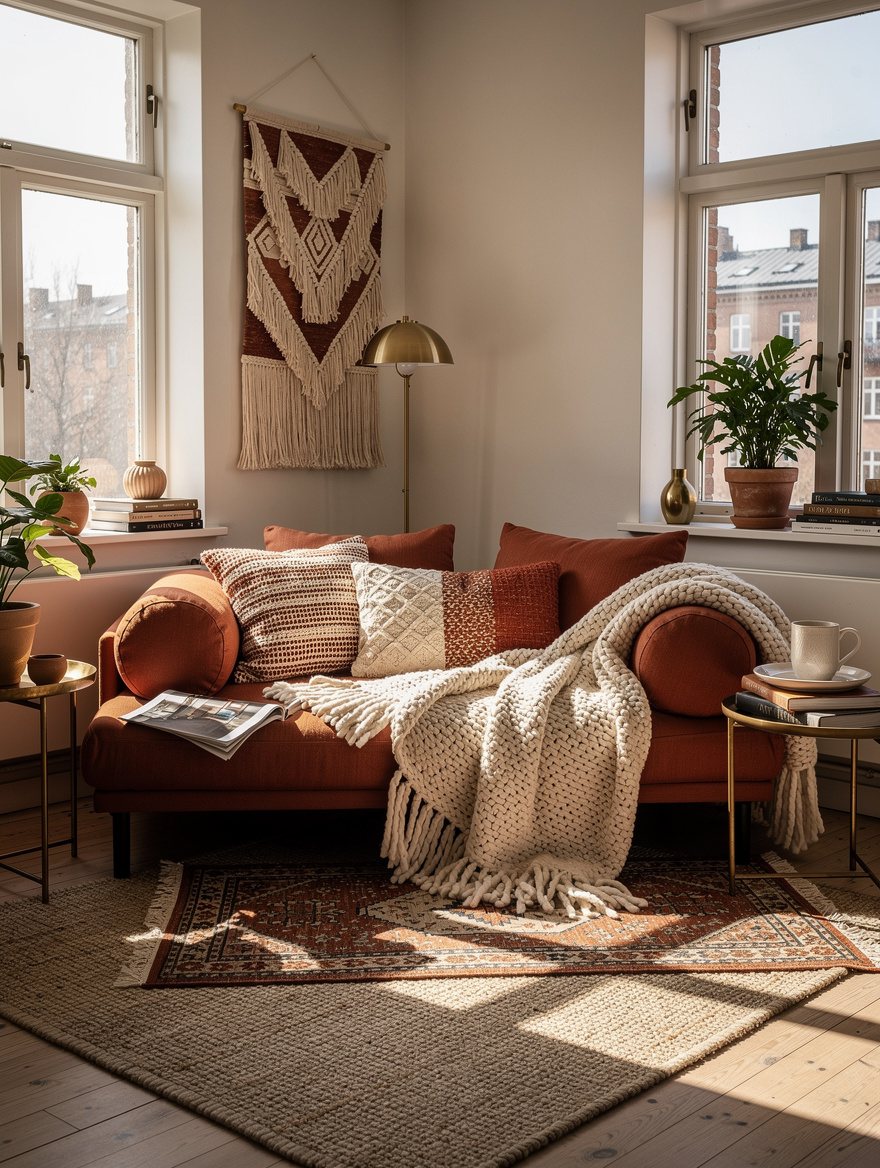
I would start with a rust velvet cushion cover or a tobacco-toned wool pillow rather than repainting the room. HAY cushion covers typically run around 200 to 350 DKK, but a similar tactile cover from Home Depot or Wayfair can give you the same useful dose of depth.
Add Texture Before More Furniture
When a room feels cold, another cabinet rarely solves it. A wool rug underfoot, a nubby cushion at the back, and a sheepskin on a wood chair absorb sound and make the space feel occupied.
Choose a wool-blend rug with a low, dense pile if the room gets heavy use. Plush synthetic shag is tempting, but it often looks tired quickly and does not have the grounded quality that makes Nordic interiors feel calm.
Make the Tea Setup Visible
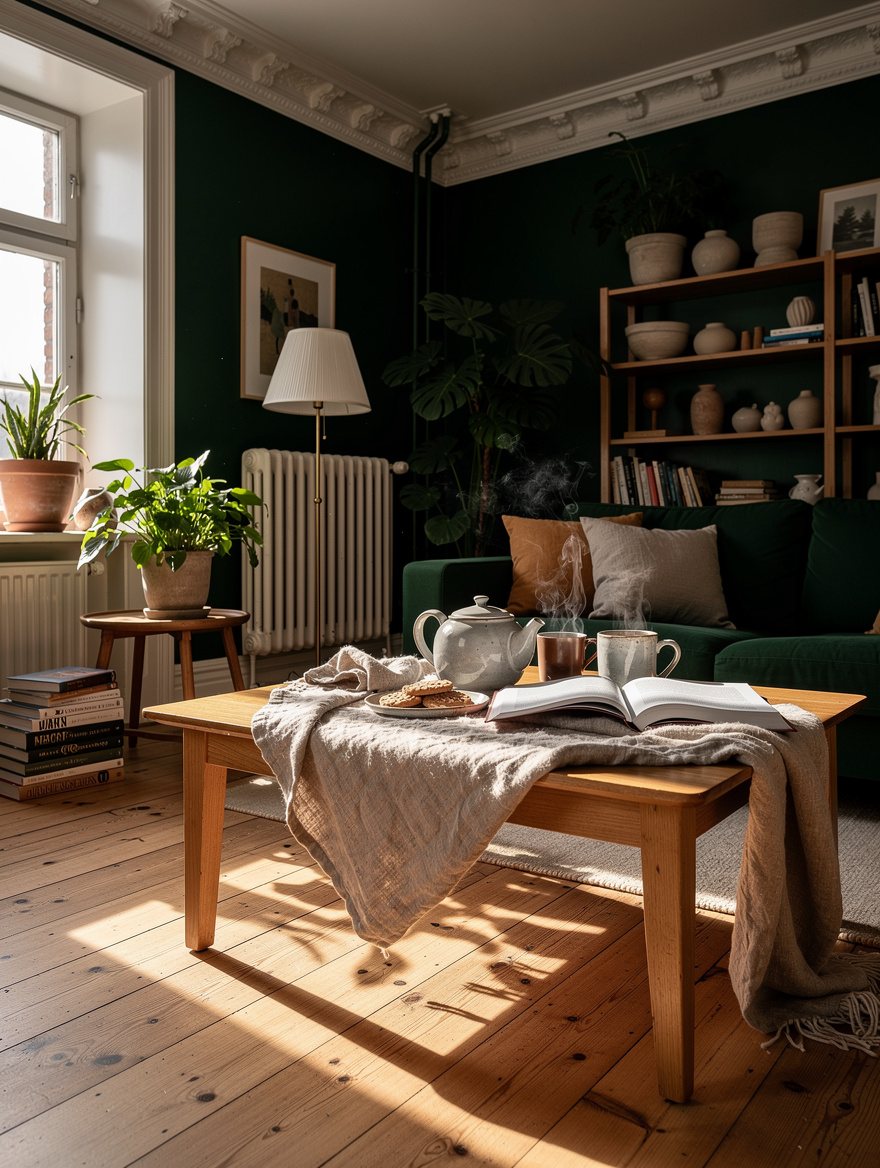
Winter rituals work only when the tools are easy to reach. I keep two mugs, tea, a small tray, and a candleholder together so making an evening drink feels like a pause rather than another task.
At HAY House, mugs typically cost around 85 to 120 DKK, though a ceramic mug from Costco or IKEA does the same practical work. The important part is giving the ritual a permanent, attractive home near your favorite seat.
Leave One Surface Quiet
Copenhagen warmth depends on breathing room. A crowded coffee table makes all the soft materials feel fussy, while one candle tray, one book, and an open patch of wood let the room settle.
Keep the oak coffee table mostly clear and rotate objects when you need a change. Warmth comes from light, texture, and use, not from covering every horizontal surface with evidence that you tried.
Keep reading
- 12 Amazon Furniture Finds That Make Studio Apartments Feel Bigger
- 14 Ways to Make Your Bedroom Feel Like an Aman Resort for Less
- 14 Parisian Small-Flat Tricks That Make Every Room Feel More Elegant
Start tonight with the chair you already use most: place a warm lamp beside it, add a 130 by 170 cm throw, and clear a spot for your mug. Once that one seat works after dark, the rest of the room will tell you what it needs.