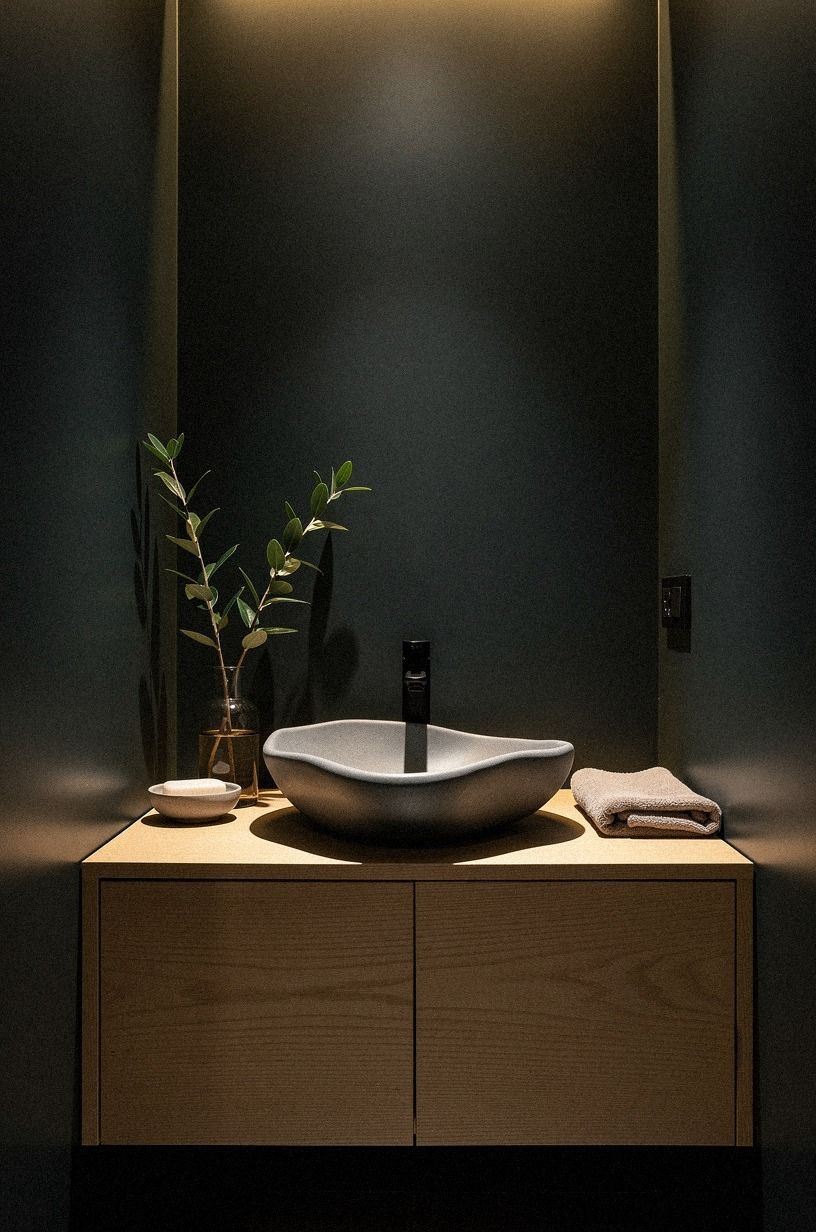
I Made My Modern Powder Room Feel Warm, Without Losing Its Clean Look
15 october 2026A modern powder room makeover can stay clean and still feel warm. I learned that after trying pale paint and brighter bulbs, which made mine feel sterile. One deeper color, softer light, and a few honest textures changed it. The room finally felt inviting.
- Paint the walls with a deeper modern color
- Float the vanity for the Air-Gap Effect
- What the Three-Height Light Stack does
- Choose a Rounded Mirror Over a Sharp Rectangle: Curves Against Hard Lines
- Keep the Two-Metal Rule
- Anchor the sink with a cerused oak detail
- Hang Towels in the Warm-Texture Ladder: Softness Without Clutter
- What the Quiet Counter Rule removes
Design note: Start with the deeper wall color, then solve the lighting, mirror, and counter clutter. Those decisions will shape everything else.
Here's what it looked like before
The room had the full starter-home package: flat white walls, a builder-grade vanity, a small mirror, and lighting that made every surface look blue. The floor was serviceable, but it didn't give your eye anywhere to rest. My powder room looked tidy at first glance and chilly in person.
I didn't want a dramatic renovation. You may know that feeling, when your budget's limited but your patience is thinner.
I kept the plumbing, kept the vanity, and worked around the existing floor. That decision saved time, and it forced me to make every visible choice more intentional.
You can use the same restraint in a small bathroom refresh.
- Paint the walls with a deeper modern color
- Float the vanity for the Air-Gap Effect
- What the Three-Height Light Stack does
- Choose a Rounded Mirror Over a Sharp Rectangle: Curves Against Hard Lines
- Keep the Two-Metal Rule
- Anchor the sink with a cerused oak detail
- Hang Towels in the Warm-Texture Ladder: Softness Without Clutter
- What the Quiet Counter Rule removes
- Add art instead of another open shelf
- Mix modern tile with a handmade surface
- Style the Doorway With the Threshold Contrast: Match or Deliberately Separate?
- Build the modern chic powder room around one focal point
1Paint the walls with a deeper modern color
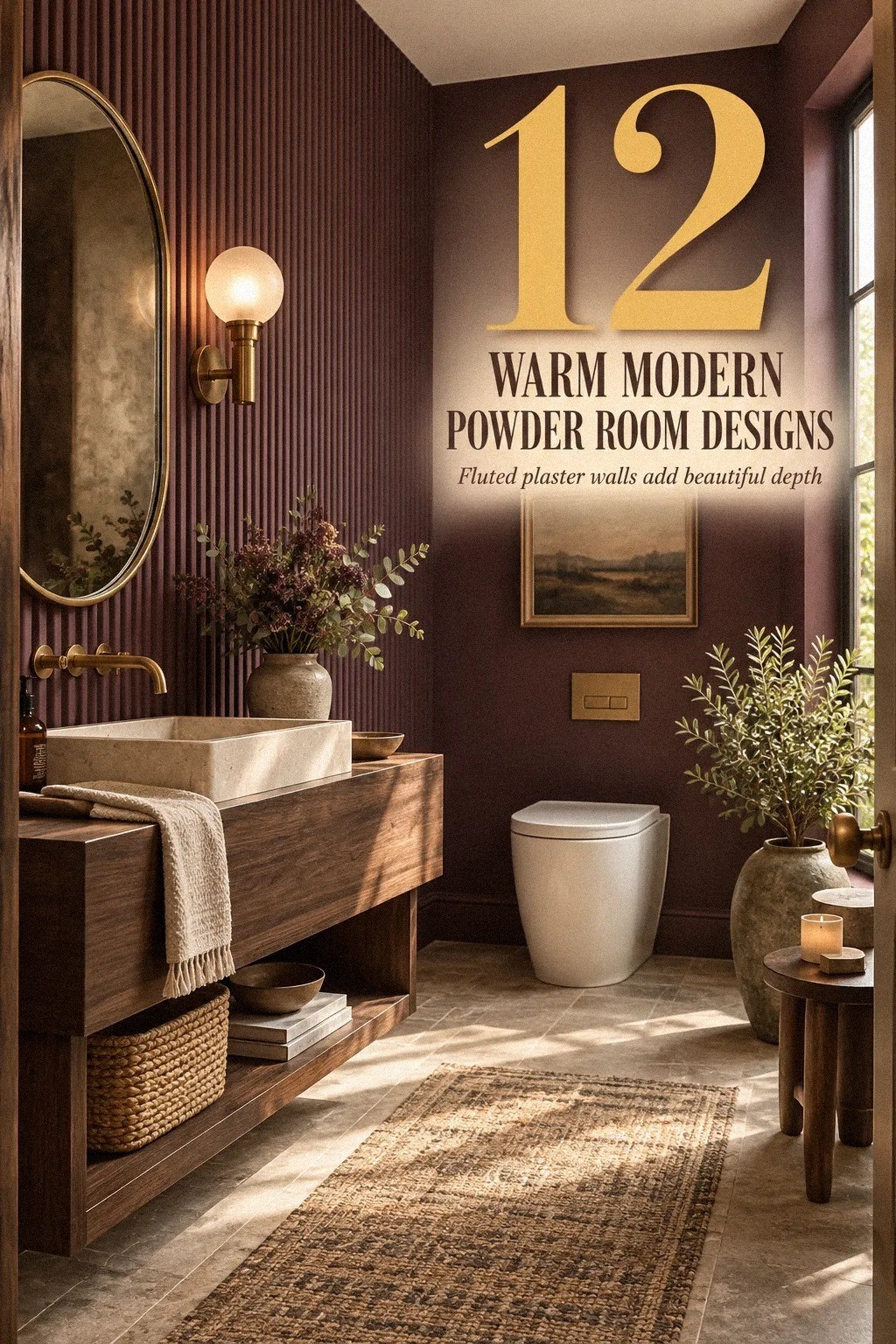
I started with a deep plum wall color, because the room needed depth more than it needed another white surface. The color looks moody near the ceiling and almost soft beside the mirror.
If you're working with a small powder room, don't assume pale paint will make it feel larger. A richer wall can make the boundaries less noticeable.
You should test the color beside your light fixture, not only near a sunny window. My first sample looked elegant in daylight but turned flat at night.
I left two patches up for a full day, and the darker one won. Your room needs to work at 8 p.m., too.
I used a washable matte finish and kept the trim slightly lighter. The result felt modern without becoming theatrical.
If you're nervous, paint one wall first. You'll see whether the color gives your room warmth or simply makes it feel smaller.
For a lighter direction, compare the plum with warm bathroom paint ideas before you commit. The important thing isn't choosing the darkest shade. It's choosing a color that still has character after sunset.
A second sample worth testing is Benjamin Moore Wrought Iron HC-105. It has enough gray to feel architectural, but it won't make the room look like a black box. I kept the ceiling white because the room already had limited height.
2Float the vanity for the Air-Gap Effect
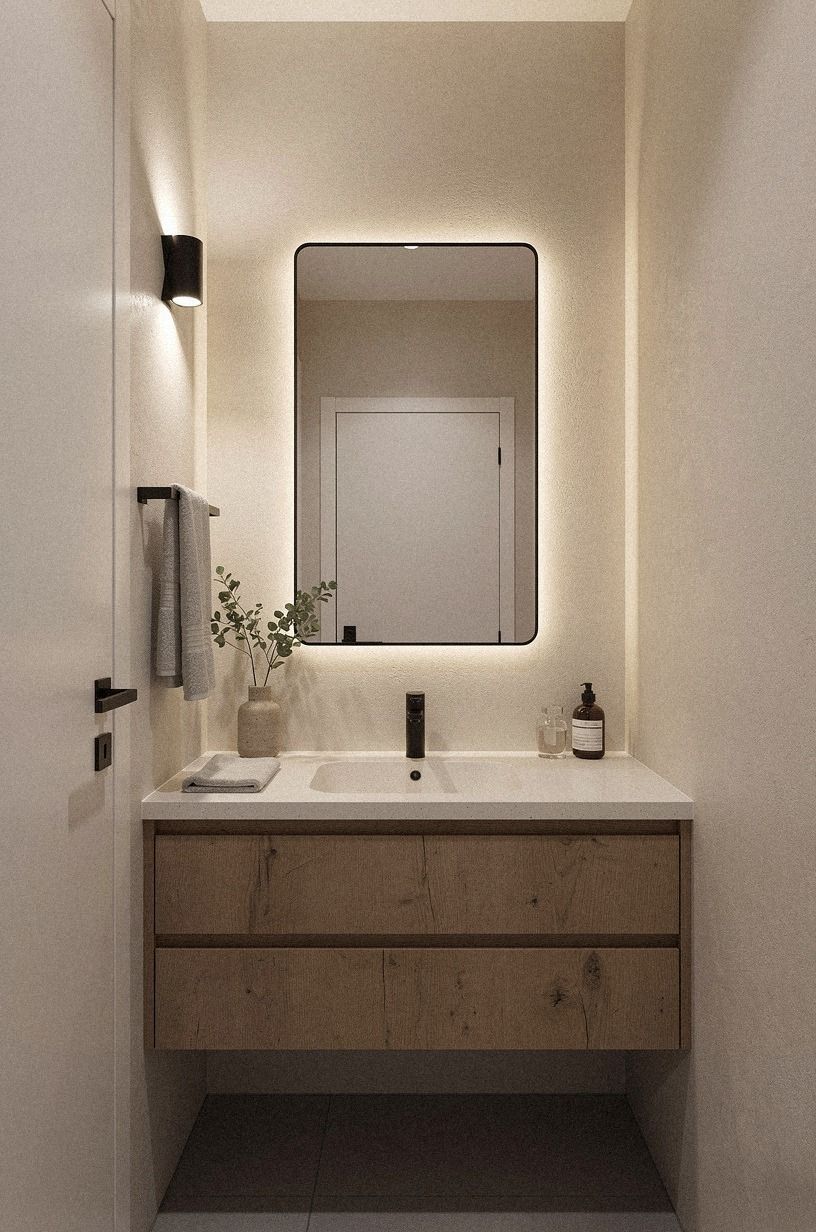
The vanity was visually heavy, so I created a lighter look by clearing everything around its base. A wall-mounted walnut vanity with an oversized-chip terrazzo surface would give you the same floating effect if you were replacing yours, but I kept my existing cabinet and used a deep navy finish with a warm walnut accent to break up the mass.
That small change mattered because your eye could finally see more floor. I also raised the visual center by choosing a slim faucet and removing bulky countertop accessories.
You don't need a new cabinet to make the room feel less crowded. You need fewer low, heavy shapes.
I made the mistake of storing extra towels beneath the sink. They looked practical, but they made the room feel packed.
Now your guest can see the open floor, the cabinet reads as cleaner, and the space has a calmer rhythm. Soft shadows help, too.
If you're comparing layouts, the focal-point approach will help you decide whether the vanity should disappear or make a statement.
I also replaced the bulky cabinet pulls with slim bar hardware. That tiny change didn't alter the footprint, but it made the vanity feel less builder-basic. The room benefited from visual air more than it would've benefited from another storage basket.
3What the Three-Height Light Stack does
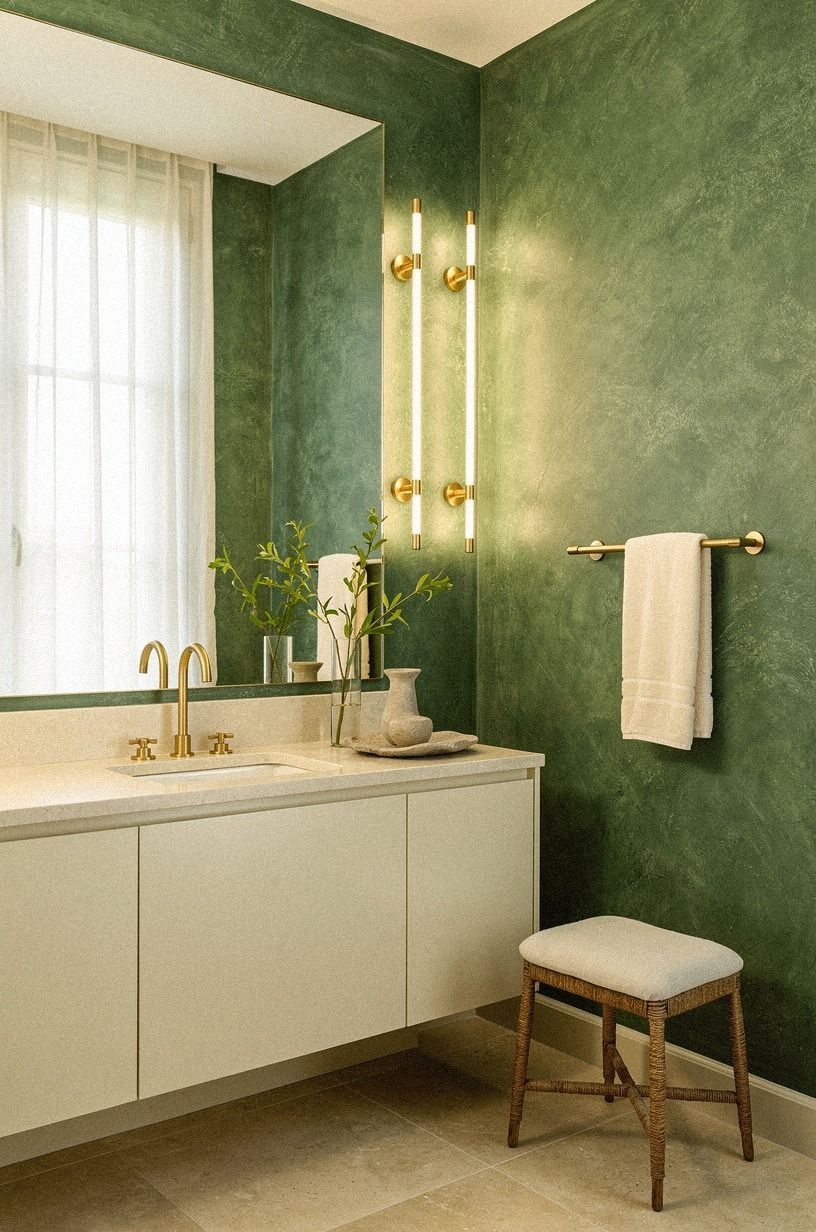
The old ceiling fixture was doing too much work. It cast a hard pool of light directly onto the sink and made the emerald-and-cream walls look even colder. That was the first surprise!
I kept one overhead source for general light, then added a wall sconce at face height and a low glow from the hallway. The three levels gave the room depth without making it feel decorated for a hotel.
I chose a 2700K LED bulb with a high color-rendering index. Your skin should look natural, and the wall finish should keep its undertone. If the bulb makes every finish look gray or orange, it isn't doing its job.
A small frosted glass globe softened the light better than a clear shade. I also put the sconce on a dimmer, which meant I could keep the room gentle at night and brighter during cleaning. Good lighting changes the whole room!
The hand-applied Venetian plaster kept the cream surface from feeling flat, while the gold detail gave the warmer light somewhere to land. For more guidance, I used the same priorities I would use in broader bathroom lighting ideas: warmth first, glare control second, and decorative style after that.
I chose a CRI 90 bulb because the warmer temperature alone wasn't enough. High color rendering kept the green from turning muddy and made the gold finish look balanced. Your lighting should flatter the materials you already paid for.
4Choose a Rounded Mirror Over a Sharp Rectangle: Curves Against Hard Lines
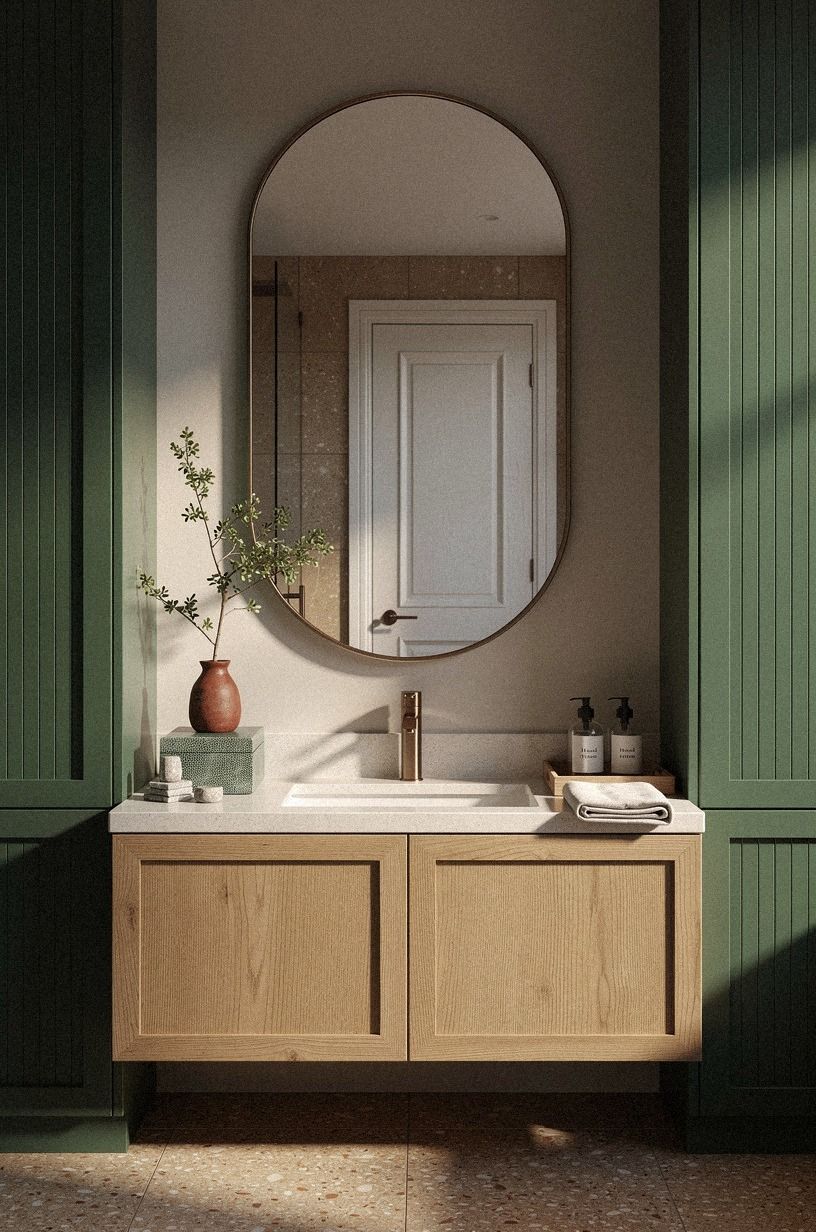
The original mirror was a narrow rectangle with a bright chrome edge.
5Keep the Two-Metal Rule
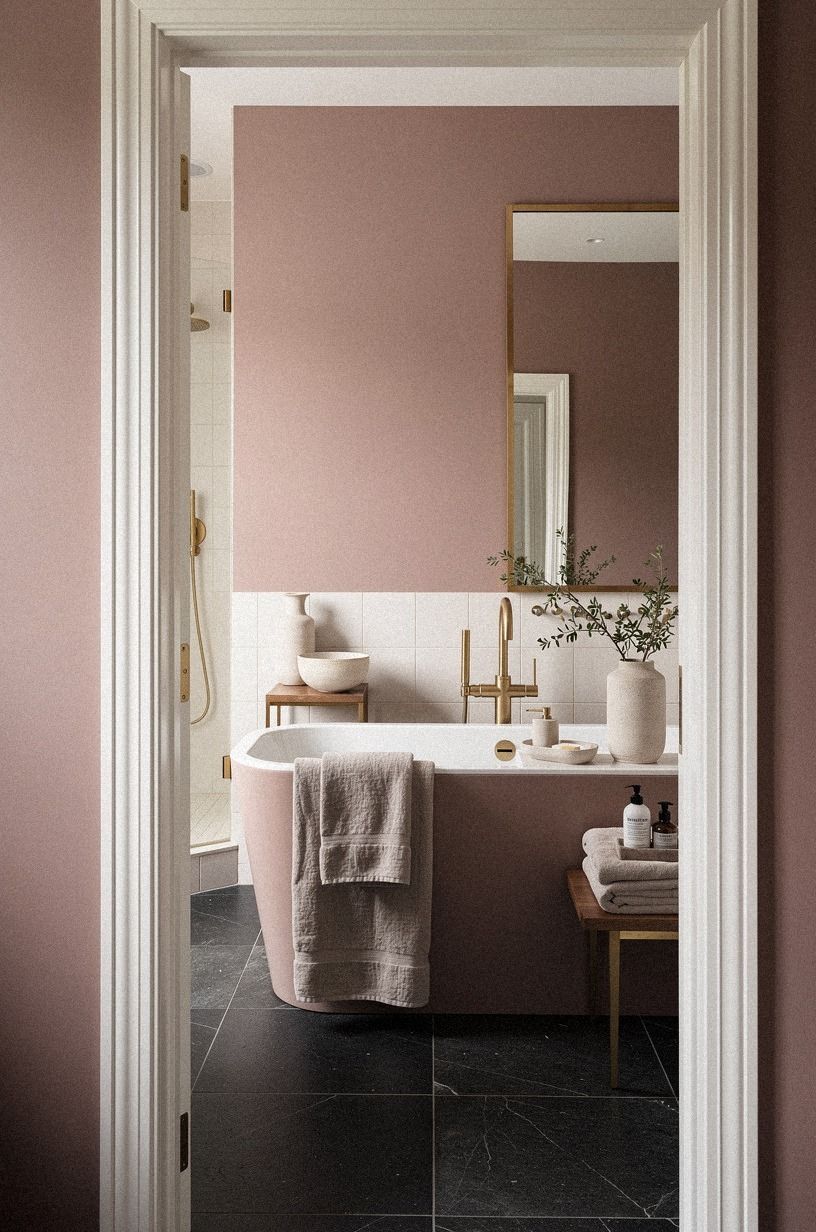
I wanted warmth, but I didn't want the powder room to look like a brass showroom. I used unlacquered brass for the faucet and mirror detail, then kept the existing dark hardware on the door. That became my Two-Metal Rule: one warm metal, one quiet supporting metal.
You can use the same approach if your room already has chrome. Keep it in place, then add brass through one visible fixture or a small frame. Your eye will read the contrast as intentional if the finishes repeat at least twice.
I almost changed every handle, but that would've been wasted money. The brass faucet catches the light while the darker latch disappears.
If you're starting from scratch, I'd skip polished gold. It can look loud beside deep plum paint, while unlacquered brass develops a softer surface over time.
This approach pairs well with the restrained palette in the rounded-mirror plan, where every finish has room to breathe.
The supporting finish didn't have to match perfectly. My existing matte-black latch already grounded the room, so I let it stay. Repeating two metals was enough to make the difference feel planned instead of accidental.
6Anchor the sink with a cerused oak detail
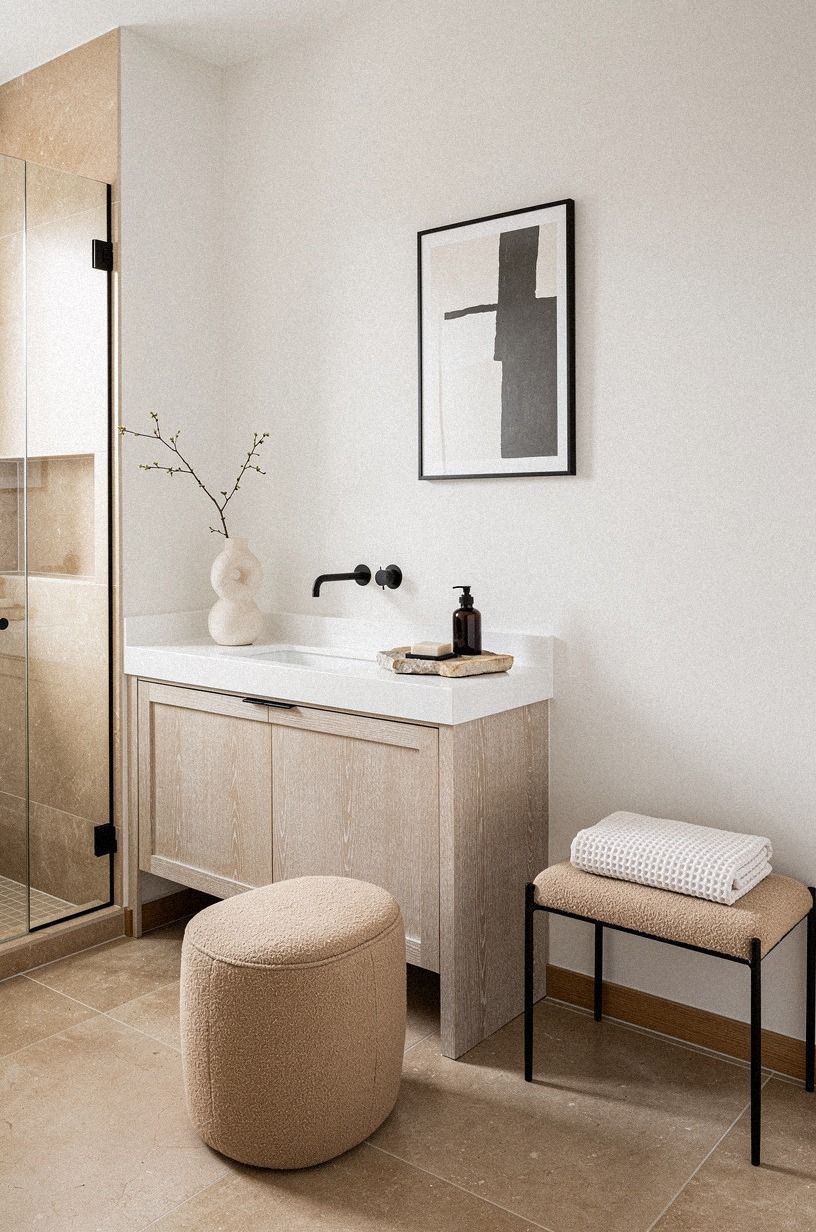
The room needed a soft natural material, so I added a compact stool upholstered in organic bouclé beneath the mirror. Its looped texture keeps the room modern, but it stops the hard surfaces from feeling slick and sealed.
You can use a stool, a small bench, or a textile-covered frame. The piece doesn't need to be large.
Your goal is to introduce one surface that catches light unevenly, unlike painted drywall or polished metal. I chose a washable upholstery so the room could stay practical.
I once used a glossy orange-toned accent in another bathroom, and it made the white paint look yellow. This time I chose a warm cream textile with a camel undertone. It was the better call.
Your soft material should relate to the floor or door, not fight them.
A small bouclé note can also support the Warm-Texture Ladder without making the room feel rustic.
I kept the stool compact, so it wouldn't turn into accidental storage. That boundary mattered. The texture adds warmth, but it doesn't invite a row of products to collect beneath the mirror.
7Hang Towels in the Warm-Texture Ladder: Softness Without Clutter
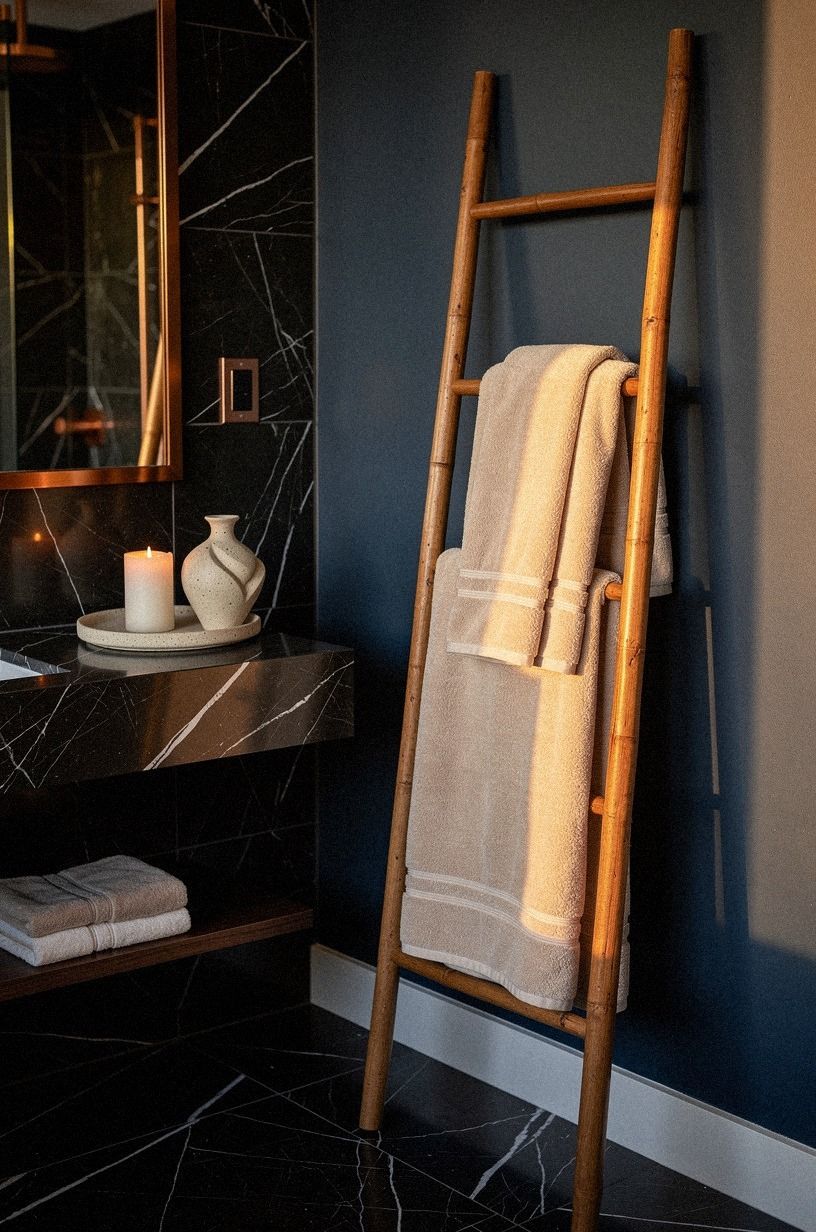
A powder room can feel cold when every textile is thin and decorative.
8What the Quiet Counter Rule removes
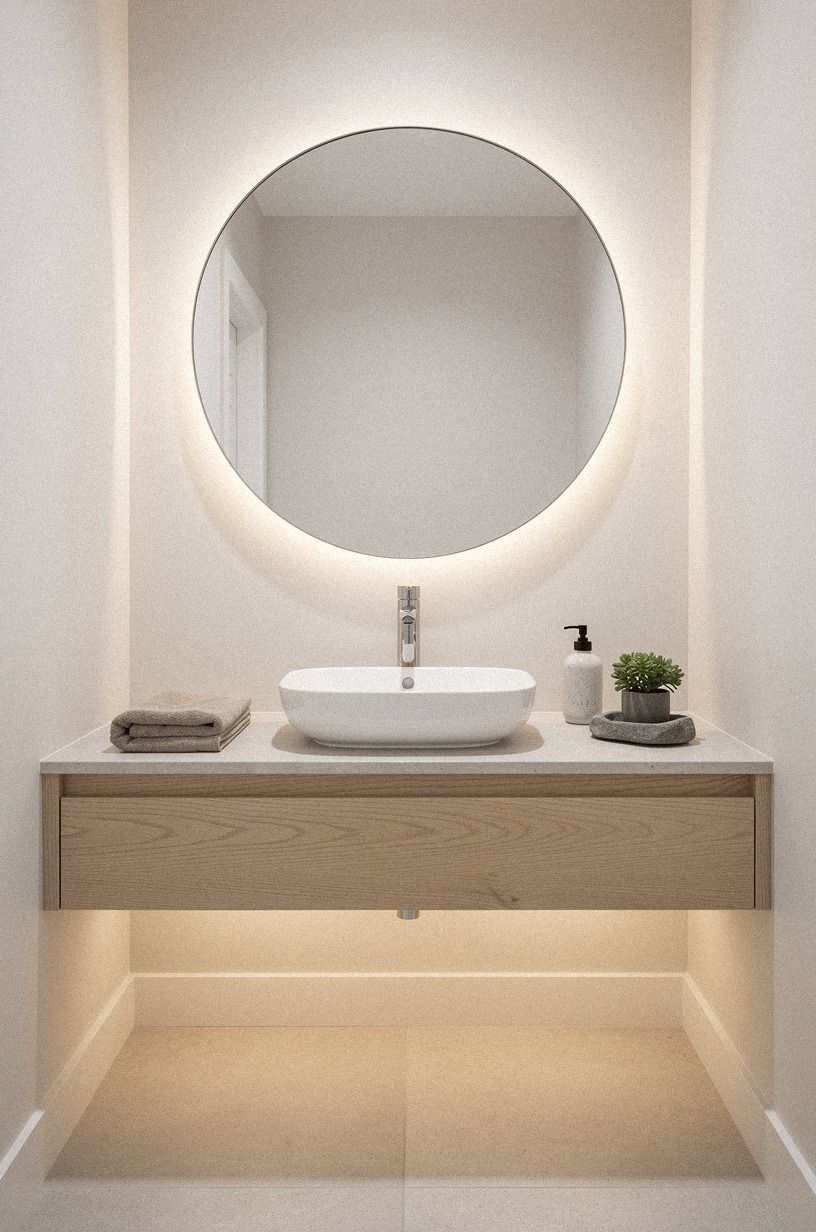
My counter used to hold soap, lotion, a cup, and a little bowl full of things nobody used. It was technically organized, but the surface still felt noisy.
I kept only a simple soap tray, a refillable dispenser, and one small object with a useful purpose. Everything else moved into the vanity. The room immediately looked wider because the eye could travel from the mirror to the sink without stopping at six unrelated items.
Your counter doesn't need to be empty. It needs a clear hierarchy. Put the item you use most within reach, group smaller pieces on one tray, and remove anything that exists only because there was an available surface.
That rule supports the focal point instead of competing with it. In a small room, editing is a design decision!
I chose a refillable dispenser because its shape was quiet and the label could face the wall. Even practical objects affect the room when they're placed at eye level. Hide the visual noise, not the things people actually need.
9Add art instead of another open shelf
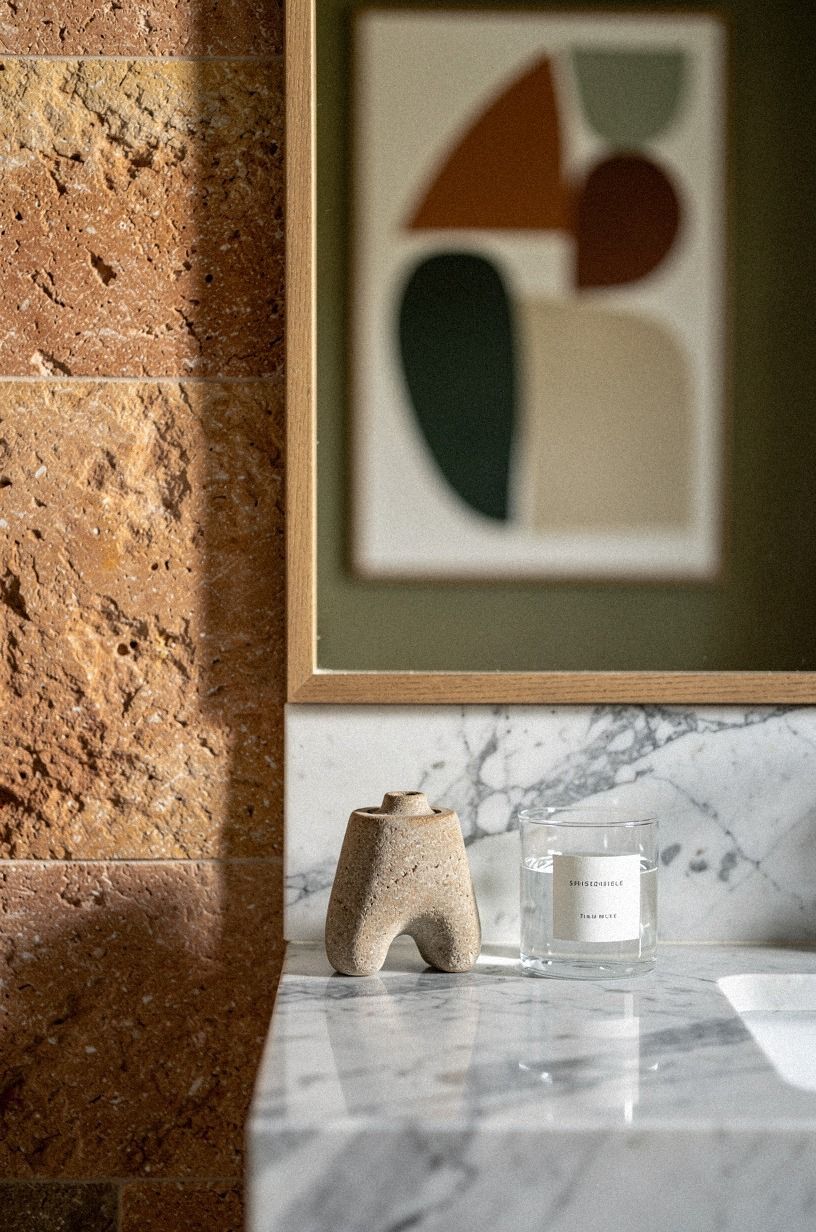
I wanted personality, but an open shelf would've collected dust and made the room feel busy.
10Mix modern tile with a handmade surface
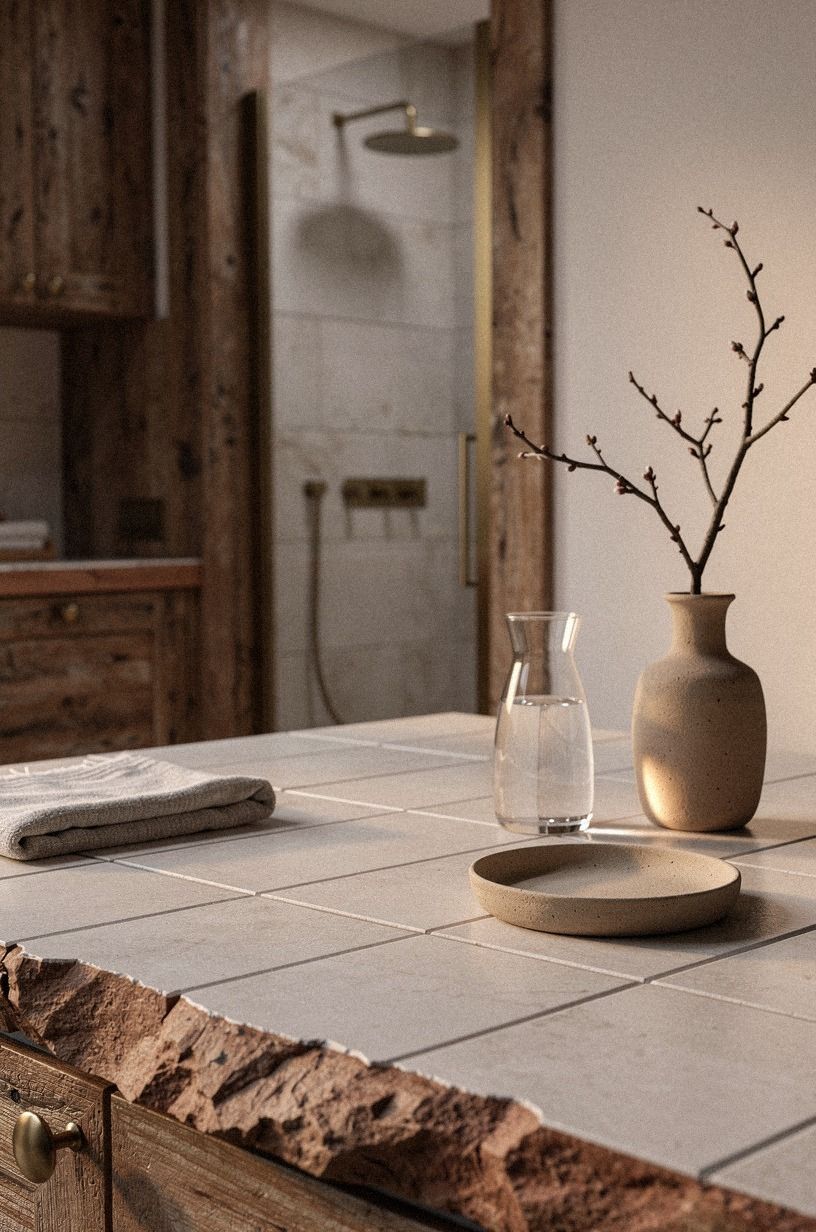
The existing backsplash was plain, so I added a small strip of clay-toned handmade tile beside a reclaimed weathered teak detail. Its uneven surface catches the light and makes the clean room feel more organic.
You don't need to tile every wall to get that effect. A narrow splash zone can bring texture, especially if your vanity and mirror are simple. Your installer should check the wall first, because a crooked surface will show around irregular tile.
I considered glossy white subway tile, but it would've repeated the hard, regular lines I was trying to soften. The handmade tile won because each piece has a slightly different face.
It feels refined from across the room and handmade up close. That tension keeps modern design from feeling flat.
If you're estimating materials, compare the makeover budget before ordering tile. A small area can still become expensive when installation is involved.
I used a pale linen-toned grout instead of a high-contrast gray. That kept the tile's uneven surface visible without turning every joint into a graphic grid. The finish feels more relaxed at night, when the sconce grazes across it.
11Style the Doorway With the Threshold Contrast: Match or Deliberately Separate?
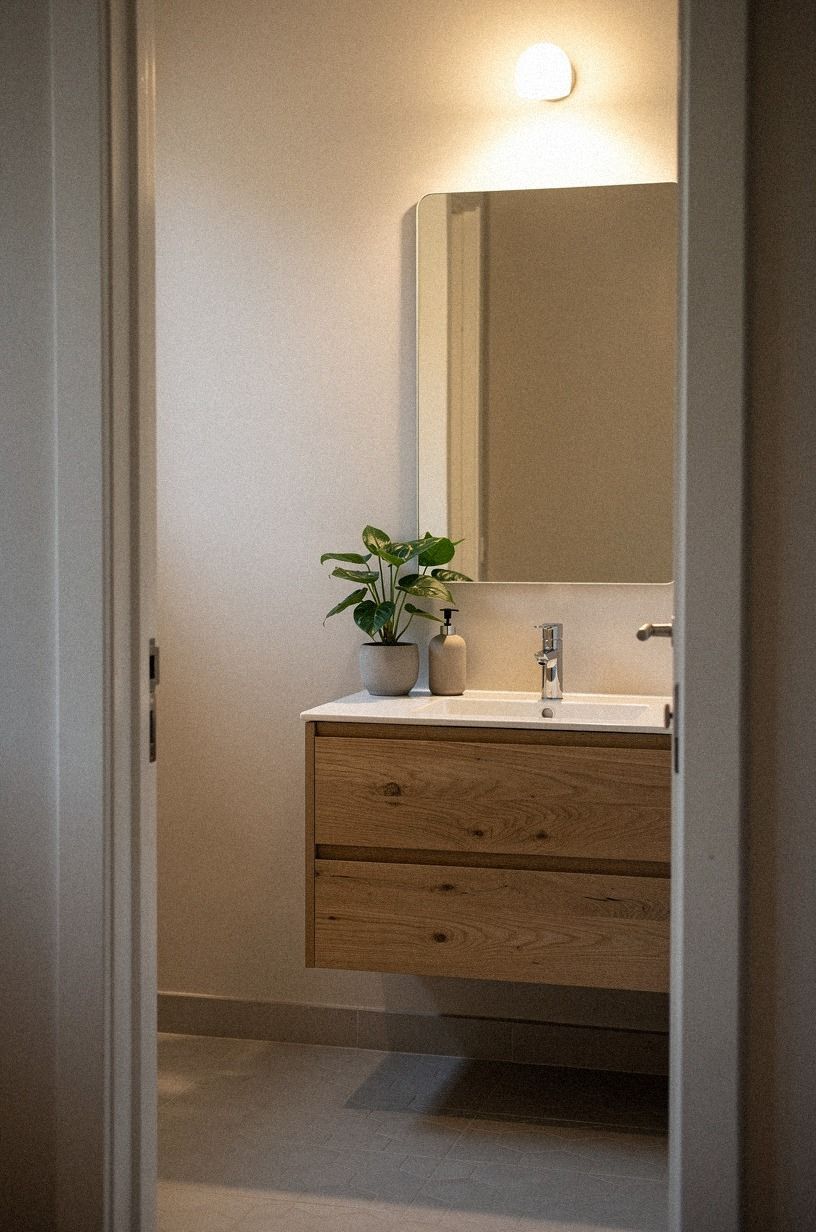
The powder room looked separate from the hall, so I used the doorway as a transition instead of trying to match everything.
12Build the modern chic powder room around one focal point
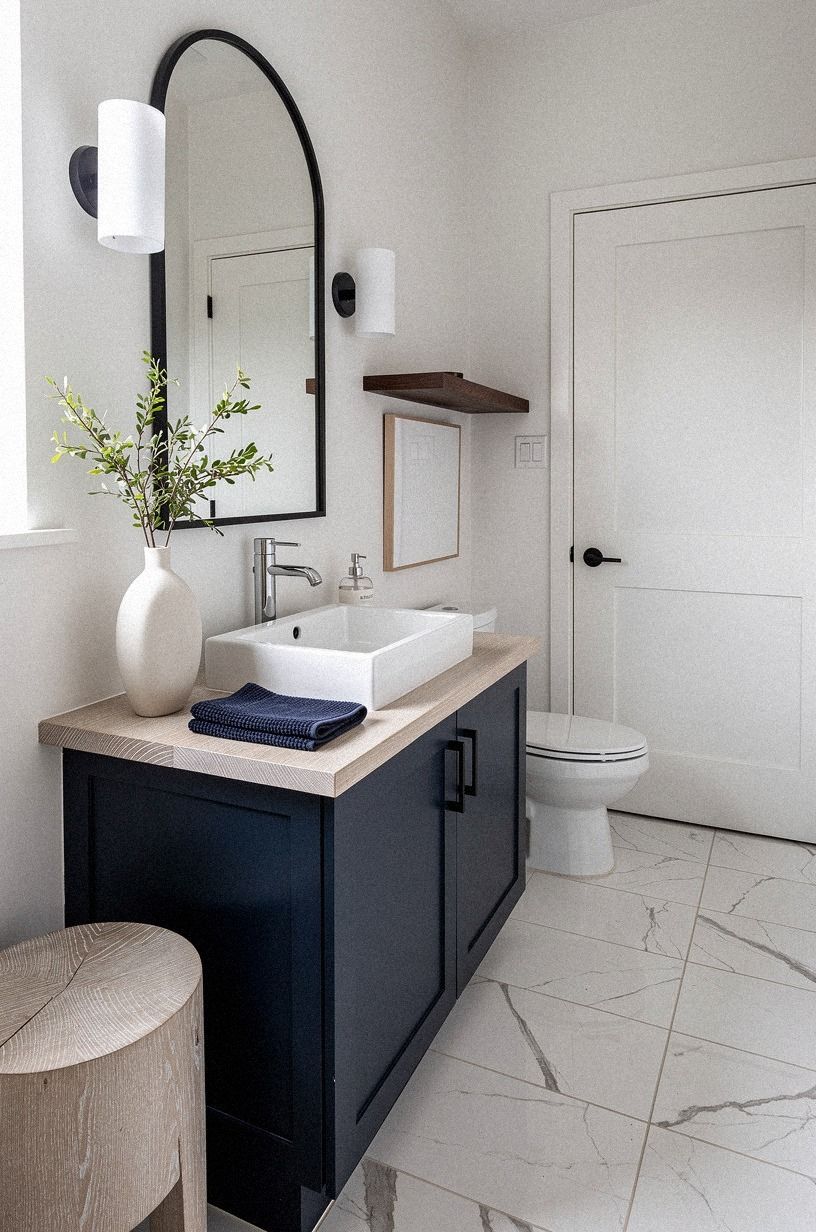
The final decision was choosing what your eye should notice first. I made the mirror the focal point, then let the paint, cerused white oak, and brass support it. That kept the room sophisticated without making every item compete.
You can choose the sink, a light, or a piece of art instead. Your focal point should be visible from the doorway and strong enough to carry the room. In my case, the rounded mirror reflected the warm sconce and made the whole space feel brighter.
I removed one last basket before calling it finished. It was useful, but it crowded the floor. The room felt more peaceful with fewer objects and better spacing.
When you enter, you notice the glow first, not the storage problem.
If you're unsure where to begin, use this order: lighting, wall color, mirror, then accessories. It prevents small purchases from distracting you from the decisions that matter most.
The focal point also helped me choose what to leave out. I didn't need a second artwork, a decorative tray, or a statement faucet. The arched mirror profile already gave the room enough identity.
How Much It Cost
I kept this makeover inside the budget tier, but the realistic range depends on what you already own. Paint, a mirror, a faucet, and textiles can fall between $200 and $1,200 in a typical US refresh. If you keep the vanity and flooring, your room can stay near the lower end.
For your budget, I would spend first on the light, paint, and mirror. Those three changes affect the room every time you enter it. A decorative object won't fix cold lighting, and an expensive faucet won't fix a wall color you dislike.
If you add tile, the material changes the total quickly. Handmade tile typically runs $15-$35 per square foot, while subway tile is usually $2-$10 per square foot. A marble top can run $50-$100 per square foot, and a brushed brass faucet typically falls between $120 and $450.
I didn't replace plumbing because the room didn't need a new layout. If you're planning a larger bathroom, remember that a comfortable shower is at least 36 by 36 inches, while a standard tub is 60 by 30 inches. Your powder room may avoid those costs entirely, which is part of its appeal.
For a more controlled refresh, compare the three lowest-cost changes before committing to construction. The best return came from the wall paint, bulb, and mirror. None required moving a drain or opening the wall.
The Warmth I Was Actually Trying to Keep
I didn't want a powder room that looked soft in theory and felt awkward when someone used it. That distinction guided every decision.
Warmth isn't a pile of woven baskets or a room full of beige. It's the feeling that the materials have been chosen for a person, not assembled to fill a blank wall.
The modern side came from restraint. I kept the lines clean, limited the metals, and gave the mirror room to breathe. The warm side came from the uneven cerused white oak, the cotton towel, the low light, and the plum paint holding color after sunset.
You need both sides. Too much polish feels sterile, while too much texture loses the clean look you wanted.
I also learned that lighting is where many powder rooms go wrong. I spent more time testing bulbs than choosing the art, and that was the right use of patience.
Your eye sees the wall color through the light, your skin sees the light directly, and guests notice both within seconds. A soft, calming glow can make inexpensive finishes feel intentional.
My strongest opinion is this: don't start with accessories. Start with what you can't easily move later, such as paint, light, and the mirror position. I once bought a gorgeous basket before fixing the overhead glare, and it did nothing.
The basket was charming. The room was still unpleasant.
If you're working in a rental, you can still get a welcoming result. Use removable hooks, a tension-mounted towel rail, peel-and-stick tile in a small protected area, and textiles you can take with you.
You won't get every built-in detail, but you can change the way the room welcomes people. That matters more than a full renovation.
The finished room feels serene because it has somewhere for your eye to rest. The plum wall gives it shape, the rounded mirror interrupts the straight lines, and the cerused white oak keeps the space from feeling cold.
I didn't need to make the powder room bigger. I needed to stop making every surface speak at once.
For the full sequence, I would revisit the lighting decision, then the mirror scale, before buying anything decorative. Those choices determine whether the room feels welcoming or merely styled.
The Questions I Get Asked Most
What is the best modern powder room choice for a small bathroom?
A rounded mirror and one deeper wall color are the strongest starting points. Benjamin Moore Chestertown Buff HC-9 can bring a gentle warmth if you want a lighter room, while a compact floating vanity keeps the floor visible. You don't need many pieces, only fewer pieces with useful scale.
Where can I buy modern powder room pieces on a budget?
Look at IKEA, Wayfair, and Target for simple vanities, mirrors, and textiles. Target Threshold towels can give you a softer finish without filling the room with pattern. You can also check Facebook Marketplace or a thrift shop for solid wood frames and small stools.
How much does a modern powder room makeover cost?
A typical budget makeover costs about $200 to $1,200 in the US. Paint and rearranging can cost nothing if you already have supplies, while a faucet, mirror, or textile upgrade raises the total. Keeping your plumbing and vanity is the easiest way to control spending.
Can I create a modern powder room on a budget?
Yes, and you can start with three low-cost moves: clear the counter, change the bulb, and group your existing towels by color. A warmer bulb can shift the room immediately. Add paint later, then replace only the fixture or mirror that still bothers you.
Is a modern powder room worth it in a small space?
Yes, because a small room gives each decision more visual weight. One strong mirror can change the whole wall, and you won't need much paint or tile to create impact. Keep at least 21 inches of clearance in front of the toilet so your layout stays comfortable.
Is a modern powder room a good idea for a rental?
Yes, especially when you focus on removable changes. Peel-and-stick accents, tension rods, removable hooks, and washable textiles can add warmth without permanent damage. You can also swap the art and lighting accessories, then take those pieces with you when your lease ends.
Where I'd Start First
If I had to pick one, I'd start with the lighting. Cold overhead glare makes every warm material look wrong, while a soft sconce can make plain paint and an old vanity feel considered.
Pin the lighting idea for later, then test one bulb tonight. You can move to the paint decision once the room's evening light feels right.


