How to Create a Travertine & Marble Bathroom for Layered Luxury - 12 Ideas
14 october 2026Travertine and marble bathroom ideas for layered luxury work best when you pair one warm stone with quieter finishes and controlled light. I learned this after a pale marble room started feeling icy, even with expensive fixtures. The fix wasn't more decoration. It was better texture, warmer paint, and a clear order of decisions. Start with the stone palette, then plan the three-height light stack.
- Start with a Travertine Marble Bathroom Palette
- Measure Your Marble Bathroom Before You Order
- Travertine vs. Marble: Choose One Anchor
- Layer Shower Marble with Quiet Texture
- Paint Warm Walls Instead of Bright White
- Float a Vanity or Reface It
- Brushed Brass Meets Aged Stone
- Frame the Mirror, Keep the Vanity
- Textiles at the Marble Edge
- Marble and Travertine: Is It Worth the Tradeoff?
- The Lived-In Travertine Marble Edit
1Start with a Travertine Marble Bathroom Palette
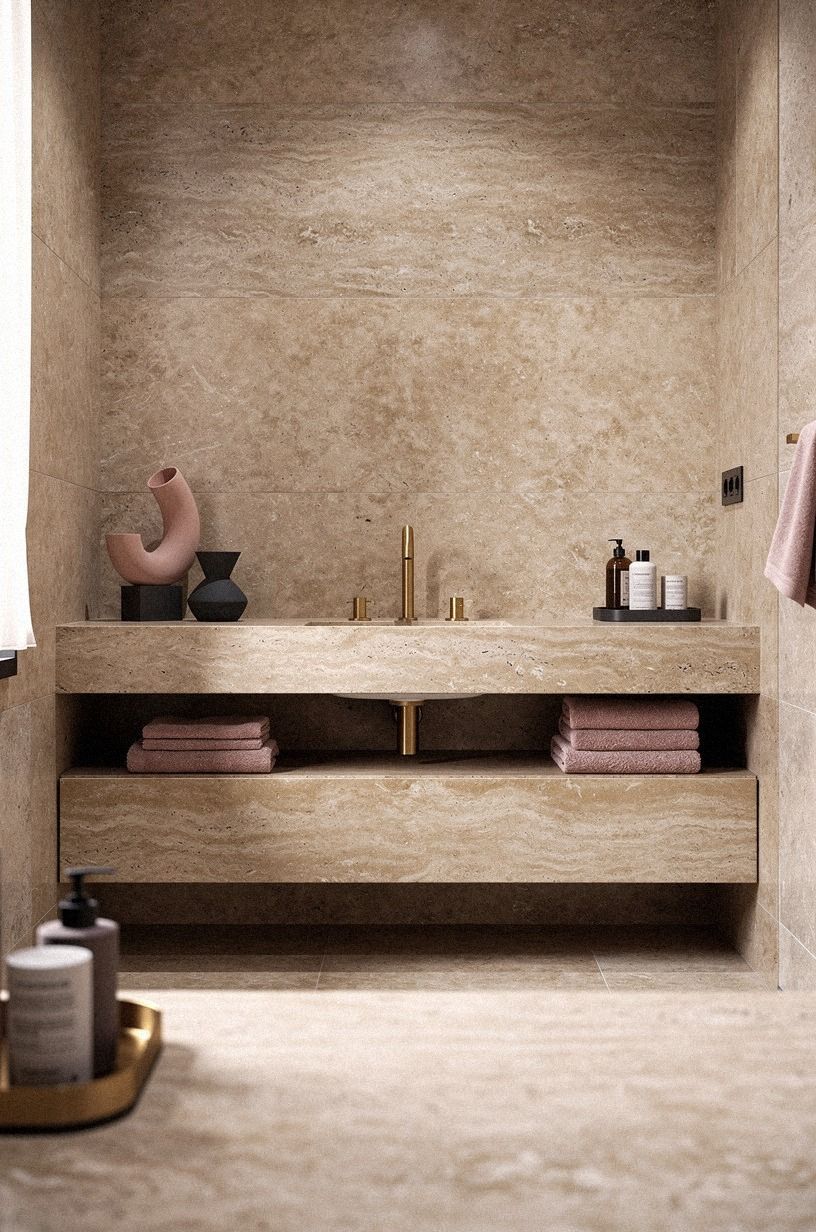
Begin with your largest permanent surface, then let every smaller finish respond to it. For your travertine marble bathroom, let warm travertine lead, with marble used more selectively.
Honed travertine with natural pitting gives you soft variation, while polished marble throws sharper reflections. I've tried balancing two dominant stones, and it usually looks restless.
Keep your secondary finishes within the same temperature family. Dusty rose walls, charcoal details, and unlacquered brass can sit comfortably beside warm travertine.
You don't need matching veining. You need a shared undertone.
If your room gets weak northern light, Farrow & Ball Sulking Room Pink No.295 can make the stone feel intentional, although I'd use it only on a small vanity wall. You can compare that decision with the advice on warm bathroom walls.
And don't begin with accessories. Your stone, paint, and lighting will decide whether the bathroom feels earthy or clinical. Lay sample boards on the floor and look at them morning and evening.
The stone that looks gentle at noon might turn gray by 6 p.m. Trust the room, not the showroom!
2Measure Your Marble Bathroom Before You Order
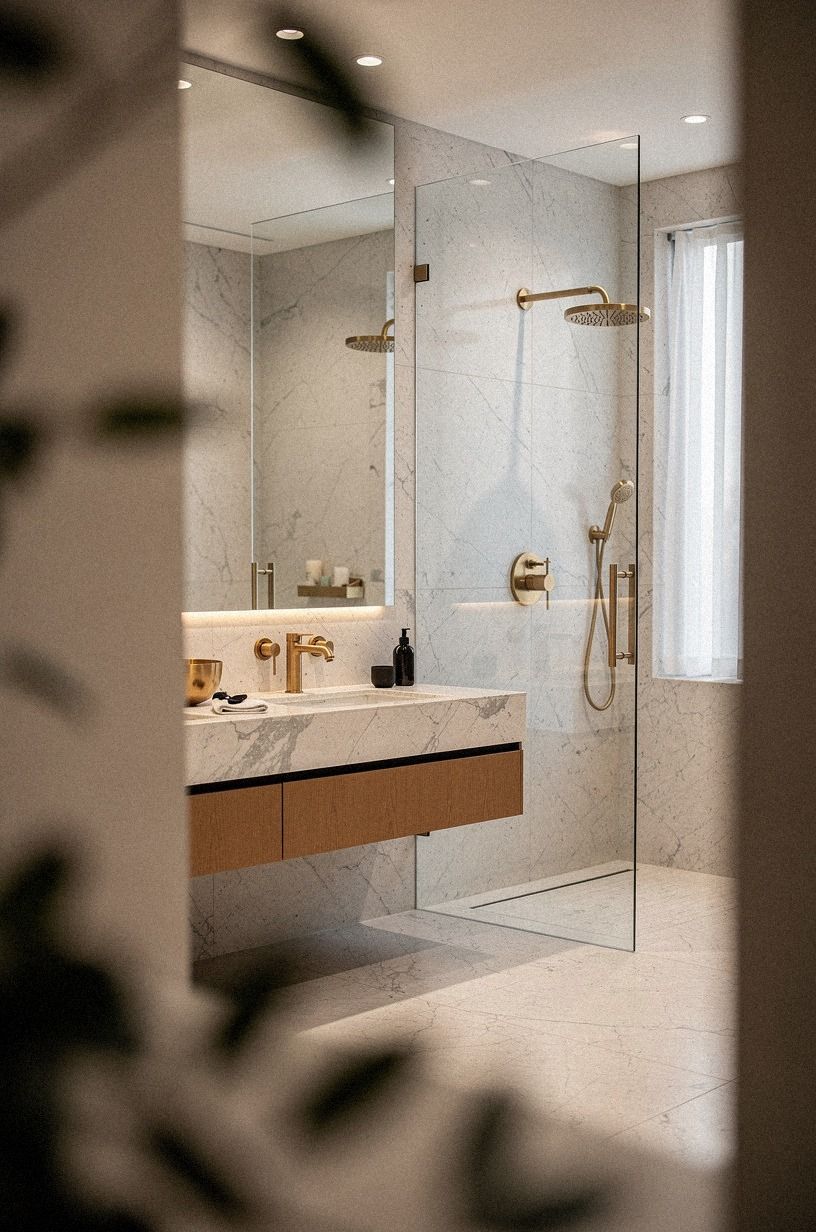
Measure your marble bathroom twice before you choose a vanity, mirror, or shower slab. Your vanity height should land between 32 and 36 inches, or 81 to 91 cm, and that range changes how the backsplash, faucet, and mirror relate to one another.
I once planned a beautiful counter that sat too high for the people using it. Pretty on paper, awkward every morning.
Write down the wall width, door swing, toilet clearance, and plumbing locations. You need at least 21 inches of clearance in front of the toilet, and your shower should measure 36 by 36 inches minimum for comfortable movement. A standard tub is 60 by 30 inches, so your layout can't rely on vague guesses.
Use painter's tape on the floor to test the footprint. Measure twice, order once!
Warm white walls, camel textiles, black accents, and unlacquered brass with a developing patina can all work beautifully here, but check how they relate to the actual dimensions before ordering. Here are the typical US cost ranges from the planning stage. They're broad, but they'll keep your wish list honest.
Your measurements should control your spending, too. If you're working with a narrow room, a smaller vanity and generous mirror can feel more luxurious than squeezing in a deep cabinet.
But if you're changing plumbing, get professional guidance before ordering anything. The three-height lighting plan also depends on where your walls and electrical points land.
The Three-Height Light Stack
Build light at three heights: ceiling, eye level, and low glow. Your ceiling fixture handles general visibility, while sconces or a mirror light keep your face from sitting in shadow. A low lamp, concealed strip, or softly lit niche can bring warmth into the room after dark.
2700K bulbs usually flatter ivory surfaces and warm stone better than a cold daylight temperature.
Keep the lights on separate controls if you can. You won't want every source blazing at 7 a.m., and a dimmed vanity light can make a small bathroom feel calmer at night. If you're updating a rental, rechargeable sconces can add a similar effect without new wiring.
The goal isn't a brighter bathroom. It's a room where the stone changes gently through the day.
That is the quiet-luxury move! Use this plan before choosing warm wall paint, because light can shift every sample in the room.
4Travertine vs. Marble: Choose One Anchor
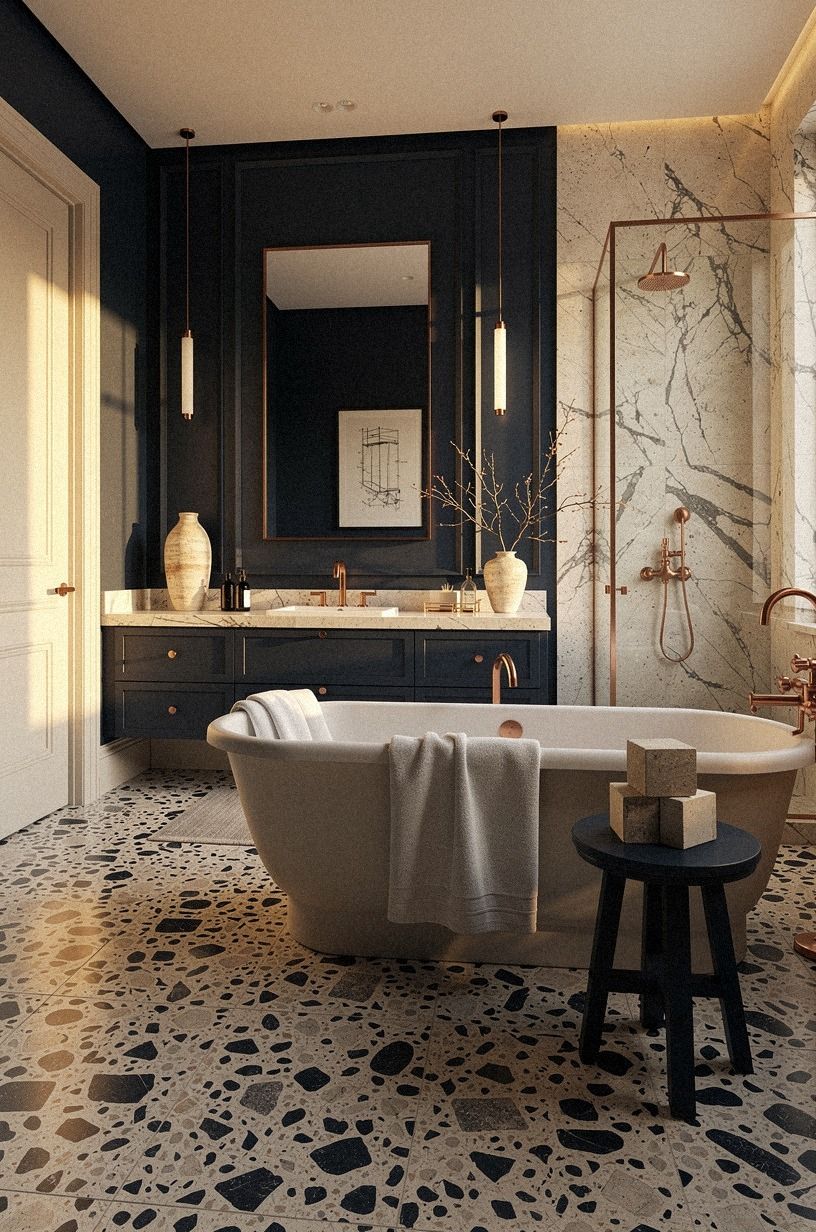
Choose one stone as the visual anchor and repeat it at least twice.
An oversized-chip terrazzo can bridge midnight blue, copper, and ivory when the room needs a third surface, but let it support the anchor rather than compete with it.
5Layer Shower Marble with Quiet Texture
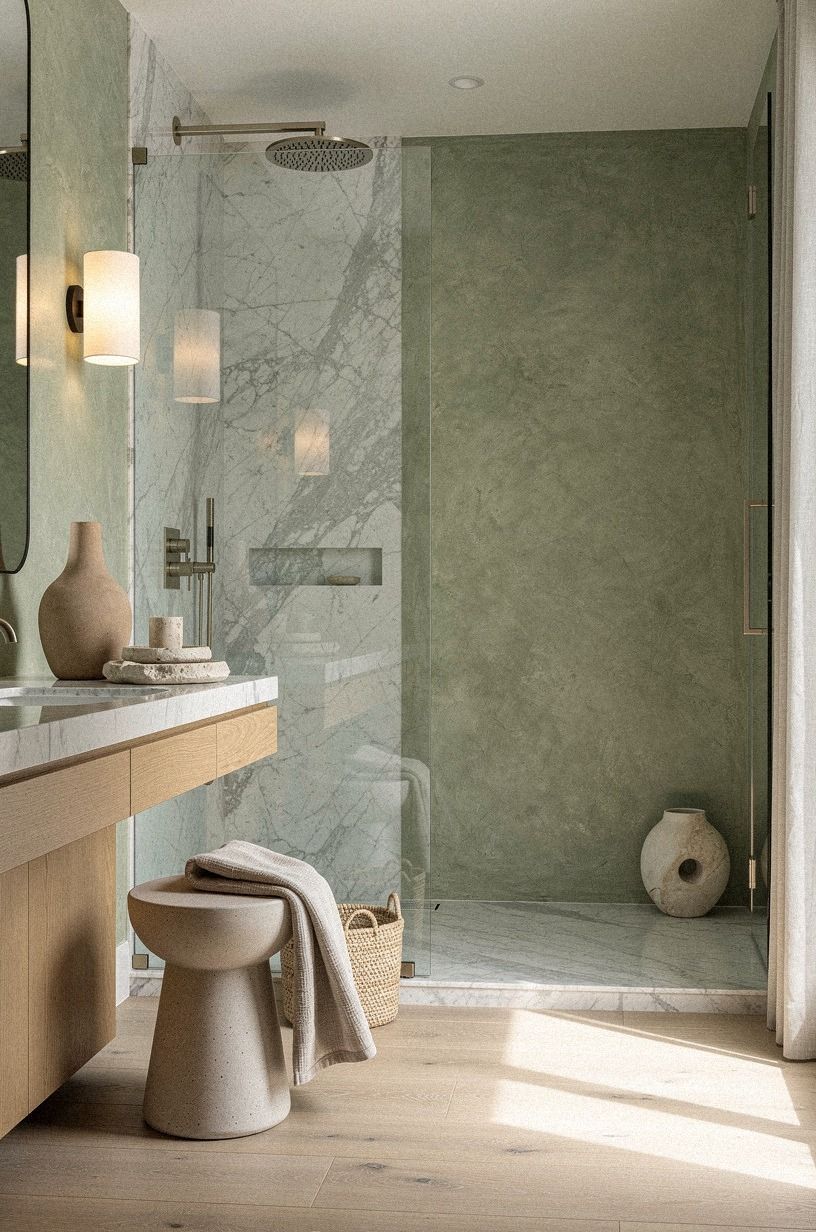
Layer shower marble with a surface that gives your eyes a pause. A full marble shower can feel luxurious, but too much movement makes bottles, towels, and grout lines compete. Use marble on the main wall and a quieter floor, or reverse the arrangement if your floor has the stronger pattern.
On a shower-adjacent wall, hand-applied Venetian plaster brings soft texture, especially beside sage green, warm cream, and natural wood. Keep it outside direct spray and let the marble handle the wettest surfaces.
Your niche should be planned before tile begins. Give it enough depth for the products you use, then keep the shelf material consistent with your anchor stone. I like a small slab shelf with a honed edge because water rolls away cleanly and the detail feels deliberate.
You don't need a decorative mosaic inside the niche.
And choose grout with care. A close warm gray can let cream marble and travertine sit together without drawing a grid across the wall.
Bright white grout is crisp, but it can make warm stone look yellow by comparison. If you're using a strong marble, let warm gray grout recede.
What will you actually touch each day? The shelf edge, shower handle, and floor matter more than a distant accent wall.
Make those surfaces comfortable, durable, and easy to wipe down. That's where luxury becomes practical.
A similar rule works when you add textiles at the marble edge.
6Paint Warm Walls Instead of Bright White
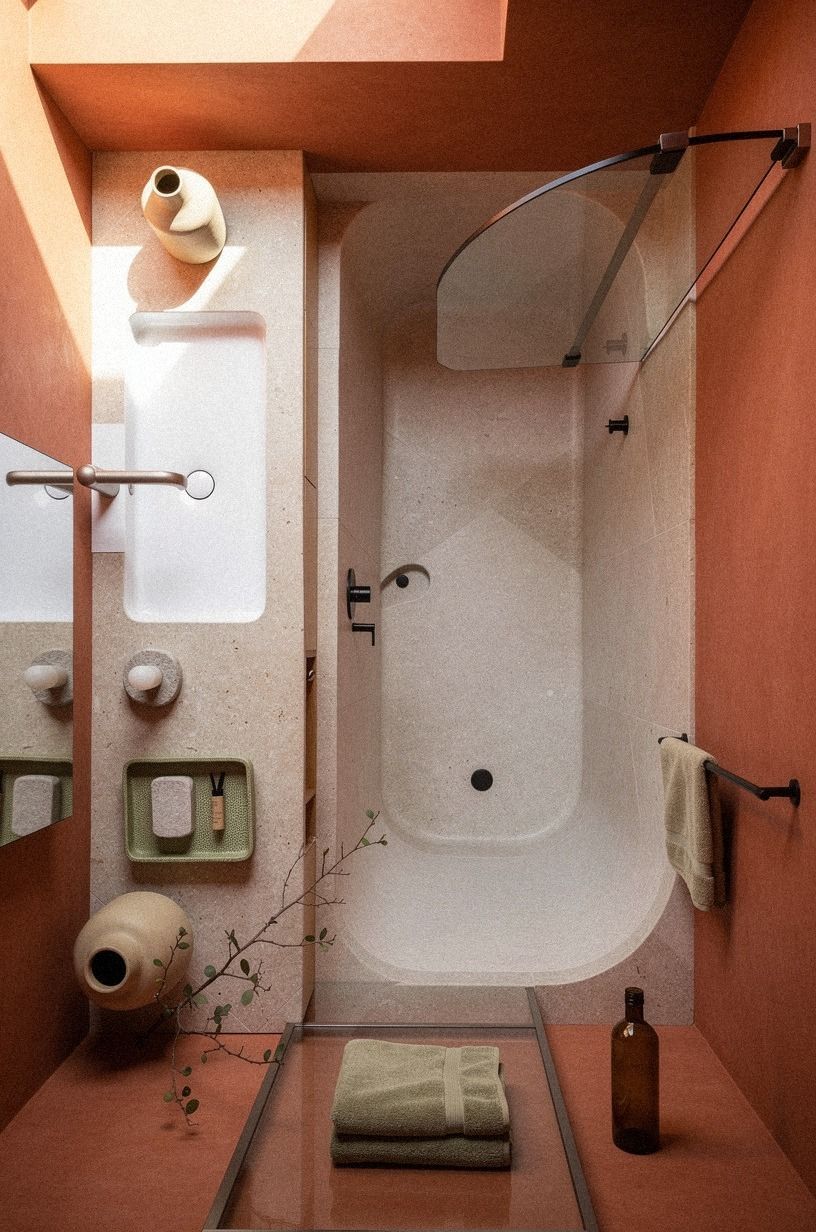
Paint the walls after your stone samples are in the room, not before. Bright white often makes travertine look muddy and marble look colder than it is.
Farrow & Ball Red Earth No.64 can bring terracotta warmth, while Sherwin-Williams Olive Grove SW 7734 adds a quieter olive note beside stone. The combination is earthy without becoming heavy.
Use the paint to fill the gaps between materials. Your wall color shouldn't fight the veining or compete with the faucet finish.
I've painted a bathroom before testing the stone under artificial light, and the result looked yellow at night. A sample pot is cheaper than repainting every wall.
But don't assume darker paint will make your room feel smaller. A deep olive color behind the vanity can give a shallow room more depth, especially when your mirror reflects a warm light. A small shagreen accent can add another layer without introducing a competing pattern.
Your ceiling can stay lighter than the walls, but it doesn't have to be stark white. A softened ceiling color makes the room feel more enveloping. Keep the finish washable, and you'll get the warmth without creating a maintenance problem.
7Float a Vanity or Reface It
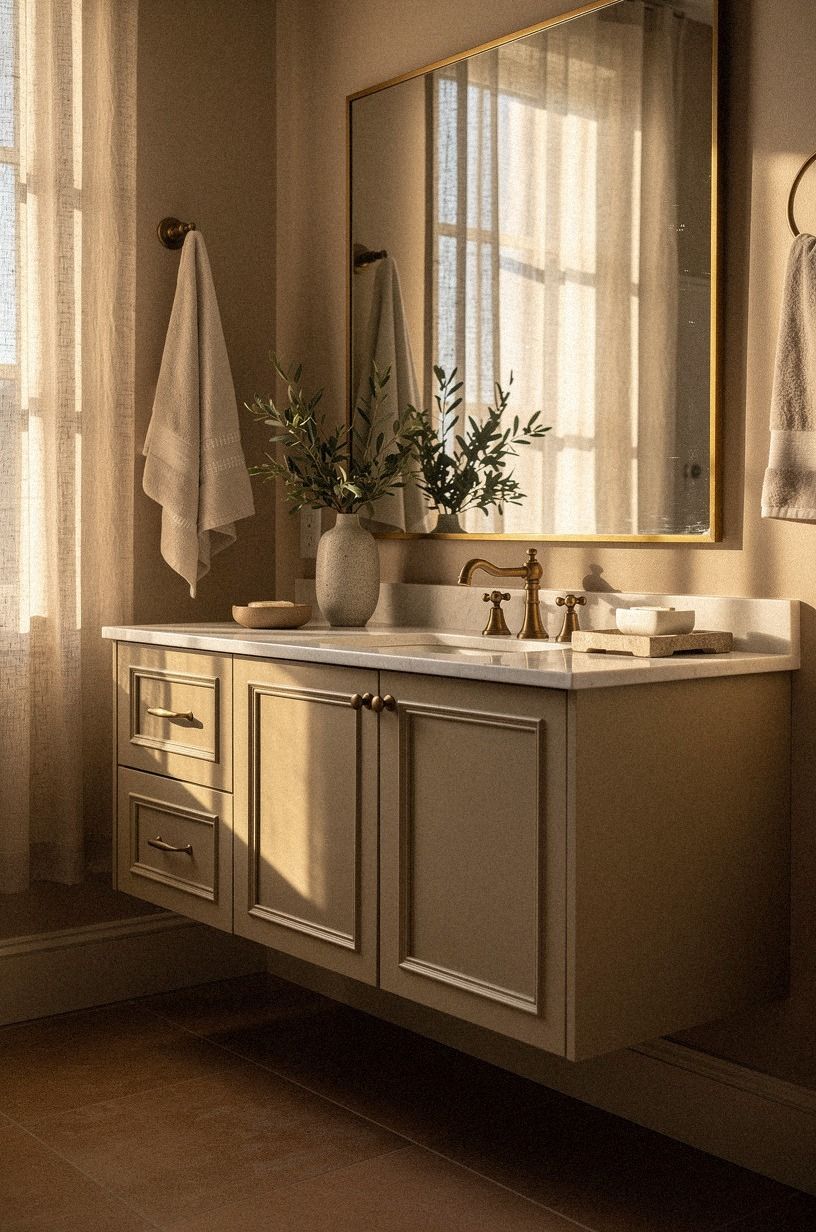
Float your vanity only after confirming the final counter height, sink depth, and plumbing position. A wall-mounted cabinet exposes more floor, which can make a small bathroom feel less crowded, but it also demands accurate blocking and carefully placed waste lines. A wall-mounted vanity works best when the wall structure can support its weight.
If your existing cabinet is sound, reface it instead of replacing it. Clay paint, a stone top, aged brass pulls, and washed Belgian linen can change the room without creating another demolition project. Keep the toe-kick proportion in mind, because an oversized cabinet can overpower the marble even when the finish is beautiful.
The vanity is where your hand lands first, so prioritize a comfortable basin, usable drawers, and a surface that doesn't punish daily water spots. Before choosing hardware, check the brushed brass and aged stone relationship.
8Brushed Brass Meets Aged Stone
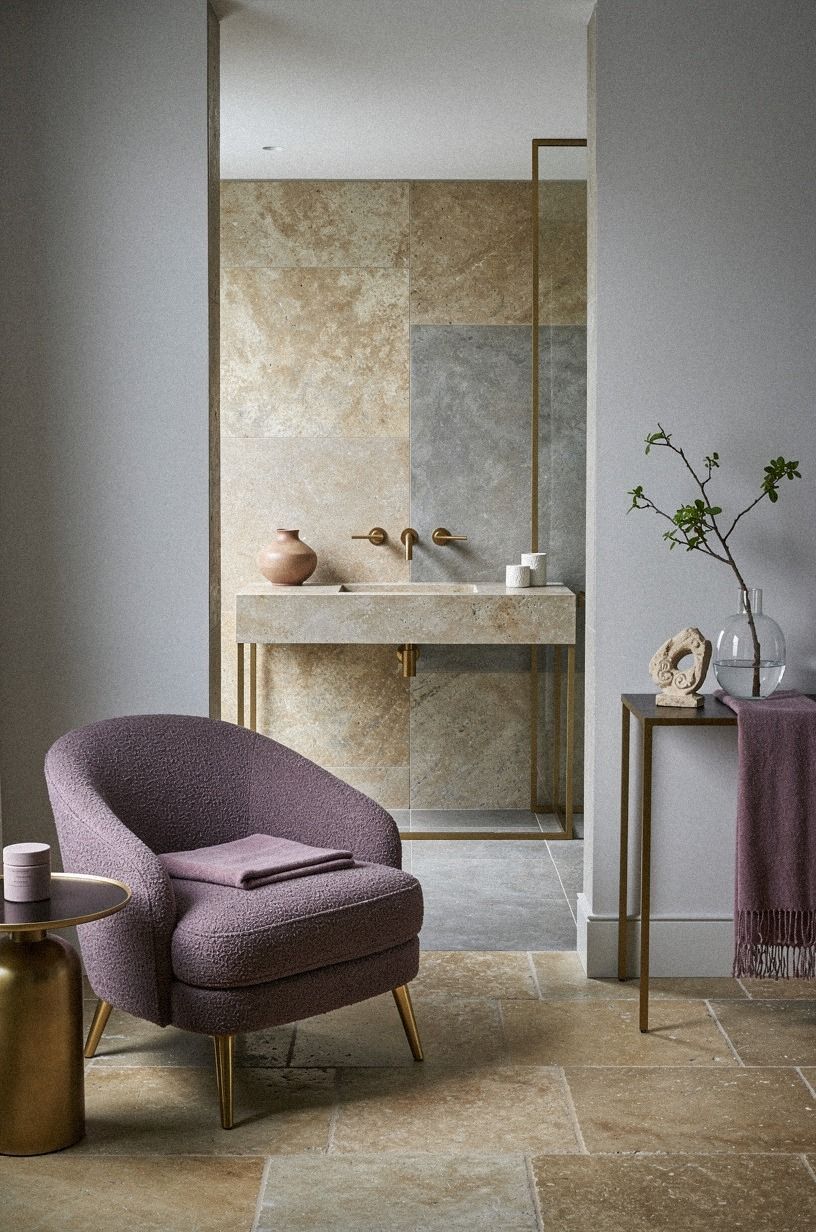
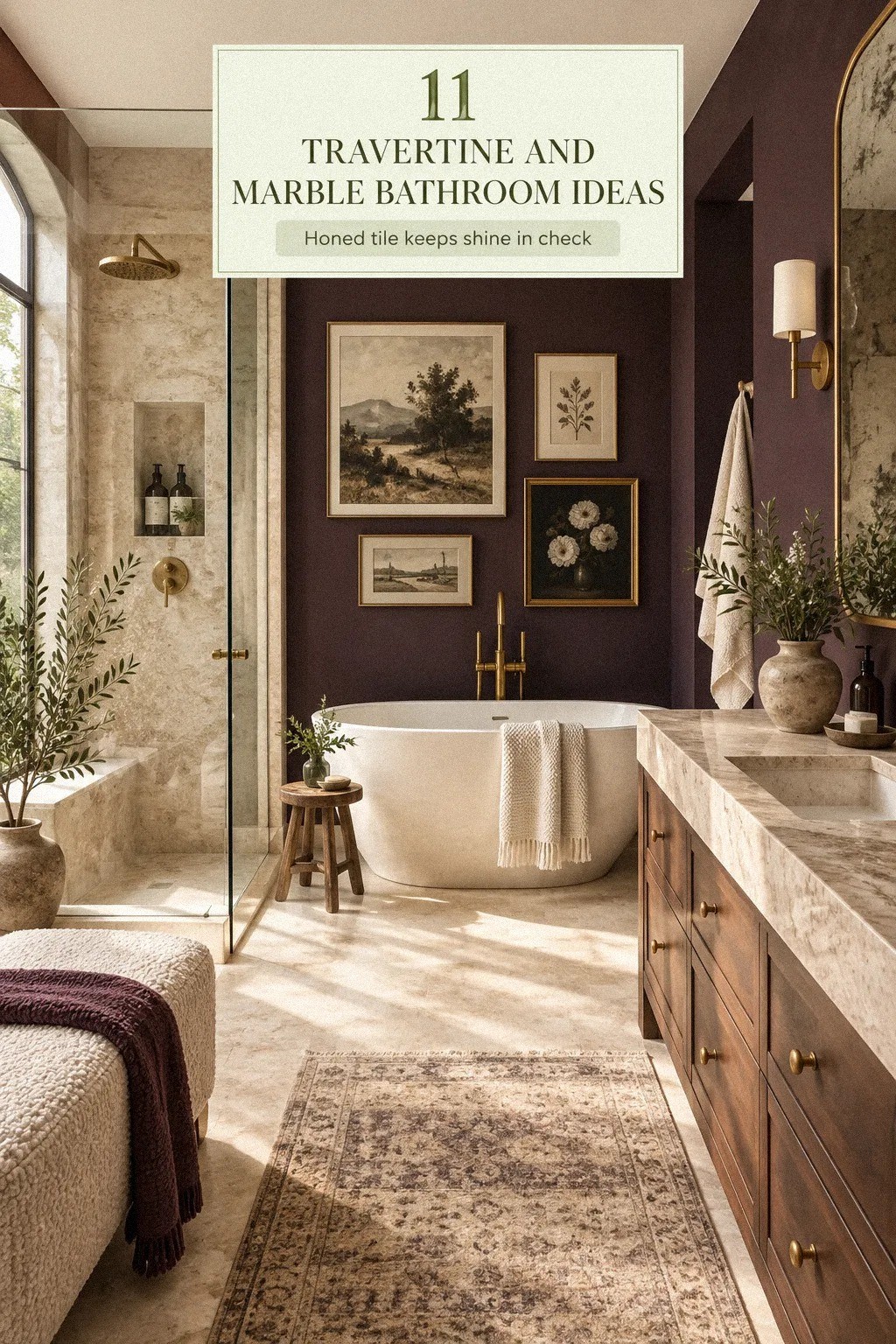
Let plum and gray soften the shine of rose gold, then bring in organic bouclé for touchable contrast. The stone should feel aged rather than overly polished, so keep the surrounding finishes restrained.
9Frame the Mirror, Keep the Vanity
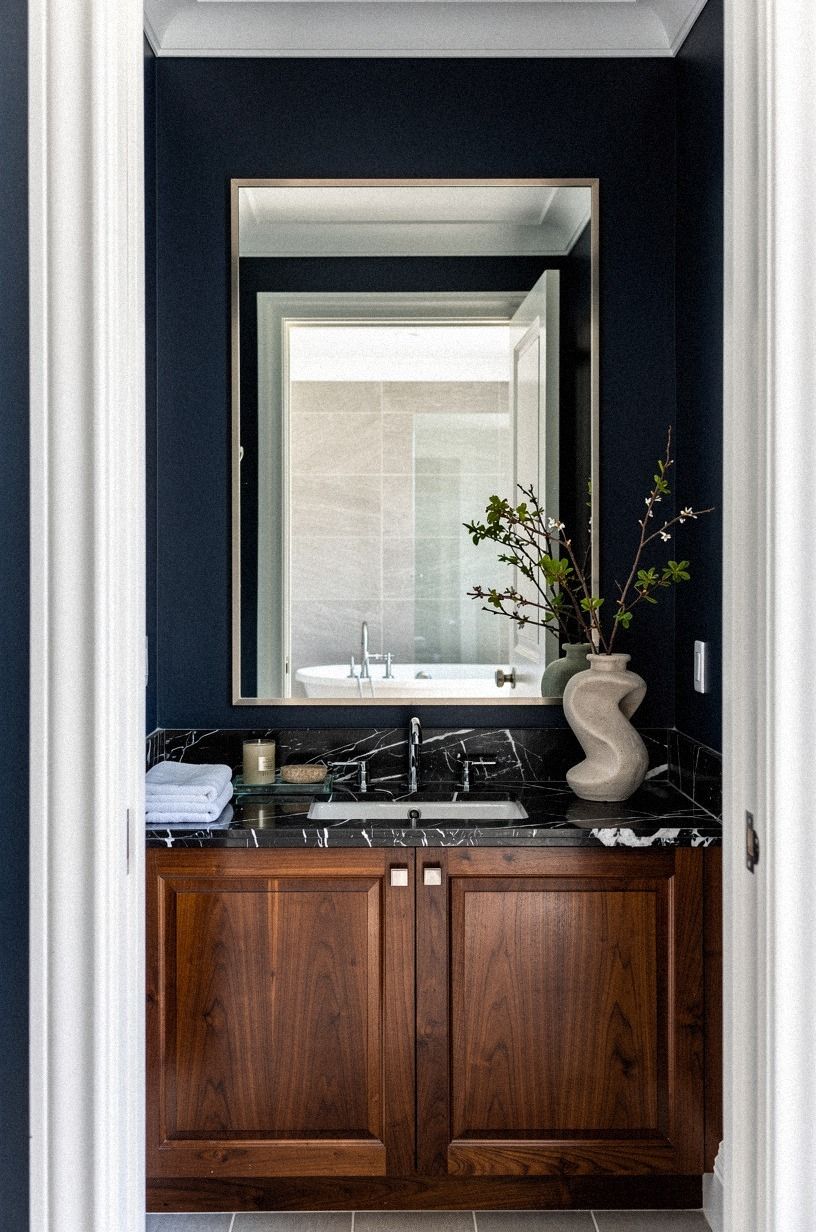
Frame the mirror before replacing a serviceable vanity. Walnut, dark bronze, or aged brass can add enough definition to a plain cabinet, while a frameless mirror keeps the room visually quiet. A rounded walnut frame can soften rectangular tile and echo the white veining of Nero Marquina marble.
Check the mirror's width against the faucet and basin before ordering. It should feel generous without colliding with sconces or cabinet doors. If your room is narrow, a taller mirror can help more than a wider one, especially when it catches the three-height light stack.
I don't love replacing useful storage for the sake of a new look. Keep the vanity if its drawers work, its plumbing is sound, and its proportions suit the room. Spend the difference on lighting, a better counter, or one material detail you'll notice every day.
10Textiles at the Marble Edge
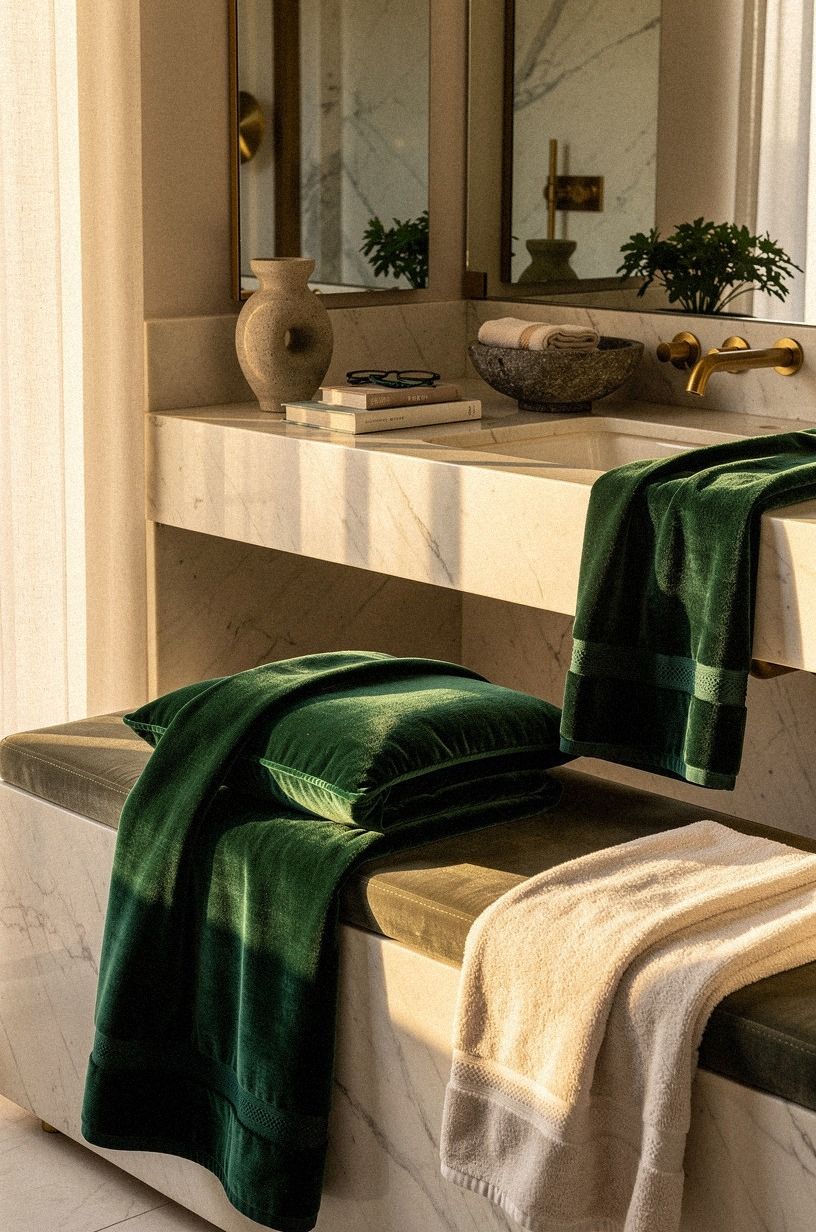
Add textiles with a little weight so your stone doesn't dominate the room. Emerald, gold, and cream create a richer palette, while deep-pile mohair velvet gives the room softness without making it look overly decorated.
11Marble and Travertine: Is It Worth the Tradeoff?
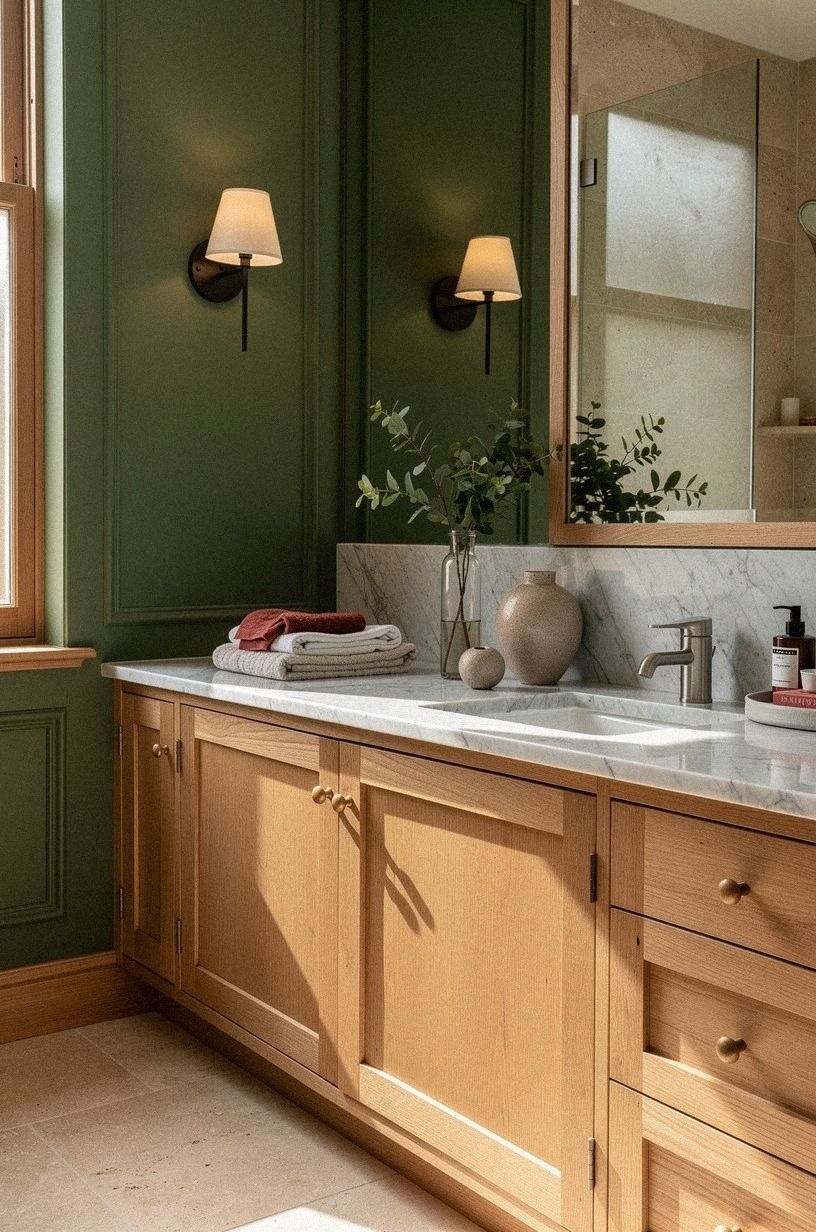
Yes, a marble and travertine bathroom can be worth it when you spend on the surfaces you touch and see most. A Carrara marble countertop with subtle gray veining, warm lighting, and natural oak can carry the room before you add anything decorative.
A forest green or rust accent can bring more life than another expensive tile. A full renovation can reach $12,000-$30,000 or more, so don't pretend every room needs the high tier.
Use the material table to compare the tradeoff before you choose. Your room's measurements should guide this decision too, especially if you're working through the planning costs and clearances.
Your best value may be a marble top, warm paint, a better mirror, and new lighting instead of a full re-tile. I've gone back and forth on this, but a well-lit room with one excellent stone detail feels more refined than a crowded room with expensive material everywhere.
But don't choose marble if you hate maintenance. Honed finishes hide some marks, yet natural stone still needs suitable care and sealing advice from the fabricator. You should know what your household can maintain before you commit to natural stone sealer.
If you're working on a small space, the limited square footage can help. You can use a premium slab on a narrow vanity and still keep the total material area manageable.
That's where your room's size becomes an advantage. A focused update can work beautifully with the one-stone anchor rule.
12The Lived-In Travertine Marble Edit
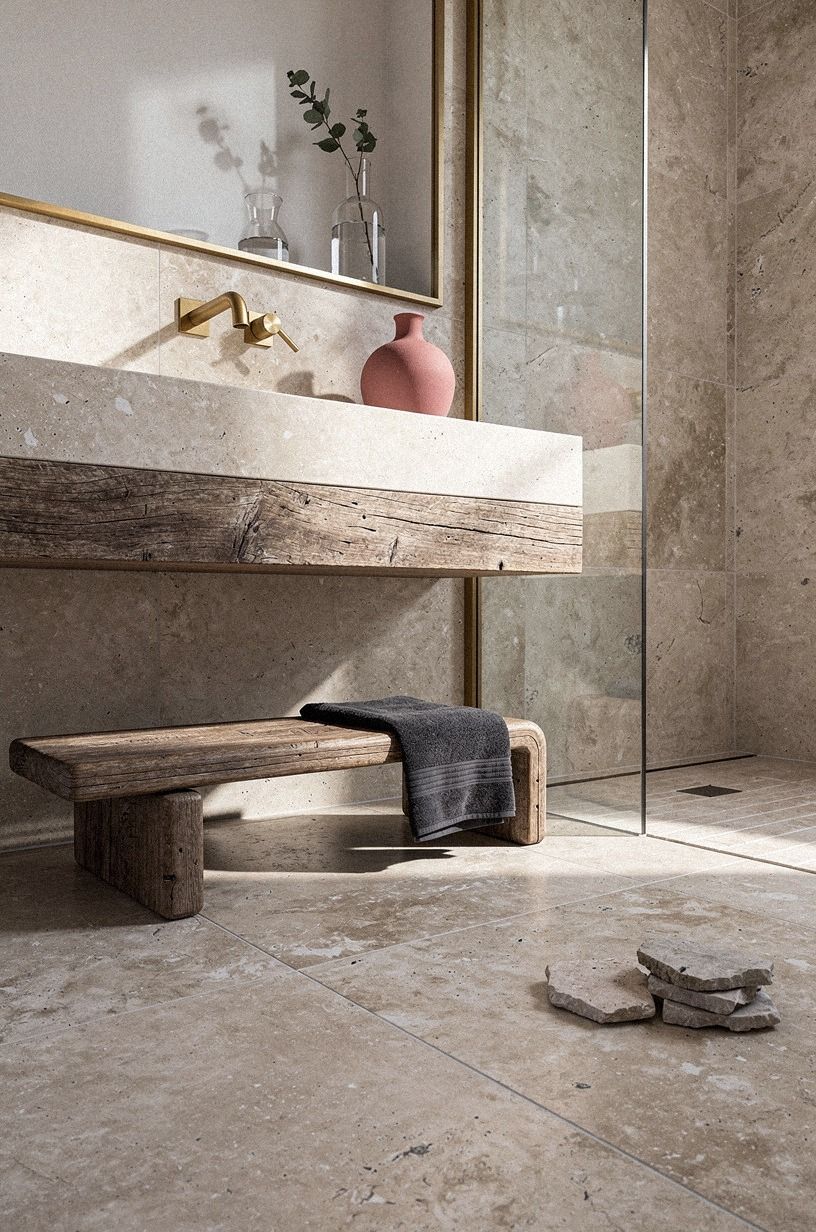
Finish your travertine marble bathroom by removing one item from every surface. Keep the soap you use, the towel you reach for, and the object that genuinely makes the room feel like yours. A shallow reclaimed weathered teak tray can gather essentials without turning the counter into a display.
Keep dusty rose, charcoal, and brass in the palette, then look at the room from the doorway before you add anything else. If your eye stops at a busy niche, competing metals, or a stack of decorative bottles, edit there first. Layered luxury needs pauses.
The final pass should make maintenance easier, not harder. Leave enough space around the sink, keep the shower shelf wipeable, and choose pieces that can handle humidity. A beautiful room that frustrates you every morning won't stay beautiful for long.
Why Warm Imperfection Beats a Showroom Bathroom
I've worked in bathrooms where every finish matched, every towel was folded sharply, and the whole room still felt strangely cold. The problem wasn't the budget. It was the lack of friction.
Natural stone needs a little variation around it, or the room starts reading like a showroom instead of a place where someone washes their face before work.
That doesn't mean you should fill your bathroom with random pieces. Your choices still need a relationship.
Travertine brings pits, pores, and uneven color. Marble brings veining that refuses to behave like a printed pattern.
I want those materials to lead, then I add a quiet paint color, a worn-looking metal, and textiles that don't look factory-perfect.
My own mistake was treating warmth as a color problem. I kept adding beige until the room looked dull, then realized the light was too blue and the mirror was too small.
Once I changed the bulb temperature and added a second light source, the same stone looked richer. You might be tempted to repaint first, but check your bulb temperature before buying another gallon.
The best layered bathroom isn't the one with the most expensive finish. It's the one where your eye can move from rough stone to smooth metal, from warm towel to reflective mirror, without stopping at a mistake. Choose one strong material, give it air, and let the room show a little evidence of real life.
That's what makes luxury feel welcoming instead of distant. The room should feel finished, not frozen!
The Questions Worth Answering First
What is the best Travertine & Marble Bathroom Ideas for Layered Luxury for a small bathroom?
A honed travertine floor and a marble vanity top are strong picks for your small bathroom because they add texture without covering every wall. IKEA storage can keep the footprint practical, while a large mirror reflects light and makes your room feel calmer.
Where can I buy Travertine & Marble Bathroom Ideas for Layered Luxury pieces on a budget?
You can find budget pieces at IKEA, Wayfair, and Target, especially mirrors, towels, and simple lighting. Your best secondhand options are Facebook Marketplace and local thrift shops. Look for solid wood frames, ceramic accessories, and metal trays rather than questionable plumbing fixtures.
How much does a Travertine & Marble Bathroom Ideas for Layered Luxury makeover cost?
A cosmetic makeover typically falls within the $200-$1,200 budget range for paint, a mirror, a faucet, and textiles. You can save by keeping your vanity, reusing hardware, and shopping your home first. A full high-tier renovation can reach $12,000-$30,000+.
Can I create a Travertine & Marble Bathroom Ideas for Layered Luxury on a budget?
Yes, and your first moves can be free. Rehang the mirror, edit the counter, and group towels by color.
Then add warm paint, a second light source, or one better faucet. A focused update will feel more luxurious than scattered purchases.
Is Travertine & Marble Bathroom Ideas for Layered Luxury worth it in a small space?
Yes, because a small room limits how much stone you need to buy. Use marble on the vanity top, travertine on the floor, and a generous mirror above. Your eye will notice the material quality without facing a wall of competing patterns.
Is Travertine & Marble Bathroom Ideas for Layered Luxury a good idea for a rental?
Yes, if you keep the changes removable. Try peel-and-stick wall color, a tension rod with Belgian flax linen, rechargeable sconces, and removable hooks. You can add warmth without drilling into tile or changing plumbing, and you'll take the best pieces with you later.
Where I'd Start First
If I had to pick one step, I'd start with the lighting. Cold overhead light makes even warm travertine look gray, while layered light reveals the stone's texture at night.
Fix that first, then let your paint, mirror, and towels follow. Pin this guide for your renovation weekend.


