14 Elegant Christmas Tablescapes That Cost Under $40 Without Looking Cheap
15 october 2026Yes, elegant Christmas tablescapes that cost under $40 can look refined when you edit the table instead of covering every inch. I once bought too many shiny decorations and lost the room beneath them. Now I start with one strong material, two colors, and enough empty space to let candlelight work. That's the difference!
- Layer a Linen Runner With Evergreen
- How Does the Three-Height Light Stack Work?
- Swap Red Plaid for Cranberry and Oat
- Anchor the Table With a Bowl of Oranges
- Why the Two-Wood Rule Works
- Fold Napkins Into Soft Evergreen Bundles
- When Rosemary Frames Each Place
- Mix Cream Plates With Green Glass
- Layer a Linen Runner With Evergreen
- How Does the Three-Height Light Stack Work?
- Swap Red Plaid for Cranberry and Oat
- Anchor the Table With a Bowl of Oranges
- Why the Two-Wood Rule Works
- Fold Napkins Into Soft Evergreen Bundles
- When Rosemary Frames Each Place
- Mix Cream Plates With Green Glass
- Hang a Simple Branch Above the Table
- Paint the Backdrop, Not the Table
- Can Candles Beat Clutter?
- Create the Quiet Center Method
- Silver With Natural Fiber: A Warmer Contrast
- Frame the Table With Floor-Length Fabric
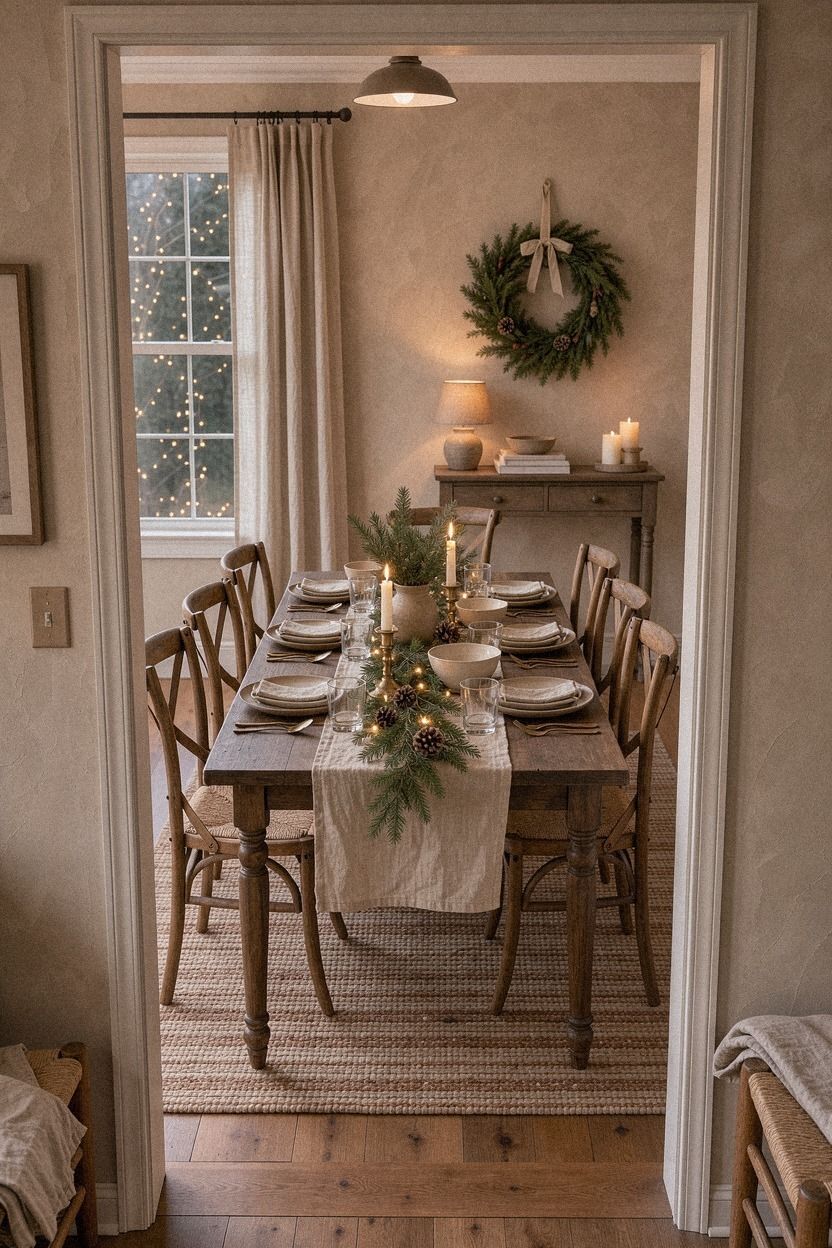
1Layer a Linen Runner With Evergreen
A linen runner gives your Christmas dinner table settings elegant structure without making the surface feel formal. Let it fall straight down the center, then leave plenty of bare table showing on both sides.
Belgian flax linen looks especially relaxed because its wrinkles catch candlelight instead of reflecting it. If you’re shopping your home, a neutral scarf can do the same job.
Add clipped evergreen branches, warm white candles, and one low bowl. You don’t need a full garland.
A few loose stems feel more organic and won’t block conversation across the table. I’d skip glittered greenery here because it reads shiny from every angle.
Farrow & Ball Red Earth No.64 is a useful color reference if your room has clay-toned walls, while cream napkins will keep the whole setting soft.
Your centerpiece should sit low enough that you can see over it. You’ll want the runner, branches, and candles to create a gentle line, not a wall.
One low aged brass bowl at the center is enough, especially if you’re using a small table. If your room has hand-applied Venetian plaster, let its soft variation add another layer of texture.
Add warm white taper candles for a flattering glow that feels inviting rather than theatrical.
2How Does the Three-Height Light Stack Work?
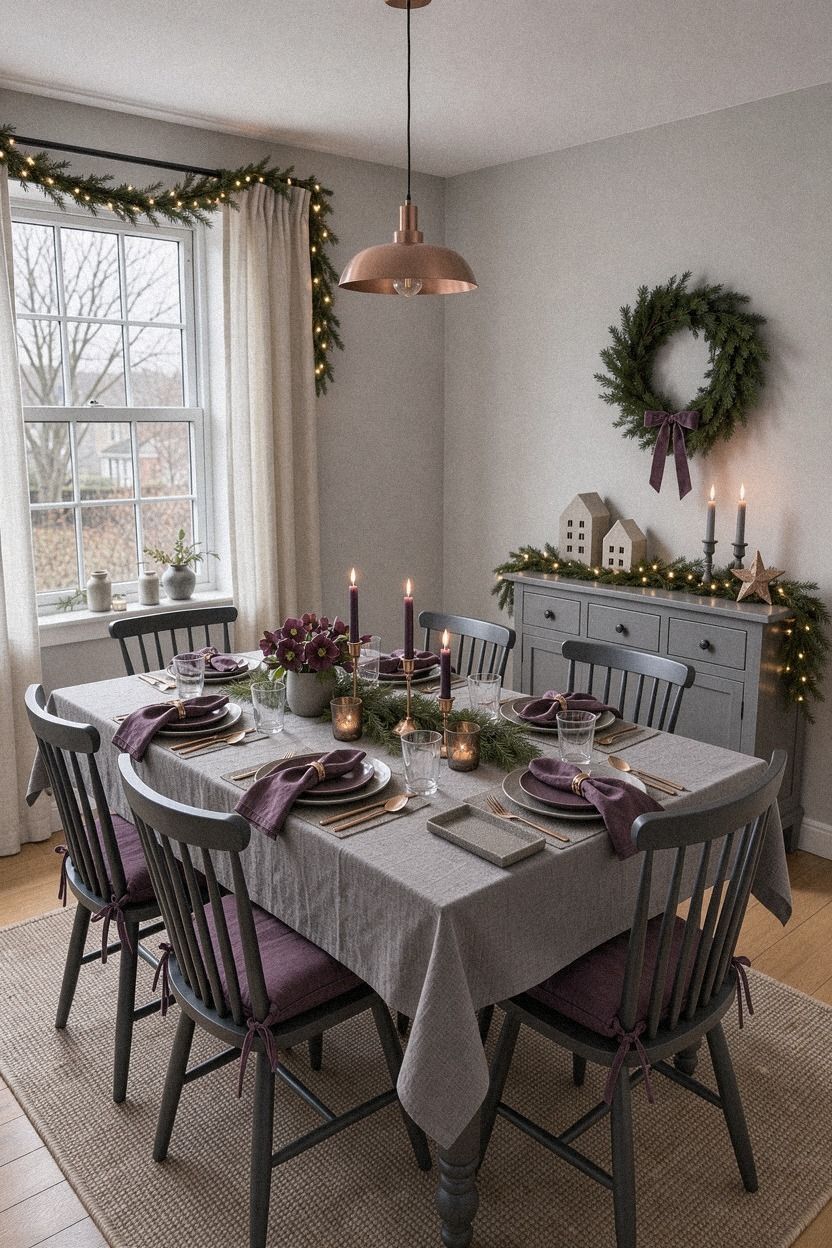
The Three-Height Light Stack uses a low candle, a medium shagreen vessel, and one taller branch to give your table dimension. Add a small rose-gold detail against plum and grey so the arrangement feels layered without becoming busy.
3Swap Red Plaid for Cranberry and Oat
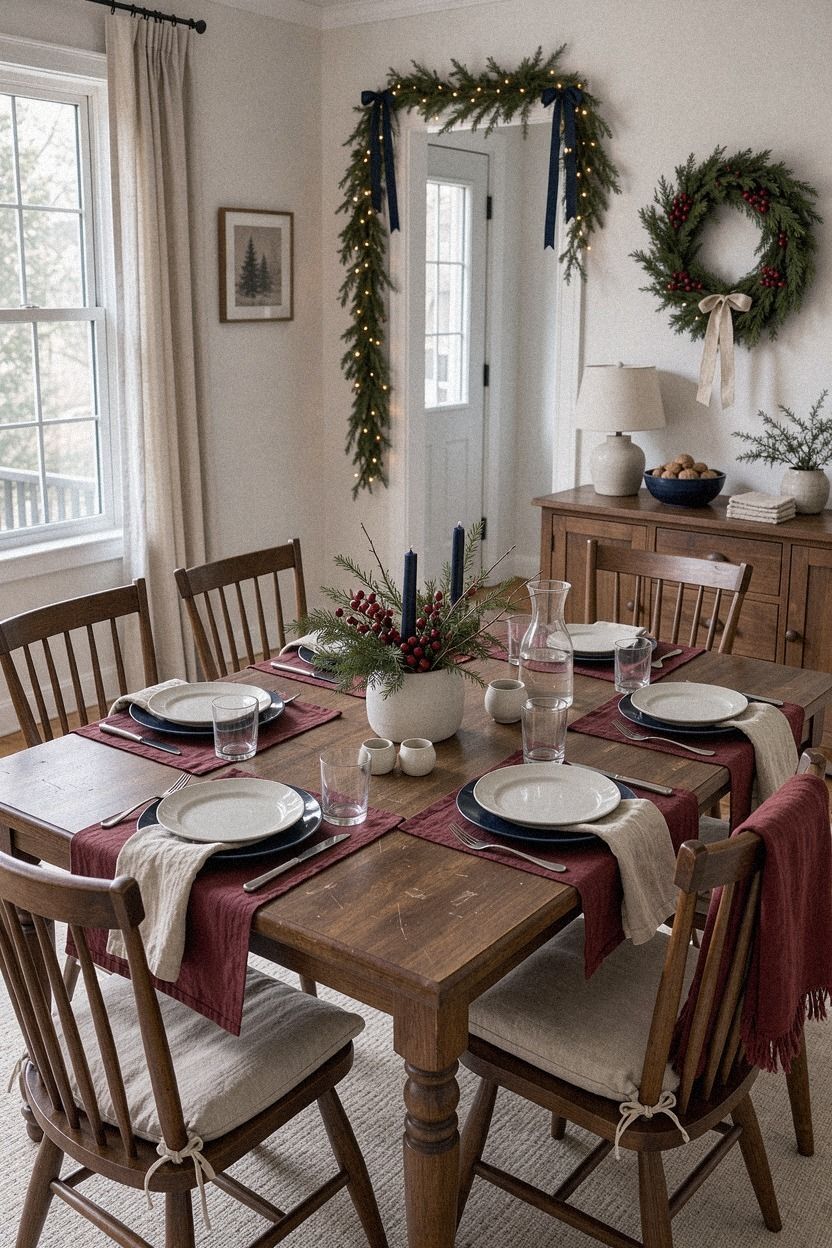
Traditional red plaid can feel cheerful, but it often takes over a table before you’ve added anything else. Try navy, white, and walnut instead. This palette feels composed without looking cold or overly formal.
Your table will still read Christmas, but the colors won’t shout from across the room.
Use washed Belgian linen napkins with a simple fold and add a small dried stem at each place. A few walnuts in a shallow dish bring in color and texture without requiring matching ornaments.
If you already own navy glasses, keep them, but let the rest of the table stay quiet. I’d skip bright navy chargers because they can bounce too much color around a small table.
And if you’re painting or refreshing the dining area, Sherwin-Williams Agreeable Gray SW 7029 gives navy and walnut a calm background. You don’t need to repaint for one dinner, though.
A neutral tablecloth or plain white kraft paper can create the same visual pause. You’ll get a more sophisticated setting by reducing the number of competing patterns.
4Anchor the Table With a Bowl of Oranges
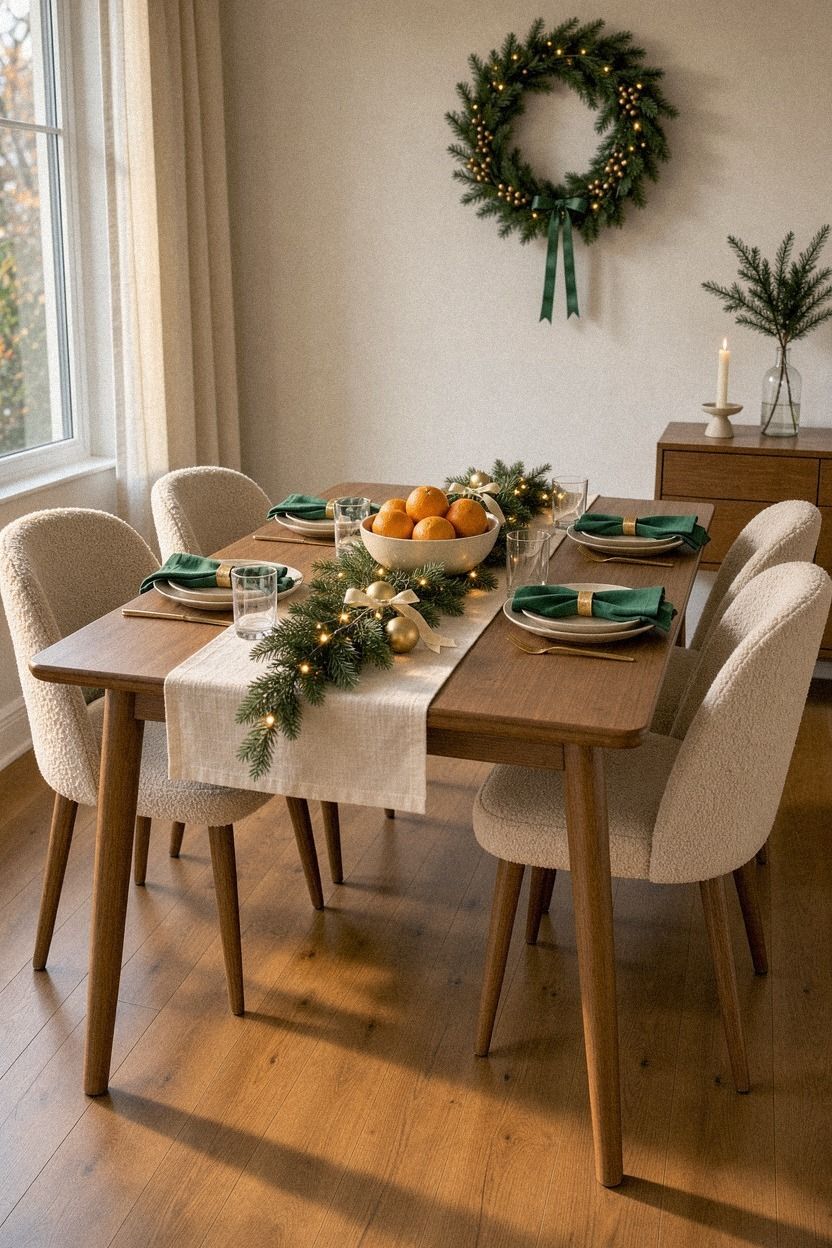
A bowl of oranges gives you a bright, earthy centerpiece that can be eaten afterward. Choose a shallow cream ceramic bowl and place it on an organic bouclé runner or napkin. The golden fruit adds warmth to an emerald and cream palette without leaning into novelty decorations.
Arrange the fruit loosely instead of stacking it into a perfect pyramid. You want a few uneven edges and glimpses of the bowl.
Tuck in an emerald-green sprig of rosemary if you have it. The scent is subtle, and your guests will notice it when they reach for a serving dish.
Why spend money on a centerpiece that can’t be used after dinner?
You’ll want to keep the bowl low, especially if your dining table is narrow. Place two short candles near opposite ends rather than crowding them beside the fruit.
Aged gold taper holders add warmth, but plain glasses work too. I’d avoid artificial fruit here.
It has a hard shine that makes the arrangement feel staged, while real fruit gives you texture, weight, and a reason to keep the bowl afterward.
5Why the Two-Wood Rule Works
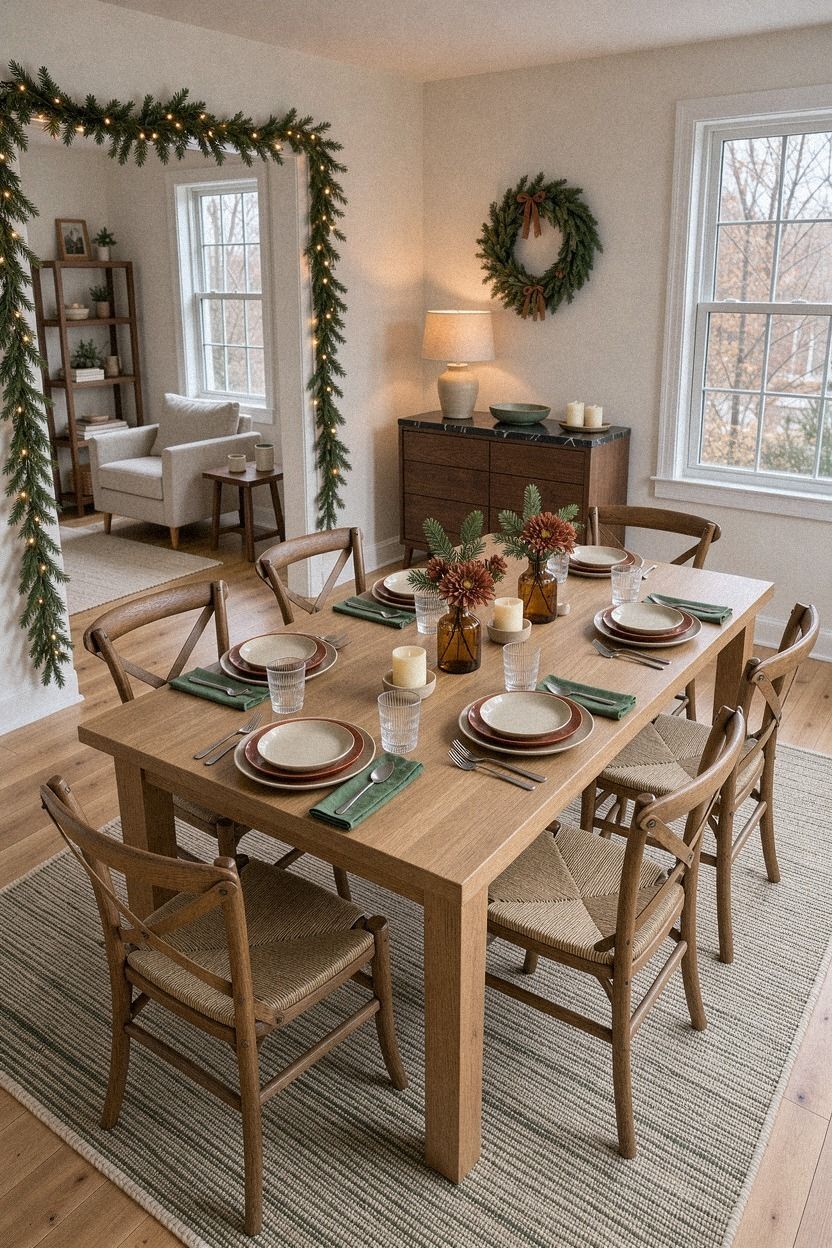
The Two-Wood Rule keeps a rustic tablescape from looking like a craft display. Choose one pale wood and one darker wood, then repeat each only once or twice.
You might pair a natural oak board with a dark wood accent, then add a small tray made from Nero Marquina black marble with white veins. The contrast gives the table depth without adding another color family.
Set the board in the middle as a serving base for bread, pears, or a small cake. Don’t cover the entire surface with decorations. Your guests need space for plates and glasses, and the bare table will make the wood feel more deliberate.
If you’re using an IKEA VARDAGEN serving board, its plain shape works well with forest-green linens and rust-colored ceramics.
But don’t combine three or four wood tones just because they’re available. I made that mistake once, and the table looked accidental instead of collected. Your eye needs a repeated material to understand the arrangement.
Add matte black flatware if you want a sharper edge, or use what you own and let the wood do the visual work.
6Fold Napkins Into Soft Evergreen Bundles
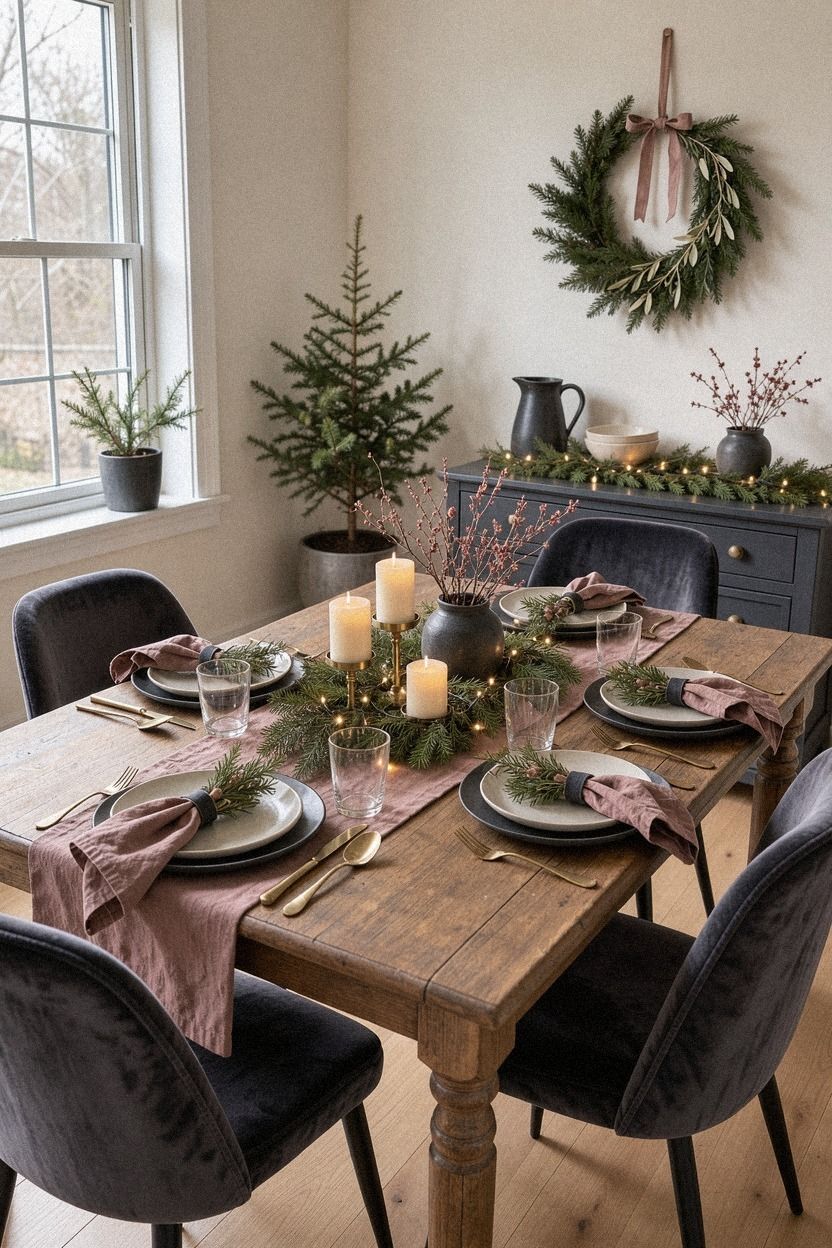
A napkin bundle makes each place setting feel considered, even when your dishes are basic. Fold a square dusty rose deep-pile mohair velvet napkin into a loose rectangle, secure it with an aged brass napkin ring, and tuck in a tiny evergreen sprig. The bundle should look relaxed, not like a gift package.
Place the napkin across the plate or just above it, depending on how much room you have. If you’re using everyday charcoal stoneware plates, the green branch will carry enough seasonal detail.
A small handwritten name card can make the setting feel personal without adding another purchased object. You’ll create a warmer table when your guests can see that their place was chosen for them.
Skip elaborate folds unless you genuinely enjoy making them. They take time, and most guests won’t notice the difference after the first course. I’d choose a soft fold and better texture every time.
Charcoal stoneware pairs nicely with the napkin bundle because its simple surface leaves room for the dusty rose velvet and greenery to stand out.
7When Rosemary Frames Each Place
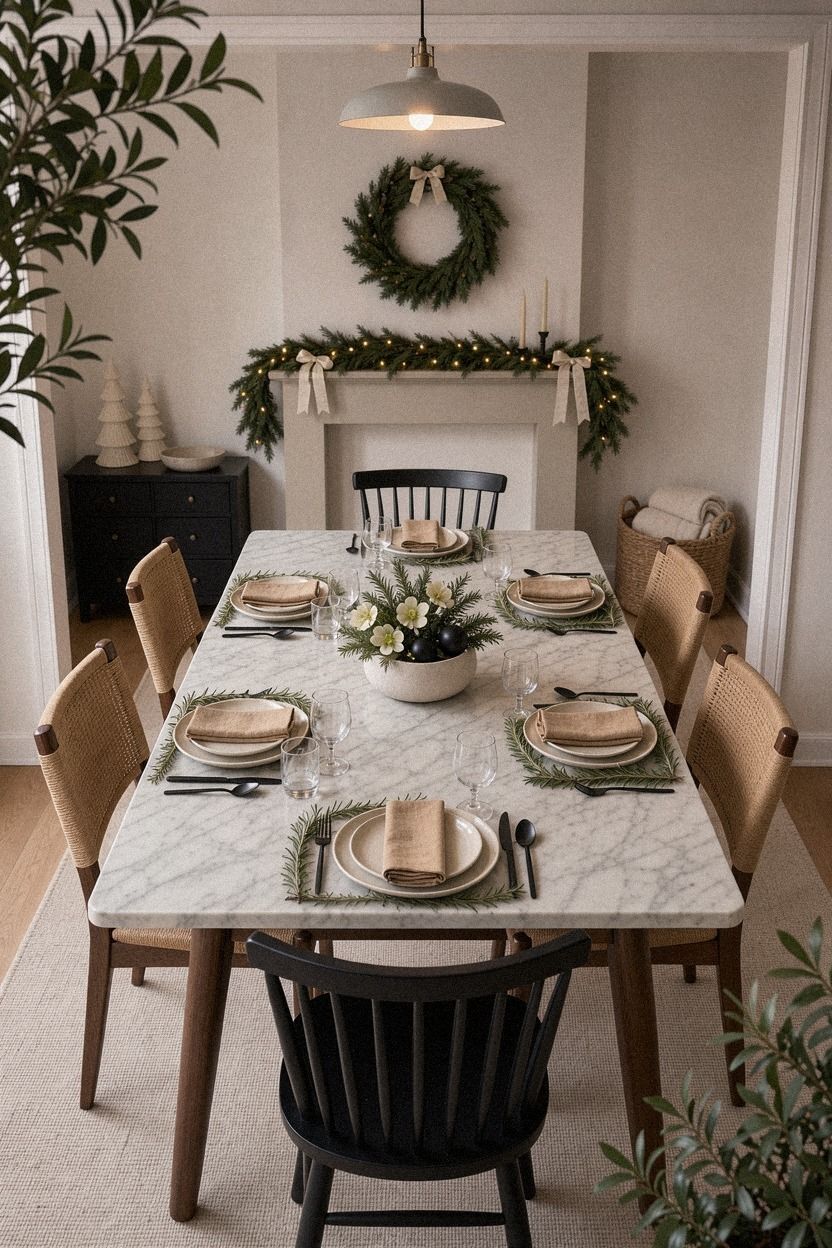
Small rosemary wreaths turn individual place settings into part of the centerpiece. Set each one beside a warm white plate, a camel linen napkin, and one restrained black accent. A small Carrara marble dish with subtle grey veining can hold the name card or a few crumbs of salt.
8Mix Cream Plates With Green Glass
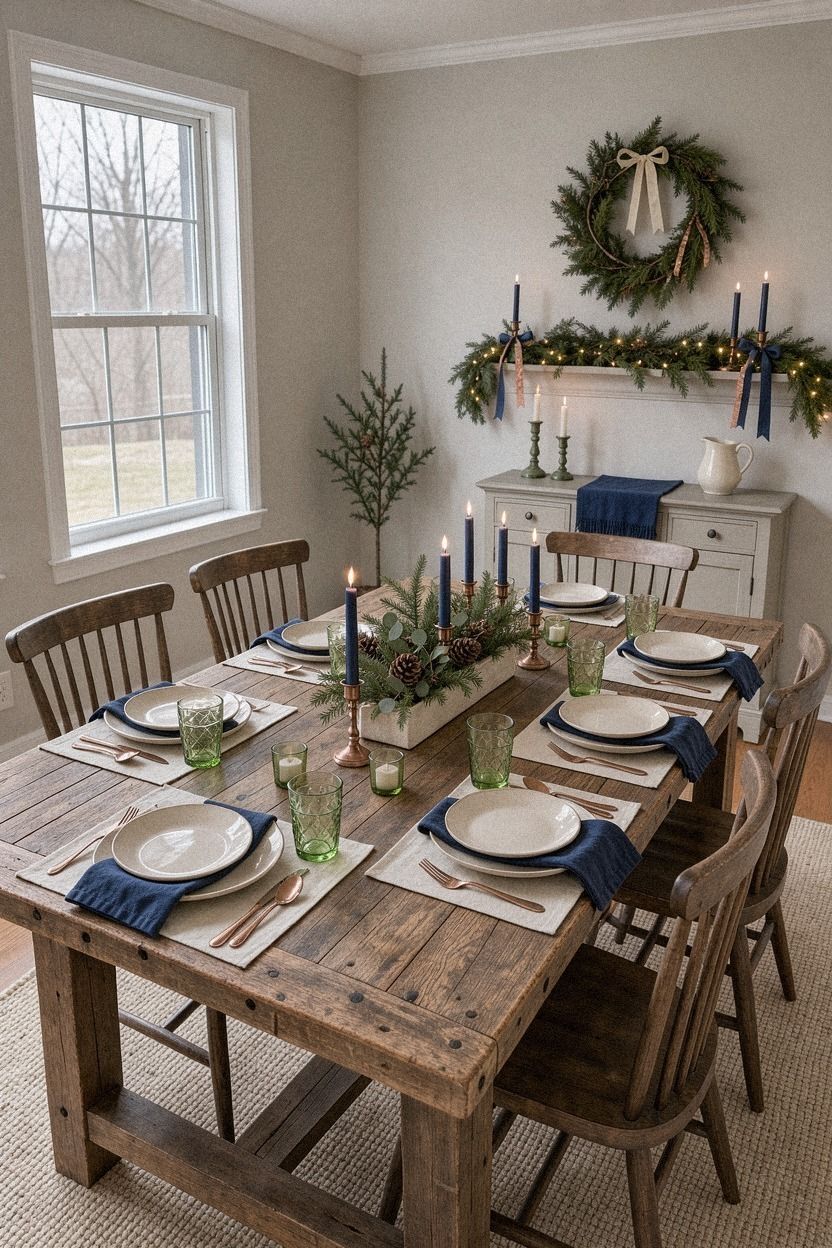
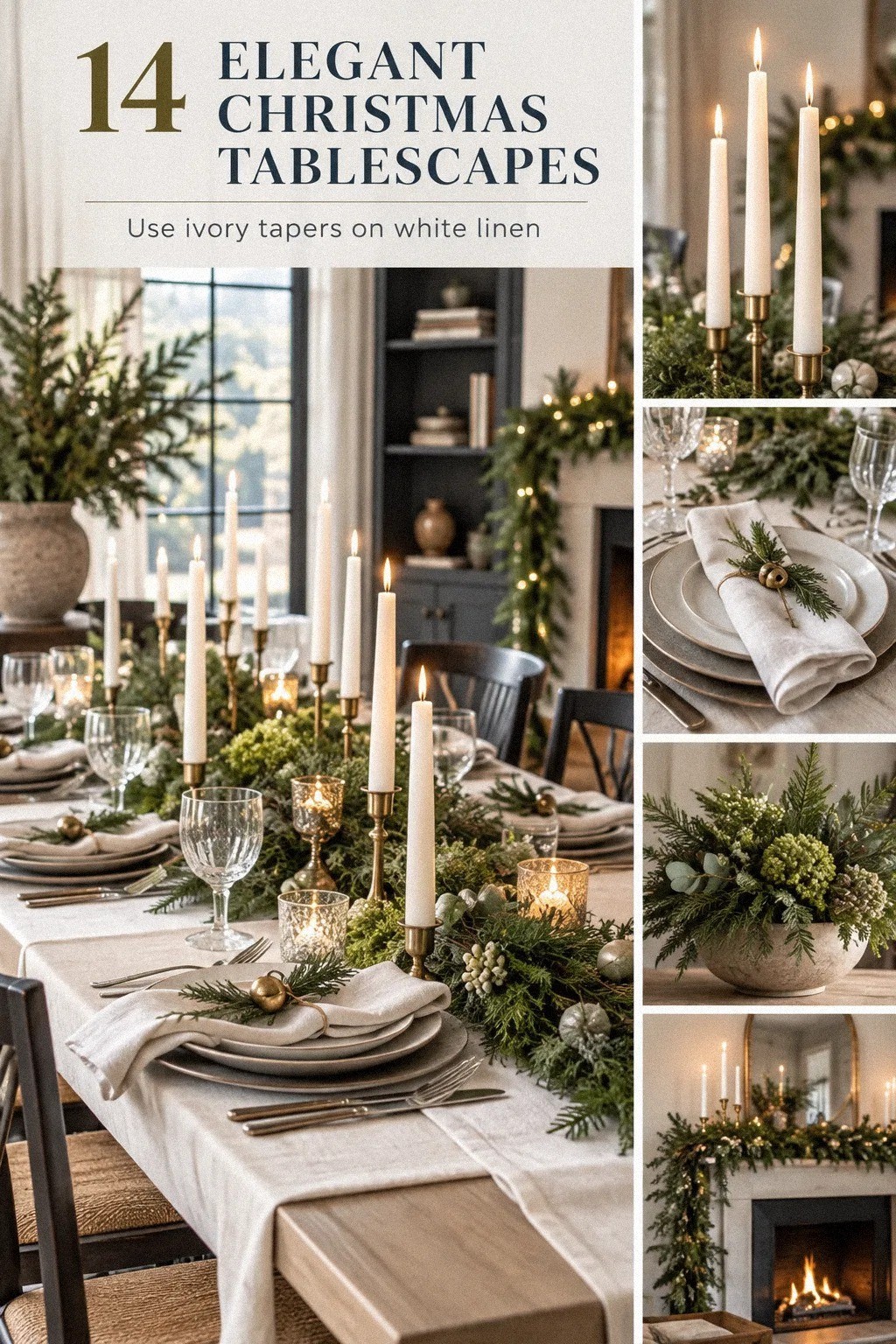
A mixed tableware setting can look more collected than a matching set, especially if you repeat one color. Pair ivory stoneware plates with midnight blue glassware, then add a copper accent and one serving piece made from reclaimed weathered teak. The deeper colors become the holiday note without forcing you to buy seasonal plates you’ll store for eleven months.
Look for midnight blue glasses at thrift stores, Target, or in your own cabinet. Slight differences in shape can make the table feel gathered over time.
You’ll want the plates to stay fairly consistent, though, because too many shapes can make serving feel awkward. A simple ivory plate, a clear salad plate, and midnight blue glasses are plenty.
I’d avoid combining bright emerald, ruby, and gold in the same small arrangement. Those colors compete under overhead light.
Instead, repeat the midnight blue at least three times across the table, perhaps in glasses, a napkin, and a small bowl. Farrow & Ball Hague Blue No.30 works as a deep wall color behind this combination, but you don’t need matching paint for the idea to hold.
9Hang a Simple Branch Above the Table
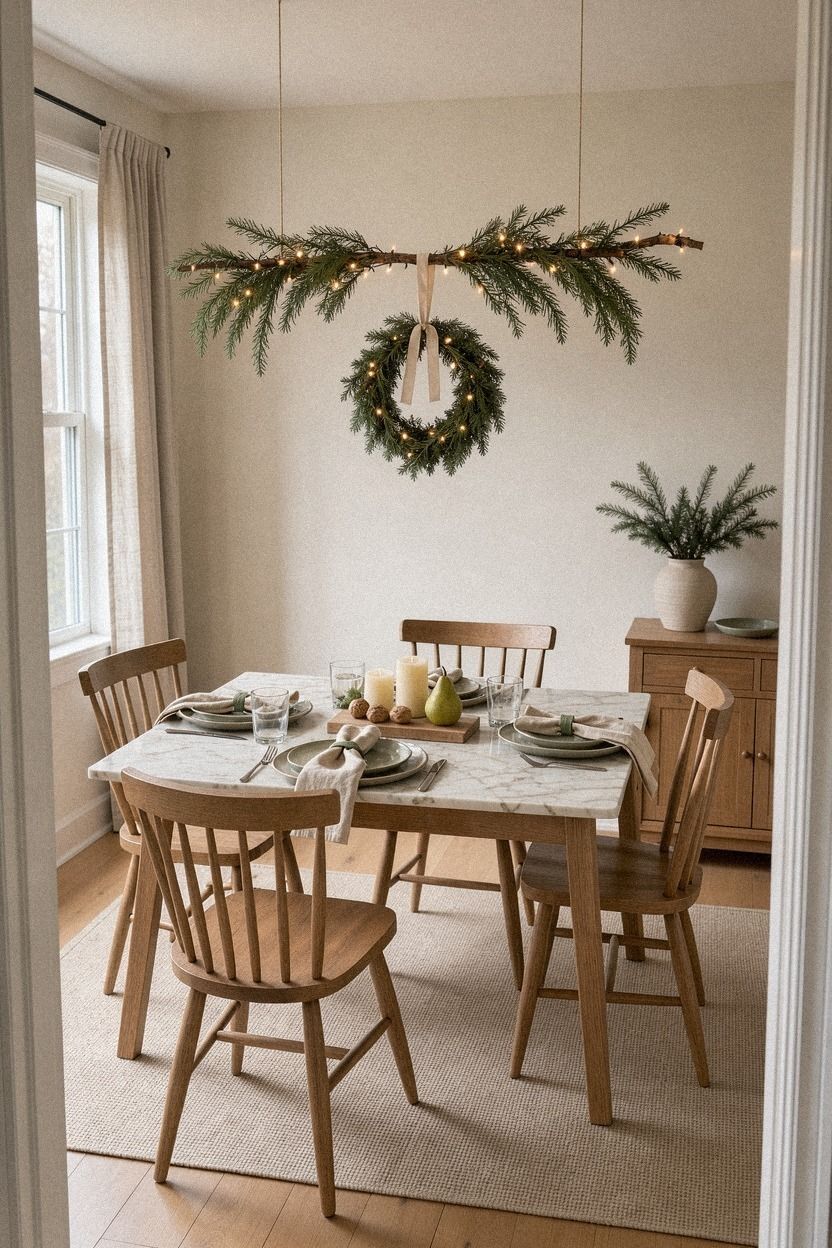
If your tabletop is already busy, move the decoration upward. A single branch suspended above the dining table creates drama while leaving space for plates and serving bowls. Use a sturdy natural wood branch and hang it with clear line or removable hooks rated for the surface.
Keep the branch high enough that guests won’t bump it when standing. You’ll want it to frame the table, not hover at eye level.
Add a few warm cream paper stars or sage green unfinished wood stars, but resist covering the entire branch. One uneven cluster looks more refined than a fully decorated installation.
But check your lighting first. The branch shouldn’t touch a hot bulb or block the room’s main light. A dining table needs three sources across the room when possible: overhead, task, and ambient.
If the pendant already dominates, skip the hanging ornaments and use the branch alone. I’d choose unfinished wood stars over glittered ones because their texture will show during the day, not only when the lights are on.
Set a small dish made from Calacatta marble with gold veining on the tabletop below the branch. It adds a quiet polished detail while the sage, warm cream, and natural wood keep the arrangement relaxed.
10Paint the Backdrop, Not the Table
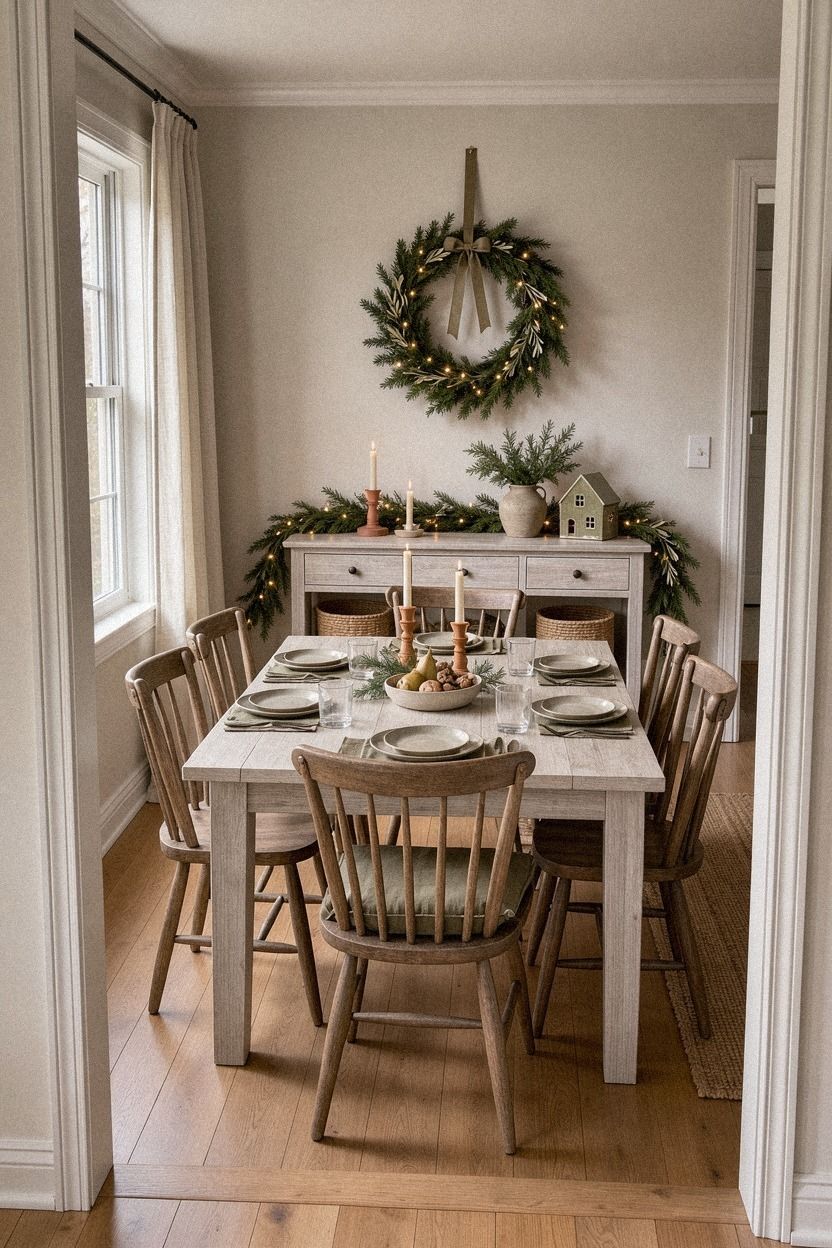
A small painted backdrop can make an inexpensive tablescape feel intentional. You don’t have to paint the whole dining room.
A removable paper panel, a painted board, or a small section behind a sideboard can give your table a deeper setting. Benjamin Moore Natural Cream OC-14 keeps the look gentle, while terracotta and olive can make candlelight feel richer.
If you already have a cerused white oak panel, paint it in a muted terracotta tone and lean it behind the table. The artwork becomes a quiet background rather than another centerpiece. You’ll get more impact from one broad field of color than from several tiny decorations scattered across the wall.
I’d skip bright holiday graphics unless the rest of your room is equally playful. They can make a refined table feel disconnected from its surroundings. Sherwin-Williams Olive Grove SW 7734 is a useful inspiration for an olive backdrop, while a stone-colored linen runner will keep the surface from feeling too cool.
Your goal is atmosphere, not a themed photo booth.
11Can Candles Beat Clutter?
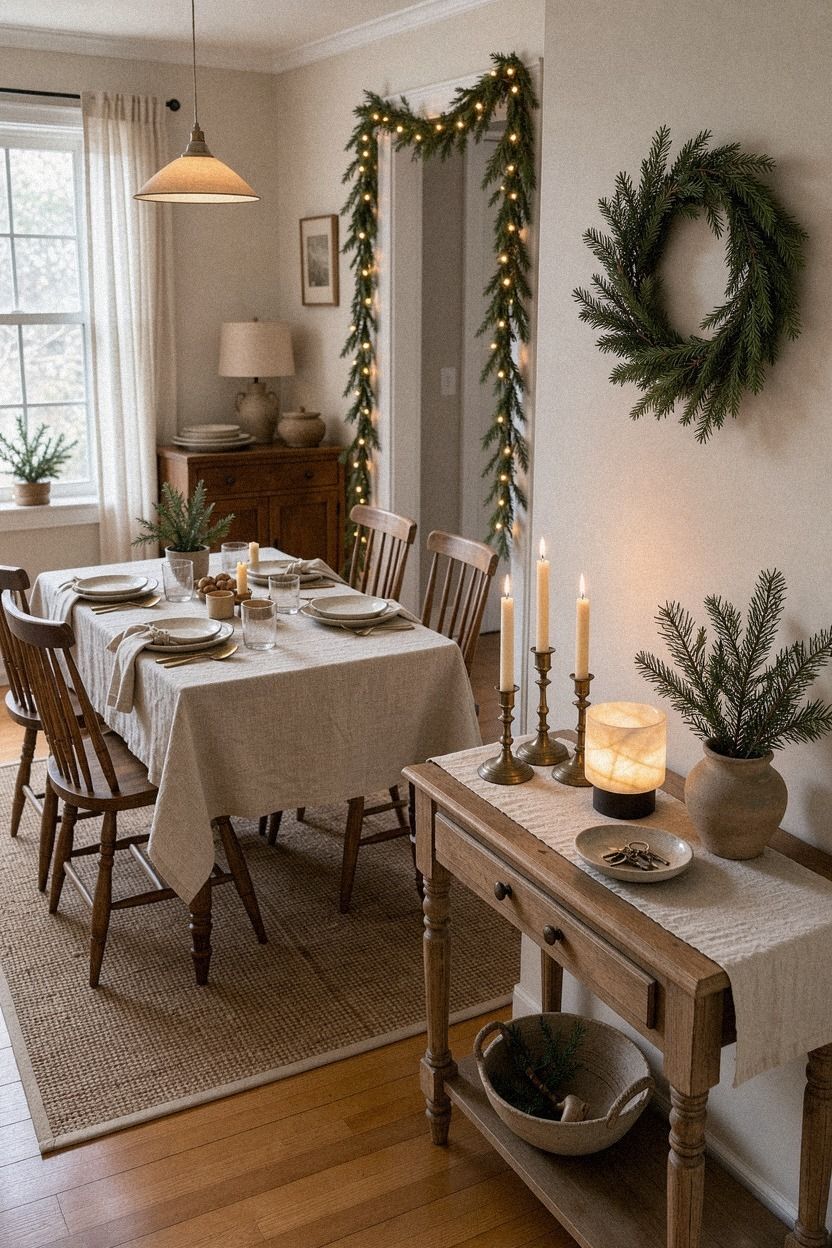
Candles over clutter is my favorite rule for a small Christmas table. A warm glow against clay, linen, aged brass, and backlit translucent onyx can carry the whole arrangement.
12Create the Quiet Center Method
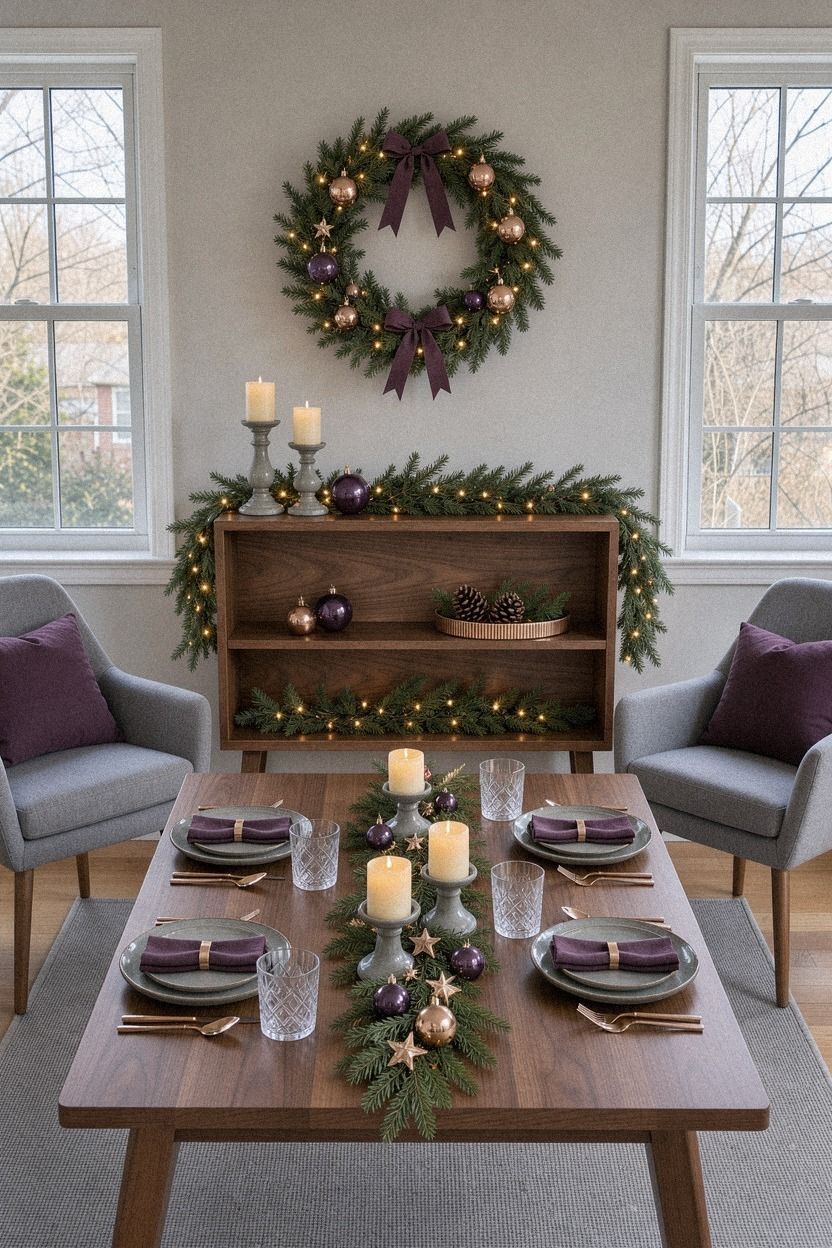
The Quiet Center Method leaves the middle of the table nearly empty. Place one narrow runner, one small bowl, and a few individual candles, then let the surrounding surface stay visible. This works especially well for small dining tables where serving dishes already take up most of the room.
Use a book-matched walnut tray with a grey ceramic bowl for texture, then fill it with pinecones or a few pears. Add one rose-gold candleholder if the arrangement needs a little shine.
The walnut grain will catch shadows and make the centerpiece feel substantial without being tall. If you’re using a round table, arrange the objects in a loose triangle so the composition works from every chair.
You’ll need to edit as you go. Put everything on the table, take one photo, and remove the least useful piece.
I’d rather see one strong bowl and clean space than six tiny objects competing for attention. Your guests will appreciate the open surface when plates, glasses, and serving dishes arrive. It feels calm because the table can perform its real job.
13Silver With Natural Fiber: A Warmer Contrast
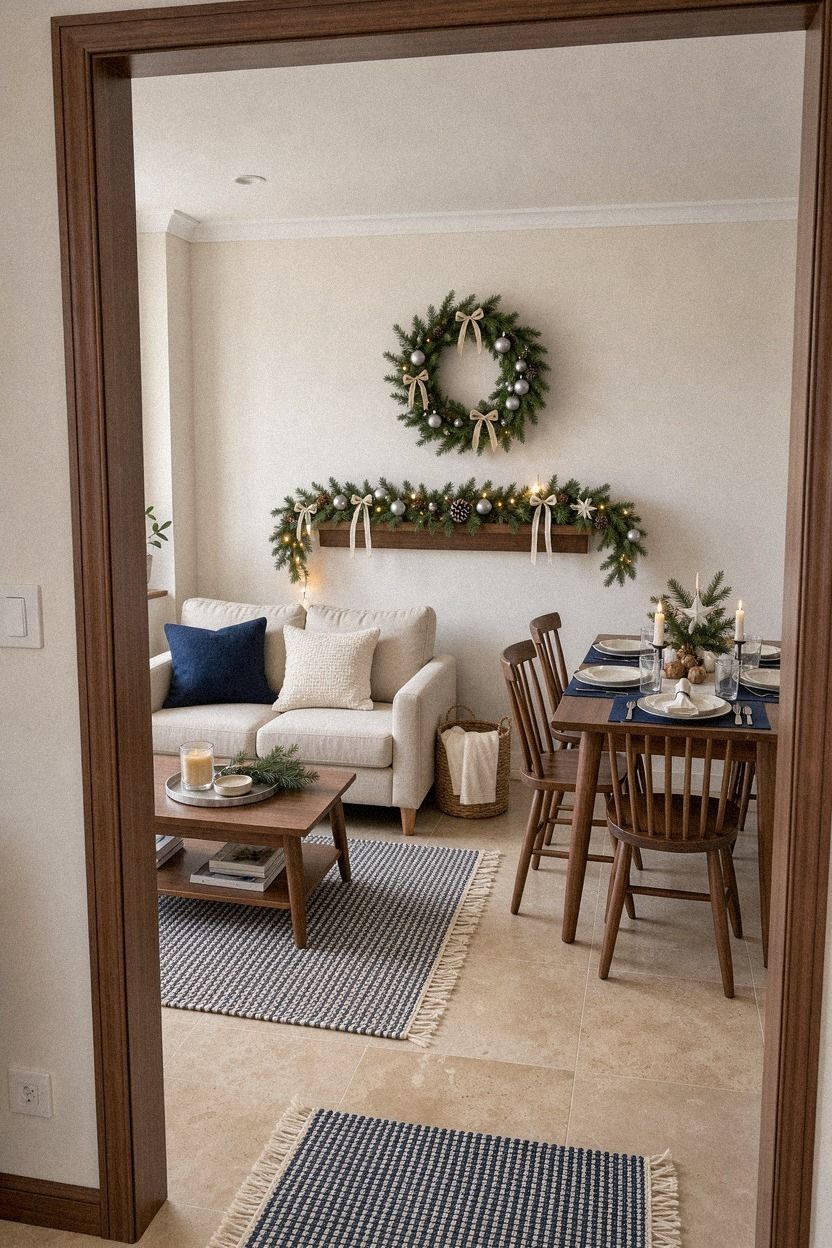
Silver can look cold when it’s surrounded by more silver, so warm it with natural fiber and warm travertine. Pair the metal with navy linen, white plates, and a small walnut serving board. The contrast feels festive without requiring another shiny decoration.
14Frame the Table With Floor-Length Fabric
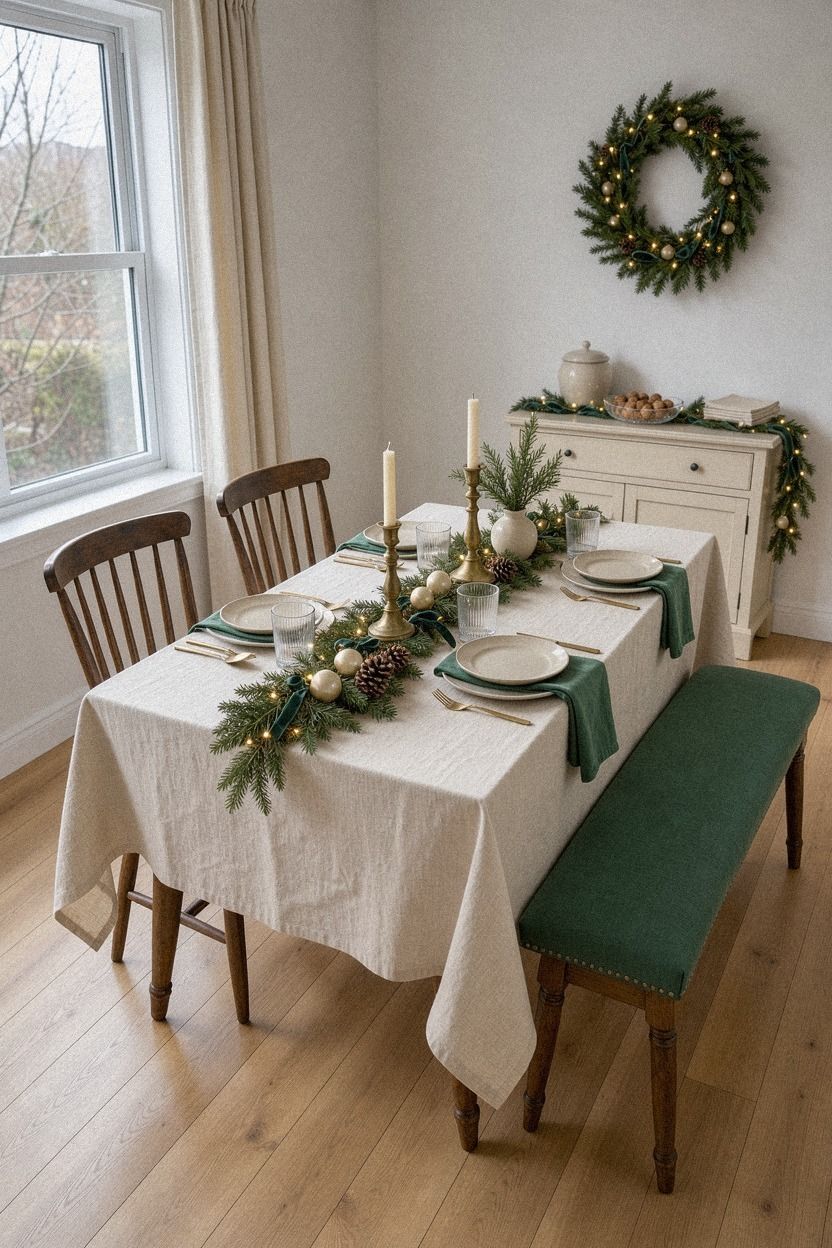
Floor-length fabric behind the table can make a simple dinner setup feel taller and more finished. Hang curtains with the rod about 4 to 6 inches above the frame, then let the fabric reach the floor. If you don’t have a window there, use a tension rod or drape a cream Belgian flax linen panel over a temporary support.
Choose emerald, gold, or cream so the fabric supports the table instead of competing with it. Your centerpiece can stay simple because the vertical texture gives the room enough presence.
If you’re decorating a rental, removable hardware will protect the wall and keep the idea flexible. A little unlacquered brass developing patina adds warmth without looking too polished.
But don’t use short fabric that stops halfway down the wall. It makes the table feel visually cut off.
I’d choose a plain panel over a holiday print because you’ll reuse it for birthdays, winter dinners, and spring gatherings. Sherwin-Williams Agreeable Gray SW 7029 is a useful reference if you want the fabric to sit quietly against a neutral room.
What These Tablescapes Prove About Budget Decorating
I used to think an elegant Christmas table needed a matching collection, expensive glassware, and a centerpiece that filled the entire length. I bought shiny pieces because they looked festive under store lighting.
At home, they reflected every overhead bulb and left no room for food. The table looked expensive in the wrong way, which is to say it looked busy.
The better approach is subtraction. Choose one texture you can feel, one color that repeats, and one source of light that flatters the food.
Belgian flax linen, natural wood, and warm candlelight do more work than a pile of coordinated ornaments. I’ve learned that the table needs a little imperfection.
A bent branch, a wrinkled napkin, or two glasses that don’t quite match can make the setting feel lived-in.
For a table under $40, your strongest resources are often already nearby. Look in the kitchen for fruit, in the yard for evergreen clippings, and in a drawer for twine.
Thrift shops can fill the gaps with cream dishes, green glasses, and small bowls. I’d spend first on the item your hands will touch, such as napkins or flatware, and borrow the rest.
These broader decorating costs show why editing matters:
Those figures cover larger room projects, not this tablescape ceiling. Your small seasonal setting doesn’t need to behave like a full dining-room renovation.
That’s where restraint wins. You’re buying atmosphere, not a permanent collection.
What People Always Want to Know
What is the best elegant Christmas tablescape for a small table?
A low evergreen runner with three candles is the best starting point because it leaves room for plates and serving dishes. Low candlelight gives you warmth without blocking conversation. You can add one shallow bowl, but skip tall florals if your table is narrow.
Where can I buy Christmas tablescape pieces on a budget?
Target, IKEA, Wayfair, thrift stores, and Facebook Marketplace are useful places to look. Secondhand glassware often gives you more character than a matching seasonal set. Search for cream plates, green glasses, linen napkins, and plain candleholders, then combine them with what you own.
How much does an elegant Christmas tablescape cost?
This particular setup can stay under $40 when you reuse dishes, gather greenery, and choose one purchased accent. Free natural materials can cover the centerpiece. A broader dining-room refresh averages $200-$800 at the budget tier, while larger furniture and lighting projects cost much more.
Can I create an elegant Christmas tablescape on a budget?
Yes, and you can start with three free moves: rearrange your existing dishes, clip greenery, and use fruit as the centerpiece. A restrained palette makes inexpensive pieces feel intentional. Add one linen, wood, or woven texture if the table still feels flat.
Is an elegant Christmas tablescape worth it in a small space?
Yes, because a small table benefits from clear editing. Open tabletop space makes the room feel easier to use and keeps the centerpiece from becoming visual clutter. Choose low objects, repeat one color three times, and remove anything that blocks your guests’ view.
Is an elegant Christmas tablescape a good idea for a rental?
Yes. Use tension rods, removable hooks, loose fabric, and tabletop arrangements that require no drilling.
No-damage decorating lets you create a backdrop or hanging branch without permanent changes. Keep the wall color as part of the palette instead of fighting it with too many decorations.
Where I’d Start First
If I had to pick one, I’d start with the low evergreen runner and candle arrangement. It gives you texture, scent, and warm light without demanding matching dishes.
Keep the center open, let the branches wander, and use what you already own. Pin the idea for later, then set the table before you buy anything.


