
13 Reasons Thermal Curtains Might Actually Lower Your Heating Bill
14 october 2026Do thermal curtains actually lower your heating bill? Sometimes, yes. They slow heat loss through cold glass, reduce drafts around the window, and make the room feel warmer before you turn up the thermostat. They won’t replace insulation, repair a failing seal, or transform a single-pane window into a modern one. That distinction matters!
I learned that after hanging thin linen panels over a drafty window and wondering why the room still felt sharp at night. The fix was better coverage, stronger hardware, thicker fabric, and a simple closing routine. Small change, noticeably warmer room.
For a quick overview, start with curtain coverage, then compare it with the four-sided seal and lining choices.
- Hang curtains beyond the glass
- Can the Four-Sided Seal Keep More Warmth Inside?
- Choose a double-layer curtain
- Which Lining Traps the Most Still Air?
- Close the panels before the room cools
- The Window Wall Strategy Changes the Whole Room
- Layer a rug beneath the cold window
- Trade Pale Glass Glare for a Warmer Palette
- Float the Rod Above the Frame
- What Does the Two-Height Rule Add?
- Choose Insulated Drapes Over Decorative Sheers
- Add the Three-Source Light Stack
- Measure the Payback Before You Upgrade
1Hang curtains beyond the glass
Thermal curtains work best when they cover more than the window itself. Let your rod extend 4 to 6 inches above the frame and run several inches past both sides, so your insulated drapes overlap the wall instead of leaving cold strips exposed.
You’ll often feel the difference near the edges first, especially if your sofa, desk, or reading chair sits close to the glass. Cold air can collect around an uncovered casing, then move into the room as the surface cools. It’s a surprisingly simple fix!
I used to hang rods directly inside the frame because it looked tidy. It wasn’t.
The fabric trapped almost no air, and the room still lost warmth around the casing. A wider rod creates a deeper, more generous fold and keeps your heating system from working as hard.
The best look is a full drop to the floor, not a short panel hovering beneath the sill. If you’re working with a shallow room, choose a soft midnight-blue linen blend with a thermal lining, then keep the hem just above the floor so it doesn’t collect dust.
Measure the window, the wall, and the stack-back area before ordering. Your finished curtain width should usually be 1.5 to 2 times the rod width, depending on how full and luxurious you want the folds to look.
Typical thermal-curtain cost by tier:
If you’re comparing options, the window-wall strategy can help you decide whether a wider treatment is worth the extra fabric.
2Can the Four-Sided Seal Keep More Warmth Inside?
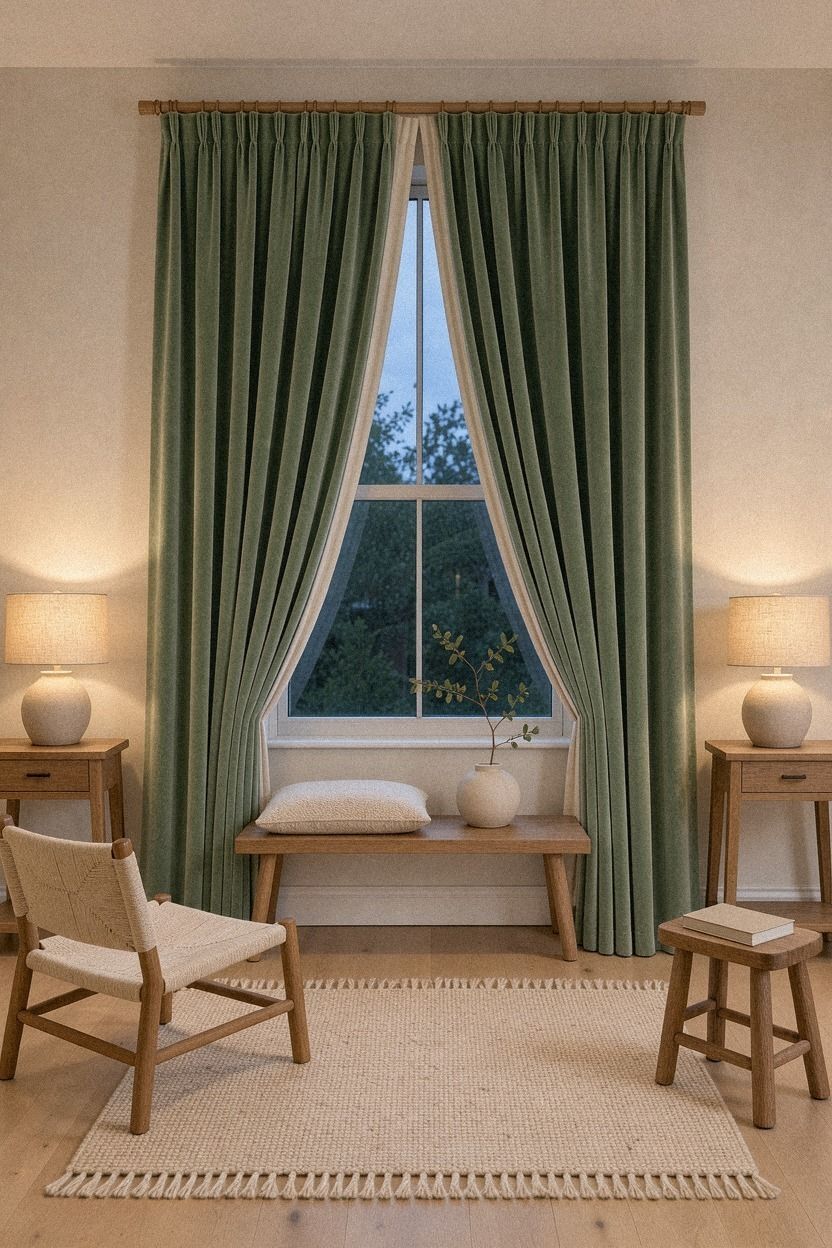
The Four-Sided Seal is my favorite practical rule: your curtain should touch or closely approach the wall at the top, sides, and bottom as much as the room allows.
The top seal comes from mounting the rod high enough and choosing a curtain with a substantial header. A ceiling-mounted curtain track can work beautifully when the window reaches almost to the ceiling or when a traditional rod would leave a large gap above the fabric.
At the sides, generous overlap matters. Extend the rod beyond the frame, then let the curtain stack against the wall when closed. If the panels stop precisely at the window casing, cold air can travel around them.
The bottom is more complicated. A panel that reaches the floor reduces the open gap beneath the fabric, but it shouldn’t cover a radiator or electric heater. Leave enough clearance for warm air to circulate, even if that means stopping the hem slightly above the floor.
In an older home, the seal may be more valuable than an expensive fabric label. A moderately thick curtain fitted carefully can outperform a deep-pile mohair velvet panel that leaves several-inch gaps around the frame.
That’s why I’d read this section alongside how to close the panels. Coverage only helps when the curtain is actually closed.
3Choose a double-layer curtain
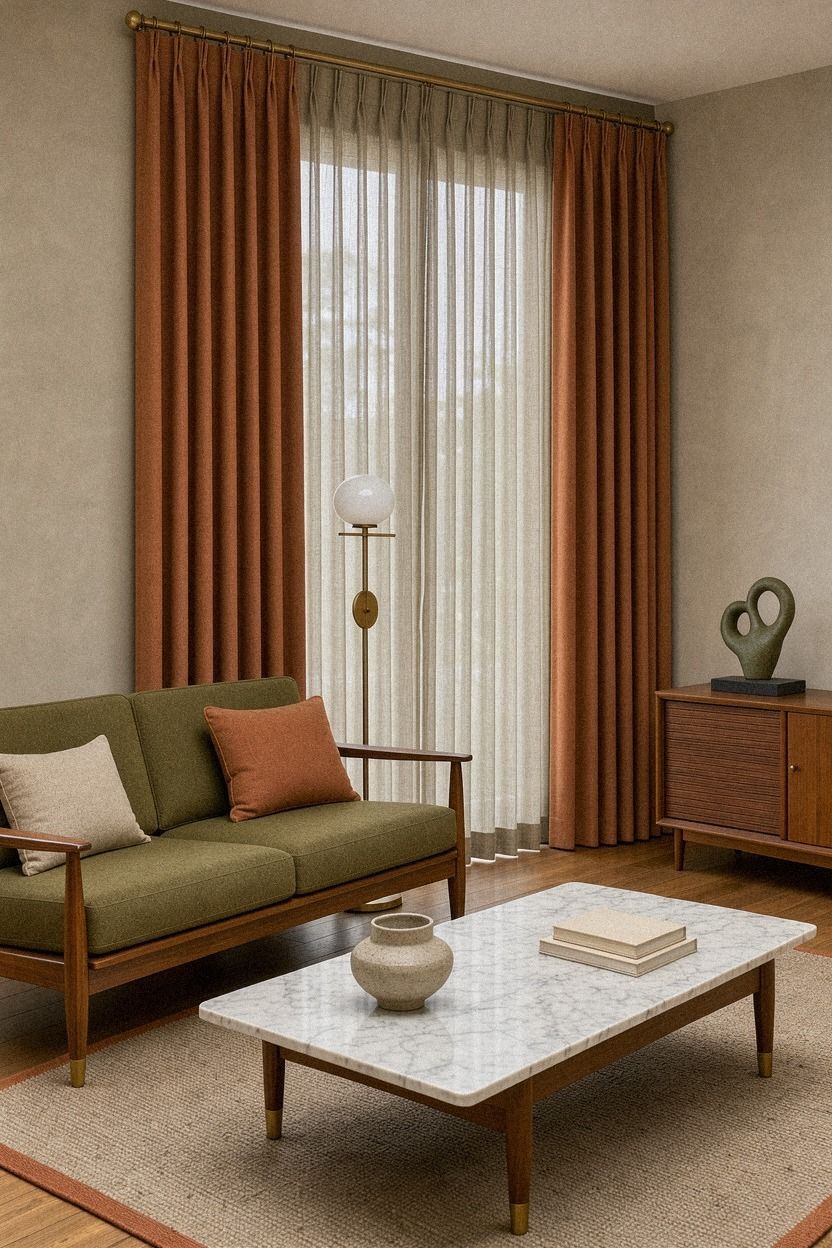
A double-layer setup gives you flexibility that one heavy panel can’t.
4Which Lining Traps the Most Still Air?

The lining matters more than the word “thermal” printed on the package. Look for fabric with enough density to hang smoothly, resist drafts, and create a still-air pocket between the room and the glass.
A polyester thermal lining is usually affordable and easy to find. It can add meaningful weight without making the curtain impossibly thick. A quilted version offers more body, while a simple coated lining may provide privacy and light control without much softness.
For a more natural finish, consider a linen-toned cotton sateen lining or a tightly woven cotton blend. These options feel less plastic-like when you touch the back of the panel, though they may cost more and require careful washing.
Blackout lining can help in bedrooms, but darkness and thermal performance aren’t exactly the same thing. Some blackout fabrics block light beautifully while remaining fairly thin. Read the construction details, not just the package color.
A wool interlining creates a plush, substantial curtain with excellent drape. It’s elegant and effective, but it’s also expensive and heavier than most ready-made systems. You’ll need strong hardware and enough space for the curtain to stack without swallowing the window.
The most practical choice is the lining you can install correctly and use every evening. A thick panel left open because it feels awkward won’t save much warmth.
If you’re choosing between materials, compare this section with the advice on insulated drapes versus sheers.
5Close the panels before the room cools

Timing changes how much your curtains can help. Close them while the room still holds daytime warmth, not after the floor feels icy and your hands are cold. You’re trying to keep heat inside before the glass becomes the coldest surface in the room.
Set the panels before dinner, then open them when morning sun reaches the room. If the window faces north or sits behind another building, you may keep the curtains closed longer. The goal is a useful rhythm, not a strict schedule.
A smart thermostat can remind you, but you don’t need another gadget. Your hand on the curtain is enough. Once the routine becomes automatic, the small action takes less time than adjusting the thermostat.
I prefer a muted plum curtain in this setup because it catches lamp light without making the room gloomy. A dark panel can absorb more visual weight than you expect, especially in a small room.
If your walls are a soft warm gray, plum, ivory, or rose gold will feel composed without turning the window into a heavy black rectangle. For a richer room, try charcoal, aged brass, or dusty rose.
Close the curtains when you leave the room for the evening, but open them when direct winter sunlight can warm the glass and floor. The best result comes from treating the panels as part of the room’s daily climate, not as permanent decoration.
The difference becomes especially noticeable when paired with a warmer window palette.
6The Window Wall Strategy Changes the Whole Room
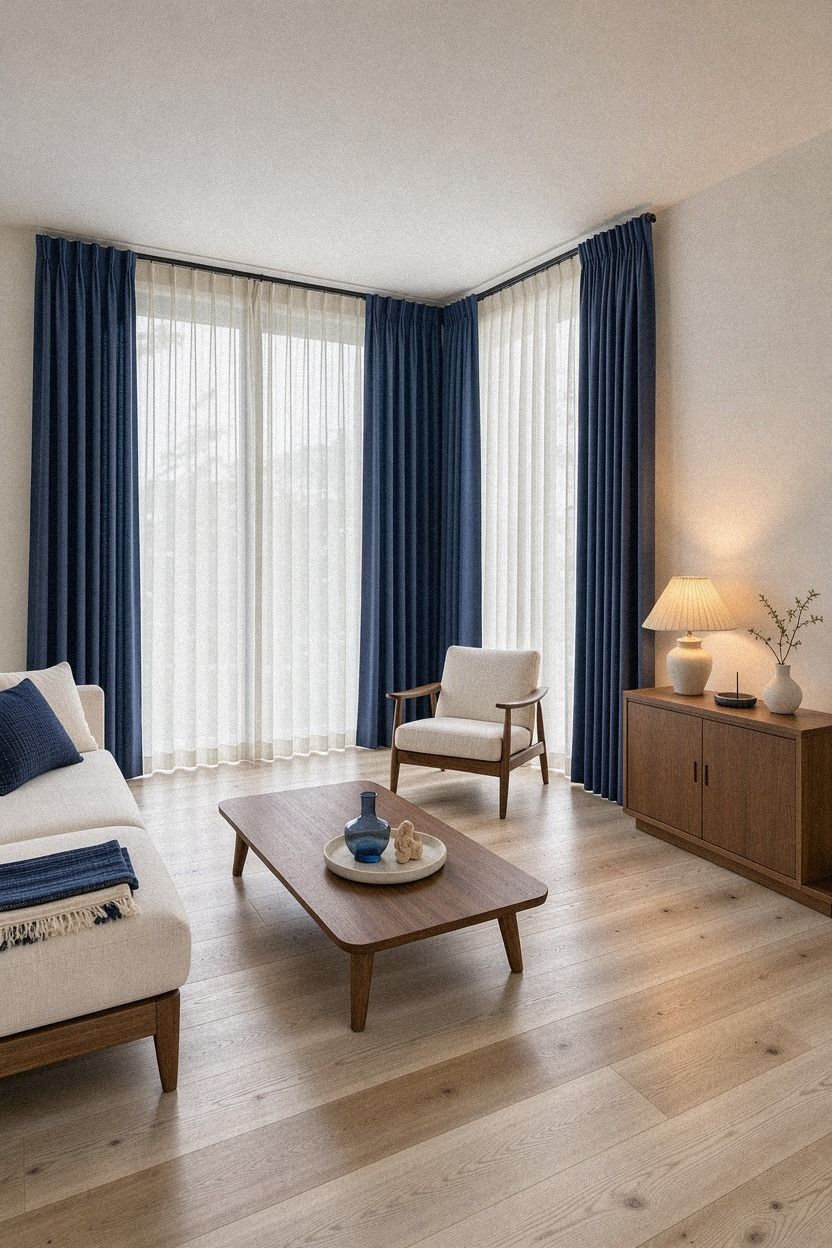
The Window Wall Strategy treats the whole window wall as one thermal zone.

7Layer a rug beneath the cold window
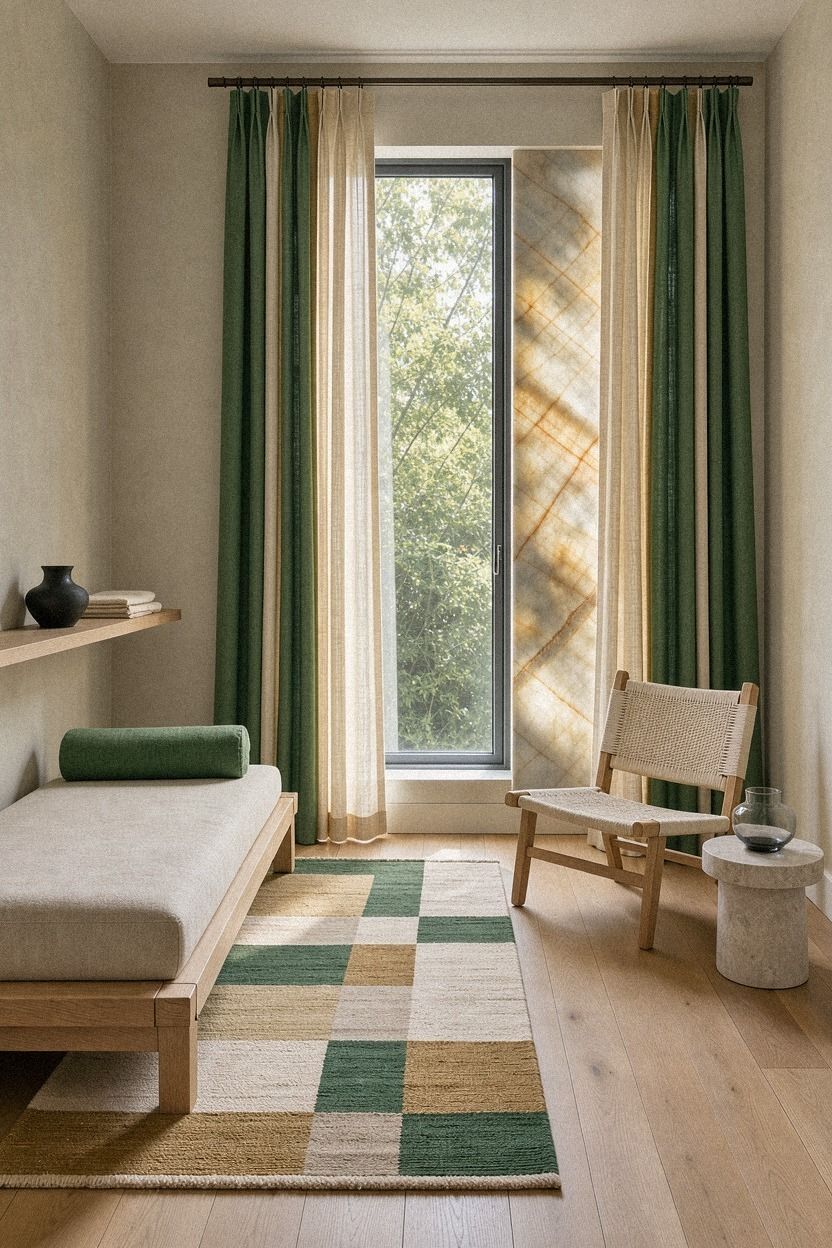
A curtain can slow heat loss above the floor, but a rug changes what your feet feel below it. If your window wall sits over hardwood or tile, an emerald-and-cream wool rug with a quiet gold accent gives the area a softer, less chilly landing.
You’ll notice it every time you stand near the glass. That matters because perceived warmth isn’t only about the thermostat. Cold flooring can make an otherwise comfortable room feel severe and unwelcoming.
Choose a rug large enough that your furniture overlaps it. A tiny mat floating in front of the window won’t anchor anything, and it can make the room feel visually colder. In a compact room, let the front legs of your sofa rest on the rug.
Don’t buy a thick shag simply because the room feels cold. Shag can trap dust, catch the curtain edge, and make cleaning frustrating. I’d choose wool or a tightly woven jute and cotton blend instead.
A flatwoven rug works well beneath curtains because the hem can skim over it without catching. If you prefer cushioning, choose a low, firm pile and use a nonslip pad that won’t create an awkward ridge.
Keep the curtain hem clear of the rug by about half an inch when possible. That small gap helps the fabric move, keeps dust from collecting in the fold, and makes the whole arrangement look tailored.
For evening comfort, combine the rug with the three-source light stack. The room can feel dramatically warmer without a dramatic thermostat change.
8Trade Pale Glass Glare for a Warmer Palette

Color won’t lower your bill by itself, but it changes whether you keep the curtains open or closed. A stark white panel may reflect daylight beautifully while making evening glare and cold glass feel more obvious.
Try a rust-toned paint near the window if the room currently feels blue or clinical. It absorbs a little glare and gives warm fabrics somewhere to settle. You don’t need a dramatic color change to make the space feel more generous.
For a bolder approach, use Farrow & Ball Studio Green on the window wall and balance it with natural oak, rust, or ivory. The deep green creates a grounded backdrop, while the lighter curtain keeps the treatment from feeling heavy.
If green isn’t your style, Benjamin Moore Essex Green HC-188 offers a deep, forested quality without turning the room flat. It can make evening lamplight feel especially rich against walnut, linen, and aged brass.
Avoid choosing a curtain solely because it matches the wall. Similar tones can look elegant, but the fabrics should still differ in texture. Pair matte paint with a subtly lustrous lining, or a flat wall with a nubby woven face.
The emotional effect matters. A room that feels warm, layered, and quietly dramatic encourages you to settle in rather than reach for the thermostat at the first hint of discomfort.
For a lighter palette, see the suggestions for closing the panels before the room cools.
9Float the Rod Above the Frame
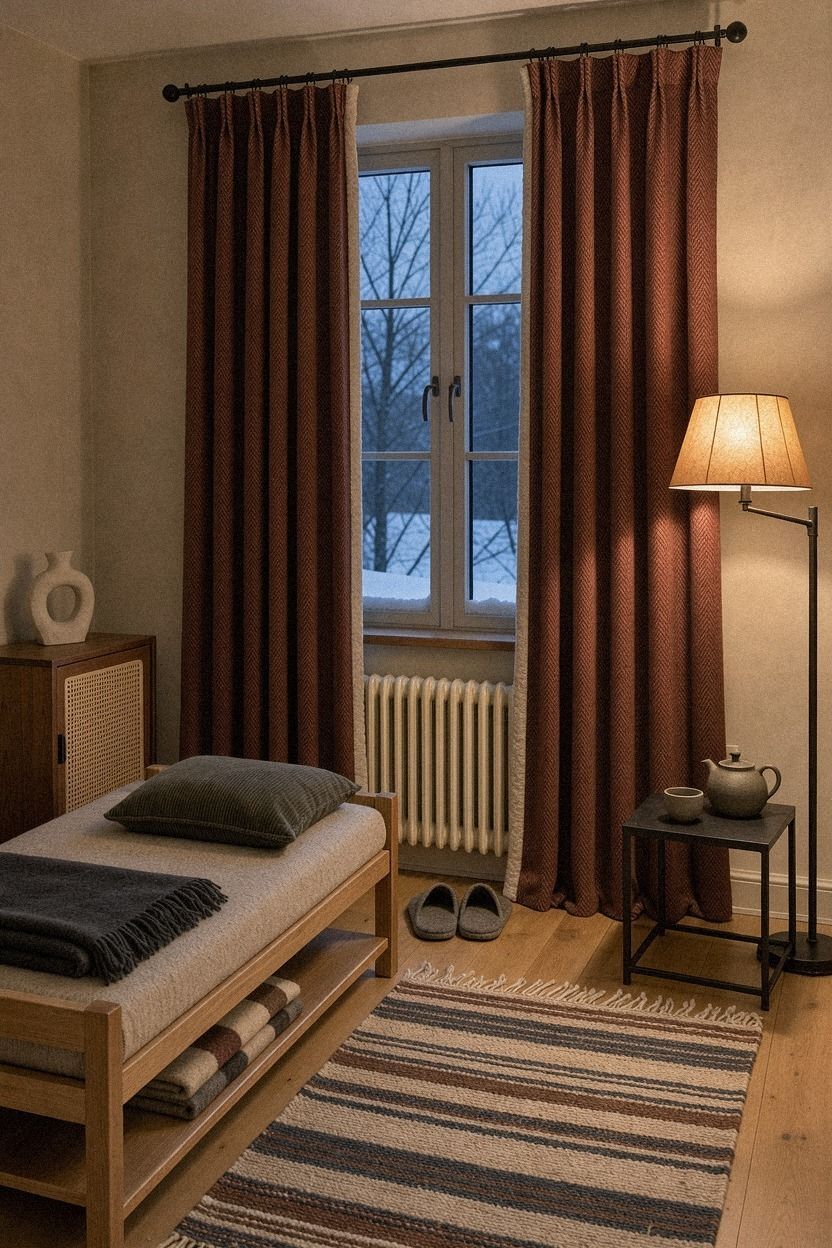
Mounting the rod higher makes your window look taller, but it can also help you cover more of the cold wall.
10What Does the Two-Height Rule Add?
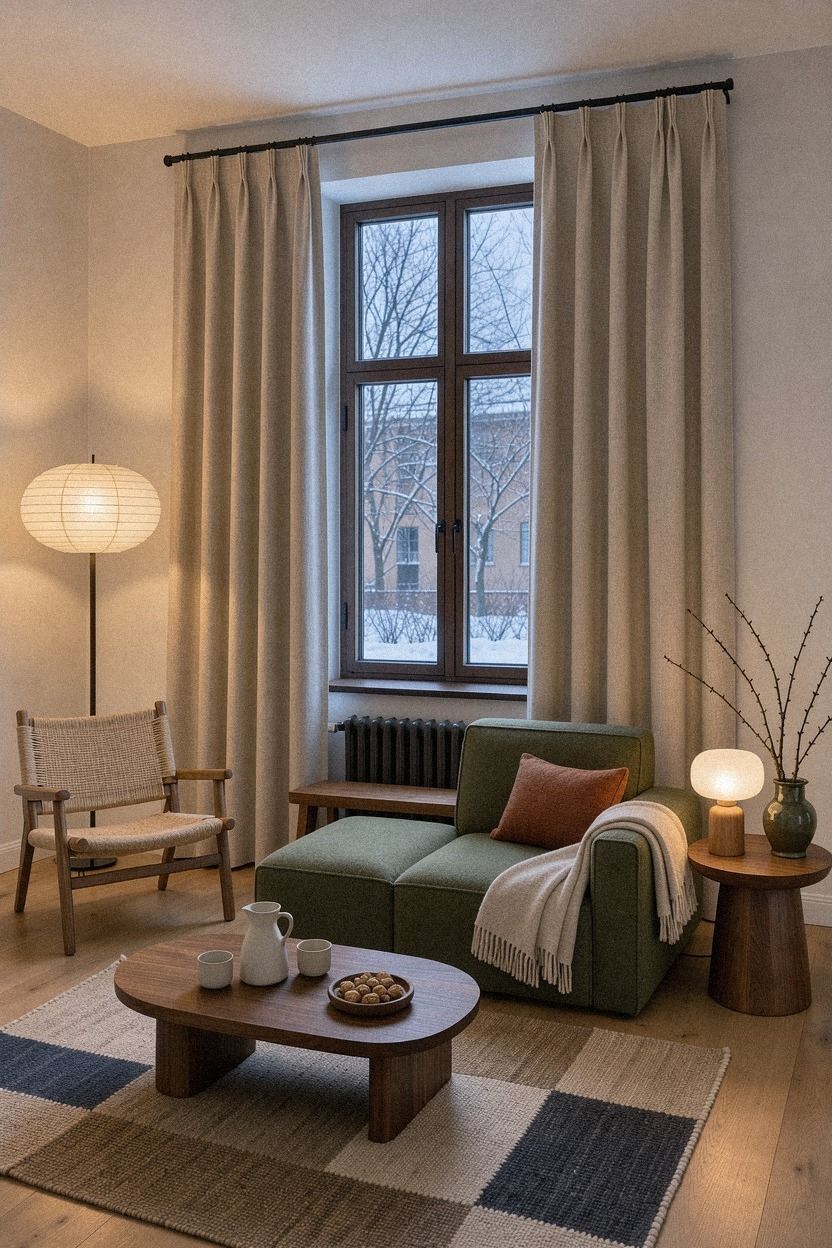
The Two-Height Rule uses a full-length thermal curtain with a lower furniture line beneath it. Place a console, bench, or low bookcase in front of the wall, but keep enough space for the curtain to close freely.
You’ll soften the window without creating a pile of fabric behind the furniture. The tall curtain adds height, while the lower piece gives the wall a practical middle layer and makes the room feel composed.
A West Elm Anton solid-wood console can work when you need storage, while a slimmer IKEA TONSTAD piece keeps the footprint modest. Your choice should leave a clear path for the curtain hem and allow air to circulate near the radiator.
Never cover a heat source with heavy fabric. Warm air needs to move into the room, and trapped heat can damage textiles or create a safety concern. Check the manufacturer’s clearance guidance for radiators and electric heaters.
For a softer version, use a narrow bench with a camel mohair velvet cushion. It gives you an inviting place to sit while the curtain still reaches the floor.
I’d avoid a deep sofa directly against the glass because you’ll block the panels, collect condensation, and make the whole arrangement harder to maintain. Leave enough breathing room to open, close, and clean behind the treatment.
The result should feel practical and polished, not overfurnished. Use a rug beneath the cold window to connect the lower furniture line to the rest of the room.
11Choose Insulated Drapes Over Decorative Sheers

Sheers are lovely for daylight, but they won’t do the same thermal work as a dense curtain.
12Add the Three-Source Light Stack
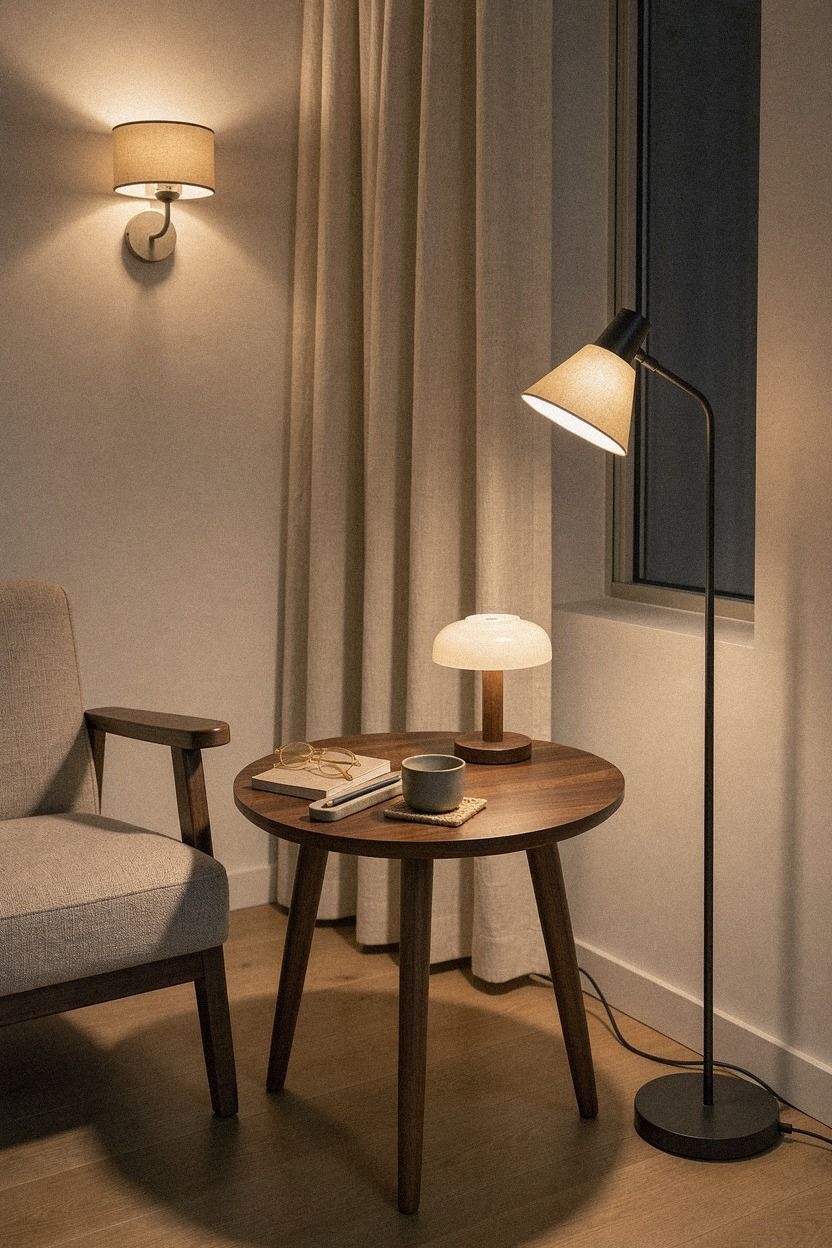
Better curtains work with better lighting. The Three-Source Light Stack uses overhead, task, and ambient light so you don’t rely on one harsh ceiling fixture after sunset.
The brief’s standard is three sources per room, and your curtains will look warmer when light comes from several lower points. This doesn’t reduce heat loss directly, but it can make the room feel more comfortable without raising the thermostat.
Use a shaded lamp beside the sofa, a small reading light near a chair, and one overhead fixture on a dimmer. Natural wood can catch the lamp glow, while a linen shade keeps the light soft.
Choose bulbs that feel warm rather than blue, especially if your drapes are cream or flax. A 2700K LED bulb usually gives a welcoming glow while using less electricity than older incandescent bulbs.
Don’t flood the window wall with bright light. It can reflect in the glass and make the room feel exposed at night. I’d place the ambient lamp to the side, where it throws a pool of golden light across the rug.
Your curtain becomes part of the glow instead of a dark barrier. That visual warmth can change how you perceive the room, particularly when the actual air temperature remains modest.
For a richer evening arrangement, add a small ceramic table lamp against a wall finished in hand-applied Venetian plaster, or use a slim floor lamp behind the reading chair. Keep cords tidy and avoid placing lamps where they interfere with closing the curtains.
If your room still feels cold, compare the lighting change with the payback test rather than assuming the fabric failed.
13Measure the Payback Before You Upgrade
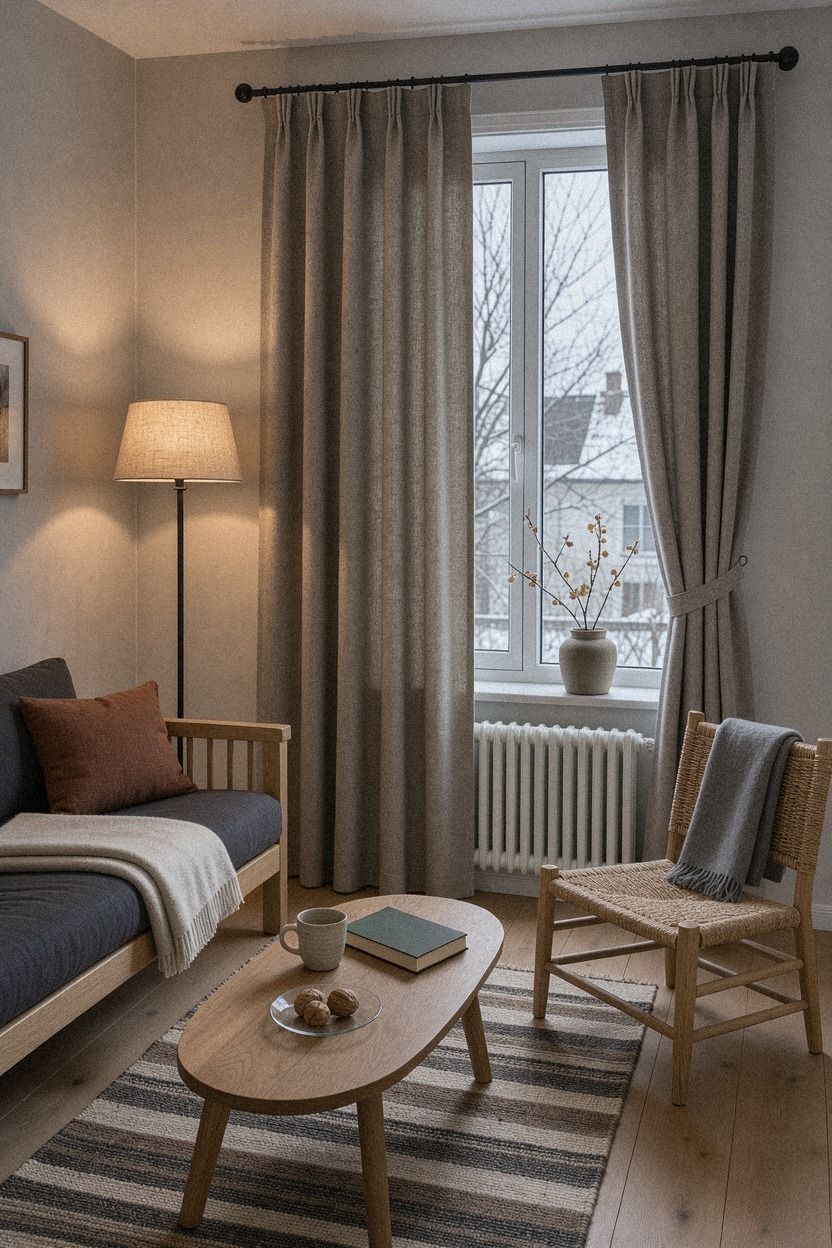
Thermal curtains can help, but you should judge them by comfort as well as by the bill. Energy savings depend on the size of the window, the quality of the existing seal, the climate, the fabric, and how consistently you close the panels.
Start with the window that bothers you most, not every window in the house. Mine was the one beside the reading chair, where the glass made my shoulder feel cold before I noticed the thermostat cycling.
A wide rod, a lined panel, and an early evening closing routine fixed the experience. The bill wasn’t magically cut in half, and anyone promising that is selling a fantasy. The improvement was more practical: fewer cold sensations, less thermostat fiddling, and a room I could use comfortably.
Your budget should follow the draft. If the problem is a gap at the frame, improve the seal first with weatherstripping tape or a suitable caulk. If the glass feels cold but the frame is sound, a dense curtain makes more sense.
If you’re decorating from scratch, choose the fabric after you’ve measured the rod, the stack-back space, and the distance to the floor. That order saves you from buying pretty panels that can’t close properly.
Track the result for two weeks. Note the thermostat setting, when you close the curtains, and whether the room feels comfortable near the window. Compare similar weather days rather than expecting one dramatic change overnight.
The most convincing option is rarely the heaviest or most expensive one. It’s the curtain you’ll use every evening, the one that reaches the floor, looks good in daylight, and doesn’t make you fight the rod.
Estimated first-year value
The strongest result usually comes from combining two modest changes, such as sealing the frame and adding a properly fitted curtain. Comfort improves first. Any reduction in heating use is a welcome secondary result.
The Honest Curtain Decision I’d Make
I’ve gone back and forth on thermal curtains because the promise can sound bigger than the product. A curtain isn’t insulation, and it won’t repair a failing window seal, a poorly fitted frame, or an entire wall that loses heat.
What it can do is create a quieter layer between your room and the cold surface. That small change is noticeable when you’re sitting nearby at night, especially in a home with older windows.
I’d start with one window and live with the result. Choose the room where you spend time, the window that feels coldest, or the place where you keep raising the thermostat. A focused test tells you more than buying panels for the entire house.
My ideal setup would be a wide rod, a full-length lined curtain, a low-pile rug, and a simple closing routine. I’d use a warm neutral for flexibility, then add color through paint, pillows, or a small shagreen accent.
If the draft is severe, I’d fix the frame before spending on luxury fabric. If the frame is sound but the glass feels icy, I’d put the budget into coverage, lining, and dependable hardware.
The most convincing option is the one that disappears into your routine. It opens smoothly in the morning, closes before the room loses its warmth, and still looks graceful when daylight returns.
The Questions Worth Answering First
What is the best thermal curtain for a small room?
A full-length, lined panel is usually the best choice because it covers more glass without taking floor space. Choose IKEA RITVA with a separate dense liner, or a compact ready-made insulated pair. A pale warm shade will keep the room bright and prevent the window from feeling visually cramped.
Where can I buy thermal curtains on a budget?
Look at IKEA, Wayfair, Target, local resale shops, and secondhand marketplaces. Compare lining weight, finished length, and panel width before buying. A used pair of linen drapes can be a good value if the seams are intact and the fabric has no mildew, fading, or brittle backing.
How much does a thermal curtain makeover cost?
A focused window update can cost about $40 to $450, depending on the rod, lining, and fabric. Free improvements include closing curtains before sunset, moving furniture away from the glass, and sealing obvious gaps. Spend first on width, lining, and secure hardware.
Can I create a warmer window setup on a budget?
Yes, and you don’t need a full room makeover. Extend the rod beyond the frame, use a secondhand dense curtain, and add a rug where your feet feel cold. If you’re painting nearby, Benjamin Moore White Dove can keep the space soft and reflective without looking sterile.
Is a thermal curtain worth it in a small space?
Yes, especially if your chair, bed, or desk sits close to a cold window. A small room lets you feel the change quickly because the glass affects the area you use most. Hang the rod high, keep the panel full length, and avoid blocking a radiator.
Is a thermal curtain a good idea for a rental?
Yes. A tension rod, removable hooks for a light layer, or a renter-friendly track can improve comfort without permanent changes. Confirm the hardware rating before hanging heavy fabric.
Keep the curtain clear of heaters, and remove adhesive slowly when your lease ends.
For the shortest version, revisit the four-sided seal, the lining decision, and the payback test.
Where I’d Start First
If I had to pick one, I’d start with a properly wide, lined curtain on the coldest window. Coverage matters more than a fancy label because gaps let the chill back in.
Close it before sunset, keep the hem clear, and see how the room feels for a week. If the window still feels harsh, check the frame seal before buying a heavier fabric. That sequence gives you a clearer answer and keeps the project focused.


