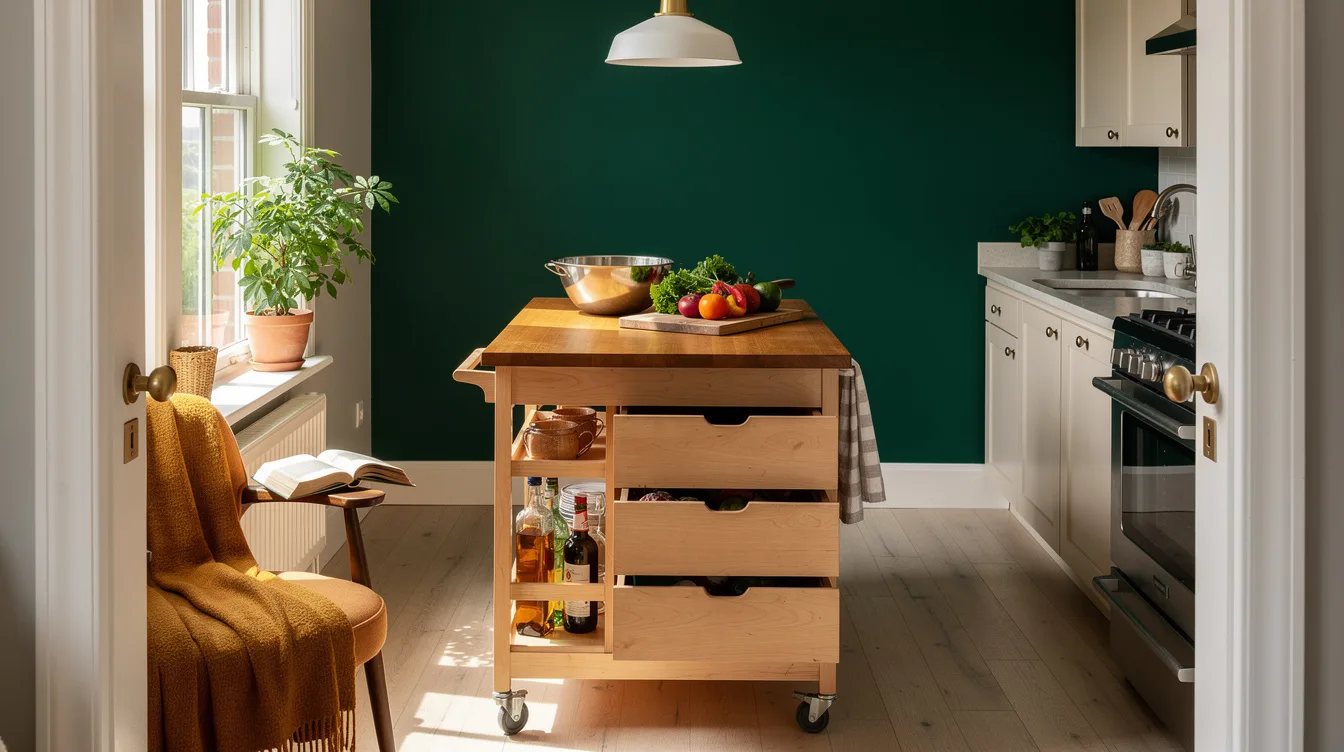
No Counter? These 15 IKEA Carts Fake a Custom Kitchen Island
04 october 2026A kitchen with no built-in counter can still gain a convincing prep zone. The sweet spot is a movable piece about 35 to 36 inches high with a top at least 16 to 20 inches deep, enough room to chop without turning the room into an obstacle course.
Some IKEA carts genuinely work as rolling islands, while others are better as support pieces. The right choice depends on your floor clearance, storage needs, and whether the room can handle a deeper freestanding island.
These are the practical ways to make the setup look intentional and work hard, from the about $180 FÖRHÖJA to full-size island options.
What you will find inside
- Match Standard Counter Height
- Stretch a Narrow Galley With FÖRHÖJA
- Choose BROR for Deeper Prep
- Give a Small Room a Fixed Anchor
- Use the Large TORNVIKEN to Sell the Illusion
- Fit VADHOLMA Into a Compact Footprint
- Commit to the Full VADHOLMA
- Keep RÅSKOG in a Supporting Role
- Use NISSAFORS as a Mobile Pantry
- Add a Removable Prep Top
- Park the Cart Against a Wall
- Protect the Main Walking Lane
- Make Storage Look Like Cabinetry
- Build a Practical Prep Triangle
- Choose the Finish That Grounds the Room
Match Standard Counter Height
The first test is height. Aim for about 35 to 36 inches, which keeps chopping, mixing, and plating comfortable beside a standard kitchen counter.
FÖRHÖJA lands at about 35 3/8 inches high, making it the easiest rolling choice for a kitchen with no built-in work surface. Its solid birch construction also feels more like furniture than a temporary utility cart.
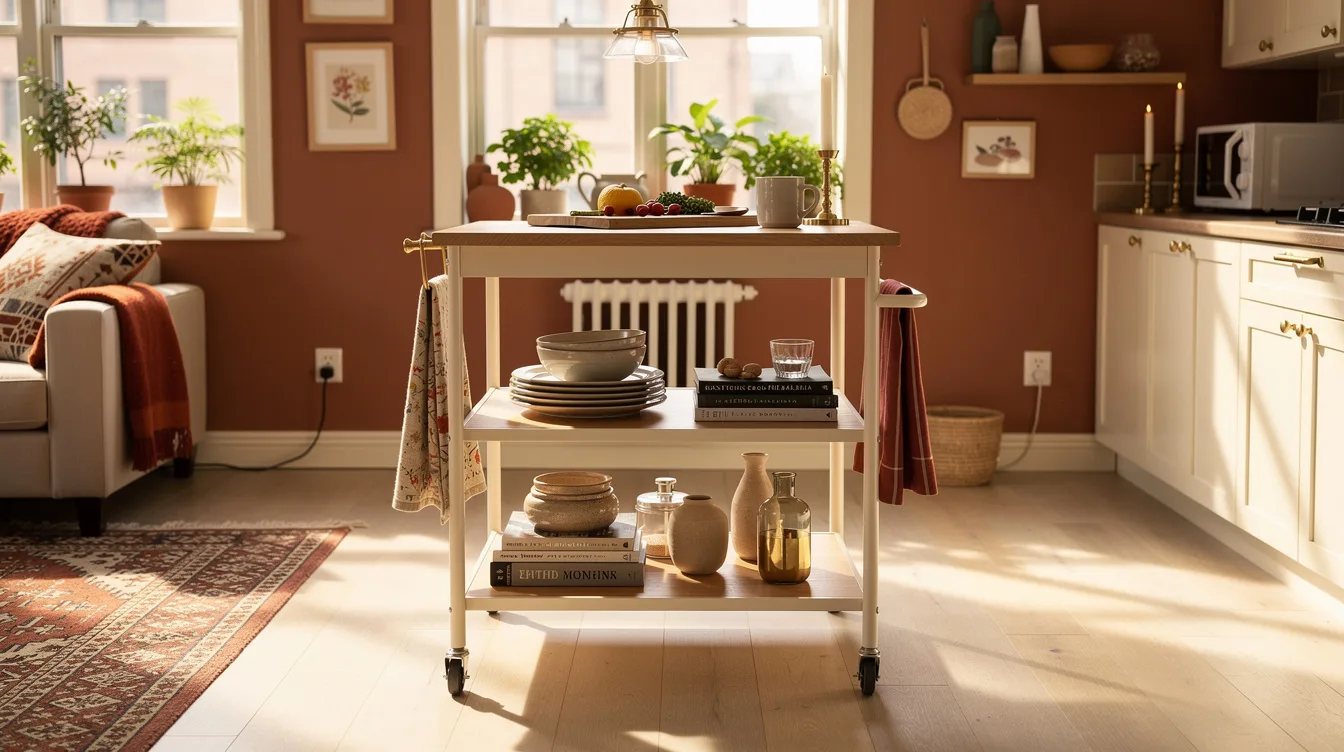
Stretch a Narrow Galley With FÖRHÖJA
In a narrow kitchen, length matters more than bulk. FÖRHÖJA measures about 39 3/8 inches long and 16 7/8 inches deep, giving you a useful prep zone without swallowing the walkway.
Its typical 2026 US price is about $180, and the open bottle shelves plus drawers add storage where base cabinets are missing. Park it against a wall between cooking sessions, then roll it forward when vegetables, dough, or serving dishes need room.
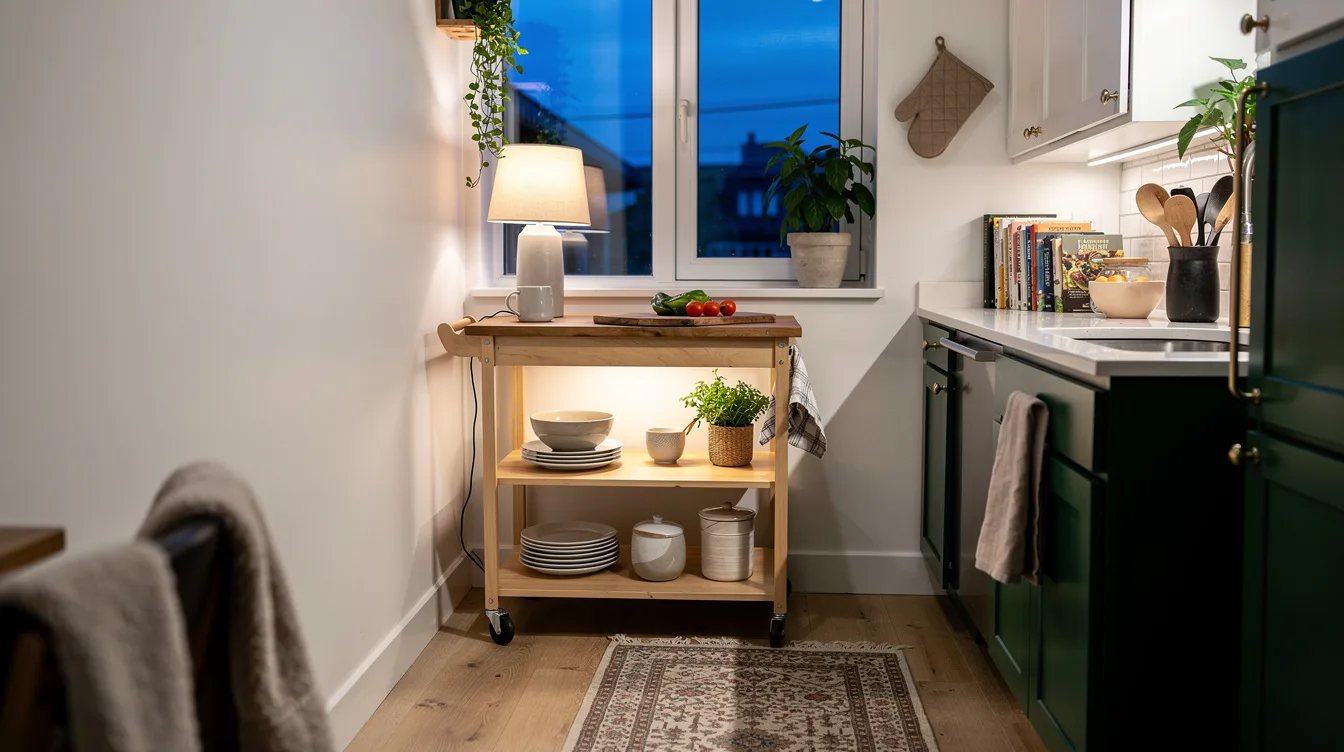
Choose BROR for Deeper Prep
When the kitchen has enough clearance, use depth to make the fake island feel convincing. BROR measures about 33 1/2 inches long, 21 5/8 inches deep, and 34 5/8 inches high, so its top feels closer to a real counter than a slim trolley.
The black steel frame and pine-plywood shelves give it a tougher, industrial look, with a rated total load of about 110 pounds. At a typical price of about $199, it is a strong choice for heavy mixing bowls, a stand mixer, or a stack of cookware.
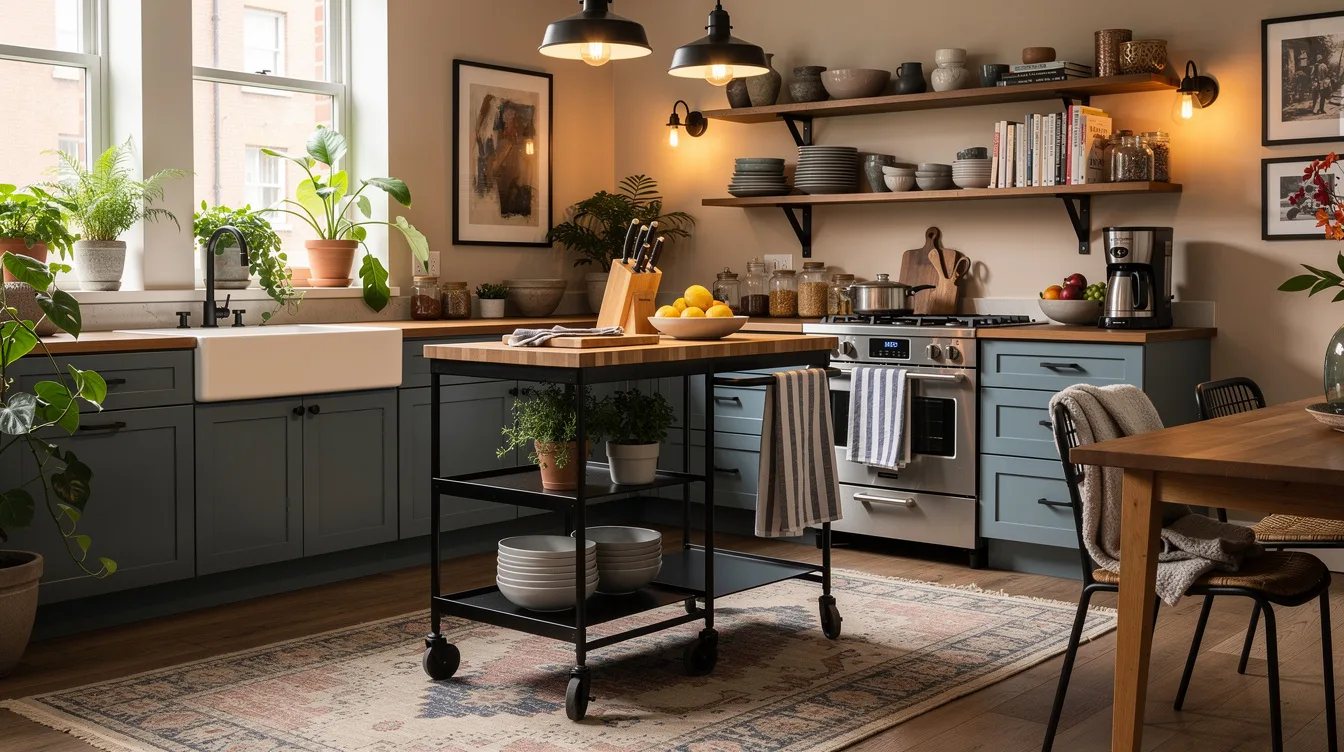
Give a Small Room a Fixed Anchor
A freestanding island can look more intentional when it has a solid base and a real countertop. The TORNVIKEN small island measures about 28 3/8 inches long, 20 1/2 inches deep, and 35 3/8 inches high.
Its off-white painted base, oak top, drawer, and shelves create the visual weight of cabinetry without construction work. The sale price is typically about $323, compared with roughly $360 at the regular price, so check the current IKEA US listing before planning the budget.
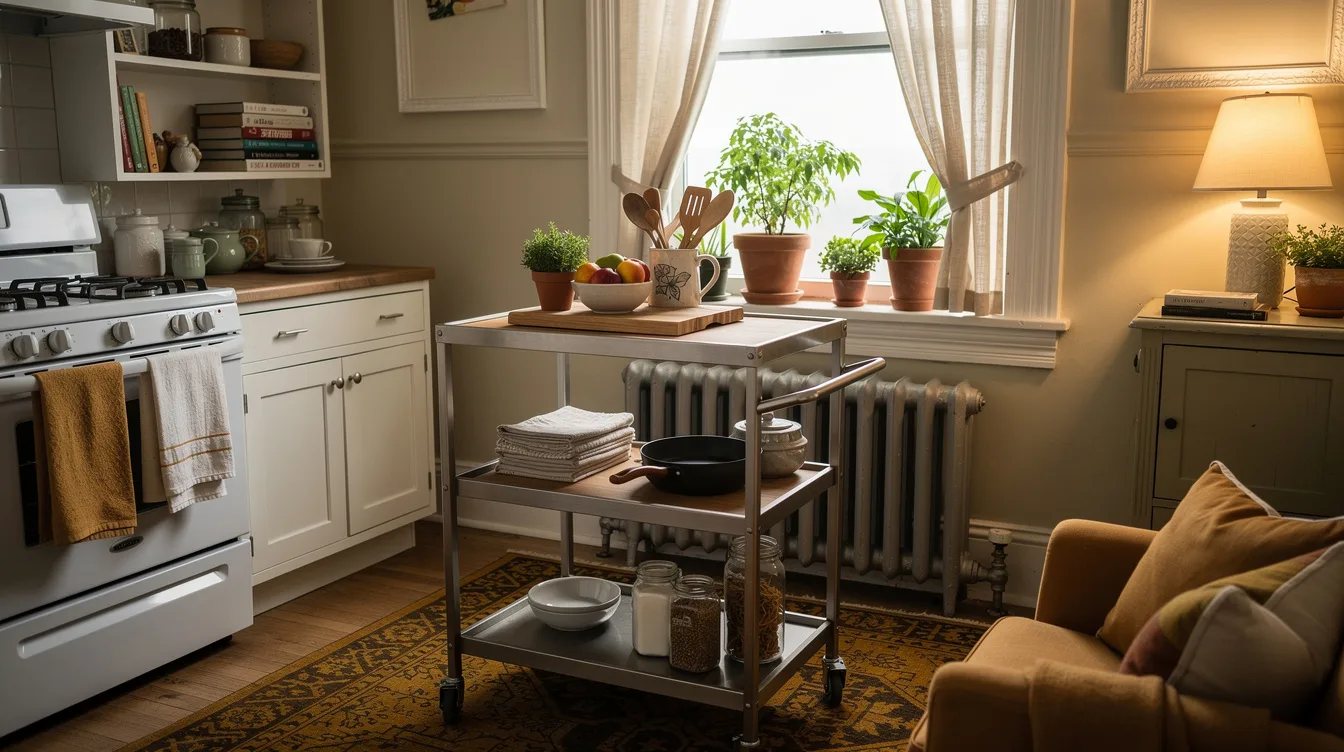
Use the Large TORNVIKEN to Sell the Illusion
For a kitchen with enough floor area, scale does most of the decorating work. The large TORNVIKEN is about 49 5/8 inches long, 30 3/8 inches deep, and 35 3/8 inches high, which gives it the proportions of a genuine island.
Its off-white base and oak countertop read as a deliberate furniture piece rather than a cart parked in the middle of the room. The typical sale price is about $400, while the regular price is roughly $450, and the extra depth makes room for real prep instead of decorative storage.
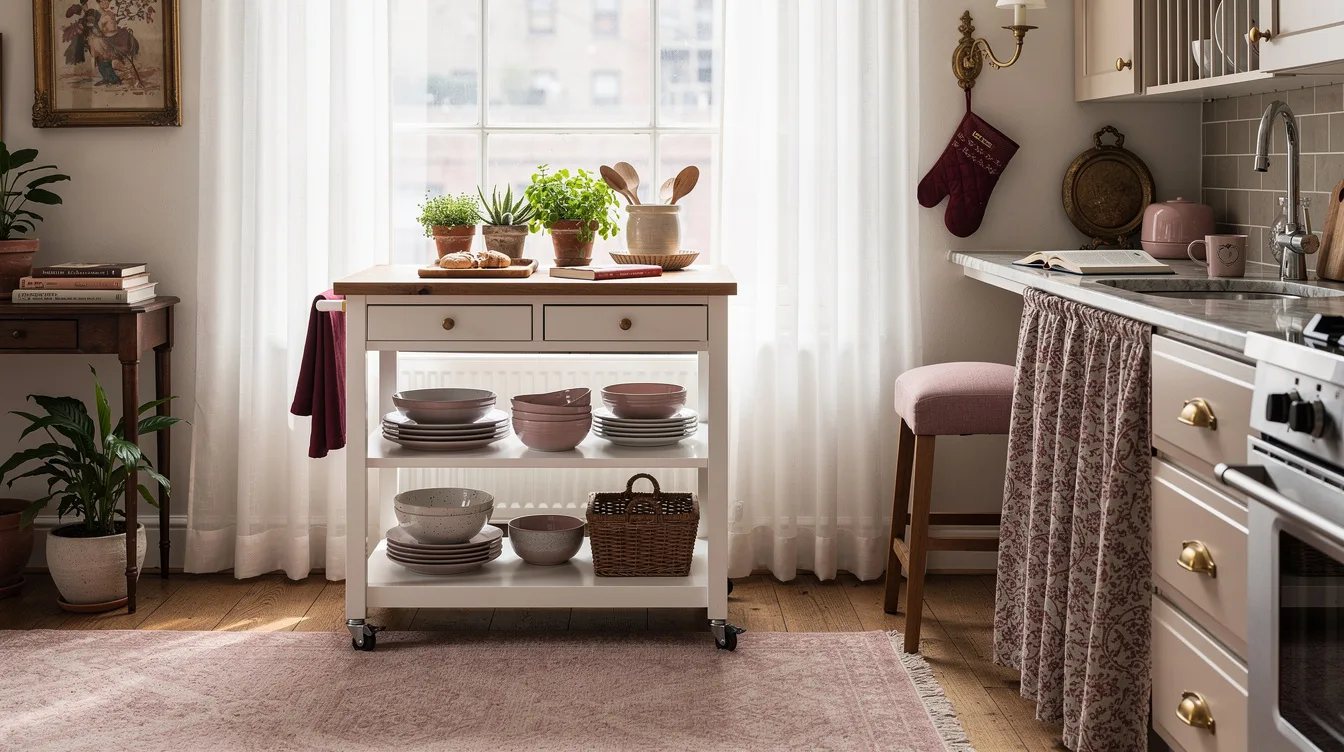
Fit VADHOLMA Into a Compact Footprint
Some kitchens can handle depth but cannot handle a full island. The VADHOLMA compact island is about 31 1/8 inches long, 24 5/8 inches deep, and 35 3/8 inches high, a useful middle ground for a small open-plan room.
Its black frame and oak top bring stronger contrast than the white TORNVIKEN pieces. At a typical sale price of about $450, it costs more than a basic cart, but the near-counter depth makes it far more useful for prep.
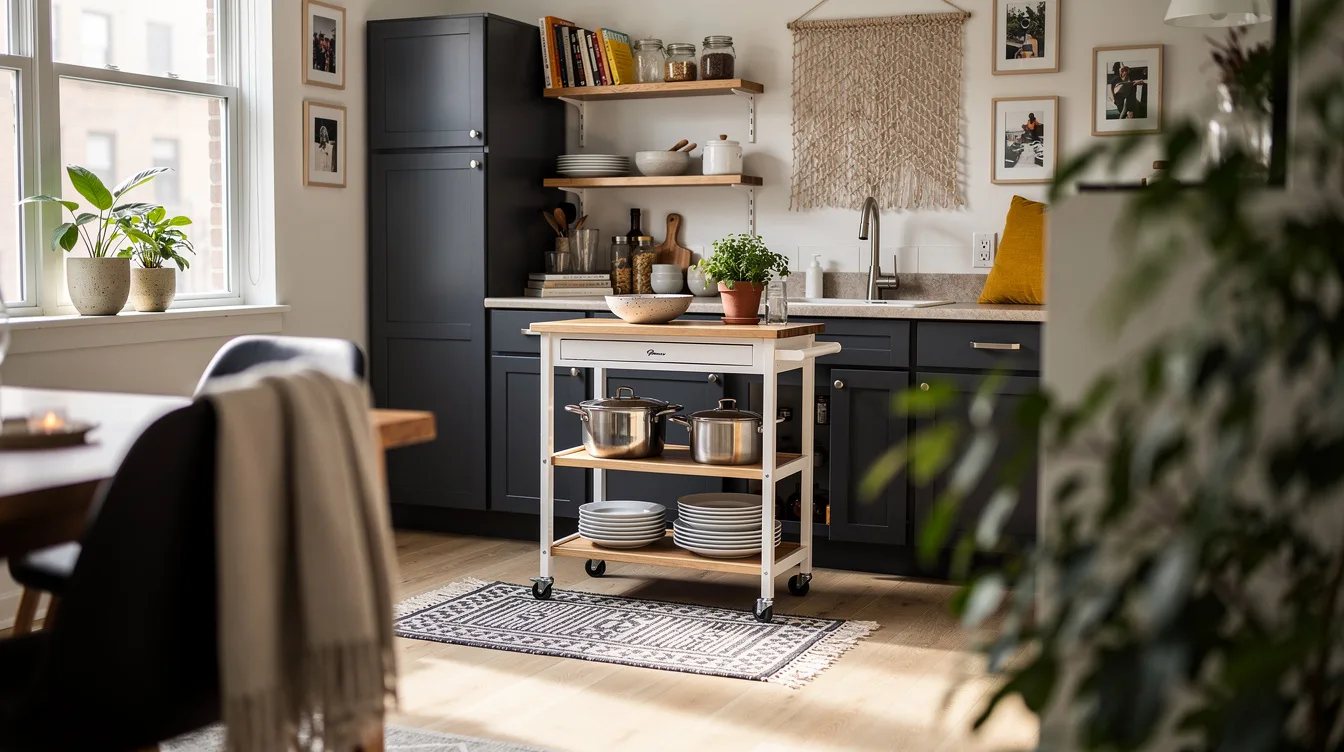
Commit to the Full VADHOLMA
When the kitchen lacks both counter space and storage, go bigger. The full VADHOLMA measures about 49 5/8 inches long, 31 1/8 inches deep, and 35 3/8 inches high, creating a serious freestanding work zone.
The black-painted structure and oak top give the room a strong architectural center without a cabinet installation. Its typical sale price is about $629, with a regular price around $699, so reserve this option for layouts that can preserve comfortable walking space on every side.
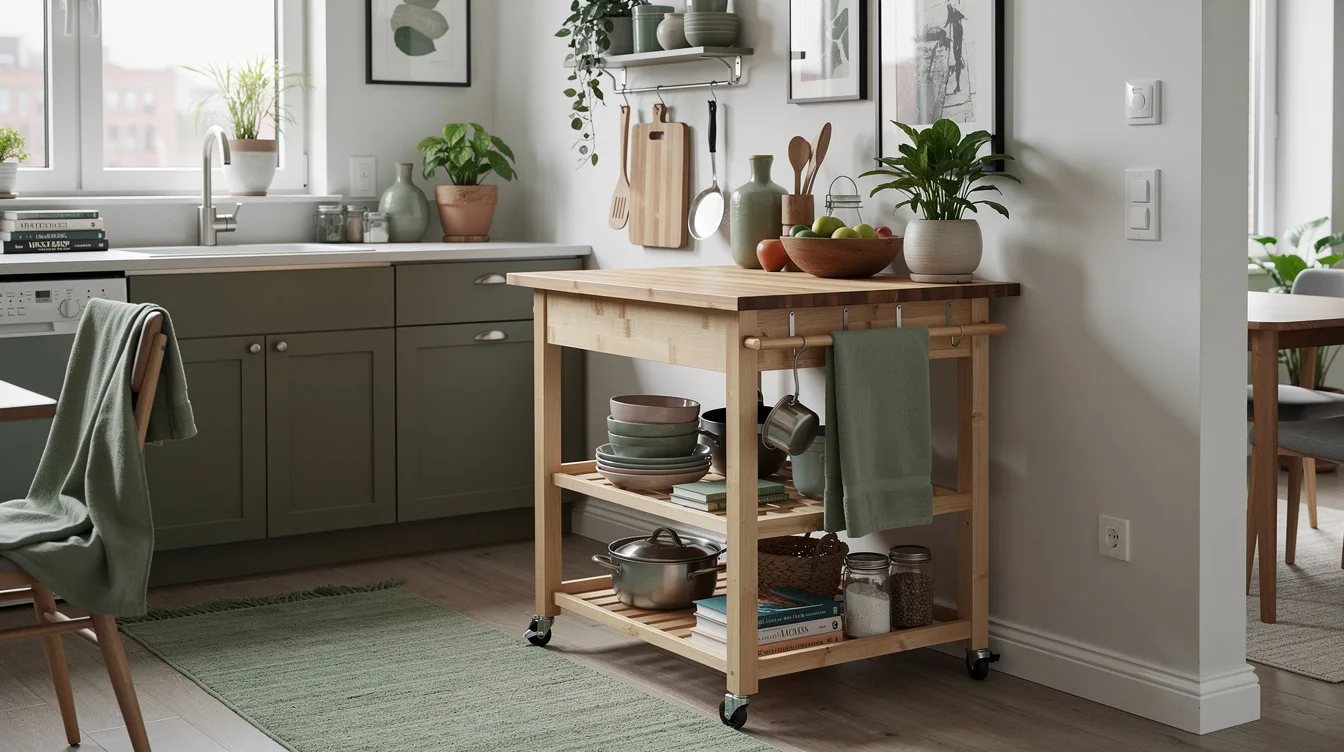
Keep RÅSKOG in a Supporting Role
A slim cart can improve a kitchen without pretending to be a full island. RÅSKOG measures about 13 3/4 inches long, 17 3/4 inches deep, and 30 3/8 inches high, so its top is too low and narrow for primary chopping.
At a typical price of about $40, it works well beside the refrigerator or cooktop for oils, produce, towels, or mixing tools. Add a removable cutting board when you need a temporary landing spot, then return the cart to its support position.
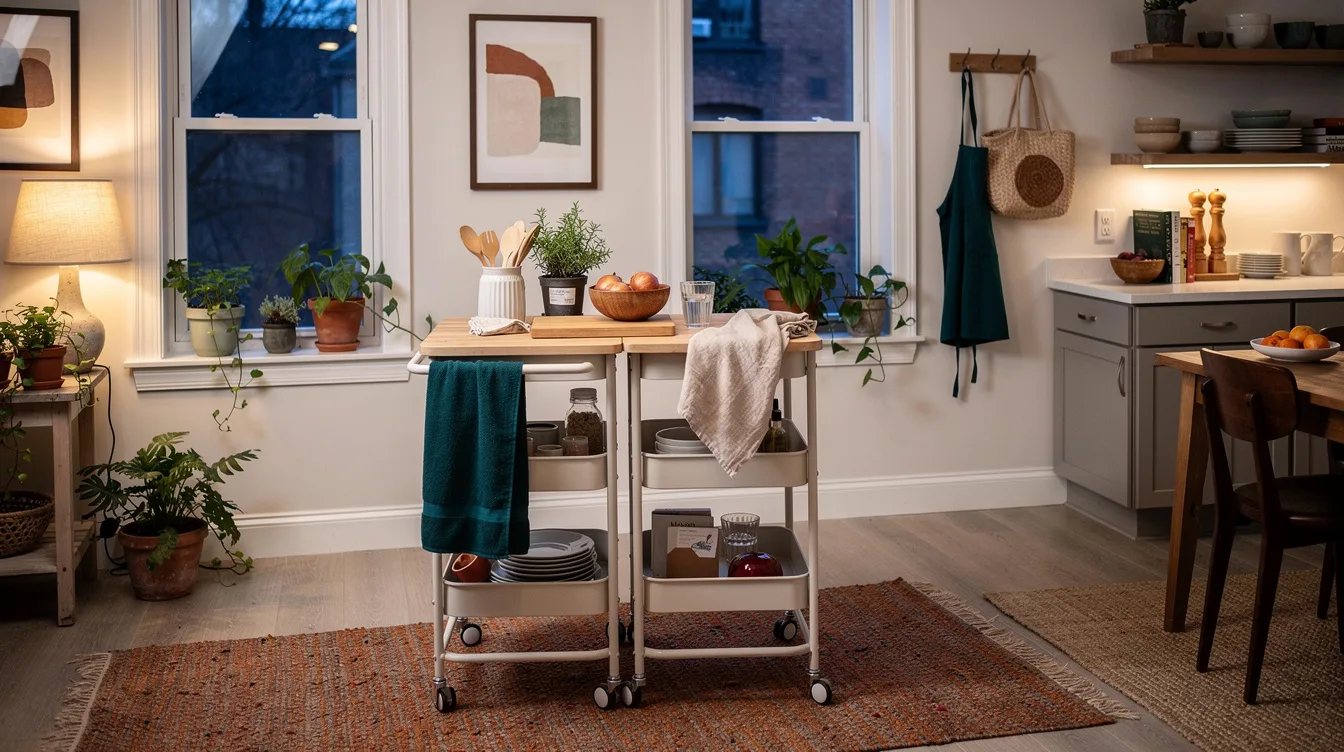
Use NISSAFORS as a Mobile Pantry
NISSAFORS is the smallest option in the group, about 19 7/8 inches long, 11 3/4 inches deep, and 32 5/8 inches high. That narrow profile makes it useful in a tight kitchen, but the shallow width keeps it from functioning as a proper island.
Its typical price is about $30, which makes it a practical place for coffee supplies, produce, small appliances, or frequently used pantry items. Keep the top mostly clear so the cart can move easily and the room does not develop another crowded surface.
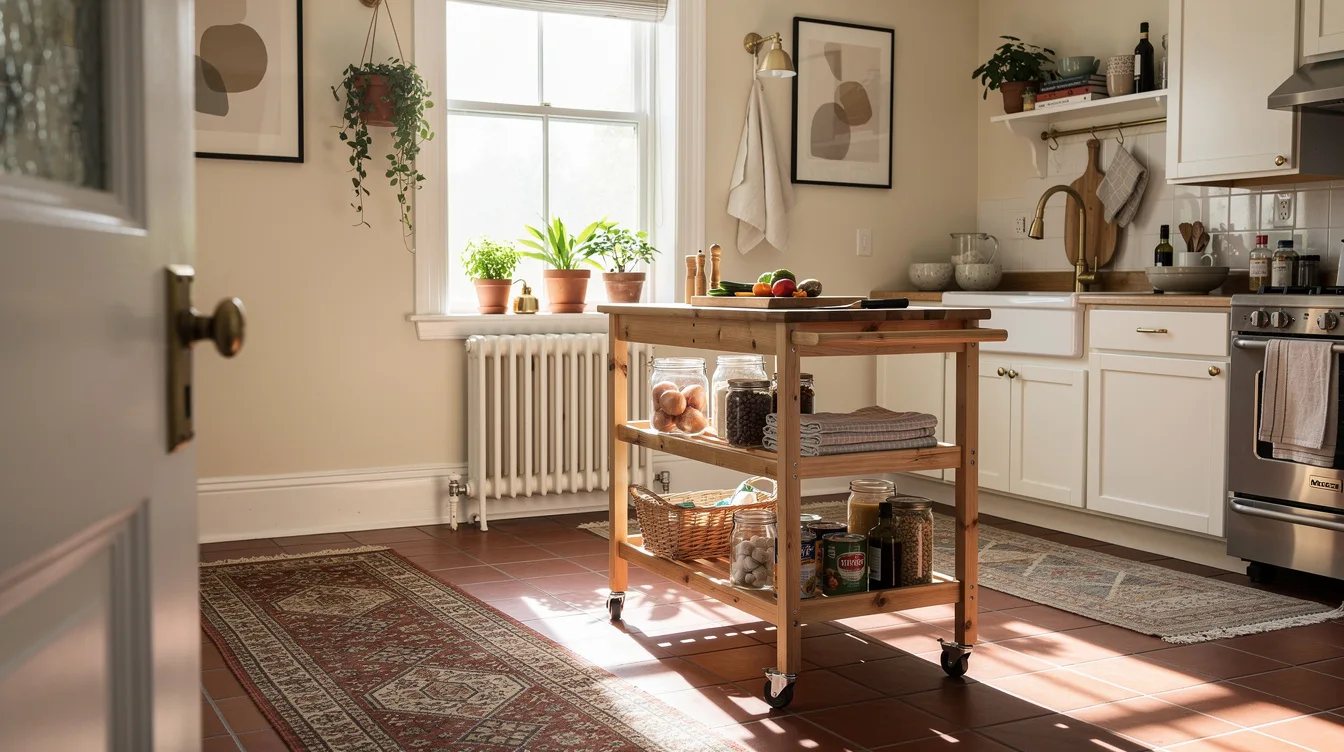
Add a Removable Prep Top
A cart becomes more useful when its top supports actual work. Place a removable wood cutting board or butcher-block board over a cart surface, keeping the piece loose so drawers, shelves, and casters remain accessible.
For a BROR cart, the roughly 21 5/8-inch depth gives a board enough room to feel substantial. On a smaller RÅSKOG or NISSAFORS, treat the board as a short-term prep station rather than a replacement for a full countertop.
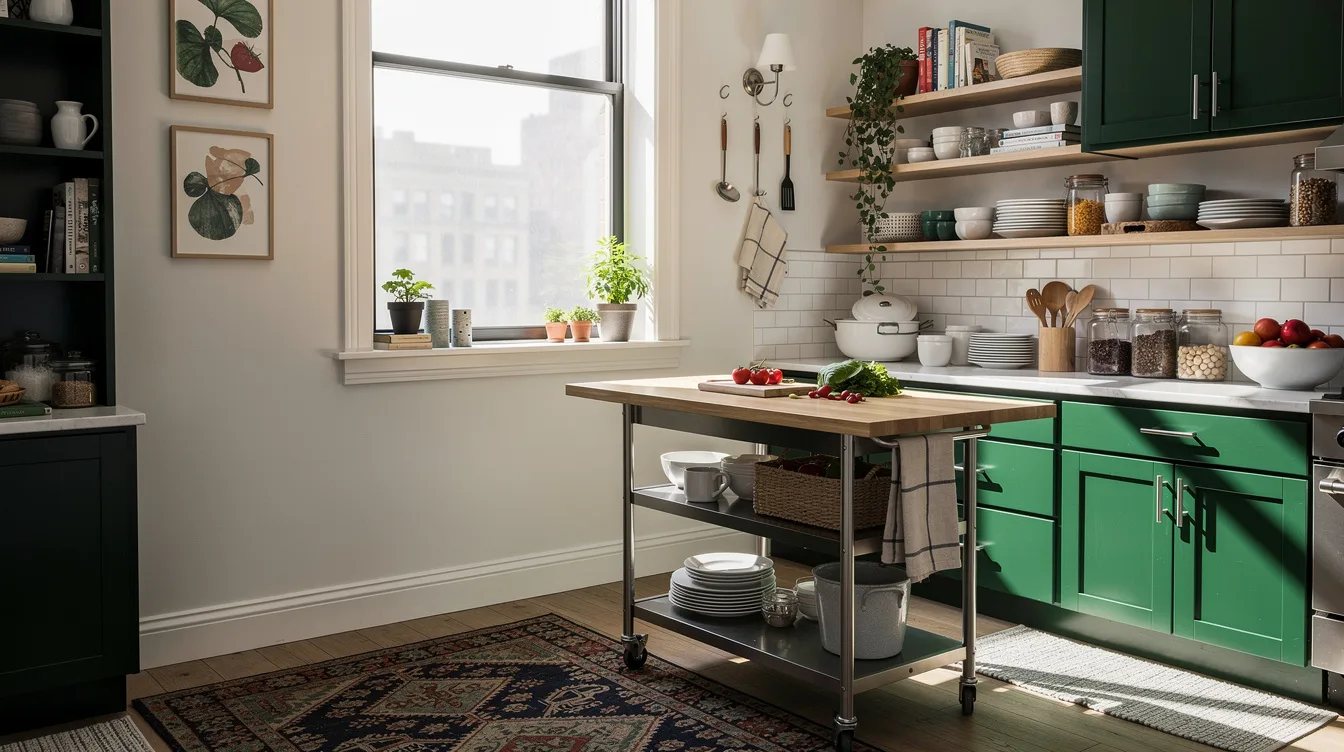
Park the Cart Against a Wall
The most convincing fake island has a parking position. Slide the FÖRHÖJA against a bare wall when the kitchen is busy, then roll it into the open zone only when you need extra chopping or serving space.
This move keeps the center of the room visually calm and protects the main walkway. A narrow cart also becomes easier to live with when its everyday storage has a clear home instead of drifting between the sink, stove, and refrigerator.
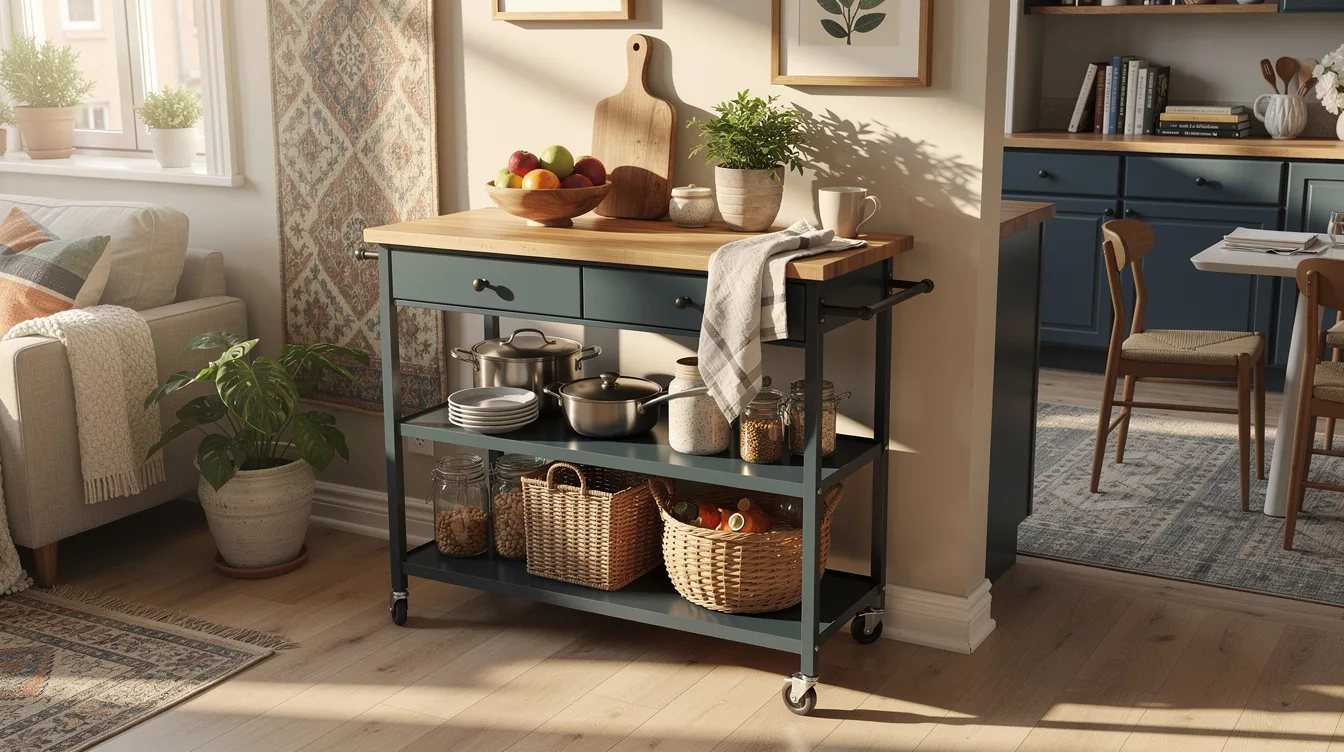
Protect the Main Walking Lane
Measure the open floor before buying anything. A cart that looks compact in a product photo can make a kitchen feel pinched once cabinet doors, oven doors, and people all need room to move.
The deeper VADHOLMA pieces need a generous layout, while FÖRHÖJA offers a safer fit for a galley kitchen. Leave enough clearance for the appliance doors to open fully, and roll the cart aside during large cooking projects if the path feels tight.
Make Storage Look Like Cabinetry
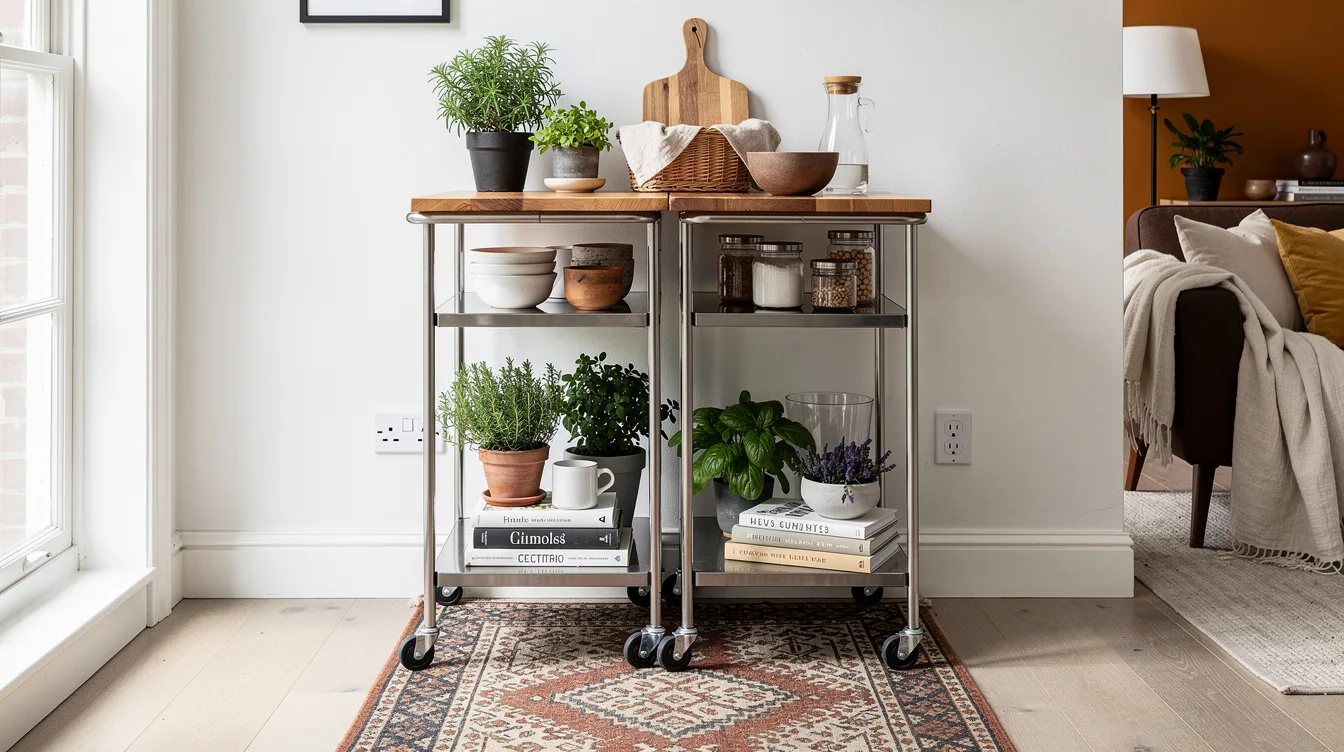
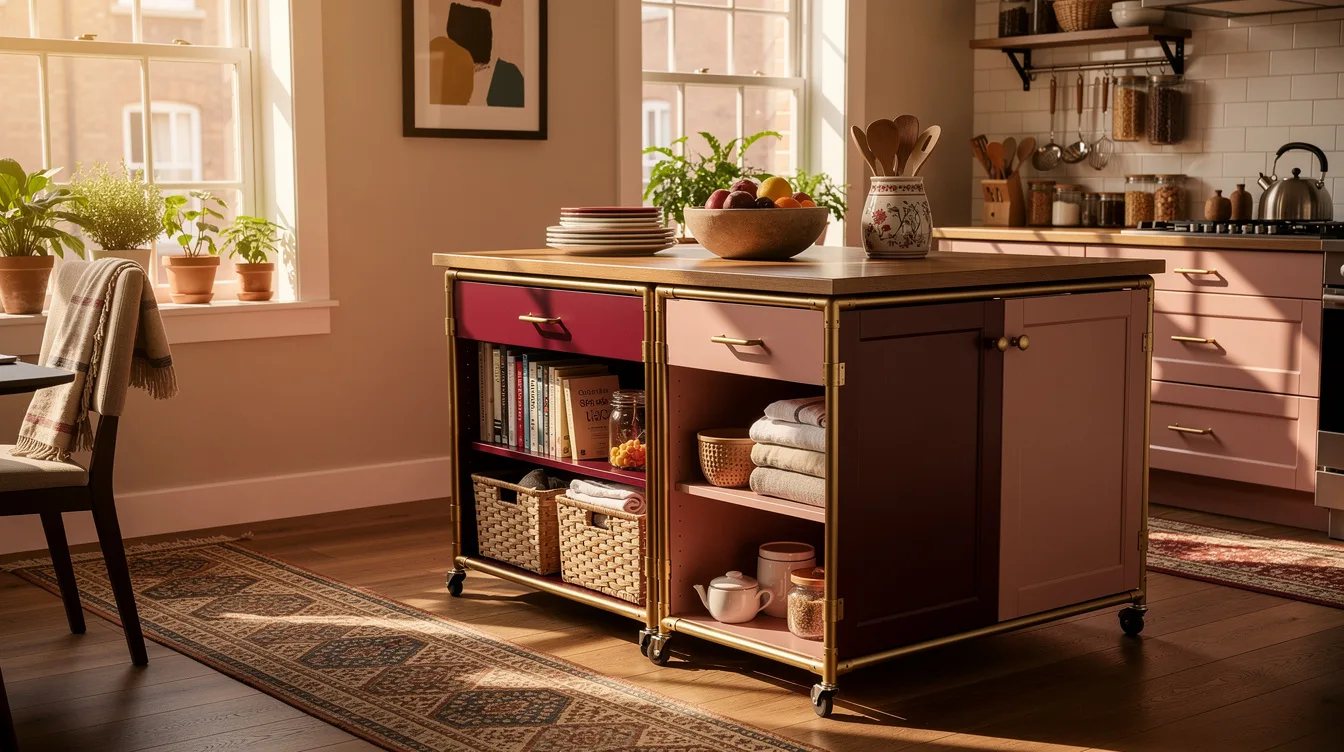
Open shelves can make a fake island look unfinished when every item is visible. Use matching baskets, grouped cutting boards, and a limited color range so the storage reads as a planned display.
The drawers on TORNVIKEN and FÖRHÖJA are especially useful for tools that create visual noise. Keep the countertop mostly open, with one practical object such as a wood board or a ceramic bowl, and let the material contrast carry the style.
Build a Practical Prep Triangle
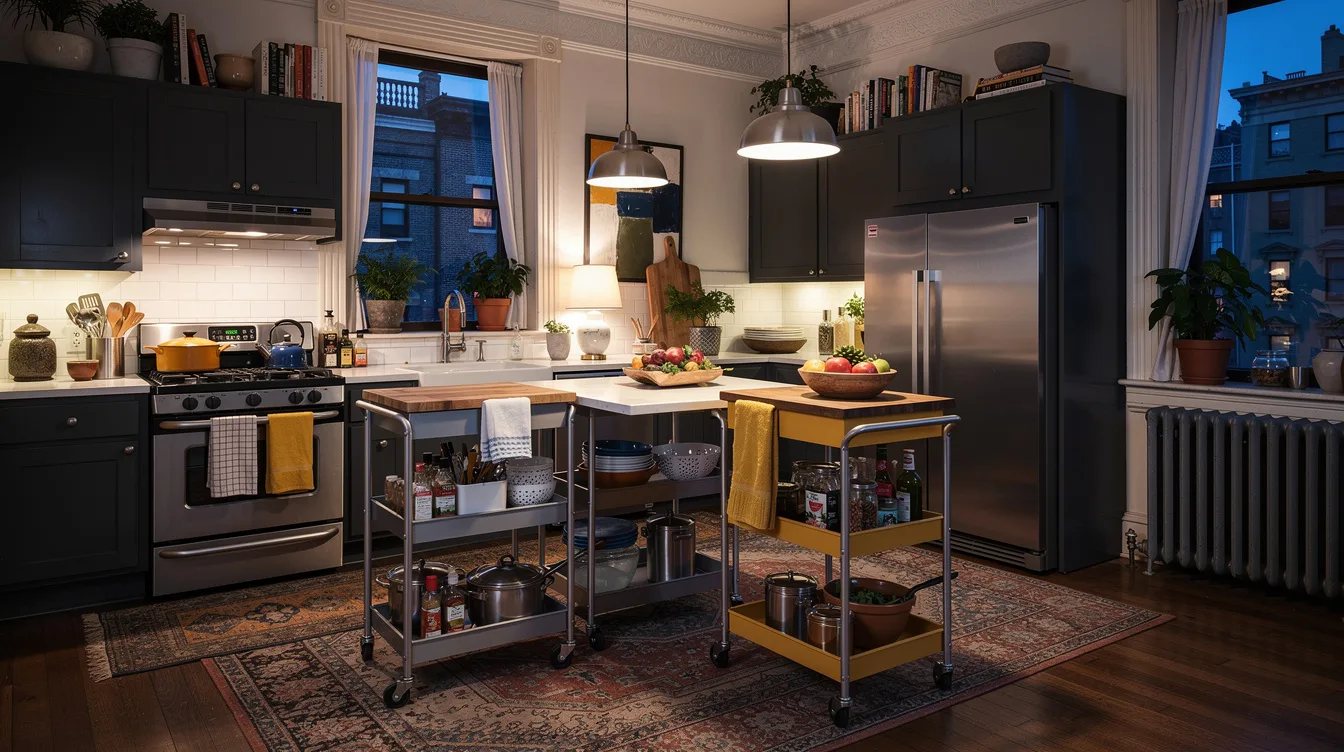
Place the mobile island between the refrigerator and cooking area when you are preparing a meal. That position shortens the path for produce, pans, and finished food, turning a freestanding piece into a genuine part of the kitchen workflow.
A BROR cart works well when heavy supplies need a deeper surface, while FÖRHÖJA is easier to move in a compact room. Keep hot cookware away from the edge and return the cart to its wall position once the meal is finished.
Choose the Finish That Grounds the Room
Color decides whether the piece blends in or acts as a focal point. An off-white TORNVIKEN can soften a rental kitchen with white cabinets, while the black VADHOLMA and BROR options add contrast against pale walls.
Oak tops bring warmth to painted or steel bases, and solid birch gives FÖRHÖJA a lighter, more traditional feel. Choose one dominant finish for the island and repeat it once elsewhere, such as in a wood stool, frame, or cutting board.
Keep reading
- No Bedroom Closet? These 15 IKEA Wardrobes Fake a Custom Reno
- No Room for an Island? 14 IKEA Carts Create a Prep Zone
- No Counter Space to Prep On? These 9 IKEA Carts Fix It
Start by marking the cart footprint on the floor with painter's tape for one day. If the path still feels comfortable when cabinet doors and appliances are open, choose the deepest IKEA piece your kitchen can support, then keep its countertop clear enough to earn its place.