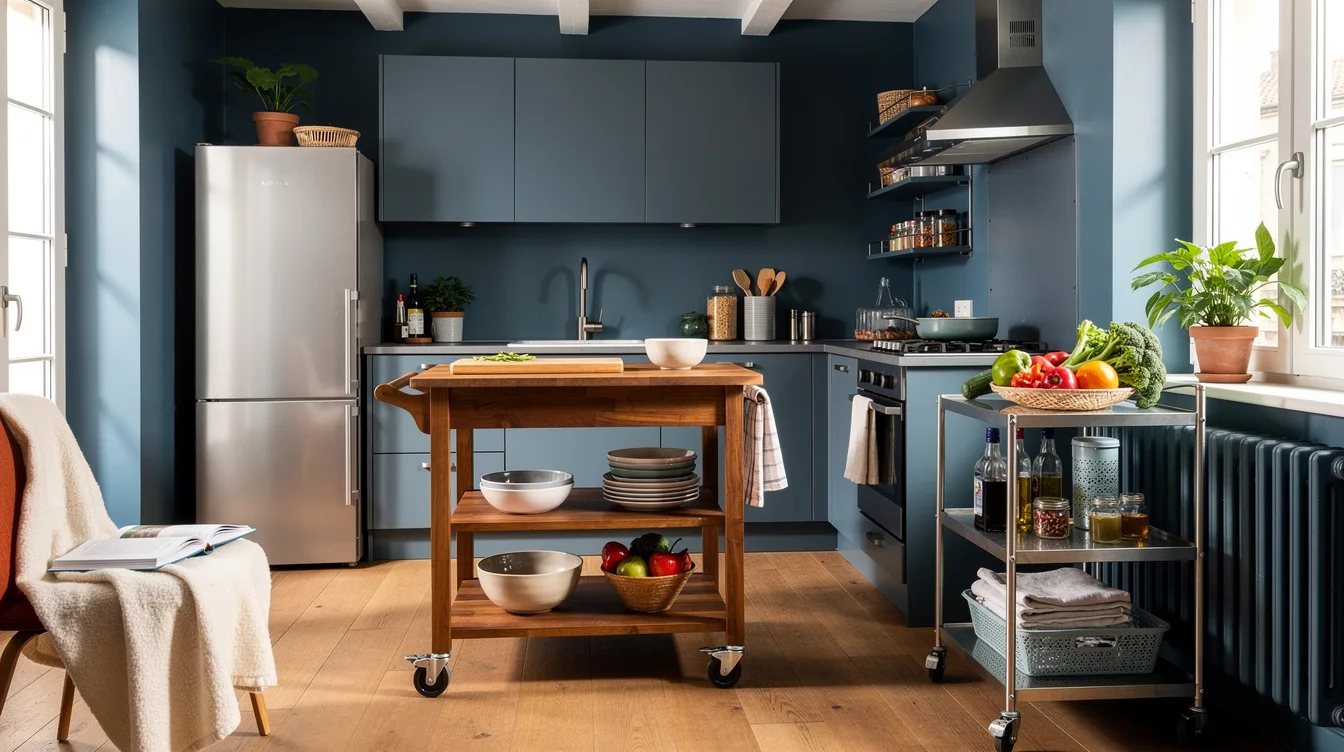
No Room for an Island? 14 IKEA Carts Create a Prep Zone
01 october 2026A studio kitchen can gain a real prep zone without surrendering its center to a fixed island. Leave about 36 inches around a movable cart, then roll it between the refrigerator, sink, and cooktop only while ingredients are being prepared.
The strongest setup pairs one countertop-height cart for chopping with a narrow trolley for tools, pantry items, and waste. IKEA makes that approach especially accessible for European studios, from the compact RÅSKOG to the wood BEKVÄM and larger mobile stations.
What you will find inside
- Measure a 36-Inch Walking Route
- Park the Cart Beside the Fridge
- Match the Countertop Height
- Lock the Castors Before Cutting
- Pair One Work Cart With One Sidecar
- Use RÅSKOG as a Storage Sidecar
- Hide the Small RÅSKOG Under a Table
- Turn VESKEN Into a Supply Rail
- Upgrade to BEKVÄM for Regular Cooking
- Build a FÖRHÖJA Batch-Prep Station
- Reserve RIMFORSA for Open Kitchens
- Give Waste Its Own Landing Spot
- Keep Boards Removable
- Roll the Station Away After Dinner
Measure a 36-Inch Walking Route
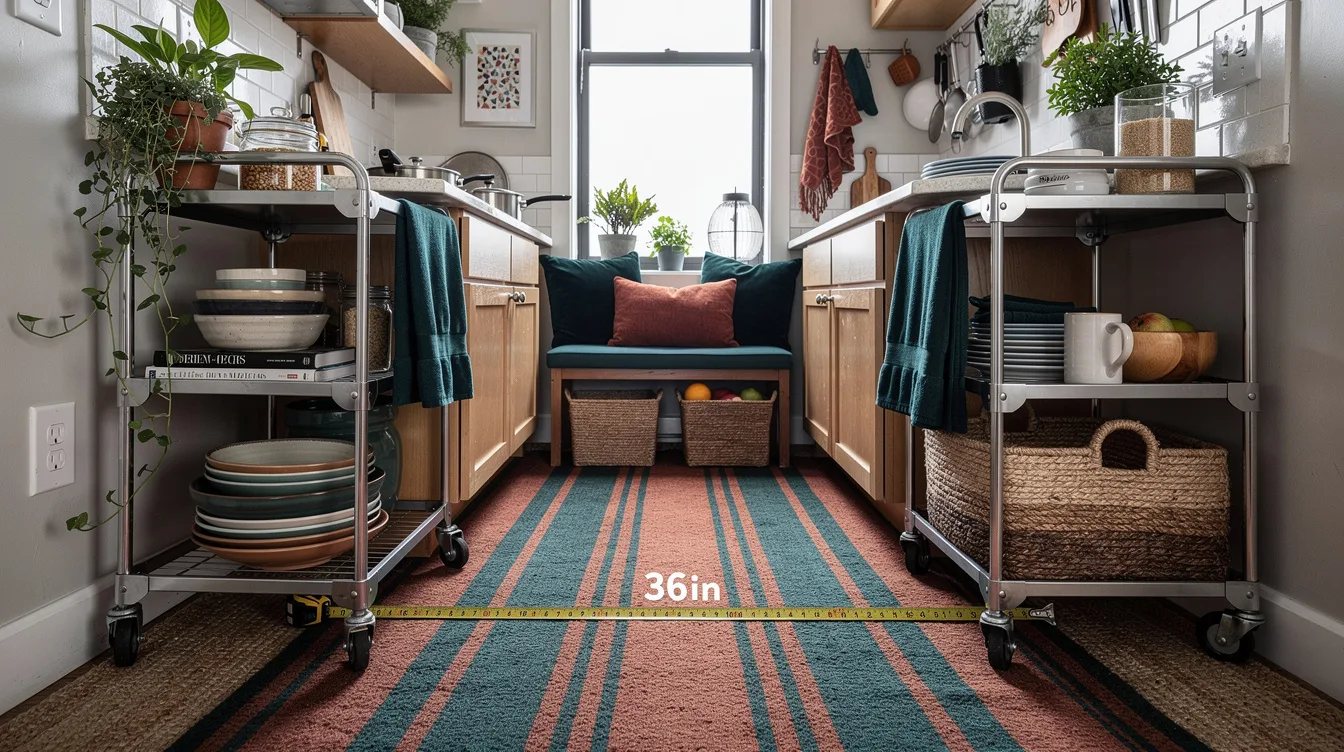
Start with the floor, because a movable prep zone only works when people can pass it safely. Leave about 36 inches of clear walking space around the cart, then aim closer to 42 to 47 inches where two people regularly move through the room.
Use painter's tape to mark the cart's parked and working positions before buying anything. In a narrow studio, a few inches can decide whether the kitchen feels efficient or permanently blocked.
Park the Cart Beside the Fridge
The refrigerator is the smartest parking point for a mobile prep station because ingredients can move directly from cold storage to the work surface. A slim IKEA RÅSKOG beside the fridge also keeps produce, bowls, oils, and pantry overflow within one easy reach.
When cooking begins, roll the cart toward the sink and cooktop. When dinner ends, return it to the wall so the center of the room stays open.
Match the Countertop Height
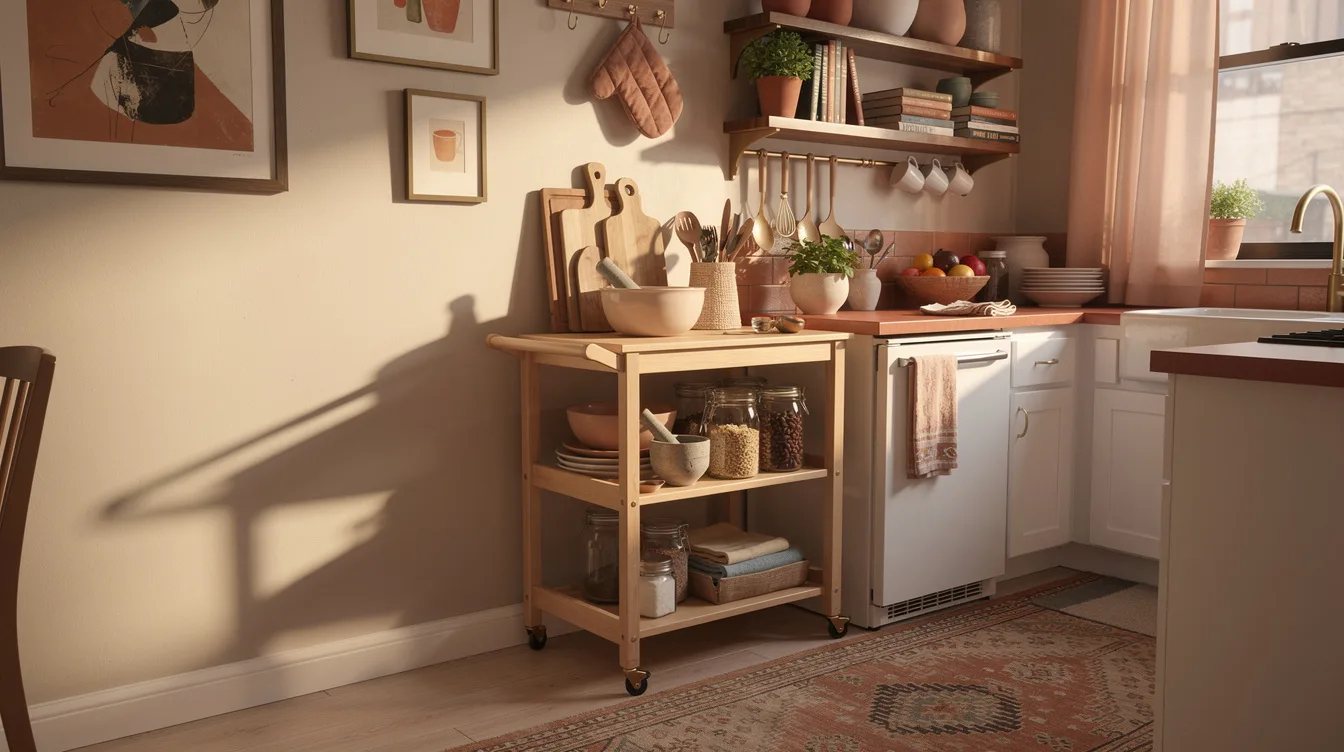
A typical kitchen countertop sits about 34 to 36 inches high, so the main cutting surface should feel close to that range. The IKEA BEKVÄM is the stronger choice when chopping, kneading, or assembling food needs to happen on the cart itself.
Height matters more than appearance here. A low trolley can carry supplies beautifully while forcing the cook to bend over every onion and mixing bowl.
Lock the Castors Before Cutting
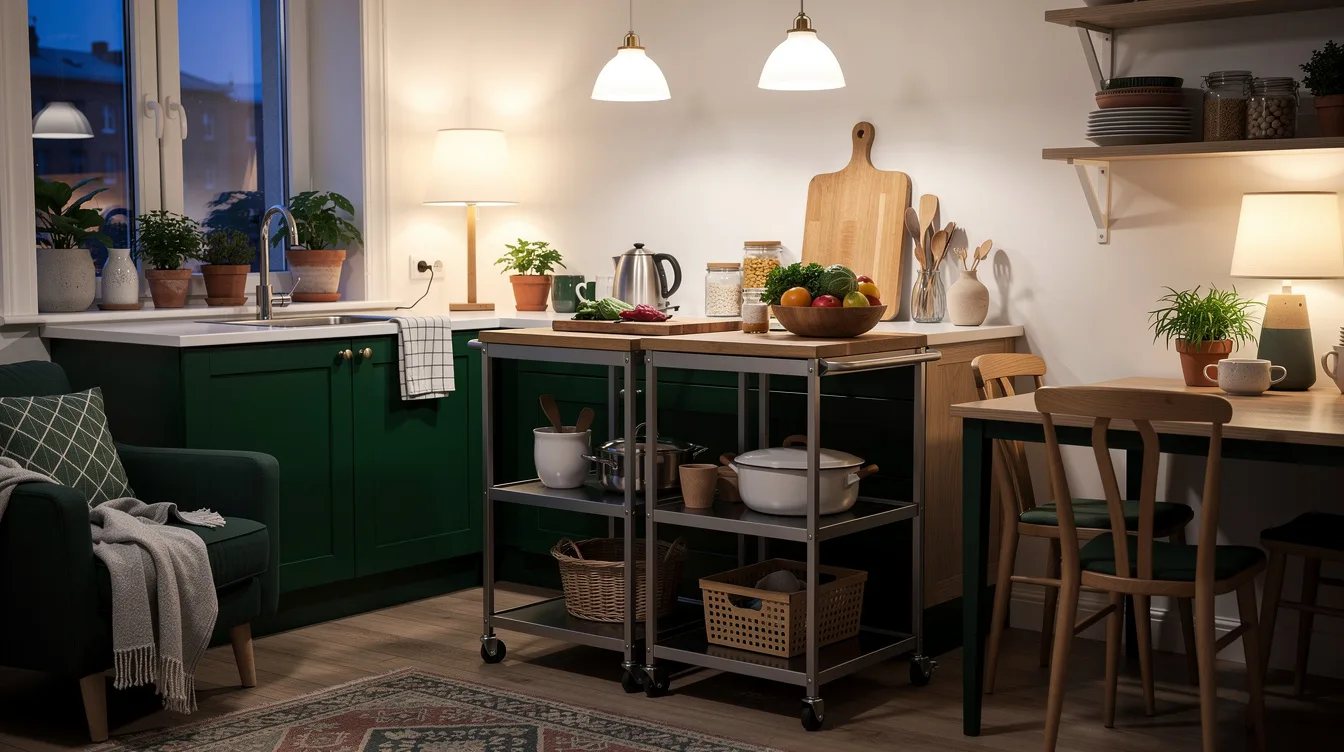
Locking castors are essential when a cart becomes a work surface. A chopping board sliding across a rolling frame is a safety problem, especially when a blender, box grater, or heavy bowl is involved.
Choose a frame with sturdy wheels and engage every brake before prep begins. A light powder-coated steel cart can handle storage duty, but it should not become a cutting bench unless it stays firmly in place.
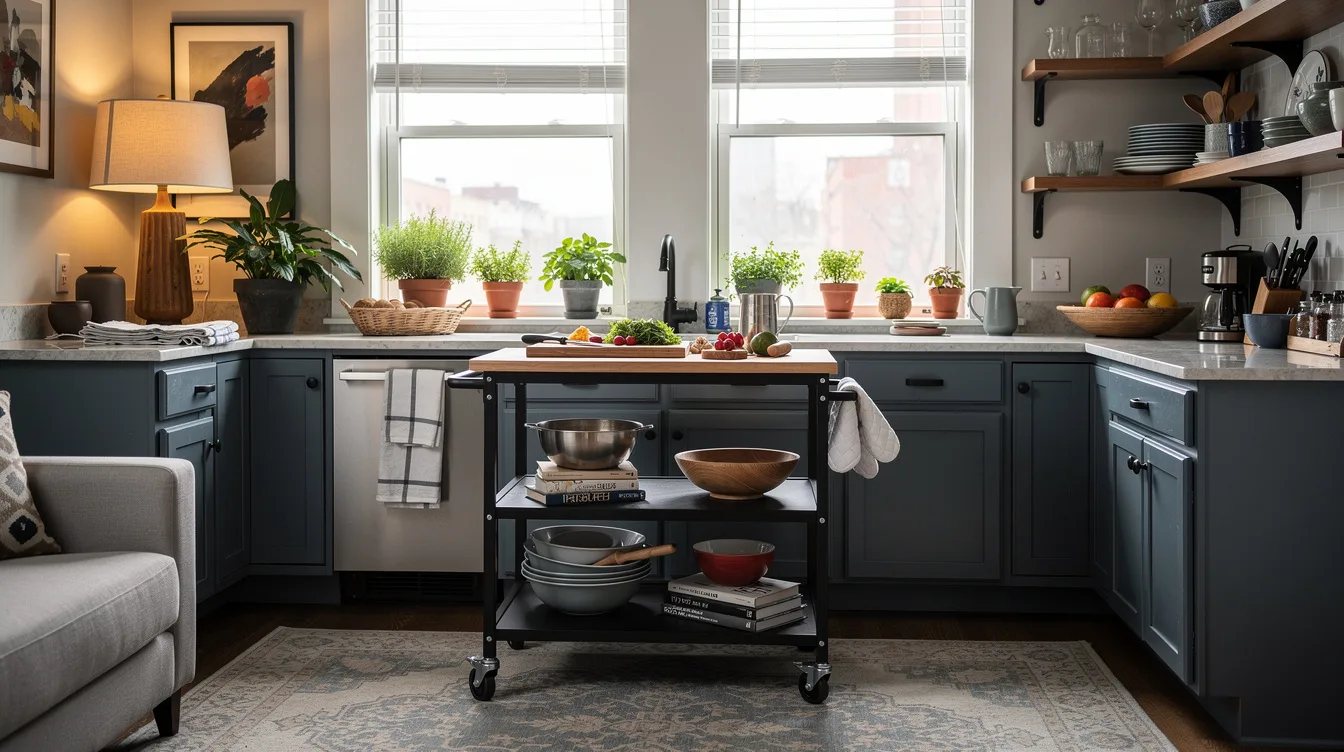
Pair One Work Cart With One Sidecar
The most useful no-island arrangement uses two different pieces: one countertop-height cart for cutting and one narrow trolley for ingredients, tools, and cleanup. This division keeps the primary surface clear while the second cart follows the cooking sequence around the room.
Put the knife, board, bowl, and scraper on the work cart. Keep oils, vegetables, towels, and a small waste container on the sidecar, preferably in removable polypropylene bins that can be washed quickly.
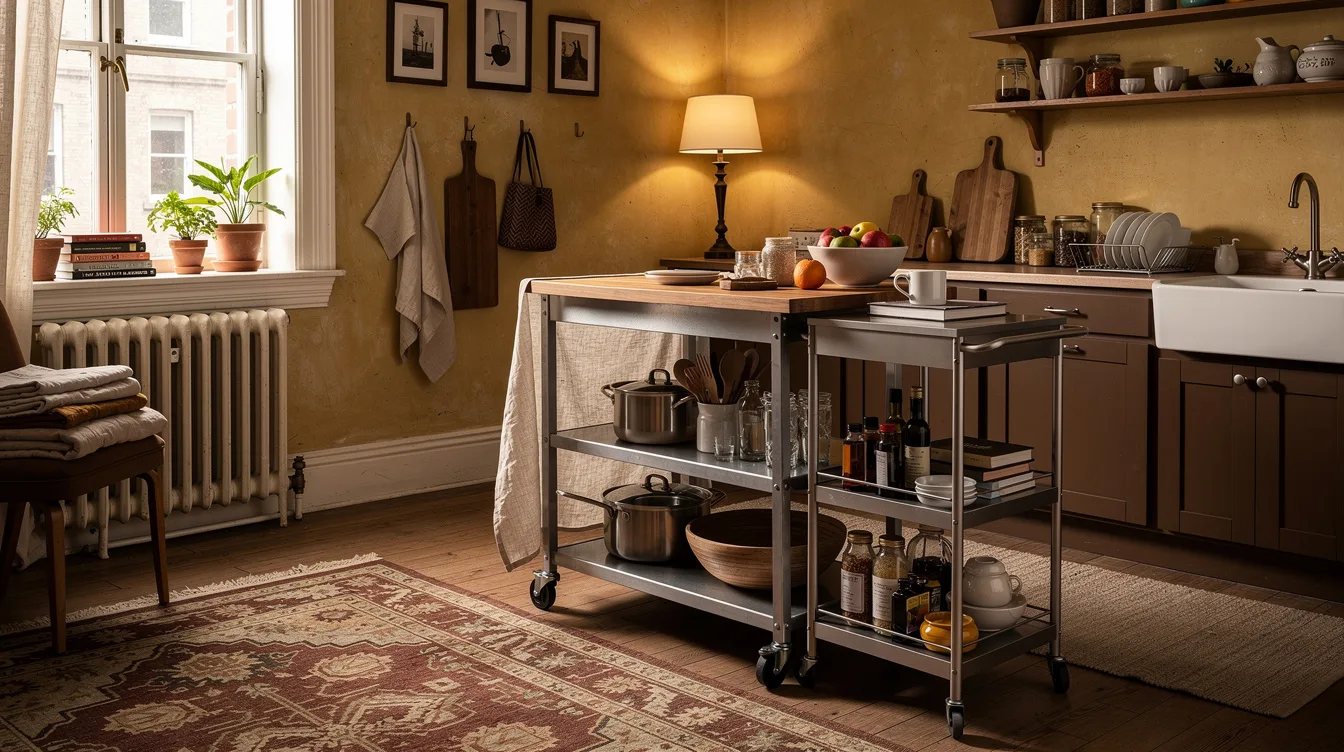
Use RÅSKOG as a Storage Sidecar
The full-size IKEA RÅSKOG is about 14 inches wide, 18 inches deep, and 30 inches high, which makes it a practical companion for a compact kitchen. Its three tiers can hold spices, vegetables, small appliances, mixing bowls, and a compost caddy.
Each shelf supports about 13 pounds, with roughly 40 pounds across the cart, so distribute heavier items low. Its height works well beside a counter, but it remains slightly low for a primary cutting surface.
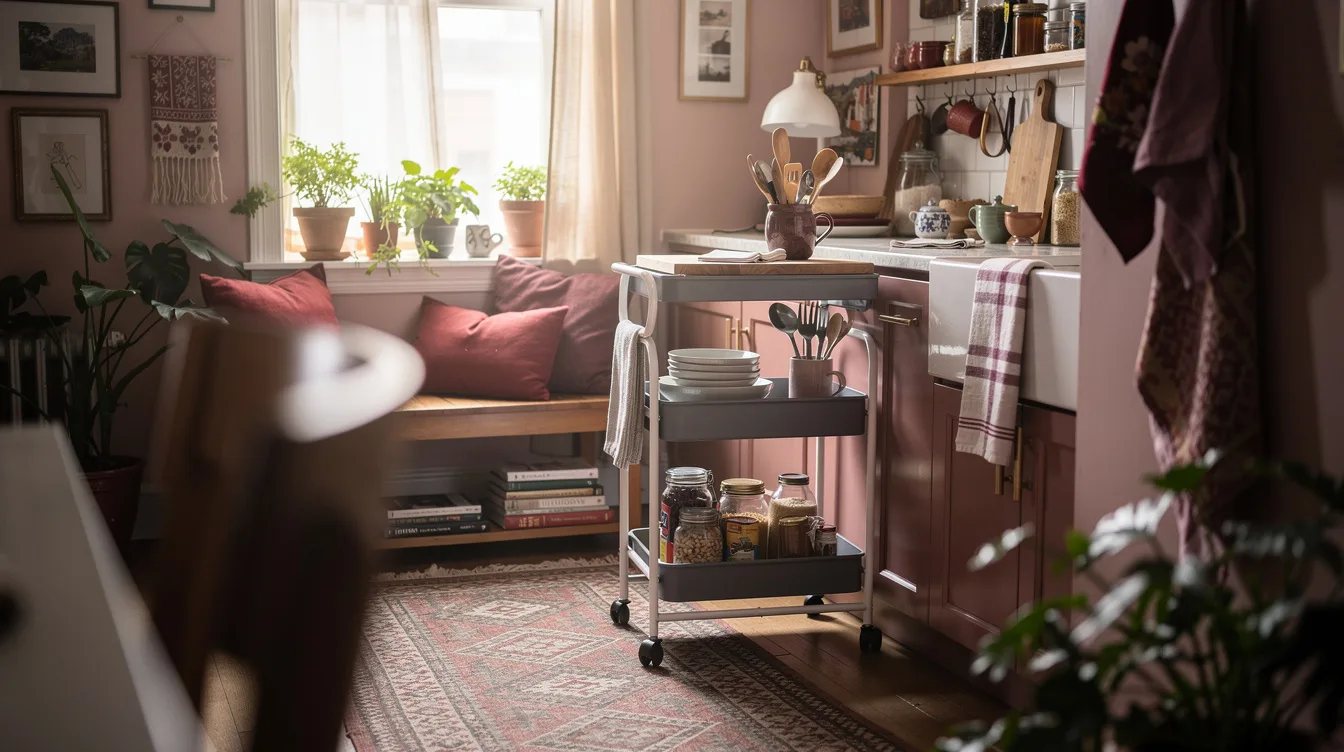
Hide the Small RÅSKOG Under a Table
The smaller RÅSKOG measures about 11 by 15 by 24 inches, giving it a useful second life beneath a dining table or desk. It can hold baking supplies, pantry backups, towels, and the daily coffee setup without claiming permanent floor space.
Use a bamboo cutting board as a removable landing surface for setting down a hot bowl or carrying ingredients. Keep actual chopping on a stable counter, because this compact version is a storage cart first.
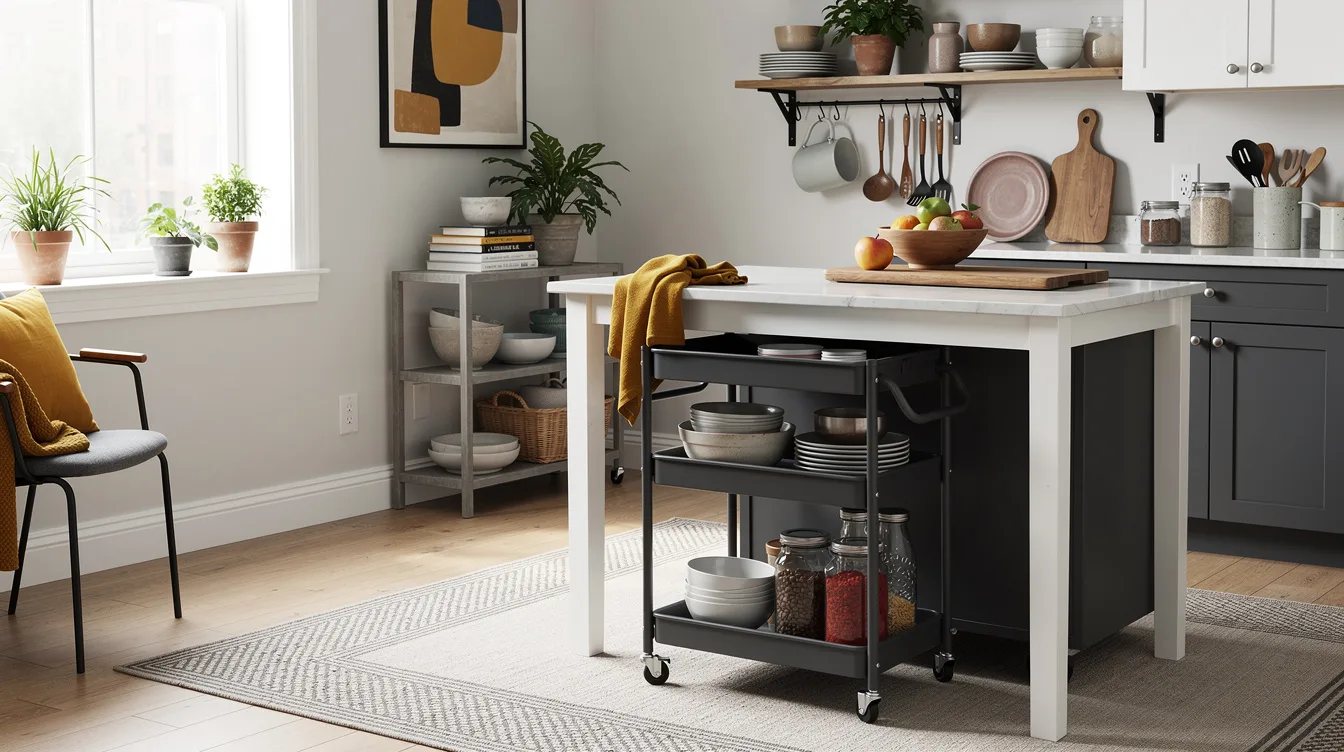
Turn VESKEN Into a Supply Rail
At about 21 inches high, 7 inches deep, and 28 inches tall, IKEA VESKEN fits spaces where a standard cart would make the aisle feel pinched. Its narrow profile is ideal for oils, vinegar, foil, food wrap, spices, cleaning supplies, and folded kitchen towels.
Place it beside the sink or at the open end of a one-wall kitchen. The 7-inch depth makes it a vertical supply rail rather than a prep station, which is exactly why it can disappear into a tight studio layout.
Upgrade to BEKVÄM for Regular Cooking
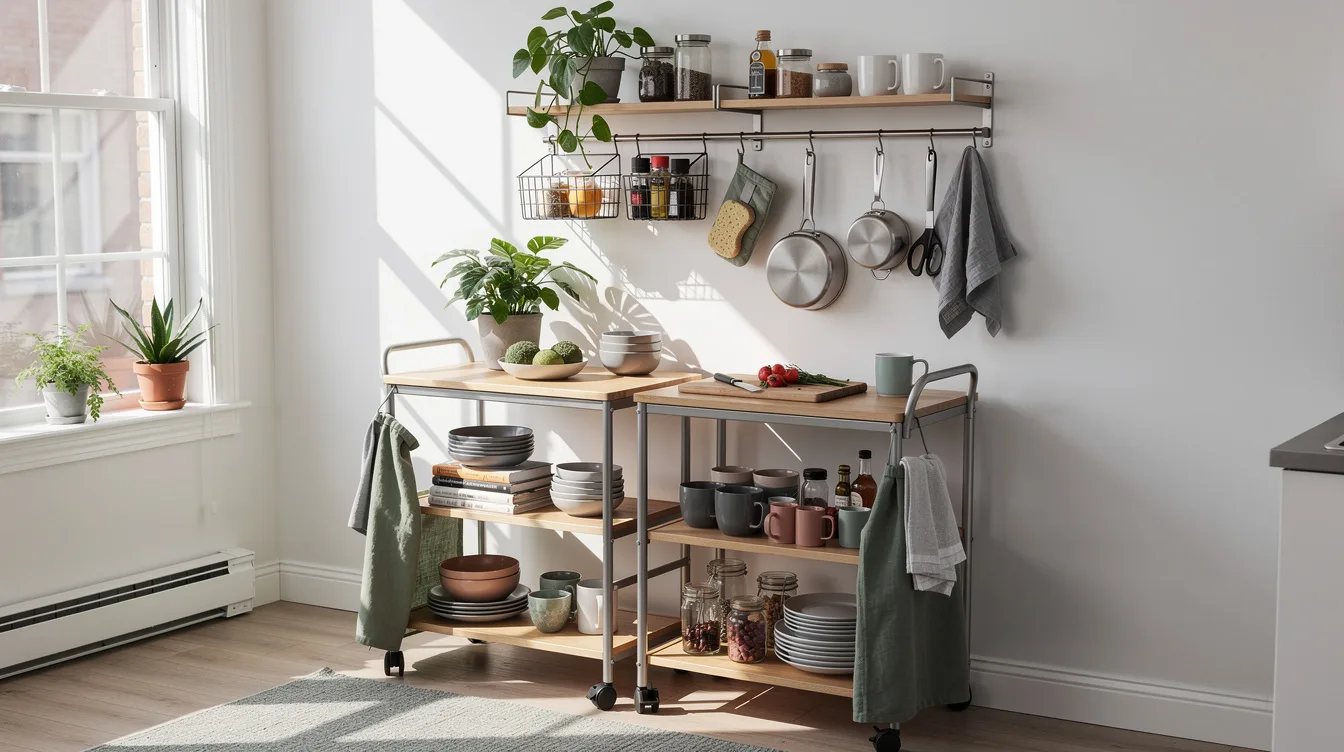
Choose IKEA BEKVÄM when the kitchen sees regular chopping, baking, or meal assembly and the cook needs a dedicated surface. Its wood construction gives the room a warmer visual note than an all-metal trolley, while the lower storage area can carry bowls, pans, or pantry goods.
Leave enough room to roll it into the working triangle between refrigerator, sink, and cooktop. The best position changes during a recipe, so the cart should move easily without forcing the cook to unload it first.
Build a FÖRHÖJA Batch-Prep Station
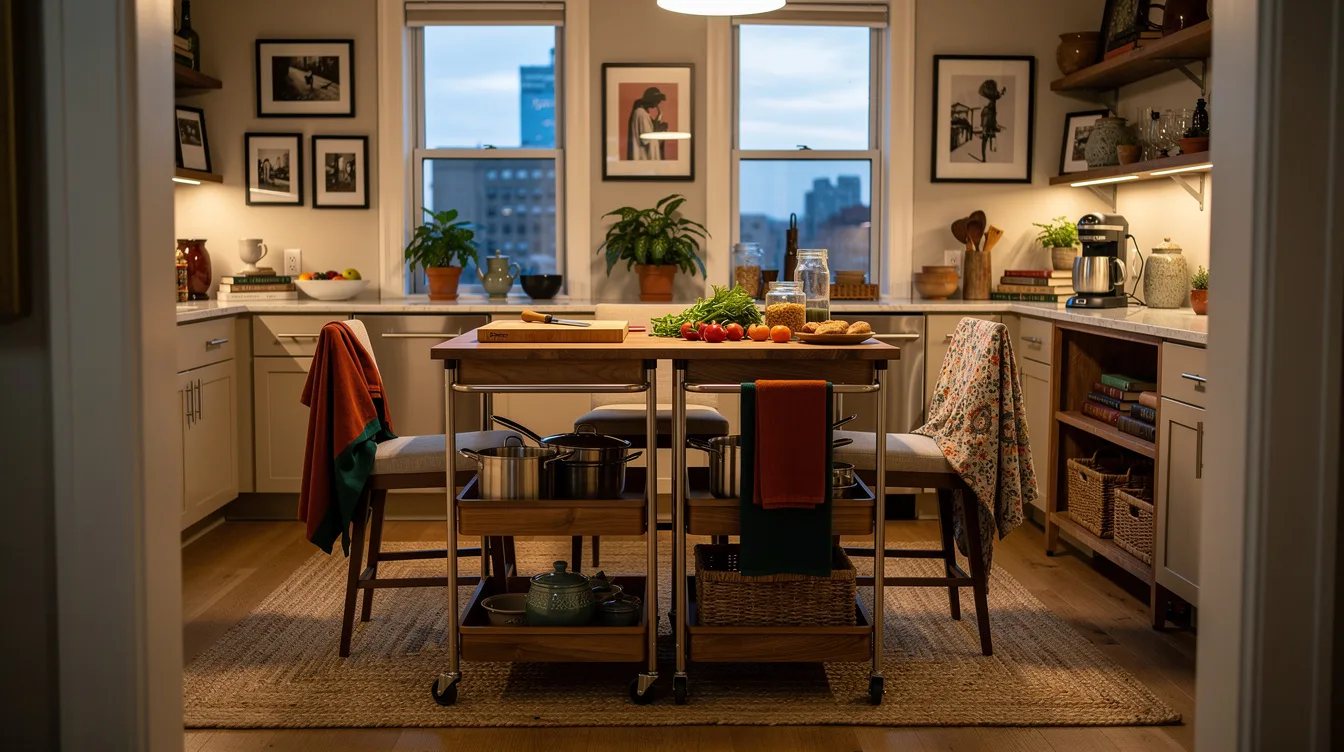
For frequent cooking, a longer IKEA FÖRHÖJA setup creates a serious compact station without fixing an island to the floor. A footprint of about 39 by 17 inches gives batch prep, baking, or several ingredient bowls more breathing room.
Use the drawers for knives, peelers, towels, and measuring tools, then reserve the top for the active recipe. This arrangement earns its floor space when the kitchen regularly handles dough, large vegetables, or several pans at once.
Reserve RIMFORSA for Open Kitchens
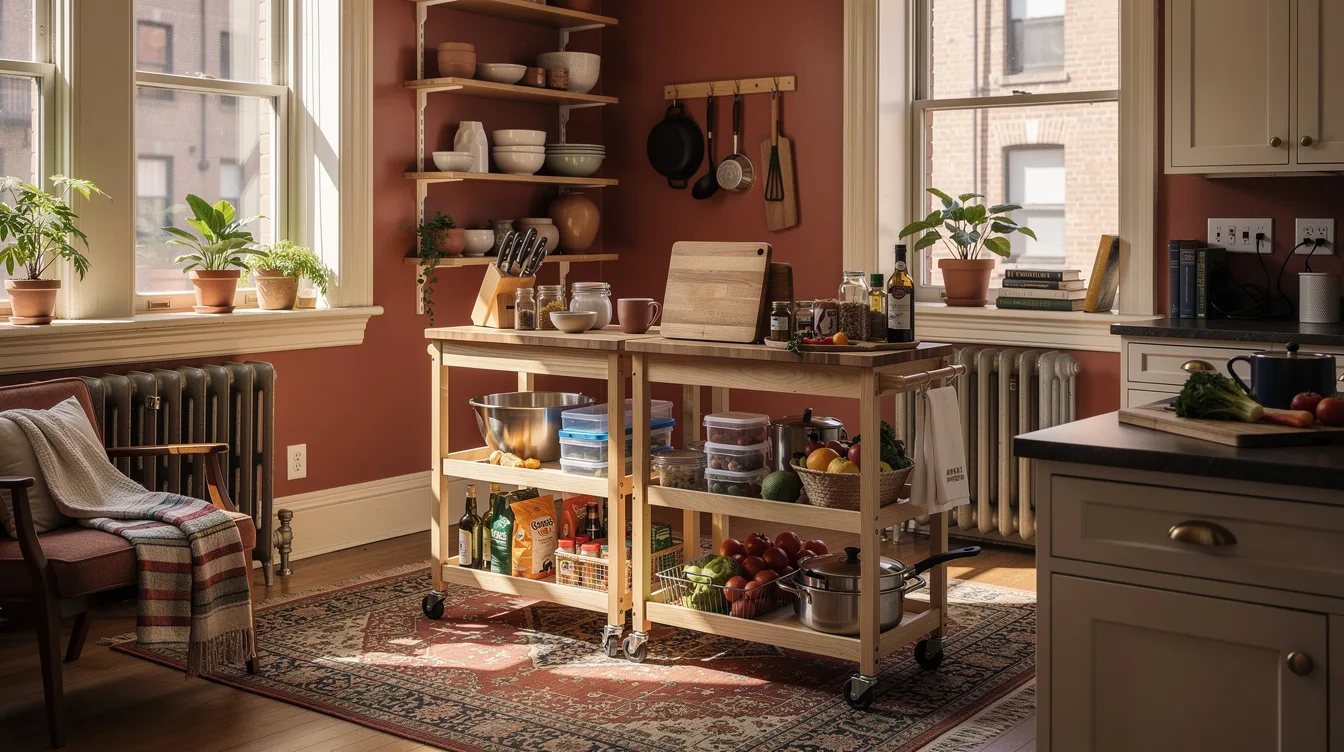
A larger IKEA RIMFORSA mobile station, about 47 by 25 inches, suits an open studio where the kitchen already has a generous circulation zone. Its broader footprint can support serious prep, but it needs a deliberate parked position near a wall or cabinet run.
Use it as a compact cook's workbench rather than a decorative table. In a very small room, its size can overwhelm the route and defeat the flexibility that makes a movable station useful.
Give Waste Its Own Landing Spot
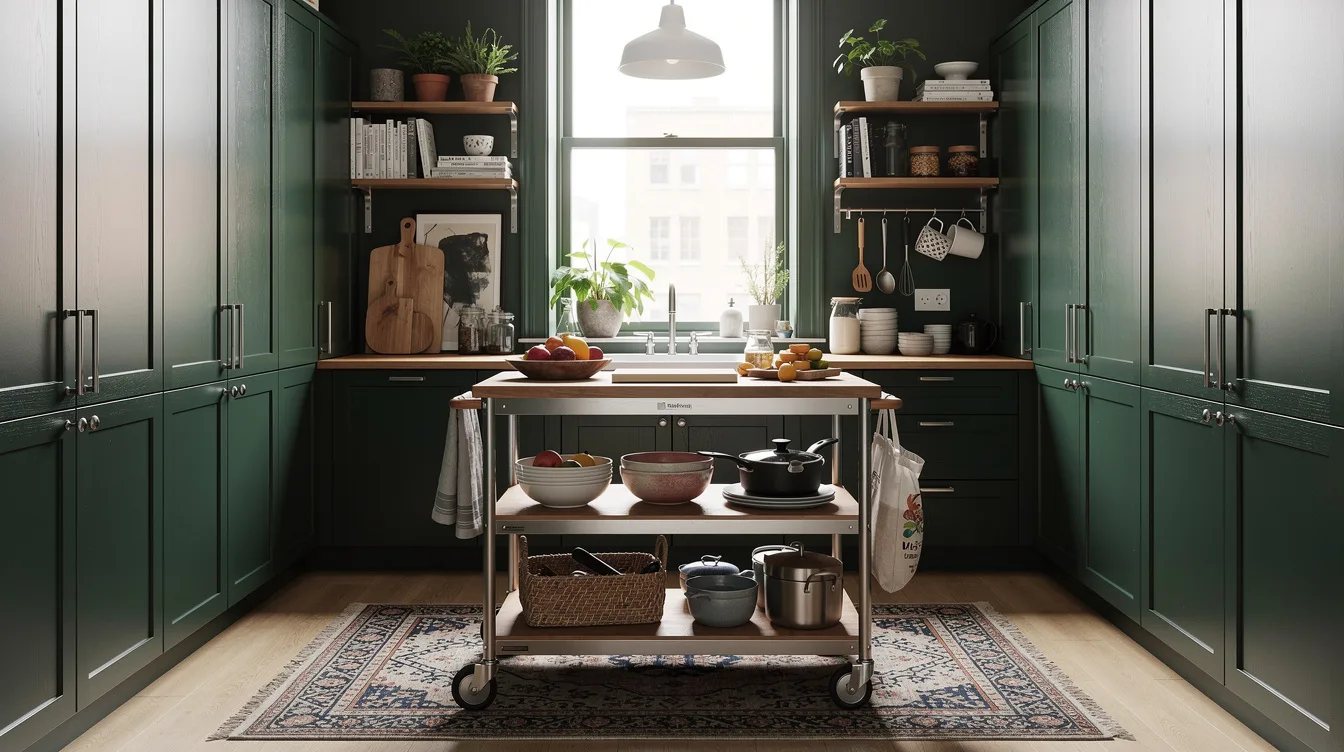
Cleanup becomes easier when scraps have a designated place beside the prep surface. A small stainless steel compost caddy or lidded bin can ride on the lower tier of the sidecar, keeping peelings off the floor and away from the sink.
Keep the waste container close enough to use with one hand, then roll it directly to the trash or compost point after cooking. This small decision prevents the cart from becoming a pile of bowls, wrappers, and damp towels.
Keep Boards Removable
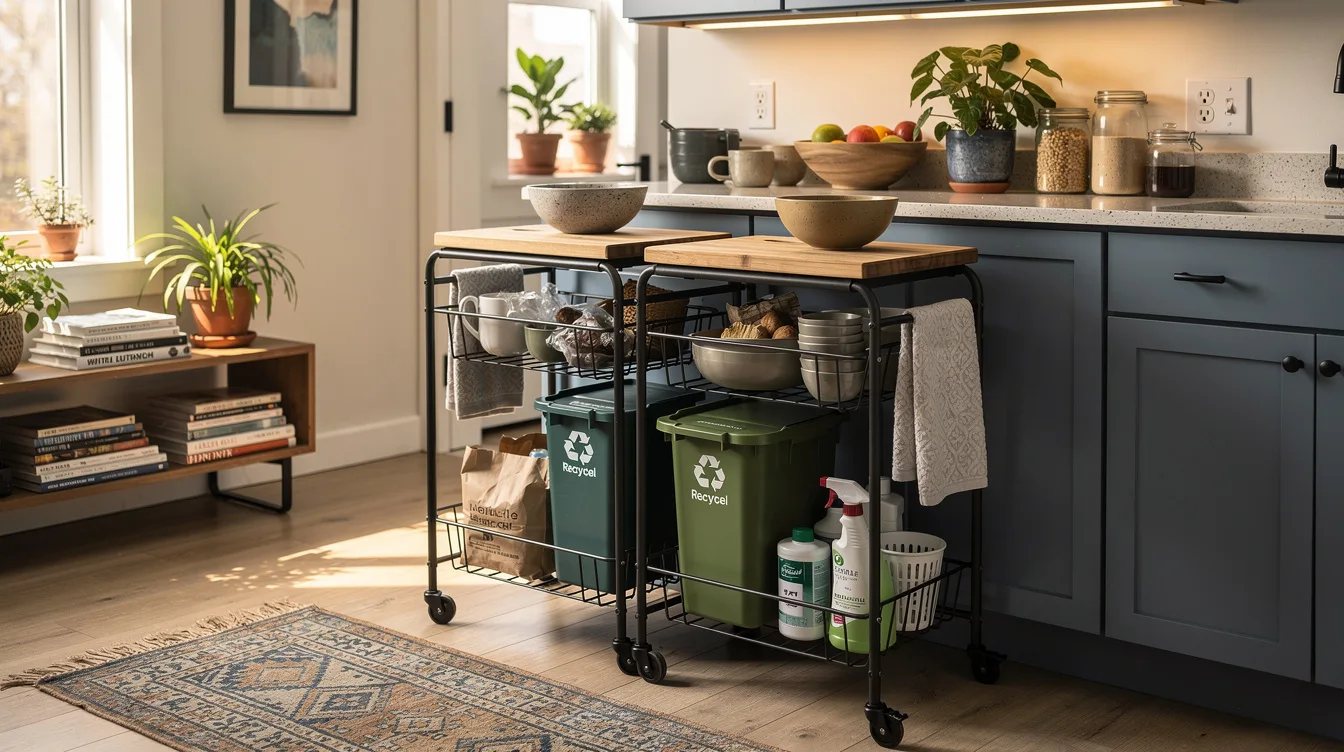
A removable acacia wood board can turn the top shelf into a landing zone for ingredients, serving dishes, or a mixing bowl. Secure it with a nonslip mat when carrying food, but remove it before any serious chopping unless the shelf and board are firmly designed for that use.
Store the board vertically against the wall or inside a cabinet when the cart is parked. That keeps the countertop visually light and makes cleaning the cart faster.
Roll the Station Away After Dinner
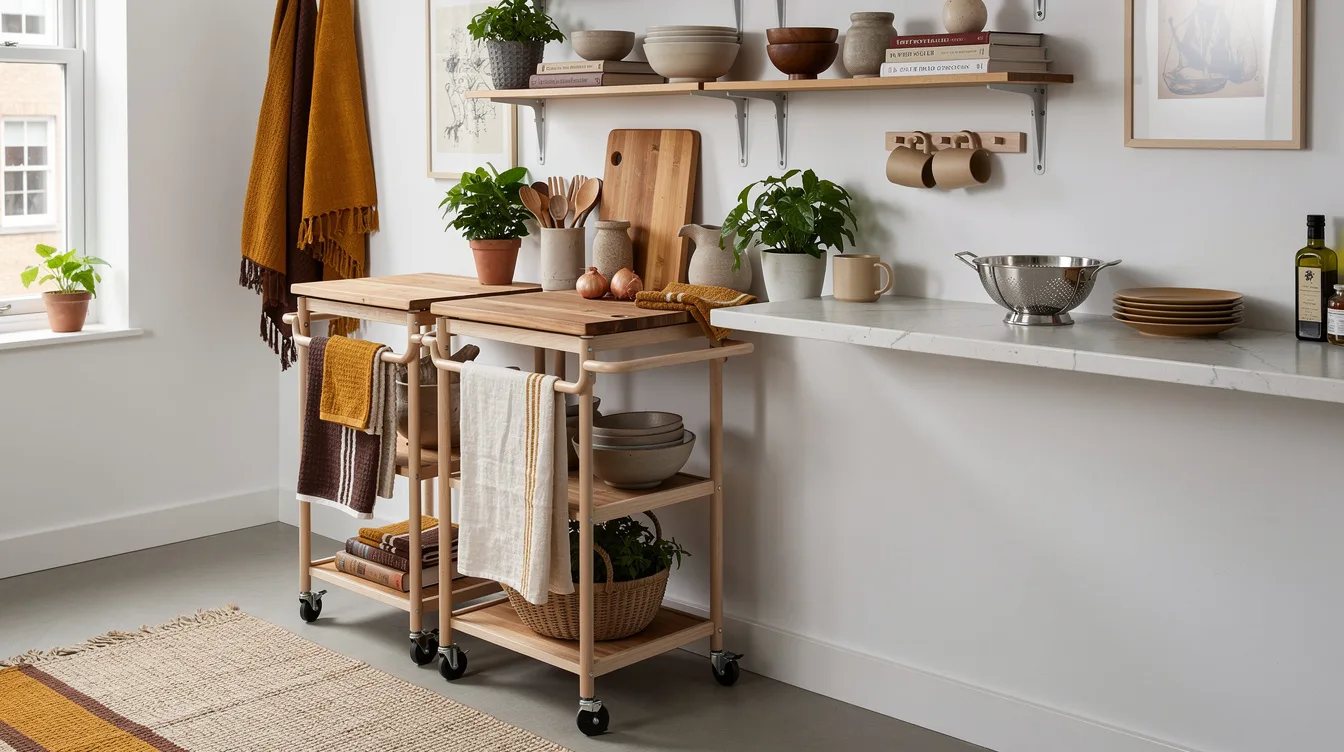
The final rule is operational: the prep zone should disappear when the cooking is finished. Roll the carts against a wall, beside the refrigerator, or into the open end of the kitchen so the studio can shift back to dining, working, or relaxing.
We favor a simple rubber caster that moves quietly across the floor and does not leave the cart drifting. A movable kitchen earns its keep every day it clears the center of the room.
Keep reading
- Small Studio, No Walls? 14 IKEA KALLAX Layouts Create Two Rooms
- No Counter Space to Prep On? These 9 IKEA Carts Fix It
- IKEA Studio Apartment Ideas That Fake a Hotel Suite for Less
Begin with painter's tape, mark a 36-inch route, and test the cart beside the refrigerator for one full cooking session. That small trial will reveal whether the room needs a storage sidecar, a proper workbench, or simply a better place to park the prep zone.