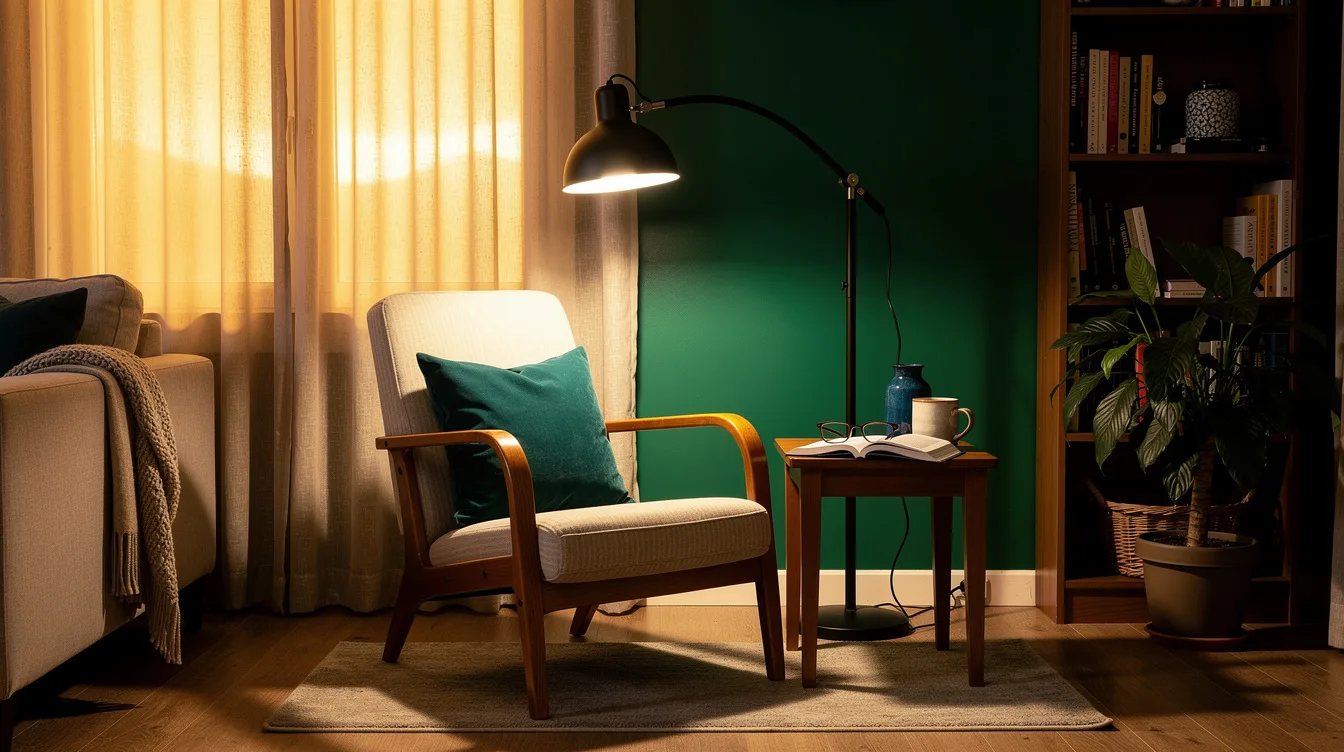
No Room for a Reading Nook? IKEA Has 11 Small-Space Fixes Under $200
01 october 2026The easiest living room reading nook is usually hiding in the space beside the sofa, not behind a renovation project. In a footprint of about 4 by 5 feet, a comfortable chair, directed reading light, and reachable surface can create a real destination for about $200 to $500.
The mistake is buying decorative pieces before testing the layout. Designers generally agree that the seat, page light, and landing spot come first, while rugs, blankets, and storage earn their place afterward.
What you will find inside
- Claim the Quietest Corner
- Angle the Chair Toward the Room
- Choose a Seat for Long Reading
- Aim the Light at the Pages
- Keep the Table Within Reach
- Protect Every Walking Path
- Fit the Chair Before the Decor
- Use a Rug to Mark the Boundary
- Add an Ottoman Only With Clearance
- Keep Book Storage Shallow
- Layer One Soft Detail
Claim the Quietest Corner
Start with the corner that already feels slightly underused, such as the space at the end of a sofa or beside a window. A reading nook works best when it feels claimed by purpose, not squeezed into the middle of the room.
Give the nook about 4 by 5 feet when possible. That footprint can hold a comfortable chair, a directed lamp, and a small landing surface without turning the area into an obstacle.
Angle the Chair Toward the Room
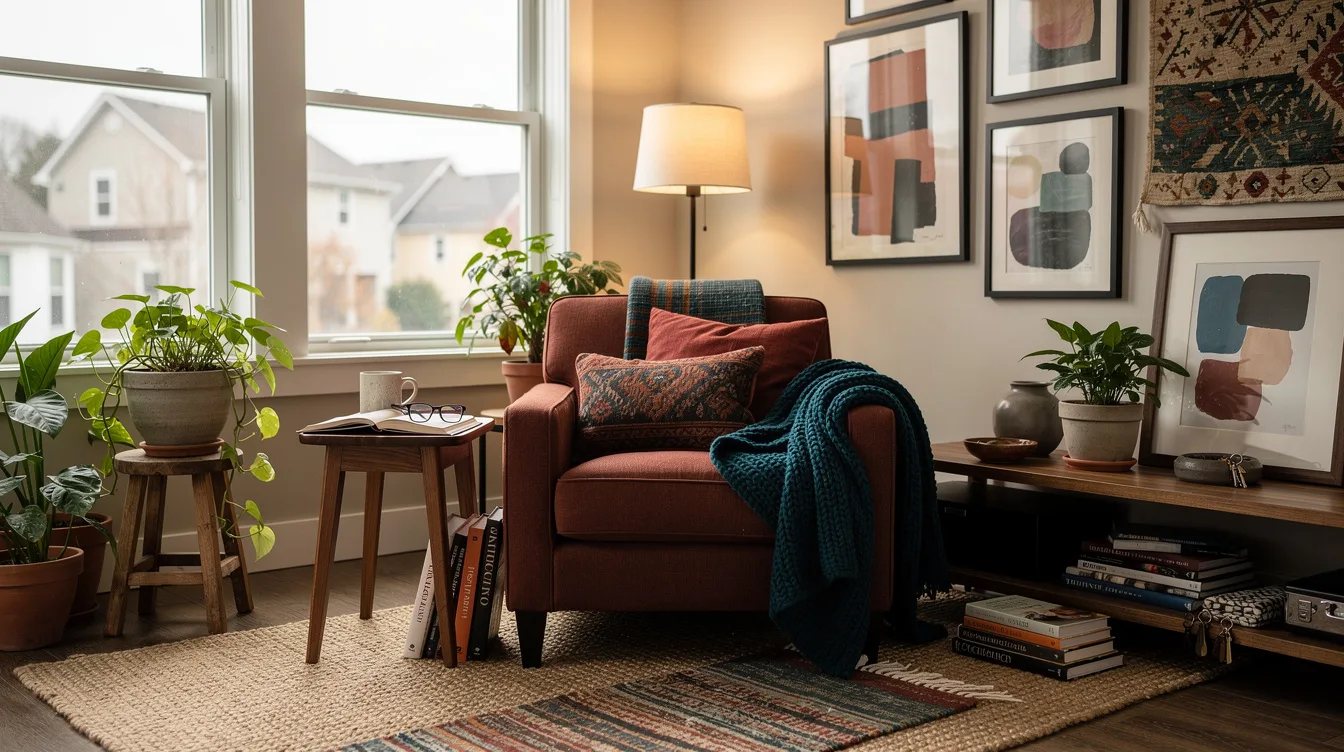
Turn the chair about 30 to 45 degrees toward the main seating area. This angle keeps the nook connected to the living room while giving it the focus of a separate destination.
A chair pointed directly at the television will usually become another scrolling seat. Aim it toward a window, a bookcase, or an open stretch of wall instead.
Choose a Seat for Long Reading
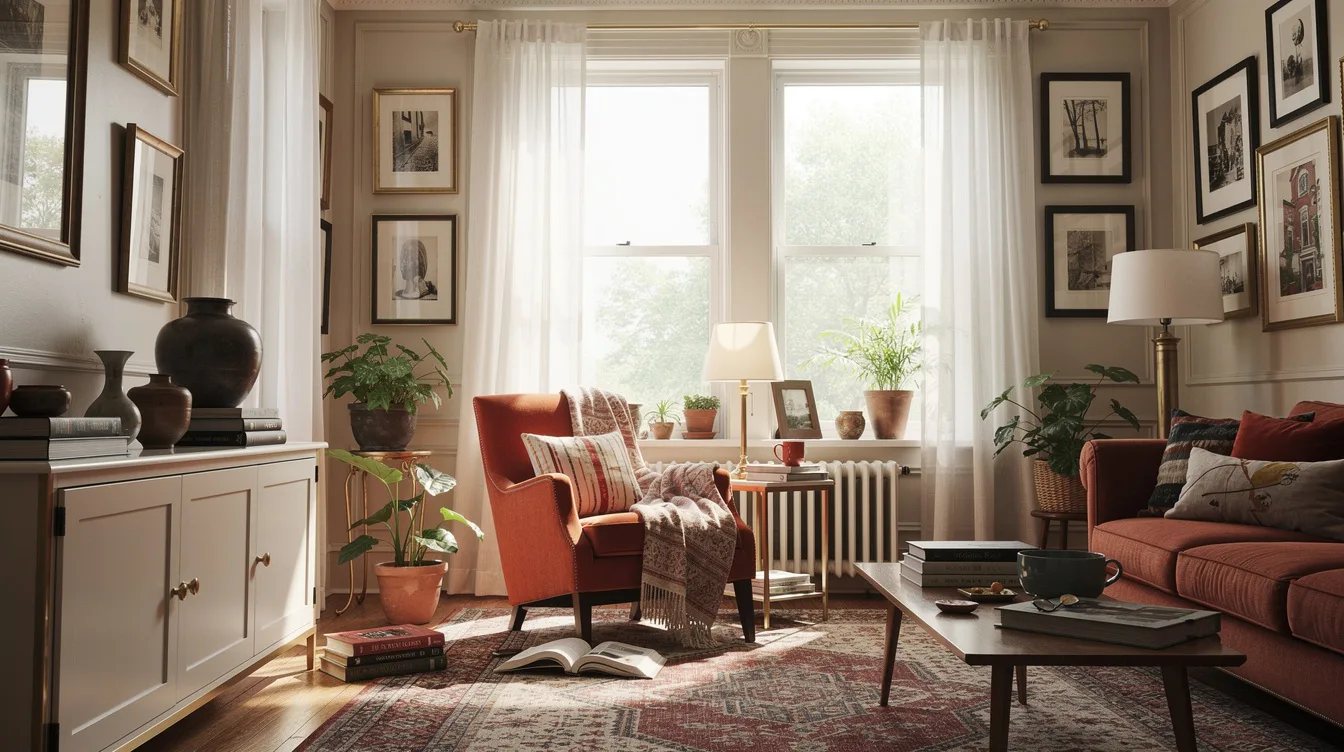
Test the seat against the real habit: reading for about 30 to 90 minutes without constantly shifting position. A supportive back, usable arm height, and enough depth matter more than a dramatic silhouette.
The IKEA POÄNG armchair is a practical small-room example, with a bentwood frame, birch veneer, and a light beige cover. Its visual weight stays low, which helps a compact living room feel less blocked.
Aim the Light at the Pages
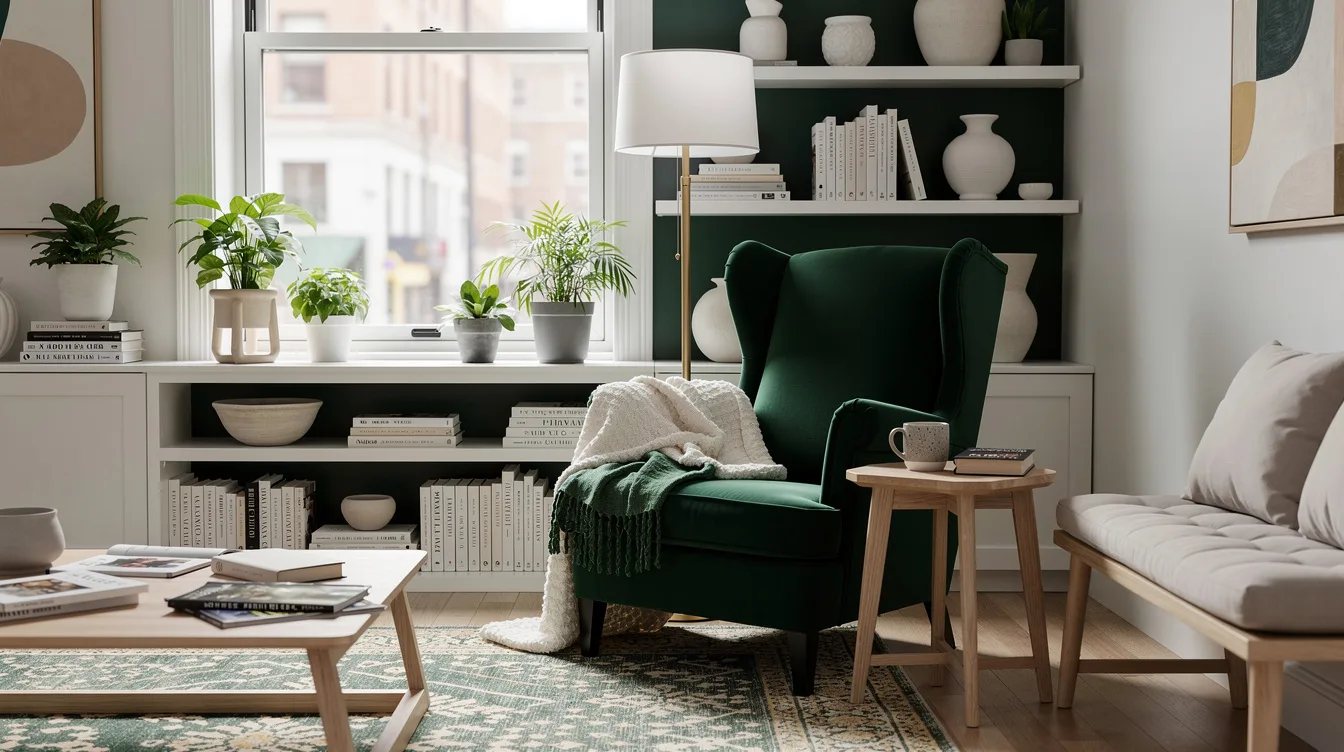
Use a task lamp that can point at the book, rather than relying on the room's ceiling fixture. The light should land on the pages without shining into your eyes or creating a sharp reflection.
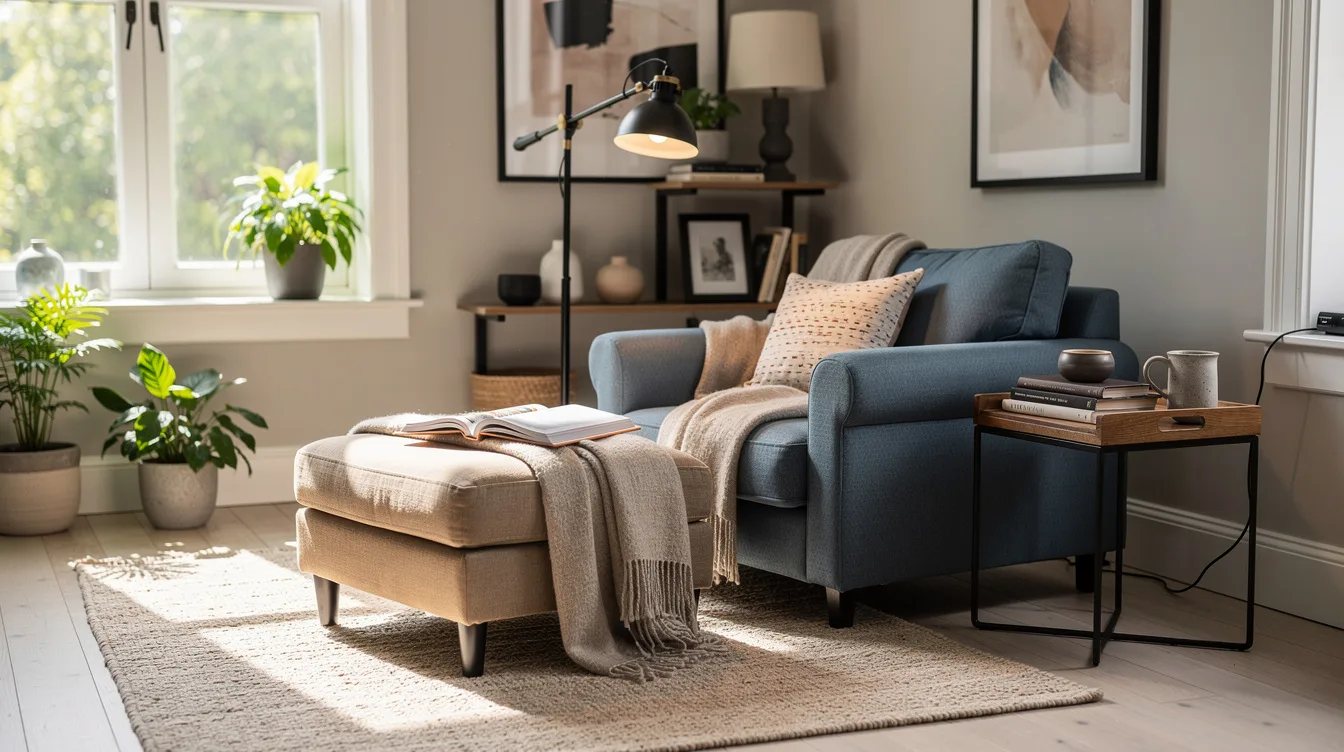
The IKEA LERSTA floor lamp is about 52 inches tall, with an adjustable head and a base roughly 10 inches across. At about $23, it keeps the first version of the nook affordable while solving the problem that matters most.
Keep the Table Within Reach
Place a surface close enough to reach without leaning forward or standing up. A small drink, reading glasses, and the current book should fit without competing for space.
The IKEA LACK side table is about 22 inches square and 18 inches high, so it works beside a standard lounge chair when the corner has room. For a tighter layout, the smaller version is about 14 inches square and 14 inches high.
Protect Every Walking Path
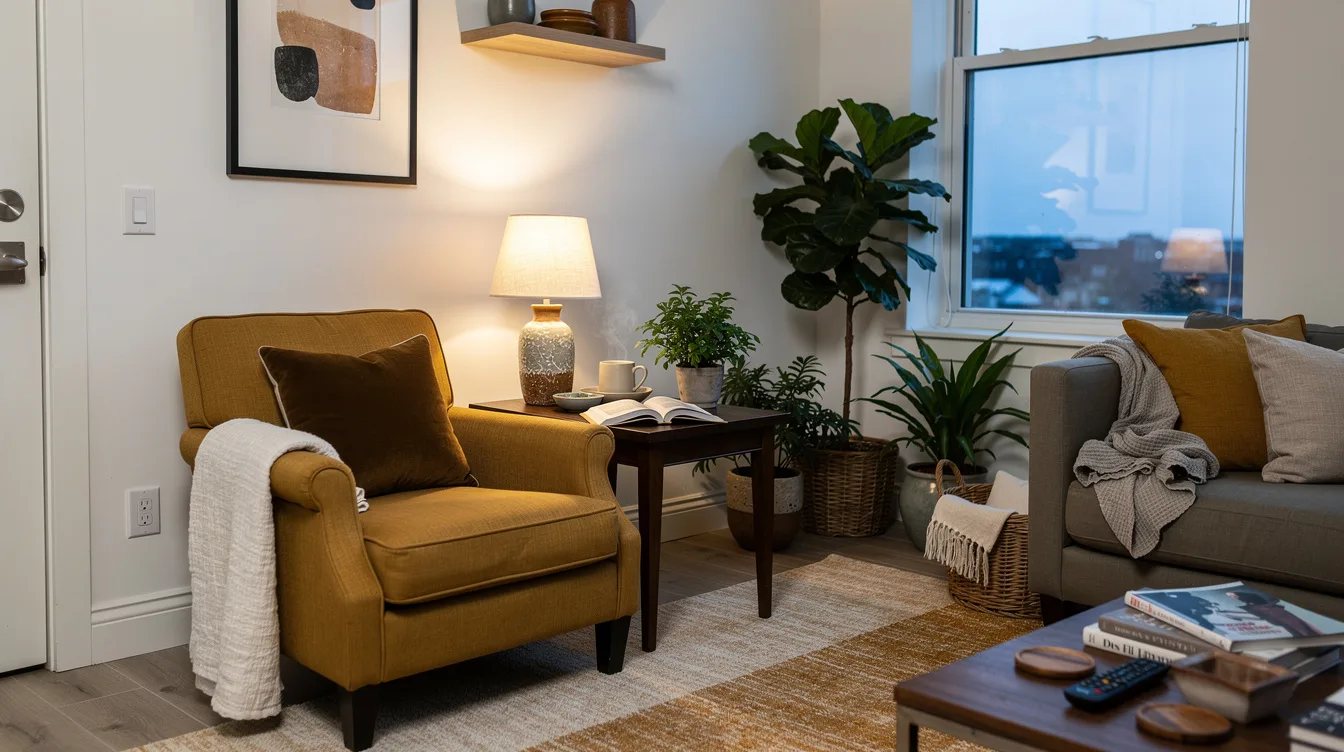
Measure the route into the nook before buying anything large. Leave at least about 24 inches where someone enters the corner, and aim for roughly 30 inches where people regularly pass by.
This clearance is more important than adding a larger table or extra decoration. A reading corner that interrupts the route from the sofa to the kitchen will lose its appeal quickly.
Fit the Chair Before the Decor
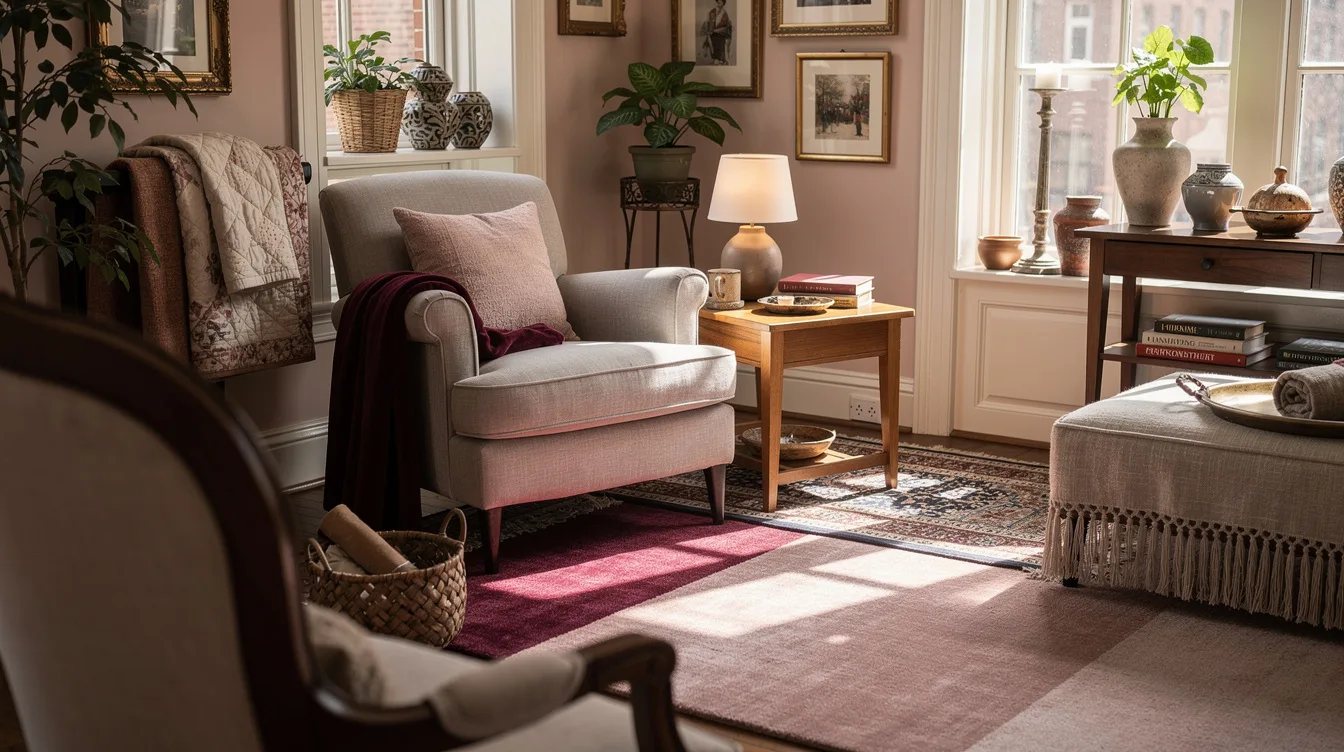
Choose the chair first, then place the lamp and table around it. In a compact room, a large rug or bookcase selected too early can consume the space needed for the seat and make the whole arrangement feel crowded.
Measure the chair's full depth, including the space needed to sit down comfortably. A compact chair corner commonly takes about 14 to 18 square feet, so every extra inch has a visible effect.
Use a Rug to Mark the Boundary
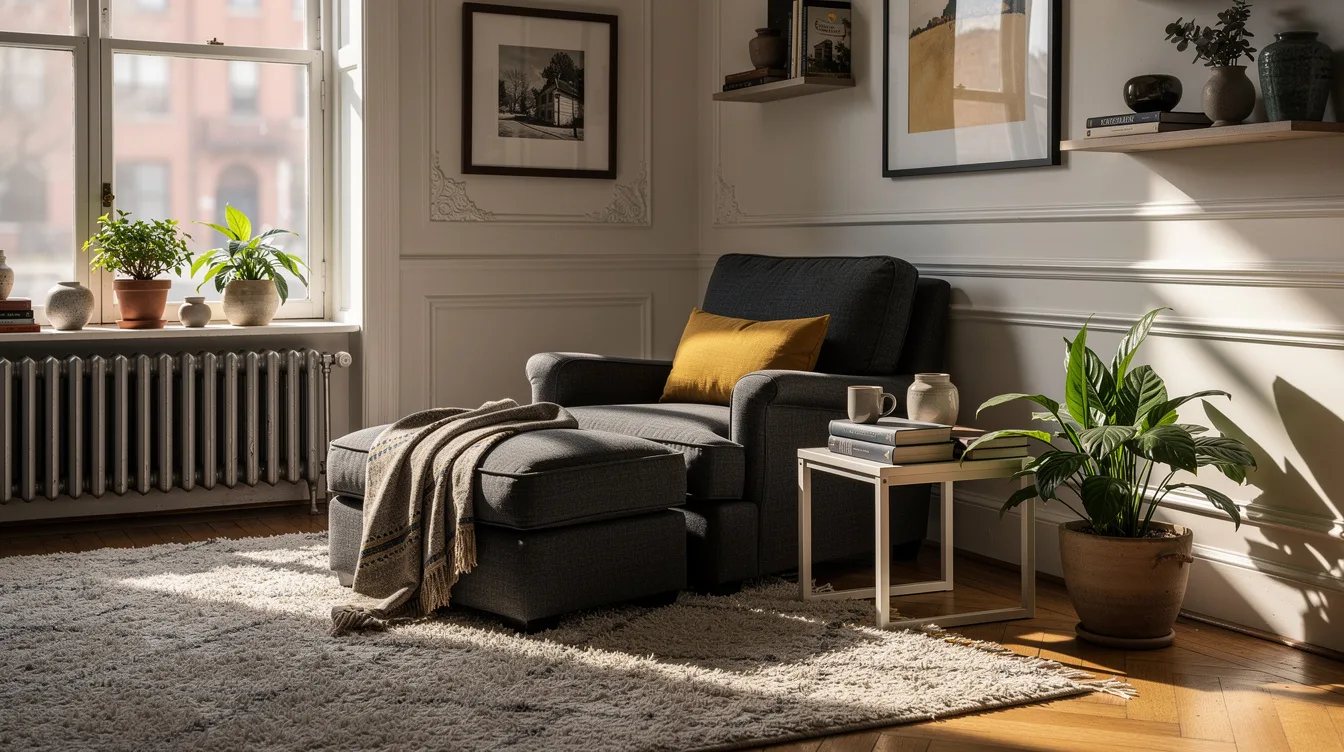
A rug gives the nook a visual edge without adding a wall or changing the floor plan. The front legs of the chair and the table should sit on it when the room allows.
Start with a 3-by-5-foot rug for a very compact setup, or move to about 4 by 6 feet or 5 by 7 feet when the chair has more breathing room. Skip a glossy synthetic finish if the rest of the room already has too much visual shine.
Add an Ottoman Only With Clearance
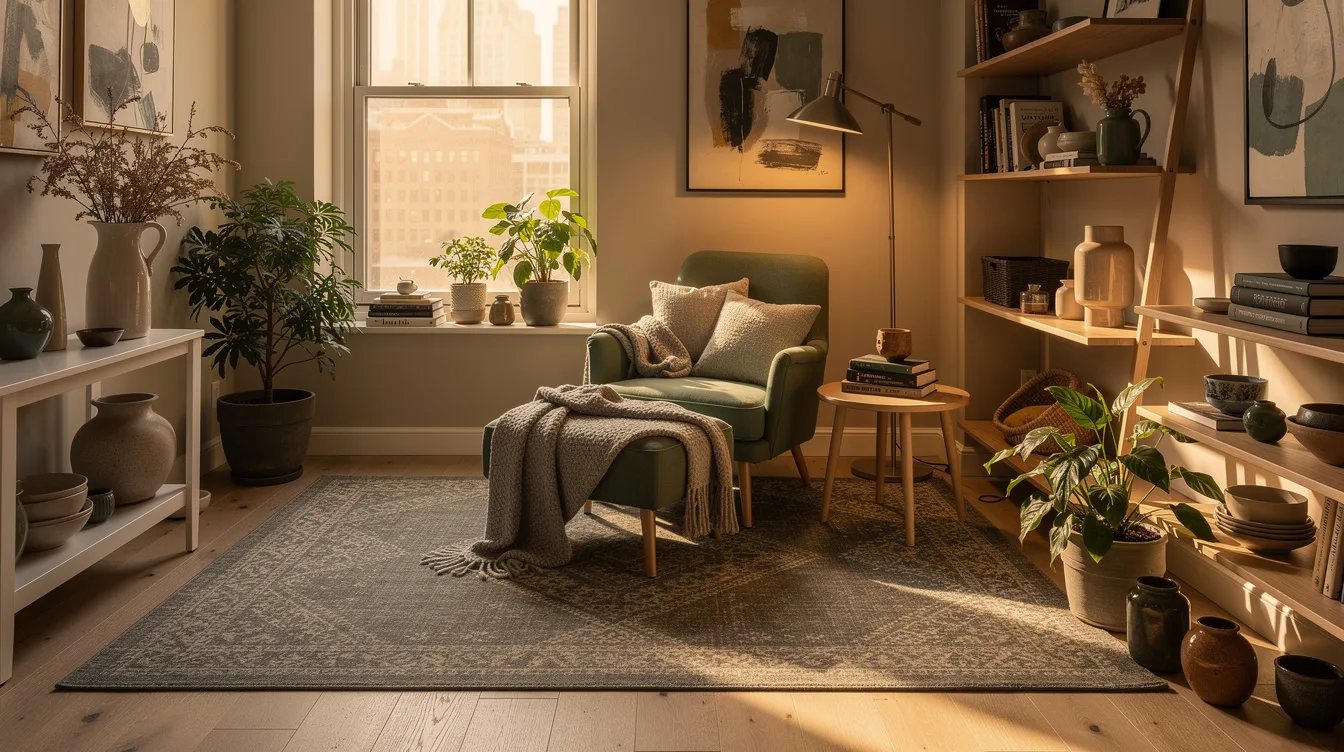
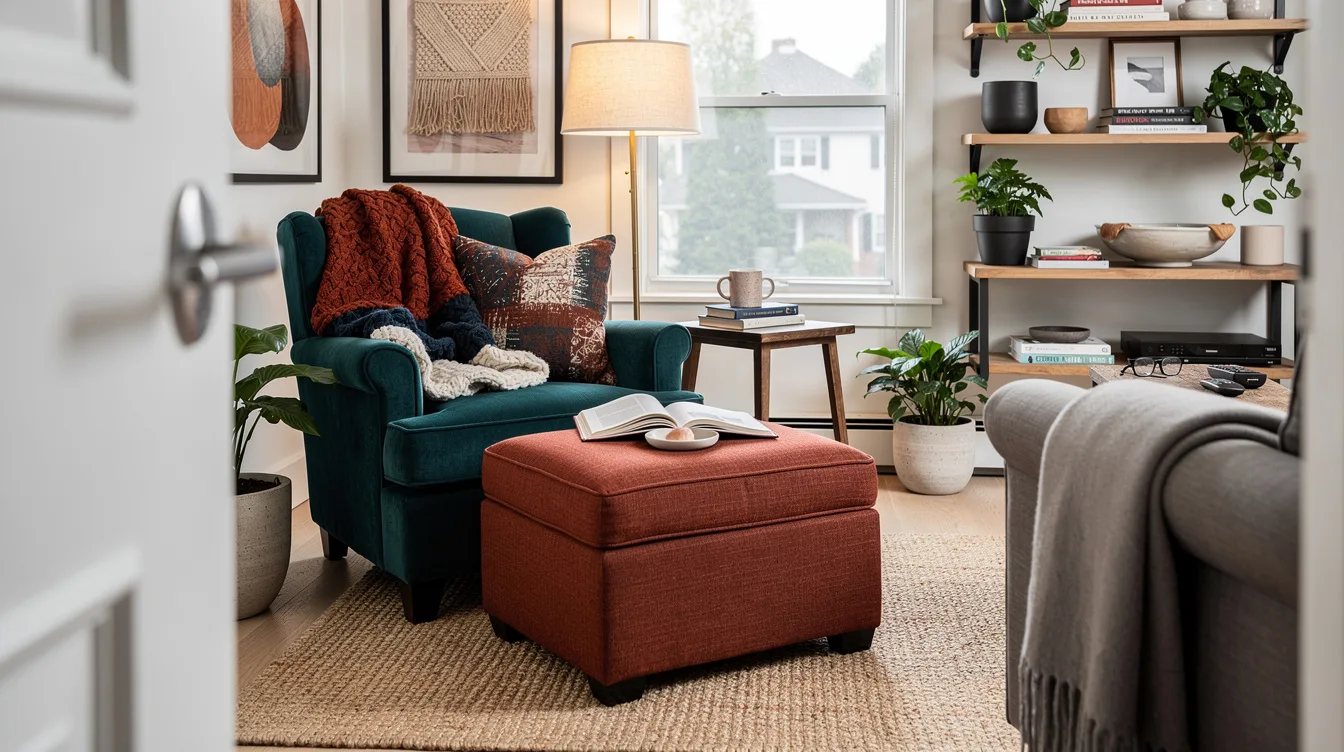
An ottoman makes a reading seat more relaxed, but it changes the footprint substantially. A chair and ottoman usually need about 5 by 6 feet at minimum, with roughly 6 by 6 feet feeling more comfortable.
Use a compact upholstered ottoman that can slide beneath the chair's front edge when it is not needed. Protect the entry path first, because a footrest that blocks circulation will make the nook less usable.
Keep Book Storage Shallow
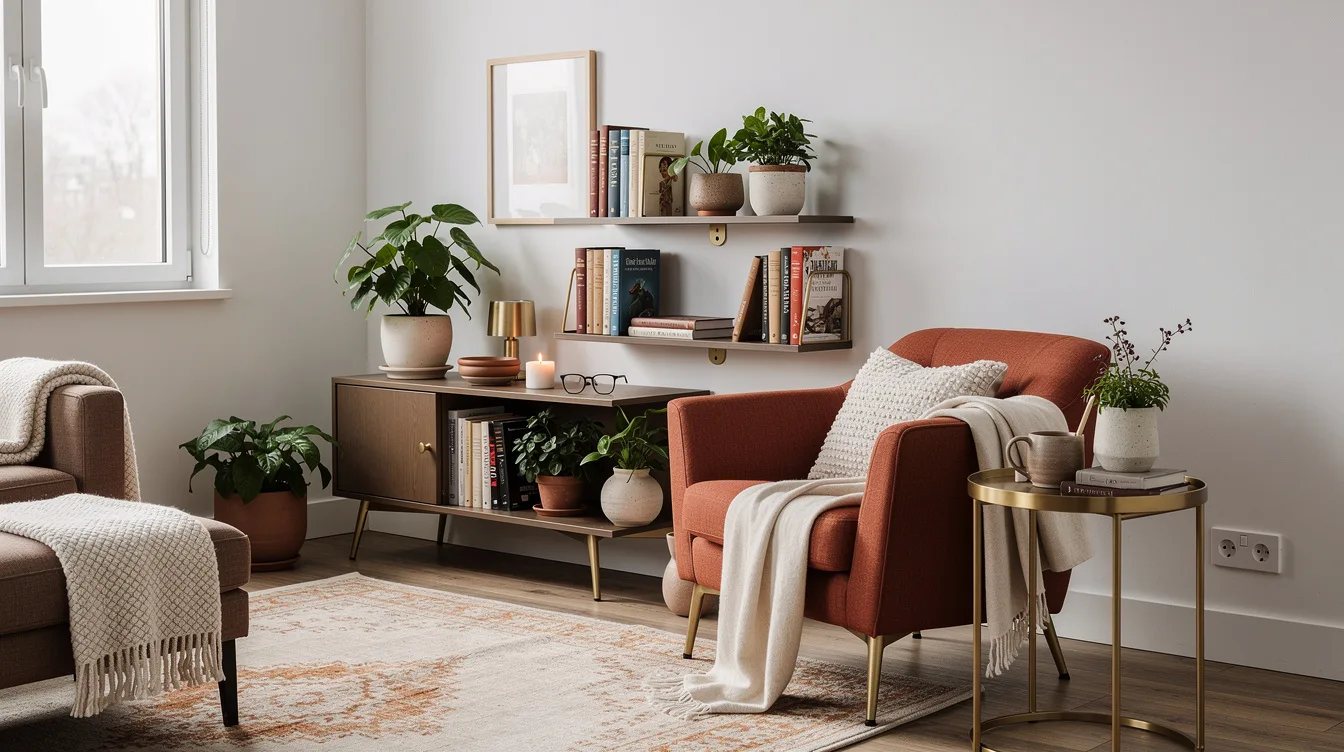
Store books vertically on a narrow unit rather than filling the corner with deep furniture. A shallow bookcase about 10 to 12 inches deep can hold a useful selection while preserving the chair's visual space.
Place storage beside the chair or against the nearest wall, never in front of the entry. A few current titles are enough to make the nook feel active; an overloaded shelf creates clutter before the seat gets used.
Layer One Soft Detail
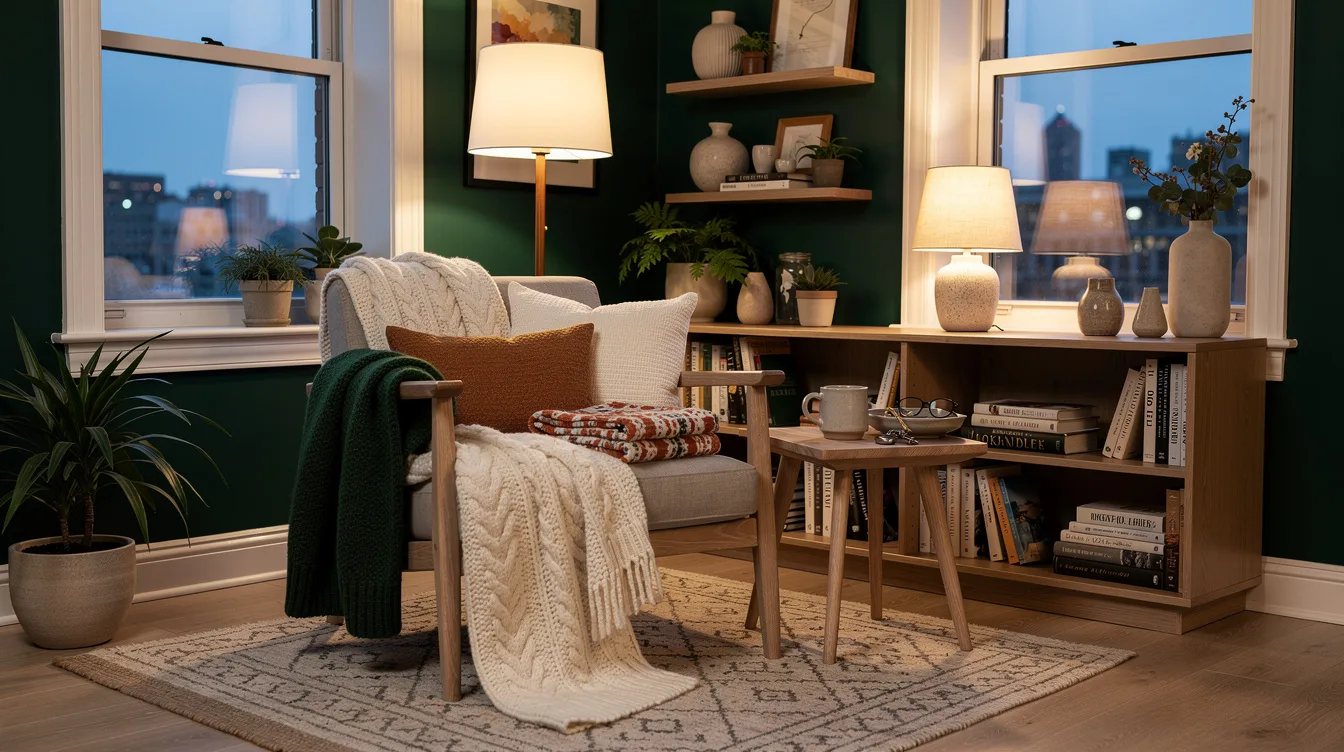
Once the essentials work, add one comfort layer that supports the reading ritual. A folded cotton throw over the chair arm is more useful than several decorative pillows that take away sitting space.
We also like a small book stack or a single warm-toned object on the table. Keep the styling restrained so the lamp, seat, and landing surface remain obvious at a glance.
Keep reading
- No Room for an Island? 14 IKEA Carts Create a Prep Zone
- Small Living Room Feeling Cramped? 12 At Home Mirrors Under $80
- Small Studio, No Walls? 14 IKEA KALLAX Layouts Create Two Rooms
Measure the walking path, place the chair at an angle, and live with the lamp and table for a week before adding anything else. When the corner is easy to enter and comfortable to use, the reading habit has room to take hold.