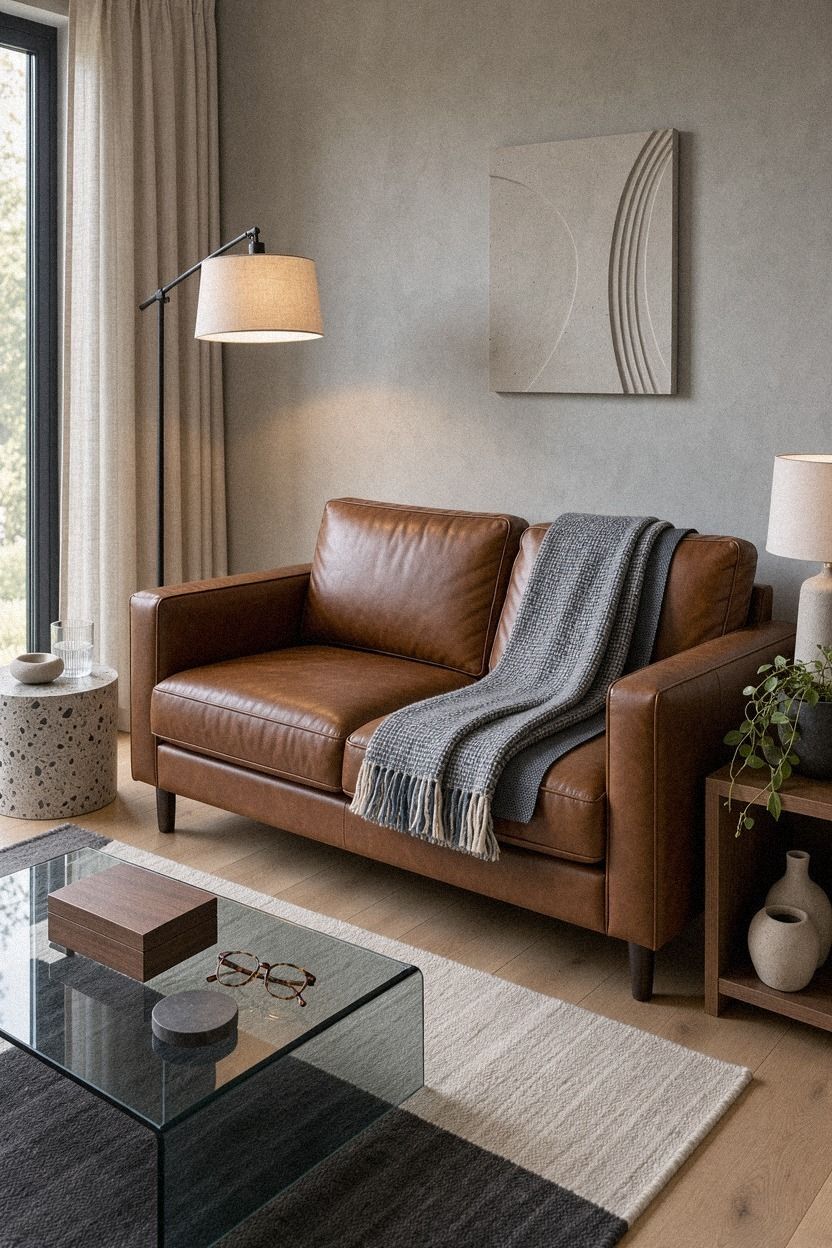
No-Fuss Ways to Keep a Throw From Sliding Off a Leather Sofa
17 november 2026The easiest way to learn how to keep a throw from sliding off a leather sofa is to add friction under the fold, not another blanket on top. I've tested the pretty fixes that fail by lunchtime. You'll need one good fold, a little weight, and a material with grip. That's it!
- Layer a Hidden Grip Pad Under the Couch Throw Blanket
- Fold the Sofa Throw Blanket Against the Seat Crease
- Anchor the Corner With the Three-Point Throw Rule
- Use the Two-Texture Rule for a Throw Blanket Couch
- Swap Slippery Satin for Washed Linen
- Tuck the Lower Edge Behind a Slim Seat Cushion
- Build the Three-Height Anchor With a Bolster
- Pin the Back With a Narrow Lumbar Pillow
- Hang a Short Throw Instead of a Long One
- Choose a Heavier Woven Edge for the Throw Blanket Couch
- Float a Basket Beside the Sofa
- Can a Blanket Stay Put Without Damage?
- Mix Leather With a Softer Color Story
- Frame the Throw With a Side Table
1Layer a Hidden Grip Pad Under the Couch Throw Blanket
A thin grip pad is my first choice because it stops the leather-to-fabric slide without changing the look of your room. Cut a piece slightly narrower than the throw, then place it where your hips or shoulders usually press. Your non-slip rug pad should stay hidden beneath the fold, not peek out beside your arm.
Choose a mesh style with small openings rather than a thick rubber sheet. The thinner option won't create a hard ridge, and you'll still feel the soft blanket against your hand. I made the mistake of using a full-size mat once, and it bunched beneath the throw every time I sat down.
A deep-pile mohair velvet throw works beautifully over the hidden pad. Choose warm white, camel, or black to keep the palette calm and grounded. Skip thick foam that makes your sofa look lumpy.
If you're arranging a warm reading corner, this scent-memory article has a useful reminder about how sensory details stay with you. Your throw should feel just as intentional.
2Fold the Sofa Throw Blanket Against the Seat Crease
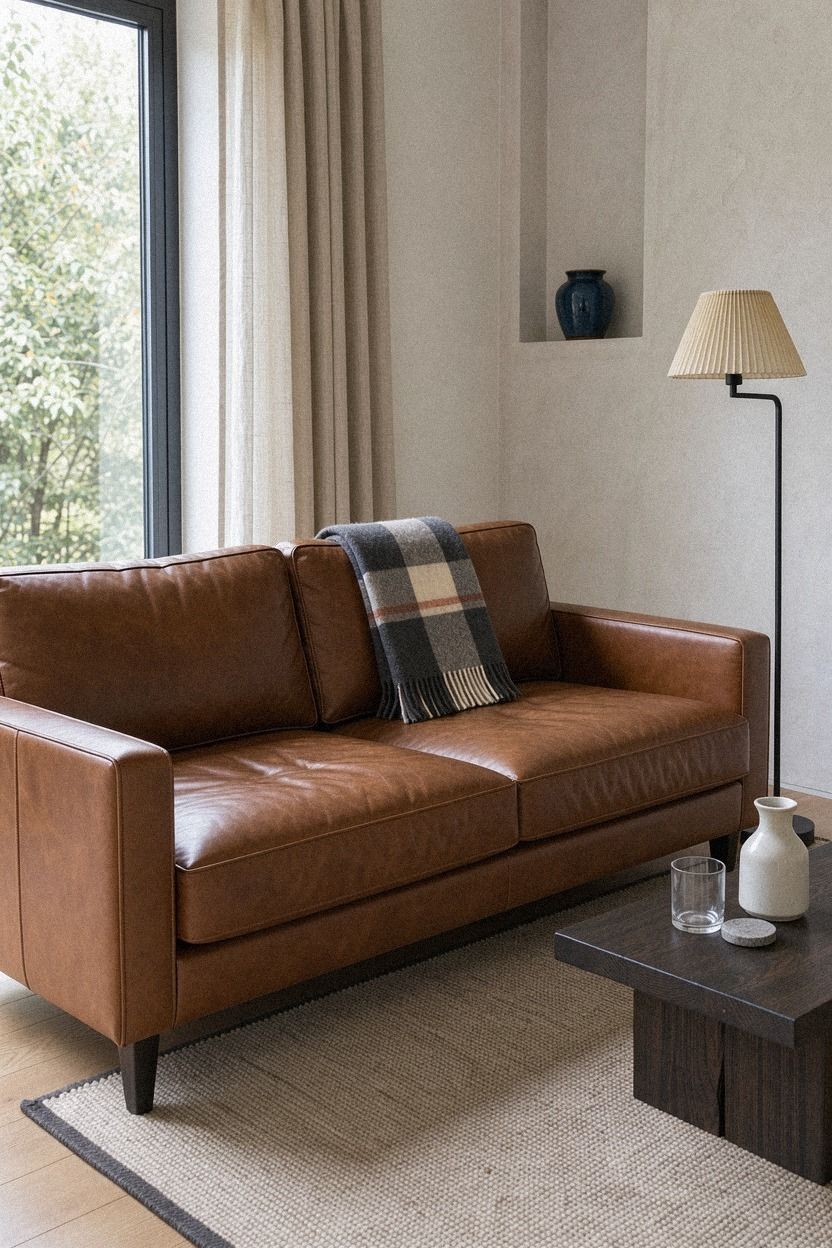
Your sofa already has a natural stopping point where the seat meets the back cushion. Use it.
Fold the throw into a long rectangle, slide the lower edge two or three inches into that crease, and let the rest fall over the front. The leather will hold the tucked section while the loose portion stays soft and inviting.
I prefer this method with a medium-weight throw in midnight blue, copper, and ivory, especially against hand-applied Venetian plaster. The layered color gives your fold some authority without making the sofa feel heavy.
Thin acrylic blankets look nice in photos, but they'll slide the moment you stand up. If your sofa depth is closer to 35 inches, keep the folded section narrow so you don't lose sitting space.
But don't force the throw too deeply into the gap. You want your fabric anchored, not crushed. A crisp fold, a relaxed front edge, and one visible corner will look more refined than a blanket shoved between every cushion.
Fold size: about 8 to 10 inches deep. Edge detail: fringed cotton or flat woven binding. Avoid: bulky sherpa at the crease.
For a second visual reference, compare the relaxed proportions in this single-outfit styling story. Your room benefits from the same editing.
3Anchor the Corner With the Three-Point Throw Rule
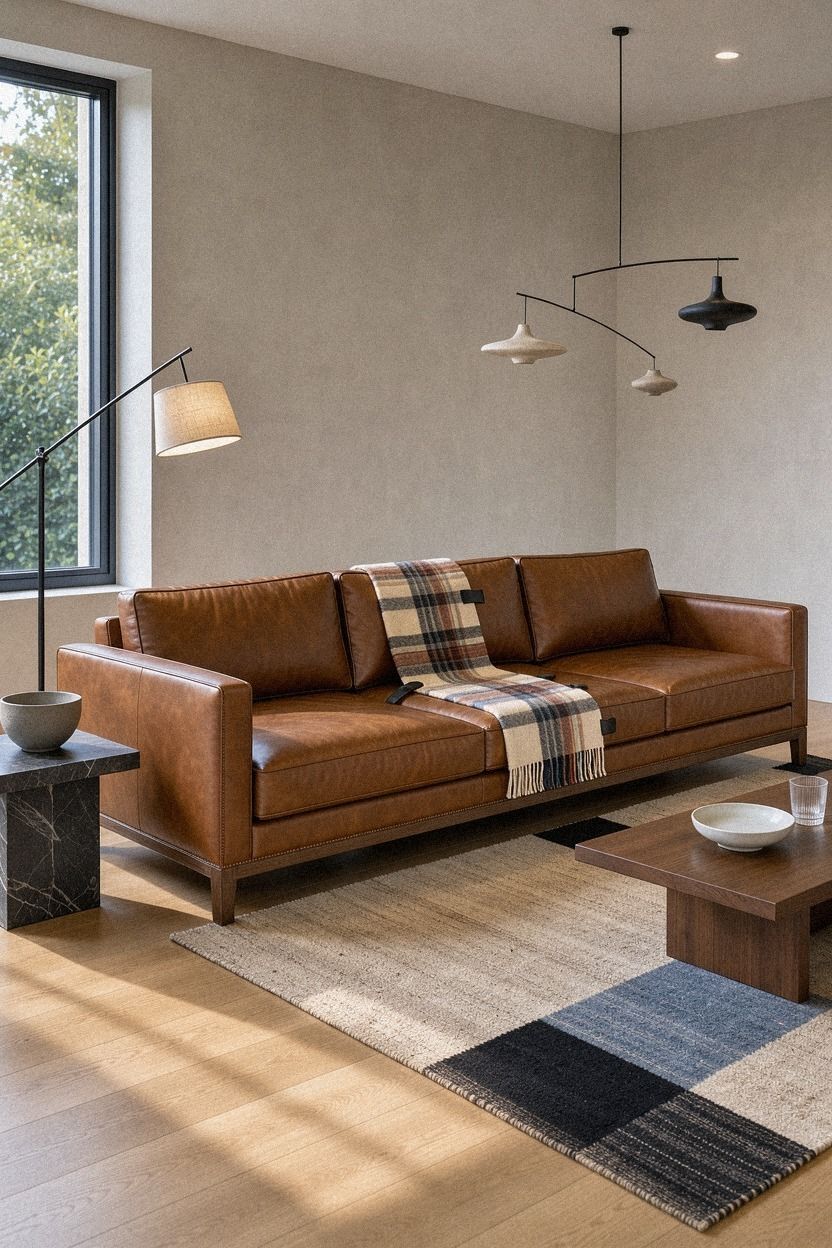
The Three-Point Anchor keeps your throw from looking draped and defeated.
4Use the Two-Texture Rule for a Throw Blanket Couch
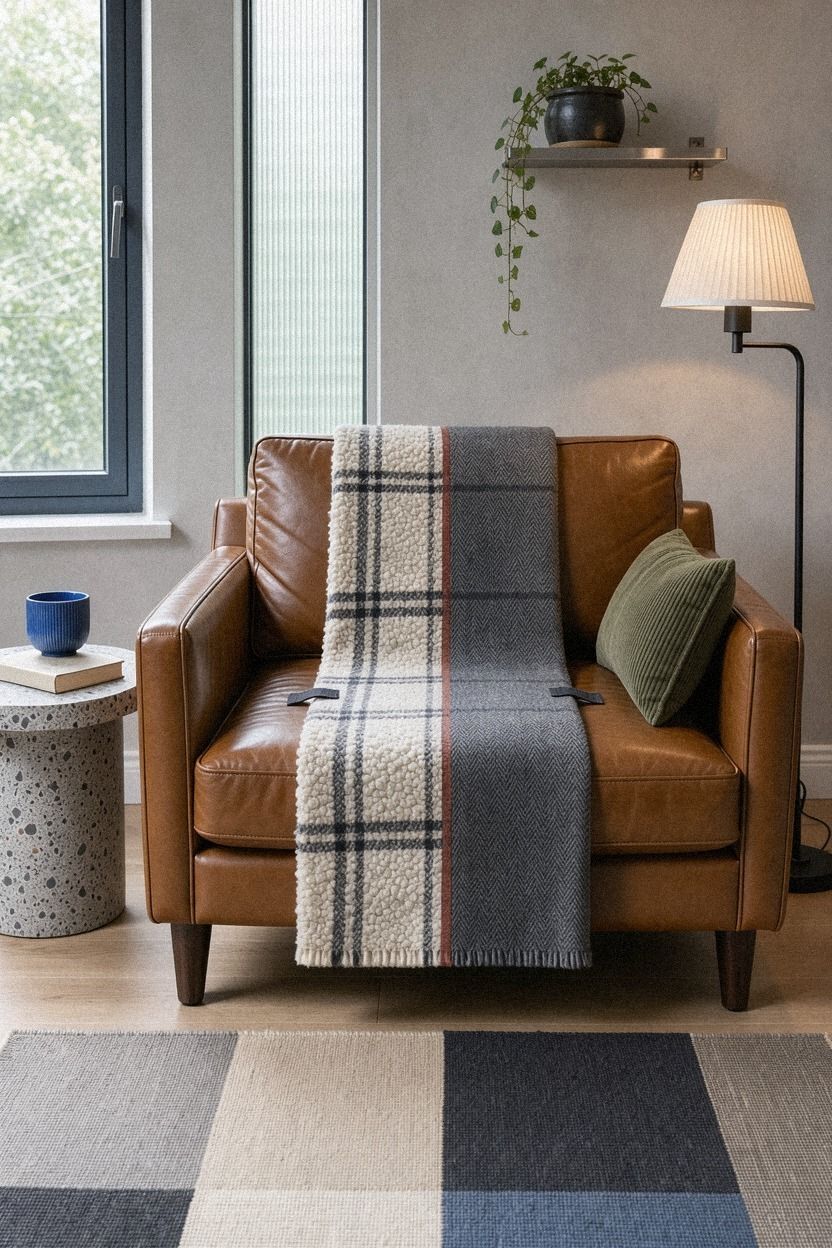
The Two-Texture Rule is simple: pair one fabric with grip and one with slip. Put the textured layer against the leather, then place the softer decorative layer over it. Your eye sees one composed throw, but the lower textile does the holding.
A washed Belgian linen throw over a chunky knit works especially well. Linen gives you a loose, airy edge, while the knit underneath adds enough friction to prevent a slide.
I wouldn't put two polished fabrics together. They may look luxurious for ten minutes, but they'll migrate toward the floor as soon as your dog, child, or elbow gets involved.
And you don't need matching colors. A terracotta base with stone and olive nearby can feel layered without becoming heavy. Your leather sofa will do much of the grounding, so the fabrics can stay soft and inviting.
Lower layer: chunky cotton or wool. Top layer: linen, gauze, or light boucle. Palette: terracotta, stone, and olive.
For another lesson in sensory pairing, read this Caribbean color story. Your sofa corner can have that same gentle contrast.
5Swap Slippery Satin for Washed Linen
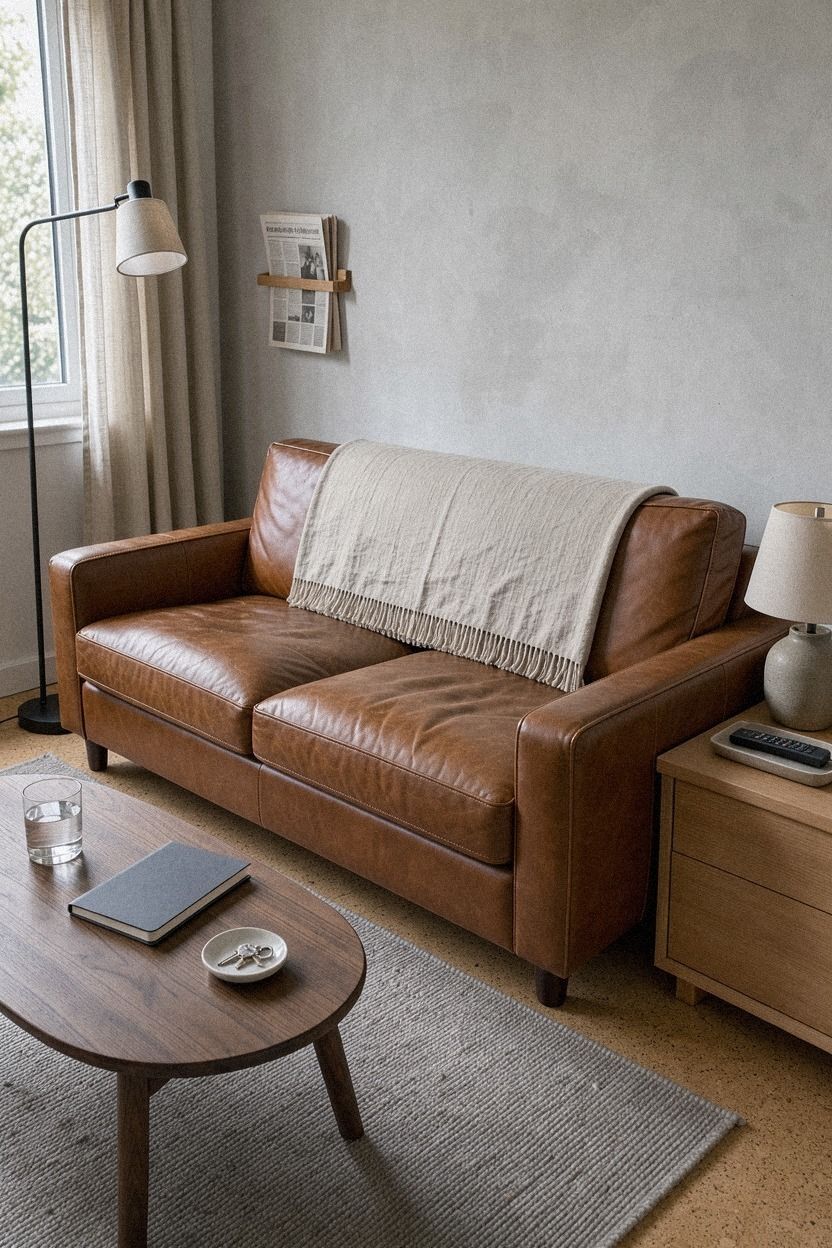
If your throw keeps sliding, check the fabric before blaming the sofa.
6Tuck the Lower Edge Behind a Slim Seat Cushion
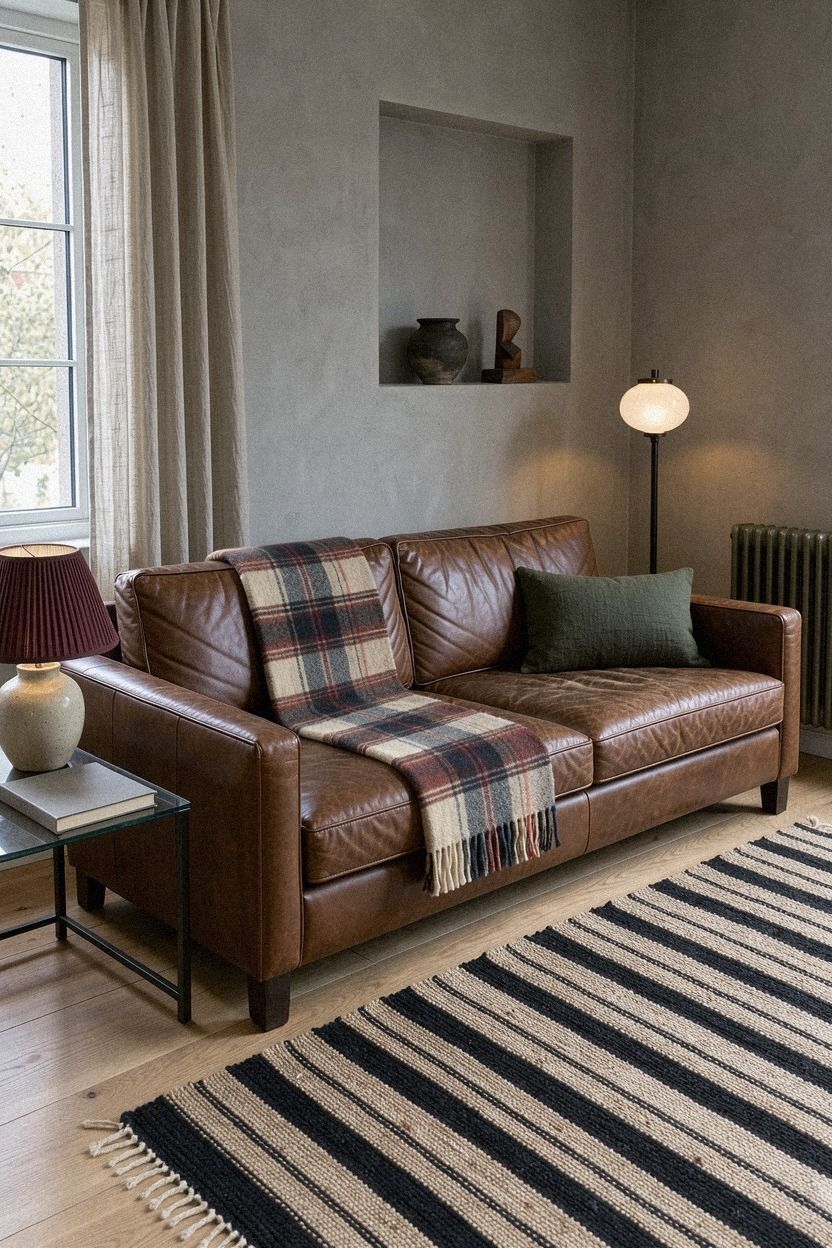
Some leather sofas have loose seat cushions, and that gives you an easy anchor. Lift the front edge slightly, slide 4 to 6 inches of the throw behind it, then lower the cushion slowly. Your throw will stay in place without tape, clips, or anything that could mark the leather.
Use a shagreen-accented side table nearby to balance the visual weight. The plum, grey, and rose-gold palette brings warmth beside cool brown or black leather, and your tucked blanket won't look like the only styled object in the room. I use this method when a client wants a clean front edge and doesn't want fringe pooling on the floor.
The key is restraint. If you tuck half the throw, you'll create a stiff ridge and lose the relaxed look. Your blanket should still spill naturally over the front, with one corner left loose.
Tuck depth: 4 to 6 inches. Cushion type: removable seat cushion. Leather care: no adhesive under the fold.
And if you're building a peaceful evening setup, this marine-life feature makes a good reminder that a little restraint can feel more tranquil than visual clutter.
7Build the Three-Height Anchor With a Bolster
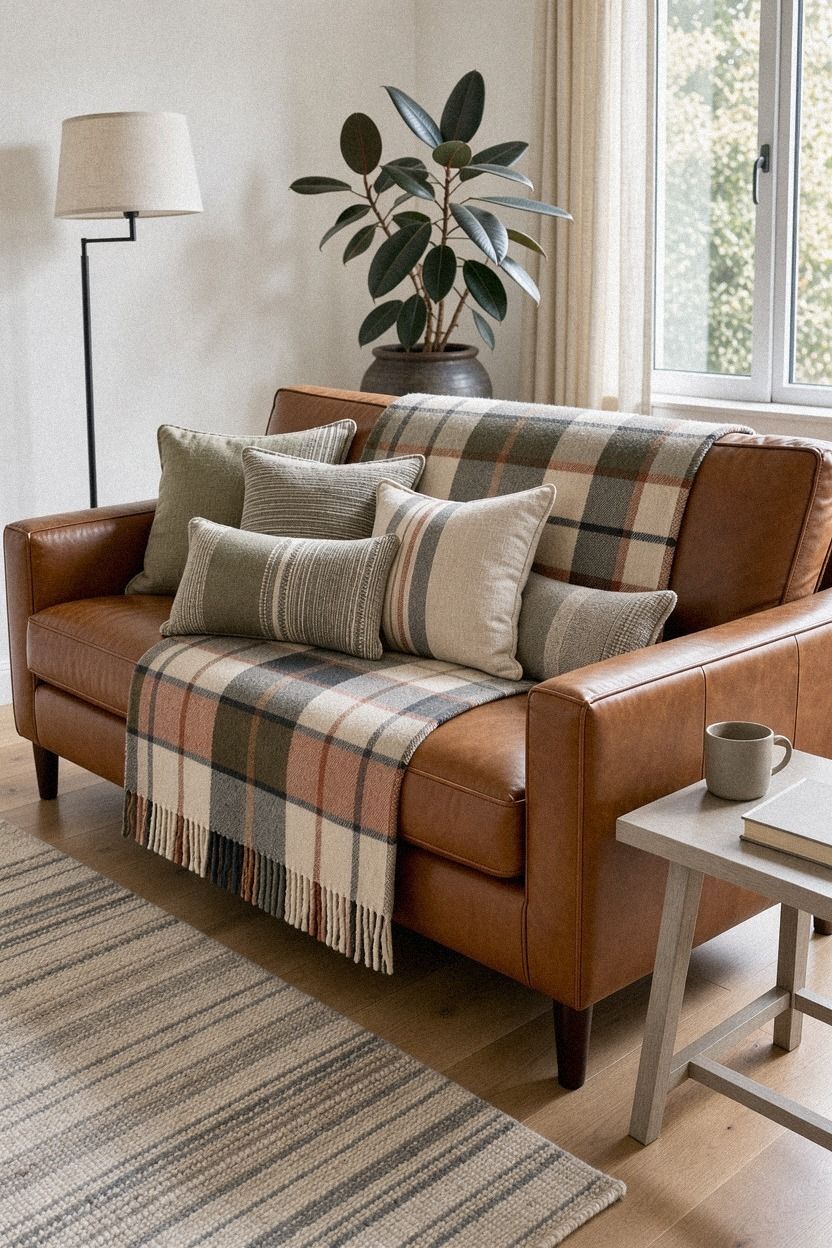
The Three-Height Anchor uses a low throw fold, a middle bolster, and a taller lamp or plant to make the blanket feel connected to the whole sofa.
8Pin the Back With a Narrow Lumbar Pillow
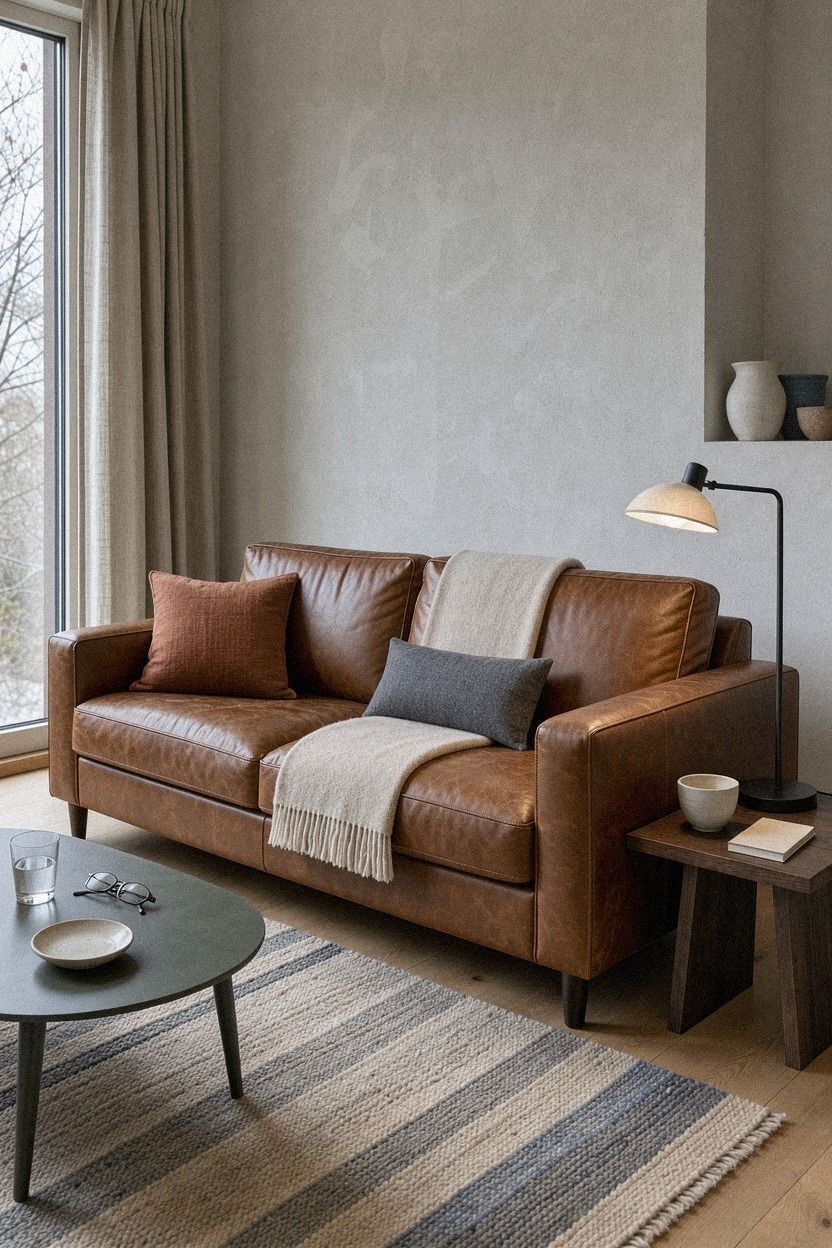
A narrow lumbar pillow can hold a throw against the back cushion without making the sofa look overstuffed. Fold your blanket vertically, drape it over the back, and place the pillow across the lower third. Your throw will remain visible, but the pillow stops the top edge from sliding toward the seat.
Use an organic bouclé lumbar pillow with a firm insert. Soft down collapses, while a firm insert spreads pressure evenly. If your sofa has a low back, keep the pillow under 14 inches tall so your head still has room.
I prefer this setup for a modern room where a heavy side drape would feel too casual. Your throw becomes part of the backrest instead of a puddle at the arm. It also works well when you need the front seat clear for guests.
Pillow length: 20 to 24 inches. Insert: firm feather blend or polyester. Throw fold: vertical, not diagonal.
But don't pin every inch of fabric. Leave a little looseness at the side so your room still feels lived-in. A rigid blanket display won't feel welcoming for long.
9Hang a Short Throw Instead of a Long One
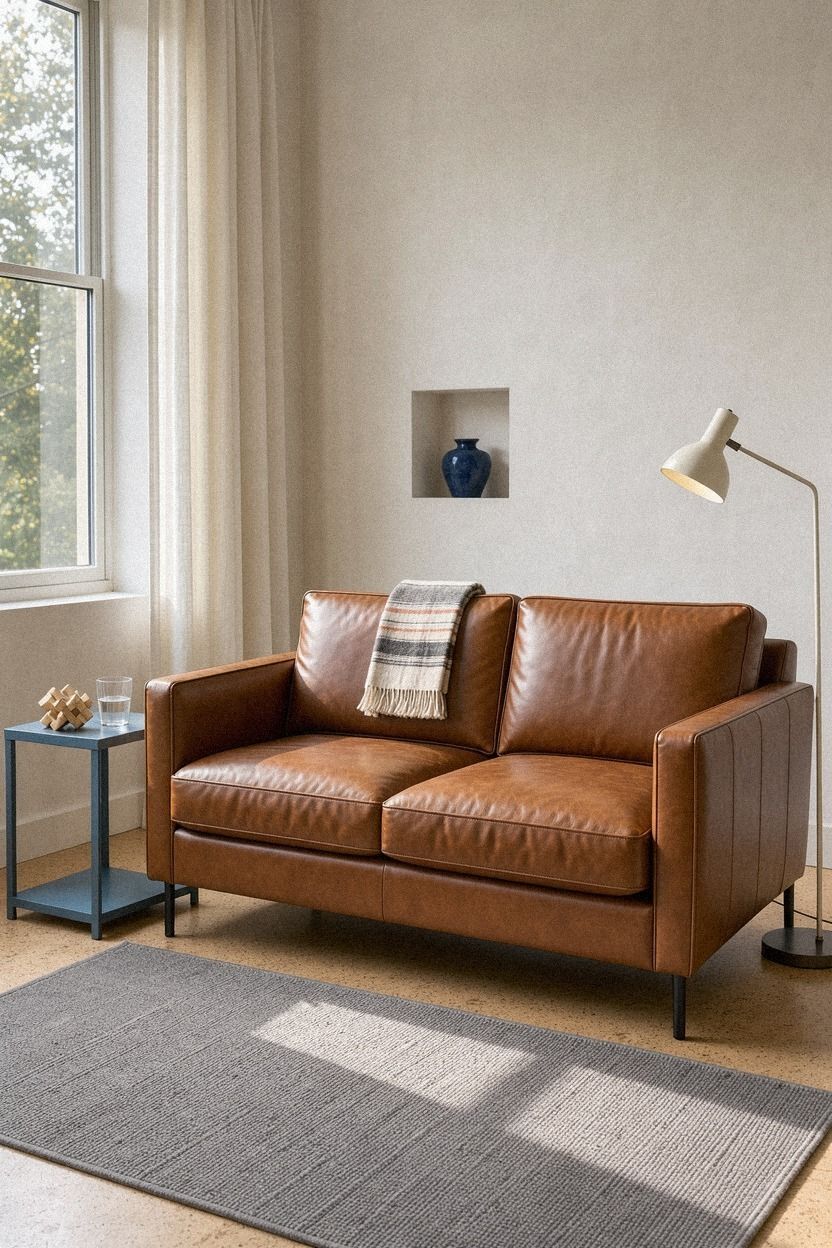
A shorter throw often stays put better than a full-size blanket. Choose a piece that reaches from the top of the back cushion to just below the seat front, then drape it over one arm. Your furniture will keep more of its shape, and the fabric won't have enough length to pull itself onto the floor.
For a couch with throw blanket styling plan, look for a 50 by 60 inch throw rather than an oversized 60 by 80 inch version. The smaller proportion is especially useful on a loveseat or apartment sofa. I made the switch in my own narrow room, and the floor immediately looked less crowded.
This is a case where less fabric feels more airy. Your leather remains visible, which matters because the material is part of the room's character. Don't cover the entire back unless you need warmth or are protecting the sofa.
Short size: 50 by 60 inches. Long size: 60 by 80 inches. Best use: one arm and one seat corner.
If you're weighing a compact arrangement, this island design feature captures the value of a clear route. Your room can breathe when the throw has boundaries.
10Choose a Heavier Woven Edge for the Throw Blanket Couch
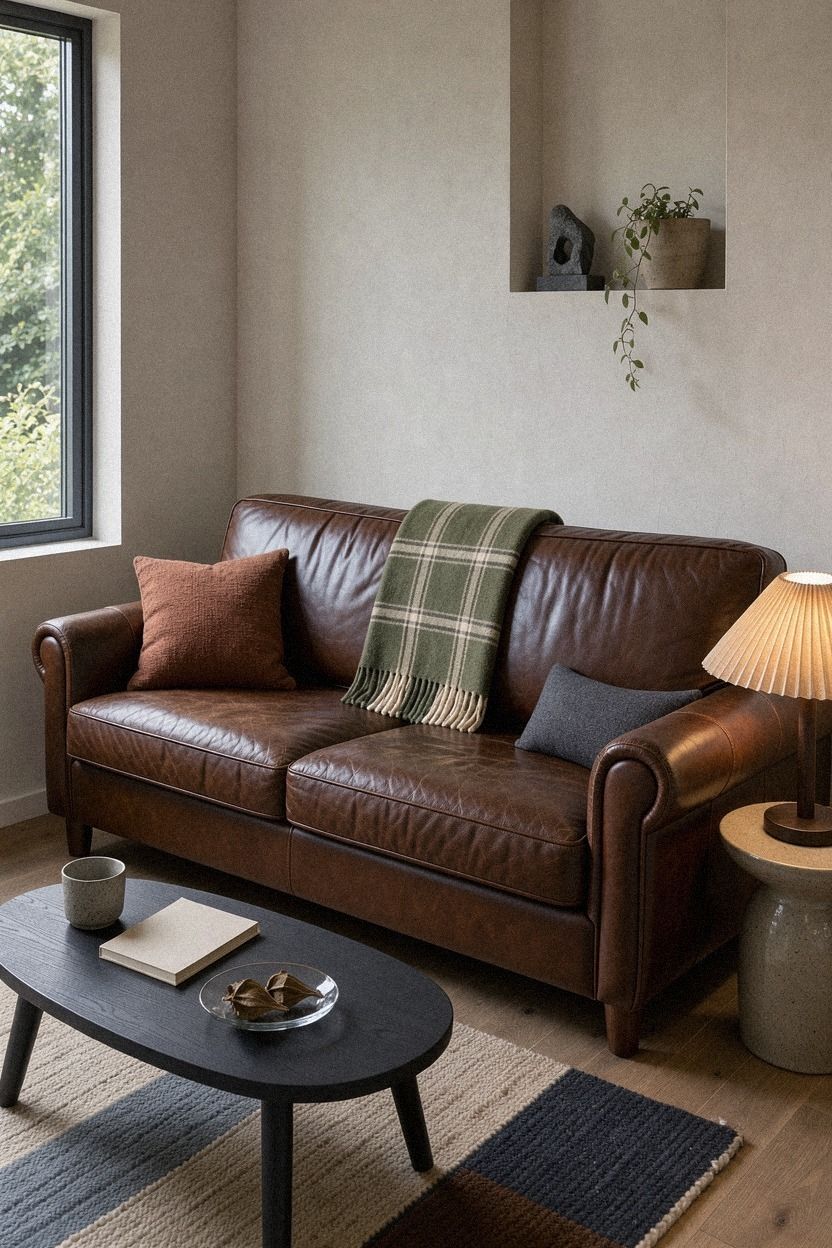
A weighted border can solve the problem before you style the throw. Look for a blanket with a dense woven edge, stitched binding, or a row of substantial fringe. That edge gives your fabric a little downward pull, so your throw won't skate across the leather as easily.
A deep-pile mohair velvet throw works well because its dense surface gives the blanket body and presence. You can also choose a wool blanket with a bound hem, though you'll want to check that the texture doesn't scratch your sofa. Your best option depends on whether you need warmth, decoration, or both.
The cost of a sofa refresh can vary widely, so don't spend on a new blanket before checking the whole room.
I’d choose a heavier woven edge over a slippery designer label every time. Your room will feel comforting because the throw stays useful, not because it looks expensive.
11Float a Basket Beside the Sofa
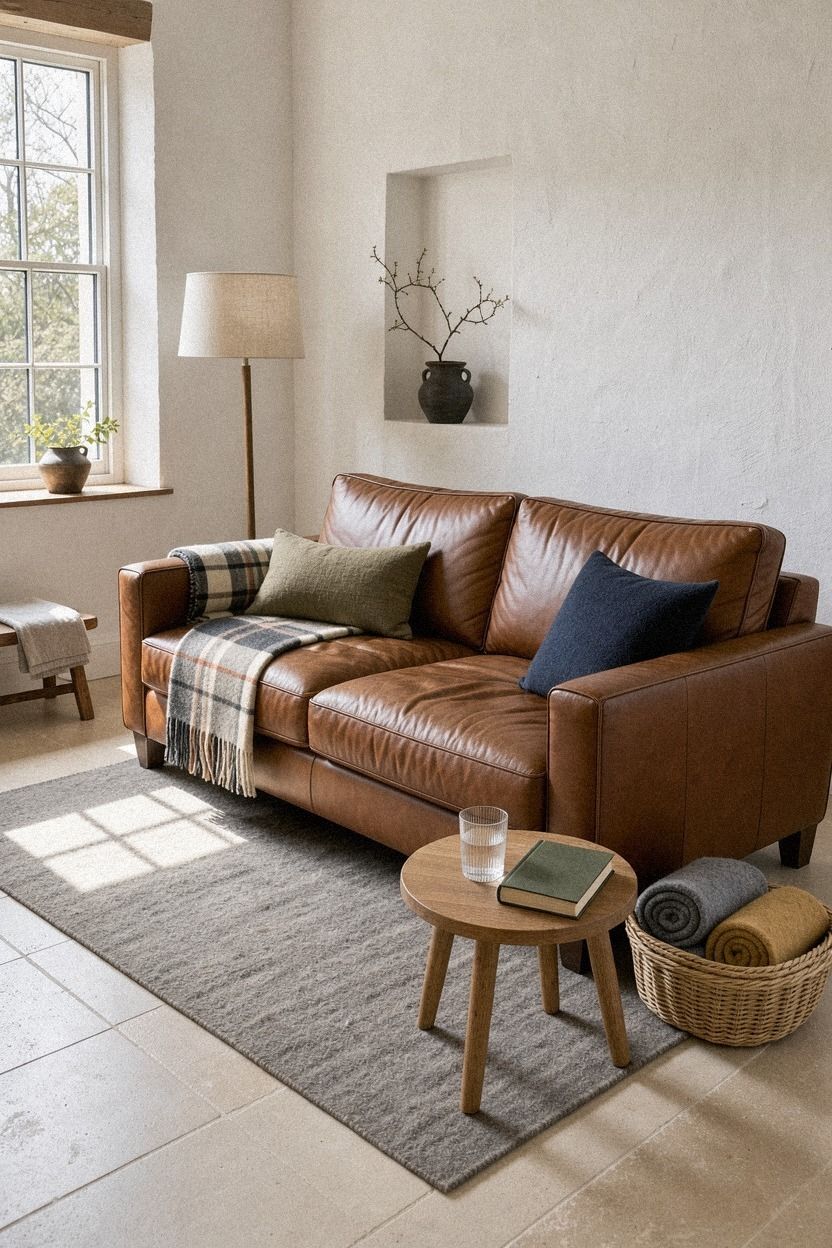
A basket doesn't hold the throw on the sofa, but it gives the blanket somewhere to land when you need the seat clear. Place it within one arm's reach, then keep the throw folded over the rim instead of dropping it inside. Your blanket stays accessible, and the basket adds a grounded shape beside the leather.
Choose a basket in warm white, camel, or black with a simple open top. Let the hand-applied Venetian plaster nearby provide a quiet textural backdrop, rather than adding another busy finish.
Closed storage makes you work too hard for a small daily comfort, and you'll stop putting the throw away. I prefer a basket around knee height so your hand can reach it without bending deeply.
This method works particularly well in a warm fall room with wood, leather, and amber light. Your sofa remains tidy between uses, but the blanket still looks like part of the evening setup.
Basket height: knee level or slightly lower. Best finish: warm white, camel, or black. Placement: beside the open arm, never behind the sofa.
For more inspiration on making one object memorable, revisit this old-world fragrance feature. Your basket can become the room's practical signature.
12Can a Blanket Stay Put Without Damage?
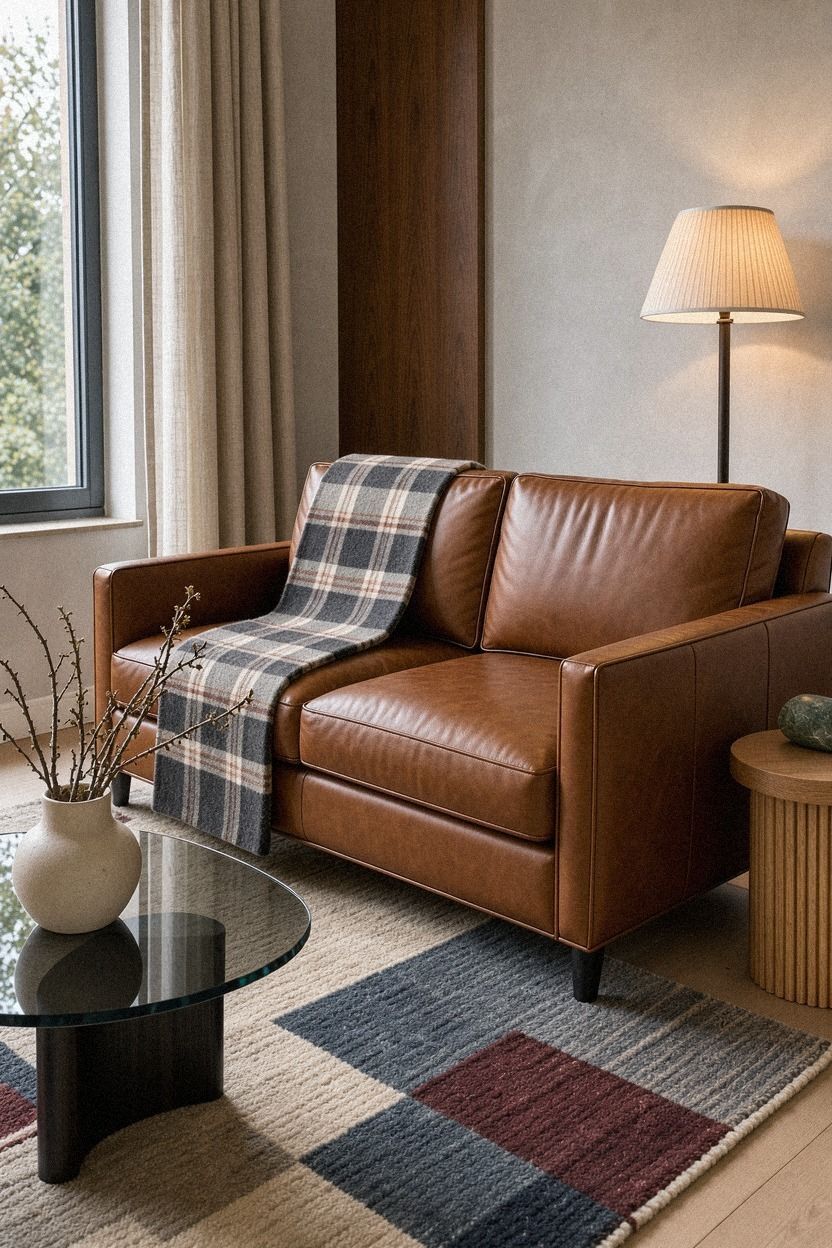
Yes, and a removable fabric cushion gripper is the safest answer for most renters. Place a small section under the folded throw, not directly across the entire leather seat. Your removable felt pad should touch fabric on both sides, while the leather stays protected from adhesive and rubber residue.
Test the pad in a hidden spot first. Leather finishes vary, and you don't want a dark mark on a pale sofa. If you're renting, keep the solution reversible and skip safety pins, double-sided tape, and clips that could leave holes or pressure dents.
Reclaimed weathered teak nearby can make a brown leather sofa feel soft and peaceful, especially when the throw carries midnight blue, copper, and ivory. Your color choice matters because a stable blanket still looks awkward if it fights the room.
Rental-safe: felt, fabric gripper, loose tuck. Risky: adhesive tape, metal clips, pins. Test first: hidden leather edge.
What would you rather repair, a loose blanket or a damaged leather finish? I know my answer. Your fix should disappear into the styling.
13Mix Leather With a Softer Color Story
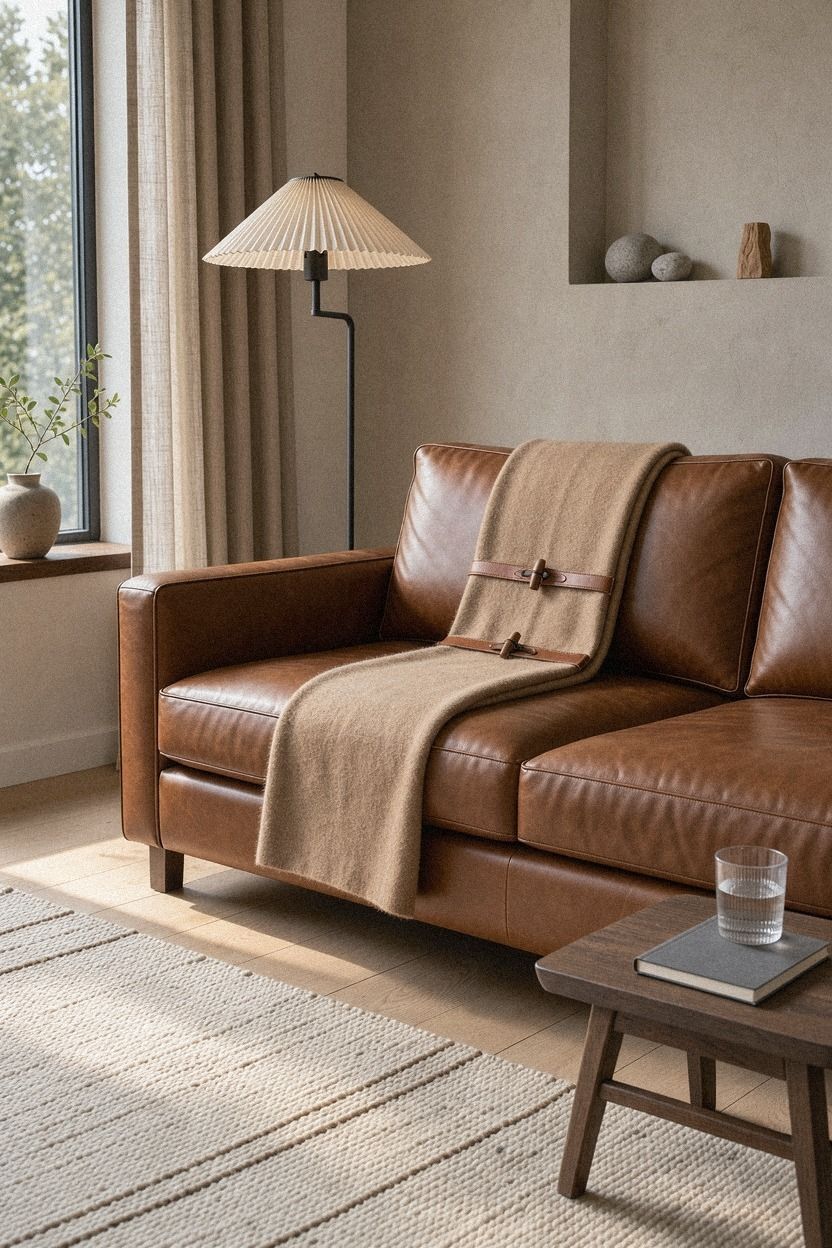
Color won't stop a throw from sliding, but it can make a small shift look intentional.
14Frame the Throw With a Side Table
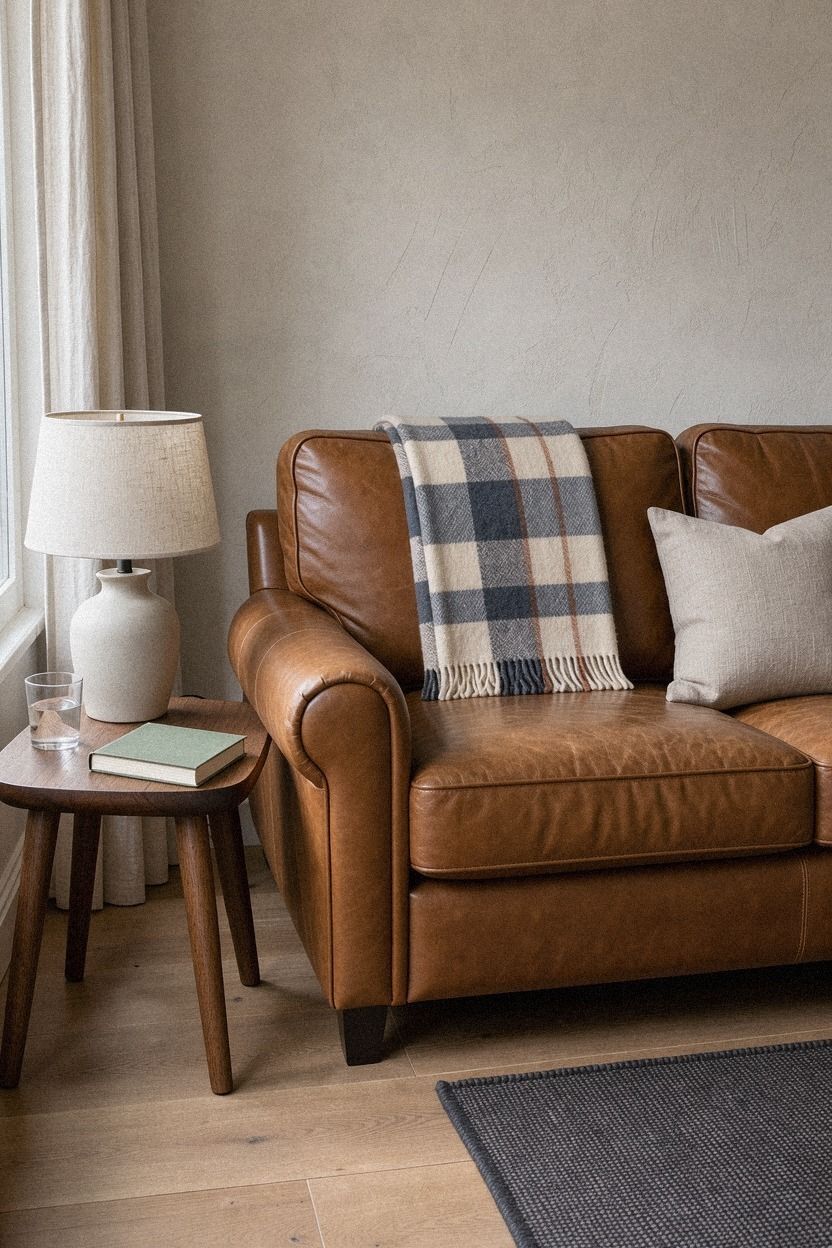
A side table can stop a throw from drifting by giving the draped edge a visual boundary. Place the table close to the sofa arm, then let the blanket fall between the arm and table rather than over the outside edge. Your cerused white oak table or tray adds weight to that corner without touching the fabric.
Keep the table near sofa-arm height so your throw doesn't compete with it. If your coffee table is 16 to 18 inches tall and about two-thirds the sofa length, a side table should still feel lighter and more vertical. I prefer a cerused white oak side table here because its clean edge keeps the arrangement from looking crowded.
This setup feels inviting when the lamp throws a small pool of amber across the blanket. Terracotta, stone, and olive accents can make the sofa, throw, lamp, and table read as one zone.
No fuss. No blanket on the floor!
For another example of a strong frame around a central idea, read this underwater roundabout story. Your side table plays the supporting role, and that role matters.
The Throw Rule I'd Keep
After trying these arrangements, I think the best answer is friction plus proportion. A grip pad helps, but it can't rescue a throw that's too long, too smooth, or folded without a stopping point. Your leather sofa needs one material with texture, one clear anchor, and enough exposed leather to keep the room from feeling covered.
I used to treat a sliding throw as a styling failure. It isn't.
Leather is naturally smooth, and a blanket is meant to move when you use it. The useful goal is a throw that stays in place through a normal evening, not one that looks frozen for a photograph.
That's why I prefer washed linen over satin and a tucked fold over a decorative knot.
If you’re choosing between spending $20 on a gripper or $200 on a new throw, start with the fabric you own. Your existing blanket may work once you shorten it, add a textured base, or tuck the edge behind the cushion. And if your room needs more warmth, terracotta, stone, and olive nearby can make tan leather feel especially rich.
I also think the best rooms allow a little imperfection. A corner that shifts by an inch can look more human than a display that never changes. Your job is to make the blanket easy to reset, not impossible to disturb.
You can pair this approach with a personal style story if you're editing a whole room. The principle is the same: choose fewer pieces, then give each one a job.
A Few Things Worth Answering
What is the best way to keep a throw from sliding off a leather sofa in a small living room?
A thin grip pad under a folded linen throw works best because it adds friction without taking up seat space. Your second choice is a short 50 by 60 inch blanket tucked 4 inches behind the cushion. Both options keep your floor clear and your sofa visually light.
Where can I buy pieces for this sofa styling idea on a budget?
Try IKEA, Target, Wayfair, Facebook Marketplace, or a local thrift store. Your best budget finds are textured cotton throws, narrow bolsters, and woven baskets. Look for washed fabric and stitched edges, and skip anything glossy that will slide across leather.
How much does this leather sofa makeover cost?
A small adjustment can cost nothing if you fold and tuck the throw correctly. A grip pad, used basket, or new textured blanket may bring the project to about $20 to $100. A broader living room refresh typically falls within the $300-$1,200 budget tier.
Can I create this look on a budget?
Yes, and your first three moves can be free: shorten the drape, tuck the lower edge, and move the throw beside the arm. A thrifted wool blanket, a $20 cushion gripper, or a secondhand cane basket can add texture without a large purchase.
Is this worth it in a small space?
Yes, because a stable throw keeps your seating area from looking messy and saves floor space. Your sofa should remain the largest shape in the room, so choose one short blanket and one small basket instead of several loose layers.
Is this a good idea for a rental?
Yes. Use a loose tuck, removable felt, a tension-style basket arrangement, or a washable cotton throw.
Your rental-safe setup shouldn't rely on pins, permanent tape, or hardware. Test any gripper on a hidden leather section before using it in view.
Where I'd Start First
If I had to pick one, I'd start with the hidden grip pad. It solves the leather-to-fabric slide without changing your sofa, and you won't see it once the throw is folded. Pin this guide for later and try the short, textured throw before buying anything new.