The Kitchen Island Mistake That Makes Small Rooms Feel Tighter
18 august 2026A 24-inch-deep island can look perfectly reasonable on a floor plan, then turn into the object everyone hip-checks once the dishwasher opens and stools come out. In a kitchen under roughly 100 square feet, the clear space around the island matters far more than the island’s footprint.
The hard truth: 36 inches is only a tight pass-through minimum. A kitchen that actually cooks needs more breathing room where appliances and counter work meet.
Measure From Cabinet Fronts, Not Bare Walls
Wall-to-wall measurements flatter oversized islands because cabinets, handles, and counters quietly eat into the room. Mark your proposed butcher-block island from the cabinet fronts, then measure the real aisle left behind.
That habit catches the most common mistake before money changes hands. An island that fits between walls can still block every working surface.
Keep a 42-Inch Cooking Aisle
When a sink, cooktop, refrigerator, or prep counter faces the island, préservé about 42 inches for one cook. Thirty-six inches may allow passage, but it feels cramped when someone is unloading groceries or reaching for a pan.
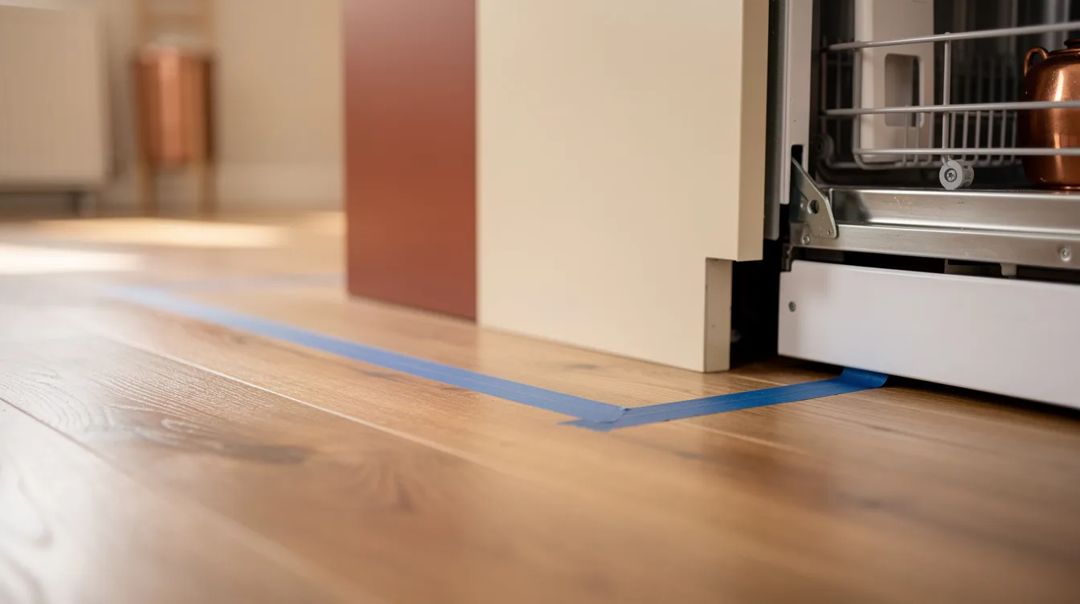
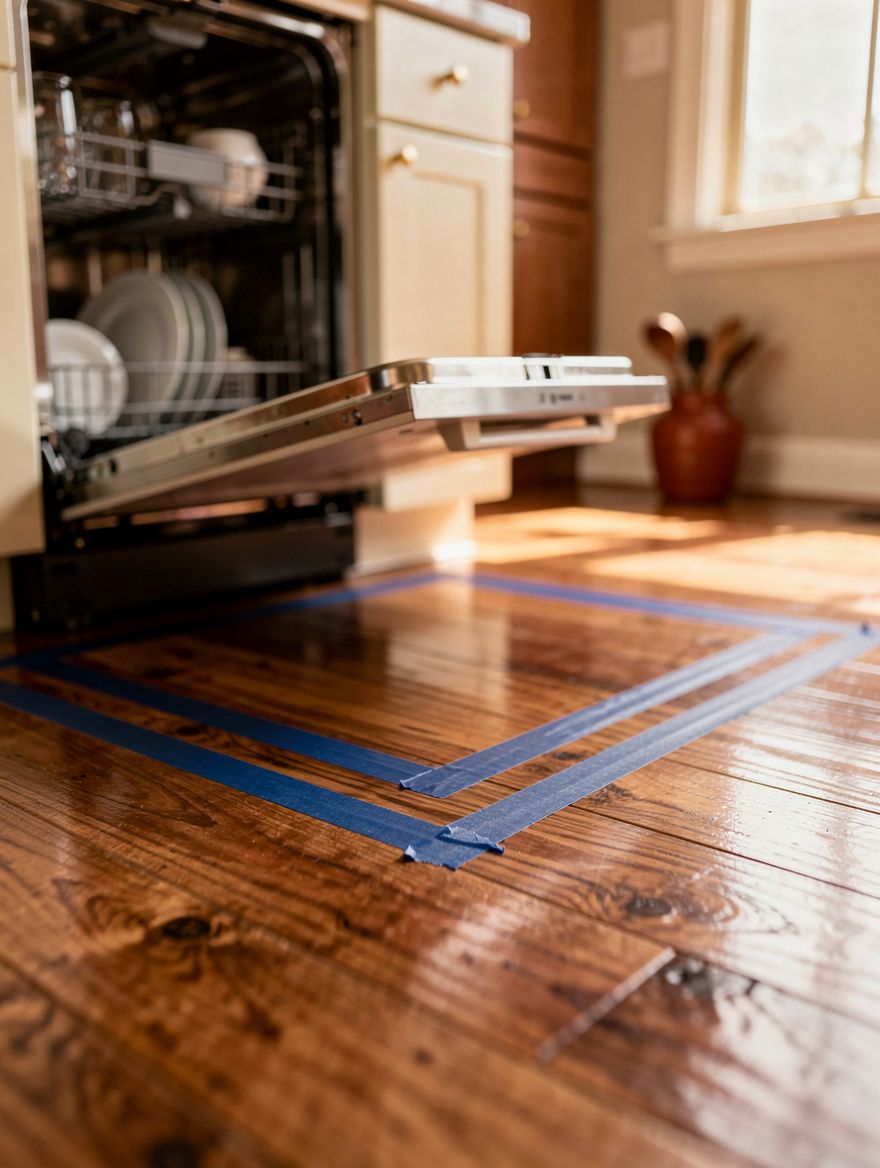
Use painter’s tape to outline the island on the floor, including its wood countertop. Walk through a normal dinner routine before you commit to cabinetry.
Allow 48 Inches for a Busy Kitchen
A household with two people cooking should aim for roughly 48 inches between the island and the active counter run. This is where a compact room either feels capable or forces constant shoulder-turning.
Skip the oversized statement island and spend that floor area on usable clearance. A slimmer maple prep top will earn its place every day.
Open Every Appliance Door First
A dishwasher door facing an island needs room for more than a person squeezing by. Aim for about 48 inches where an oven, refrigerator, or dishwasher opens toward the island, especially if the kitchen has a single main path.
Put a cardboard rectangle at the proposed island edge and open every door fully. Appliance handles and open doors are part of the measurement, not an afterthought.
Count the Seating Overhang
A seating overhang typically adds about 12 to 15 inches beyond the cabinet base. A standard 36-inch-deep island can become roughly 48 to 51 inches deep before a single counter stool is pulled back.
That extra depth is why seating is often the feature that breaks a small-kitchen plan. Two stools may be less useful than an aisle you can actually cross while dinner is cooking.
Protect the Path Behind Stools
Occupied stools need a pass-behind route of about 44 inches at minimum. Without it, anyone entering the kitchen has to ask diners to stand up, which makes casual seating feel strangely formal.
Choose a wall-side bench or a nearby dining table when everyday seating matters. A built-in banquette can keep the center of the kitchen free for work.
Use the Width Formula Before Shopping
Subtract your two desired aisles from the available kitchen width to find the maximum island depth. In a 12-foot, or 144-inch, width, a 42-inch work aisle plus a 36-inch circulation aisle leaves 66 inches total.
That sounds generous until seating and appliance access enter the plan. A 24-inch prep island often makes better use of that remaining space than a deep cabinet island.
Choose a 24-by-48-Inch Prep Island
For many small kitchens, a roughly 24-by-48-inch fixed island at standard 36-inch counter height is the sweet spot. It provides honest prep space and base storage without claiming the room’s entire center.
Look for a simple model with shallow drawers instead of a bulky breakfast bar. A Home Depot unfinished island top can be paired with a narrow base for a practical custom look.
Consider an 18-Inch-Deep Slim Island
An 18-to-24-inch-deep island is a smart answer when the kitchen needs a landing spot, not another dining room. It works especially well for chopping, storing linens, or holding a coffee maker away from the main counter.
Designers tend to favor restraint here. A narrow oak work surface looks intentional when it leaves enough room to move naturally.
Roll the Island Away When Needed
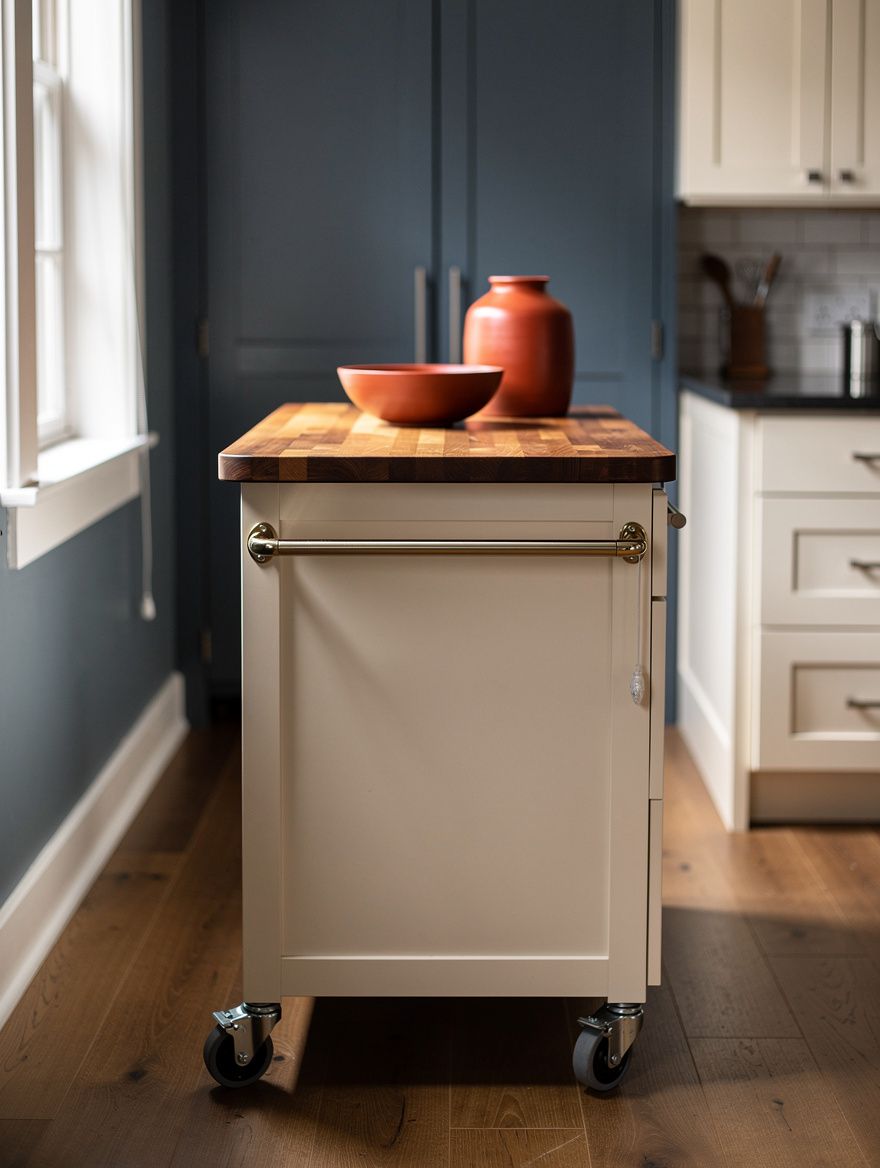
A rolling cart is often the better choice for renters, galley kitchens, and rooms with one overloaded aisle. A typical cart around 20 to 30 inches deep and 30 to 48 inches long can provide prep space only when you need it.
Choose locking casters and a durable top, such as the IKEA FORHOJA kitchen cart. Park it outside the appliance swing zone rather than treating it like permanent cabinetry.
Trade the Island for a Peninsula
When freestanding-island math fails, a peninsula can give you counter space without creating a second traffic lane. A roughly 24-inch-deep peninsula can run about 48 to 72 inches long, depending on the room.
It still needs a proper work aisle, so don’t use it as an excuse to narrow the kitchen. A quartz-look laminate top keeps this solution durable and budget-conscious.
Make Temporary Prep Space Fold Down
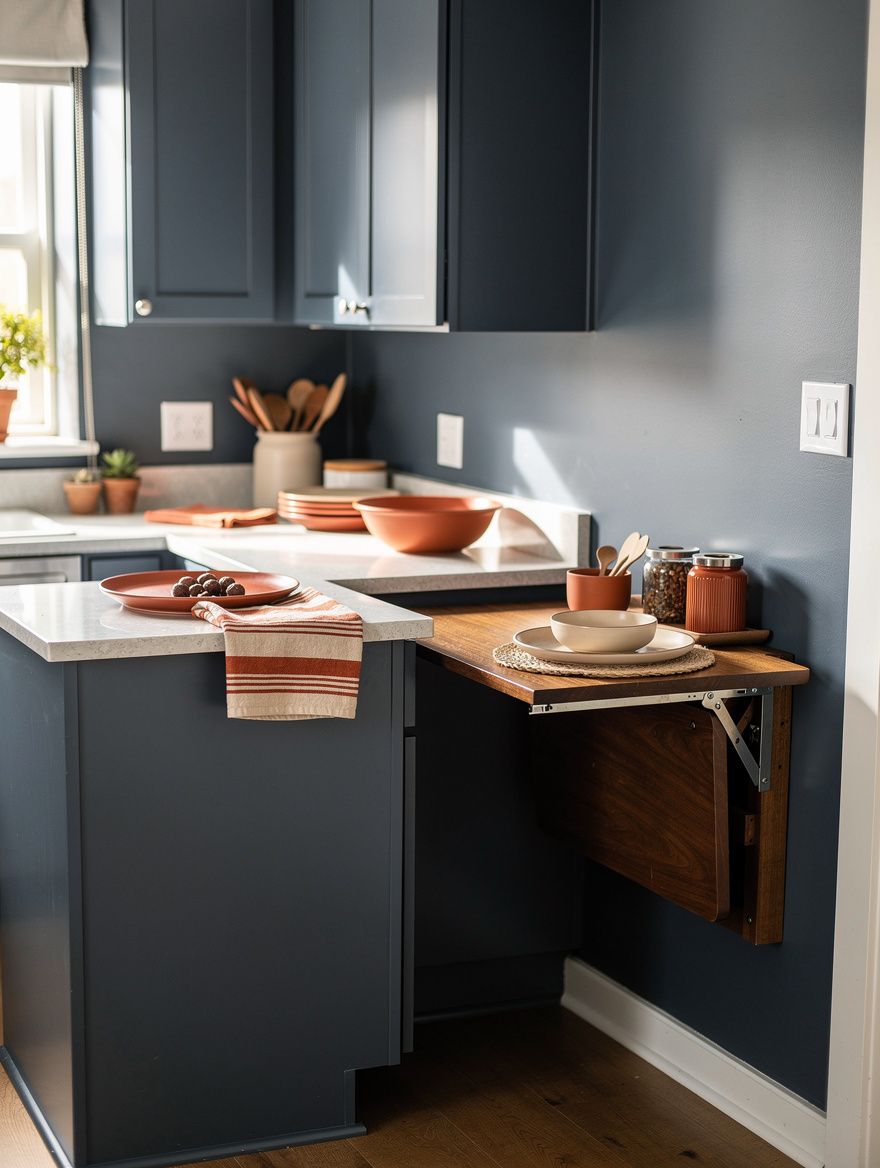
A wall-mounted top around 18 to 24 inches deep can handle breakfast, laptop time, or extra chopping in the smallest rooms. Fold it closed and the floor instantly works harder for circulation.
This is not serious storage, and that is fine. Pair a solid-wood fold-down table with a rolling pantry cart if you need flexible function without a permanent obstacle.
Start by taping a 24-by-48-inch rectangle where you think the island belongs, then open the dishwasher and pull out two chairs nearby. If that simple test interrupts the way you move, buy less island and keep the kitchen generous.