11 Design Tricks Stylish New Yorkers Use in Small Apartments
18 august 2026A 36-inch round table can make a Manhattan corner feel more considered than a larger dining set ever could. The difference is restraint: clear walkways, useful height, and one focal point that feels chosen.
Stylish New Yorkers rarely cram a small apartment full of clever gadgets. They give the room a point of view, then let the floor, windows, and a few tailored pieces do their work.
Build Storage Up to the Ceiling
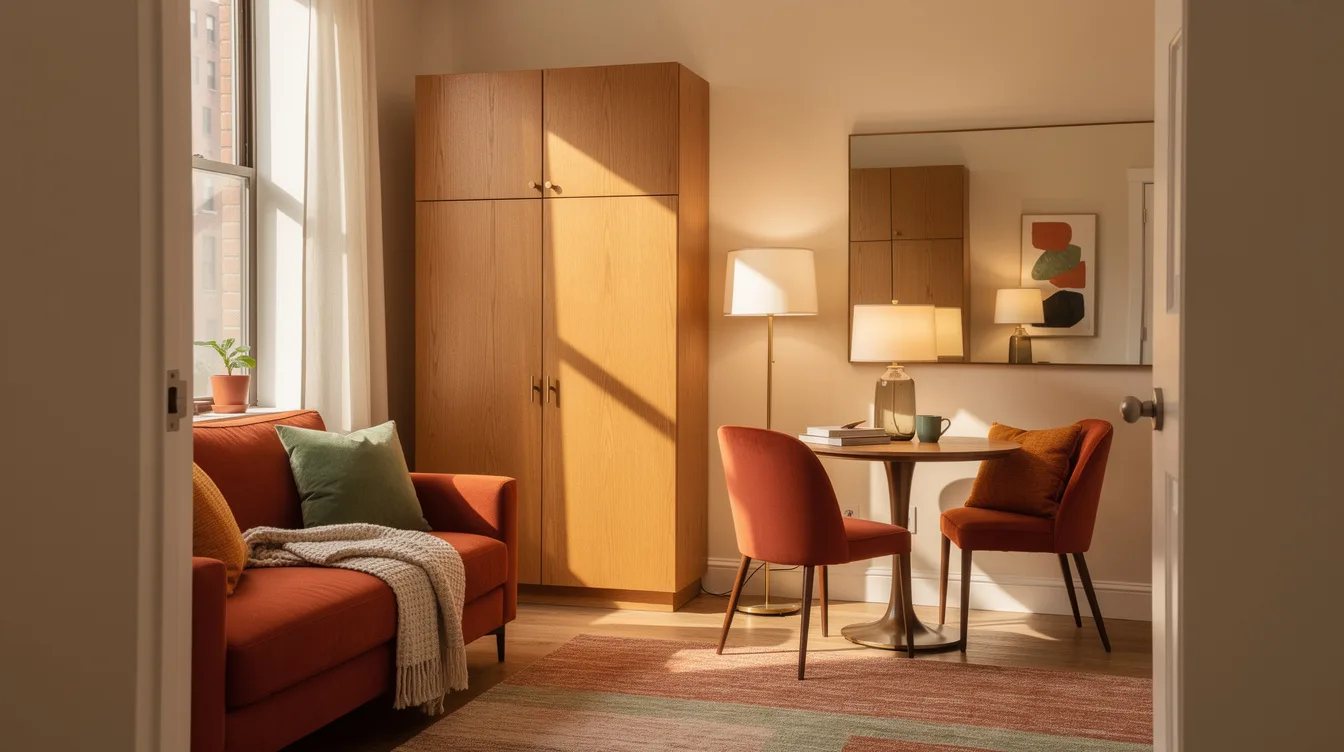
Replace several squat cabinets with one tall wood armoire or a full-height shelving run. Shelves around 10 to 14 inches deep hold books, baskets, and folded linens without stealing the room.
Put luggage and seasonal bins in the upper 9 to 12 inches, where daily access does not matter. A single vertical mass looks calmer than five small storage solutions scattered around the apartment.
Claim a Corner for a Real Dining Nook
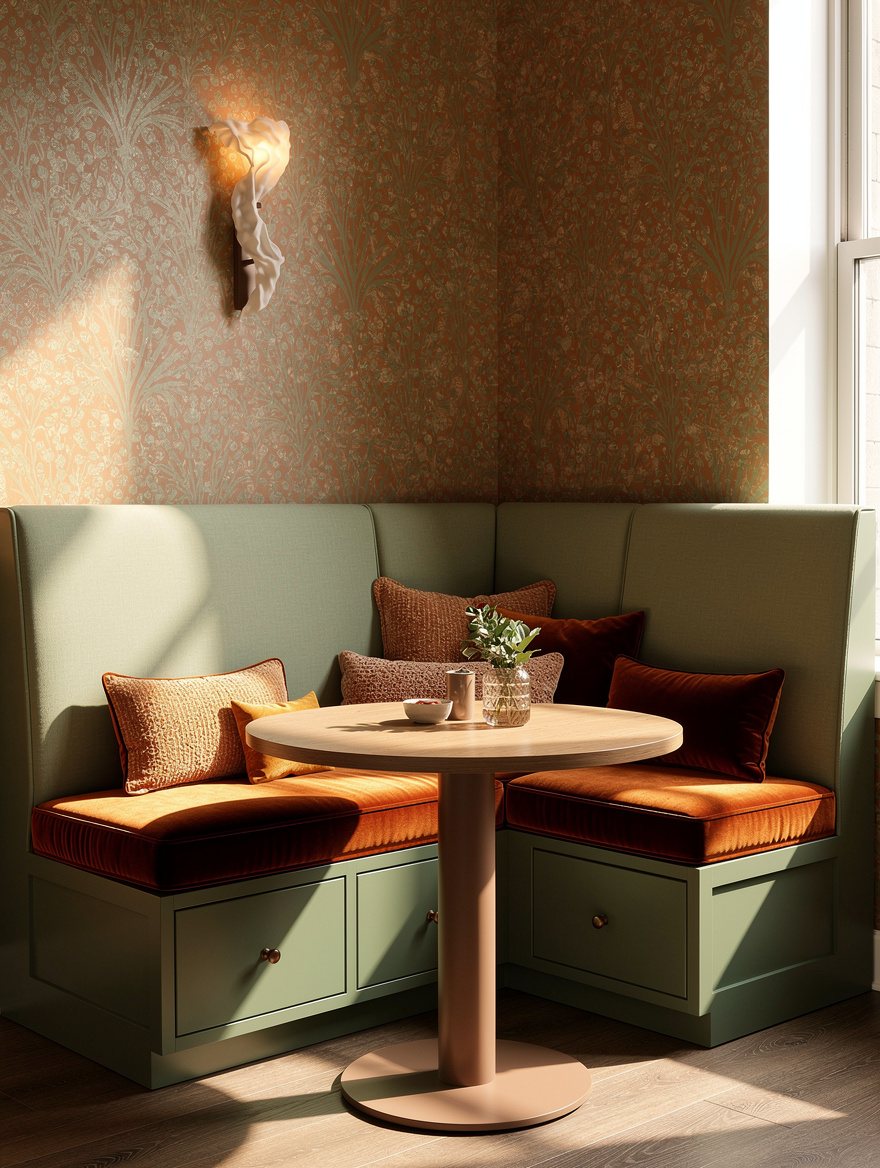
Turn the awkward corner near a kitchen into a destination with an upholstered banquette, drawers below, and a pedestal table. A seat around 18 to 20 inches high feels like proper dining furniture, not a workaround.
Choose a table roughly 36 to 42 inches round, then add a plug-in sconce and wallpaper behind it. This is where a small apartment starts to feel architectural.
Carry One Warm Color Through the Main Room
Use a quiet, light-reflective shade such as Benjamin Moore Swiss Coffee OC-45 across connected walls and large cabinetry. A continuous color field lets the eye move farther through an open plan.
Keep the main room to about two or three dominant hues and change texture instead. Linen, oak, paper shades, and wool give the room depth without visual chatter.
Give the Bedroom a Darker Point of View
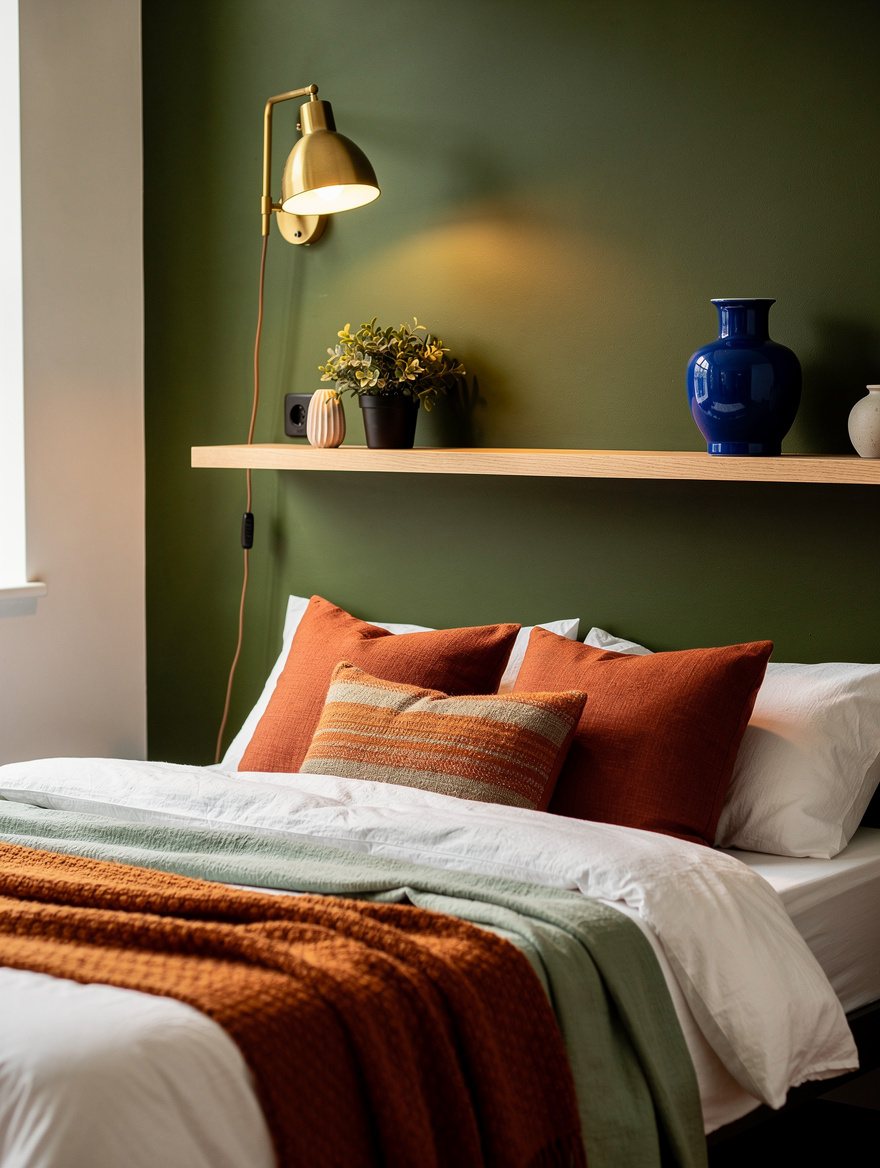
An enclosed bedroom can take a saturated inky blue paint or deep olive wall far better than a studio can. The darker envelope makes a compact sleeping room feel intimate and deliberate.
Keep bedding crisp and storage efficient so the color remains the drama. Save competing accent colors for art or one small textile, not every surface.
Mount Reading Lights Beside the Bed
Skip tabletop lamps and install articulated plug-in sconces beside the mattress. Typical plug-in options run about $70 to $400 each, and they return precious tabletop space immediately.
Set a sconce center roughly 48 to 60 inches above the floor, depending on bed height. Pair it with an 8 to 12 inch floating shelf instead of a bulky nightstand.
Expose More of the Floor
Choose a sofa with visible legs, a raised console, and wall-mounted work surfaces so the flooring continues beneath them. That unbroken plane makes even a narrow living room read wider.
A floating wall desk around 18 to 24 inches deep is enough for laptop work without projecting into the room. Aim for a work surface roughly 29 to 30 inches high, then use one handsome chair that can move elsewhere.
Place One Mirror Like a Window
Hang one substantial full-length mirror opposite or directly adjacent to the apartment's best window. It catches daylight and gives a long wall a useful sense of extension.
A mirror around 24 to 36 inches wide and 60 to 72 inches high has enough presence to work. Tiny mirrors grouped everywhere can feel fussy, especially in a tight entry.
Divide a Studio With Open Storage
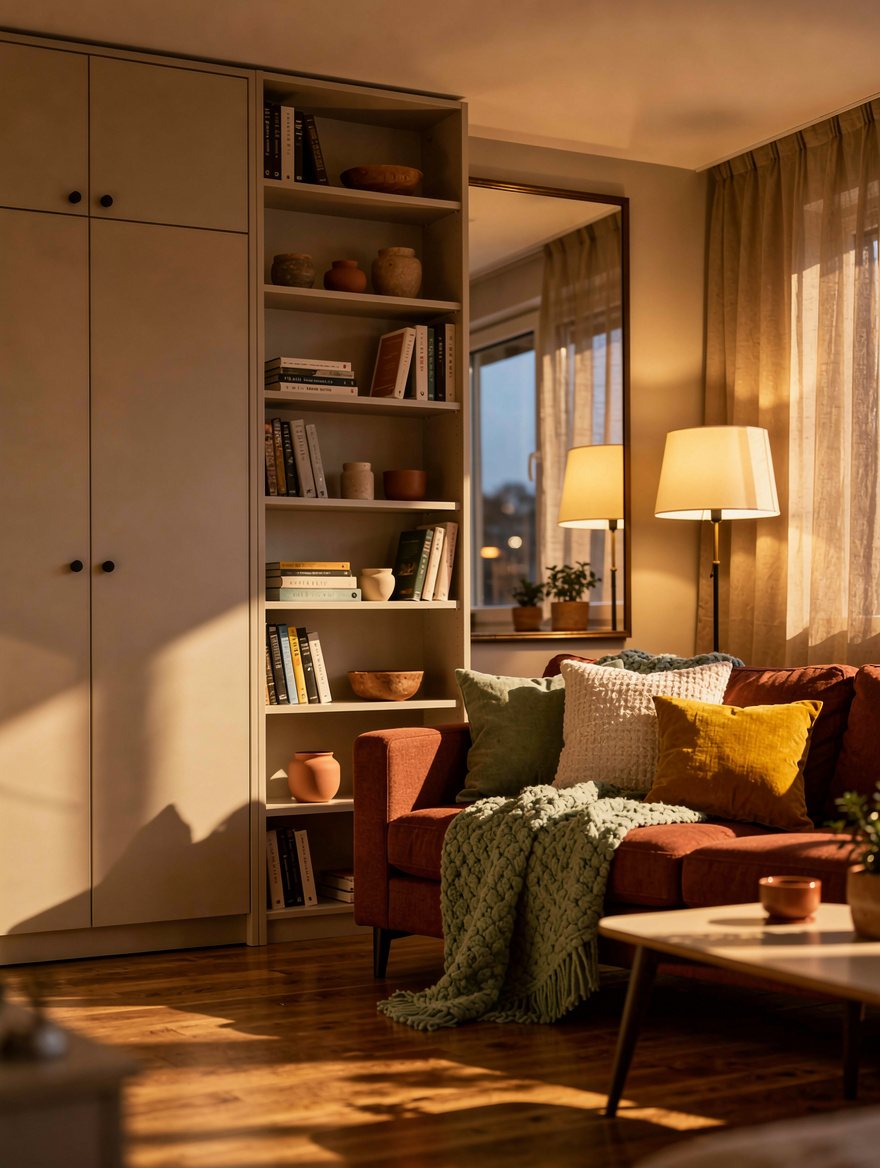
Use an open IKEA bookcase or slatted screen to suggest a bedroom boundary while letting daylight travel. A divider around 12 to 16 inches deep can hold books and objects without becoming a dark wall.
Keep a passage of roughly 30 to 36 inches where possible. The goal is a zone, not a barricade.
Make One Work Zone Look Built In
Give a work corner a tailored edge with a wall-mounted top, a pinboard, and shelves that match the surrounding wall color. A simple Lowe's oak panel can look far more expensive when it runs cleanly wall to wall.
Hide cords in a paintable channel and reserve the desktop for the items used every day. A lamp, laptop, and one tray are enough.
Spend on One Tailored-Looking Element
Small apartments benefit from one piece that looks commissioned, whether it is a custom bench cushion, a framed mirror, or a substantial Wayfair pedestal table. Everything does not need to cost a fortune, but everything should not look temporary.
A simple carpenter-built banquette typically costs about $1,500 to $4,500 before more elaborate upholstery. That investment can replace chairs, storage furniture, and a dining room all at once.
Hide the Utility Before Adding Decor
Conceal routers, laundry supplies, pet gear, and charging cables in closed Target storage boxes or cabinet drawers. Visual quiet is a stronger luxury signal than another decorative object.
Leave a few surfaces bare enough to register as intentional. The entry console needs a landing spot, not a display department.
Layer Light at Different Heights
Use a ceiling fixture for general light, a floor lamp for the seating area, and a wall light where tasks happen. A pleated paper lantern softens hard rental ceilings and keeps the visual weight light.
Warm bulbs make neutral walls feel less flat after sunset. Put lamps on separate switches so the room can shift from work mode to dinner without rearranging anything.
Start with the longest uninterrupted wall and decide what deserves its full height, whether that is storage, a mirror, or a work zone. Once that wall has a purpose, the rest of the apartment stops asking for more furniture.