
Why Your Throw Pillows Look Flat, and the Insert Rule That Fixes It
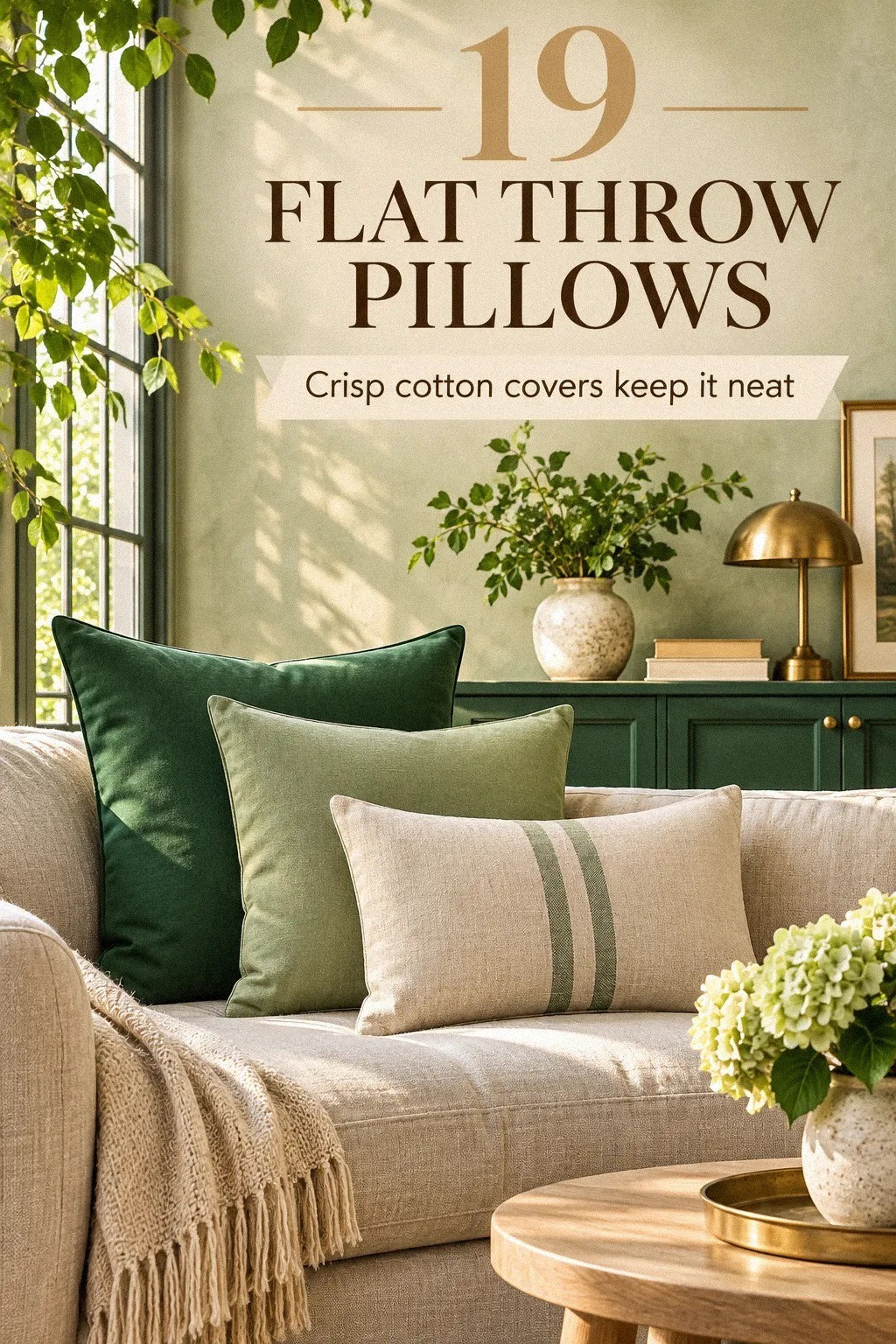
19 november 2026Your throw pillows look flat because the insert is usually smaller than the cover. I learned that after buying attractive covers that collapsed by dinner, with every corner drooping over the sofa arm. The fix is simple: use an insert 2 inches larger than the cover. Your pillows will look fuller, softer, and far more inviting.
- Test the Two-Inch Insert Rule
- Measure the Throw Pillow Cover First
- Skip the Polyfill Pancake
- Fold the Knife Edge Around the Corners
- Build the Three-Texture Stack
- Mix 22-Inch Squares With a Smaller Lumbar
- Choose Feather Over Foam for a Lived-In Shape
- Anchor the Sofa With One Long Lumbar
- Rotate the Cover Instead of Replacing the Insert
- Place the Firmest Pillow at the Outside Edge
- Ask: Is Your Pillow Too Small?
- Swap the Cover Before Buying More Furniture
- Arrange the Three-Height Light Stack
- Layer Warm Neutrals Over White
- Price the Whole Refresh Before You Shop
- Frame the Group With Empty Space
- Wash the Insert, Not Just the Cover
- Why Do Throw Pillows Flatten So Quickly?
- Paint the Backdrop, Then Mix the Throw Pillow Colors
1Test the Two-Inch Insert Rule
Start with the cover size, then choose an insert that’s 2 inches larger in both directions. A 20-inch cover needs a 22-inch insert, while a 22-inch cover needs a 24-inch insert. That extra fill pushes the corners outward and gives your throw pillow design the plump shape you’re missing.
That extra inch does real work!
I’ve tried using equal-size inserts, and they looked tidy for about an hour. Then the center sagged and the fabric folded at the edges. You’ll get a much more refined result with a feather-and-down insert, especially in a warm-white room with camel and black accents and unlacquered brass developing patina.
If your cover is very structured, you can use a dense down-alternative insert, but don’t size down to make the cover easier to close. The finished pillow should feel generous, crisp, and comfortable rather than stiff.
2Measure the Throw Pillow Cover First
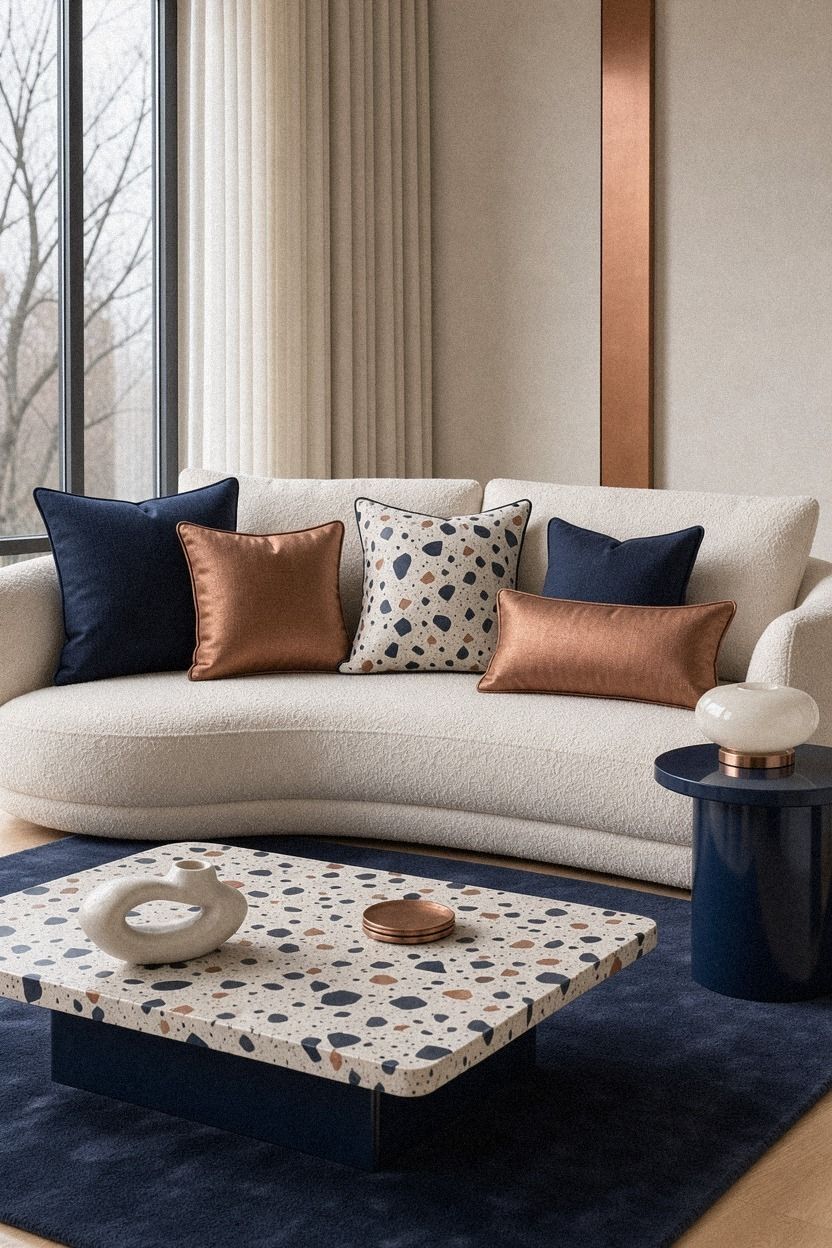
Lay your throw pillow cover flat and measure from seam to seam, not from the outside edge of the piping. Your measurement needs to describe the usable interior space. A 20-inch square cover may look generous on a shelf, but the finished pillow will feel skimpy if its insert is only 18 inches.
And don’t trust a product title alone. Check the listed dimensions, because a cover labeled “20 by 20” can have thick seams that steal room from the insert. I like a midnight-blue cover with copper and ivory accents here because it holds a rounded shape without looking stiff, especially beside oversized-chip terrazzo.
Before reacting to the surface, measure the real issue. This guide on why your hair feels thinner but isn’t actually falling out makes a similar point about checking what’s really changing.
3Skip the Polyfill Pancake

Polyfill inserts are inexpensive, but the cheapest versions flatten quickly under daily use. They compress into a broad, dull shape, so your throw pillow cases lose their corners and look tired even when the fabric is attractive. I’d skip a loose polyfill insert unless you want a relaxed floor cushion.
A medium-density down-alternative insert works better if you need a washable option. Look for a cover with a tightly woven cotton shell and enough fill to recover after you squeeze it. Your pillow should spring back within a few seconds.
If it stays folded in half, it won’t hold a warm, welcoming silhouette on your sofa. Keep your favorite sage-green cover for casual rooms, but give the main living room pillows enough fill to stand against warm cream, natural wood, and hand-applied Venetian plaster. For another reminder that small details can reveal the real problem, see why your brain remembers scents from 30 years ago.
4Fold the Knife Edge Around the Corners

The chopping method gives a square pillow a crisp, slightly tailored shape. Hold the pillow upright, then use the side of your hand to push the insert toward each corner.
Tap the top edge and sides until the fill reaches the seams. You’re creating a firm perimeter, not punching the center flat.
I prefer this finish on a shagreen-accented cover in terracotta, stone, or olive, where a sharp edge looks relaxed rather than formal. Don’t pound the pillow against a wall, because that can drive the filling into one dense lump. Your hands can shape it with more control.
If your sofa already has strong rectangular arms, a clean corner will look more sophisticated than an overstuffed round lump. The result should feel polished but lived-in. This related piece on why your signature scent changes after 50 also shows how subtle changes can alter the overall impression.
5Build the Three-Texture Stack

A pillow arrangement looks fuller when the eye can read three different surfaces. Pair washed Belgian linen, a dry clay-toned textile, and a softly reflective aged-brass accent. Your throw pillow inserts matter, but texture keeps the stack from looking like one flat block of color.
My favorite combination is washed Belgian linen, a quiet clay textile, and an aged-brass detail. The linen keeps the group airy, while the dry weave and metal accent add contrast. The composition feels tactile and alive!
You don’t need a matching set. Use one luminous fabric, one quiet fabric, and one material with visible irregularity. If you’re choosing a whole-room palette, this article about why your signature scent changes after 50 offers a useful parallel: contrast gives a composition more dimension than repetition.
6Mix 22-Inch Squares With a Smaller Lumbar
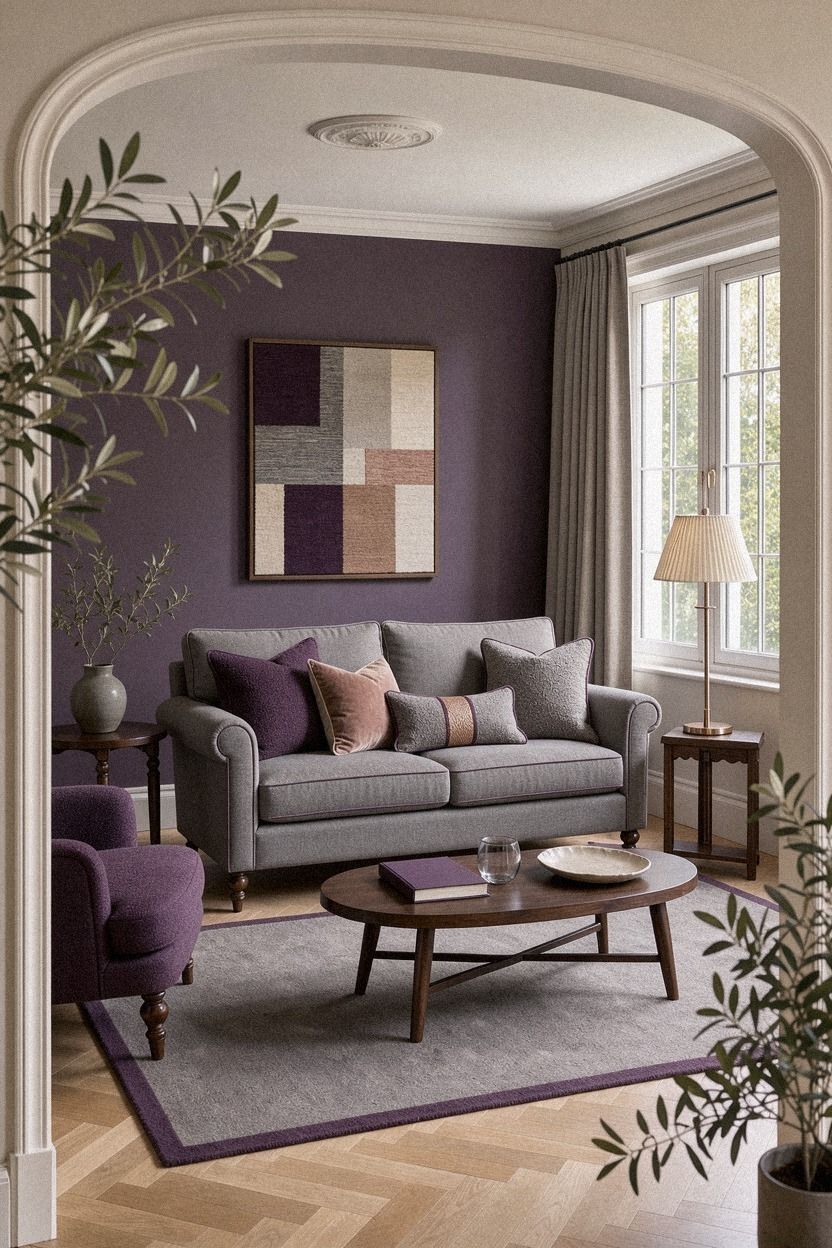
Large square pillows create the foundation, while a smaller lumbar gives your eye a place to rest. Start with a 22-inch square at each end of the sofa, then add a 20-inch cover or a longer lumbar in front. Your arrangement should get slightly smaller as it moves toward the center.
I’d avoid five identical 20-inch pillows across a standard sofa. They create a flat, repetitive row, and you’ll spend your evening moving them aside every time you sit down. Try an organic bouclé lumbar with plum, grey, and rose-gold notes in front of the larger squares.
If your sofa is narrow, keep the stack to three pillows so your seating space doesn’t disappear. A three-pillow arrangement can look more elegant than a crowded collection. For another perspective on small finishing details, read why your mascara smudges by 2 p.m. after 50.
7Choose Feather Over Foam for a Lived-In Shape

Foam inserts keep their shape, but they often look rigid inside a decorative cover. Feather and down move when you lean against them, which creates the soft, slightly rumpled look most people want from throw pillow covers. You’ll need to fluff them more often, but that’s part of the appeal.
I’d choose a 75 percent feather and 25 percent down insert for a balance of support and softness. A pure down insert feels luxurious, but it can collapse under your elbow and stay there. Your best choice depends on whether you want a pillow that stands upright or one you can fold into a corner.
For more sensory inspiration, compare that idea with this piece on why your brain remembers scents from 30 years ago, where memory comes from layered details rather than one loud note. The same principle creates a richer, more memorable room.
8Anchor the Sofa With One Long Lumbar
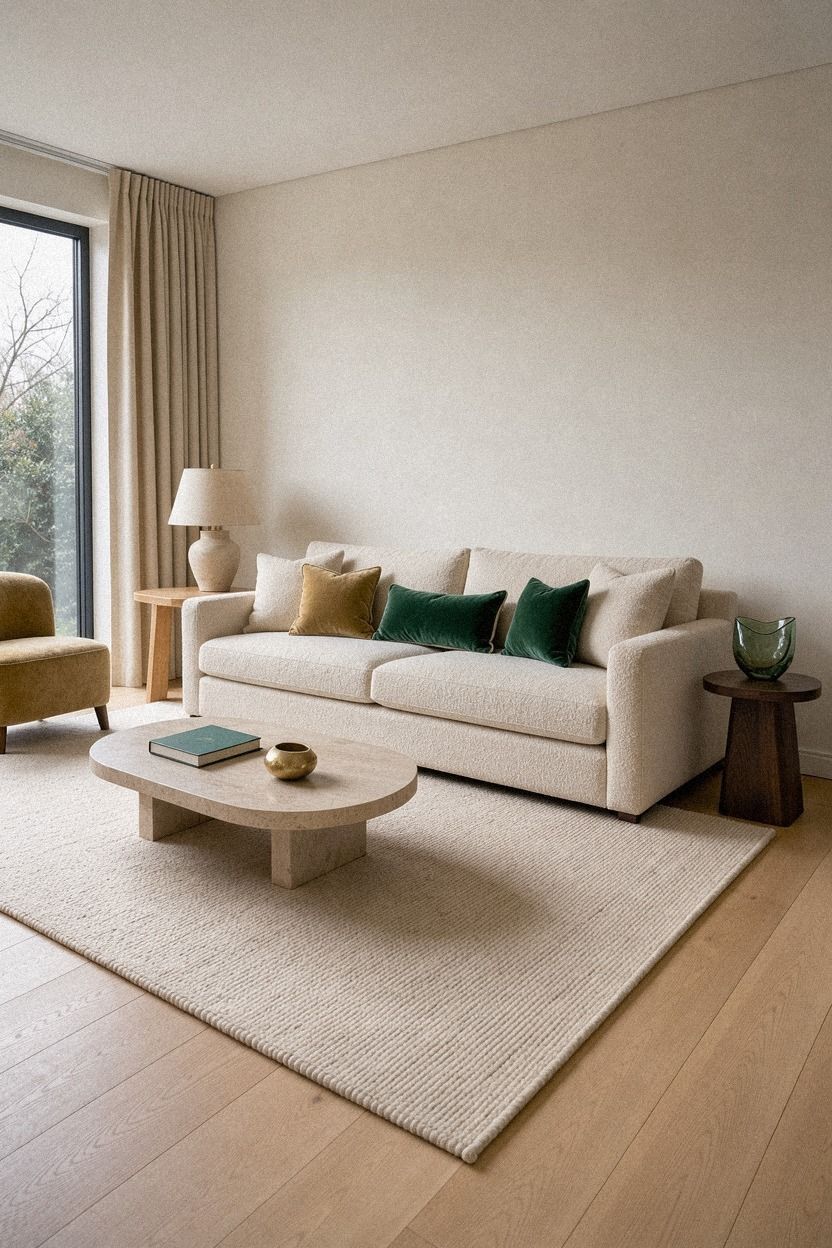
A long lumbar pillow can make a loose pillow arrangement feel intentional. Place it at the center or slightly off-center, depending on where you usually sit. Your throw pillow design will look calmer when one shape breaks up the repeated squares.
I like a deep-pile mohair velvet lumbar in warm cream, especially with emerald and gold pillows behind it. It doesn’t need a dramatic pattern. The length gives your arrangement structure, while the plush surface keeps it from looking too polished.
Don’t put the lumbar in the back row, because your shoulders will push the larger pillows forward and flatten the whole group. A quiet, well-placed shape is often more effective than another busy accent. For a related idea about choosing one strong signature element, see why women can’t stop wearing YSL Black Opium.
9Rotate the Cover Instead of Replacing the Insert
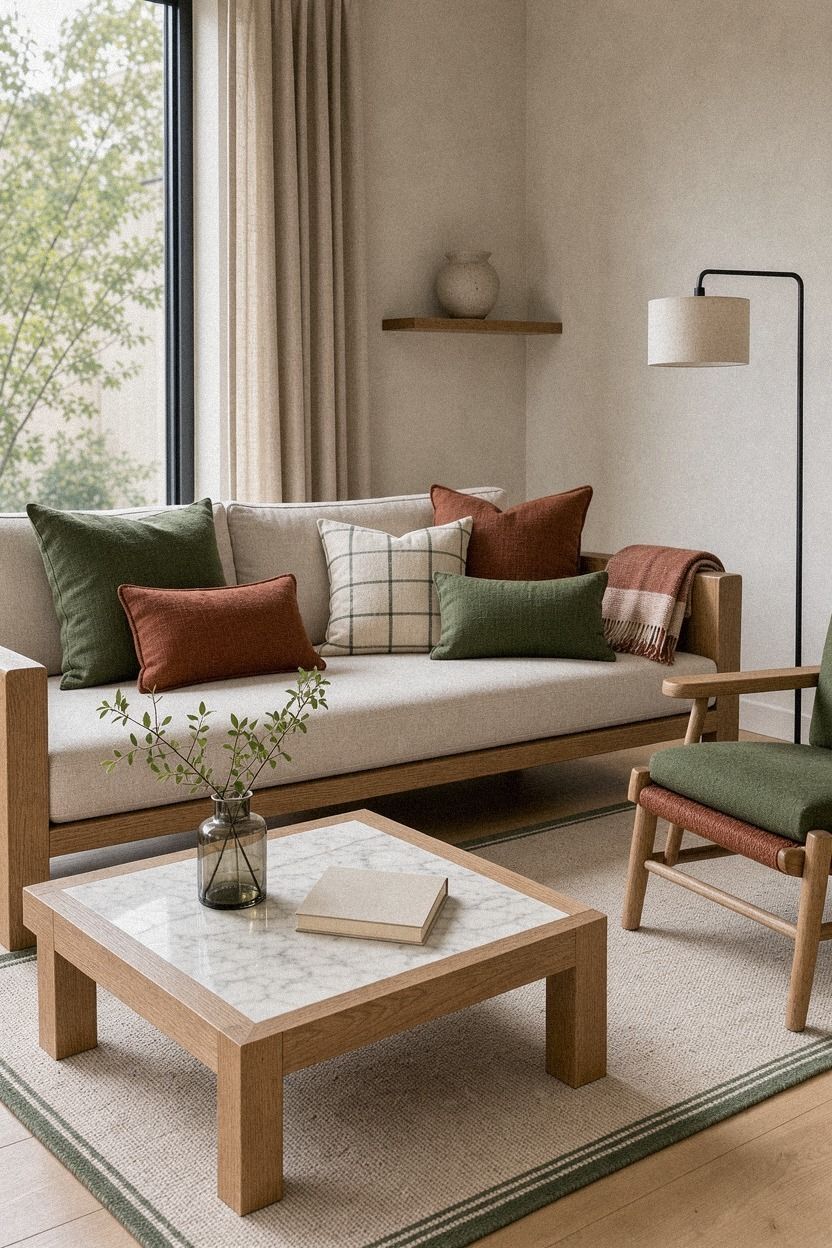
Sometimes the insert isn’t the only problem. A cover can stretch at the zipper, twist at one corner, or develop a compressed nap that makes the pillow look thin. Remove it, rotate it 180 degrees, and check whether the fill is sitting evenly inside.
And wash only according to the care label. A forest-green cover with rust accents can sit beautifully beside natural oak and Carrara marble with subtle grey veining, but the fabric still needs a cool cycle to avoid tightening. Your cover should fit snugly, not fight the insert.
If the nap looks crushed, brush it gently before replacing the insert. A little maintenance can restore a surprisingly fresh, handsome finish. If the room needs a broader refresh, browse why your mascara smudges by 2 p.m. after 50 for another reminder that small details change the finished impression.
10Place the Firmest Pillow at the Outside Edge
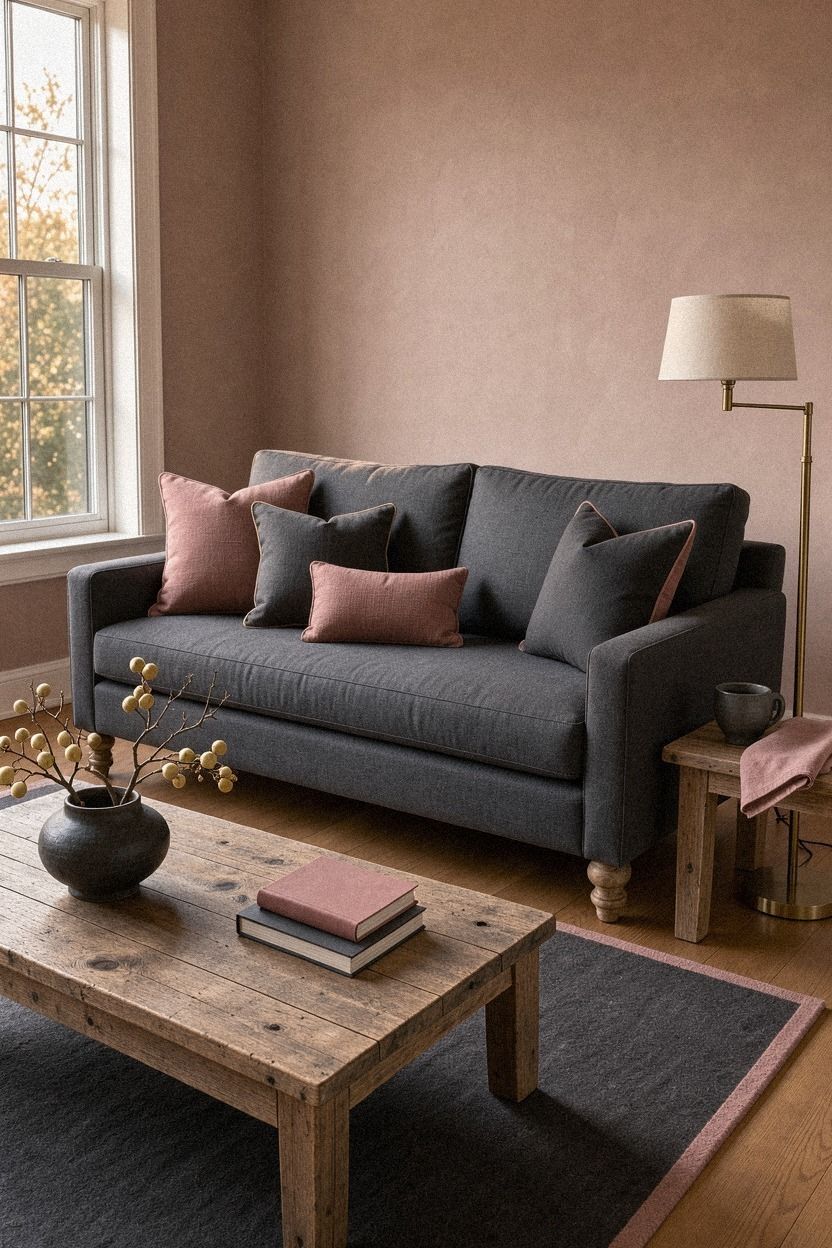
The outer pillow takes the most pressure from the sofa arm, so it needs the firmest insert in your arrangement. Put a dense down-alternative or feather blend there, then use softer inserts toward the center. Your pillows will stay upright instead of leaning like tired dominoes.
This is where a dusty-rose cover with charcoal and brass accents can work well beside reclaimed weathered teak. I’d avoid putting the softest feather pillow against the arm. It will compress first, and you’ll keep adjusting it.
If you’re styling a deep sectional, give your outside pillow a little breathing room so the fabric doesn’t bunch against the upholstery. That small gap makes the arrangement feel calmer and more intentional. The broader lesson is similar to this guide on why my grandfather’s 19 cologne is making millennials throw away their designer fragrances: distinctive details matter.
11Ask: Is Your Pillow Too Small?
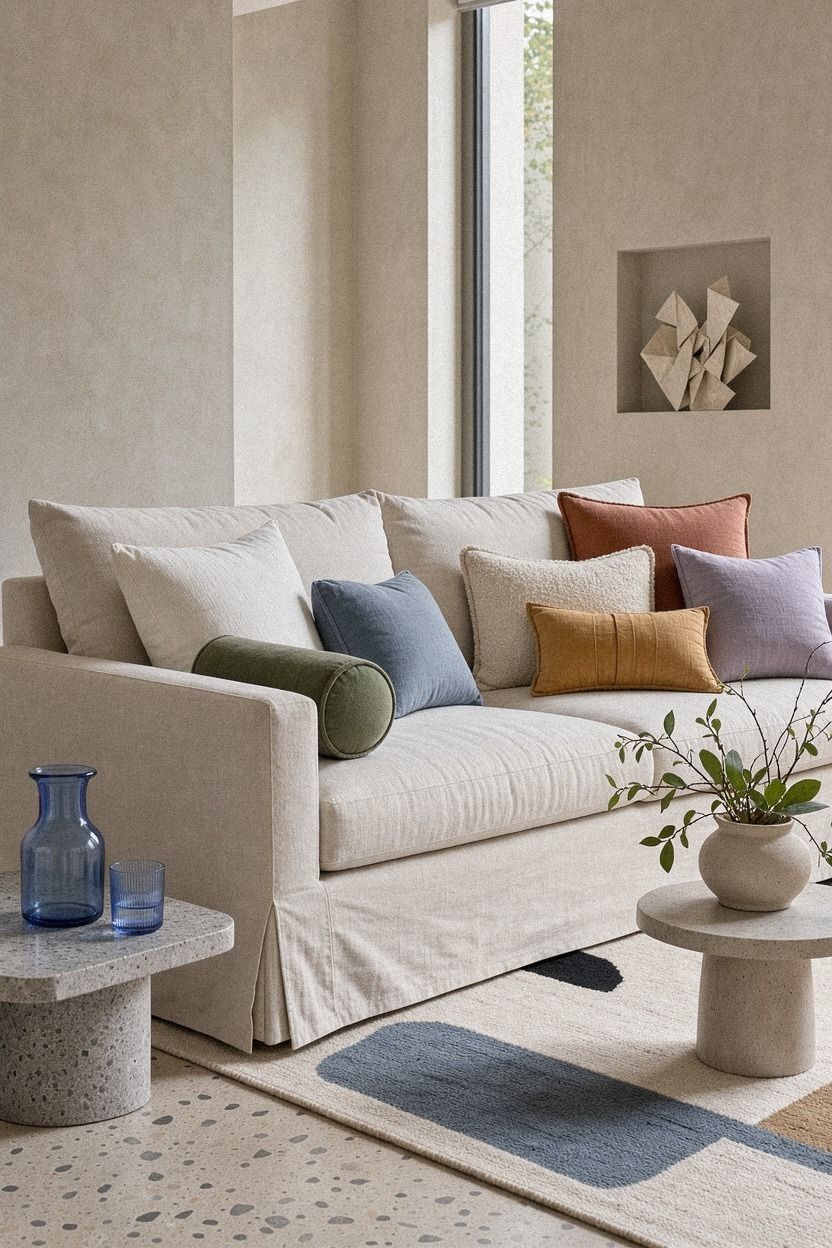
If your sofa looks bare even with several pillows, the problem may be scale rather than fill.
12Swap the Cover Before Buying More Furniture

A new cover can change the mood of a room without changing the sofa, rug, or lamp. Keep the inserts that still hold their shape, then replace only the worn or undersized covers. Your budget will stretch further, and you’ll avoid creating a pile of unused pillows.
For a cooler palette, I like midnight-blue, copper, and ivory with cerused white oak. The colors feel rich without making the room heavy. You can also keep one neutral cover in rotation for spring.
Choose one memorable accent, then let the surrounding pieces support it. If you’re considering a broader style change, this article on why women can’t stop wearing YSL Black Opium makes a similar case for finding a signature element.
13Arrange the Three-Height Light Stack

Your pillows will look more dimensional when their heights vary. Use a tall back square, a medium square in front, and a low lumbar across the center. This creates a simple visual slope, and your eye can move through the arrangement without hitting one solid wall of fabric.
The same principle works with lighting. Three sources per room, overhead, task, and ambient, keep a space from looking harsh. Your pillow group can echo that rhythm with sage green, warm cream, and natural wood, while a backlit translucent onyx accent adds a low glow.
I’d avoid stacking three tall pillows together, because the composition becomes stiff and blocks the sofa’s useful depth. A varied arrangement feels livelier, more graceful, and easier to use.
14Layer Warm Neutrals Over White

White pillows can look bright in a store and flat at home. Layer warm neutrals instead, such as ivory, oatmeal, putty, and soft tan. Your throw pillow design will gain depth from small changes in undertone, especially beside wood furniture.
A terracotta, stone, and olive palette works beautifully with book-matched walnut, especially when white upholstery or a pale wall gives those warmer tones room to breathe.
I’d skip a pile of identical bright-white covers. They show every crease and can make your sofa feel more formal than inviting.
Exactly! A warm neutral palette is softer, more forgiving, and usually more elegant.
For another example of how tone changes perception, see why I look five years older in the mirror.
15Price the Whole Refresh Before You Shop
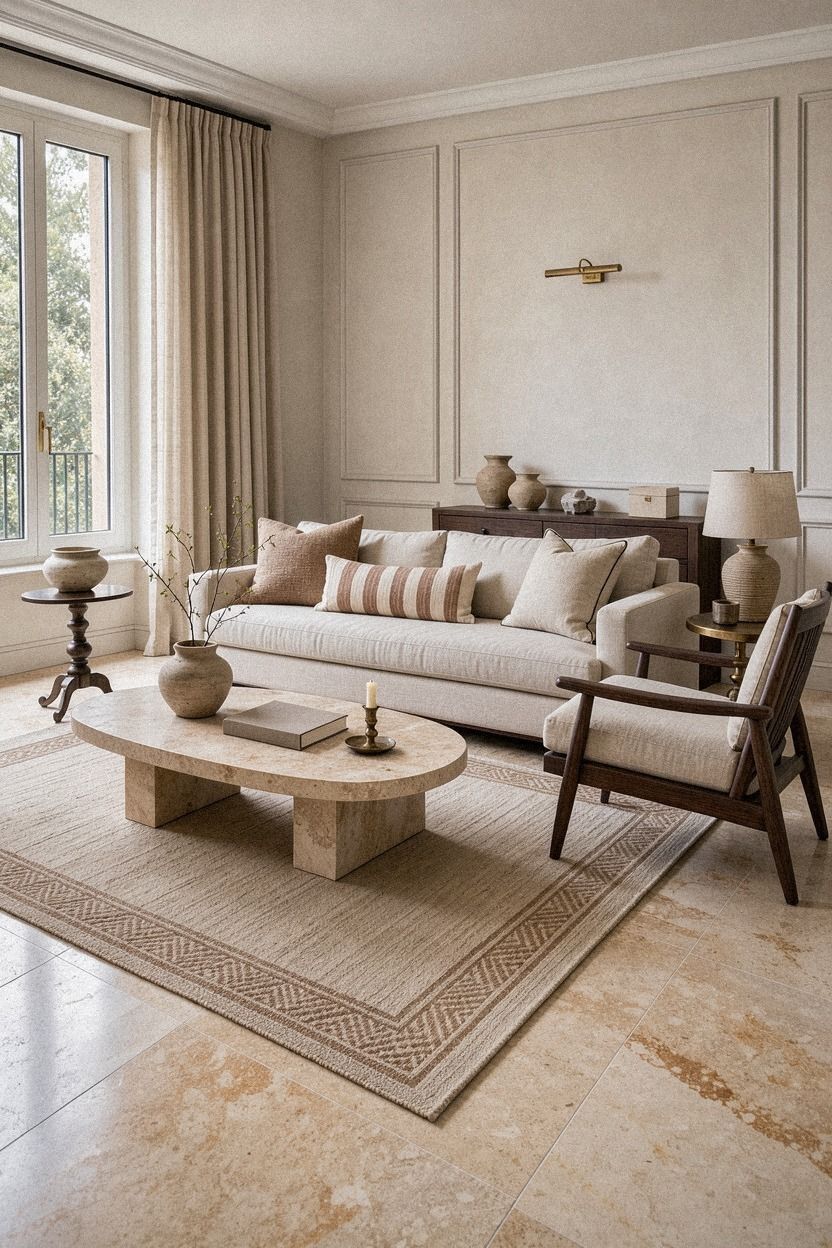
A pillow refresh can stay modest if your inserts are usable and you buy only covers. Your real cost rises when you replace the sofa textiles, rug, paint, and lighting at the same time. Use this typical US room budget as a guardrail before you start adding items to your cart.
For a pillow-only update, I’d stay near the budget tier and spend first on high-quality inserts that won’t collapse. You can reuse your rug and furniture while changing the tactile layer, then add a warm travertine accent only if the room needs a harder surface.
A lower-cost choice can still feel distinctive when the detail is right. This guide on why my grandfather’s 19 cologne is making millennials throw away their designer fragrances makes a similar point about thoughtful upgrades.
16Frame the Group With Empty Space

Pillows need a little space around them to look intentional.
17Wash the Insert, Not Just the Cover

If your pillow feels dull, the insert may be holding dust, body oils, and old air. Check the care instructions before washing, then dry it completely so the fill doesn’t clump. Your pillow should feel springy and smell clean, not damp or lumpy.
For washable options, I like a cotton-shell down-alternative insert that can go through a gentle cycle. Feather inserts may need professional cleaning or careful spot treatment. Fluff the pillow while it’s still slightly warm, then leave it uncovered until every layer is dry.
If the cover is clean but the pillow still collapses, replacement is more sensible than endless reshaping. The same attention to upkeep appears in why I look five years older in the mirror, where the visible result starts beneath the surface.
18Why Do Throw Pillows Flatten So Quickly?
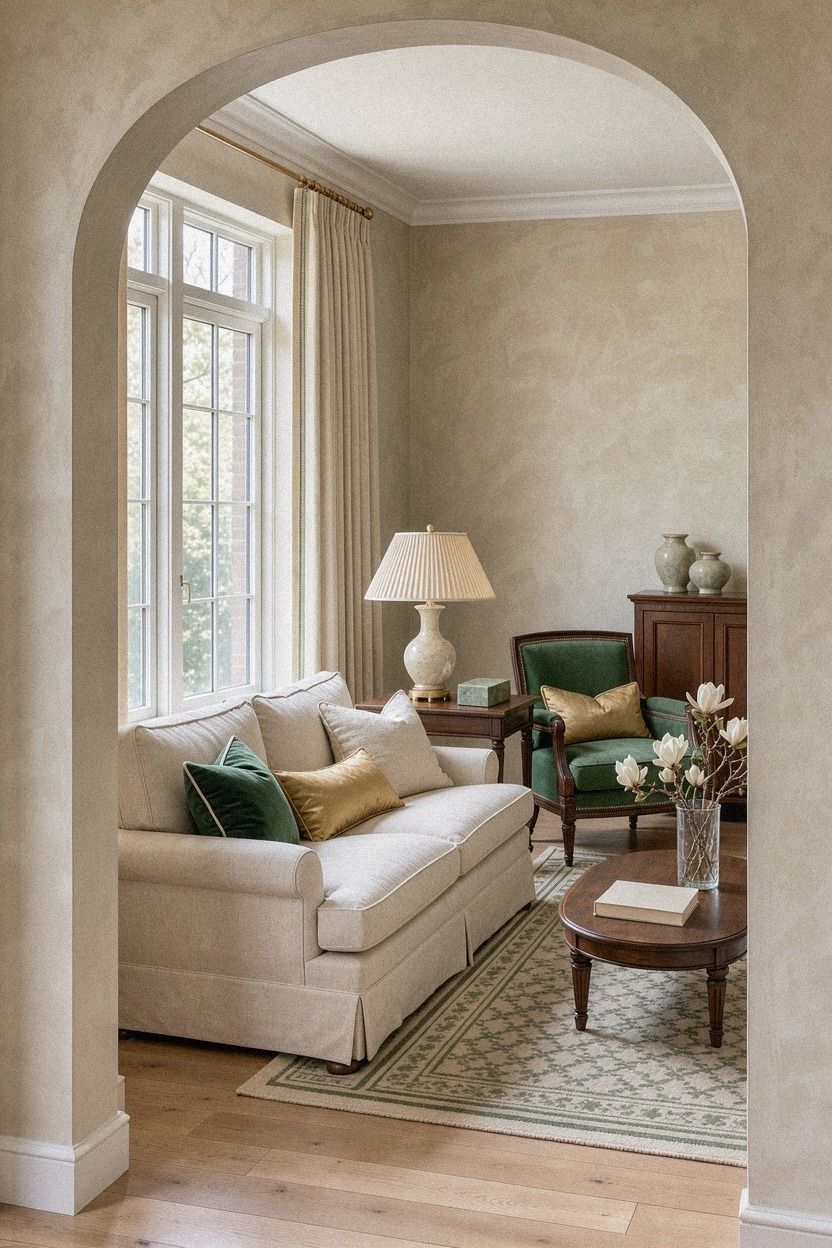
Throw pillows flatten quickly when the insert is undersized, the fill is weak, or the pillow is always folded in the same place. Your daily sitting position matters, too. A pillow used as an armrest will compress faster than one that stays upright against the back cushion.
Start by testing a larger insert before buying a new cover. Then rotate the pillow each week and give it a firm corner-to-corner fluff. I’d replace a permanently lumpy polyester insert rather than hide it beneath another cover.
If you’re unsure whether the issue is the insert or the fabric, unzip the cover and inspect the corners. The answer is usually obvious once you can see the empty pockets. That simple check can save an unnecessary, expensive furniture purchase.
19Paint the Backdrop, Then Mix the Throw Pillow Colors
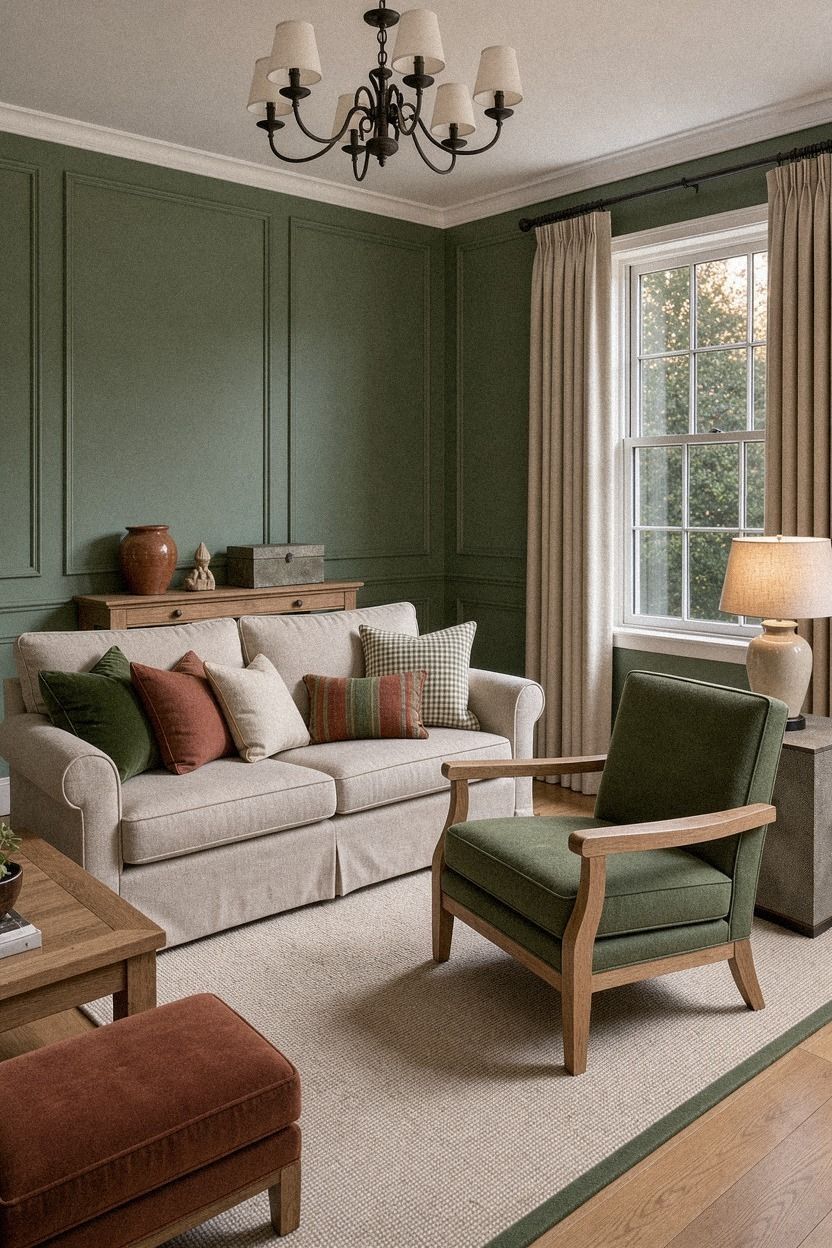
Your pillows won’t look full if the wall behind them makes every textile disappear. A grounded backdrop gives the covers contrast, especially when the palette includes similar shades. A forest-green backdrop can support rust and natural oak, while shagreen accents add texture.
You don’t need a dramatic wall color to make the arrangement work. I’d choose the paint after checking your fabrics in morning and evening light, because the room’s tone changes throughout the day. Keep one shagreen accent nearby if you want a small tactile note.
If your sofa is already dark, use pale linen in front so your new inserts don’t vanish into the upholstery. For a final style reference, see why this five-minute angled bob is making senior women look younger, which shares the same principle: proportion matters more than excess.
The Insert Rule I’d Keep
The best pillow arrangement isn’t the one with the most covers. It’s the one where every piece has enough fill, enough contrast, and enough room to show its shape. I’ve bought the pretty cover first and tried to force a weak insert into it, and that choice always looked disappointing by the next morning.
Your first priority should be the insert-to-cover relationship. Then consider texture, scale, color, and how often you’ll use the sofa. A soft feather blend may look wonderful in a quiet sitting room, while a washable alternative makes more sense in a busy family space.
The goal isn’t showroom stiffness. It’s a warm, lived-in arrangement that keeps its corners when you stand up. Start with one cover, test the larger insert, and build from there.
A Few Things Worth Answering
What is the best insert for small throw pillows?
A feather-and-down insert is the best choice for most small throw pillows because it fills corners and can be reshaped. Choose an insert 2 inches larger than your cover, such as a 22-inch insert for a 20-inch cover. A firm cotton-shell option works well if you need washable support.
Where can I buy throw pillow pieces on a budget?
Look at IKEA, Wayfair, and Target for affordable covers and inserts, then check Facebook Marketplace or a local thrift store for gently used textiles. Your best value may be a new cover paired with an existing insert you already own.
How much does a throw pillow makeover cost?
A small refresh usually costs about $100 to $300, depending on how many inserts and covers you replace. You can spend nothing by reshaping and rotating your current pillows. New covers, second-hand inserts, and one stronger accent pillow can make the room feel inviting without approaching a full room budget.
Can I create this look on a budget?
Yes, absolutely! Start with three free actions: rotate each pillow, push the fill into the corners, and group your best colors together.
Then buy one 22-inch insert for a smaller cover and reuse the rest. Your arrangement will improve before you spend anything.
Is this worth it in a small space?
Yes, because a small room benefits from fewer, better-shaped pillows. Use one large square and one low lumbar instead of filling the sofa with small cushions. Your furniture will keep more usable seating space, and the fuller inserts will provide texture without making the room feel crowded.
Is this a good idea for a rental?
Yes. Pillow covers and inserts are completely removable, so you can change the room without touching the walls. Pair them with a removable lamp, a tension rod for curtains, or a peel-and-stick accent used carefully.
Your rental can still feel personal without permanent alterations.
Where I’d Start First
If I had to pick one, I’d start with the 2-inch insert rule. A larger feather-and-down insert fills the corners and stops the cover from collapsing before you’ve even styled it. Pin this pillow guide for later, then measure your favorite cover before buying another decorative cushion.