17 Organic Modern Japandi Kitchen Ideas for Soft, Tactile Minimalism Without Renovating
18 august 2026Organic modern Japandi kitchen ideas work best when you edit what you already own, then add warmth through wood, clay, and softer light. I once tried to get this look by buying too many beige accessories. It looked like a showroom. The better version is quieter, more useful, and far less precious.
- Layer the Two-Wood Rule (without matching every finish)
- Paint the uppers in Benjamin Moore White Dove
- Skip shiny pulls for unlacquered brass developing patina
- Float open shelves only where they earn their keep
- Use hand-glazed zellige where your eye needs movement
- Build the Three-Height Light Stack
- Can a dark green kitchen still feel airy?
- Anchor the island with a 42-to-48-inch breathing zone
- Bring in Belgian flax linen instead of patterned curtains
- Mix closed storage with one honest display zone
- Choose clay over cold gray accessories
- Frame the sink with a quieter faucet silhouette
- Try Sherwin-Williams Evergreen Fog on one forgotten wall
- Let one large cutting board replace countertop clutter
- Hang a woven shade over the dining corner
- Put organic modern materials on a realistic budget
- Edit your counters with the Quiet Landing Rule
1Layer the Two-Wood Rule (without matching every finish)
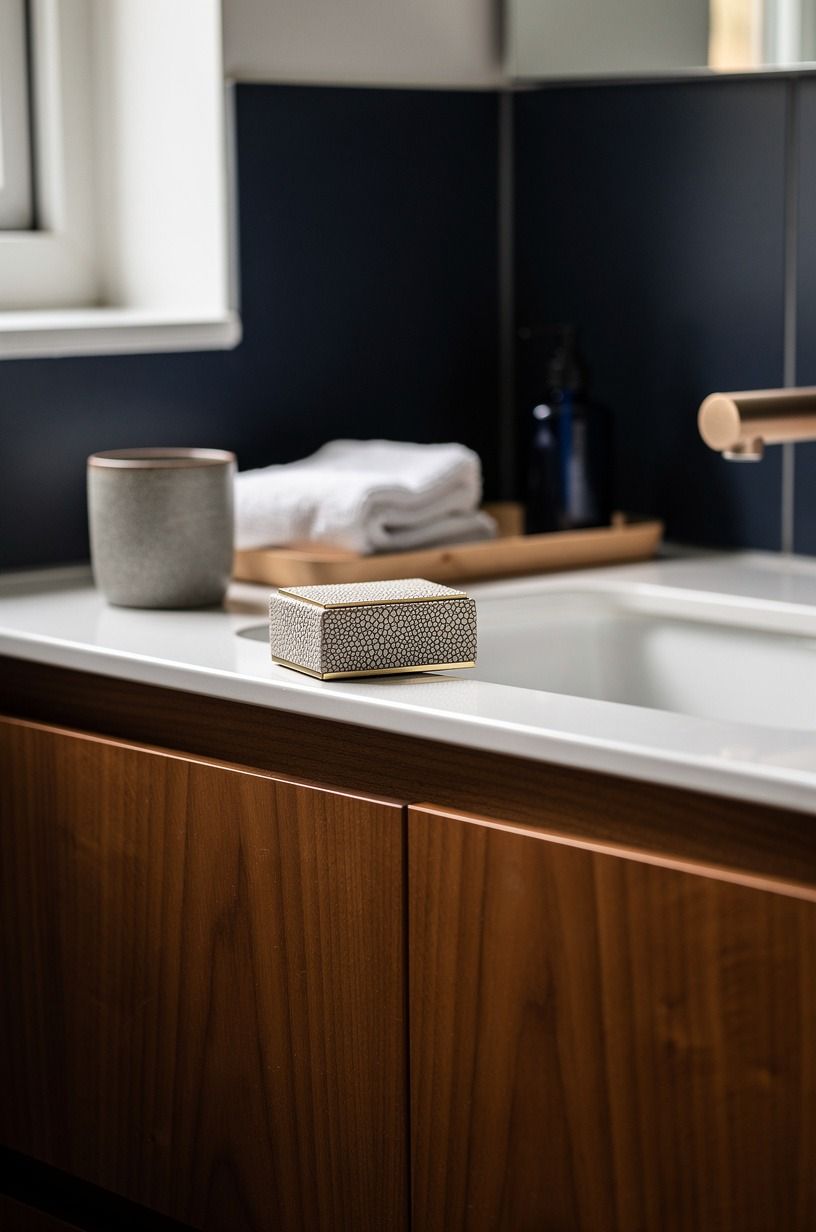
Pick two woods, then stop. Your cabinets might stay their existing walnut while you bring in a navy shagreen tray and a darker walnut cutting board; that contrast gives your kitchen an organic, grounded rhythm without making it feel busy.
I’d skip the matching bamboo canisters sold in big sets. They’re tidy, but they flatten the room into one tan note. Let one wood feel pale and calming, let the other carry weight, and keep both finishes matte so your eye reads grain instead of glare.
A stack of boards leaning near the range. One low fruit bowl.
A worn spoon resting on linen. That’s enough.
2Paint the uppers in Benjamin Moore White Dove
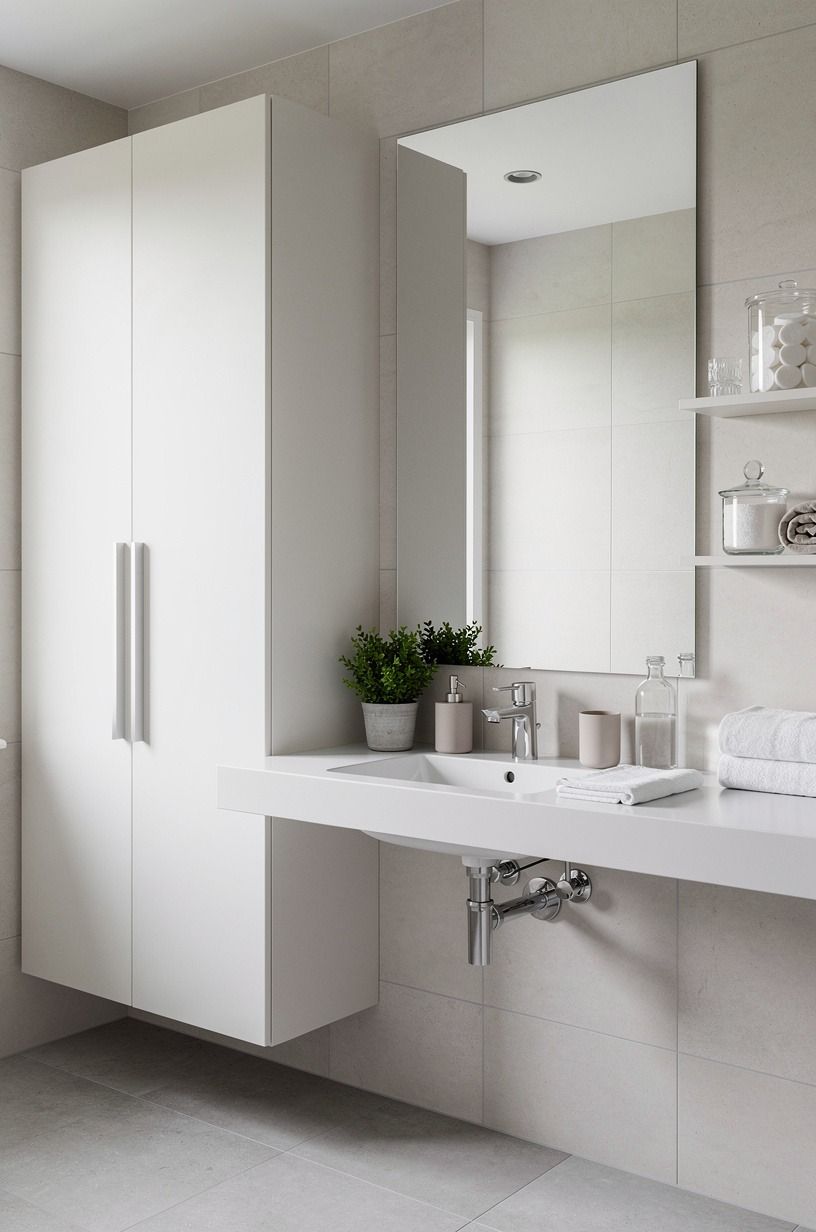
If your upper cabinets feel heavy, Benjamin Moore White Dove OC-17 is the calmer call than stark gallery white. It keeps cream notes warm beside emerald accents and a little aged gold.
3Skip shiny pulls for unlacquered brass developing patina
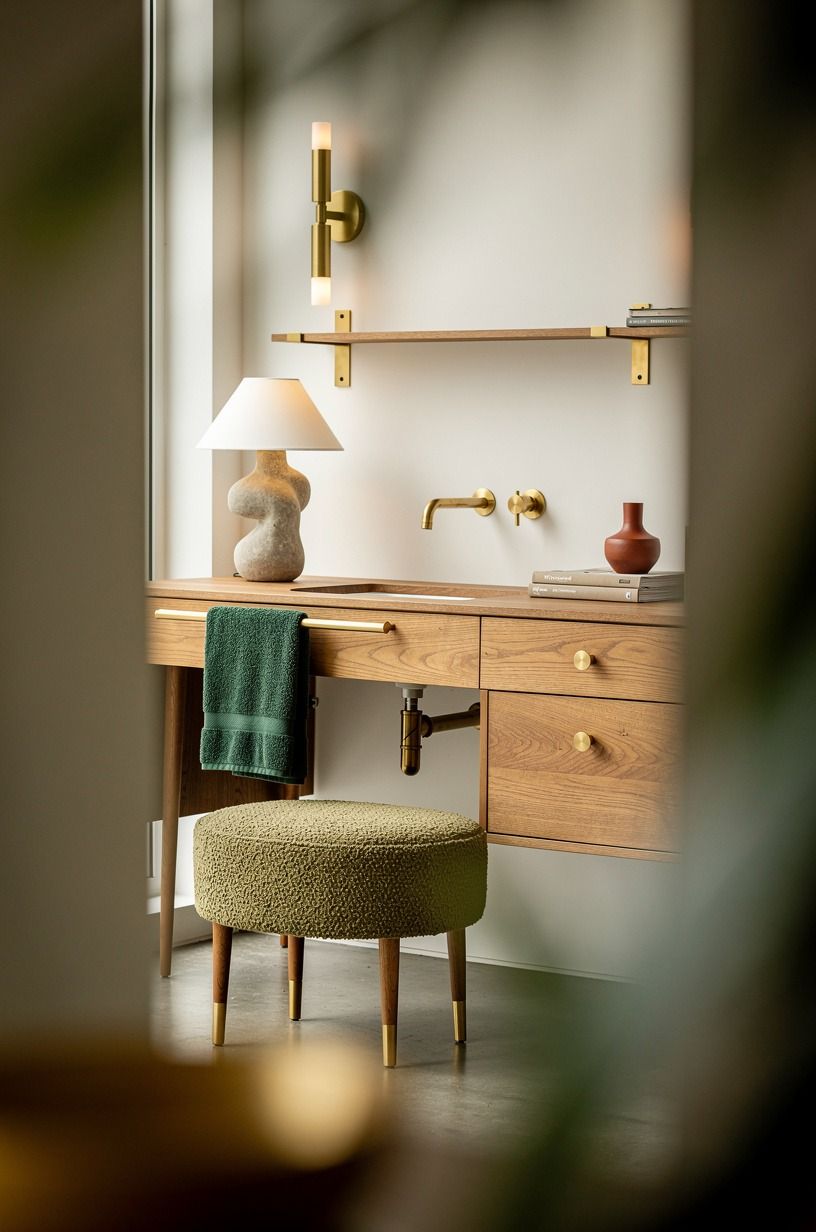
Your hardware doesn’t need to announce itself. Choose unlacquered brass cabinet pulls with a brushed surface, and let them darken naturally around the handles you touch most. The little shifts in color are the point.
But don’t pair them with mirror-polished chrome faucets unless you want visual static. I’d rather see aged brass beside a simple black faucet than brass beside a whole parade of competing metals. You can change hardware in an afternoon, and it’s one of the few updates your hands notice every day.
Warm metal. Real use. No fuss!
4Float open shelves only where they earn their keep
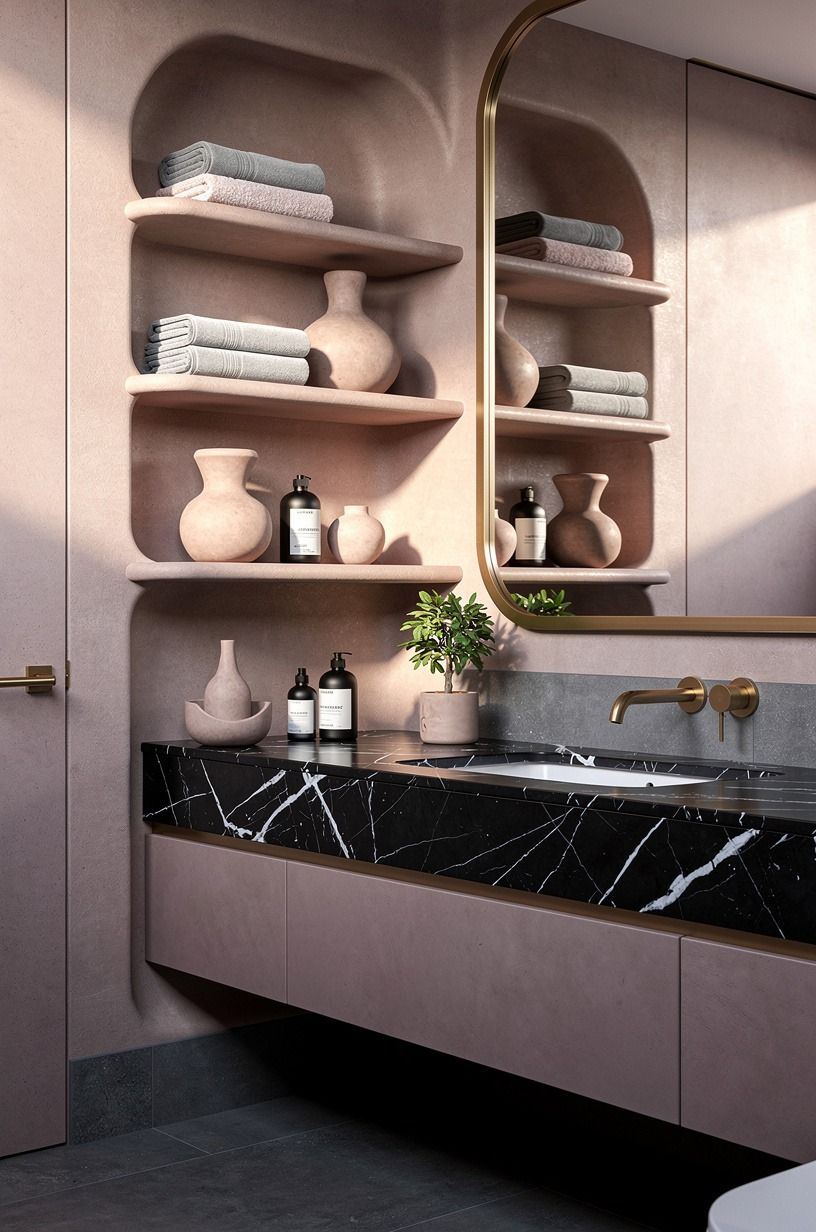
Open shelving is good in a Japandi organic modern kitchen when it holds things you use, not a collection of tiny decorative objects.
5Use hand-glazed zellige where your eye needs movement
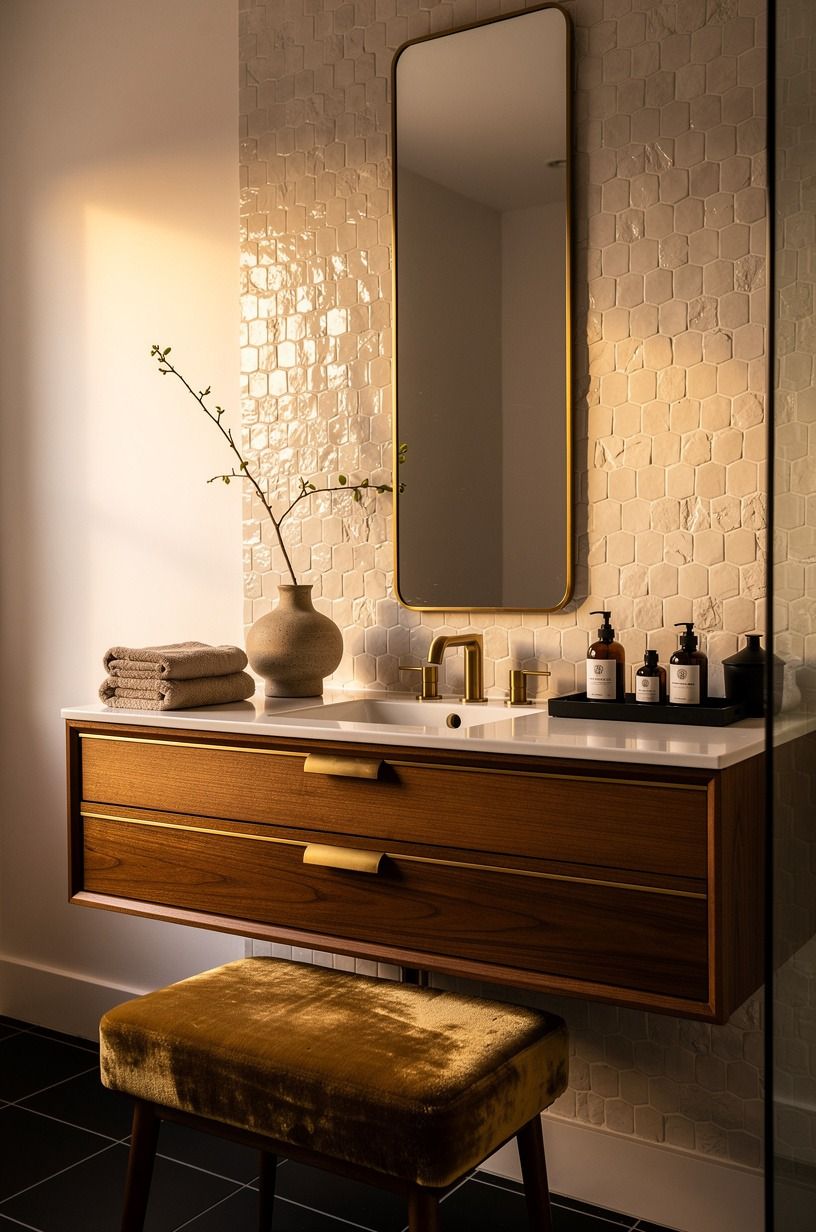
A small piece of deep-pile mohair velvet on a breakfast chair can loosen up flat cabinet fronts without demanding a renovation. The soft texture adds movement even when the palette stays restrained.
Choose warm ivory, camel, or a quiet black accent. I’d avoid high-contrast patterned fabric here because it turns the corner into a grid of competing detail, and grids can feel fussy in a room that wants to breathe. If you’re renting, a removable seat cushion gives you the same visual direction with less commitment.
Your textures should murmur, not shout.
6Build the Three-Height Light Stack
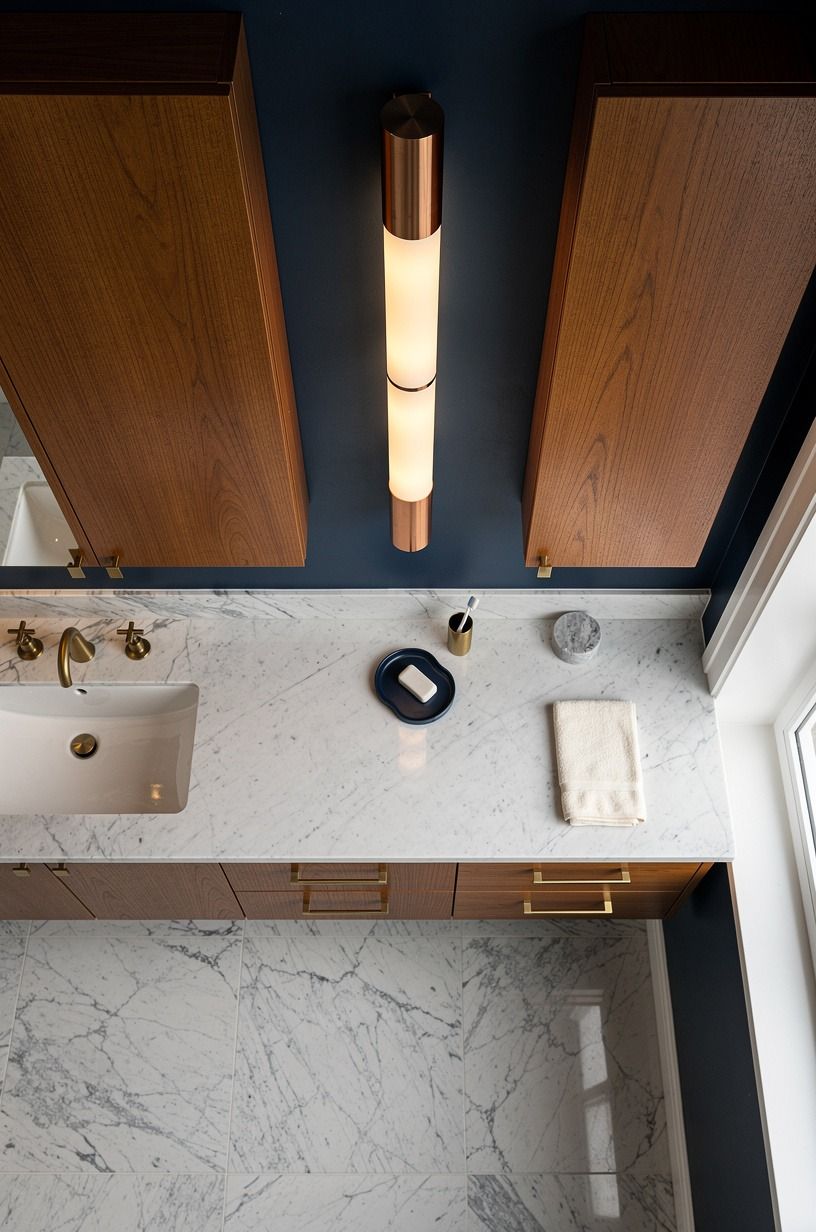
Use three light levels: ceiling light, task light, and one lower pool of glow. A paper lantern pendant handles the soft overhead layer; an under-cabinet strip handles chopping; a petite lamp with a Carrara marble base on the counter makes the kitchen feel inviting after dinner.
And yes, a lamp belongs in the kitchen. Put one at the far end of the counter, away from splashes, with a linen shade that throws amber light onto the wall. You’ll notice the room changes at night, when overhead lighting can make even good materials look hard and flat.
The Three-Height Light Stack works because your kitchen stops feeling like a workplace at 8 p.m.
7Can a dark green kitchen still feel airy?
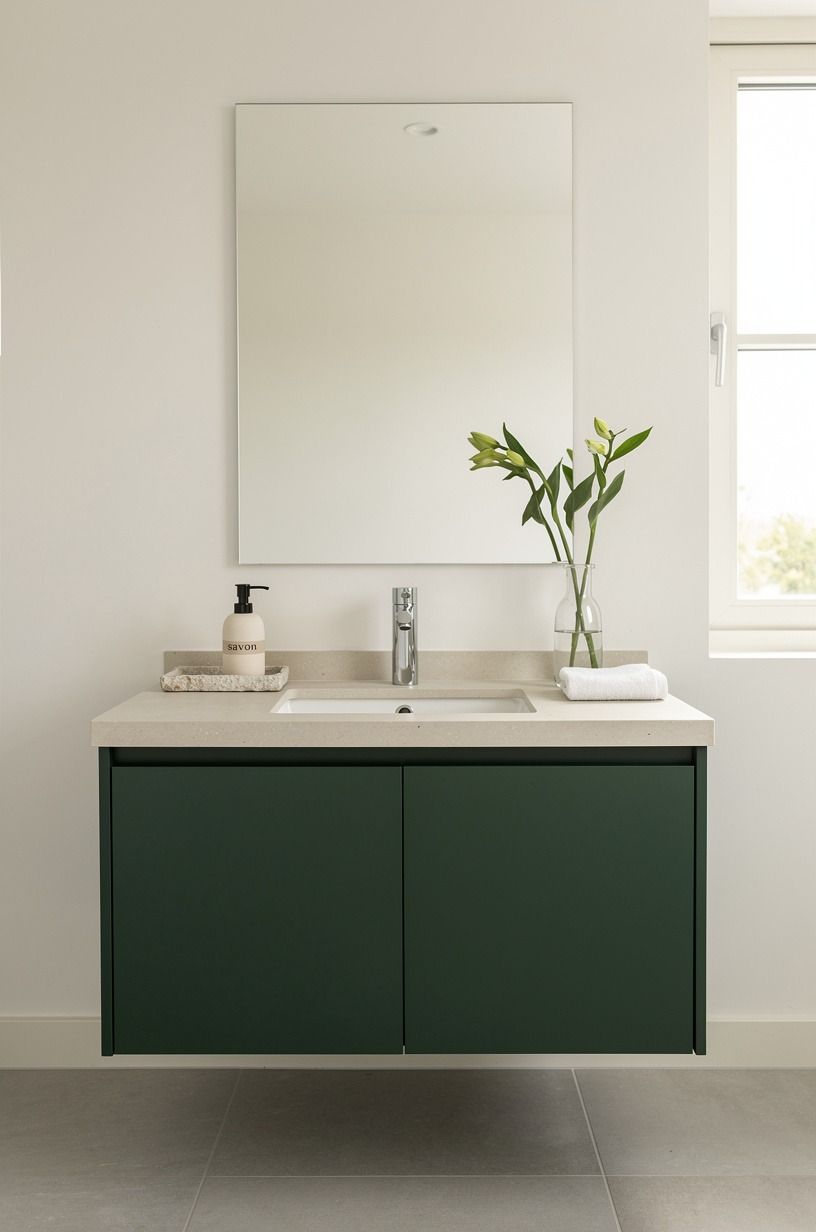
Yes, if you keep the green on one plane and give it pale neighbors. Farrow & Ball Studio Green No.93 looks rich on a pantry wall or lower cabinets, especially against cream tile and weathered wood, but it can turn nearly black in a dim kitchen.
That’s why I wouldn’t paint your uppers in it unless you have serious daylight. Put Studio Green below the counter line, use a pale wall above, and let the contrast make the room feel refined rather than moody. You’ll get depth without losing the gentle openness that makes Japandi appealing.
A dark note needs room around it.
8Anchor the island with a 42-to-48-inch breathing zone
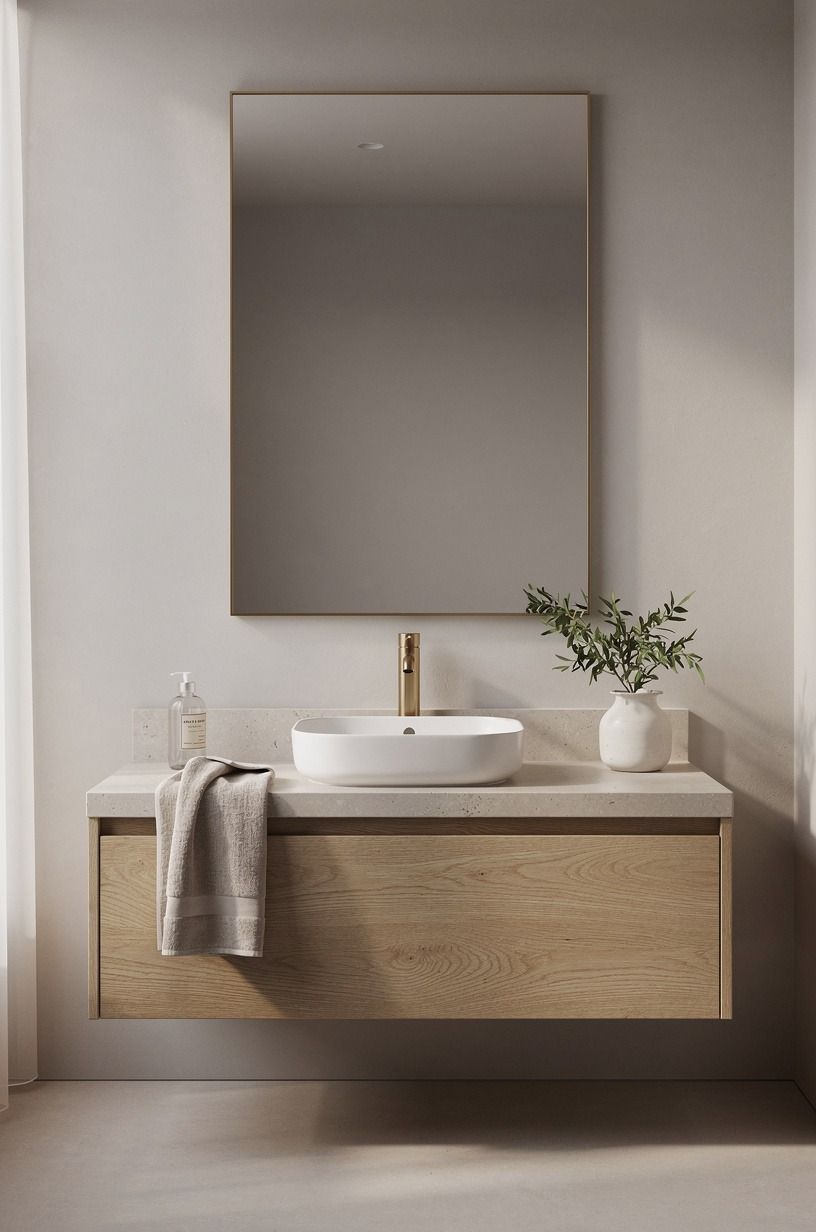
Measure before you buy stools, runners, carts, or one of those tempting vintage cabinets.
9Bring in Belgian flax linen instead of patterned curtains
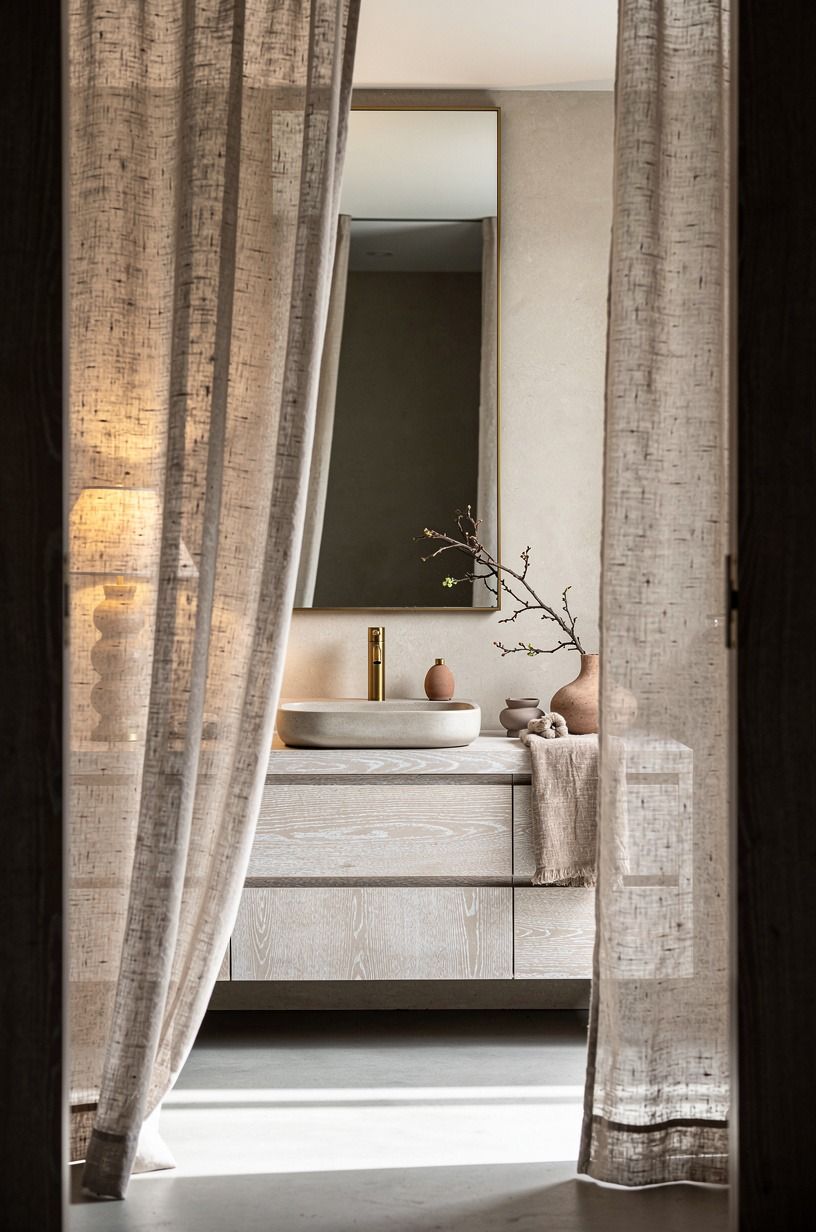
A short panel of Belgian flax linen makes a kitchen window feel softer without turning it into a cottage scene. Go for warm oat, faded clay, or washed ivory, and mount it high enough that the fabric clears the sill when you open the window.
But don’t use a busy botanical print just because Japandi includes nature. The natural feeling comes from texture, daylight, and a little irregularity, not from printing leaves everywhere. A simple tension rod is renter-friendly, and you can wash the panel when cooking steam gets to it.
The fabric should filter light, not become the whole conversation.
10Mix closed storage with one honest display zone
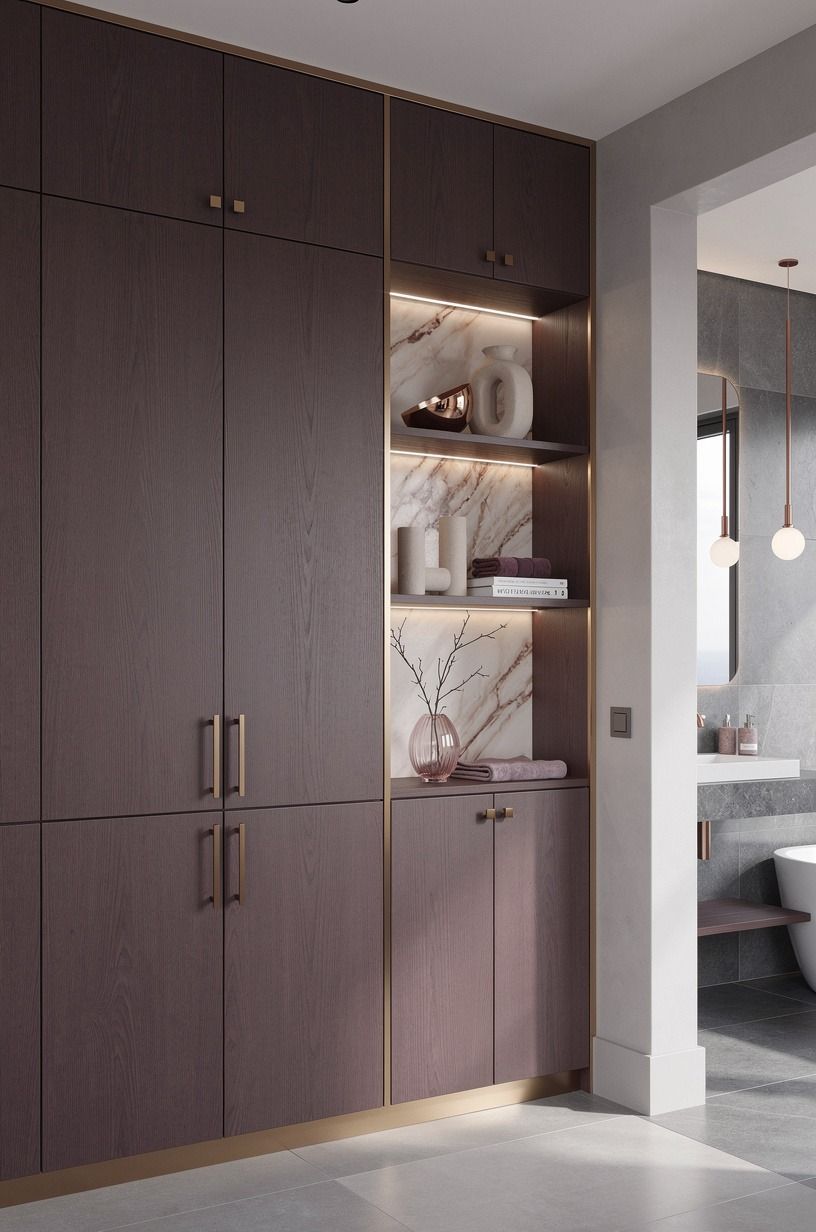
Give yourself one place for visible things and protect the rest of your cabinets from visual clutter.
11Choose clay over cold gray accessories
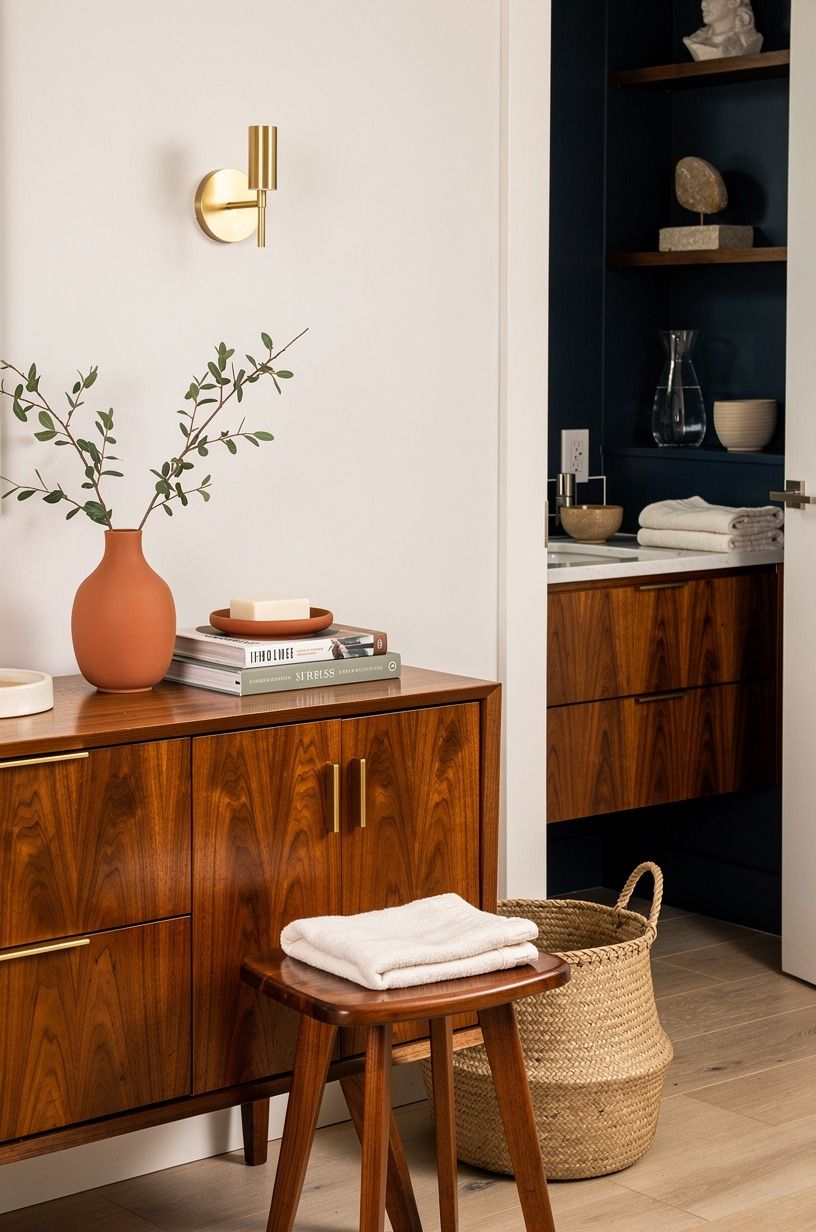
Swap blue-gray canisters and glossy white jars for a book-matched walnut tray and a matte cream vessel. The color shift is small, but your kitchen will read warmer immediately because walnut carries a rich, earthy undertone that polished gray never does.
You can keep the palette subtle. Try one tray near the range, a small bowl by the sink, and a muted vase on a shelf. I’d avoid buying ten matching pieces from one collection, since repetition makes handmade materials feel oddly manufactured.
Your accessories should look gathered over time, even if you bought them last weekend.
12Frame the sink with a quieter faucet silhouette
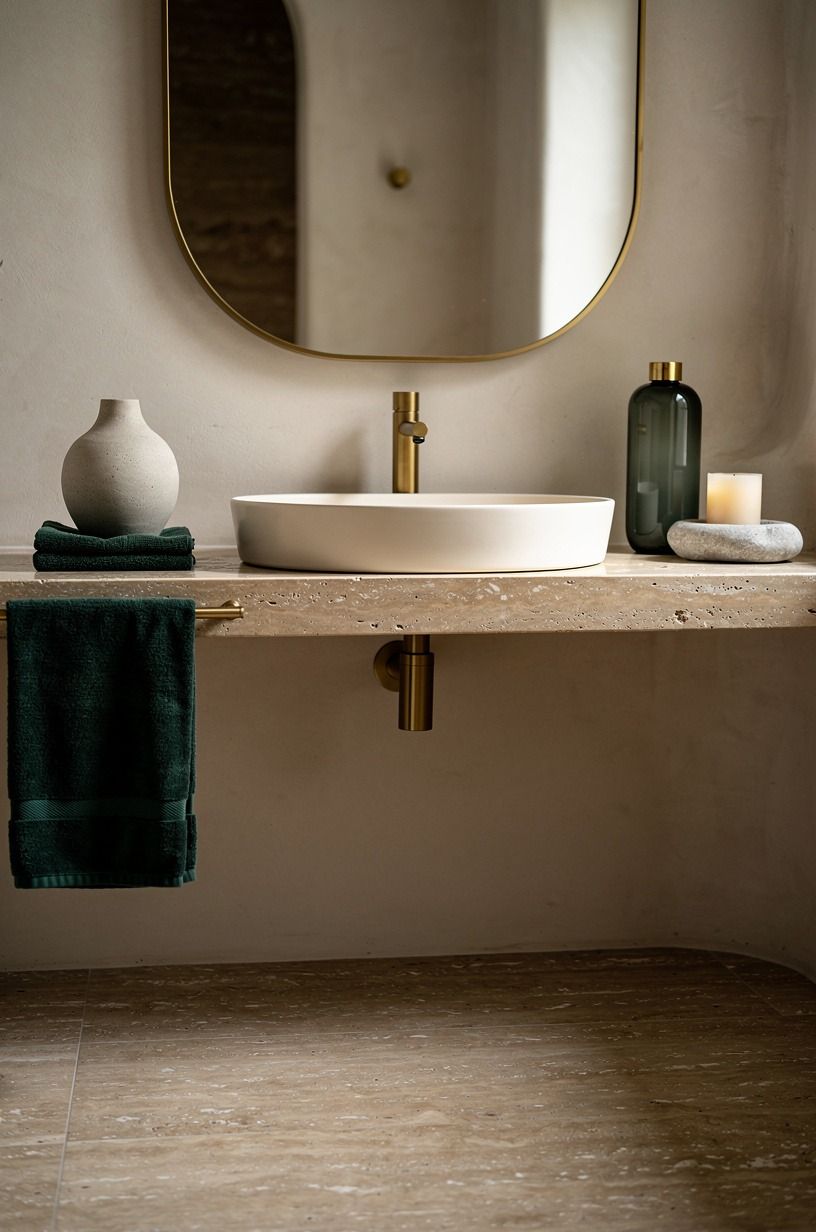
A gooseneck faucet can work, but a Kohler Purist single-handle faucet has a straighter, more architectural line that suits kitchen modern organic spaces better. It gives you a clean shape without introducing another decorative curve.
If you can’t replace the faucet, change what surrounds it. A warm travertine soap dish, a ribbed ceramic dispenser, and a folded cotton towel make the sink area feel intentional. But keep the counter clear enough to wipe in one pass, because a serene kitchen that’s annoying to clean won’t stay serene.
This is where your daily routines show.
13Try Sherwin-Williams Evergreen Fog on one forgotten wall
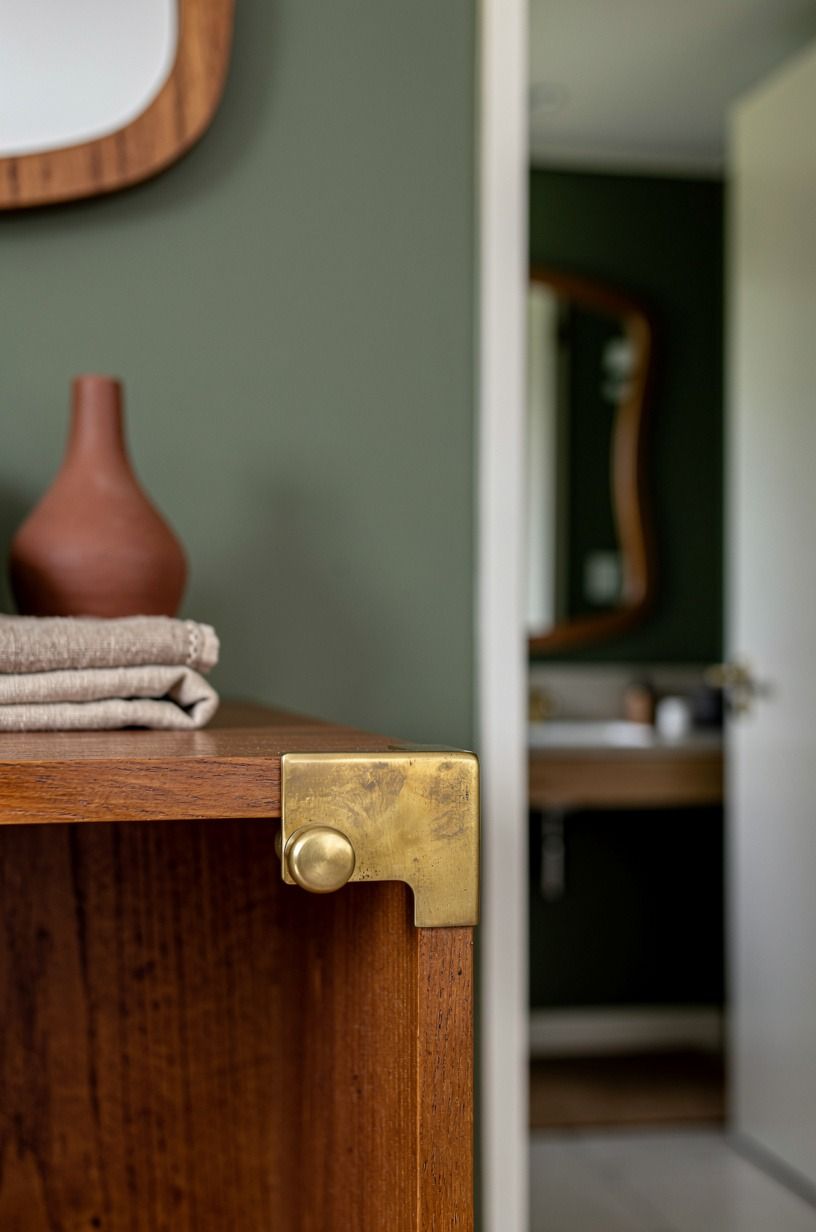
A single wall in Sherwin-Williams Evergreen Fog SW 9130 can make a plain kitchen feel softer, especially near a breakfast nook or the wall opposite your cabinets. Unlacquered brass nearby gives the muted green a useful touch of warmth.
14Let one large cutting board replace countertop clutter
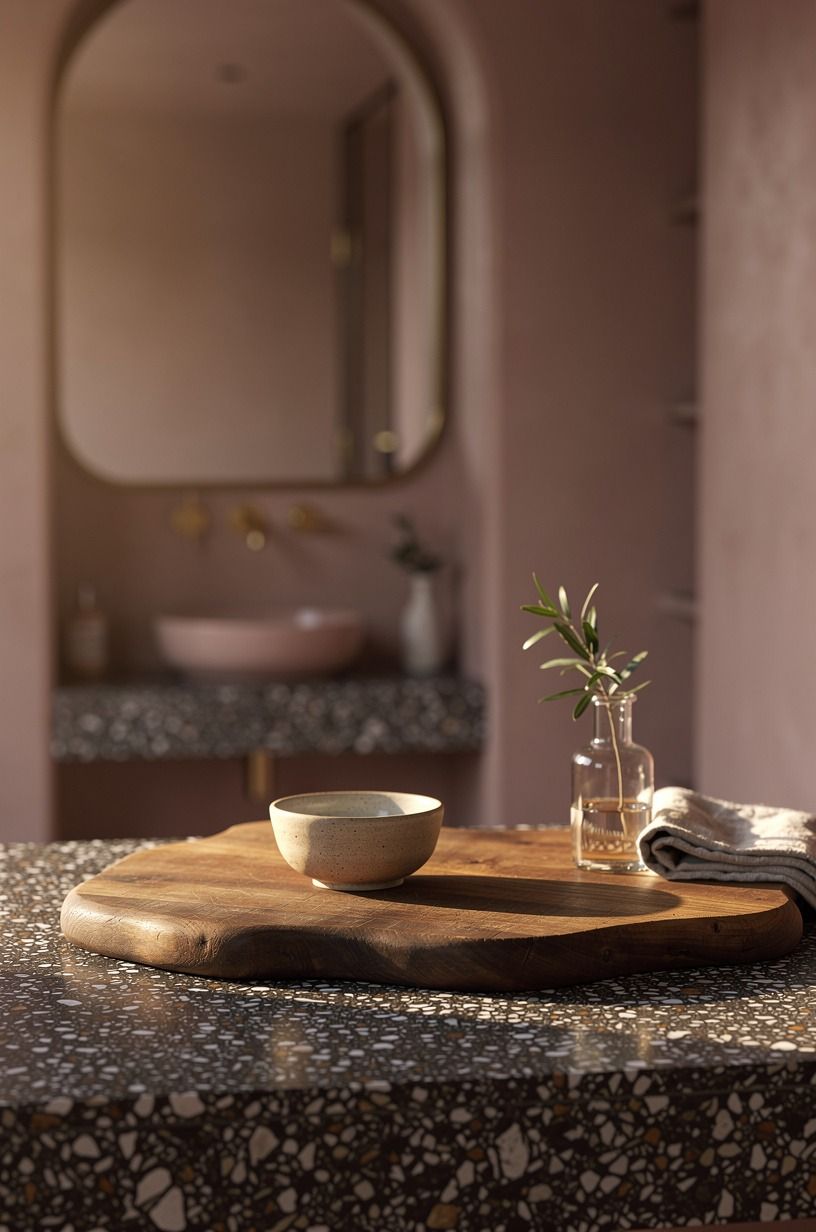
Use one substantial oversized-chip terrazzo serving board as a permanent visual anchor near the range. It gives the counter a warm, practical surface, and it looks better than a scattering of spice jars, gadget holders, and novelty signs.
Why does this work so well? Because one large object gives your eye a place to rest. You can lean it against the backsplash or lay it flat under a bowl, then move it when you need prep space.
I’d skip thin decorative boards with printed sayings; they’re neither useful nor particularly charming.
A board with knife marks has more personality anyway.
15Hang a woven shade over the dining corner
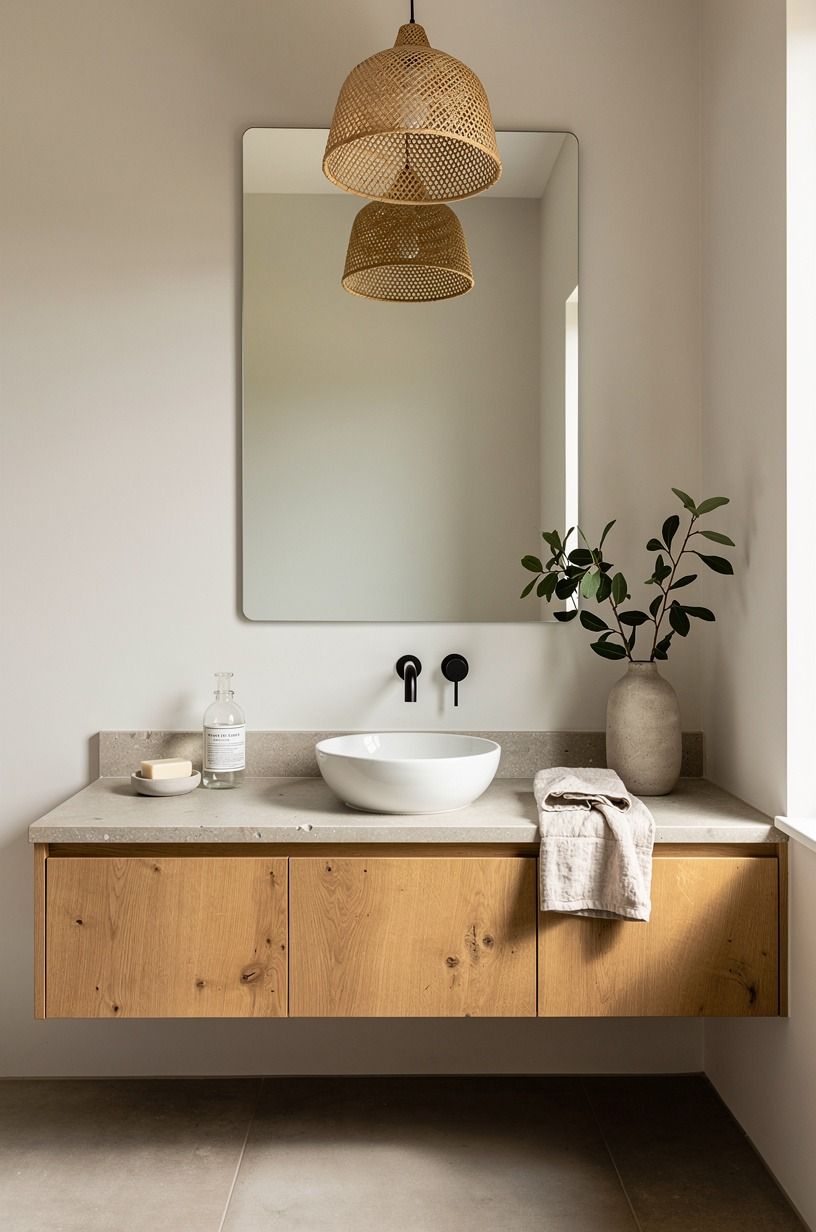
A softly finished Venetian plaster wall can bring texture above a small dining table without making the kitchen feel rustic in a theme-park way. Choose a warm white finish and use a warm bulb, not a bright white one that turns every surface harsh.
You don’t have to replace your ceiling fixture if that’s outside your budget. A plug-in pendant near a breakfast bench can give you the same intimate effect, especially if your ceiling box is in the wrong spot. And honestly, slightly imperfect placement often feels more relaxed than a perfectly centered showroom layout.
Soft shadows do more than another beige vase ever will!
16Put organic modern materials on a realistic budget
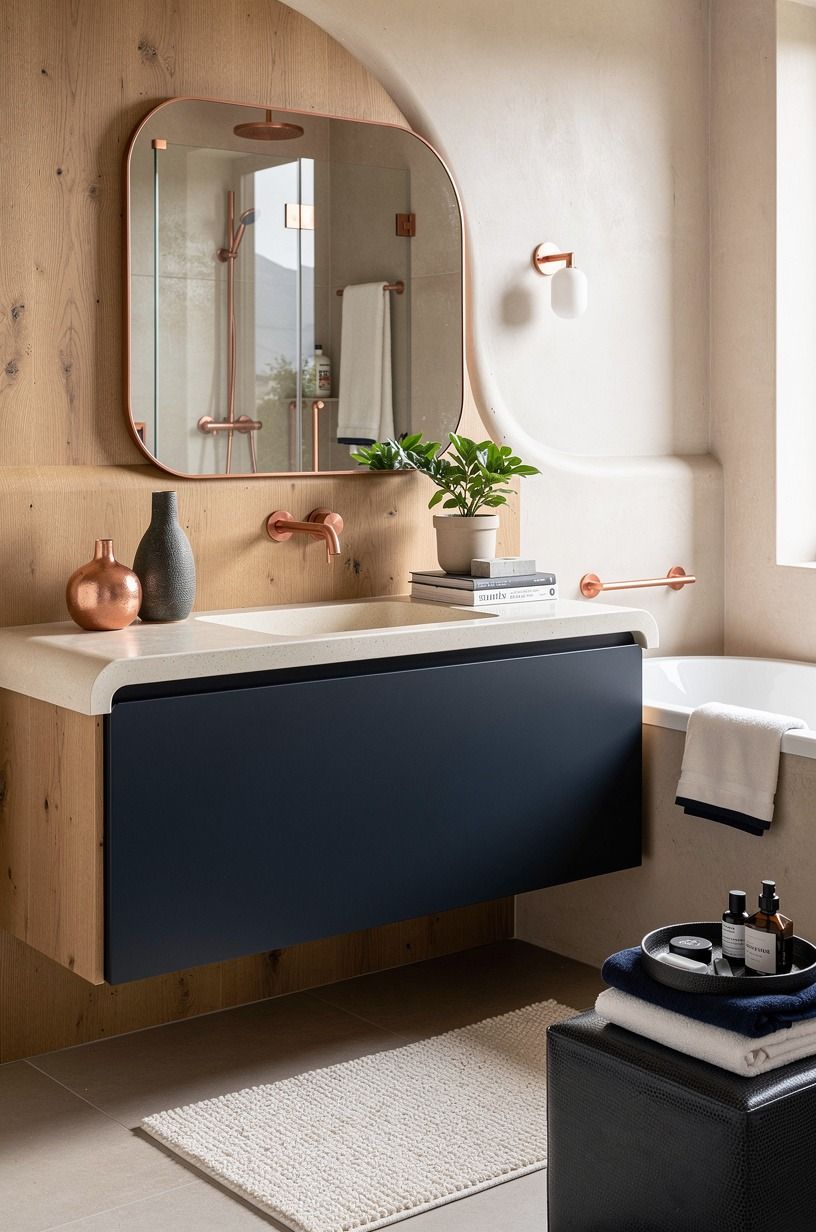
You can get the feel of a japandi organic modern kitchen without pretending every update is free. Start with paint, hardware, and lighting before you consider counters; those smaller changes touch more of your daily view and cost far less than tearing out cabinets.
For surfaces, laminate countertop typically runs $10-$40 per sq ft, while quartz countertop typically runs $60-$120 per sq ft. I’d choose a convincing warm laminate before a bargain stone-look slab with loud veining. A small shagreen tray can bring in tactile depth without asking your budget to carry a whole material story.
17Edit your counters with the Quiet Landing Rule
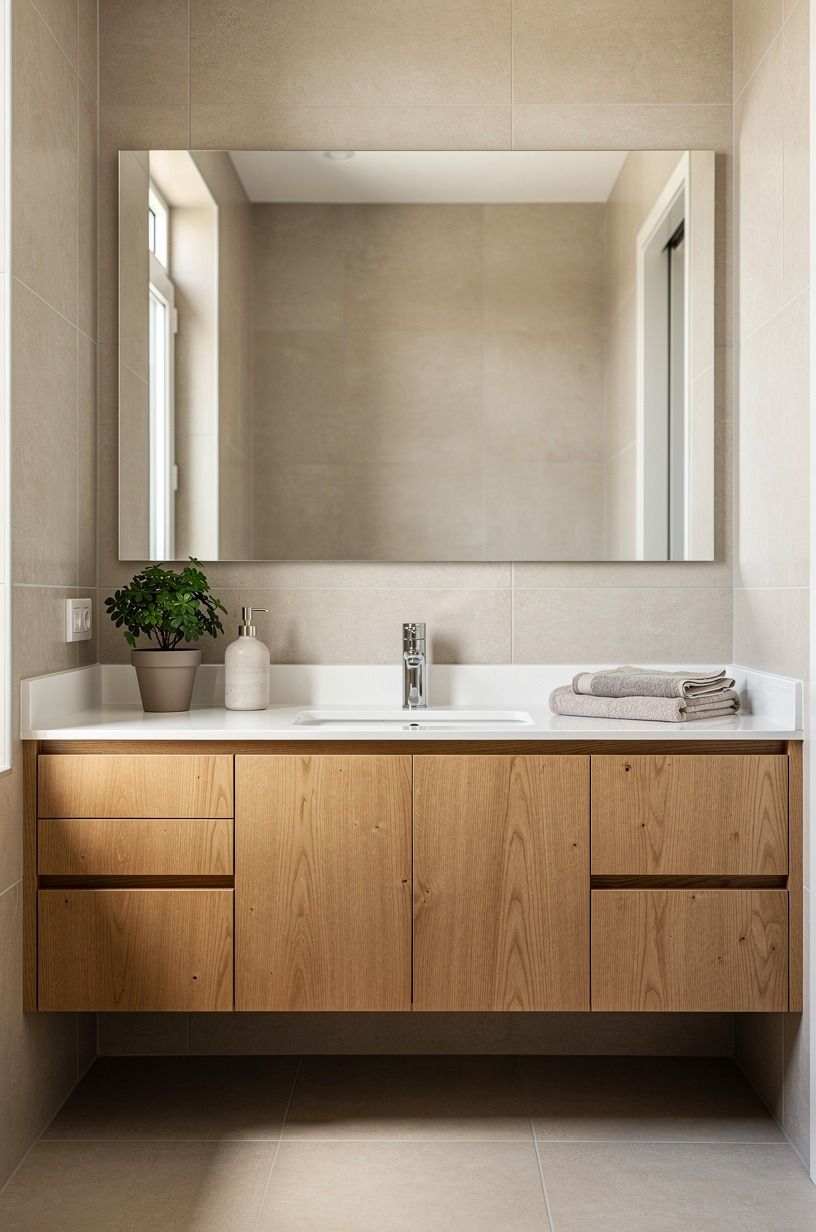
The Quiet Landing Rule means leaving one uninterrupted counter zone empty, preferably near where you enter the kitchen. Your eyes need somewhere to land after taking in cabinets, shelves, stools, and the unavoidable stuff of real life.
Keep only the tools that earn their place. A Le Creuset stoneware utensil crock by the stove, a toaster tucked away, and a folded Belgian linen cloth near the coffee maker is plenty.
But don’t turn every blank patch into a styling opportunity. You’ll cook more easily, clean faster, and notice the soft material choices you already made.
Less stuff is not a moral victory. It’s just easier on your brain.
Why this look is having a real moment
I think people are tired of kitchens that photograph well but feel nervous to use. The all-white, high-gloss era trained us to see every crumb, every water ring, every slightly crooked dish as failure.
Organic modern Japandi offers a more forgiving answer: pale wood that can take a nick, linen that wrinkles a little, ceramic with a thumbprint in the glaze. You don’t have to stage your own house before making coffee.
I’ve learned that minimalism only feels good when it has texture. A kitchen with nothing on the counters and nothing in the room can feel less peaceful than abandoned.
The version I’d choose has a few weighty materials, a useful lamp, one bowl of fruit, and cabinets that hide the ugly charger cords and grocery bags. You still have space.
You just don’t have emptiness pretending to be sophistication.
There’s also a practical reason this direction sticks. You can get much of the atmosphere without replacing cabinets, relocating plumbing, or ordering a custom island that takes four months to arrive.
Paint one wall. Change the pulls.
Bring home a linen shade. Small moves, but they change the way the room holds you.
And that matters. Your kitchen isn’t a museum, it’s where Tuesday happens.
The Questions I Get Asked Most
What is the best organic modern Japandi kitchen idea for a small bathroom?
For a small kitchen, start with pale paint and one warm wood accent. IKEA KALLAX birch-effect storage gives you useful vertical organization without adding visual heaviness, while a cream linen shade softens the hard surfaces. Keep your counter landing zone clear.
Where can I buy organic modern Japandi kitchen pieces on a budget?
Start with IKEA, Target Threshold, and Wayfair for simple wood, cotton, and ceramic pieces. Facebook Marketplace and thrift stores are better for worn stools or solid wood boards. You’ll get a more lived-in result by mixing sources than buying one matching collection.
How much does an organic modern Japandi kitchen makeover cost?
A cosmetic update can cost about $300 to $1,500, depending on paint, hardware, lighting, and backsplash coverage. Peel-and-stick tile and cabinet editing cost less than counters, while decluttering and rearranging your existing wood pieces are free.
Can I create an organic modern Japandi kitchen on a budget?
Yes, and you should start with the free changes first. Cabinet editing helps immediately: clear counters, group useful objects, and remove duplicate decor. Then add one inexpensive linen textile, change hardware, and paint a single wall instead of every cabinet.
Is an organic modern Japandi kitchen worth it in a small space?
Yes, because small kitchens benefit from fewer visual interruptions. Open floor clearance matters more than extra decor, so choose slim stools, keep one counter zone empty, and use a soft wall color to make your existing light travel farther.
Is organic modern Japandi kitchen style a good idea for a rental?
Yes, because many of the strongest moves are removable. Tension-rod linen curtains, peel-and-stick backsplash panels, plug-in pendants, and freestanding wood storage all work without permanent changes. Take your hardware off carefully and store the originals for move-out.
Where I’d Start First
If I had to pick one, I’d start with cabinet hardware. Cold, shiny pulls make every other warm material fight for attention. Pin unlacquered brass hardware for later and let the patina make your kitchen feel used in the best way.