23+ Flower Bed Ideas That Bring Garden Elegance Home
26 january 2026Flower bed ideas redefine residential landscapes through architectural planting design and museum-quality material selections. When acclaimed landscape architects curate outdoor spaces, every element from Calacatta marble edging to sculptural agave specimens serves a singular vision of botanical excellence and spatial sophistication.
These 23 garden compositions showcase design thinking at its finest: from Art Deco Miami terraces with travertine planters to Japanese Wabi-Sabi gardens with moss-covered stone basins. Expect hand-carved limestone, aged bronze fixtures, and perennial arrangements that rival Chelsea Flower Show standards.
Art Deco Travertine Terraces Frame Miami Rooftop Gardens
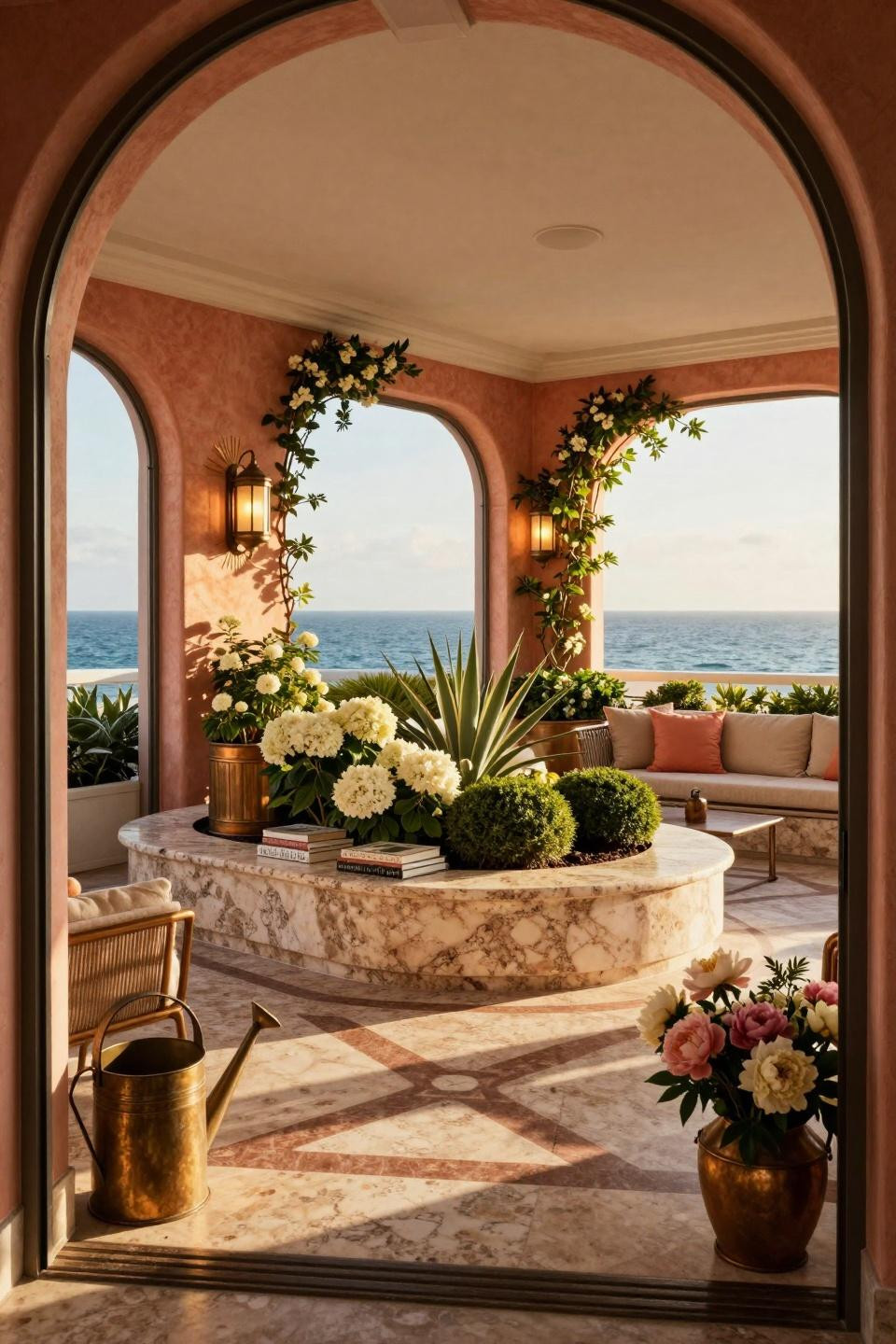
South Beach penthouse gardening achieves architectural drama through book-matched travertine slabs forming geometric raised beds. The Miami coastal light transforms these stone surfaces into sculptural elements, with aged bronze banding creating Art Deco sunburst patterns that echo 1930s glamour.
White hydrangeas and variegated agave anchor the composition in formal French parterre arrangement, while clipped boxwood spheres provide year-round structure. Janus et Cie furniture in natural linen complements the travertine's warm honey tones, creating collected-over-decades sophistication.
This design appeals to cosmopolitan homeowners who appreciate Architectural Digest tropical modernism—spaces where Atlantic Ocean views meet Parisian garden formality. The travertine's natural pitting and veining irregularities add authentic material character impossible to replicate.
Tokyo Omotesando Gardens Blend Geometric Precision With Art Deco Heritage
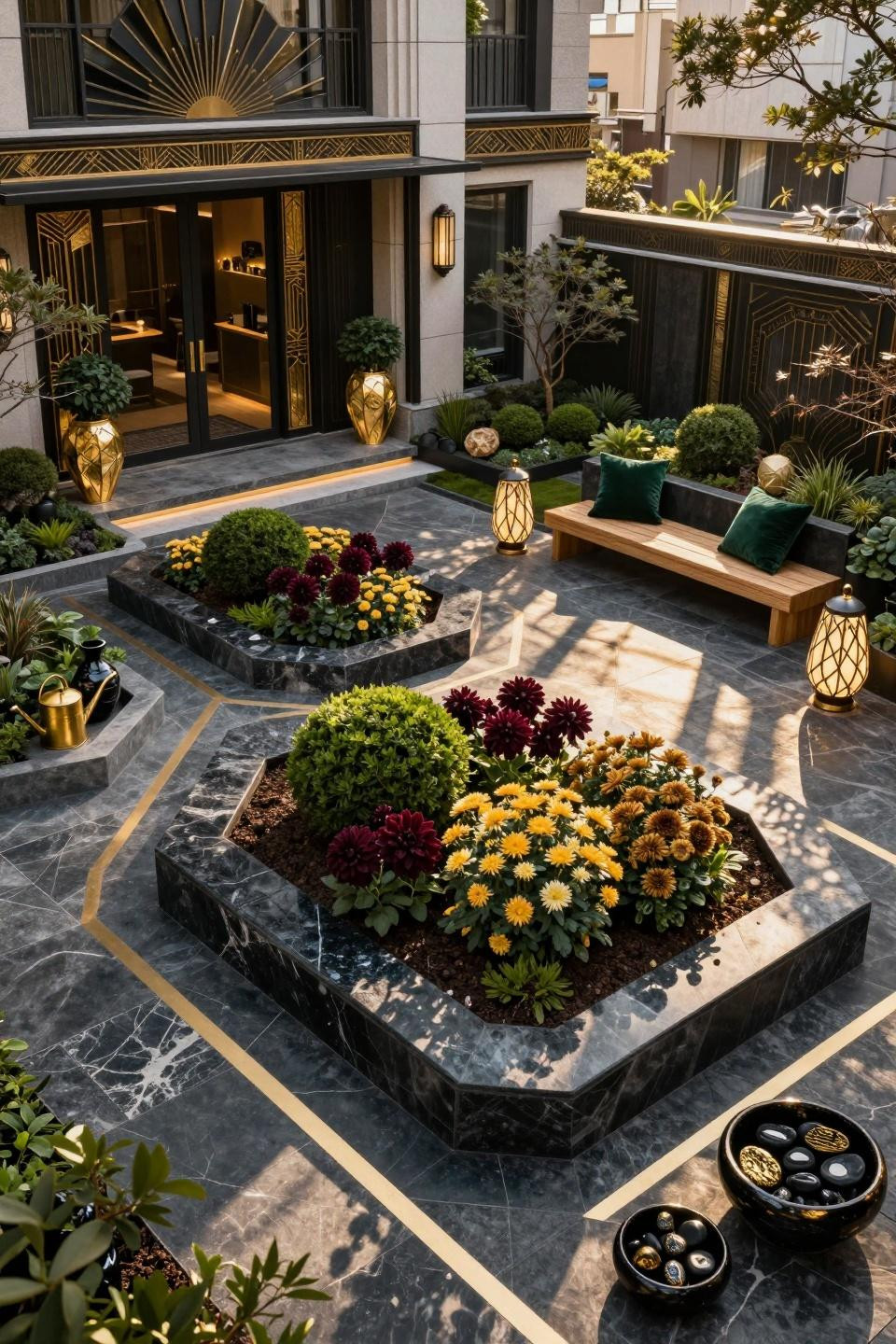
Overhead architectural photography reveals how Tokyo townhouse gardens reinterpret 1920s Paris through contemporary Japanese precision. Dark onyx stone edging creates bold hexagonal and chevron patterns, filled with burgundy dahlias and golden chrysanthemums in precise geometric formations that reference both cultures.
Gold-leafed decorative planters at entry steps echo Baccarat crystal geometry, while slate pathways with brass inlay strips achieve champagne-bar-meets-zen-garden aesthetic. The integration of vintage Japanese lanterns casting geometric shadows demonstrates sophisticated material layering.
Design-conscious urbanites drawn to futurist avant-garde aesthetics find inspiration in this fusion approach. The composition works because material restraint—onyx, brass, emerald boxwood—creates visual coherence despite complex patterning.
Beverly Hills Porcelain Edging Elevates DIY Garden Construction
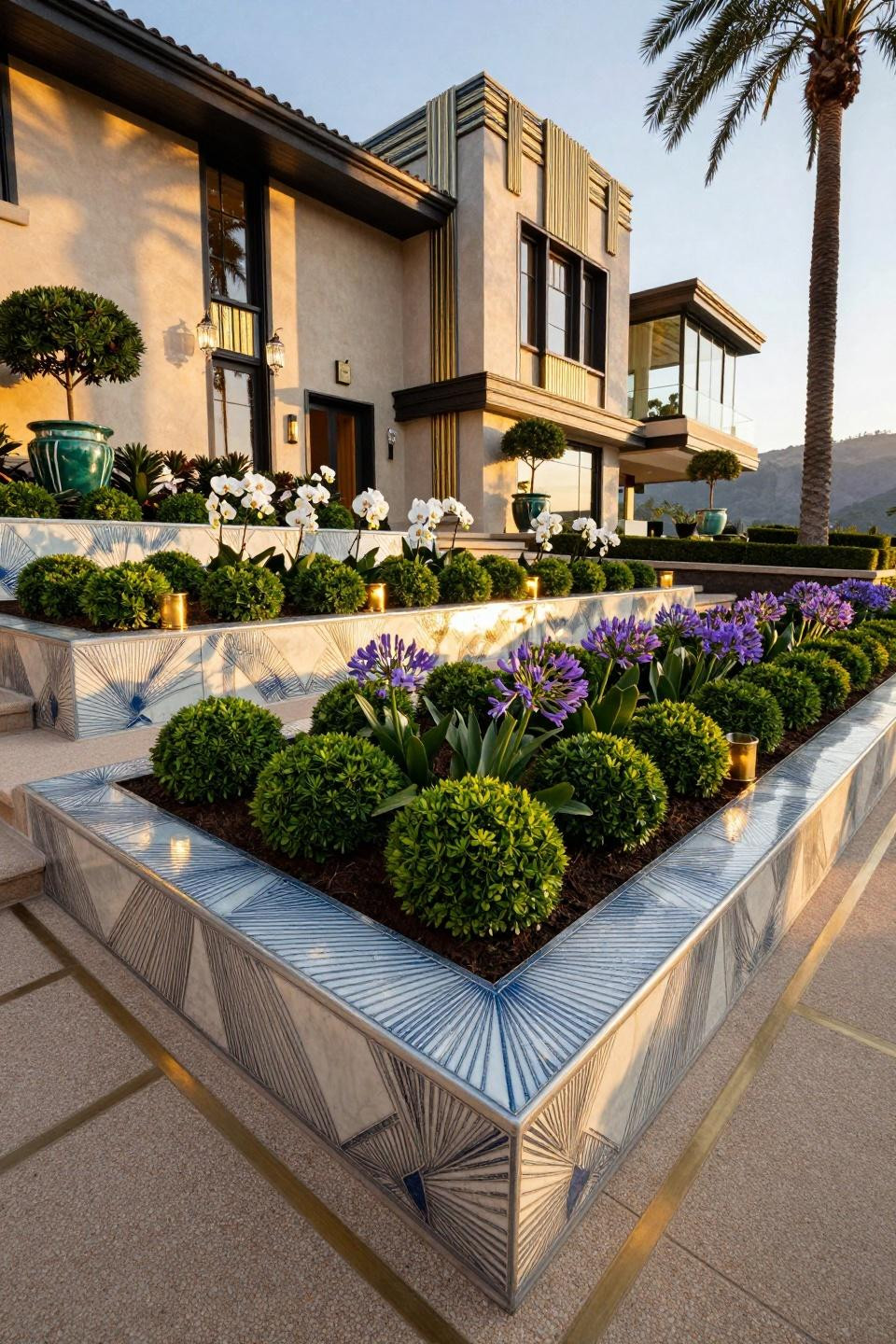
Large-format porcelain slabs in polished platinum finish transform approachable garden projects into architectural statements. This Trousdale Estates installation demonstrates how premium materials elevate simple raised bed construction—tiered levels create dramatic vertical interest against champagne-colored stucco facades.
White phalaenopsis orchids arranged in regimented rows alongside purple agapanthus showcase jewel-tone botanical curation. The porcelain edging reflects golden hour light with mirror-like platinum surfaces, while custom brass uplighting ensures evening drama continues past sunset.
Homeowners investing in landscape architecture appreciate how museum-quality materials like porcelain withstand Southern California climate while maintaining showroom presentation. The material choice signals permanent installation rather than temporary garden design.
Hamptons Limestone Planters Define Small Garden Elegance
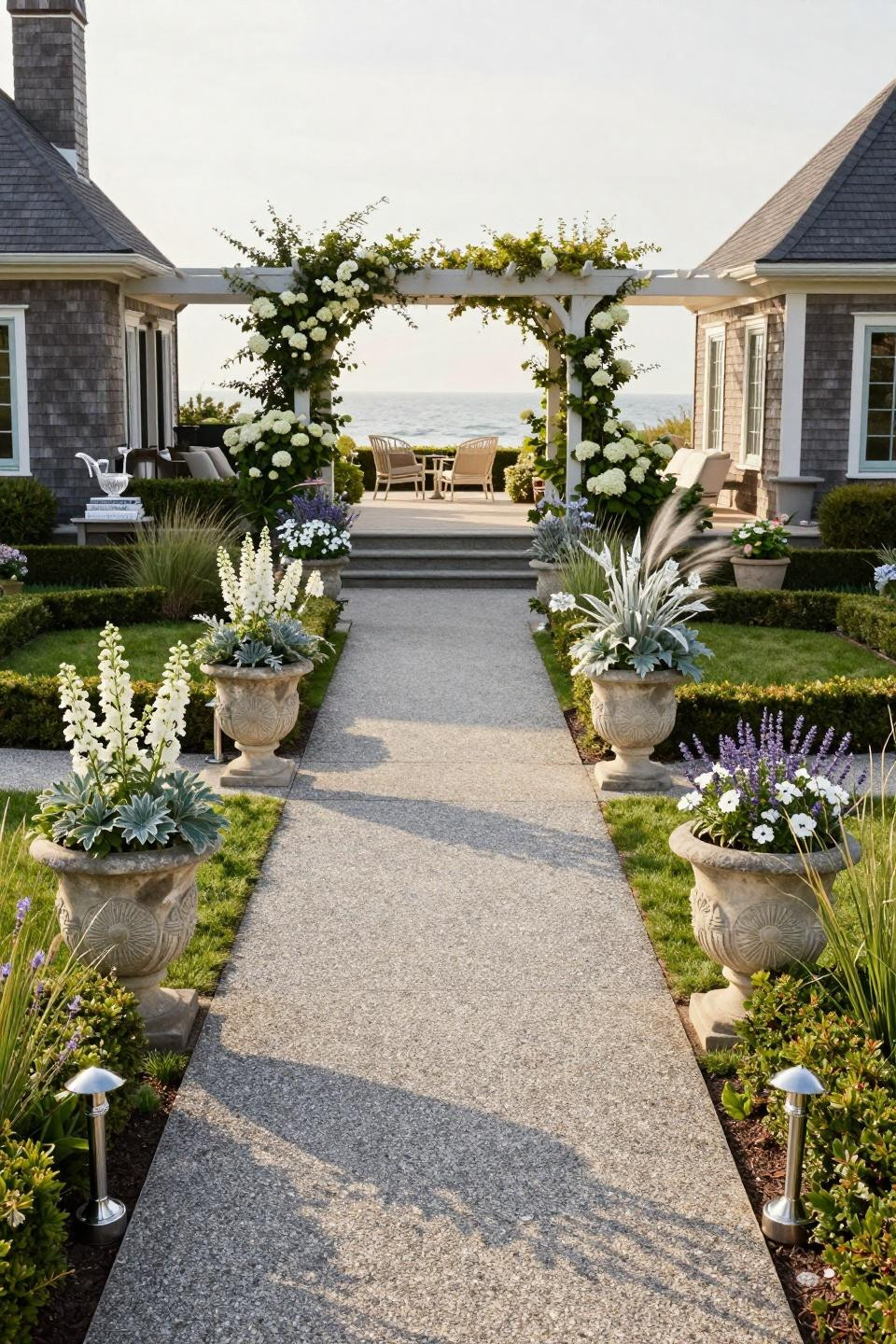
East Hampton estate gardens prove small-scale design demands greater material precision. Hand-carved limestone planters with Art Deco sunburst motifs anchor French parterre-style beds flanking crushed limestone pathways, demonstrating how sculptural containers command attention in compact spaces.
Towering white delphiniums, silver lamb's ear, and lavender nepeta create soft blue-silver palette against Atlantic coastal light. The polished nickel irrigation fixtures integrate seamlessly while providing museum-quality craftsmanship details that elevate functional elements into design features.
Coastal estate owners recognize that refined materials—Restoration Hardware planters, Holly Hunt furniture, hand-carved stone—transform modest square footage into Sotheby's International Realty worthy presentation. Scale matters less than material excellence and botanical curation.
Parisian Concrete Planters Anchor Backyard Modernist Gardens
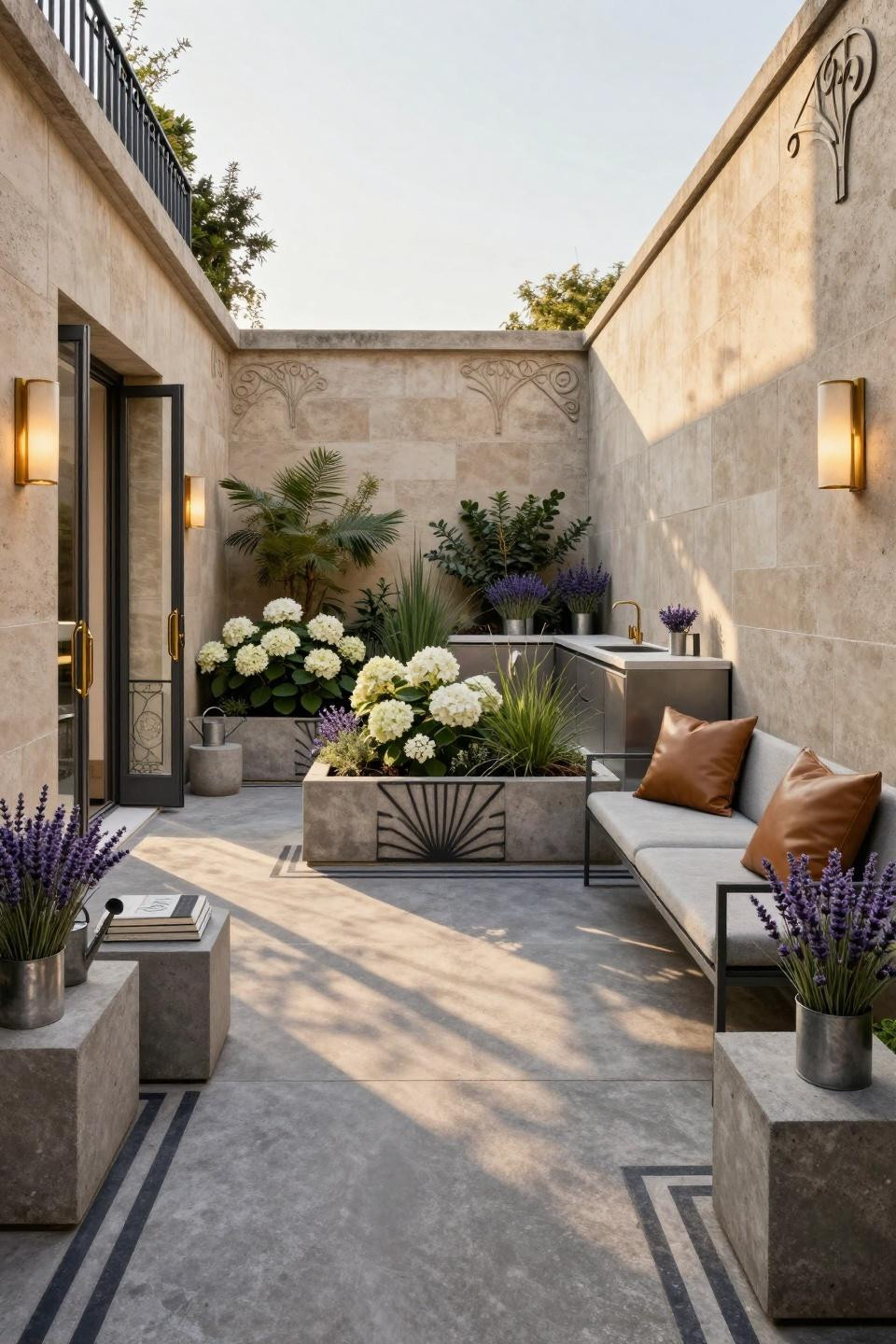
Haussmann apartment gardens in the 16th arrondissement demonstrate Italian sophistication through polished concrete and blackened steel materiality. Raised planters with geometric Art Deco sunburst patterns house white hydrangeas and lavender in sophisticated monochromatic schemes that reference gallery installations.
B&B Italia outdoor furniture in powder-coated steel frames complements concrete side tables, while Apparatus outdoor sconces in aged brass provide architectural lighting. The material palette—concrete, steel, brass—creates museum-worthy coherence across twelve-foot limestone garden walls.
Urban design enthusiasts appreciate how industrial materials achieve residential warmth through proportion and botanical softness. The concrete's visible aggregate texture and steel's authentic weathering patina provide material honesty that luxury audiences value.
Absolute Black Granite Beds Bring British Estate Gravitas
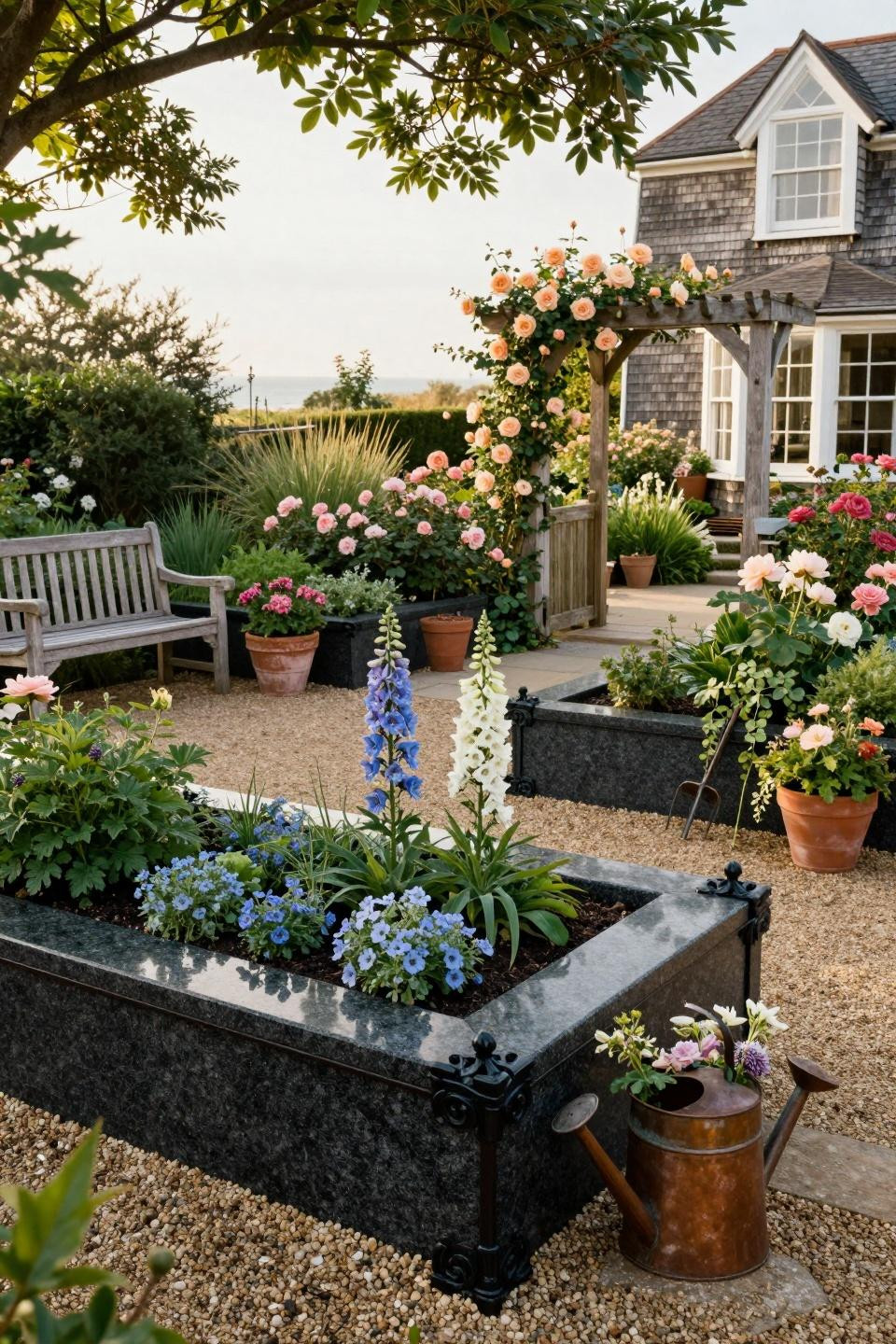
Fourteen-inch-high raised beds in honed Absolute Black granite with hand-forged wrought iron corner brackets exemplify British country house restraint. The material choice—jet black stone against weathered teak and David Austin roses—creates sophisticated contrast that photographs beautifully across seasons.
Traditional English cottage garden layering—lady's mantle, foxgloves, delphiniums, English roses—gains architectural discipline through granite's precise geometry. Whichford Pottery terracotta pots clustered at bed corners provide warm material relief against the stone's cool sophistication.
Collectors drawn to English manor aesthetics understand that Absolute Black granite represents permanent investment. The material's density prevents weathering while its honed finish develops subtle patina, creating collected-over-generations appearance within years rather than decades.
Malibu River Rock Gardens Inspire Mediterranean Plantings
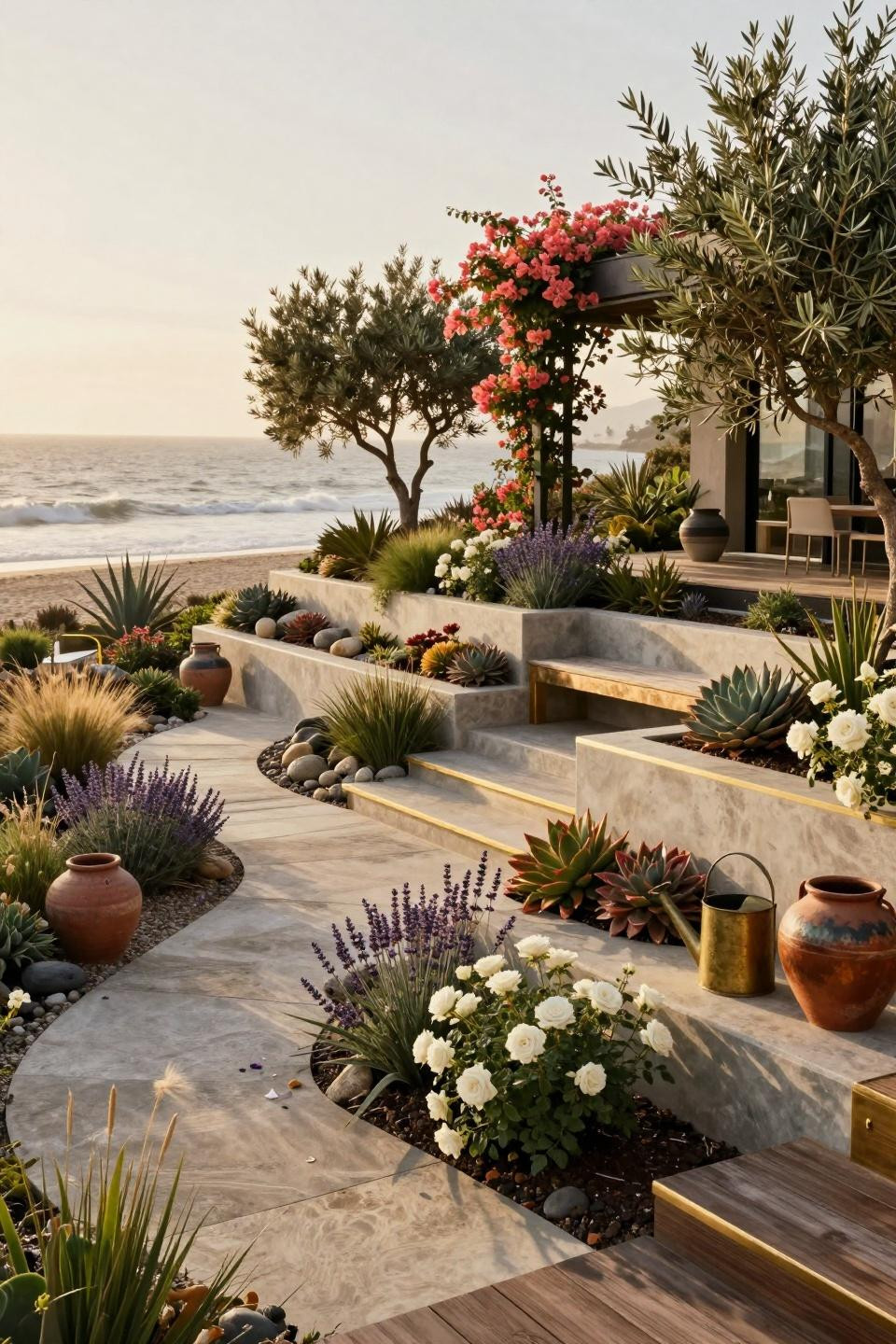
Pacific coastal gardens achieve tropical modern sophistication through meticulously selected natural stone and architectural concrete planters with polished brass accents. Drought-tolerant Mediterranean plantings—native California succulents, lavender, white roses—cascade in naturalistic layers that reference landscape photography rather than traditional flower beds.
Hand-selected river rocks and decomposed granite paths create organic flow between planting zones, while custom millwork teak benches with brass hardware provide contemplative seating. Specimen olive trees anchor compositions with silvery foliage that catches afternoon coastal light.
West Coast design audiences appreciate how architectural landscaping integrates native plantings with luxury materials. The approach combines ecological responsibility—drought-tolerant species—with aesthetic sophistication that commands Architectural Digest attention.
Kensington Cotswolds Limestone Surrounds Georgian Estates
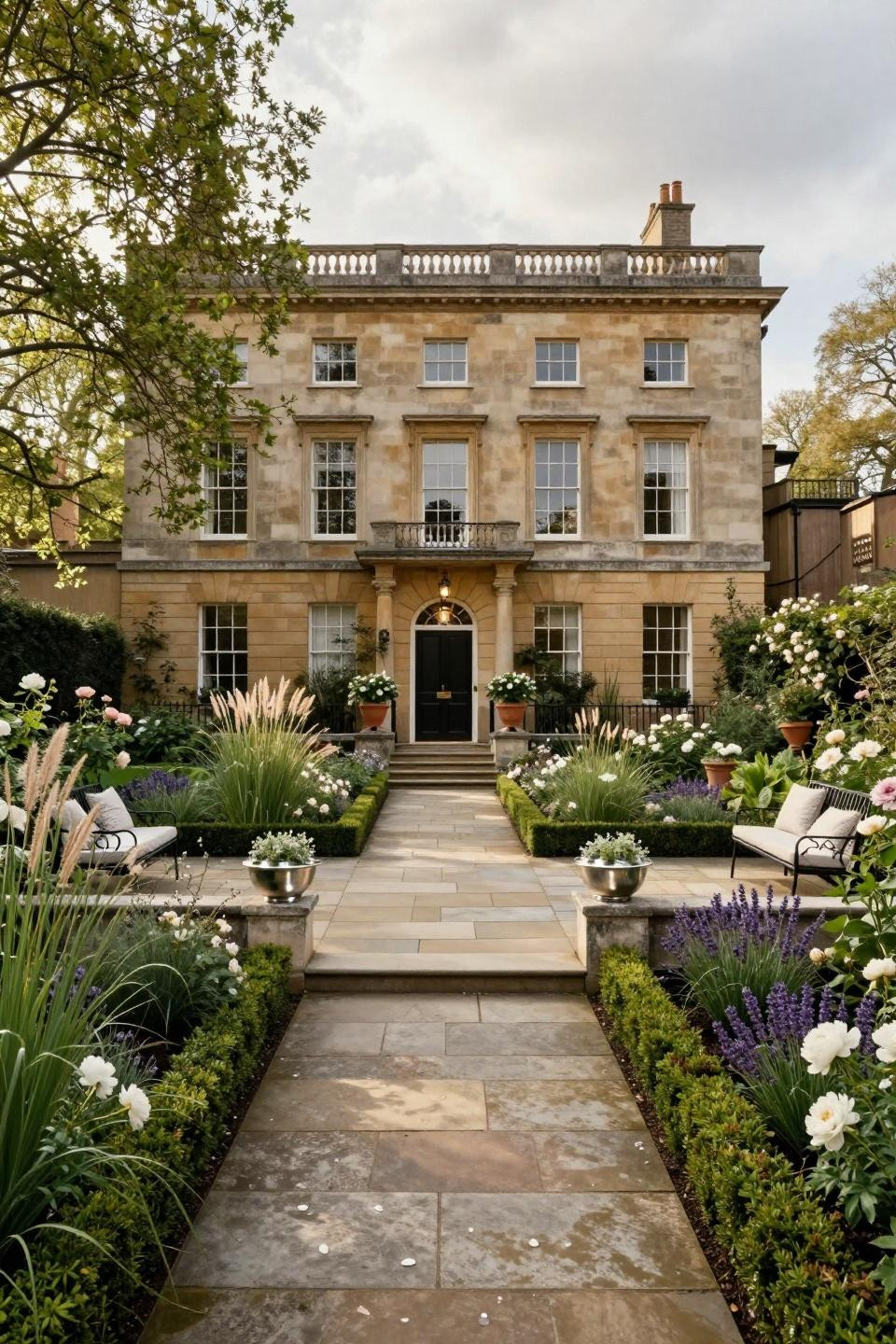
London Kensington estate gardens demonstrate how Piet Oudolf-inspired naturalistic perennial borders achieve museum-quality presentation through material restraint. Cotswolds limestone pathways with hand-cut irregular flagstones showing natural cleft texture frame Stipa tenuissima grasses and white peonies in formal English garden parterre arrangements.
Eighteenth-century Portland stone facades provide architectural backdrop for contemporary minimalist restraint. Polished nickel Haddonstone planters flanking entrance steps integrate period-appropriate detailing with modern horticultural thinking—native perennials arranged for year-round sculptural interest.
British design sophisticates recognize that Cotswolds limestone represents regional material authenticity. The stone's honey tones and weathered patina create visual continuity with Georgian architecture while supporting contemporary planting schemes that push beyond traditional English garden formulas.
Milan Copper Planters Frame Rooftop Jungle Gardens
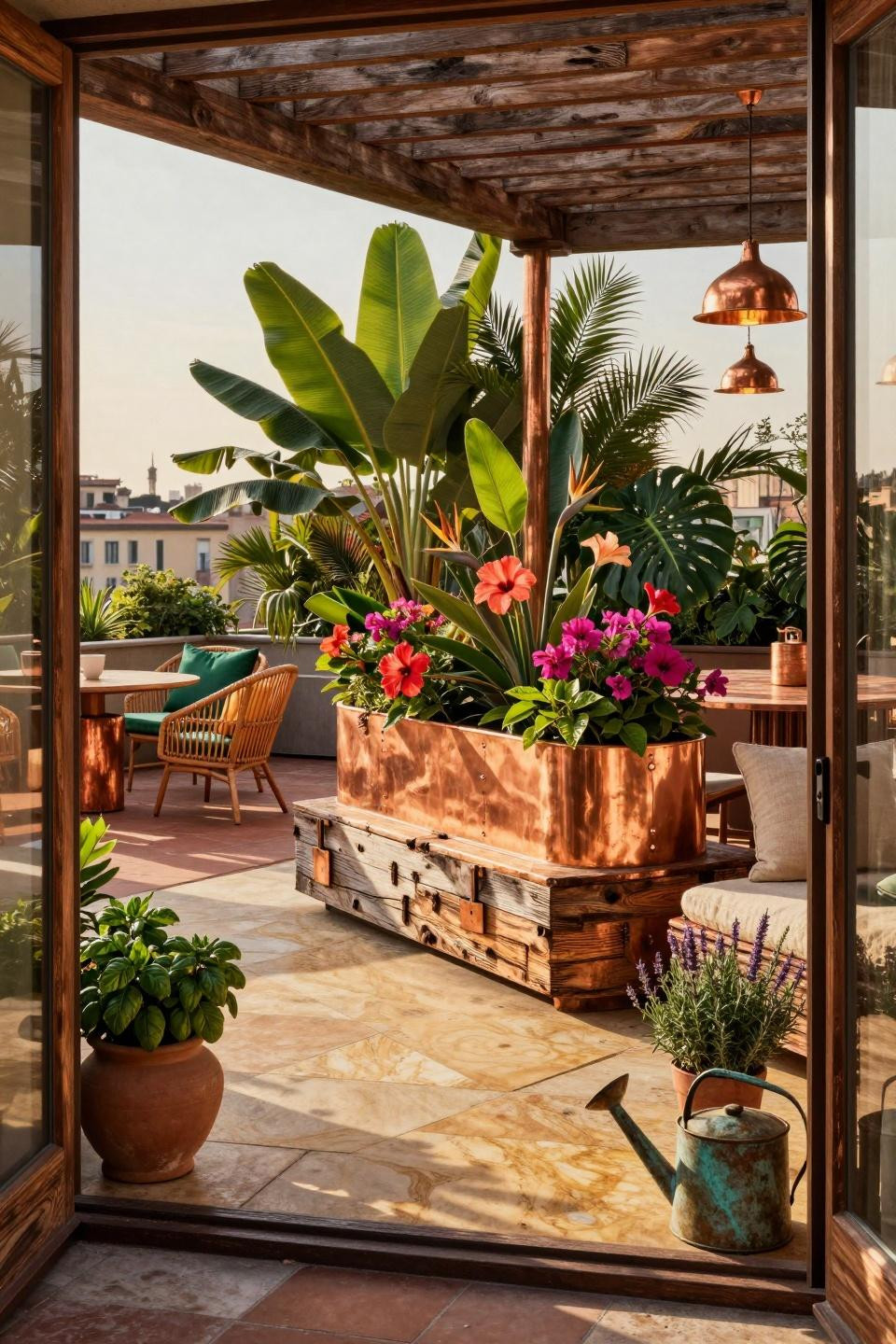
Centro Storico penthouse terraces achieve tropical maximalism through copper-edged quartzite planters overflowing with bird of paradise, hibiscus, and bougainvillea. The material palette—reclaimed teak, aged terracotta, exposed copper fixtures—creates collected-over-decades Milanese elegance against seventeenth-century palazzo architecture.
Patricia Urquiola rattan furniture with silk cushions in emerald and saffron provides seating areas among lush banana leaf plants and monstera specimens. Apparatus Studio lanterns in aged copper suspended from pergola beams offer architectural lighting that complements natural verdigris patina on irrigation fixtures.
Urban rooftop gardeners in historic districts face unique challenges balancing botanical abundance with architectural heritage. Copper planters solve this through material patina that harmonizes with aged building facades while containing aggressive tropical growth within defined boundaries.
East Hampton Limestone Walls Frame French Riviera Borders
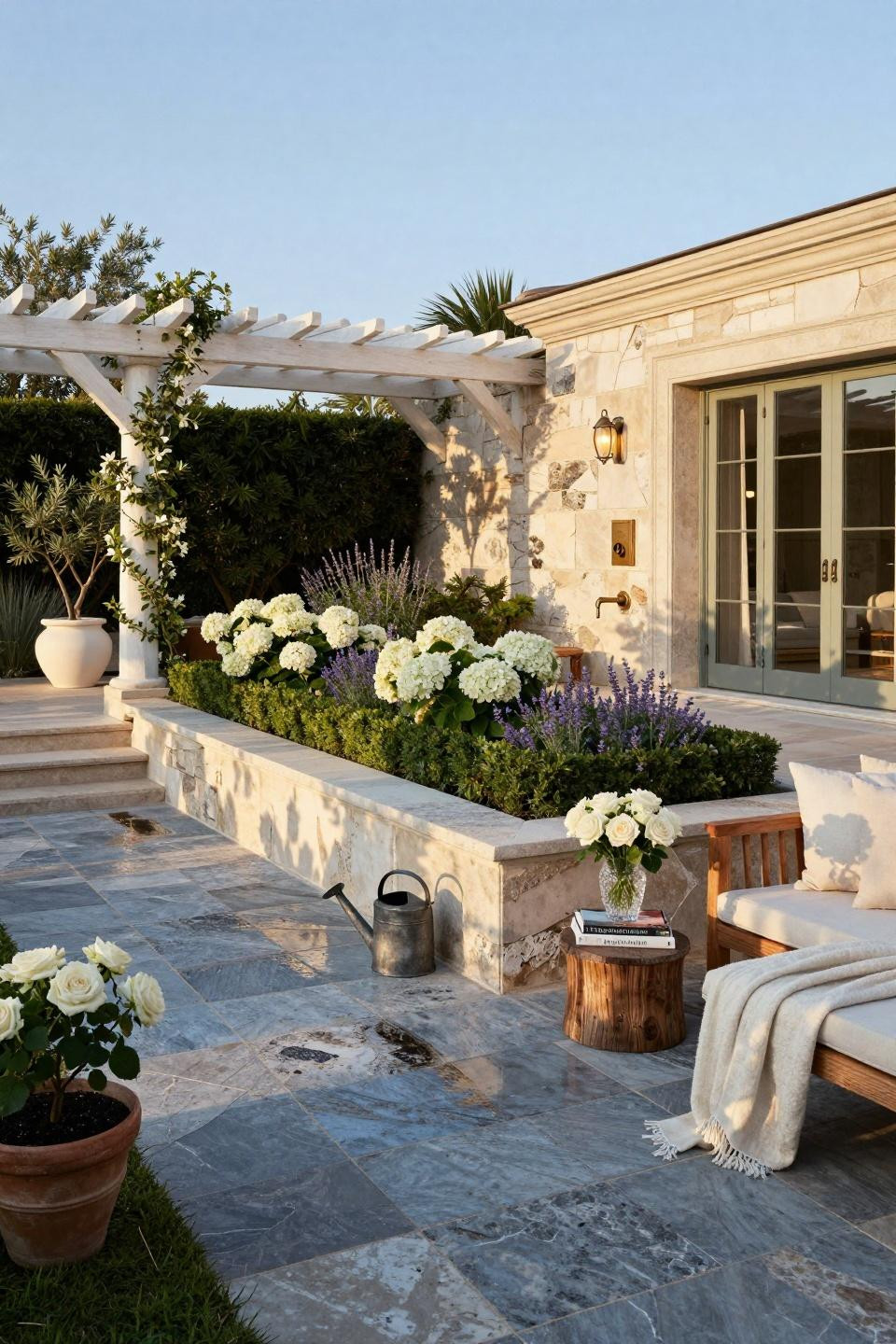
Fourteen-foot custom limestone garden walls with hand-carved nickel inset details create French Riviera atmosphere in Hamptons estates. Natural bluestone paving in irregular geometric patterns with aged patina provides sophisticated hardscaping beneath whitewashed cedar pergolas with satin nickel hardware.
Raised limestone flower beds feature layered plantings of white hydrangeas, lavender, and boxwood hedges arranged in classical French garden geometry. Restoration Hardware teak furniture with Belgian linen cushions in natural ivory creates seamless indoor-outdoor luxury that photographs at Architectural Digest standards.
Coastal luxury audiences understand that French Riviera garden design requires specific material selections. Limestone withstands salt air while developing attractive patina, Belgian linen provides natural elegance, and nickel hardware resists corrosion—functional considerations that support aesthetic sophistication.
South Beach Travertine Beds Channel Art Deco Tropicalism
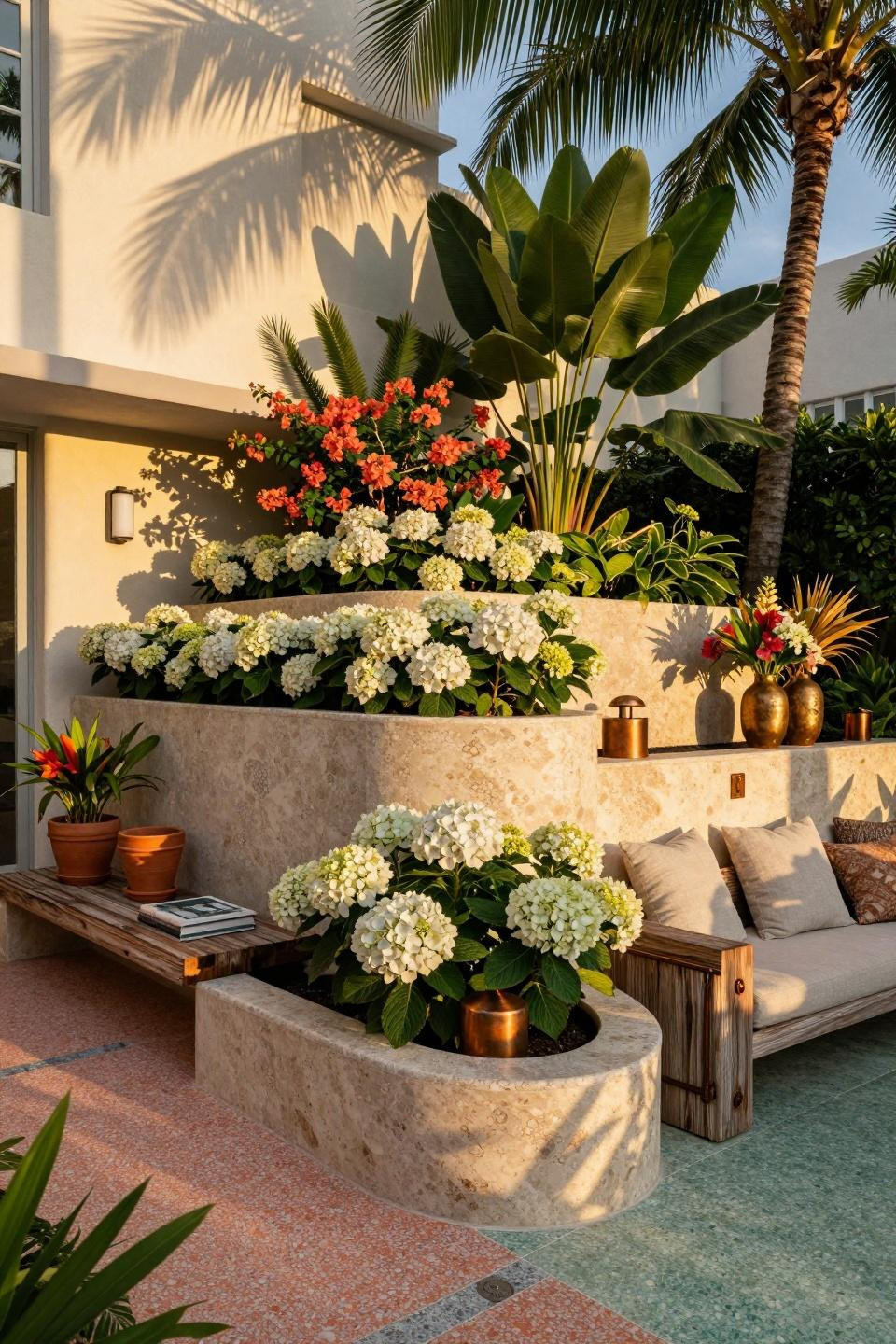
Twelve-inch thick travertine stone borders with aged bronze lighting fixtures elevate straightforward landscaping into architectural statements. Miami villa gardens achieve resort-like atmosphere through material restraint—natural beige travertine, aged bronze, terrazzo in coral and mint—that references 1930s Art Deco heritage without pastiche.
White hydrangeas, coral bougainvillea, and emerald philodendrons create dramatic vertical layers in sculptural beds. Reclaimed teak planter boxes with aged bronze hardware integrate functional storage while maintaining period-appropriate aesthetic that commands luxury real estate attention.
South Beach property owners recognize that authentic Art Deco materials—travertine, terrazzo, bronze—appreciate in value while synthetic alternatives depreciate. The investment in period-correct materials pays dividends in resale value and neighborhood architectural coherence.
Parisian Limestone Terraces Echo Provençal Garden Romance
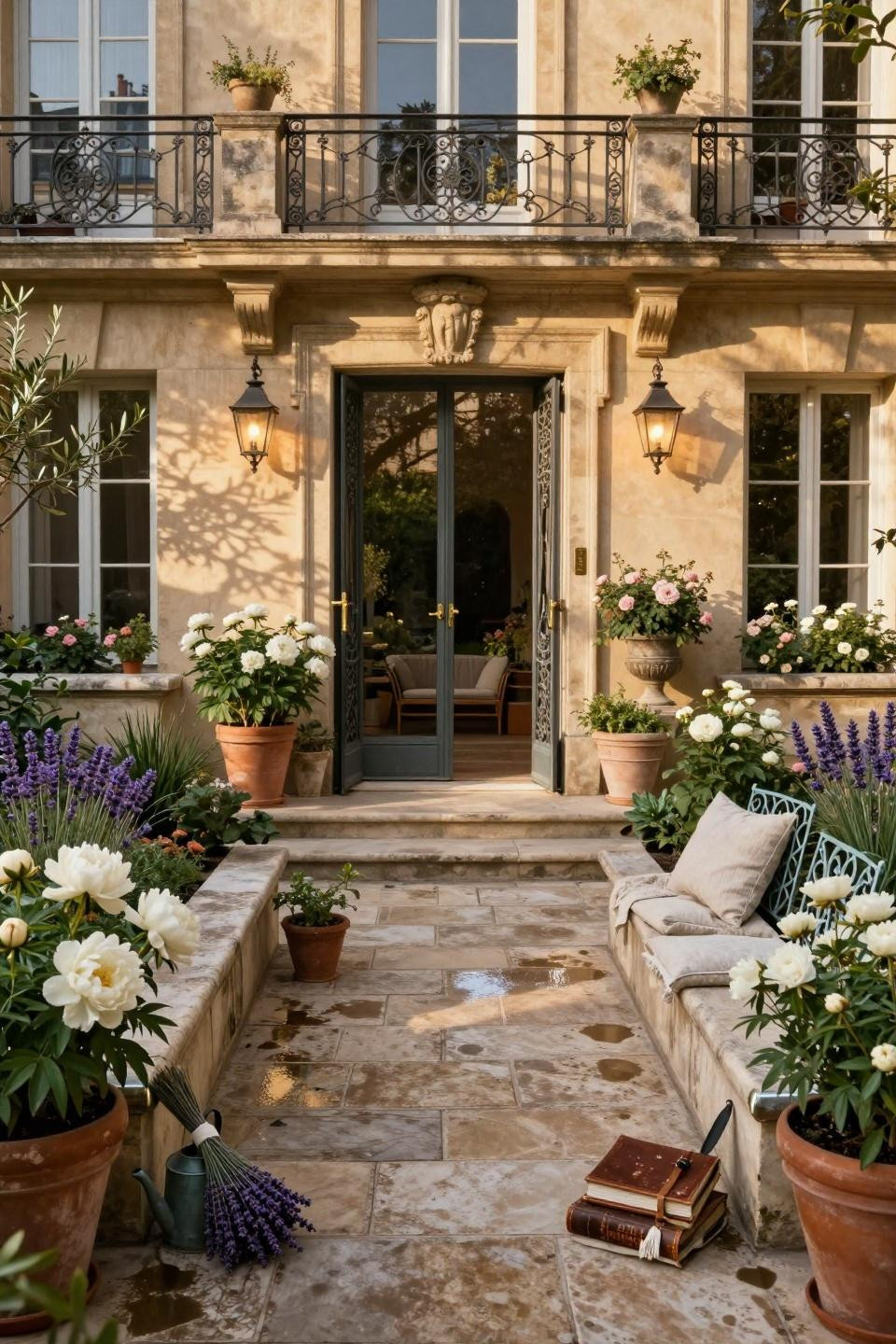
Sixth arrondissement private terrace gardens demonstrate French sophistication through antique reclaimed limestone pavers in classic French patterns and raised beds with polished nickel edging. Twelve-foot wrought iron French doors opening onto meticulously designed flower beds create indoor-outdoor flow that maximizes limited urban square footage.
Vintage terra cotta planters overflow with white peonies, lavender, and English roses in naturalistic drifts. Hand-forged iron garden furniture in verdigris finish provides seating among antique French garden urns with climbing jasmine, creating collected-over-centuries atmosphere within contemporary renovations.
Parisian apartment owners investing in garden terraces prioritize authentic materials that harmonize with Haussmann architecture. Reclaimed limestone and antique iron communicate preservation values while supporting twenty-first century lifestyle requirements for outdoor entertaining spaces.
Beverly Hills Calacatta Planters Define Architectural Modernism
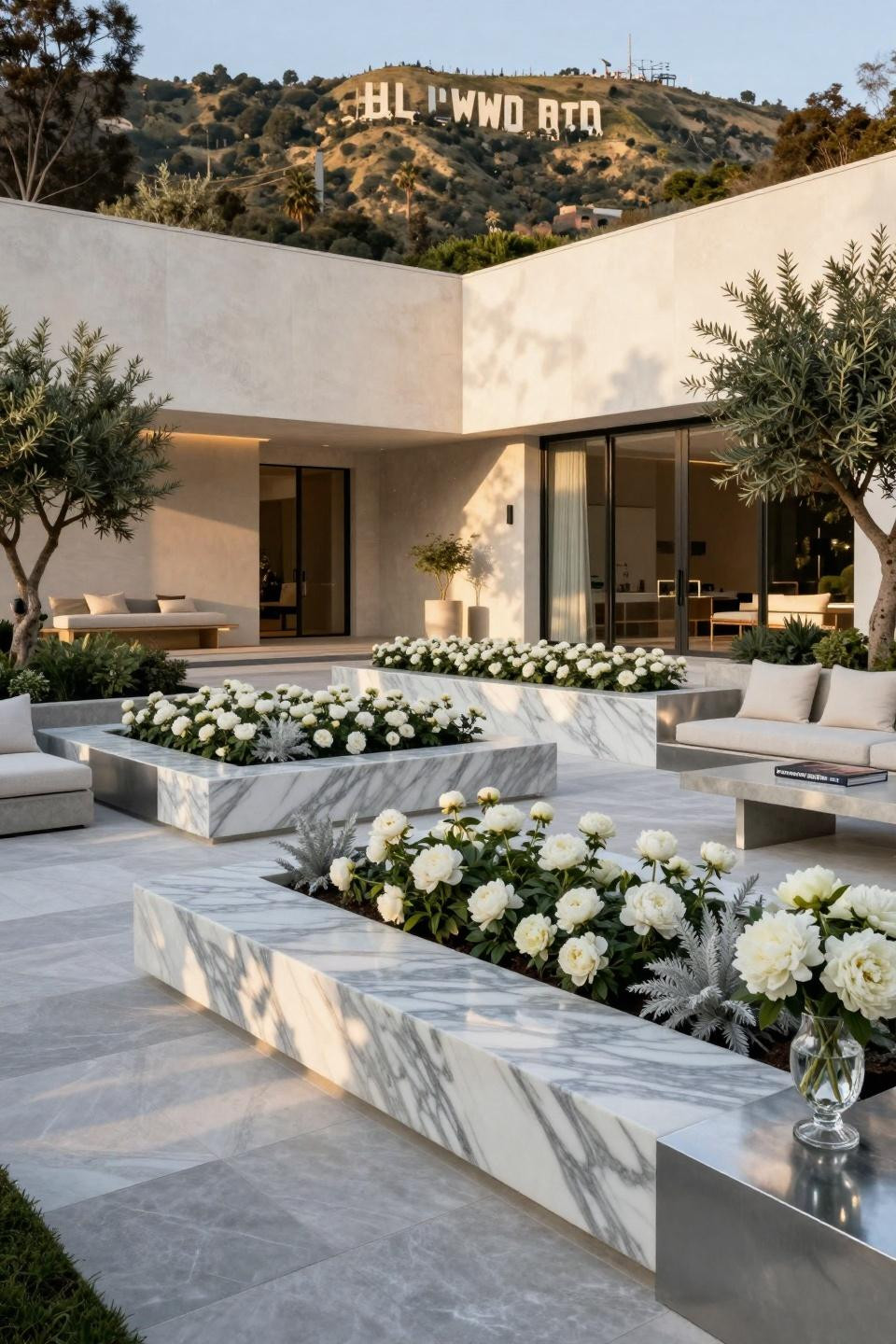
Elevated eighteen-inch raised beds constructed from book-matched porcelain panels in Calacatta-inspired patterns achieve museum-quality landscape design. Beverly Hills estates demonstrate how luxury materials transform simple geometric forms into architectural statements—waterfall edges, integrated LED uplighting, platinum veining—that command ten-million-dollar property valuations.
White peonies, ivory roses, and silvery lamb's ear create monochromatic elegance against large-format platinum grey porcelain pathways. Minimalist planters in brushed platinum finish flanking entries provide restrained sophistication that photographs beautifully for luxury real estate marketing.
AD100 landscape architects specify book-matched stone for clients who understand material rarity communicates design seriousness. The investment in museum-quality materials distinguishes trophy properties from merely expensive houses in competitive markets.
Cotswolds Limestone Edging Anchors English Garden Layers
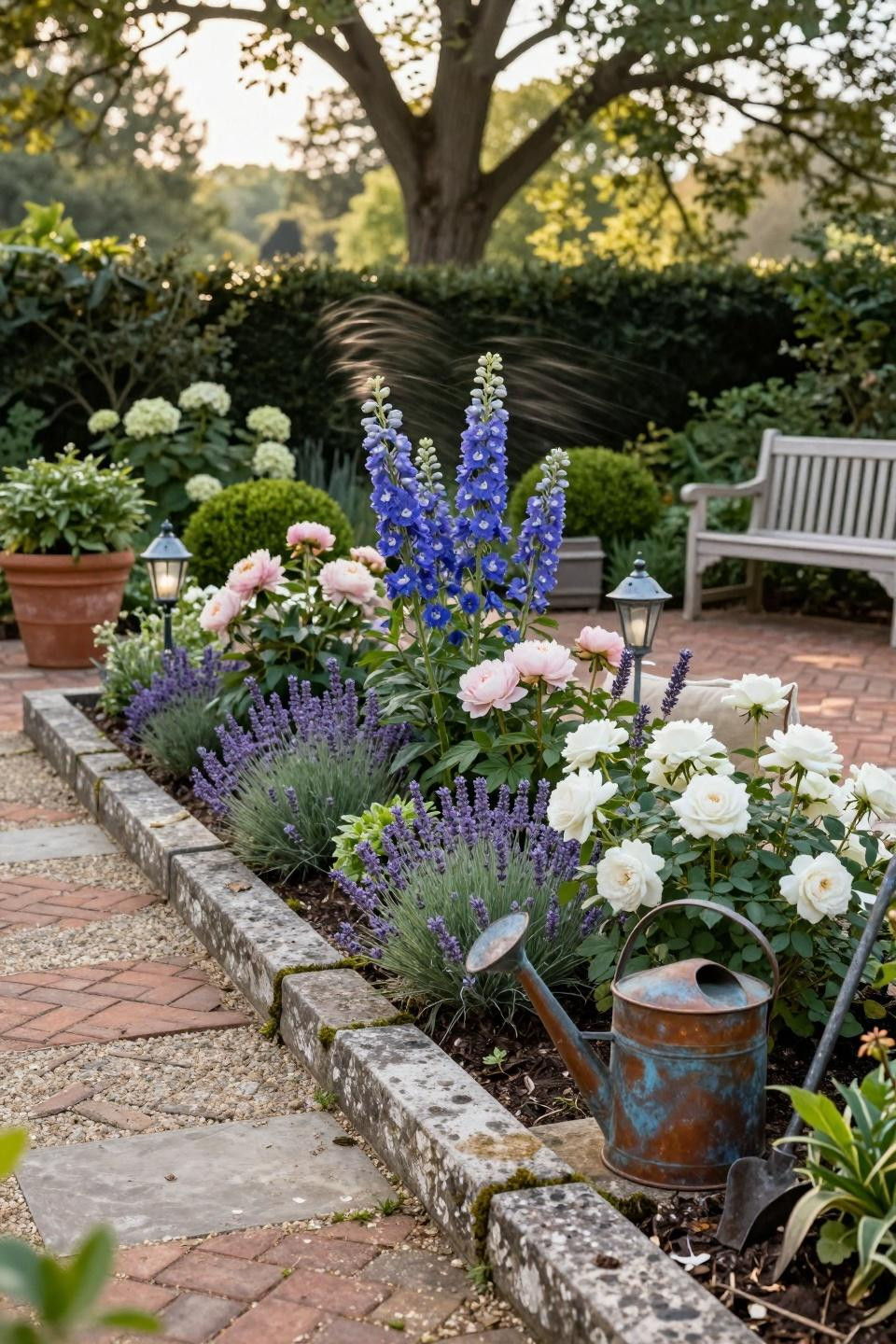
Twelve-inch French limestone edging with hand-chiseled edges frames English cottage garden sophistication in East Hampton estates. Natural bluestone gravel pathways with aged patina wind through layered perennial plantings of white David Austin roses, lavender Hidcote borders, and delphinium spires reaching four feet.
Boxwood spheres provide evergreen structure while Peonies Sarah Bernhardt in blush pink offer dinner-plate blooms through late spring. Kingsley Bate white oak benches in natural teak finish provide contemplative seating among aged terracotta planters with hand-thrown Italian craftsmanship.
Estate garden enthusiasts appreciate that English garden design requires disciplined material selections. French limestone edging provides crisp geometry that prevents perennial borders from appearing unkempt, while aged terracotta vessels add warm material counterpoint to cool stone tones.
Parisian Burgundy Limestone Frames Formal French Parterres
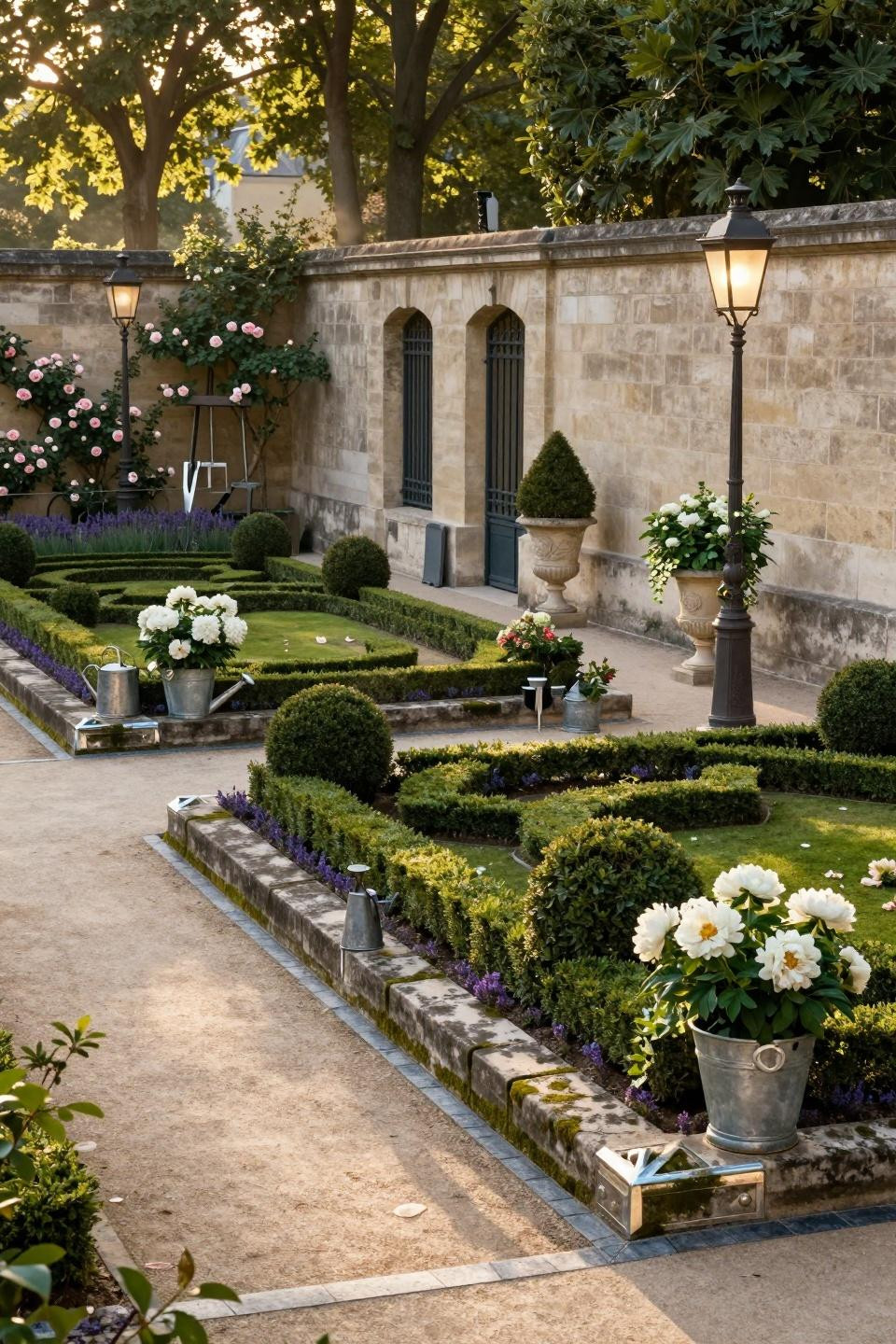
Sixth arrondissement formal French gardens achieve Versailles-inspired sophistication through reclaimed Burgundy limestone blocks with polished nickel corner details. Raised flower beds frame lavender Hidcote borders surrounding David Austin roses Gertrude Jekyll and Constance Spry in soft pinks and whites arranged in classical French garden geometry.
Clipped boxwood parterres in Buxus sempervirens create year-round structure, while antique Anduze pottery urns overflow with white hydrangeas and trailing ivy. Decomposed granite pathways raked in perfect parallel lines demonstrate garden maintenance standards that rival palace grounds.
Parisian garden design requires understanding historical precedent while adapting to contemporary urban constraints. Reclaimed Burgundy limestone connects twenty-first century gardens to centuries of French horticultural tradition, providing material authenticity that new construction cannot replicate.
British Country Estate Gardens Blend Granite With Iron Detailing
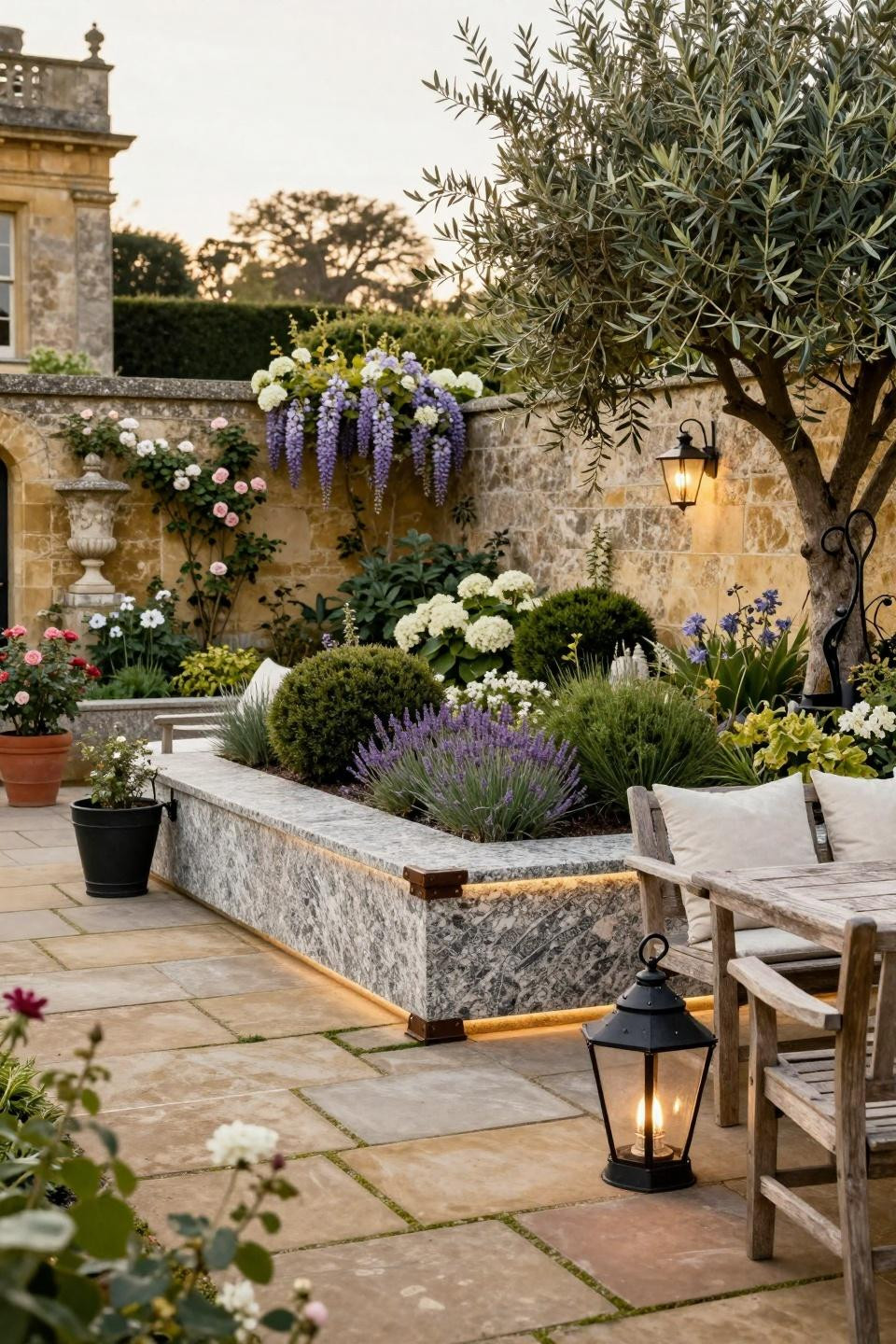
Cotswolds estate gardens demonstrate French Riviera influences through book-matched honed granite slabs with oil-rubbed iron corner details creating minimalist zen sensibility. Sculptural flower beds feature architectural massing—boxwood spheres, lavender hedges, white hydrangeas, specimen olive trees—that achieve monumental scale through material restraint.
Restoration Hardware Provence collection teak dining sets in weathered finish with Belgian linen cushions provide outdoor entertaining areas among granite and iron hardscaping. Custom millwork-quality carpentry in planter construction signals investment in permanent landscape architecture rather than seasonal garden installations.
British design sophisticates recognize that granite and iron material palette references industrial heritage while achieving contemporary elegance. The combination withstands English climate extremes while developing attractive patina that enhances rather than diminishes visual appeal over decades.
Hamptons Limestone Pathways Frame English Garden Romance
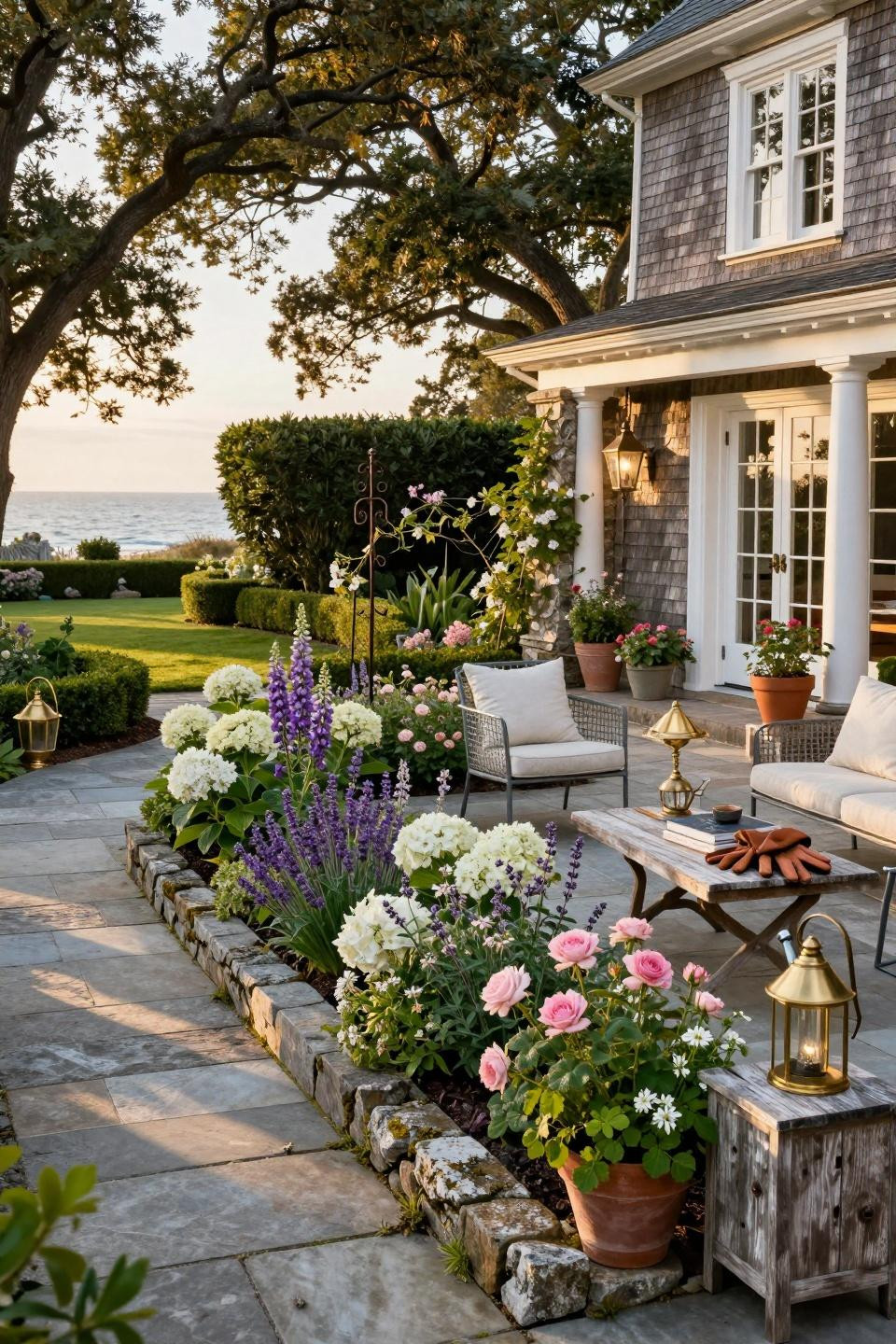
East Hampton shingle-style estates achieve British Country House aesthetic through natural limestone flagstone pathways winding through professionally landscaped garden beds. Mature boxwood hedges define garden rooms while original brass lanterns mounted on limestone pillars provide architectural lighting that photographs beautifully at golden hour.
Layered flower beds showcase English garden romance through white hydrangeas, lavender, pink roses, delphinium, and foxglove in naturalistic drifts. Weathered teak planters with trailing geraniums and hand-forged iron garden stakes with climbing clematis create collected-over-generations atmosphere within contemporary landscapes.
Coastal estate buyers investing in Hamptons properties expect architectural landscaping that justifies premium real estate prices. Natural limestone pathways with moss growth and lichen patina communicate established gardens rather than recent installations—visual shorthand for generational wealth and landscape stewardship.
London Dan Pearson Gardens Champion Perennial Architecture
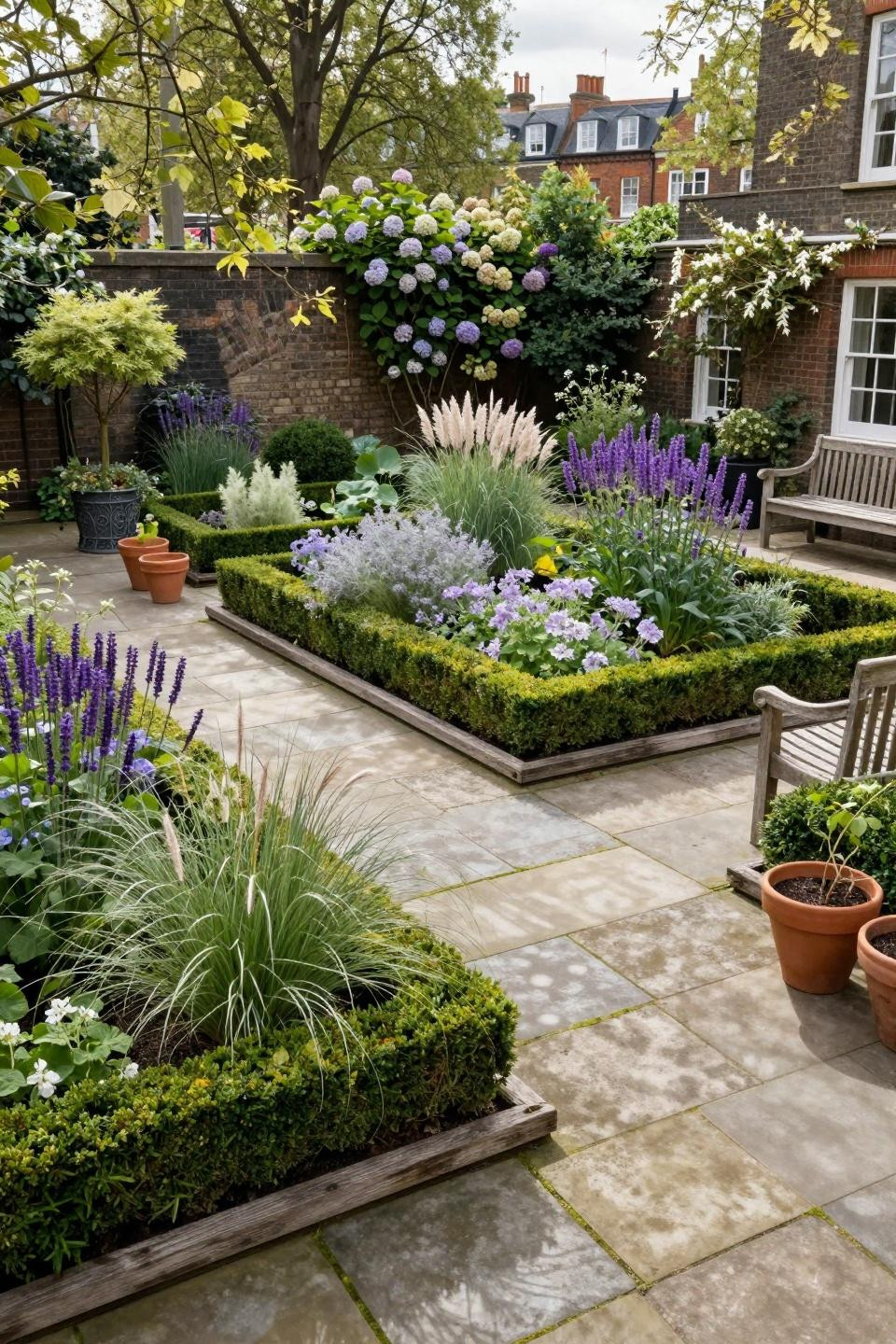
Kensington Georgian townhouse gardens demonstrate Scandinavian serenity through Dan Pearson-inspired perennial borders with architectural hedging. Reclaimed York stone paving in irregular slabs with moss-filled joints creates organic pathways through Stipa tenuissima grasses, Phlomis russeliana, Verbena bonariensis, and Salvia nemorosa Caradonna in sophisticated color restraint.
Custom-milled teak edging boards frame raised beds in architectural precision, while Taxus baccata yew hedging sculpted into geometric forms provides year-round structure. The design achieves museum-quality presentation through naturalistic planting that appears effortless despite intensive horticultural expertise.
London garden enthusiasts recognize Dan Pearson's influence on contemporary British landscape architecture. His approach—native perennials arranged for sculptural effect, restrained color palettes, architectural hedging—represents current design thinking that will remain relevant for decades rather than following temporary garden fashion.
Milan Copper Patina Gardens Frame Palazzo Architecture
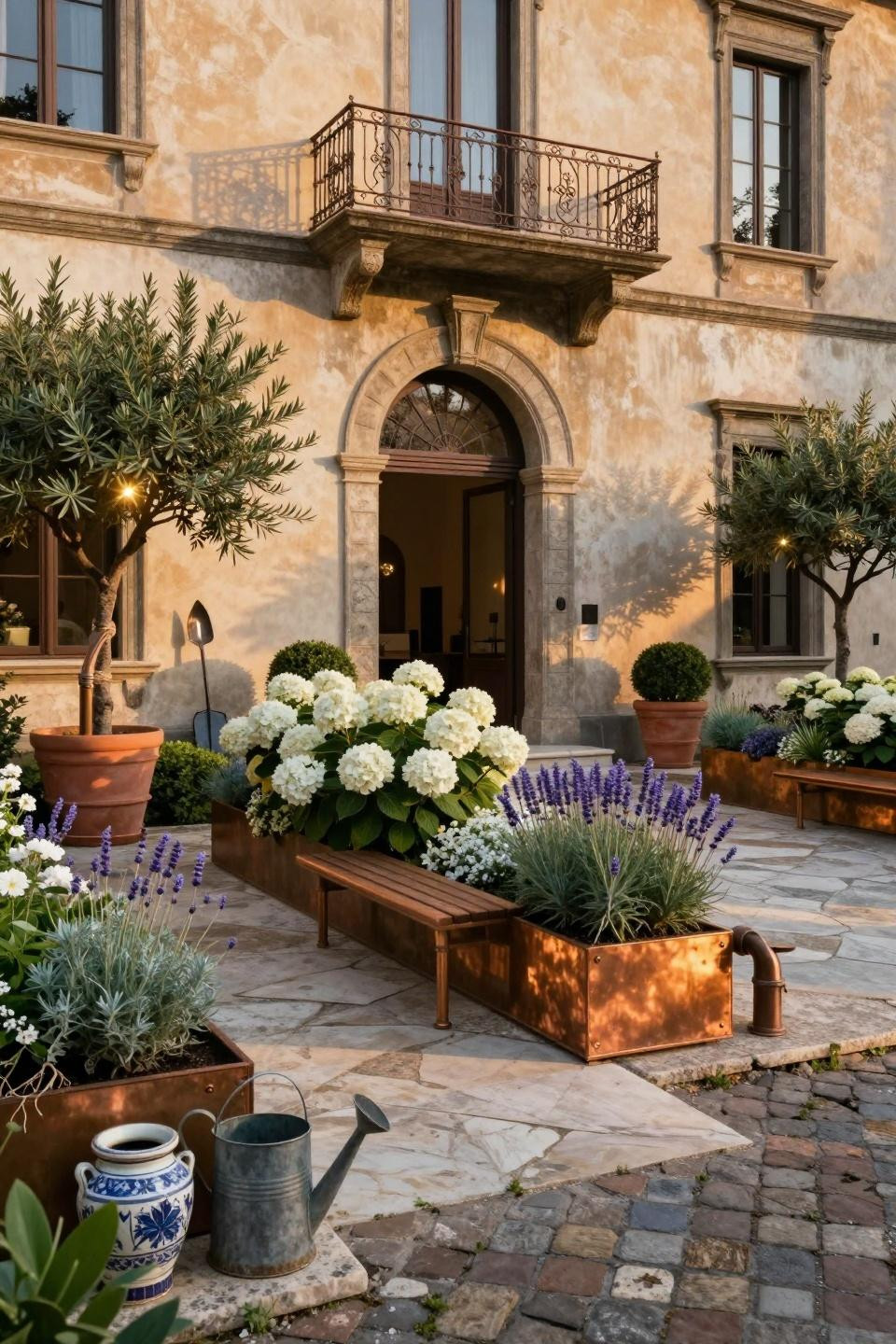
Centro Storico villa entrance gardens achieve Mediterranean sophistication through raised flower beds in aged copper planters with cascading white hydrangeas, lavender, and boxwood topiaries. Quartzite stone edging in warm honey tones frames beds against seventeenth-century limestone façades with ornate wrought iron balconies.
Custom teak benches from Barlow Tyrie positioned strategically provide seating among potted olive trees in terracotta Impruneta containers. Copper downspouts with natural verdigris patina and bespoke limestone pathways with irregular flagstones create collected-over-centuries atmosphere that harmonizes contemporary plantings with historic architecture.
Milan property owners understand that copper patina develops authentic character impossible to fake. The material's natural oxidation creates visual continuity with aged building facades while containing aggressive Mediterranean plantings within architecturally appropriate boundaries that respect palazzo heritage.
Malibu Sandstone Beds Channel French Riviera Simplicity
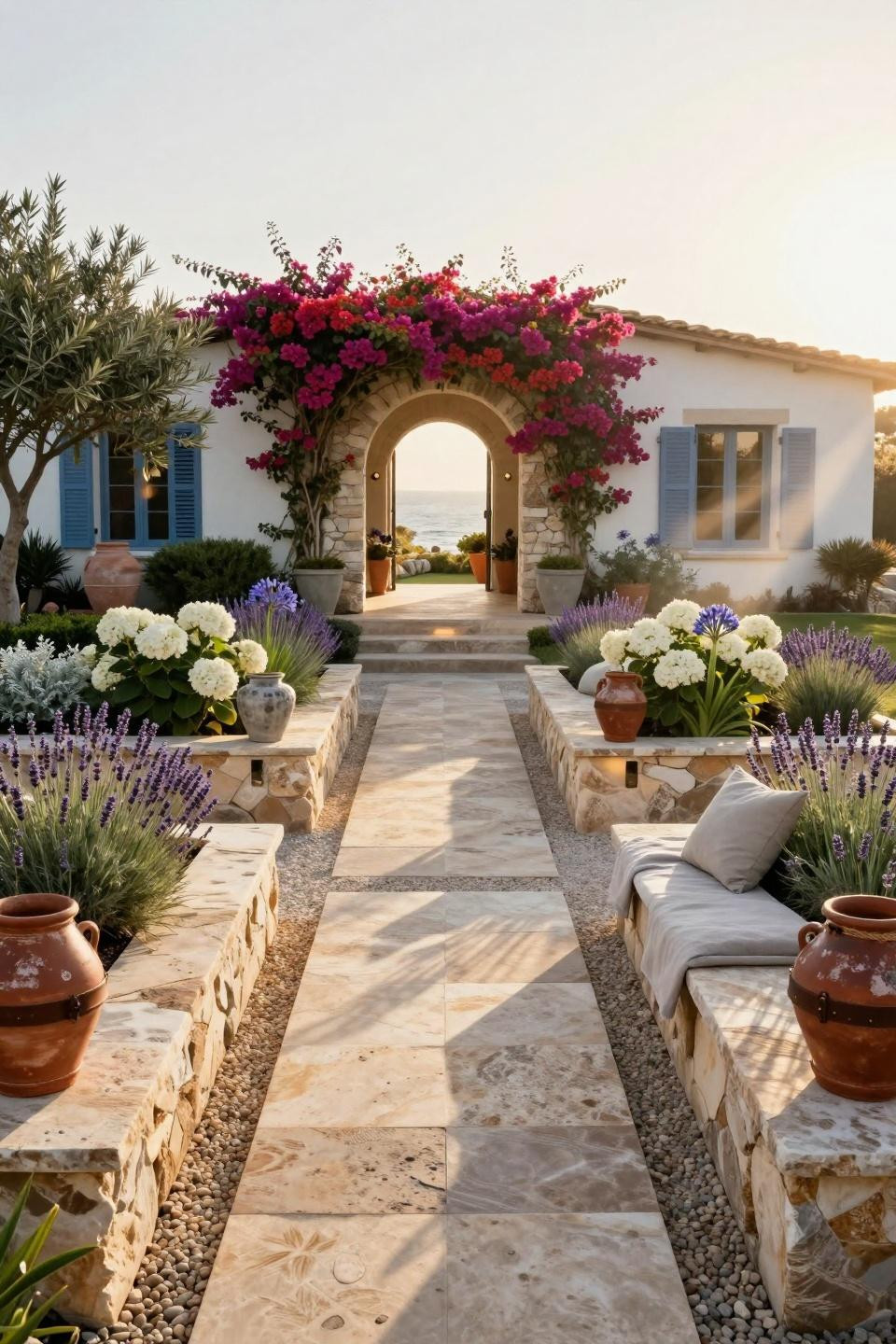
California coastal villa gardens achieve French Riviera sophistication through raised flower beds constructed from locally sourced sandstone with natural weathered patina. Symmetrical composition showcasing entrance approaches combines Mediterranean elegance with beachside simplicity—lavender fields, rosemary hedges, olive trees in terra cotta vessels creating drought-resistant plantings.
Honed limestone pathways with subtle fossil inclusions lead to villa entrances framed by white stucco walls with French blue shutters. Bougainvillea cascading over stone walls in magenta and coral tones provides vertical interest, while Restoration Hardware planters in weathered concrete anchor seating areas.
Malibu property owners investing in French Riviera aesthetics appreciate material authenticity. Locally sourced sandstone weathers beautifully in coastal climate while supporting regional architectural vernacular—practical considerations that align with sophisticated design sensibilities.
Miami Art Deco Terraces Feature Travertine Tropical Gardens
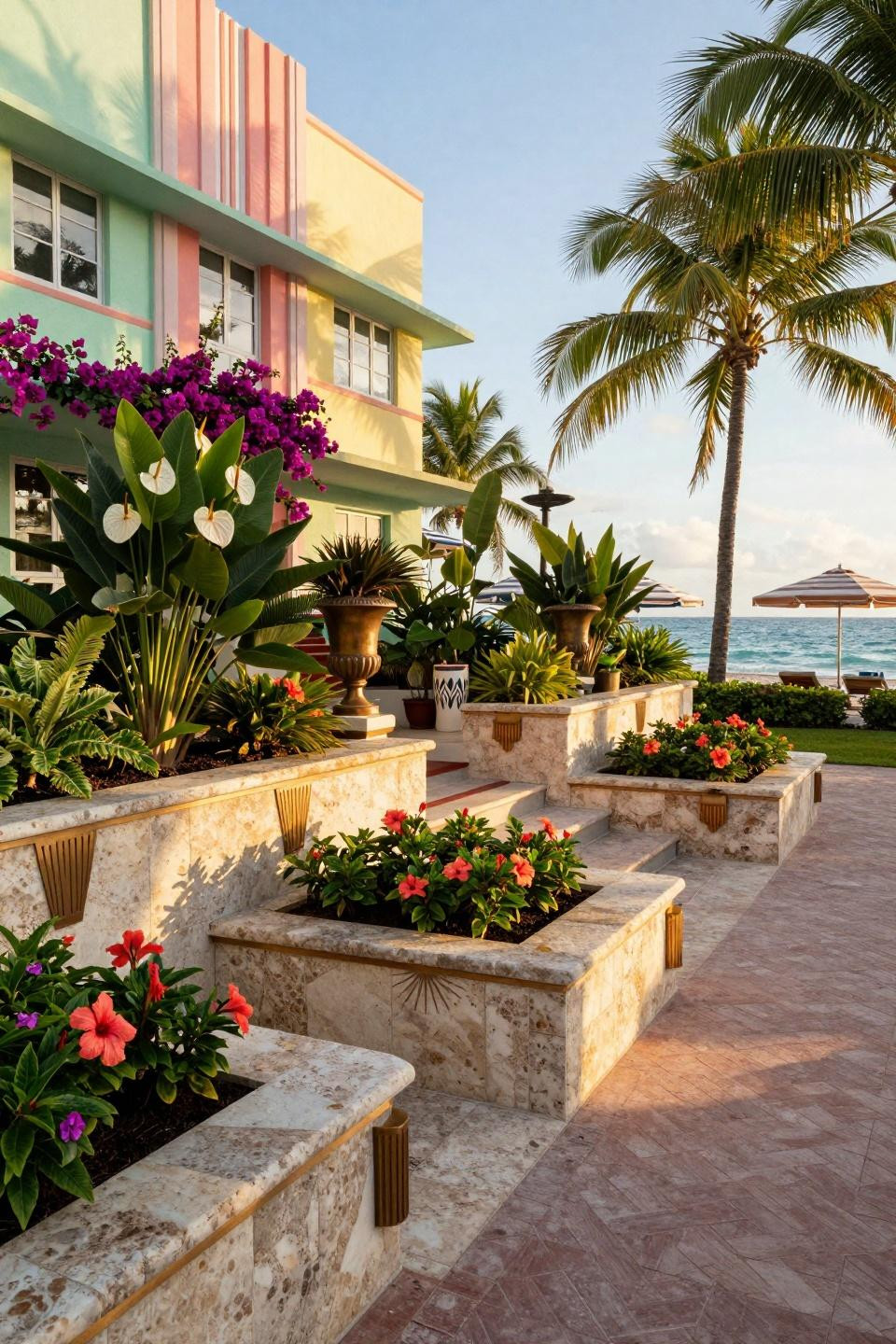
South Beach villa gardens showcase twelve-foot travertine stone retaining walls with bronze Art Deco geometric inlays creating dramatic elevation changes. Tiered raised flower beds overflow with tropical architectural plantings—bird of paradise, giant white anthuriums, emerald philodendrons, coral hibiscus—arranged in sculptural compositions.
Coral stone pathways in herringbone pattern wind through beds painted in classic Miami Deco pastels: seafoam green, coral pink, butter yellow with bronze trim details. Vintage 1930s bronze Art Deco garden urns serve as focal points, while custom geometric lighting fixtures provide evening illumination.
Miami Beach property preservation requires respecting Art Deco architectural heritage while supporting contemporary tropical gardening. Travertine and bronze materials reference 1930s design vocabulary authentically, creating landscape architecture that enhances rather than conflicts with historic building fabric.
Tokyo Wabi-Sabi Gardens Embrace Natural Weathering Patterns
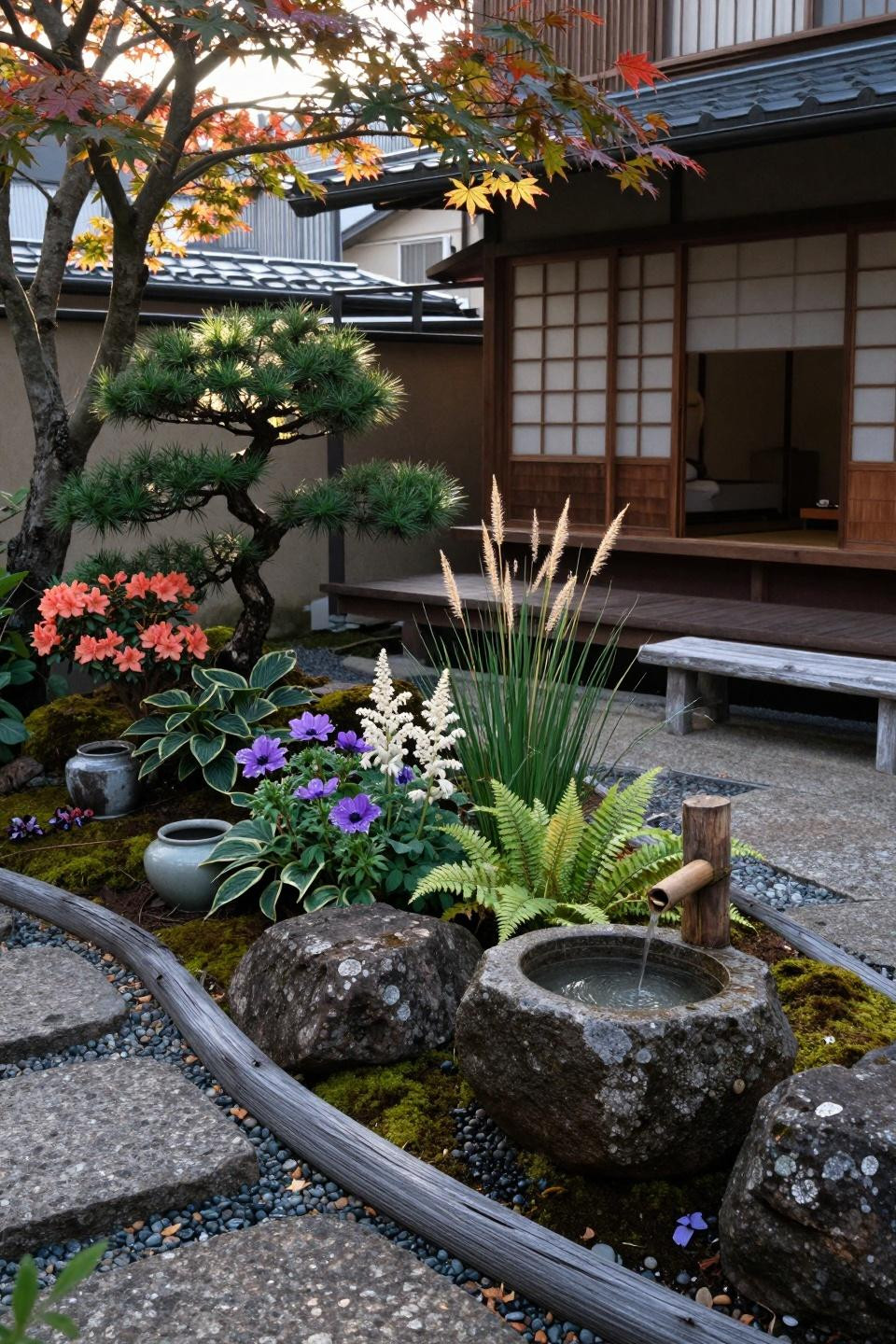
Omotesando mountain chalet gardens demonstrate Japanese Wabi-Sabi philosophy through weathered granite boulders and moss-covered stepping stones arranged in asymmetrical balance. Hand-carved natural stone water basins with bamboo spouts anchor compositions surrounded by emerald moss and river pebbles showing centuries of patient material selection.
Purple Japanese anemones, white astilbe plumes, variegated hostas, and delicate ferns create layered plantings following ma principle of negative space. Dwarf Japanese black pine bonsai specimens and flowering azaleas in soft coral tones demonstrate horticultural refinement that requires decades to achieve properly.
Japanese garden design audiences understand that authentic Wabi-Sabi aesthetics cannot be rushed. The weathered cedar timber edging with natural patina and silver-grey coloration, moss texture with individual leaf detail, granite showing natural lichen growth—these elements communicate respect for natural aging processes that luxury Western audiences increasingly value.
Beverly Hills Calacatta Borghini Beds Define Museum Gardens
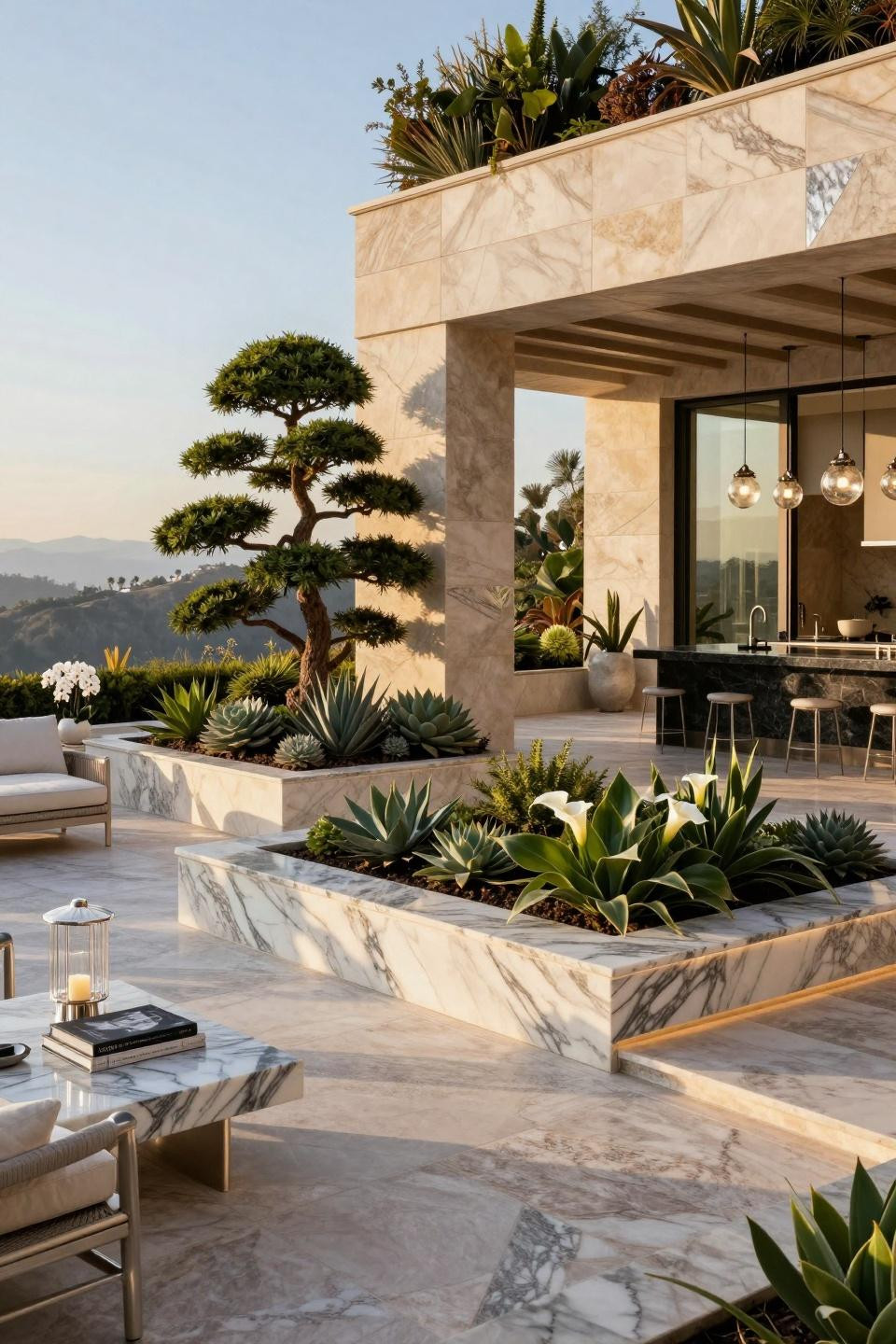
Trousdale Estates properties achieve museum-quality landscape design through custom-designed raised planters in book-matched Calacatta Borghini marble with waterfall edges and integrated LED uplighting. Rare specimen plants—Japanese cloud-pruned pines, sculptural agave attenuata, architectural succulents, white calla lilies—arrange in geometric compositions that reference gallery installations.
Large-format porcelain platinum tile flooring in seamless 48x48 inch slabs creates pathways between marble beds, while Poliform outdoor furniture in platinum-finished teak with Perennials fabric cushions provides seating. Apparatus Studio custom pendant lights in hand-blown glass suspended at varying heights offer architectural drama.
Eight-million-dollar property buyers expect landscape architecture that justifies premium pricing. Book-matched Calacatta Borghini marble communicates material investment impossible to ignore—the stone's rarity and installation complexity signal design seriousness that distinguishes trophy estates from merely expensive properties in competitive luxury markets.
Designing Botanical Excellence Into Every Square Foot
These flower bed ideas represent landscape architecture at museum-quality standards—spaces where Calacatta marble converses with aged bronze, where Dan Pearson perennial thinking meets French parterre geometry, where every material selection reflects decades of design evolution. This represents gardening as investment, as collected sophistication, as architectural expression.
Curate the compositions that speak to your design sensibilities. Whether drawn to Art Deco Miami travertine or Japanese Wabi-Sabi granite, each garden here demonstrates how material excellence and botanical curation elevate outdoor spaces beyond temporary landscaping into permanent architectural statements.