Airy Layered Curtain Setups That Make Short Windows Feel Taller
29 november 2026Curtain layering ideas make short windows feel taller when you mount the rod 4 to 6 inches above the trim and let both fabrics reach the floor. I learned that after hanging panels too low. The room looked squat. Now I layer airy linen with a quieter sheer, and the ceiling reads higher almost instantly.
- Layer linen over a full-height sheer
- Float the rod wide past the trim
- Pair a soft neutral with a darker outer panel
- The Three-Height Light Stack: Why It Works
- Swap a valance for a clean ceiling line
- Frame the glass with two narrow side panels
- Can Café Curtains Sit Below the Tall Layer?
- One Rule, Two Woods: Keep Warm Curtains Connected
- Choose woven shades over thick blackout panels
- Wall and Trim Together: Paint One Quiet Color
- Mix one pattern with one plain layer
- Anchor the layers with a low, quiet hem
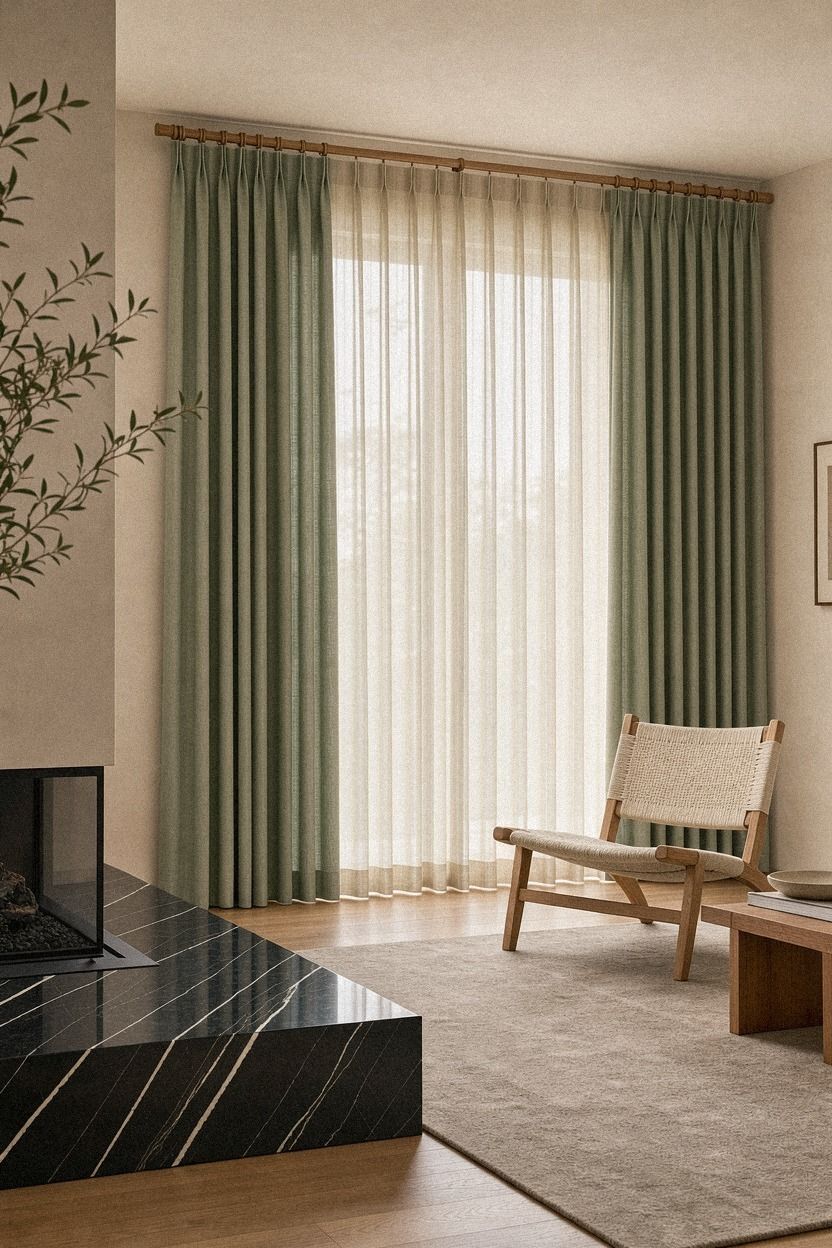
1Layer linen over a full-height sheer
A full-height sheer gives you privacy without placing a heavy block of fabric across the glass. Hang the rod 4 to 6 inches above the trim, then let the panels break softly at the floor. Your eye follows the vertical line, so your short window feels connected to the ceiling.
I’d choose sage green linen for the outer layer and a warm cream voile behind it. The linen has visible slubs that catch afternoon light, while the voile keeps the window bright. You’ll want the outer panels to stack beyond the glass, not cover half of it when they’re open.
And don’t buy two thick curtain pairs and call it layering. That creates a dark center and a bulky edge.
I made that mistake in a narrow bedroom, and the folds looked like theater drapes. If you’re also softening a bedroom, this silk pillowcase guide has the same useful principle: light texture works harder than excess fabric.
Use a simple natural wood rod so the hardware disappears. A small Nero Marquina black marble ledge or nearby surface can carry the darker note without weighing down the window. Your room will feel airy, warm, and taller without needing a new window.
2Float the rod wide past the trim
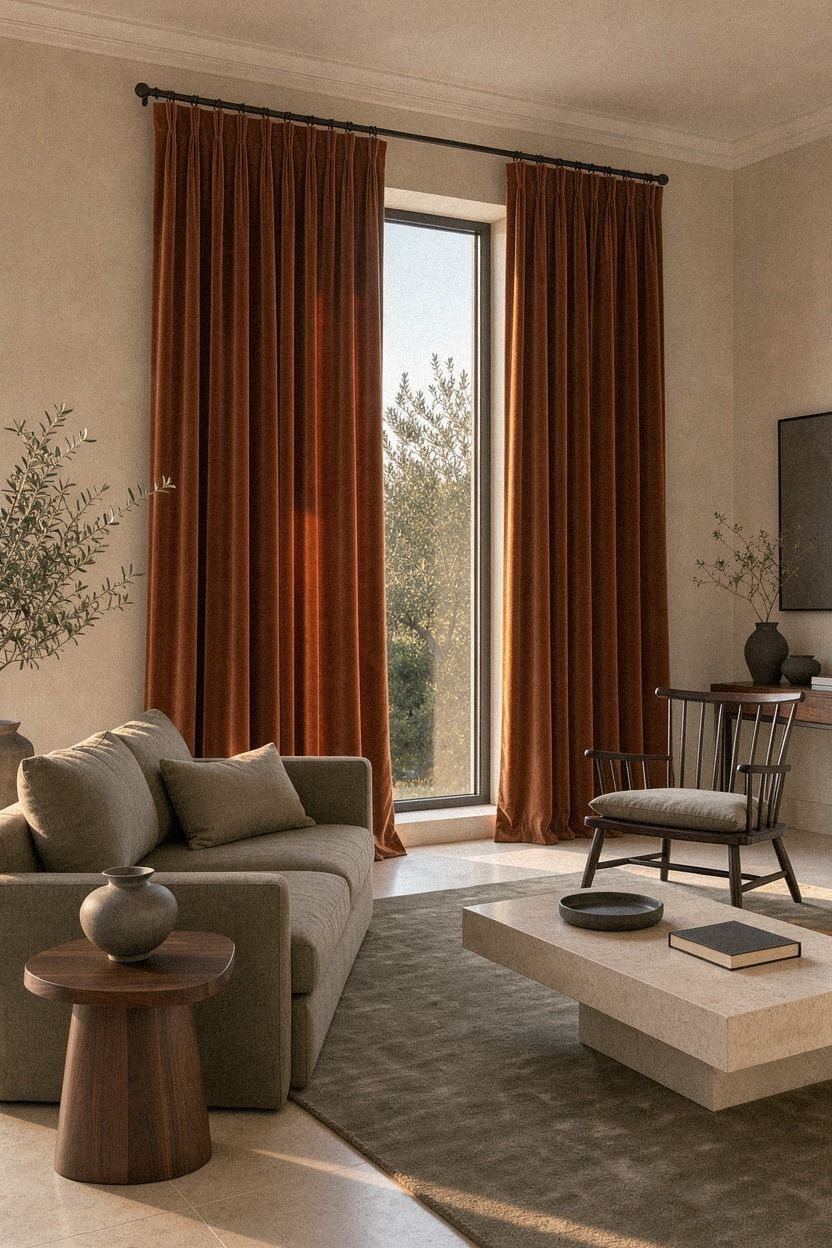
Short windows often look short because the curtain rod ends right at the trim. Float the rod beyond the trim instead. When your panels are open, the glass stays visible, and the wall around it reads as part of the window.
I like deep-pile mohair velvet here because its soft surface adds warmth without the glare of a slick fabric. Choose it in terracotta or olive, then let a stone-colored wall keep the palette quiet. Extend the rod far enough that the fabric can stack beside the trim.
You’ll get more daylight, and your curtains won’t bunch over the glass.
But a wide rod doesn’t mean a giant, dramatic canopy. Choose lightly lined panels with a narrow header, then use plain rings or small pinch clips.
I went too ornate once, and the finials made a small window look even smaller. A quiet rod is the better call for your room.
If your wall is already busy, pair this setup with a soft stone paint. It’s warm enough to avoid a cold rental-white effect, and it won’t fight the velvet. You can also read this angled bob style piece for an unrelated but useful editing lesson: removing bulk can make the whole shape look longer.
3Pair a soft neutral with a darker outer panel
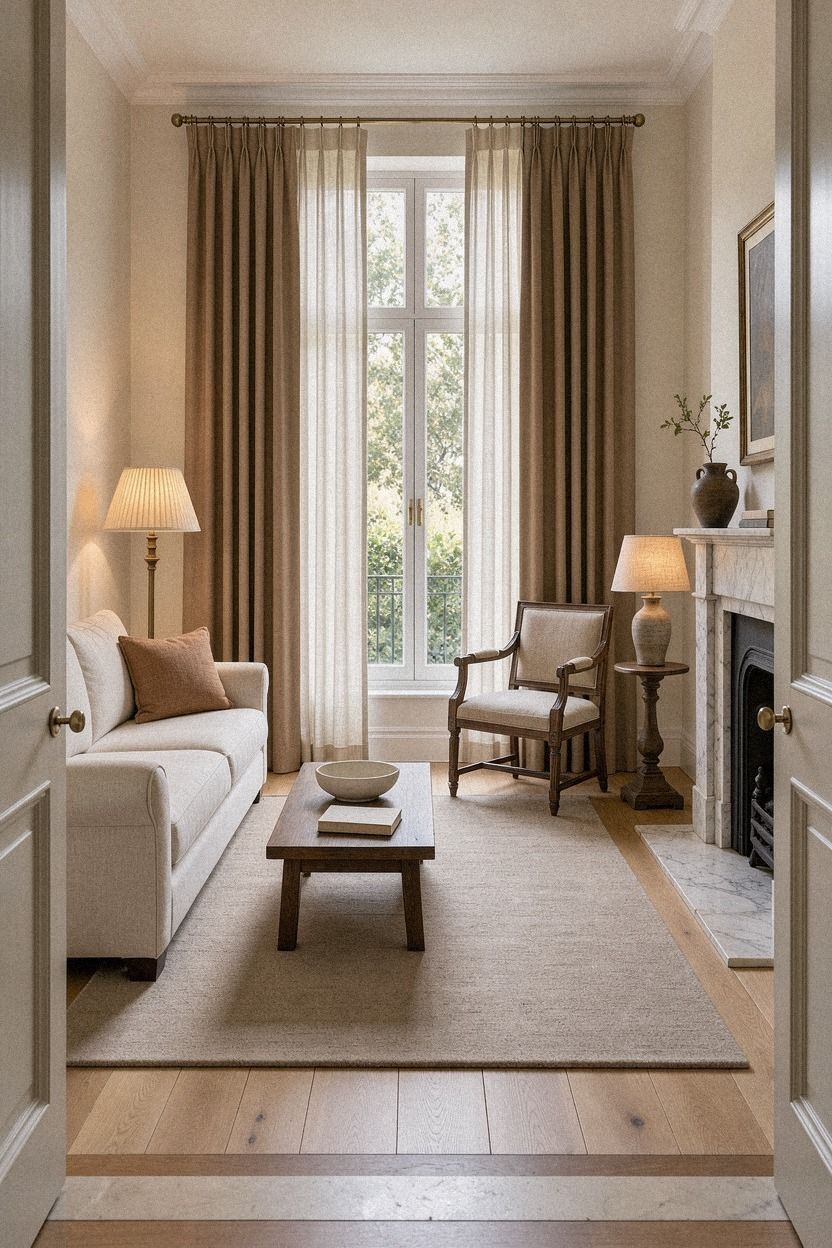
Layered curtain living room schemes don’t need matching panels. A pale inner curtain and a darker outer panel create depth without turning your window into a wall of fabric. Put the softest color closest to the glass, then frame it with a restrained shade.
Try clay linen on the outer panels with warm ivory sheers behind them. Clay has enough warmth to feel settled, while the linen keeps it from looking flat. Your room will feel calm in daylight and more intimate after sunset.
The important part is contrast, not drama. I’d skip dense navy velvet in a short-window room because the heavy surface eats light and makes the opening feel compact.
A washed cotton-linen blend gives you color while staying gentle. A small Carrara marble ledge or side table can add the pale veining without introducing another strong pattern.
And if you’re styling a room with several soft surfaces, repeat the curtain color only once. A cushion or small ceramic object is enough.
Your eye needs a pause between the window and the sofa. For another look at how subtle material changes affect comfort, save this waterproof mascara article, then return to the window with fresh eyes!
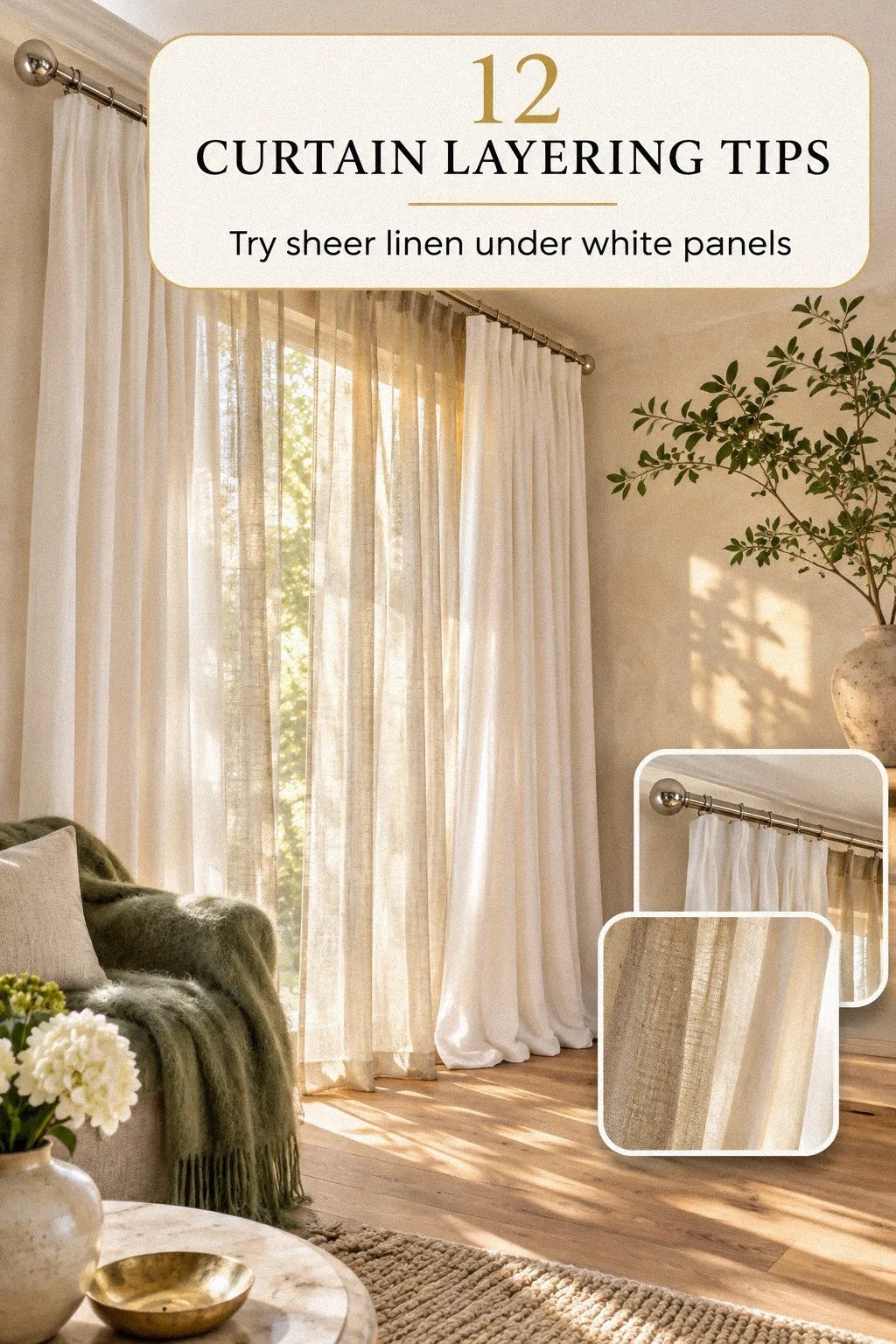
4The Three-Height Light Stack: Why It Works
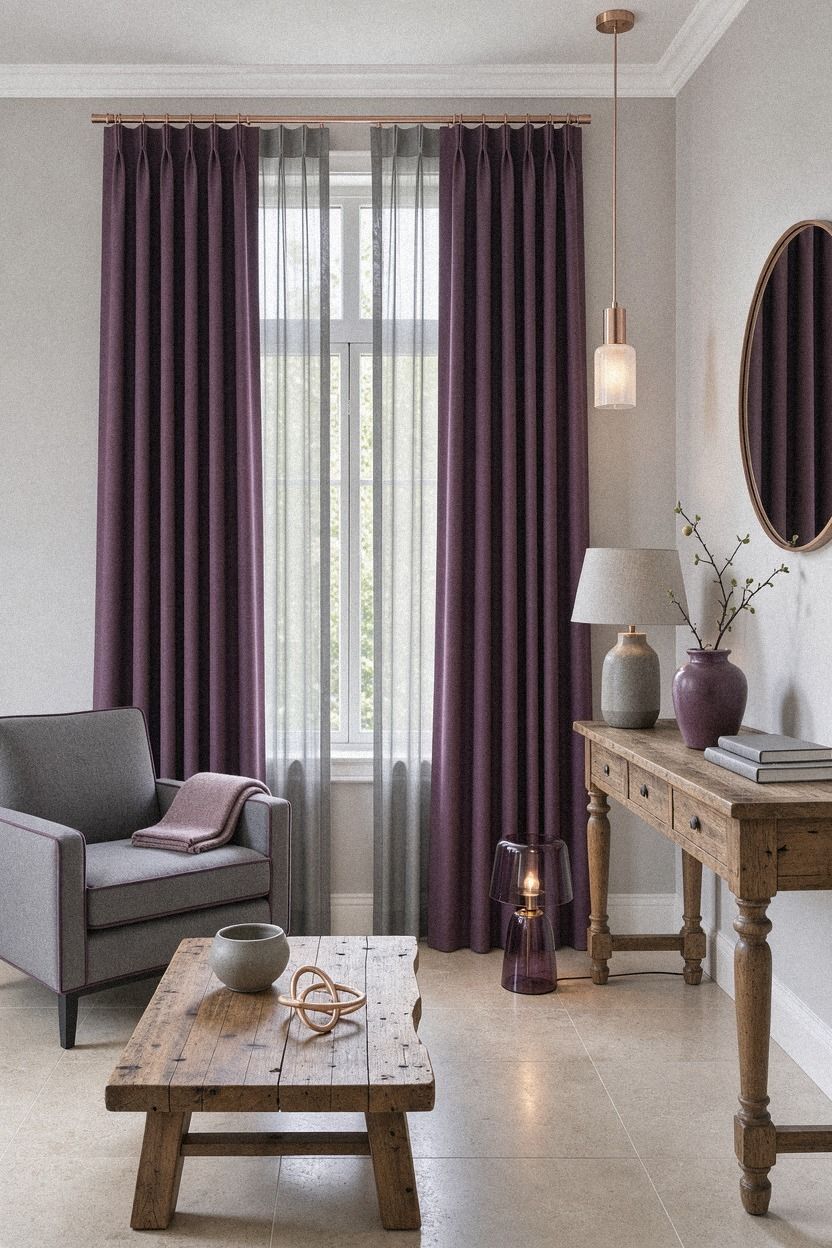
The Three-Height Light Stack uses a sheer, a mid-weight curtain, and a ceiling-to-floor line.
5Swap a valance for a clean ceiling line

A valance can hide an awkward trim, but it usually lowers the visual ceiling. Swap it for a clean rod mounted above the window, then use two panels that fall straight to the floor. Your room gets a longer vertical line immediately.
I’d use navy mohair velvet only as a narrow outer accent, never as the full curtain in a small room. Its nap catches the light beautifully, but too much of it becomes heavy. Pair a slim velvet side panel with a translucent white linen center.
A slim walnut rod keeps the hardware warm, while a Calacatta marble sill or nearby surface brings in a quiet white note with fine gold veining. This is where your panel width matters.
You don’t need a deep stack if the fabric is lightweight and the rod extends beyond the trim. The opening should remain bright when your curtains are pulled aside.
That brightness is doing more work than decoration.
But don’t leave the old valance holes exposed. Patch them, sand the wall, and touch up with the original paint before mounting the new rod.
The repair takes less time than arguing with a crooked line. If you’re editing other visible details, this wide-hip denim guide makes a similar case for proportion over volume.
6Frame the glass with two narrow side panels
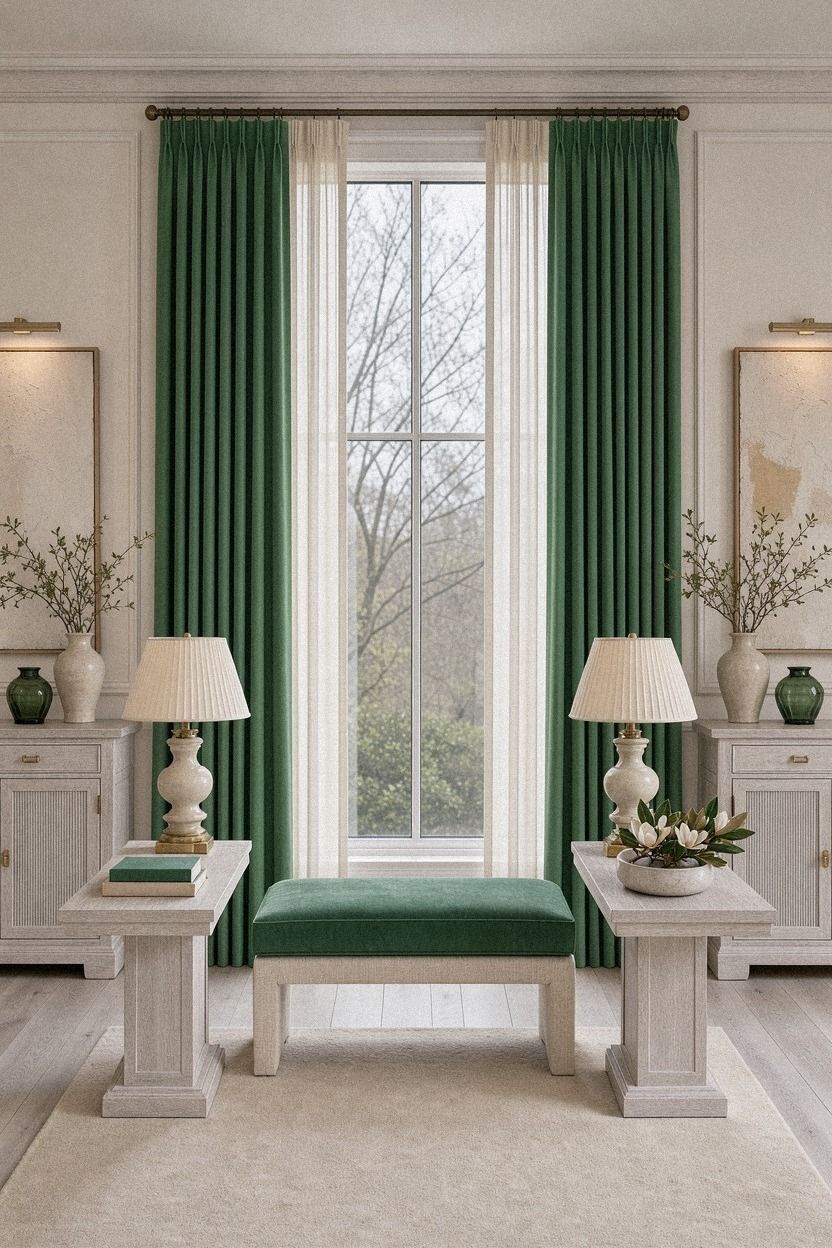
Two narrow side panels can make a short window feel intentional without blocking its center. Leave the glass open during the day, and let the curtains act as vertical brackets. Your room keeps the light, while the wall gains softness.
Choose white oak curtain rings or a slim wood-toned rod if the space needs warmth. The grain should be quiet, not rustic and orange. I prefer cerused white oak because the pale grain blends with the wall and won’t compete with the fabric.
You’ll want enough width for the folds to look relaxed, but not so much that the panels swallow the trim. A light Belgian flax linen works well because it holds a soft shape without looking starched. Your eye sees texture, then returns to the window.
And the side panels don’t need to match every textile in your room. Let them echo one chair, one basket, or the warm tone in your flooring. If you’re also working on a small apartment palette, this tinted sunscreen mistake offers an odd but useful reminder: undertones matter more than a color name.
7Can Café Curtains Sit Below the Tall Layer?
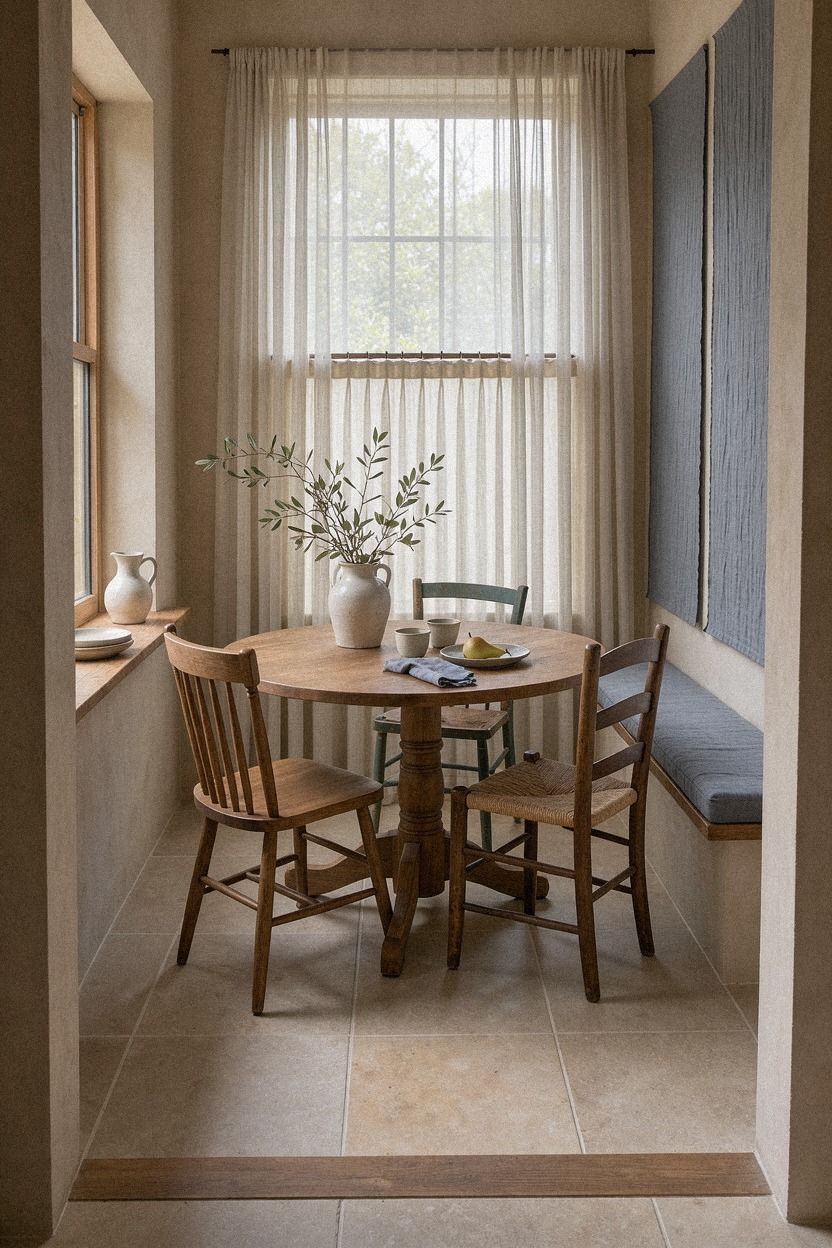
Café curtains can give you privacy without closing off the top half of a short window.
8One Rule, Two Woods: Keep Warm Curtains Connected
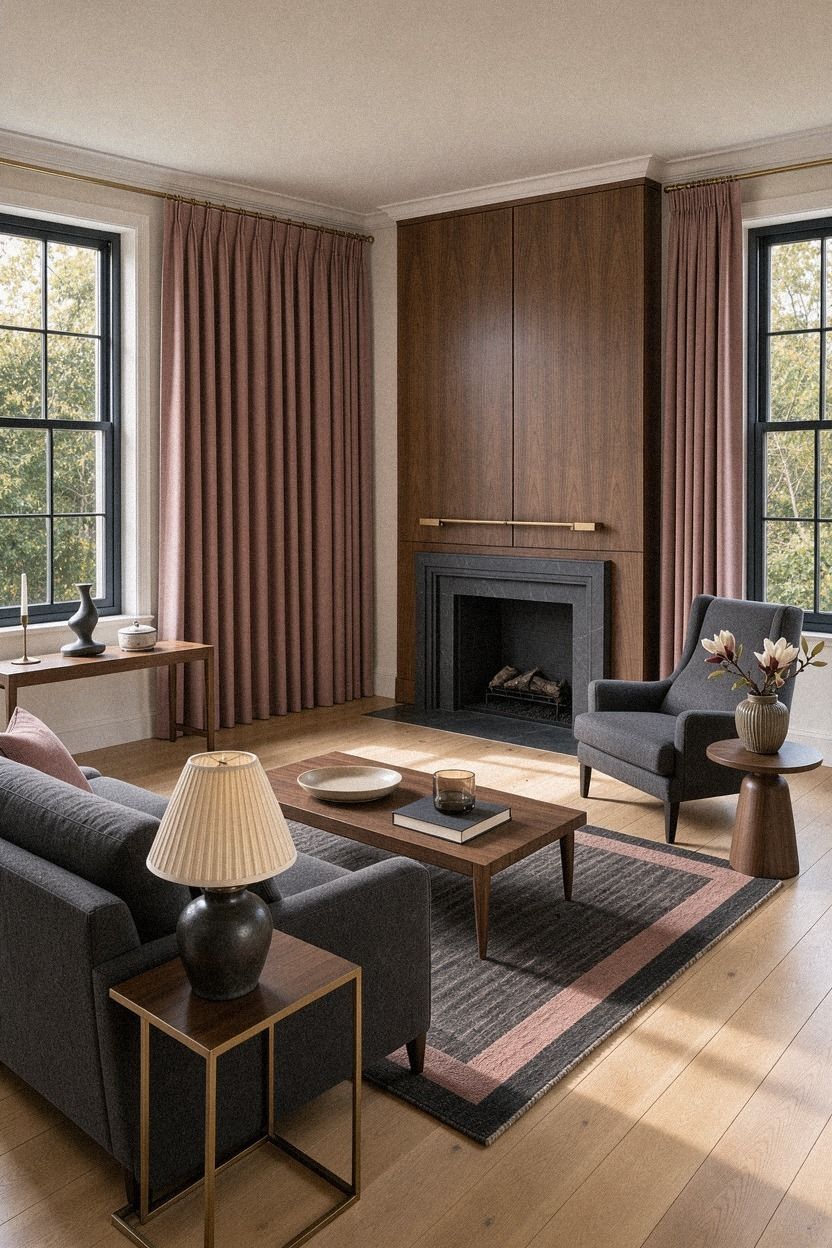
The Two-Wood Rule keeps layered curtains from feeling disconnected in a room with timber furniture. Choose one wood for the rod or rings and one for a nearby piece, then let the curtain fabric bridge them. Your eye reads a small family instead of a pile of finishes.
Try book-matched walnut for a nearby side table and a simple aged brass rod, with dusty rose curtains between them. The walnut’s mirrored grain gives your room depth, while the brass adds a restrained glow. I’d avoid adding a third wood unless it’s very pale and nearly disappears.
Your curtain color should relate to the wood, not match it. Dusty rose works with walnut, while charcoal can sit beautifully beside brass. You’ll get a richer view at night when the lamp hits the fabric and leaves a small amber pool near the floor.
But don’t make the rod a feature if your window is tiny. Hardware should support the height move, not announce itself. For another example of using a restrained framework, see this hidden Mallorcan sanctuary article, where repetition and restraint do more than clutter.
9Choose woven shades over thick blackout panels
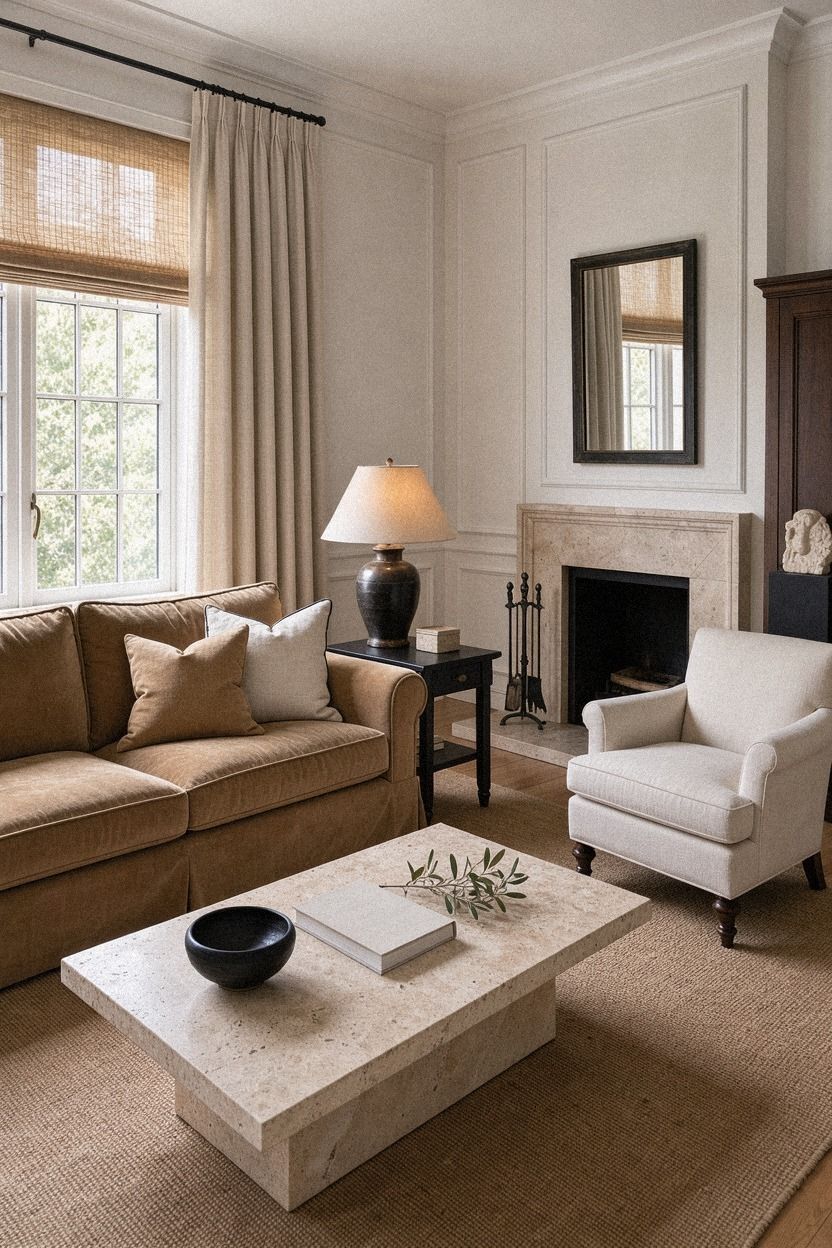
Woven shades can be your first layer, with full-length curtains adding softness at the sides. The shade handles glare and privacy, while the outer fabric keeps the window from looking hard. Your short window gains texture without a heavy curtain wall.
Look for woven bamboo with a fine horizontal grain, then pair it with warm white linen and a slim black rod. The horizontal weave won’t make the window taller by itself, so the full-length outer panels are essential. Mount their rod above the trim and let the fabric run to the floor.
A warm travertine sill or side table can add the natural texture without competing with the layers.
I’ve tried thick blackout panels in this arrangement, and they made the whole corner feel sealed shut. If you need more darkness, use a light-filtering shade with a discreet liner instead. You’ll preserve the layered look during the day.
A small room benefits from this because the shade stays close to the glass. Your side panels can remain open, and the floor line stays visible. If you’re comparing soft finishes elsewhere, this Croatian village feature is a reminder that texture and repetition can make a compact setting feel expansive.
10Wall and Trim Together: Paint One Quiet Color
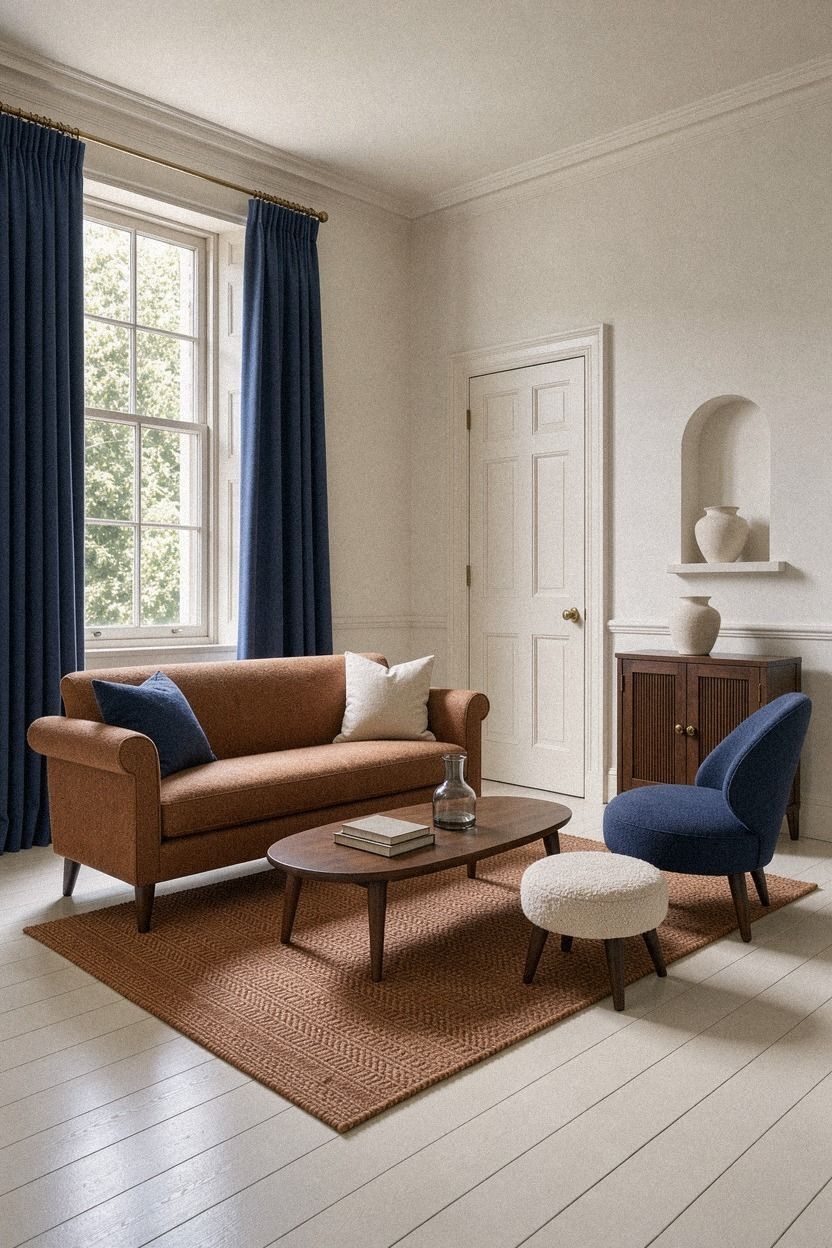
Painting the trim and wall in one color makes the window surround recede. Your layered curtains then become a soft vertical surround rather than a high-contrast rectangle. This works especially well when the window is short but the wall above it is generous.
Use midnight blue across the wall and trim, then choose ivory curtains one step lighter. Add a small unlacquered brass detail and let it develop a quiet patina.
The low contrast stretches the visual field. I wouldn’t use stark white trim here because the sharp border tells your eye exactly where the small window starts and stops.
A sheer inner layer keeps the paint from making the room feel dim. Choose a fabric with a slight irregular weave so sunlight breaks across it instead of shining flatly. You’ll see a soft veil in the morning, not a blank white panel.
And don’t paint only the wall around the window. If your trim stays stark, the old boundary returns.
Your color story needs to continue around the opening. For a related lesson about choosing a shade that supports the whole shape, read this preppy style evolution article.
11Mix one pattern with one plain layer
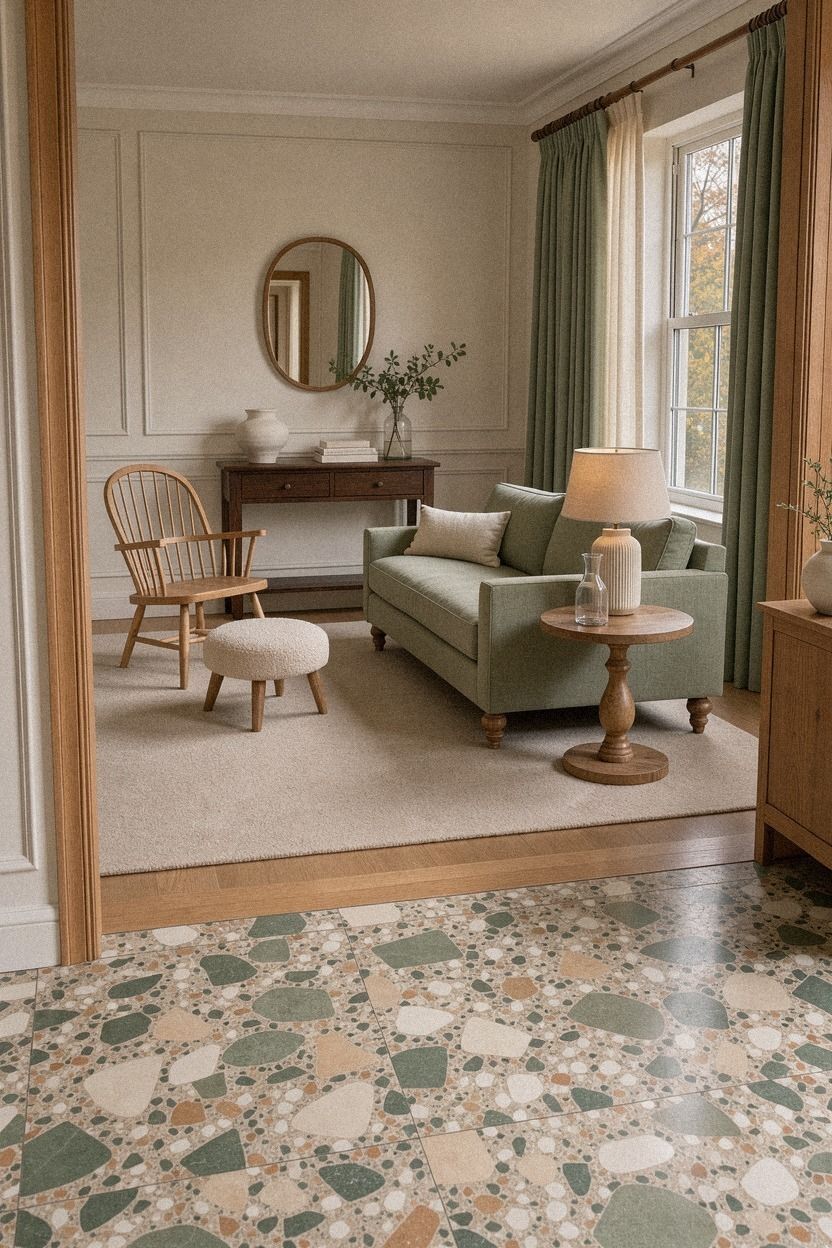
A small pattern can make curtain layering feel collected, but two patterns usually make a short window look busy. Use a plain sheer behind one patterned outer panel, then repeat one color elsewhere in your room. Your eye gets interest and a place to rest.
I like a narrow sage green block-print cotton with a warm cream voile. The print should have breathing room between motifs.
Dense florals can look muddy once the fabric folds, especially when your panels are stacked beside the trim. A small oversized-chip terrazzo table or ledge can repeat the material interest without adding another fabric pattern.
Keep the pattern on the side panels if the window is narrow. The center stays light, and the print creates height along the edges. You’ll notice the vertical line first, then the small marks in the fabric.
I once paired a tiny check with a floral here, and the window looked shorter because the eye kept moving sideways. One pattern wins. If you’re building a more relaxed room around it, this waterproof mascara piece is not a design article, but its close attention to smudging and friction made me think twice about fabrics that show every crease.
12Anchor the layers with a low, quiet hem
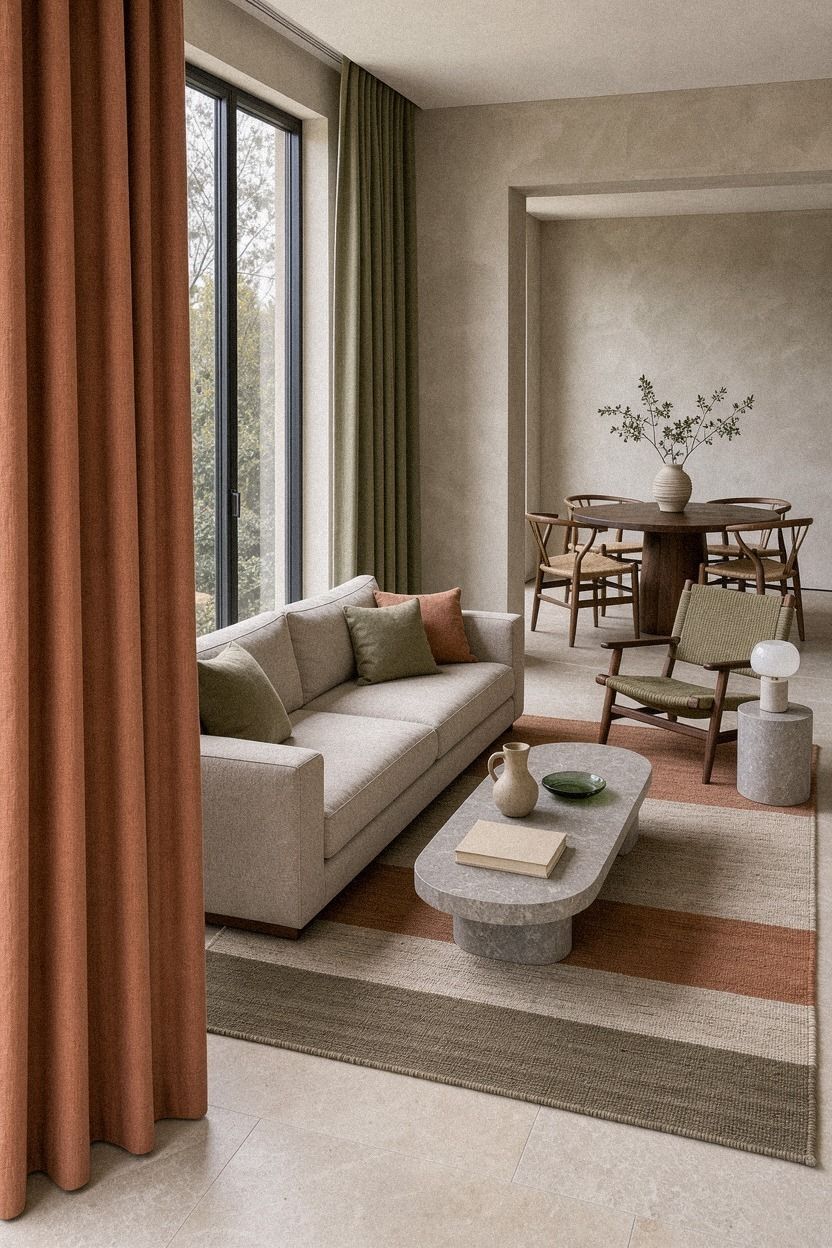
A low, quiet hem keeps your curtains connected to the floor. If the panels stop at the sill or hover above the baseboard, your short window gets a hard ending. Letting the fabric reach the floor gives your eye one uninterrupted line.
Choose a terracotta hem band or tieback only for a small weighted detail. Pair it with a lighter linen panel and a stone-colored wall finished in hand-applied Venetian plaster so your room still feels breathable.
The hem should kiss the floor rather than puddle. You’ll want enough length to create a relaxed break, but not enough to collect dust beneath the radiator. I’d skip a dramatic puddle because it makes every other layer look heavier than it is.
Your final check is simple: stand across the room and open the panels. Can you see most of the glass?
Does the fabric fall in a straight line? If yes, you’ve got the proportion right.
Save this Mallorcan sanctuary guide for another visual study in how open space can carry a room.
The Honest Cost of a Lighter Window
Curtain layering doesn’t need to become a full-room spending project. For this type of update, your biggest choice is where fabric earns its place.
Spend on the outer panels if you’ll touch them every day, then keep the inner layer simple. A careful rod position and clean hem can matter more than an expensive label.
Here are broad US room-refresh ranges from the supplied planning guide. They include more than curtains, so your window project may land below them. Use the numbers as planning landmarks, not a promise from a retailer.
For the window itself, linen drapes commonly sit around $120-$400 per pair, while a statement light fixture can run $150-$800. A DIY room paint project is listed at $200-$600.
If you’re choosing between new curtains and a new lamp, I’d fix the window line first because your eye notices proportion before it notices decoration. This proportion guide makes a similar case for choosing shape before extras.
The best savings are often free: move the existing rod higher, steam the panels, remove a valance, or reverse a bulky tieback. And if you’re shopping second-hand, inspect the lining and seams before bringing anything home. Your room deserves fabric that hangs cleanly, not a bargain that fights you every morning.
Why Airy Layering Is Having a Moment
Curtains are moving away from one thick panel because rooms are doing more jobs now. Your living room might be a work zone, reading corner, dining space, and movie room in one day. A sheer layer gives you daylight, while an outer panel gives you privacy when you need it.
I’ve also noticed that warmer paint colors are making people rethink bright white window treatments. Benjamin Moore White Dove still works beautifully, but soft mushroom, pale olive, and washed flax can make a room feel more settled.
You don’t need a dramatic color shift. A quieter undertone is enough.
The practical reason is strong too. A layered window gives you control without forcing one fabric to handle glare, privacy, softness, and darkness.
Your room feels more flexible. If you’re deciding whether a small change can carry visual weight, this preppy style evolution article makes a related point about familiar forms gaining freshness through proportion.
What I’d Do in My Own Room
I used to believe short windows needed bigger curtains to compensate. I bought thick panels, mounted them too close to the trim, and wondered why the room felt compressed.
The fabric was attractive on its own, but it had nowhere to breathe. That mistake changed how I look at every window now.
I’d start with the rod position before buying anything. Mount it 4 to 6 inches above the trim, extend it beyond the sides, and test the panel stack with a bedsheet or spare fabric.
You’ll see the silhouette before you spend money. If the opening looks brighter and taller, you’re ready.
My second rule is to protect the center of the glass. Let your sheers soften the view, but keep the outer panels clear of the daylight whenever you can. Your room needs that brightness, especially in fall when the sun sits lower and every shadow grows longer.
And I’d choose linen over velvet for the main layer. Velvet can be lovely as a narrow accent, but linen gives you movement, texture, and a little imperfection.
It doesn’t pretend the room is a showroom. That’s why it keeps winning for me.
Finally, I’d stop before adding one more detail. A simple rod, two useful layers, and a hem that reaches the floor are enough. If you’re still tempted to decorate the wall around it, read this silk pillowcase article first, then ask whether the room needs another object or simply less friction.
What People Always Want to Know
What is the best curtain layering idea for a small window?
The best choice is a full-height sheer behind two narrow linen side panels. The open center keeps daylight moving, while the outer panels create a vertical frame.
IKEA linen-look panels can keep the idea affordable, and your rod should sit 4 to 6 inches above the trim. For another reminder that a small visual adjustment can change the whole effect, see this tinted sunscreen piece.
Where can I buy curtain layering pieces on a budget?
Look at IKEA, Wayfair, and Target for simple panels, sheers, and rods. Second-hand linen can save the most, especially through Facebook Marketplace or a local thrift shop.
Your best find may need steaming or hemming, so check the fabric before you buy. This angled bob guide also illustrates how removing bulk can sharpen a shape.
How much does a curtain layering makeover cost?
A curtain layering update can stay below the broader $200-$800 budget-room range if you reuse your rod and paint. Linen drapes commonly run $120-$400 per pair. Free improvements include raising the rod, removing a valance, and steaming your existing panels.
Can I create this look on a budget?
Yes, and you can start with three low-cost moves: raise your current rod, use a plain sheet as a temporary sheer, and shop second-hand for one outer panel. Your proportions matter more than a matching set. Add the second layer only after the first one hangs correctly.
Is curtain layering worth it in a small space?
Yes, because a small room benefits from adjustable light and a longer vertical line. The right layers make the window feel taller without taking floor space. Keep the center open, use pale fabric, and let your furniture overlap a rug rather than crowding the window.
Is curtain layering a good idea for a rental?
Yes. Use a tension rod inside the opening, removable hooks for a lightweight outer panel, or a no-drill curtain system. Your rental can still feel finished without permanent holes. Keep the fabric light, and save any original hardware so you can restore the room later.
Where I’d Start First
If I had to pick one, I’d start with full-height linen over a sheer. The vertical drop changes the window’s proportions before you buy anything else, and the open center keeps the room bright.
Pin this layered curtain setup for later, then test the rod height with fabric you already own. You can feel the difference!