Warm Rug Choices for a Grey Couch That Stop It Looking Cold
29 november 2026The warmest rug for a grey couch is usually wool, terracotta, camel, or muted blue, sized so your sofa’s front legs sit on it. I learned that after buying a pale rug that made the room feel like a waiting room. Your grey couch isn’t the problem. The temperature around it is.
If you’re starting from scratch, begin with these grey couch living room ideas before shopping. The right rug can change the room faster than another cushion ever will.
- Layer earthy wool with a grey couch
- The Two-Wood Rule for a large grey couch
- Which muted blue makes a grey couch feel softer?
- Anchor a couch living room with the Floating Hearth Layout
- Terracotta, not icy white, for a warmer room
- The Faded Persian Pattern under the sofa
- Swap cold white for camel and cream
- What should the rug budget actually cover?
- Frame the grey sofa with a Three-Height Light Stack
- Paint the backdrop before choosing the final pattern
- Blue over beige when the room needs depth
1Layer earthy wool with a grey couch
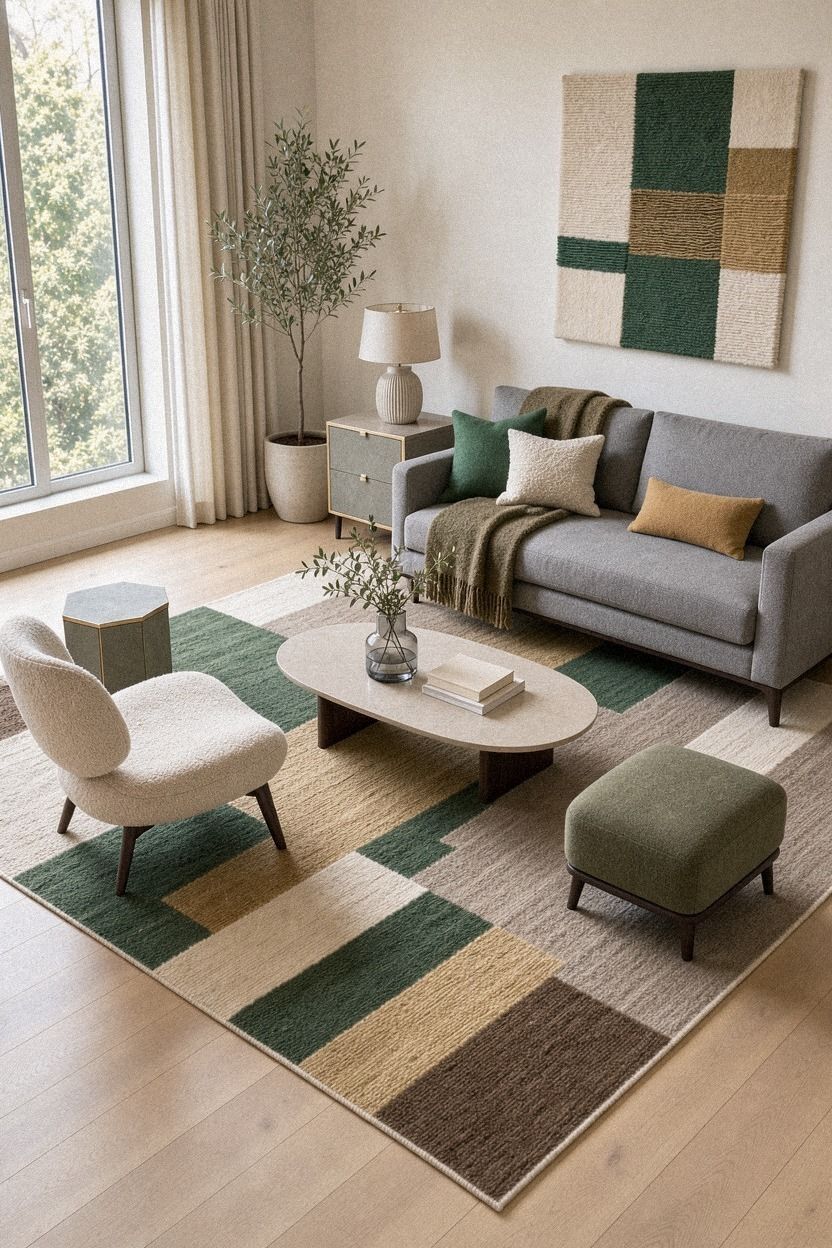
A wool rug with emerald, gold, and cream threads gives your grey couch something warm to lean against. Look for a handwoven wool rug with visible variation and shagreen accents, not a flat grey pattern that repeats the sofa’s coolness. You’ll get softness underfoot, and the uneven weave catches lamplight beautifully.
For your layout, choose an 8x10 or 9x12 rug when the room allows it. Your sofa’s front legs should sit on the rug, so the seating feels connected instead of scattered across the floor.
I’d skip a tiny mat tucked under the coffee table. It makes your large grey couch look even larger and leaves the room feeling unfinished.
A living room rug size guide can help if you’re measuring around doors, walkways, or a sectional. The basic rule is simple: the rug should gather the seating, not merely decorate the coffee table.
Use cream, emerald, gold, or a restrained green in the pattern. You don’t need every color in the room to match.
You need one warm note that repeats in a cushion, a basket, or the wood grain of your table. That little echo is what makes the room feel intentional.
And if you’re building a softer evening routine, pair the rug with low lamps instead of a bright ceiling fixture. Your eye will read the wool texture first, then the amber pool of light. See these cozy living room lighting ideas if the room still feels flat after sunset.
The rug should feel earthy, calming, and lived-in. That small shift matters!
Typical cost by tier (US averages):
2The Two-Wood Rule for a large grey couch
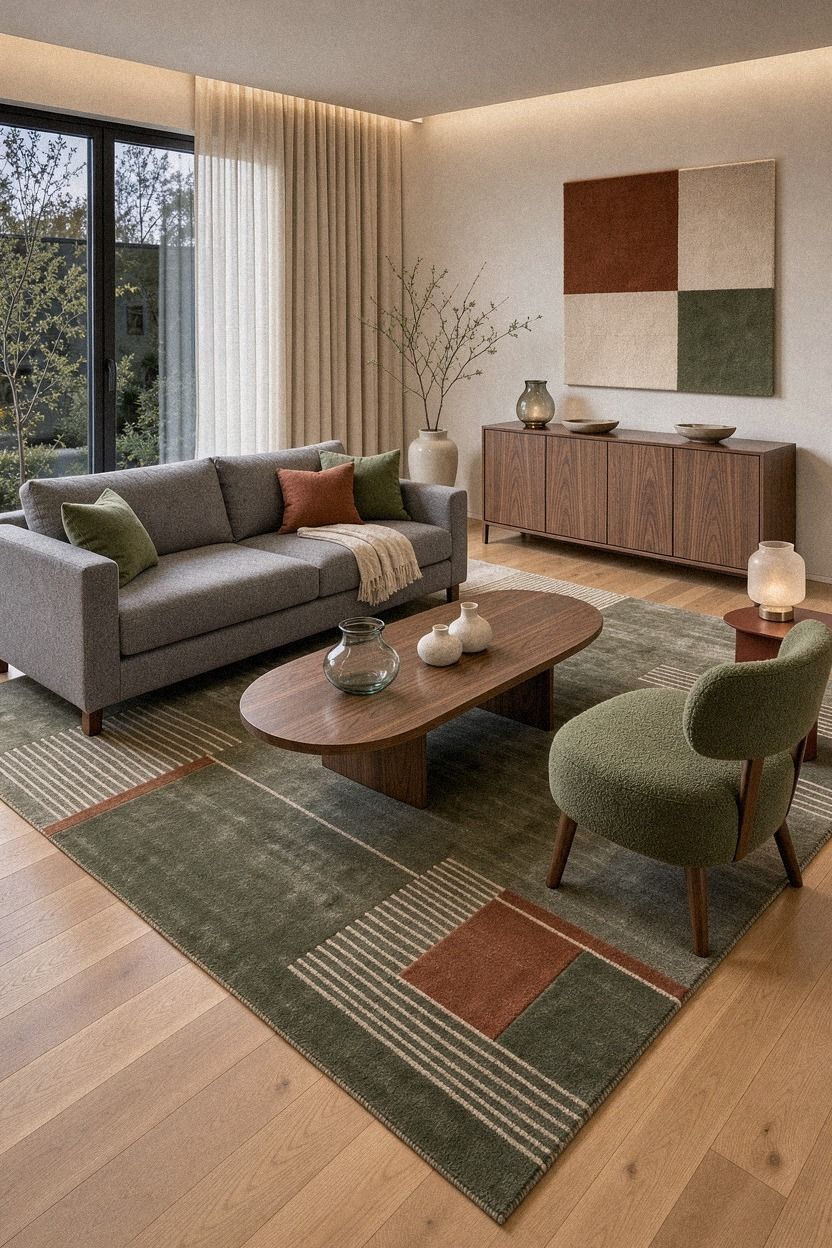
The Two-Wood Rule keeps a grey sofa from floating in a room full of cool surfaces. Choose natural oak and deeper walnut, then repeat each only twice.
A book-matched walnut coffee table can sit beside a natural oak tray or a dark wood picture frame. You’ll get contrast without turning the room rustic.
Your coffee table should be 16 to 18 inches tall and roughly two-thirds the length of your sofa. That proportion matters more than the table’s label. I’ve seen a handsome table look awkward because it was too short and too narrow, leaving the rug and couch disconnected.
Use this coffee table size guide if your sofa is oversized or unusually deep. The goal is comfortable reach, clear walking space, and enough visual weight to keep the rug from feeling oversized.
If your floor is pale, choose a rug with forest green or rust threads. If your floor is dark, bring in natural oak and warm green.
You don’t want a brown rug that disappears into the floorboards. You want your feet to see where the seating zone begins.
But don’t add three wood tones because the room feels plain. That usually creates visual noise, and your grey couch needs a calm anchor. A West Elm Andes table in a warm finish can work with an IKEA KALLAX birch-effect console if you keep the rest of the wood quiet.
The same idea applies to a mixed wood living room. Keep the undertones related, repeat each finish with intention, and let the rug act as the transition between them.
I’d use this rule in a coach living room too, especially if the spelling on your search board says “coach” and your room still needs a little direction. Your rug can carry the warmth while the wood gives it structure.
3Which muted blue makes a grey couch feel softer?
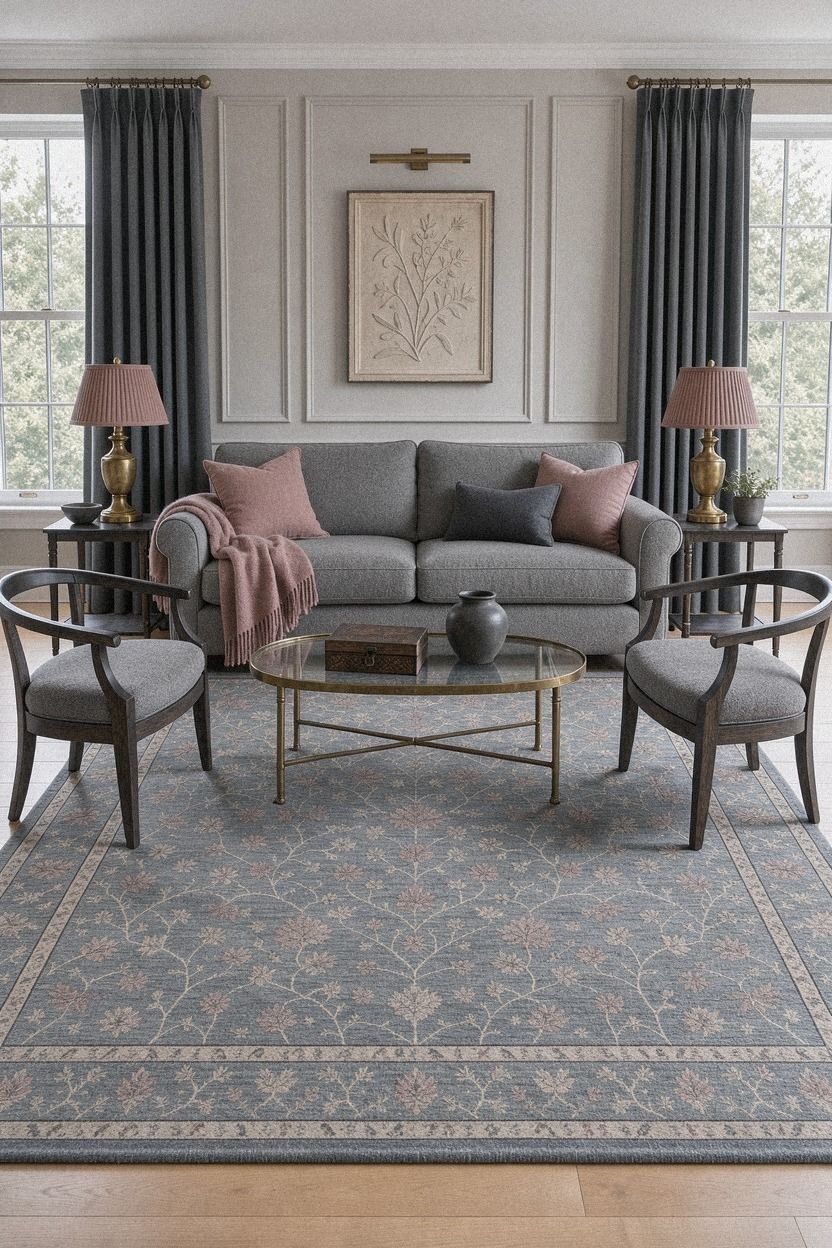
Muted blue rugs often pull people toward icy patterns, and that’s where the room gets cold.
4Anchor a couch living room with the Floating Hearth Layout
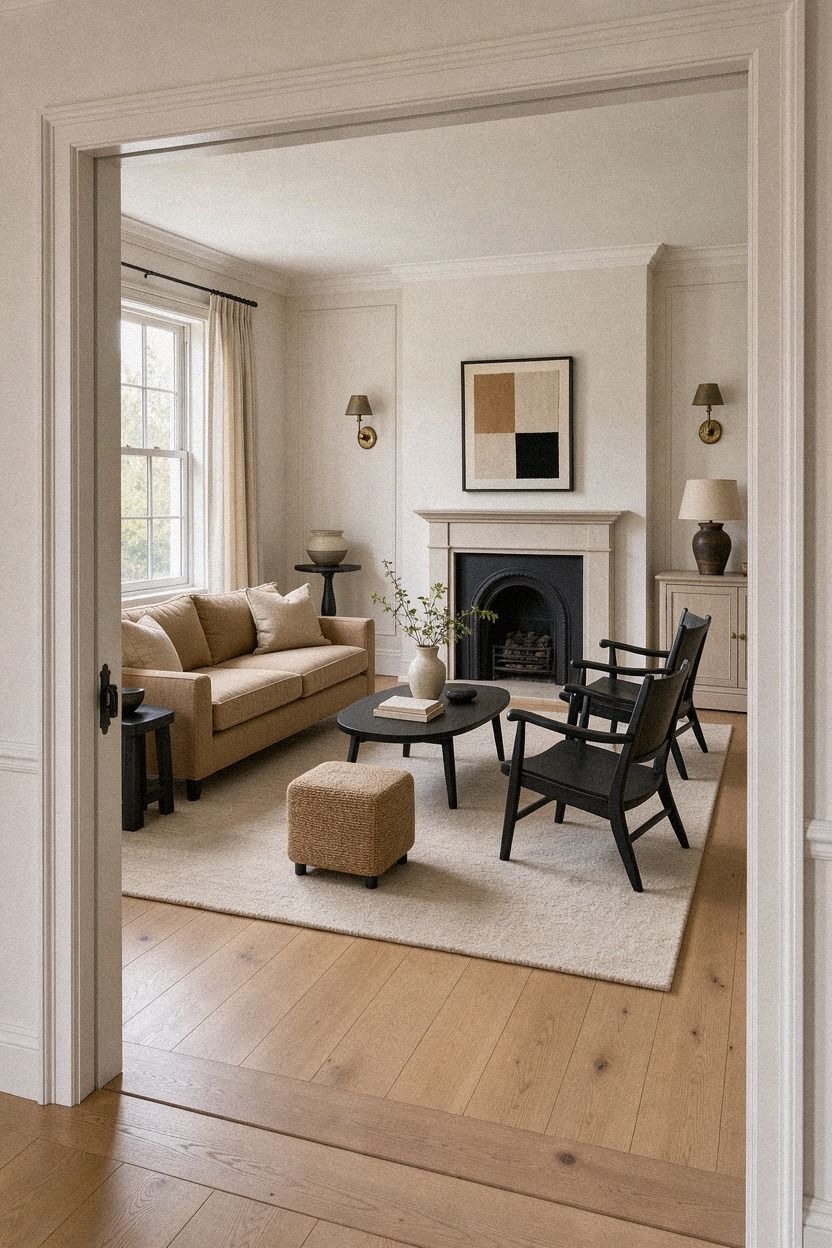
The Floating Hearth Layout places the rug under the whole conversation area, even when your sofa sits away from the wall. It’s especially useful if your couch living room has a television on one side and a window on the other. Your rug becomes the visual hearth, so the furniture has somewhere to gather.
Choose a warm white rug with camel and black accents if your couch is medium grey. The palette will soften the sofa’s straight lines without making your floor feel busy. You’ll want enough contrast to see the rug’s edge, but not so much that every chair looks outlined.
If your sofa depth is between 35 and 40 inches, test the rug placement before you commit. Your front legs need to sit securely on it, and your coffee table should stay fully inside the seating zone. I’d rather see a simple 9x12 rug used well than a luxurious small rug stranded in the center.
The same principle works in a small living room layout. You might not fit every chair on the rug, but the sofa and the main table should still feel like part of one arrangement.
I made this mistake in a rental once. The rug looked generous in the store, but it stopped six inches before the sofa legs.
The room felt chopped into islands. Your eye notices that gap every time you walk in, even if you can’t name the problem.
For a gentle evening cue, keep one corner open for a basket or floor lamp. A patinated unlacquered brass lamp can soften the edge without adding another strong color.
Start there! Move the rug before you buy more furniture. Sometimes the room’s temperature is a layout problem wearing a color problem’s coat.

5Terracotta, not icy white, for a warmer room
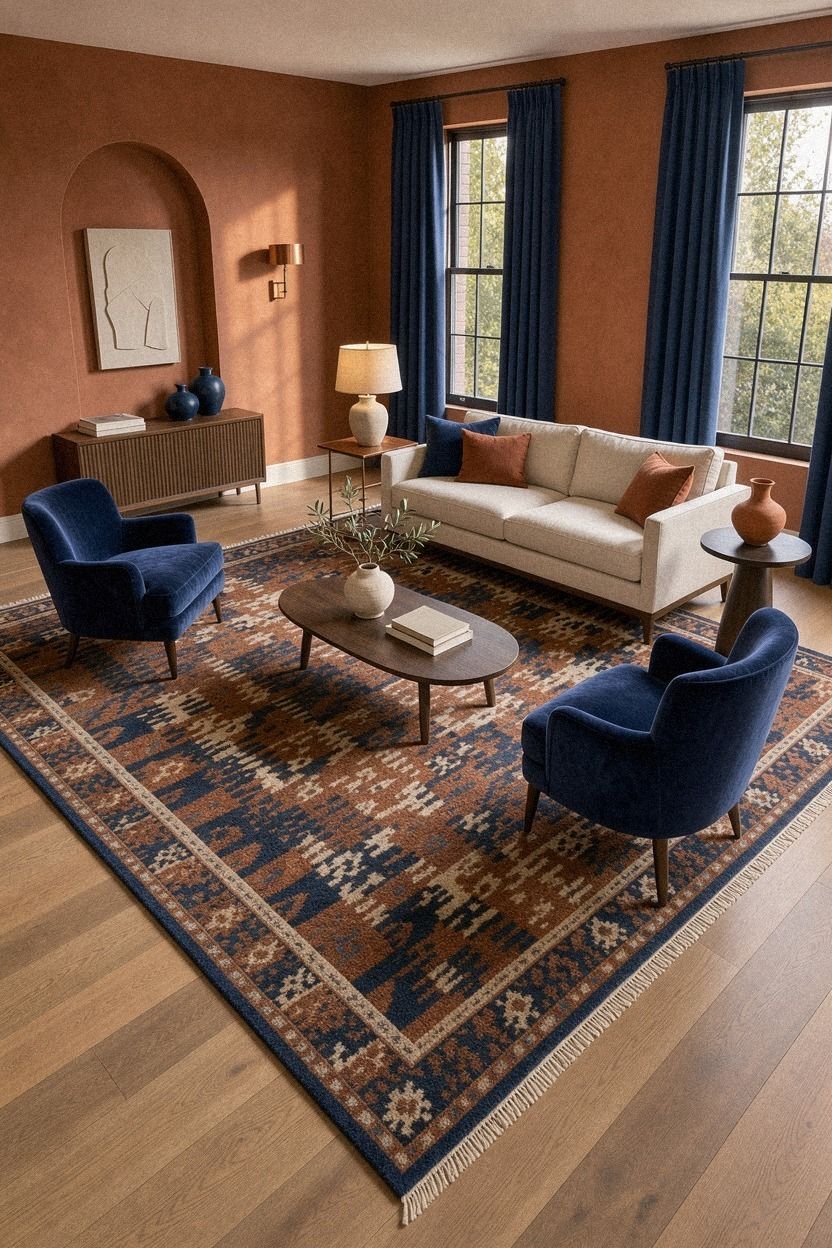
Midnight blue, copper, and ivory can give a grey couch a grounded pulse. A deep-pile mohair velvet rug adds softness and depth without relying on icy white.
6The Faded Persian Pattern under the sofa
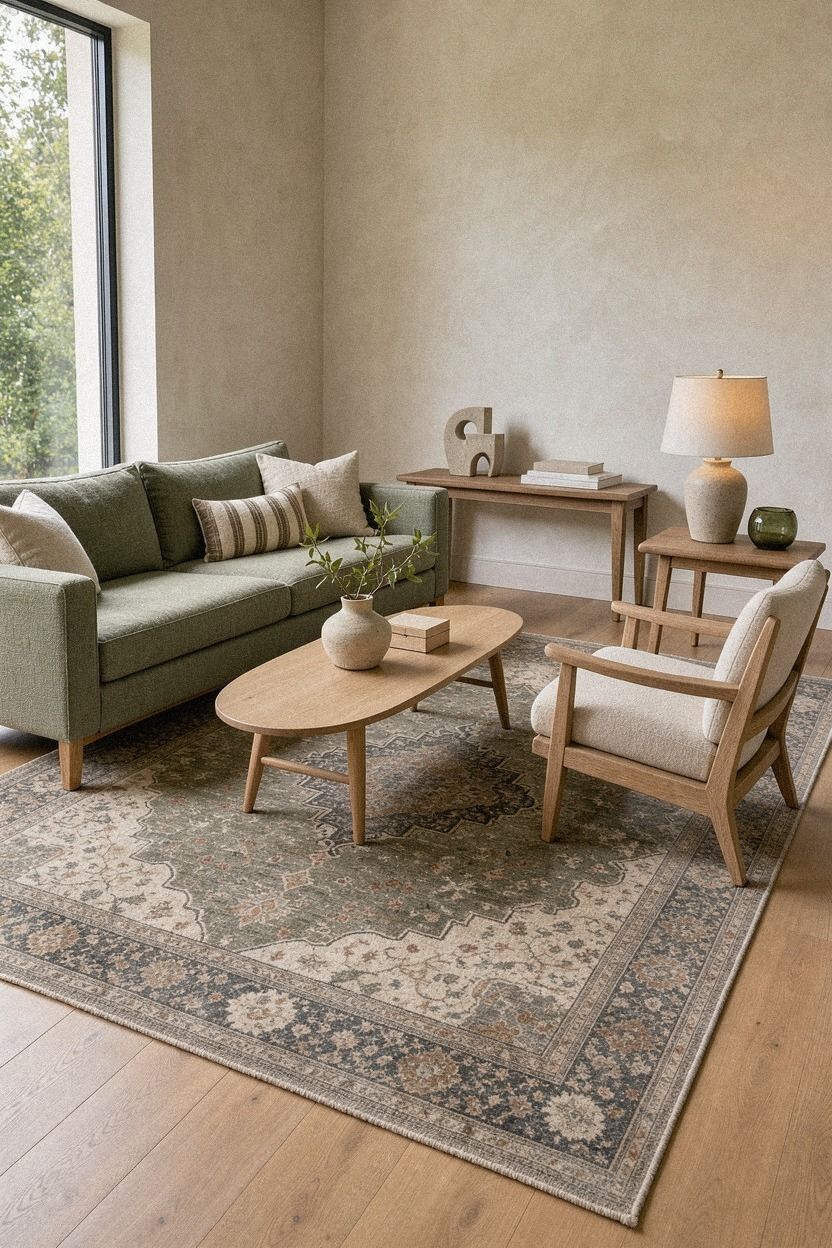
A faded Persian-style rug gives your grey couch warmth through pattern rather than a single loud color. Choose a sage green and warm cream pattern with natural wood nearby. Your sofa will look softer because the rug breaks up its broad, cool shape.
The best versions have a little visual wear. A perfectly sharp medallion can feel formal, especially beside a modern sectional. You’ll get a more relaxed room from a pattern with softened edges, uneven color, and a little empty space around the central design.
If your furniture is simple, let the rug carry more detail. If your coffee table has turned legs, carved edges, or a strong black base, choose a quieter border.
I’d skip pairing an ornate rug with ornate lamps and decorative storage. The room needs one storyteller, not a committee.
Use these Persian rug decorating ideas when you’re trying to make a patterned rug feel modern. The answer is usually restraint around it, not more pattern.
A hand-applied Venetian plaster wall can sit behind this rug if you need another texture. Keep the finish warm cream rather than stark white. Your grey couch, sage rug, and natural wood will create a gentle, layered palette that feels sophisticated without becoming precious.
You can also repeat the rug’s sage or cream in artwork. Don’t match it exactly.
Your eye likes a family resemblance, not a color photocopy. A small natural wood frame can finish the connection.
7Swap cold white for camel and cream
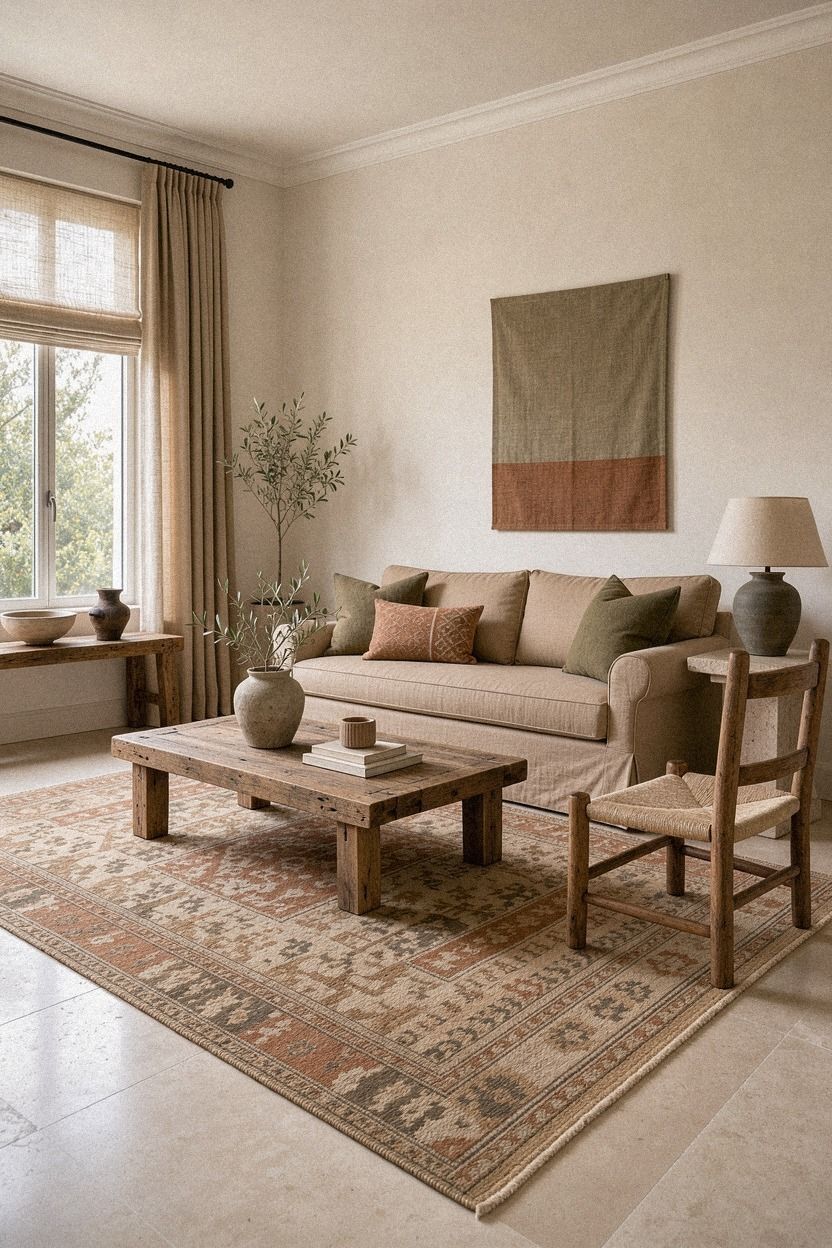
Terracotta, stone, and olive create a quiet bridge between grey upholstery and warm wood. Choose a reclaimed weathered teak table or accent if you want texture and age, or a short-pile rug design if you need easier vacuuming. Your couch will look less blue, especially beside those grounded tones.
This palette works best when you repeat olive or terracotta at eye level. Try a leather frame, a woven basket, or a cushion in one of those shades. You don’t need a terracotta sofa to make the palette work.
In fact, too much matching color can make the room feel staged.
See these camel and cream living room ideas if you’re building a neutral scheme and want it to feel warmer without becoming beige-on-beige.
But don’t use bright cream as the only counterpoint to grey. It can look clean for a week, then every cool surface starts shouting. Add terracotta, olive, or warm black so your rug has somewhere to settle visually.
For a more tailored look, choose 18 oz cotton velvet cushions in olive or clay. The heavier textile will catch light differently from the rug, and that difference is what makes the room feel layered. Your fingers should notice the change before your eyes do.
If you’re considering a pale paint, test Sherwin-Williams Evergreen Fog SW 9130 beside the rug. It’s gentle and earthy, but it can turn more green in certain light. You’ll want to see the sample in your own room before committing.
8What should the rug budget actually cover?
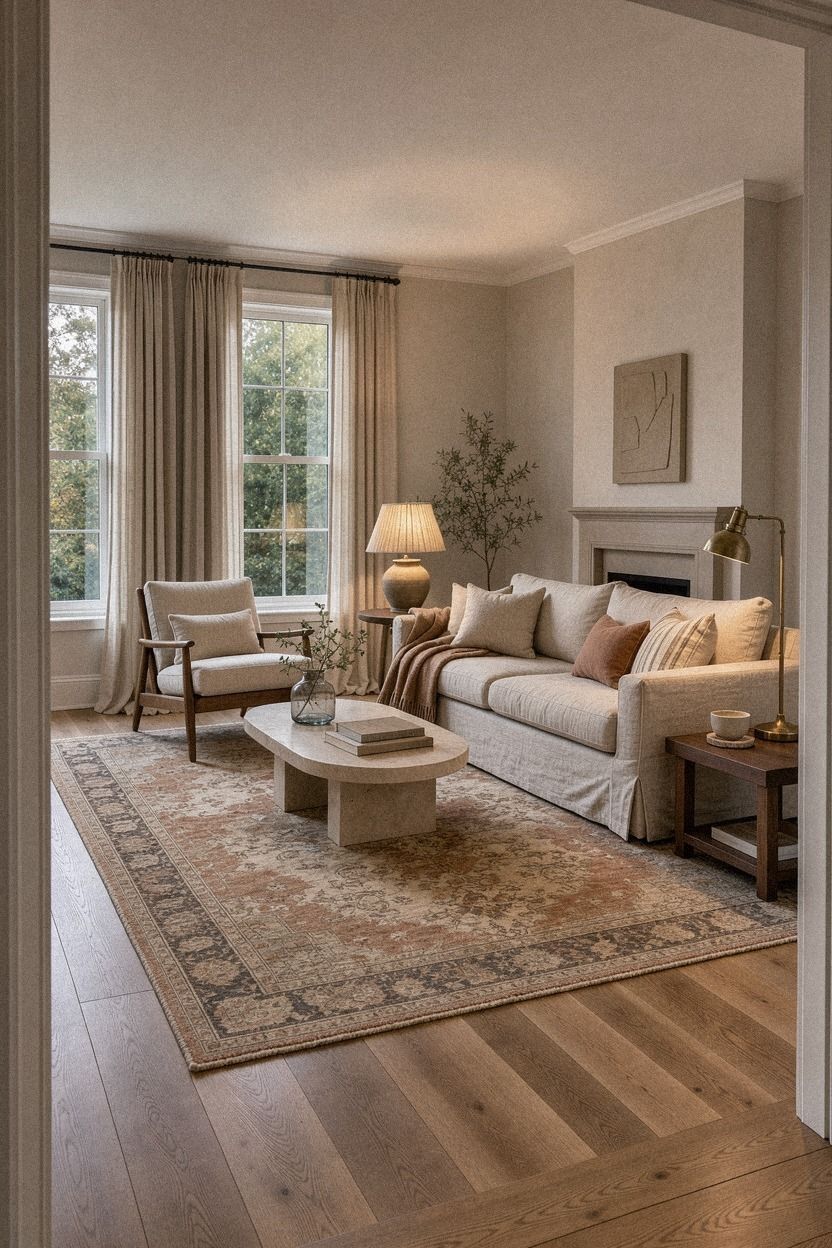
A good rug can change the room, but your budget still needs boundaries.
9Frame the grey sofa with a Three-Height Light Stack
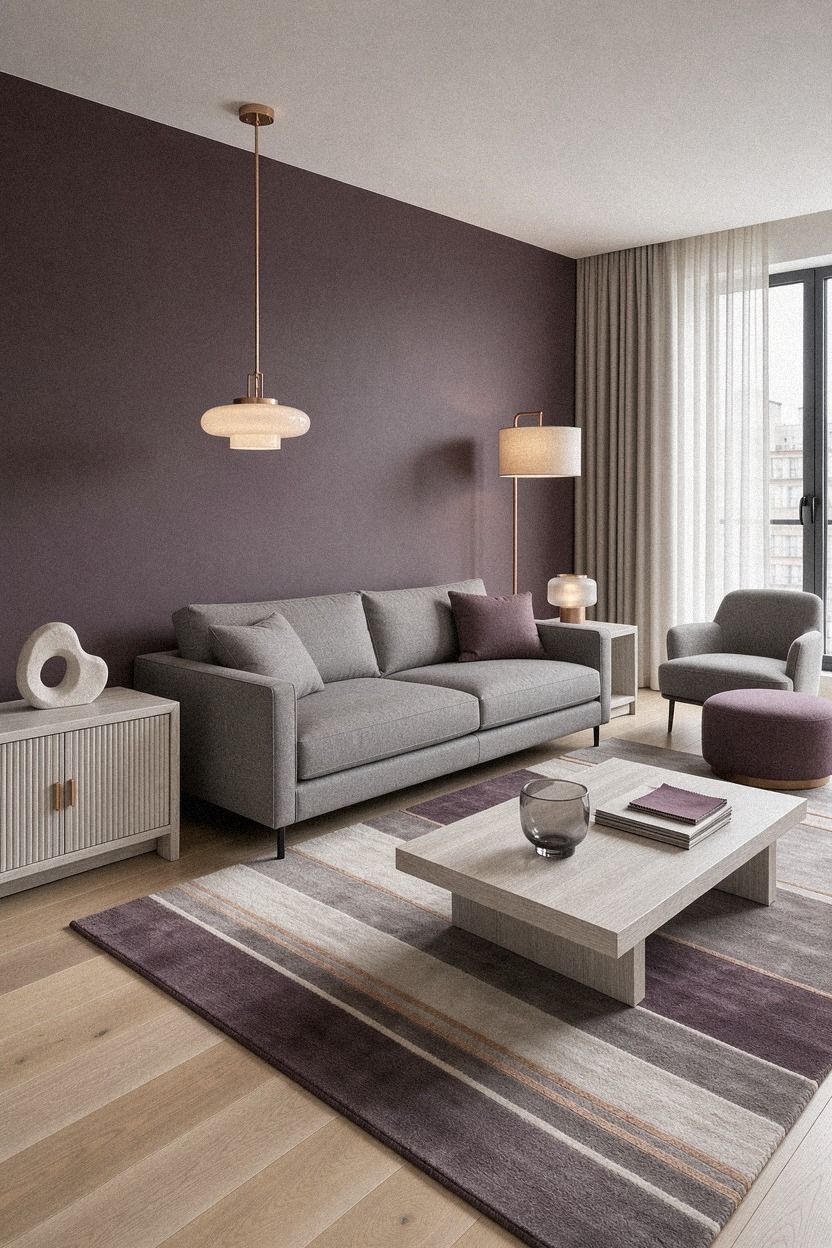
Your rug can be warm and still look cold if the room is lit from only one ceiling fixture. The Three-Height Light Stack uses a low lamp, a table-height lamp, and a taller source so your eye moves gently through the room. A cerused white oak lamp table will add structure around your grey couch.
Put the lowest light near the rug, perhaps on a low console or side table. Use a taller floor lamp behind the sofa or beside a chair.
Your room won’t feel brighter in a harsh way. It’ll feel calmer because the light has places to land.
This layered living room lighting guide can help you place lamps without crowding the seating area. The lowest source should create a pool, not a glare across the floor.
I’d choose warm bulbs and matte finishes over polished chrome. Rose gold or warm brass gives the rug’s fibers a little company. You’ll notice the difference after sunset.
If your rug has plum, grey, or rose-gold notes, let the lamps stay visually quiet. A West Elm sculptural lamp can work, but don’t add another bold pattern at the same height as the rug. Your composition needs rhythm, not constant competition.
And if you live with someone who likes brighter light, use separate switches. Your evening room shouldn’t become a negotiation every night. A dimmer can make a greater difference than replacing the entire fixture.
10Paint the backdrop before choosing the final pattern
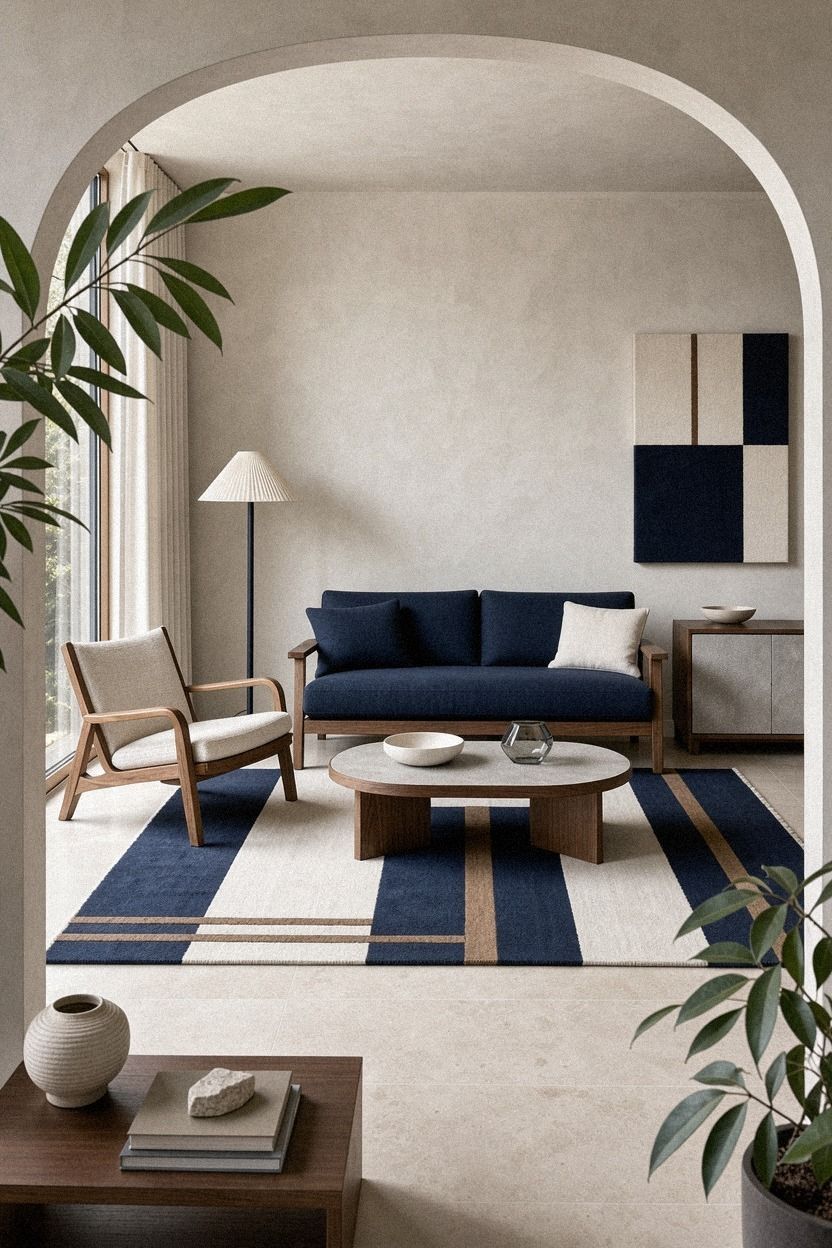
Your grey couch may look cold because the wall behind it is too stark.
11Blue over beige when the room needs depth
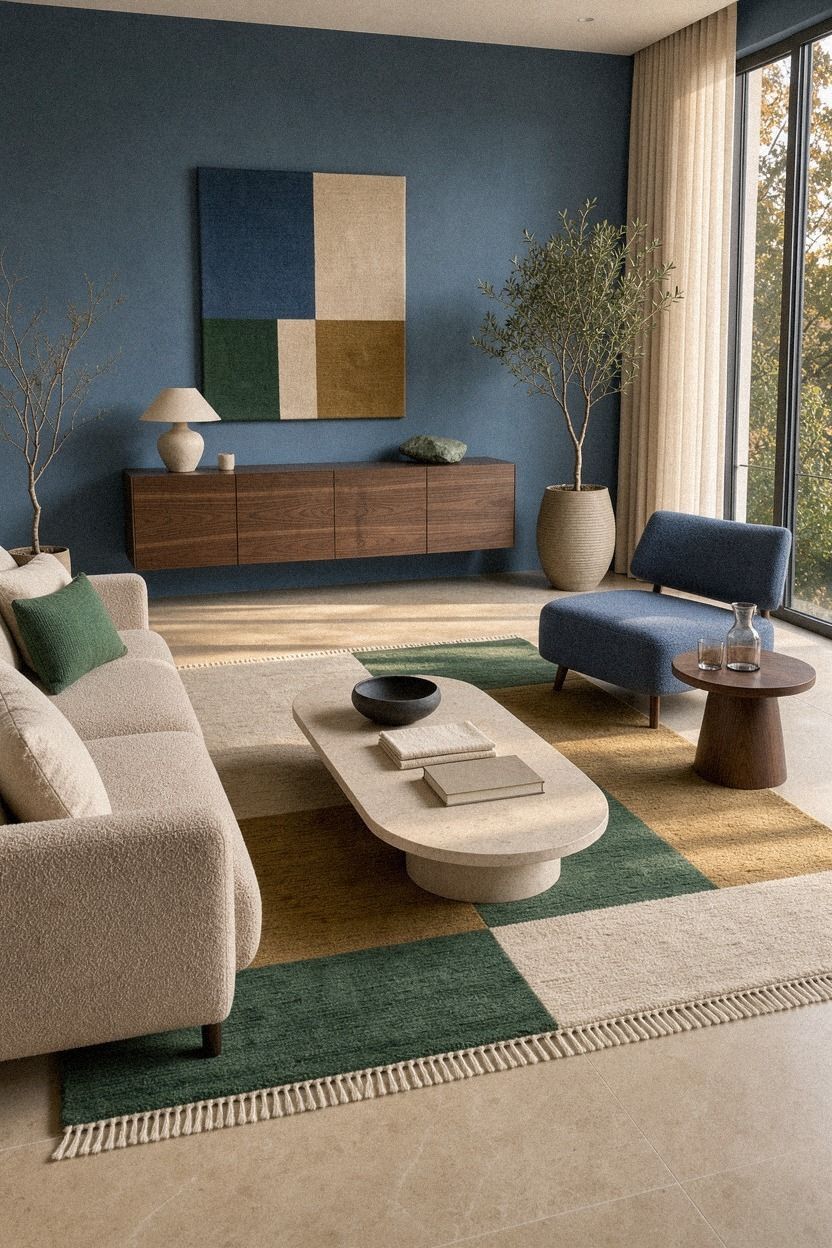
Emerald, gold, and cream are better choices when your grey couch needs depth without becoming heavy. A book-matched walnut table brings structure beneath the palette. Your grey upholstery will look intentional instead of washed out.
Choose green with warm gold and cream running through it. A single cool blue can pull the sofa toward silver. A richer palette with earthy variation will make your seating area feel more intimate and serene.
Your room can handle a strong rug if the furniture stays simple. Try a clean-lined sofa, a rounded walnut table, and one woven basket. I’d avoid adding pillows in the exact same shade because the palette will become too literal.
If your television is part of the arrangement, place seating so the screen is around 1.5 to 2.5 times its diagonal distance away. Use this TV viewing distance guide if the screen and seating are forcing awkward furniture placement.
Your rug should define the seating zone without forcing every chair to face the screen. A room still needs conversation.
And if your grey couch is a Article Sven tan leather companion chair or a similar warm accent, emerald becomes even more useful. It will connect the cool sofa to the tan chair and keep your room from becoming a sea of beige. That balance is warm, modern, and easy to live with!
The Warmth I’d Keep, Even If Trends Shift
I’ve watched grey sofas move from fresh and architectural to overused, and I don’t think the answer is throwing yours out. Grey is useful.
It hides a busy life, works with wood, and gives you room to change the rug when your taste moves. The problem starts when every surrounding choice is grey, white, silver, or blue-black.
My own mistake was choosing a rug that looked warm online but arrived with a cold ivory base. In daylight, it made the couch look blue. At night, the overhead light made the whole room feel flat.
I kept adding pillows, which was the wrong response. The floor needed more brown, not more decoration.
Now I start with temperature before pattern. I hold the rug against the sofa, then place a wood sample and a lamp beside both.
If the rug looks good alone but turns icy beside the grey, it’s not the right rug for your room. You’ll save money by making that judgment before delivery.
I also think size beats prestige. A modest 8x10 rug that catches the sofa’s front legs can make your room feel gathered, while an expensive small rug leaves every piece floating.
You don’t need a showroom piece. You need a surface that gives your feet, furniture, and eye one shared landing place.
The best choice is the one you’ll keep seeing in ordinary moments: the first coffee, the late-night book, the clutter you didn’t put away. That’s where warm wool, faded color, and soft light earn their place. Your home should feel like yours, not like a color board.
What People Always Want to Know
What is the best rug for a grey couch in a small living room?
A muted terracotta, camel, or faded blue rug usually works best because it adds warm contrast without making your room feel crowded. Choose an 8x10 size when possible, keep the front sofa legs on it, and look for a low-pile wool or flatweave design.
Where can I buy rug pieces on a budget?
IKEA, Wayfair, and Target are practical places to compare budget-friendly textures without affiliate pressure. You can also check Facebook Marketplace or a local thrift shop for wool rugs. This site uses display advertising, not commission links, so you can shop wherever your own research leads.
How much does a grey couch rug makeover cost?
A full living room refresh can fall within the typical $300-$1,200 budget tier when it includes pillows, throws, a rug, art, and paint. You can spend nothing by rearranging furniture and using textiles you already own, then change the rug when your budget allows.
Can I create this look on a budget?
Yes, and you can start with free layout changes. Move the sofa’s front legs onto the rug, remove one cool-toned accessory, and bring in a wood tray or woven basket you already own. A second-hand rug can give you warmth without requiring a full room purchase.
Is a warm rug worth it in a small space?
Yes, because a correctly sized rug makes small seating feel connected instead of chopped up. Keep the pattern low-contrast, use an 8x10 when it fits, and leave enough visible floor around the edges so your room still feels open. These small-space decorating ideas can help you keep the rest of the room visually light.
Is this a good idea for a rental?
Yes. Choose a no-damage warmth plan with a removable rug, peel-and-stick art, a tension rod for linen drapes, and freestanding lamps.
You don’t need to paint or drill to change the room’s temperature, and you can take every useful layer with you later. See more rental living room ideas if permanent changes aren’t an option.
Where I’d Start First
If I had to pick one, I’d start with a faded terracotta wool rug. Grey upholstery can handle color, but it can’t hide a cold floor, and terracotta warms the room before you buy another pillow. Pin this idea for later and measure your sofa first.
Your rug should connect the seats.