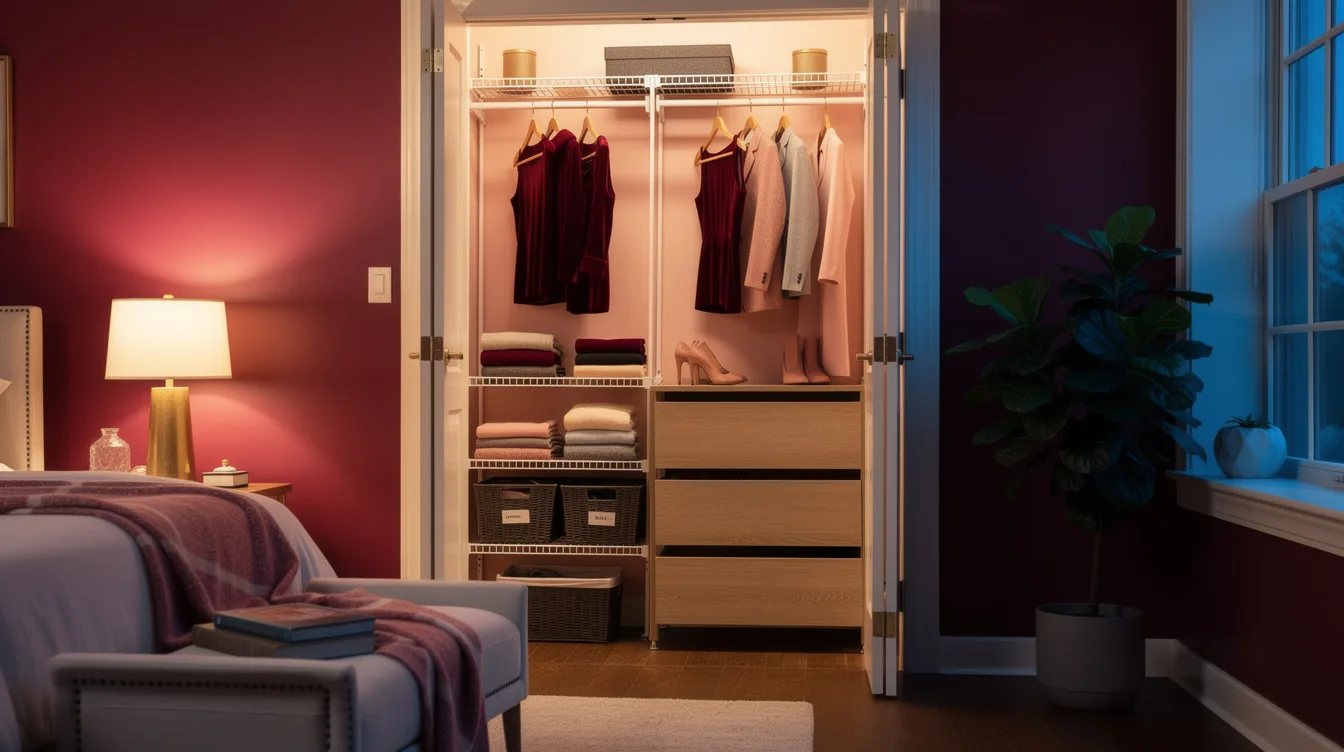
Reach-In Closet Overflow? These Elfa Alternatives Start at $64
28 november 2026Bed Bath & Beyond now focuses mainly on freestanding storage furniture, so shoppers searching there for an Elfa replacement can hit a dead end. In a typical 6- to 8-foot reach-in, a DIY system can cost about $85 to $190, while an Elfa project from The Container Store often reaches roughly $500 to $1,500.
The best substitute depends on one real choice: do you want adjustable rails, solid shelves, or furniture-style drawers? These 12 options narrow the field without wasting space on a system that cannot fit the opening.
What you will find inside
- Choose ClosetMaid ShelfTrack for the Closest Swap
- Stretch a Small Budget With PROWORX
- Hang Heavy Items on Rubbermaid FastTrack
- Fit Awkward Widths With Configurations Deluxe
- Add a Wood-Look Finish With Easy Track
- Build a Furniture Look With SuiteSymphony
- Use IKEA BOAXEL for Adjustable Standards
- Keep IKEA AURDAL for Freestanding Storage
- Choose IKEA PAX for Cabinet-Style Organization
- Match Shelf Depth to the Closet Opening
- Double the Hanging Capacity With Two Rods
- Reserve Rail Systems for Future Changes
Choose ClosetMaid ShelfTrack for the Closest Swap
ClosetMaid ShelfTrack follows the same suspended-rail idea that makes Elfa so flexible. The wire shelves clip into adjustable standards, so a typical 6- to 8-foot reach-in can gain a cleaner layout without paying about $500 to $1,500 for a professionally planned Elfa project.
A basic kit runs around $85 at Amazon, while a larger 5- to 8-foot kit is typically about $181. The published load rating is roughly 83 pounds per bracket, which makes this the strongest first comparison for everyday clothing.
Stretch a Small Budget With PROWORX
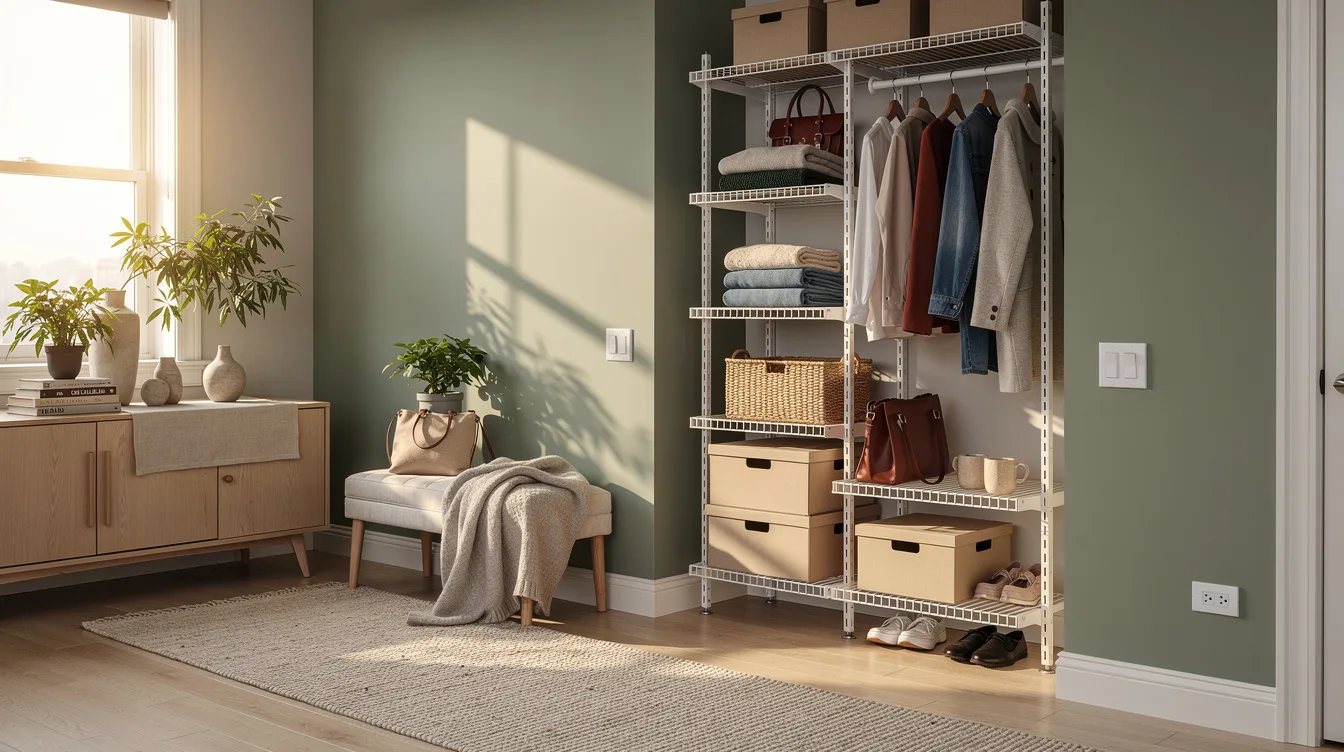
PROWORX works well when the goal is a complete wire system at the lowest practical cost. Its roughly 4- to 6-foot kit includes about 12 feet of shelving and 8 feet of hanging space, enough for a compact reach-in with separate short- and long-hang zones.
At around $93, it leaves room in the budget for matching hangers or storage bins. The tradeoff is a more basic finish, so this choice makes the most sense when function matters more than a built-in furniture look.
Hang Heavy Items on Rubbermaid FastTrack
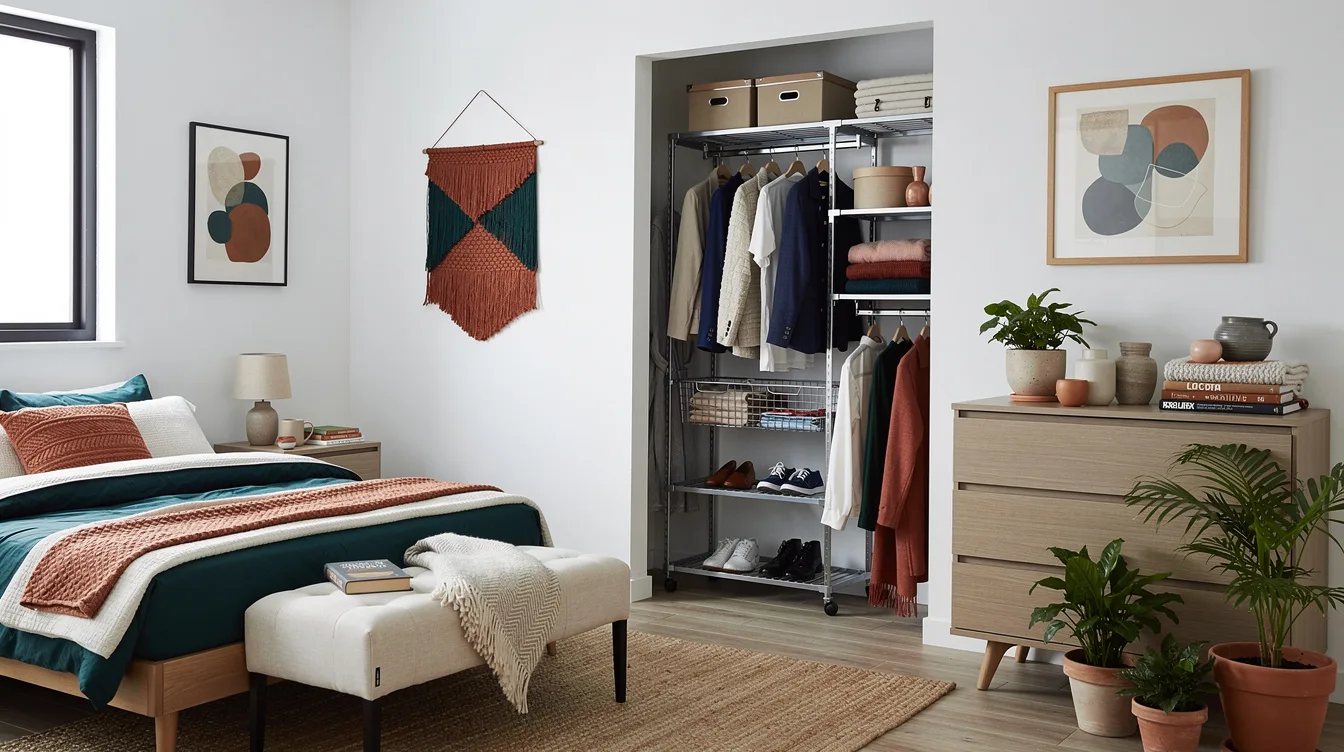
Rubbermaid FastTrack is the sensible pick for a closet that holds coats, luggage, or packed garment bags. Its rail-and-hook design is built around heavier loads, and the components can be removed without tools when the layout needs to change.
A typical kit costs about $64, which makes it one of the least expensive ways to replace a single rod. Use the rail high on the back wall, then reserve the lower area for shoes, baskets, or a second hanging row.
Fit Awkward Widths With Configurations Deluxe
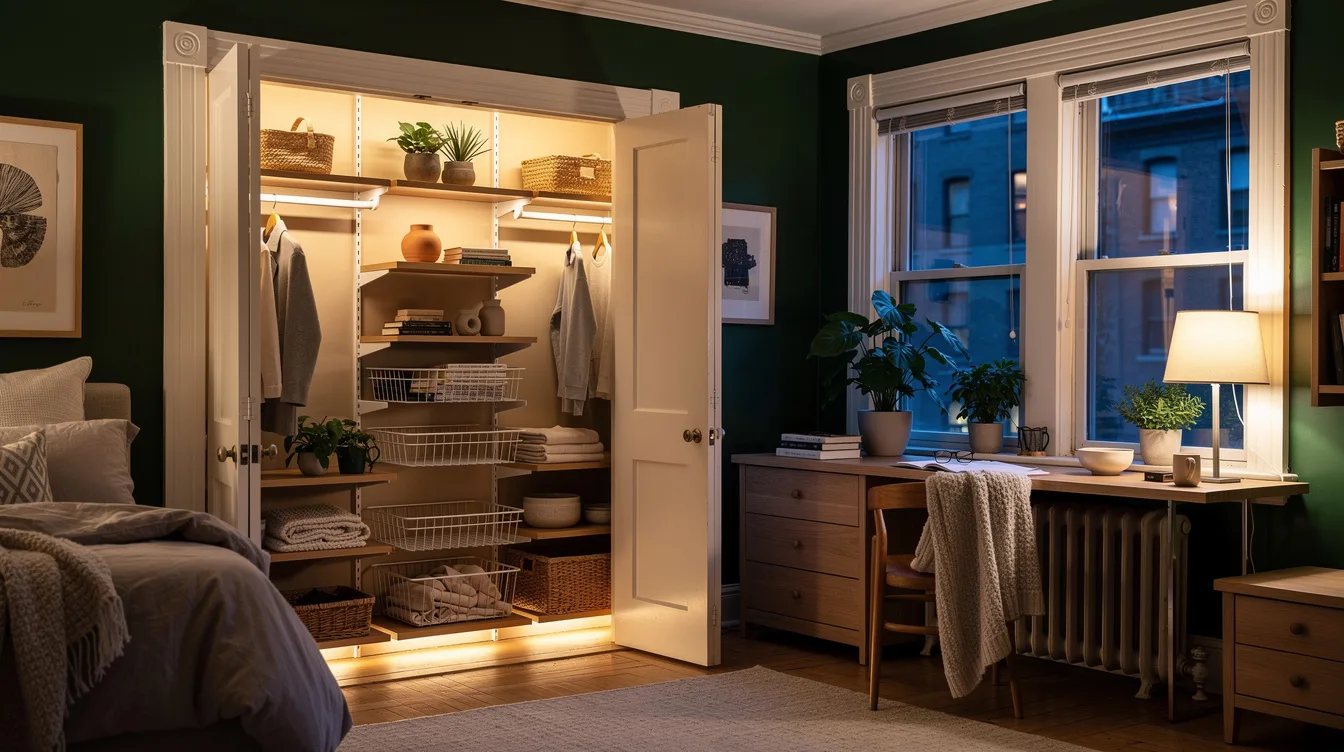
Rubbermaid Configurations Deluxe uses telescoping wire components that help solve uneven or unusual closet widths. A typical 4- to 8-foot kit costs roughly $137 to $185, giving it more reach than the smallest starter systems.
This option is especially useful when a doorway, trim return, or shallow side wall interrupts a clean wall-to-wall installation. Measure the narrowest point first, because the telescoping feature cannot compensate for a closet that is too shallow for the selected shelf depth.
Add a Wood-Look Finish With Easy Track
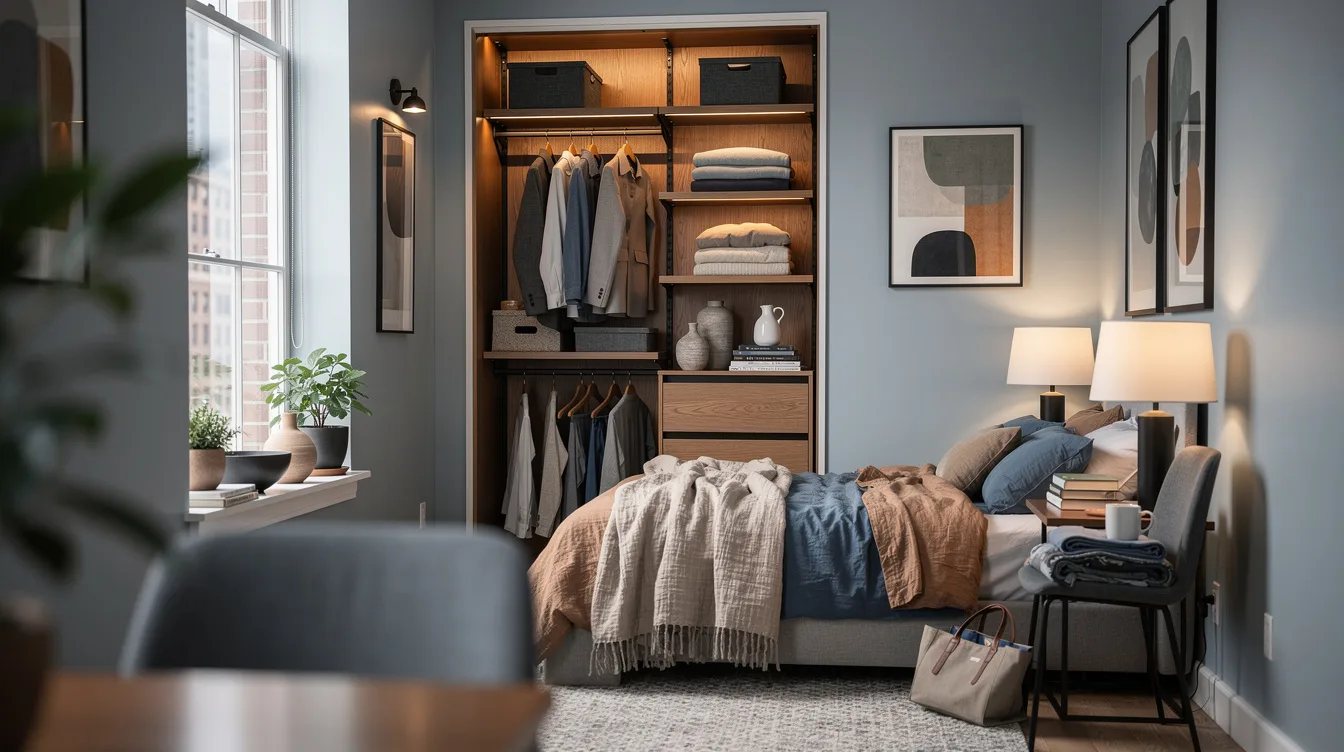
Easy Track Basic Starter brings a laminated surface to the suspended-rail format. Its shelves are about 14 inches deep, so folded clothing and storage baskets get a more furniture-like landing than they do on open wire.
The typical starter price is around $161. Choose it when the closet sits near a bedroom entry or stays visible behind open doors, because the smooth finish looks more intentional and is easier to wipe clean.
Build a Furniture Look With SuiteSymphony
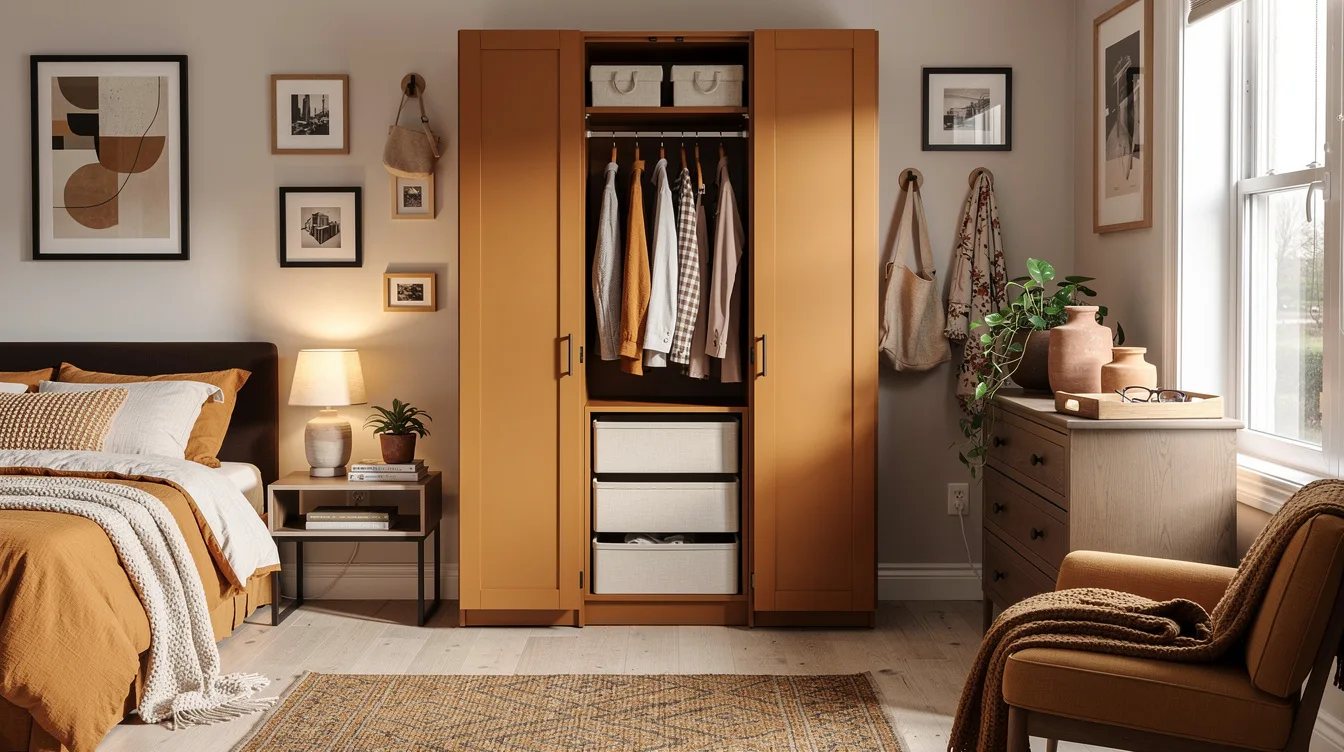
ClosetMaid SuiteSymphony is the better match for anyone who wants drawers and solid-looking panels inside a reach-in. A starter kit costs roughly $155, while a larger configuration may approach about $472.
The drawer section gives small accessories a dedicated home, but it also takes away some hanging width. Put drawers on one side and keep the opposite side open for double-hang rods, especially in a closet narrower than about 6 feet.
Use IKEA BOAXEL for Adjustable Standards
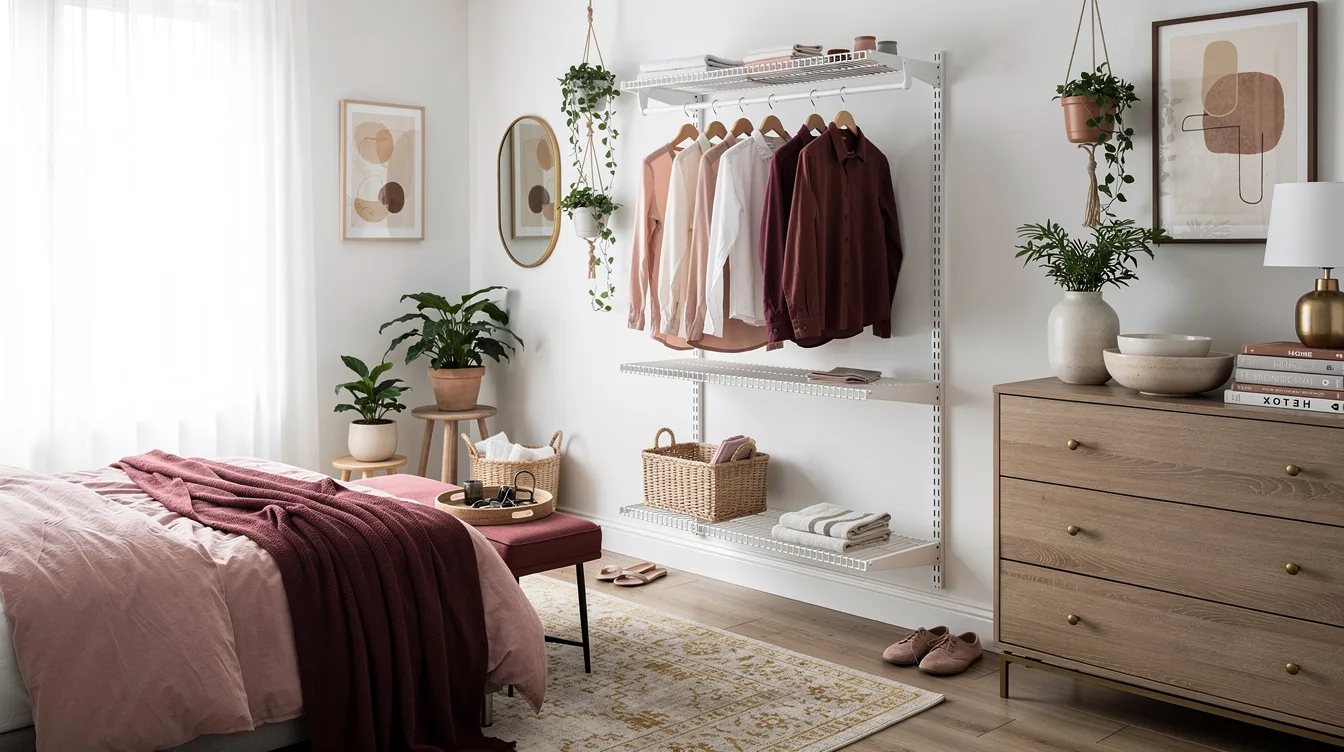
IKEA BOAXEL has a clean rail-and-standard structure that feels close to Elfa while keeping the parts visually simple. The standards come in lengths of about 39 3/8 and 78 3/4 inches, and each one is secured directly to the wall.
It is typically less expensive than Elfa, but installation deserves care because the wall fasteners carry the system. Start with one long-hang section, one double-hang section, and a shelf above each zone instead of filling every inch on the first pass.
Keep IKEA AURDAL for Freestanding Storage
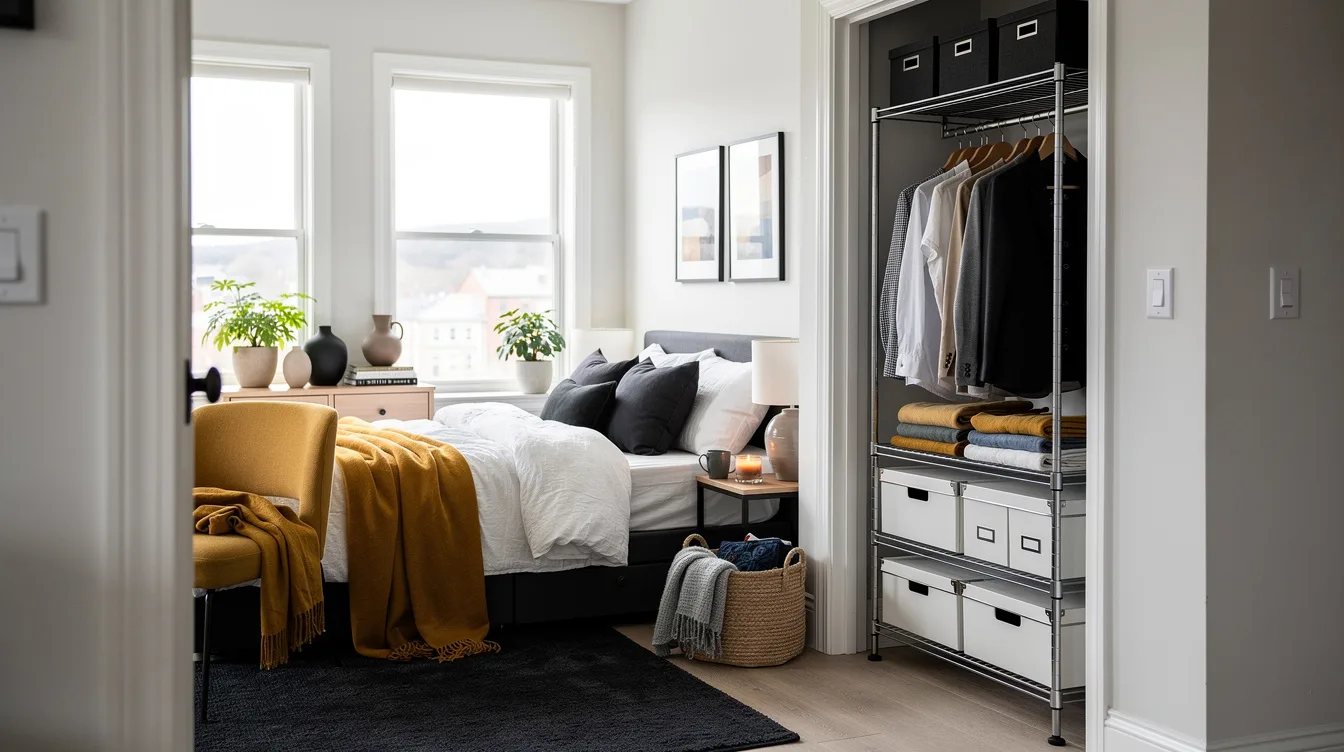
IKEA AURDAL is a useful alternative when wall-mounted rails are not practical. Its laminated, freestanding format can work in a rental or in a closet with uncertain wall construction, and a typical setup costs around $190.
The furniture-style structure takes up more floor area than a suspended system. Leave enough clearance for the doors and trim, then use the top surface for soft luggage or seasonal bins.
Choose IKEA PAX for Cabinet-Style Organization
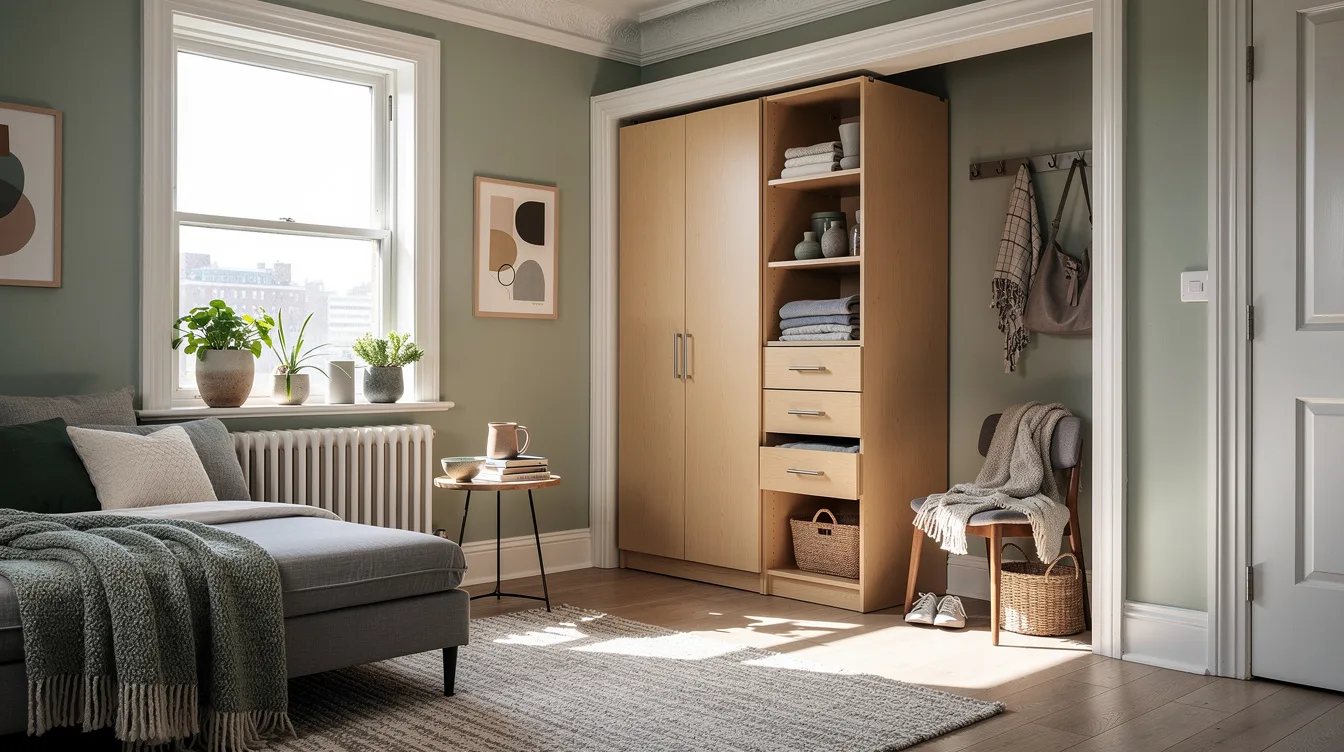
IKEA PAX makes sense when a reach-in should feel more like a compact dressing cabinet. The solid panels hide visual clutter and create a strong base for shelves, drawers, and hanging sections.
That enclosed look comes with a measurement penalty: the frame must pass through the doorway and fit the closet opening before assembly. Confirm the ceiling height, door swing, and usable depth before ordering, particularly in an older home.
Match Shelf Depth to the Closet Opening
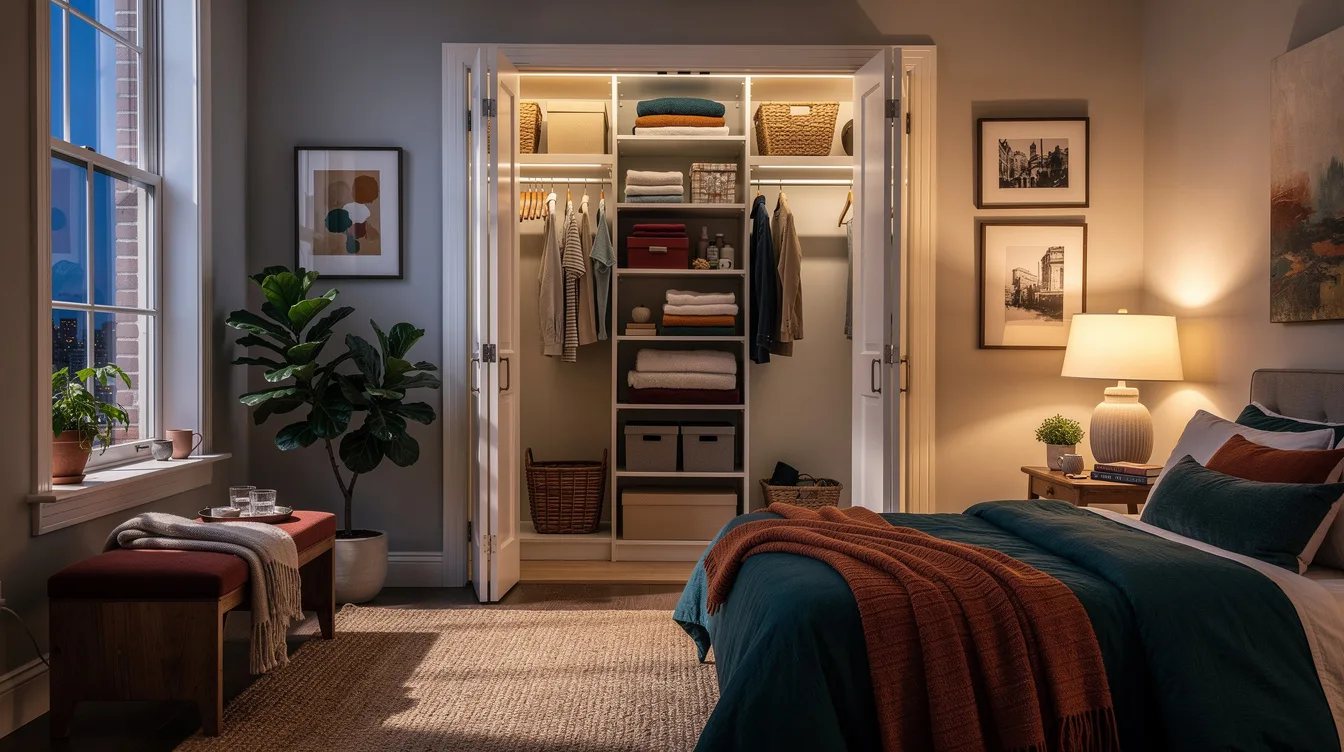
A typical reach-in closet is about 6 to 8 feet wide and roughly 24 inches deep, but the usable depth can shrink near trim or a sliding door. ClosetMaid ShelfTrack offers shelves around 12 and 16 inches deep, giving you a practical choice for narrow and standard openings.
Use the shallower shelf when the door is close to the back wall, and reserve the deeper shelf for folded garments or bins. Leave no more than about 24 inches between supports, with the first support within roughly 4 inches of each shelf end.
Double the Hanging Capacity With Two Rods
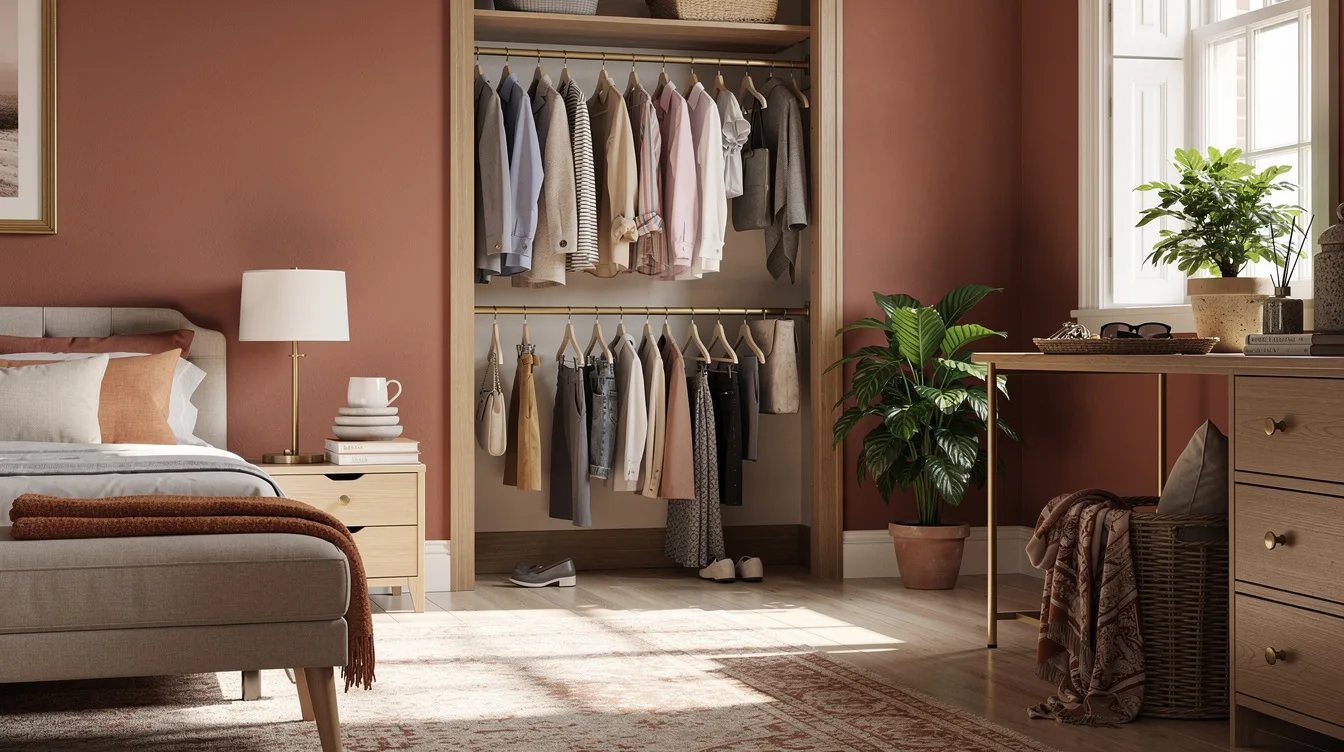
A double-hang layout is the fastest way to make a small closet work harder. Place one rod around waist height and another above it, then use the upper shelf for bags, hats, or a labeled storage box.
Rubbermaid FastTrack or a wire-based kit handles this arrangement without filling the floor with drawers. Slim velvet hangers can save roughly 1 to 2 inches per garment, which adds meaningful space across a full rod.
Reserve Rail Systems for Future Changes
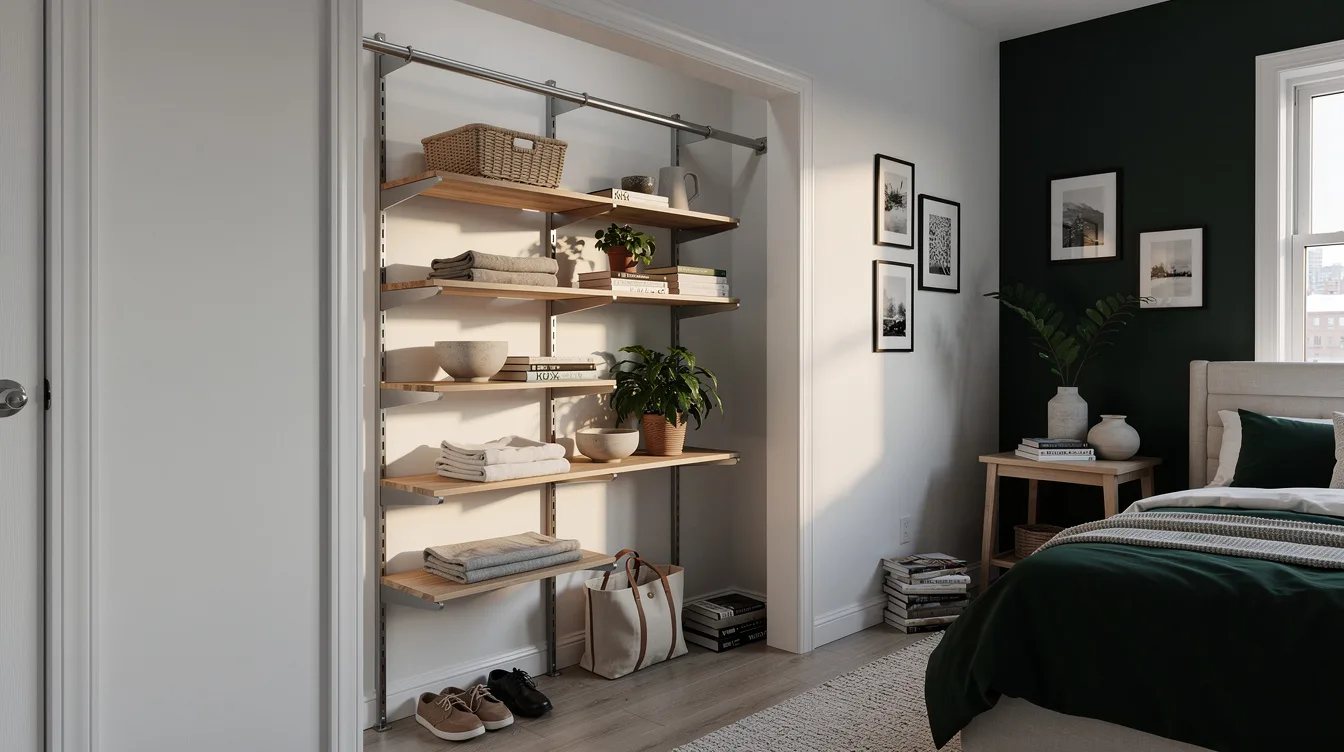
Choose a suspended system when the closet needs to evolve with the household. IKEA BOAXEL, ClosetMaid ShelfTrack, and similar rail-based options let you move shelves and hanging sections more easily than fixed wire or laminated panels.
For a stable wardrobe with a predictable layout, fixed shelving can be the better value. For frequent reorganizing, seasonal clothing changes, or a future move, the extra adjustability is worth more than a slightly lower starting price.
Keep reading
- No Room for Bathroom Storage? These Bed Bath & Beyond Finds Start at $24
- Your Reach-In Closet Is Wasting Space: 13 Container Store Elfa Kits
- Reach-In Closet Eating Your Space? 14 IKEA Storage Fixes Fit Under Six Feet
Measure the narrowest point, mark the door clearance, and choose the system that matches how the closet is used today. A small rail kit with double hanging usually delivers the biggest capacity gain before any larger purchase.