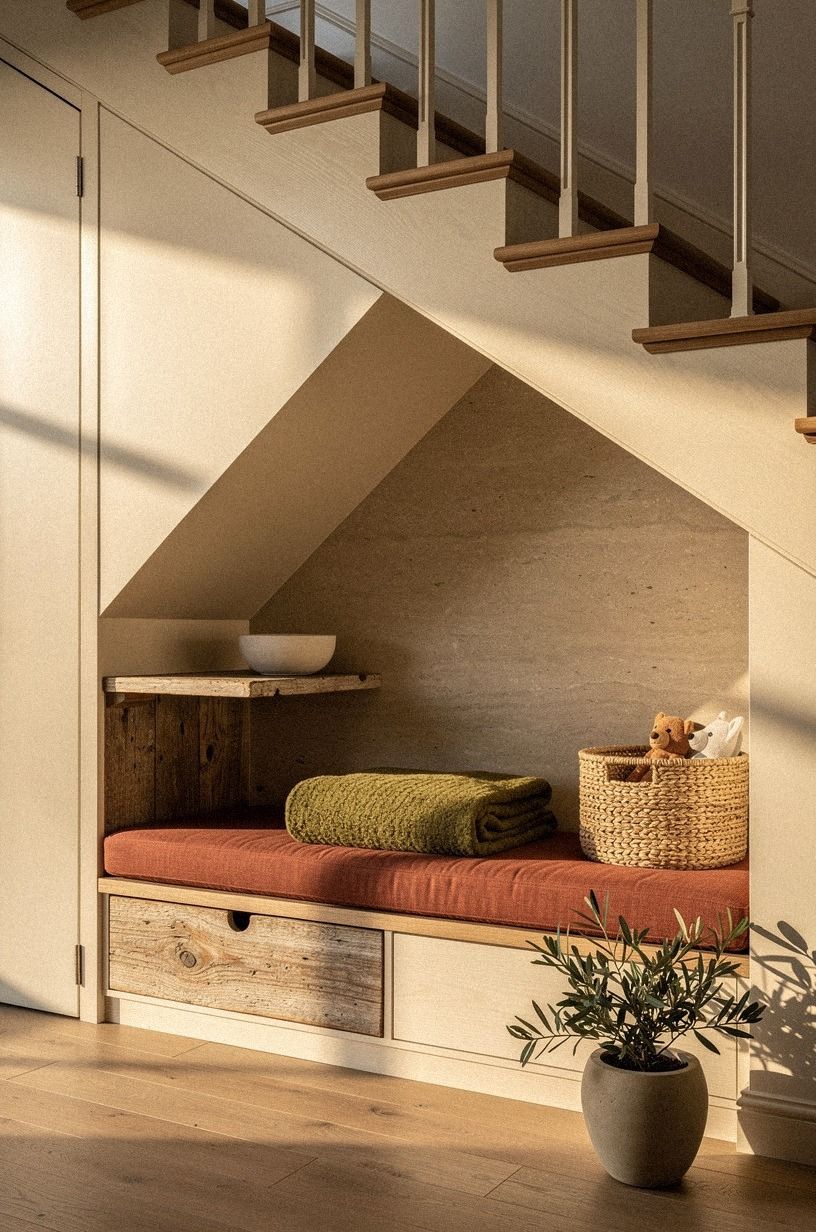
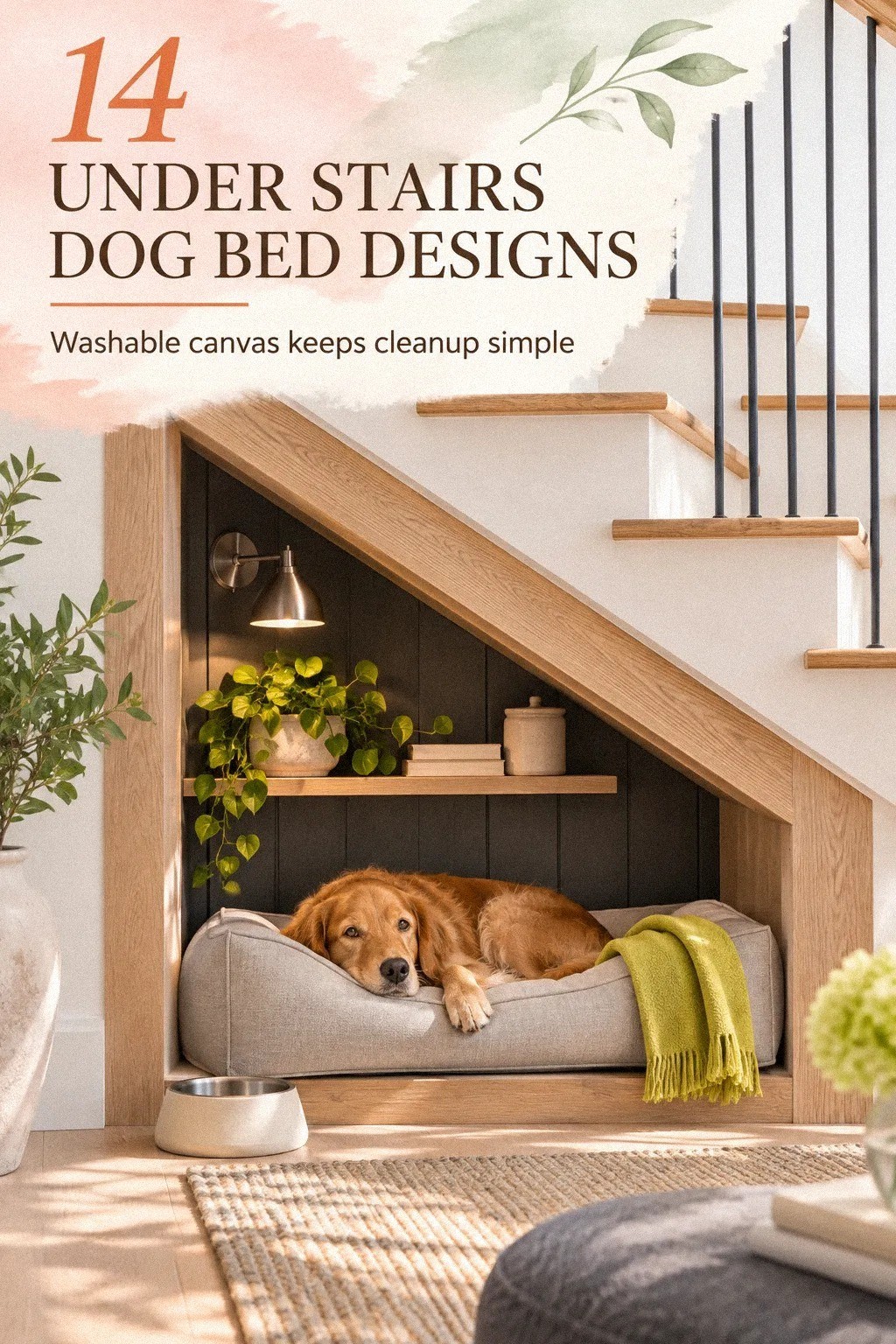
14 Under the Stairs Dog Bed Setups That Turn Dead Space Into a Cozy Nook
29 november 2026Under-the-stairs dog bed ideas can turn dead space into a warm nook for about $200-$800 at the budget tier, depending on paint, textiles, and organization. I've made the mistake of treating this awkward area like leftover storage. Your dog needs a real landing zone, and you don't need a full renovation to make it feel intentional. Start small.
- Frame a Dog Nook With White Oak
- Build the Two-Wood Rule
- Paint the Back Wall Pigeon
- Float a Bed Above the Floor
- Layer a Washable Nest
- Swap a Cabinet for a Hidden Dog Bed
- Hang the Three-Height Light Stack
- What Fits Under Your Stairs?
- Choose Warmth Over Matchy-Matchy Storage
- Budget the Dog Bed Area
- Anchor It With a Rug That Can Take Mud
- Style a Rental-Friendly Dog Nook
- Mix the Human and Canine Zones
- Make the Small Space Feel Intentional
1Frame a Dog Nook With White Oak
A framed opening makes an under stairs dog bed feel like part of the architecture instead of a cushion pushed against a wall. I like simple reclaimed weathered teak trim because its grain brings warmth into a narrow area without making your hallway feel busy. Keep the opening broad enough for your dog to turn around, then soften it with rounded corners.
Your dog nook should have a washable bed, a small basket for toys, and enough clearance for you to reach every corner. IKEA KALLAX natural-wood-effect storage can sit beside the opening if your stairs have extra width, but I'd skip a tall bookcase. It makes the slope feel cramped, and you'll lose the little pocket of calm you're trying to create.
For a lighter finish, pair the teak with a warm stone paint on the surrounding wall. The quiet neutral keeps your dog bed area airy while the wood stops it from feeling clinical. If you're restyling the rest of the hallway, this fine-line beauty guide is an oddly useful reminder to edit details carefully.
2Build the Two-Wood Rule
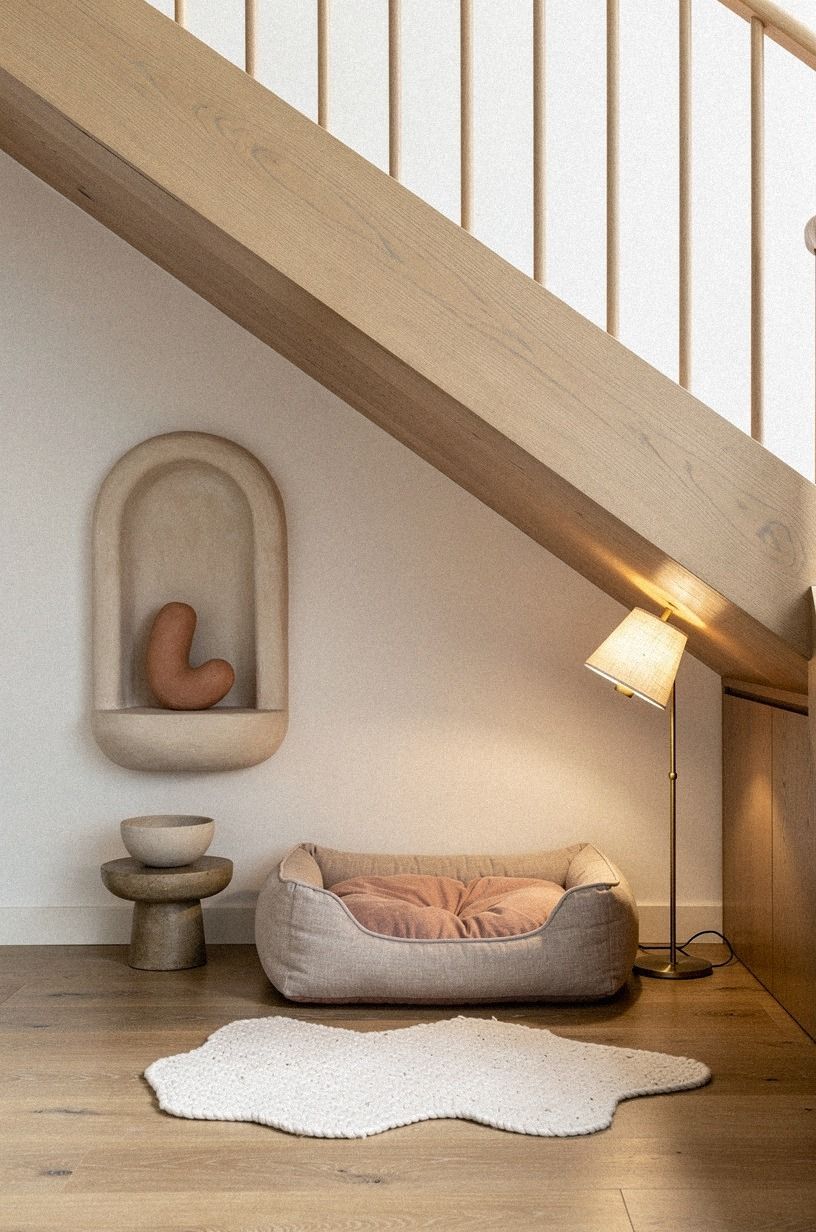
The Two-Wood Rule keeps an under stairs dog bed from looking like a collection of leftover furniture. Choose one pale wood for the structure and one deeper wood for a small accent, such as a walnut toy box or a dark-stained ledge. I tested mixed woods in a tight hallway once, and the room looked calmer when only two tones were doing the work.
Your first wood could be cerused white oak, which catches the afternoon light and makes the stair slope feel less heavy. Your second might be an Article Sven walnut side table, used outside the nook for your coffee or leash basket.
Don't add a third grain unless your room already has several wood finishes. Too many tones make your eye stop at every object.
For the bed itself, use washed Belgian linen in a muted clay tone rather than another wood accent. It feels soft and inviting, but a removable cotton cover will be kinder to your laundry routine. And if you're building a broader earthy palette, this Mediterranean olive idea has the same warm, gathered feeling.
3Paint the Back Wall Pigeon
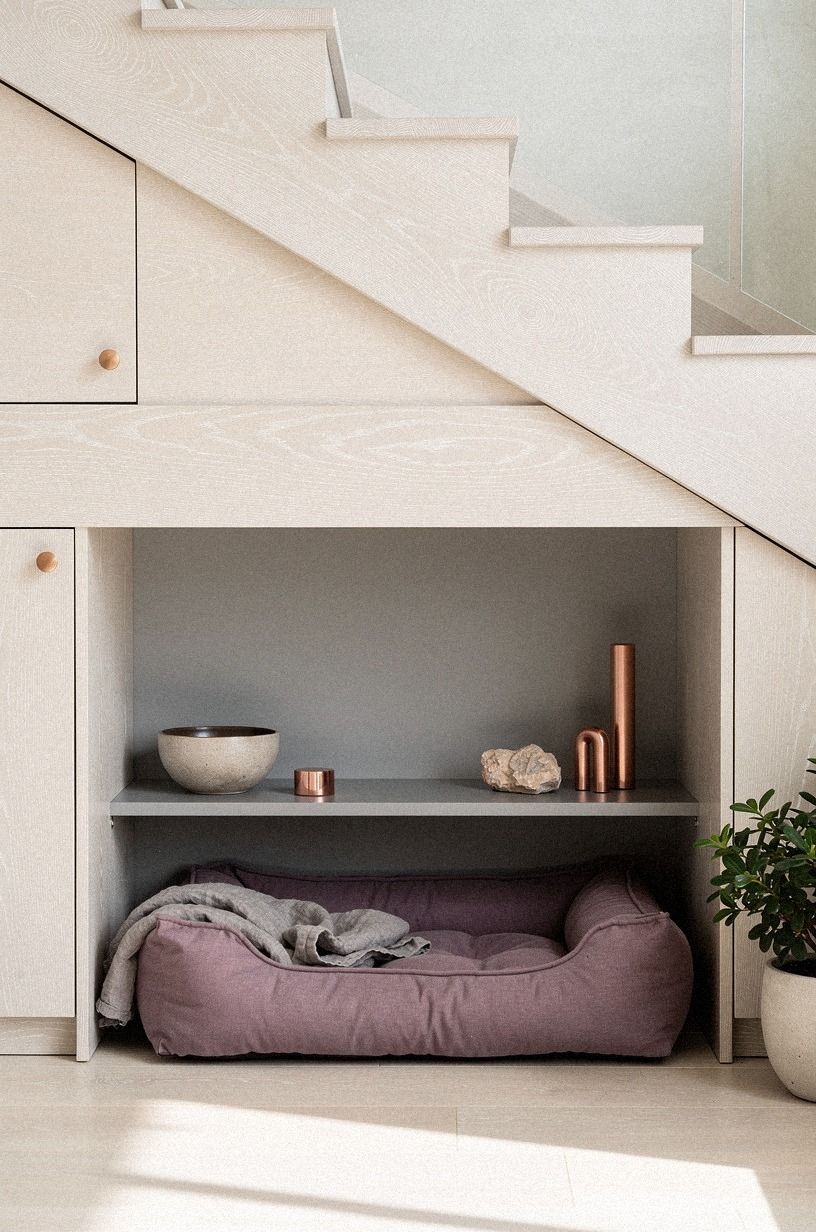
Paint is the fastest way to give a dog bed under stairs its own identity.
4Float a Bed Above the Floor
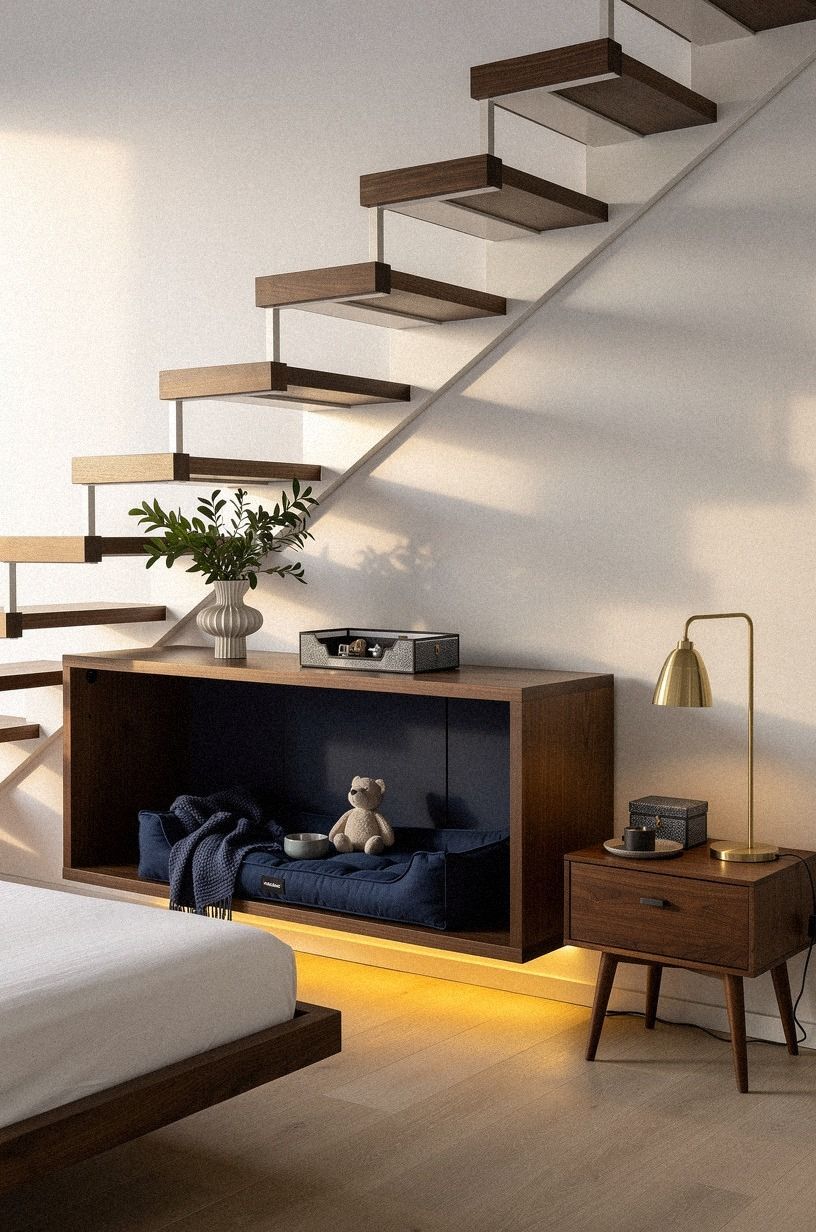
A floating dog bed makes cleaning easier and gives a low under stairs dog bed a built-in look. Mount a sturdy platform slightly above the floor, then slide a washable cushion underneath it. The open gap lets your vacuum reach the back wall, and your dog won't be sleeping directly on a cold slab.
Use a walnut platform with shagreen accents only as a nearby ledge or threshold, not as the entire sleeping surface. Hard materials can feel chilly against your dog's body, especially in a drafty hallway. A sealed walnut platform with a navy washable cover will feel more comfortable, and you'll be able to lift the fabric into the wash.
Check the wall structure before you mount anything. Your platform needs secure support, and you shouldn't rely on a thin decorative panel.
But don't overbuild it into a cabinet either. The best dog bed area feels light, practical, and easy for you to reach. A little negative space does a lot here!
5Layer a Washable Nest
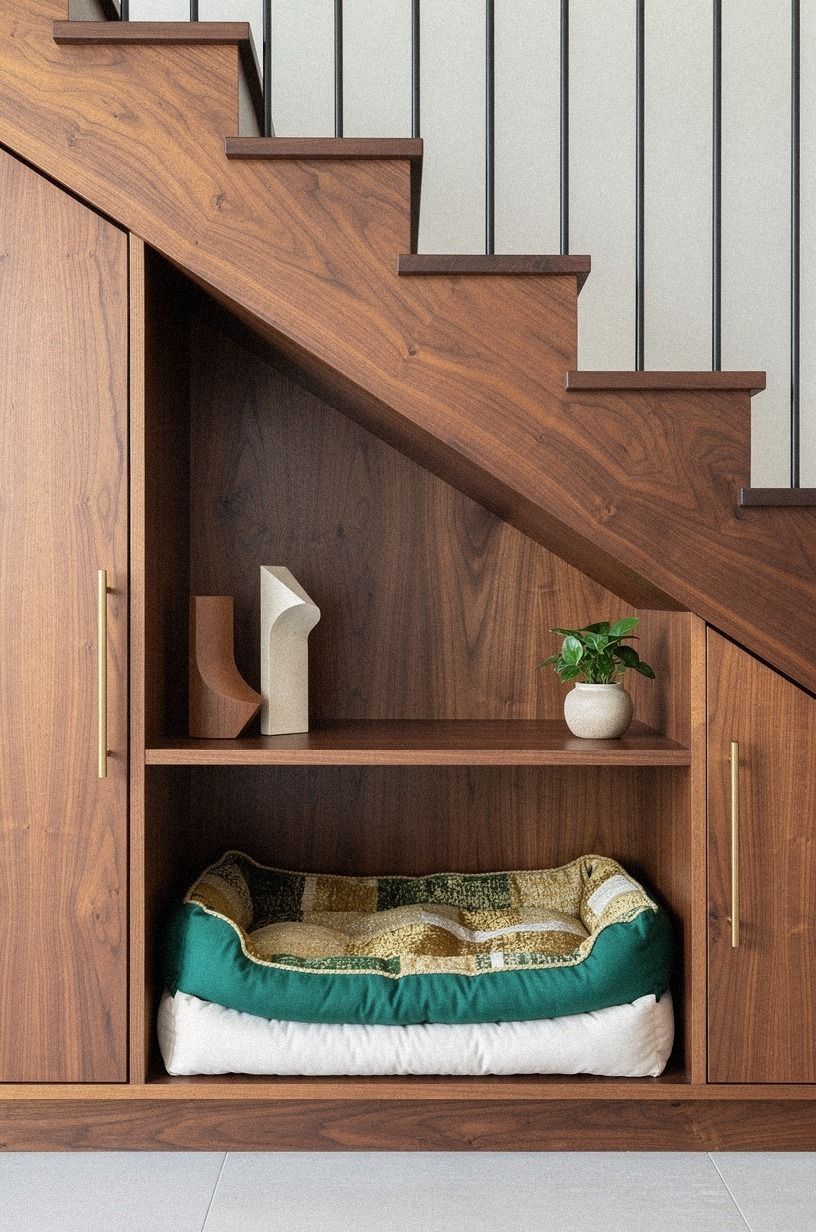
Layering gives your hidden dog bed a soft, sleepy feeling without filling the nook with loose objects. Start with a firm base cushion, add one folded blanket, and finish with a small bolster against the back wall. Keep book-matched walnut to a nearby ledge or cabinet, while a machine-washable cotton layer should sit closest to your dog.
Your dog will choose comfort over your styling plan every time, so watch how they settle before you buy more. I went through too many decorative pillows before admitting that my dog only wanted one flat cushion and a corner blanket. Keep your palette to emerald, muted gold, and warm cream if you want the area to feel rich and welcoming.
For a budget version, repurpose a quilt you already own and make a simple cover from cream cotton canvas. It won't look showroom-staged, and that's the point. If you're also refreshing a Mediterranean corner nearby, this bright coastal town guide has a useful sun-washed color mood.
6Swap a Cabinet for a Hidden Dog Bed
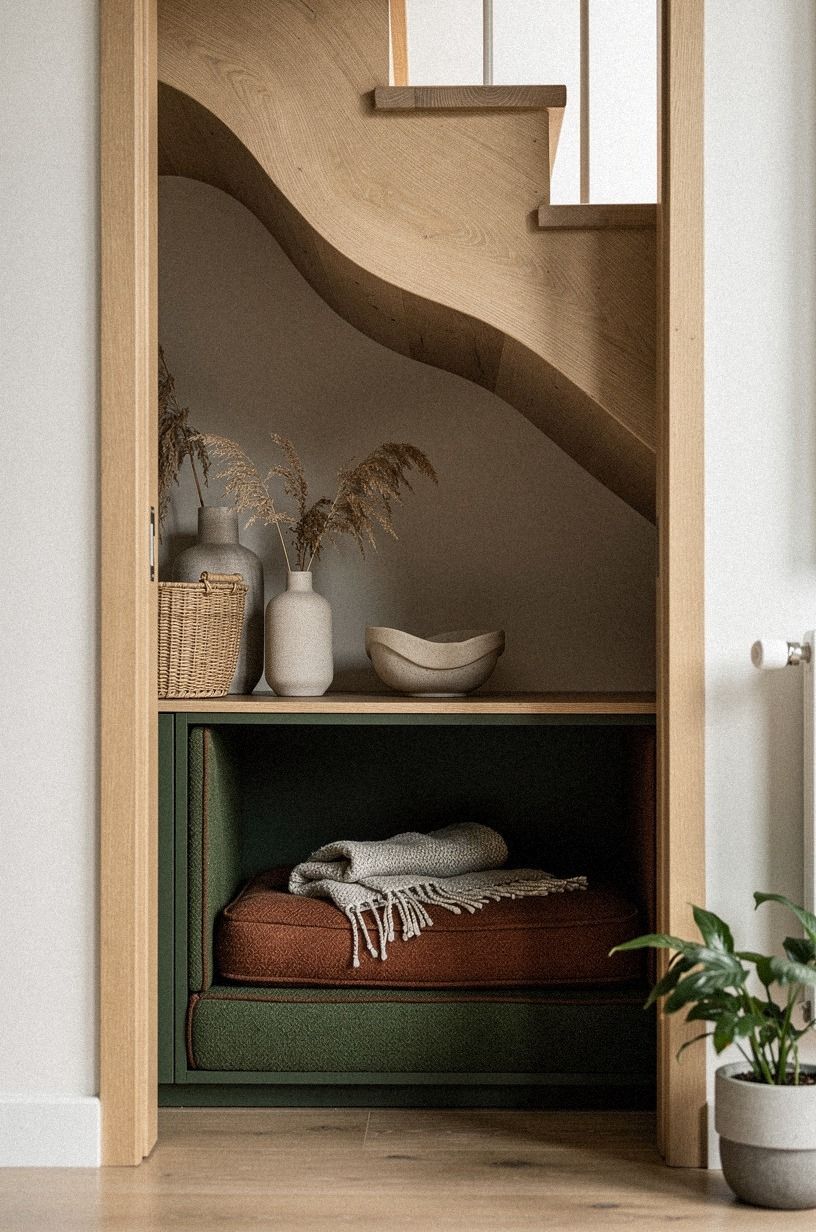
A low cabinet can become a discreet dog bed area when you remove the doors and line the interior with a washable surface. Choose a cabinet deep enough for your dog to turn comfortably, then sand every exposed edge. Organic bouclé works as an exterior texture nearby, but I'd keep it away from muddy paws inside the nook.
Your under stairs dog bed doesn't need to be hidden from sight to feel integrated. A low opening with a painted interior often looks better than a tiny door that makes your dog squeeze through. Use a forest green paint if your hallway has natural oak nearby and you want the cabinet to blend quietly.
Leave the cabinet top useful for you. A leash bowl, framed photograph, or small lamp can sit there, but don't stack objects above the dog's entrance.
And if you're tempted to use an open cubby system, measure first. The slope can steal more headroom than you'd expect, especially near the taller end.
7Hang the Three-Height Light Stack
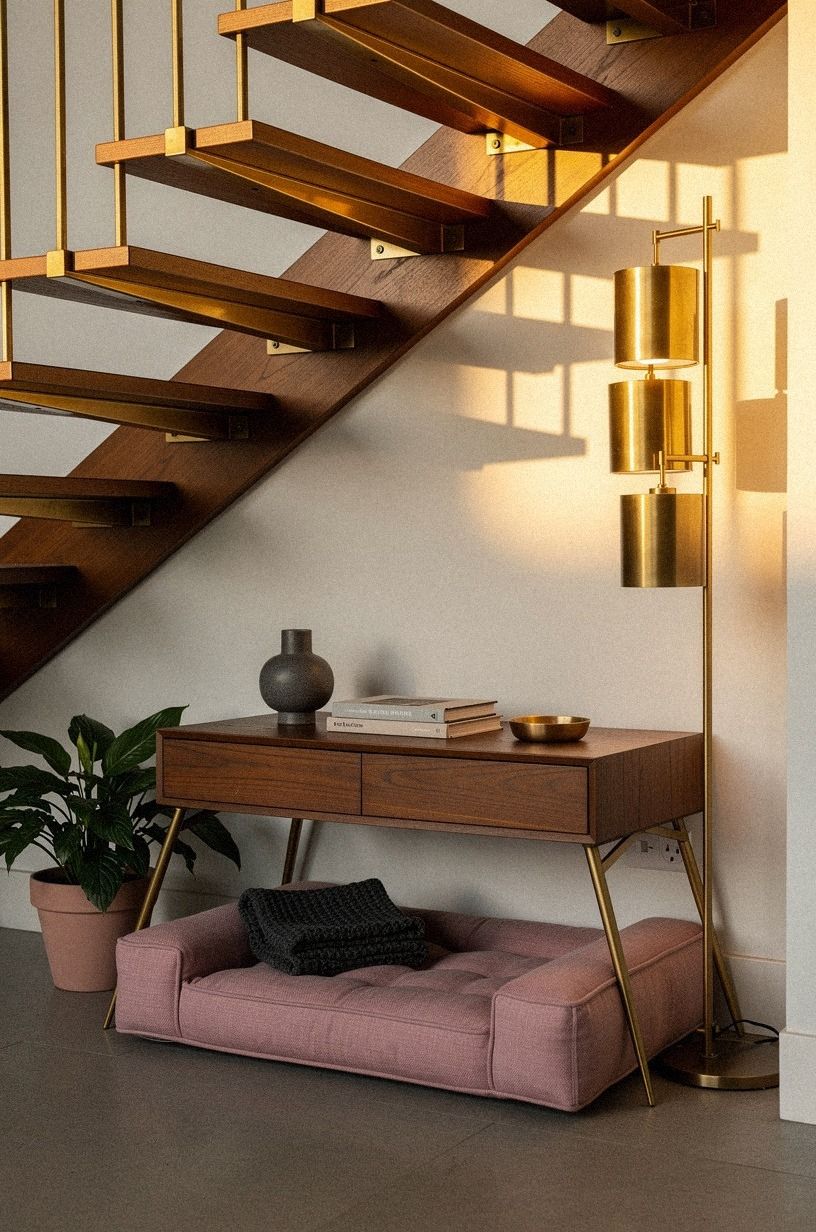
The Three-Height Light Stack gives your dog nook enough illumination without making it feel like a display cabinet.
8What Fits Under Your Stairs?
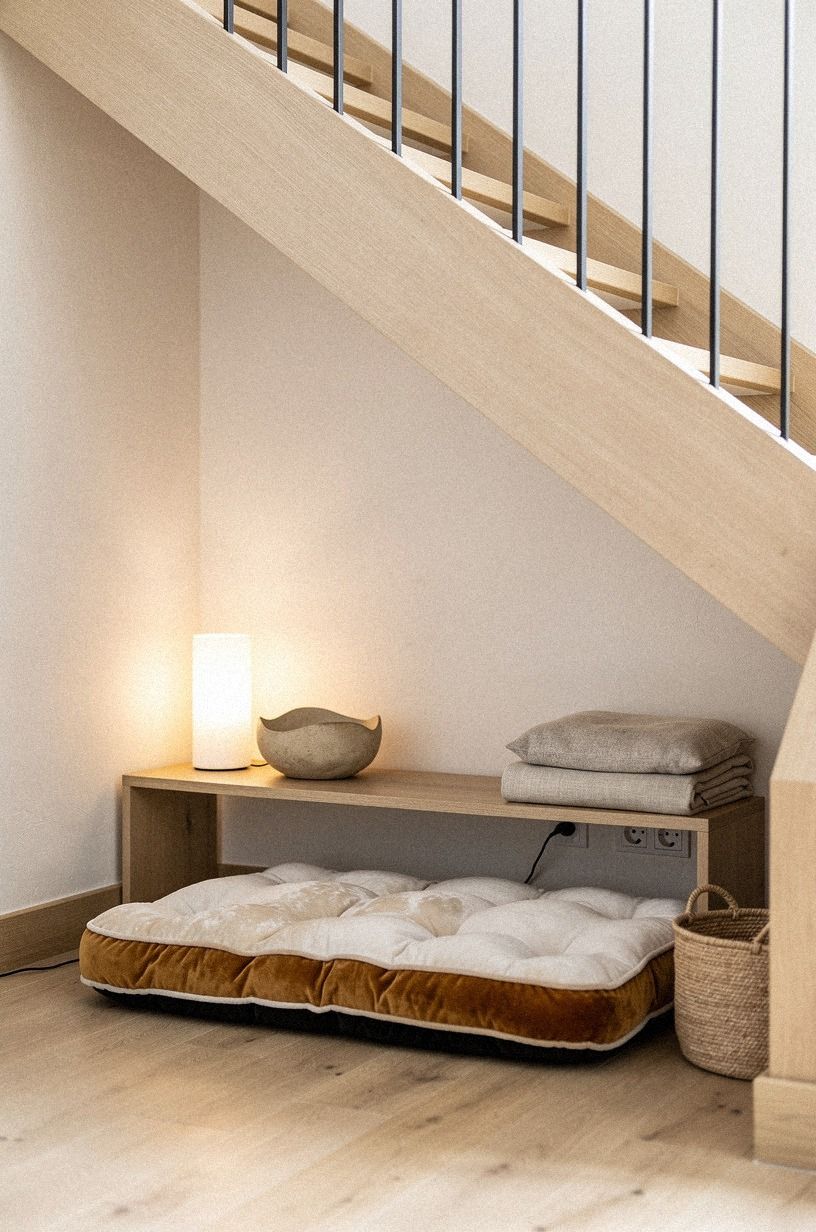
The best dog bed under stairs starts with the shape of the animal, not the shape of the space. Measure the usable floor, the lowest ceiling point, and the clear opening where your dog enters. Your dog should be able to stand, turn, and leave without bumping the opening.
The slope matters more than the front width.
A Wayfair low-profile bench can help define the area when the opening is wide, but don't force furniture into a narrow wedge. A camel-toned mat beneath a bench upholstered in deep-pile mohair velvet can make the area feel warmer, while a larger breed needs a proper cushion with room to stretch. I once designed around the widest point and regretted it because the low end became useless.
Keep frequently handled items outside the bed zone. Your leash hook, brush, and toy basket can live on the taller side. For a compact hallway, this underground art scene article offers an unexpected lesson in making an enclosed space feel purposeful.
9Choose Warmth Over Matchy-Matchy Storage
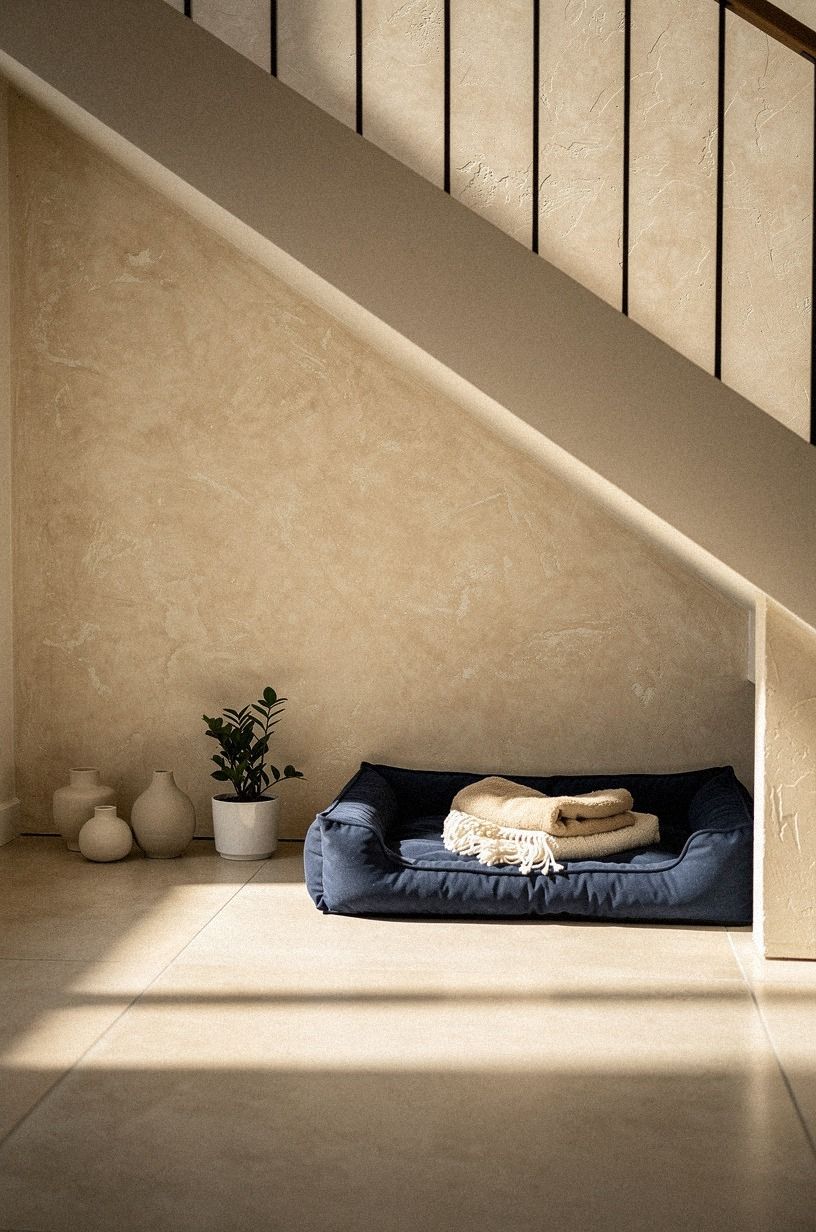
Warmth over matchy-matchy storage is the choice I'd make every time. Your dog nook doesn't need a matching basket, cabinet, bed, and wall hook set. That approach can look polished, but it often feels flat.
Mix a hand-applied Venetian plaster back wall with a painted wood ledge and one ivory textile that repeats a color from the hallway.
A small Target Threshold basket gives you an affordable place for toys, while a copper hook adds a little history. I'd skip glossy plastic storage in the visible zone because it catches every bit of hallway light and makes the area feel utilitarian. Your practical objects can still have texture.
Use one repeated color to tie the pieces together. Midnight blue on the back wall can echo an ivory blanket and copper hardware without turning the nook into a theme. And if you want more layered travel-inspired color nearby, this family adventure guide has a relaxed, collected spirit.
10Budget the Dog Bed Area
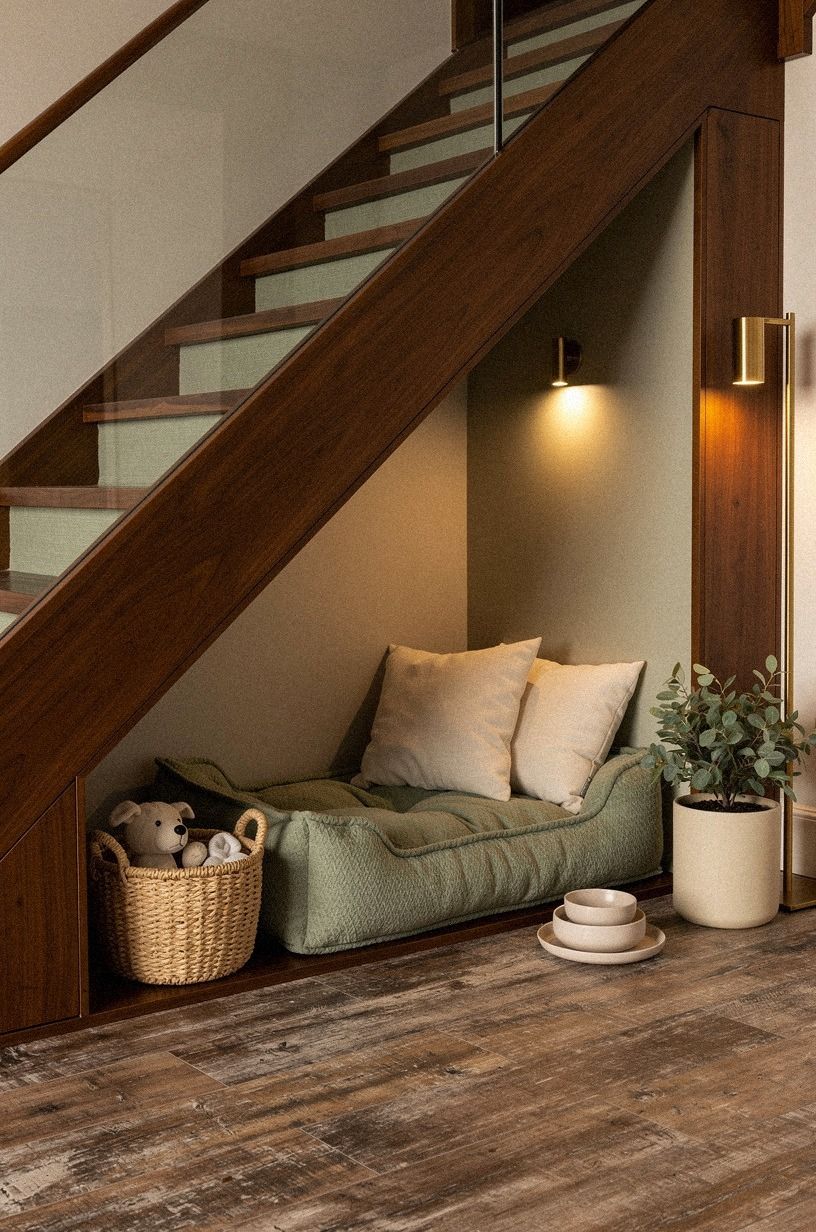
A dog bed area can stay modest if you spend on the surface your dog actually touches and keep the architecture simple. Paint, textiles, and organization are the easiest places to control costs. The wider room budgets below are typical US references, so your under stairs project may land well below the full ranges.
Your best budget move is usually a washable cover, a good mat, and paint. Sage green paint can brighten the surrounding wall, while a reclaimed weathered teak ledge gives you a useful place for a leash. I wouldn't spend on custom millwork unless the nook is already difficult to clean or your home needs the storage.
For a small upgrade, a West Elm accent piece may look refined, but it isn't necessary for a welcoming dog bed. You can get the feeling with texture and proportion. If you're considering a larger home refresh, this elephant sanctuary story is a reminder that thoughtful use matters more than excess.
11Anchor It With a Rug That Can Take Mud
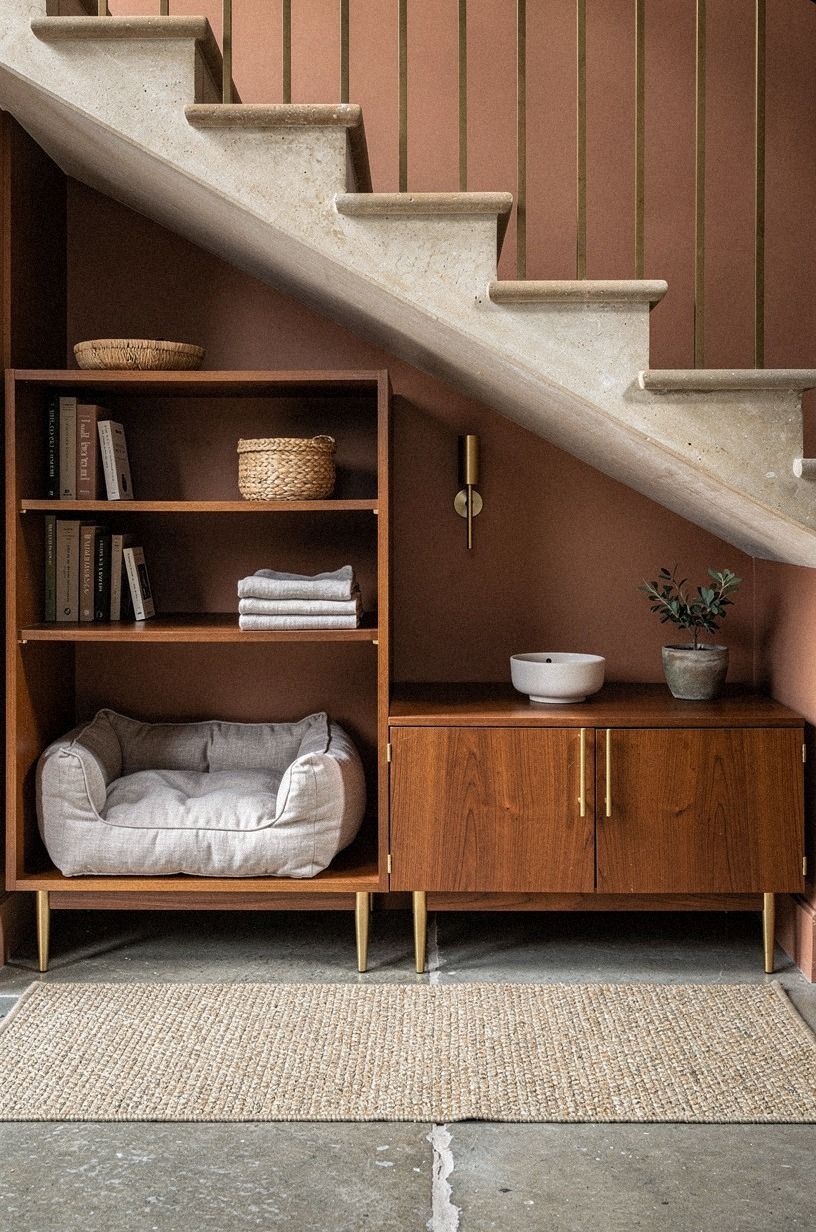
A rug makes a dog bed area feel grounded, but it has to survive real life.
12Style a Rental-Friendly Dog Nook
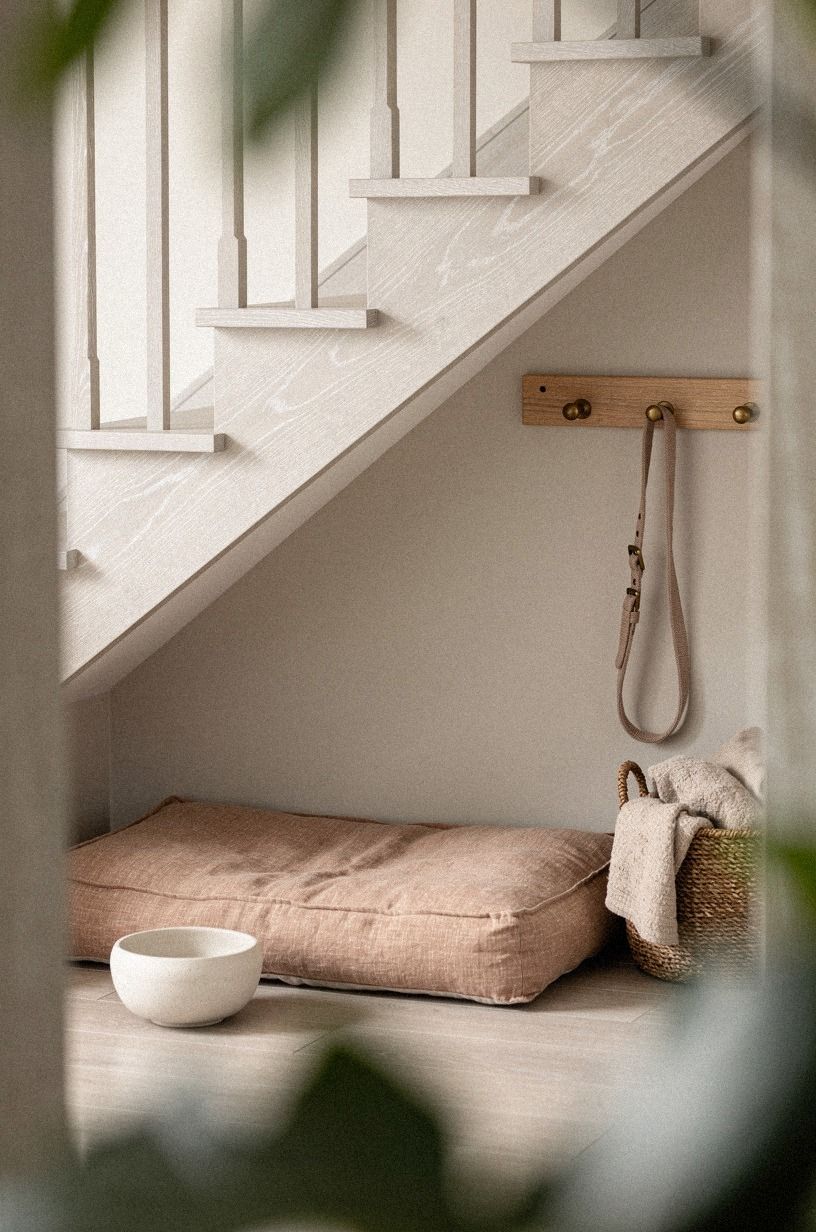
A rental-friendly dog nook can look built-in without permanent construction. Use removable wallpaper on the back wall, a tension rod for a small curtain, and a freestanding bench that your landlord won't mistake for carpentry. A clay-toned removable wallpaper adds texture while staying reversible.
Your under stairs dog bed should still be easy to remove if you move. A cerused white oak unit or low Target cabinet can define the zone, and removable felt pads will protect the floor.
Don't attach heavy shelves to questionable plaster. Instead, use a freestanding ledge or a shallow basket for the dog's leash.
Choose a washable linen mat and keep the palette simple. You don't need permanent trim to make the space feel warm, and you'll appreciate being able to clean every piece separately. If your rental has an unusual layout, a short curtain can hide supplies without hiding your dog.
13Mix the Human and Canine Zones
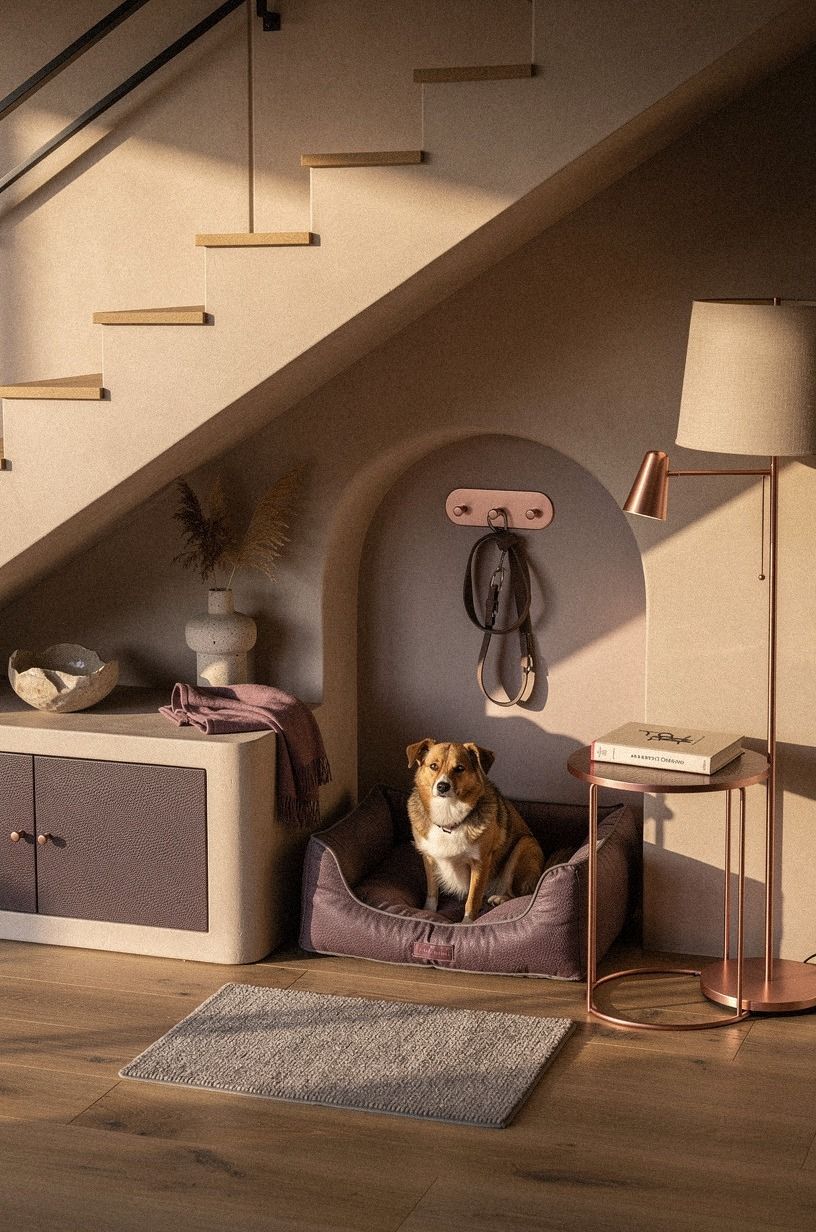
A dog nook works best when it belongs to the household, not when it looks like a pet store display. Give your area one human-use detail, such as a reading lamp with a rose-gold finish, a small bench, or a framed print above the opening. A plum wall color can connect the nook to the rest of the room while a darker textile gives the bed its own boundary.
Your dog bed area might sit beside a shoe bench or under a gallery wall. Hang art with its center about 57-60 in from the floor, adjusting lower if the stairs make the wall feel compressed. I prefer one large print over several tiny pieces here because clutter competes with the angled ceiling.
Keep your dog's necessities close, but don't let them spill into every visible corner. A small shagreen box can hold toys, and a rose-gold tray can catch brushes. And if you're tempted to turn the whole hallway into a pet station, stop at the bed, one basket, and one hook.
That's enough.
14Make the Small Space Feel Intentional
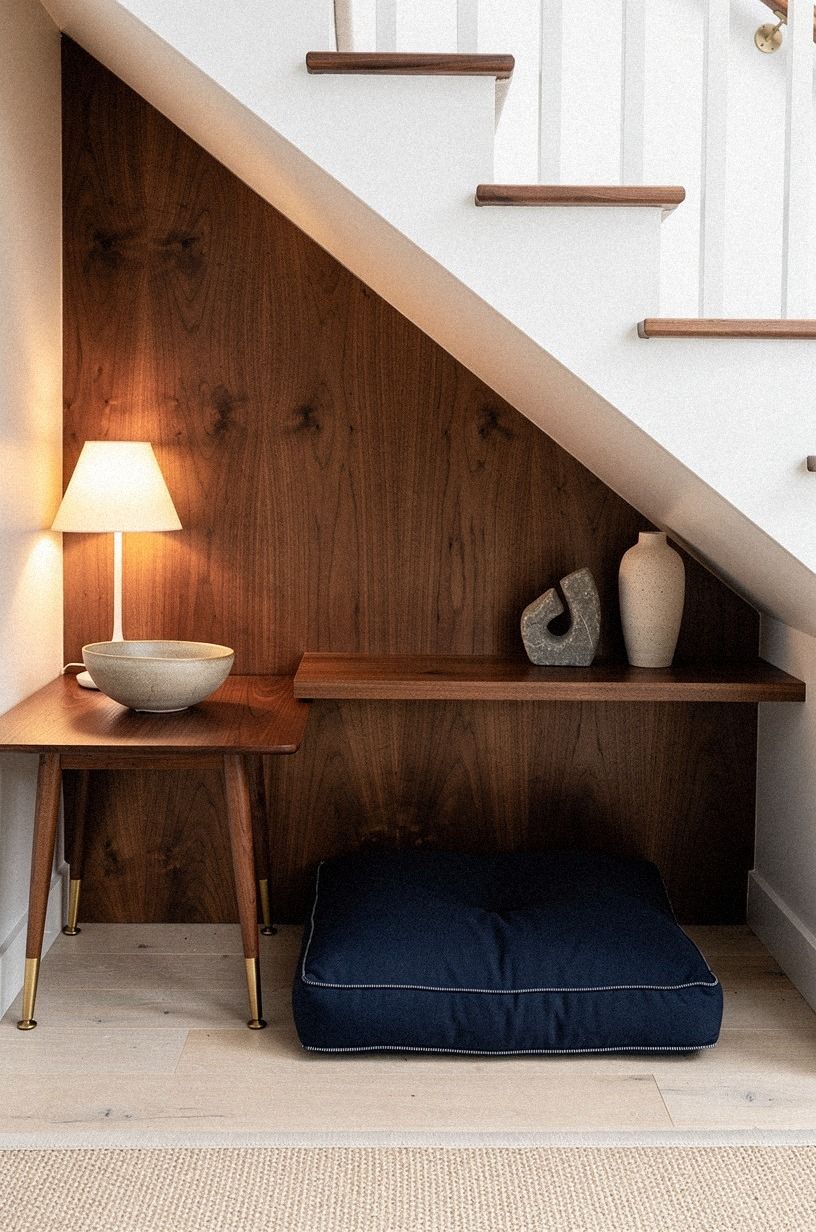
The strongest hidden dog bed looks like it was planned with the house, even when it began as an awkward leftover. Repeat one color, one material, and one shape from the nearby room. Midnight blue can connect white walls to walnut details, while a rounded cushion softens the hard stair geometry.
Your final layer might be wall art, a low branch in a heavy vase, or a folded book-matched walnut detail nearby. Keep anything breakable above the dog's reach, and leave the entrance clear.
I like a little imperfection here. A blanket that slides sideways tells you the nook is used, not staged for display.
Would you notice the space if the dog bed disappeared? If the answer is no, add one architectural cue, such as painted trim or a shallow ledge.
Don't add more objects. Your dog nook will feel warm when the materials, light, and proportions are doing the work.
What I Learned From Making These Nooks
I used to think an under stairs dog bed had to look clever to justify its existence. That led me toward tiny doors, fussy trim, and cushions that looked good for one afternoon.
None of that mattered when the bed was difficult to clean or the dog couldn't turn around comfortably. The practical choice won every time.
Now I start with the dog, then the floor, then the sightline from the hallway. If your dog prefers a cool surface, I won't bury it under layers of wool.
If your home is dark, I won't paint the entire slope a deep green just because the color looks rich online. Farrow & Ball Pigeon No.25 works best as a controlled accent when you need softness without losing visibility.
I also think a nook should earn its materials. A 3/4-inch solid white oak ledge is worth considering if it gives you a useful place for a leash and lamp.
A decorative shelf that collects dust isn't. And honestly, the most expensive-looking version is often the quietest one: one good textile, one dependable light, and enough empty space for your dog to stretch.
Your dog bed area can be humble and still feel special. The goal isn't to disguise a pet bed. It's to make room for the life already happening in your home, with surfaces you can wipe, fabrics you can wash, and details you'll still like after muddy paws arrive.
The Questions I Get Asked Most
What is the best under stairs dog bed for a small bed?
A low-profile washable cushion or an IKEA KALLAX-style open cubby works well for a small dog because your pet can enter easily and you can reach the back. Choose a firm base, a soft removable cover, and enough open floor for turning. Your dog needs comfort more than a tiny decorative door.
Where can I buy under stairs dog bed pieces on a budget?
Look at IKEA, Wayfair, and Target for low storage, washable mats, and baskets. Facebook Marketplace and thrift stores can provide solid wood benches for less. This site uses display advertising rather than affiliate commissions, so you can shop wherever the price and return policy suit you.
How much does an under stairs dog bed makeover cost?
A simple makeover costs about $100 to $300 when you already have paint, textiles, or a basket. The free pieces are editing, rearranging, and reusing a blanket. A larger room project can reach the typical $200-$800 budget tier when it includes paint, textiles, art, and organization.
Can I create an under stairs dog bed on a budget?
Yes, and you can start with three low-cost moves: reuse a blanket, paint only the back wall, and place a basket beside the cushion. Sage green paint or an existing warm neutral can make the area feel finished. Your biggest win is a washable surface, not expensive cabinetry.
Is an under stairs dog bed worth it in a small space?
Yes, because the nook uses space that might otherwise collect shoes and dust. Keep the bed low, leave the entrance open, and use one basket instead of several storage pieces. Your small space will feel calmer when the dog bed has a defined boundary and doesn't block the walking path.
Is an under stairs dog bed a good idea for a rental?
Yes. Use peel-and-stick wallpaper, a tension rod, removable hooks, and a freestanding bench.
Turkish cotton mats and washable covers make the nook practical without permanent changes. Your landlord doesn't need to approve a paint project if you keep the design reversible and protect the floor.
Where I'd Start First
If I had to pick one, I'd start with the washable bed and back-wall paint. A clean surface and Farrow & Ball Pigeon will change the nook more than custom trim because your dog can use it immediately. Pin the dog nook for later and build around what your pet already prefers.