No Closet? 12 AllModern Wardrobes That Fake a Custom Built-In
05 october 2026Your bedroom can fit a bed, a nightstand, and a clear path to the window, then still fail at the first morning question: where do the clothes go? An AllModern wardrobe about 32 inches wide can handle shirts and jackets, but the room usually needs a separate low dresser for folded pieces.
Designers favor a measured combination of enclosed storage and open hanging space. These are the mistakes that make a closet-less bedroom feel crowded, expensive, or harder to use than it should.
What you will find inside
- Treat AllModern Like an Open Closet System
- Force Every Garment Into One Cabinet
- Ignore the Difference Between Depths
- Block the Door Swing With Storage
- Underuse the Two-Rail Layout
- Hang Clothes That Belong in Drawers
- Let an Open Rail Become a Display Dump
- Waste the Wall Above Shoulder Height
- Choose Metal Without Checking the Room
- Assume the Cheapest Cabinet Replaces a Closet
- Skip the Open-Rail Alternative Entirely
- Buy the Statement Piece Before Measuring
Treat AllModern Like an Open Closet System
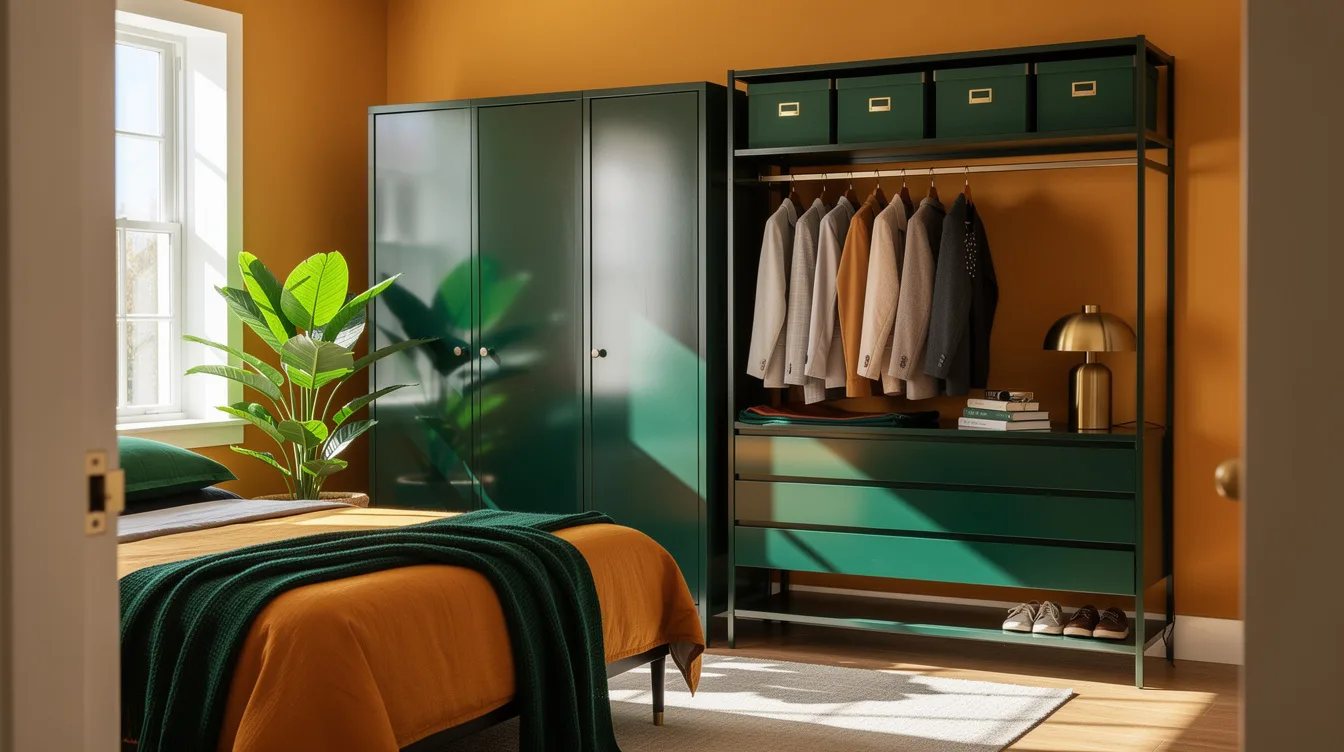
A common mistake is shopping AllModern as though every listing were an IKEA-style rail-and-shelf system. Its wardrobe category leans toward enclosed armoires and locker cabinets, so start by choosing between polished furniture storage and a truly open clothing wall.
For a room without a built-in closet, the practical answer is often a freestanding wardrobe for hanging clothes plus a separate dresser or rack. That split gives each piece a clear job and keeps one cabinet from carrying the entire bedroom.
Force Every Garment Into One Cabinet
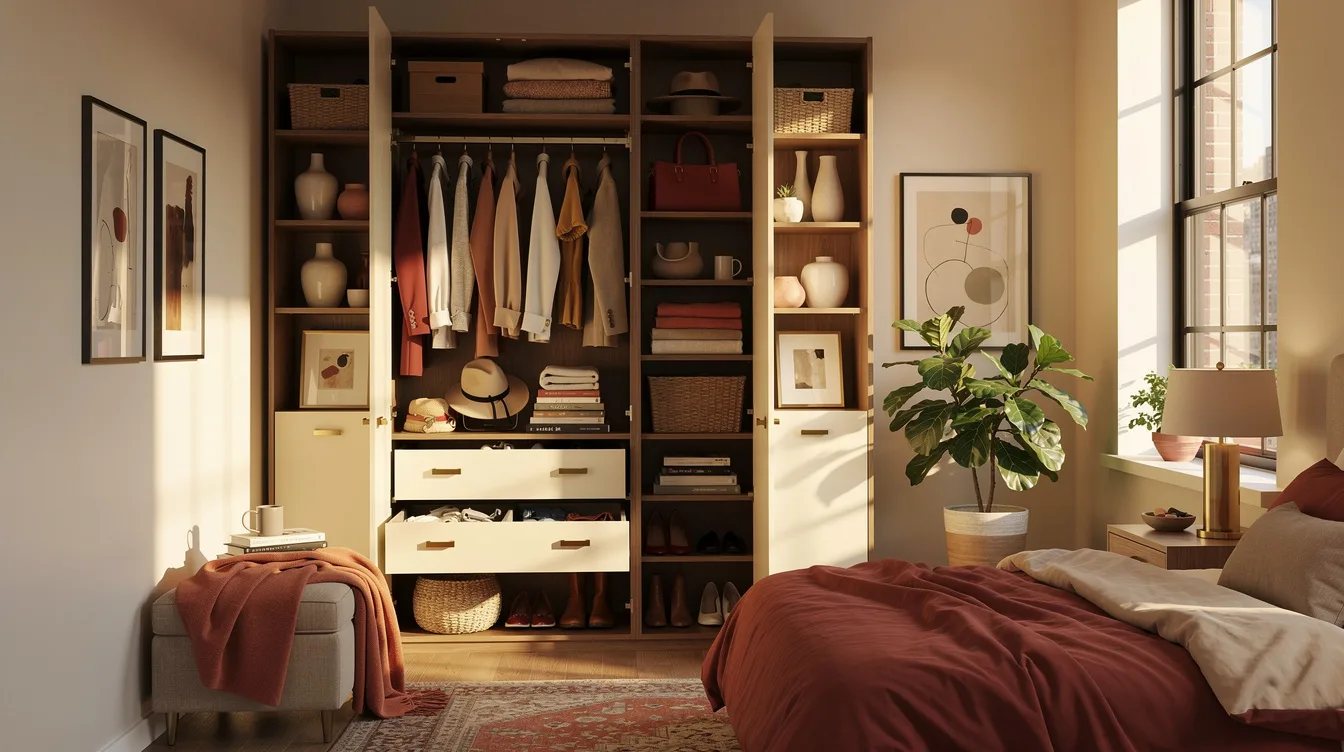
A single wardrobe rarely handles hanging clothes, folded pieces, shoes, bedding, and luggage gracefully. Designers usually favor a wardrobe about 30 to 36 inches wide beside a low dresser that can absorb the daily overflow.
The roughly 32-inch-wide Twinny listing works well for shirts, jackets, trousers, and shorter dresses. Give T-shirts, pajamas, underwear, and knitwear to drawers instead of crowding the hanging rail until the doors stop closing.
Ignore the Difference Between Depths
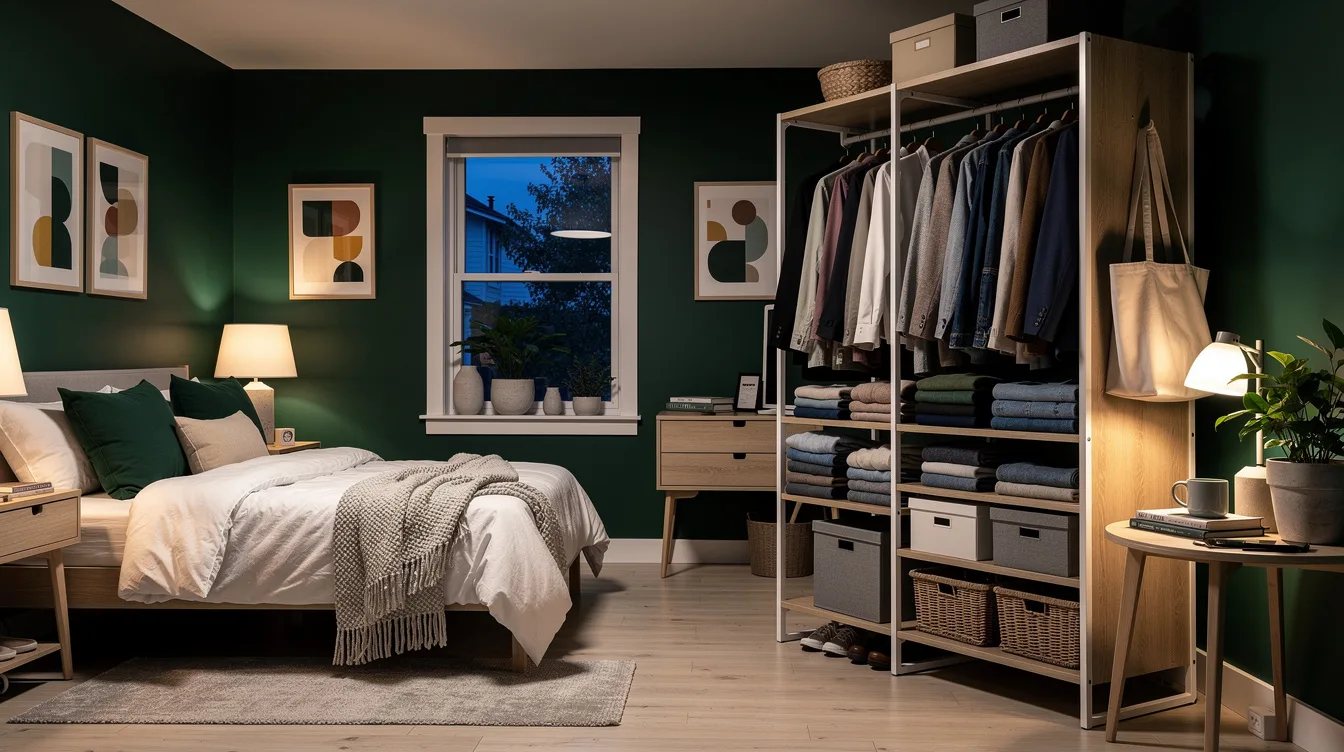
Measure the room around the wardrobe depth, not only its width. A metal unit around 17.7 to 18 inches deep can preserve a walking path, while standard hangers generally work more comfortably with roughly 22 to 24 inches of internal depth.
That tradeoff makes a shallow cabinet useful for a small bedroom, rental, or studio. A deeper wood cabinet may hold bulkier clothing better, but it can make the bed-to-door route feel cramped very quickly.
Block the Door Swing With Storage
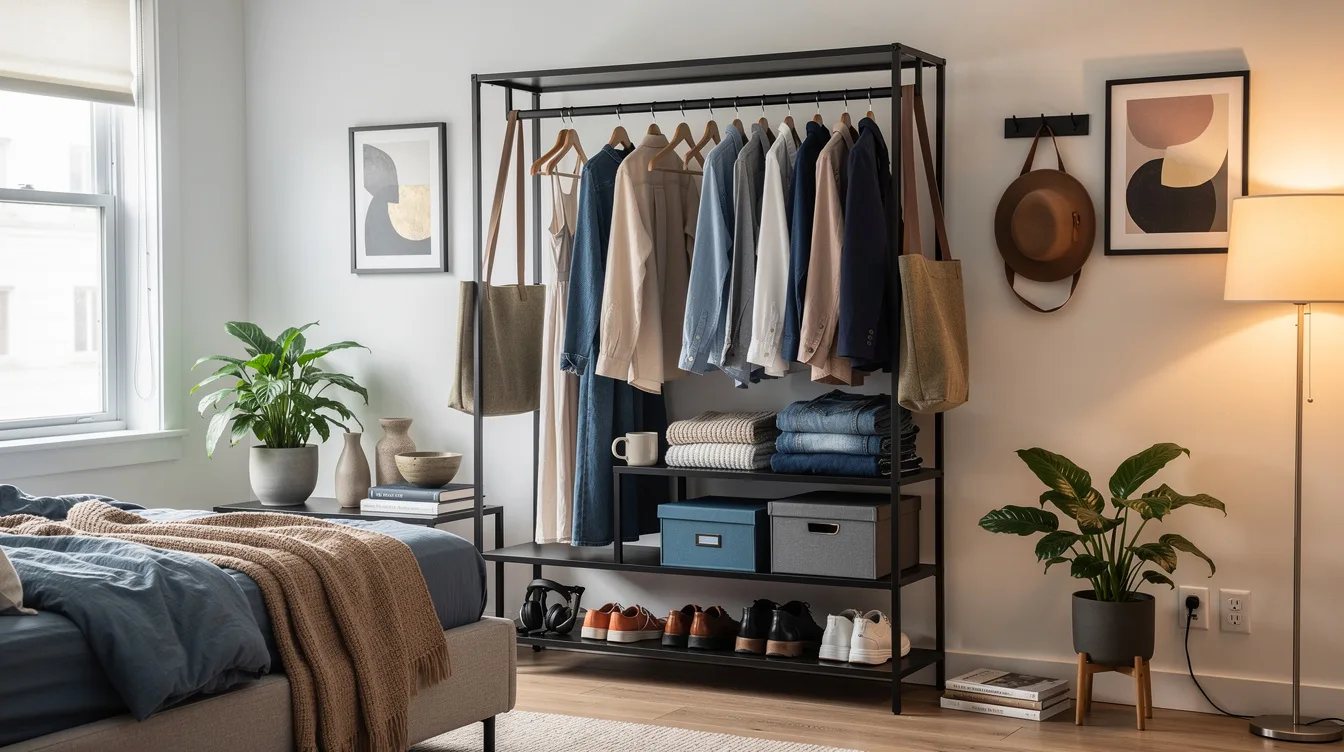
Map the bed, entry door, closet-less wall, and window before ordering anything. In an 8 by 10 foot bedroom, a wardrobe around 31.5 inches wide and 18 inches deep can work, provided its doors and drawers have room to open.
Use painter’s tape on the floor to mark the footprint of the Twinny Wardrobe Locker or a similar cabinet. Walk the route with a laundry basket, then test the door swing again after adding a dresser.
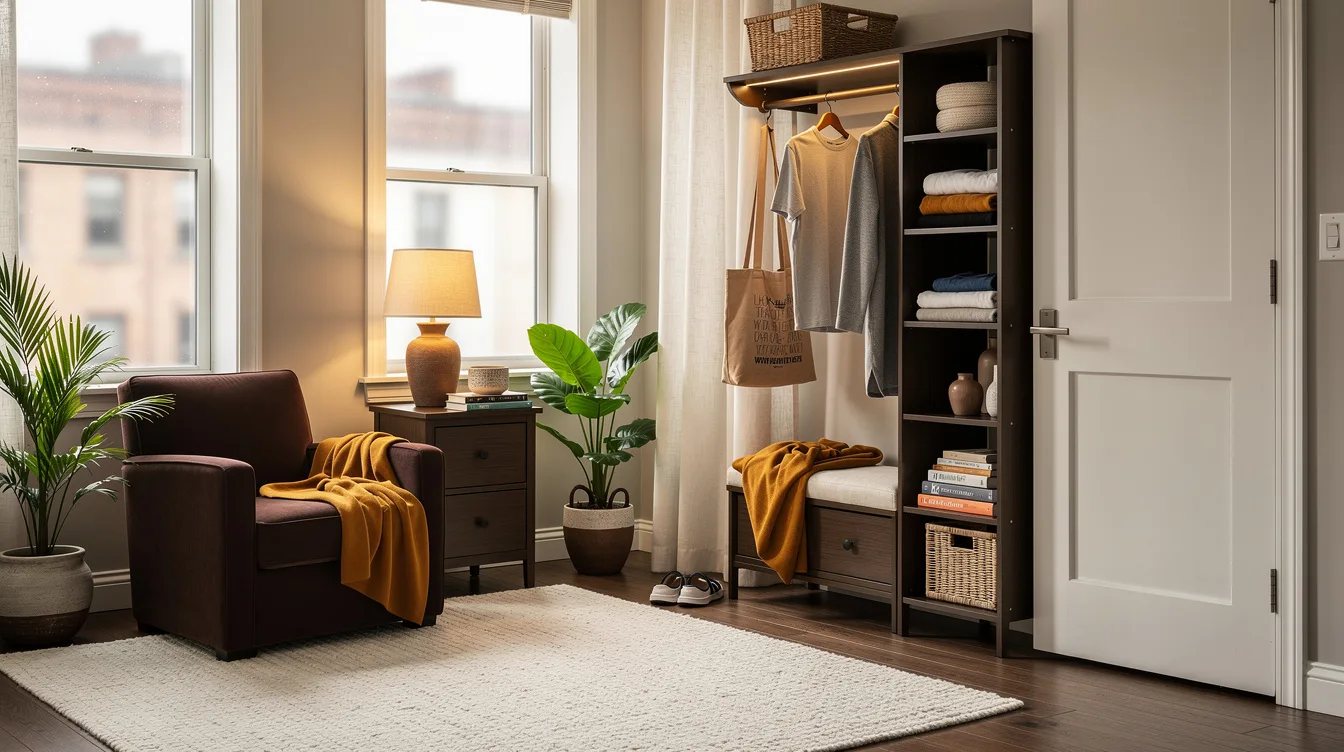
Underuse the Two-Rail Layout
Two hanging rails are more useful than one overloaded bar when the cabinet is tall. Place everyday shirts and jackets on the easier-to-reach rail, then use the second level for shorter garments or less frequent pieces.
The Twinny configuration includes two hanging rails and about four adjustable shelves, with the option to add more shelving. Keep shelves for folded jeans, bags, and small boxes, while leaving enough breathing room for clothes to slide out without snagging.
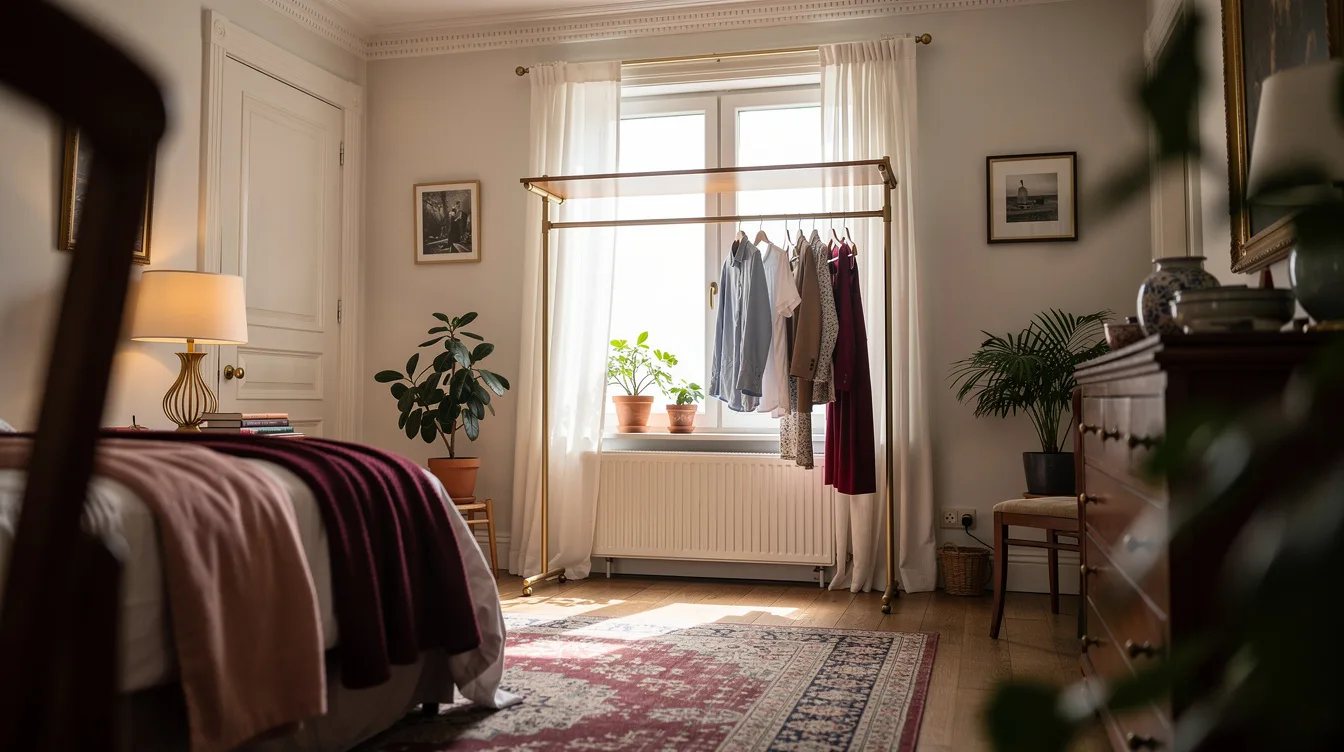
Hang Clothes That Belong in Drawers
Hanging every item wastes vertical space and makes the wardrobe look busy. Reserve the rail for pieces that wrinkle or need quick visibility, then move soft categories into a low dresser with wide drawers.
A wood dresser beside the cabinet also creates a useful landing zone for folded laundry and accessories. This arrangement costs more floor area than one all-in-one piece, but it is easier to maintain and usually feels calmer every morning.
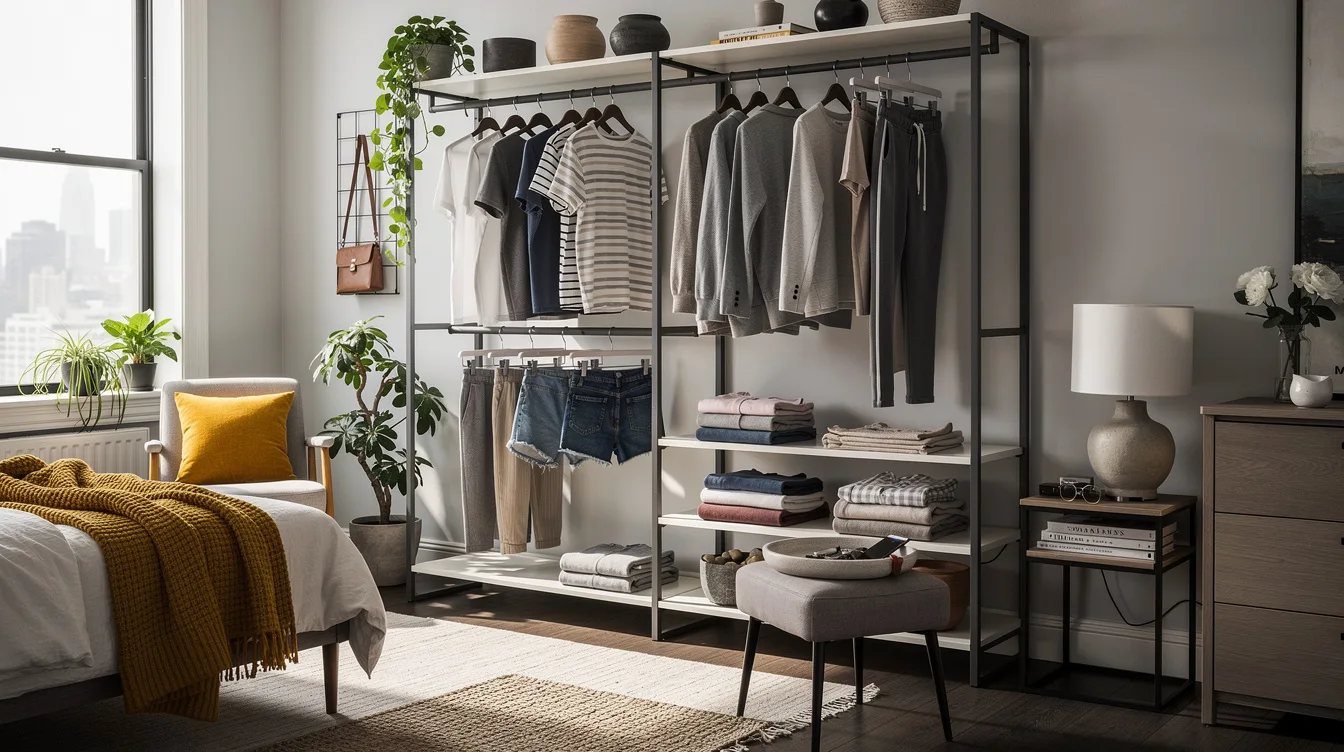
Let an Open Rail Become a Display Dump
An open wardrobe succeeds only when the clothing is edited. Keep matching hangers, group garments by use, and store off-season pieces in closed bins so the rail reads as a working closet instead of a permanent laundry line.
For shelves above the rail, use fabric or lidded storage bins in one restrained color. Add a curtain only when the display remains visually noisy after editing, because hiding an overfilled rail does not solve the capacity problem.
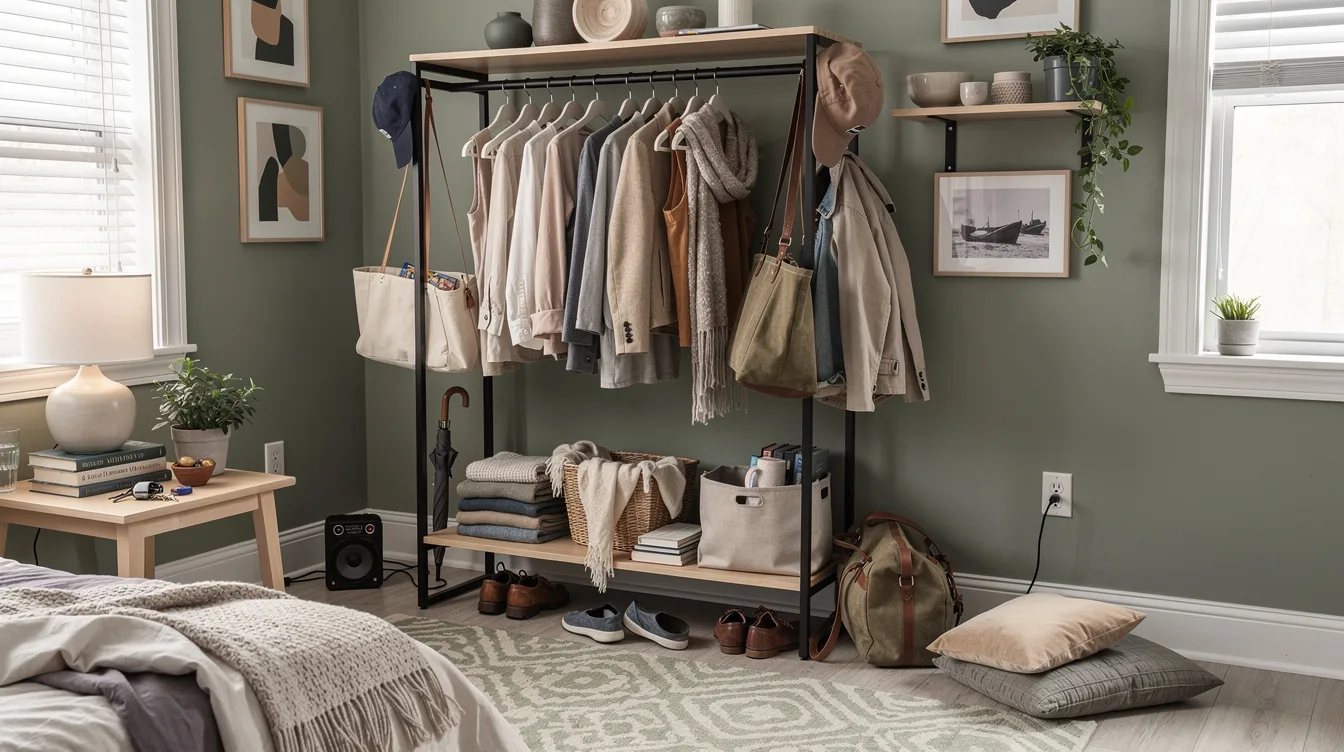
Waste the Wall Above Shoulder Height
Open-rail planning should use the full vertical wall. Standard hanging height often lands around 66 to 70 inches, with upper shelves beginning around 80 inches for luggage, spare bedding, and seasonal clothing.
Keep the items used weekly below eye level and move bulky, occasional pieces higher. A slim metal rail paired with adjustable shelves can provide more useful storage than a wide cabinet that leaves its upper half empty.
Choose Metal Without Checking the Room
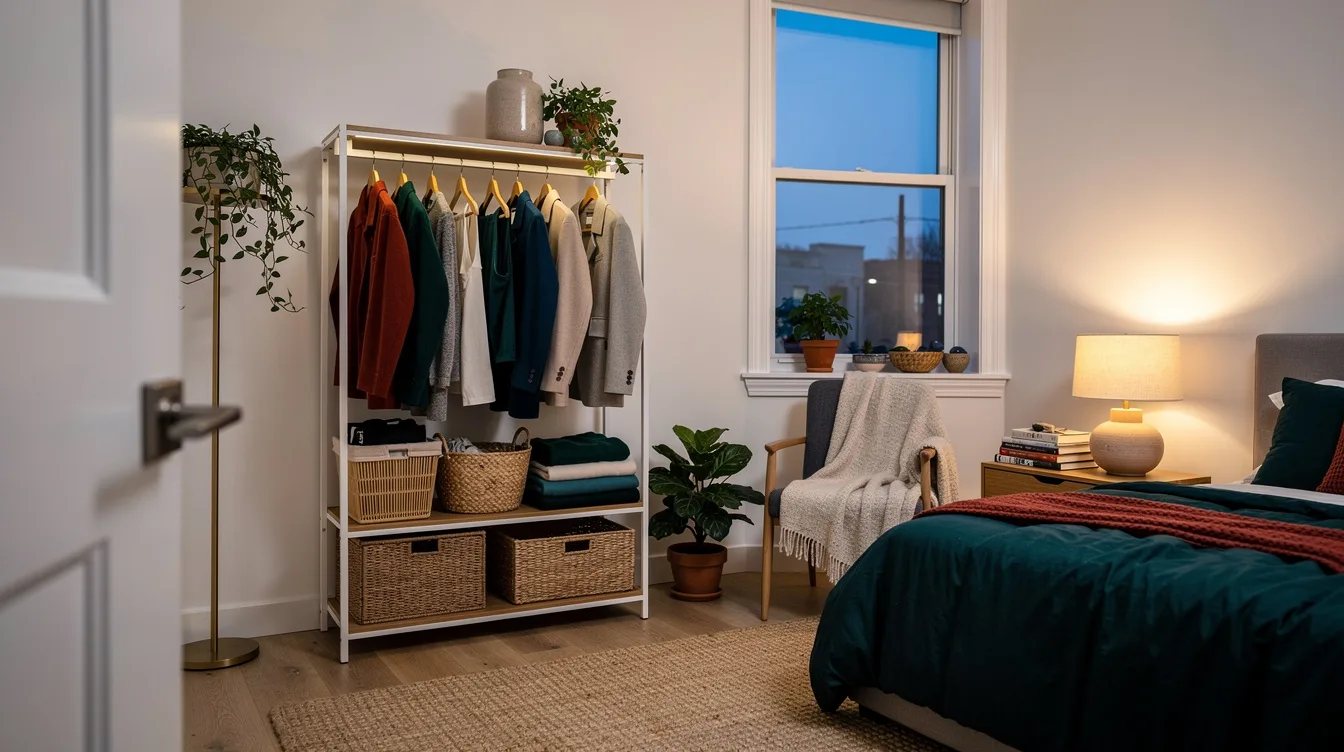
Powder-coated metal brings a crisp locker character, but its color becomes a major part of the bedroom. The Twinny is listed in about 12 colors, so choose a shade that relates to the bed frame, lamps, or existing hardware instead of treating the wardrobe as a random accent.
Light oak veneer and iron hardware create a warmer furniture-first direction. The Rosedale Cabinet is a stronger fit when the storage must read like a composed bedroom piece, though its typical price is around $2,599.
Assume the Cheapest Cabinet Replaces a Closet
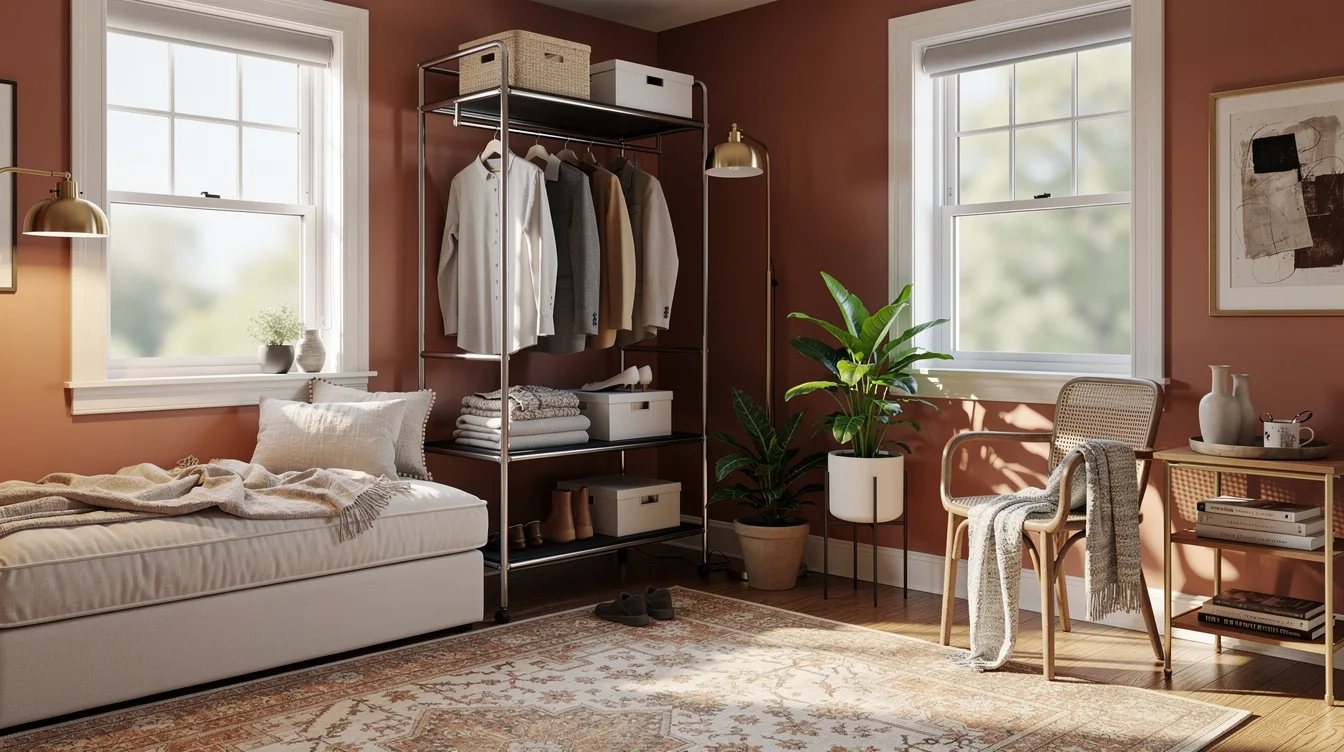
Price usually tracks finish, construction, and furniture presence more than it tracks perfect closet efficiency. A compact metal wardrobe can sit around $850 to $860, while premium wood or veneer pieces commonly move into the roughly $2,500 to $3,900 range.
The Shale Armoire is listed around $3,436 to $3,866 and combines a garment bar, adjustable shelves, and drawers. That is a serious furniture purchase, so buy it for the room’s long-term layout rather than because the bedroom currently lacks one storage wall.
Skip the Open-Rail Alternative Entirely
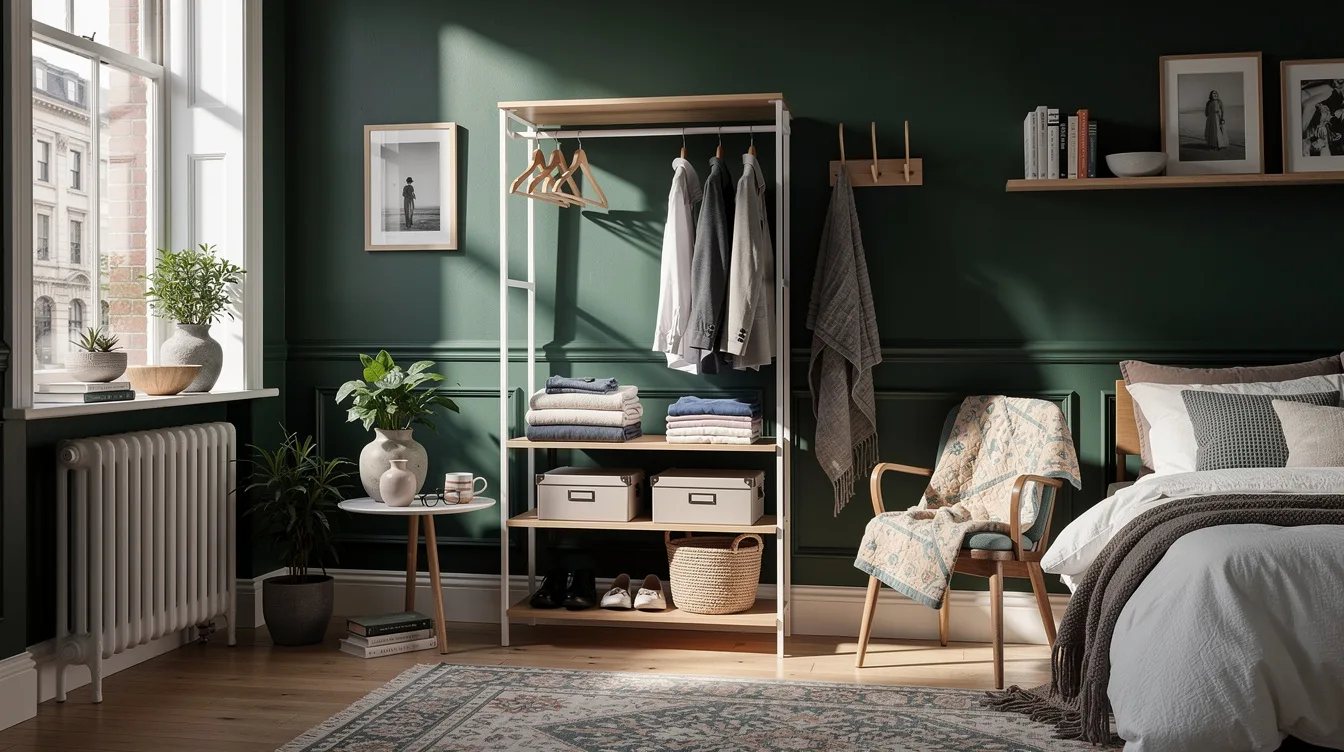
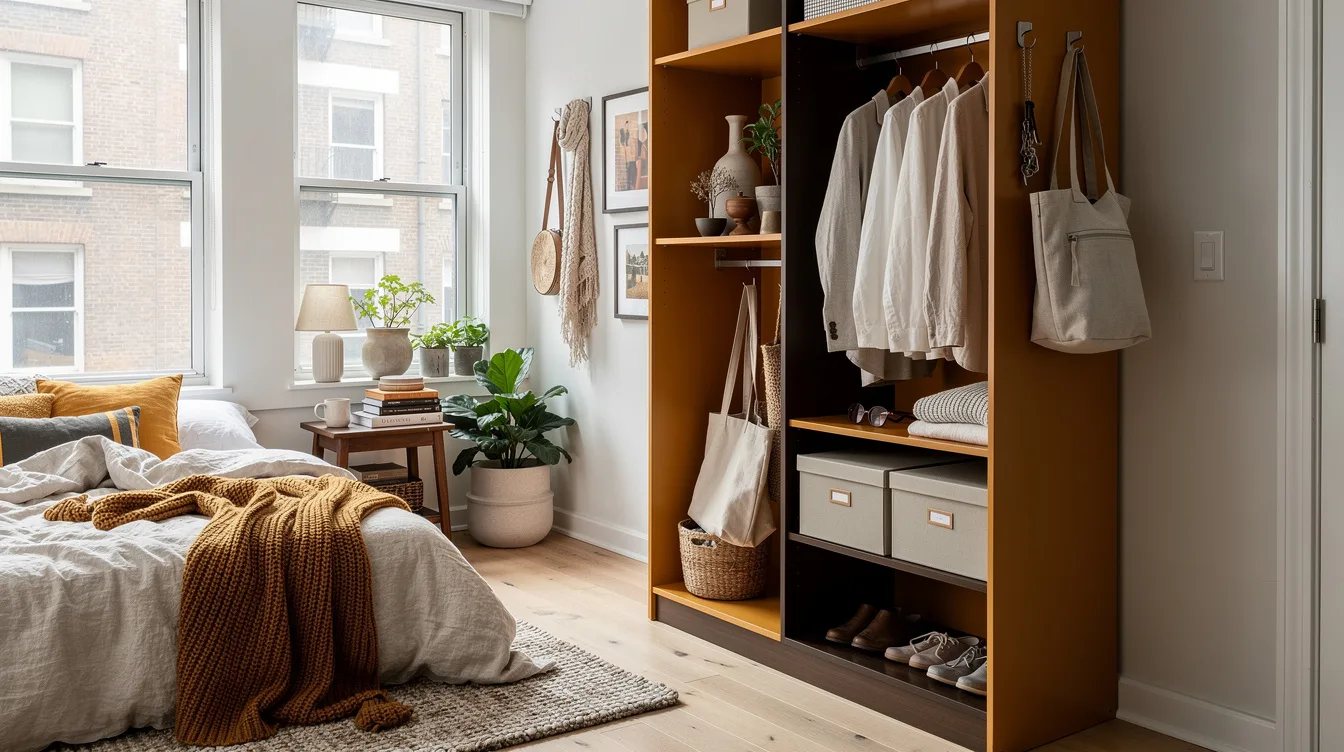
If an actually open wardrobe is the goal, reserve a wall about 60 to 96 inches wide instead of forcing an enclosed cabinet to behave like one. A clean plan can use one 36-to-48-inch rail for daily clothes, a second 24-to-36-inch section for shelves or double hanging, and a low dresser below or beside it.
Keep the system roughly 18 to 24 inches deep, depending on hanger direction and the room’s walking clearance. This approach exposes clothing, but it also gives you direct control over capacity and makes the storage easier to resize later.
Buy the Statement Piece Before Measuring
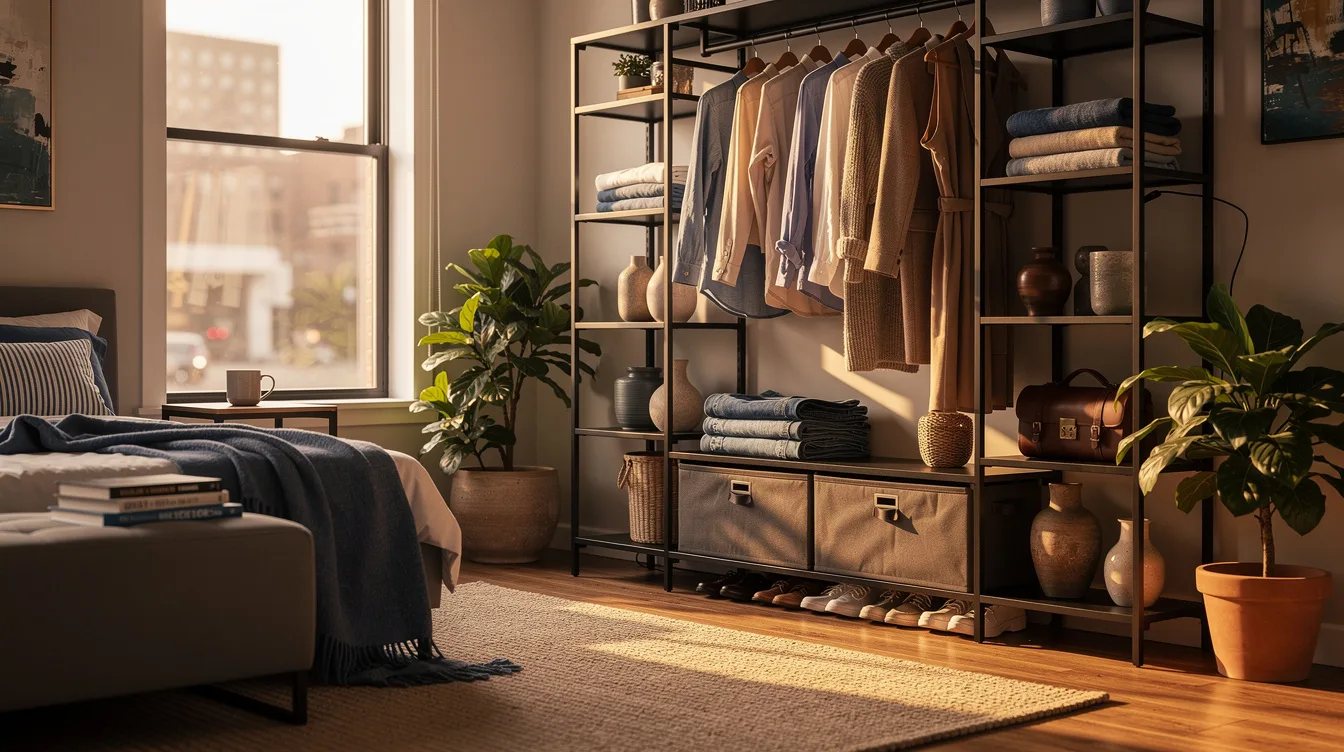
Luxury storage can dominate a small bedroom, especially when the cabinet has several doors and drawers. The Shadow Armoire is listed around $5,768, with three doors and two drawers, so confirm wall width, ceiling height, delivery access, and clearance before treating it as a closet replacement.
For most bedrooms that forgot a closet, the better first purchase is a wardrobe around 30 to 36 inches wide. Add the dresser only after the hanging zone is in place, then use the remaining wall for shelves, a rack, or a narrow bench.
Keep reading
- No Bedroom Closet? These 15 IKEA Wardrobes Fake a Custom Reno
- No Counter? These 15 IKEA Carts Fake a Custom Kitchen Island
- 14 Walmart Blackout Curtains That Fake a Custom Reno for Less
Start with the wall, the walking path, and a wardrobe footprint marked on the floor. Once a roughly 32-inch cabinet fits comfortably, add drawers for folded clothes and let every remaining inch of wall earn its place.