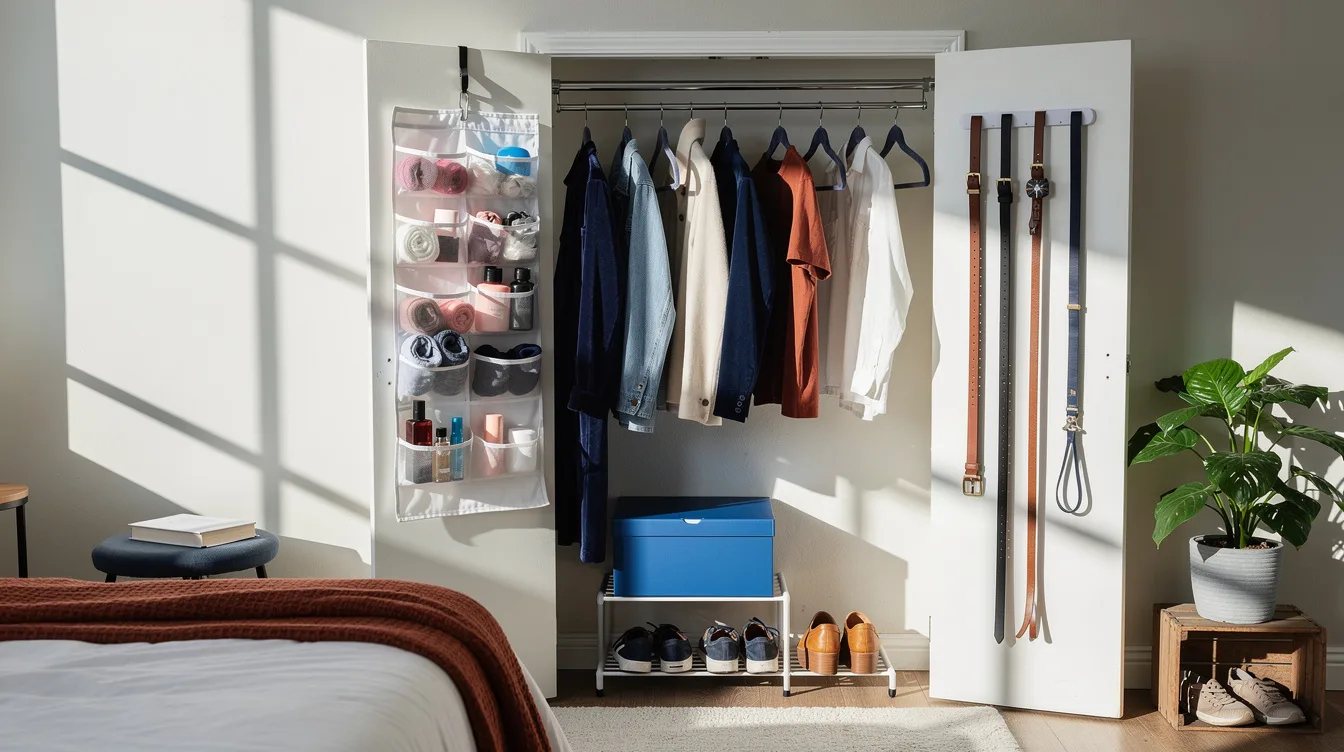
No Room for More Clothes? These Renter-Friendly Closet Fixes Start at $8
23 november 2026A rental closet can feel full long before the existing bar is actually using the available height. A second tension rod set about 36 inches below the original creates another hanging tier, and a listed price near $25 keeps the basic upgrade within reach.
From narrow alcoves to open-sided closets, these no-screw ideas use pressure, adhesive, and the back of the door instead of permanent hardware. Measure carefully first, then match each rod to the weight it will carry.
What you will find inside
- Measure the Actual Opening First
- Install a Second Rod Below the Original
- Use a Low-Cost Rod for Light Clothes
- Span a Wide Closet With ClosetMaid
- Fit a Narrow Alcove With Lido Designs
- Choose a Thicker Rod for Coats
- Hang a Ready-Made Second Tier
- Build a Floor-Level Shoe Rack
- Rest a Lightweight Shelf on a Rod
- Stop Clothing Stacks From Falling
- Anchor an Open-Sided Closet Rail
- Reclaim the Door With Pockets
- Replace Bulky Hangers With Slim Ones
- Create a Light Accessory Rail
- Set a Realistic No-Screw Budget
Measure the Actual Opening First
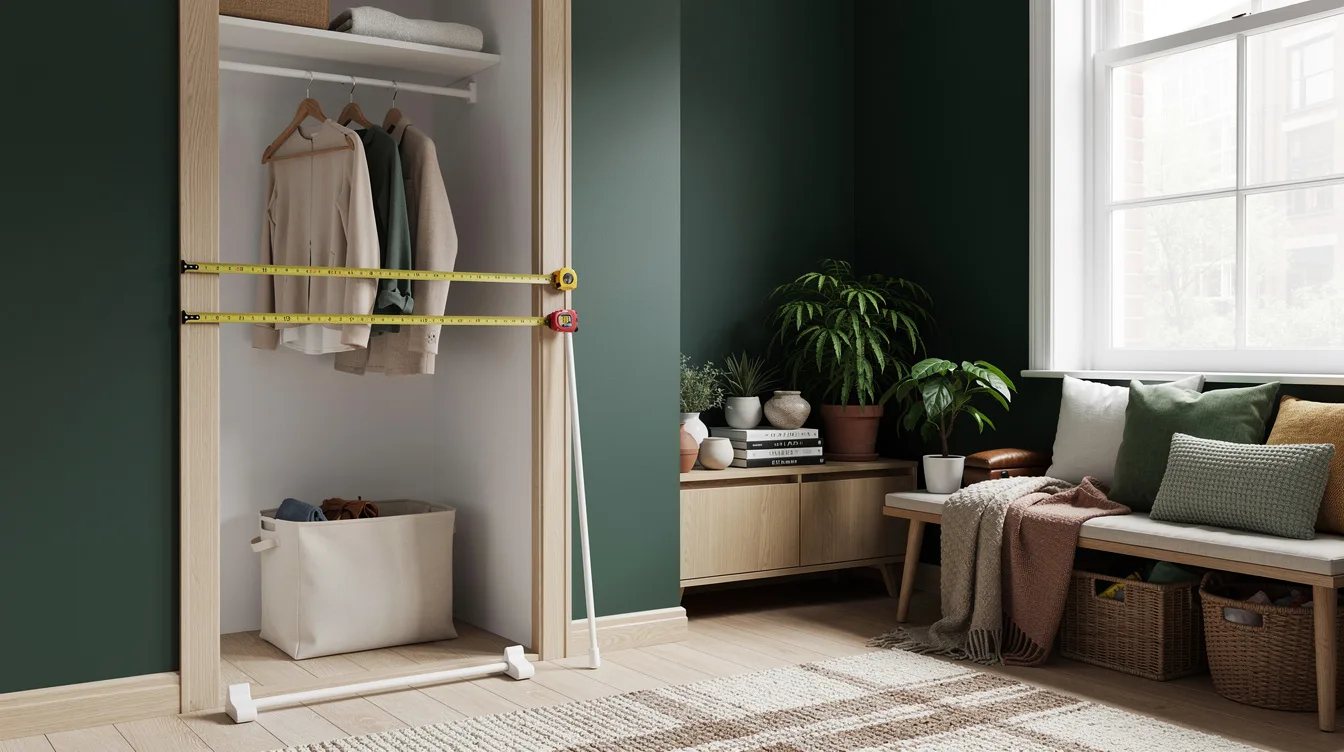
Use a steel tape to measure the clear span between the closet walls, then measure the depth from the back wall to the door swing. The wall-to-wall number controls your rod choice, while the depth tells you whether hanging clothes will clear the door.
Measure the side walls themselves, not the decorative door frame. A standard tension rod usually needs about 26 inches of span at minimum, and openings wider than roughly 76 inches need a different solution or a center support.
Install a Second Rod Below the Original
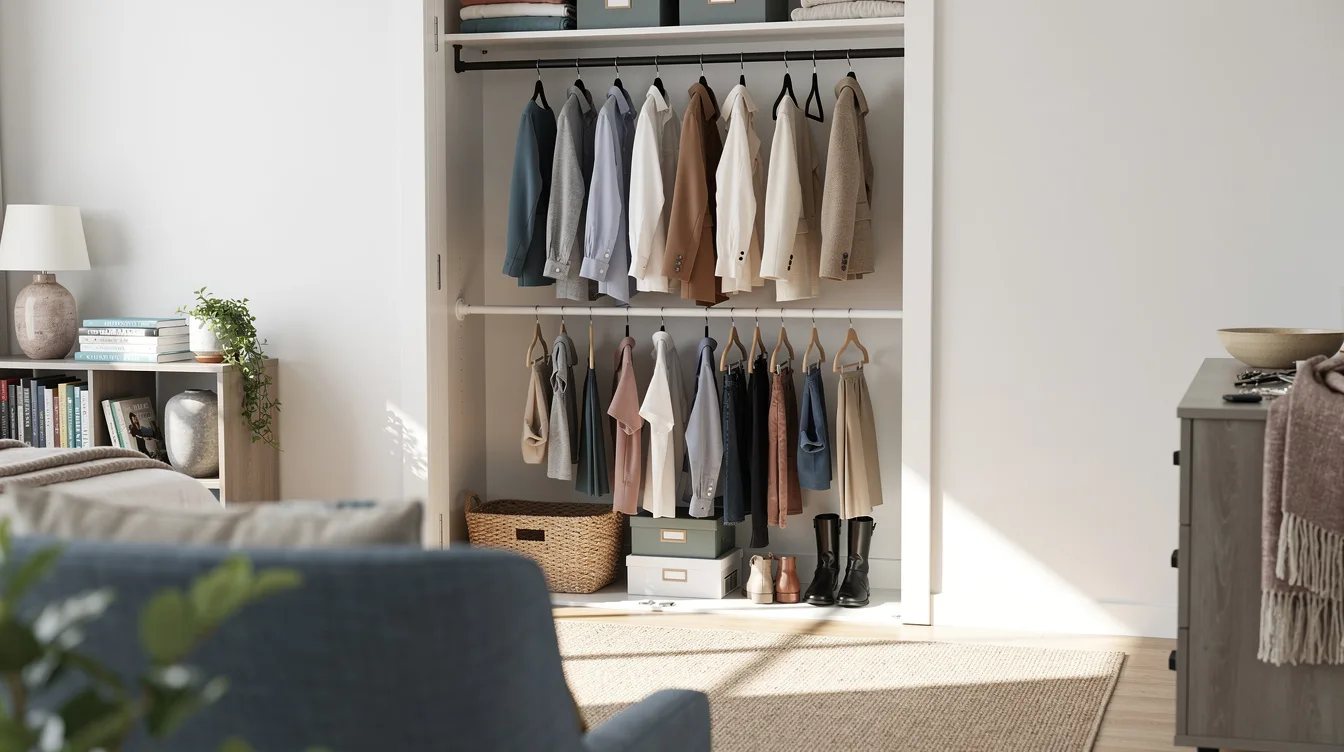
The most useful rental upgrade is a second Closet Pro tension closet rod, which spans about 34 to 63 inches and has a roughly seven-eighths-inch diameter. Home Depot category pages listed it at about $25, though current prices should be checked before buying.
Set the new rod about 36 inches below the existing one, leaving roughly 14 inches of clearance beneath it for shirts and folded items. Put shorter garments on the lower level and keep long dresses, coats, and jumpsuits above.
Use a Low-Cost Rod for Light Clothes
For blouses, scarves, and lightweight pants, the white Home Depot Tension Curtain Rod 869694 spans about 28 to 48 inches and was listed at roughly $8. That price makes it a sensible trial piece when you want to test a double-rod layout before buying a heavier model.
Keep the load modest and spread hangers across the span. Home Depot recommends rods around one-half inch in diameter or less for light loads, so this setup belongs below the main bar rather than under a row of winter coats.
Span a Wide Closet With ClosetMaid
A wider rental closet can take the ClosetMaid Adjustable Closet Rod 2052, which adjusts from about 6 to 8 feet and was listed at around $25. It gives a long opening a second hanging level without asking you to drill into drywall.
Use it for a coordinated row of shirts or children’s clothes, then check the rod after loading it. Standard tension rods often hold about 5 to 10 pounds, so distribute garments evenly and avoid treating the full span like a coat rack.
Fit a Narrow Alcove With Lido Designs
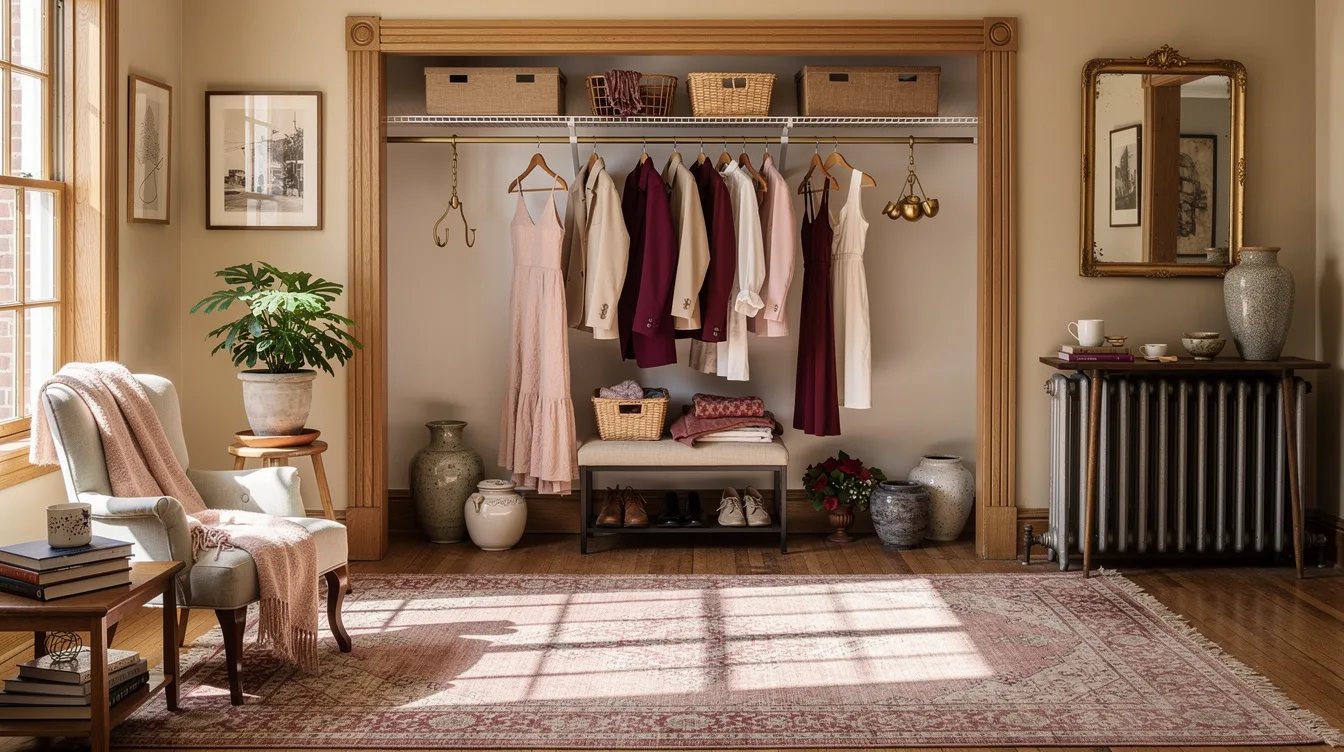
Short closets and awkward alcoves work well with the Lido Designs Extend and Lock rod, available in a roughly 20 to 30 inch span. The white version was listed at about $15, while the brushed-nickel version was around $17, making either finish an inexpensive choice for a tight section.
Use the white rod against a pale closet interior when you want the hardware to recede. Choose brushed nickel when the closet door stays open and the rod needs to look intentional beside metal drawer pulls.
Choose a Thicker Rod for Coats
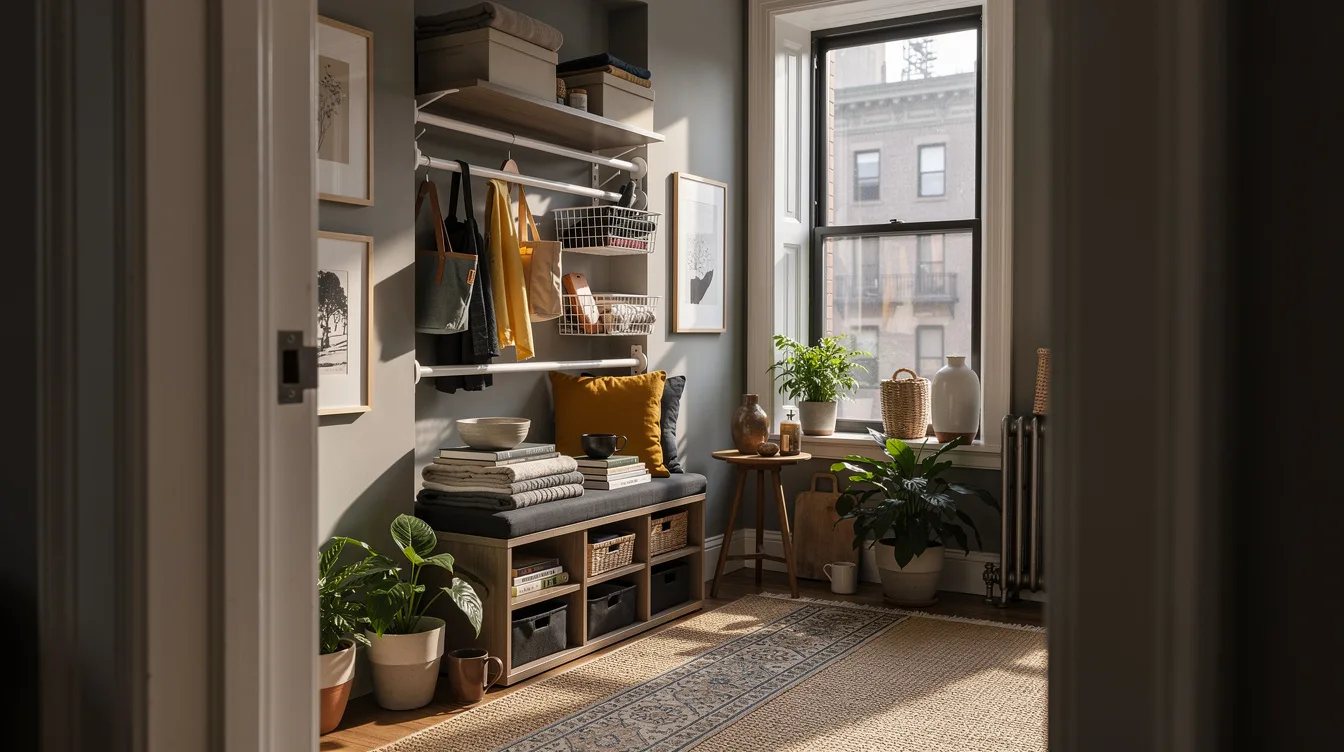
Heavy outerwear needs a more substantial bar, such as the Home Depot Adjustable 1-inch Single Tension Utility Rod QWHD24062. It spans about 42 to 72 inches and was listed at roughly $18, giving a long closet opening more support than a slim curtain rod.
A reinforced shower-style rod such as ENJOYBASICS also spans about 30 to 76 inches and was listed around $12 on Amazon. Treat any advertised load as a ceiling rather than a target, and test the rod with a few coats before filling it.
Hang a Ready-Made Second Tier
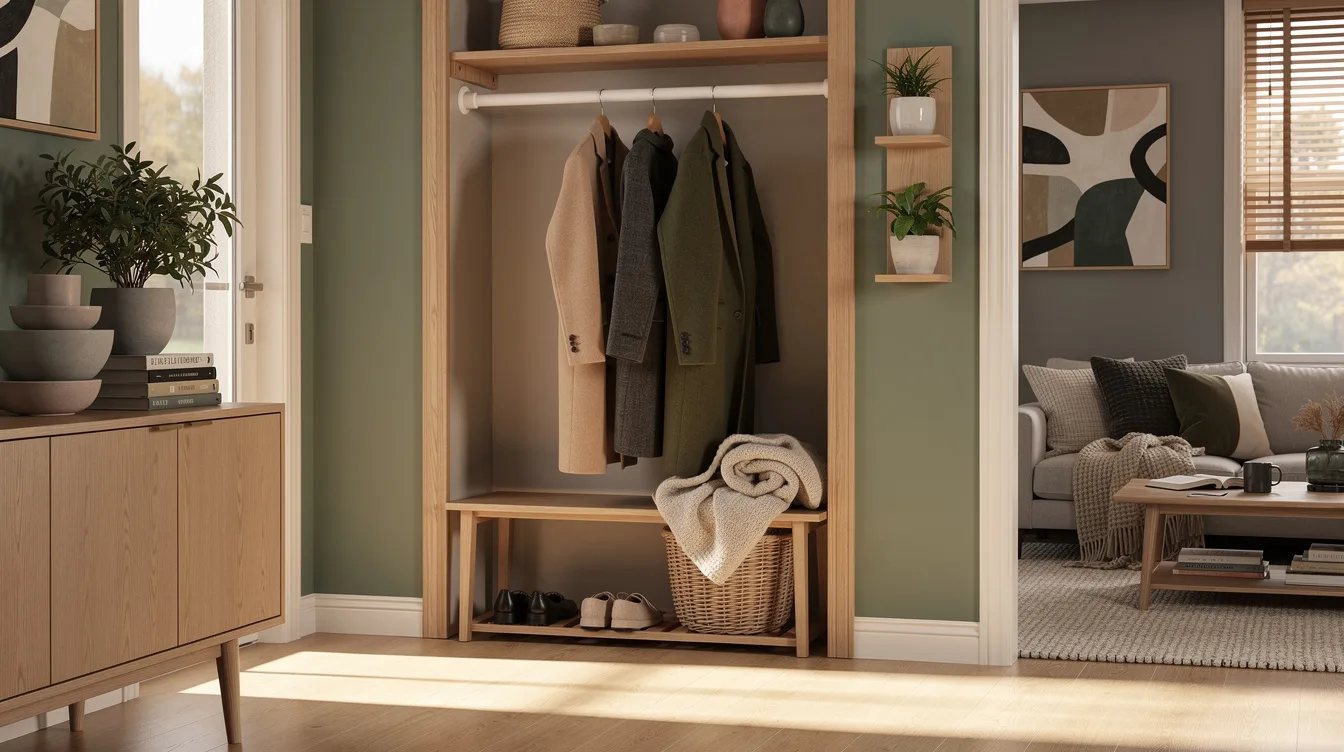
A hanging unit such as the Storage Maniac double-rod organizer hooks onto the existing closet bar and adds a lower level without pressing directly against the side walls. This is useful when the closet has uneven surfaces or when a fixed tension rod keeps slipping.
The manufacturer advertises a capacity of around 110 pounds, but that figure should be treated cautiously until the unit is tested in your own closet. Start with lighter shirts and pants, then add weight gradually while checking that the top rod remains level.
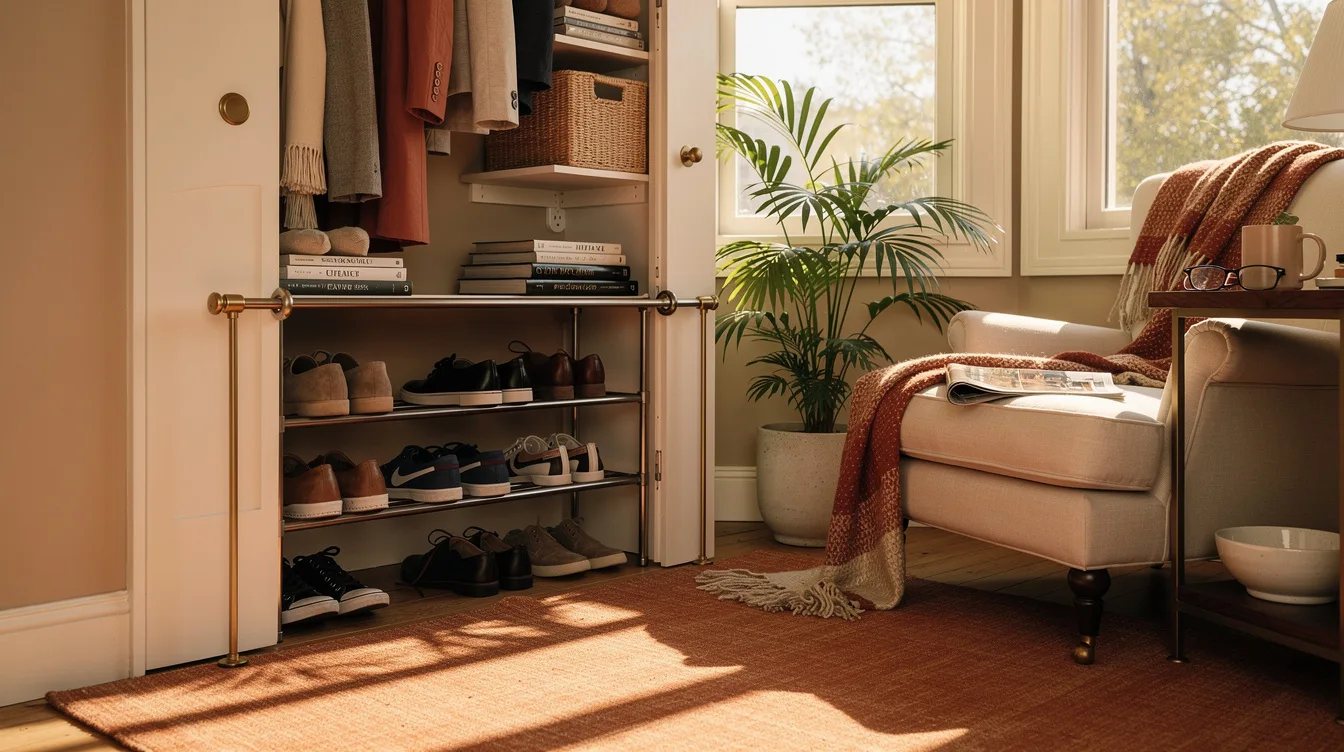
Build a Floor-Level Shoe Rack
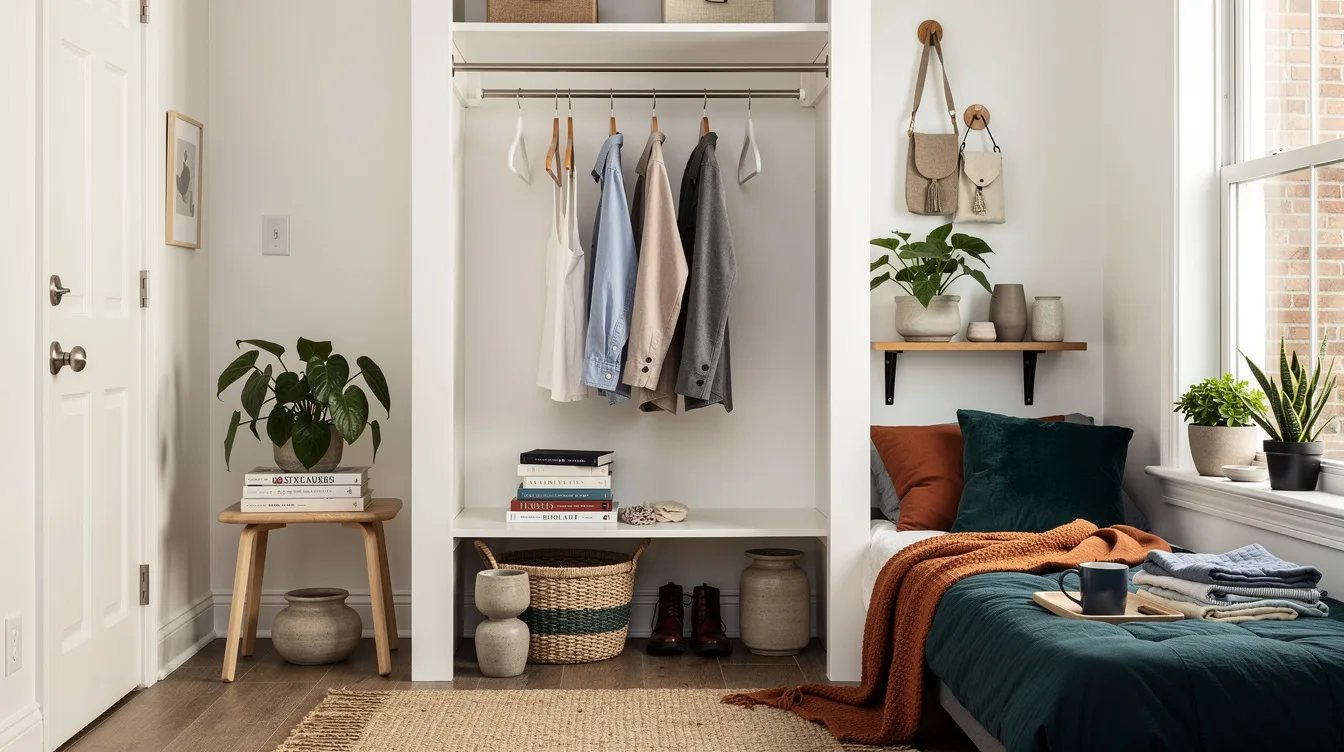
Two short EMOH spring tension rods can create a simple shoe rail near the closet floor. The two-rod pack spans about 12 to 20 inches and was listed at roughly $11, which suits a small side section or a narrow reach-in closet.
Place the rods about 12 inches apart, one slightly behind the other, so heels can catch on the back rail and sneakers can sit across the front. Keep the rods low enough for easy access, but leave room to sweep beneath them.
Rest a Lightweight Shelf on a Rod
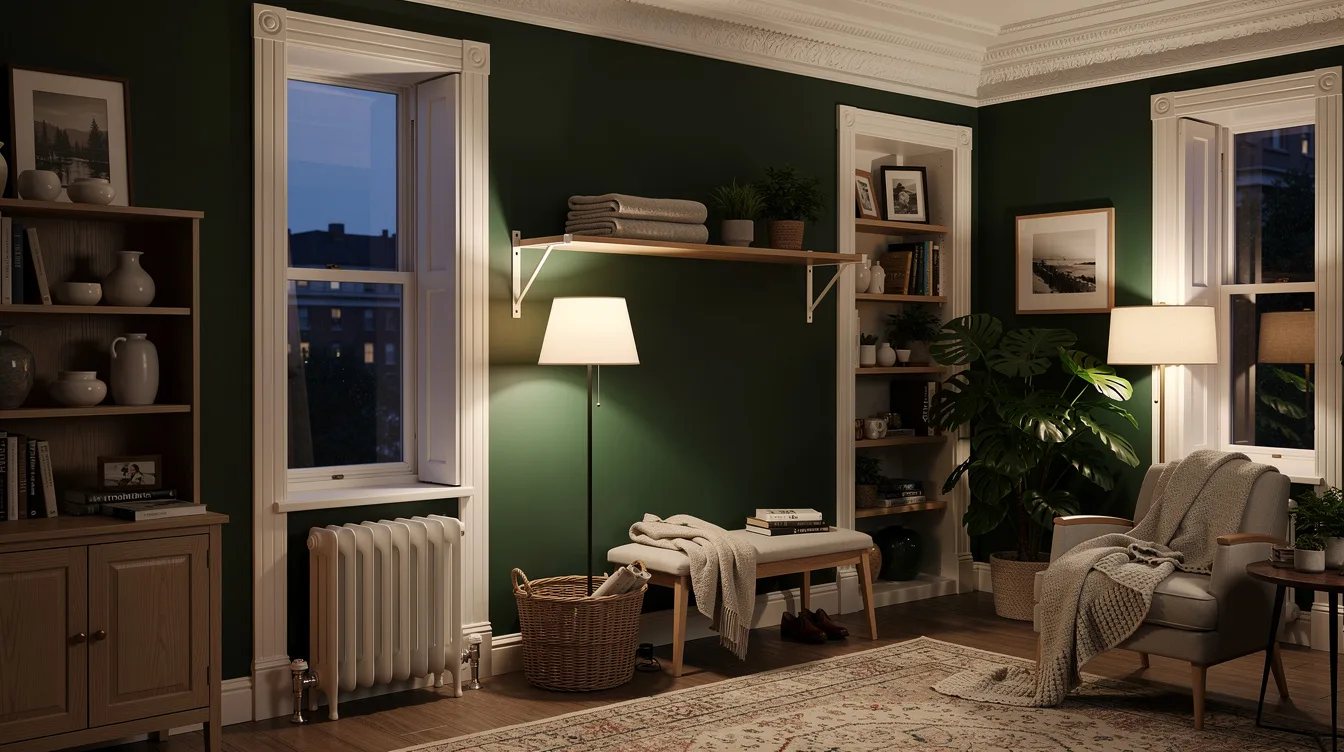
A lightweight pine board can rest across a pair of tension rods to make a temporary shelf for hats, small bags, or folded T-shirts. Choose a board shorter than the opening and keep its contents light, because a rod designed for hanging clothes is not a structural shelf bracket.
Set the rods at the same height and press their end caps firmly against opposite walls before placing the board. Test the shelf with one item first, then add a few more while watching for bowing, slipping, or wall marks.
Stop Clothing Stacks From Falling
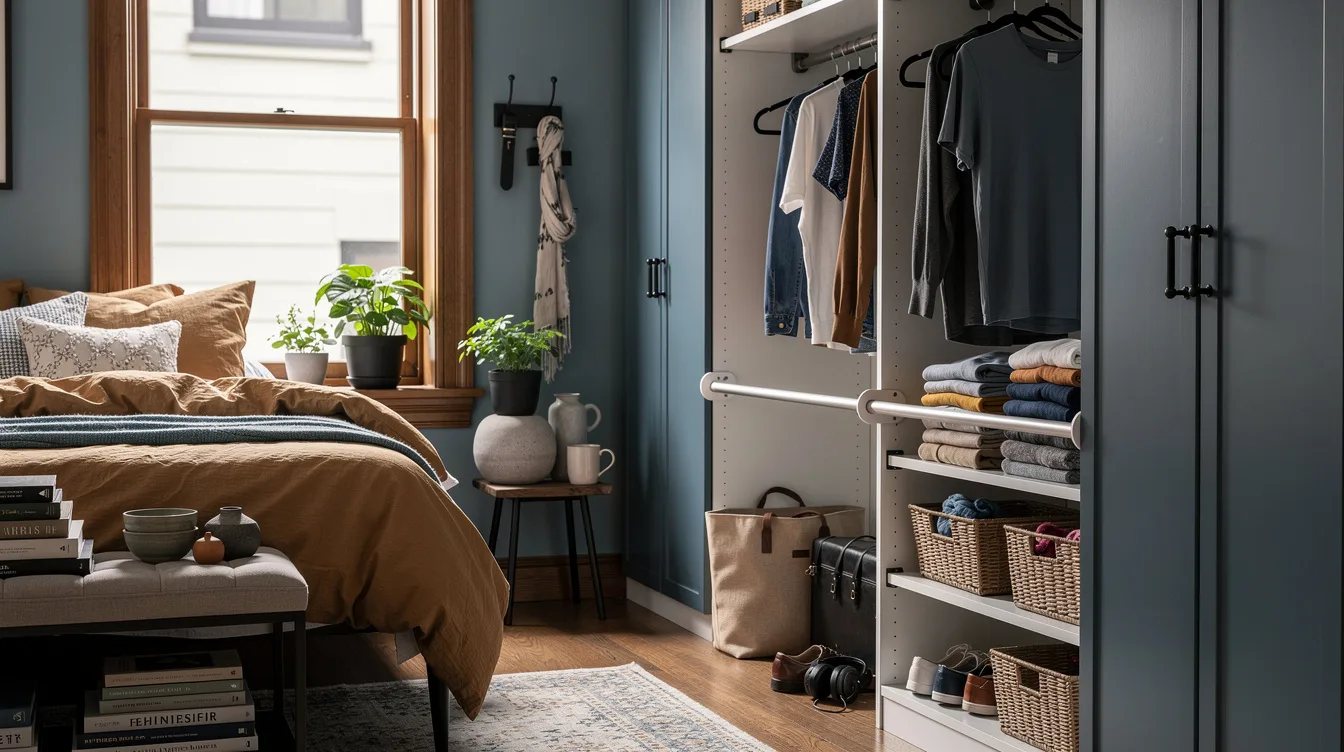
Use the ClosetMaid Adjustable Closet Rod 32050 as a short divider between two closet shelves. Its roughly 2 to 4 foot adjustment range and category-page price of about $11 make it practical for separating handbags, denim, or soft storage bins.
Place the rod vertically between the shelf and the ceiling above it, or between two shelves when the opening allows. The pressure keeps piles upright while preserving the shelf surface for a second category of clothing.
Anchor an Open-Sided Closet Rail
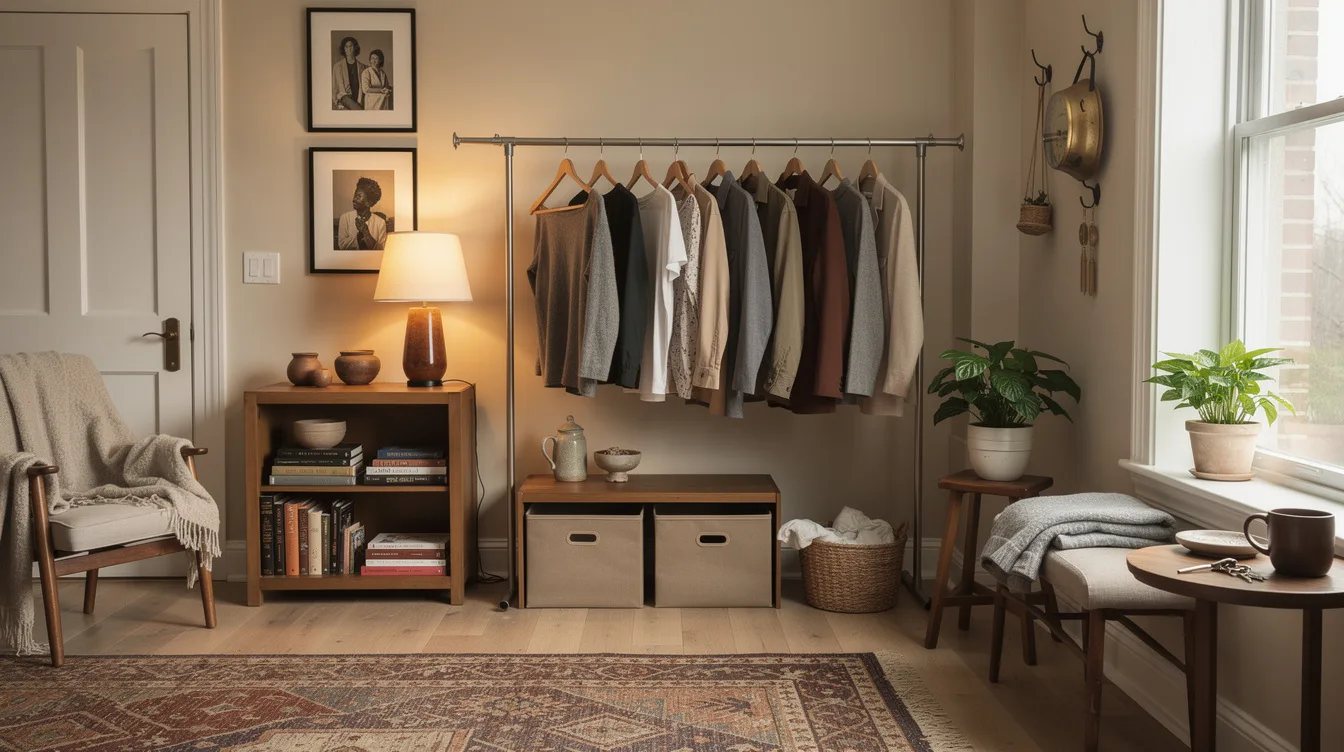
When one side of a closet is open, a row of Command adhesive hooks can hold a lightweight rail or accessory organizer without screws. A package of about 10 wire hooks was listed around $17, while a larger package of about 14 hooks was around $27.
Clean and dry the surface, follow the package cure time, and respect the stated load limit. Adhesive support is best for scarves, belts, and light bags, not a dense row of denim or a full-length coat collection.
Reclaim the Door With Pockets
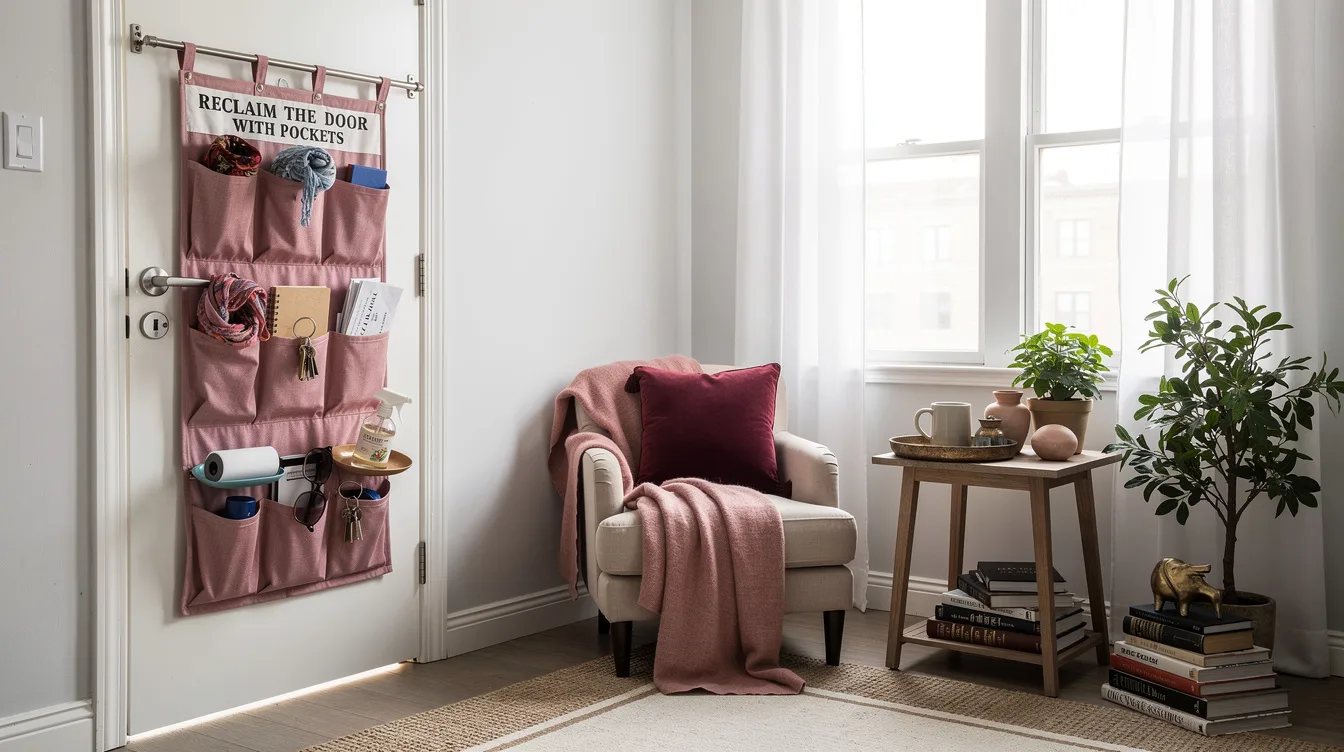
The Amazon Basics 24-pocket over-door organizer was listed at about $11 and turns the unused back of a closet door into storage for socks, belts, hats, and small accessories. It is especially helpful when floor space is already occupied by shoes or bins.
Check the door clearance before installing it, including the gap near the frame. Metal organizers are generally made for doors around 1.75 inches thick, so confirm the fit and keep heavier items in the lower pockets.
Replace Bulky Hangers With Slim Ones
Zober velvet hangers measure roughly 17.5 inches wide and about 0.2 inches thick, giving a crowded rod more usable space. The brand claims that its slim profile can free about 30 percent of hanging room, though the result depends on the clothing mix.
Use matching hangers for shirts, skirts, and lightweight jackets, then reserve thick wooden hangers for structured pieces. The velvet surface also helps slippery tops stay in place, which reduces the floor pile created by dropped clothes.
Create a Light Accessory Rail
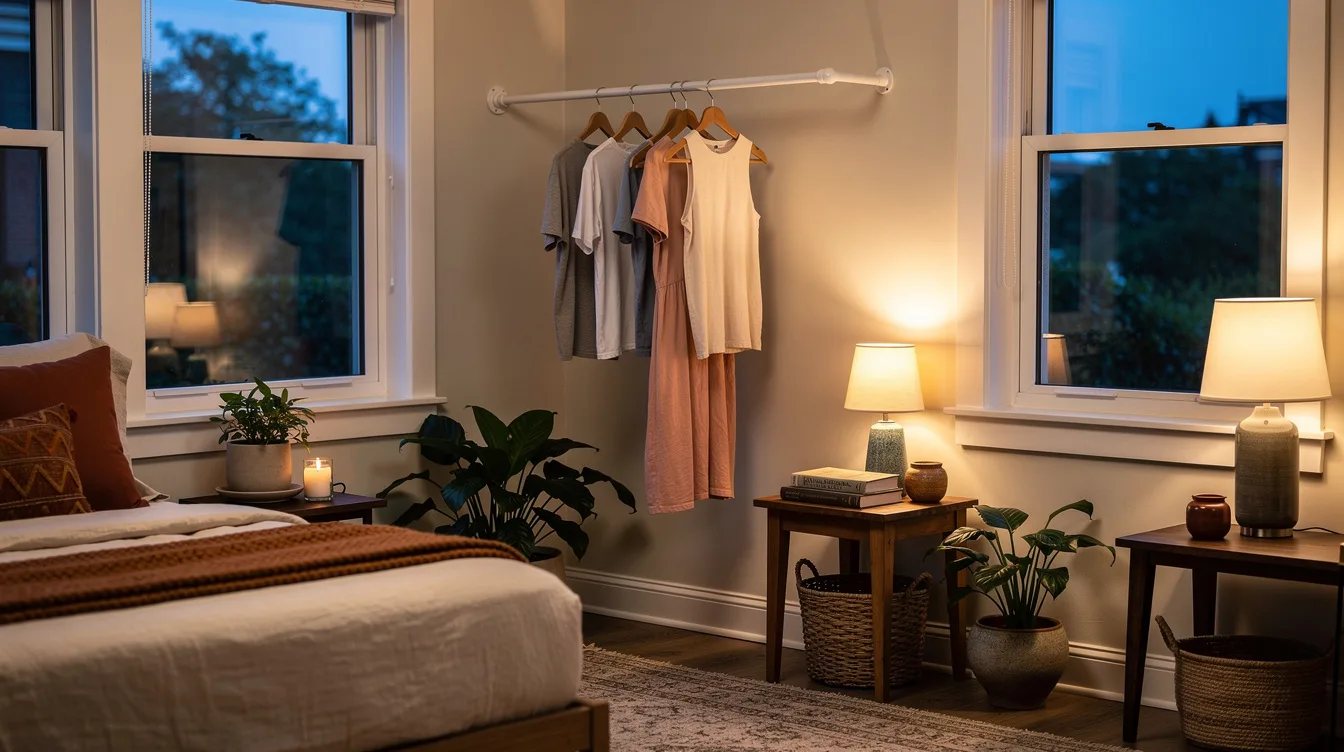
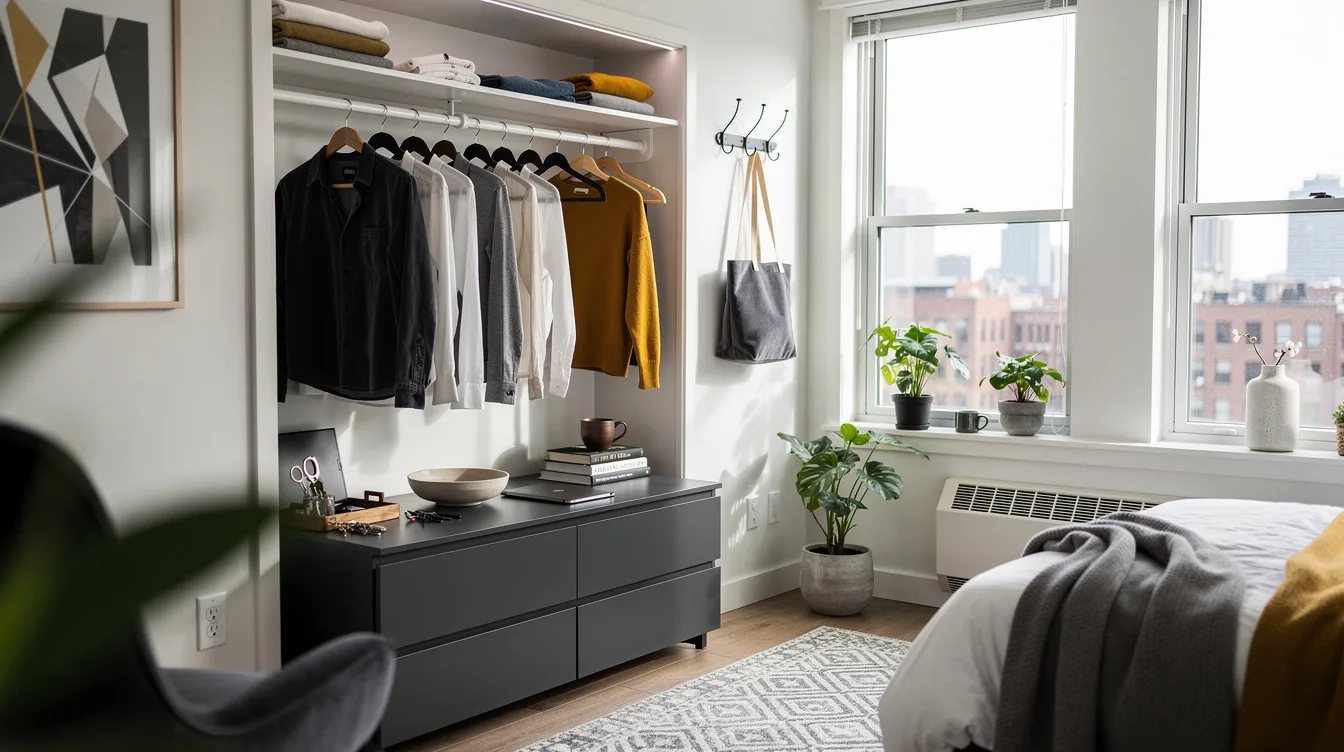
A white Home Depot Tension Curtain Rod 869694 can fit inside a shallow cabinet, beside a shelf, or across the back of a closet door when the opening is about 28 to 48 inches. Add S-hooks for belts, small totes, or fabric pouches, keeping the total load light.
Place the rail where accessories remain visible instead of hiding behind hanging clothes. This small change makes the closet easier to maintain because every item has a defined return point.
Set a Realistic No-Screw Budget
A practical rental setup can combine a second rod, adhesive hooks, and a door organizer for about $40 to $50 before tax. Start with the Home Depot ClosetMaid Adjustable Closet Rod or another rod in the roughly $12 to $25 range, then add storage only where the closet has a clear pressure point.
Load the new system in stages: hanging clothes first, accessories second, and shoes last. That order reveals whether the walls, rod ends, and door can handle the arrangement before more money goes into bins or specialty hardware.
Keep reading
- Lowe’s Renter-Friendly Closet Upgrades That Start at $3.98
- Black Friday Storage Deals at Home Depot? Start With the $7 HDX Tote
- Sad Rental Bath? These Home Depot Peel-and-Stick and Lighting Fixes Fake a Reno
Begin with the lower hanging tier, because it delivers the biggest storage gain for the least money. Once that rod holds steady, add the door organizer and adhesive hooks only where daily clutter still has nowhere to land.