How to Style a Southern Christmas Table Setting - 11 Ideas
06 october 202611 Christmas Table Setting Ideas for a Southern Home can turn a crowded dining table into a warm, welcoming place with a few smart layers and one relaxed afternoon. You don't need matching china or an oversized centerpiece. You need a clear path for plates, glasses, conversation, and candlelight. Start by clearing the table, then build the mood through color, texture, and a few memorable details. Start here!
Before You Start: Gather the Table Pieces
You'll need a tablecloth or runner, dinner plates, salad plates, flatware, water glasses, napkins, candles, greenery, and one serving piece with real presence. I like starting with what you own because your grandmother's plates or a chipped wooden bowl often gives the table more character than a matching set ever could.
For color, choose one quiet base and two accents. Benjamin Moore White Dove OC-17 works beautifully with red berries and brown wood, while Farrow & Ball Pigeon No.25 gives a southern Christmas table a soft, graceful background. If your dining room already has strong color, Sherwin-Williams Agreeable Gray SW 7029 keeps the table from feeling busy.
The larger room still matters. A rug should be large enough for the furniture to overlap it, and art generally looks best with its center about 57 to 60 inches from the floor.
You won't need to redo the room, but you should clear visual clutter before styling the table. Your centerpiece can't breathe beside unopened mail, toy bins, and yesterday's coffee cups.
Here are typical US costs for a broader room refresh. Your table setting may cost far less if you reuse pieces.
If you're working with a compact room, compare the palette with the small-table landing zones before buying anything. It helps you spend on pieces that earn their space.
- Clear the Table and Read the Room
- Start with a Southern Christmas Color Story
- Anchor the Table with The Three-Height Centerline
- Layer Linens with The Two-Texture Rule
- Choose Wood over Matching Plastic
- Set Each Place with a Generous Landing Zone
- Add Candlelight with The Three-Source Glow
- Frame the Table with Greenery
- Mix Pieces Instead of Matching Everything
- What Should You Leave Off a Small Christmas Table?
- Finish the Christmas Tablescape with One Personal Detail
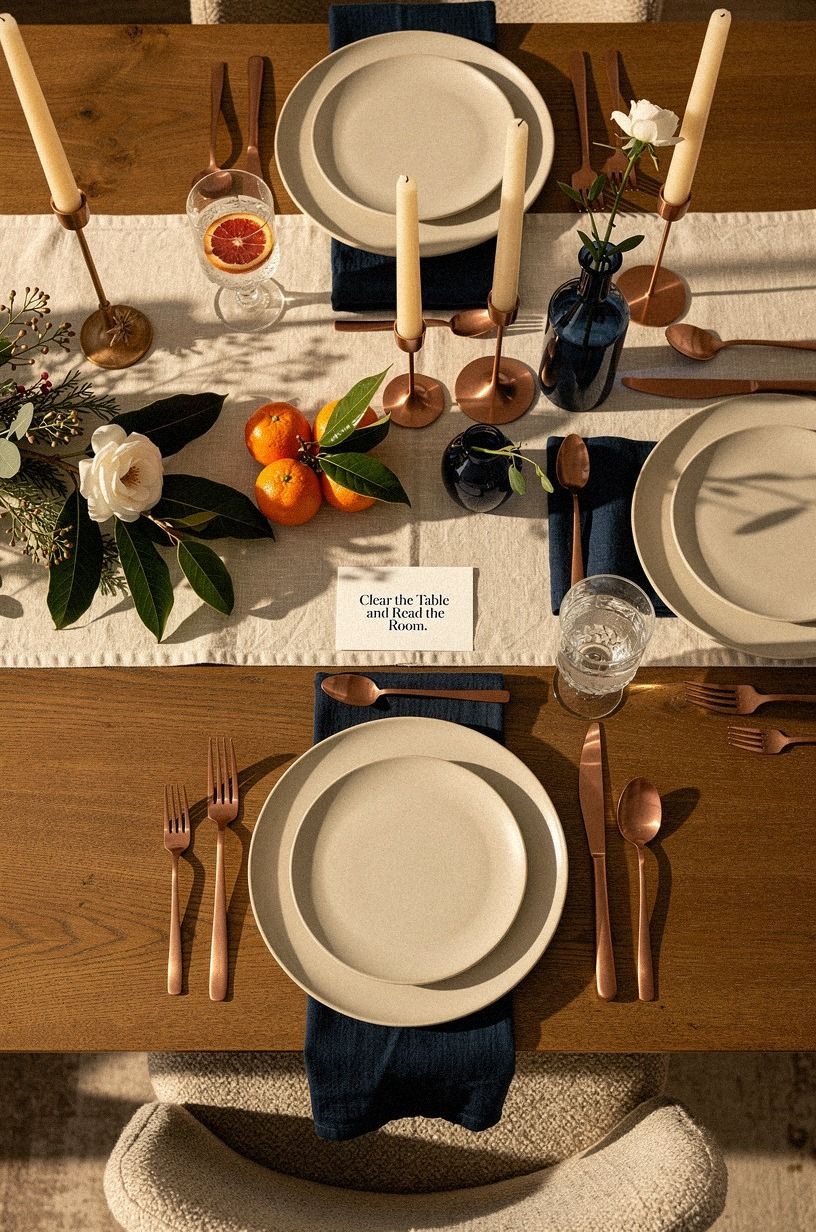
1Clear the Table and Read the Room
Start by removing every item from the table, including the pieces you think you'll use. Stand at the doorway and look at the room as a whole.
Does your eye land on the table, the tree, or a pile of chairs? You want the table to feel inviting before you add a single ornament, and that usually means removing more than you expect.
I made the mistake of styling around a large vase once. It looked charming from the side, but nobody could see across the table.
Your first pass should leave a clean centerline and enough room for elbows. If you're working with a small dining area, measure the walking path before you bring in extra chairs. A pretty setting that blocks the door won't feel welcoming for long.
Keep one practical item nearby, such as a small bowl for corks, used napkins, or stray serving spoons. Organic bouclé adds tactile warmth without shouting for attention. You don't need a bare, formal room, but you do need visual breathing space.
That pause makes every later layer feel considered and elegant.
For more guidance, compare this first pass with the three-height centerpiece method and the small-table editing rules.
2Start with a Southern Christmas Color Story
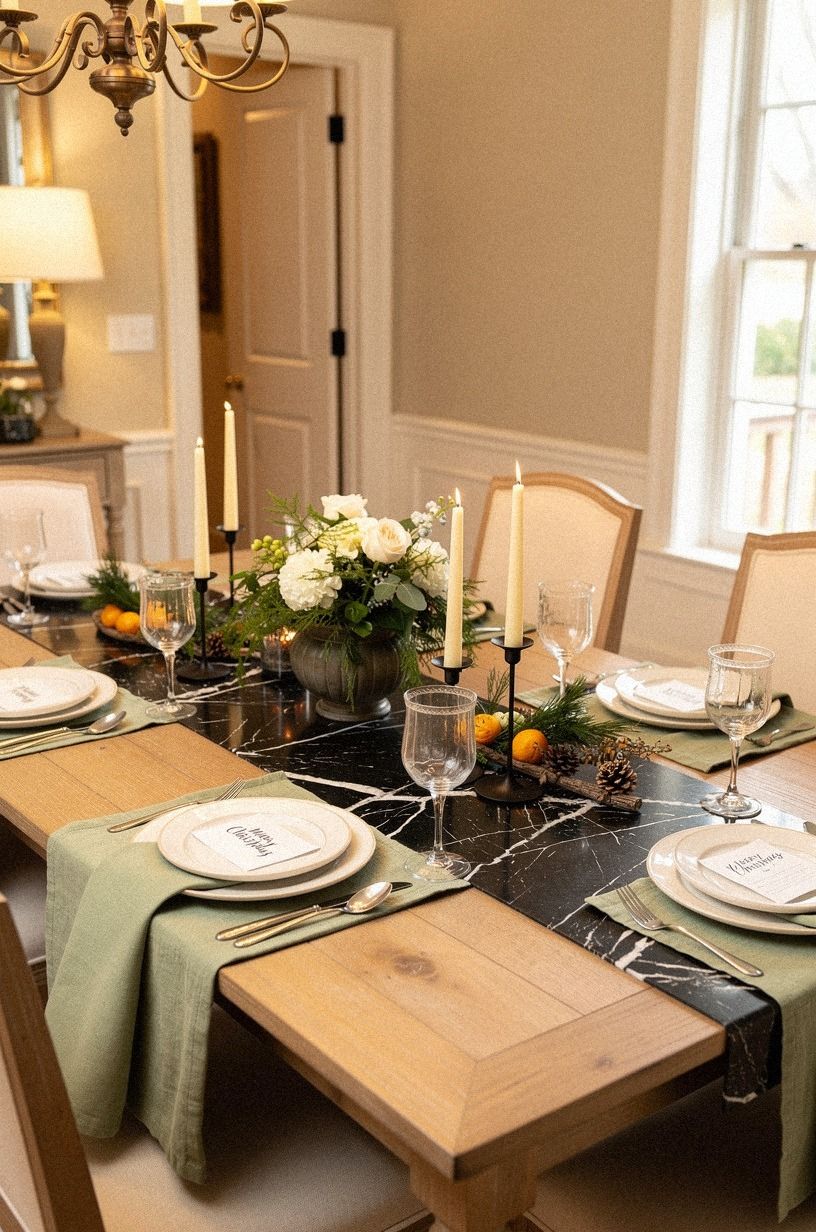
Choose the palette before you choose the centerpiece. A Southern Christmas table often looks best with sage green, warm cream, natural wood, and one restrained accent. The softer combination feels festive without forcing red into every corner just because the calendar says December.
For a softer holiday table, pair Farrow & Ball Pigeon No.25 with warm cream linen and natural wood. If you want something moodier, use Benjamin Moore White Dove OC-17 on the surrounding walls and let sage green napkins carry the contrast.
A piece of Nero Marquina black marble with white veins can add depth without disturbing the calm palette. I wouldn't pair bright red chargers with icy blue glass unless your room already supports that sharp contrast.
The combination can feel more party store than collected home.
Your colors should repeat at least three times, but they don't have to match exactly. A green napkin, a warm wood detail, and a cream plate are enough. You'll get a more organic result when the eye notices a relationship rather than a complete color kit.
A palette also helps you shop with discipline. Before buying anything, check whether it supports the existing linen foundation, the wood elements, or the candlelight. This simple test prevents a festive table from becoming visually noisy.
3Anchor the Table with The Three-Height Centerline
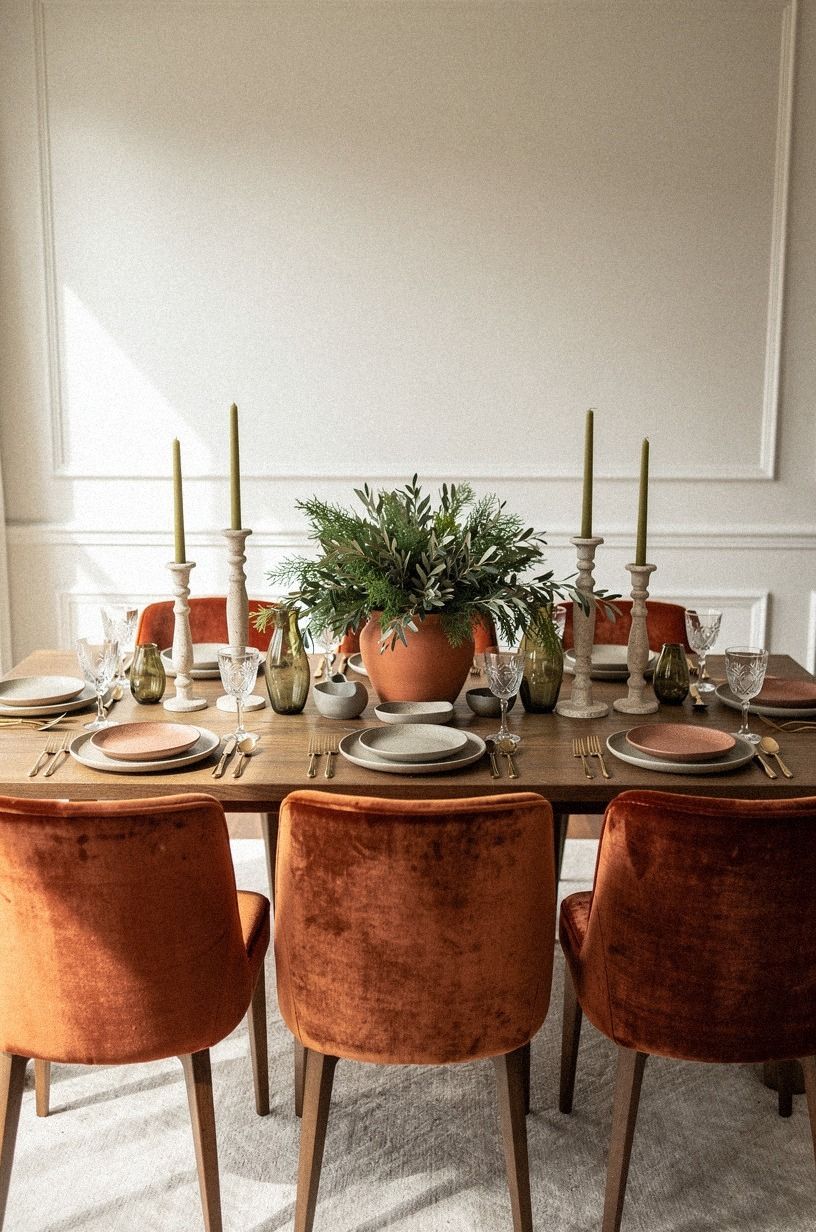
Build the centerpiece in three heights: low, middle, and tall. The low layer can be moss, greenery, or fruit.
The middle layer might be a bowl or a cluster of votives. The tall layer should stay narrow, such as tapered candles or one airy branch. This Three-Height Centerline keeps your table from looking flat while protecting conversation across it.
Use a deep-pile mohair velvet runner or soft accent in an olive or terracotta tone if your room feels dark. A shallow board can hold greenery, pears, and small brass cups without taking over the table.
Your middle layer should be easy to lift when dinner arrives. I prefer one broad bowl over six little decorative objects because it gives you a clear visual anchor.
Don't put the tallest item directly in front of the host's seat. Shift it slightly toward the center or use two slim pieces at opposite ends. You'll want every guest to see the person across from them, especially during a long meal.
The best centerpiece quietly supports the conversation once everyone sits down.
If you are unsure where to begin, use the personal-detail approach after the structure is balanced. One meaningful object will usually add more charm than several small decorations.
4Layer Linens with The Two-Texture Rule
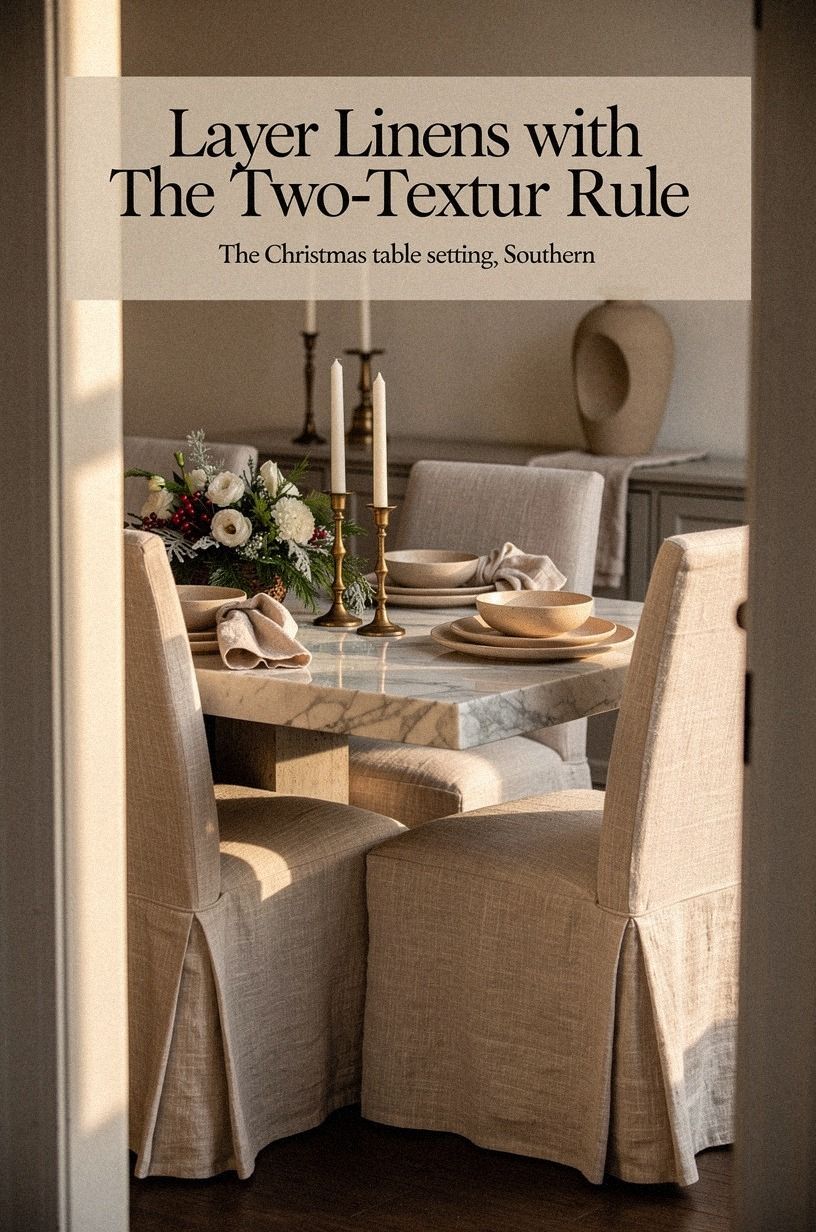
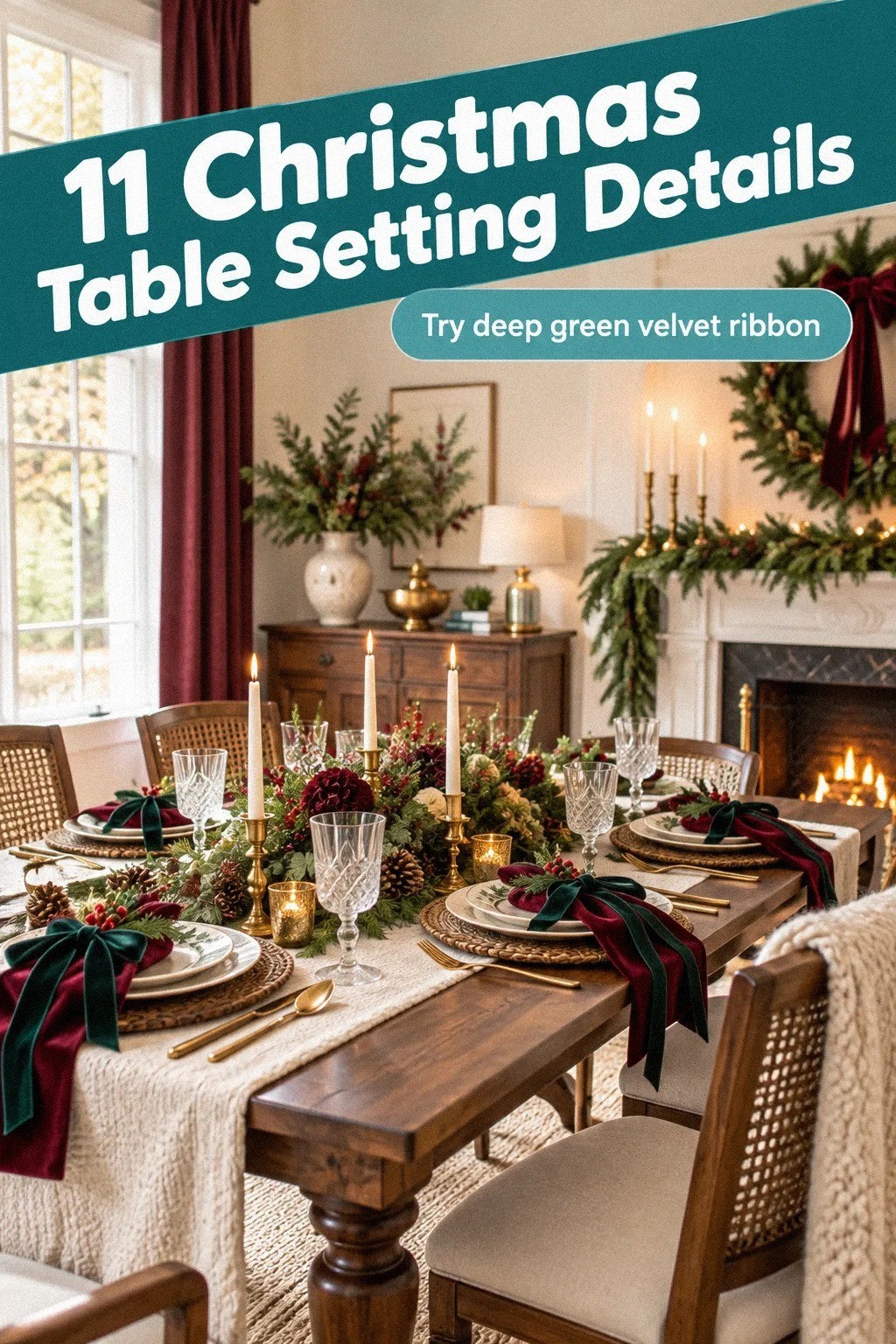
Begin with one soft foundation, then add one contrasting texture.
5Choose Wood over Matching Plastic
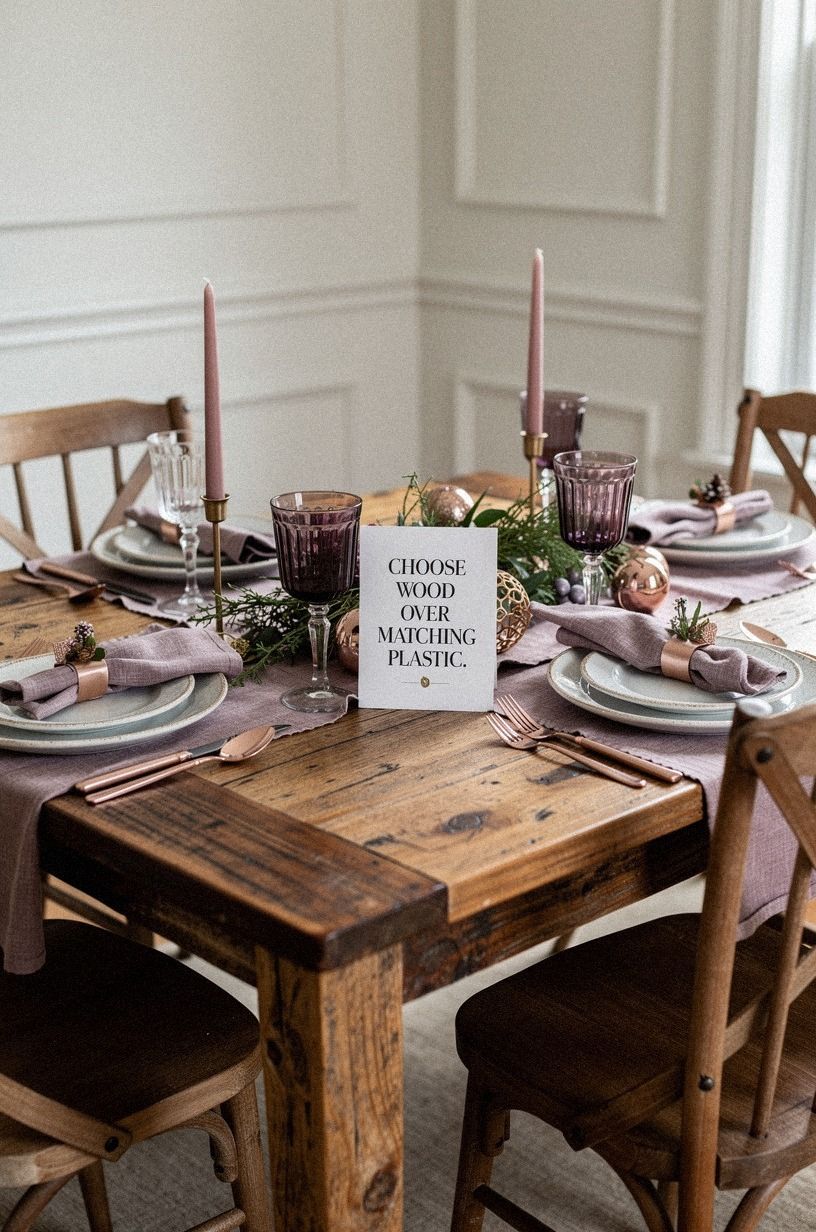
Add one honest wood element before you add more holiday decoration. A carved breadboard, a bowl of reclaimed weathered teak, or a pair of turned candlesticks can warm a table faster than another metallic ornament. Reclaimed weathered teak is my first choice because its worn grain gives pale china a grounded, southern feel.
A matching plastic centerpiece may be easy to store, but it often has one shine and one repeated shape. I'd skip it. Your eye needs variation, and real wood gives you small changes in color, edge, and texture that molded material can't imitate.
If you're shopping on a budget, look at IKEA STOCKHOLM pieces or secondhand serving boards with a solid profile.
Check the surface before you use it. A board with a deep food stain belongs under bread or candles, not beneath a white tablecloth where it will show through. You can let your wood look worn, but you shouldn't let it look dirty.
That distinction makes the table feel charming rather than unfinished.
A wood accent also connects the table to the rest of the room. Repeat it through mixed dining pieces, a nearby tray, or an aged frame. The result feels warm, collected, and quietly luxurious.
6Set Each Place with a Generous Landing Zone
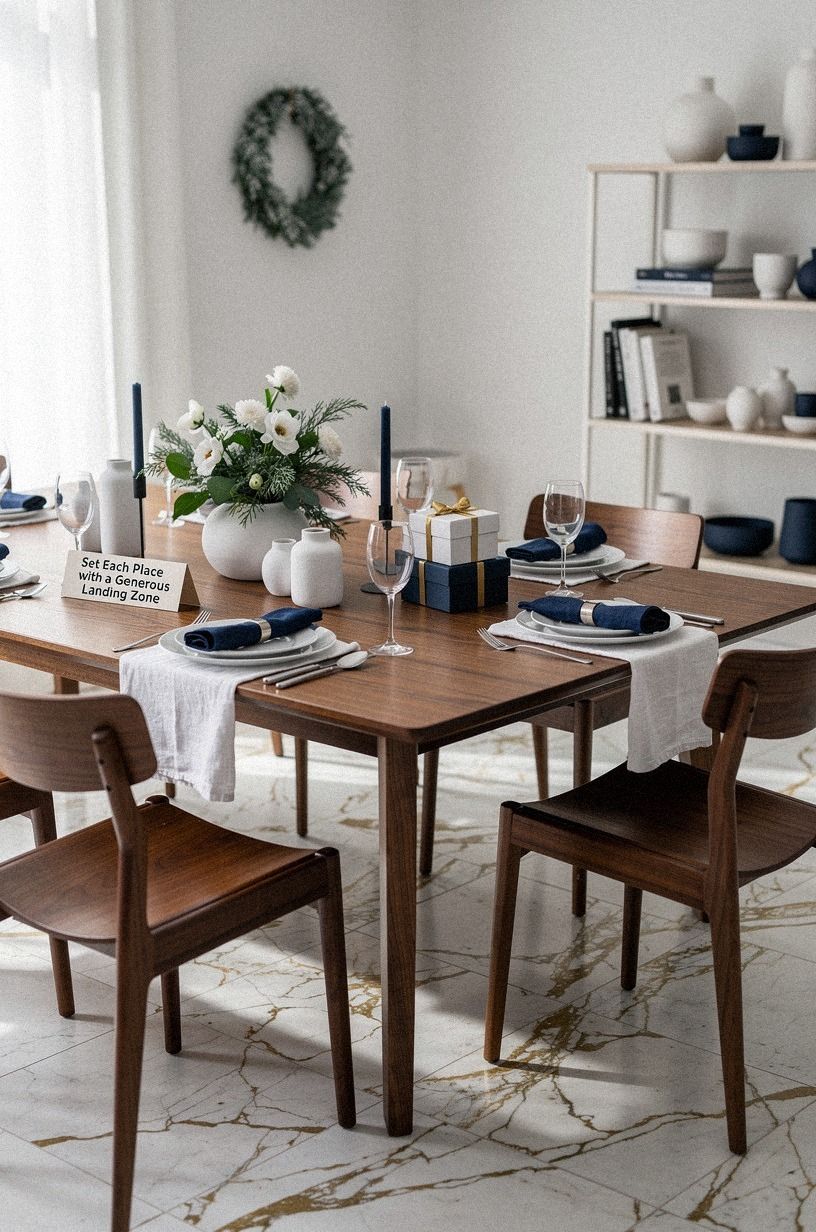
Place the dinner plate first, then build outward.
7Add Candlelight with The Three-Source Glow
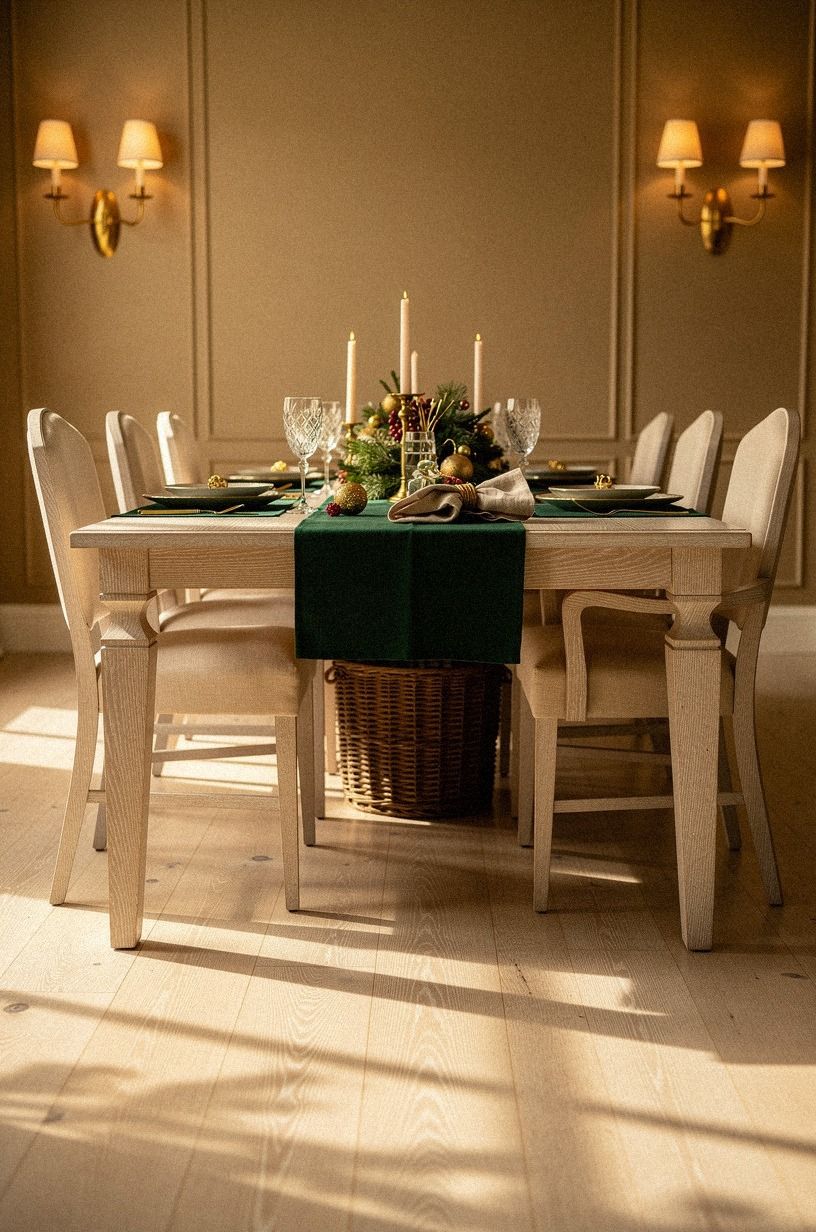
Use three sources of light around the room: overhead, task, and ambient. The table itself should provide the ambient layer through candles or a low lamp nearby. A cerused white oak tray is especially useful because its pale grain works with emerald accents, gold details, and cream tableware.
Turn off the harsh overhead light before you judge the table. A warm bulb, a few tapers, and the glow from the tree will change the room more than another centerpiece ever could.
You're aiming for a pool of light on the plates, not a spotlight on every crumb. That is where the comforting feeling comes from.
I wouldn't use tall glass hurricanes on a small table unless the opening is wide and the base is steady. They can look dramatic, but they take up more room than you think.
Use slim tapers instead, and keep flame away from napkins and hanging greenery. Safety isn't glamorous, but you'll be grateful when dinner lasts three hours.
Choose warm white bulbs around 2700K to 3000K if you can control the fixtures. The light will flatter the food, soften the room, and make natural materials look more generous. What a difference a warmer glow makes!
For additional atmosphere, consider framing the table with greenery so the candlelight has a soft organic backdrop.
8Frame the Table with Greenery
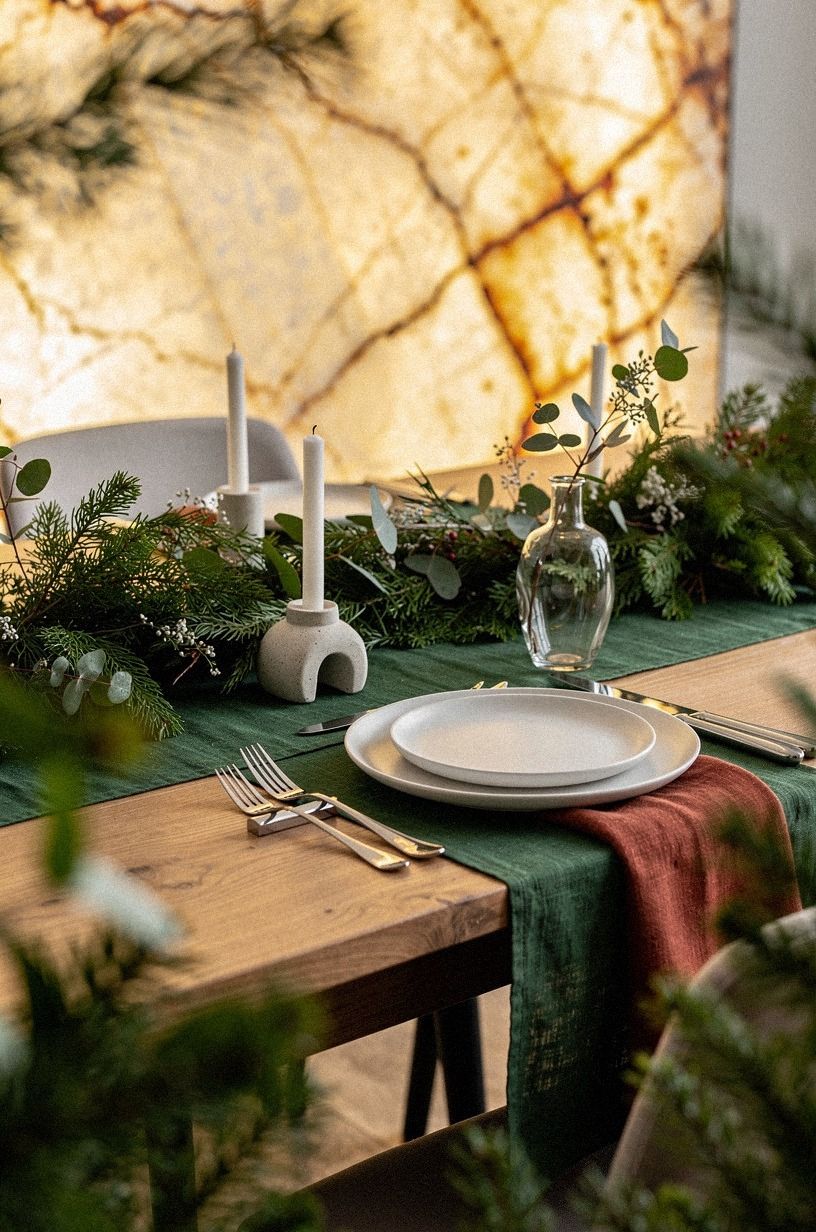
Bring greenery to the table from two directions: a low arrangement in the center and one simple echo elsewhere in the room.
9Mix Pieces Instead of Matching Everything
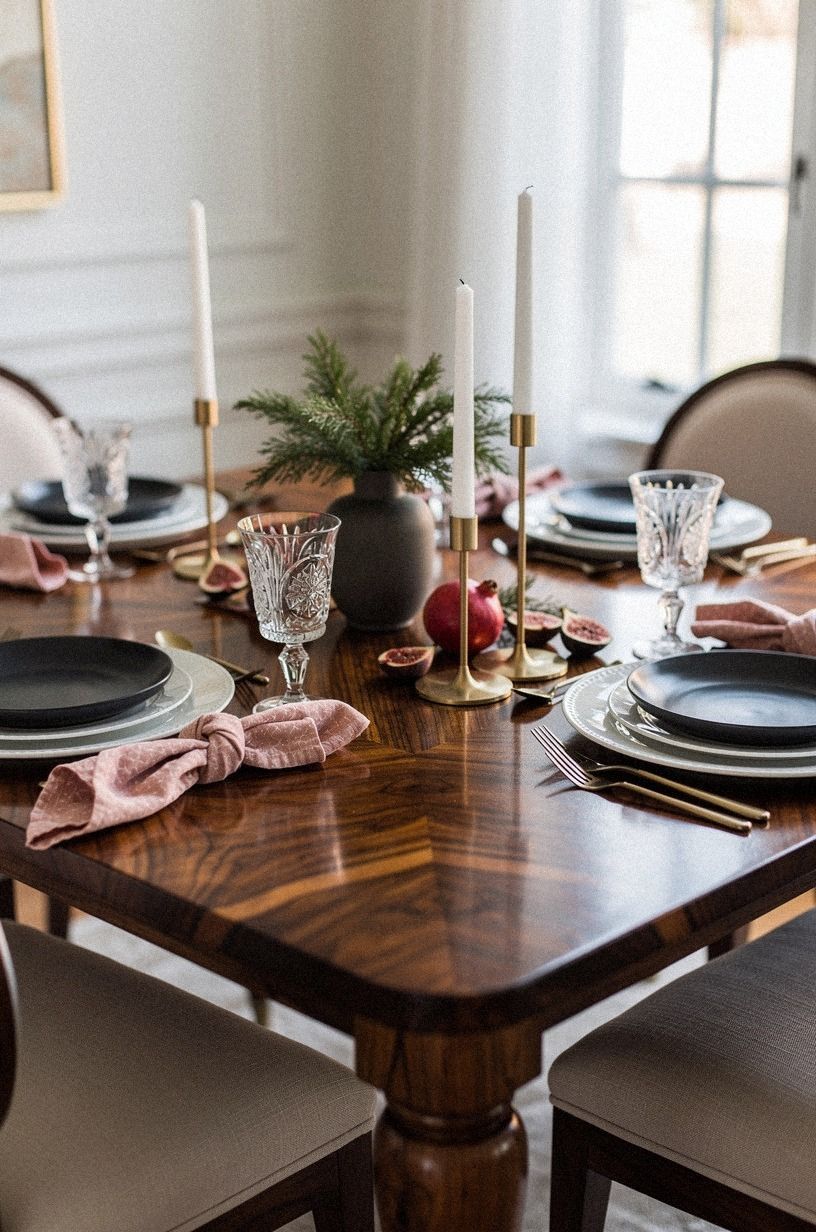
Repeat a material, not a complete pattern. If you use brass at the candlesticks, repeat it in a tiny serving spoon or the rim of a frame nearby. If you have book-matched walnut, let its rich grain stand beside simpler pieces rather than adding several more wood patterns.
This is where a Southern Christmas table can feel personal. Your grandmother's glasses, a West Elm Anton dining chair, and a thrifted silver tray don't need to come from one collection. They need a shared thread, such as warm color, rounded edges, or a familiar finish.
I went back and forth on mixing silver and brass, but the table looked richer once I stopped trying to make every metal agree.
Keep the strongest pattern in one place. If the plates are busy, make the napkins plain.
If the runner has a stripe, let the centerpiece stay natural. You'll create a calmer rhythm when every item isn't asking to be noticed at the same time.
A little contrast gives the table its personality.
Try to repeat an unusual detail twice. A scalloped edge on a serving bowl can echo the curve of a glass.
A faded berry color can return in a ribbon or a small dish. Those relationships feel deliberate without becoming stiff.
10What Should You Leave Off a Small Christmas Table?
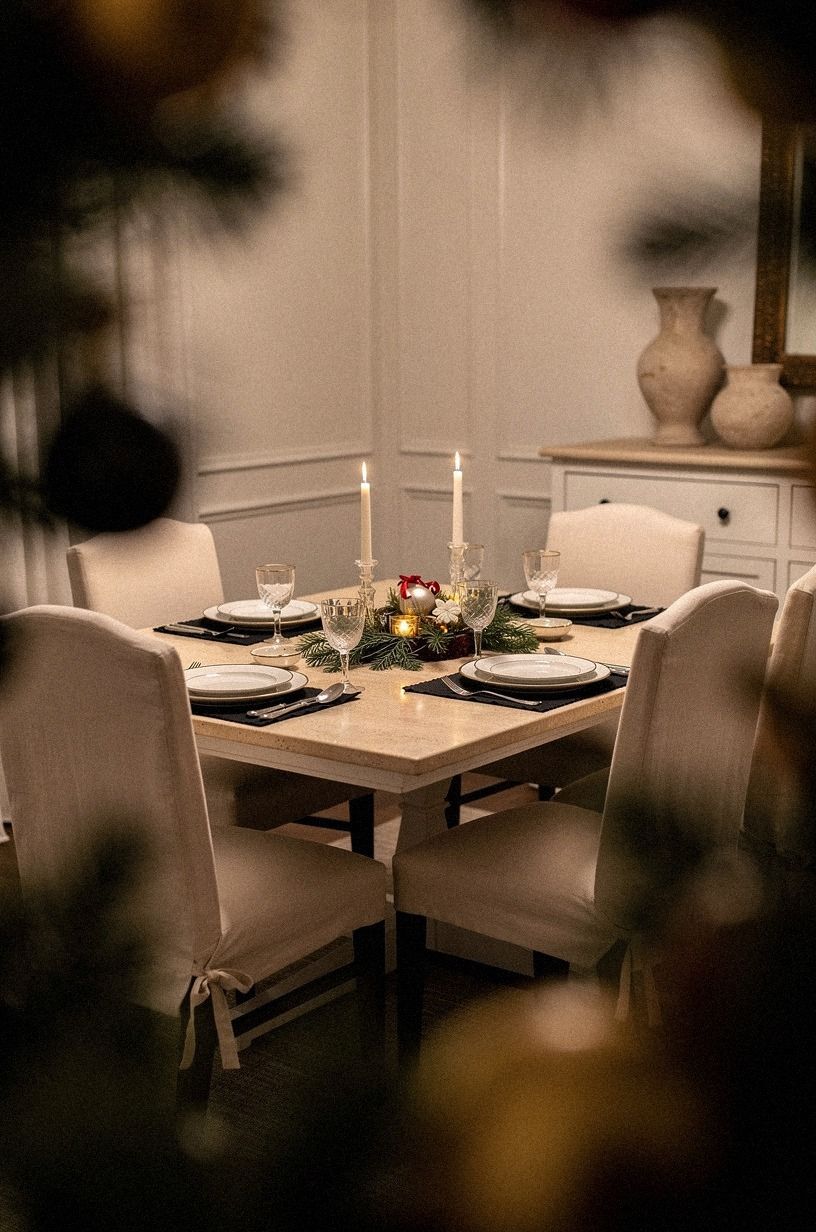
Leave off anything that blocks faces, duplicates a shape, or has no job during the meal. A small table doesn't need six mini trees, a garland, three bowls, and a decorative sign. Start with the pieces that help people eat comfortably, then add one detail that gives the setting a sense of occasion.
For a narrow table, use a runner instead of a full cloth and place the centerpiece in a slim line. Warm travertine adds quiet texture without adding visual weight.
Your serving pieces can live on a nearby console until the food arrives. That move buys back valuable space and lets everyone see one another.
What matters most, the centerpiece or the conversation? The answer should be the conversation.
If you're styling for a rental or a small apartment, choose removable, lightweight pieces that can move from the dining table to a kitchen island. A flexible table setting will serve you far beyond one holiday meal.
Edit from the guest's point of view. Sit in the chair with the least favorable angle.
Can you reach your glass? Can you see the person across from you? Can you set down a plate without knocking over a candlestick?
Those practical questions lead to a more graceful result.
11Finish the Christmas Tablescape with One Personal Detail
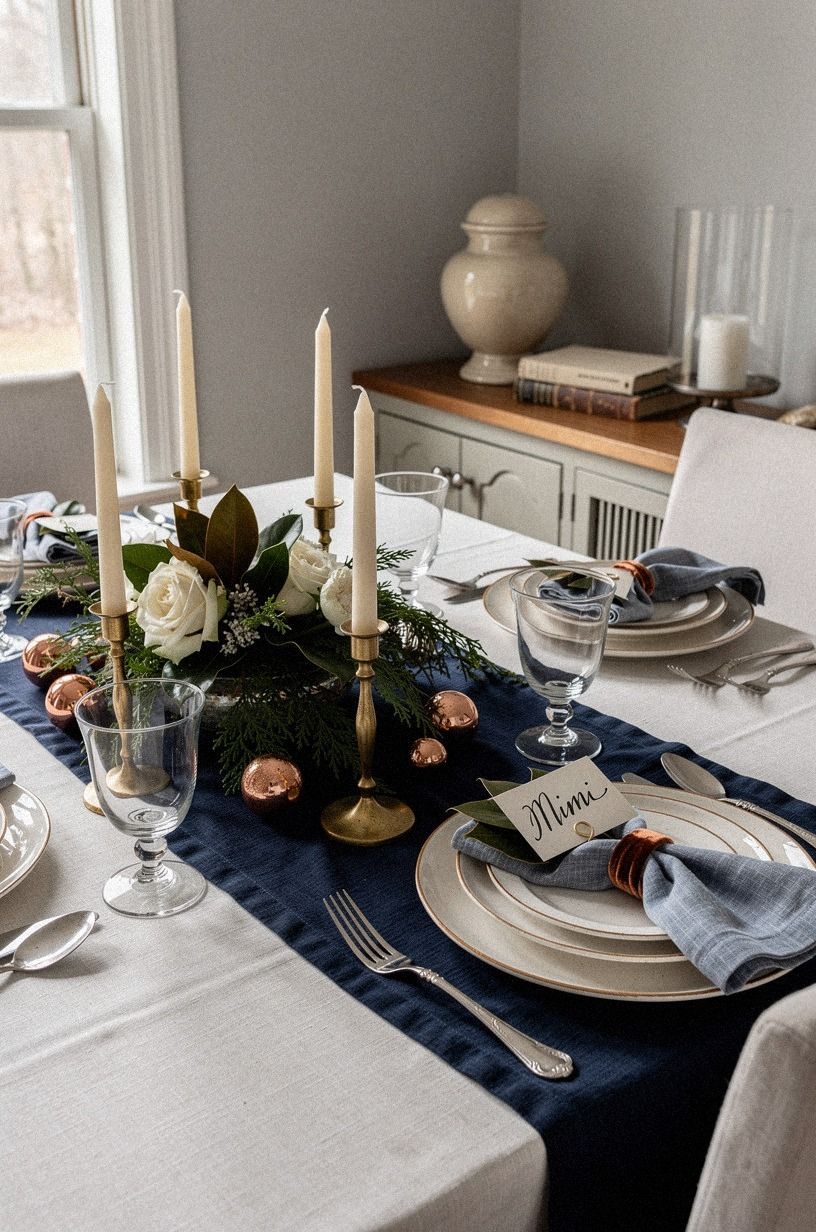
End with one object that tells your guests something about the home. It could be handwritten place cards, a bowl from your mother, a ribbon saved from last year, or a small dish of sugared pecans. Unlacquered brass developing a gentle patina works well because it becomes more personal over time.
Don't add a personal object just because the table feels empty. Add it because it gives someone a story to ask about.
Your guests should be able to reach it, understand it, or enjoy it without worrying that they've disturbed a display. I like placing a family bowl near the bread because it starts conversation before dinner begins.
Walk back to the doorway, then sit in every chair. You'll notice a candle that blocks a face, a glass that sits too close to a plate, or a centerpiece that feels enormous from the end of the table. Fix those details before guests arrive.
Your final setting should feel ready, not precious!
If you want one last check, compare the table with the generous landing zones, the three-source glow, and the editing rules for small tables. Those three tests catch most problems quickly.
Why a Southern Christmas Table Still Feels Personal
The best Southern Christmas tables aren't built from one shopping trip. They gather slowly.
A set of plates comes from one decade, the glasses from another, and the centerpiece may be a branch clipped from the yard that morning. That mixture matters because hospitality feels different when the table carries evidence of real life.
I used to think a polished table required perfect symmetry. Then I hosted dinner with mismatched napkins, a scratched serving board, and candles that leaned slightly.
Nobody commented on the uneven pieces. They talked about the food, the old family story behind the bowl, and the friend who arrived late with a pie. The table worked because it gave them room to settle in.
Let the Room Set the Mood
The table should respond to the room around it. A bright dining room can handle deeper napkins and aged brass.
A darker room may benefit from cream linen, pale wood, and reflective glass. Notice the architecture, the wall color, and the way daylight moves through the space before you add seasonal color.
If the room already has strong pattern, keep the centerpiece sculptural and the place settings calm. If the room feels plain, let a patterned plate or beautiful runner bring energy. This balance is what makes a table feel intentional, polished, and inviting.
Use Family Pieces as Evidence
Inherited pieces do more than decorate. They create a quiet sense of history. A silver spoon with a worn handle, a chipped bowl, or a set of glasses from a relative can make an ordinary meal feel intimate and memorable.
You don't need a complete family collection. One meaningful object is enough.
Place it where guests can see and use it, then let the conversation do the rest. Inherited china leaves room for stories without making the table feel formal.
Make Restraint Feel Rich
For me, the strongest design choice is restraint. I would rather see one generous bowl of greenery than a dozen small holiday objects.
I would rather use 18 oz cotton velvet on two nearby dining chairs than cover every surface in seasonal fabric. When you choose fewer pieces, each one gets enough space to look intentional without feeling staged.
The table should also reflect the season without becoming a costume. Pine, magnolia, warm wood, linen, candlelight, and fruit already carry plenty of December atmosphere. You don't need glitter on every plate.
If your home is modern, keep the palette quiet. If your home is traditional, let the old pieces show their age.
That is where the inviting quality lives.
Keep the Season in the Details
A small red berry, a folded napkin, or a bowl of sugared pecans can carry the holiday mood beautifully. Seasonal design feels more sophisticated when it arrives through scent, texture, and color instead of a collection of obvious signs.
This approach also makes cleanup easier. After the meal, remove the food, gather the candles, and place the greenery in water. The room can return to its everyday rhythm without losing the warmth you created.
Yes, absolutely, a simple table can feel festive.
The Questions I Get Asked Most
What is the best Christmas table setting idea for a small southern Christmas table?
The best small-space choice is a low greenery runner with slim candles and layered cream plates. IKEA STOCKHOLM wood pieces can add warmth without a bulky footprint. Keep serving dishes on a nearby surface, and you'll preserve sightlines while still creating a welcoming table.
Where can I buy Christmas table setting pieces on a budget?
Look at IKEA, Wayfair, and Target for plain linens, stoneware, and candleholders. Thrifted silver is another strong option because one tray or spoon can add history without much cost. You can also check Facebook Marketplace for wood boards and serving bowls.
How much does a Christmas table setting makeover cost?
A simple table setting can cost far less than a full room refresh, especially if you reuse plates and glasses. Typical room costs range from $200 to $800 for paint, textiles, art, and organization. Free greenery, inherited china, and thrifted pieces can lower your table cost.
Can I create a Christmas tablescape on a budget?
Yes, and you can begin with three free moves: clear the room, clip greenery, and regroup the pieces you already own. Cotton napkins from a basic set can look special when folded simply. Spend first on candles or one serving bowl because those details change the atmosphere fastest.
Is a Christmas table setting worth it in a small space?
Yes, because a small table needs fewer pieces to feel complete. Use one low centerpiece, narrow place settings, and a runner instead of a bulky cloth. Your limited space can make the meal feel intimate, especially when every guest can see and hear everyone else.
Is a Christmas table setting a good idea for a rental?
Yes. Choose no-damage details such as removable table linens, tension-rod curtains, and lightweight art that can lean on a sideboard. Peel-and-stick hooks can hold a small wreath without permanent marks, while portable lamps and candles give you flexibility from one room to another.
Where I'd Start First
If I had to pick one step, I'd start with the low greenery runner. It makes mismatched plates feel deliberate, leaves faces visible, and gives candlelight something natural to touch.
Pin the idea for later, then clear your table and see what you already have. Enjoy the table!