12 Living Room Lighting Mistakes That Make Your Space Feel Smaller
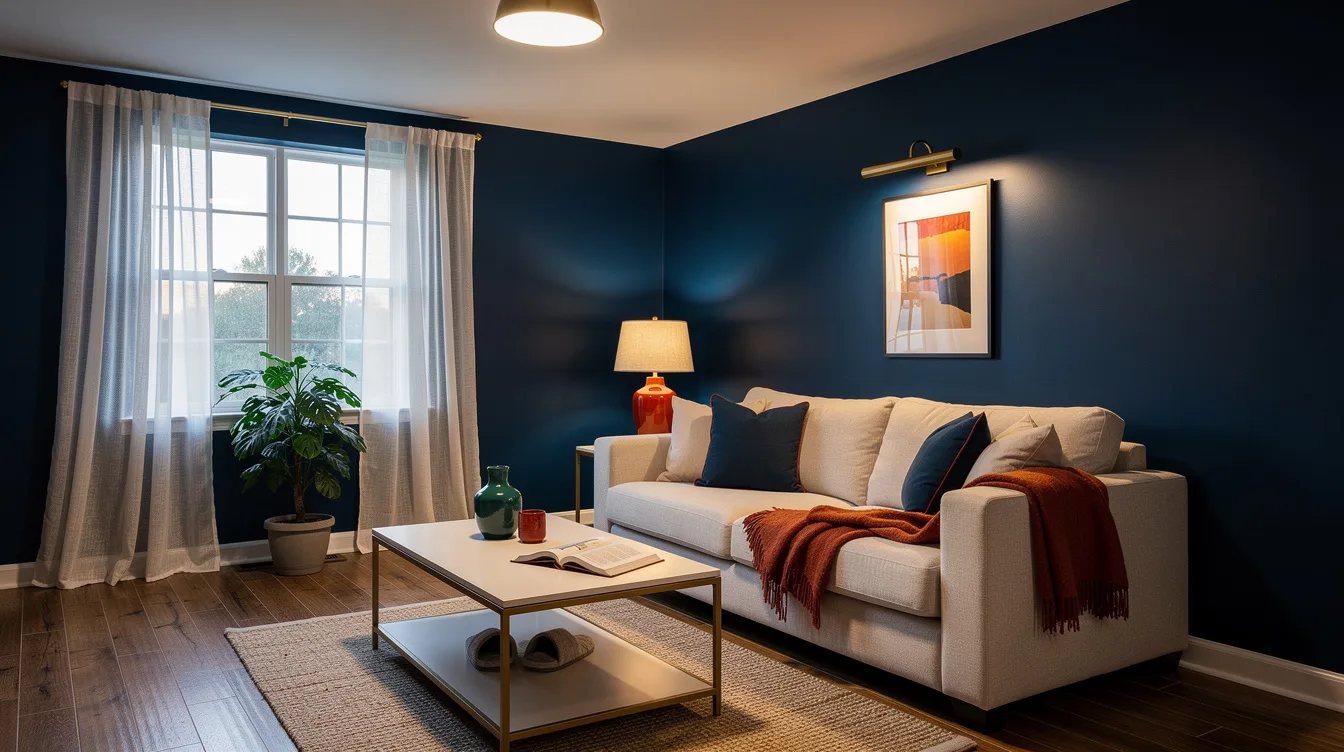
22 august 2026I noticed the problem while sitting on my 84-inch sofa one rainy evening: the room had plenty of lamps, yet its far wall seemed to vanish by 7 p.m. The light was all landing in the center, making a familiar living room feel like it had lost several feet.
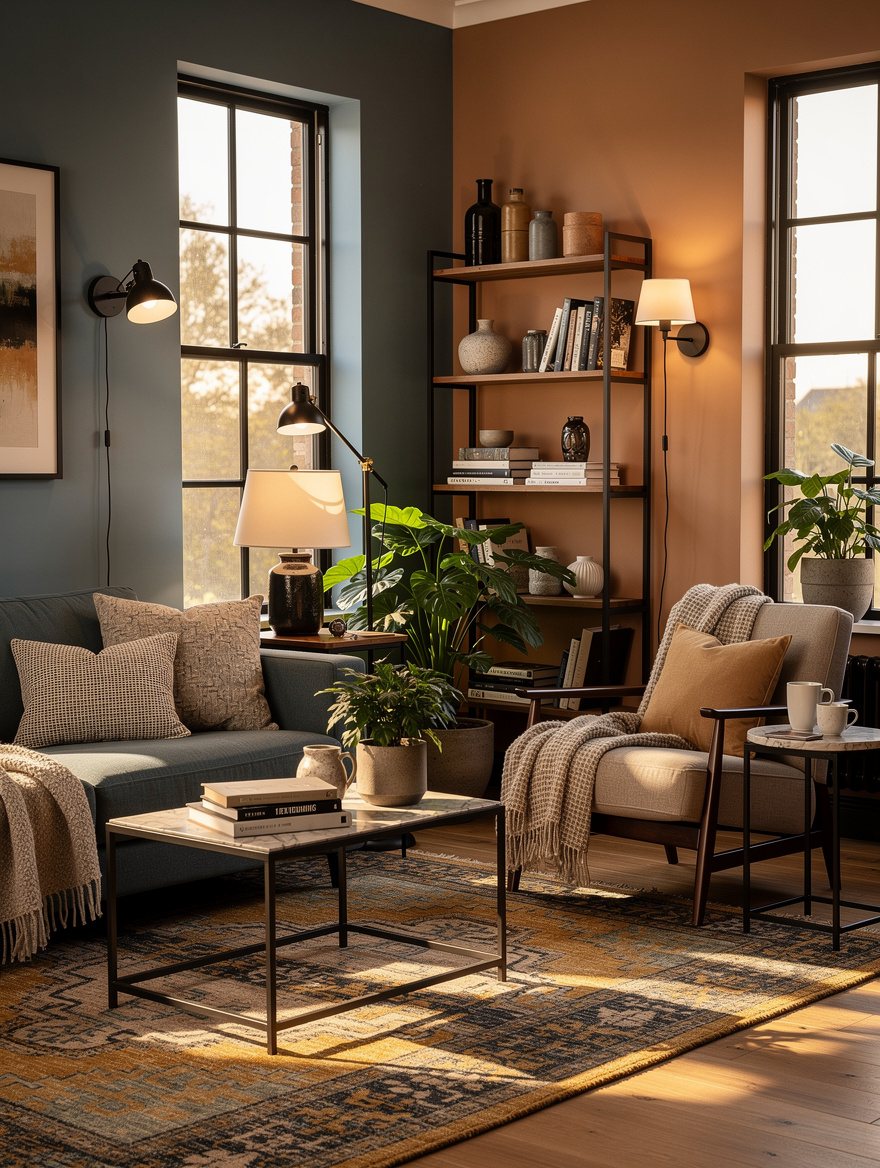
I changed the lighting before moving a single piece of furniture. A dimmable three-layer plan, indirect ambient light, focused reading light, and restrained wall or art lighting, gave the room its edges back.
What you will find inside
- Soften the Single Overhead Light
- Claim the Darkest Corner With an Uplighter
- Raise a Heavy Low-Hanging Fixture
- Scale the Main Fixture to the Room
- Replace Blue-White Bulbs
- Break Up the Recessed-Light Grid
- Hide Bulbs at Seated Eye Level
- Spread Light Across Both Sides of the Room
- Put Lamps and Ceiling Lights on Separate Dimmers
- Push Light Toward the Walls
- Use One Focused Reading Light
- Edit the Eye-Level Lighting Clutter
Soften the Single Overhead Light
My old ceiling fixture made the whole room look like a stage after closing time: bright in the middle, murky everywhere else. A hard downlight flattens walls and lets the perimeter disappear, which makes a living room feel boxed in.
I kept the ceiling light on a dimmer and added a linen-shaded table lamp plus a floor lamp. At least three distinct sources give the eye somewhere to travel, and the room immediately reads wider.
Claim the Darkest Corner With an Uplighter
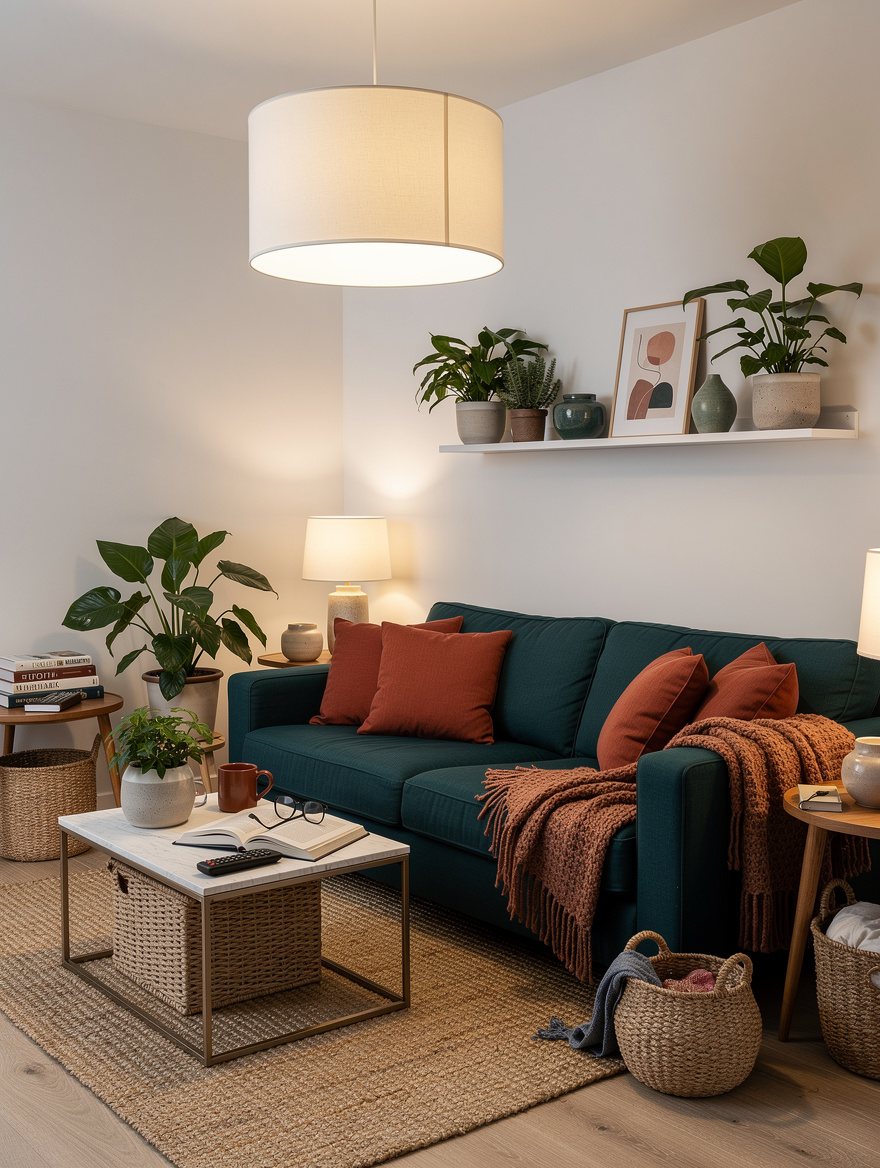
A dark corner looks like the end of the room. I put a torchiere behind the sofa arm and aimed its glow at the wall, which restored the visible edge of the space after sunset.
A floor lamp around 59 to 67 inches tall is typically a comfortable match for sofa scale. The Target torchiere floor lamp approach is far more useful here than another tiny accent light on a crowded table.
Raise a Heavy Low-Hanging Fixture
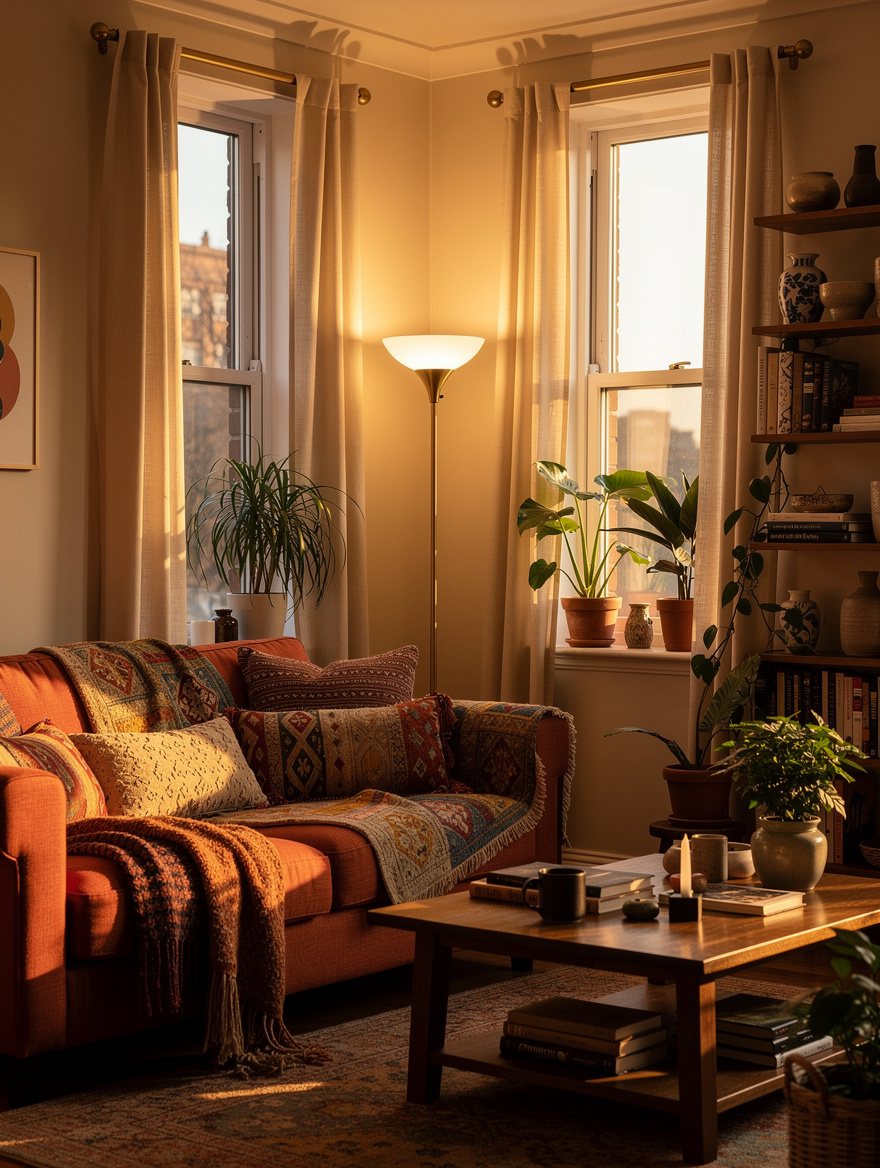
I love a statement pendant, but a bulky fixture hanging too low creates a fake ceiling right above the seating area. In a room with an 8-foot ceiling, that visual weight can make even a decent footprint feel squat.
Keep roughly 7 feet between the floor and the bottom of a ceiling fixture. A slim semi-flush brass fixture from Home Depot keeps sightlines open while still giving the room a finished center.
Scale the Main Fixture to the Room
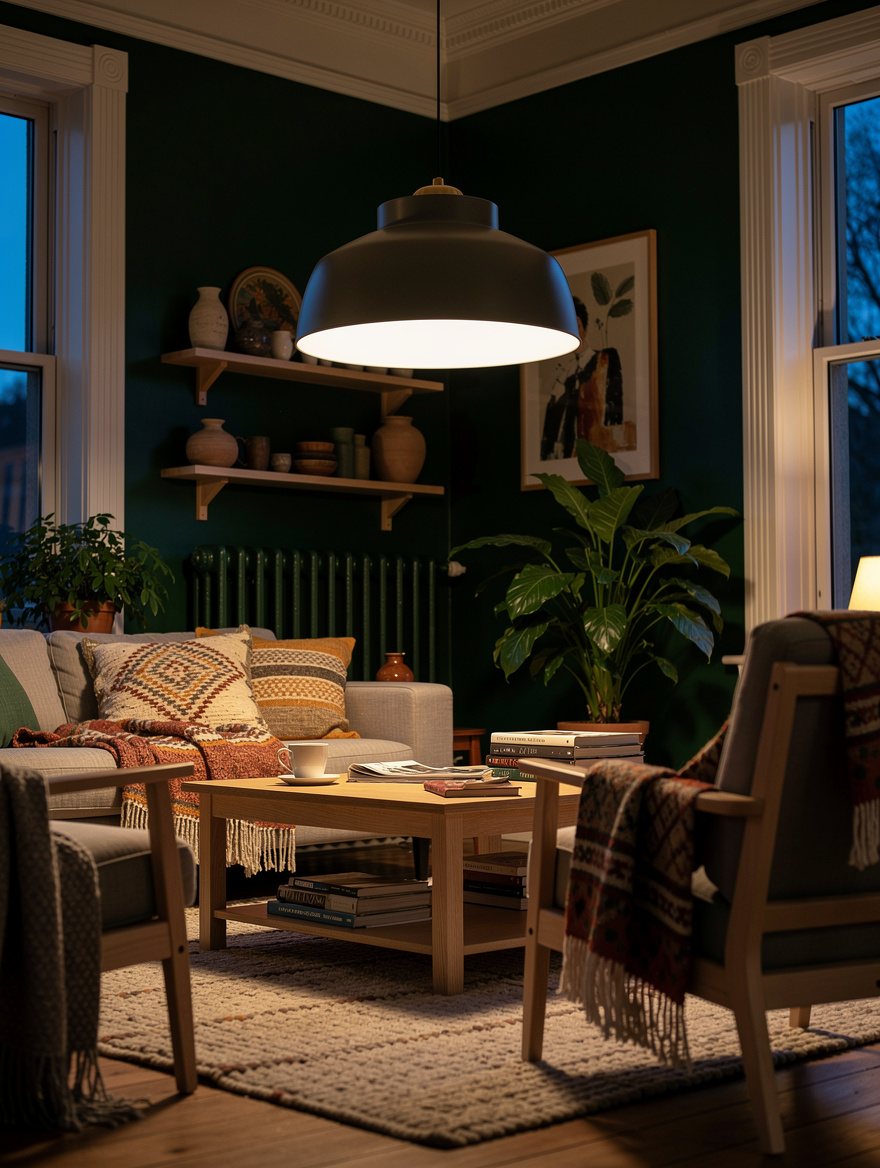
An undersized ceiling light leaves a broad, empty field above it, and that emptiness can make the furnishings look stranded. I use the room measurement as a starting point, then let the lamps do the real mood-building work.
Add length and width in feet: a 12-by-15-foot living room suggests a fixture around 27 inches in diameter. A Wayfair opal-glass semi-flush in that range has enough presence without becoming a visual lid.
Replace Blue-White Bulbs
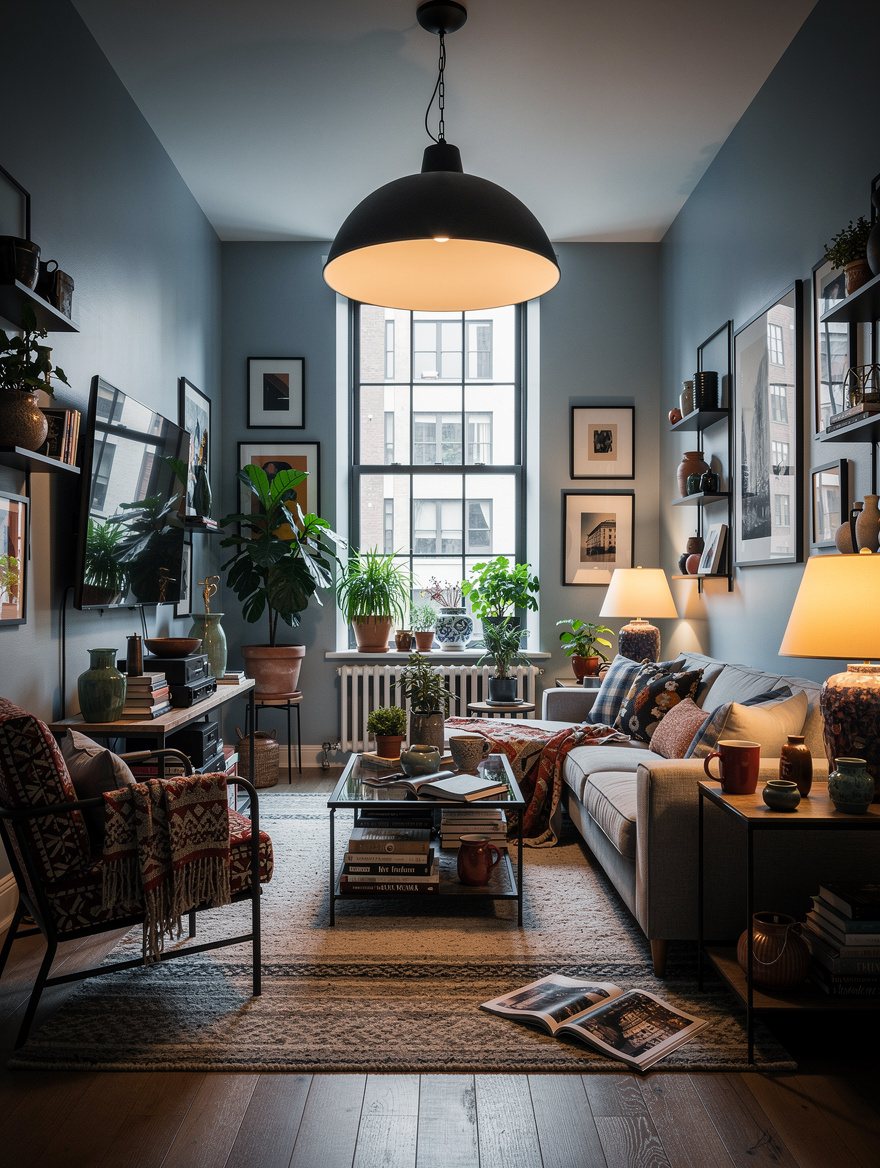
Cool bulbs were the fastest way I ever made warm upholstery look thin and a little sad. Light above 4000K can feel commercial at night, especially when it bounces off pale walls and exposed windows.
I now keep visible bulbs at warm 2700K or a slightly cleaner 3000K, always dimmable. The Philips 2700K LED bulb is the kind of quiet purchase that makes every lamp in the room agree with the next one.
Break Up the Recessed-Light Grid
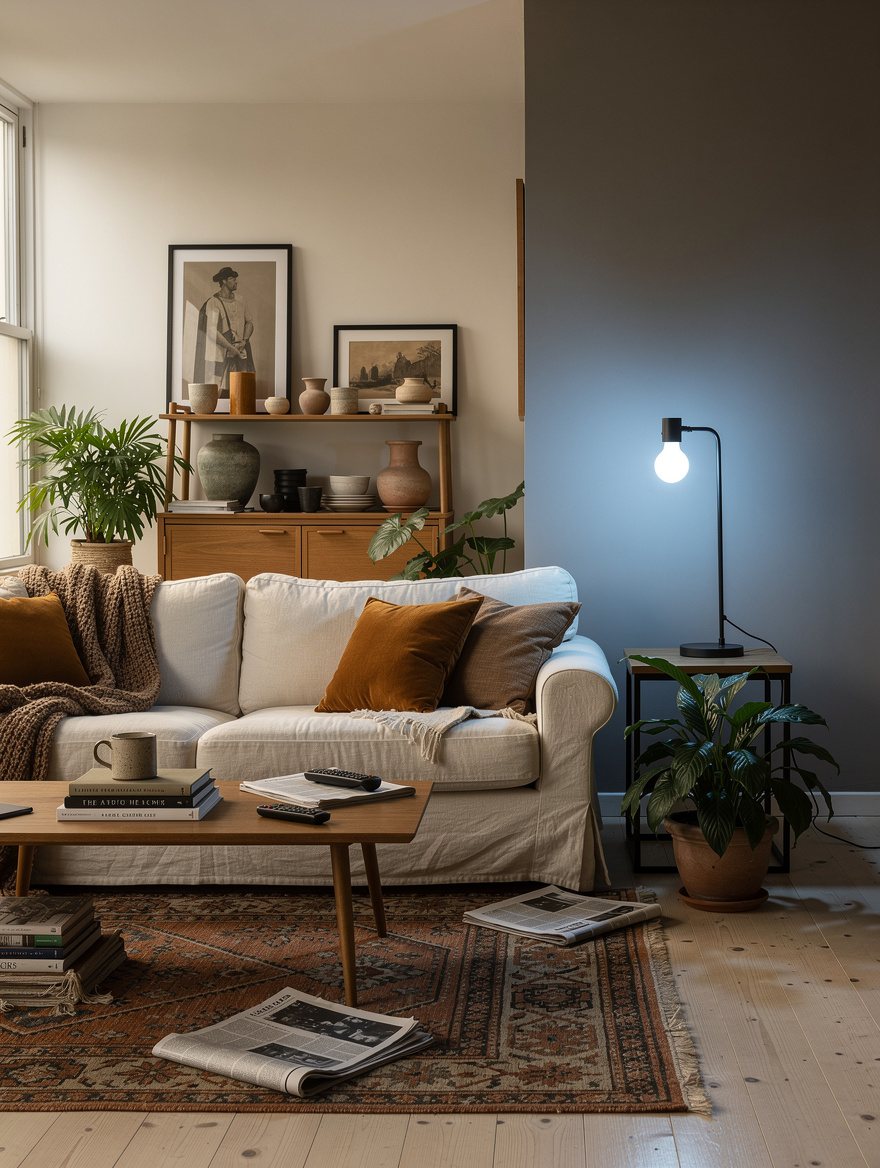
A tight ceiling grid creates too many bright dots and little pools of glare. It pulls attention upward in the wrong way, then leaves the walls with almost nothing to say.
For an 8-foot ceiling, 4- to 5-inch recessed fixtures spaced about 4 feet apart are a common baseline, with the first row roughly 2 feet from the wall. Use fewer white recessed trim lights, then direct the rest of the budget toward lamps and wall illumination.
Hide Bulbs at Seated Eye Level
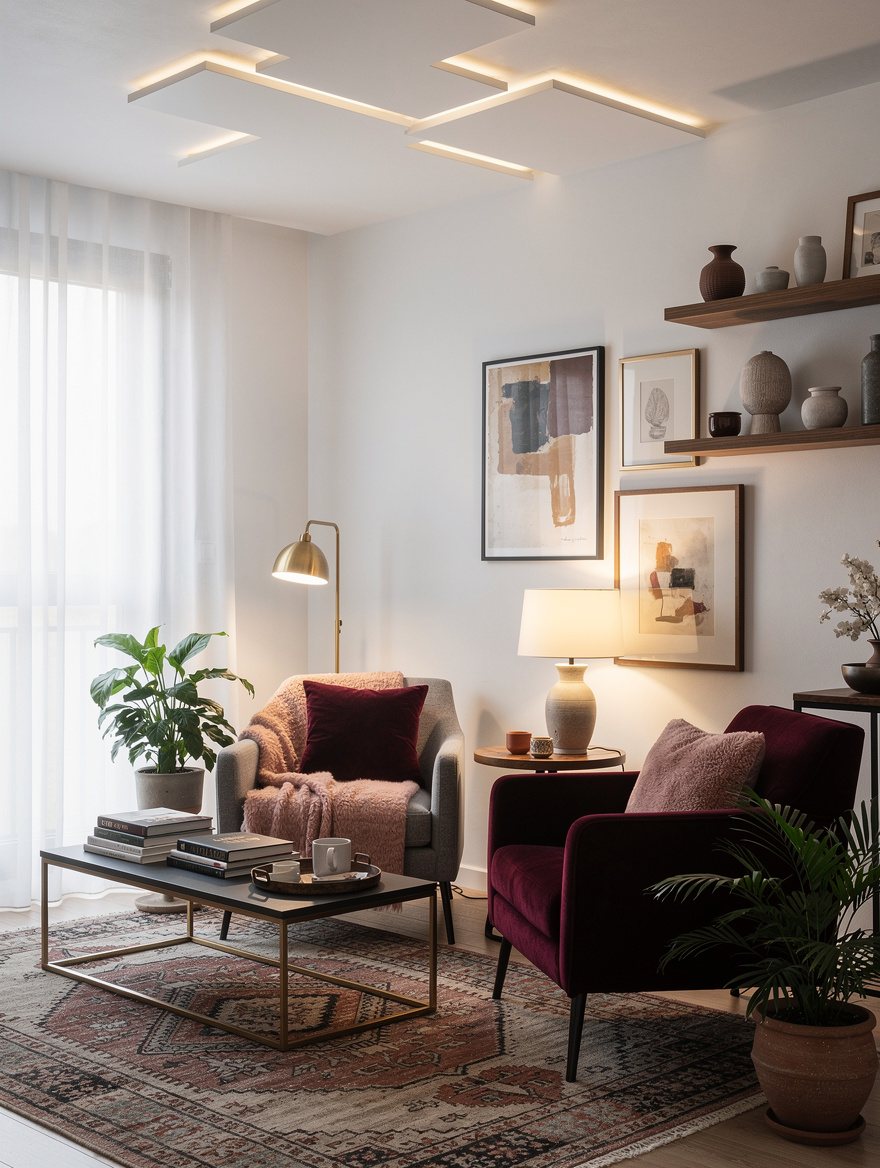
When a bare bulb hits me directly from the sofa, I squint, and suddenly the entire room feels less relaxing. Glare is visual clutter, especially from fixtures that sit right in a guest's line of sight.
Choose fabric, opal glass, or alabaster-style shades that soften the source. A reading lamp's shade usually works best around 40 to 44 inches from the floor, close to seated eye level but never shining straight into it.
Spread Light Across Both Sides of the Room
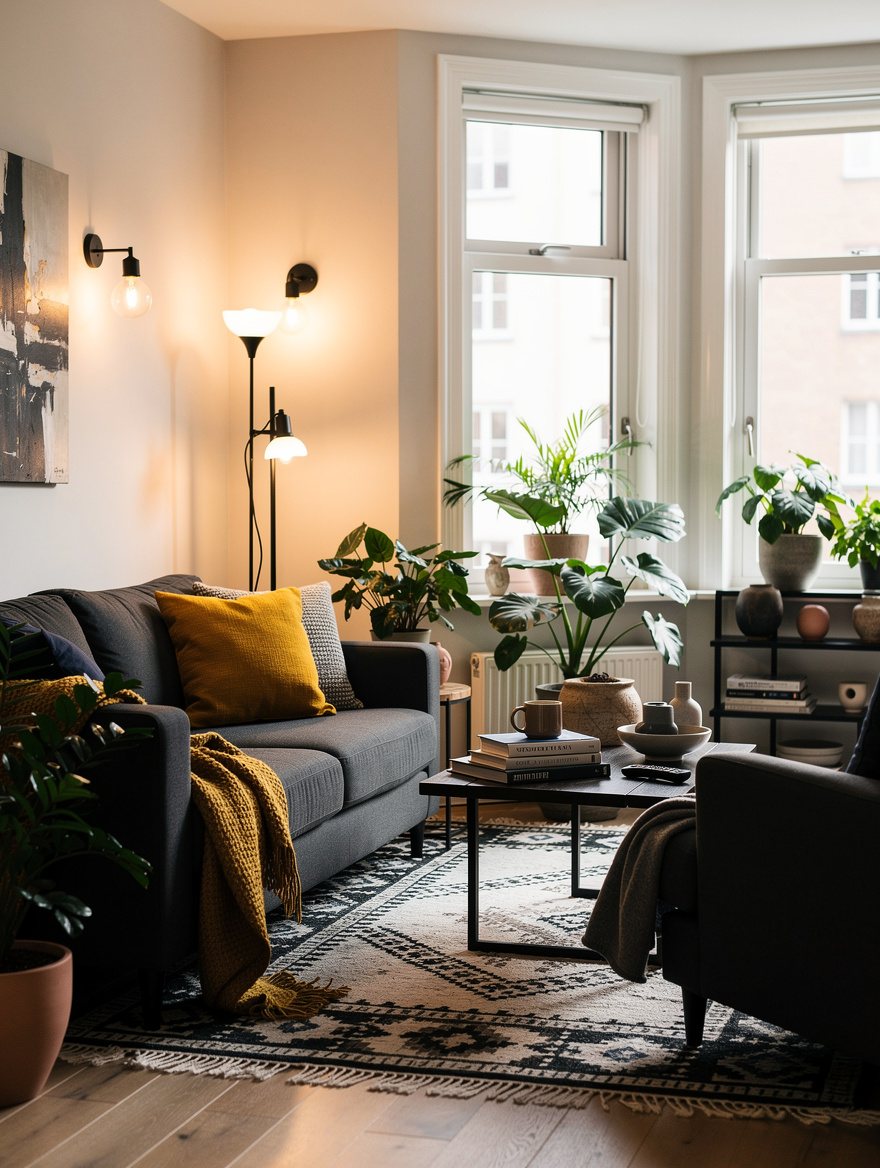
I used to light one end of the living room well and hope the other end would fade into atmosphere. It did fade, but it also made the room seem shorter and oddly lopsided.
Place a low table lamp on one side and a taller floor lamp across from it. A black metal reading lamp set about 24 to 30 inches behind or beside a chair gives that seat purpose without blocking the walkway.
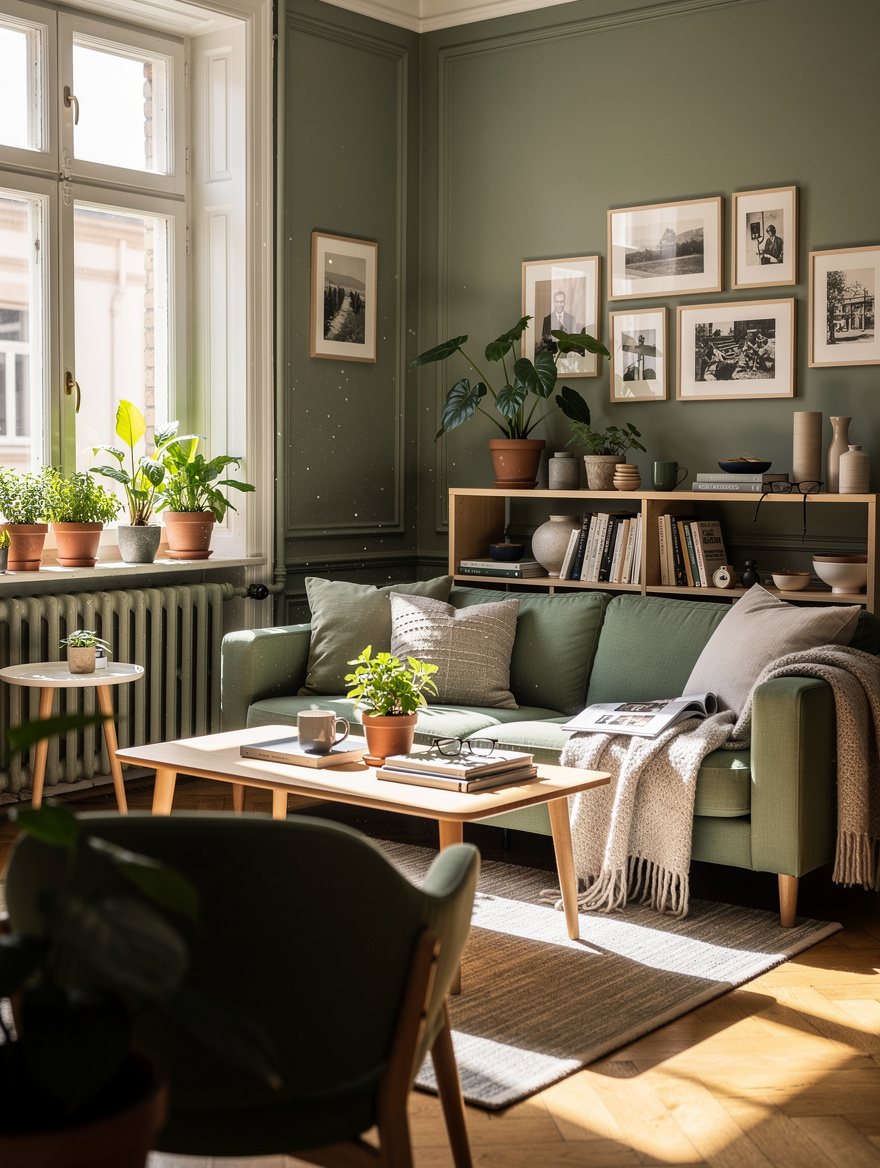
Put Lamps and Ceiling Lights on Separate Dimmers
Fixed brightness forces a bad choice: overly bright for a movie or too gloomy for company. Dimming creates depth because walls can stay softly visible while the seating area gets the amount of light it needs.
For a room roughly 12-by-15 to 16-by-20 feet, ambient planning often begins around 20 to 30 lumens per square foot before evening dimming. A Lutron dimmer switch makes this adjustment feel normal rather than fussy.
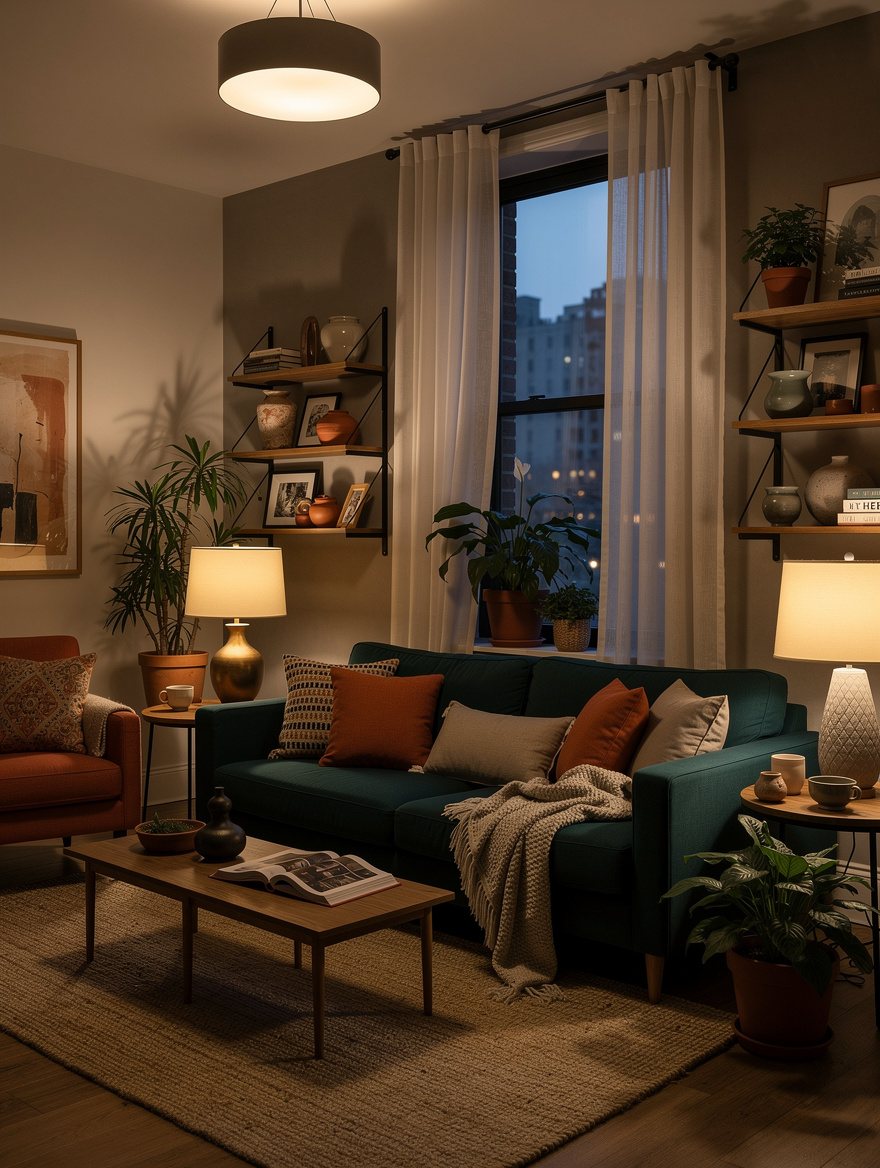
Push Light Toward the Walls
Lighting only the center leaves the room's boundaries in shadow, and shadowed boundaries look closer than they are. I learned to treat the walls as part of the lighting plan, not as blank background.
Wash one wall with a floor lamp, place a shaded lamp near a mirror, or give art its own gentle glow. A brass picture light from Amazon can pull attention across the full width of the room without adding another large object.
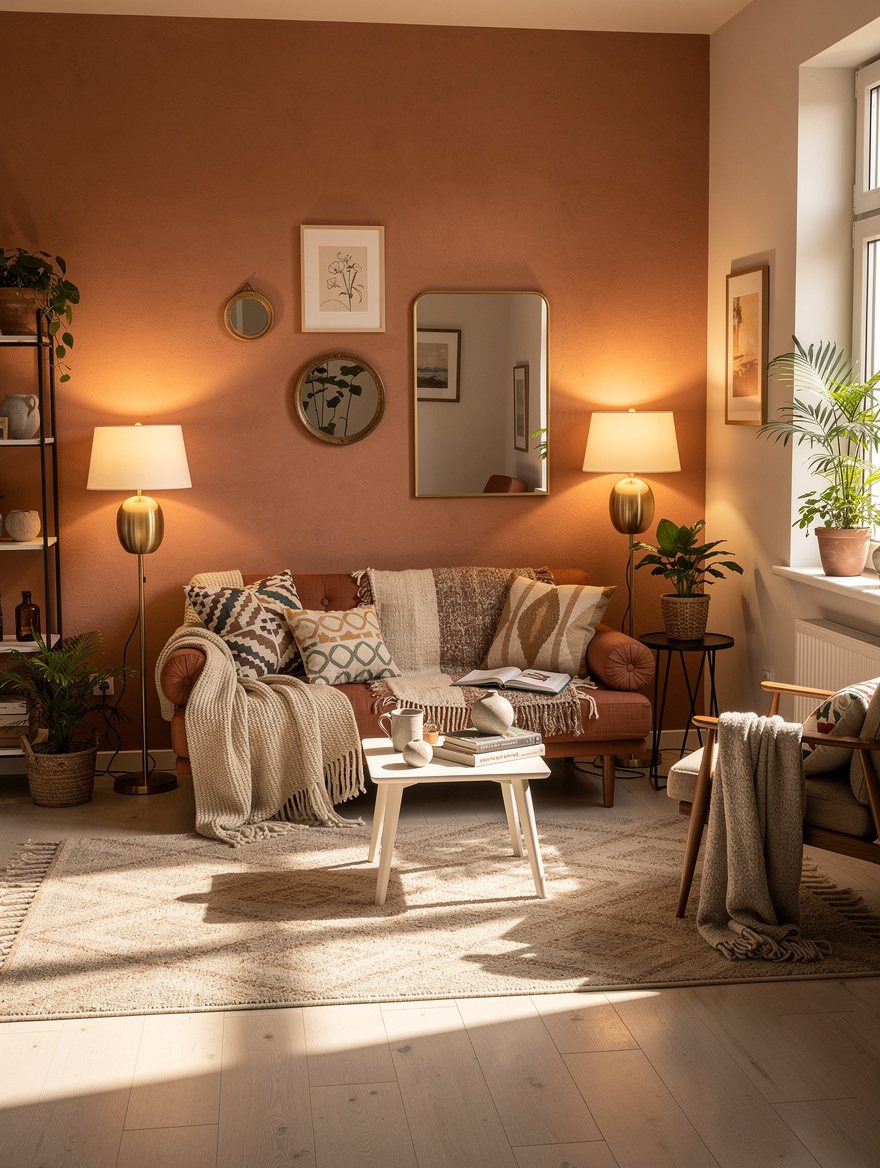
Use One Focused Reading Light
General light is rarely enough for a chair where someone actually reads, knits, or scrolls at night. Adding a focused beam prevents the temptation to blast every fixture at full power.
I prefer an adjustable LED pharmacy floor lamp beside the reading chair, with the head aimed down at the page rather than across the room. It gives one seat a job and keeps the rest of the room calm.
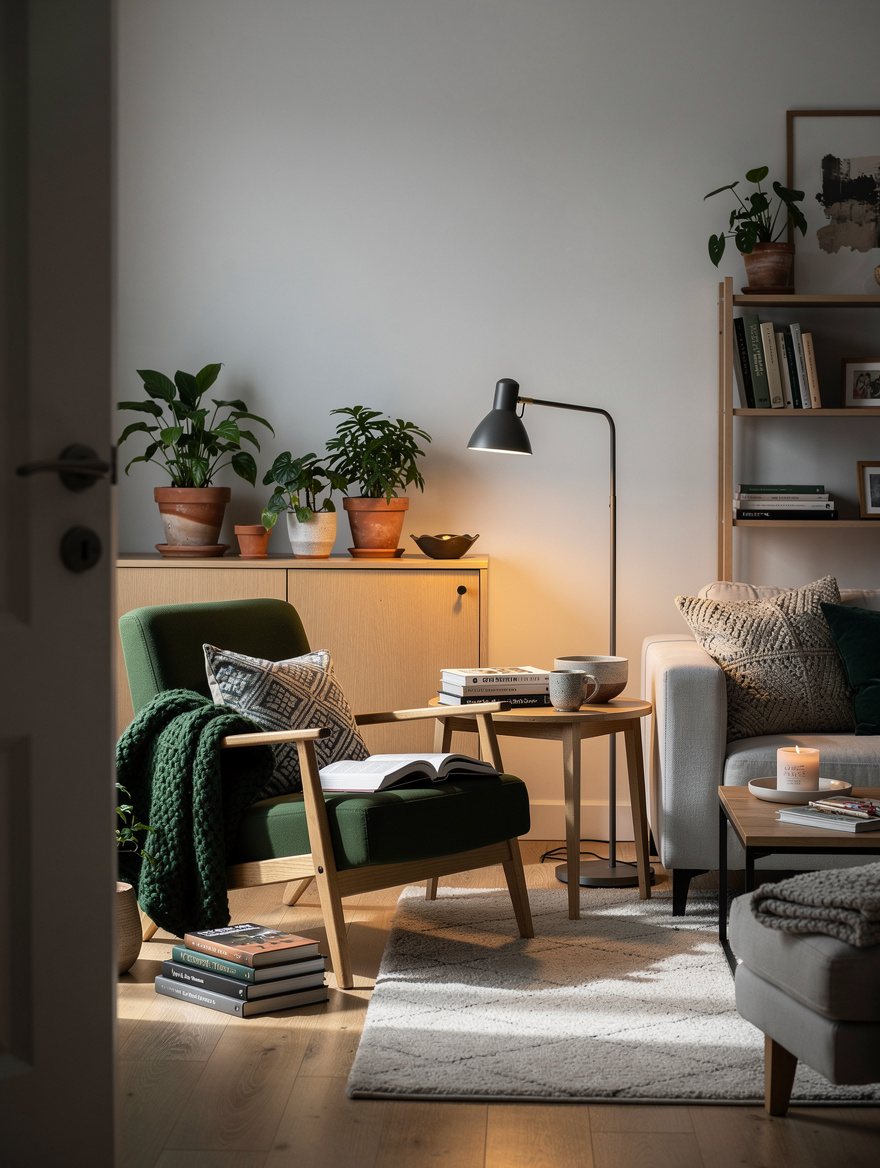
Edit the Eye-Level Lighting Clutter
Too many small lamps, cords, and glowing bulbs can crowd a living room faster than a large sofa. I stopped treating every empty surface as an invitation for another light source.
Keep the layers, but let each fixture earn its spot: one ceiling source, one reading light, one table lamp, and restrained wall light. A cord cover in wall white from Lowe's is worth adding when a visible cable cuts across an otherwise clean wall.
Keep reading
- Your Living Room Rug Is Making the Space Look Smaller
- 14 Parisian Small-Flat Tricks That Make Every Room Feel More Elegant
- 12 Soho House Living Room Ideas That Look Way More Expensive Than They Are
Start with the darkest corner, because it shows you exactly where your room is visually ending too soon. Add one warm, dimmable uplight there before buying a larger fixture or rearranging the furniture.