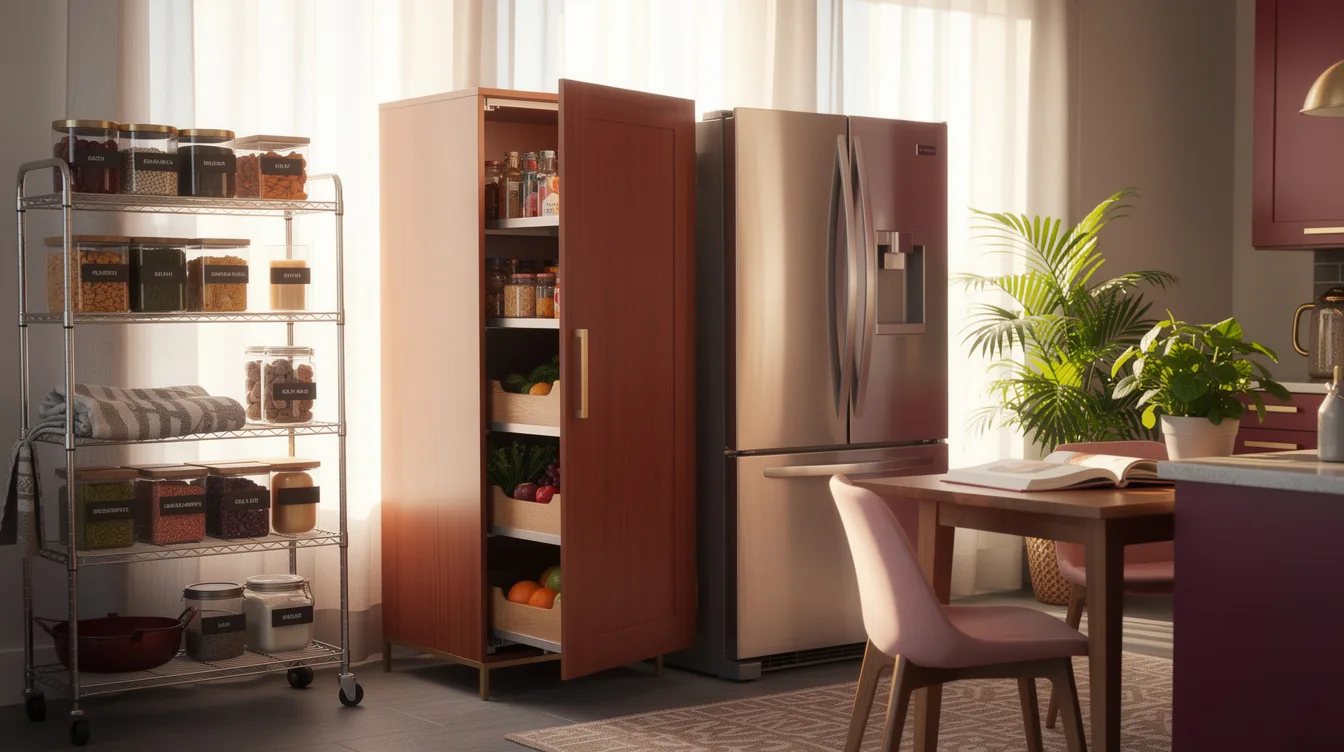
No Pantry? These 13 Storage Fixes Create a Food Zone Anywhere
27 november 2026A pantry does not need its own room: a cabinet about 15 inches deep can turn an empty kitchen edge into a useful food station. The real challenge is choosing storage that fits the wall, the grocery routine, and the items already competing for cabinet space.
We found four strong starting points: a freestanding cabinet, a rolling cart, a converted cabinet, or a nearby closet. From there, shelves, pull-outs, bins, and clear containers make the zone easier to use without making the kitchen feel crowded.
Start with the location you will actually walk to, then build around its real measurements. A pantry that looks tidy but sits across the house will not survive a busy week.
What you will find inside
- Claim a Freestanding Cabinet
- Build Around an IKEA PAX
- Set Up Metal Shelving
- Roll In a Narrow Cart
- Add Pull-Out Pantry Shelves
- Repurpose a Solid-Wood Bookcase
- Convert a Nearby Closet
- Mount Floating Wood Shelves
- Raise Short Packages With Shelf Risers
- Turn a Corner With a Lazy Susan
- Use the Door for Light Items
- Sort Food Into Category Bins
- Decant Staples Into Clear Canisters
Claim a Freestanding Cabinet
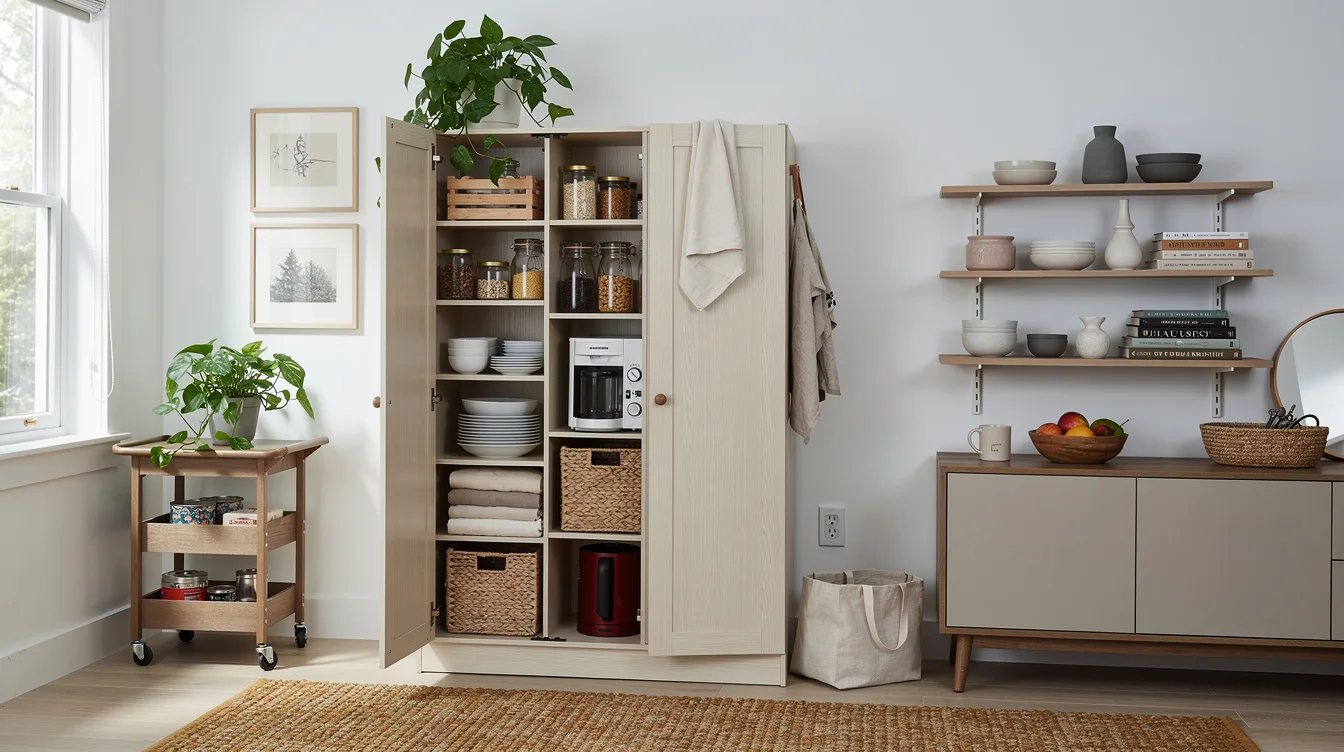
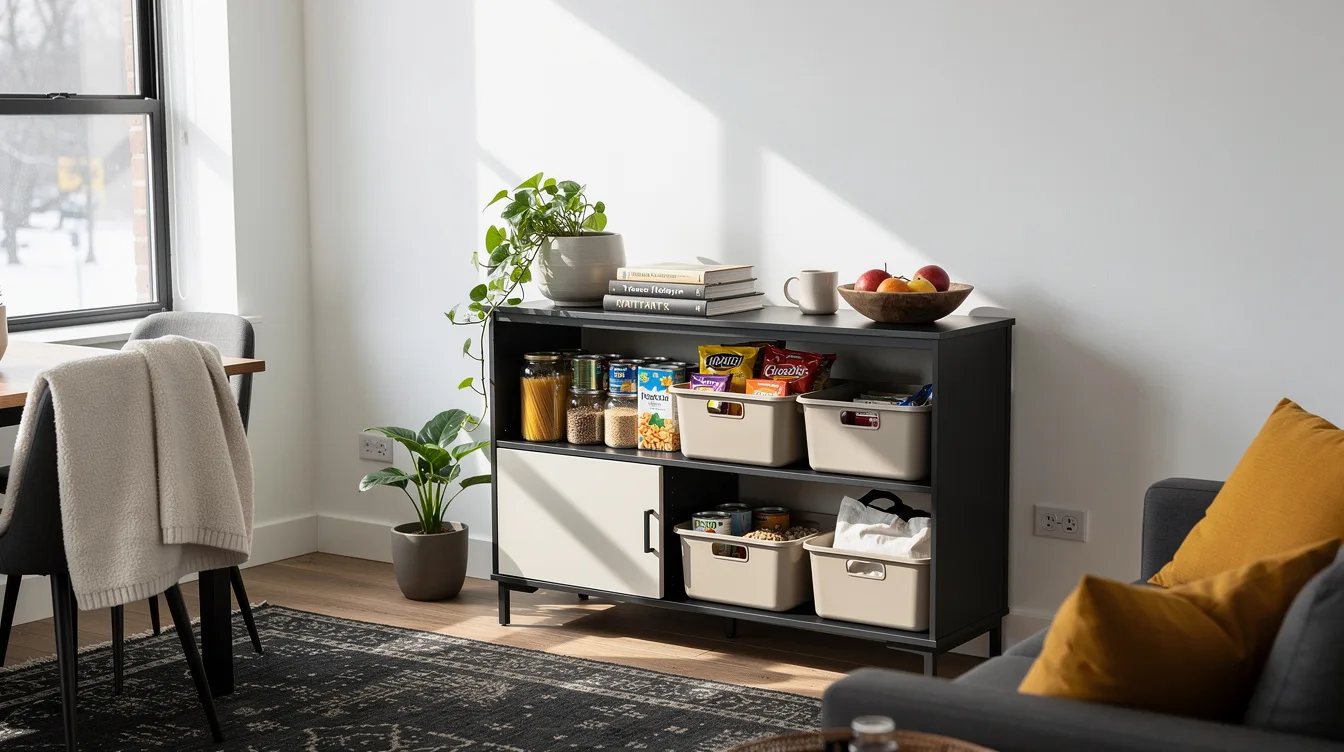
A freestanding cabinet gives dry goods a clear home without construction, wiring, or a permanent commitment. Place it against an empty kitchen wall, beside the refrigerator, or near the table where grocery bags usually land.
A wood pantry from Walmart or Target typically costs about $120 to $400, depending on its doors, shelves, and finish. Choose closed storage if your kitchen feels visually busy, then reserve the lowest shelf for heavy cans and the upper shelves for backup supplies.
This is the strongest choice for renters who want a finished-looking pantry zone. Anchor a tall cabinet to the wall, especially in a home with children or pets.
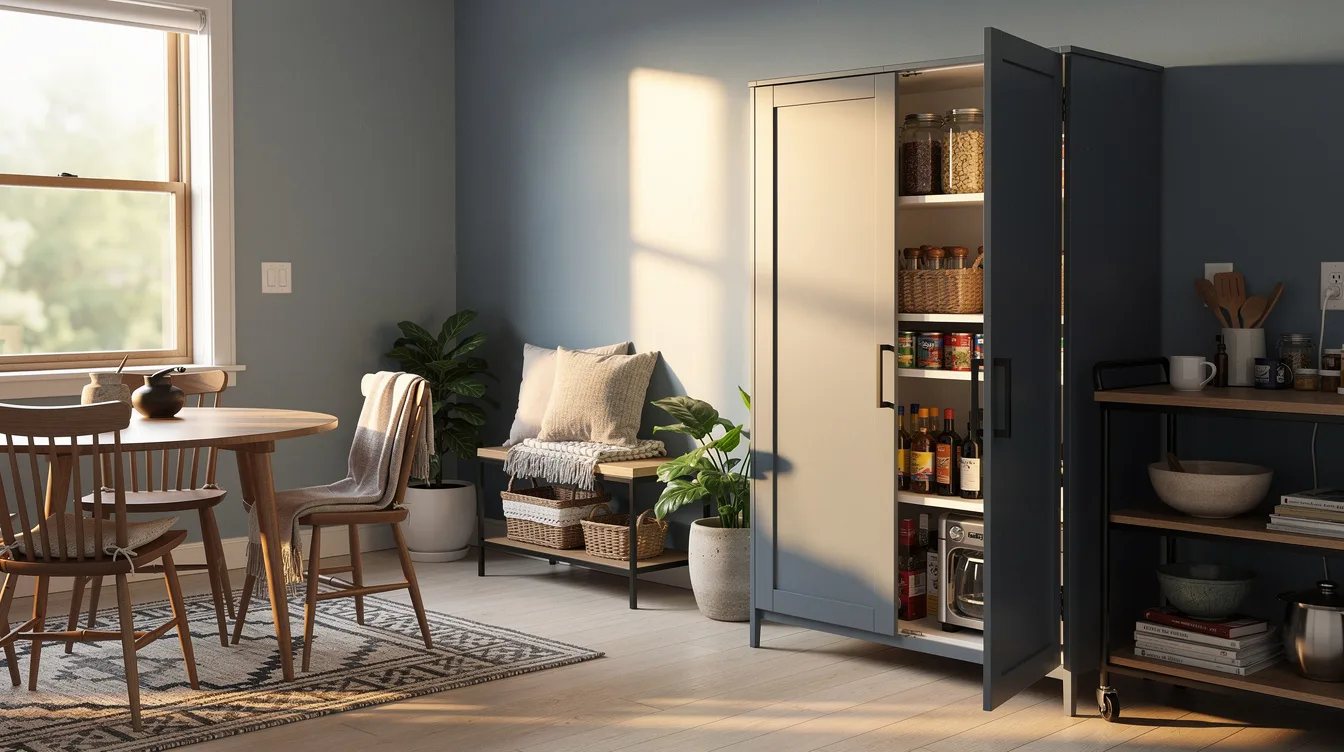
Build Around an IKEA PAX
An IKEA PAX frame can act like a slim pantry wall when a standard cabinet feels too shallow or too bulky. The useful depths are about 15 and 19 inches, giving you room to choose between a narrow footprint and deeper storage.
The frame, shelves, and doors typically place the project around $150 to $400. Measure the actual wall, baseboards, door swing, and nearby outlets before ordering, because a few lost inches can make a cabinet door frustrating to use.
Use the 15-inch version for cans, boxed pasta, and everyday snacks. The deeper option works better for large containers, paper goods, and appliances, but it needs more discipline because items can disappear behind one another.
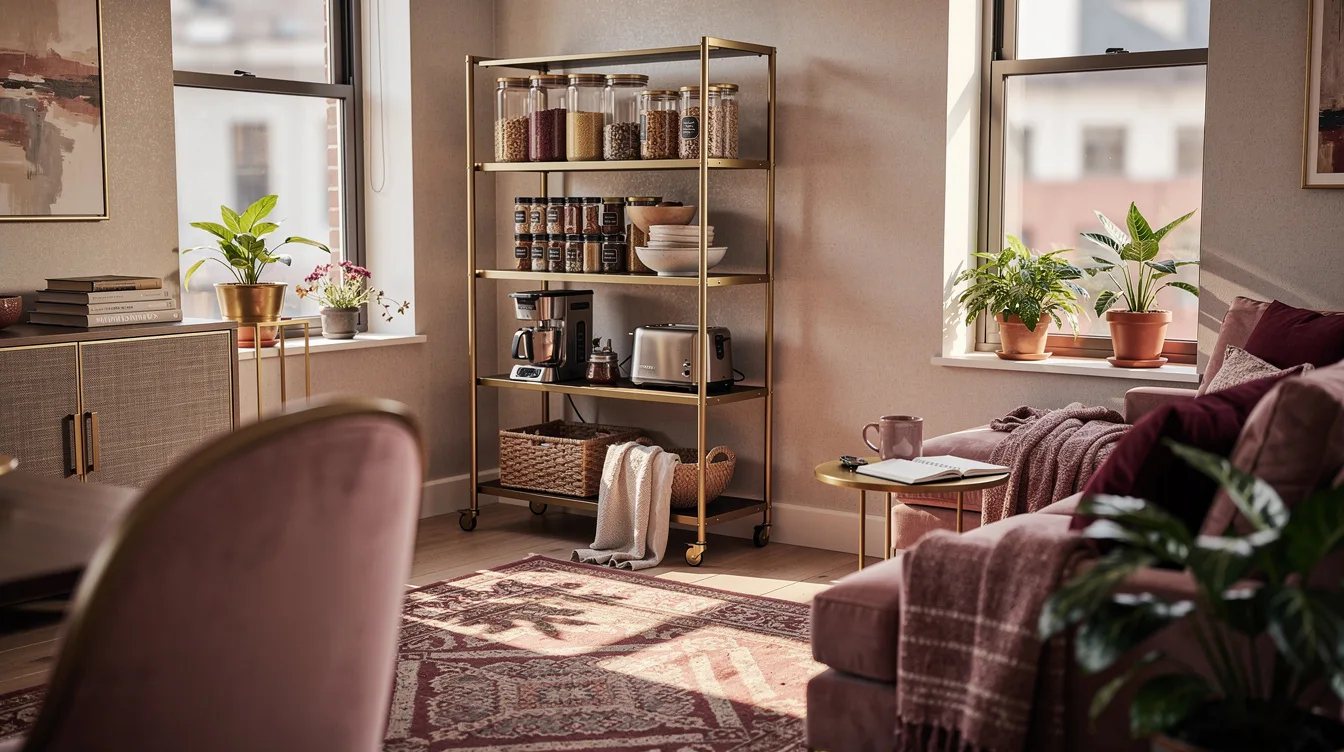
Set Up Metal Shelving
Metal shelving is the practical answer when capacity matters more than concealment. A rack from Amazon Basics or another Amazon selection typically costs about $30 to $80 and often provides four or five levels.
Look for shelves about 16 to 20 inches deep, then check the total weight rating before loading them with canned food. A typical rack in this category may hold roughly 250 to 350 pounds across the full unit, although each shelf has its own limit.
Keep the heaviest items at the bottom and add matching bins to soften the industrial look. This is the best low-cost setup for a garage, laundry room, or kitchen corner where exposed storage will not bother you.
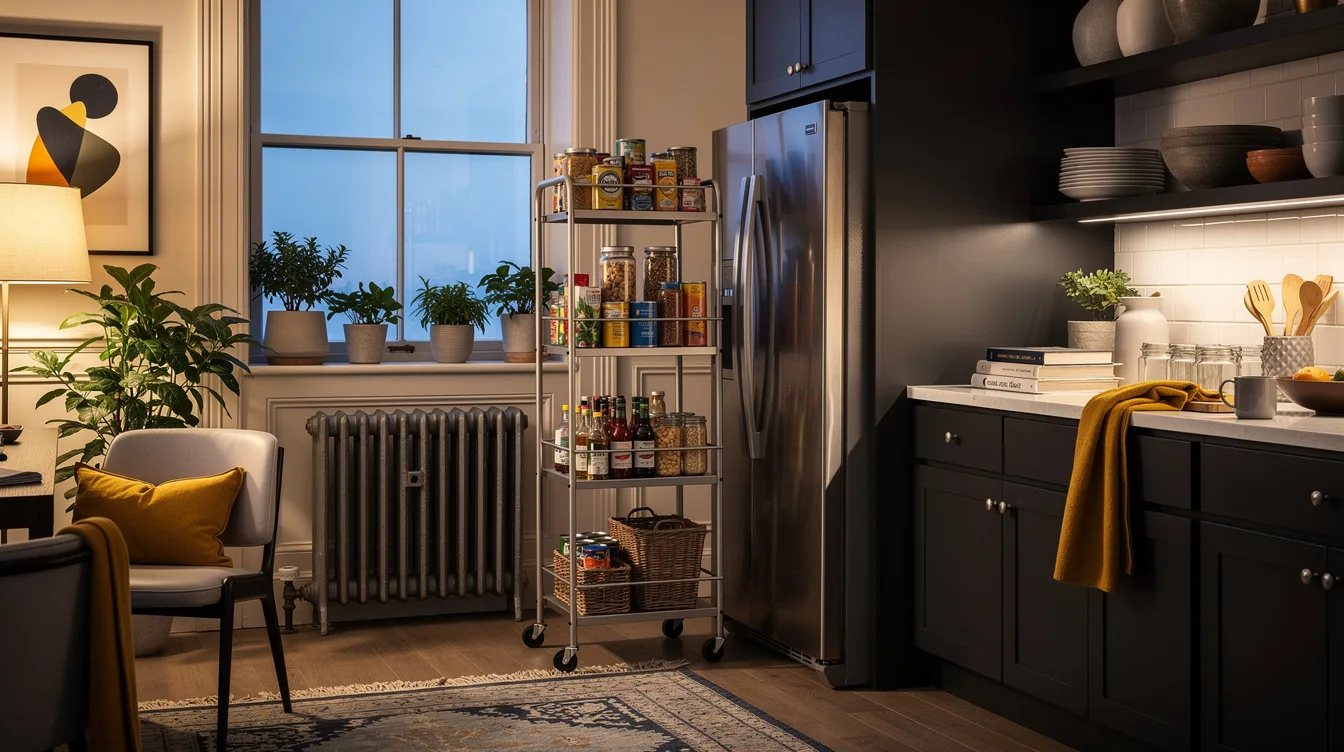
Roll In a Narrow Cart
A rolling cart turns a slim gap into a pantry zone that can move when the kitchen needs more floor space. The IKEA RÅSKOG is especially useful beside a refrigerator, at the end of a counter, or under a breakfast ledge.
Choose a cart with three or four shelves and locking casters so the unit stays put while you unload groceries. The broader range for small storage furniture is roughly $30 to $100, while the cart itself varies by size and retailer.
Use the top shelf for daily coffee or breakfast supplies, the middle shelf for snacks, and the bottom shelf for backup goods. A cart is a poor place for a deep stockpile, so let it hold the foods your household reaches for every day.
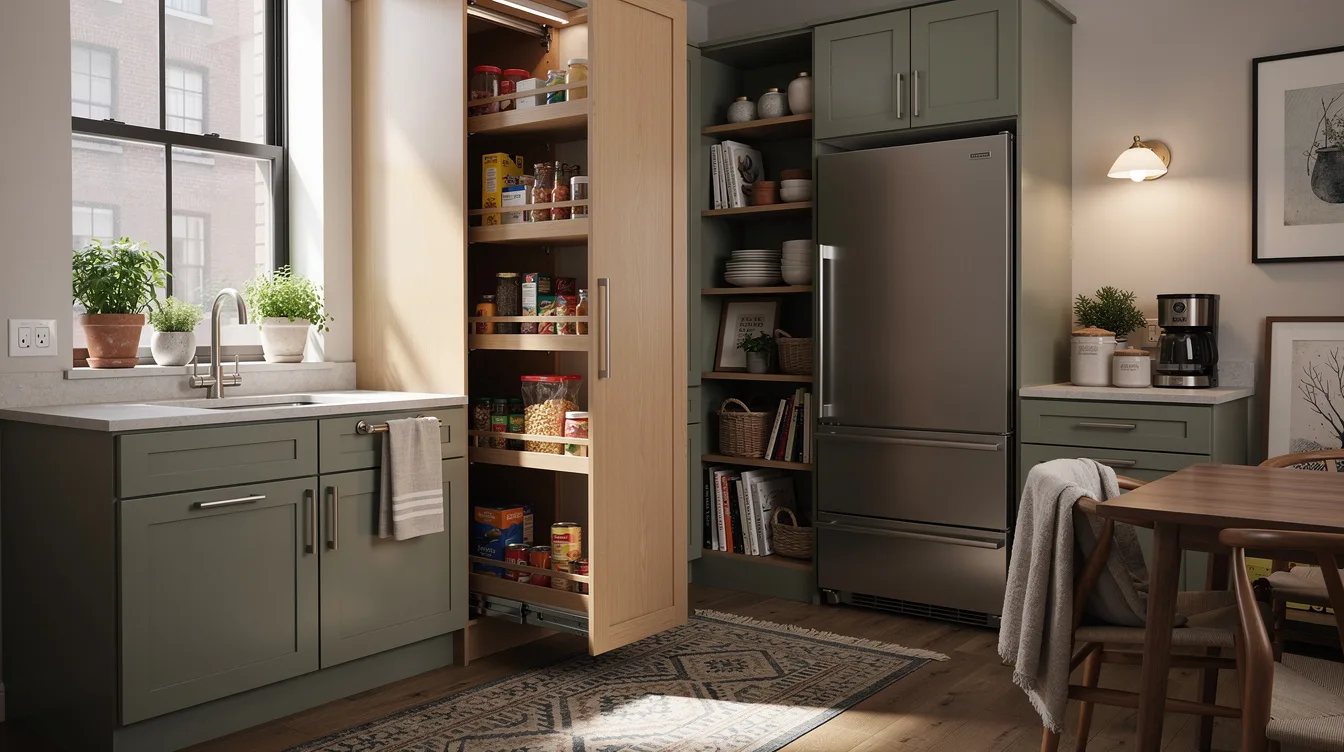
Add Pull-Out Pantry Shelves
A pull-out pantry shelf can recover the narrow space between a refrigerator and a wall or between two existing cabinets. Some systems fit openings about 6 to 12 inches wide, which makes them useful where a freestanding cabinet simply cannot fit.
Pull-out hardware typically costs around $30 to $80 per shelf. Measure the cabinet opening itself, including the frame and hinges, then confirm the shelf depth and the clearance needed for jars, handles, and the door.
Use this option for spices, oils, canned soup, and small baking supplies rather than bulky boxes. The sliding motion makes narrow storage worthwhile, but only when every item has a defined position.
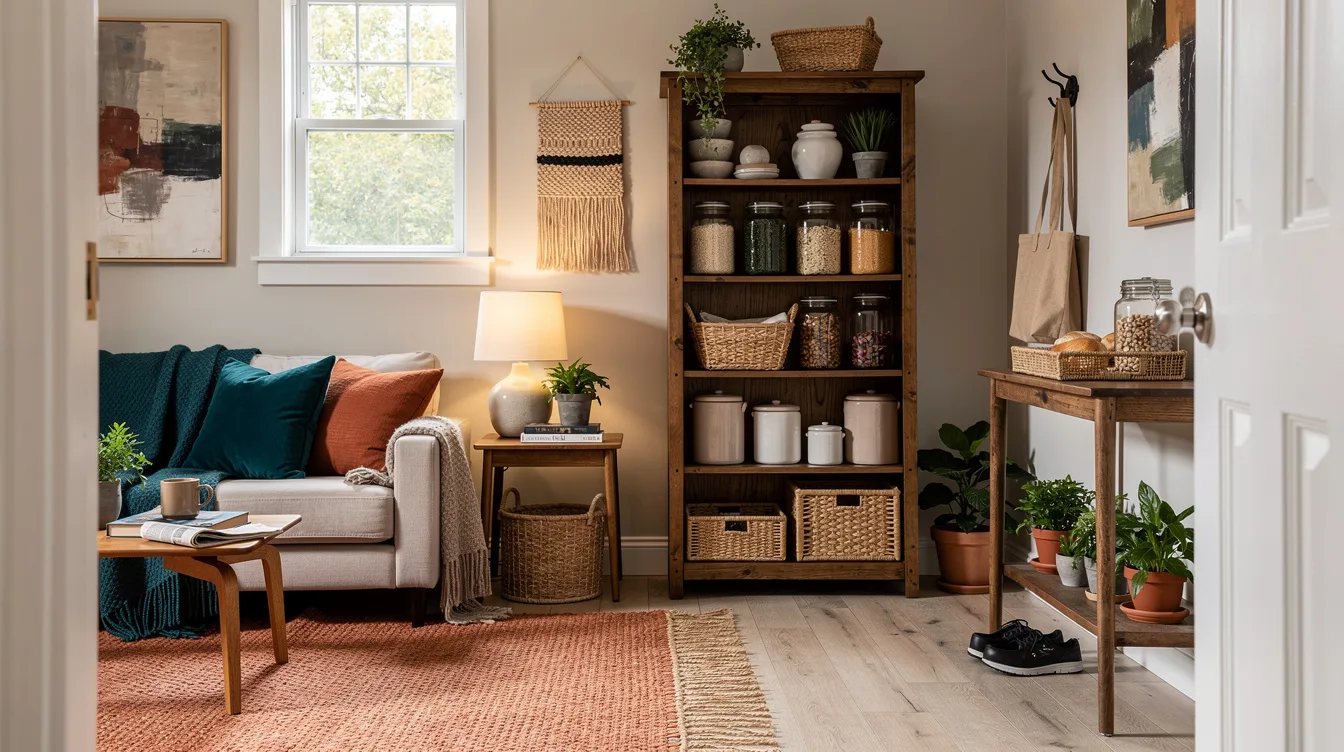
Repurpose a Solid-Wood Bookcase
A secondhand bookcase can become a pantry with almost no visual fuss. Look for solid wood, because it handles the weight of canned goods better than particleboard, which can bow over time.
A used bookcase may cost about $15, although the final price depends on the seller, condition, and location. Sand rough edges, wipe the shelves thoroughly, and add a clear finish if the surface will sit near cooking splashes.
Place sturdy bins on the lower shelves and lighter packages above them. This approach works especially well in older kitchens where a little furniture character feels more natural than a new matching cabinet.
Convert a Nearby Closet
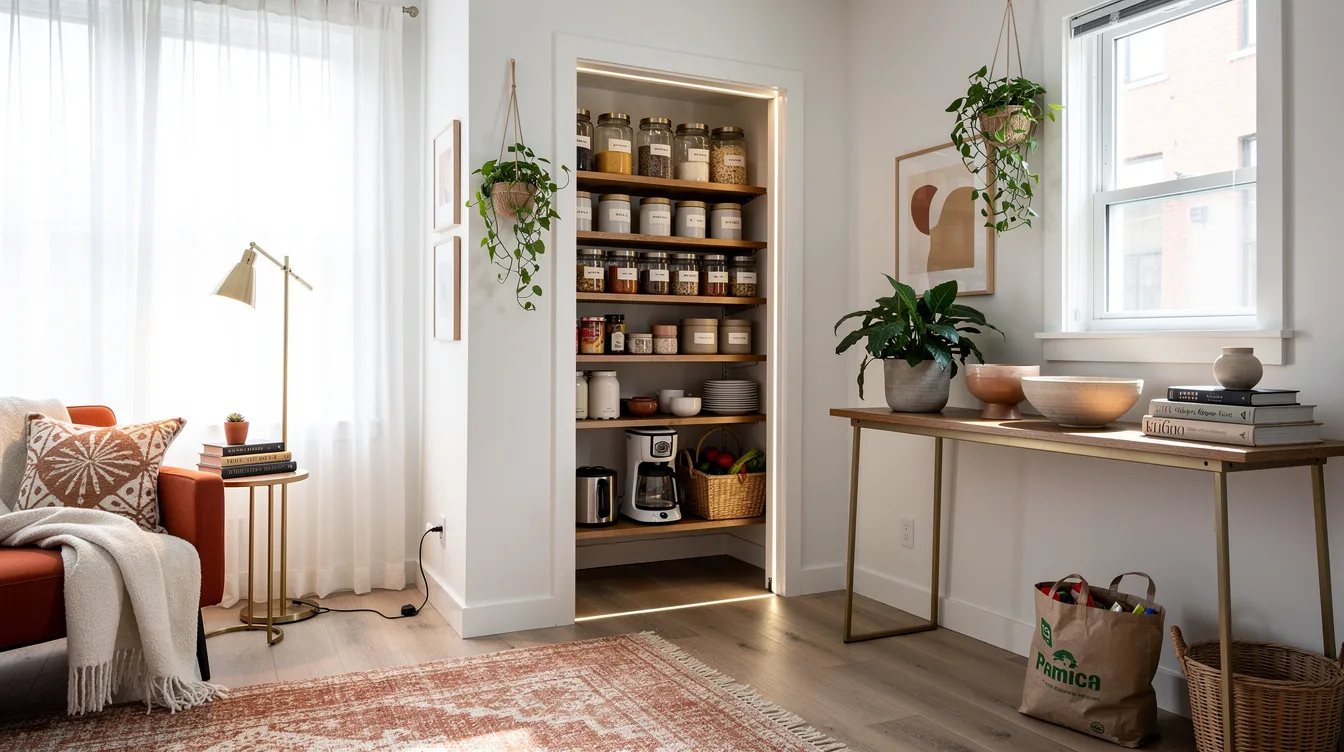
A coat closet, utility closet, or shallow hall closet can hold pantry overflow when it sits close enough to the kitchen to be convenient. Keep the food zone within about 10 feet of the cooking area, or grocery items will start collecting on the counter again.
Install adjustable shelves or tension-supported storage from Amazon or Target, and verify the wall and shelf ratings before loading them. A typical tension shelf may support roughly 50 pounds, so reserve heavier cans for a properly anchored lower shelf.
Give the closet one clear job: food only. A labeled basket for paper towels is reasonable, but mixing cleaning chemicals, shoes, and snacks in one cabinet defeats the pantry system.
Mount Floating Wood Shelves
Floating shelves create a pantry zone when floor space is already occupied. Wood shelves about 12 inches deep and roughly 24 to 36 inches wide can hold everyday jars, boxes, and baskets without requiring a full cabinet.
Install them into wall studs whenever possible, especially above a counter where glass containers may be handled often. Wood adds warmth, while a painted shelf blends more quietly into the kitchen and makes the food itself less visually dominant.
Use two shelves for daily staples and keep reserve stock elsewhere. Open storage needs a tighter edit than a closed cabinet, so decant flour, sugar, and grains into matching containers instead of displaying torn bags.
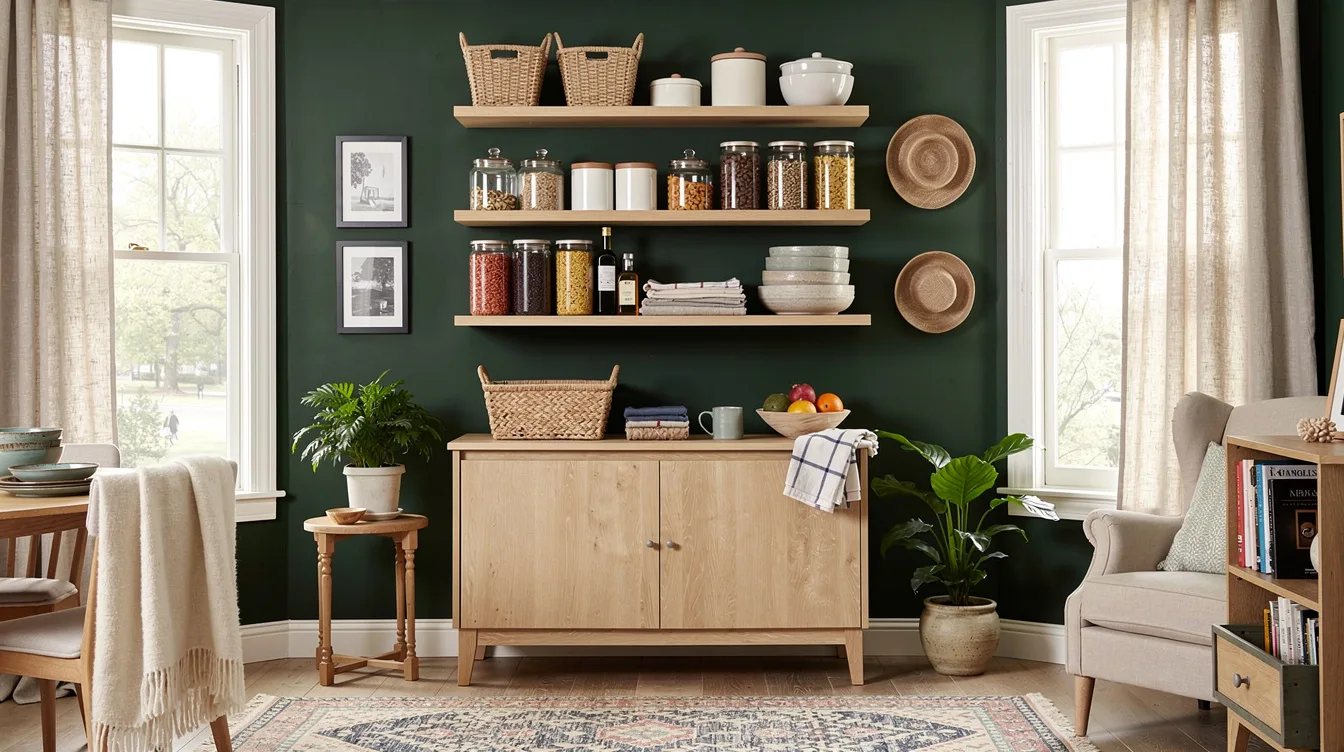
Raise Short Packages With Shelf Risers
Shelf risers create a second level inside an existing cabinet, which may be enough to make a pantry zone without adding furniture. They are particularly useful for cans, small jars, tea boxes, and short baking supplies that vanish behind taller packages.
A set of shelf risers typically costs about $8 to $12 at Amazon, Walmart, or Target. Measure the shelf width first, then leave enough vertical clearance for the tallest item you plan to store below each riser.
Place daily ingredients at eye level and reserve the back row for refills. This small adjustment often delivers more usable space than another large bin because it keeps every label visible.
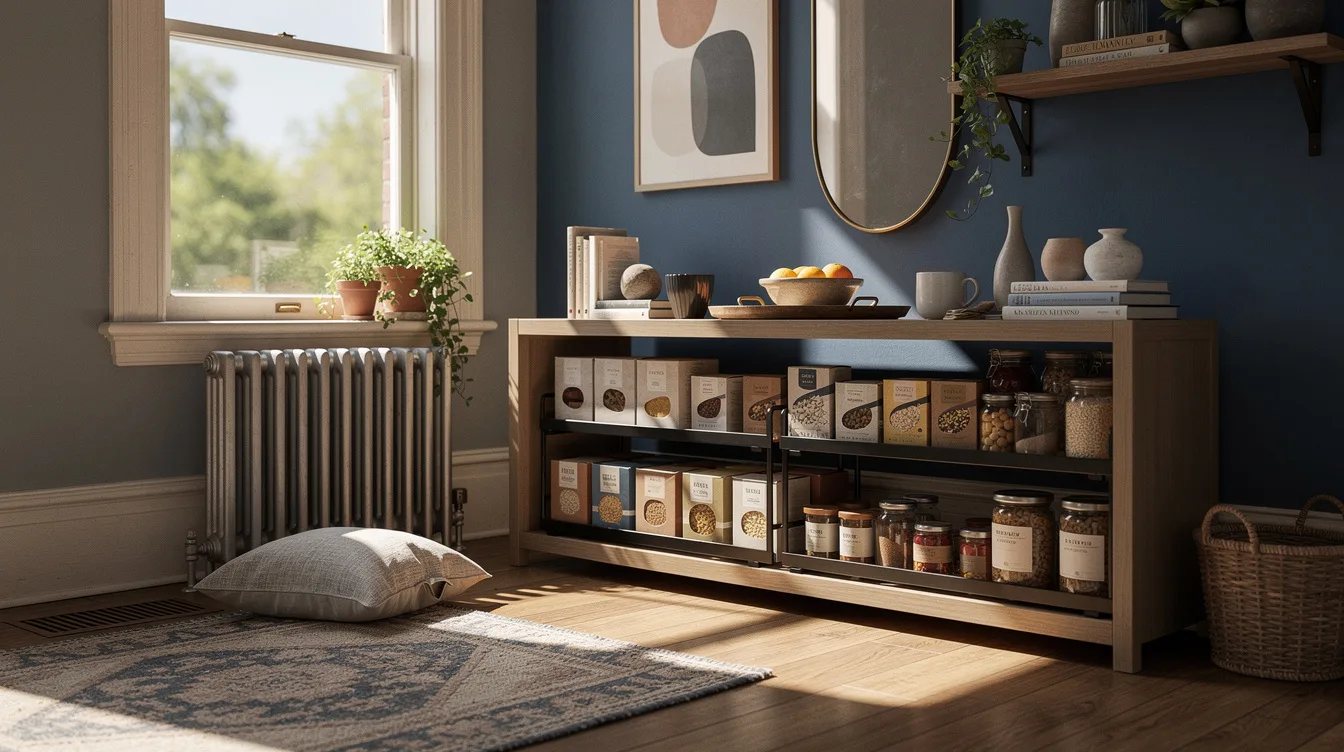
Turn a Corner With a Lazy Susan
A corner shelf becomes a working pantry zone when a rotating tray brings the back row forward. A non-slip lazy Susan about 12 inches across fits many cabinets and works well for sauces, nut butters, small cans, and baking extracts.
Expect a typical lazy Susan to cost about $15 to $25. Choose a rimmed surface for bottles, and avoid loading it with tall items that can tip as the tray turns.
Group similar ingredients around the circle instead of treating it as a random catchall. One turn should reveal the entire category, otherwise the accessory is taking up space without solving the reach problem.
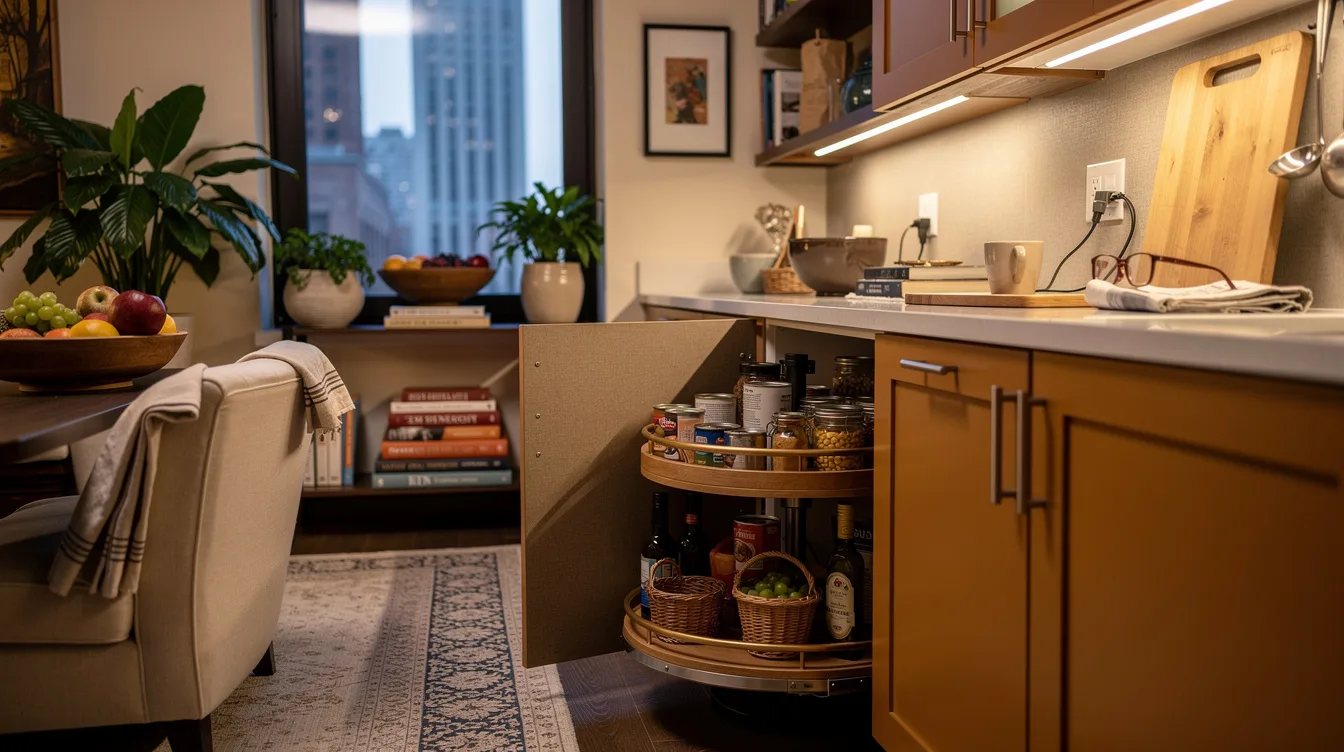
Use the Door for Light Items
The back of a cabinet or closet door can hold a surprising amount of pantry overflow without using another shelf. An over-the-door organizer from Amazon can store snack packets, spice envelopes, drink mixes, wraps, and other lightweight items.
A repurposed shoe organizer typically costs about $10 to $15, while hanging baskets and door organizers often stay below $20. Check the door clearance before installing one, because a full organizer can strike a nearby wall or cabinet.
Keep the pockets shallow enough that labels remain visible. Avoid cans, glass jars, and heavy bottles unless the organizer is specifically rated for them and the door hardware can carry the load.
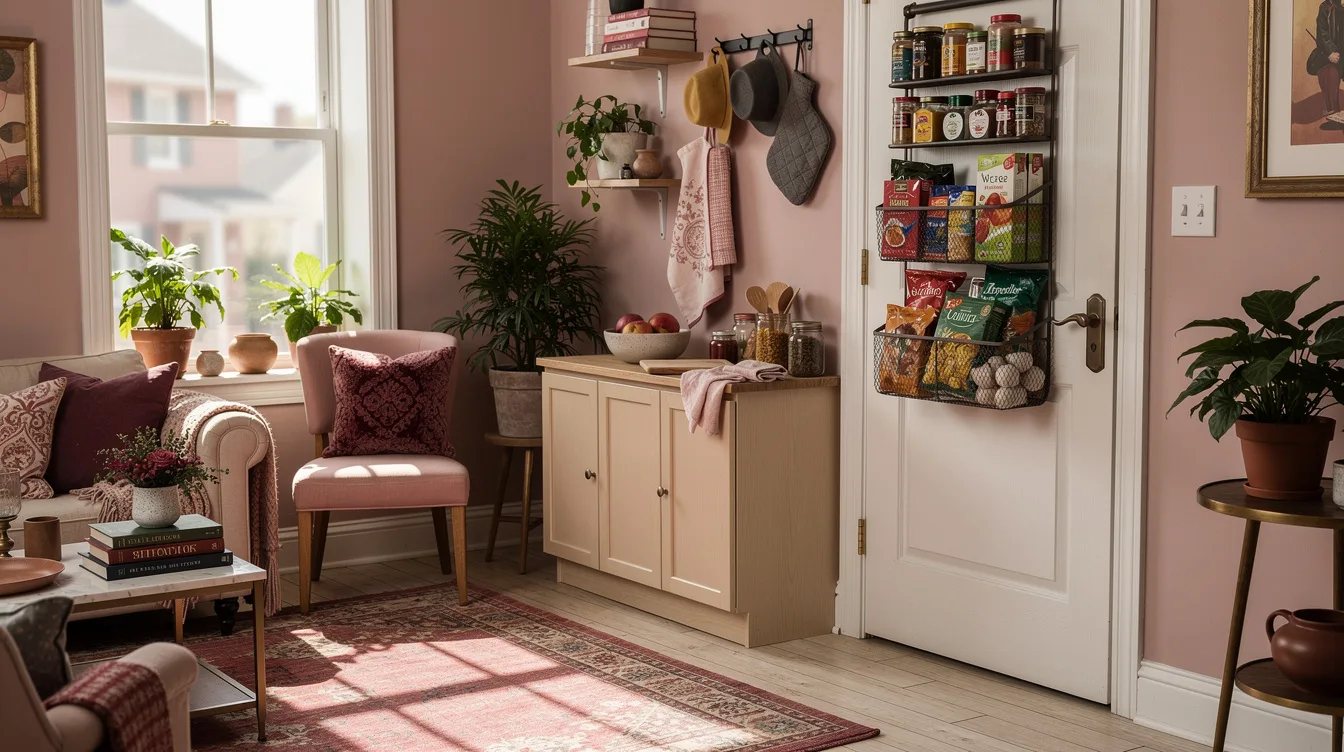
Sort Food Into Category Bins
Category bins make a pantry zone easier to maintain because every item has a destination. Use separate containers for breakfast, baking, snacks, and evening meals, then place the categories in the order your household reaches for them.
Basic plastic bins typically cost about $2 to $5 each at a discount retailer. Open bins work best for packets and small boxes, while lidded bins protect backup ingredients from dust in a closet, garage, or laundry room.
Keep everyday food at eye level or below and move rarely used stock higher. A label should describe the category rather than a specific brand, so the system still works after the next grocery trip.
Decant Staples Into Clear Canisters
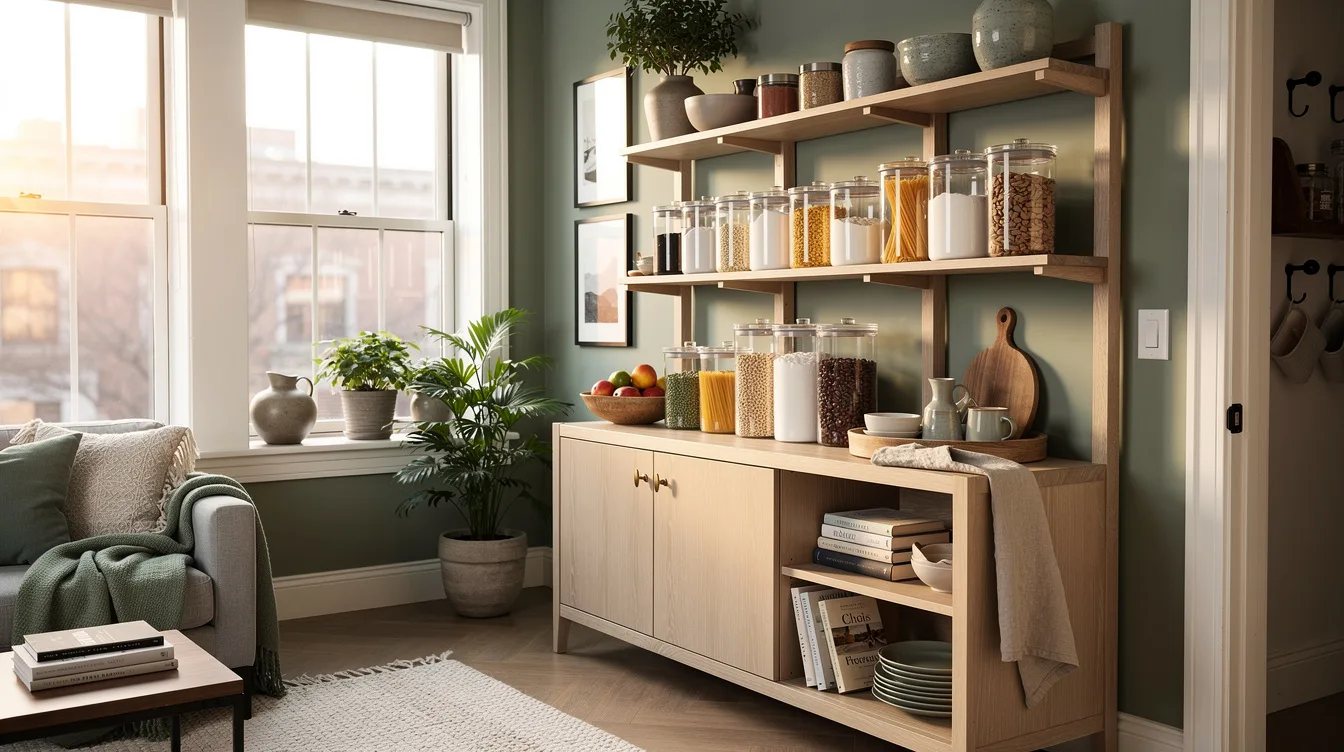
Clear airtight canisters turn loose bags into a readable pantry system and make it easier to see what needs replacing. Choose square or rectangular containers so they line up against a wall, shelf, or cabinet instead of wasting space with rounded edges.
A typical 5-pound bag of flour needs about 4 to 4.5 quarts of capacity, while sugar and pasta usually fit in containers around 2 to 2.5 quarts. Look for clear canisters from Walmart, Target, or Amazon with secure lids and labels that can be removed later.
Write the product name and refill date on each container, then keep roughly one week of staples in the kitchen. Store surplus in a dry basement or garage only when temperature and moisture remain stable.
Keep reading
- Studio Bedroom Corner Feeling Like a Storage Unit? 12 Hotel-Style Fixes
- Pedestal Sink Eating Your Storage? 12 Container Store Fixes Under $165
- Pedestal Sink Bathroom a Storage Black Hole? 15 IKEA Fixes Start at $9
Begin with one location and measure the shelf itself, including frames, hinges, and door clearance. For the lowest-cost setup, metal shelving, square canisters, and shelf risers can typically stay below about $150 altogether, while a closed IKEA PAX or wood cabinet gives the kitchen a more finished look.