Studio Bedroom Corner Feeling Like a Storage Unit? 12 Hotel-Style Fixes
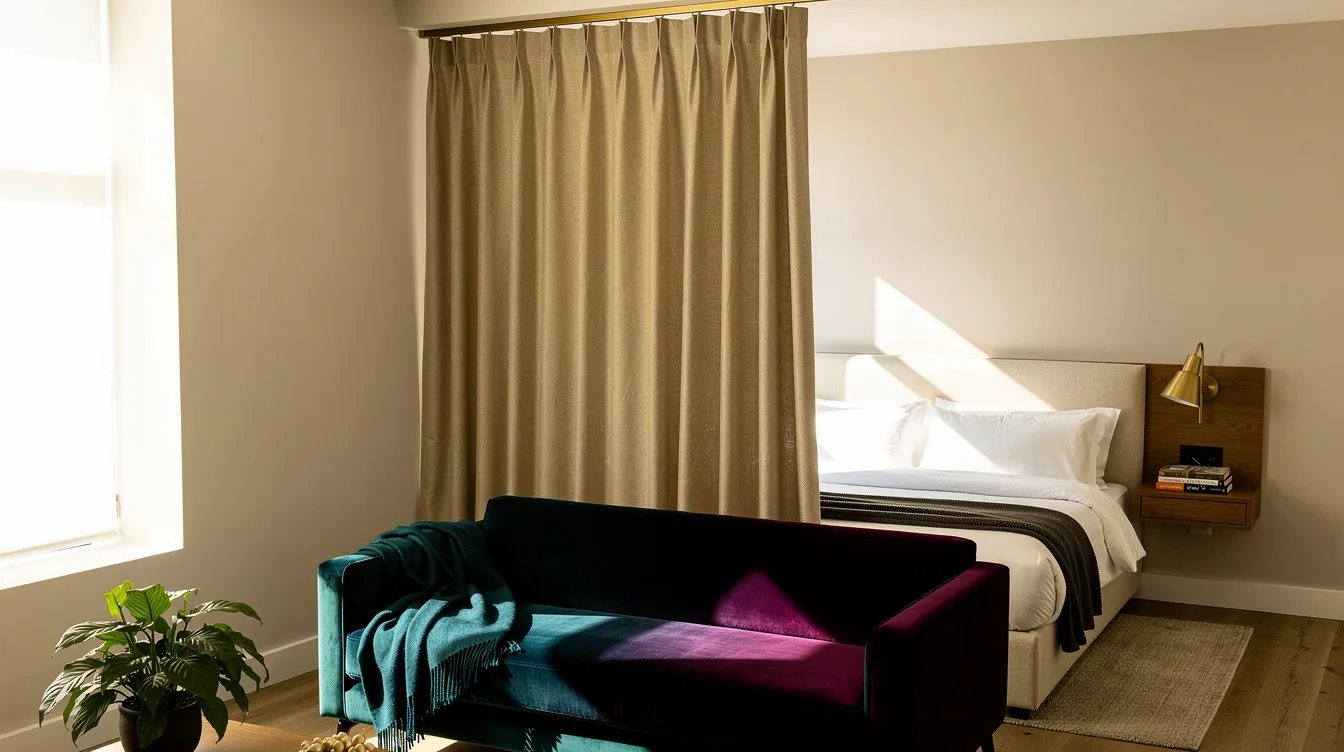
22 november 2026Our studio bedroom began to feel temporary the moment the sofa, bed, and dining table competed for the same sightline. We gave the sleeping corner an about 87-by-110-inch footprint, a deliberate backdrop, and a boundary we could close at night.
The hotel feeling came from control rather than expensive furniture: a permanent bed, layered bedding, reachable lighting, and fewer visible decisions. Here’s the sequence that made the smallest change feel intentional.
What you will find inside
- Measure the Bed’s Real Footprint
- Anchor the Corner With a Permanent Bed
- Run a Ceiling Track Curtain
- Build a Deliberate Backdrop
- Repeat One Upholstered Texture
- Put Reading Light Within Reach
- Layer the Bedding by Weight
- Add a Narrow Bedside Shelf
- Separate Sleep From Living
- Hide the Everyday Clutter
- Tune the Palette and Metal Finish
- Finish With One Hotel-Level Detail
Measure the Bed’s Real Footprint
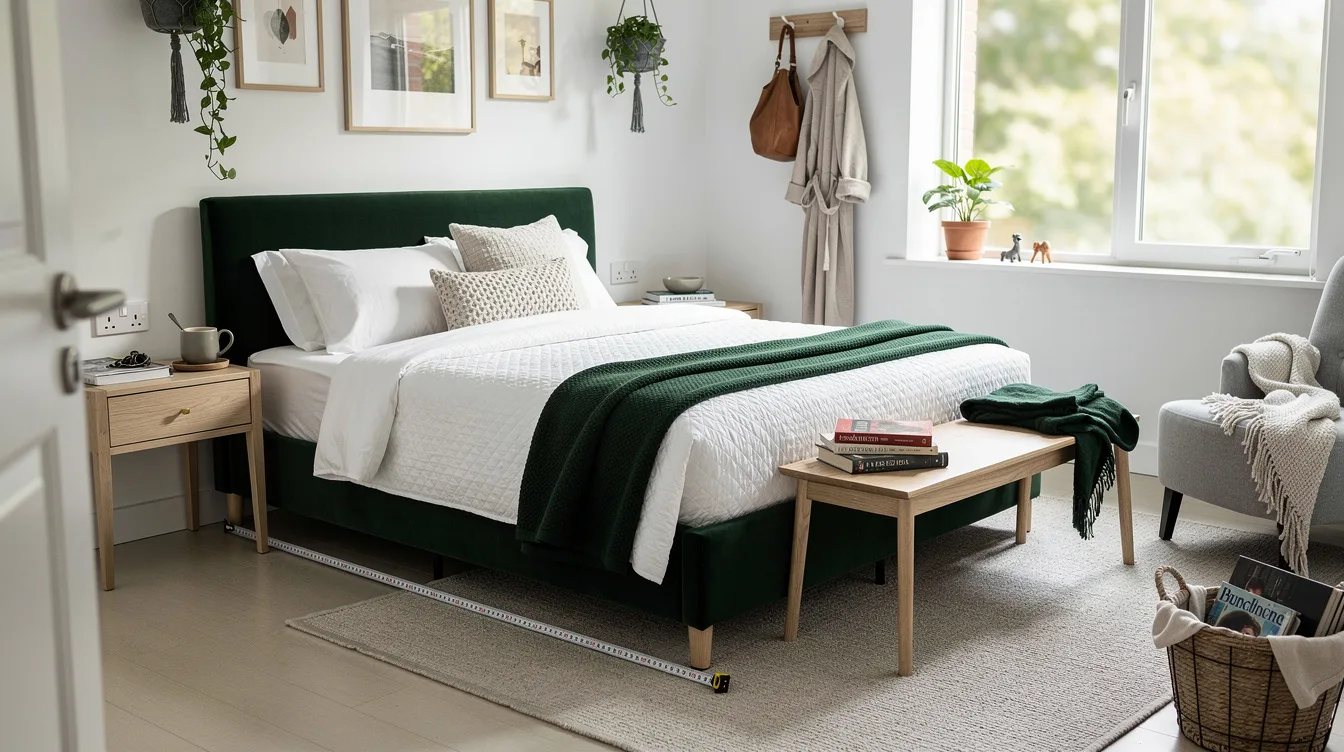
We started with the outside of the bed frame, not the mattress label. A 55-by-79-inch mattress can sit inside a frame roughly 61 inches wide by 83 inches deep, so that difference matters in a compact studio.
Our working allowance was about 87 inches wide by 110 inches deep for the sleeping corner. Those dimensions are planning guides, not building standards, and a tape measure should settle the final layout before any purchase from IKEA.
Anchor the Corner With a Permanent Bed
A hotel-style corner needs visual permanence, even when the room has several jobs. A stable platform or storage bed gives the sleeping area a clear center and keeps bedding from looking temporary.
The IKEA MALM lift-up storage bed is a useful reference because its hidden storage can replace a dresser; a typical version may cost around $550 before the mattress and linens. Keep the bed aligned with the longest wall, then leave enough room to open drawers or lift the base fully.

Run a Ceiling Track Curtain
For most studios, a ceiling-mounted curtain creates the strongest boundary with the least lost floor space. A track placed just beyond the bed frame lets the fabric close across the sleeping area while keeping the daytime plan open.
Use an oatmeal linen-look curtain from Wayfair for softness, or choose a lined panel when privacy and darkness matter more. A typical track and curtain package may land around $150 to $300, depending on width and lining, so it usually costs less space than a freestanding divider.
Build a Deliberate Backdrop
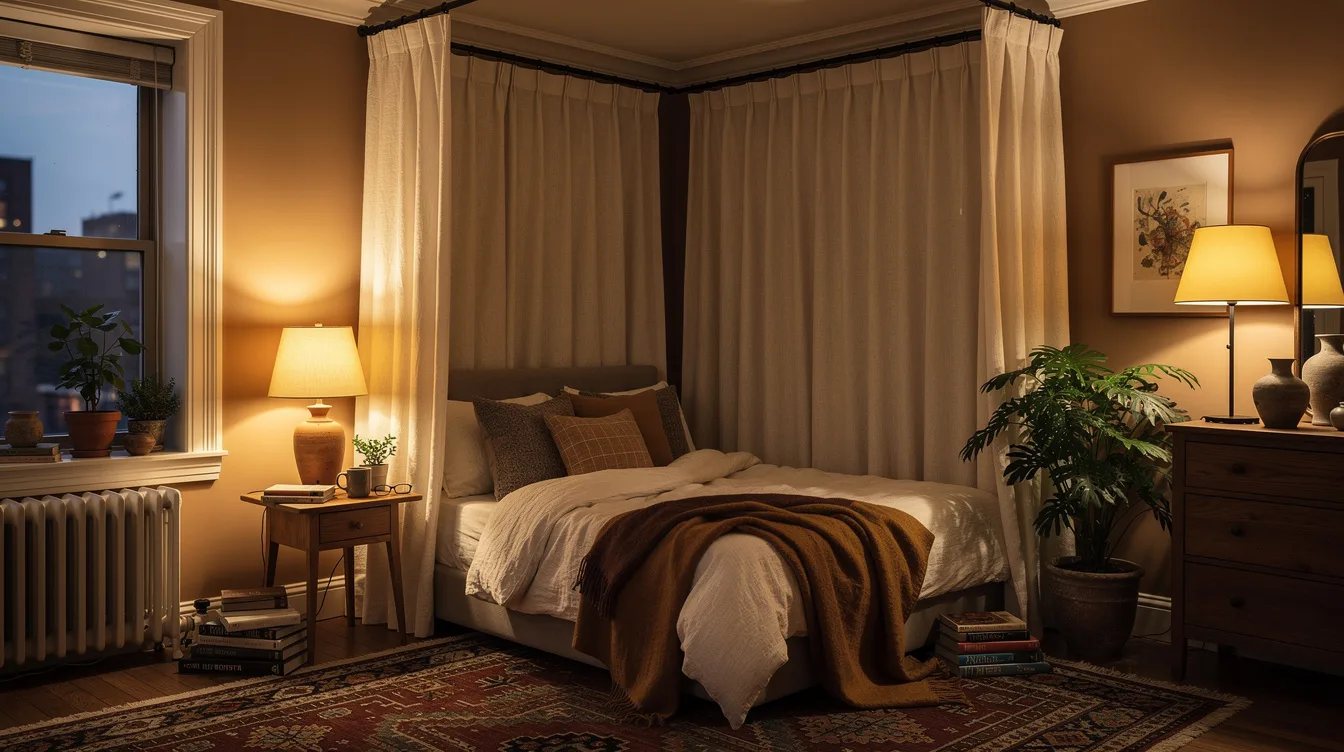
The wall behind the pillows should look finished when the curtain is open. Warm off-white paint, a narrow wood panel, or a wall-mounted upholstered headboard can make the bed read as a planned destination rather than furniture pushed against a wall.
We favor a headboard slightly wider than the mattress, with a clean top edge and no oversized wings. A Target upholstered headboard in a muted beige can cost roughly $150 to $300, while paint and a simple wood treatment may stay below $100.
Repeat One Upholstered Texture
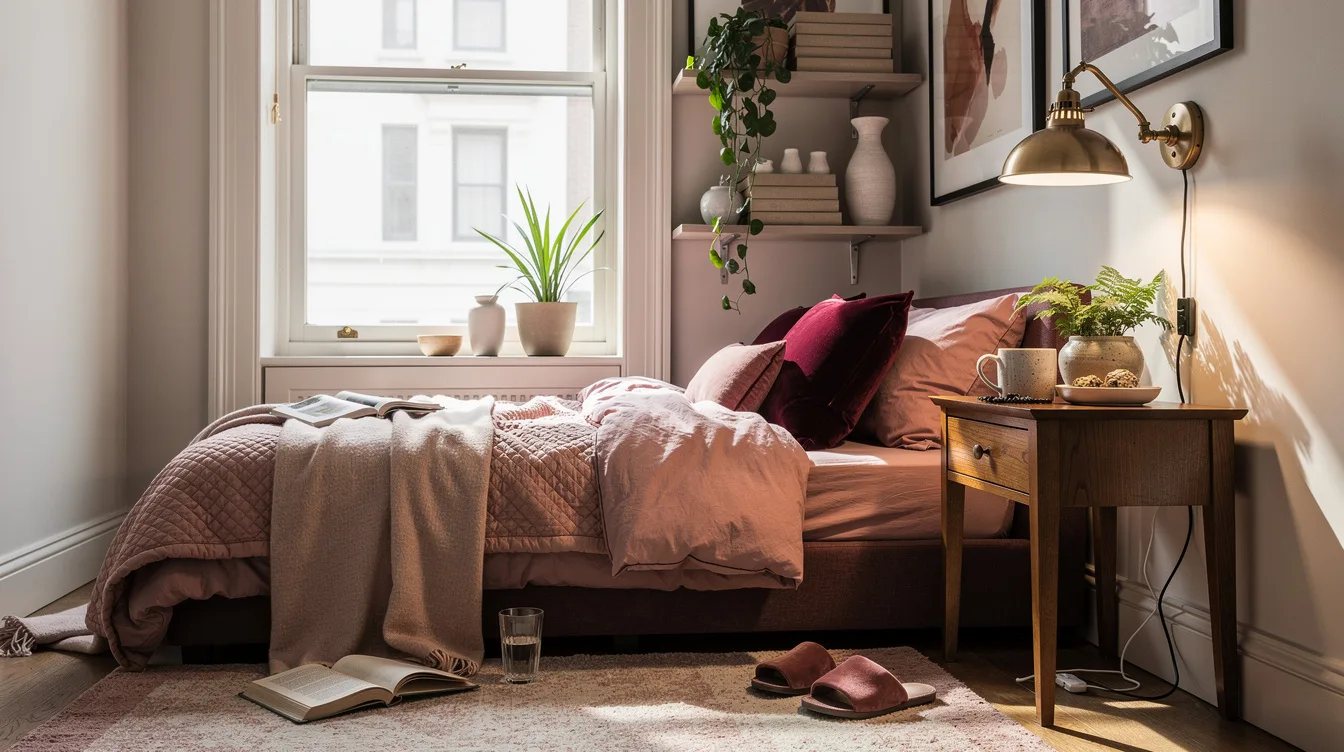
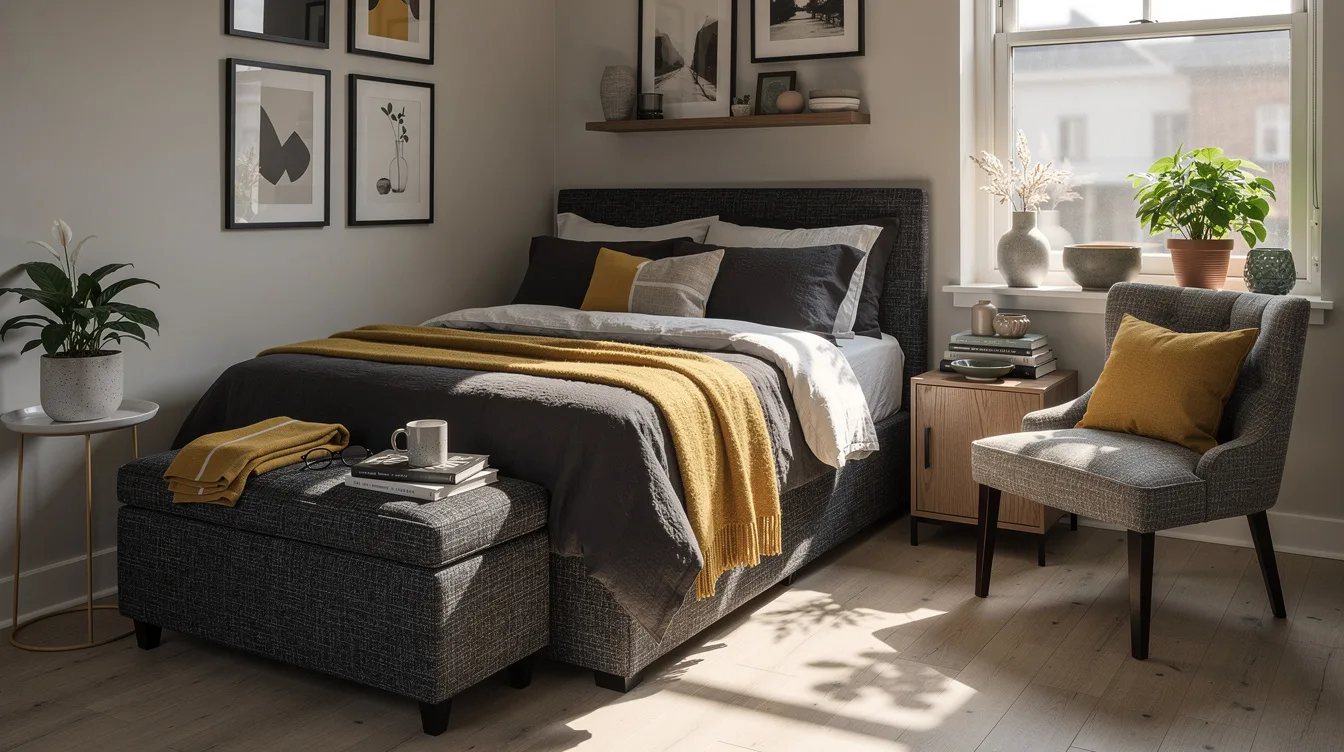
Hotel rooms often feel calm because the headboard, curtains, and bedding share a quiet texture. Choose one tactile note, such as nubby cotton, brushed linen, or soft boucle, then keep the remaining surfaces simpler.
A cream boucle headboard paired with smooth cotton sheets has enough contrast without making the corner busy. Skip a second accent fabric on the wall, bench, and pillows; one repeated texture looks more intentional in a room where every surface is visible.
Put Reading Light Within Reach
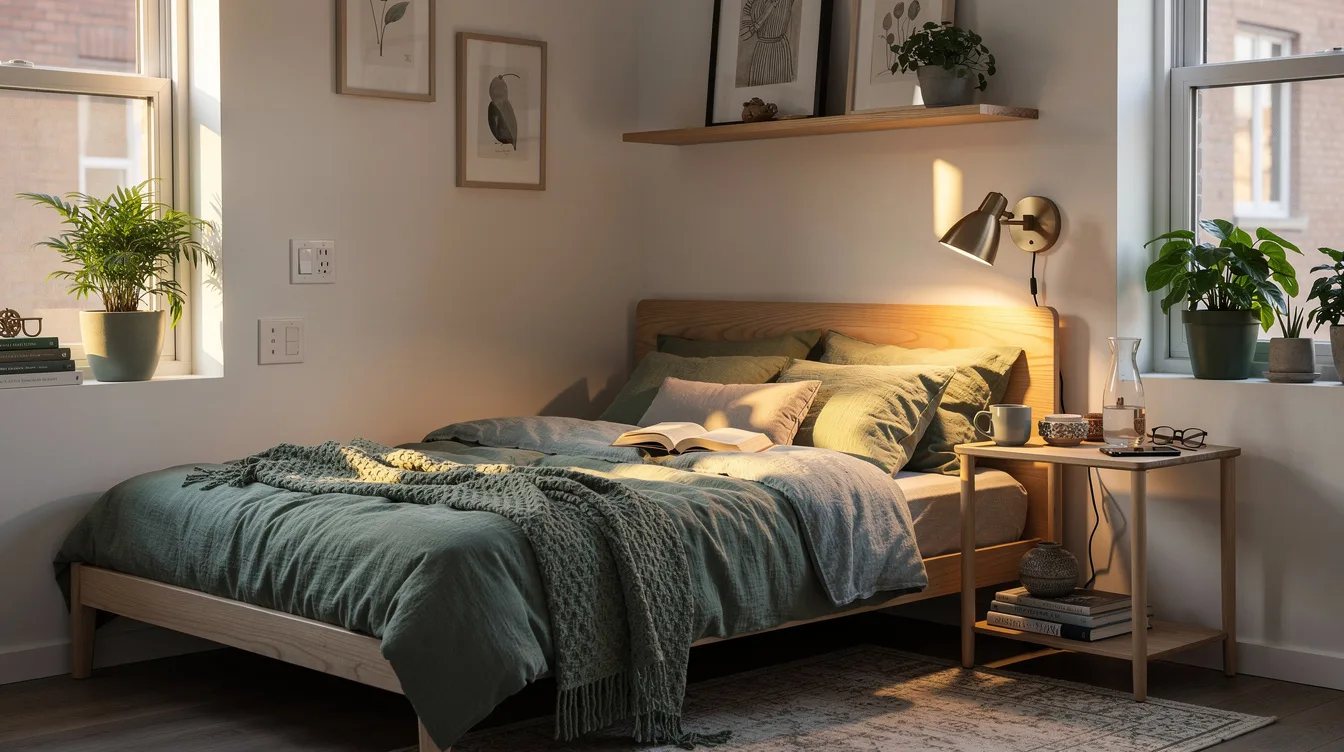
Lighting you can control from bed is one of the clearest hotel cues. Mount a small reading light beside the pillow or place a plug-in sconce on the wall, then add a separate low lamp for the room’s evening glow.
A brass plug-in sconce from Lowe’s may cost about $40 to $90, while a dimmable LED bulb usually adds less than $15. Keep the switch reachable without sitting up, and hide the cord inside a paintable raceway if the outlet sits across the room.
Layer the Bedding by Weight
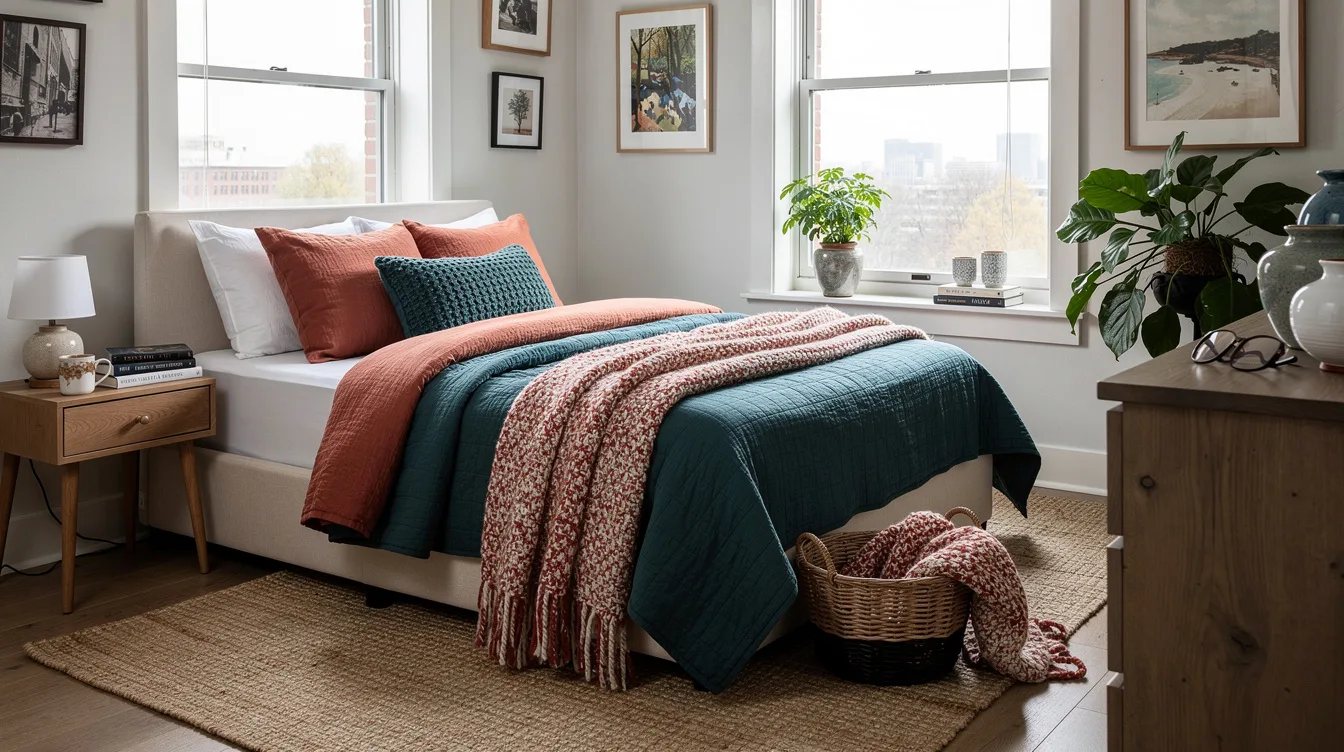
Coordinated bedding makes a small sleeping zone look finished faster than extra decor. Start with white or warm ivory sheets, add a quilt or coverlet, and fold one darker throw across the lower third of the bed.
Our preferred combination is crisp cotton underneath, a lightweight white quilt in the middle, and a charcoal or tobacco throw on top. A typical full bedding refresh from Amazon can cost around $120 to $250, but the room benefits more from matching tones than from a high thread count.
Add a Narrow Bedside Shelf
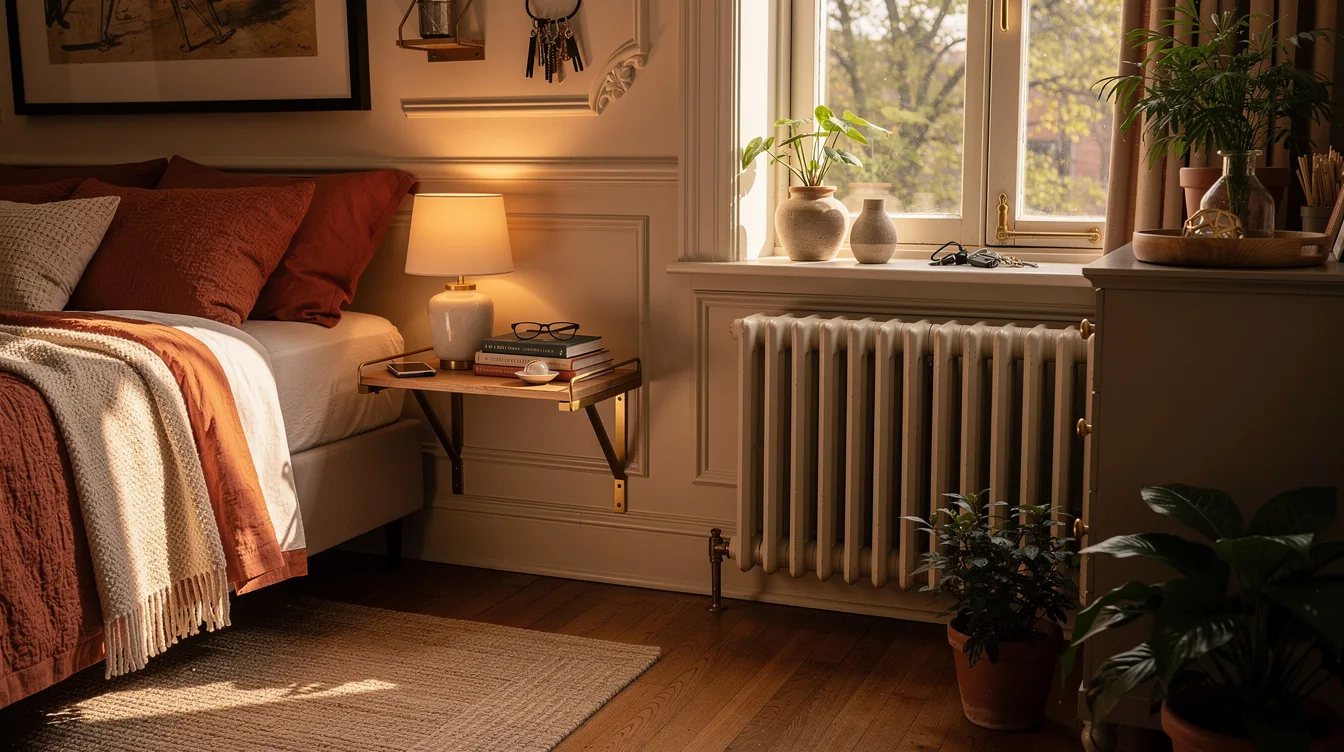
A hotel-style room needs a place for a glass, phone, book, and lamp, but a full nightstand can steal the walking path. Install one shallow shelf about 10 to 14 inches wide and 6 to 10 inches deep beside the pillow.
A solid oak shelf with a slim black bracket is enough for the essentials and keeps the floor clear. We would choose a shelf over a rolling cart because its fixed position makes the sleeping corner feel calmer, while the open space underneath remains easy to clean.
Separate Sleep From Living
The boundary should be visible even when the curtain stays open. Turn the sofa so its back faces the bed, place a narrow rug under the sleeping zone, or use a low bookcase to mark the transition without building a wall.
A low open bookcase from Walmart can cost about $80 to $180, but it needs restraint. Keep the upper surface mostly empty and avoid blocking light from the main window; the sleeping area should feel sheltered, never boxed in.
Hide the Everyday Clutter
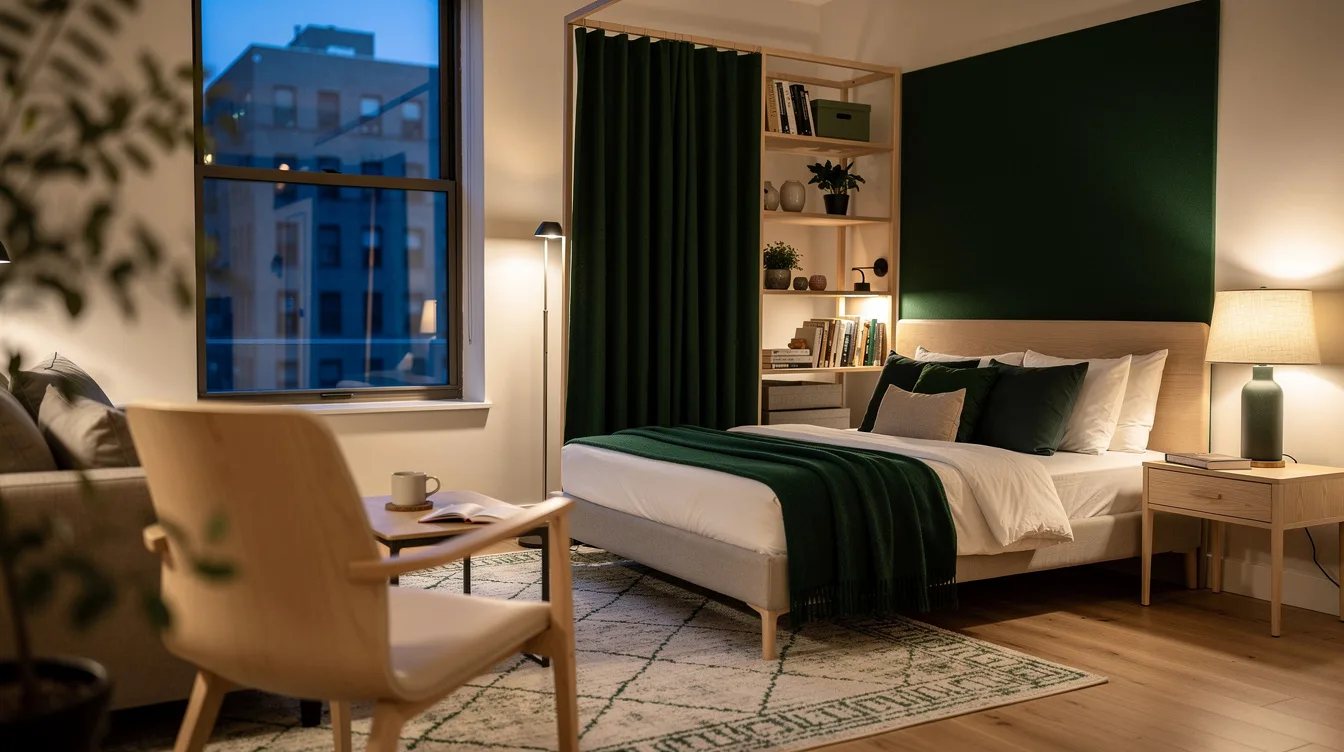
Hotel rooms work because the eye has fewer unfinished tasks to process. Use the bed base, a lidded basket, and one concealed bin to absorb shoes, spare linens, chargers, and the items that usually collect on the floor.
A woven seagrass basket under the shelf can hold the night routine, while a slim hamper stays behind the curtain. Choose storage in the same warm family as the headboard or floor so it disappears into the composition instead of adding another visual stop.
Tune the Palette and Metal Finish
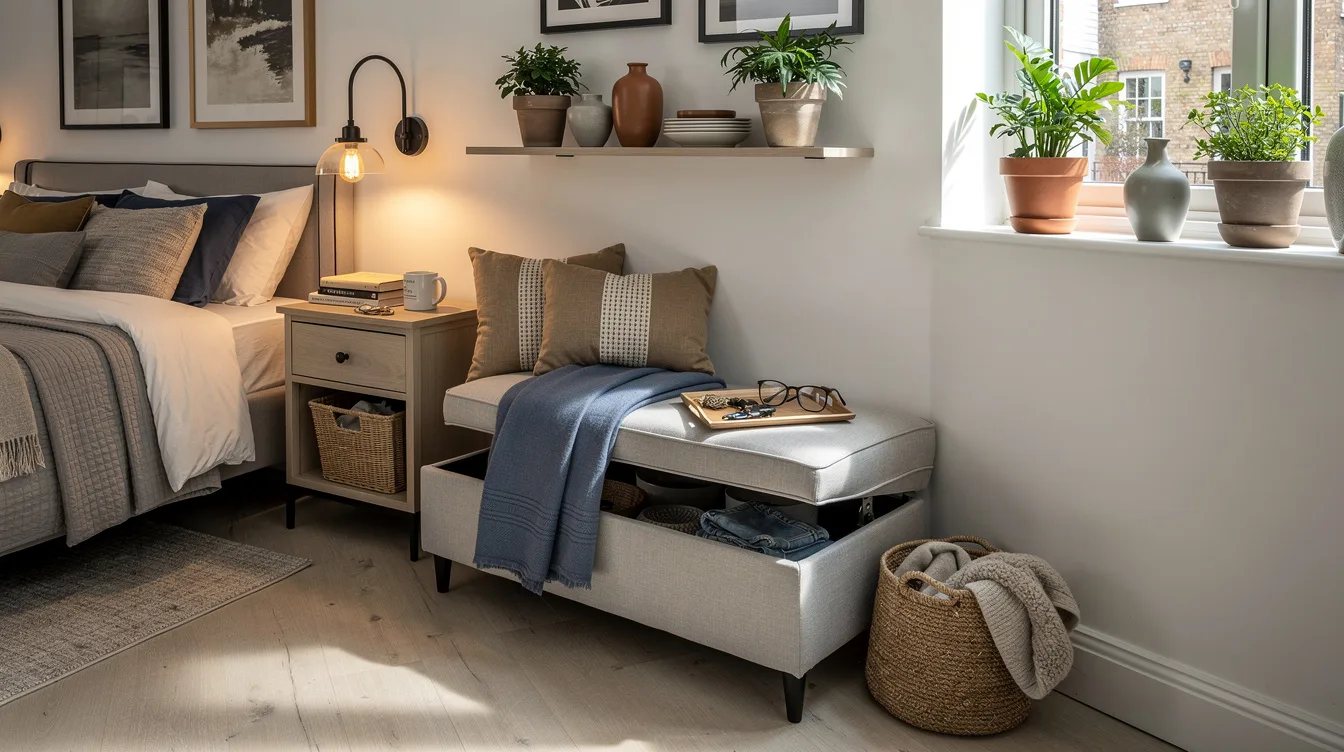
Keep the bedroom corner to a compact palette: warm white, one wood tone, one dark accent, and one metal finish. This limited range helps the bed feel like a suite within the studio rather than a separate room assembled from leftovers.
Brushed brass works with walnut and cream, while matte black is sharper against pale oak and gray-beige fabric. A brushed brass curtain rod or lamp is enough repetition; adding brass hardware to every nearby piece would make the corner feel staged.
Finish With One Hotel-Level Detail
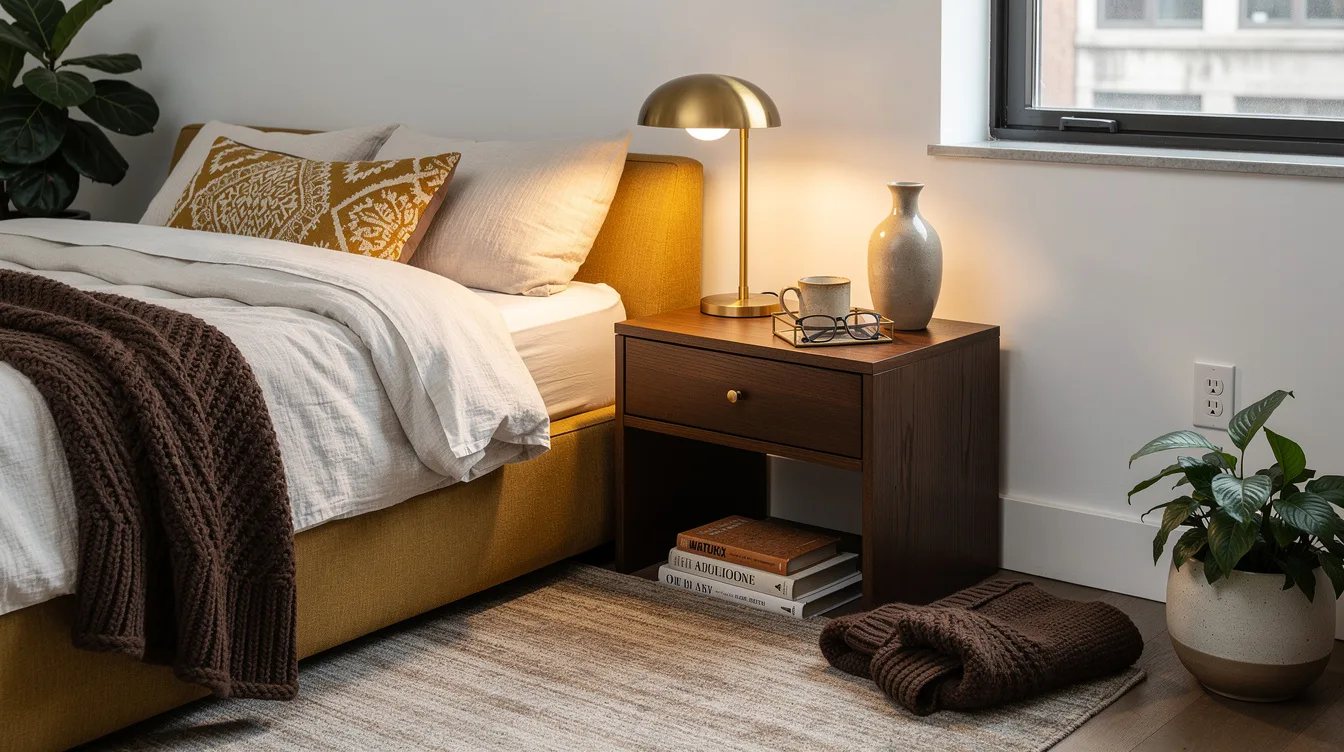
Choose one final object that gives the corner a sense of arrival. It might be a framed abstract print above the headboard, a small carafe on the shelf, or a washable runner that softens the first step out of bed.
We like a ceramic carafe beside a low reading light because it is useful, quiet, and easy to remove when the room needs to change roles. Keep the final surface spare, then close the curtain at night so the studio reads as a bedroom instead of one large multipurpose room.
Keep reading
- Target Bedroom Patterns Feeling Too Busy? These 12 Designer Fixes Help
- 12 Hotel-Style Nightstand Rules That Make a Bedroom Feel Finished
- Pedestal Sink Eating Your Storage? 12 Container Store Fixes Under $165
Start with the curtain track and the bed’s true footprint, then spend the remaining budget on light and bedding. Once those four pieces work together, the studio finally has a bedroom corner that feels settled every evening.


