Cozy Bay Window Seats Worth Building for Small Reading Nooks
27 november 2026Yes, a bay window seat is worth building when it gives your small nook storage, a proper reading perch, and softer light without stealing floor space. I once made mine too shallow, then wondered why nobody sat there. The fix was simple: deeper cushions, warmer fabric, and a lamp that stays put.
Editor's note: Start with comfort and proportion. The prettiest bay window seat still fails when the cushion is hard, the lighting is harsh, or the storage makes the room feel crowded.
- Float a Built-In Bench for a Lighter Bay Window Seat
- What Does the Three-Source Nook Rule Change?
- Layer a Reading Triangle Instead of a Sofa
- Built-In or Freestanding? Choose the Right Bay Window Base
- Frame the Glass With a Soft Privacy Screen
- The Two-Wood Rule Creates Calm Contrast
- Float a Narrow Shelf Above the Bay Window Seat
- Paint the Recess for a Deeper Reading Nook
- Why Built-In Wins Here
- Add the Cushion Lift for Better Posture
- Build a Drop-Zone Seat Near the Entry
- The Three-Height Light Stack
- Layer the Warm-Textile Formula
- Frame the Seat With a Tall Plant
- The 57-Inch Art Line
- Swap a Heavy Curtain for a Layered Shade
- Make a Rental-Reversible Bay Window Seat
- Plan the Honest Cost Before You Build
- Style the Bay Window Seat for Real Life
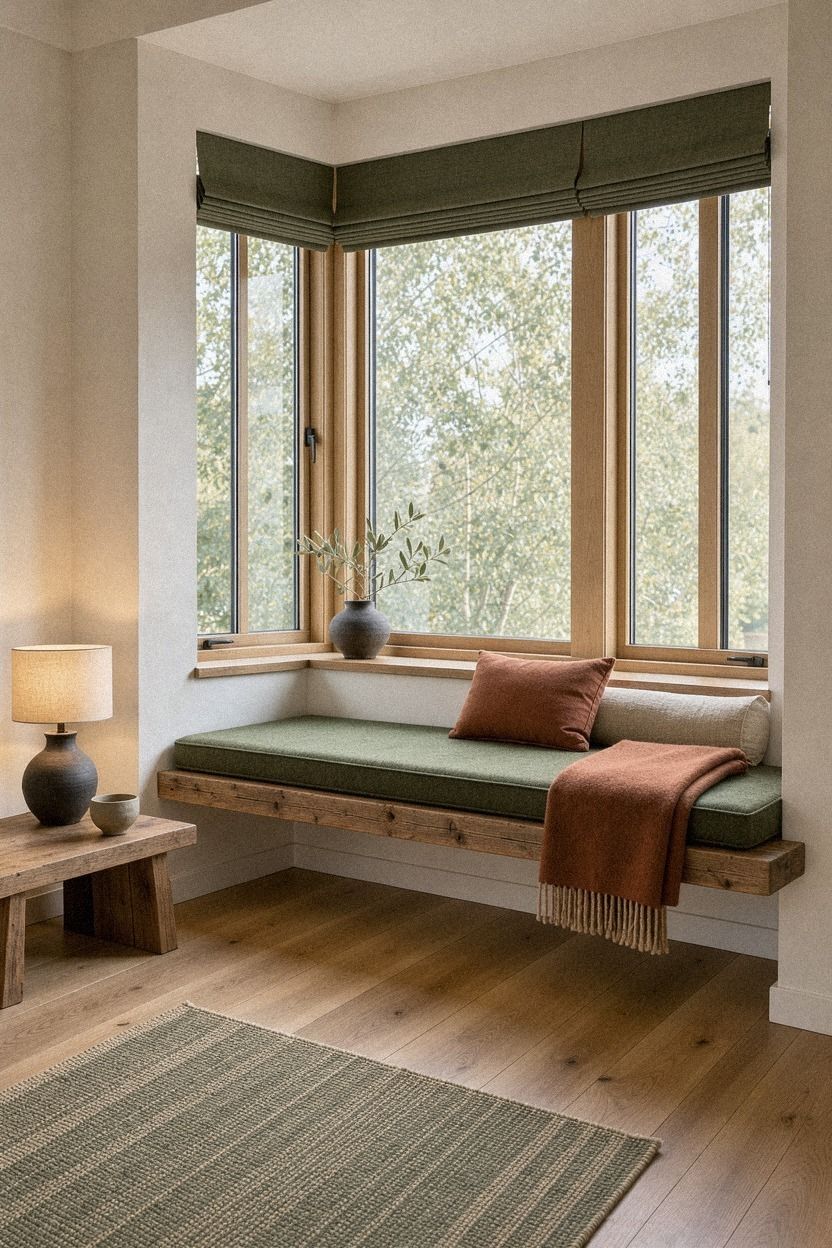
1Float a Built-In Bench for a Lighter Bay Window Seat
A floating bench keeps the floor visible beneath your bay window, so your reading nook feels airy instead of boxed in. I’d choose a reclaimed weathered teak slab with concealed brackets and leave enough clearance for a basket or two.
You’ll see the shadow line beneath the seat, and that small gap makes the whole wall feel lighter. That gap matters!
Keep the cushion generous, but don’t let it swallow the window. A 4-inch cushion in 18 oz cotton velvet gives you softness without turning the seat into a mattress. If you’re unsure about the finish, Benjamin Moore White Dove OC-17 on the surrounding trim keeps the teak warm rather than orange.
And don’t skip the underside. Your eye will notice unfinished brackets every time you sit down. Cover the supports neatly, paint them to match the wall, and use a slim basket to make the open space useful.
2What Does the Three-Source Nook Rule Change?
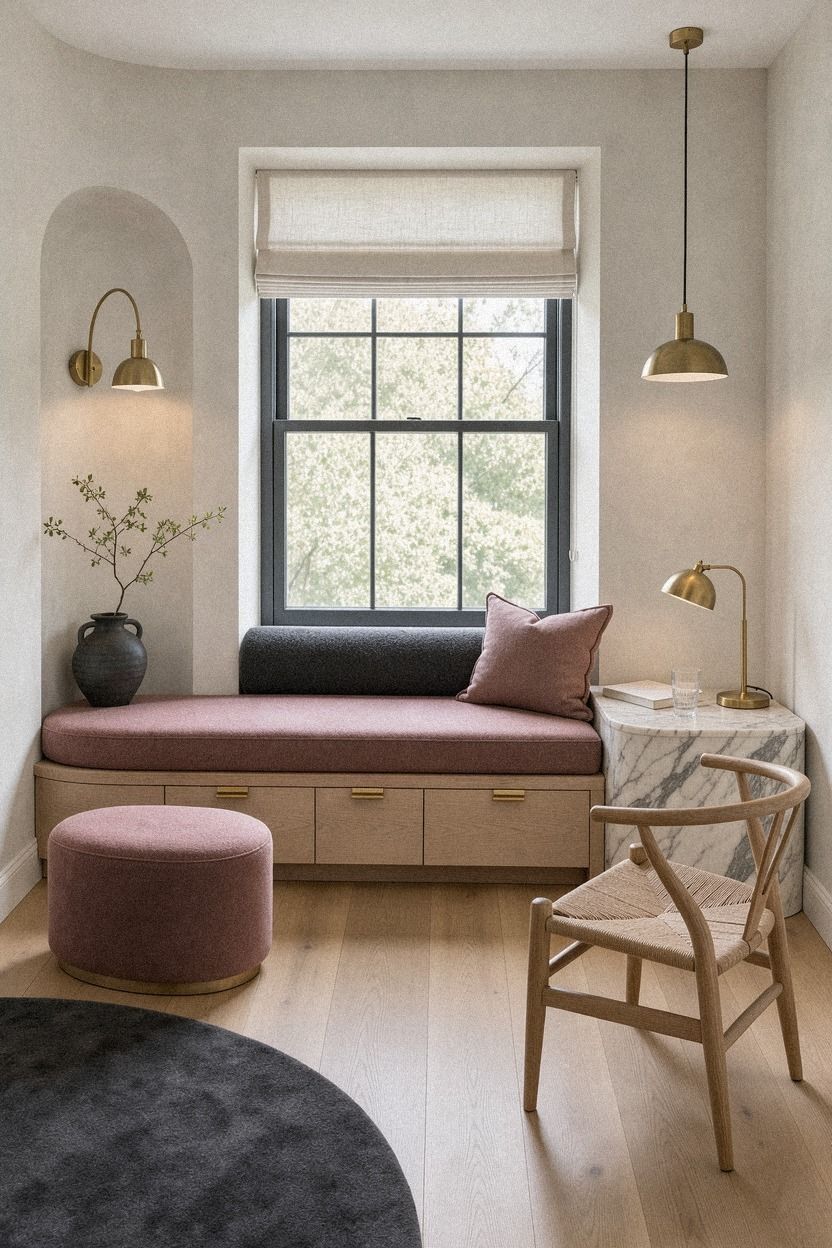
Your bay window seat needs three kinds of light: overhead, task, and ambient.
3Layer a Reading Triangle Instead of a Sofa
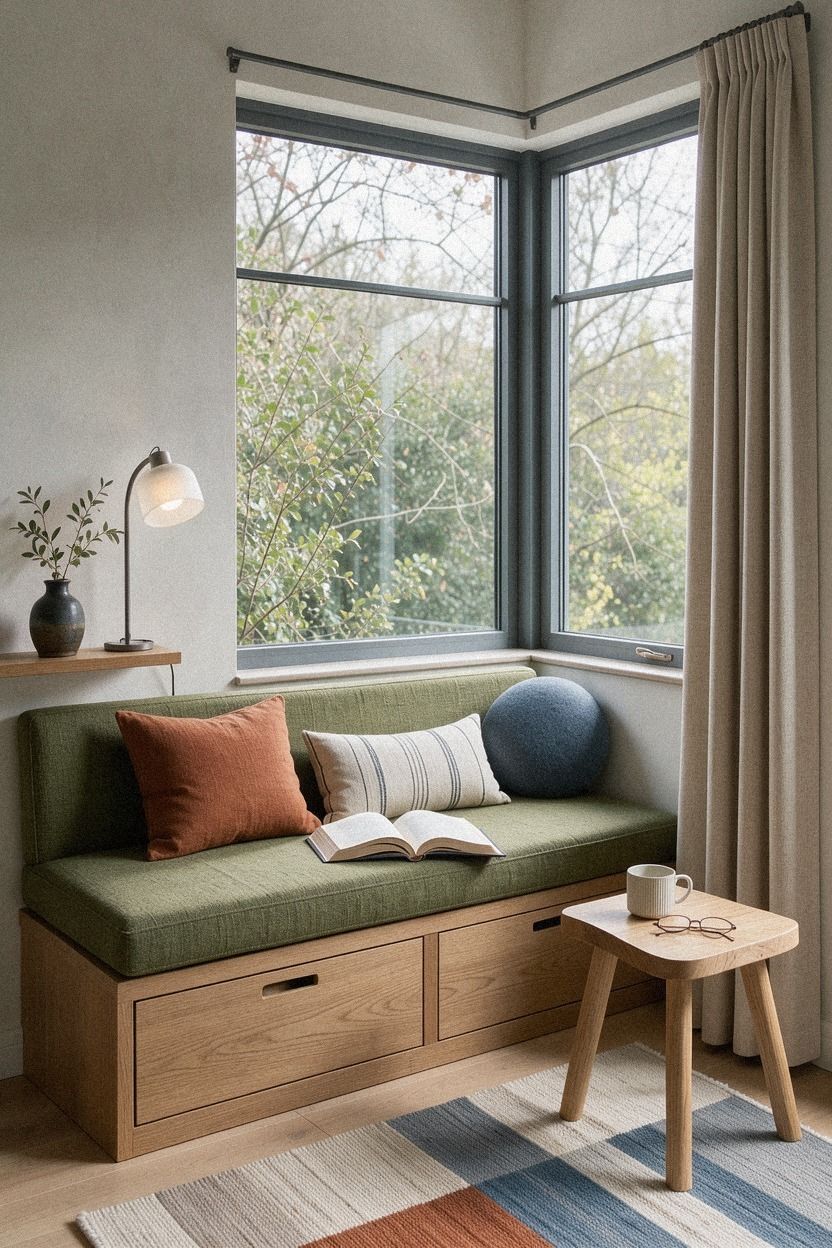
A reading triangle gives you one seat, one light, and one reachable surface. That’s enough.
Put the cushion at the window, a lamp at one side, and a narrow drink table at the other. You’ll have a complete nook without forcing a full chair into a tight room.
I prefer a compact cerused white oak side table with a rounded edge. Sharp corners feel awkward beside a padded bench, especially when your knees are tucked up. Add a 600gsm Turkish cotton throw for weight, but keep it folded rather than tossed across the cushion.
Your small reading nook should feel inviting before you fill it with accessories. A single ceramic mug, a book, and a soft throw are enough. If you’re comparing this with a larger furniture purchase, remember the same rule: fewer choices usually create a calmer, more generous result.
4Built-In or Freestanding? Choose the Right Bay Window Base
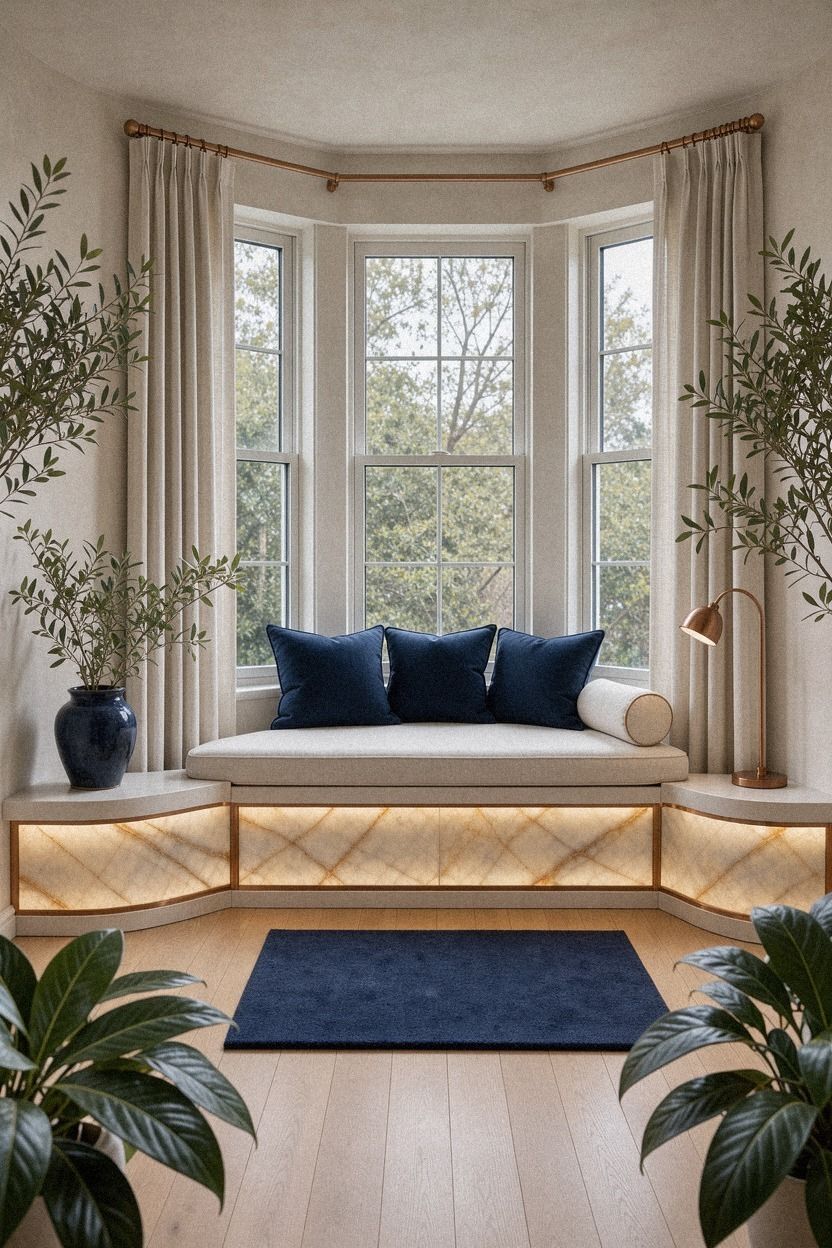
A storage plinth makes your bay window bench earn its footprint.
5Frame the Glass With a Soft Privacy Screen
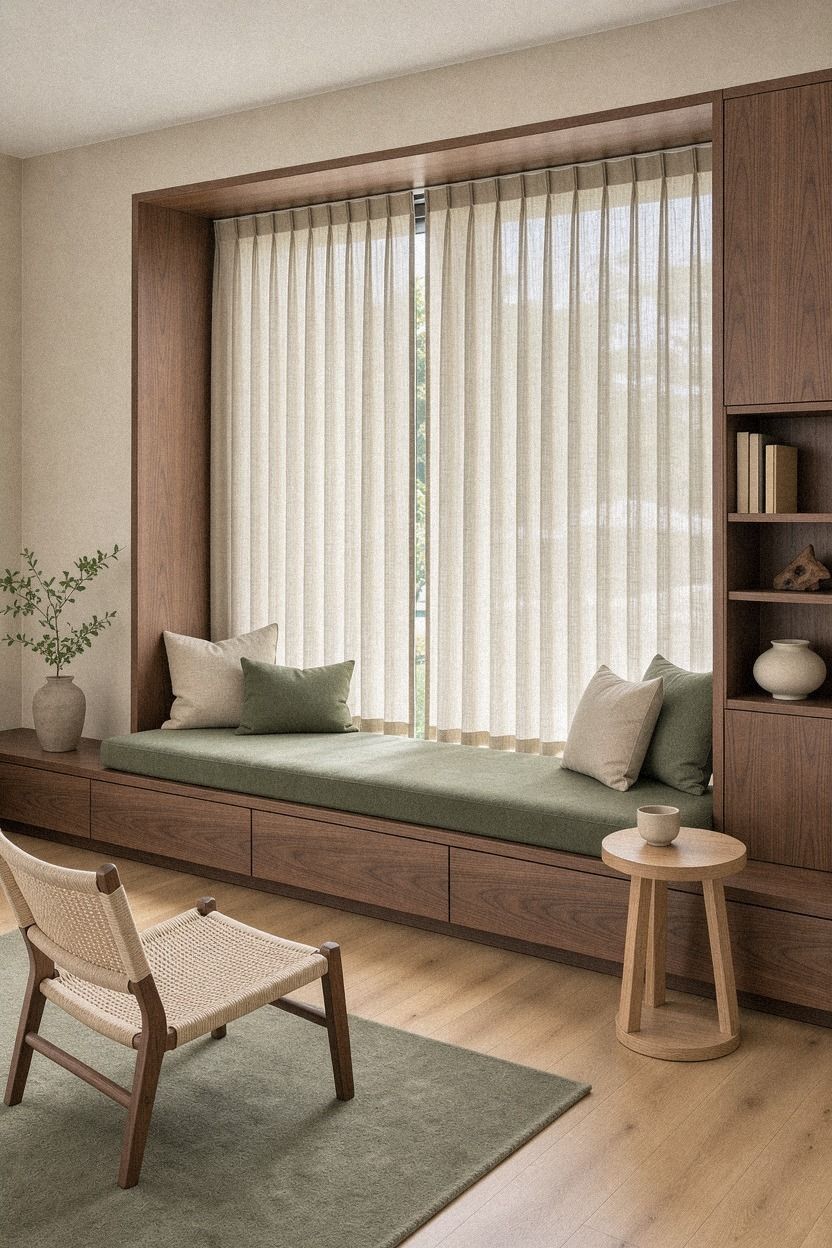
A privacy screen can make your bay window seat feel sheltered without blocking the daylight. Hang Belgian flax linen panels outside the recess, then pull them closed when you want a quieter corner. You’ll still get filtered light, and the fabric will move slightly when the heat comes on.
Mount the rod 4 to 6 inches above the frame and take the panels down to the floor. That proportion makes the window feel taller. I’d choose warm ivory rather than stark white, especially if your walls are painted Sherwin-Williams Agreeable Gray SW 7029.
The screen needs room to stack beside the glass. Don’t crowd the middle of the bay with gathered fabric, or you’ll lose the view you built the seat around. A book-matched walnut panel can filter sightlines while keeping the nook bright.
6The Two-Wood Rule Creates Calm Contrast
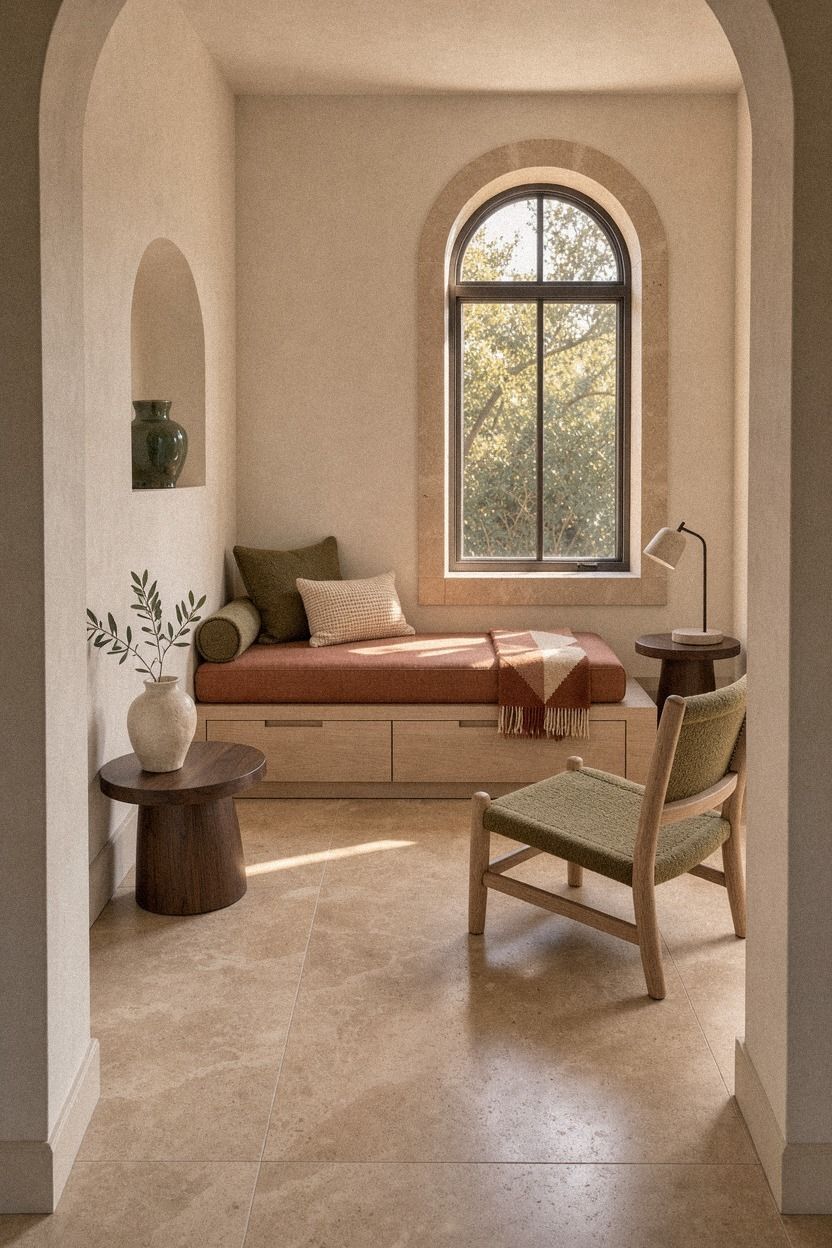
The Two-Wood Rule keeps a wood-heavy bay window seat from looking like a showroom display. Choose one pale wood for the bench or trim, then one deeper wood for a stool, shelf, or side table. You’ll get contrast without creating a collection of unrelated finishes.
A warm travertine floor works nicely with walnut accents, while a pine bench can handle a darker stained table. I’d avoid matching every wooden surface exactly. That approach often makes a small room feel flat, and the grain loses its character.
Keep your textiles quiet when the wood is doing the talking. Sage mohair velvet gives the seat depth, while a small cream cushion keeps it comfortable. Your eye should move from the window to the bench, then down to the floor.
If it jumps between five finishes, you’ve gone too far.
7Float a Narrow Shelf Above the Bay Window Seat
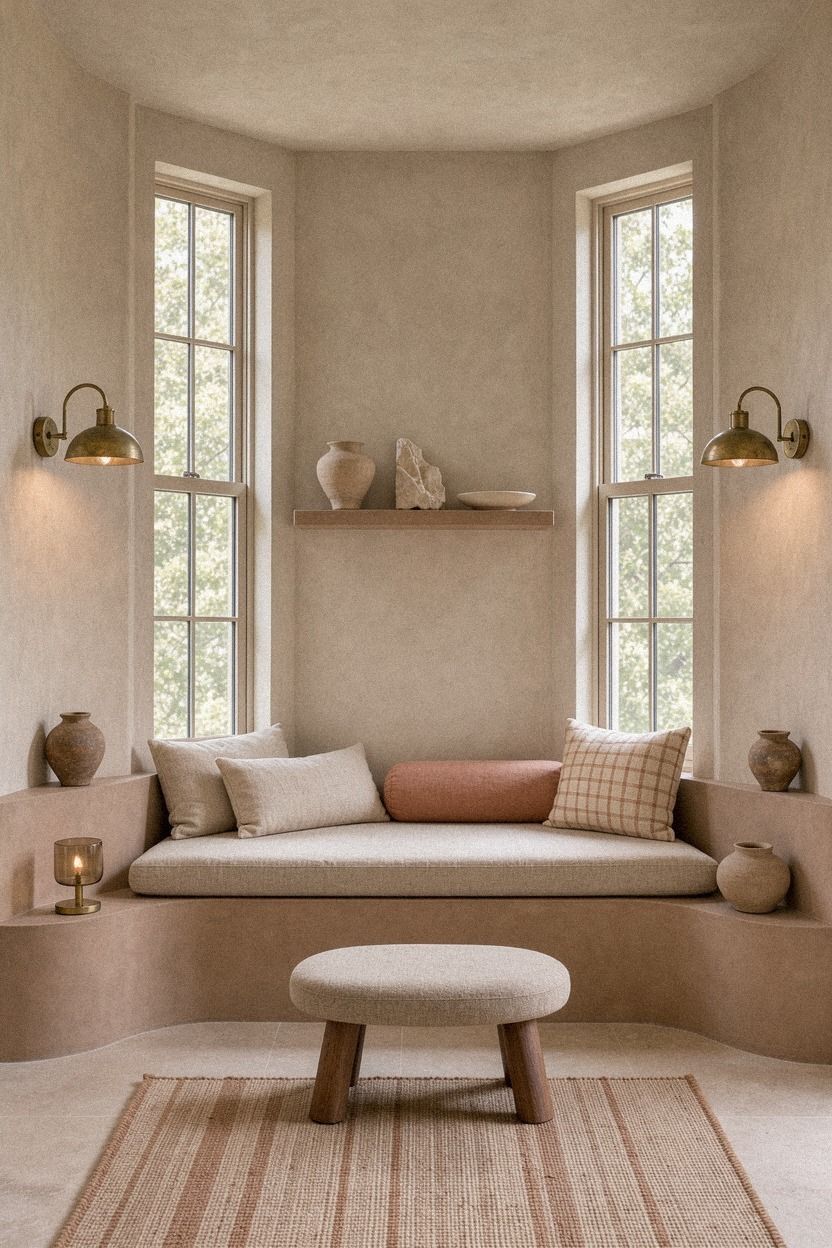
A narrow shelf above your bay window seat gives you a place for books without turning the nook into a display wall. Keep the shelf shallow enough that your head won’t bump it when you lean back. A slim unlacquered brass shelf with a rounded front edge feels substantial but not bulky.
Hang artwork with its center around 57 to 60 inches from the floor, then adjust for your seated sightline. You’ll want the lower edge high enough to protect the frame from pillows. I’d use one large print rather than several small pieces, because the bay already has strong architectural lines.
Choose an aged-brass shelf only if its depth suits the recess. A shelf that projects too far will make the seat feel cramped. Your books should be reachable, but they shouldn’t become a second surface for clutter.
8Paint the Recess for a Deeper Reading Nook
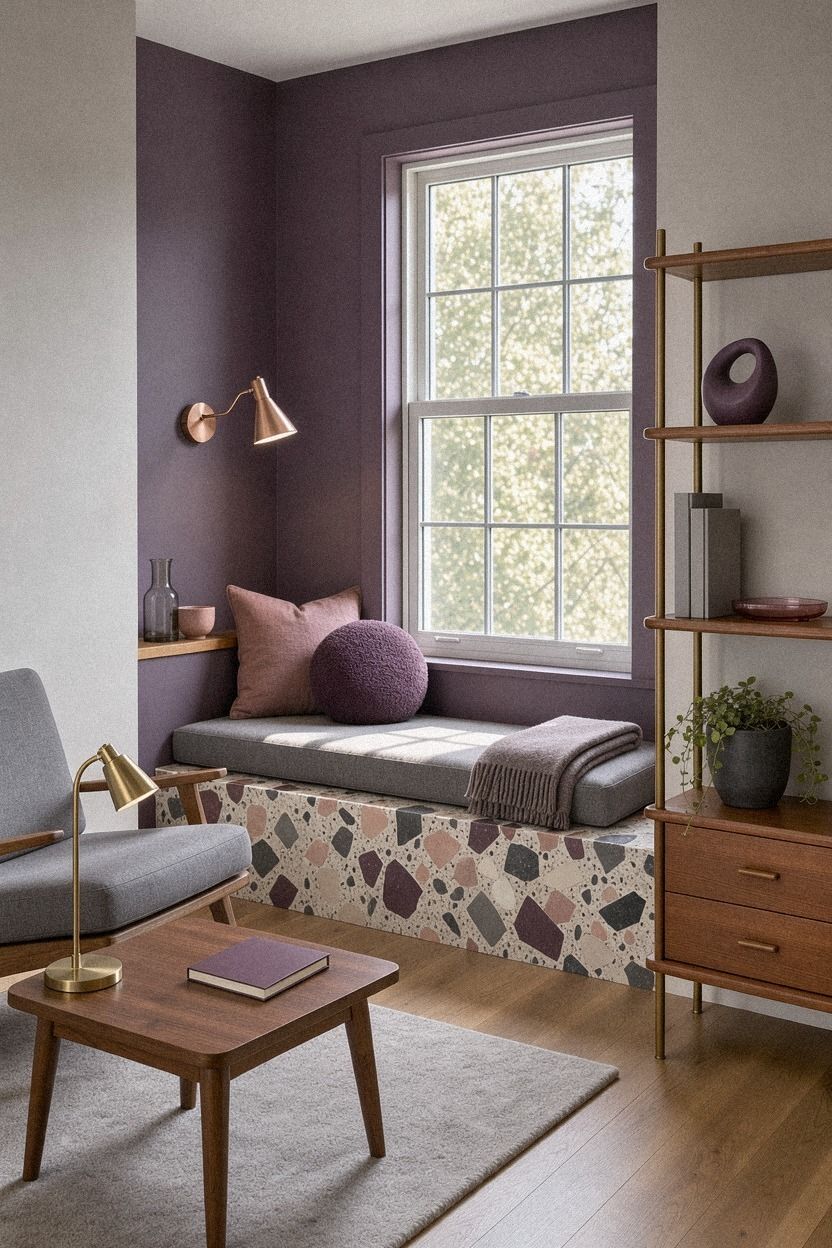
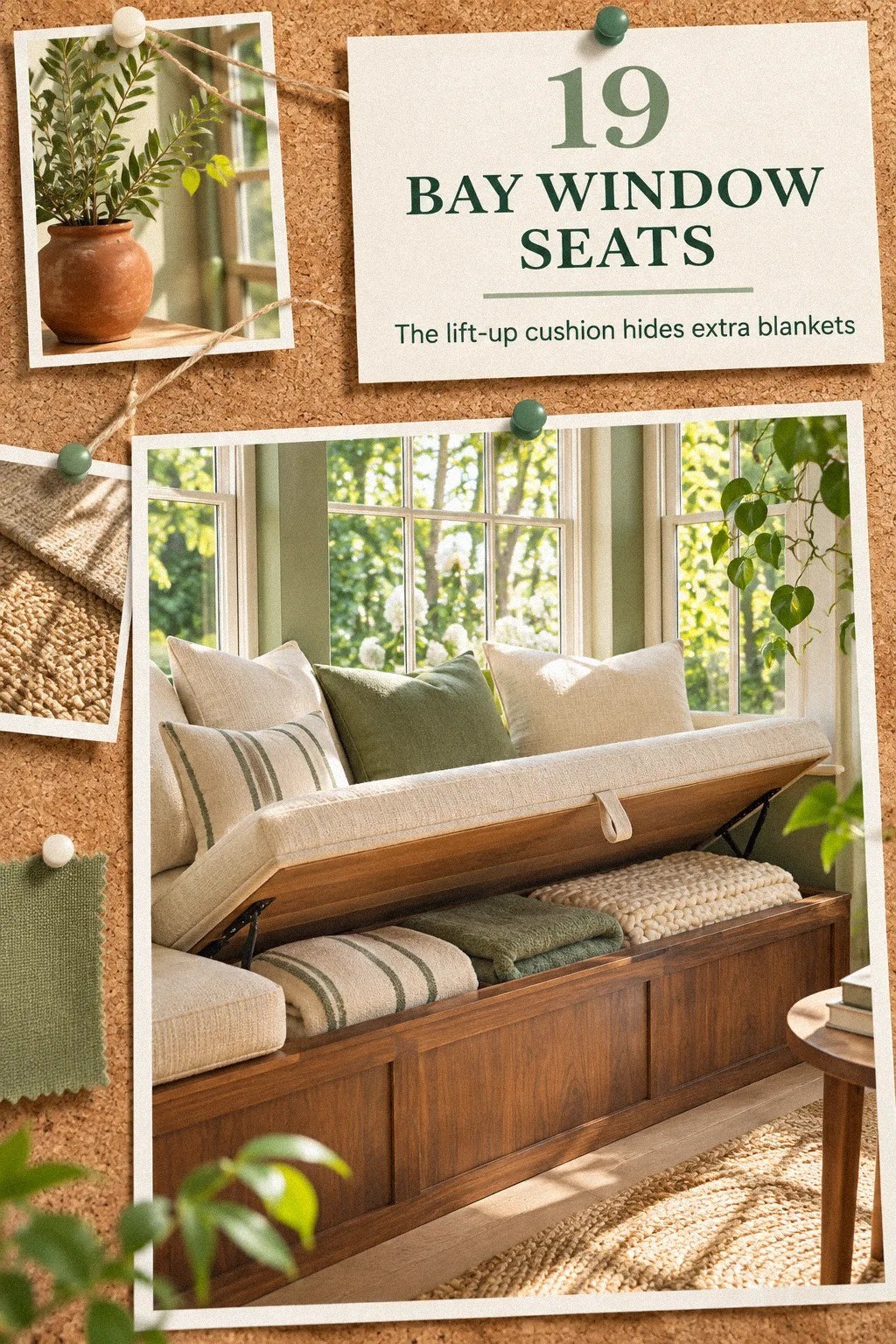
Painting the inside of the bay window recess a darker color gives your seat a visual boundary. Farrow & Ball Pelt No. 254 creates a deep plum pocket, while Benjamin Moore Gray Owl OC-52 adds a soft grey note without turning cold. You’ll notice the difference most in the evening, when the recess holds the lamp glow.
I’d paint the trim and walls the same color if the bay is narrow. That choice reduces visual interruptions and makes the whole nook feel taller. If the room already has strong woodwork, keep the paint soft and let the grain provide contrast.
Don’t choose a shade from a screen alone. Put a sample beside the glass and check it in morning, afternoon, and lamplight. Your north-facing window may pull blue, while a west-facing one can make beige look surprisingly golden.
9Why Built-In Wins Here
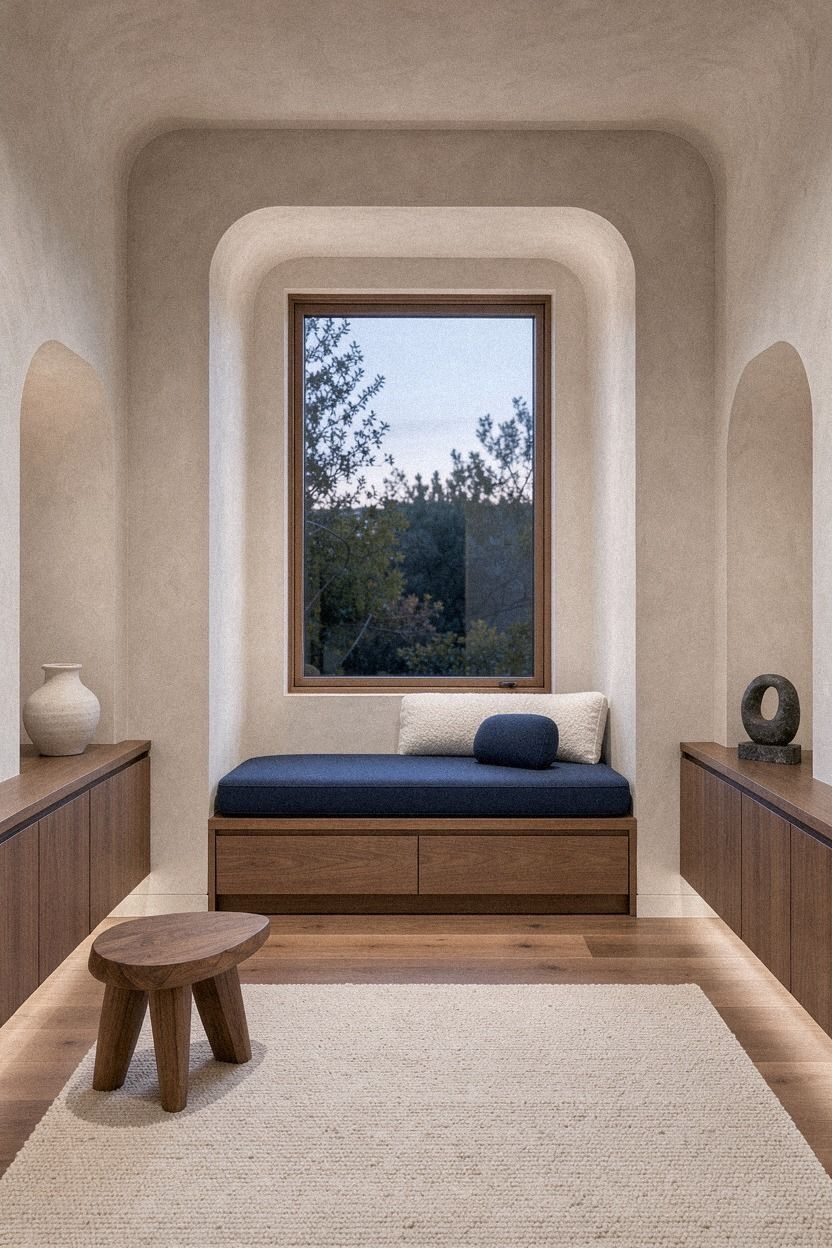
A built-in bench usually wins over a freestanding sofa in a small bay because it follows the exact angles of the window.
10Add the Cushion Lift for Better Posture
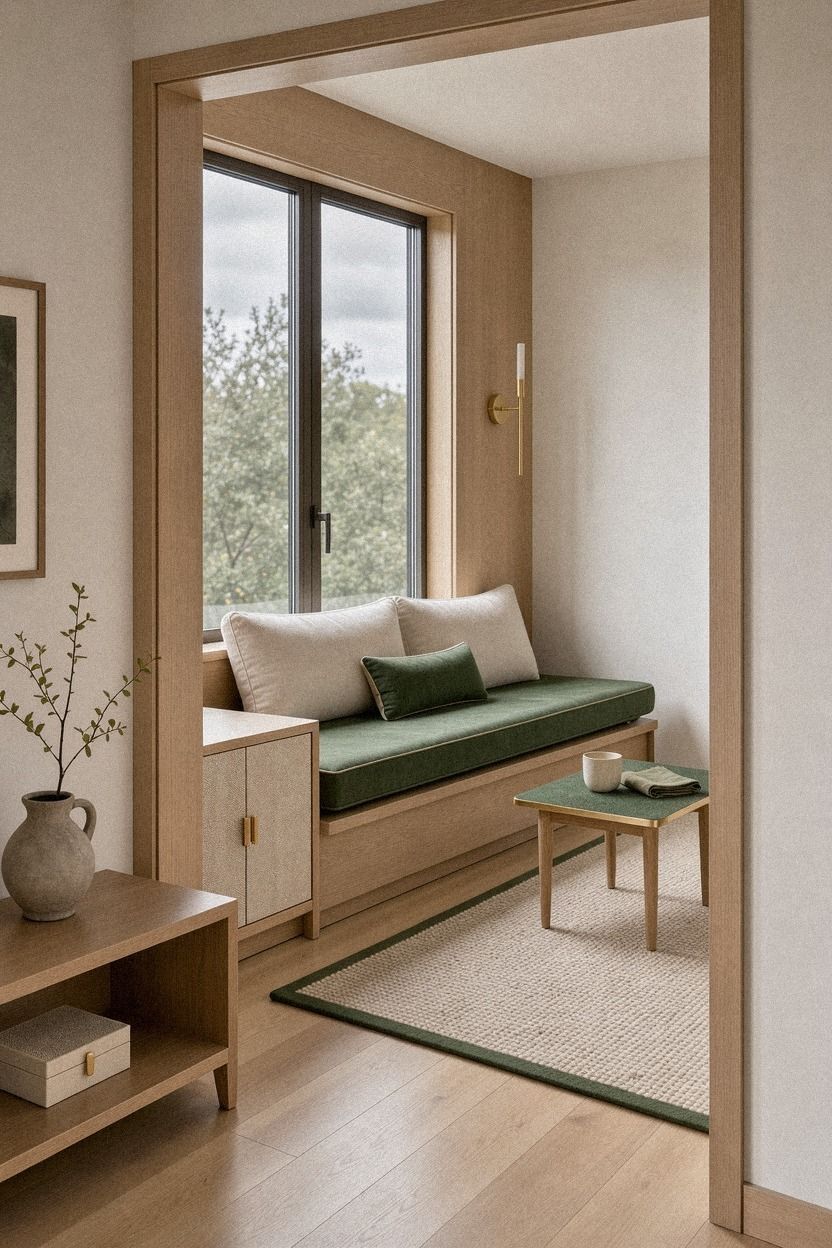
The Cushion Lift is a simple proportion rule: raise the back edge slightly so your cushion supports you instead of sliding toward the window. A gentle wedge beneath the foam can make your bay window seat far more comfortable for long reading sessions.
Choose high-density foam wrapped in emerald velvet, then add a lumbar pillow with shagreen accents. You’ll want the seat firm enough to stand up from easily, especially if the bench doubles as extra seating. Soft doesn’t always mean comfortable.
I made the mistake of using a loose cushion with no grip underneath. It crept forward every time I shifted, and the whole nook felt unfinished. A non-slip mat fixed it in one afternoon.
If your window gets chilly, your best upgrade may be a wool pad beneath the cushion rather than another decorative pillow.
11Build a Drop-Zone Seat Near the Entry
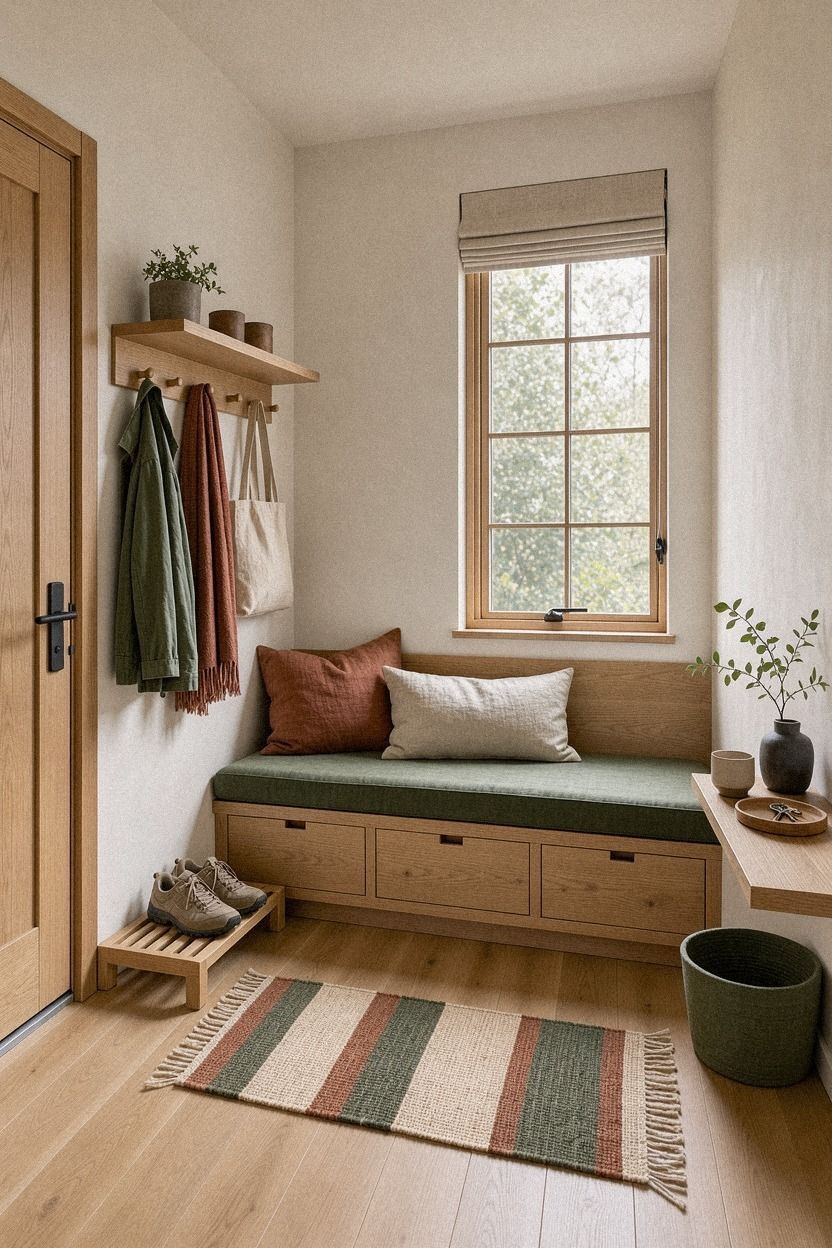
A bay window seat near an entry can work as a reading nook and a quiet drop zone. Add a shallow drawer for keys, a basket for scarves, and a small surface for mail. You’ll keep the function practical without making the window feel like a mudroom.
Use natural oak pulls if your lighting has warm metal, then soften the storage with a washed Belgian linen throw. I’d avoid open cubbies at eye level. They collect visual noise quickly, and your peaceful corner turns into a reminder of every unfinished errand.
Keep the upper part of the bay open. A single framed print or a small plant is enough. Your goal is to make landing easy, not to fill every inch.
Small win!
12The Three-Height Light Stack
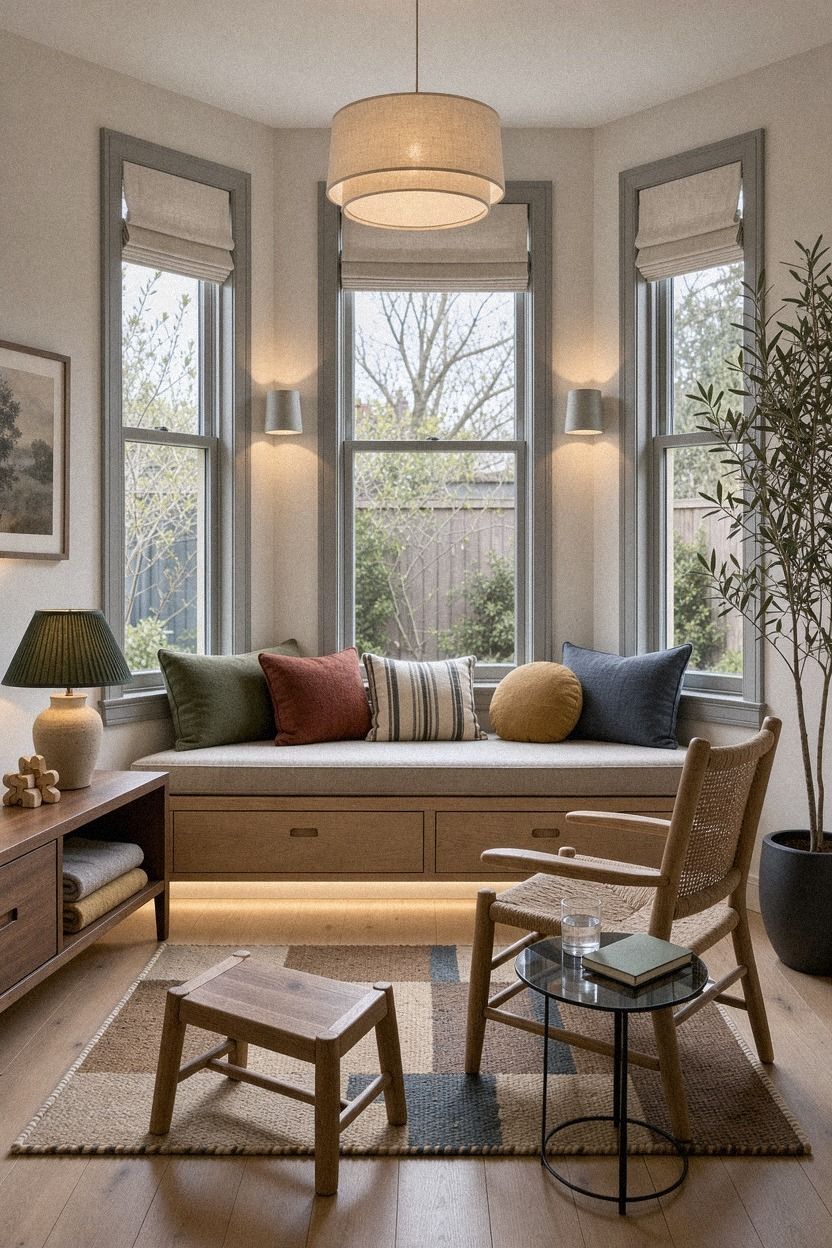
The Three-Height Light Stack uses a ceiling fixture, a seated reading lamp, and a low glow near the floor.
13Layer the Warm-Textile Formula
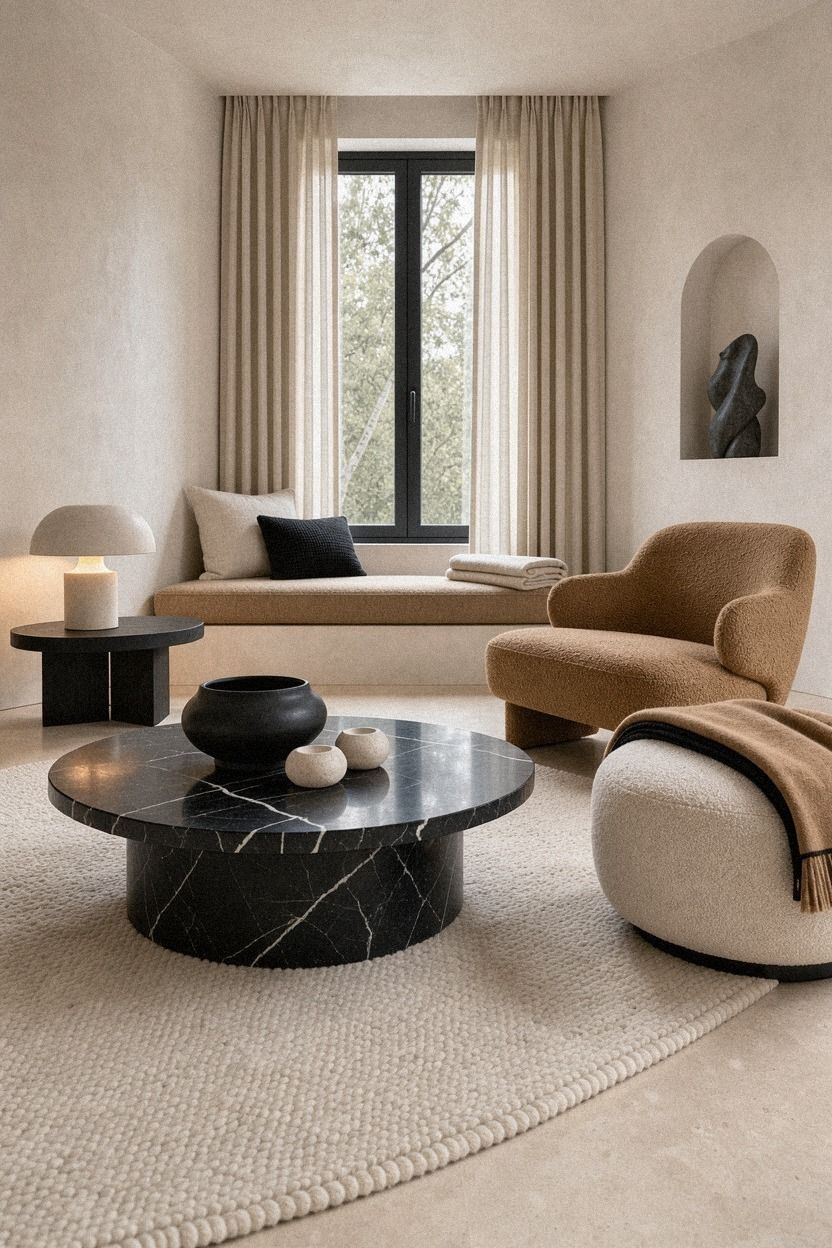
The Warm-Textile Formula uses one nubby layer, one smooth layer, and one textured accent. On a bay window bench, that could mean bouclé, Belgian flax linen, and a merino wool throw beside a Nero Marquina black marble table. You’ll feel the difference before you notice it visually, especially on a cold morning.
Choose related colors rather than identical ones. Warm white, camel, and black create contrast without looking matched. I’d skip shiny polyester cushions because they reflect the window light and make the seat feel less grounded.
Keep the layers useful. A throw should cover your legs, and the lumbar pillow should support your back.
Your bay window seating doesn’t need a mountain of cushions to look welcoming. One firm pillow and one soft blanket may be enough.
14Frame the Seat With a Tall Plant
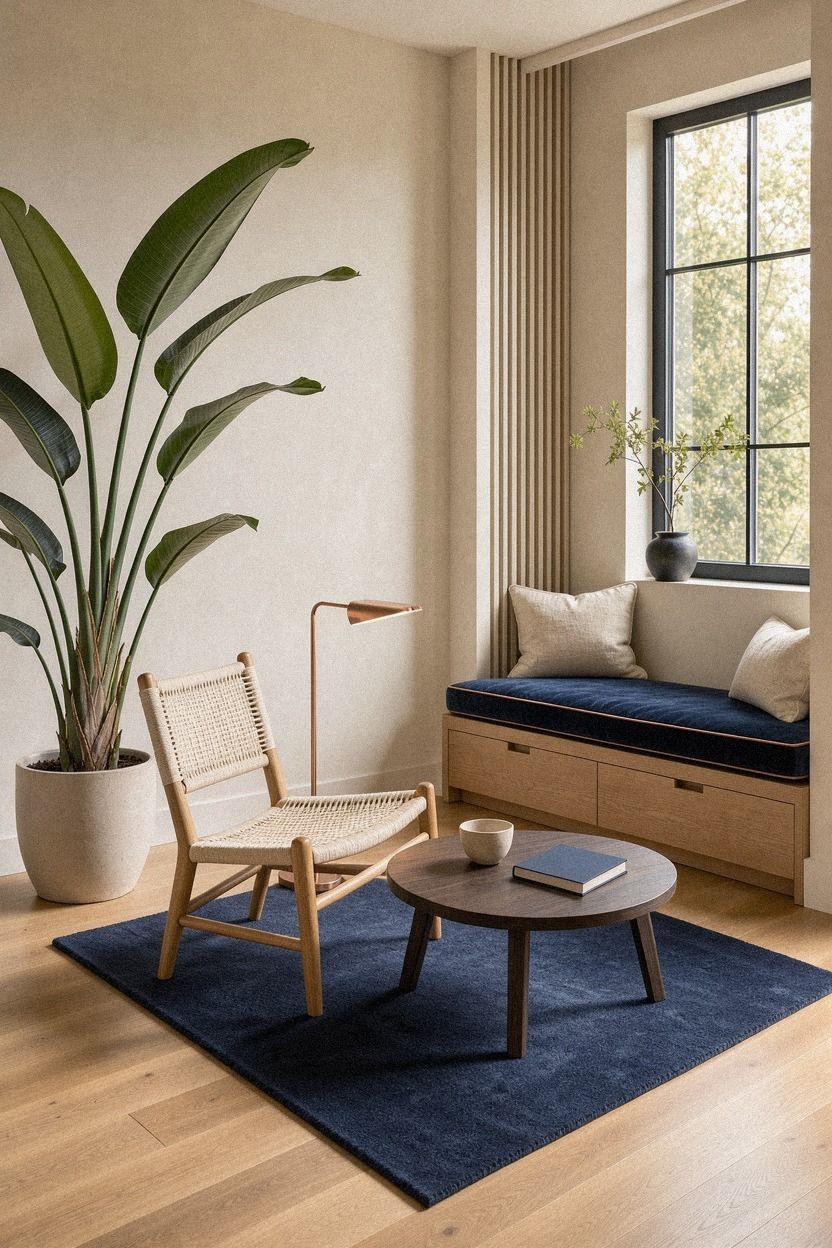
A tall plant can frame your bay window bench and soften the hard geometry of the glass. Choose a rubber plant, olive tree, or another form with a clear trunk so the light still reaches the seat. You’ll get height without adding another piece of furniture.
Set it in a copper planter or a matte ivory ceramic pot, then check how the leaves cast shadows in the afternoon. I’d avoid a sprawling plant that covers the window. It may look lush for a week, but your reading light will disappear behind it.
Give the planter a saucer and enough clearance to remove it easily. Your future self won’t enjoy dragging a heavy pot across the floor for watering. If the bay is narrow, a slim IKEA MÄRKVÄRD stand can raise a smaller plant without taking much room.
15The 57-Inch Art Line
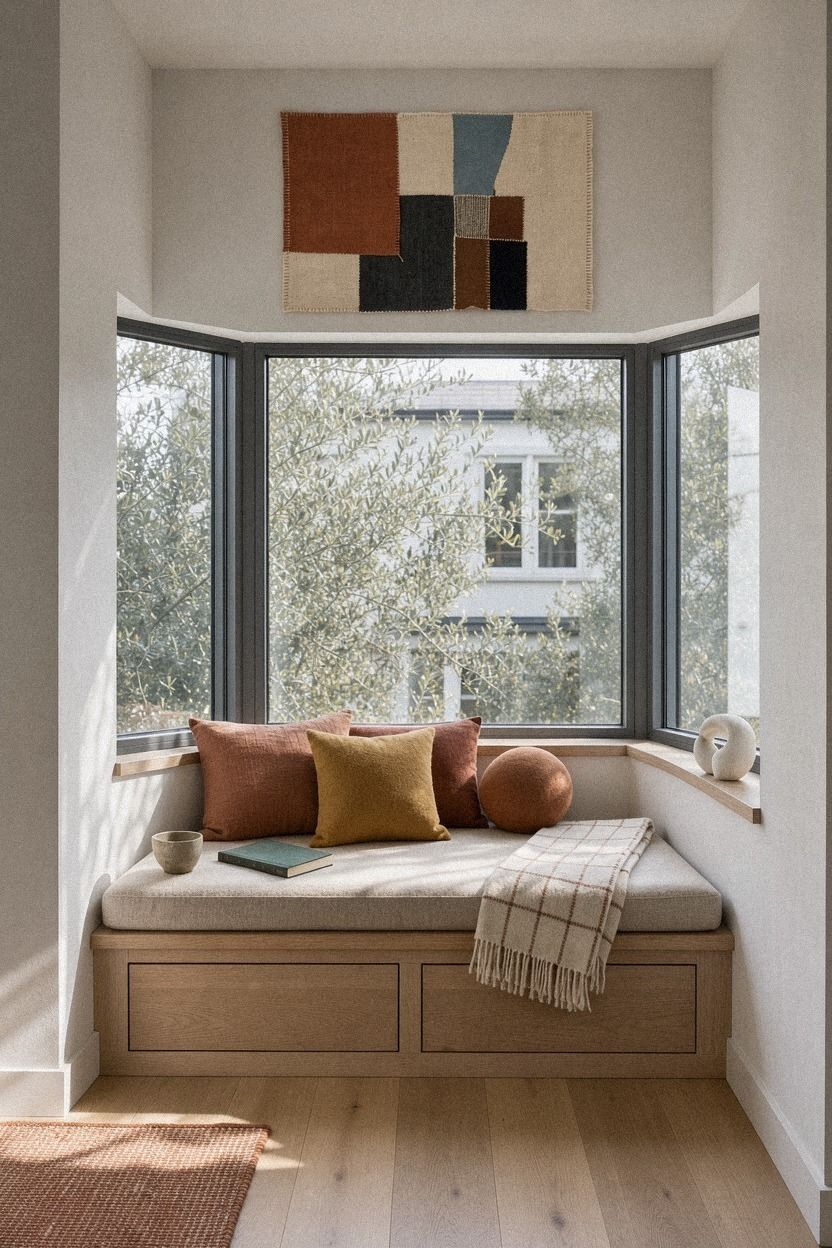
The 57-Inch Art Line keeps artwork at a comfortable viewing height while your bay window seat remains the star.
16Swap a Heavy Curtain for a Layered Shade
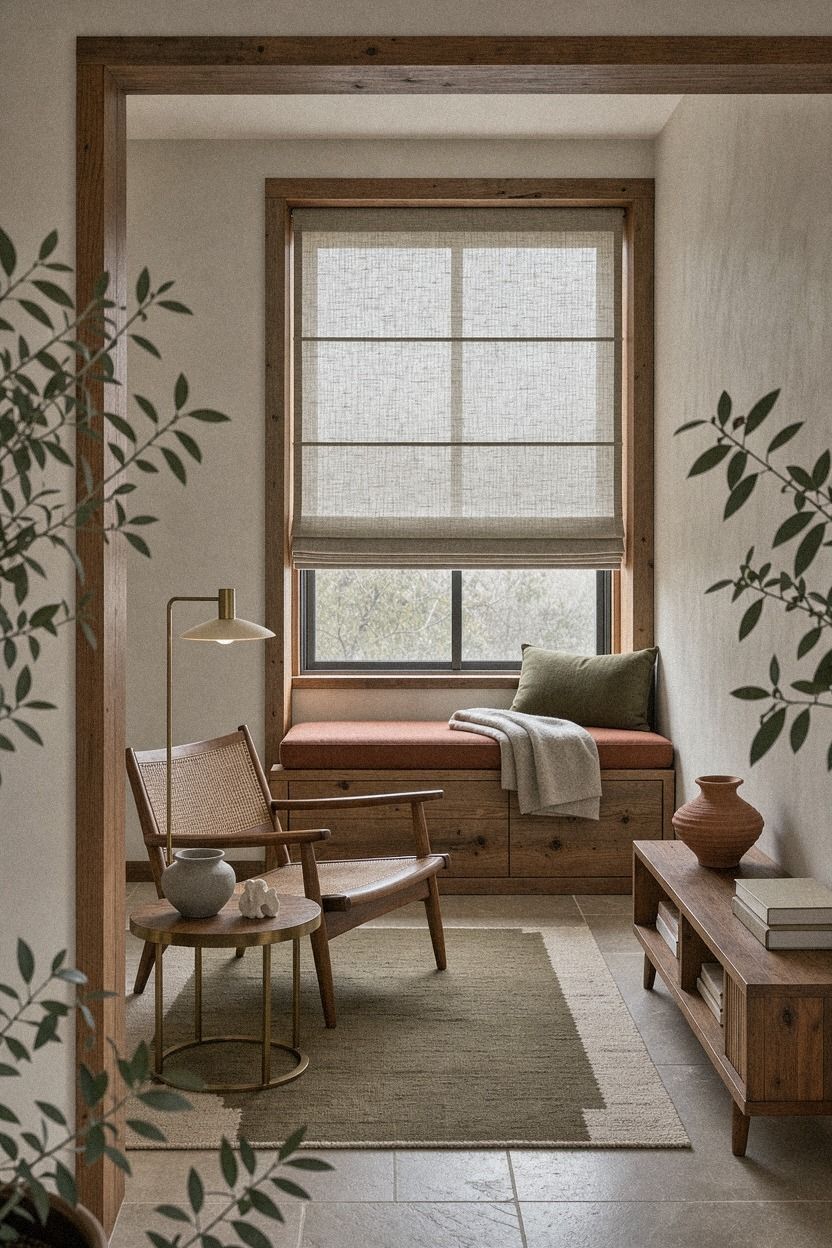
A layered shade gives you privacy and control without hiding your bay window seat behind thick fabric. Pair a woven shade with a soft linen panel, then open both during the day. You’ll keep the architectural view while filtering harsh afternoon glare.
Choose reclaimed weathered teak for texture or a pale linen roller shade for a quieter look. I’d skip heavy blackout drapes unless the room doubles as a bedroom. They can make a small reading nook feel closed off, especially in winter.
Mount the curtain rod 4 to 6 inches above the frame and let the panels reach the floor. Your window will look taller, and the fabric won’t stop at an awkward line beneath the sill.
17Make a Rental-Reversible Bay Window Seat
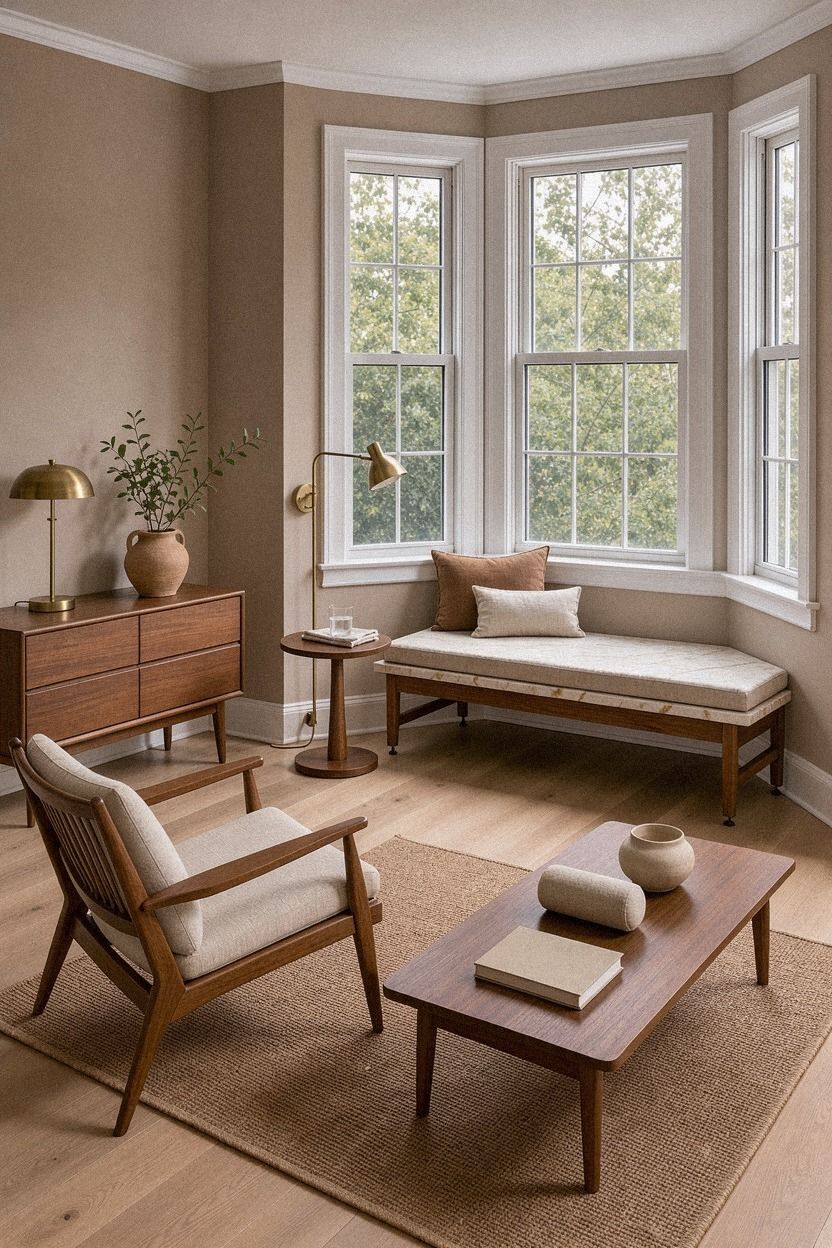
A rental bay window seat can come together without drilling into the wall. Use a freestanding storage unit, a fitted cushion, a tension rod, and removable hooks for art. You’ll still get a warm reading corner, and you can take every piece with you later.
Look for an IKEA KALLAX configuration that fits the bay, then cover the top with a removable Calacatta marble-look board and a tailored cushion. Add a Target Threshold basket beneath for blankets. I’d avoid adhesive shelves for heavy books because they often fail when the wall texture is uneven.
Choose peel-and-stick wallpaper only inside the recess, and test one small patch first. Your landlord may approve removable materials, but the paint underneath still matters.
Measure twice before cutting anything. It’s a boring step, but it prevents a painful mistake!
18Plan the Honest Cost Before You Build
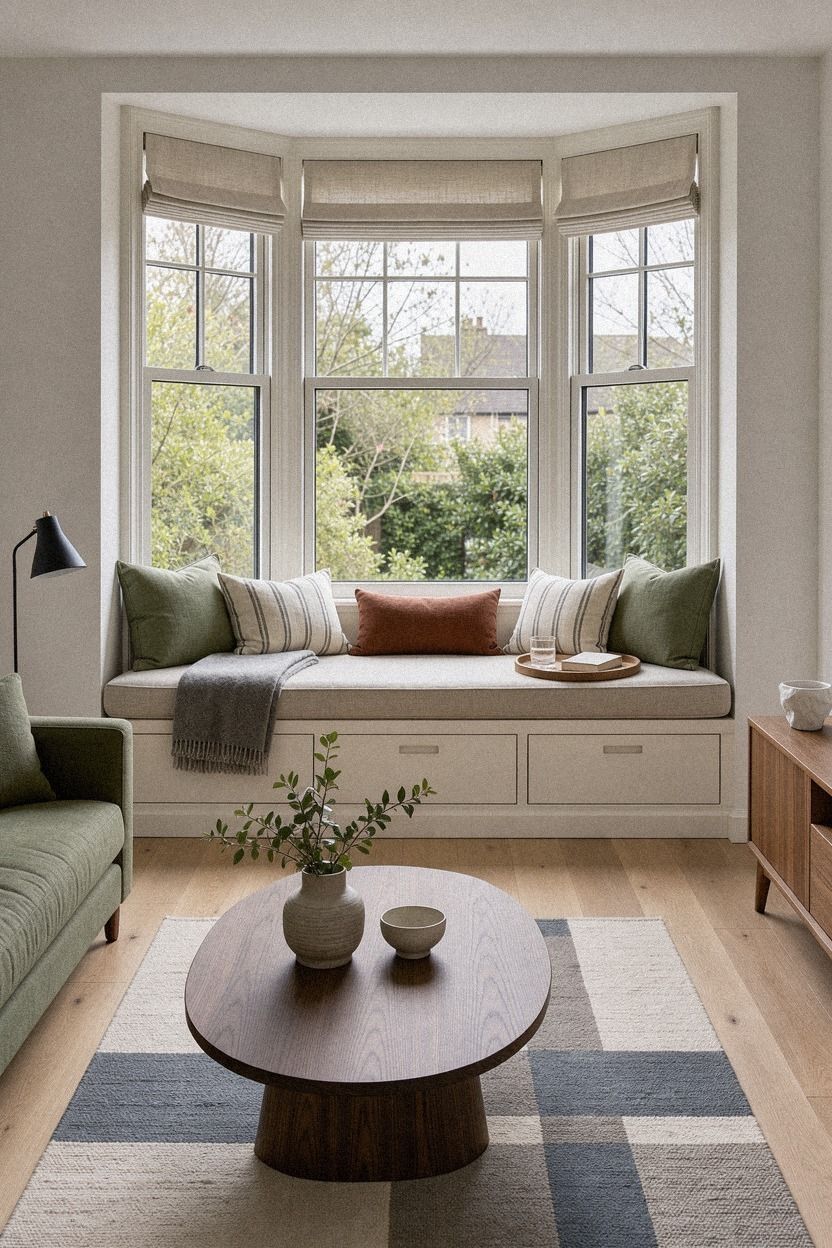
A bay window seat can be a modest textile project or a serious millwork project. Typical US costs vary by scope, so use the table as a starting point rather than a promise. Your paint, cushion, and organization choices may keep the project near the lower tier, while custom cabinetry changes the equation.
For a smaller upgrade, a Wayfair upholstered bench and a cerused white oak tray can create the look without permanent construction. I’d invest first in the seat surface, because you’ll feel poor foam every time you sit down. A high-resilience foam insert is often more valuable than another decorative object.
19Style the Bay Window Seat for Real Life
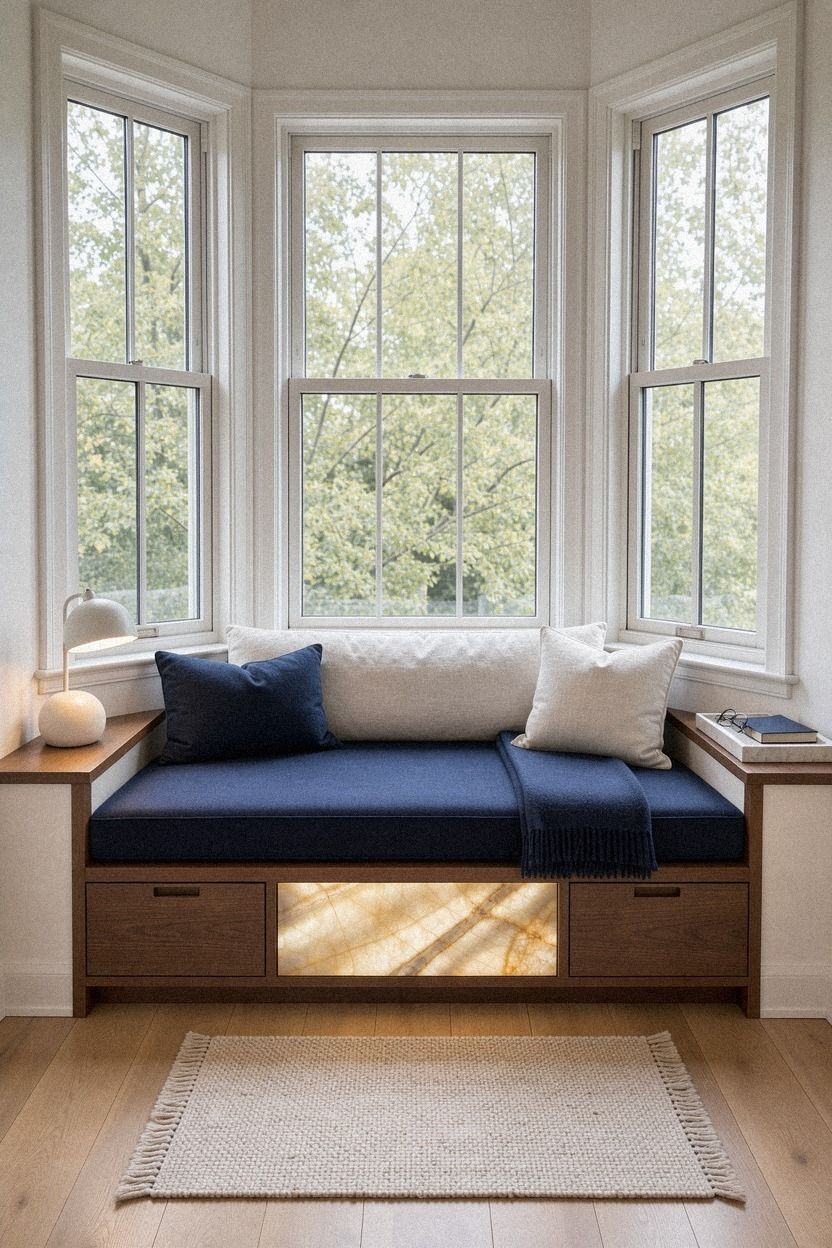
The best bay window seat has room for your actual habits. Keep a book, reading glasses, and a blanket within reach. Add a small tray for tea, but leave enough open cushion that you can sit down without moving six decorative objects first.
Use a walnut stool as a side table, a wool rug that the furniture overlaps, and one warm ceramic vessel. I’d skip fragile styling pieces if children, pets, or late-night snacks are part of your household. Your nook should survive contact with life.
Give yourself one clear surface and one hidden storage zone. That balance keeps the corner serene without making it precious.
And if you’re still unsure, sit in the empty bay for ten minutes before buying anything. What do you reach for? What feels cold?
Your answers will tell you more than a trend board.
Why This Small Build Is Worth the Space
I’ve changed my mind about bay window seats over the years. At first, I treated them like a decorative bonus, something to fill with pillows for photographs. Then I watched people use the seat when the room was quiet.
They read there. They folded laundry there.
They sat beside the glass during rain because the light made the whole day feel less hurried.
The strongest version isn’t the most expensive one. Custom millwork can be wonderful, but it won’t rescue a shallow seat, a hard cushion, or a lamp that shines directly into your eyes. I’d rather see a simple painted bench with good proportions than an elaborate cabinet nobody wants to sit on.
The useful details do the emotional work.
Your bay window already gives you architecture, daylight, and a natural view. The build should support those gifts instead of competing with them.
Choose one material with character, one fabric that feels good against your hand, and one light source that makes evening reading easy. That’s enough to create an intimate, welcoming corner, and it’s why this project can feel bigger than its footprint.
A Few Things Worth Answering
What is the best bay window seat idea for a small bay window?
I’d choose a floating bench with lift-up storage. It keeps the floor visible and gives you a proper perch without crowding the recess. Add an IKEA KALLAX base only when you need more storage, because a shallow bench usually feels less cramped and makes the window remain the focus.
Where can I buy bay window seat pieces on a budget?
I’d start with IKEA, Wayfair, and Target for benches, cushions, lamps, and baskets. Facebook Marketplace and thrift stores can provide solid wood tables and frames. Choose one linen textile and one useful lamp first, then add decorative pieces only if your budget remains.
How much does a bay window seat makeover cost?
I’d expect a simple refresh to fit within the $200-$800 budget tier when you use paint, textiles, art, and organization. Mid-range projects with lighting and accent furniture often reach $1,500-$5,000. Custom millwork belongs in the $8,000-$25,000+ range, depending on the work involved.
Can I create a bay window seat on a budget?
Yes. I’d start with paint, a fitted cushion, and storage you already own. Benjamin Moore White Dove, a secondhand bench, and a 600gsm Turkish cotton throw can change the corner without permanent construction.
Focus on comfort before decorative extras, because you’ll notice the seat every day.
Is a bay window seat worth it in a small space?
I think it is, because it uses the shallow area that ordinary furniture often leaves empty. Keep the bench depth modest, use storage below, and choose a wall-mounted lamp. Your room can gain seating without losing the walking path or the view.
Is a bay window seat a good idea for a rental?
Yes, when you use reversible pieces. I’d try a freestanding bench, a tension rod, removable hooks, and peel-and-stick material inside the recess. A Target Threshold basket can provide flexible storage, and you can take the entire setup with you when you move.
Where I’d Start First
If I had to pick one, I’d start with the floating built-in bench. Its open underside keeps a small nook from feeling heavy, while the cushion turns unused window space into daily seating. Measure the bay before buying a single accessory, then build the corner around the way you actually want to sit.