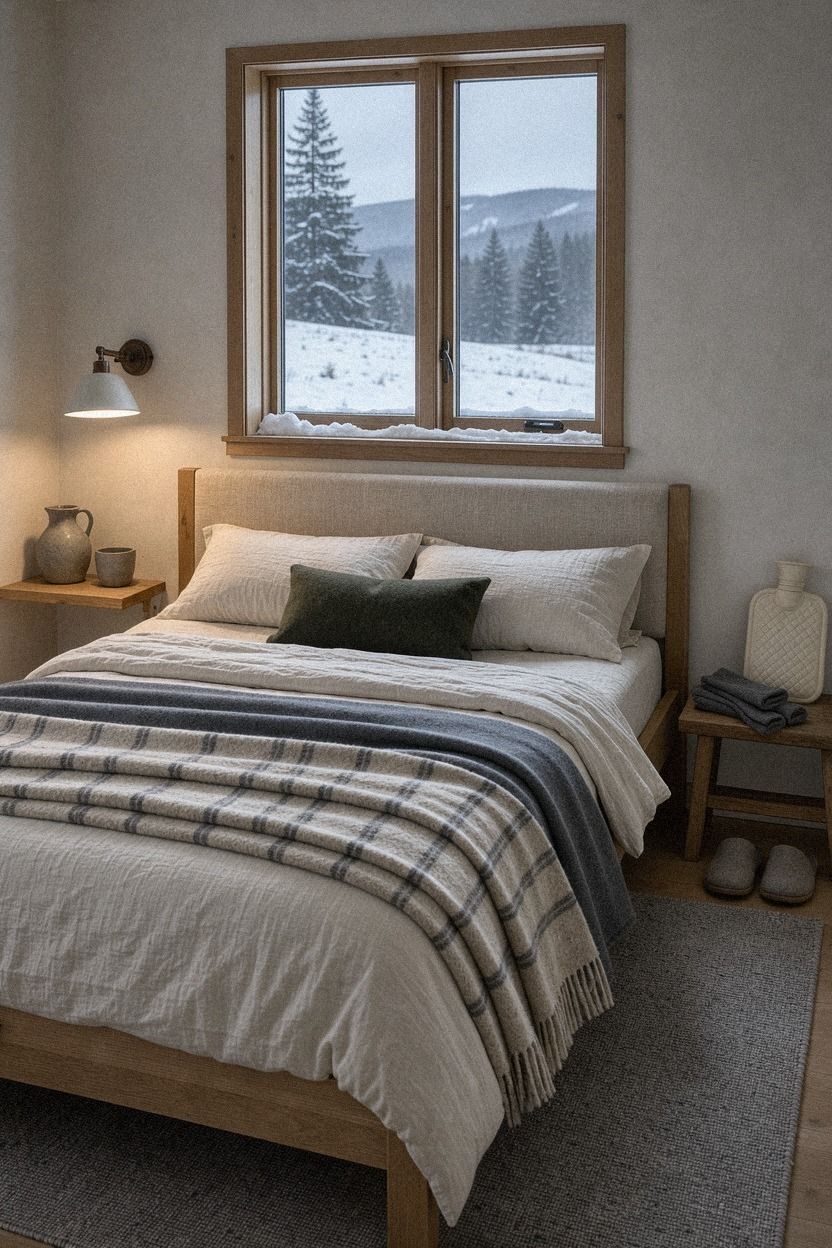
15 Cosy Winter Bed Layering Steps That Look Expensive on an Amazon Budget
26 november 2026The cosy winter bed layering formula on an Amazon budget can look expensive with the right order, texture, and scale. I learned that after buying too many blankets that slid to the floor by morning. Your bed needs a calm base, varied surfaces, and one deliberate color story. That’s it!
- Anchor winter bedding layers with a tailored base
- Fold a weighted coverlet at the foot
- Build the Two-Texture Rule with neutral bedding ideas
- Stack pillows by height, not by habit
- Swap matching sets for the Three-Height Light Stack
- Drape one wool blanket with deliberate asymmetry
- Frame the bed with a restrained color story
- Layer warm woods instead of cold metal
- Paint the wall behind the pillows
- Mix Amazon bedding ideas with one vintage piece
- Hang curtains to stretch the winter bedroom
- Create the Soft Border with a correctly sized rug
- Use the Three-Layer Footboard Formula
- Why does contrast beat a perfectly matched bed?
- Finish with the One-Object Rule
1Anchor winter bedding layers with a tailored base
Start with a fitted sheet in 600gsm Turkish cotton or smooth cotton percale, then pull the corners tight before adding anything decorative. Your first layer should feel crisp against your skin, because no soft throw can rescue bedding that bunches beneath you.
I prefer Farrow & Ball Pigeon No.25 with plum, quiet grey, and rose-gold accents when the bed has warmer textiles. An oversized-chip terrazzo bedside surface can add a little pattern without competing with the bedding.
Keep your base quiet if you’re building layered bedding ideas for a cosy bedroom. A plain white sheet lets your muted pillowcases carry the color without making the bed look busy. You’ll get more mileage from one good base than three patterned pieces fighting for attention.
And don’t buy a complete matching set just because it’s easy. A flat sheet, two pillowcases, and one textured coverlet will give your eye more variation. For another winter perspective, read this guide to cosy layering.
2Fold a weighted coverlet at the foot
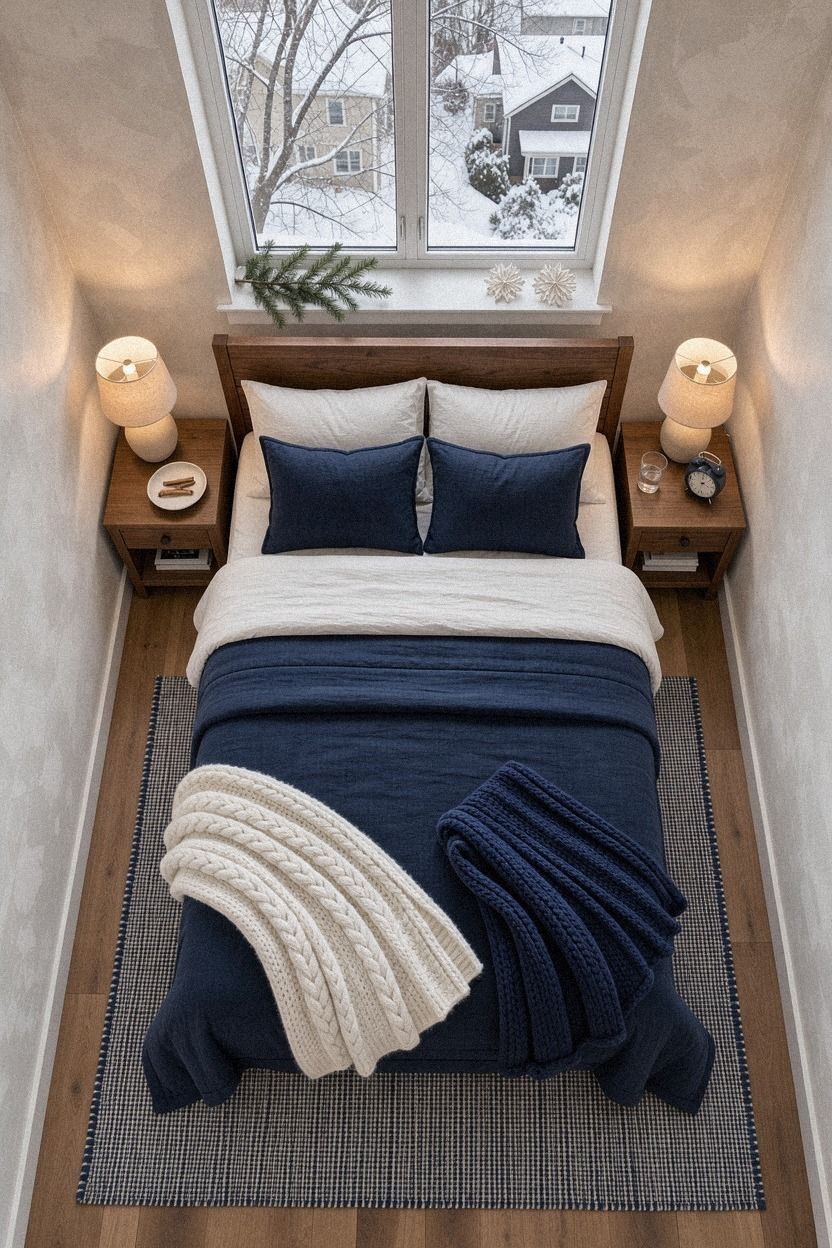
Fold a navy-and-white cotton coverlet across the lower third of your bed, leaving the top sheet visible above it. Walnut furniture and a wall finished in hand-applied Venetian plaster will keep the room grounded without adding another busy textile.
3Build the Two-Texture Rule with neutral bedding ideas
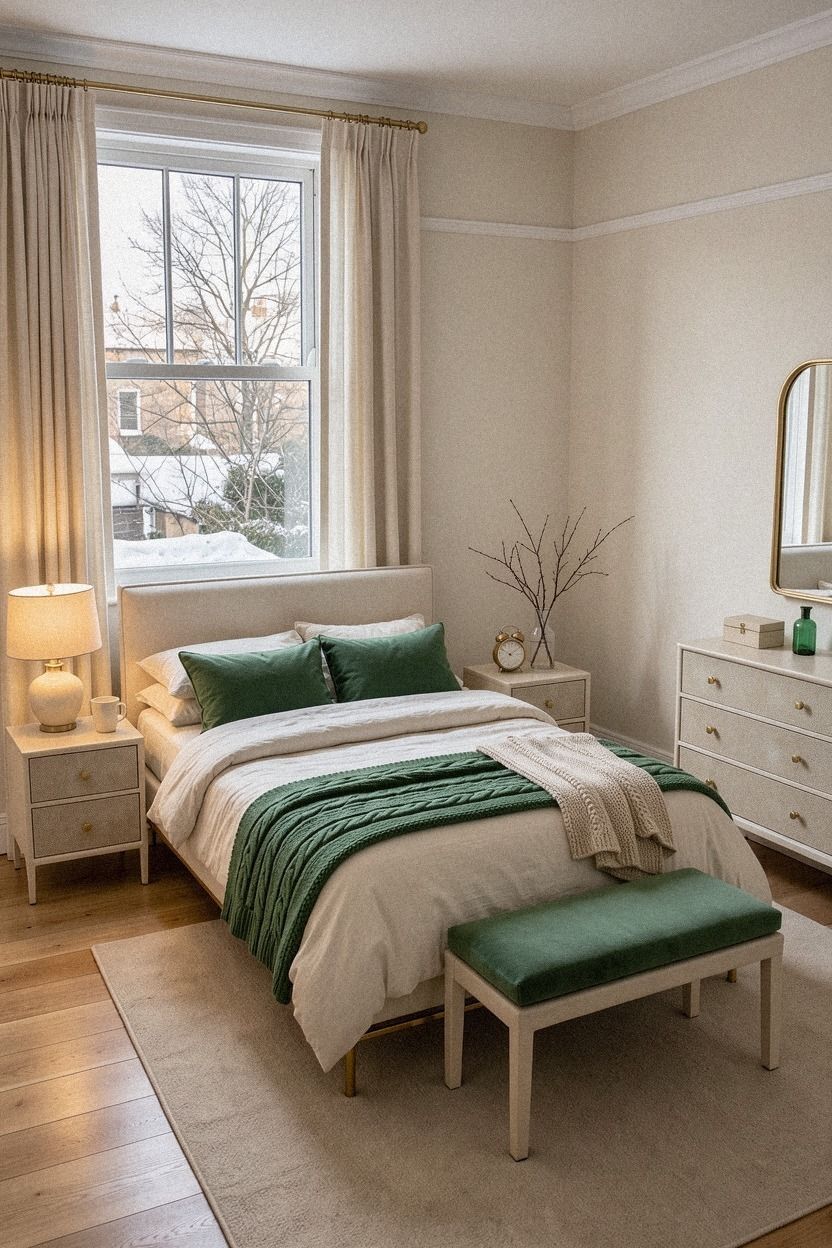
The Two-Texture Rule is simple: combine one nubby surface with one clean surface before adding a third textile. Try Belgian flax linen against a smooth cotton sheet, then bring in wool only after the first two layers feel balanced. You’ll avoid the flat showroom look that comes from using one fabric everywhere.
For neutral bedding ideas, I’d choose linen in oatmeal and an emerald shagreen lumbar pillow. Shagreen adds a quiet tactile pattern, while linen keeps the bed from looking too polished. I’d skip shiny polyester satin here.
It catches light sharply and can make an inexpensive arrangement feel more costume-like.
But texture shouldn’t mean chaos. Give your hand three different sensations, then repeat one of them in the curtains or rug. If you’re unsure whether your palette is too soft, compare it with this winter layering trend report, then edit one layer out.
4Stack pillows by height, not by habit
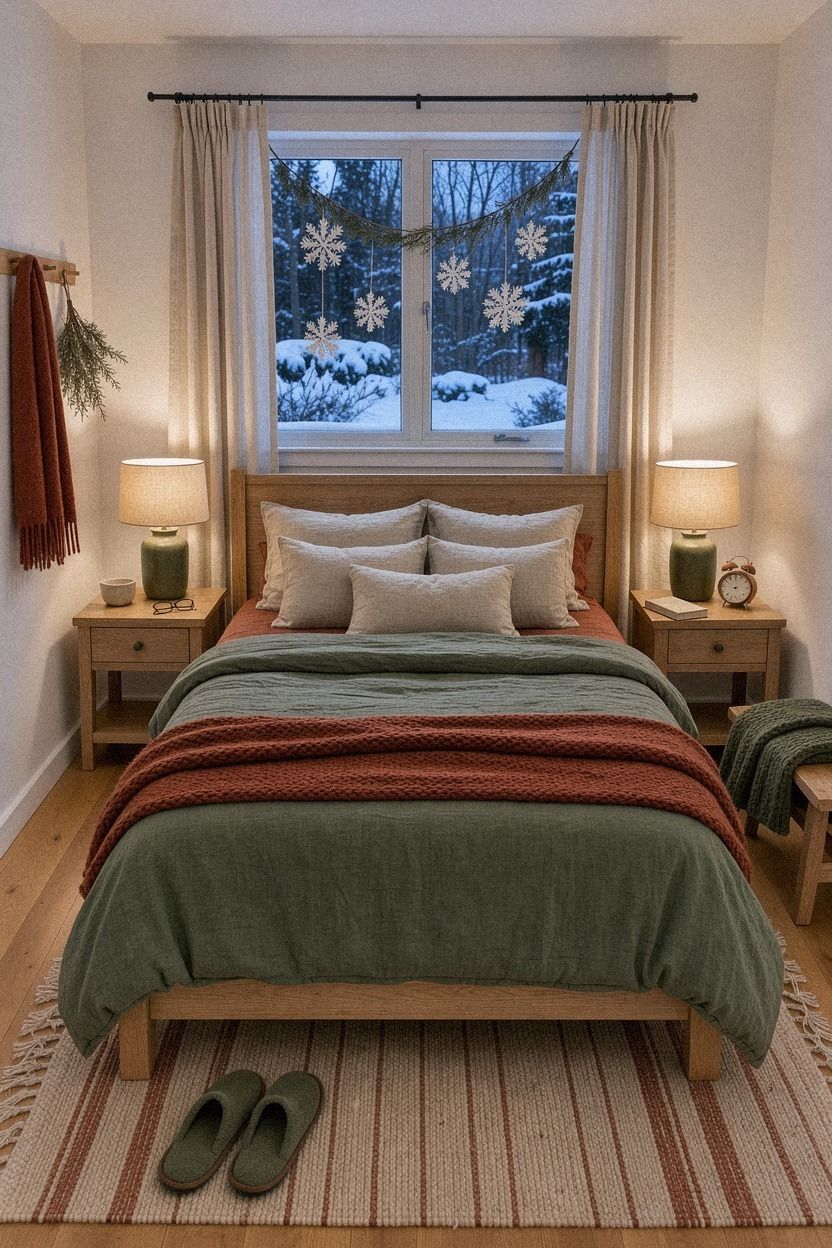
Place sleeping pillows at the back, standard shams in front, and one smaller accent pillow in the center.
5Swap matching sets for the Three-Height Light Stack
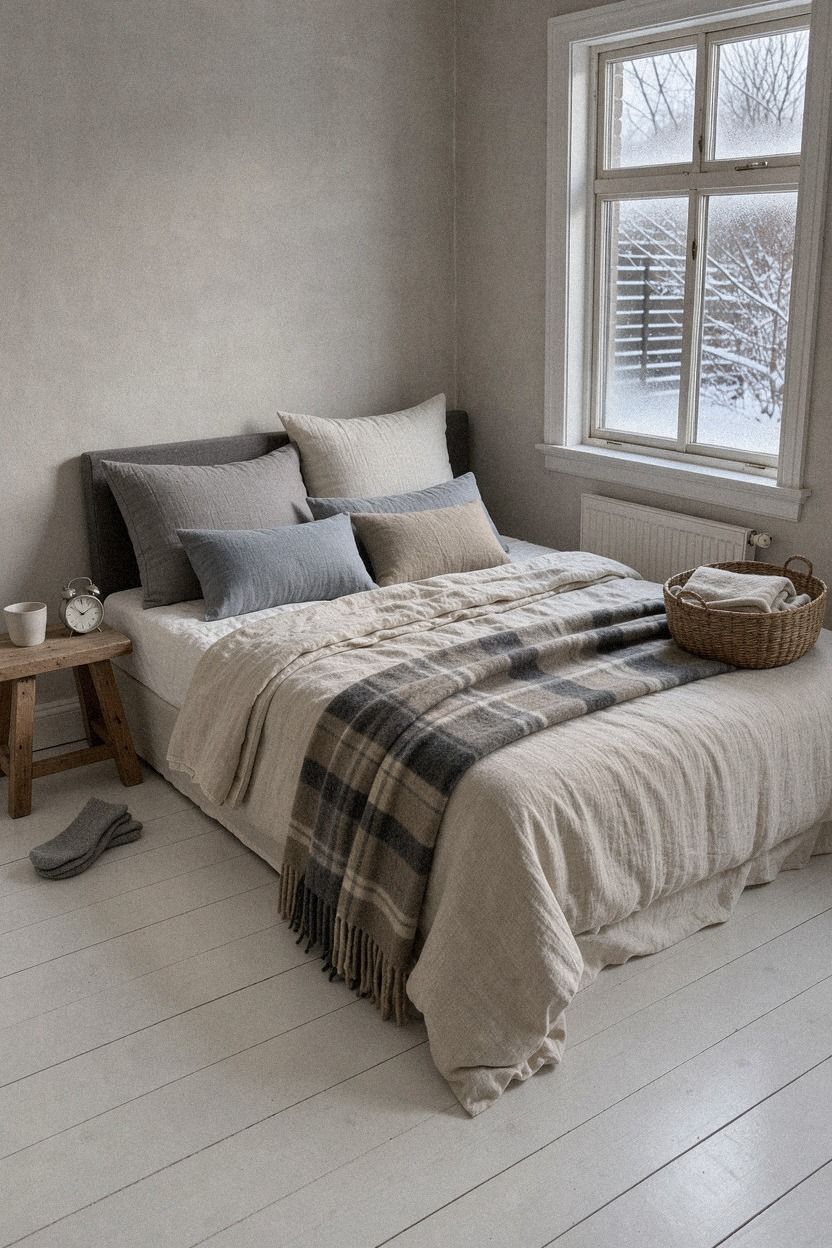
The Three-Height Light Stack uses a ceiling fixture, a bedside lamp, and a low ambient glow. Your bed layers will look richer when the light hits the raised fold, the pillow texture, and the floor at different levels.
This isn’t decoration alone. It changes how winter fabrics read after sunset.
Use a lamp with a dusty rose linen drum shade beside the bed and keep the bulb warm. I’d skip a bright exposed globe, because it throws glare across the pillows and makes soft textiles look gray. You’ll get a calmer room from three sources: overhead, task, and ambient.
A charcoal organic bouclé bench can catch the lowest pool of light at the foot of the bed. And if you’re choosing lamps, this fragrance layering article has a useful parallel: build in stages, then stop before every layer competes.
6Drape one wool blanket with deliberate asymmetry
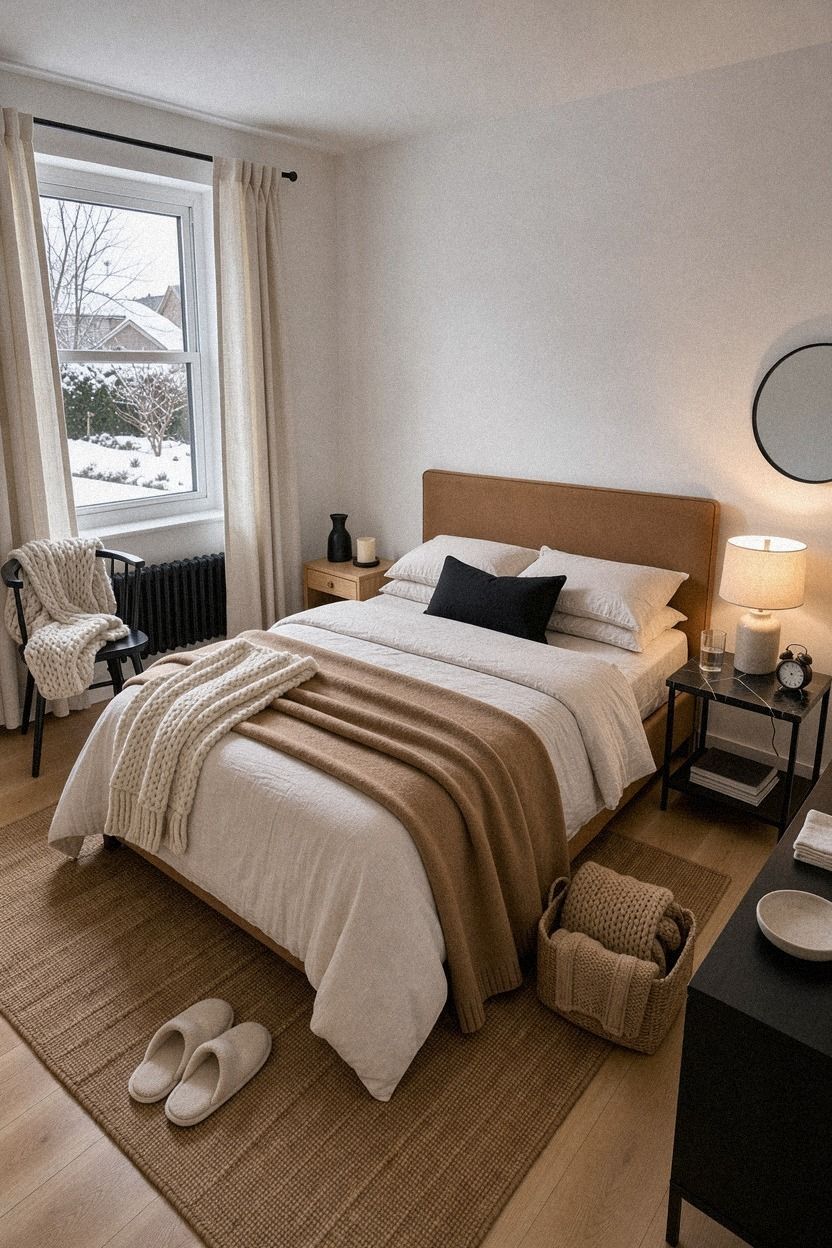
Lay a camel merino wool throw across one corner rather than centering it perfectly. The uneven edge makes the bed feel lived-in, while the heavier fiber gives your winter bedding a visual anchor. You’ll want the blanket to touch the coverlet, not disappear underneath it.
Fold the throw once if it’s thick, or twice if it’s lightweight. I’d avoid a perfectly rectangular display because it looks staged the second you sit down. A small spill of wool at the side creates movement and makes your bed feel ready for a cold evening.
But asymmetry still needs a boundary. Keep the throw within the mattress width and let only a short section hang toward the floor.
Your room will stay tidy, and the fabric won’t become something you trip over when you’re half awake. A nearby Nero Marquina black marble table can supply the darker accent without adding another textile.
7Frame the bed with a restrained color story
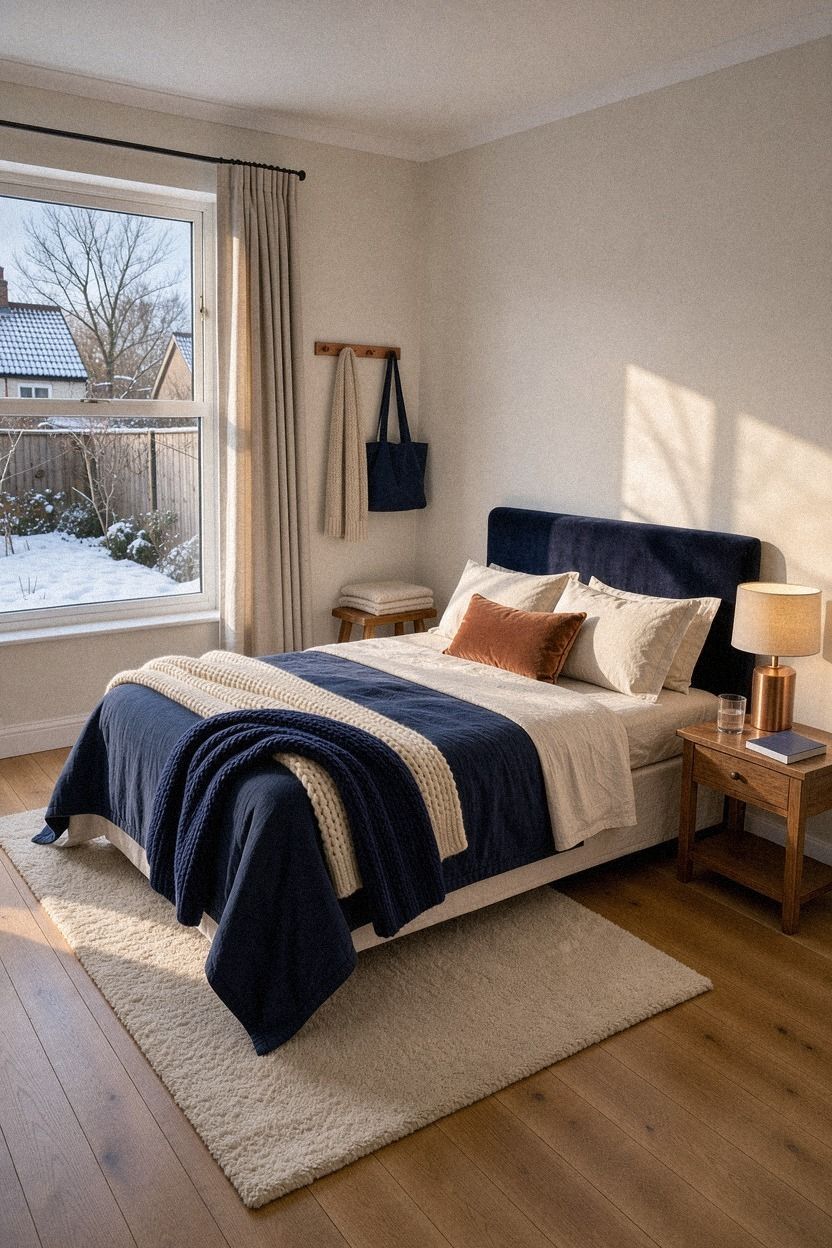
Choose midnight blue, ivory, and one copper accent. The dark blue gives the bed depth, while ivory keeps the arrangement light. A small copper detail can warm the palette without turning it metallic.
I’d choose deep-pile mohair velvet for an upholstered headboard or bench if your textiles lean warm. Its dense surface gives the eye a place to rest against wool and linen. Black metal can work, but too much of it makes a winter bedroom feel sharper than it needs to be.
If you’re tempted by five colors, remove two. You’ll get a more sophisticated result from three tones with different textures than from a rainbow of thin fabrics. For a calming bedtime routine around the room, see this winter routine shift.
8Layer warm woods instead of cold metal
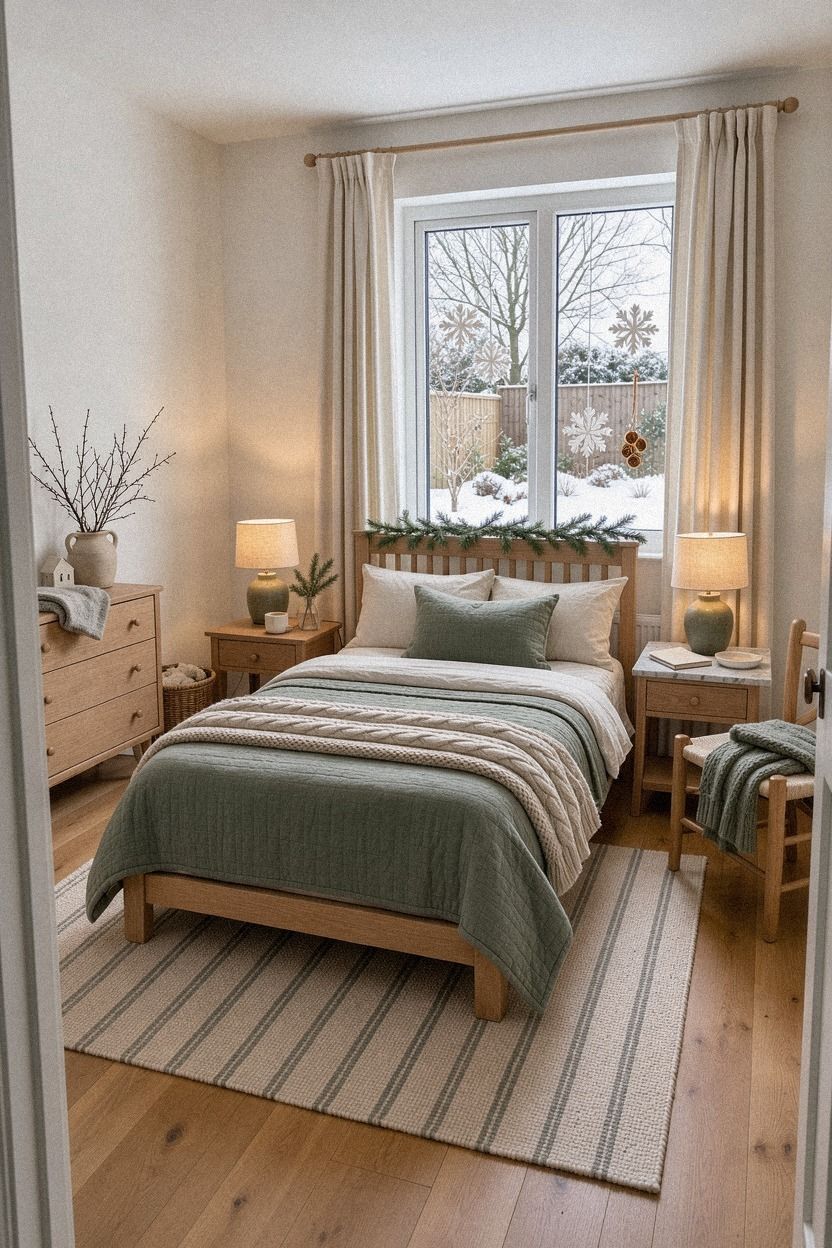
Add a small wood tray, stool, or bedside table to warm the bed visually. Natural wood works with warm cream bedding and sage accents, while a small Carrara marble surface can add a pale counterpoint. Your winter bed doesn’t need a new headboard if the pieces around it supply enough grounded color.
I’d skip a full set of glossy matching furniture. It reflects light in hard patches and makes inexpensive bedding look flatter. A West Elm Mid-Century nightstand or a second-hand wood stool can bring in the uneven grain that makes a room feel personal.
And remember scale. Your table should leave enough room for a lamp, water, and the book you’re reading. A tiny surface surrounded by oversized pillows will feel accidental, while one substantial wood piece can make the whole corner seem more settled.
9Paint the wall behind the pillows
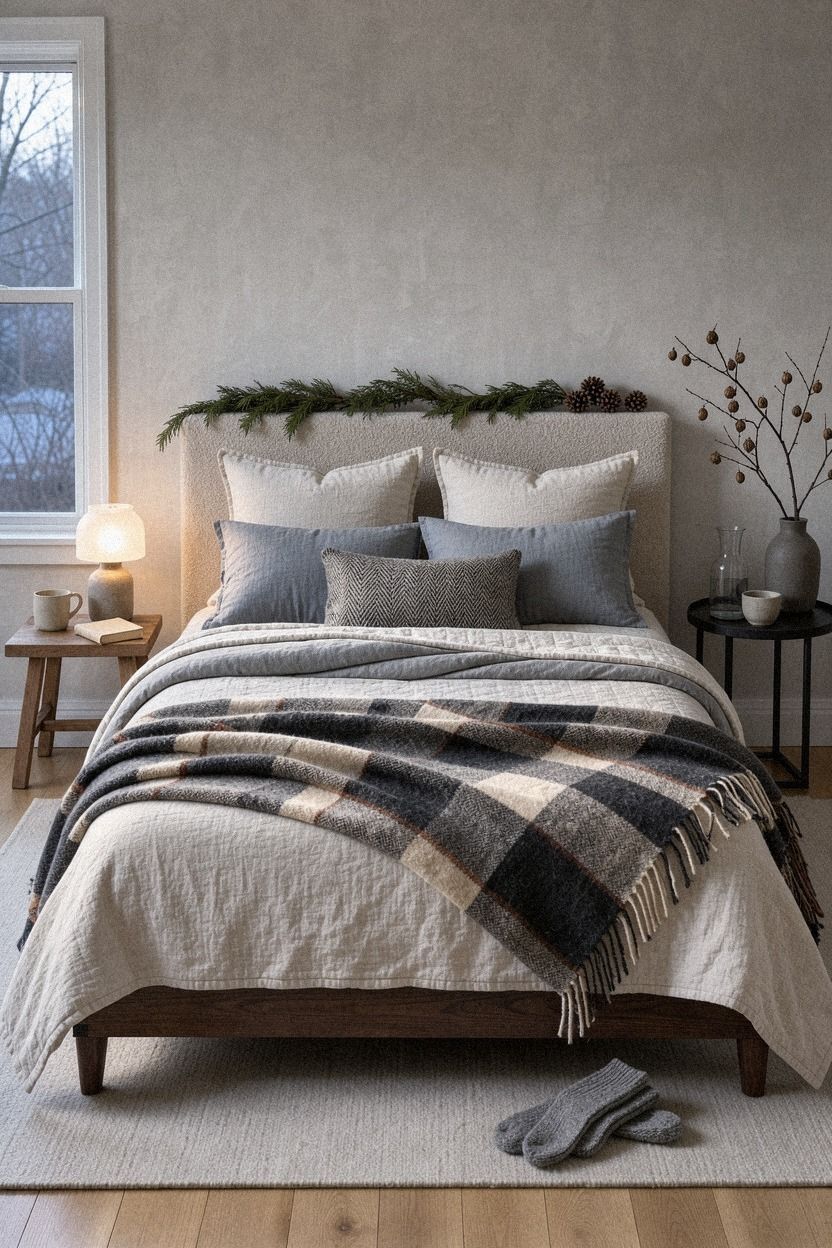
A painted wall gives your layers a backdrop, so you don’t have to keep buying more fabric. A muted terracotta wall with stone and olive accents makes ivory bedding feel warmer. If you want deeper contrast, Benjamin Moore White Dove OC-17 on the trim will keep the room from becoming muddy.
I’ve painted a wall too cool before, and every cream textile turned pink beside it. Test a sample near the bed at morning, afternoon, and evening. Your eyes will catch the shift before you commit to a full room.
If you’re renting, use removable art or a fabric wall hanging instead. A small panel of reclaimed weathered teak behind the pillows can create the same layered effect without a paintbrush. You’ll still get a warm focal point, and your deposit stays safer.
10Mix Amazon bedding ideas with one vintage piece
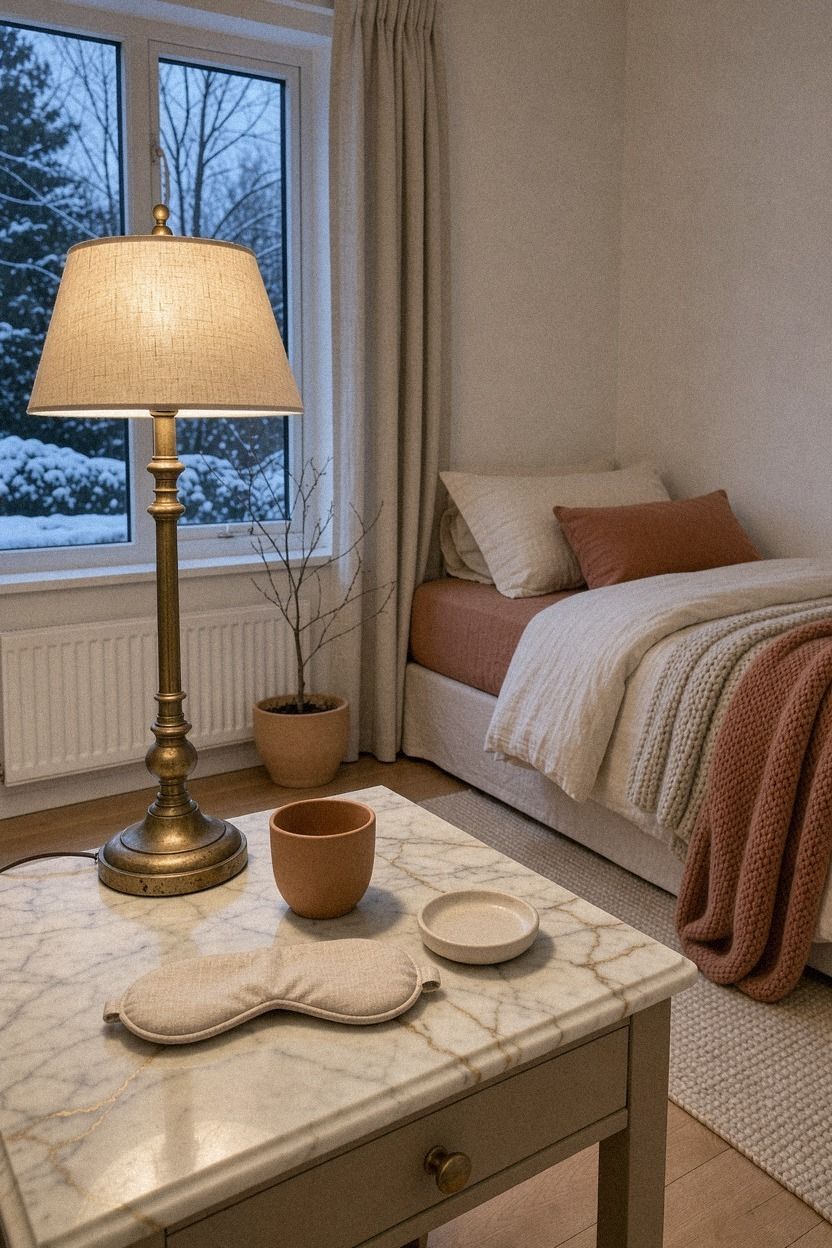
Amazon bedding ideas can look more individual when one item comes from somewhere else. Add a vintage quilt, second-hand linen sham, or old wooden stool beside newer textiles. Your bed will feel less like a delivery arrived all at once, which is exactly the impression you want.
Choose one hand-quilted cotton piece in clay and linen tones, then keep the new layers plain around it. An aged-brass frame or a small Calacatta marble surface can add polish without making the arrangement feel new.
I’d avoid combining several small prints because they blur together from across the room. One aged textile has more authority than five competing patterns.
You can search a thrift shop, Facebook Marketplace, or a local resale page for that one irregular piece. And if you’re comparing shopping habits, this article about a $40 serum formula is a reminder to compare materials and construction, not just the headline price.
11Hang curtains to stretch the winter bedroom
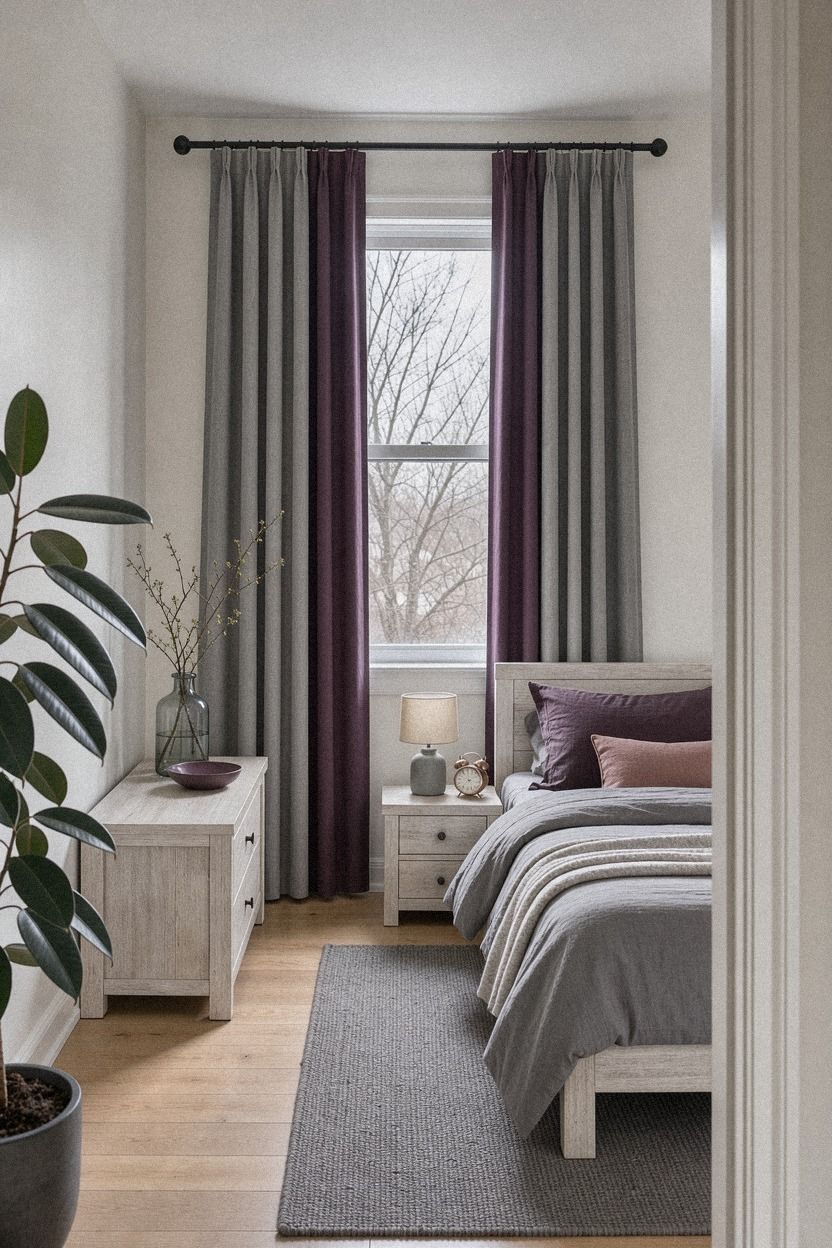
Hang curtain rods 4-6 in (10-15 cm) above the window frame and let the fabric reach the floor. That vertical line makes your bed area feel taller, while plum-grey Belgian flax linen curtains soften the hard edge of the glass. Small rose-gold hardware can warm the palette without overwhelming it.
I’d choose a muted plum or soft grey rather than a strong pattern. A 600gsm cotton curtain can look substantial, but heavy fabric may overwhelm a small room.
If your walls are dark, pale curtains keep the bed from becoming one dense block. A cerused white oak nightstand can add warmth beside them.
But don’t stop the curtain at the sill. Short panels cut the room visually and make the furniture look crowded. You’ll get a more finished result when the fabric brushes the floor, even if the window itself is modest.
12Create the Soft Border with a correctly sized rug
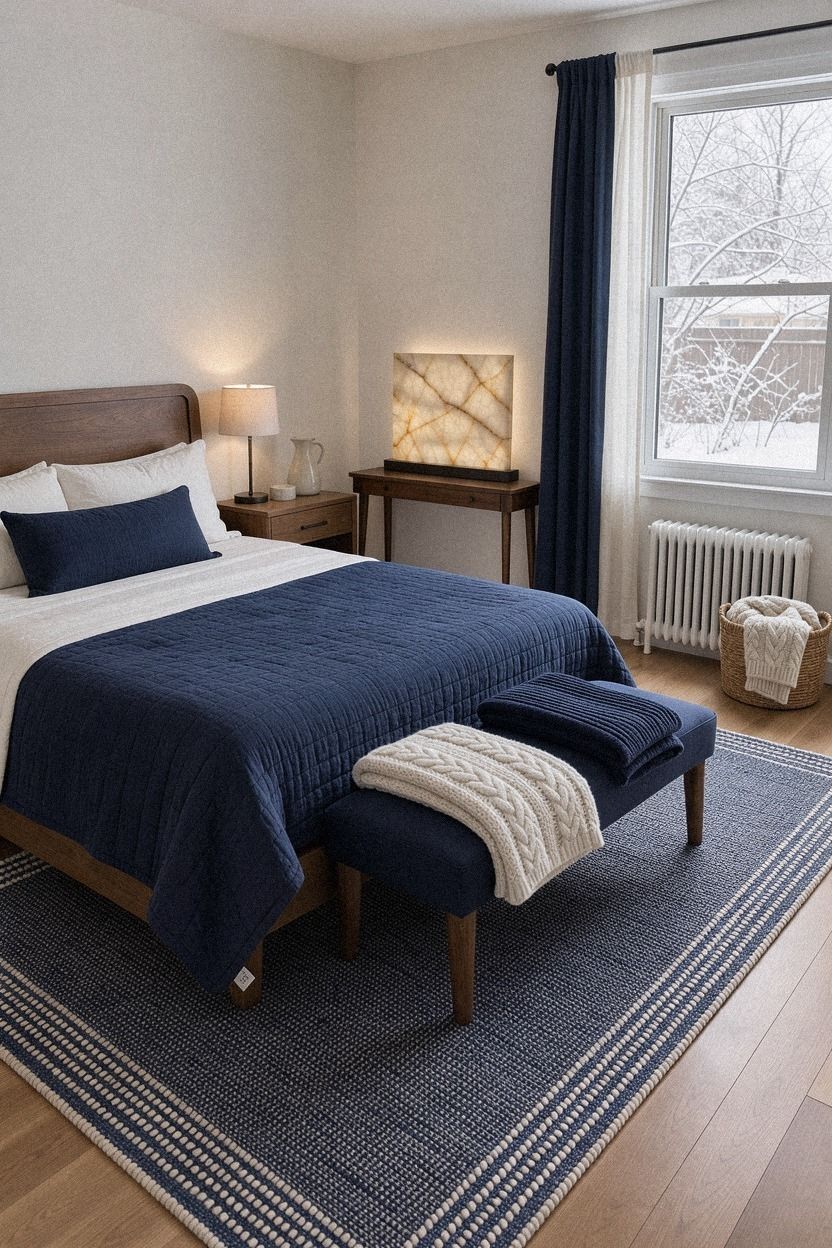
A rug should be large enough that the furniture overlaps it, not a small island floating beneath the bed. The Soft Border gives your feet a warm landing and visually joins the nightstands, bed, and bench. You’ll notice the comfort first in the morning.
For a budget-friendly version, choose a navy-and-white flatweave wool rug with a muted pattern and place it so the bed covers the center. I’d skip a tiny runner on one side because it makes the arrangement feel lopsided.
One broad surface has more impact than two narrow strips. A walnut accent or backlit translucent onyx lamp can repeat the palette nearby.
If you’re shopping by cost, a wool rug typically falls around $400-$1,500 in the supplied US range. That’s an investment, so you can start with a smaller room rug and build around it. See this glacial winter color story for a reminder that cool tones can still feel vivid.
13Use the Three-Layer Footboard Formula
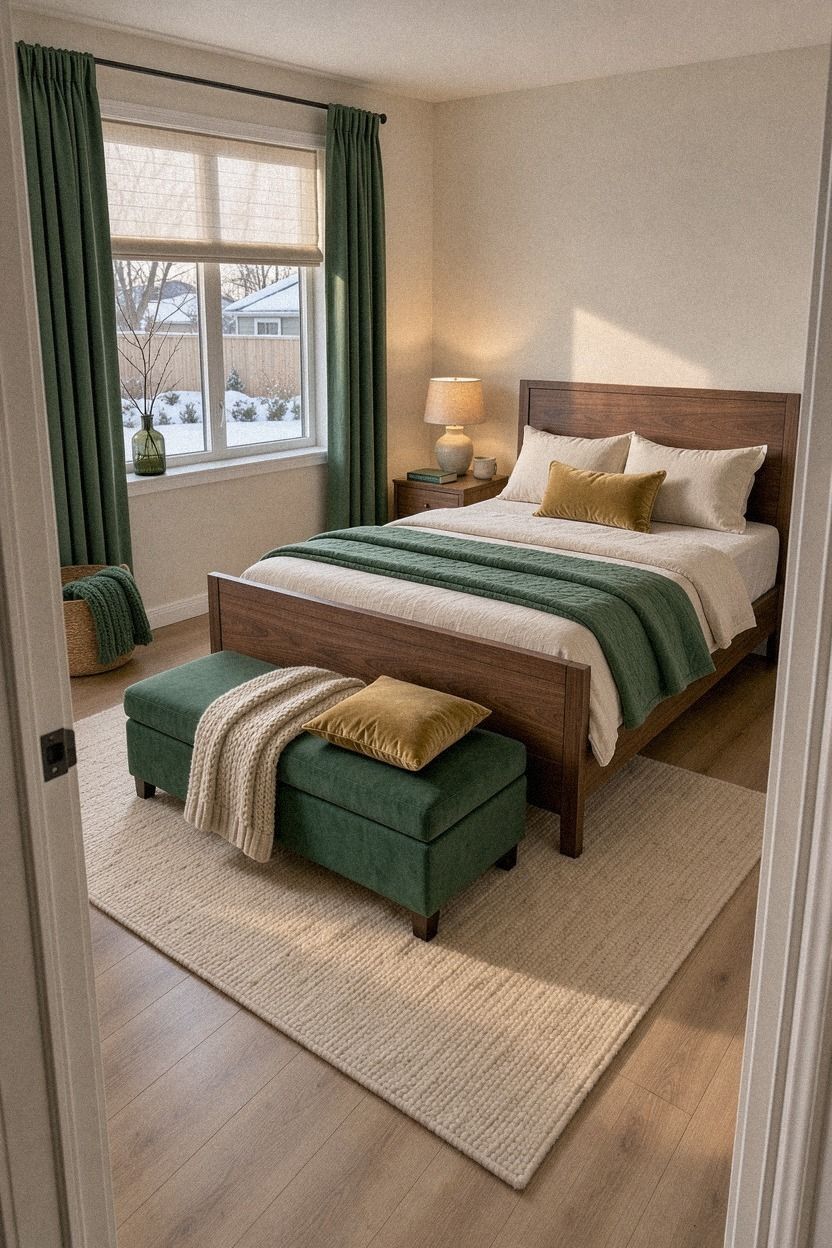
The Three-Layer Footboard Formula places a folded coverlet, a wool blanket, and one low basket or bench at the foot of the bed. Your eye gets a horizontal rhythm, while the layers remain useful. I’d use book-matched walnut on a nearby table if the room needs a richer earthy counterpoint against emerald, gold, and cream.
Keep the bottom layer broad, the middle layer textured, and the top layer small. A Target Threshold cotton quilt can handle the base, while a merino wool throw supplies the raised texture. You’ll want the colors related, but the edges shouldn’t line up perfectly.
Typical costs vary widely by the scope of a room refresh:
That table is why I’d spend first on the textile you touch every night, not on a decorative object. If your budget is tight, use the bench you own and put the money into one blanket with real weight.
14Why does contrast beat a perfectly matched bed?
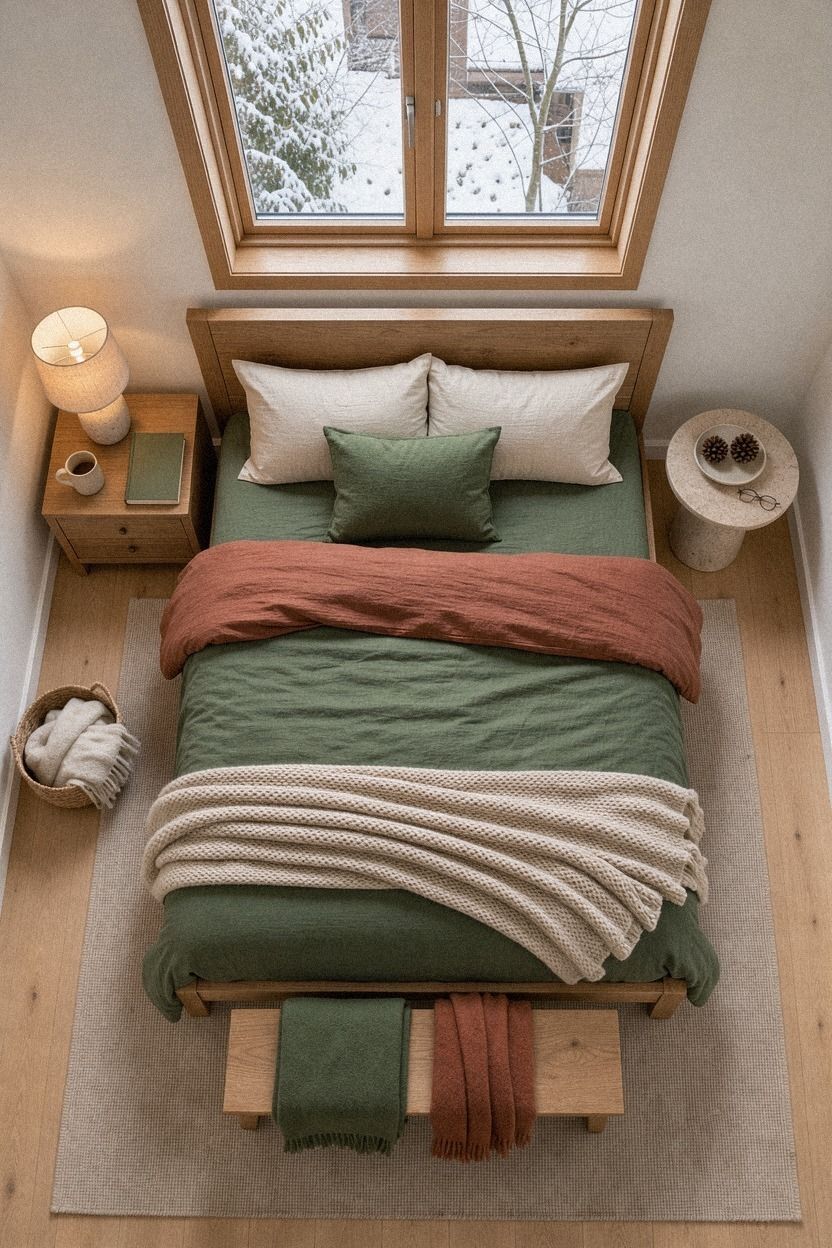
Contrast makes each layer readable. Pair forest green with cream cotton, rust with natural oak, or soft linen with warm travertine. Your bed will look more expensive because the eye can separate the surfaces instead of seeing one pale mass.
I’d skip the all-white arrangement if your goal is a winter room with depth. It can look fresh, but it also shows every crease and loses shape under flat light. A forest-green cushion or rust throw gives your layers somewhere to land.
What makes a bed feel luxurious, the price or the pause between textures? For you, it’s usually the pause. Leave a little space between pillow groups, let one edge fall naturally, and don’t keep correcting every wrinkle.
15Finish with the One-Object Rule
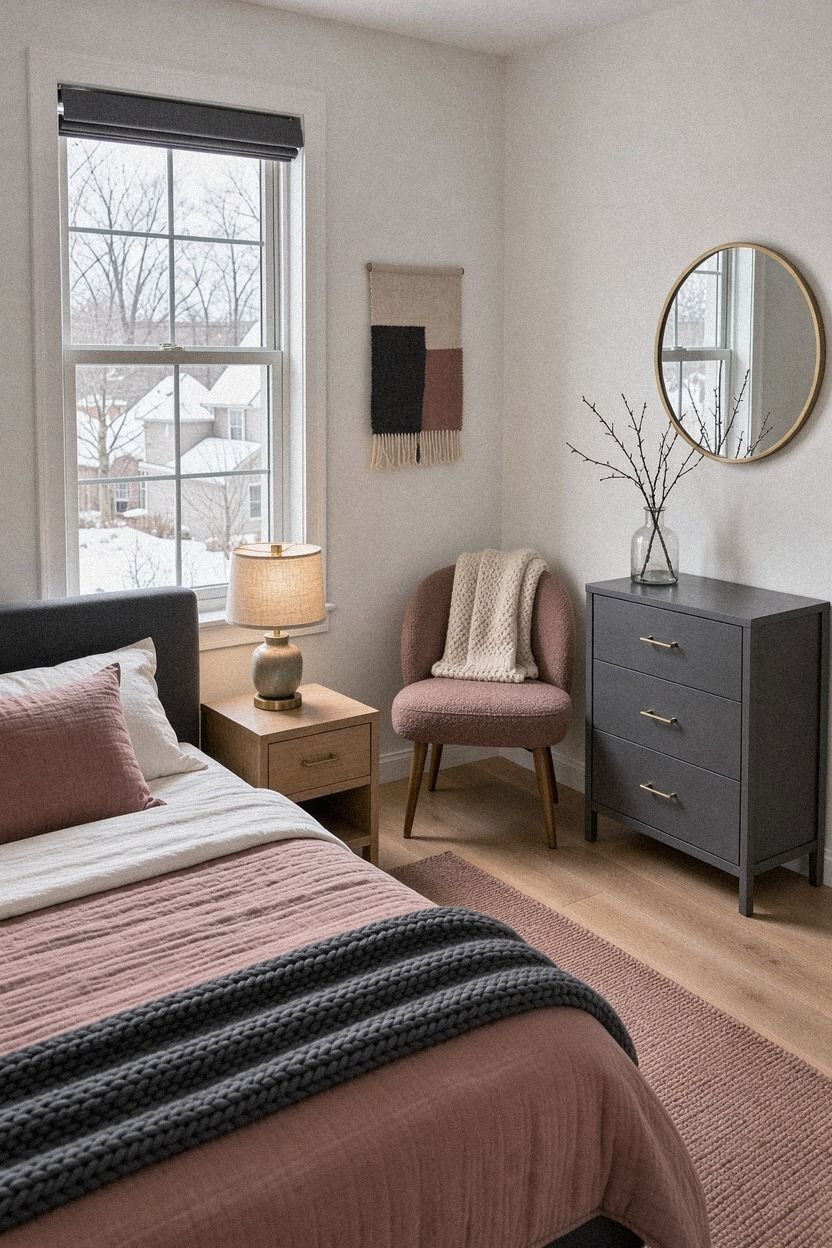
Choose one object that tells the room who lives there: a framed photograph, a ceramic cup, or an unlacquered brass tray developing patina on the nightstand. Your bed already has enough fabric, so the final detail should add memory or shape rather than another pattern.
I’d choose a small charcoal storage piece nearby if you need function, then style only its top surface. One book, one lamp, and one bowl are enough. You’ll create a calmer sightline than you would with a crowded display.
And leave the bed slightly imperfect after you’ve made it. The tucked sheet, folded blanket, and one softened pillow should suggest use. If you’re building a nighttime ritual too, this facial oil comparison shows the same principle: fewer deliberate choices can make the routine feel easier.
The part I’d change after trying all 15
I’ve made winter beds that looked expensive and felt awful to sleep in. The mistake was treating comfort as the final decorative layer, something added after the colors were chosen.
Your body notices the order immediately. A stiff coverlet beneath your shoulders, a slippery throw at your feet, or six pillows with nowhere to go will undo the visual work before bedtime.
My best beds begin with touch. I want a breathable sheet, a coverlet with enough weight to stay put, and one blanket that warms without trapping too much heat.
Merino wool earns its place because it feels dry and light, while a thick synthetic pile can become clammy. I’d rather have one excellent tactile layer than three soft-looking ones that shed or slide.
Then I think about the room’s quiet zones. The bed shouldn’t be the only soft thing.
A linen curtain, a wool rug, and a wood table give the eye somewhere to travel, so the pillows don’t have to perform all the warmth. That’s why the expensive look usually comes from restraint. It’s not a mountain of textiles.
It’s the gap between them.
I also think renters have an advantage here. You can use a removable wall hanging, a second-hand bench, and a carefully chosen lamp without rebuilding the room.
If you’re torn between a dramatic color and a neutral one, choose the shade that makes your existing furniture easier to live with. Your budget will stretch further, and the room won’t feel like a temporary costume.
The Questions I Get Asked Most
What is the best cosy winter bed layering formula on an Amazon budget for a small bed?
The best formula is a fitted sheet, one coverlet, one folded throw, and three pillows. A compact IKEA HEMNES room benefits from vertical height and open floor, so avoid oversized quilts that swallow the mattress. You’ll get a more inviting result from fewer layers with clear texture changes.
Where can I buy cosy winter bed layering pieces on a budget?
Look at IKEA, Wayfair, Target, Facebook Marketplace, and local thrift shops. Amazon bedding can cover basic sheets and throws, while second-hand stores often have better wool or cotton textures. There are no affiliate links here, and the site uses display advertising rather than commission links.
How much does a cosy winter bed layering makeover cost?
A small refresh usually runs about $100 to $300, depending on what you already own. Paint, rearranging furniture, and using existing pillow inserts can cost nothing. A new coverlet, throw, and curtain panel will usually create more visible change than several small decorative purchases.
Can I create this cosy winter bed layering formula on a budget?
Yes, and you can begin without buying anything. Fold your existing blanket, move the bed rug so furniture overlaps it, and group pillows by height. Then add one budget textile in warm oatmeal linen.
You’ll get clearer structure before spending money on a new layer.
Is a cosy winter bed layering formula worth it in a small space?
Yes, because a small room makes every layer easier to see. Keep the palette limited, use a rug that reaches beneath the furniture, and choose curtains that fall to the floor. Your room will feel calmer when the bed has one strong focal point instead of many tiny accents.
Is this formula a good idea for a rental?
Yes. Use removable hooks, a tension rod, peel-and-stick art, and a freestanding bench. Removable fabric panels can create a soft backdrop without permanent work, while a wood tray adds warmth to a plain nightstand.
You’ll get the layered effect without risking the walls or your deposit.
Where I’d Start First
If I had to pick one, I’d start with the weighted coverlet. It keeps the bed from looking flat and gives every softer layer a place to land. Pin the coverlet idea for later and compare it with these seven lighter winter sprays when you’re editing your evening routine.