Easy Pillow Styling: Which Shape Goes Where on a Couch or Bed
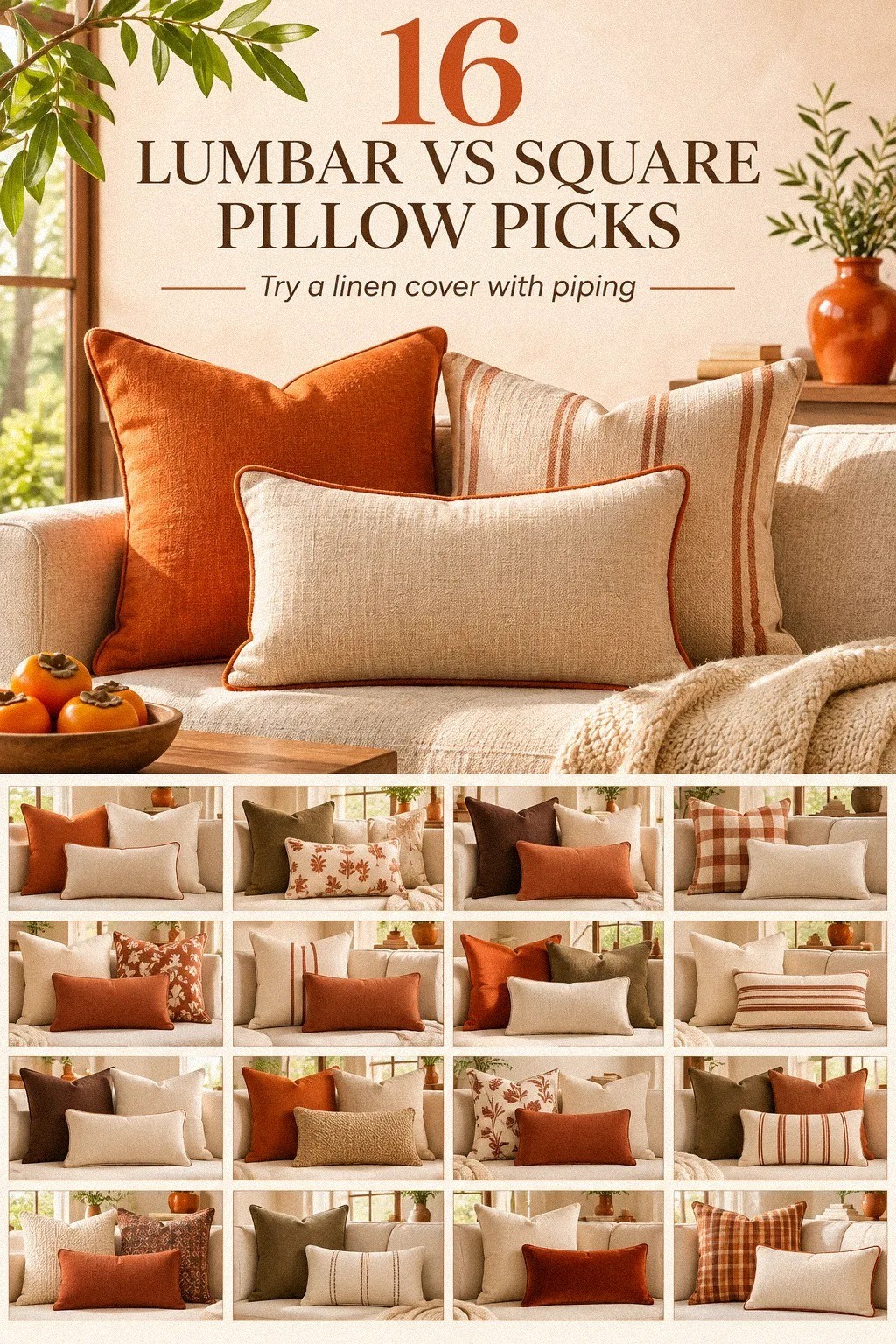
26 november 2026Lumbar or square pillows have a simple answer: use squares for volume and lumbar pillows for support, shape, and a little visual length. I learned that after buying four oversized squares for a narrow sofa. They looked puffy, not welcoming. Your room needs proportion first, then texture. Here are 16 practical ways to get there, whatever your budget.
- Start With the Two-Height Rule
- Layer a Lumbar Throw Pillow Across the Middle
- Stack Square Throw Pillows Behind One Long Front
- Float the Center With the Floating Center Method
- Use Lumbar Over Square on a Narrow Bench
- Which Shape Belongs in Front?
- Frame the Bed With Two Matching Lumbar Pillows
- Build the Three-Texture Stack
- Match the Pillow Shape to the Furniture Depth
- Anchor a Sectional With a Corner Pair
- Mix a Square Throw Pillow Set With One Odd Shape
- Flip the Pattern to the Back Layer
- Paint Behind the Pillow Arrangement
- Arrange the Window-Seat Sandwich
- Build a Budget With One Investment Cover
- Finish With the Shape You’ll Use
1Start With the Two-Height Rule
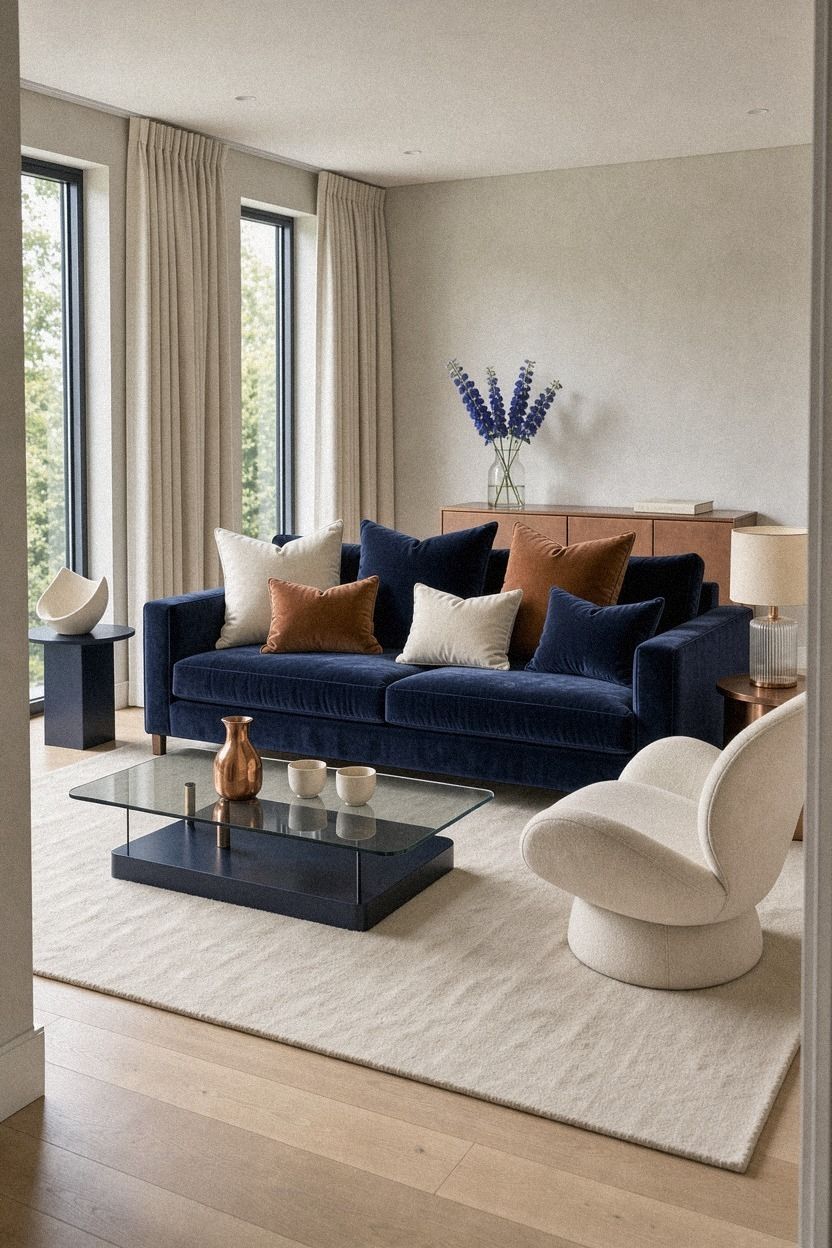
The Two-Height Rule keeps your pillow arrangement from looking like a wall of fabric. Put one taller square behind a lower lumbar throw pillow, so your eye moves upward and then rests across the sofa.
On a bed, place the square pillows against the headboard and let the lumbar pillow sit in front. You’ll get height without losing the place where you actually sit.
I’d start with a 22-inch square in deep-pile mohair velvet and a 14-by-22-inch lumbar in warm ivory. Let midnight blue and copper appear as the stronger accents. You don’t need matching covers, but you do need one shared color.
If you’re collecting calm room ideas, this Croatian beach shape story has the same long-versus-rounded movement.
The mistake is stacking two identical heights. Your arrangement will look stiff, and you’ll keep nudging the front pillow forward. Try one square, one lumbar, and a smaller 18-inch square only if your sofa is at least 84 inches wide.
That proportion feels warm without swallowing your seat. It’s a small, affordable change with excellent visual value.
Typical cost by tier (US averages):
2Layer a Lumbar Throw Pillow Across the Middle
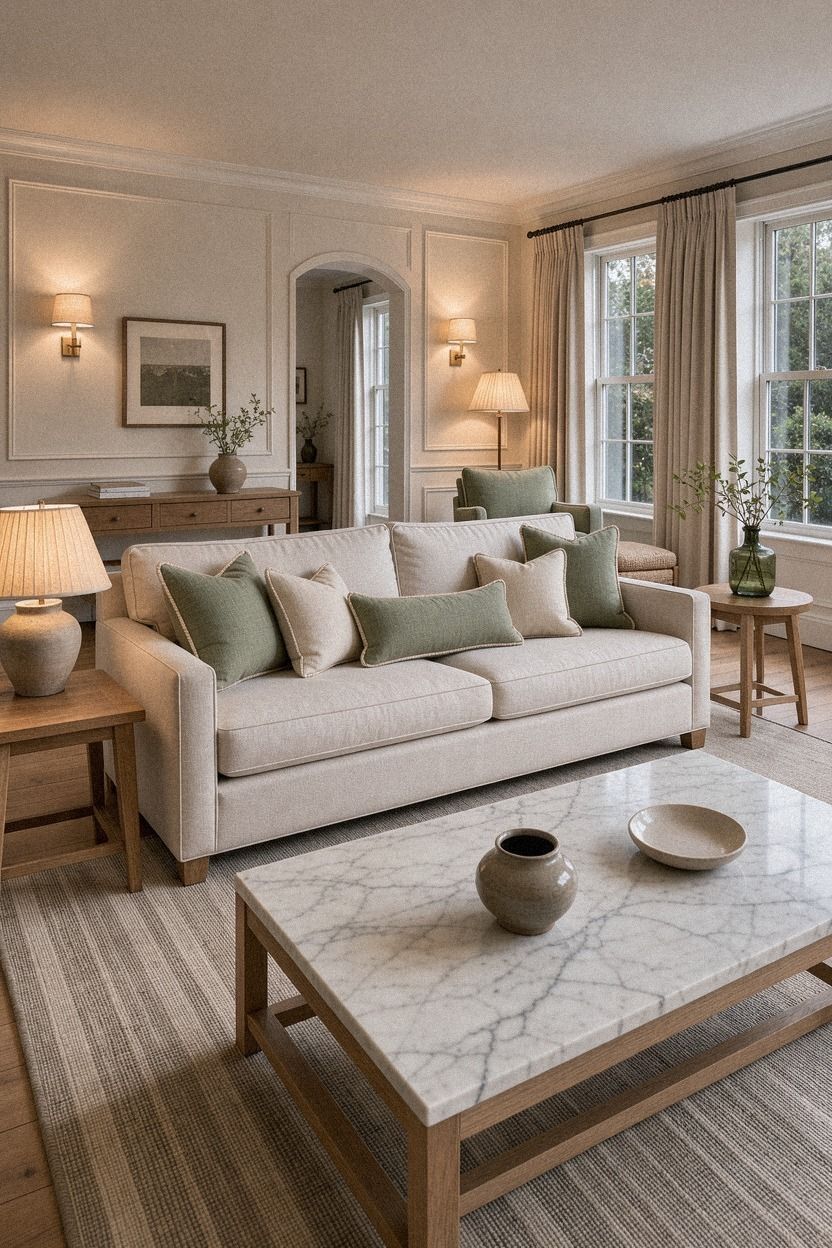
A lumbar throw pillow is the easiest way to break up a row of square pillows.
3Stack Square Throw Pillows Behind One Long Front
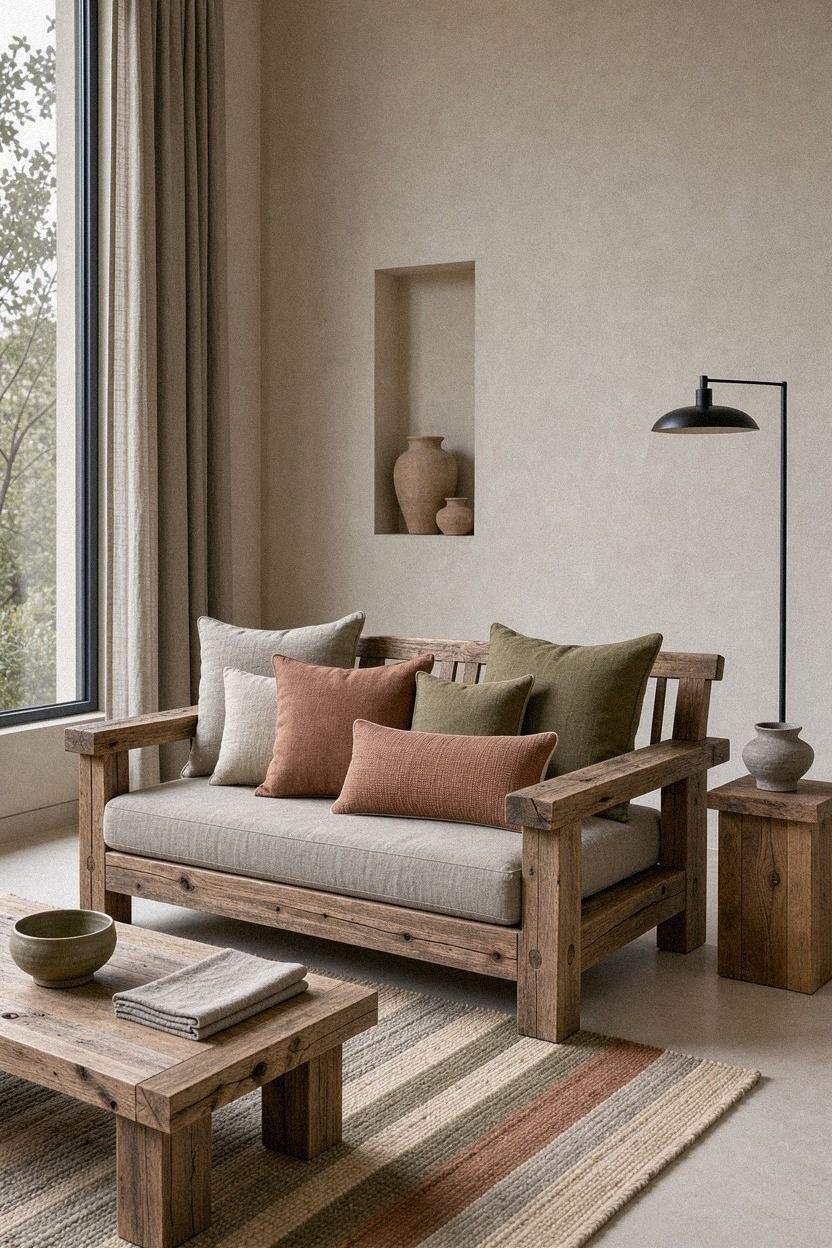
Square throw pillows do the heavy lifting on a sofa because they build a generous, comfortable back layer. Use two 22-inch squares on each side, then place one lumbar across the center. Your sofa will look filled in, but the middle won’t become a pile you have to clear before sitting.
I like reclaimed weathered teak nearby because its worn grain keeps a pillow arrangement from feeling overly soft. Pair it with a 20-inch square in stone and a 12-by-20-inch lumbar in washed terracotta, then let olive appear in a small detail. If you’re shopping at IKEA, look for a light, natural wood finish to create the same earthy backdrop without adding another dark tone.
And don’t buy a matching throw pillow set for every position. Matching sets flatten the texture and make your room feel like a showroom. Use one repeated color, then vary the weave, scale, and edge.
Your squares can be plain while the lumbar carries the stripe or small pattern. Save this underground river network article as a reminder that contrast works best when the foundation stays quiet.
If you’re deciding whether a premium cover is worth paying for, put it on the front layer where hands and eyes reach it first. The back squares can come from a lower price tier. That gives the arrangement more value without making every piece expensive.
4Float the Center With the Floating Center Method
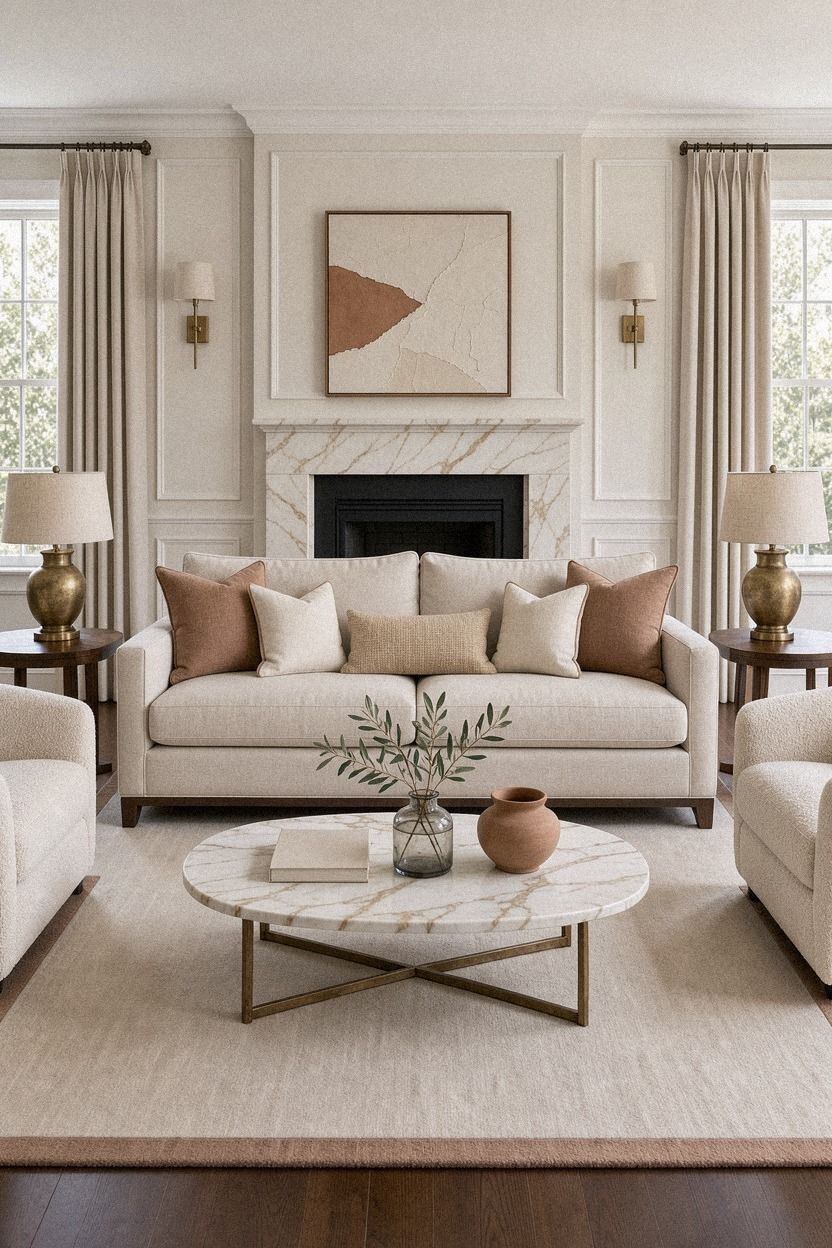
The Floating Center Method leaves the middle of your sofa visually open while the pillows sit at both ends.
5Use Lumbar Over Square on a Narrow Bench
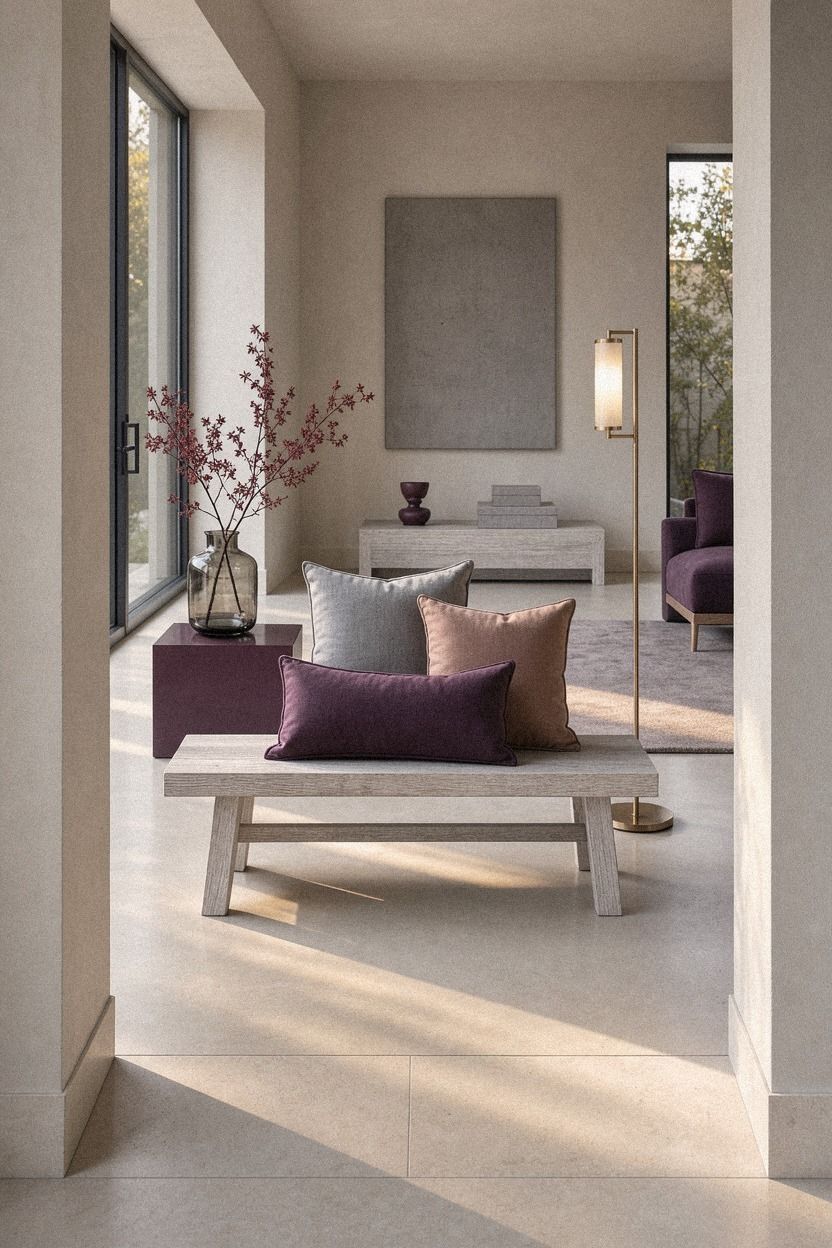
On a narrow bench, lumbar over square is the clear winner. A square pillow takes up too much depth, while a 12-by-20-inch lumbar gives your back support without forcing your knees forward. You’ll keep the bench functional, which matters in an entry or at the foot of a bed.
Choose a firm lumbar in plum, grey, and a small rose-gold detail if you want the cover to hold its shape. Cerused white oak nearby adds pale grain without competing with the arrangement. I’d skip loose bouclé here because its loops can catch on belt buckles, baskets, and winter coats.
For a bedroom bench, pair one lumbar with a folded throw in merino wool. The combination feels soft and inviting, but it still has a clean outline. Your bench shouldn’t compete with the bed, so repeat one color from the duvet instead of introducing a third accent.
This sacred desert retreat is useful visual inspiration for subdued plum, grey, and rose gold.
This is also a clever place to save money. One well-filled lumbar can offer more practical value than three shallow decorative cushions.
6Which Shape Belongs in Front?
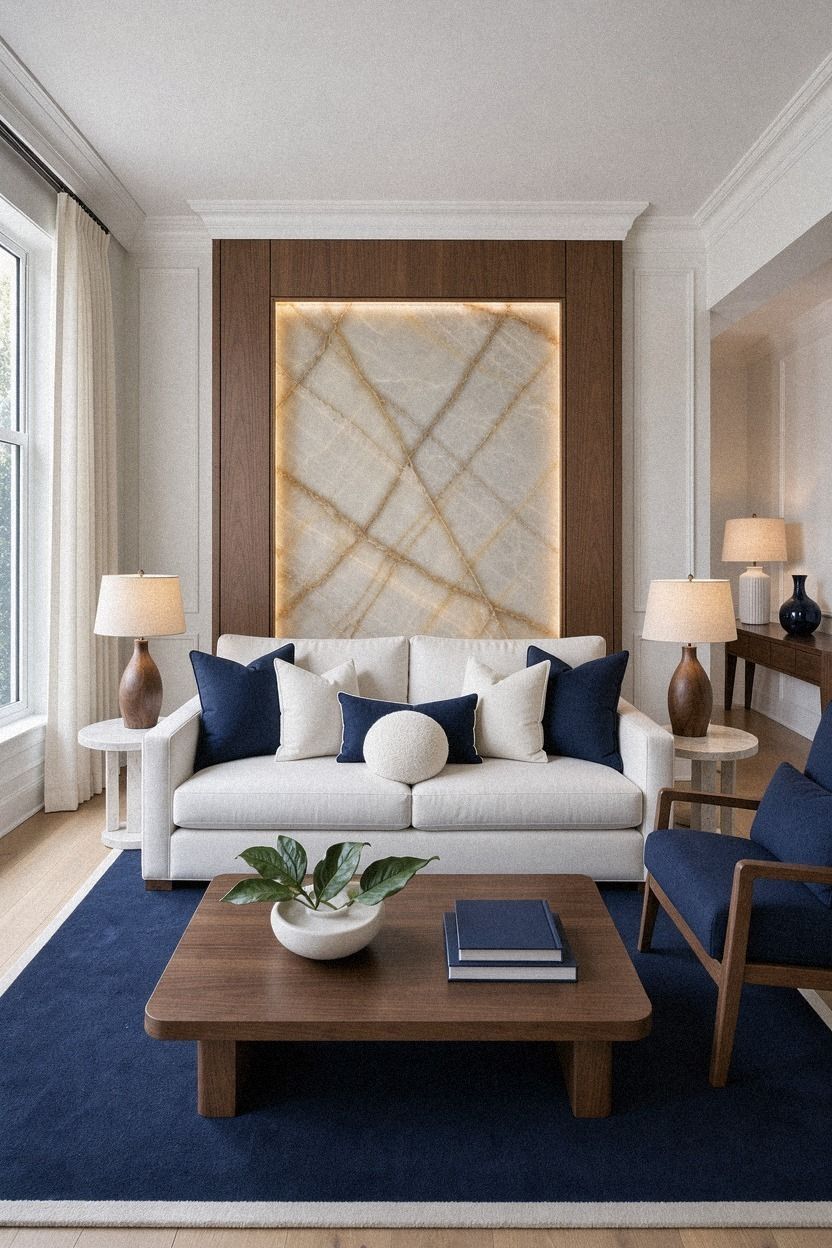
The shape in front should be the one you want your hand to touch first.
7Frame the Bed With Two Matching Lumbar Pillows
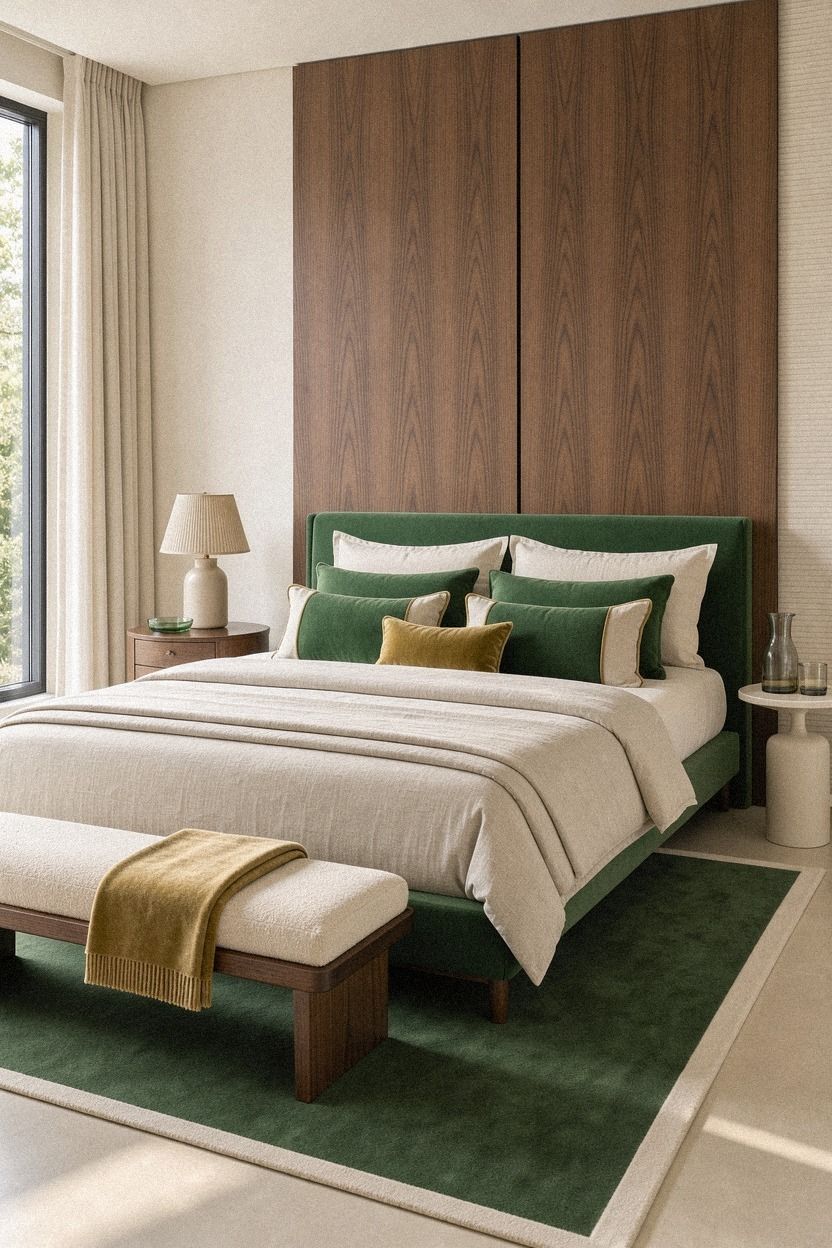
Two matching lumbar pillows at the front of a bed create a low, tailored finish. Put them side by side across the standard pillows, leaving a small gap in the center. You’ll get symmetry without building a towering display that has to come off every night.
Use cream linen with emerald and gold accents for the pair, then add one 20-inch square behind each lumbar. A book-matched walnut headboard or nightstand gives the arrangement a rich anchor. I prefer this arrangement on queen beds because it leaves the center clear and makes the bed look broad.
I’ve made the mistake of using 14-by-36-inch bolsters on a full bed. They looked dramatic in the store and strangely long at home.
Keep the lumbar closer to 14 by 24 inches unless your headboard is very wide. For a quieter bedroom palette, this wildlife kingdom with ancient predators suggests emerald, warm gold, cream, and walnut.
Two restrained lumbars can be a smart investment because they make the whole bed feel finished without requiring a tall pile of accessories. The effect is calm, refined, and wonderfully easy to reset.
8Build the Three-Texture Stack
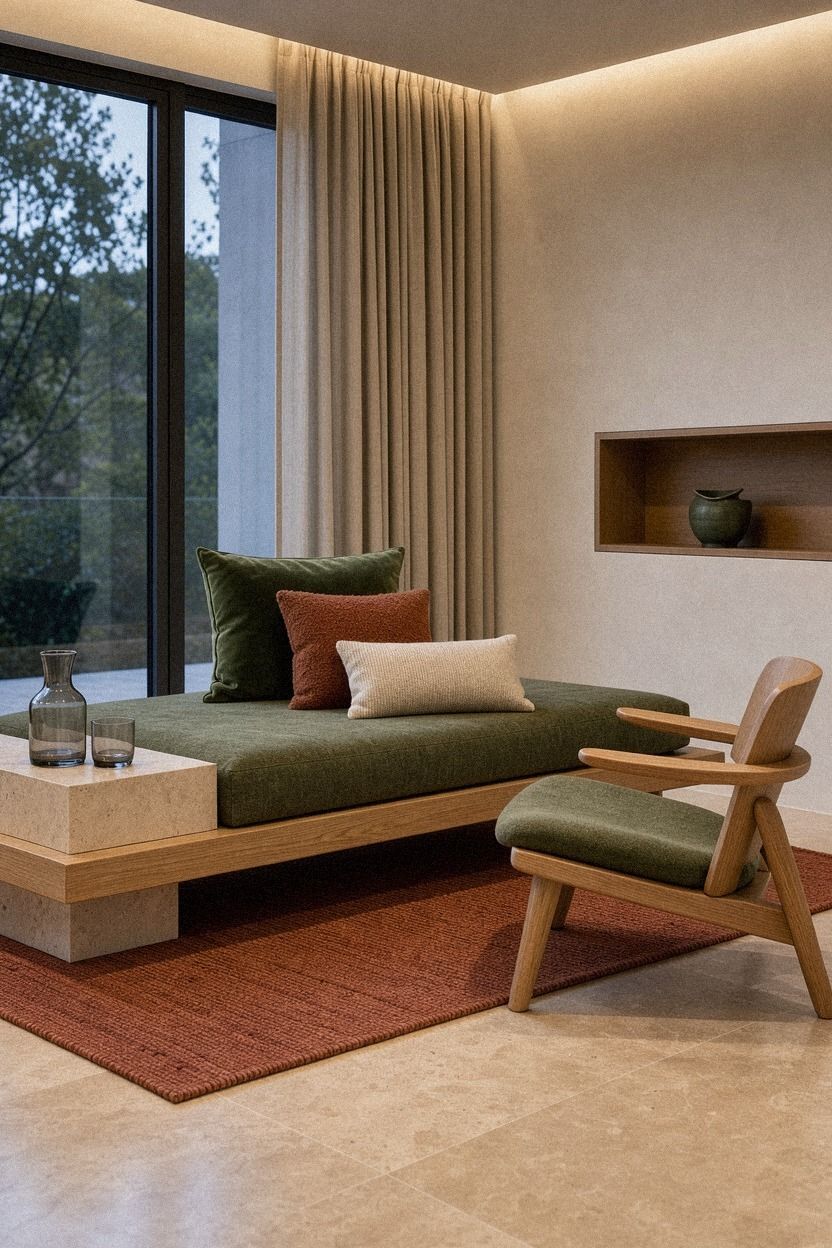
The Three-Texture Stack uses one smooth cover, one nubby cover, and one patterned cover.
9Match the Pillow Shape to the Furniture Depth
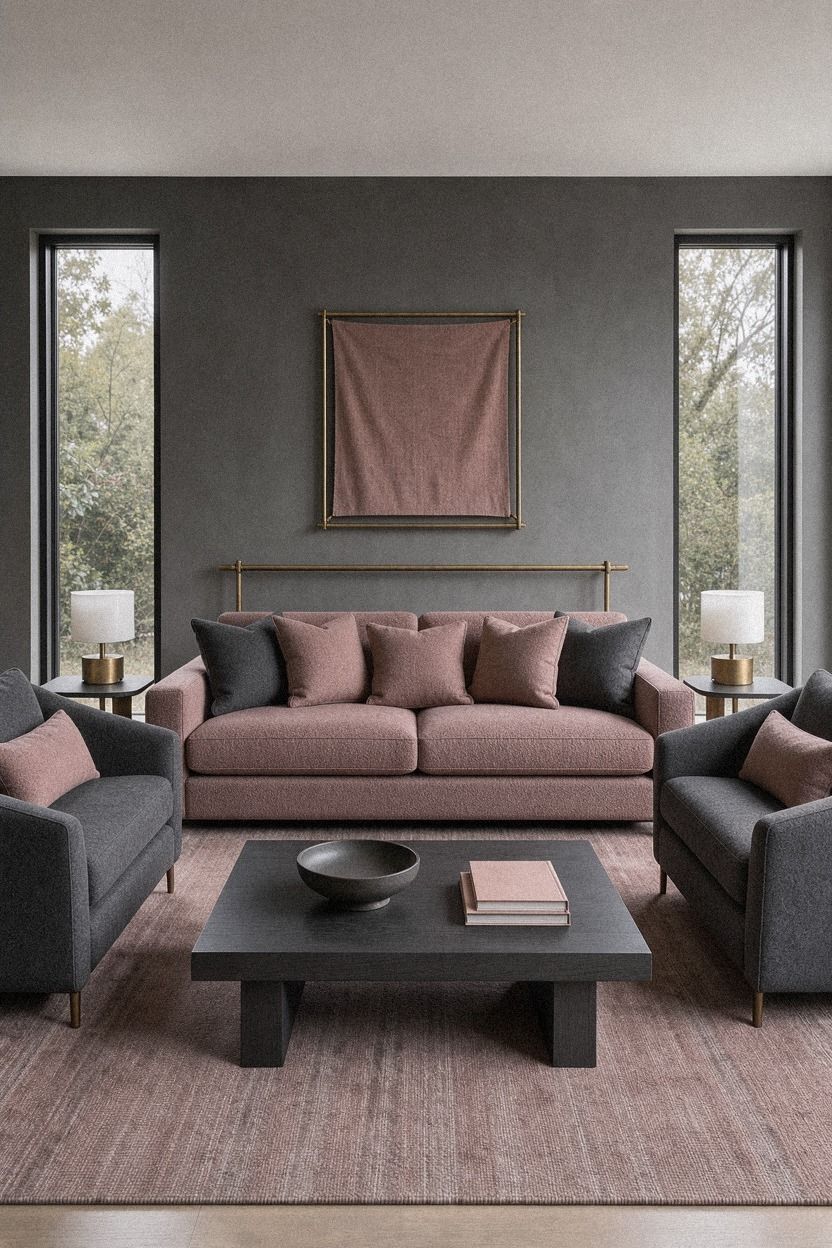
Furniture depth should decide your pillow shape before color does. A 24-inch-deep accent chair usually wants one square or a small lumbar, while a 42-inch-deep sectional can absorb two squares plus a front lumbar. You’ll sit more comfortably when the pillows respect the seat instead of stealing it.
Choose dusty rose cotton canvas for a chair in a reading corner, especially if the upholstery is charcoal. The fabric can handle daily contact, and its matte surface won’t compete with a nearby lamp. If your chair has curved arms, a lumbar echoes that horizontal shape better than a sharp square.
A small amount of unlacquered brass adds warmth as it develops its natural patina.
Measure your usable seat depth, not the outside frame. I learned that after ordering 24-inch inserts for a chair with only 19 inches of sitting room. Your knees shouldn’t hit the coffee table because the pillows are oversized.
Use charcoal, dusty rose, and brass as your palette cue, keeping the proportions relaxed.
Measurement is where the best value usually comes from. Five minutes with a tape measure can prevent a surprisingly expensive return.
10Anchor a Sectional With a Corner Pair
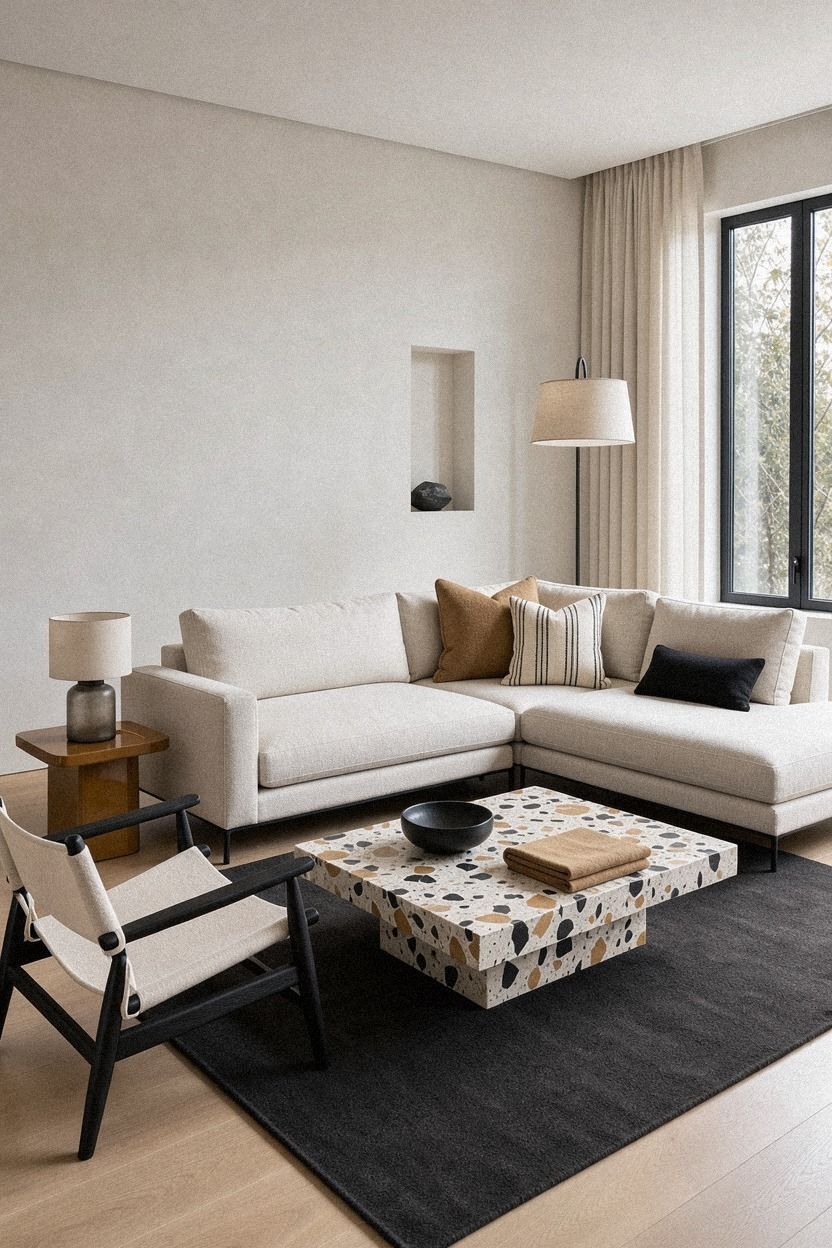
A sectional needs one strong corner arrangement, or the whole room can feel scattered. Put two 24-inch squares into the corner, then layer a 14-by-24-inch lumbar in front. Your eye will read that corner as the visual anchor, while the open chaise remains easy to use.
Use oversized-chip terrazzo nearby if your sectional is warm white or camel. Its varied surface can carry the room’s mineral detail, while a single black accent gives the arrangement definition. I wouldn’t repeat black on every pillow.
Too much contrast makes a large sectional feel chopped into separate pieces.
And if your sectional has a chaise, keep its long side mostly clear. One lumbar at the back is enough for support, and you’ll preserve the spot where you stretch out.
Add a Turkish cotton throw instead of another pillow when the room needs softness. The arrangement should invite you to sit, with a practical cost that doesn’t require filling every inch.
This cave network article is an unexpected palette cue for warm white, camel, black, and mineral texture.
11Mix a Square Throw Pillow Set With One Odd Shape
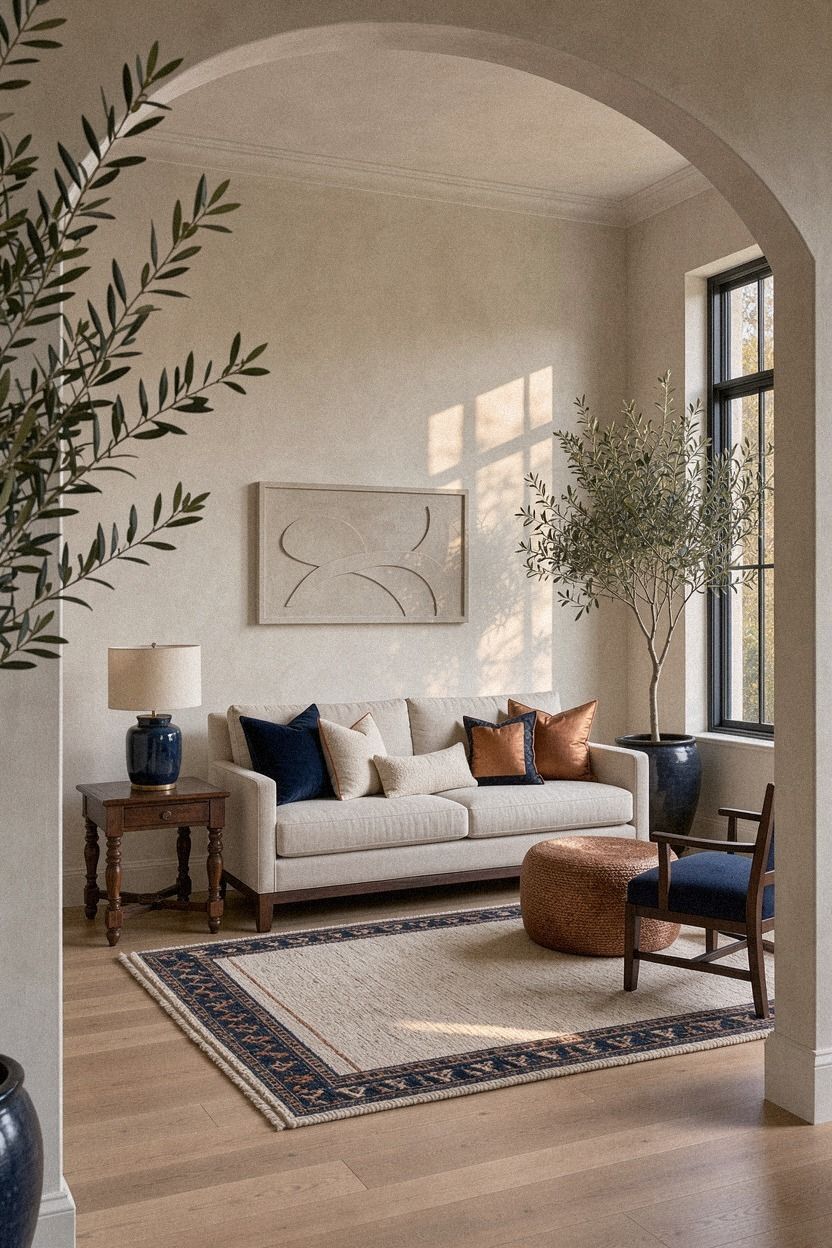
A square throw pillow set can give you a useful base, but one odd shape keeps the arrangement from looking purchased all at once. Start with two matching 20-inch squares, then add one 12-by-20-inch lumbar or a small round cushion. You’ll get order with just enough friction.
I like hand-applied Venetian plaster nearby when the pillows are midnight blue, copper, and ivory. Its subtle surface variation keeps the palette from feeling too polished. Your accent color should appear at least twice, but it doesn’t need to show up in every cover.
Look for a set with removable covers and 20-inch inserts. If the inserts are too soft, your squares will sag and the whole arrangement will look tired.
You’ll get better shape from a 90/10 feather-and-down insert, though a firm polyester insert works well for a rental. This remote Scottish island carries the same balance of repetition and irregularity.
A set can be a good price, but only when the inserts are usable and the covers are washable. Otherwise, the apparent bargain loses its value quickly.
12Flip the Pattern to the Back Layer
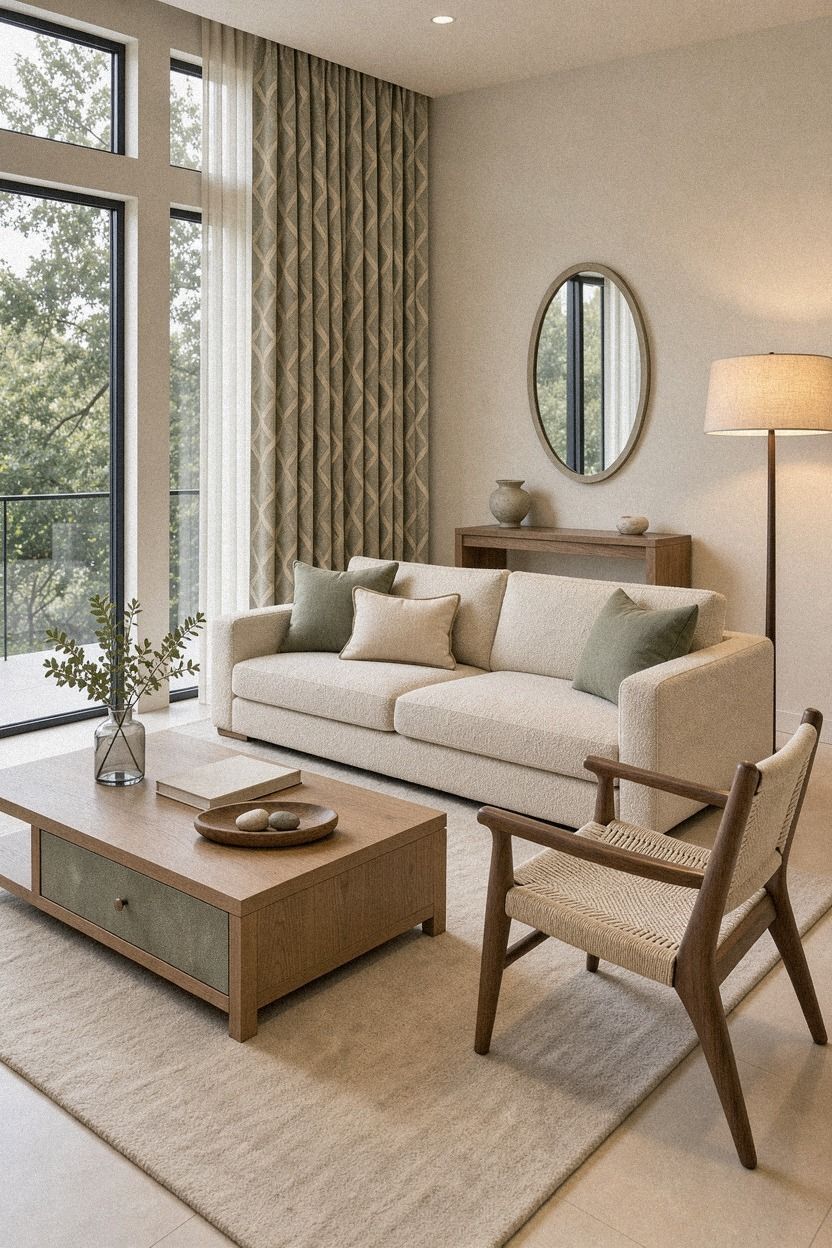
Put the patterned pillows in the back layer and keep the front lumbar quiet.
13Paint Behind the Pillow Arrangement
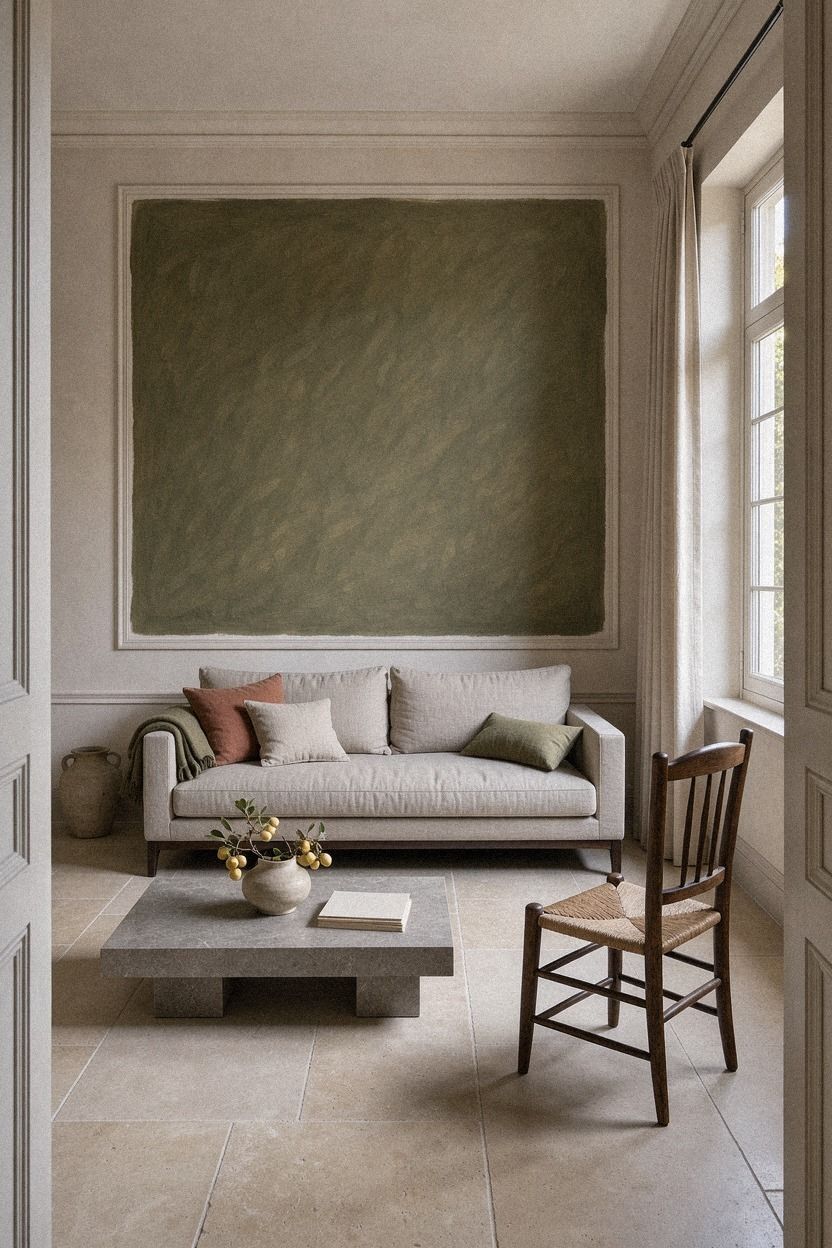
The wall color behind your pillows changes their apparent shape. A terracotta wall makes stone-colored squares feel grounded, while an olive wall lets warm cream and washed Belgian linen stand out. You’ll want to test fabric against the actual paint because store lighting lies.
Sherwin-Williams Agreeable Gray SW 7029 is forgiving with muted stone and olive. Farrow & Ball Pigeon No.25 gives cream pillows more contrast, while Benjamin Moore White Dove OC-17 keeps a room airy. I’d skip a cool white if your sofa has yellow undertones; the upholstery may suddenly look dingy.
Paint samples on two walls and check them in morning and evening light. Your pillow covers may look warm at noon and pink by lamplight.
That shift is normal. If you’re building a larger room plan, keep terracotta, stone, and olive near your curtains and rug.
The result will feel peaceful without becoming flat.
Paint is often the highest-value change in the room, especially when the existing pillows are still comfortable. This sacred desert palette is a striking cue for terracotta, stone, and olive.
14Arrange the Window-Seat Sandwich
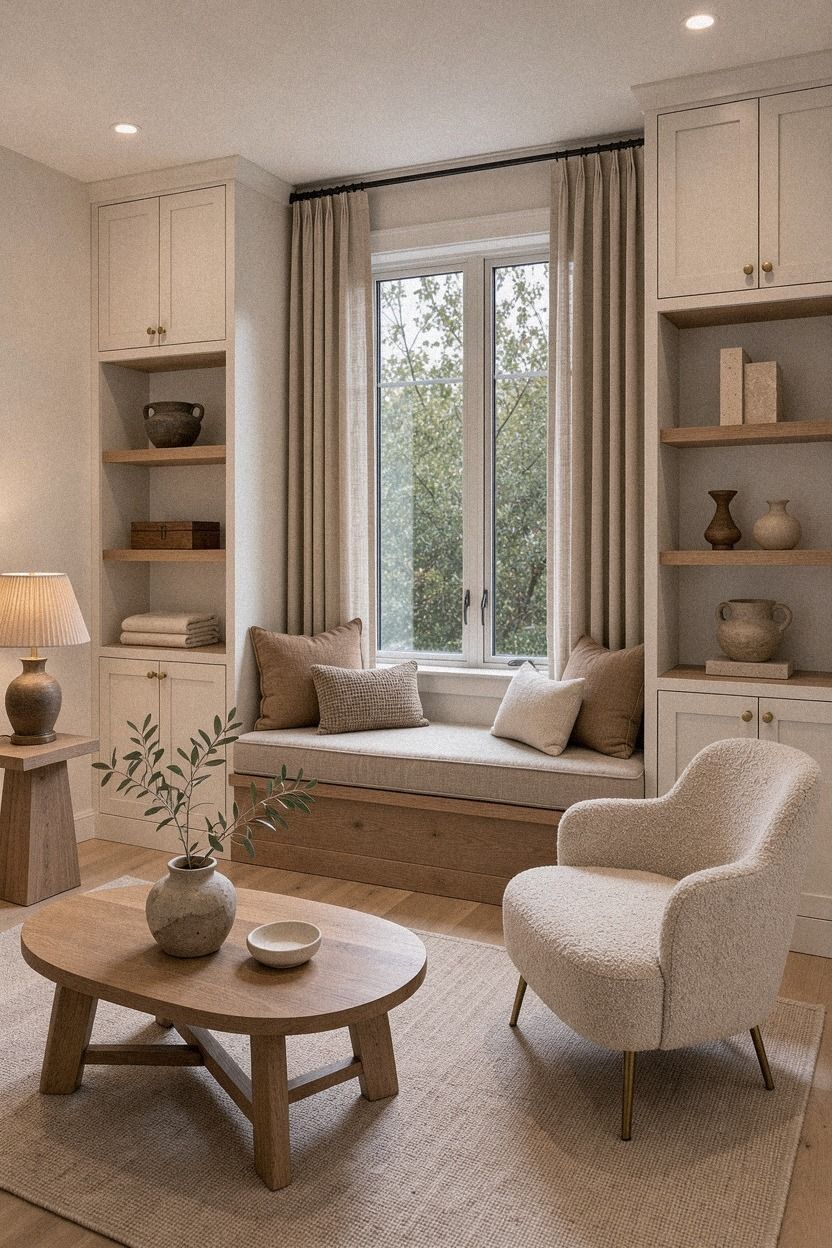
The Window-Seat Sandwich uses a square pillow at each end and one lumbar in the middle. It works on a window seat, daybed, or built-in bench because the ends offer support while the center stays low. You’ll have a comfortable reading spot without blocking the view.
Use an aged brass side table to add warmth beside the arrangement. Pair it with flax linen, clay accents, and organic bouclé so the seat feels earthy rather than overly precious. Your lumbar should be no taller than 14 inches if the window sill is low.
I’d choose removable covers in a washable cotton blend for this location. Dust gathers near windows, and you won’t enjoy hand-washing velvet every month.
Add one folded merino wool throw in winter, then remove it in spring. For more landscape color inspiration, visit this underground cave network.
A washable cover may cost slightly more, but the practical value is excellent in a high-use spot.
15Build a Budget With One Investment Cover
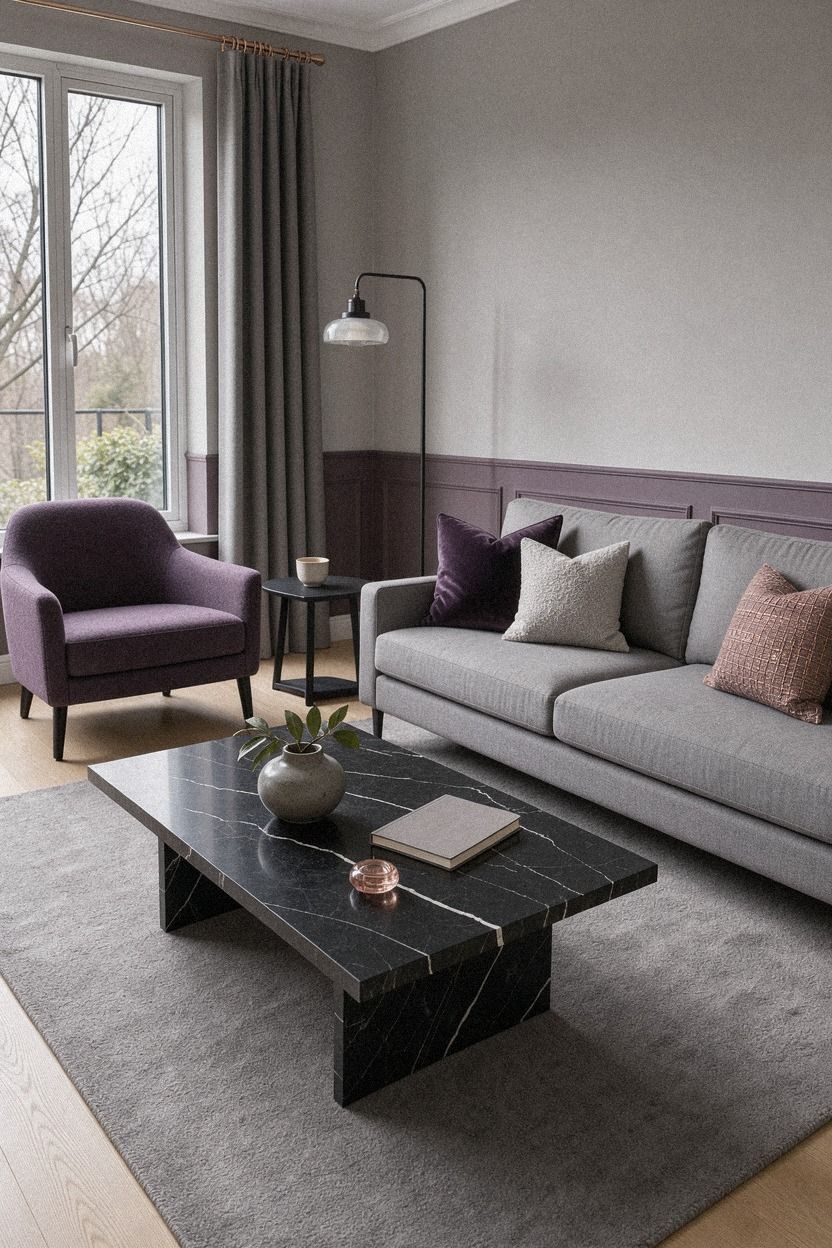
You don’t need to replace every pillow to change the arrangement.
16Finish With the Shape You’ll Use
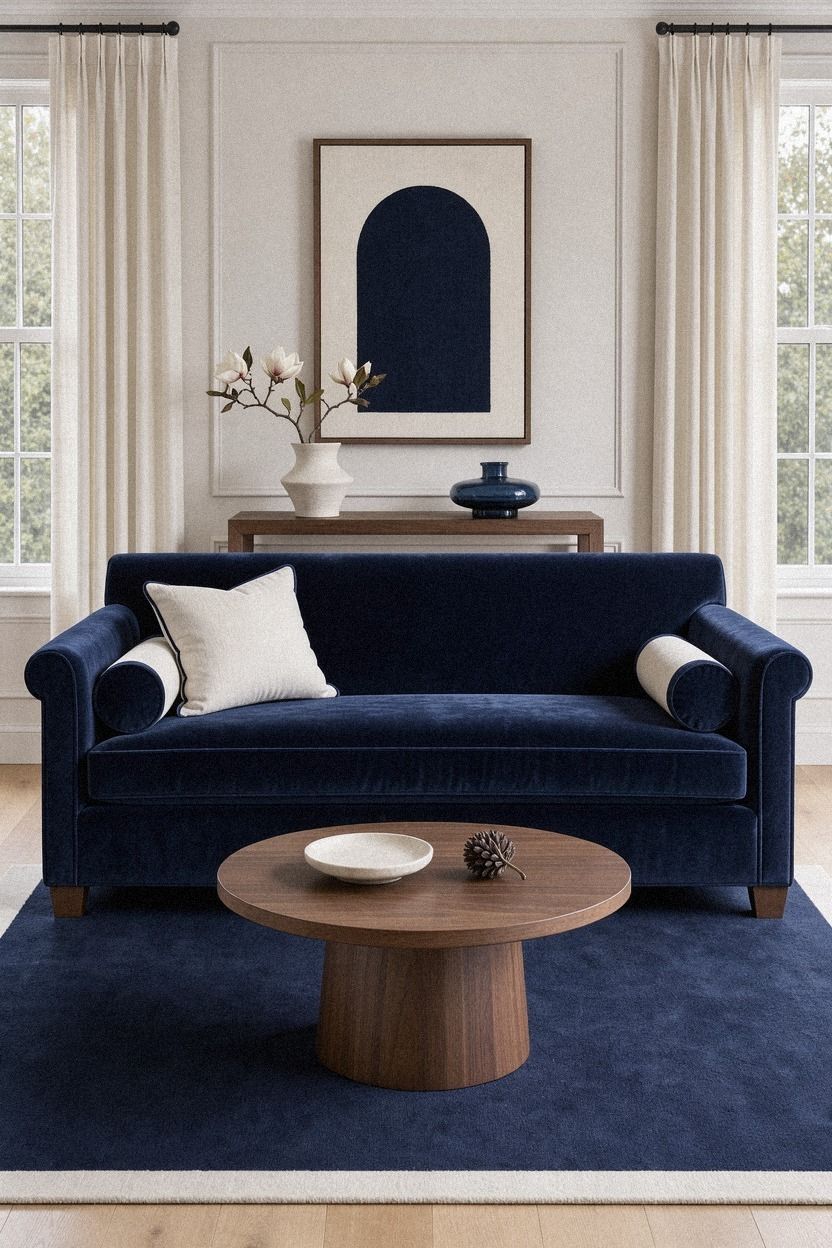
The last pillow should support the way you live. If you read on the sofa, choose a lumbar.
If you nap against the arm, use a square with a firm insert. Your room will look better when the final shape follows your habits instead of a catalog arrangement you saved months ago.
I’d finish with a deep-pile mohair velvet lumbar in navy on a couch that already has white squares and walnut nearby. It gives you a clear front edge, a little contrast, and enough support for your lower back. You won’t need another accent once that piece is doing its job.
But leave a little breathing room. Three well-placed pillows can feel more inviting than seven that slide onto the floor. Your arrangement should survive a movie night, a visiting friend, and a forgotten mug.
For a final visual cue, this wildlife landscape of ancient hunting grounds shows how one strong focal point can organize a wider scene.
The Pillow Rule I’d Keep
I used to think pillow styling was mostly about color. It isn’t.
Color matters, but shape decides whether your sofa feels usable or merely dressed. A square pillow gives you height and a firm place to lean. A lumbar pillow gives you length, lower-back support, and a way to soften a row of hard angles.
Once you understand that job distinction, shopping gets much easier.
My most expensive mistake was buying covers before measuring the furniture. I chose 24-inch squares for a shallow apartment sofa, then spent a weekend removing inserts, returning covers, and trying to make the seat comfortable again.
The issue wasn’t the fabric. It was proportion.
Your pillow can be gorgeous and still be wrong if it steals the place where your body needs to go.
I now start with the sofa depth, then choose the back layer, then the front shape. A 42-inch sectional can handle more volume than a 24-inch bench.
A queen bed can take two front lumbars, while a full bed may look better with one centered rectangle. Those decisions are practical, but they also create the relaxed, warm feeling people often chase with extra objects.
The other lesson is to let one pillow be memorable. Maybe it’s sage mohair velvet, a faded stripe, or a lumbar in handwoven wool.
The rest should support it quietly. You’ll get a richer room from one strong texture and several calm companions than from a pile of equally loud covers.
And if you’re unsure, remove one pillow and live with the arrangement for a day. The empty space may be the part that finally makes the room breathe.
A few materials make this process easier. Linen softens with use, cotton canvas takes daily wear, and wool brings a dry, earthy texture that doesn’t look overly polished. Velvet adds depth, but it can show pressure marks.
Your choice should match how often the furniture gets used, not only how it looks in a catalog.
The rule I trust most is simple: put the shape where your body needs it. Then give your eye one clear point to land.
That’s enough to make a couch or bed feel collected, comfortable, and ready for real life. If you want one final palette reference, this remote island landscape captures the appeal of restraint, texture, and one memorable focal note.
A Few Things Worth Answering
What is the best pillow shape for a small sofa?
A 12-by-20-inch lumbar pillow usually works best because it adds support without consuming much seat depth. Pair it with one 20-inch square in IKEA linen or a firm Article cover for more usable comfort. Your sofa will look finished without feeling crowded.
Where can I buy pillow pieces on a budget?
Look at IKEA, Wayfair, and Target, then check Facebook Marketplace or a local thrift shop for down inserts and washable covers. Secondhand inserts can save money, but you’ll want to inspect seams, odors, and filling before bringing them home.
How much does a pillow makeover cost?
A pillow refresh usually costs about $100 to $300 if you reuse inserts and buy two or three covers. Free changes include moving pillows between rooms, turning patterns to the back, and switching a square for a lumbar you already own. The best value usually comes from improving proportion before buying more fabric.
Can I create this look on a budget?
Yes, and you can start with three actions: wash the covers you have, group pillows by color, and put the longest shape in front. A $20 to $50 cover in cotton canvas can give your existing sofa a new focal point. That small spend can feel surprisingly transformative.
Is this worth it in a small space?
Yes, because small rooms benefit from fewer, better-proportioned pieces. Choose one square and one lumbar instead of a large set. Your space will feel more open, and the arrangement won’t block the seat or compete with a narrow coffee table.
Is mixing lumbar and square pillows good for a rental?
Yes. Pillow covers give you a no-damage update, and you can pair them with removable art, a tension rod, or a washable throw.
Your rental will gain color and texture without paint, drilling, or permanent changes. It’s an affordable way to make the room feel personal.
Where I’d Start First
If I had to pick one, I’d start with a single lumbar pillow in warm terracotta linen. It adds support, color, and a clean horizontal line without stealing your seat. Pin this guide for later, then test that shape on your sofa tonight.