Blind Corner Cabinet Eating Your Pans? 12 Lowe's Pullouts Recover Storage
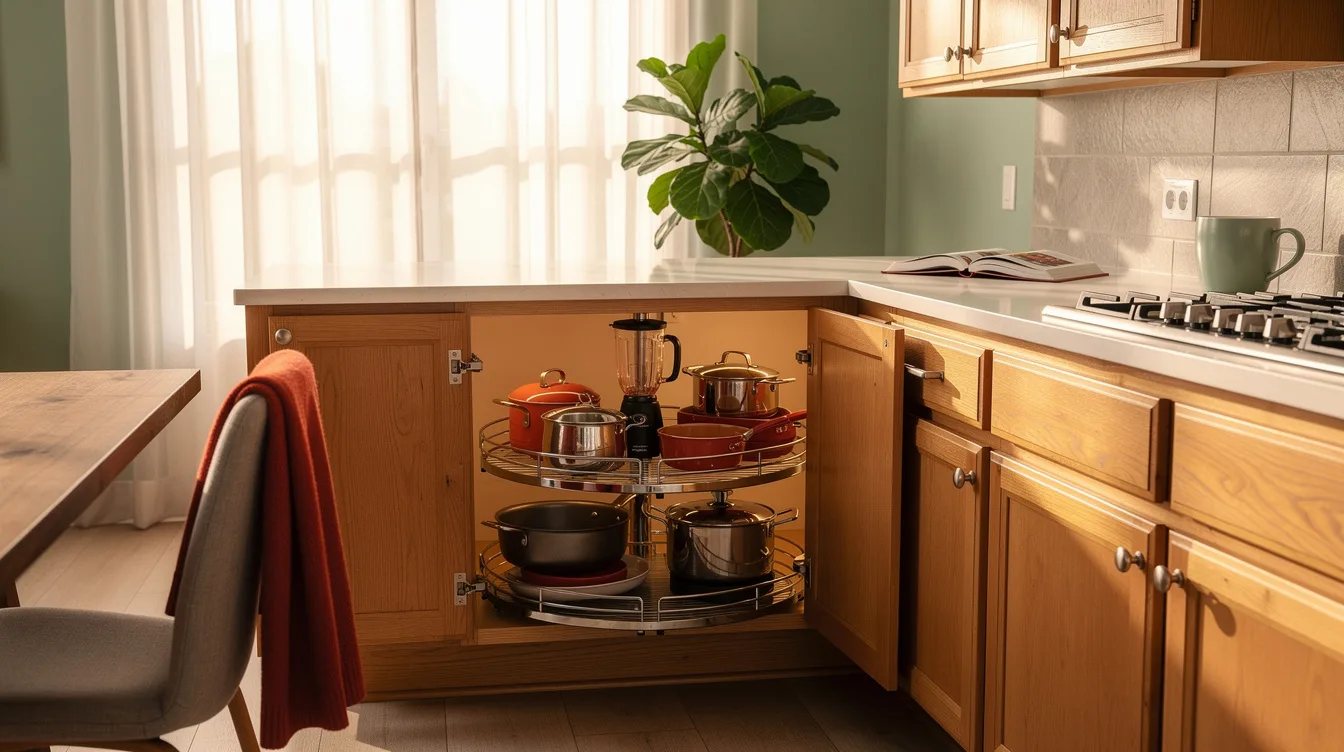
25 november 2026At about 34.5 inches high and 24 inches deep, a blind corner cabinet can hold plenty while hiding nearly everything behind its front edge. The cabinet alone may cost around $600, yet a factory pull-out can push the total beyond $2,000.
That price gap explains why Lowe's pull-outs are worth measuring carefully. The right tray, filler, and swing direction can recover the dead corner without replacing the entire cabinet run.
What you will find inside
- Measure the 36-Inch Blind Base First
- Leave a 3-Inch Filler for Door Clearance
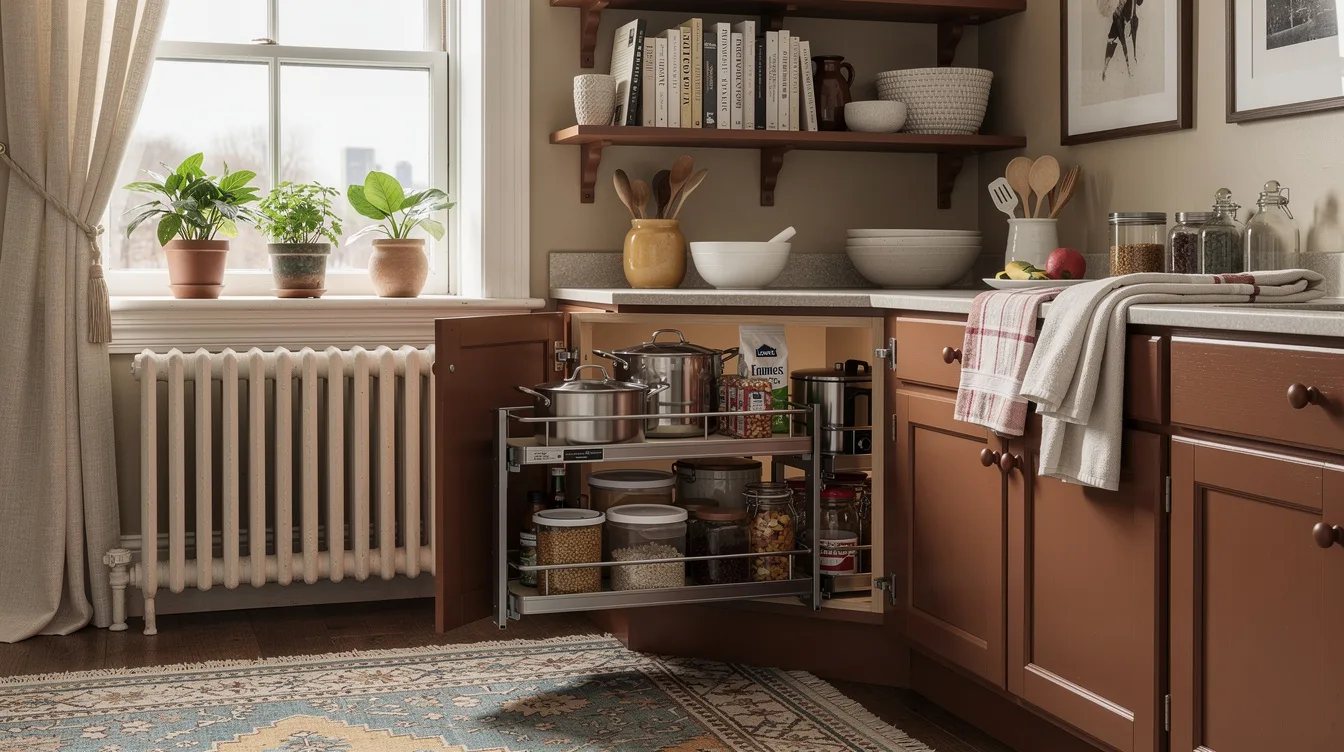
- Fit a Lowe's Chrome Pull-Out
- Choose the Correct Left or Right Swing
- Slide in Narrow Shelves for Bakeware
- Install Custom Wood Shelves for Heavy Pots
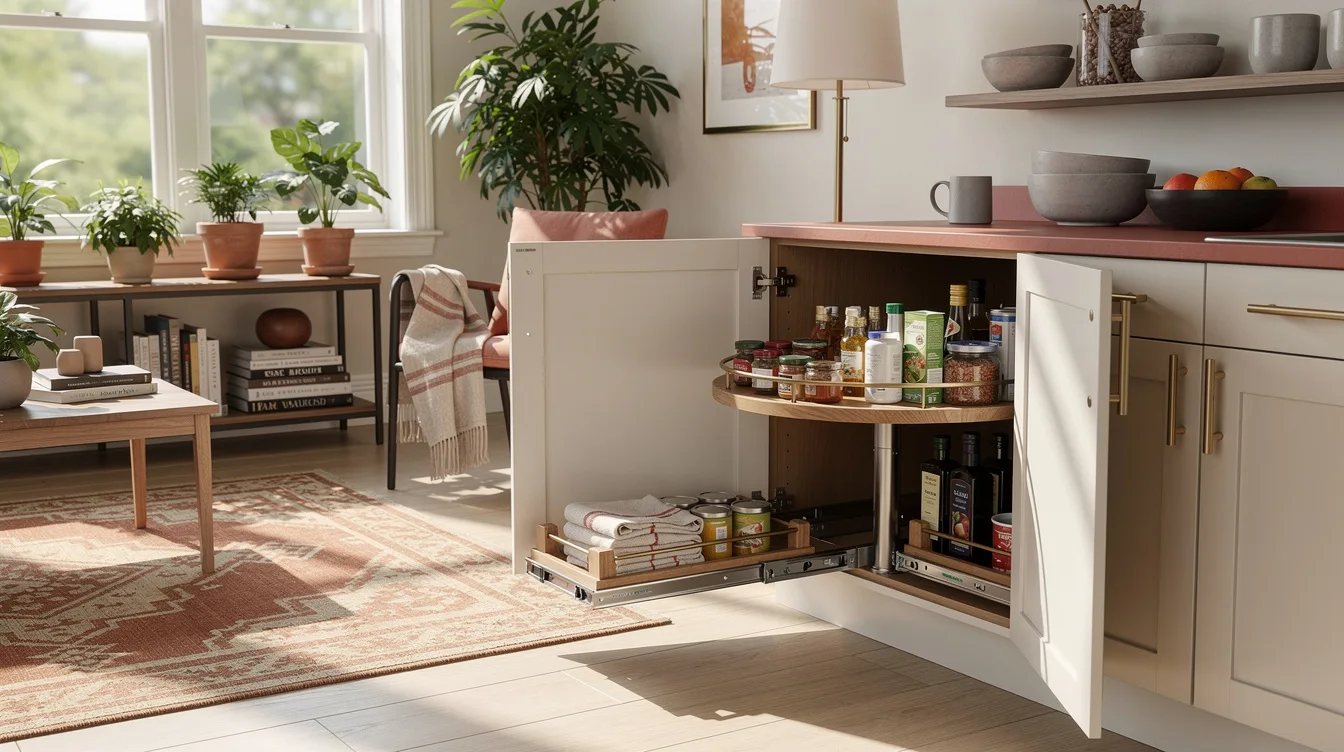
- Rotate Kidney Trays Into the Corner
- Use a Basic Lazy Susan for Small Items
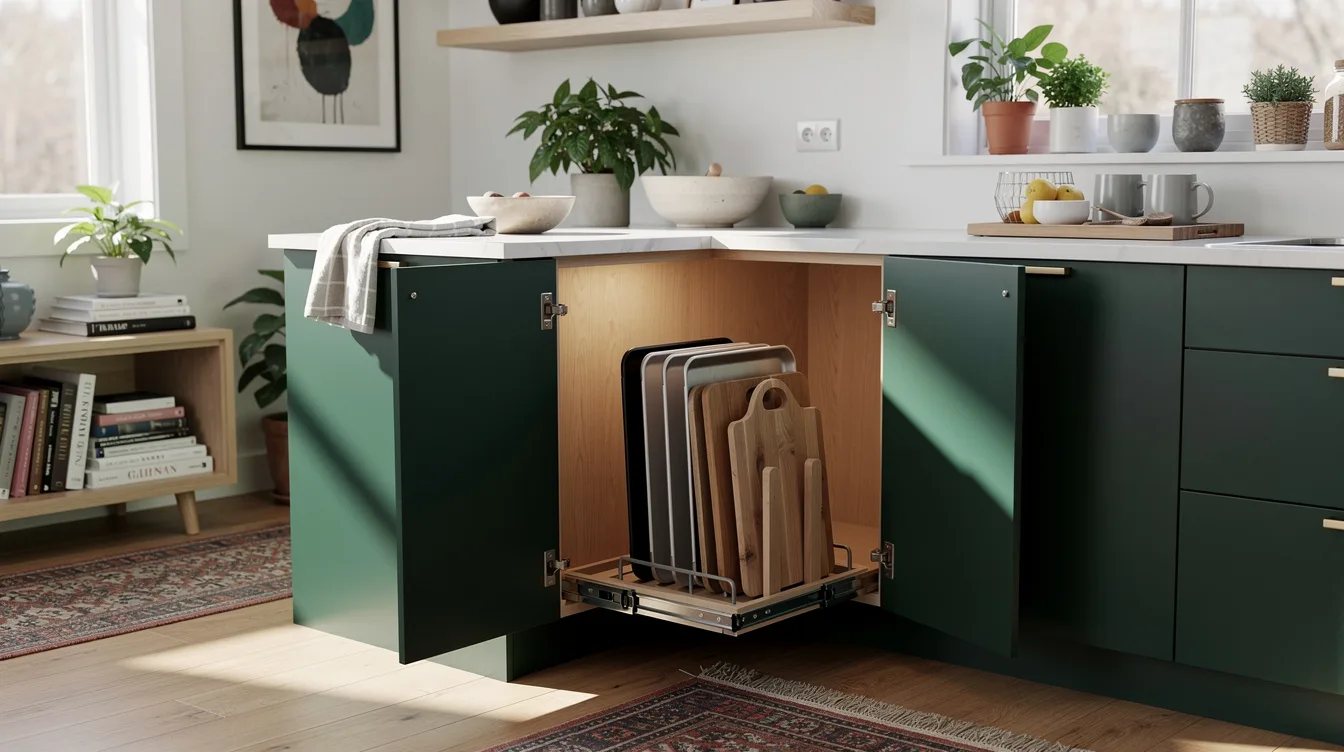
- Build a Vertical Tray and Board Station
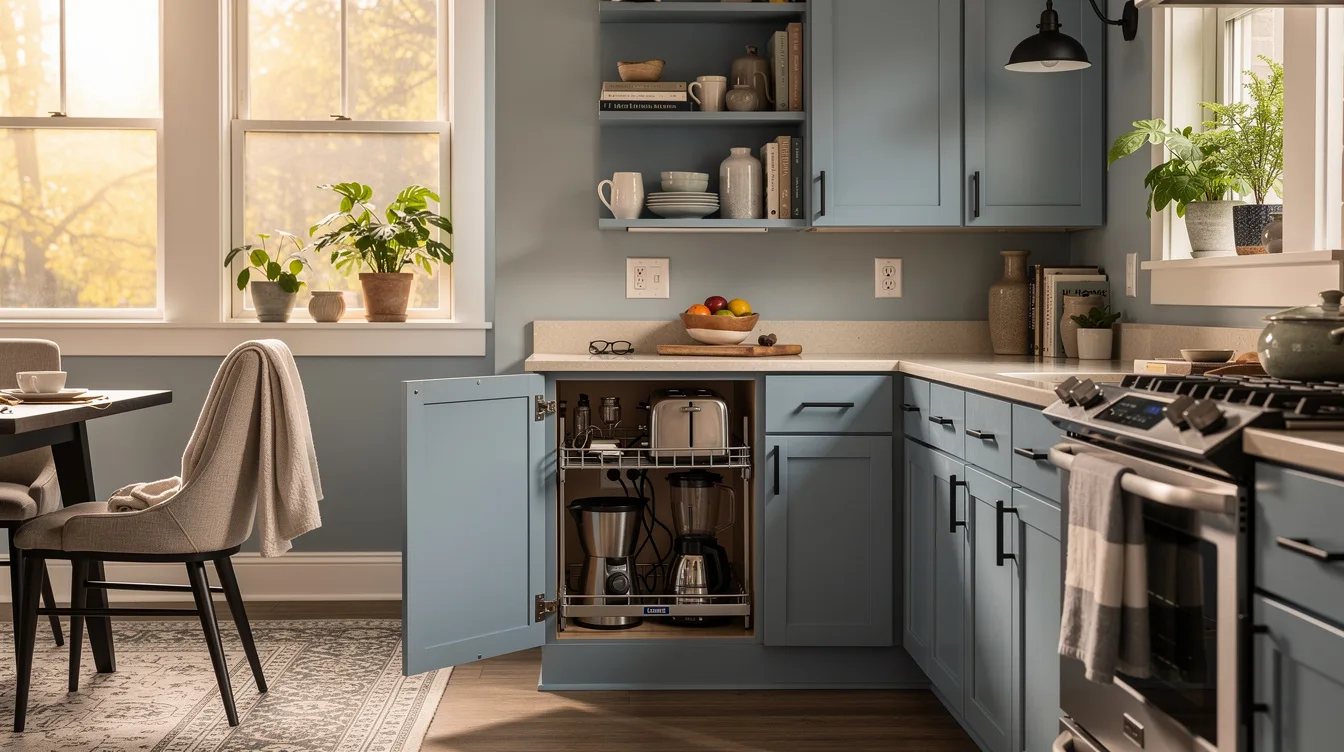
- Create an Appliance Garage Behind the Door
- Match Shelf Capacity to the Load
- Compare a Factory Pull-Out With a Retrofit
Measure the 36-Inch Blind Base First
A standard blind base is about 34.5 inches high and 24 inches deep, but its named size describes the wall run rather than the actual cabinet box. A cabinet labeled 36 inches may occupy only about 27 inches of cabinet width while sitting 9 to 12 inches from the corner.
Measure the cabinet opening, wall return, and door swing before shopping at Lowe's. That short survey prevents an expensive pull-out from arriving too wide for the available opening.
Leave a 3-Inch Filler for Door Clearance
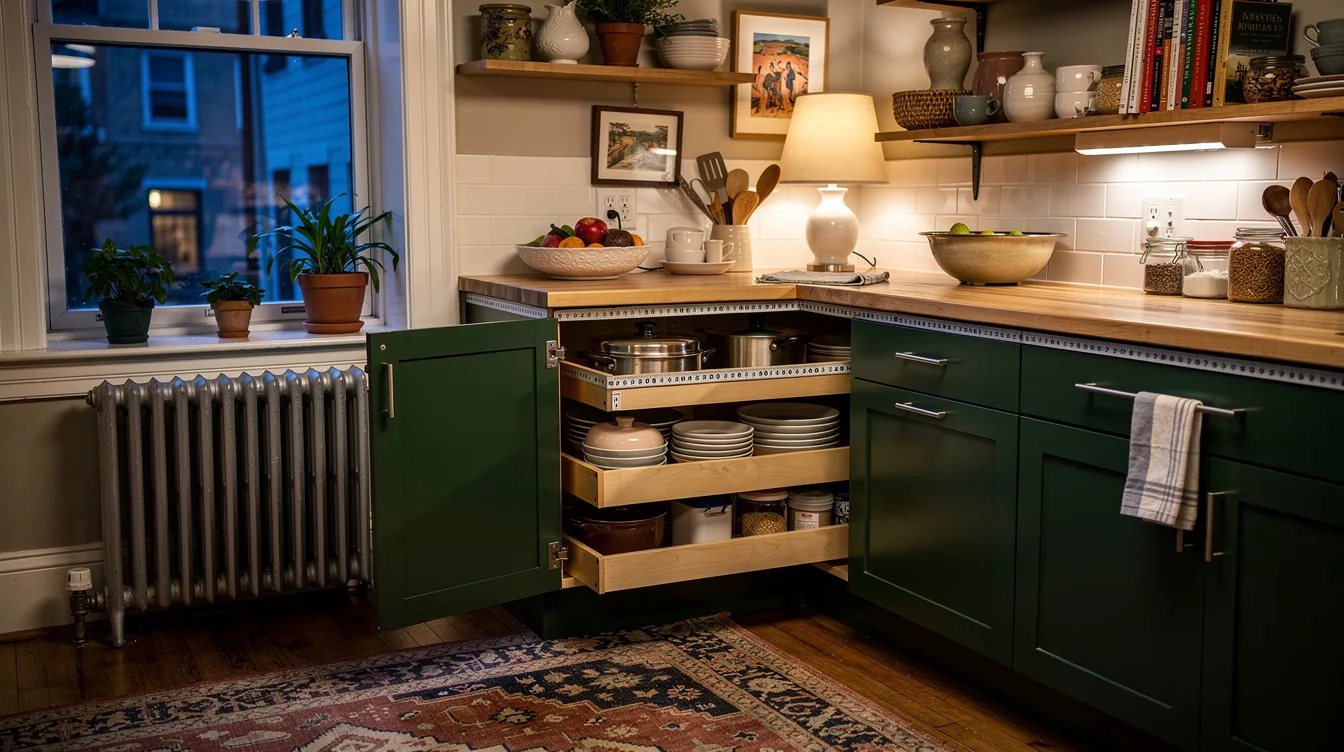
A blind corner needs a filler where it meets the neighboring cabinet, often about 3 inches wide. That narrow strip gives doors and handles room to open without scraping the adjacent face frame.
Use a straight wood filler finished to match the doors, then confirm that the pull-out clears it at full extension. Skipping this step creates a corner that technically stores items but remains awkward to use.
Fit a Lowe's Chrome Pull-Out
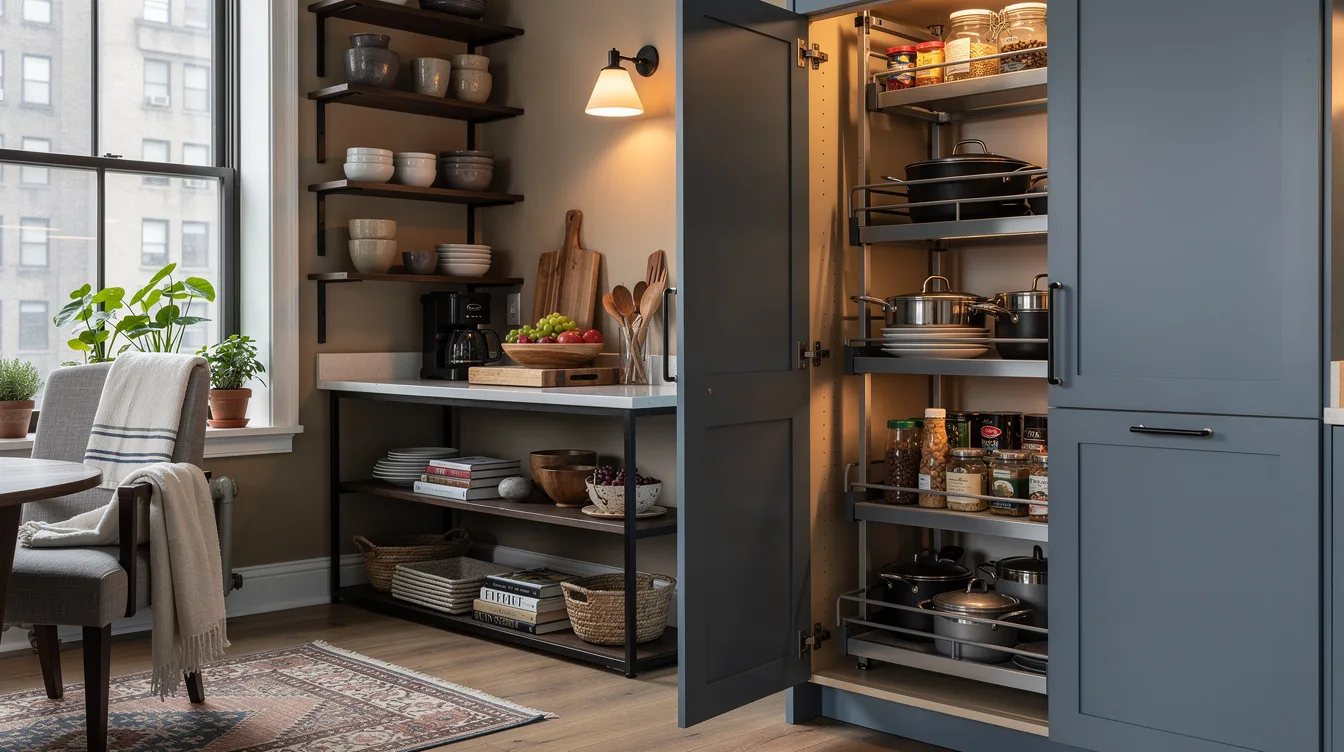
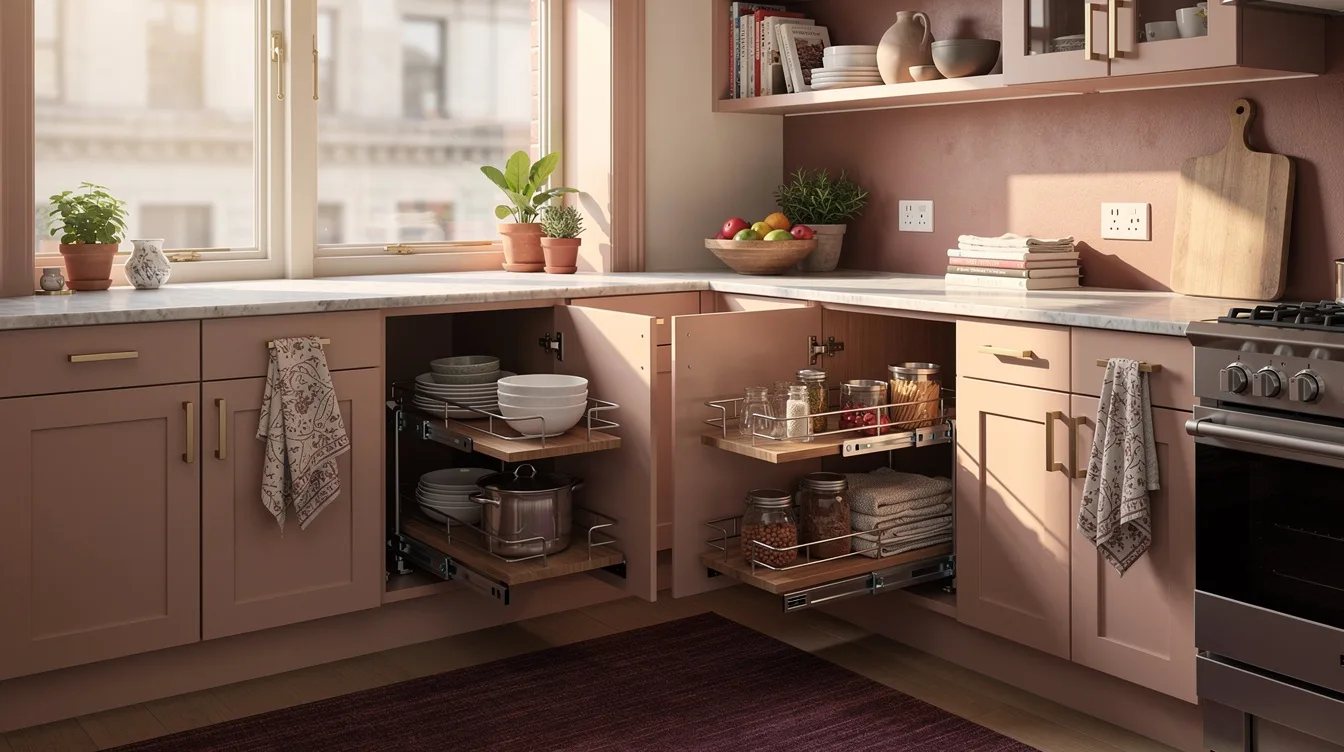
A two-tier chrome pull-out is the most direct way to expose the rear of a blind cabinet. One Lowe's option measures about 33.5 inches wide, 19.3 inches deep, and 30.7 inches high, with an opening near 34 by 21 inches.
The system costs about $227, though promotions and availability can change that figure. Chrome wire keeps the shelves visually light and lets you spot mixing bowls, baking pans, and small appliances quickly.
Choose the Correct Left or Right Swing
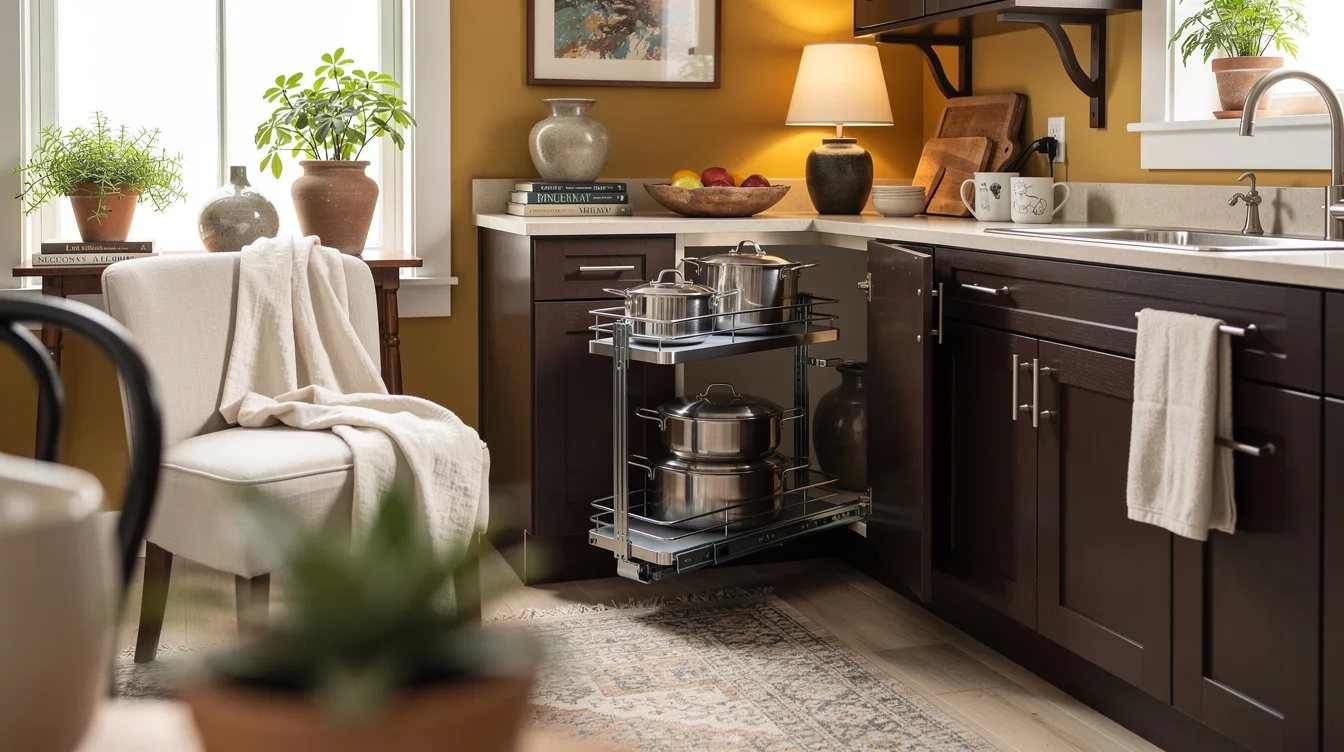
Pivoting trays must match the side from which the cabinet opens. Adjustable two-level units sold through Lowe's are available in left and right versions, so the swing direction should be decided before drilling or placing the order.
Leave clearance for the tray to rotate past the face frame, filler, and neighboring handle. A soft-close pivot is worth considering when the cabinet sits beside a busy prep area, where a hard stop can rattle dishes.
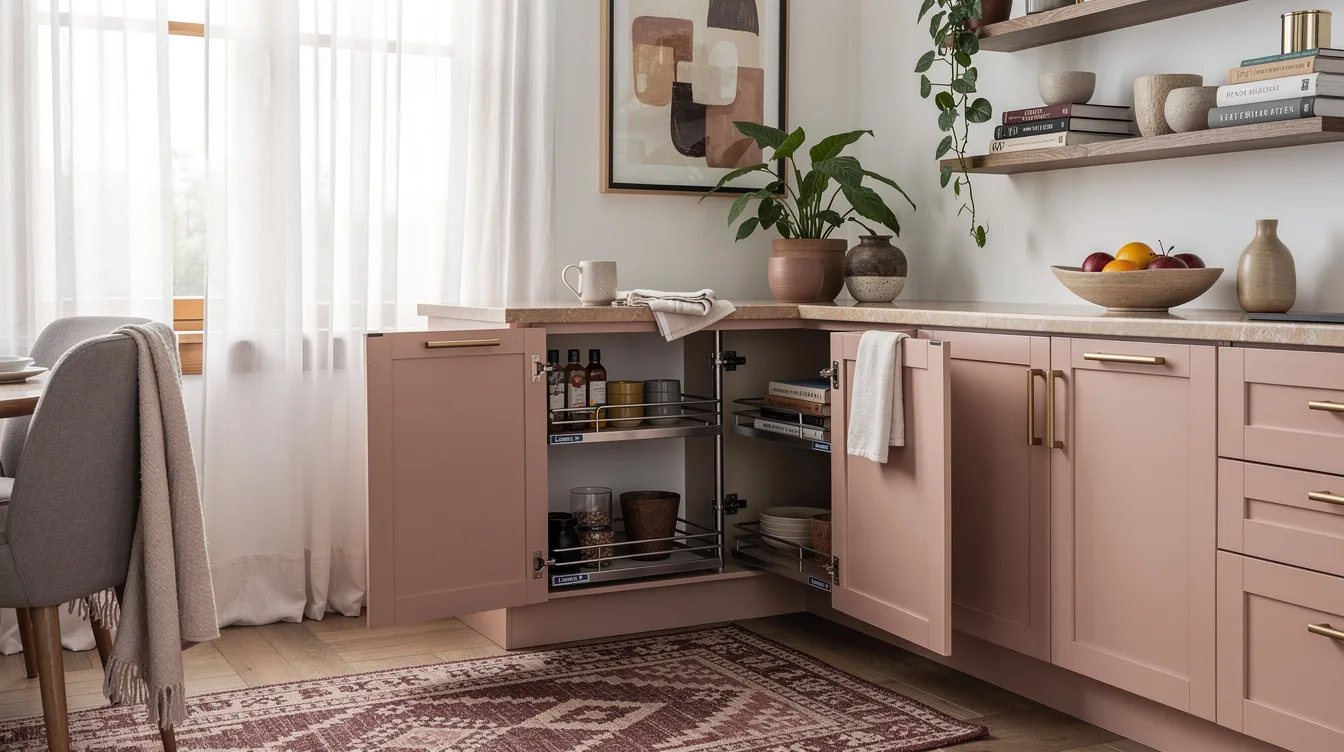
Slide in Narrow Shelves for Bakeware
A narrow sliding organizer can turn the dead side of the cabinet into a practical bakeware station. Look for a unit about 14 to 16 inches wide and roughly 21 inches deep, then group sheet pans, cooling racks, and cutting boards by size.
Birch shelves give this setup a warmer, sturdier feel than basic wire. The best position is usually near the opening, where a full-extension slide lets the entire stack come forward instead of forcing you to reach around the door.
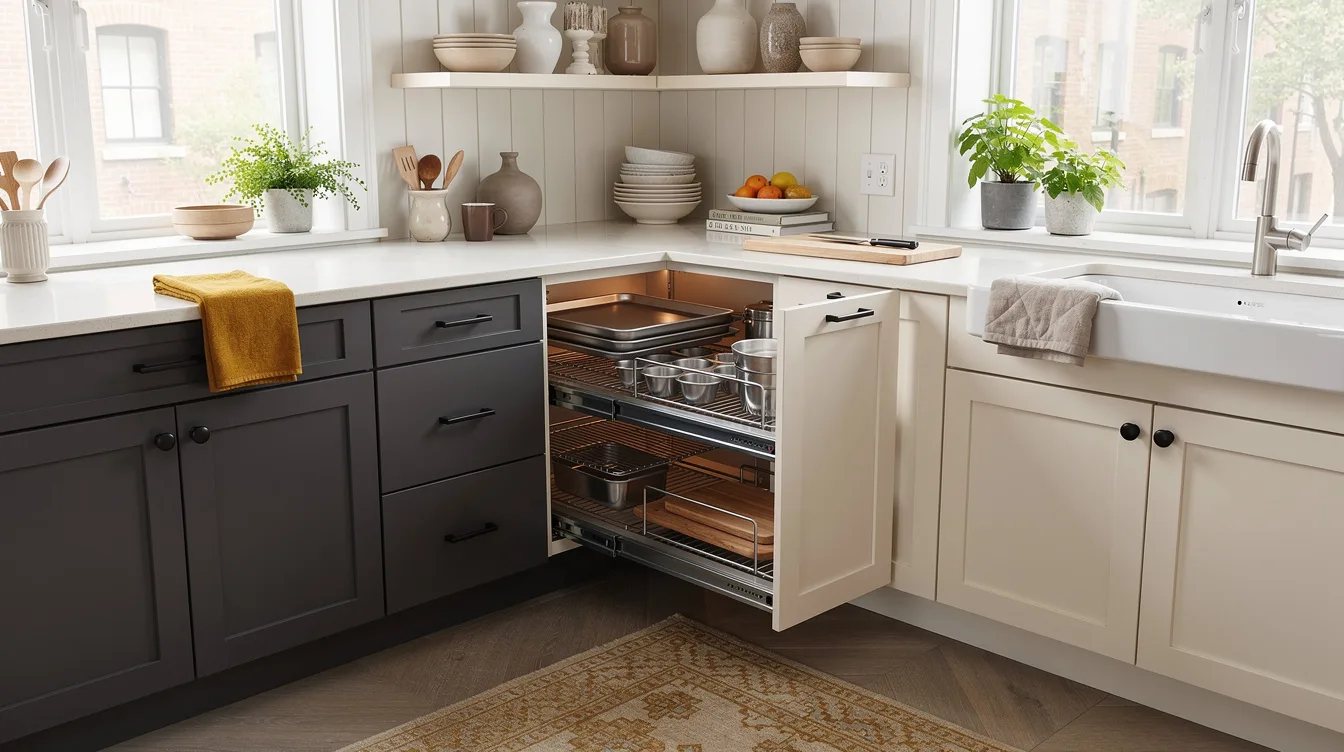
Install Custom Wood Shelves for Heavy Pots
Custom slide-out shelves make sense when the corner holds cast-iron cookware or a stand mixer bowl. Common shelf sizes are about 20 by 23.5 inches or 21 by 22.5 inches, with soft-close hardware available for a quieter pull.
Choose maple shelves or oak when the cabinet needs a furniture-like finish, and check the weight rating before loading it. Premium wood systems often cost about $400 to $900 or more, so reserve them for items that truly benefit from strong support.
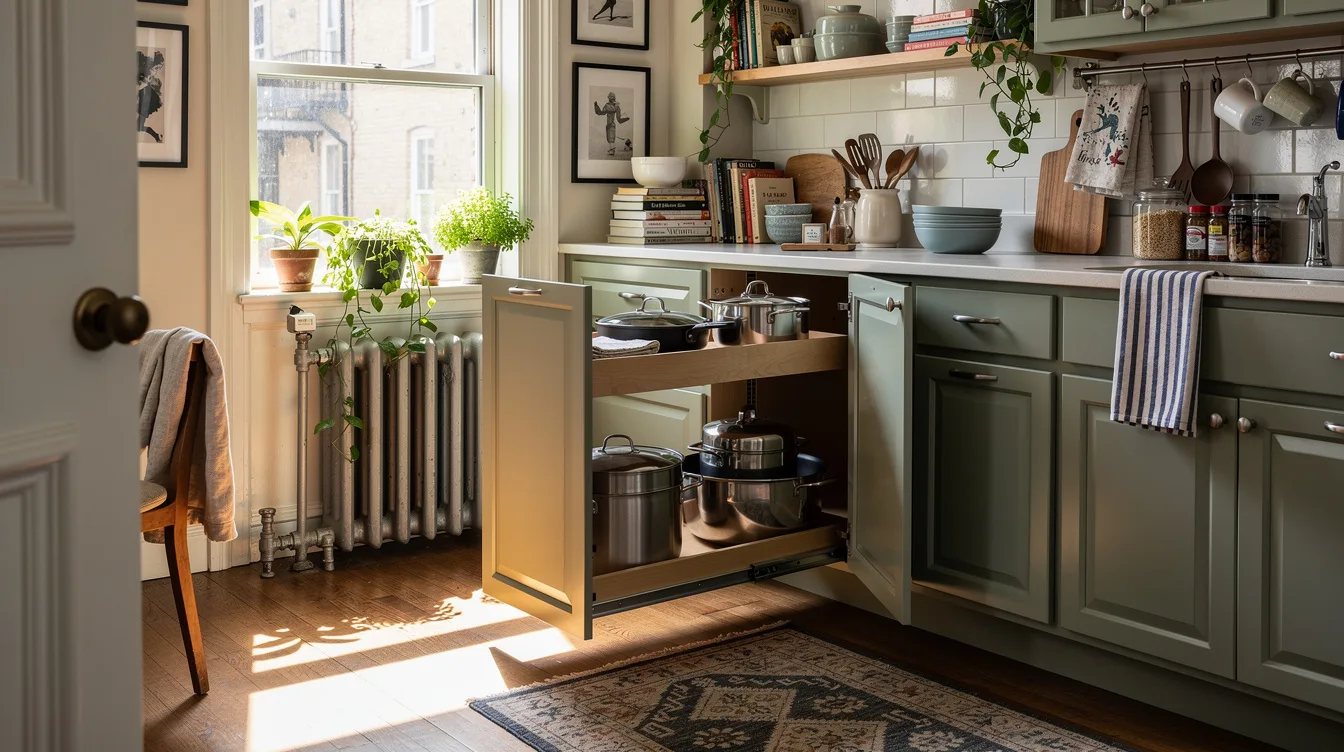
Rotate Kidney Trays Into the Corner
Kidney-shaped trays use the rear corners more effectively than a round shelf because their cutout follows the cabinet opening. A two-level kidney tray can hold oils, canned goods, or serving bowls while bringing the back contents toward you.
Set the upper tray high enough for the lower shelf to rotate freely. This arrangement works best when both walls have usable clearance, because the tray needs room to swing without hitting the neighboring cabinet.
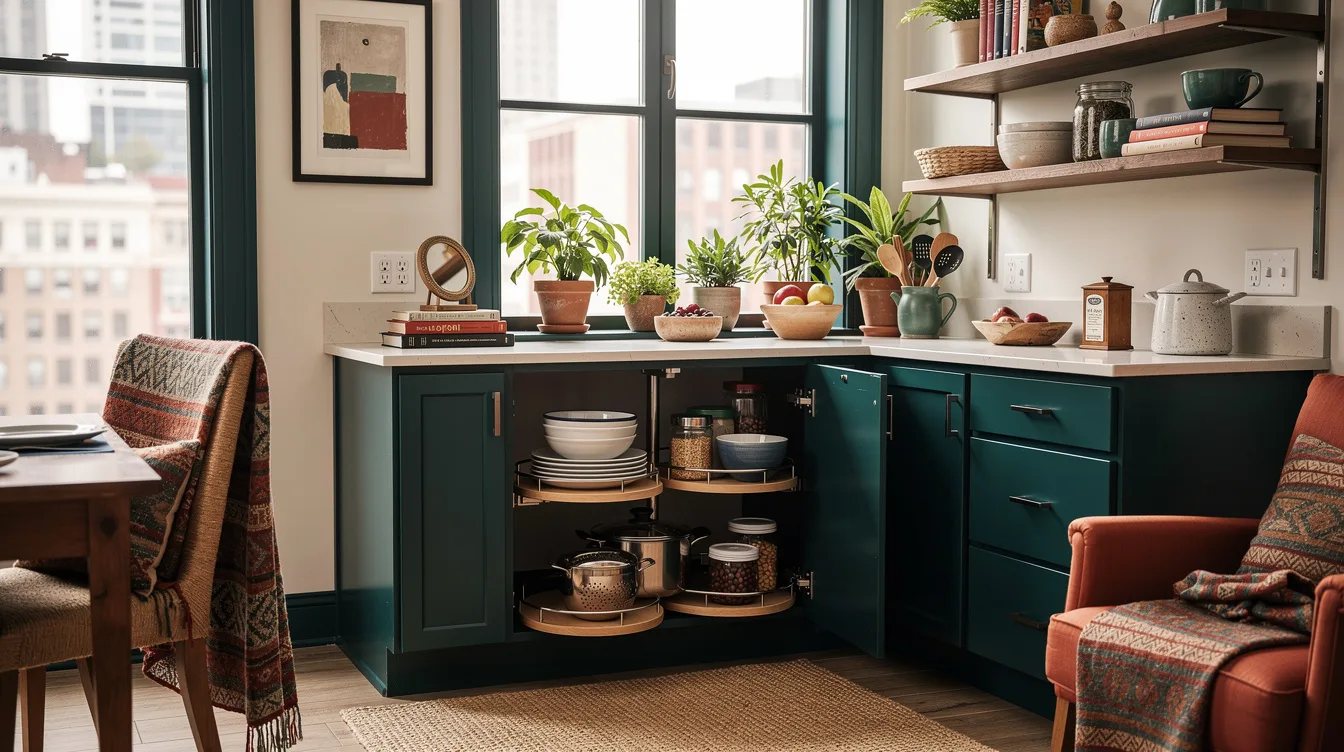
Use a Basic Lazy Susan for Small Items
A basic lazy Susan remains a sensible low-cost choice for spices, sauces, and compact pantry goods. Entry-level systems usually cost about $50 to $150, while sturdier versions move into the $150 to $400 range.
A two-tier lazy Susan gives small containers a clear home, but it is less efficient for wide pans and tall appliances. Use it for categories that benefit from rotation, not as a universal answer for every object in the corner.
Build a Vertical Tray and Board Station
When horizontal shelves waste the cabinet height, add dividers for baking sheets, cutting boards, and cooling racks. A vertical station keeps flat items upright and makes each piece visible from the front.
Use oak dividers with rounded edges so boards slide out without catching. Keep the slots wide enough for handles and thick trays, and anchor the dividers firmly because leaning sheets can shift when the door opens.
Create an Appliance Garage Behind the Door
A deep blind corner can hide a toaster, blender base, rice cooker, or slow cooker that only comes out occasionally. Place the heaviest appliance on a low pull-out shelf and reserve the upper level for cords, lids, and accessories.
Rubber shelf liner keeps appliances from sliding as the tray moves. Do not install an outlet inside the cabinet unless the work is handled to local electrical standards, and keep heat-producing appliances unplugged when stored.
Match Shelf Capacity to the Load
Heavy wire or wood pull-outs can carry up to about 40 pounds per shelf, while lighter plastic units are better for pantry goods and small containers. Two shelves rated for the load are more useful than four shallow trays that flex under cookware.
Use steel hardware for cast iron, stoneware, and stacks of plates. Distribute weight across the shelf instead of concentrating it at the front edge, where leverage puts the most stress on the slides.
Compare a Factory Pull-Out With a Retrofit
A blind cabinet with only a shelf can cost about $600, while a factory cabinet with an integrated pull-out can exceed $2,000. A factory pull-out may look cleaner, but the price difference is substantial when the cabinet box is already installed.
A retrofit from Lowe's often falls between about $50 and $400, depending on the mechanism and materials. Start with the existing opening, then spend more only when the corner holds heavy cookware or needs frequent daily access.
Keep reading
- Blind Corner Cabinet Eating Your Pans? 12 Container Store Fixes Under $100
- Blind Corner Cabinet Eating Your Cookware? 12 Home Depot Pull-Outs
- Corner Cabinet Eating Your Pans? Try This Home Depot Renter Fix
Start by measuring the real opening and marking the filler, then choose the storage motion that matches what the cabinet will hold. A modest Lowe's retrofit is usually the smartest first move, with premium wood hardware reserved for heavy or frequently used items.