Low-Maintenance Travertine Shower Designs for a Calm Natural-Stone Sanctuary
20 november 2026Travertine shower ideas work best when the stone is honed, sealed, and paired with fewer grout lines, so your bathroom stays calm without becoming a cleaning project. I learned that after scrubbing a porous wall every weekend. You’ll get warmth, texture, and an earthy retreat with smarter choices from the start. If you want the room to feel genuinely restorative, begin with maintenance rather than decoration.
- Layer a travertine tile shower with one quiet accent
- Could a shower niche become the room’s focal point?
- Build the Three-Height Light Stack
- Swap glossy grout for a soft, honed surface
- Frame the shower with a warm wood vanity
- Choose the Two-Wood Rule for a softer contrast
- Hang linen outside the spray zone
- Price the stone before you commit
- Paint the dry walls a mineral green
- Mix metal finishes with a clear hierarchy
- Create a small shower marble moment
- Build storage instead of adding more decor
1Layer a travertine tile shower with one quiet accent
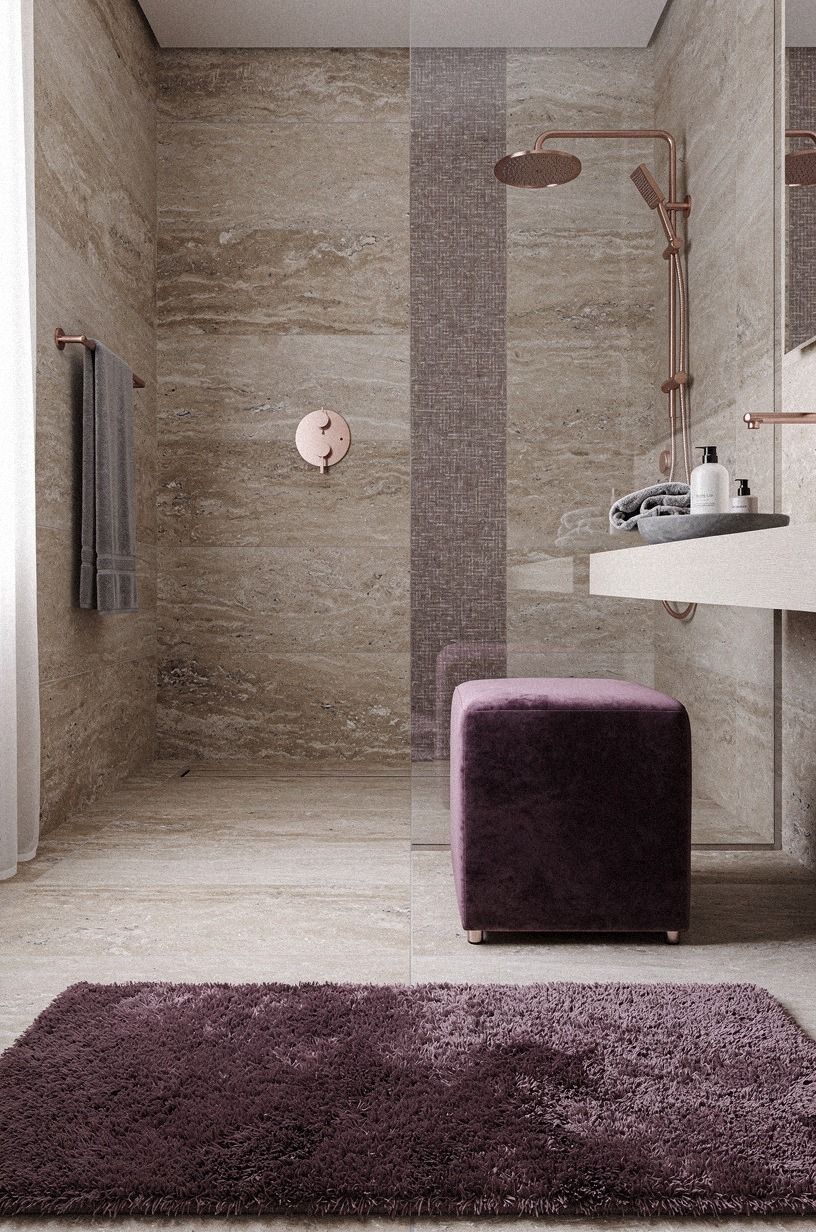
A full travertine tile shower can feel rich without looking busy when you keep the surrounding finishes restrained. Choose filled honed travertine with soft cream movement, then let one narrow rose-gold accent strip carry the visual interest. Add a plum-grey, deep-pile mohair velvet stool outside the wet zone, where its texture can soften the harder surfaces.
I’d skip mixing three tile colors here. It’s tempting, but the extra variation makes a small shower feel chopped up.
A single accent of hand-glazed ivory zellige at shoulder height gives your eye somewhere to land, while the larger stone field keeps the room serene. If you’re unsure about scale, use larger wall pieces and reserve smaller mosaics for the shower floor.
But don’t let “low maintenance” turn into a flat beige box! Add a brushed nickel rain head, a linen-colored curtain outside the wet zone, and one framed print where steam won’t reach it. You can borrow the slower, ritual-like mood from this gentle shower warmup guide, then keep the room itself visually quiet.
Your accent should support the travertine, not compete with it. I’d repeat one undertone from the stone in the grout, vanity, or curtain.
That small connection makes the entire bathroom feel more intentional. You won’t need another dramatic surface once the tile has enough room to breathe.
2Could a shower niche become the room’s focal point?
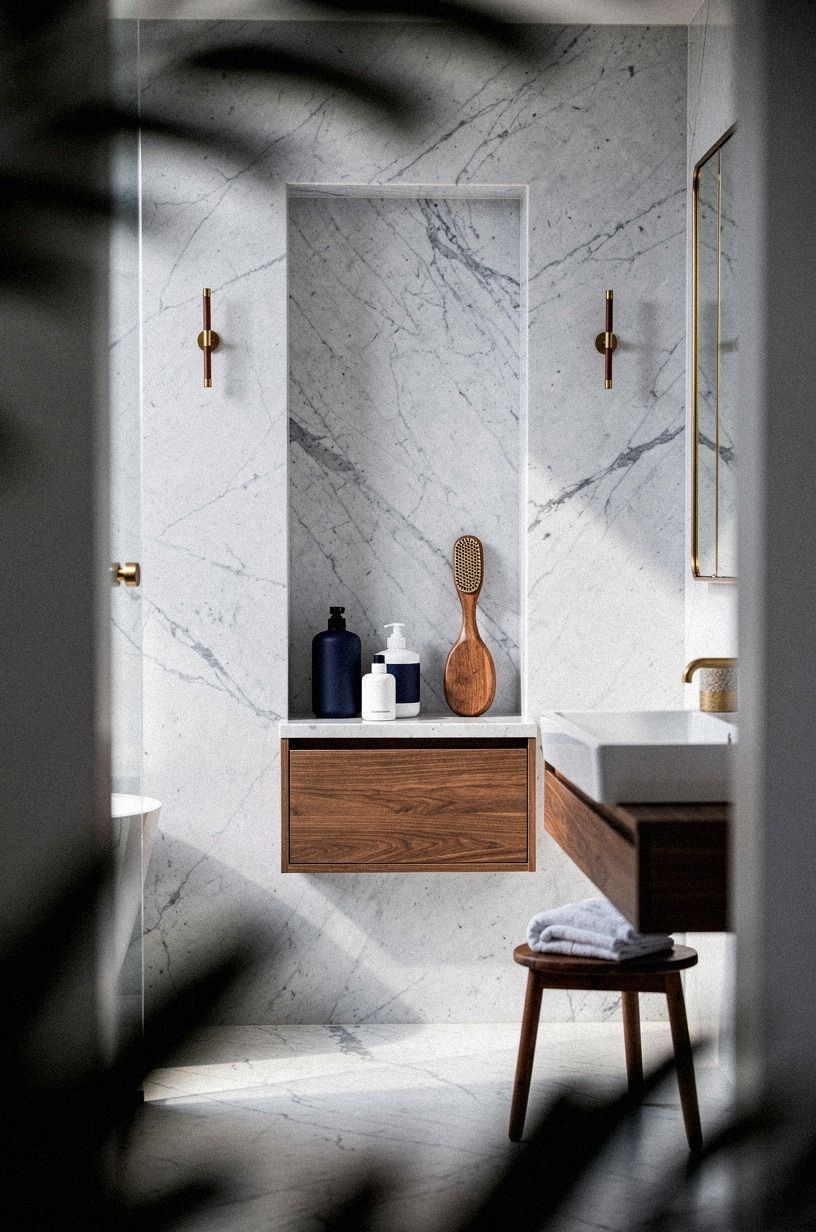
Yes, if your shower niche has enough depth, contrast, and practical storage to earn that attention. A recessed niche lined with Carrara marble with subtle grey veining turns shampoo bottles into part of the composition, especially against a deep navy tile field with warm walnut nearby. You’ll want the niche low enough for daily reach but high enough to avoid a cluttered ledge.
I’d use one long shelf instead of several tiny compartments. The narrow openings collect soap film and make your products look like a crowded store display. A single shelf gives you room for a walnut stool outside the spray zone, a folded white towel, and one simple ceramic bottle.
What do you want to see first when you step in, a row of plastic bottles or a deliberate stone frame? The answer matters more than the tile price. If you’re planning a complete bathroom reset, pair this idea with a hot shower skin-care guide and keep the niche palette limited to navy, white, and walnut.
Before you approve the niche, check the slope, waterproofing, and shelf depth with your installer. A beautiful recess that holds standing water will become frustrating quickly.
I’d also keep the back panel slightly darker than the surrounding marble. You’ll get a subtle focal point without turning the niche into a theatrical feature.
3Build the Three-Height Light Stack
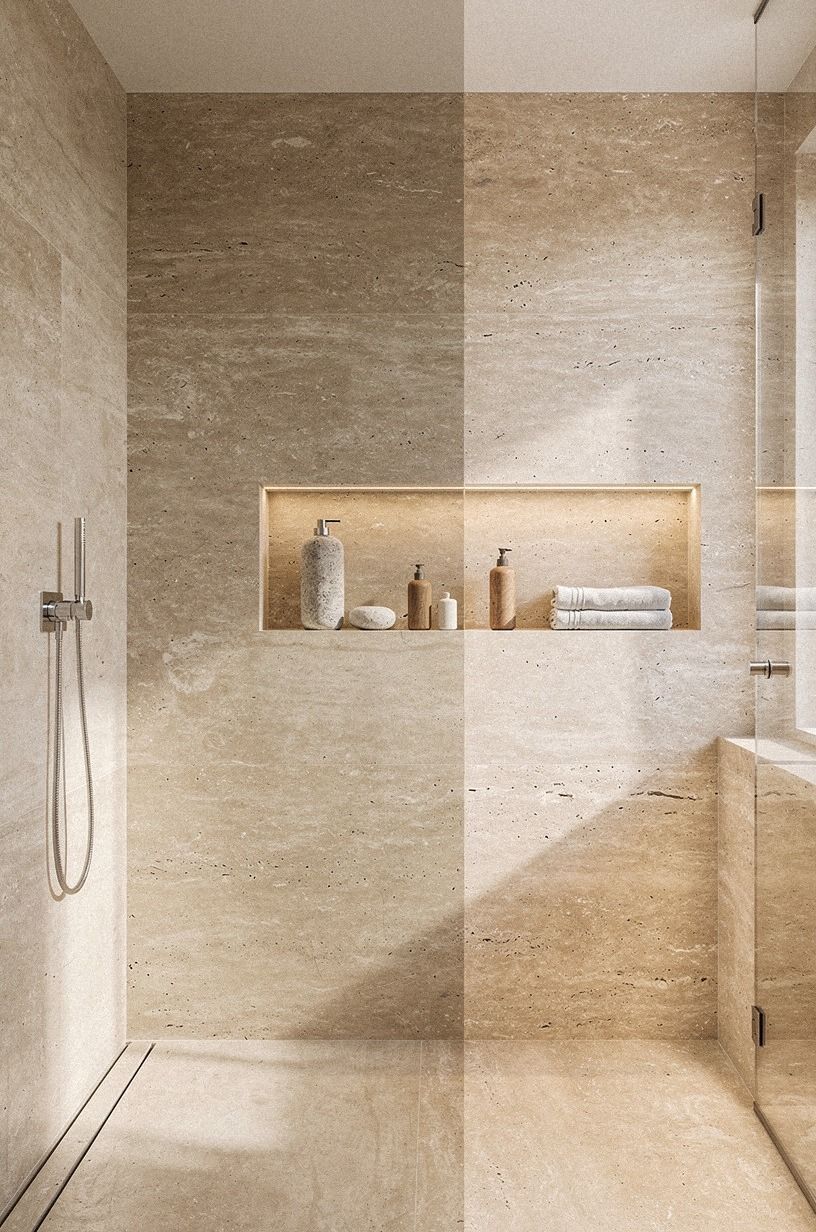
The Three-Height Light Stack uses ceiling light, eye-level light, and a low glow to make a travertine shower feel dimensional.
4Swap glossy grout for a soft, honed surface
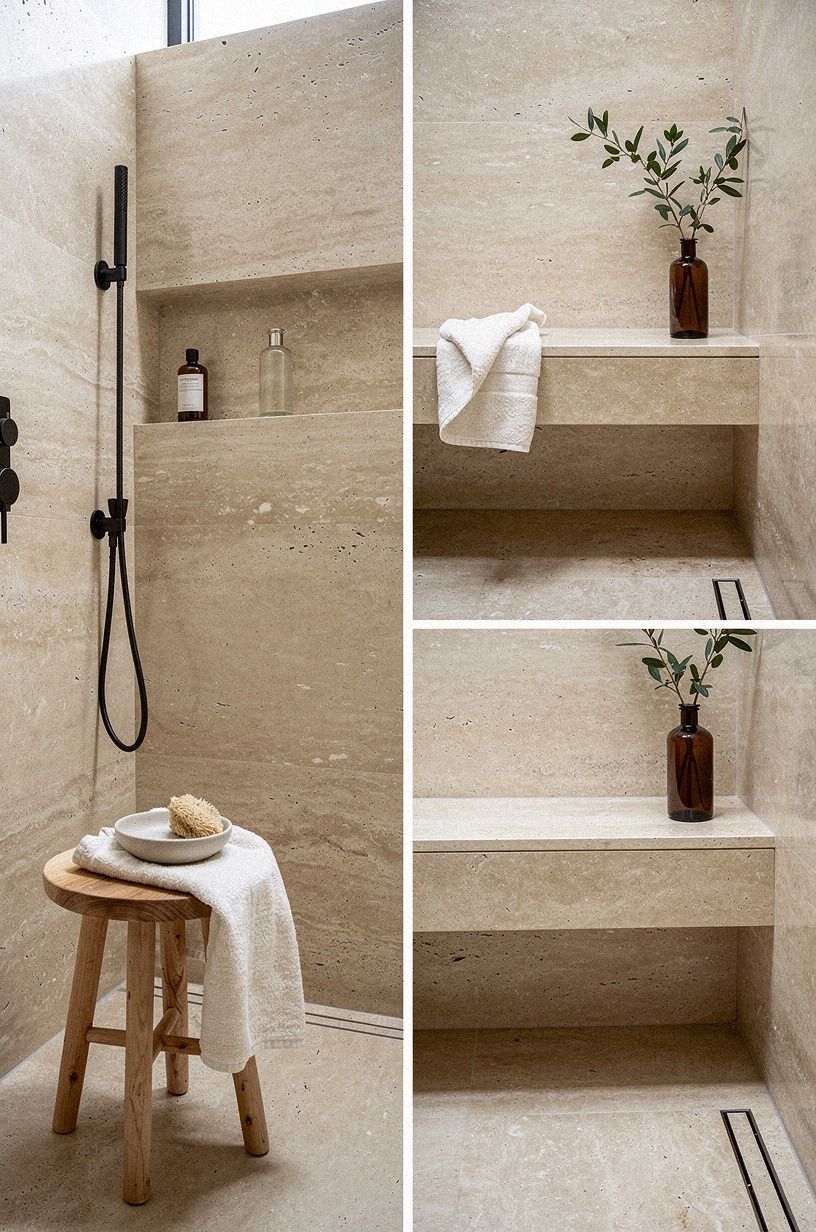
If you want the stone to look natural, choose a honed finish and grout that sits close to the quietest tone in Calacatta marble with gold veining. Honed Calacatta marble hides small mineral shifts better than a polished surface, and it won’t bounce every bulb back into your eyes. You’ll also get a more grounded feel underfoot.
I’d avoid stark white grout. It turns the shower into a grid and makes mineral deposits impossible to ignore.
A warm sand grout creates continuity between pieces, while a slightly darker line can frame the layout if your room needs definition. My preference is the softer match because it lets the stone read as one surface.
But you still need a practical floor. Use smaller pieces with reliable traction, such as a small-format Calacatta marble mosaic with a textured face. Keep the floor pattern simple, then direct your attention to the wall.
A gentle shower routine fits this approach because the whole room should feel easy, not fussy. You can pair the design notes with this hot shower care guide while you plan the rest of the space.
Ask your tile professional whether the marble needs filling before installation. Natural variation can be charming, but deep voids collect water and soap if they’re left untreated.
I’d rather have a softly varied surface than one that demands constant attention. Seal the stone according to the manufacturer’s instructions, then keep your cleaning products gentle and non-acidic.
5Frame the shower with a warm wood vanity
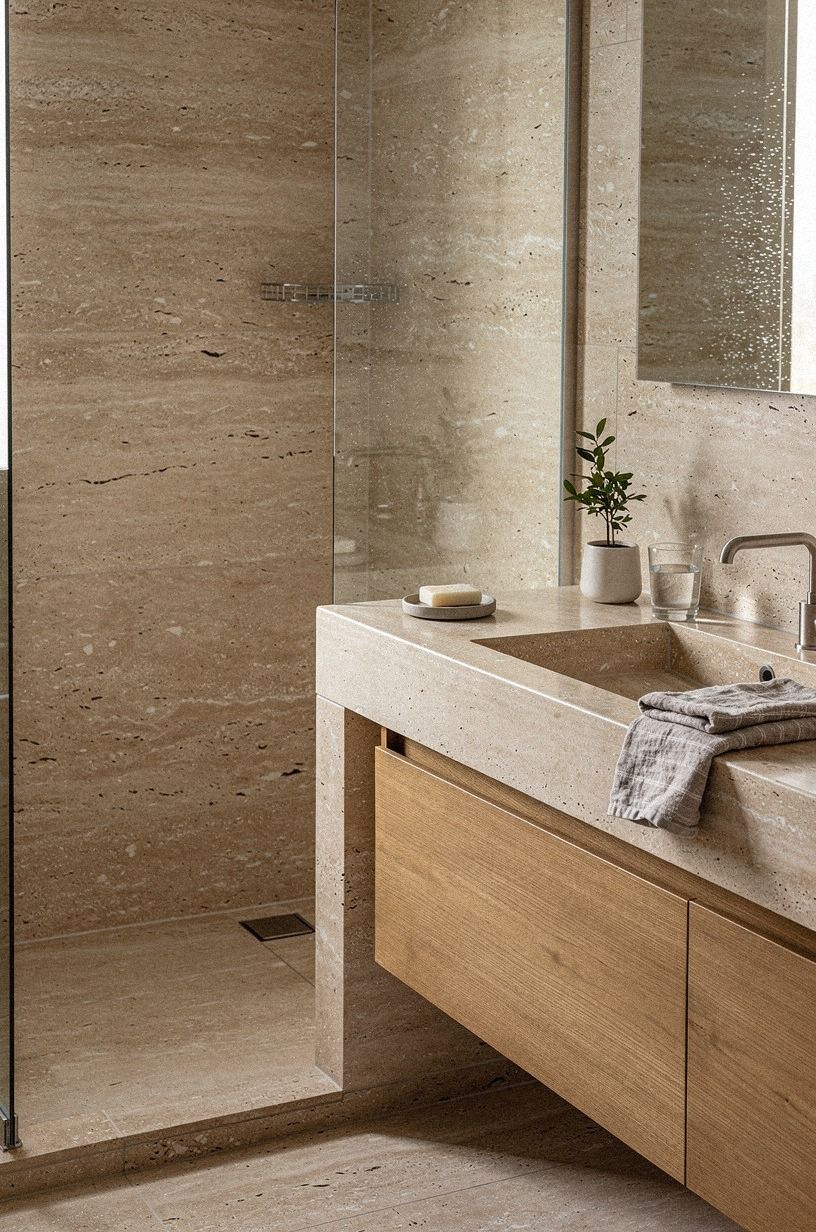
Travertine gets even more inviting beside warm wood, especially when the vanity has visible grain and simple hardware. A cerused white oak vanity brings pale texture without competing with the stone, while a charcoal countertop and floating design keep the floor visible. You’ll want the vanity height between 32 and 36 inches for a comfortable daily setup.
I’d choose an integrated sink only if you care more about easy cleaning than furniture character. A furniture-style cabinet with a honed stone top feels more collected and gives you a place for towels. IKEA TONSTAD oak-effect storage can create the same direction at a lower cost, though you’ll need to check the finish carefully before placing it near heavy moisture.
Keep the hardware restrained. One aged brass faucet is enough to warm the room, and you don’t need matching brass on every hook and hinge.
If you’re styling the vanity, use a stone tray, a folded Turkish cotton towel, and one low ceramic cup. Nothing more.
The wood should feel like a quiet counterpoint, not another focal wall.
Your vanity can also hide the practical mess that makes a bathroom feel less peaceful. Choose drawers for daily items and reserve the deepest cabinet for backup products.
I’d leave some empty space rather than filling every compartment. A calm room usually comes from editing, and you’ll appreciate that decision on busy mornings.
For a more dramatic room, use walnut or smoked oak, but keep the rest of your palette pale. For a softer room, choose white oak with a matte finish and repeat its warmth in the mirror frame. You can carry the same material language into a nearby shelf or stool, but don’t let the wood spread everywhere.
6Choose the Two-Wood Rule for a softer contrast
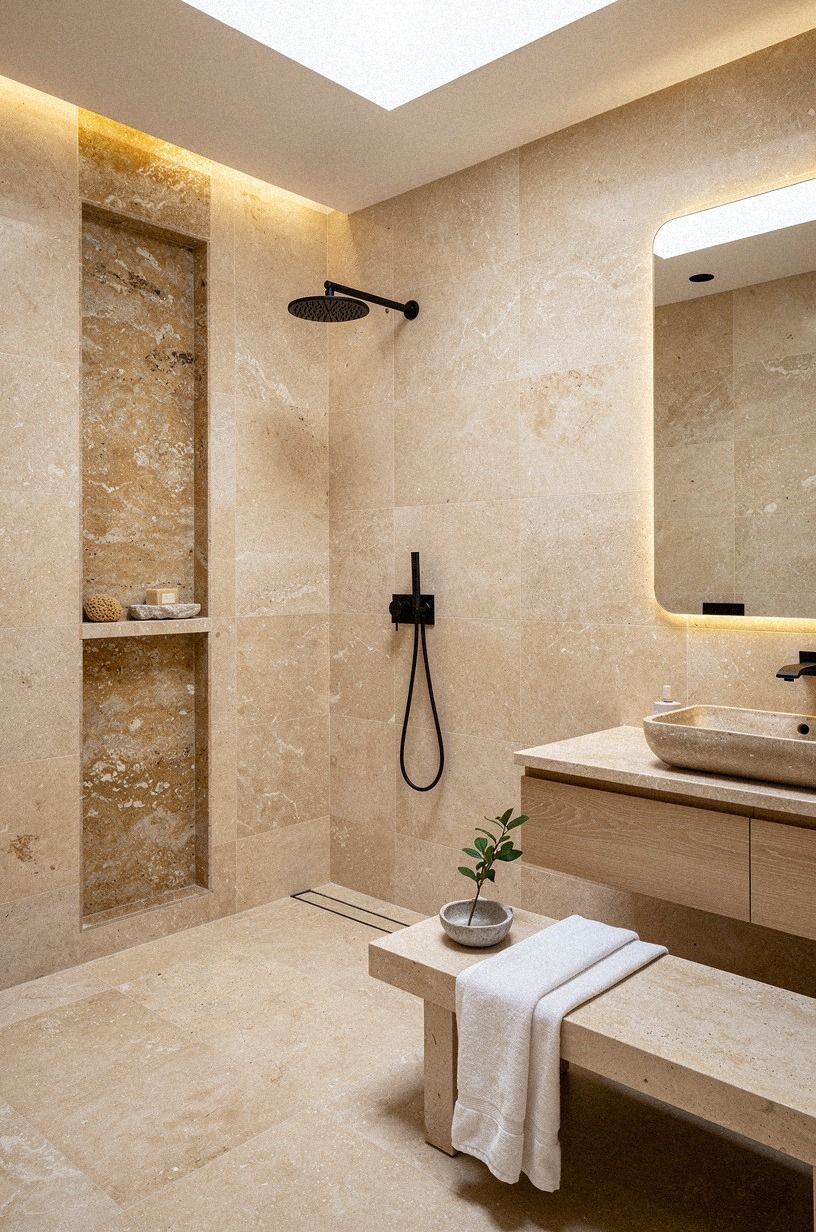
The Two-Wood Rule limits your bathroom to two wood tones, so the travertine still has room to breathe.
7Hang linen outside the spray zone
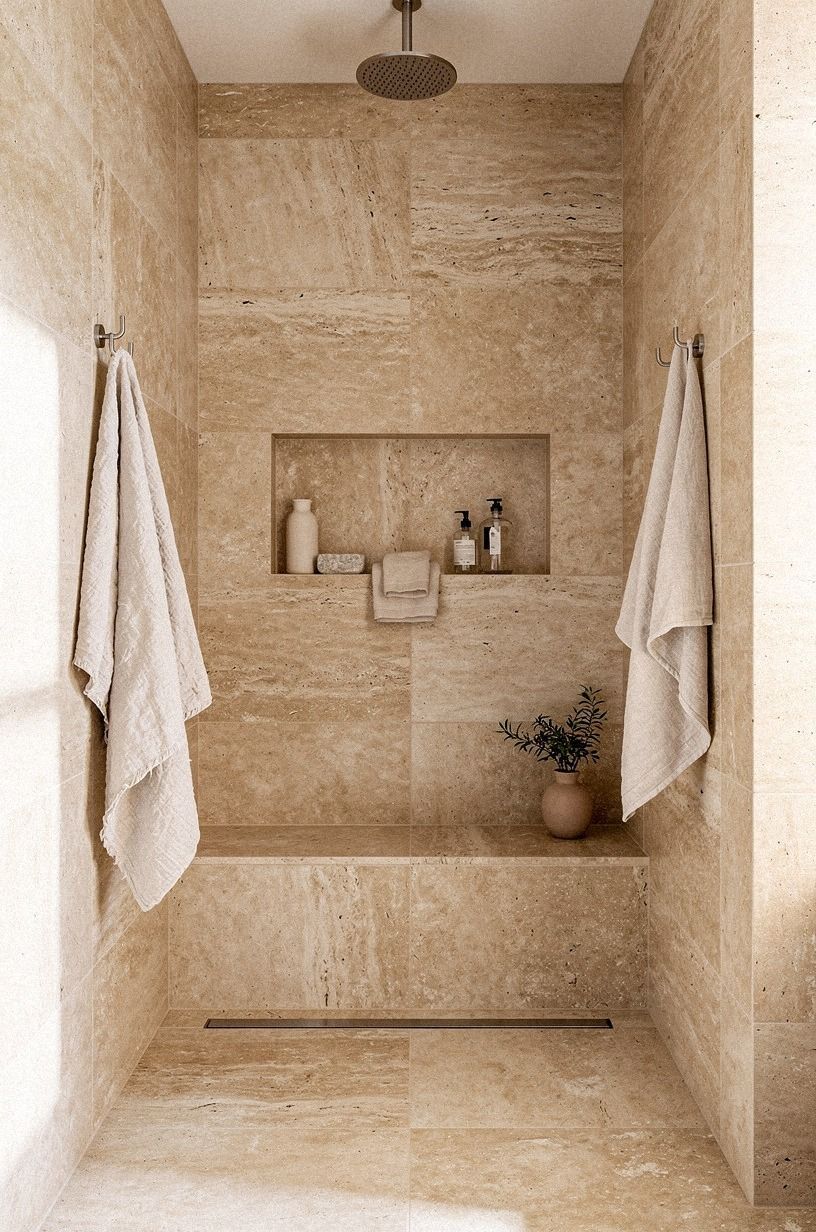
A shower curtain can look intentional beside travertine when it has weight, texture, and enough room to move. Choose Belgian flax linen in midnight blue or ivory, then hang it from a copper rod outside the splash zone. You’ll soften the hard tile and gain privacy without covering the stone permanently.
I’d avoid a busy botanical print here. Travertine already has movement, and a second strong pattern can make the sanctuary feel noisy. A simple curtain with a narrow hem works better, especially if your vanity or floor already carries a distinct material.
And a renter can use this idea immediately! A tension rod, removable hooks, and a washable 600gsm Turkish cotton mat create a warm layer without drilling.
Keep the mat outside the wettest area so it dries quickly. You can also pull color from the curtain into a small wall print, then connect the morning ritual to this hot shower article.
The result feels soft, not staged.
Your curtain should dry fully between uses. I’d choose a wide hem, a washable liner, and enough floor clearance to prevent the fabric from sitting in moisture.
If you’re using a glass panel instead, book-matched walnut can add warmth at the vanity or beside the window. It adds softness without introducing another complicated surface.
8Price the stone before you commit
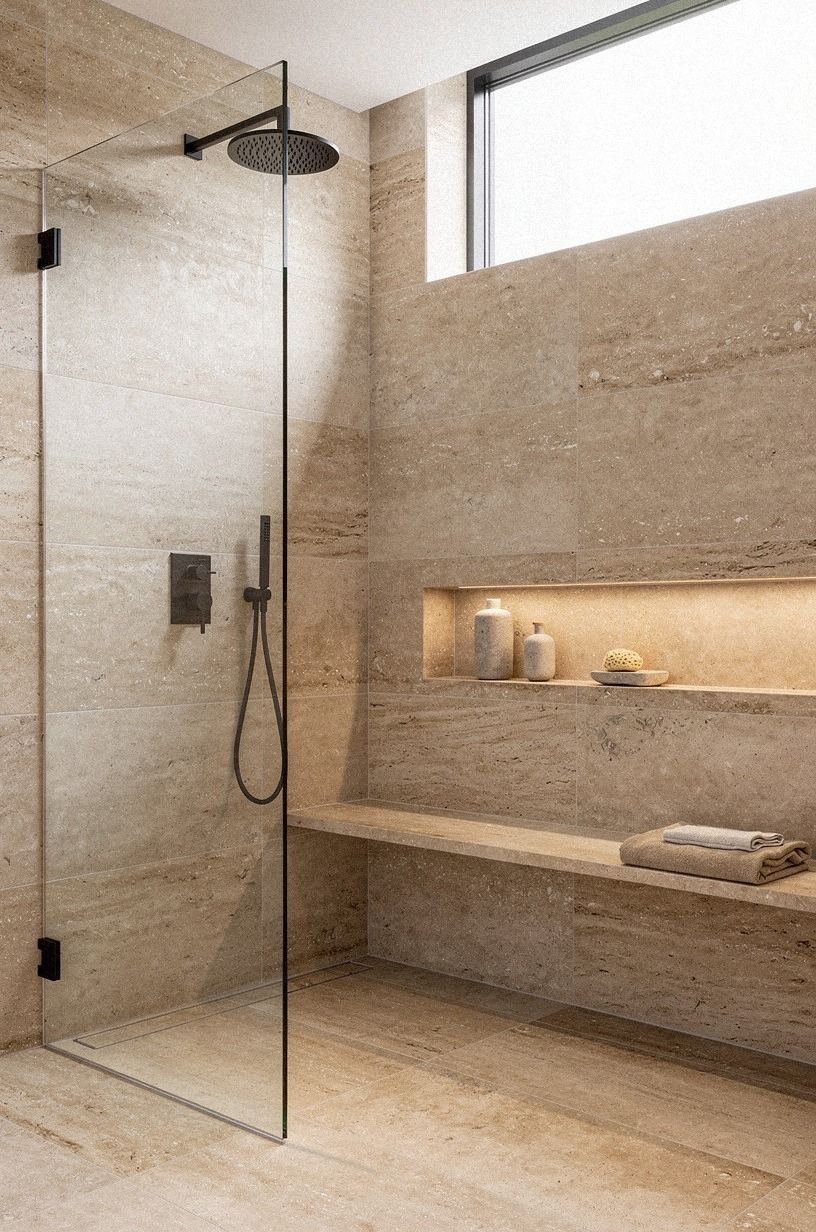
Travertine can fit several budgets, but the shower itself becomes expensive when tile, waterproofing, plumbing, and labor arrive together. A small cosmetic refresh may stay near the lower end, while a full re-tiled shower with new plumbing can move into high-end territory. You’ll want the numbers in front of you before choosing a stone pattern.
For a lower-cost direction, keep the existing shower footprint and spend on the surface your eye sees first. Zellige tile typically runs $15-$35 per square foot, while subway tile is listed at $2-$10 per square foot.
You can use a smaller amount of natural stone on the niche or floor rather than covering every wall. Sage green paint and natural wood can supply warmth without adding much material cost.
I’d skip changing plumbing just to move a fixture a few inches. Put that money toward waterproofing, a reliable shower valve, or a vanity that won’t swell. If you’re planning a full remodel, this gentle warm-up shower guide can sit beside your planning notes as a reminder that daily comfort matters as much as the finish.
Request separate estimates for tile, waterproofing, fixtures, and labor. You’ll see where the budget is going, and you can decide what deserves protection if costs rise.
I’d never reduce the waterproofing allowance to preserve a decorative border. The hidden work keeps your beautiful stone safe.
Also budget for maintenance supplies and future resealing. Travertine isn’t difficult, but it does reward consistency. If you know what the material needs before installation, you’ll feel more confident choosing it.
9Paint the dry walls a mineral green
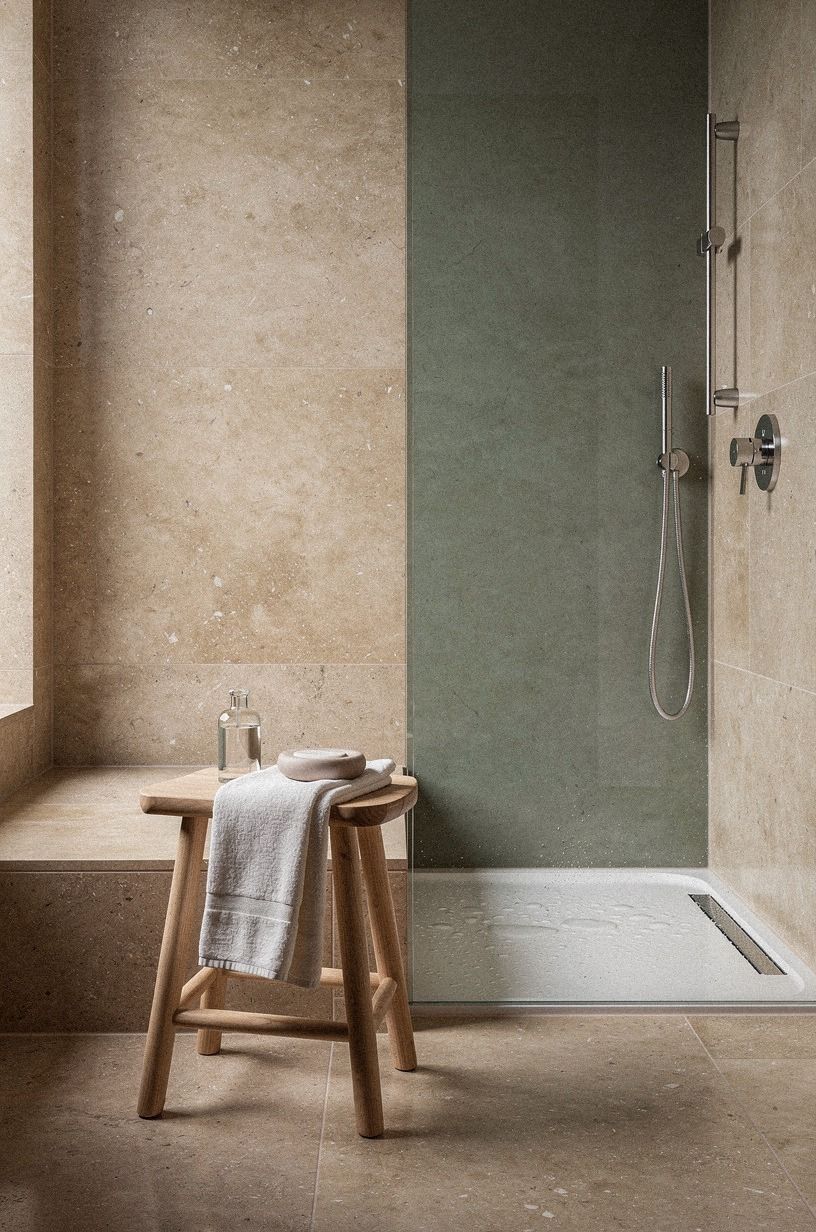
Travertine loves a mineral palette of terracotta, stone, and olive because the colors echo shaded courtyards without making the bathroom feel themed. Pair the dry walls with unlacquered brass that can develop a gentle patina over time.
10Mix metal finishes with a clear hierarchy
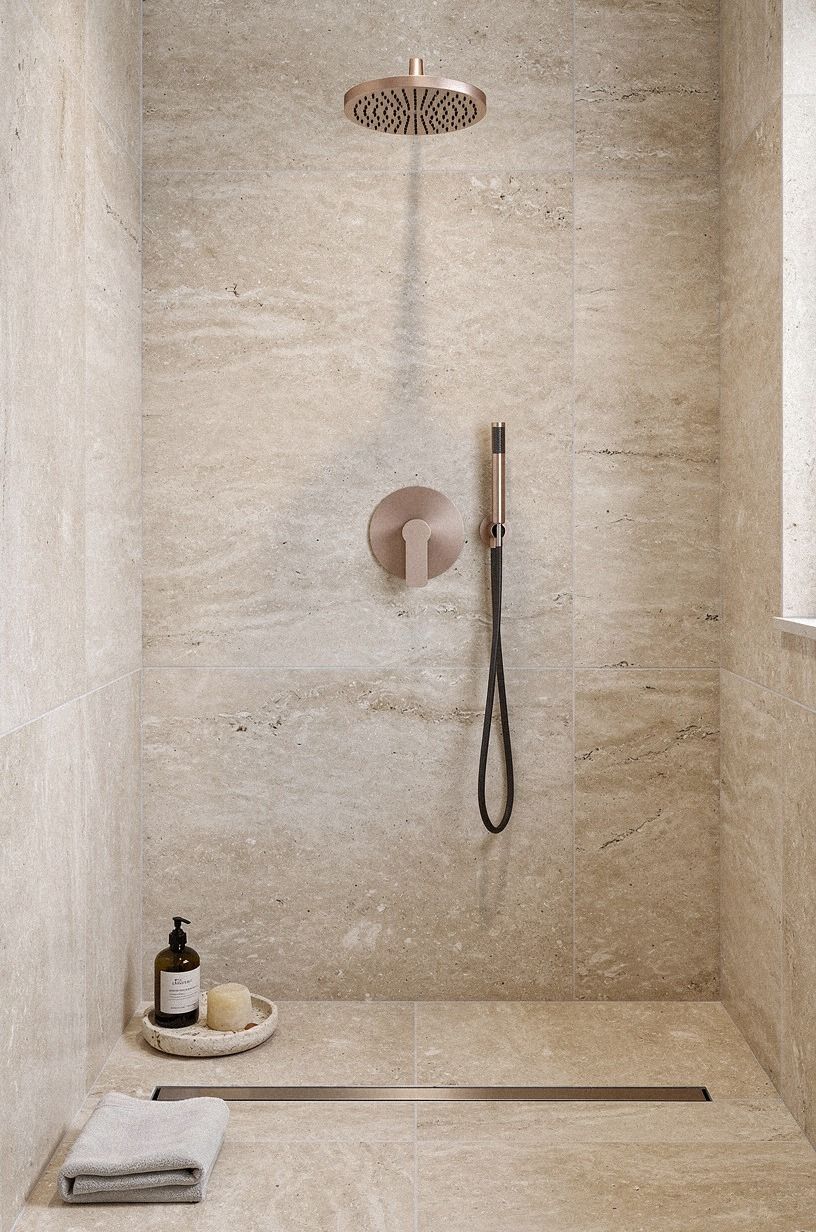
You can mix metals in a travertine bathroom, but one finish needs to lead. Let aged brass take the main role on the faucet and mirror frame, then use matte black only in small supporting details. You’ll create a layered look without making every fixture compete.
I’d avoid shiny chrome beside heavily textured stone. It can look too crisp, especially under cool light. A soft aged finish works better because it repeats the stone’s muted character.
If you prefer black, keep it on the shower frame and one towel hook rather than spreading it across the entire room.
What’s the easiest way to decide? Pick the finish you’ll touch most often, then make that your anchor.
West Elm Gridline mirror hardware can guide the tone if you want a named reference, while an oversized-chip terrazzo ledge or floor adds the clay-and-linen texture without introducing another metal. A little contrast is inviting.
Too much feels restless.
Your supporting metal can be nearly invisible. Cabinet pulls, drain covers, and hooks don’t all need to match perfectly, but they should share a similar temperature.
I’d avoid mixing bright yellow brass with icy nickel in a room built around soft natural materials. Aged finishes usually feel more forgiving and lived-in.
If you’re replacing only one fixture, match the finish that already appears most often. You’ll save money and avoid an unnecessary cascade of changes. The best bathroom palettes often look collected because they’re edited, not because every item came from one set.
11Create a small shower marble moment
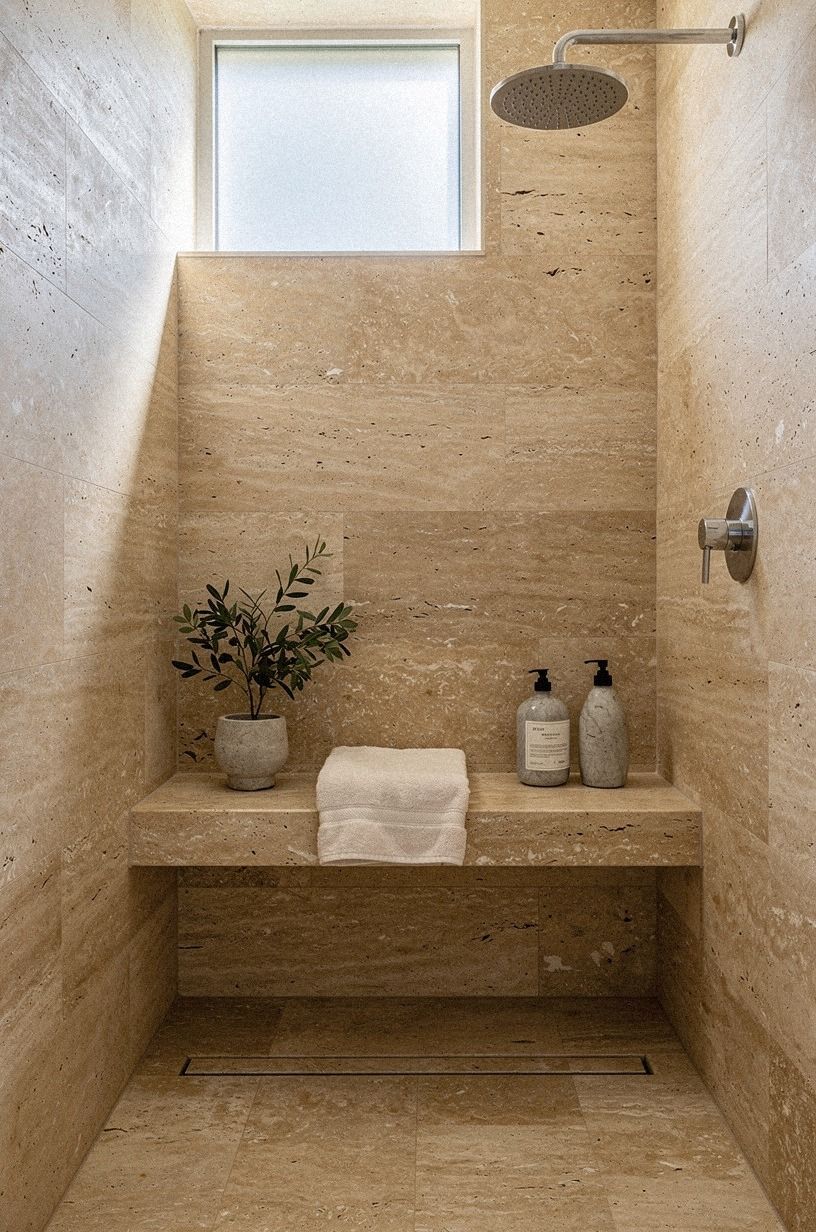
A small shower marble moment can feel tailored beside hand-applied Venetian plaster in plum and grey, especially when one rose-gold detail adds warmth without taking over the room.
12Build storage instead of adding more decor
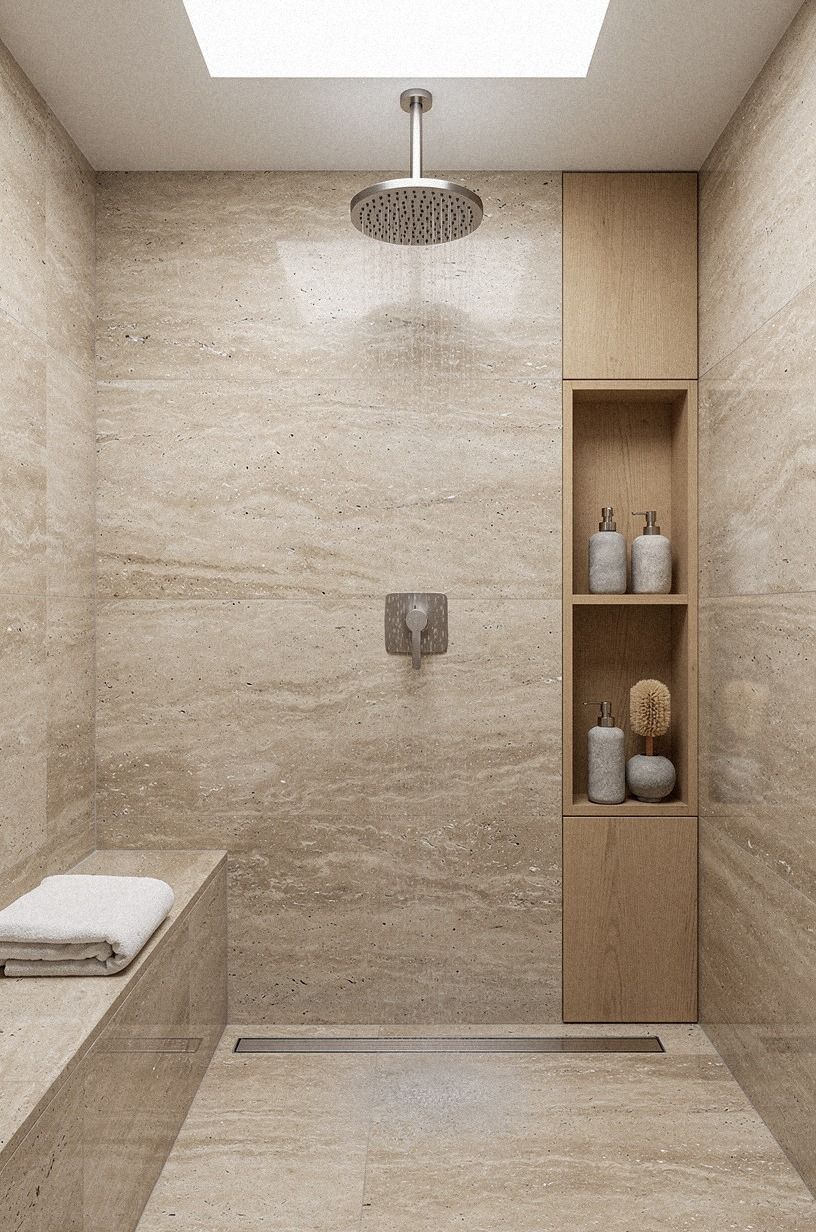
Low-maintenance design depends on fewer exposed objects, so storage needs to work hard. A recessed cabinet, closed vanity drawers, and one open shelf can keep your travertine shower visible instead of hiding it behind bottles. You’ll want the toilet to have at least 21 inches of clearance in front, which makes careful storage planning essential in a small room.
I’d choose a slim walnut-effect open unit only outside the humid zone, where it can hold clean towels and paper goods. Inside the bathroom, sealed cabinetry and a wall-mounted shelf are safer choices.
Use baskets for backups, but don’t fill every cubby just because you have the space. A small shagreen-lined tray can add texture without creating clutter.
And resist the urge to add a decorative ladder, three plants, and a stack of books. Steam is hard on paper, and crowded corners collect dust.
One trailing plant, one folded white towel, and one ceramic container can give you the lived-in warmth you want. The room should support your routine, not create another list of things to wipe down!
Plan storage around what you actually reach for. Your daily cleanser belongs at hand, while extra towels and replacement products can stay behind a door. I’d use one durable tray to group small items rather than scattering them across the vanity.
You’ll clean faster, find things sooner, and preserve the peaceful feeling of the stone.
Closed storage is especially valuable when the travertine has bold movement. The fewer objects competing with it, the more luxurious the material feels. If you need open shelving, keep the display limited to useful pieces with similar colors and textures.
Practical can still be beautiful.
The Travertine Rule I’d Keep After Styling This Room
I’ve learned that the best natural-stone bathrooms aren’t the ones with the most expensive tile. They’re the rooms where every finish has a job, and the stone gets enough quiet around it to feel grounded.
Travertine already supplies color, movement, and a touch of history. If you keep adding contrast, you eventually cover up the quality you paid for.
My own mistake was treating the shower like a blank canvas. I wanted a niche, a dark stripe, decorative mosaics, brass, and a dramatic wall color all at once.
The samples looked exciting on the floor. Together, they made the room feel busy and strangely cold.
I removed two of the ideas, softened the grout, and moved the strongest color to the dry wall. That’s when the stone started to look intentional.
For your room, begin with the surface you’re keeping. If the travertine is pale and creamy, use warm white, walnut, or muted green nearby.
If it has darker pits and strong movement, let the vanity and fixtures become quieter. You don’t need to match every tone.
You need to give your eye a place to rest.
The practical part matters too. A comfortable 36-by-36-inch shower, clear storage, reliable lighting, and a vanity between 32 and 36 inches will serve you longer than a fashionable finish.
I’d spend on waterproofing before a decorative border every time. Honed travertine can look relaxed and luxurious, but only if the room functions without constant fuss.
And yes, I’d still choose this material again. The stone feels cool under your palm at first, then warms with the room.
Water darkens the surface for a moment, and the color settles back as it dries. That small shift gives the bathroom life.
If you want a slower morning atmosphere, pair the design with this hot shower care guide and let the space work as a daily ritual rather than a showroom.
When you’re ready to begin, save the tile sample, grout sample, paint card, and hardware finish together. You’ll see the relationships more clearly than you would from separate product pages.
I’d also live with the samples for several days. The right combination should still feel calm when the first excitement wears off.
A Few Things Worth Answering
What is the best Travertine Shower Ideas for a Natural-Stone Sanctuary for a small bathroom?
The best choice is a pale honed travertine wall with a compact recessed niche and a floating vanity. IKEA TONSTAD oak-effect storage can echo the stone without overwhelming the room.
Keep the grout close in color, use one mirror, and leave the floor visually open so your small bathroom feels calm rather than crowded. You can also review this small-space shower warmup guide while planning the daily experience.
Where can I buy Travertine Shower Ideas for a Natural-Stone Sanctuary pieces on a budget?
Look at IKEA, Wayfair, and Target for vanities, mirrors, hooks, and textiles, then check Facebook Marketplace or a local thrift store for wood stools and framed art. I’d compare measurements, finish quality, and moisture resistance before buying. For practical planning, this hot shower care guide is also useful when you’re choosing materials that will live in a humid room.
How much does a Travertine Shower Ideas for a Natural-Stone Sanctuary makeover cost?
A cosmetic bathroom refresh typically falls within the supplied $200-$1,200 budget tier, while a mid-range project runs about $3,000-$9,000. A full re-tiled shower, new floor, and plumbing can reach $12,000-$30,000 or more. Free styling changes include editing bottles, moving art, and repainting dry walls.
I’d protect the waterproofing budget before upgrading decorative tile.
Can I create a Travertine Shower Ideas for a Natural-Stone Sanctuary on a budget?
Yes, and you can start with three low-cost changes: repaint the dry wall, replace bright hardware with one cohesive finish, and add a textured towel or curtain. A 600gsm Turkish cotton towel, thrifted wood stool, and carefully chosen mirror can shift the room without changing the shower footprint. You can also use this gentle shower routine guide as inspiration for making the room feel more restorative without adding expensive finishes.
Is a Travertine Shower Ideas for a Natural-Stone Sanctuary worth it in a small space?
Yes, because a small room gives the stone more visual authority. Use larger wall pieces, a narrow niche, and a floating vanity to reduce busy breaks.
Keep the shower near the comfortable 36-by-36-inch minimum when possible, and choose one accent material instead of layering several. I’d rather see excellent grout and lighting than an overcrowded selection of luxury surfaces.
Is Travertine Shower Ideas for a Natural-Stone Sanctuary a good idea for a rental?
Yes, if you treat the stone look as a styling direction rather than a permanent installation. Try removable wall panels on dry walls, a tension rod with linen, peel-and-stick flooring outside the wet zone, and freestanding storage.
A matte ceramic tray can add the stone texture without drilling or changing plumbing. Before using any adhesive, check your lease and test a hidden area.
Where I’d Start First
If I had to pick one, I’d start with the honed travertine niche. It gives you texture, storage, and a focal point without covering every wall.
Keep the shelf uncluttered, use one warm metal, and pin this guide for later when you’re ready to plan the rest of the room. You can return to the gentle shower warmup guide when you want the finished space to support a slower morning as well as a beautiful one.


