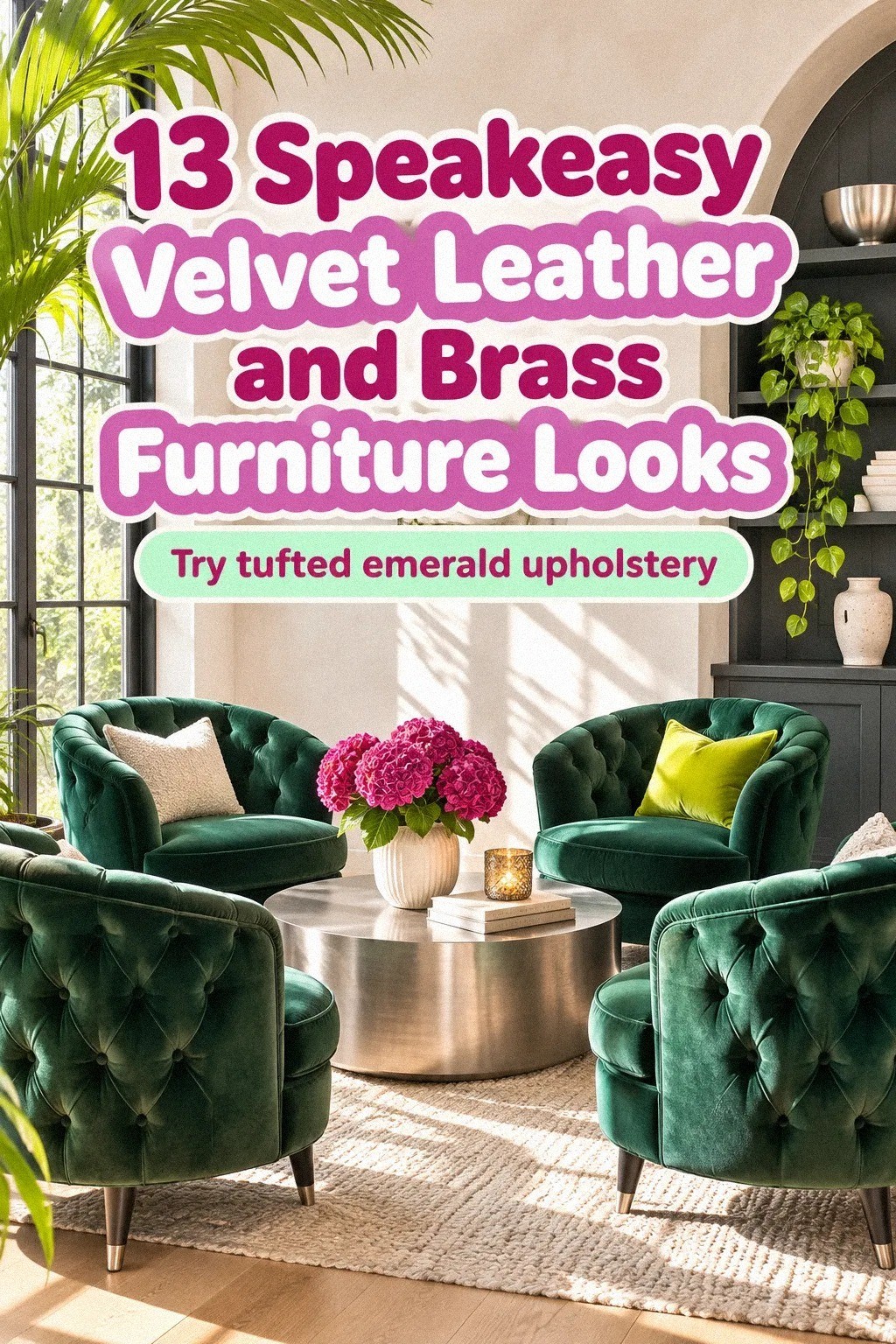
13 Speakeasy Seating & Furniture Ideas With Velvet, Leather & Brass That Feel Luxe
20 november 2026Speakeasy seating and furniture ideas work best when velvet, leather, and brass share the room without matching. I learned that after pairing too many shiny pieces and making the space feel staged. You’ll get better results from low seating, worn texture, and warm pools of light. It’s intimate, moody, and surprisingly practical.
Editor's note: Start with low seating, establish a two-wood rule, add leather contrast, then build the mood with warm lighting.
- Layer Cocktail Chairs Around a Low Table
- Build the Two-Wood Rule for Speakeasy Bar Furniture
- Choose Leather Over Matching Upholstery
- Float a Velvet Settee Against the Long Wall
- Hang the Three-Height Light Stack
- Frame a Reading Nook With Brass
- Mix Cocktail Seating at Different Heights
- What Color Makes Speakeasy Seating Feel Warm?
- Swap Open Shelves for the Back-of-Chair Boundary
- Anchor Speakeasy Seating With the Right Rug
- Paint the Ceiling, Then Let the Brass Work
- Instead of a Full Bar, Build a Small Drinks Ledge
- Finish the Room With Lived-In Layers
1Layer Cocktail Chairs Around a Low Table
Two cocktail chairs can give your room the tucked-in feeling of a private lounge without taking over the floor. Choose rounded backs, compact arms, and plum velvet that catches light differently as you move around it. If you’re working with a narrow room, angle the chairs toward one another instead of pushing them flat against the wall.
I’d skip a matching sofa-and-chair set here. It makes your room feel like a showroom, while mismatched silhouettes suggest that people have gathered over time. A low Carrara marble table with subtle grey veining between the chairs keeps the sightline open and gives you a place for a book, a glass, or a small rose-gold bowl.
The best table height is usually close to the chair seat. That small relationship makes the arrangement feel comfortable rather than decorative. A round top is forgiving in tight rooms, while a square table gives a more tailored, architectural feeling.
Keep your upholstery touchable. You’ll notice the difference when your hand brushes the fabric at night. Article Sven leather nearby can add a relaxed counterpoint, especially if your chairs are soft and rounded.
If you’re shopping on a budget, spend on the chair you’ll use most and save on the table. A second-hand side table can have more character than an expensive matching set. The arrangement is worth the investment because it creates a complete conversation zone with only three pieces.
A small smoked-glass table can make the grouping feel lighter, while a carved wood pedestal gives it a more grounded, dramatic presence. Either choice works when the chairs remain the stars of the arrangement.
Typical cost by tier in the United States:
2Build the Two-Wood Rule for Speakeasy Bar Furniture
The Two-Wood Rule keeps a dark speakeasy room from becoming visually muddy. Pick one pale wood and one deep wood, then repeat each with intention. Reclaimed weathered teak brings a dry, timeworn grain, while walnut adds the darker note that makes brass and velvet look richer.
You don’t need three wood tones to make the room feel collected. I made that mistake once, and the furniture looked like it had arrived from three different houses. If you’re using an IKEA KALLAX birch-effect unit, keep the rest of the wood restrained and let the lighter finish act as a visual breath.
A narrow bar cabinet in dark walnut can anchor the room, but don’t crowd it with accessories. Leave some surface visible. Your eye needs a quiet patch between the bottles, glassware, and aged bronze hardware.
Think about the grain direction, too. A horizontal console beneath a vertical cabinet can add useful tension. Repeating the same grain everywhere may seem polished in a showroom, yet a little variation creates that collected, mysterious quality people want from this style.
If you’re comparing furniture prices, judge the construction before the finish. Solid or well-veneered wood usually offers better long-term value than a cheap piece covered in a glossy film. A modest cabinet with beautiful hardware can look far more expensive after the rest of the room is softened with textiles.
A subtle ebonized oak accent can bridge pale and dark finishes without introducing another wood family. It’s a restrained, handsome move, especially when the room already has dramatic walls.
3Choose Leather Over Matching Upholstery
Leather is the easiest way to keep velvet from feeling too polished. A tan leather club chair beside a deep green sofa gives you contrast in both texture and temperature. Article Sven tan leather works especially well because its relaxed shape softens the formal association people often have with a speakeasy room.
I’d choose leather with visible grain over a perfectly smooth finish. You’ll get small changes in color where your hands and elbows land, and that wear makes the room feel lived-in instead of decorated for display. If you’re renting, one chair can shift the whole seating arrangement without drilling or painting.
But don’t pair every chair with the same leather. Your room will lose its rhythm. Add one leather seat, one velvet seat, and a textile accent such as cream linen beside a Calacatta marble table with gold veining.
Color matters as much as material. Cognac leather brings a warm, spirited note, while oxblood feels richer and more dramatic.
Camel can be easier to live with if your walls are already dark. When you’re deciding what’s worth the money, choose the color you’ll still enjoy after the novelty fades.
Leather also earns its place through maintenance. Wipe spills quickly, keep the chair away from harsh sunlight, and accept a few marks. That relaxed patina is part of the appeal, and it can make a moderately priced chair feel deeply personal.
For an especially soulful contrast, try a distressed saddle leather chair with a soft green sofa. The pairing feels generous and confident, yet it doesn’t require a room full of vintage furniture.
4Float a Velvet Settee Against the Long Wall
A forest-green velvet settee with cerused white oak details doesn’t need to sit against the wall like a forgotten hallway piece.
5Hang the Three-Height Light Stack
The Three-Height Light Stack uses ceiling, task, and ambient lighting so your seating never depends on one harsh ceiling fixture. That’s the difference between a room that feels intimate and one that feels like a waiting area. You’ll want all three sources, even if one is small.
Start with a dimmable ceiling fixture, then add a table lamp near your cocktail chairs and a low floor lamp beside the sofa. Unlacquered brass is ideal for the hardware because its finish will soften rather than stay mirror-bright. Keep bulbs warm, and aim the light toward surfaces instead of directly at faces.
I’d skip a single oversized chandelier if your ceiling is low. It can dominate the room while leaving corners flat.
And when you’re arranging your furniture, test the lamps after dark. A daytime layout can look perfect, but your room has to work when the curtains are closed.
A shaded lamp is often a smarter purchase than a decorative bare bulb. The shade controls glare and creates a flattering pool of light over the seating. For the best value, use dimmable LED bulbs with a warm color temperature and replace the fixture only when the proportions truly feel wrong.
Try to keep the brightest source away from the television or main sightline. Light should guide people into the room, not announce every corner. A softly illuminated backlit translucent onyx panel or textured wall can create a more memorable effect than another oversized object.
For maximum atmosphere, place a small dusty-rose glass lamp behind the settee. Its glow will soften the upholstery and make the room feel instantly more intimate!
6Frame a Reading Nook With Brass
A small reading nook can make your speakeasy seating feel purposeful. Place one chair beside a book-matched walnut drink table, then frame the arrangement with a brass floor lamp or wall sconce. West Elm has seating shapes that suit this kind of corner, especially when you want a cleaner profile beside older-looking accessories.
Your chair doesn’t need to be dramatic. A compact seat in camel 18 oz cotton velvet can feel more luxurious than an enormous lounge chair because the scale leaves breathing room around it. Give yourself enough space to pull the chair out comfortably, then keep the table close enough for a drink without leaning.
Why should every seat face the television? Turn one chair toward the room instead. You’ll create a spot for conversation, reading, or a quiet cup of coffee, and the layout will feel more like a private club than a media room.
A brass lamp can provide the visual punctuation the nook needs, but it shouldn’t become the only metallic finish in the room. Repeat a related tone in a picture frame, tray, or cabinet pull. That repetition gives the corner coherence without making it feel coordinated to death.
If you’re watching the budget, buy the chair second-hand and spend a little more on the lamp. Lighting changes the mood every evening, while a good vintage chair can often be refreshed with cleaning or new upholstery.
A leather footstool makes the nook more comfortable without adding the bulk of an ottoman. It can also move to the main seating area when guests arrive, which gives the arrangement an appealing flexibility.
7Mix Cocktail Seating at Different Heights
Cocktail seating looks more considered when every piece doesn’t sit at the same height. Pair a low lounge chair with a slightly taller slipper chair and a bench that can tuck beneath a console. Target Threshold pieces can help you build the mix without buying a complete furniture collection.
The important part is visual balance. If your sofa is deep and low, choose a chair with a little more height so the room doesn’t become one long horizontal line.
You’ll still want the upholstery colors to relate, but they shouldn’t be identical. Try midnight-blue velvet, ivory linen, and a copper accent.
I’d avoid placing two tall chairs side by side in a small room. They’ll block the view and make your seating feel crowded. Instead, give your eye one taller shape and one lower shape, then repeat a material such as warm travertine in a small table or tray.
Use height to separate functions. A low chair can signal lounging, a taller chair can support conversation, and a bench can offer flexible seating when guests arrive. That flexibility improves the room’s practical value and keeps you from buying more furniture than you need.
Before you order anything, tape each footprint onto the floor. It’s an unglamorous step, but it can save you from a costly return.
Pay attention to the distance between seat fronts, table edges, and walkways. Comfort depends on those gaps.
A dramatic high-back slipper chair can also bring a little old-world charm to a modern room. Keep its legs visible so the silhouette feels elegant rather than bulky.
8What Color Makes Speakeasy Seating Feel Warm?
Sage green, warm cream, and natural wood make speakeasy seating feel warm when you use the palette on more than one surface.
Repeat the brass in small doses, especially unlacquered brass that can develop a soft patina. A green chair, cream cushion, and wood table will feel richer when the metal is allowed to age naturally.
9Swap Open Shelves for the Back-of-Chair Boundary
The Back-of-Chair Boundary is a useful layout rule: let the back of your sofa define the seating zone, then use it as a soft boundary rather than pushing every piece against a wall. You’ll gain a more social arrangement and preserve a clear path around the room.
A narrow console behind the sofa can hold a lamp, a few books, and one sculptural object. IKEA TONSTAD offers a simple foundation if you want storage without visual fuss. Keep the console lower than the sofa back when possible, so it supports the arrangement instead of competing with it.
I’d skip open shelving behind every seat. It fills the background with small objects and makes your room feel busier than it needs to be.
Choose one storage wall, then let the furniture carry the atmosphere. Your eye should land on the seating first.
The console can also create a useful landing place for keys, drinks, or a small serving tray. That practical function matters. A room earns its keep when it looks atmospheric while still supporting the ordinary habits of the people who use it.
If you’re deciding whether a console is worth the cost, measure the storage you actually need. A slim piece with drawers may offer better value than a wider open shelf that demands constant styling. Keep at least one-third of the surface empty so the arrangement feels generous.
A slender console with an oversized-chip terrazzo top can make the boundary feel intentional without turning the back of the sofa into a display wall. Leave one end almost bare. That asymmetry will feel relaxed and quietly sophisticated.
10Anchor Speakeasy Seating With the Right Rug
A rug in clay and linen tones should be large enough that your main furniture overlaps it, at least visually.
A hand-applied Venetian plaster wall and aged-brass accents can give the seating area a grounded, tactile backdrop. If the rug is too small, the arrangement will feel scattered no matter how good the furniture looks.
11Paint the Ceiling, Then Let the Brass Work
Painting the ceiling can make a small speakeasy room feel wrapped rather than compressed. Choose a color that’s related to the walls, then use rose-gold fixtures to catch the light above your seating. A deep plum ceiling would make a strong envelope, but it needs enough warm illumination to stay inviting.
You don’t have to paint every surface dark. A ceiling one shade deeper than the walls can create a quieter canopy while keeping the room usable during the day. If your walls are light, try a soft grey above them instead of defaulting to stark white.
But test the finish before committing. A high-sheen ceiling can reflect every bulb and make the room feel restless. You’ll usually get a calmer result from a low-sheen finish, especially when your furniture already includes textured shagreen accents.
A painted ceiling is also a relatively affordable way to create drama. The price of paint and labor is usually lower than replacing furniture, yet the effect can change the whole room. If you’re doing the work yourself, protect the seating carefully and use a small sample before buying several gallons.
Rose gold works best when it appears in controlled doses. A lamp, cabinet pull, and tray may be enough. Too many reflective pieces can flatten the palette and make the room feel themed instead of layered.
A rose-gold ceiling fixture can be enough to connect the upper plane to the furniture below. The result feels enveloping, polished, and genuinely memorable!
12Instead of a Full Bar, Build a Small Drinks Ledge
Instead of building a full bar, give your seating one narrow drinks ledge. A shallow shelf can hold glasses, a tray, and a lamp without requiring a major renovation. You’ll get the character of speakeasy bar furniture while keeping the floor open for chairs and conversation.
Use dark walnut with a visible grain, then soften it with a strip of washed Belgian linen. I’d skip a glossy acrylic surface because it fights the tactile quality of velvet and leather. Your room should invite people to touch things, not worry about fingerprints.
Keep the ledge close to the seating but not directly behind someone’s head. If you’re styling a rental, a freestanding console can do the same work. Add one brass tray, a stack of cocktail books, and a small lamp, then stop before the surface turns into a display shelf.
A narrow ledge can be a better value than a full wet bar because it provides the useful part of the feature without plumbing, cabinetry, or a major installation bill. If you’re weighing the cost, consider how often you’ll actually use a sink or built-in refrigerator.
Leave enough room for a glass to sit safely. The ledge should be functional, not merely decorative. A depth of roughly ten to fourteen inches can work well, depending on the furniture nearby and the size of the tray you plan to use.
A blackened-oak drinks shelf feels especially handsome beside velvet. Pair it with one useful lamp and a shallow tray, then resist the urge to fill every inch.
13Finish the Room With Lived-In Layers
The final layer is where your room stops looking assembled. Add a soft organic bouclé throw, a few books, one framed print, and a small bowl with a surface that catches the light. The tactile loop of bouclé feels substantial over a leather chair and gives your seating a reason to look used.
You’ll want some empty space, too. I learned that after filling a console with objects and wondering why the room felt tense.
Remove one thing, then step back. If the arrangement still feels complete, you’ve found the better edit.
Mix old-looking pieces with one clean modern shape. A West Elm lamp beside a worn wood table can feel more convincing than an entire room of antiques.
Your goal isn’t to recreate a movie set. It’s to make the room feel warm, private, and ready for someone to stay awhile!
Use objects with different tactile qualities: a rough ceramic bowl, a smooth stone coaster, a faded textile, and a dark metal frame. That variety makes the room feel rich even when the palette stays restrained.
Don’t buy accessories simply because they fill an empty surface. Ask whether each piece adds comfort, usefulness, memory, or visual movement. If it does none of those things, the money may be better spent on a lamp, rug pad, or more durable upholstery.
The finishing touch can be remarkably small. A stack of worn paperbacks, a tray beside the chair, or a single branch in a heavy vase may be enough. Your room should feel ready for company rather than waiting for a special occasion!
A hand-thrown ceramic bowl or battered brass ashtray can provide that final note of character. Choose one object with a little imperfection. It will make the entire room feel more human.
Why This Look Still Works
Speakeasy rooms keep returning because they solve a modern problem: people want spaces that feel separate from screens and daily noise. I don’t think the answer is simply painting everything black or buying a velvet sofa. The better answer is controlled atmosphere, built from texture, low light, and furniture that encourages people to face one another.
I’ve tried the polished version, with too much brass and too many dramatic accessories. It looked polished, but it didn’t feel comfortable. The room needed quieter materials, a softer rug, and seating that didn’t look precious.
That’s why worn leather matters. It gives the eye somewhere to rest after the velvet and metal have made their entrance.
Your choices should also reflect how you live. If you read, reserve one chair for reading.
If you host, prioritize a low table and flexible cocktail seating. If you’re short on space, choose one expressive piece rather than forcing a whole theme into the room. A small room can carry more personality because every object has to earn its place.
I’d also keep the palette restrained. Tobacco, ink blue, muted green, cream, and aged metal can create depth without making the room feel theatrical.
You don’t need matching furniture, but you do need repetition. Repeat one color, one finish, and one texture, then let the rest shift gently around them.
When you’re planning the budget, buy the pieces that affect comfort first. A supportive chair, a properly sized rug, and warm lighting will usually provide more value than a collection of decorative objects. The room can evolve slowly and still feel intentional from the beginning.
For a quick starting point, revisit the rug advice, the ceiling treatment, and the drinks ledge. Together, those moves create an atmospheric room without requiring a complete renovation.
What People Always Want to Know
What is the best speakeasy seating for a small room?
A compact velvet cocktail chair and a small leather chair are strong choices because they give you comfort without the footprint of a deep sofa. IKEA KALLAX can provide nearby storage while keeping the floor open.
Choose low arms and visible legs so your room doesn’t feel blocked. You’ll get a more intimate layout when two chairs face each other across a small table.
Where can I buy speakeasy seating pieces on a budget?
Look at IKEA, Wayfair, Target, and local second-hand shops for compact chairs, consoles, and lamps. Facebook Marketplace can be especially useful for leather seating with natural wear.
You don’t need every piece to be new. Your room will feel more convincing when one or two items have a little history. Check measurements, upholstery condition, and pickup costs before deciding whether the price is genuinely worth it.
How much does a speakeasy seating makeover cost?
A small refresh can run about $100 to $300 if you keep your existing furniture and focus on paint, textiles, and lighting. Paint and textiles can make the largest visual difference for the least disruption.
For a broader United States project, a budget room typically falls between $200 and $800, while mid-range work can reach $1,500 to $5,000. Custom millwork, high-end upholstery, and electrical changes can raise the cost quickly.
Can I create this look on a budget?
Yes, and you can start with three low-cost moves: rearrange your seating, soften the lighting, and group the accessories you already own. A thrifted brass tray can add more character than several new decorations.
Use one paint color, one textile accent, and one second-hand chair. You’ll build a stronger room by repeating a few choices instead of collecting random pieces. Save for the item you’ll touch and use every day.
Is speakeasy seating worth it in a small space?
Yes, because a small room can make seating feel more social and intentional. A pair of cocktail chairs may work better than a bulky sofa when you need clear paths.
Angle the chairs toward each other, keep the table compact, and avoid filling every corner. Your room will feel more generous when the center stays open.
Is this style a good idea for a rental?
Yes. Use removable wallpaper, tension rods, plug-in sconces, and freestanding storage to create the mood without permanent changes. A plug-in brass lamp can replace hardwired lighting beautifully.
You can also layer a rug, velvet cushions, and a leather chair over neutral walls. When you move, your furniture and textiles move with you. That flexibility gives the style strong long-term value.
Where I’d Start First
If I had to pick one, I’d start with the low velvet cocktail chair. It changes the room’s posture, gives you a real conversation seat, and doesn’t demand a renovation. Pin this idea for later, then build the rest around the chair’s color and shape.
After that, add the right lighting stack, one leather contrast, and a rug that connects the seating. Those choices will give the room a warm, magnetic mood before you buy anything else.


