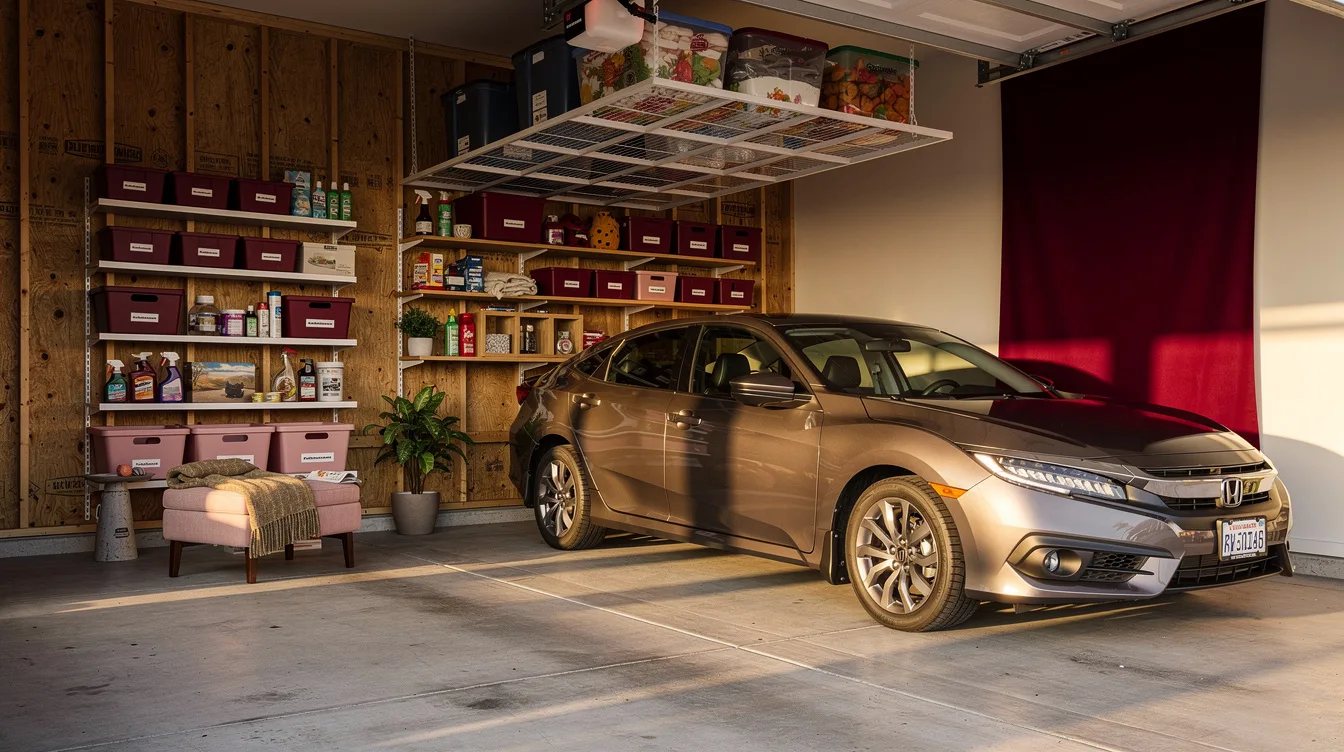
One-Car Garage Eating Your Floor Space? 12 Menards Shelves Fix It
20 november 2026The hardest part of organizing a one-car garage is protecting the parking lane while still giving every bin a home. A shelf that projects about 24 inches can block a door swing, while a 12-inch wall system may hold the supplies you reach for every week.
Menards has several useful sizes, from a roughly $80 Rubbermaid wall kit to an overhead rack for seasonal totes. The right choice depends on depth, ceiling clearance, and whether the rear wall or a corner can carry the bulky load.
These rules focus on practical Menards shelving for limited floor space, with current prices treated as shopping benchmarks rather than guaranteed checkout totals.
What you will find inside
- Measure the Sidewall Before Choosing Depth
- Claim the Sidewall With FastTrack
- Step Up to a 16-Inch Wall Kit
- Keep Daily Supplies at Shoulder Height
- Move Seasonal Totes Above the Car
- Fit the Corner Unit to Its Real Footprint
- Run a Long Shallow Rack Along the Rear Wall
- Reserve 24-Inch Shelves for the Rear Bay
- Protect the Door Swing and Walking Lane
- Anchor Every Rail Into Solid Framing
- Sort Storage by Frequency and Weight
- Compare the Complete Kit Before Checkout
Measure the Sidewall Before Choosing Depth
A one-car garage can lose its walking lane to a rack only a couple of feet deep. Start with painter's tape on the floor, then measure from the wall to the car's widest point with the doors open.
12-inch-deep wall shelving is the safest starting point beside a parked vehicle. It holds small bins, car-care supplies, and gloves without creating the bulky projection that makes every parking attempt feel tight.
Leave room for the car's mirrors, a person carrying groceries, and the garage door hardware. A shelf that technically fits can still fail if it turns the entry path into a sideways shuffle.
Claim the Sidewall With FastTrack
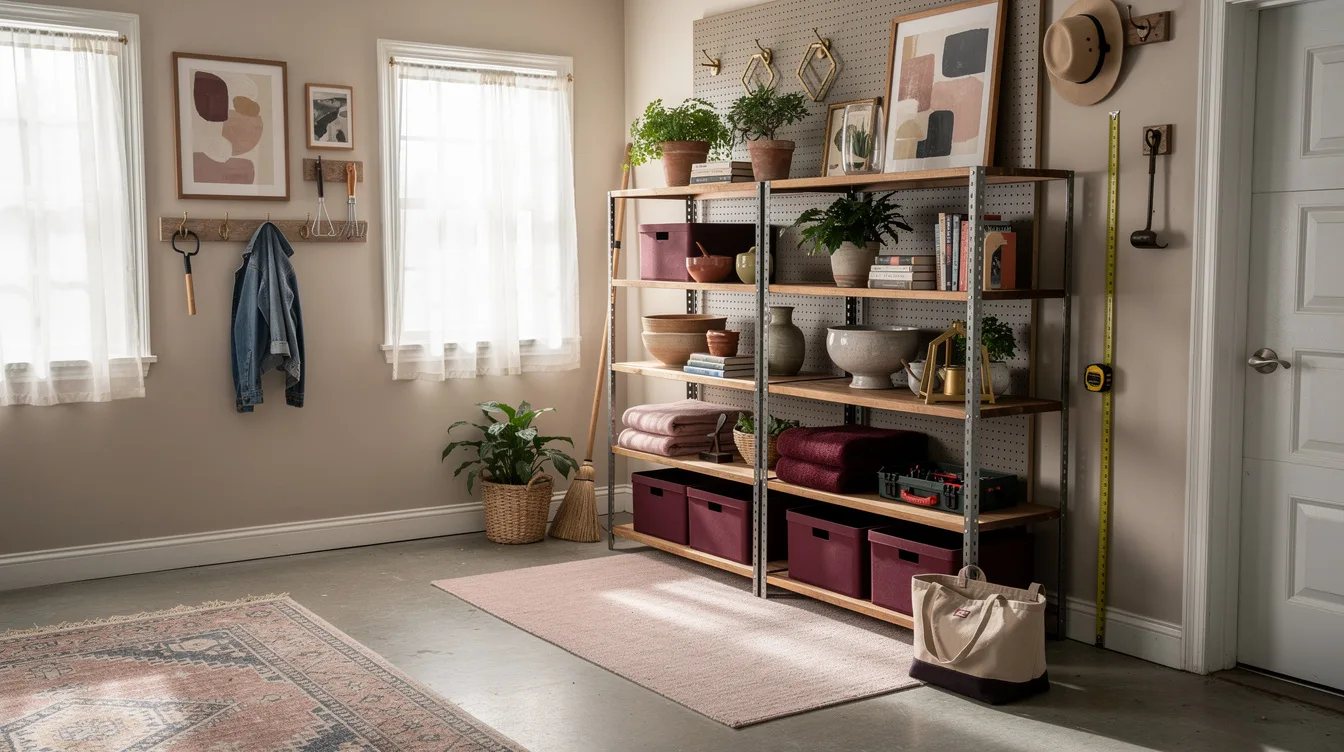
The Rubbermaid FastTrack 36-inch all-in-one rail shelving kit is the clearest choice for a narrow sidewall bay. Its three wire shelves measure about 36 inches wide by 36 inches high and 12 inches deep.
Menards lists the kit at about $79.99 before any rebate, making a complete wall-shelving setup roughly an $80 purchase benchmark before tax. The rail, uprights, brackets, and mounting hardware come together, so the shopping list stays short.
Use the lowest shelf for heavier cleaning bottles and the upper levels for labeled bins. This arrangement keeps daily items visible while preserving every inch of floor area below.
Step Up to a 16-Inch Wall Kit
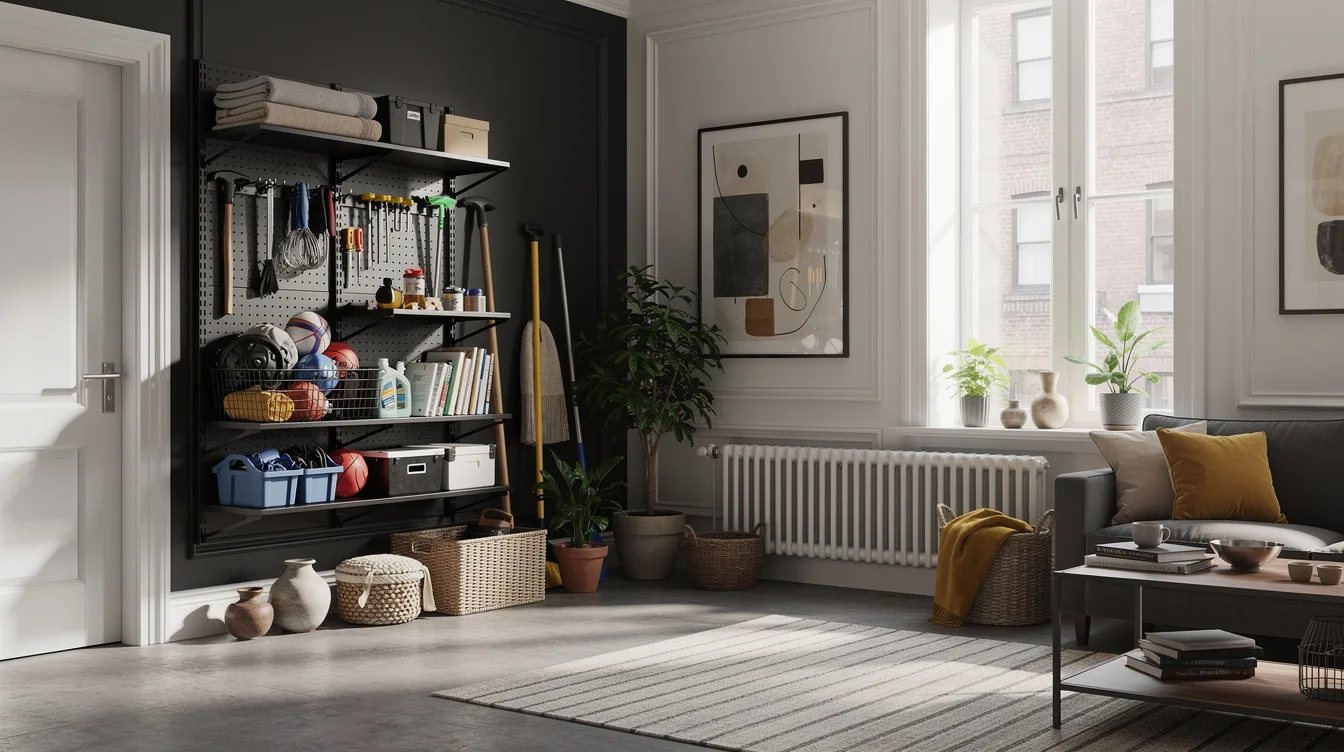
When 12 inches feels too shallow for tool cases or medium storage totes, move to the Rubbermaid Tough Stuff wall-mount kit. The three-shelf system is about 48 inches wide, 48 inches high, and 16 inches deep.
Its listed benchmark is roughly $109.99 before rebate, so the additional depth costs about $30 more than the FastTrack starting point. That difference is worthwhile when it prevents bins from hanging over the front edge.
Keep this kit on the wall beside the garage door or along the rear half of the vehicle. It offers more usable capacity without committing the garage to a 24-inch floor rack.

Keep Daily Supplies at Shoulder Height
Reserve the easiest-to-reach shelf for objects used every week: microfiber towels, tire pressure tools, work gloves, and a small hardware bin. Wire shelving works especially well here because dust and water can pass through instead of collecting on a solid platform.
Place the most frequently used items between waist and shoulder height. A narrow plastic tote for car-wash supplies should come down in one motion, without requiring a ladder or a second person.
Use simple labels based on the task, such as “car care,” “fasteners,” and “outdoor gear.” The goal is a garage that answers the question “Where does this go?” before clutter reaches the floor.
Move Seasonal Totes Above the Car
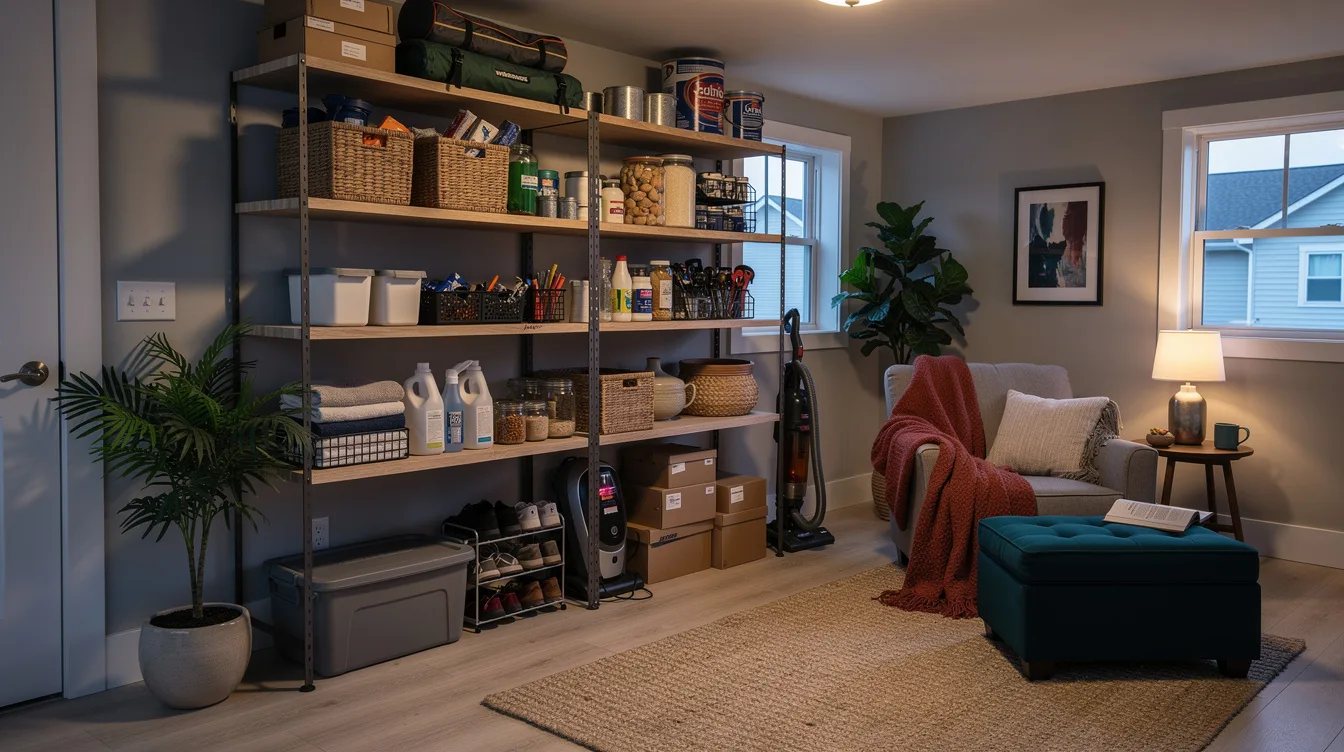
An overhead rack is the right place for decorations, camping equipment, and winter accessories that leave the garage only a few times each year. The HEAVYWEIGHT ceiling storage rack uses a footprint of about 48 inches by 96 inches, keeping seasonal bins above the parking zone.
A category listing showed a benchmark near $97.88 after rebate, but the current upfront price should be checked before ordering. Rebate language can change, and the price after rebate should never be treated as the amount due at checkout.
Confirm ceiling joist locations, garage-door travel, opener clearance, and the height of every tote. A ceiling rack saves floor space only when the car roof and moving door remain safely clear.
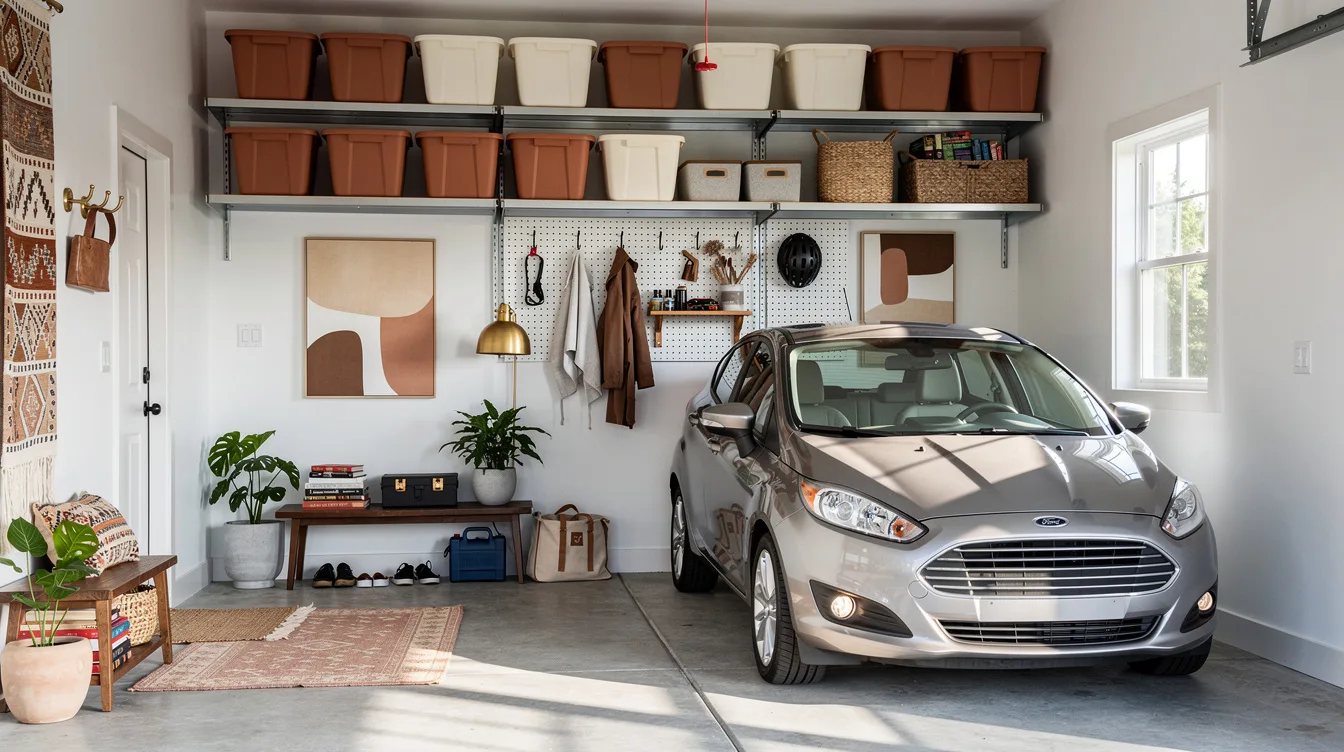
Fit the Corner Unit to Its Real Footprint
The AR Shelving four-shelf corner unit can make an awkward rear corner useful, but its shape requires careful planning. The listing describes about 35.4 inches along each back side, a 71-inch height, an 18-inch shelf depth, and a front edge extending roughly 24.4 inches.
That is a corner footprint, not a rectangular rack that projects only 18 inches into the room. The regular benchmark is about $109.99, with a retrieved sale benchmark near $79.99, so measure the corner before letting the lower price drive the decision.
Use it where two walls already create dead space behind the car. The galvanized-steel frame and HDF shelf boards suit bins and household overflow, but the unit should not narrow the driver's side door clearance.
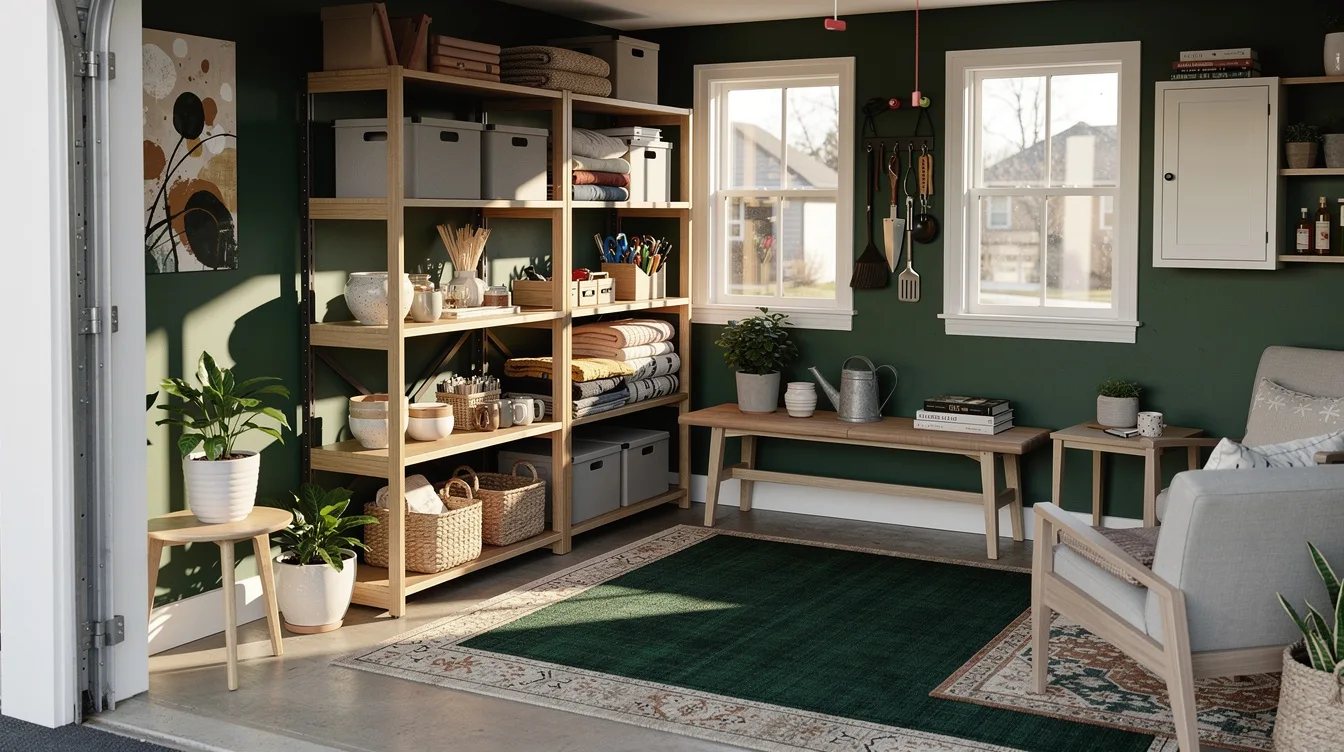
Run a Long Shallow Rack Along the Rear Wall
When width is available but depth is restricted, the Xtreme Garage three-tier rack offers a different solution. It measures about 103.5 inches wide, 72 inches high, and 17 inches deep, creating a long storage band across a rear wall.
The listed benchmark is roughly $237.78 before rebate, which makes it a larger commitment than a small wall kit. Its value comes from the long footprint: several compact categories can share one organized run without pushing far into the parking area.
Confirm the selected decking material before ordering, then assign each section a job. One bay can hold sports equipment, another can hold garden supplies, and the third can hold labeled household totes.

Reserve 24-Inch Shelves for the Rear Bay
The Performax heavy-duty metal shelving unit is about 77 inches wide, 72 inches high, and 24 inches deep. That depth is useful for bulky equipment, but it is a poor first choice beside a tightly parked car.
A retrieved sale benchmark was roughly $157.29 before rebate. Think of that figure as a shopping reference, then compare the current regular or sale price before planning the project around it.
Place this rack against the rear wall when the vehicle can park without approaching it. Large shop tools, coolers, and heavier containers belong here, while slim daily supplies should stay on wall-mounted shelves closer to the entry.

Protect the Door Swing and Walking Lane
Storage planning should follow the car's movement, not only the empty garage dimensions. Mark the driver's door, passenger door, trunk, and the path from the house before installing steel shelving or a wall rail.
A 16-inch wall system may work on the passenger side while a 24-inch freestanding rack does not. The difference becomes significant when the driver needs to step out without striking a corner or twisting around a bin.
Keep sharp tools, long handles, and loose cords away from the door edge. A shelf is successful when it stores more while asking less of the person using the garage.

Anchor Every Rail Into Solid Framing
Wall-mounted storage depends on the structure behind the finish surface. Locate studs before fastening a metal rail, and follow the selected kit's mounting instructions rather than assuming drywall anchors can carry every load.
Distribute weight across the shelves instead of placing the heaviest tote on one end. Small hardware bins and cleaning supplies belong near the center, while dense objects should sit low and close to the strongest supported points.
Check the installation after loading the first time, then inspect it when the seasons change. A level rail, tight fasteners, and stable brackets matter more than squeezing in one extra container.
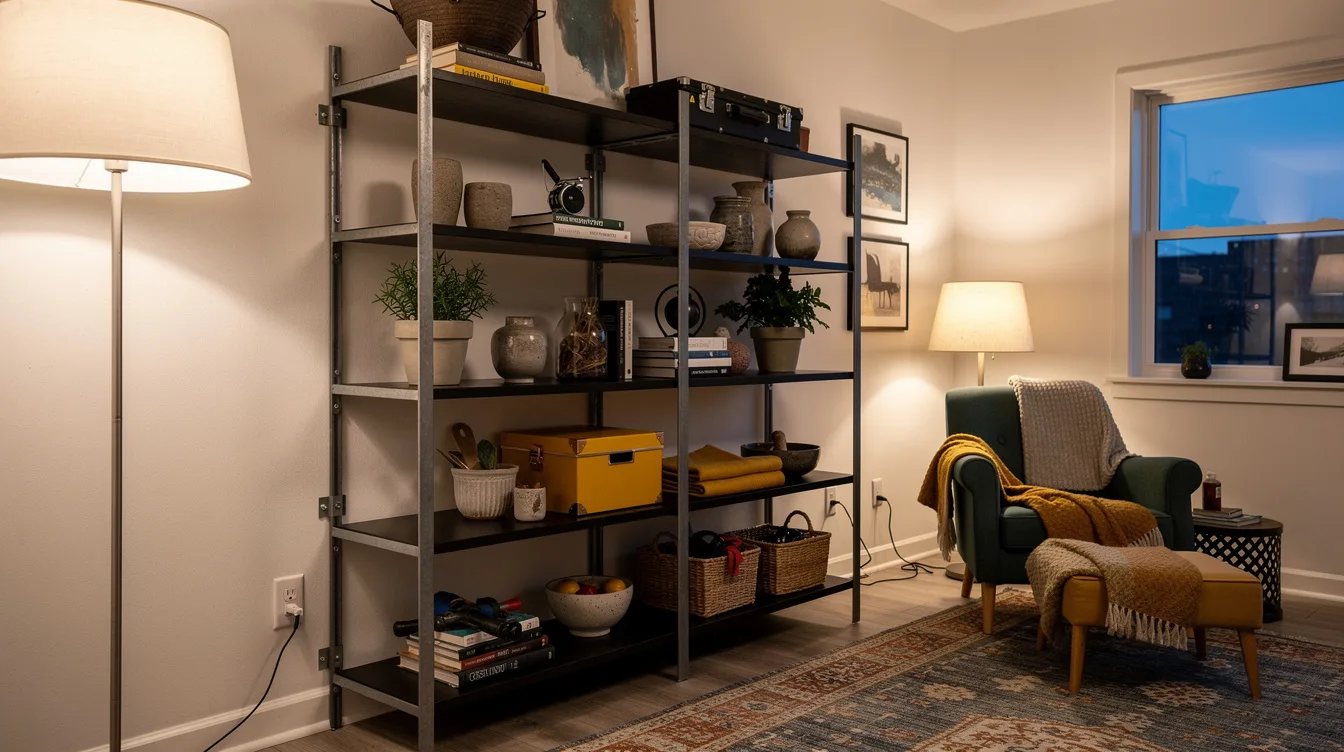
Sort Storage by Frequency and Weight
Build the wall from the floor upward: heavier items low, weekly supplies in the middle, and rarely used bins high. A galvanized-steel frame or wire shelf becomes easier to manage when every level has a clear weight and frequency assignment.
Keep one open section for temporary items, such as a package waiting to move inside or a set of tools needed for a weekend project. A completely packed shelf system leaves no landing place for real life.
Use matching labels, but do not force every object into a large tote. Small baskets, shallow trays, and one narrow parts box often waste less space than a deep container filled with unrelated items.
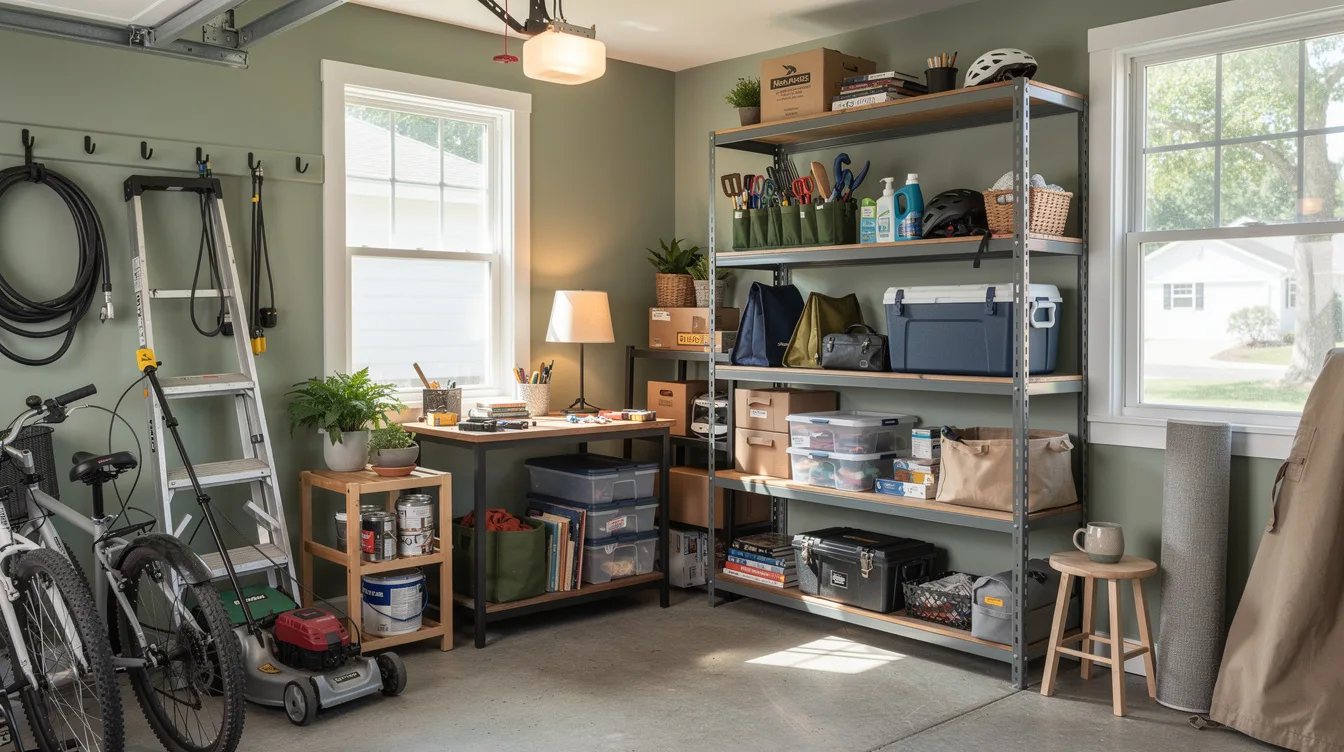
Compare the Complete Kit Before Checkout
Price the whole installation, including shelves, rails, brackets, fasteners, bins, and any ceiling hardware. The Rubbermaid shelving kits provide useful benchmarks of about $79.99 for FastTrack and about $109.99 for Tough Stuff before tax and possible rebates.
Some displayed rebate offers may no longer apply when the order is placed, so compare the current regular price and sale price first. A lower “after rebate” figure is a future savings estimate, not an immediate checkout discount.
For a practical starting budget, plan roughly $80 to $110 before tax for a complete wall-shelving kit, then add containers only after measuring the shelves. That sequence keeps the project focused on usable capacity instead of accessories.
Keep reading
- Narrow Pantry Shelves Eating Your Space? 12 Oxo Pop Container Setups
- Laundry Closet Eating Your Floor Space? 14 Container Store Fixes Under $100
- Small Bedroom Door Swing Eating Your Floor Space? Fix the Bed Position
Begin with painter's tape, mark the car's open-door clearance, and claim the shallowest wall that still holds your daily supplies. Then move seasonal bins overhead and keep deeper racks at the rear, where they cannot interfere with parking.
That order protects the garage's main job first, while giving the storage plan enough capacity to stay organized through the year.


