Need a Room Divider Without Losing Space? Target Bookcases Under $200
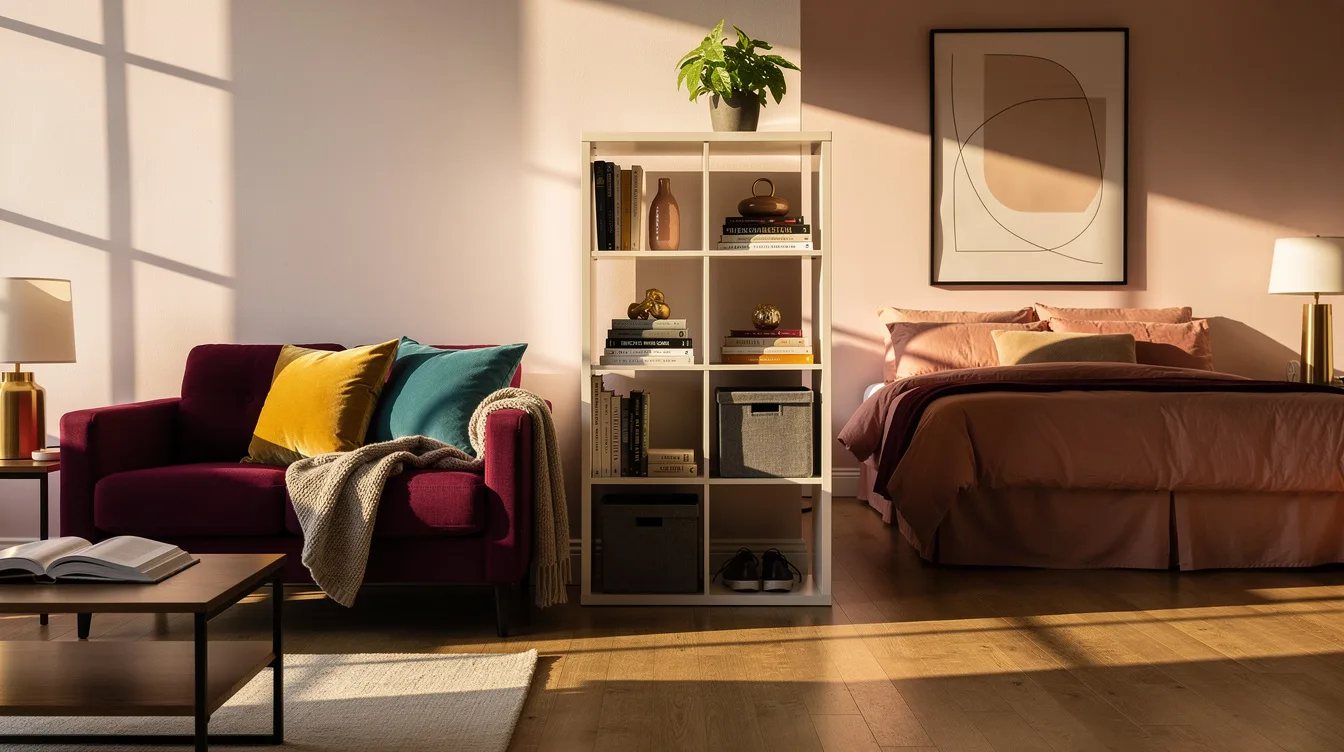
09 november 2026A compact apartment can feel divided without adding a wall. An upright Target bookcase about 58 inches tall, such as the $80 Brightroom eight-cube organizer, can mark a sleeping nook while keeping daylight moving through the room.
These U.S. Listing prices were checked for this November 2026 guide and appear before tax or delivery charges; they are not guaranteed year-round. The ideas below focus on Target bookcases priced under $200, with layouts that preserve sightlines and add practical storage.
What you will find inside
- Mark the Sofa’s Edge with a Low Cube Row
- Lift a Sleeping Nook with Eight Open Cubes
- Stretch a Low Boundary Across the Dining Side
- Screen a Desk with an S-Shaped Shelf
- Pair Two Slim Shelves Around a Work Zone
- Create an Entry Landing Beside the Living Room
- Stand Six Cubes Beside a Bed
- Use Shaker Detail for a Softer Low Split
- Use a Medium Shaker Screen Behind a Desk
- Build an L-Shaped Zone with Two Cube Sizes
- Keep the Sightline Open Above the Books
- Choose the Slimmest Screen for a Narrow Passage
- Match the Divider to Its Visible Back
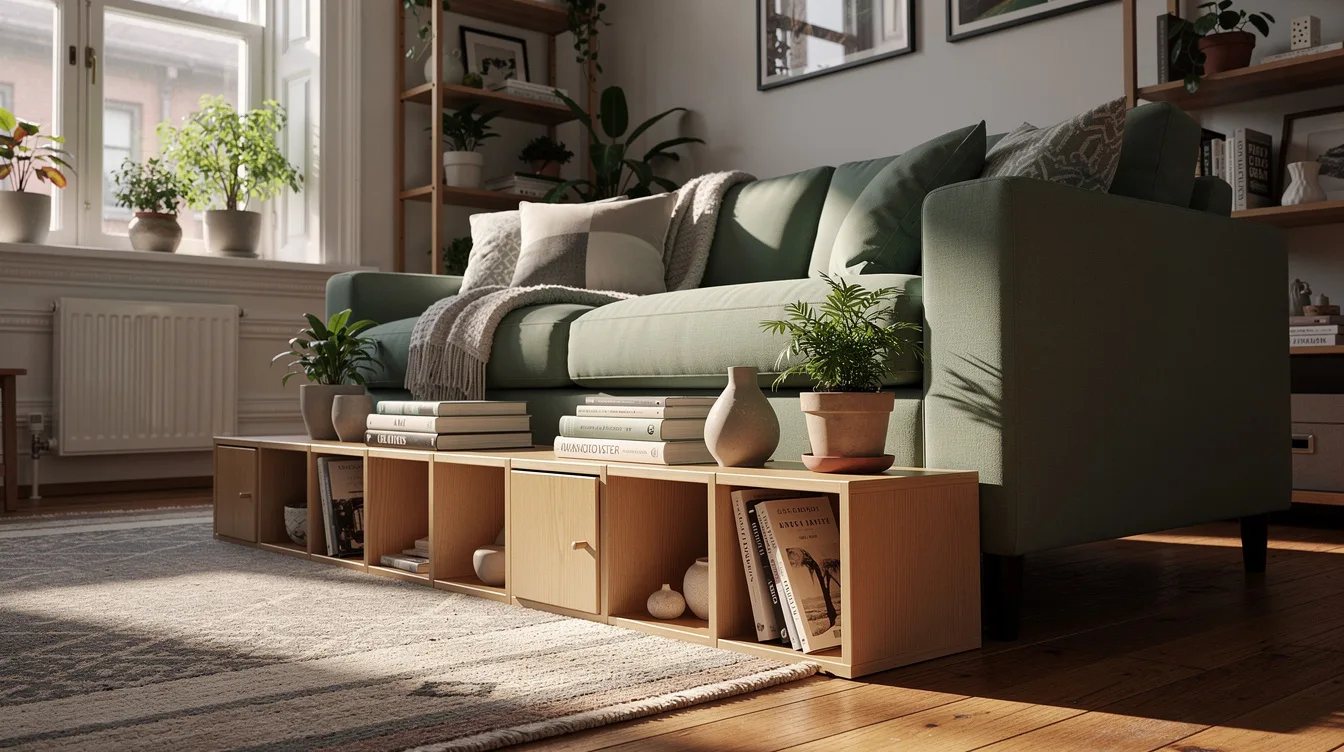
Mark the Sofa’s Edge with a Low Cube Row
Place the Brightroom 13-inch 6 Cube Organizer horizontally at the end of a sofa, with its finished front and back facing the living and dining zones. Its listed footprint is about 44 inches wide, 15 inches deep, and 30 inches high, so it defines the room without blocking light or conversation.
The organizer is listed at $65, and two $10 Brightroom fabric bins bring the setup to about $85 before tax and delivery. Leave several cubbies open for books, a small lamp, or framed art so the divider feels useful rather than visually heavy.
Lift a Sleeping Nook with Eight Open Cubes
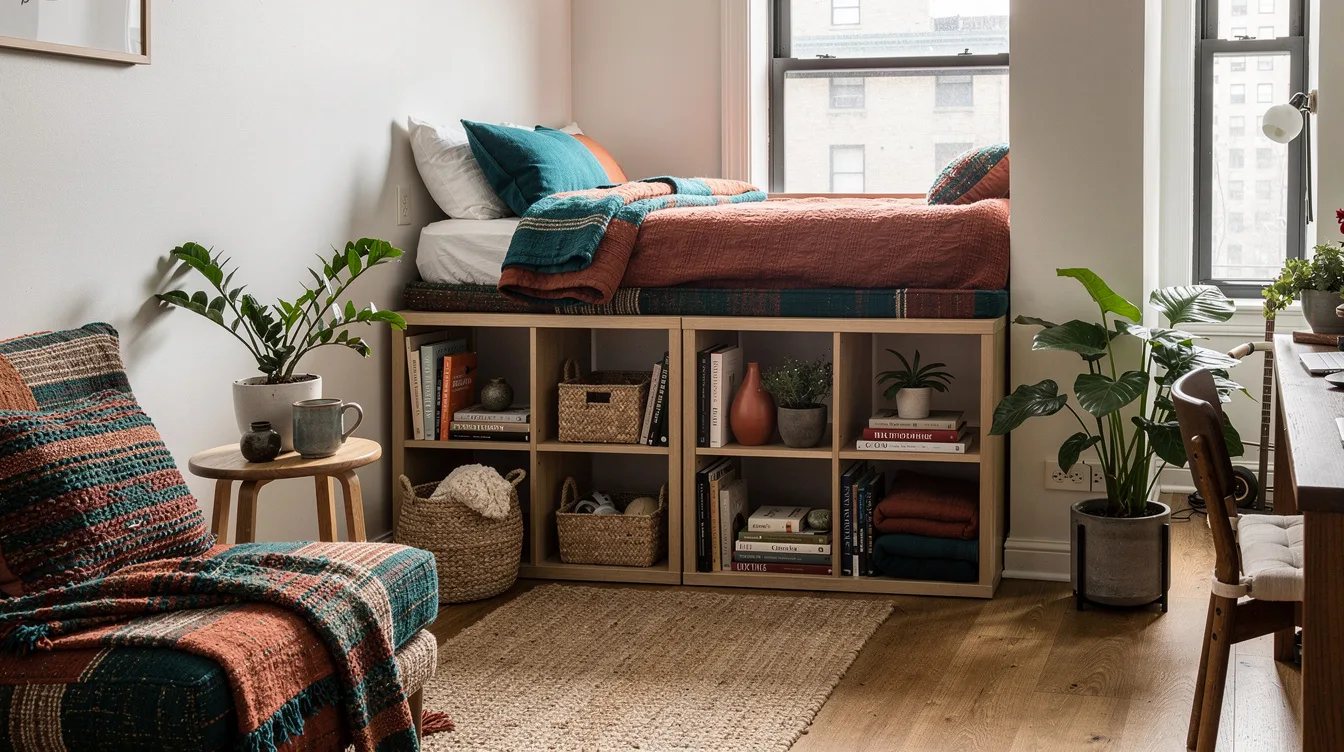
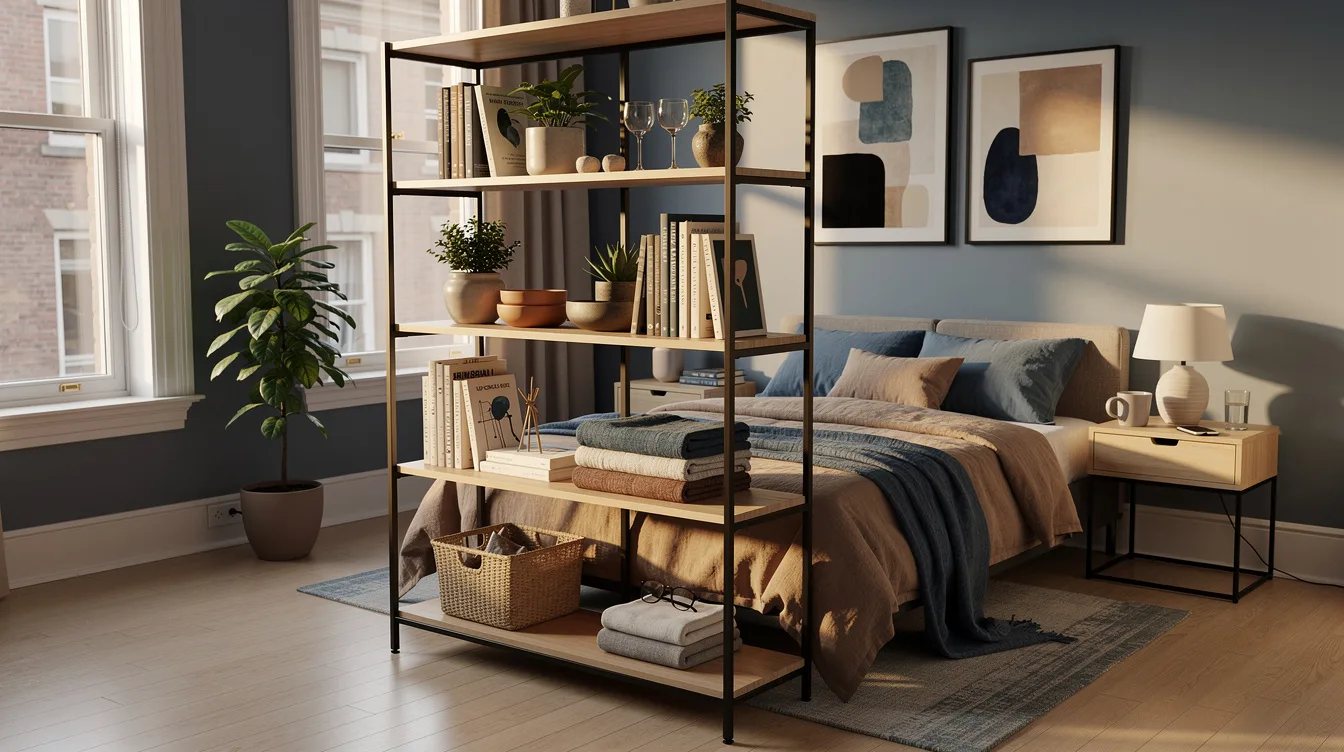
Turn the Brightroom 13-inch 8 Cube Organizer vertically beside a bed to create a taller edge around a sleeping nook. The listed height is about 58 inches, enough to signal a separate zone while keeping the ceiling, windows, and apartment entry visible.
At a listed $80, this is the strongest value when a studio needs privacy cues without a solid wall. Use the lower cubbies for folded bedding and keep the upper openings lighter, because a completely packed divider can make the bed area feel boxed in.
Stretch a Low Boundary Across the Dining Side
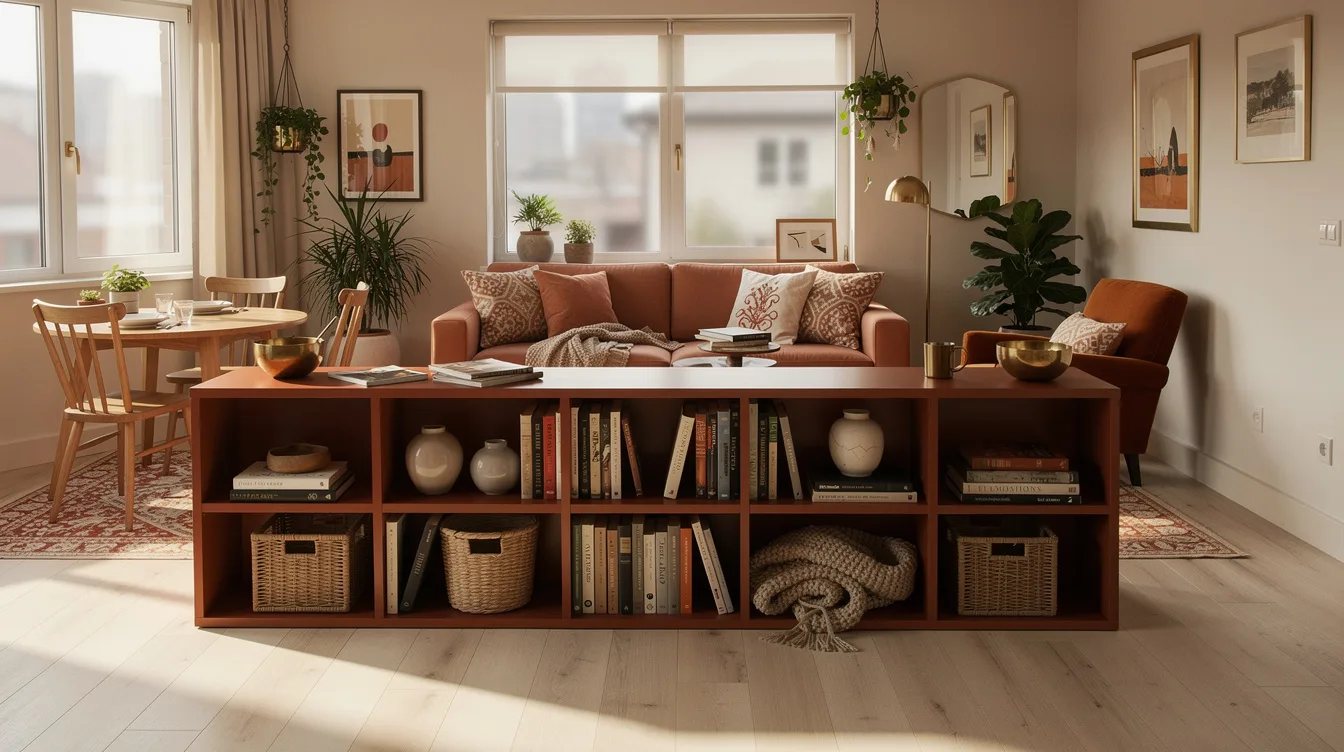
Rotate the Brightroom 13-inch 8 Cube Organizer horizontally behind a sofa or between a seating area and a small dining table. It runs about 58 inches wide and 30 inches high in this position, creating a long visual boundary while preserving a clear sightline across the apartment.
The $80 listing price leaves room in a $200 budget for baskets, books, or a narrow table lamp. Because both sides are finished, the back can face the dining area without showing the unfinished furniture surface common to ordinary shelving.
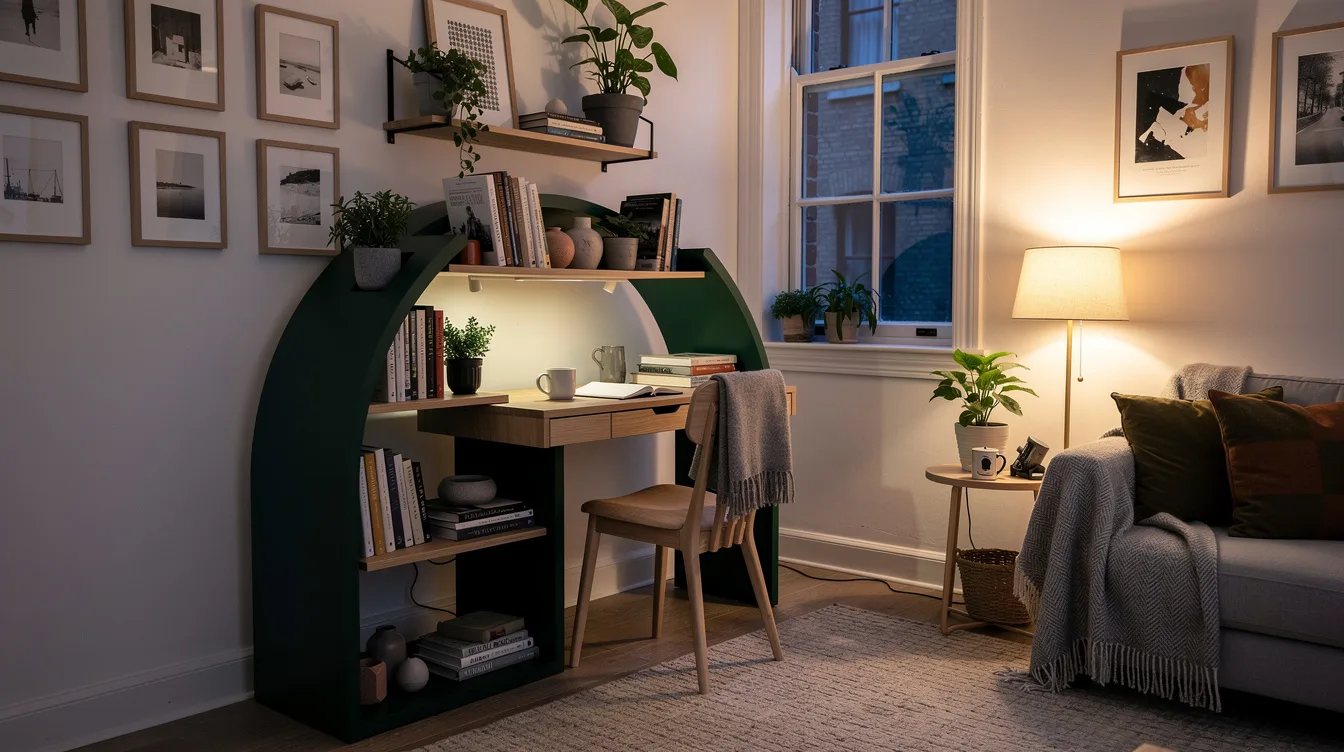
Screen a Desk with an S-Shaped Shelf
Use Costway’s S-shaped bookcase between a desk and the living area when a cube organizer would feel too deep. Its listed footprint is about 28 inches wide, 10 inches deep, and 63 inches high, giving a narrow work-zone screen with staggered openings instead of a broad rectangular block.
Advertised sale prices start around $65, with the exact amount depending on the selected version, color, and quantity. The black listing names an MDF surface, so pair it with a dark desk frame or warm wood accessories rather than forcing it into a mismatched white-and-oak scheme.
Pair Two Slim Shelves Around a Work Zone
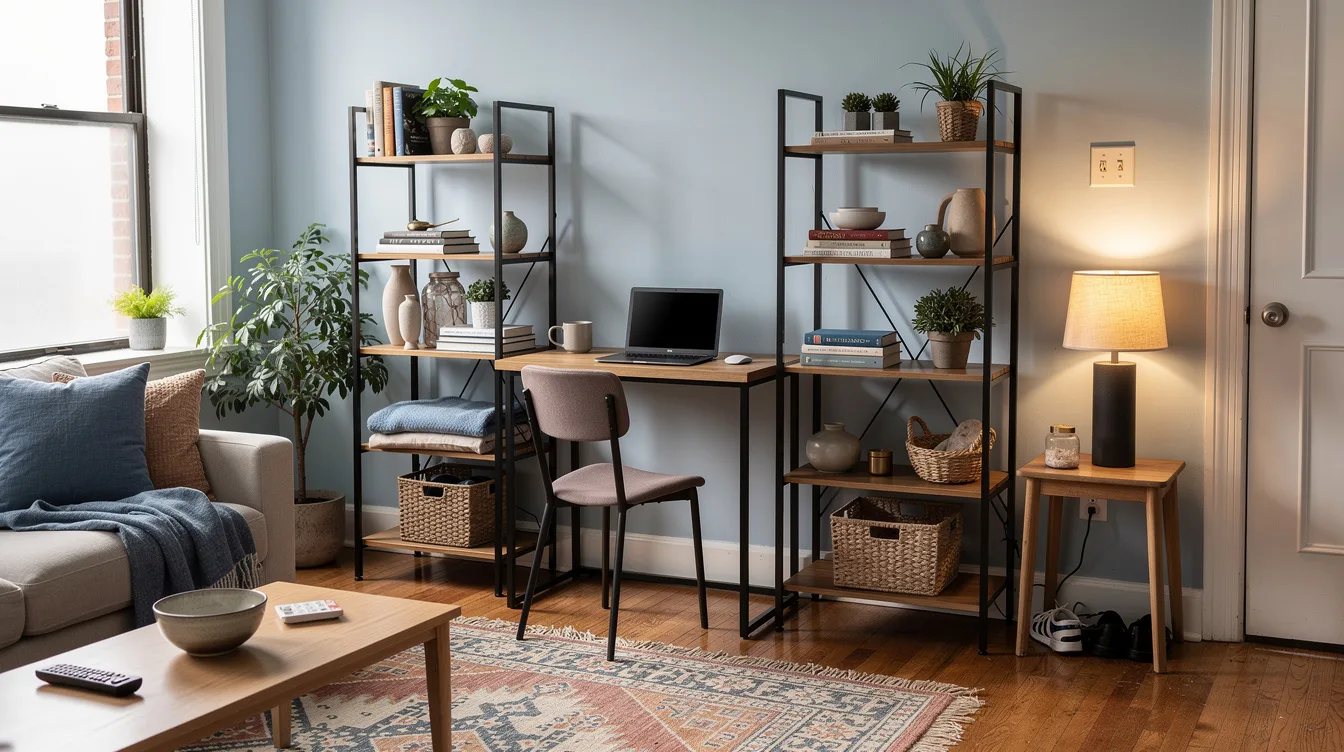
For a larger studio, place two Costway S-shaped bookcases at opposite ends of a compact desk area. With one starting around $65 and a second unit in the same advertised range, the pair can remain below $200 before tax and delivery while giving the workspace a defined entrance and exit.
Keep the shelves parallel to the desk rather than closing the zone across its front. That arrangement preserves circulation and lets the staggered openings carry daylight through the divider, which matters more in an apartment where one window may serve the whole room.
Create an Entry Landing Beside the Living Room
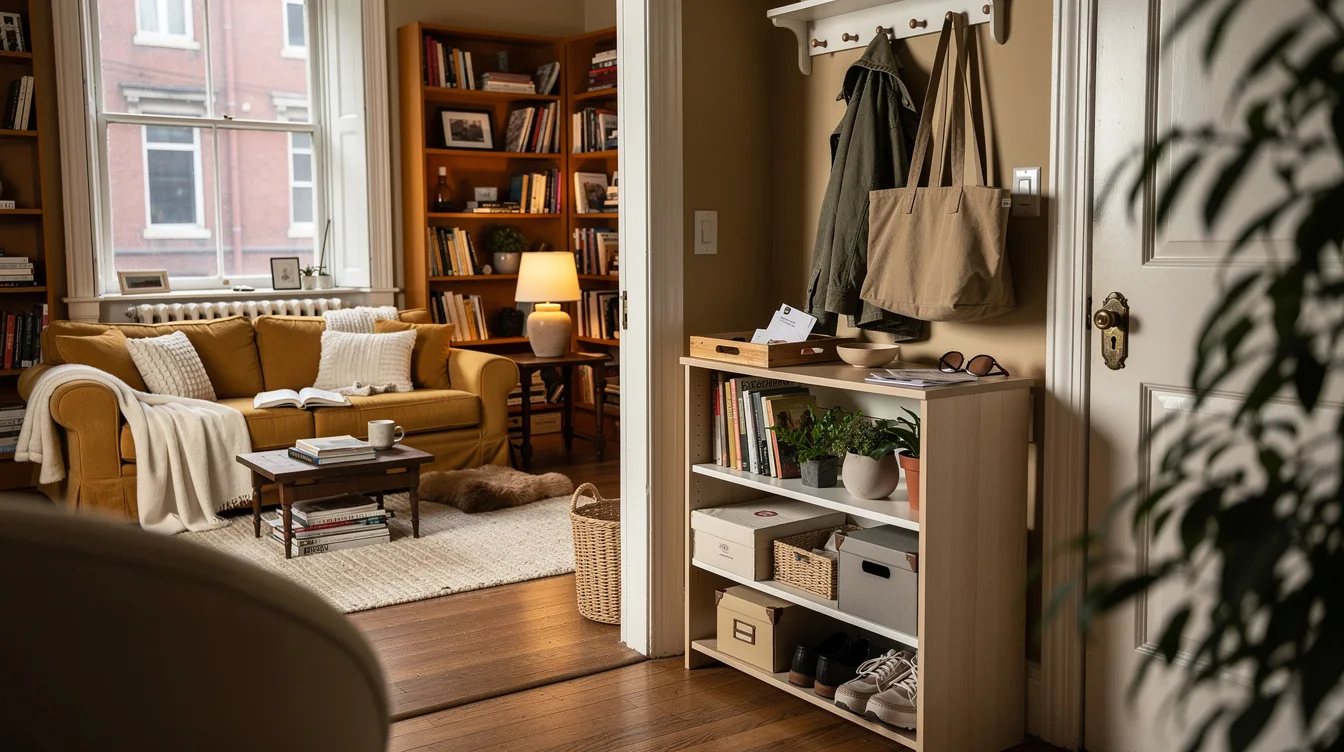
Set the Brightroom six-cube organizer horizontally near the apartment entry, perpendicular to the wall, to separate the landing area from the sofa. The low profile gives shoes, bags, and mail a home while keeping the main living space visible from the front door.
Its finished reverse side is especially useful in this placement, since visitors may see both faces as they move through the apartment. Keep the top mostly clear, then reserve one or two cubbies for fabric bins and the rest for books or neatly grouped everyday items.
Stand Six Cubes Beside a Bed
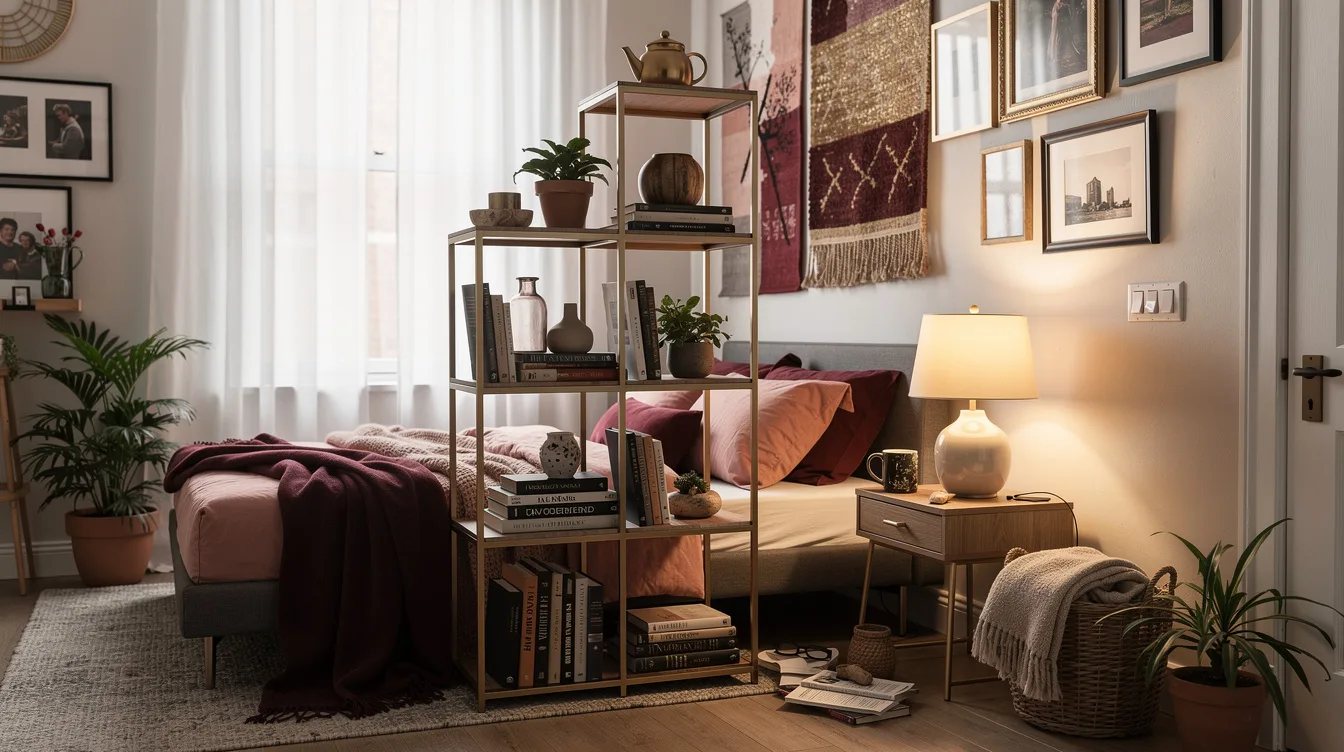
Place the Brightroom six-cube organizer vertically at the open side of a bed to form a partial bedside wall. Target lists this organizer for horizontal or vertical placement, giving renters a way to change the room plan without buying a separate partition.
The vertical arrangement works best when the bed sits away from the main walking path and the cubbies remain partly open. Use one opening for a reading light, one for a small basket, and leave the remaining spaces visually quiet so the divider reads as furniture rather than clutter.
Use Shaker Detail for a Softer Low Split
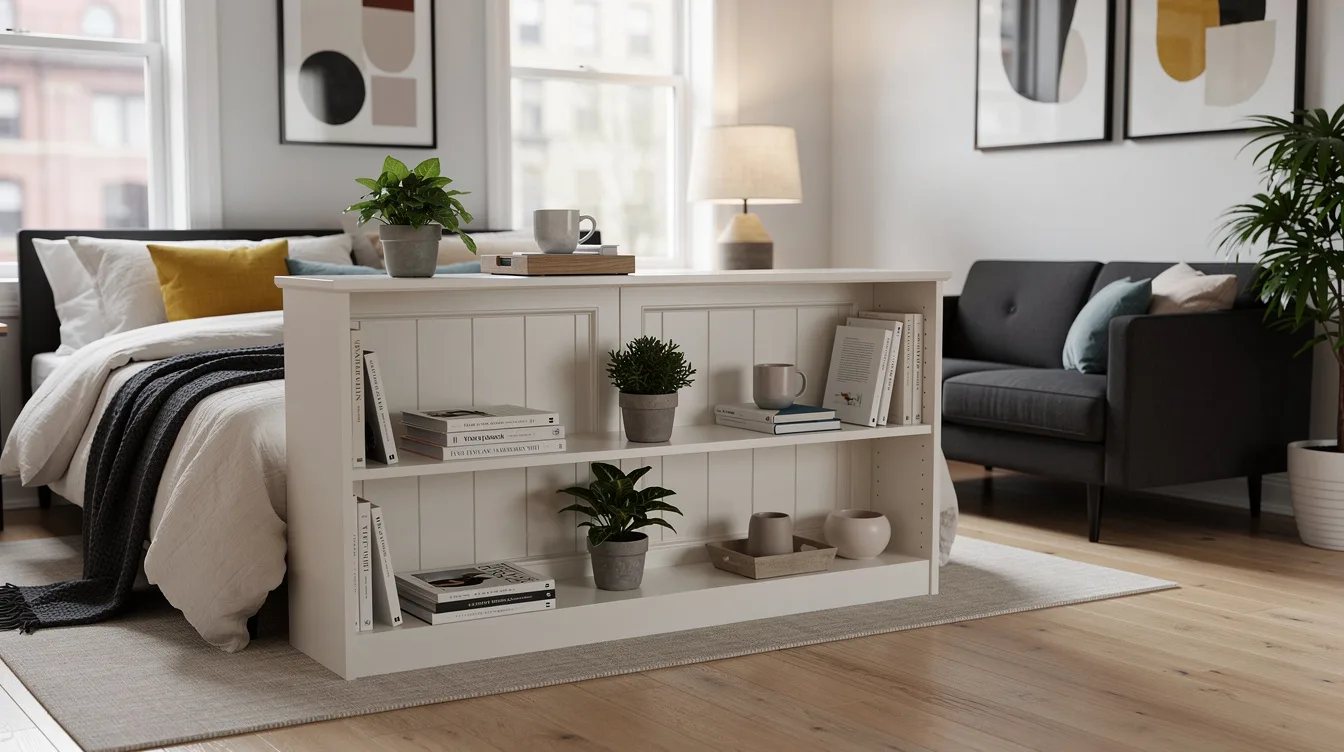
Choose the Brightroom 6-Cube Horizontal Shaker Style when a plain cube grid feels too utilitarian for the living room. Its listed dimensions are about 45 inches wide, 16 inches deep, and 34 inches high, making it a low boundary for a sofa, dining table, or compact lounge chair.
The listed price is $105, and the white and walnut-brown finishes give the divider more furniture presence than the basic organizer. Check the reverse-side finish and assembly instructions before placing it in the middle of the room, because those details matter when both sides remain visible.
Use a Medium Shaker Screen Behind a Desk
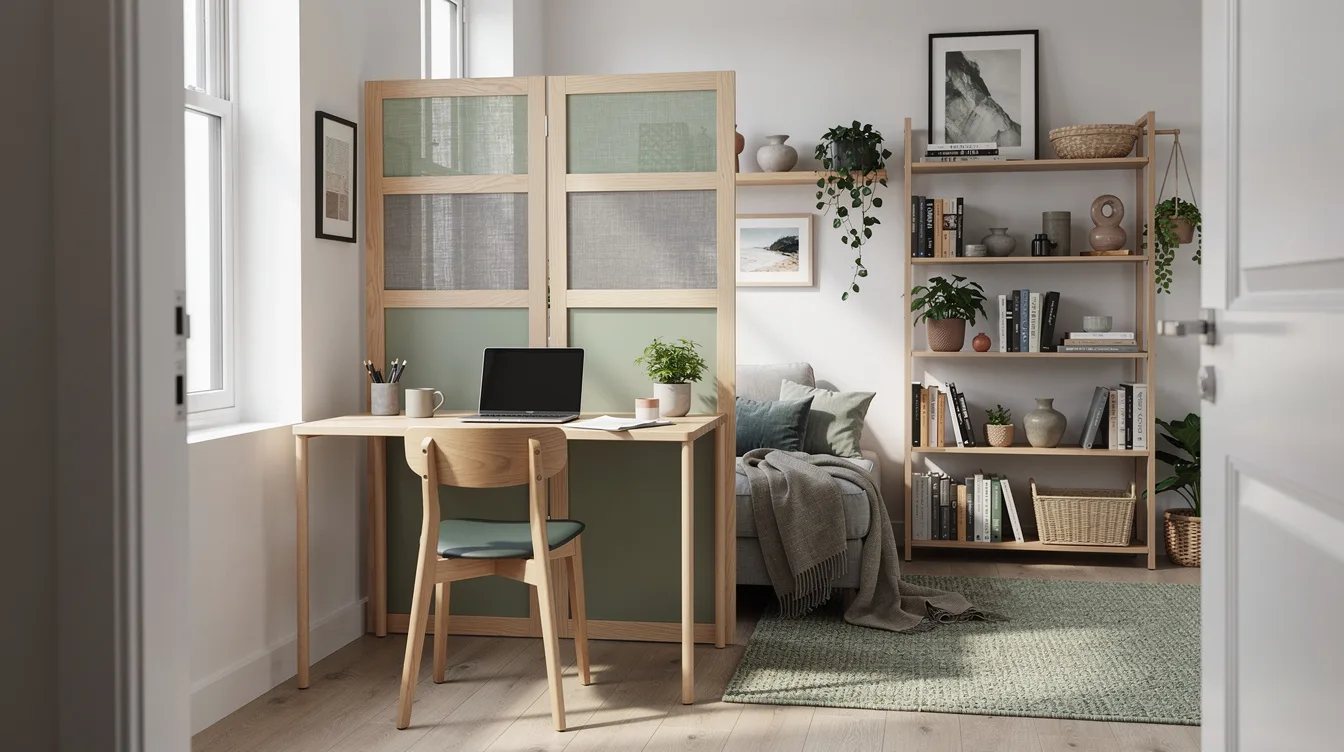
Stand the Brightroom 6-Cube Vertical Shaker Style behind a small desk when a medium-height boundary is enough to separate work from rest. Its listed footprint is about 31 inches wide and 16 inches deep, with a height of roughly 48 inches, so it frames the desk without becoming a full-height wall.
The listed price is $105, but this is the option to inspect most carefully before ordering. The walnut listing has mixed reviews that mention wobbling and misaligned assembly holes, so keep the setup modest and follow the assembly directions closely.
Build an L-Shaped Zone with Two Cube Sizes
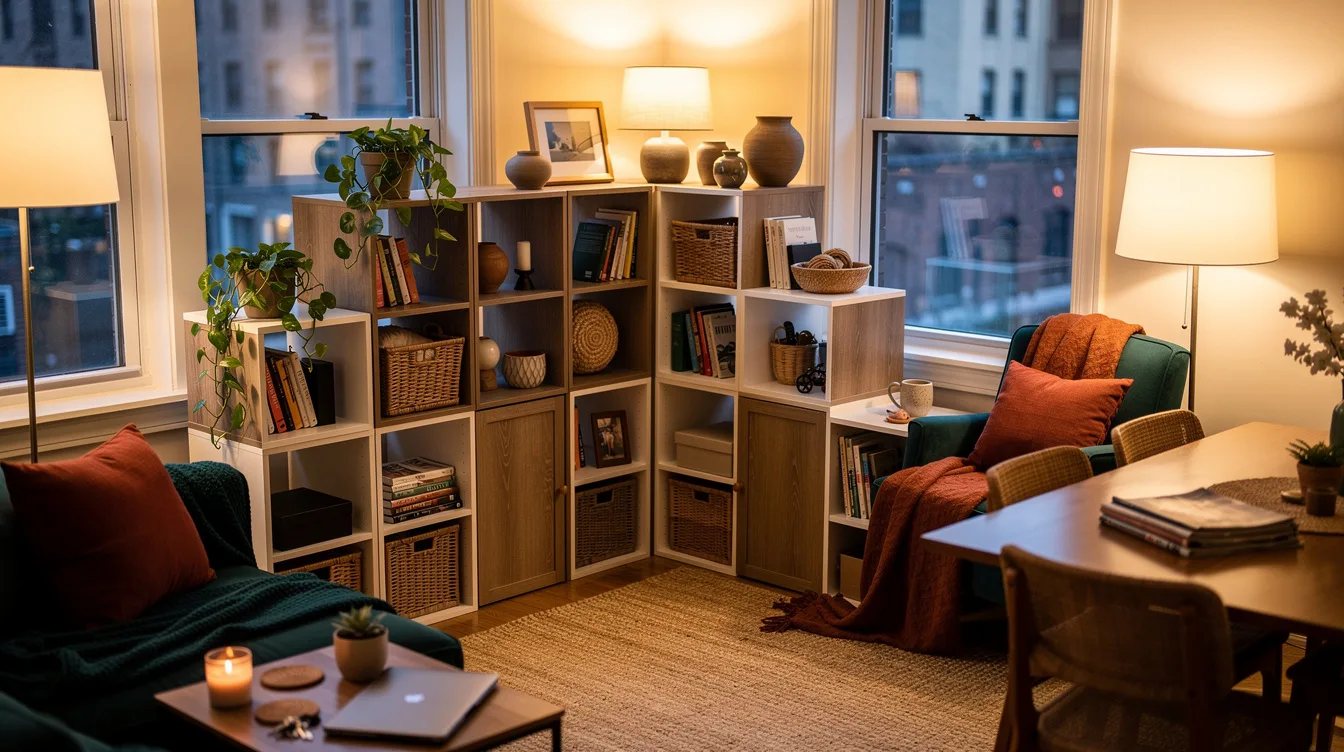
Combine one Brightroom six-cube organizer at about $65 with one eight-cube organizer at about $80 to create an L-shaped divider around a bed or desk. The combined listed cost is about $145 before tax and delivery, leaving part of the $200 budget for baskets or a task light.
Keep the shorter unit horizontal and place the taller unit vertically at its end, rather than lining both pieces across the entire apartment. This creates a clear corner while preserving an open passage, and the finished fronts and backs allow the arrangement to be viewed from either side.
Keep the Sightline Open Above the Books
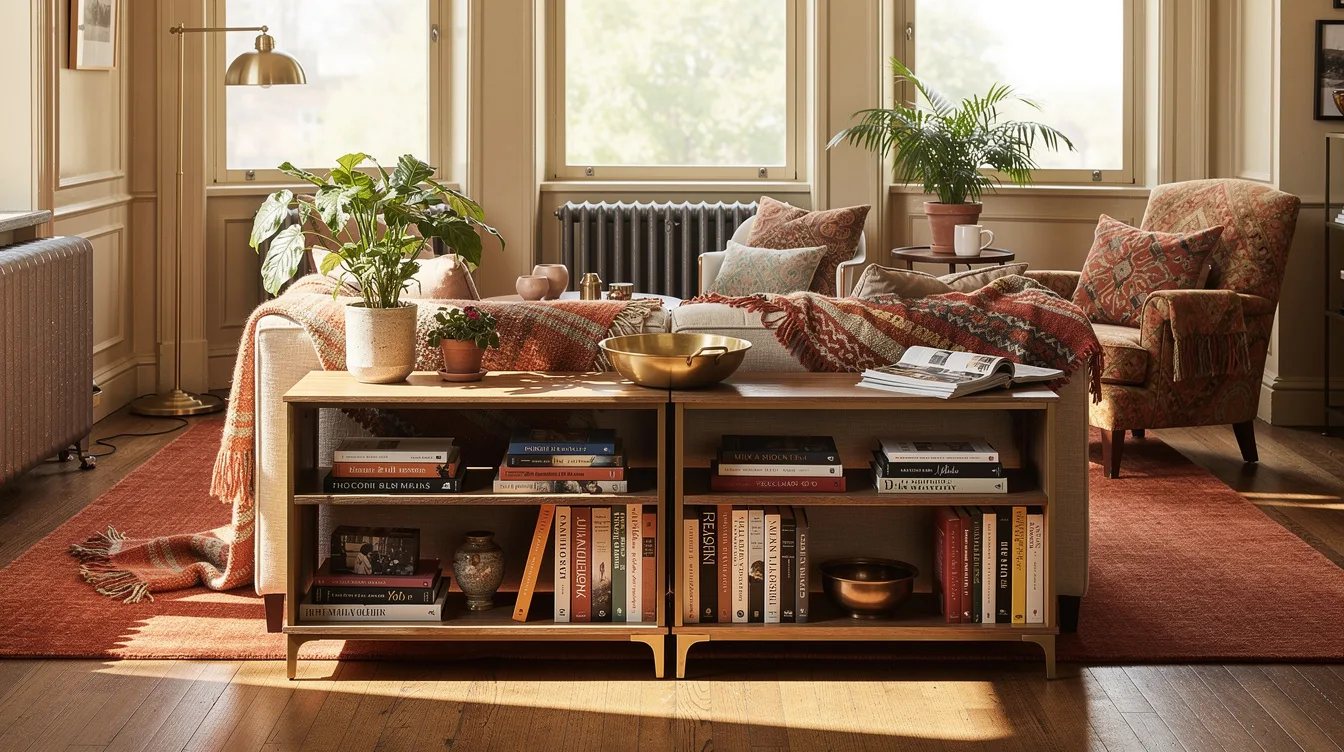
Use the Brightroom 13-inch 8 Cube Organizer as a display divider by filling only the lower openings with books and storage bins. In the vertical position, the open upper cubes can hold a few lightweight objects while the space above the unit remains visually connected to the rest of the apartment.
This approach costs about $80 at the listed price and makes the organizer work harder than a closed cabinet. Keep tall objects away from the center of the sightline, and group items by function so the divider supports the room instead of becoming a second clutter zone.
Choose the Slimmest Screen for a Narrow Passage
When the route between the entry and kitchen is tight, select Costway’s engineered-wood S-shaped bookcase rather than a 15-inch-deep cube organizer. The listed depth is about 10 inches, which leaves more breathing room beside a desk, chair, or narrow console.
Budget roughly $65 to $100 for one unit, depending on the selected version and sale listing. Use it as a visual screen rather than a storage wall, keeping the staggered shelves lightly loaded so the passage still feels easy to read from the doorway.
Match the Divider to Its Visible Back
For a room divider that can be seen from both living zones, prioritize the Brightroom finished back before choosing a color or arrangement. The standard six-cube and eight-cube organizers are designed with finished fronts and backs, which makes them better suited to freestanding placement than a bookcase meant to sit against drywall.
Start with the furniture already in the apartment, then choose horizontal or vertical placement based on the room’s strongest need: a low boundary for openness or a taller edge for a sleeping nook. The best divider is the one that solves circulation and storage in the same footprint.
Keep reading
- Small Living Room Feeling Busy? 14 Fixes That Fake a Calmer Space
- Need Christmas Tree Storage? These Walmart and Target Bags Start at $7
- No Room for a Tree? 12 IKEA Advent Calendar Ideas for Small Apartments
Measure the walking path first, then begin with the lowest divider that solves the problem: the $65 six-cube organizer is the easiest starting point for most compact apartments. Add height only where the bed or desk truly needs a stronger boundary.