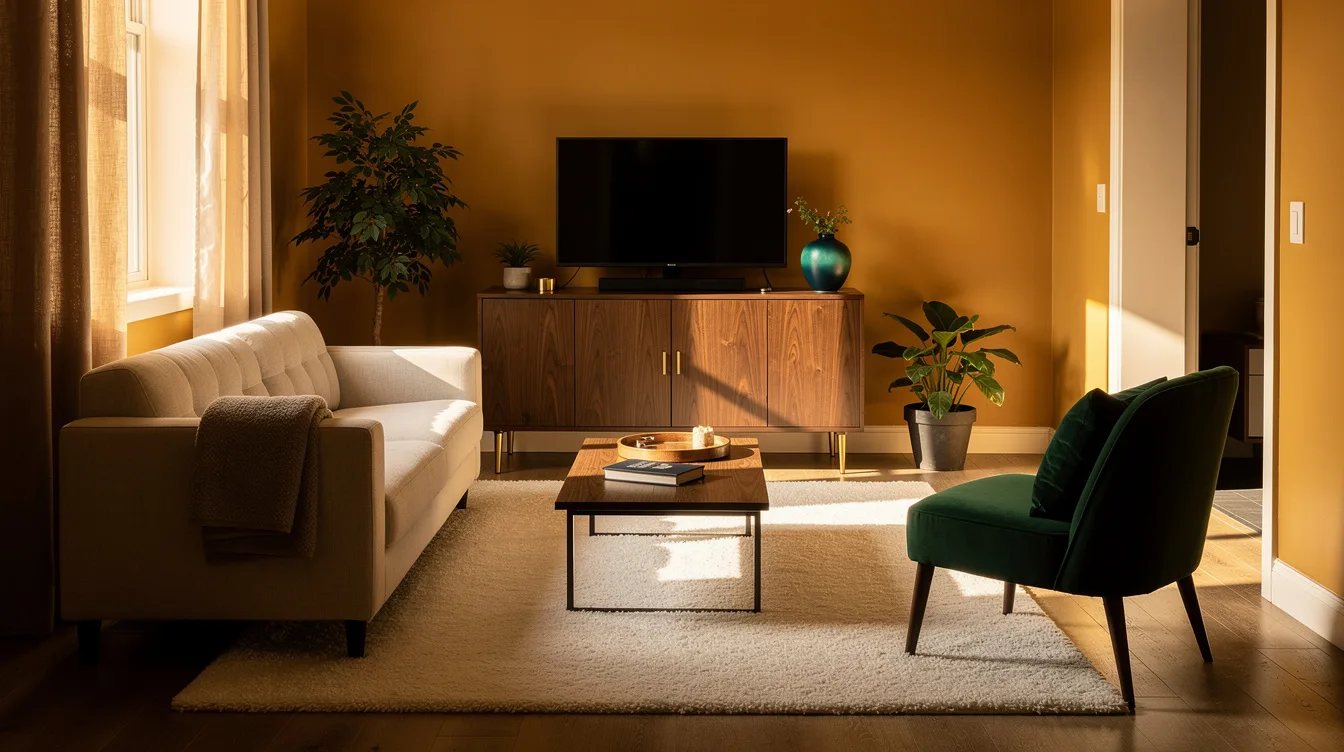
Small Living Room Feeling Busy? 14 Fixes That Fake a Calmer Space
08 november 2026Our small living room felt crowded even after we cleared the floor. A 47¼-inch cabinet, one properly sized rug, and fewer exposed objects showed us that the problem was visual competition, not a lack of storage.
We kept the room warm and personal, but gave its largest surfaces a clearer rhythm. The most useful change was continuity: related colors, fewer furniture shapes, and everyday clutter behind doors.
What you will find inside
- Hide the TV clutter behind closed doors
- Match the cabinet to an existing finish
- Leave the storage top almost empty
- Anchor the seating with one quiet rug
- Test the rug footprint before ordering
- Repeat one wall-adjacent window color
- Hang the curtain rod higher and wider
- Remove duplicate small furniture
- Give every cable a hidden route
- Reduce open shelving to one zone
- Choose one dominant coffee table shape
- Contain small objects on one tray
- Repeat a finish at eye level
- Edit visual weight before buying anything
Hide the TV clutter behind closed doors
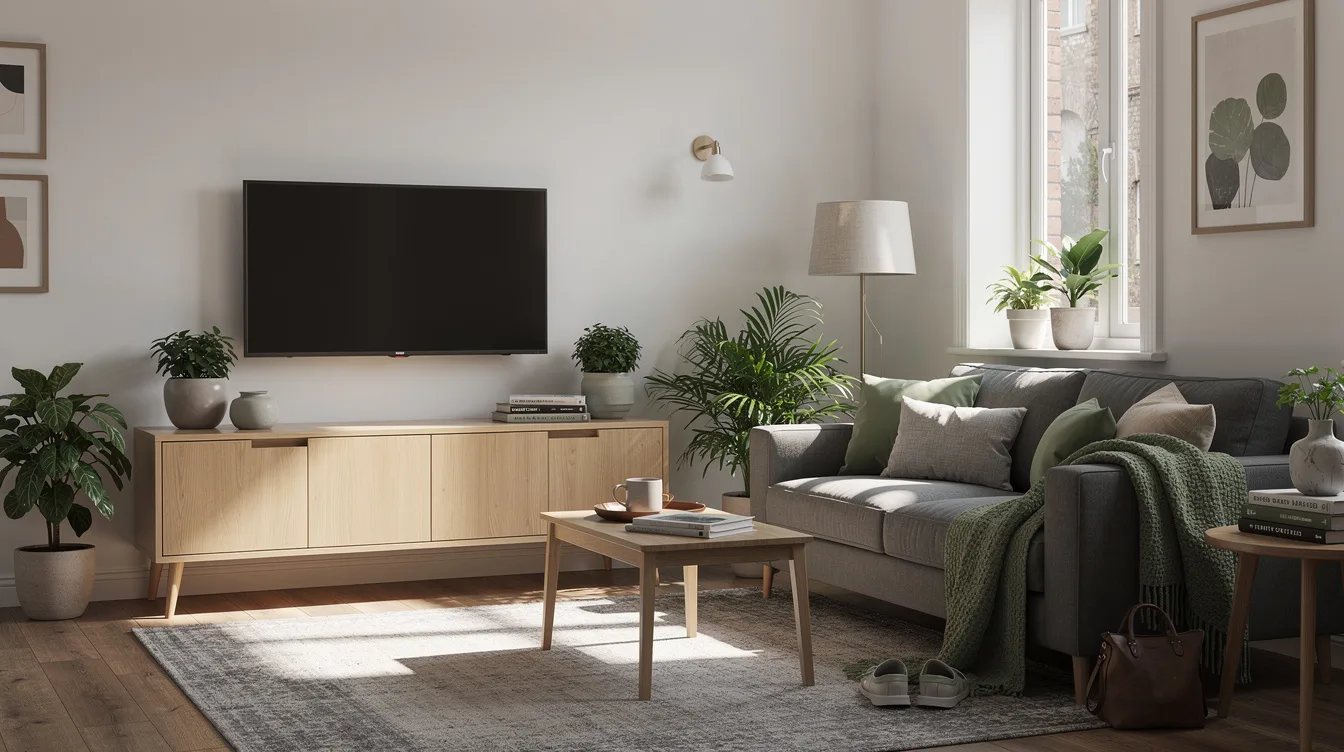
We started with the busiest zone: the TV area, where chargers, remotes, games, and paperwork had collected in plain sight. An IKEA BESTÅ cabinet with flat LAPPVIKEN doors gives those loose items one contained address.
The 47¼-inch-wide cabinet is listed around $197 to $265 depending on finish, promotion, and eligibility. Prices exclude tax, delivery, and installation, so treat that range as a planning figure and check the current listing before buying.
Match the cabinet to an existing finish
Choose a cabinet color that sits close to the wall or repeats a wood tone already in the room. The black-brown, white, and brown walnut-effect BESTÅ versions create fewer competing edges than a contrasting storage piece.
Walnut-effect describes the finish, not solid walnut construction. Keep that distinction clear when comparing materials, especially if the rest of the room contains real wood.
Leave the storage top almost empty
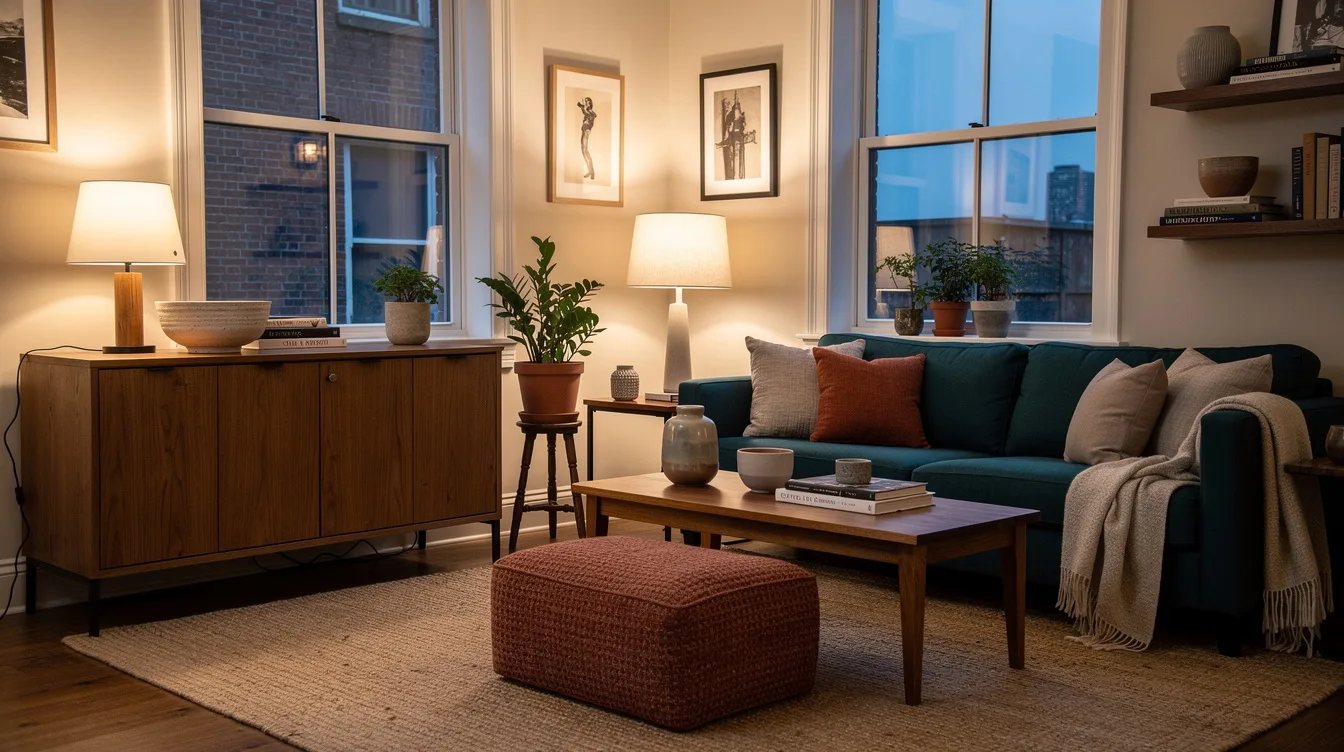
A closed cabinet loses much of its calming effect when its top becomes another display shelf. We would keep one brass table lamp or a shallow tray there, then stop.
The tray can hold the remote controls without scattering them across the coffee table. Open space around the objects gives the eye a place to rest.
Anchor the seating with one quiet rug
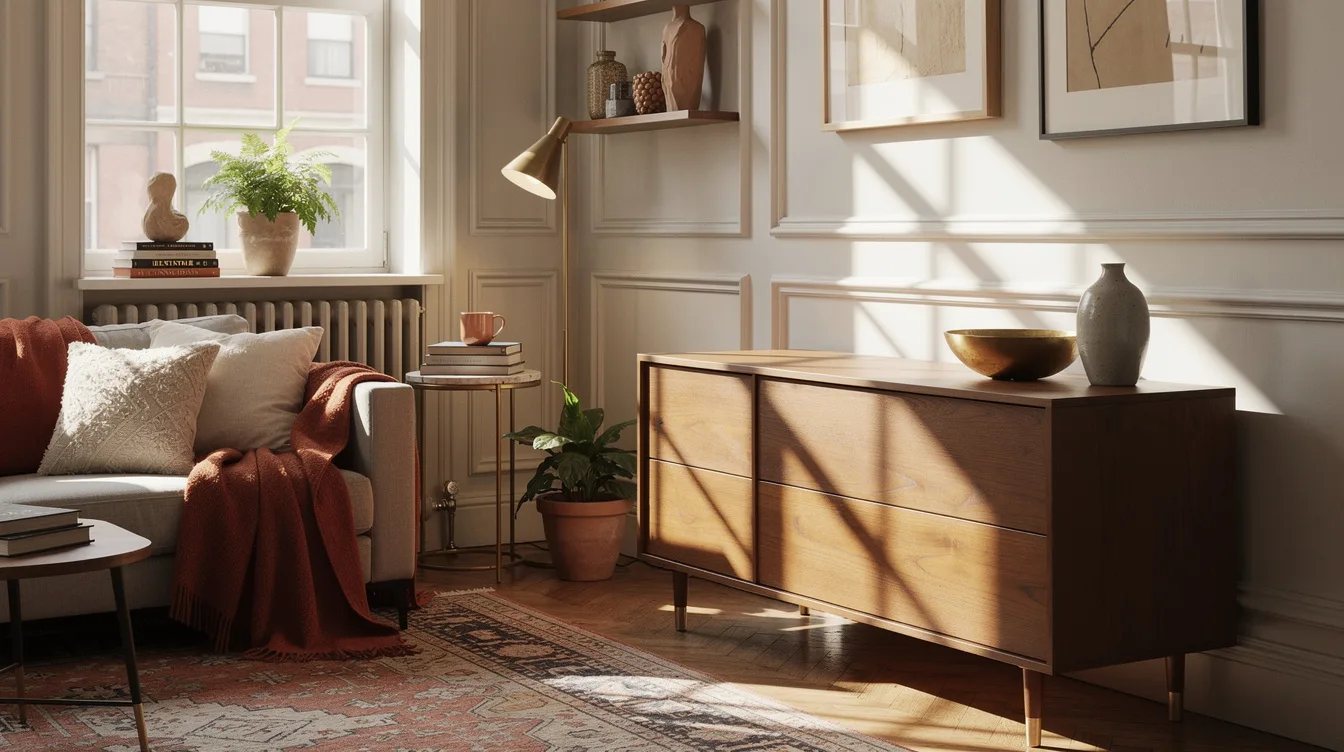
Use one rug to connect the sofa, coffee table, and nearby chair into a single seating area. A solid or low-contrast IKEA STOENSE rug works well because its low pile and restrained pattern do not add another loud outline.
The 5-foot-7-inch by 7-foot-10-inch STOENSE is listed around $150, with an older $119.99 reference still appearing on the product page. Use approximately $150 for planning and confirm the checkout price.
Test the rug footprint before ordering
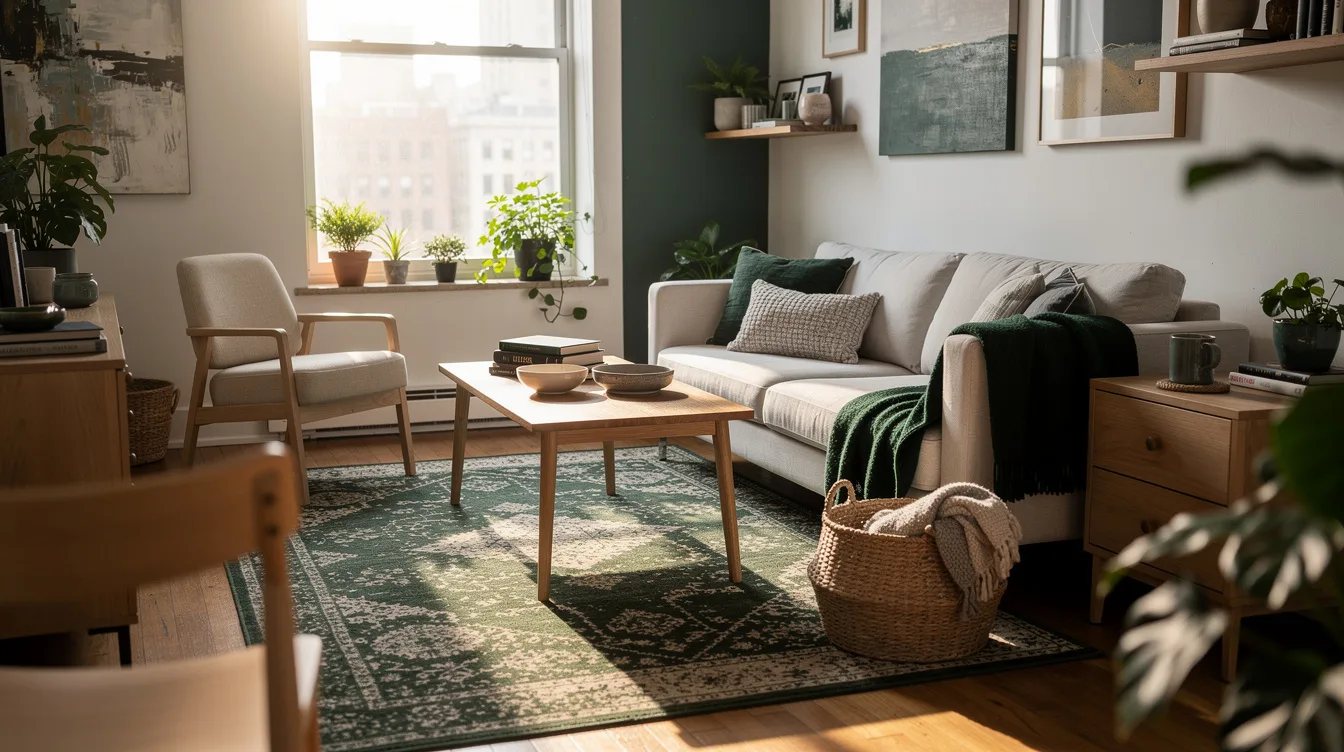
Painter's tape lets us test the rug size without committing to a purchase. Mark a roughly 5½-by-8-foot footprint, then place the front legs of the sofa and chair inside that boundary.
If the furniture barely touches the tape, the rug will read as a small island. Let the seating arrangement decide the size, even when the room itself is compact.
Repeat one wall-adjacent window color
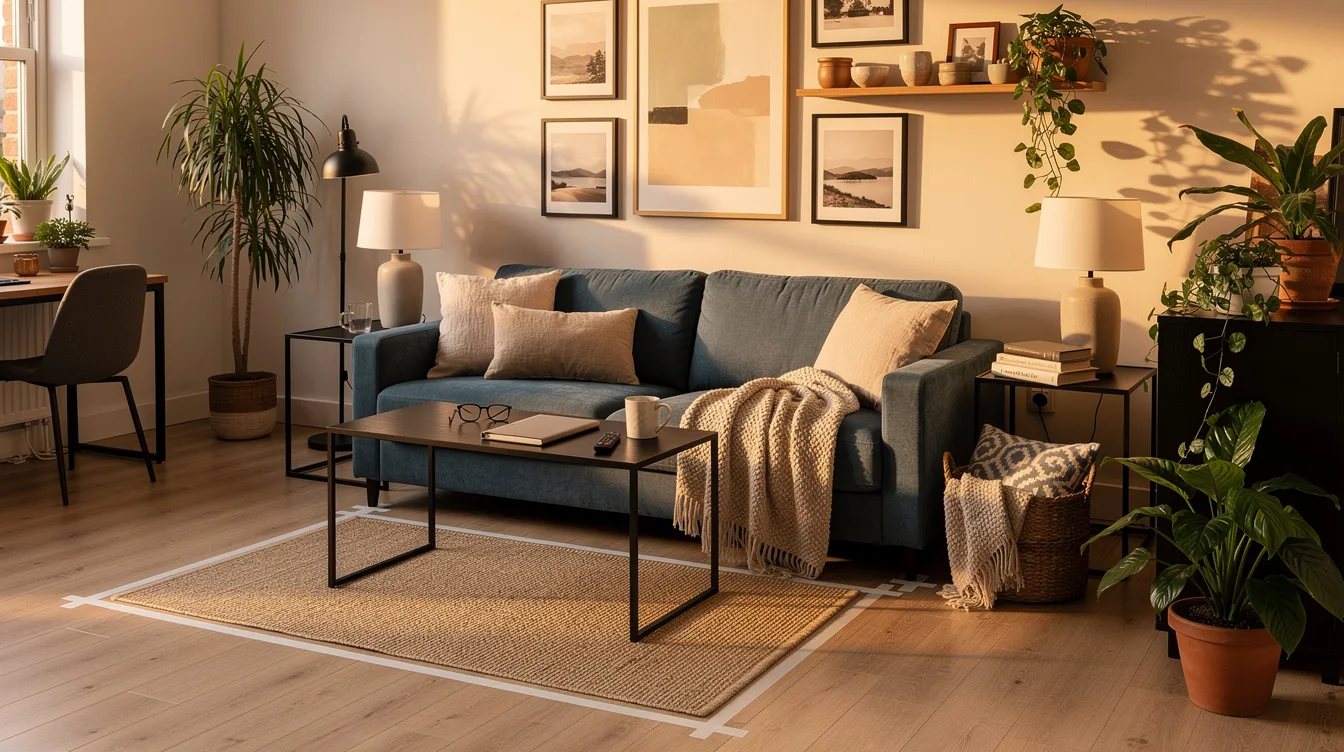
Plain curtains in white, warm beige, or a soft gray reduce the number of competing shapes around the window. Choose a shade that sits near the wall color rather than introducing another strong contrast.
We would skip patterned panels, decorative tiebacks, and a valance in this room. Sheer white cotton curtains can preserve daylight while making the window read as one broad surface.
Hang the curtain rod higher and wider
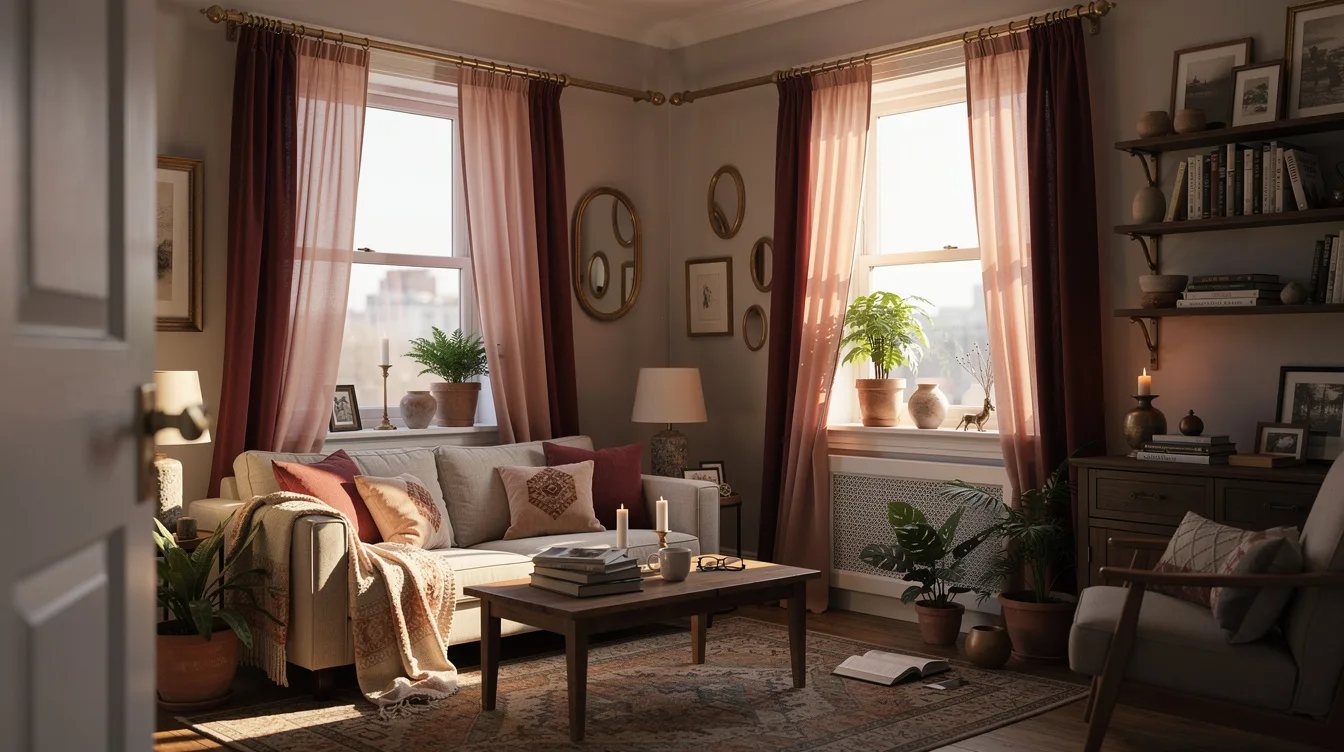
Mount the rod close to the ceiling and extend it beyond the window frame when the wall allows. The longer vertical panels create a clean boundary and keep the glass from looking like a separate visual box.
Check the finished curtain length against the mounting height before ordering. A panel that pools heavily or stops well above the floor adds an unnecessary horizontal break.
Remove duplicate small furniture
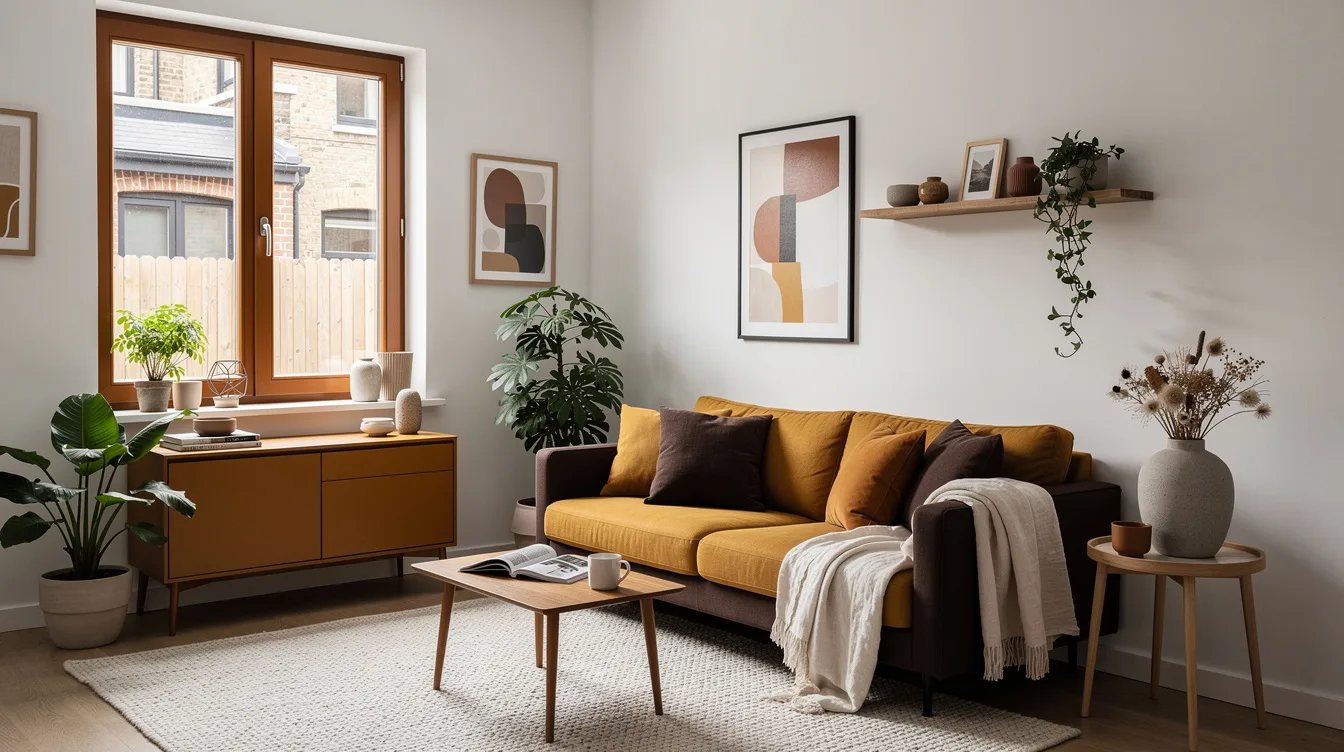
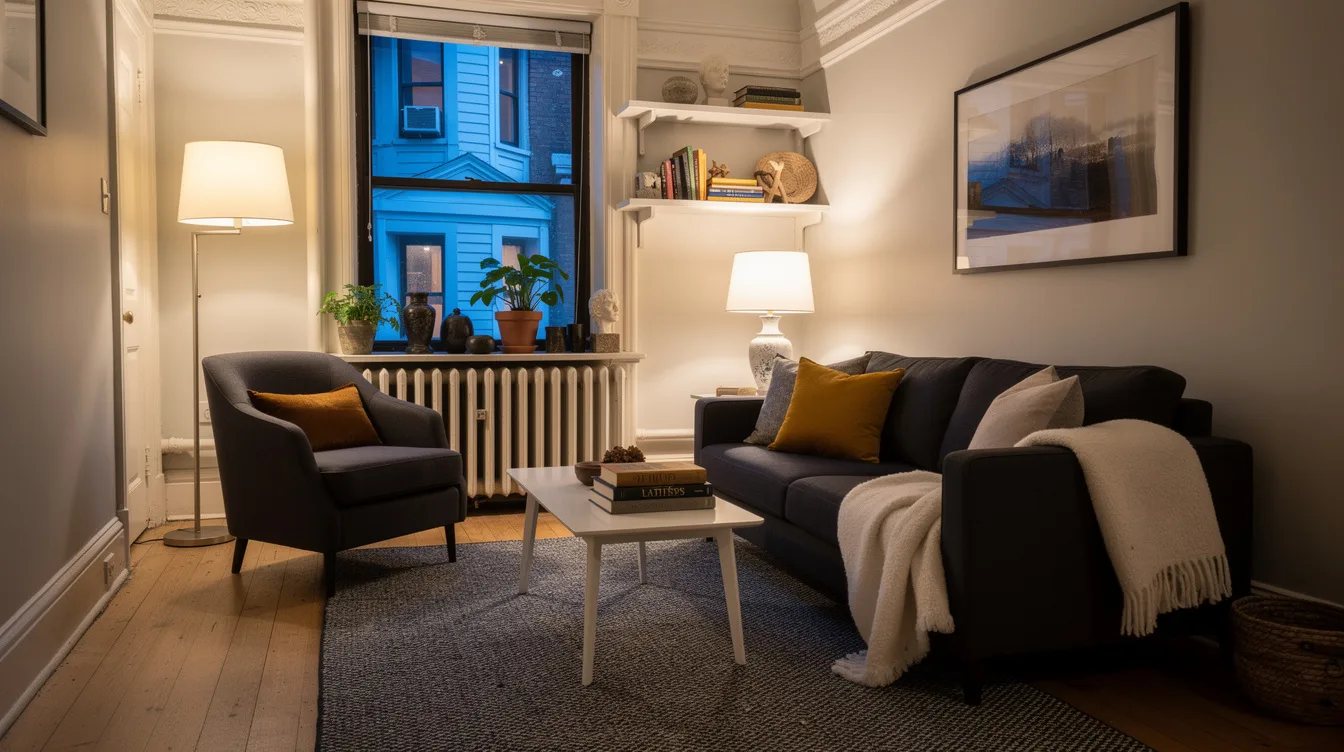
Small rooms often become busy through accumulation: a side table beside another side table, a stool under a console, and a basket beside every chair. Remove the least useful piece and protect the walking path.
Keep one adequately sized oak side table if it holds a lamp or drink. Furniture with a clear job makes the room easier to read than several small surfaces waiting for decoration.
Give every cable a hidden route
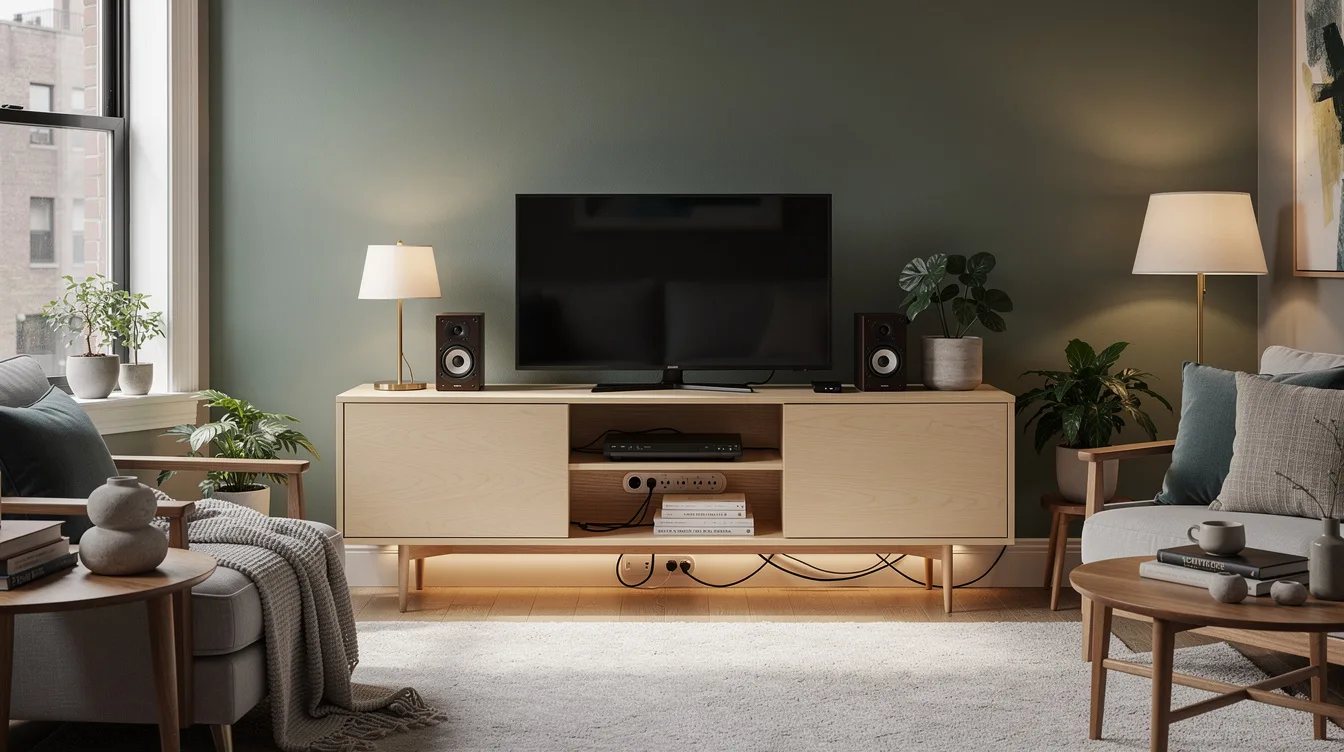
Visible cords create thin, high-contrast lines that pull attention across the room. Run the television and lamp cables behind the cabinet when possible, then use a simple cable sleeve in a matching color for the exposed section.
Choose a black cable sleeve near black furniture or a white sleeve near a light wall. The goal is a quiet path, not a bundle of accessories that becomes another object to notice.
Reduce open shelving to one zone
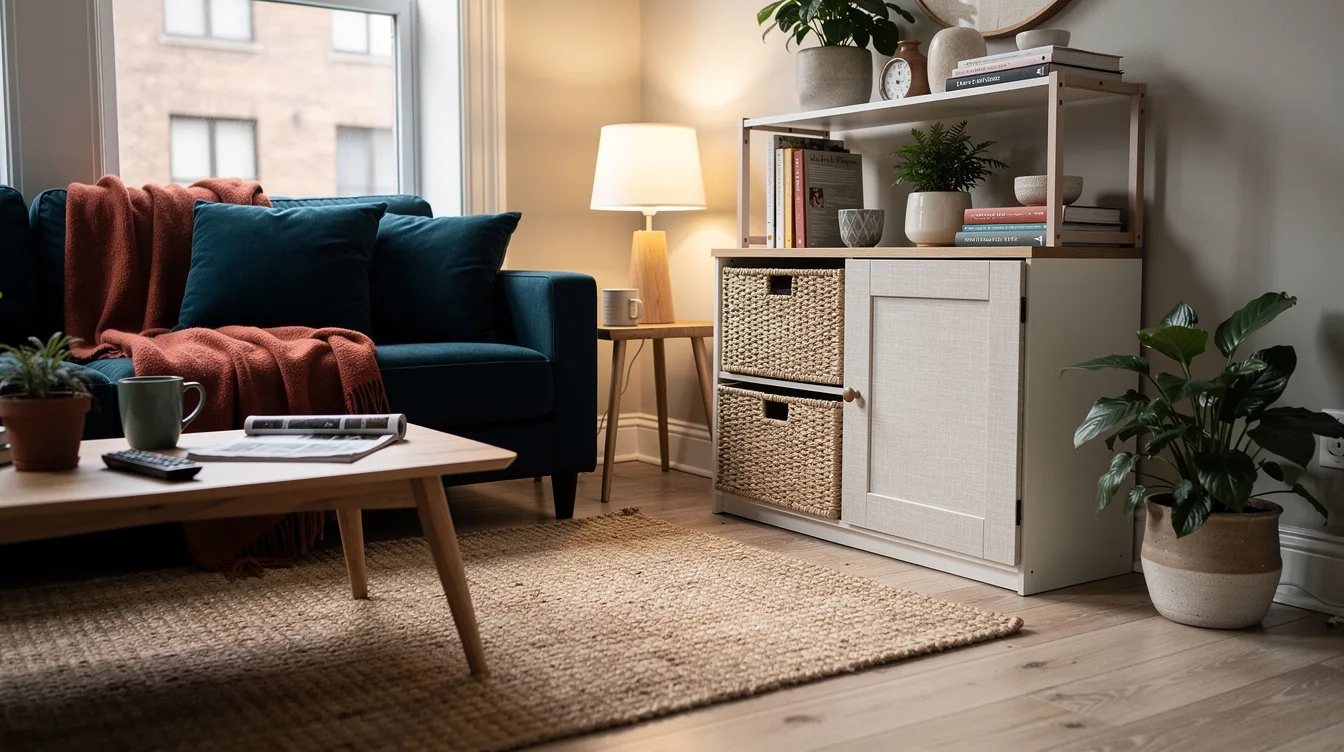
Open shelves show every book spine, game box, basket, and charging device at once. If shelving must remain, keep it in one defined area and reserve the rest of the storage for doors.
A white IKEA wall shelf can hold a small edited display, while the BESTÅ cabinet handles everyday overflow. That split keeps useful objects accessible without letting the entire room become a collection of visible categories.
Choose one dominant coffee table shape
Furniture outlines compete when a square sofa meets a round table, a rectangular ottoman, and several angular baskets. Pick one dominant silhouette and let the nearby pieces support it.
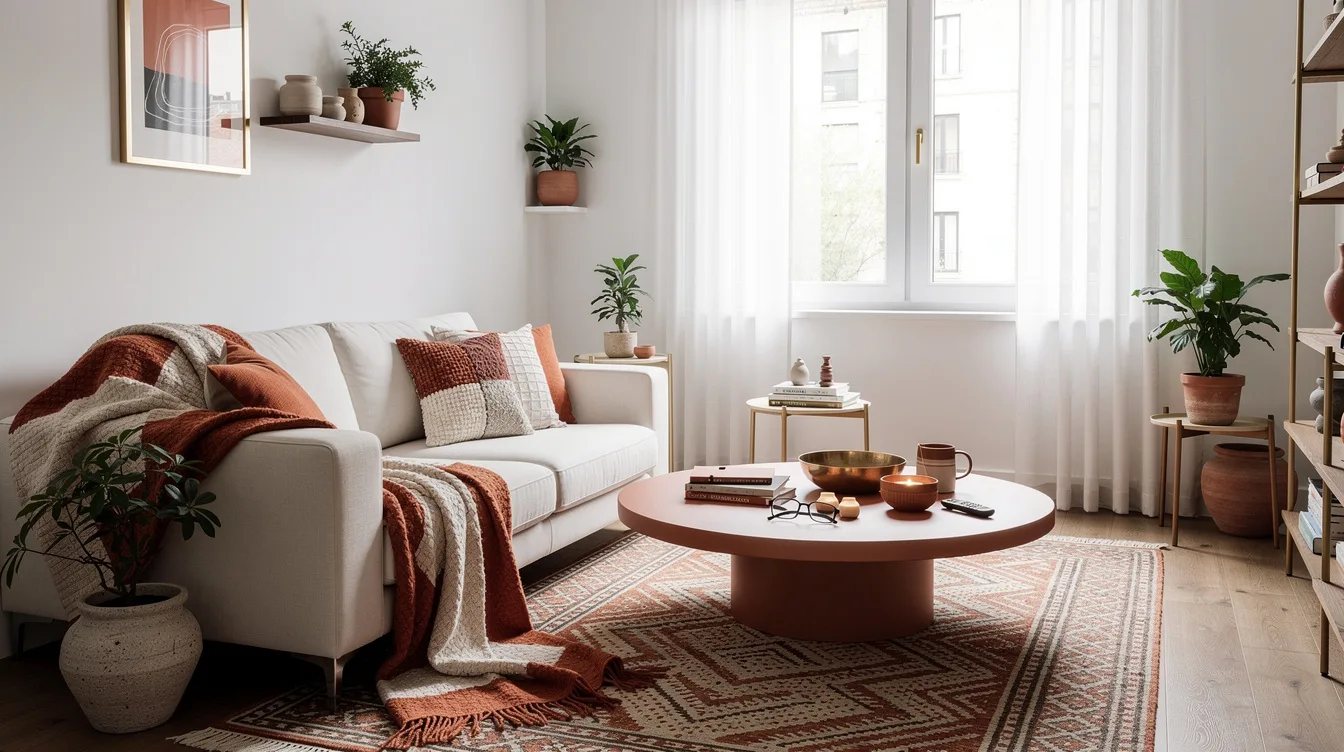
We favor a slim round wood coffee table when the room has tight walkways because its curved edge softens circulation. Keep the table large enough for the seating group, then remove extra nesting tables.
Contain small objects on one tray
A tray creates a visual boundary for the items that genuinely belong on the coffee table. Use one shallow natural wood tray for the remote, a candle, or reading glasses, and leave the surrounding surface clear.
Skip a decorative stack of objects that has no daily purpose. The room feels calmer when the eye can recognize the table as one surface instead of a series of separate displays.
Repeat a finish at eye level
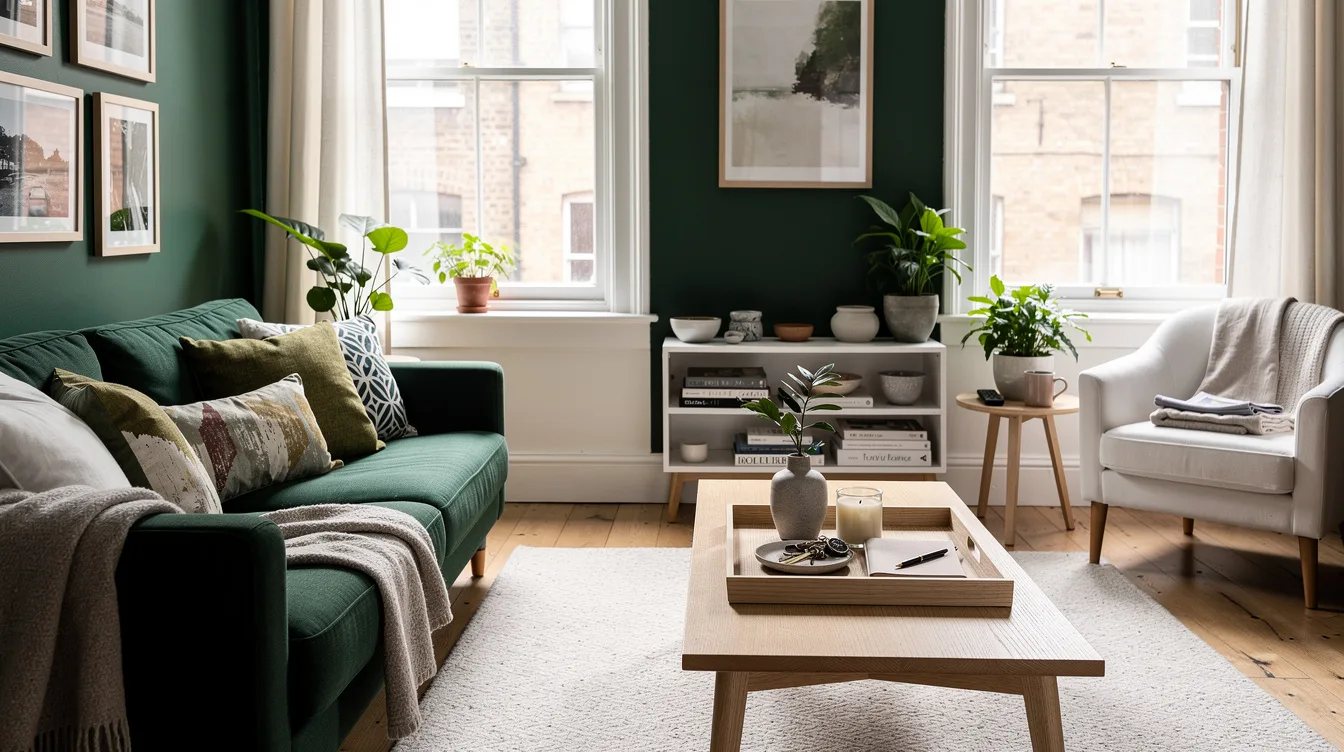
Continuity improves when a finish appears in more than one useful place. Repeat the cabinet's wood tone in a frame, lamp base, or small side table rather than adding a new metal or color for every item.
A matte black picture frame can echo black cabinet hardware and a television screen. Repetition makes those dark details feel intentional, while unrelated accents remain easy to remove.
Edit visual weight before buying anything
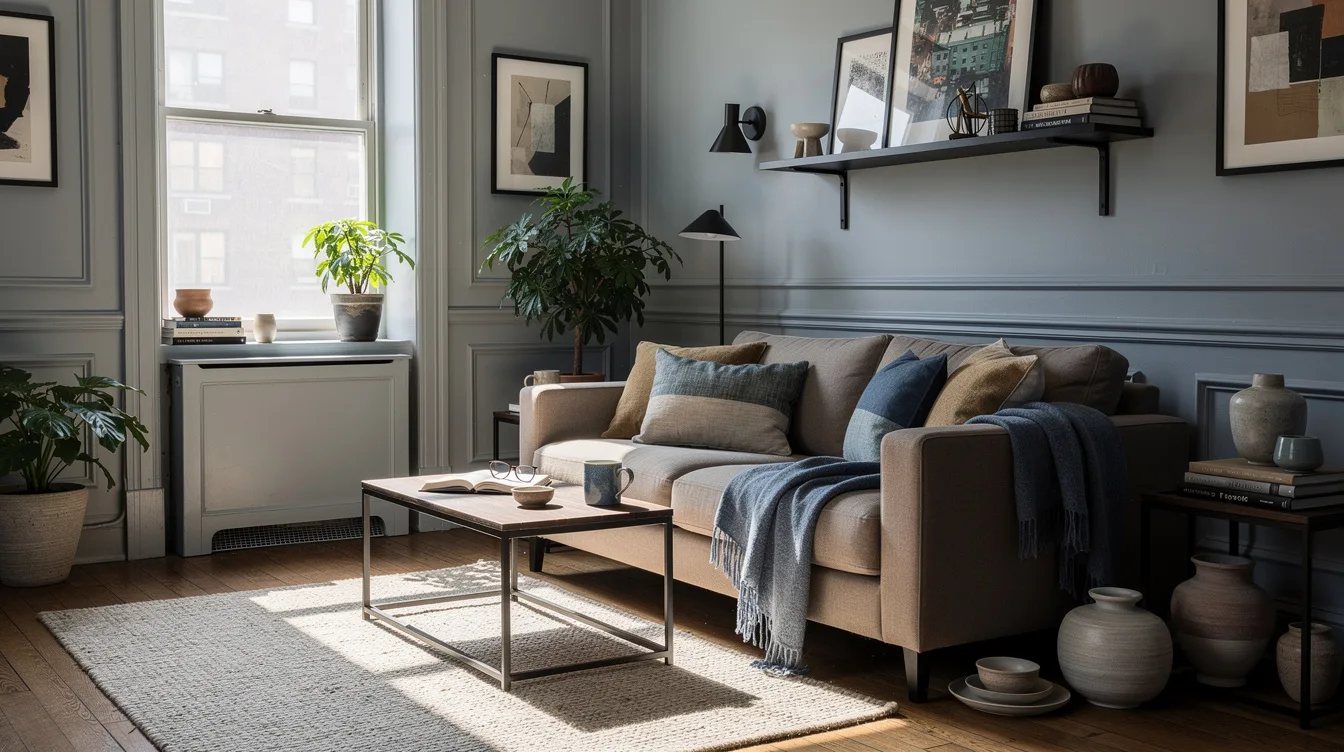
Stand at the doorway and identify the first three objects that demand attention. Remove one, close one door, or shift one piece before adding another solution from Target or Amazon.
Small living rooms need fewer competing decisions, not miniature versions of every furniture category. Start with the TV clutter, rug placement, and window treatment, then live with the room for a few days before making another purchase.
Keep reading
- 12 Living Room Lighting Mistakes That Make Your Space Feel Smaller
- No Room for a Reading Nook? IKEA Has 11 Small-Space Fixes Under $200
- Small Living Room Feeling Cramped? 12 At Home Mirrors Under $80
Begin at the room's busiest sightline and remove one visible category of clutter before shopping. Once the seating, rug, and storage read as one composition, every later choice becomes easier to judge.


