Landlord Said No Holes? These 14 Renter-Safe Storage Fixes Leave No Marks
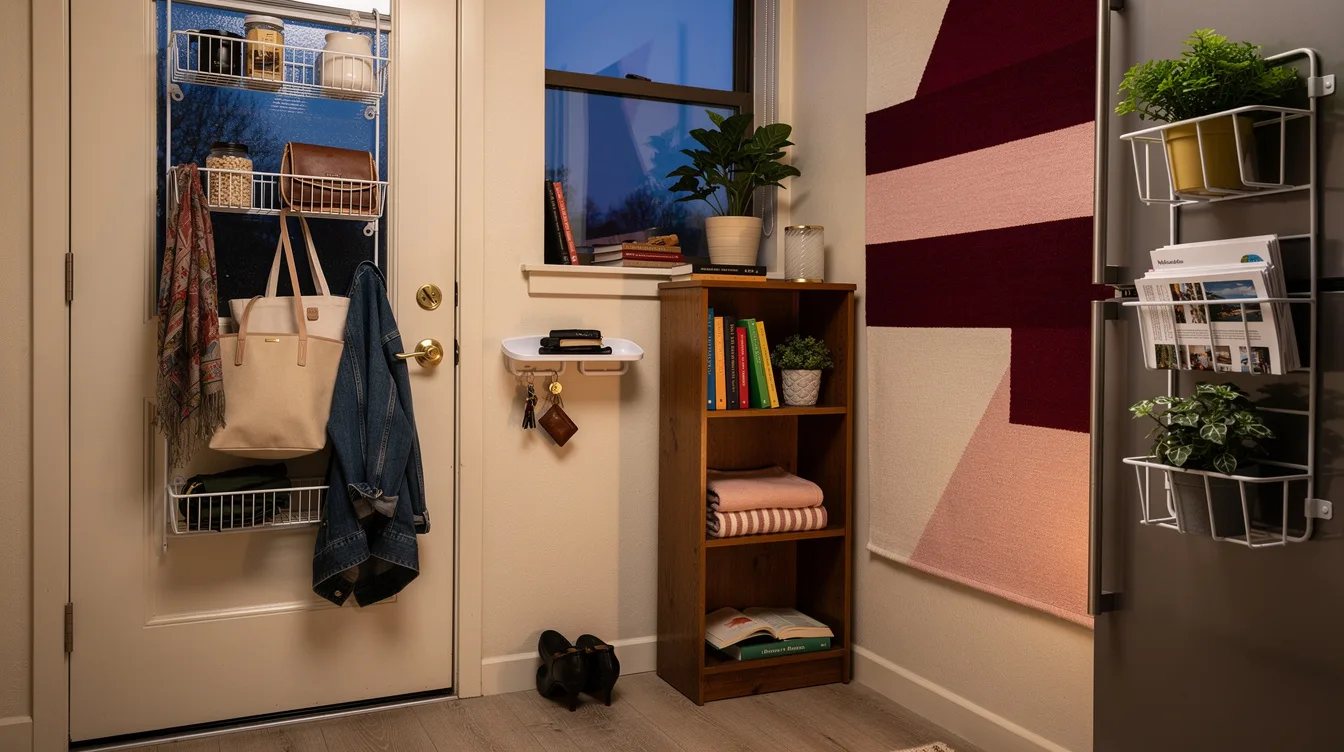
08 november 2026The best rental storage may be the rack that never touches the wall. A Brightroom over-the-door unit about 18 inches wide and 45 inches tall can add four rows of bathroom or pantry storage, while a tiny Command ledge handles only the essentials.
That distinction matters at move-out. Removable does not mean damage-proof, so the smartest plan pairs door-mounted, magnetic, and freestanding pieces with careful weight limits and a realistic inspection of every contact point.
What you will find inside
- Start With a Four-Tier Door Rack
- Keep Command Ledges Deliberately Small
- Hang Bathroom Supplies Over the Cabinet
- Move Spices Onto a Magnetic Surface
- Use Removable Hooks for Soft Goods
- Use Magnetic Hooks on Steel Doors
- Park a Narrow Bookcase Against the Wall
- Roll in an IKEA Utility Cart
- Stack Bins Inside an Existing Closet
- Add a Tension Rod Under the Sink
- Divide the Closet Shelf Vertically
- Slide Storage Under the Bed
- Create an Entry Drop Zone With a Bench
- Audit Every Contact Point Before Leaving
Start With a Four-Tier Door Rack
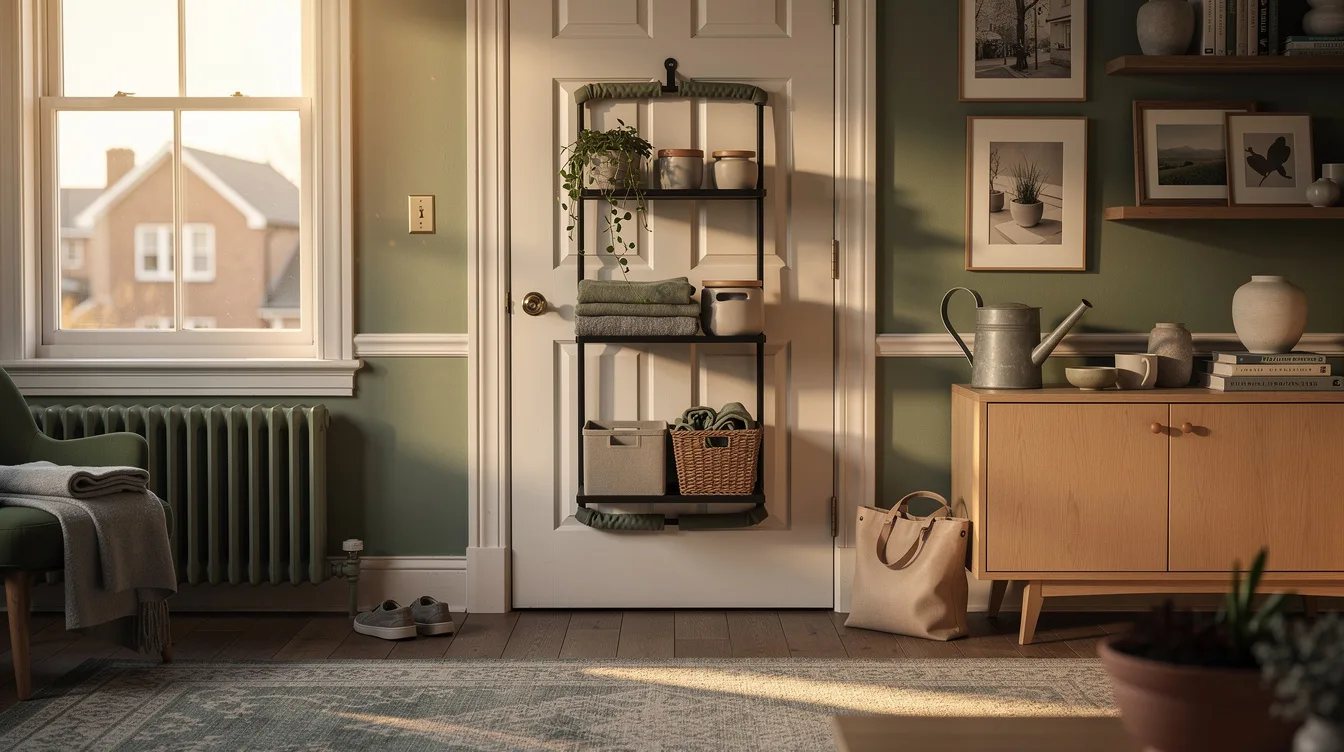
The Brightroom four-tier over-the-door rack is the strongest choice when a rental bathroom, pantry, or laundry area needs real capacity. Its white steel frame is about 18 inches wide, 6 inches deep, and 45 inches tall, with four baskets for grouped supplies.
At about $40, it replaces a small wall-storage installation without touching painted drywall. Measure the gap above the door, check the door thickness, and confirm that the baskets clear trim, nearby shelving, and the floor as the door swings.
Keep Command Ledges Deliberately Small
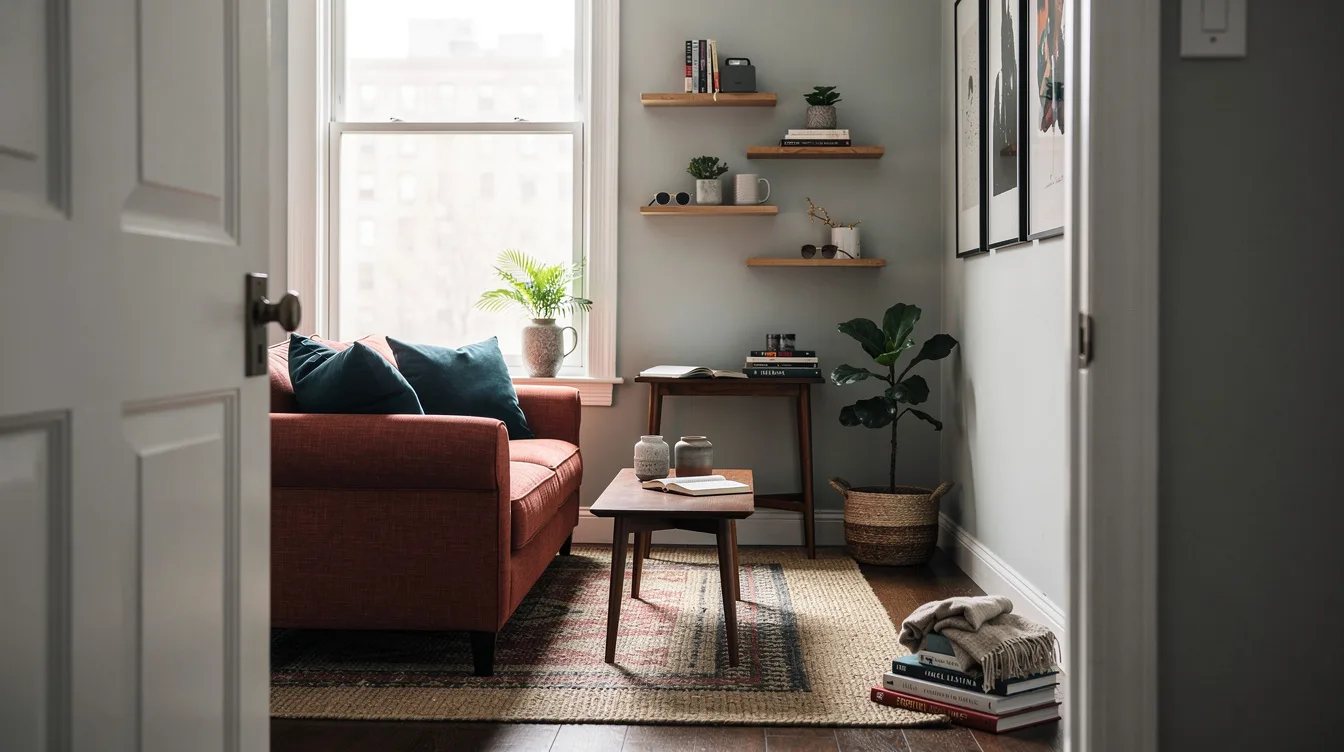
Command Display Ledges work when the goal is a landing spot for keys, earbuds, or a tiny keepsake. The plastic ledges are approximately 4 inches wide, 3.5 inches deep, and 3 inches high, with a rating of about 2 pounds each.
A two-pack typically costs about $11 to $15, so this is an inexpensive fix for small objects. Treat the ledge as a shallow tray, not a bookshelf, and use it only on suitable paint with the supplied stretch-release strips.
Hang Bathroom Supplies Over the Cabinet
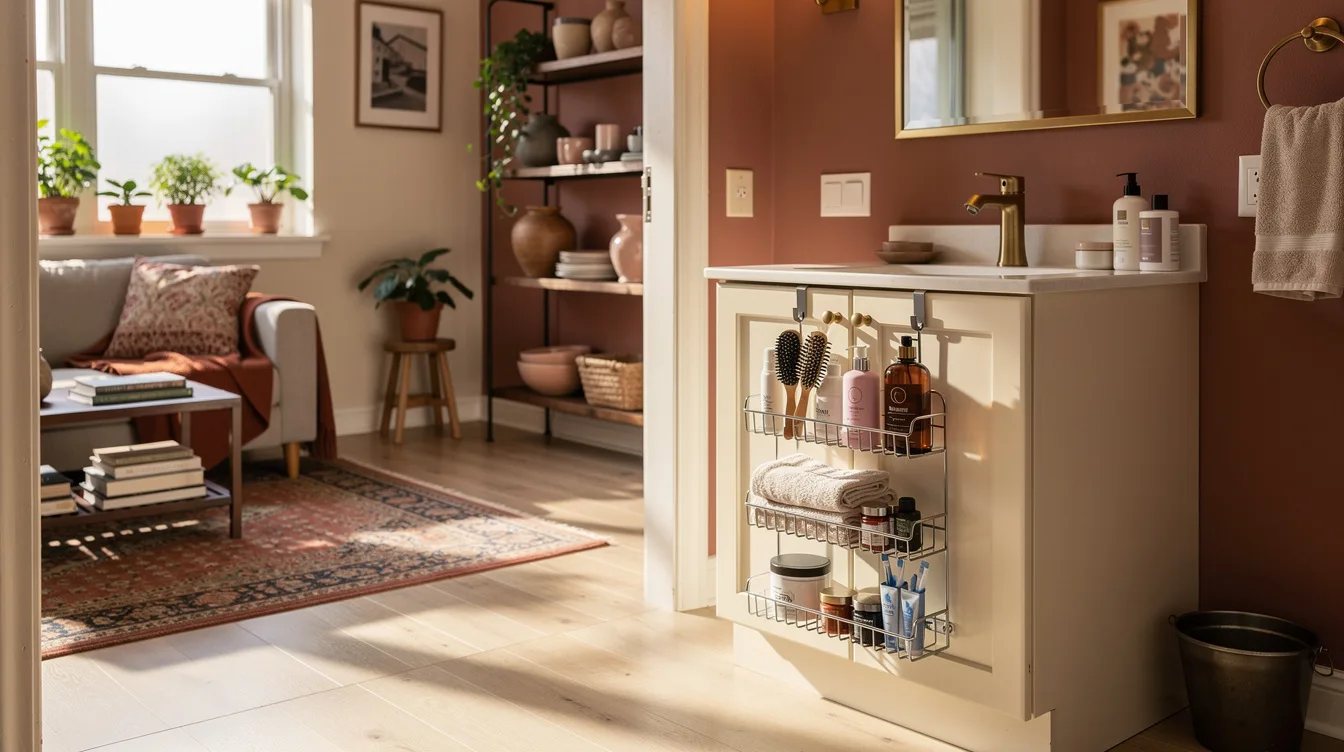
The Brightroom over-the-cabinet tiered storage turns the inside or outside of a bathroom cabinet door into a useful supply zone. Its white steel wire and mesh design is about 12 inches wide, 6 inches deep, and 16 inches tall.
It costs about $20 and fits cabinet doors up to about seven-eighths of an inch thick. Measure around hinges, plumbing, and existing shelves before ordering because a cabinet door that cannot close will create more trouble than a bare wall.
Move Spices Onto a Magnetic Surface
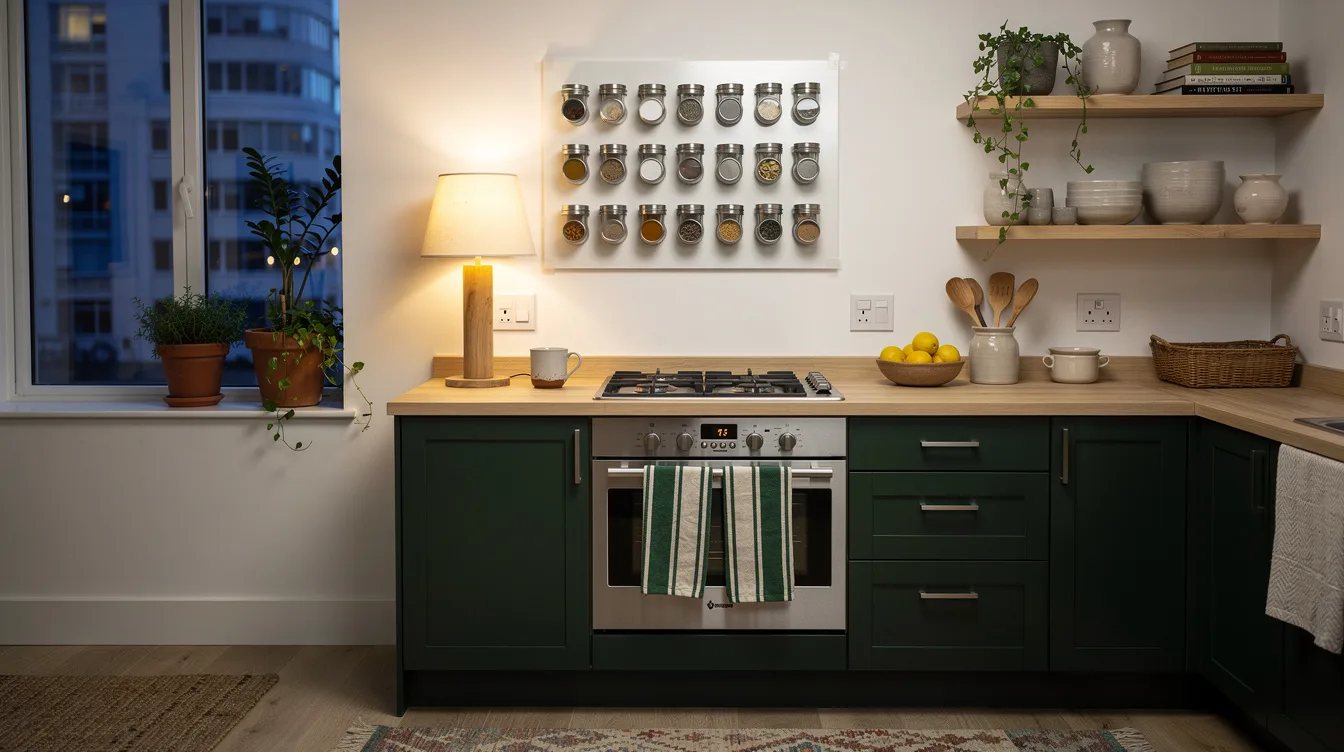
A powder-coated steel magnetic spice rack gives a kitchen vertical storage without wall mounting at all. The compact rack is approximately 10 inches wide, 4 inches deep, and 3 inches high, with a capacity of about 3 pounds.
Place it on a compatible flat refrigerator side or another strong magnetic surface, then keep heavier jars low. The synthetic-rubber mat helps steady containers, but a magnetic rack belongs on metal, not painted drywall or a weakly magnetic appliance panel.
Use Removable Hooks for Soft Goods
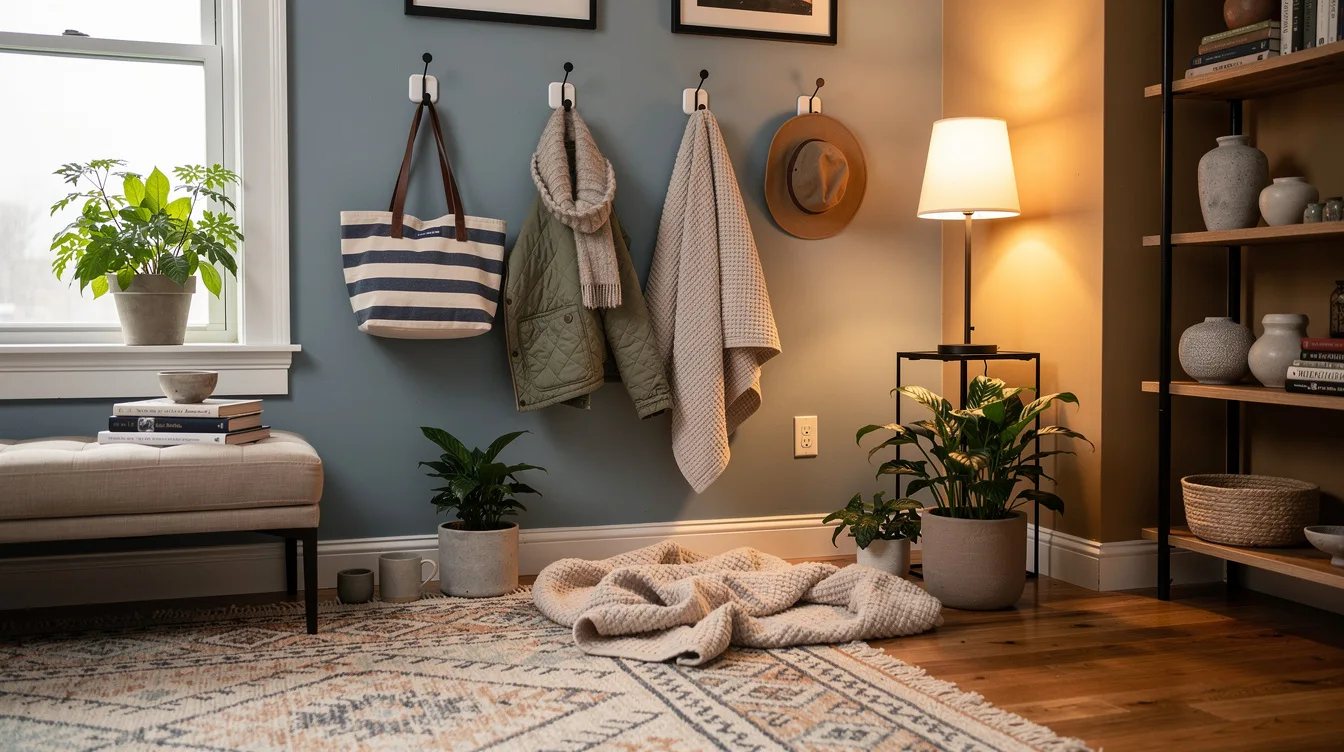
Command Hooks are most sensible for lightweight soft items such as a dish towel, apron, small tote, or broom handle. Choose a hook whose stated capacity exceeds the loaded item, and keep the arrangement close to the actual task so the wall does not become a random catchall.
Adhesive storage still needs a careful exit plan. Command warns that weak paint or incorrect removal can cause damage, so clean the surface as directed, wait when the instructions require it, and pull the strip slowly in the release direction.
Use Magnetic Hooks on Steel Doors
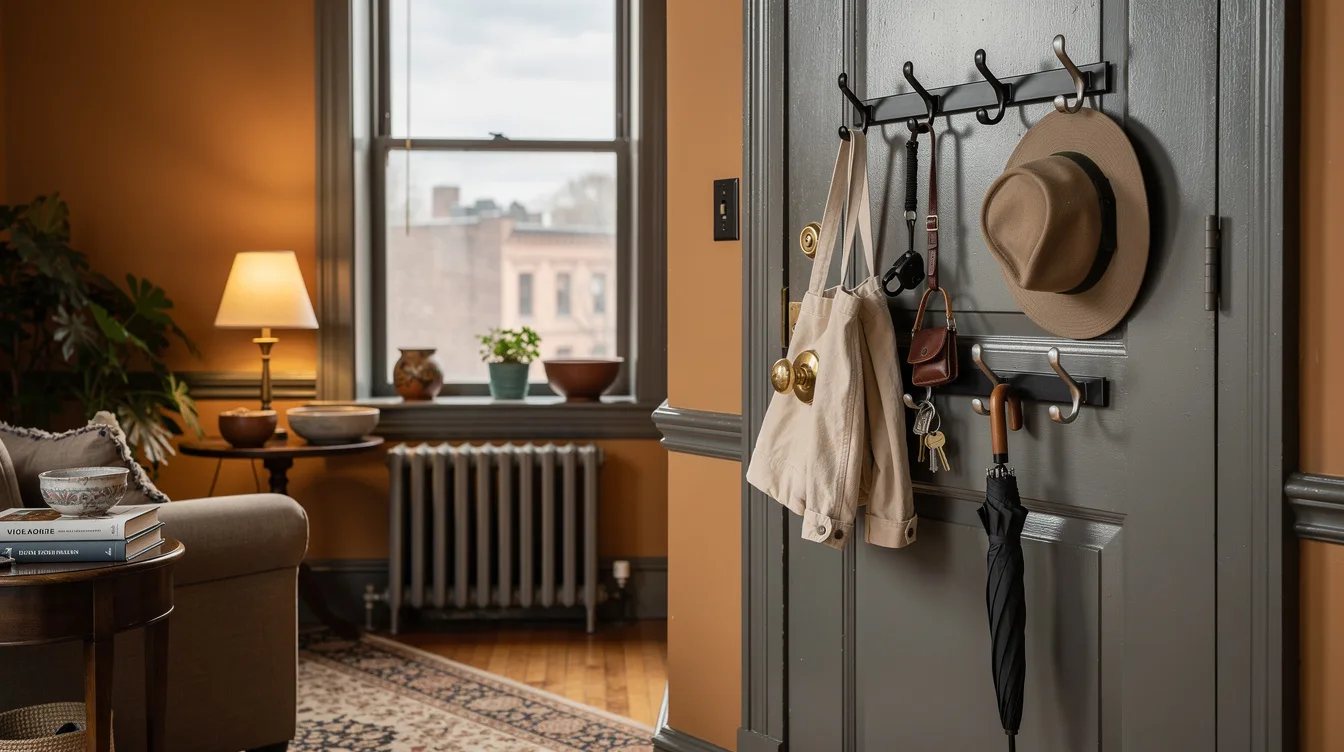
Magnetic hooks create useful storage on a steel refrigerator, metal filing cabinet, or steel entry door without adhesive or screws. They can hold keys, lightweight cleaning tools, or a small reusable bag where a wall-mounted hook would be unnecessary.
Test the magnet before loading it, especially on a painted door with a thin steel skin. Keep the hooks away from the door edge and hinge path, and remove them before moving so the next resident does not inherit scratches or a crowded entryway.
Park a Narrow Bookcase Against the Wall
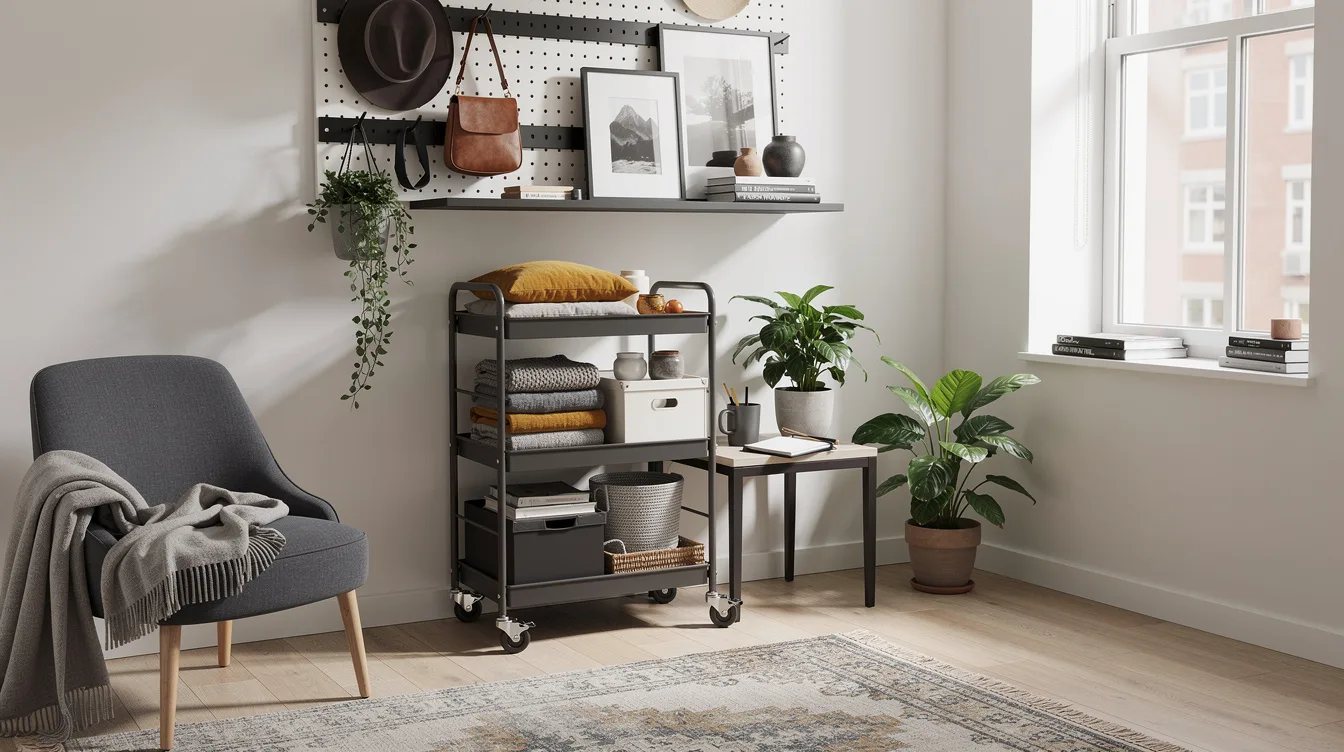
A freestanding narrow bookcase adds vertical storage while leaving the wall untouched. Use it for folded towels, pantry bins, paper goods, or baskets that can be lifted out as one unit instead of scattered across a counter.
Target and Walmart both carry compact shelving in several finishes, but the room should determine the width rather than the product photo. Leave enough clearance for baseboards and doors, and place heavier objects on the lowest shelf to reduce tipping risk.

Roll in an IKEA Utility Cart
An IKEA utility cart gives a rental kitchen or bathroom mobile storage that can move when the room needs cleaning. Use the upper level for daily items, the middle level for refills, and the bottom level for heavier bottles or folded linens.
Its value is flexibility: the cart can sit beside a vanity during the morning and roll into a closet afterward. Choose a steel version for damp rooms, keep the load balanced, and avoid parking it where an open door will strike the frame.
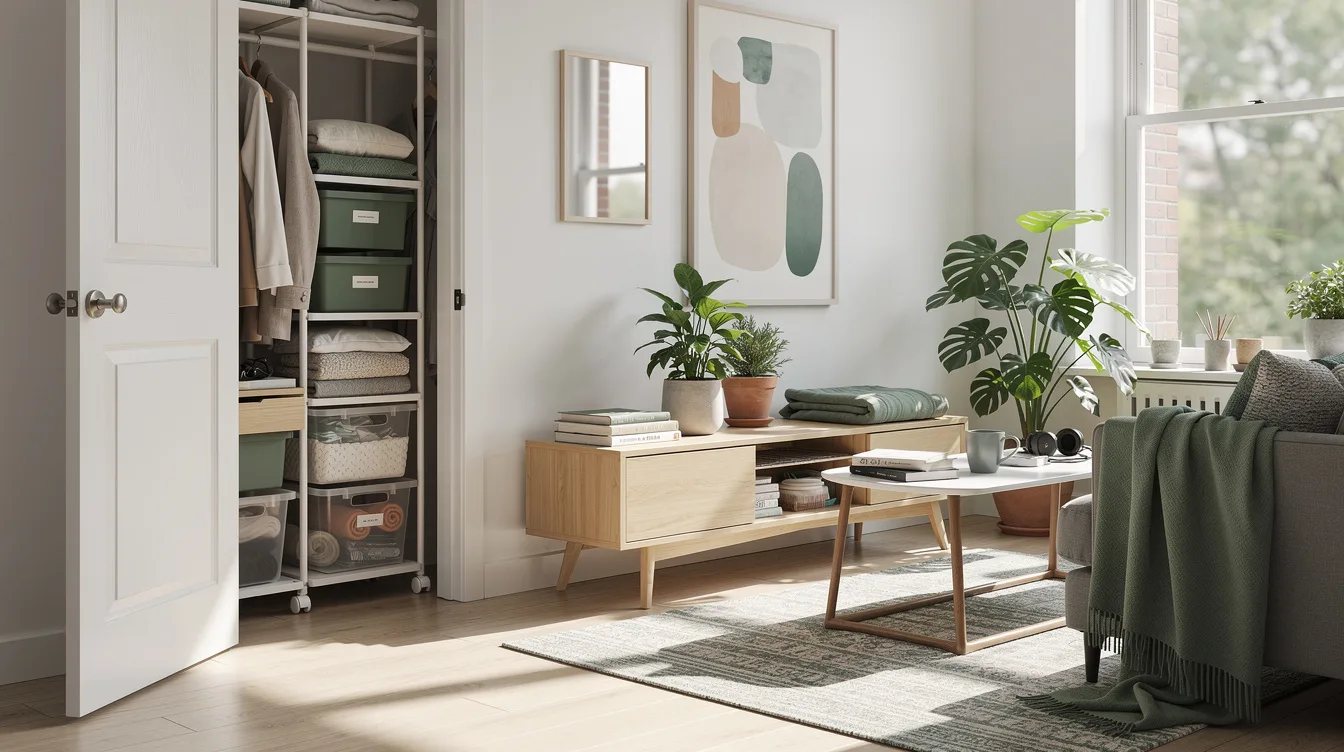
Stack Bins Inside an Existing Closet
Clear plastic bins from Walmart or Target make an existing closet shelf work harder without adding hardware. Group cleaning cloths, spare toiletries, or pantry packets by category, then label the front edge so every item can be found without unloading the stack.
Use bins that fit the shelf depth and leave a little room for fingers. A shallow container is often better than a deep one because it prevents the familiar rental problem of storing useful supplies behind a wall of items nobody wants to move.
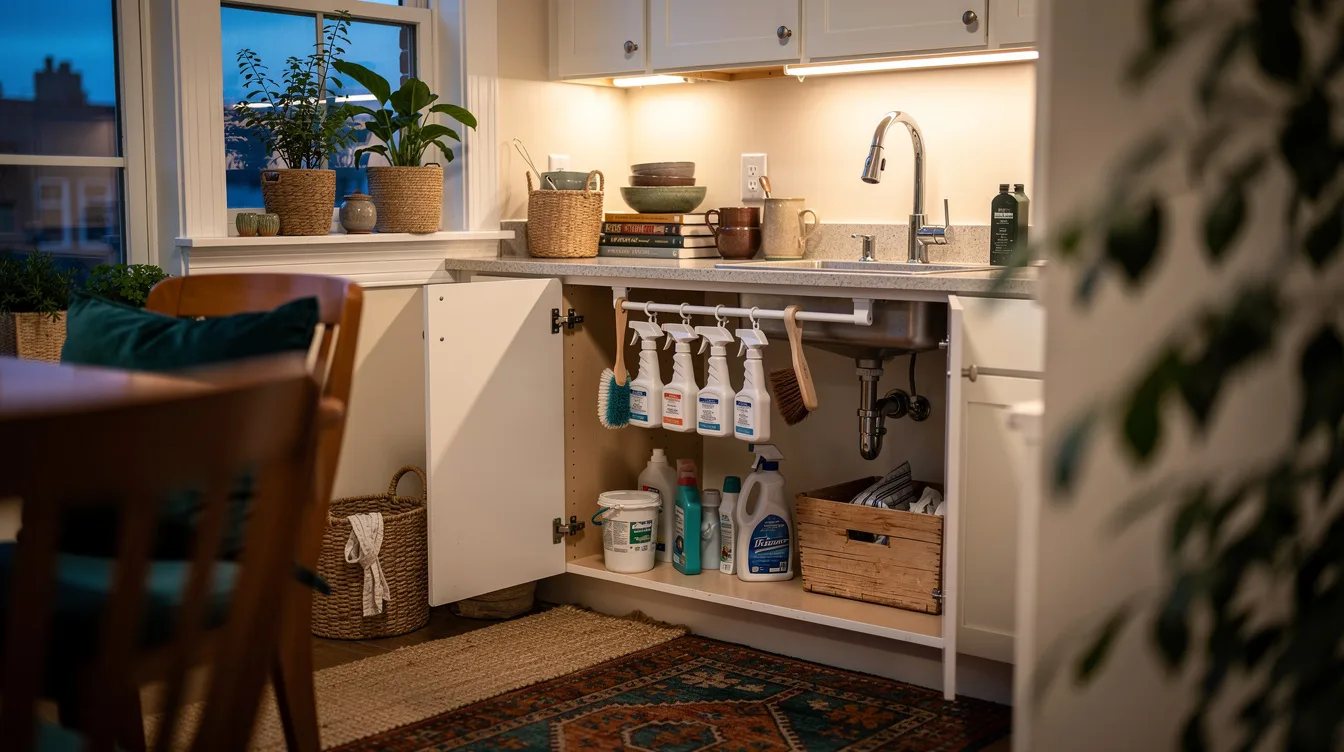
Add a Tension Rod Under the Sink
A steel tension rod can create a hanging rail inside a cabinet, where its end pads press against the side panels instead of the wall. Use it for spray bottles with trigger handles, lightweight cloths, or a small collection of reusable bags.
Keep the load modest and check the rod after opening and closing the cabinet repeatedly. The best setup leaves plumbing clear, keeps bottles upright, and can be removed with a simple twist when the lease ends.
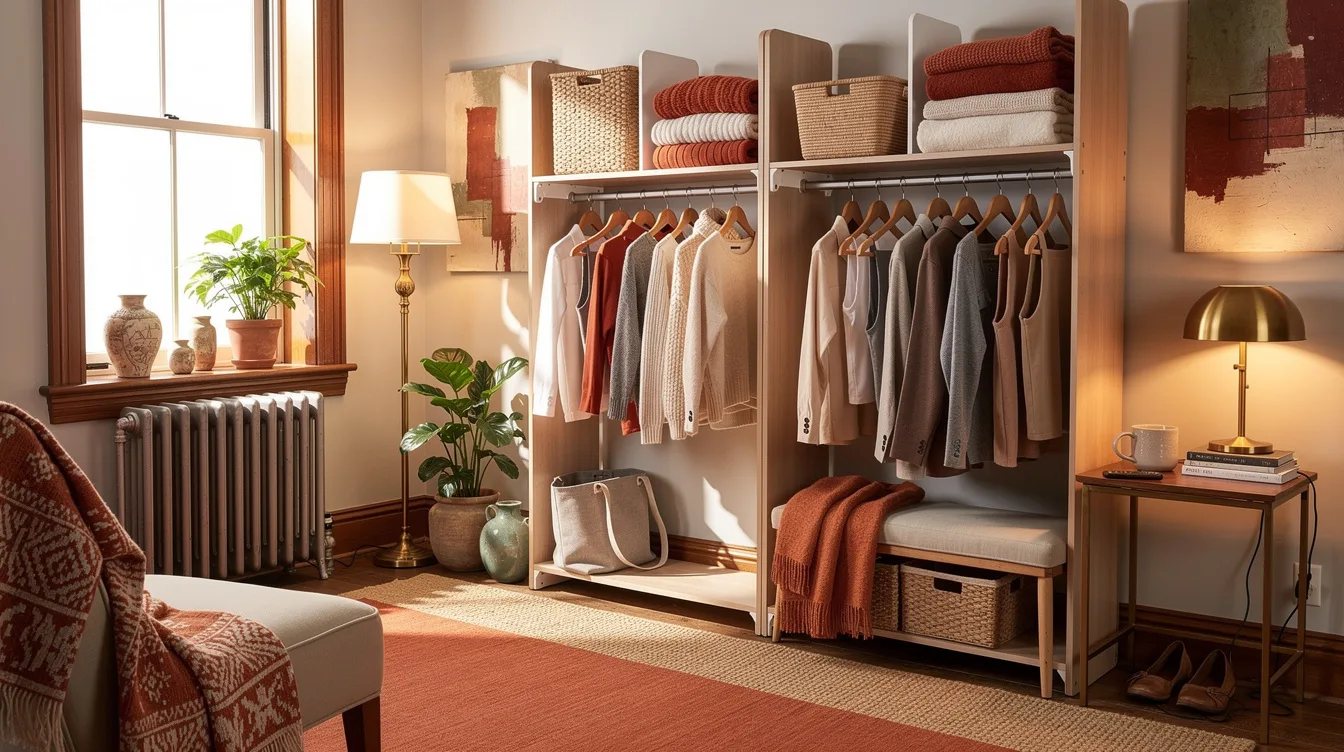
Divide the Closet Shelf Vertically
Wire shelf dividers turn one wide closet shelf into separate sections for towels, bedding, bags, or folded clothing. They clamp onto the existing shelf, so the wall does not need adhesive, drilling, or a permanent rail.
Place the dividers where the stacks naturally tend to lean, then use one basket for small pieces that would otherwise slide underneath. This approach works especially well in rentals with generous shelf length but no built-in compartments.
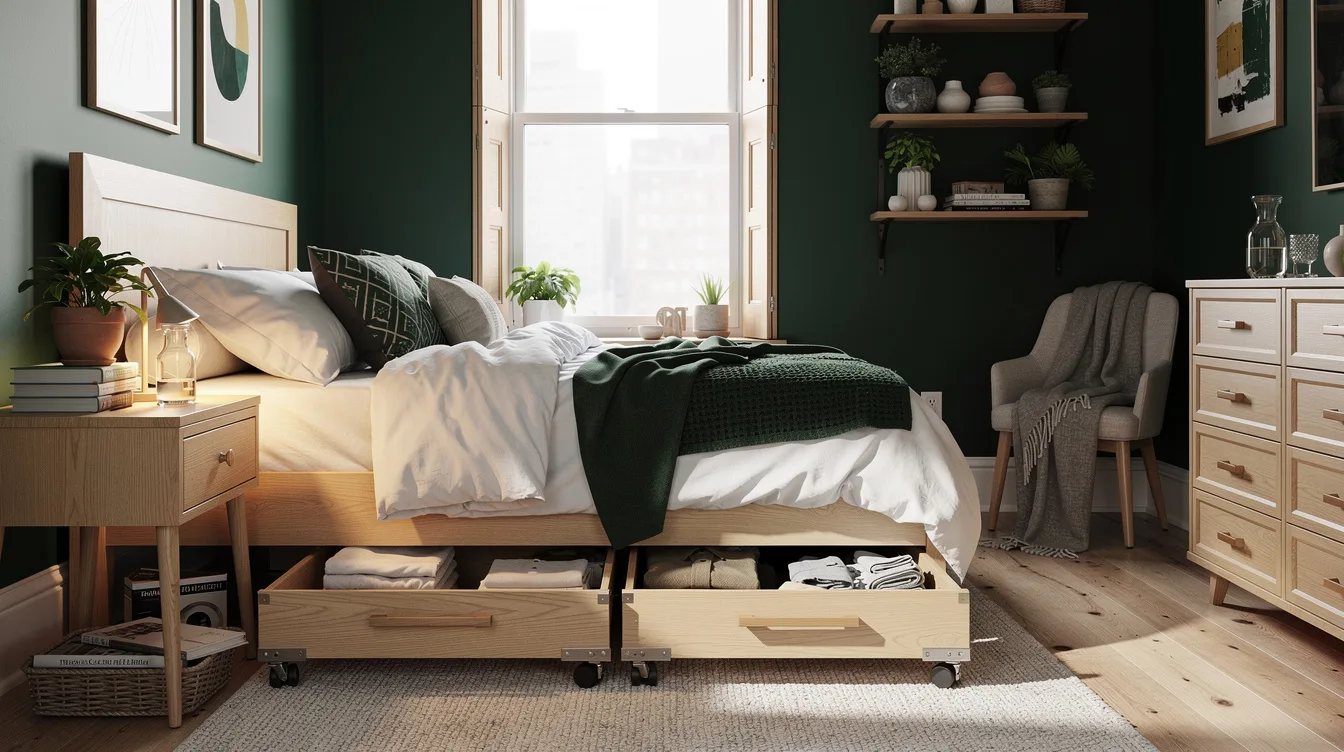
Slide Storage Under the Bed
Under-bed storage containers keep seasonal clothing, spare bedding, and luggage out of sight while preserving every wall. Look for low plastic containers with handles or smooth casters, then measure the clearance beneath the bed before bringing them home.
Use transparent lids for items accessed often and opaque containers for seasonal pieces. Keep the contents light enough to pull out safely, and avoid packing damp textiles that could trap moisture against the floor.
Create an Entry Drop Zone With a Bench
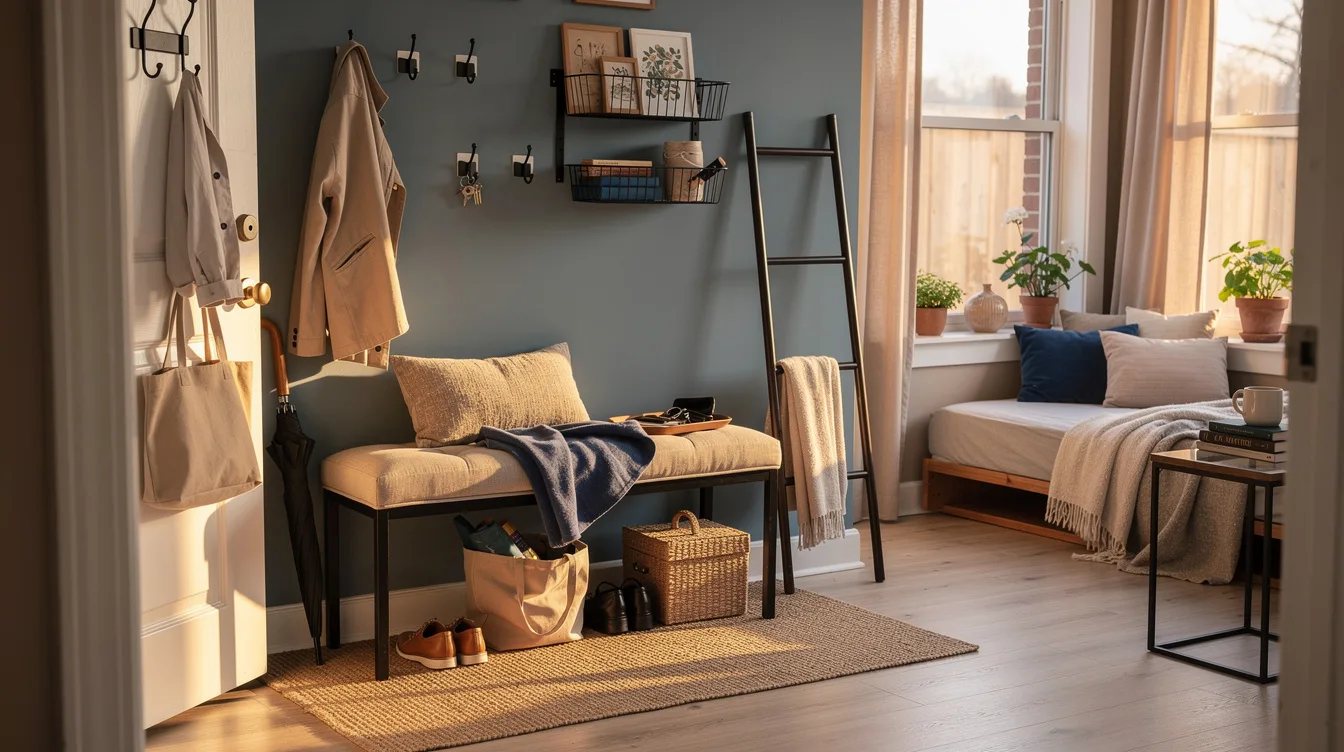
A freestanding storage bench can handle shoes, reusable bags, and small accessories without turning the entry wall into a project. Choose a piece with cubbies or a lift-up seat, then place a washable basket inside for loose items.
Keep the bench far enough from the door swing to preserve a clear path. A simple wood or painted-metal frame also gives the entry a finished anchor, while the entire arrangement can leave with the renter.
Audit Every Contact Point Before Leaving
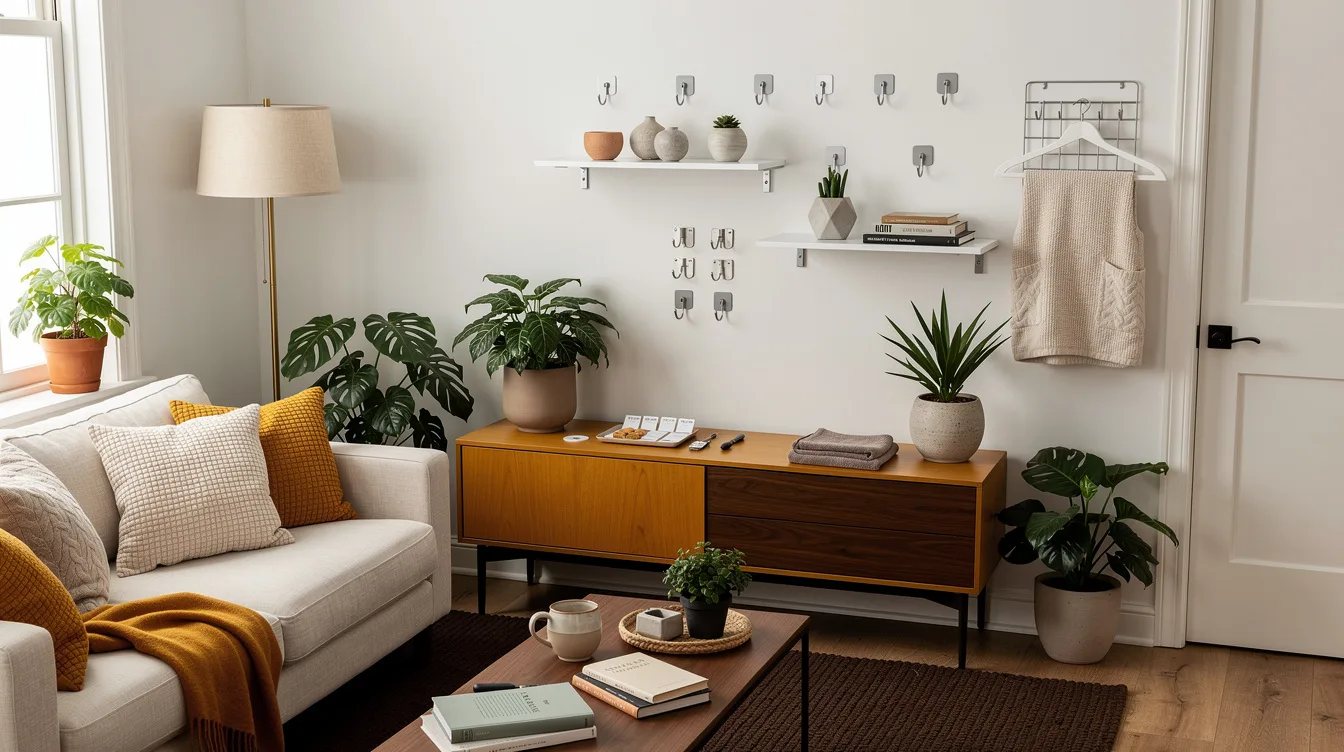
Before move-out, inspect painted drywall, door edges, cabinet faces, and the floor beneath every storage solution. Over-door brackets can rub during movement, magnetic pieces can scratch, and adhesive strips can pull weak paint even when the shelf itself is small.
Photograph the wall before installing anything, keep product instructions with the lease paperwork, and remove storage slowly rather than rushing on the final day. The safest setup is the one that stores what the room actually needs and gives every mounting point a clear exit.
Keep reading
- Landlord Said No Holes? 15 Rental Kitchen Fixes That Come Off Clean
- Landlord Said No Holes? These 13 Command and Amazon Finds Still Organize
- Landlord Said No Holes? 15 Christmas Card Displays Start at $6
Begin with the surface that already exists: a door, refrigerator side, cabinet interior, closet shelf, or floor. Add adhesive storage only for genuinely light objects, then test the full arrangement before buying more pieces.


