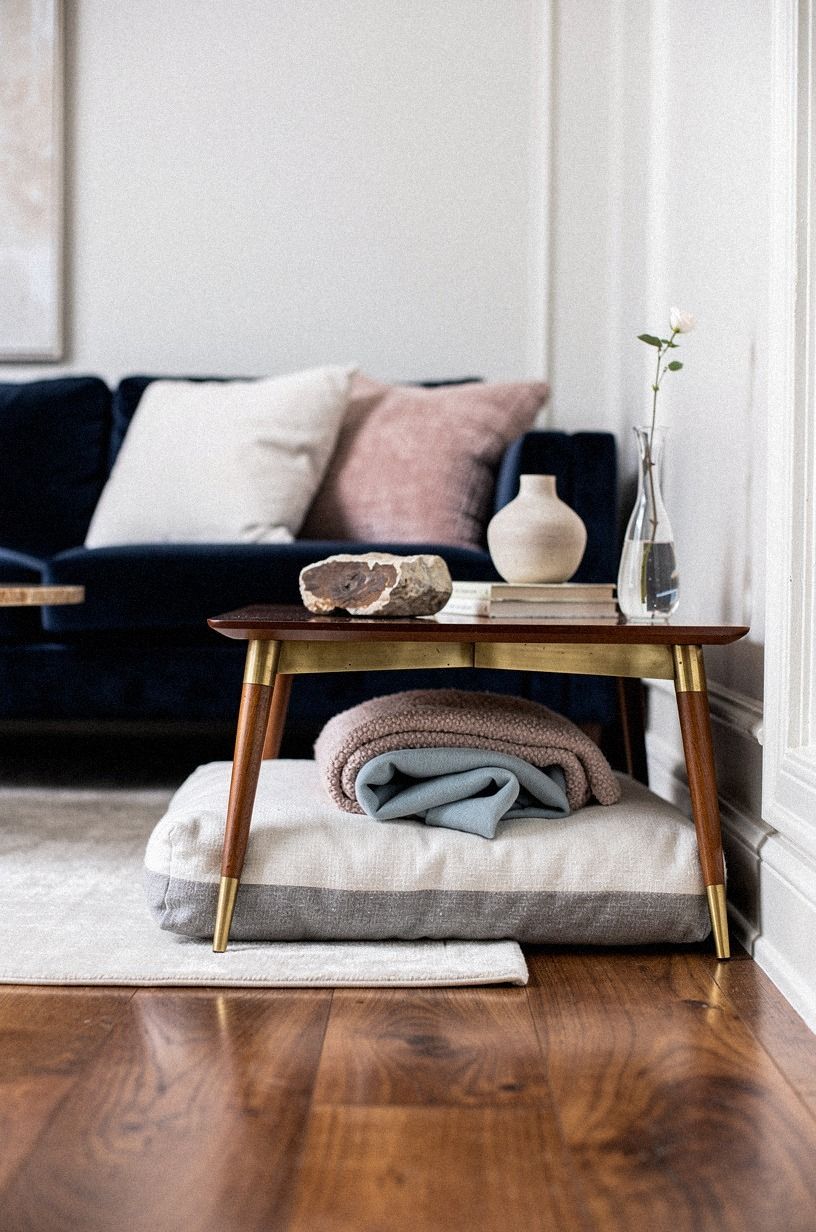
Easy Living Room Dog Corners That Actually Look Designed
08 november 2026Dog corners can look intentional for under $100 when you match the bed to your room, hide the clutter, and give the area one polished anchor. I learned that after putting a black plastic crate beside a linen sofa. It worked for the dog and ruined the sightline. Your fix doesn’t need a renovation. It needs a plan.
- Layer the Dog Bed Corner With One Soft Palette
- Float a Small Bed Beneath the Window
- Hide the Crate Inside a Furniture-Looking Frame
- Build the Two-Wood Rule Around the Bed
- Paint the Wall Behind the Dog Bed
- Anchor the Dog Bed With a Washable Rug
- Choose Oak Over Plastic for the Toy Station
- Hang the Leash Station at the Right Height
- Mix the Three-Height Light Stack
- Frame the Corner With a Narrow Console
- Swap the Pet Store Bed for a Bench Cushion
- Can a Dog Bed Look Like Furniture?
- Create a Small-Space Dog Bed Area Without Blocking Flow
1Layer the Dog Bed Corner With One Soft Palette
A dog bed corner looks calmer when every layer shares a color family. Start with a washable navy dog cushion, then add a folded throw in white linen and a small basket in walnut. If your living room is already warm and earthy, you won’t need another accent color fighting for attention.
Choose a bed with a low profile and a removable cover. A small unlacquered brass detail can develop a beautiful patina over time without making the corner feel overly decorated. You’ll want the bed close enough to your sofa that your dog still feels included, but not so close that paws brush the coffee table every time you walk by.
I’d skip a bright novelty print because it turns the whole corner into pet-store decor.
A single palette can feel serene, tactile, and surprisingly luxurious. The point is to vary texture while keeping the color family quiet.
For a related styling reset, you can read this guide to why some spaces feel visually thinner than they are. The principle is similar: reduce competing lines, then let one texture carry the warmth.
2Float a Small Bed Beneath the Window
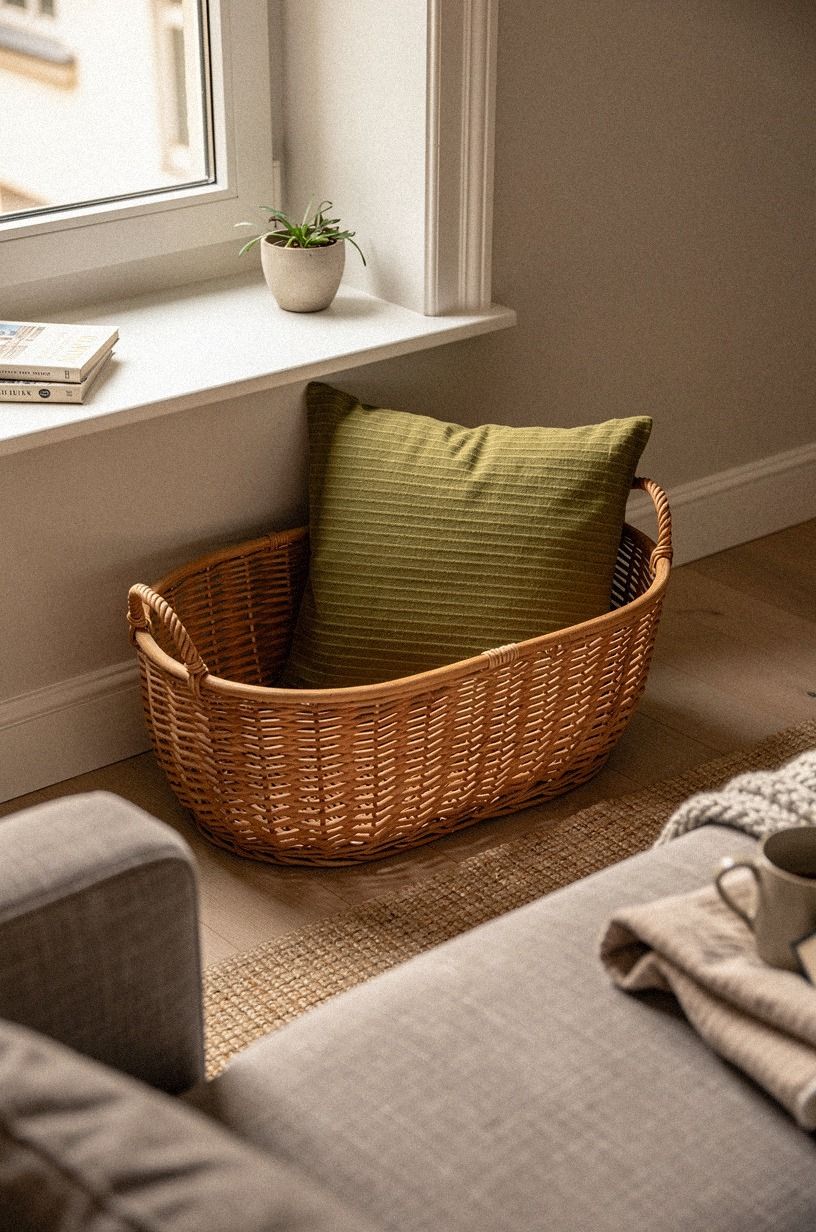
A window nook can become a peaceful dog bed area if you protect the walkway and keep the furniture low.
3Hide the Crate Inside a Furniture-Looking Frame
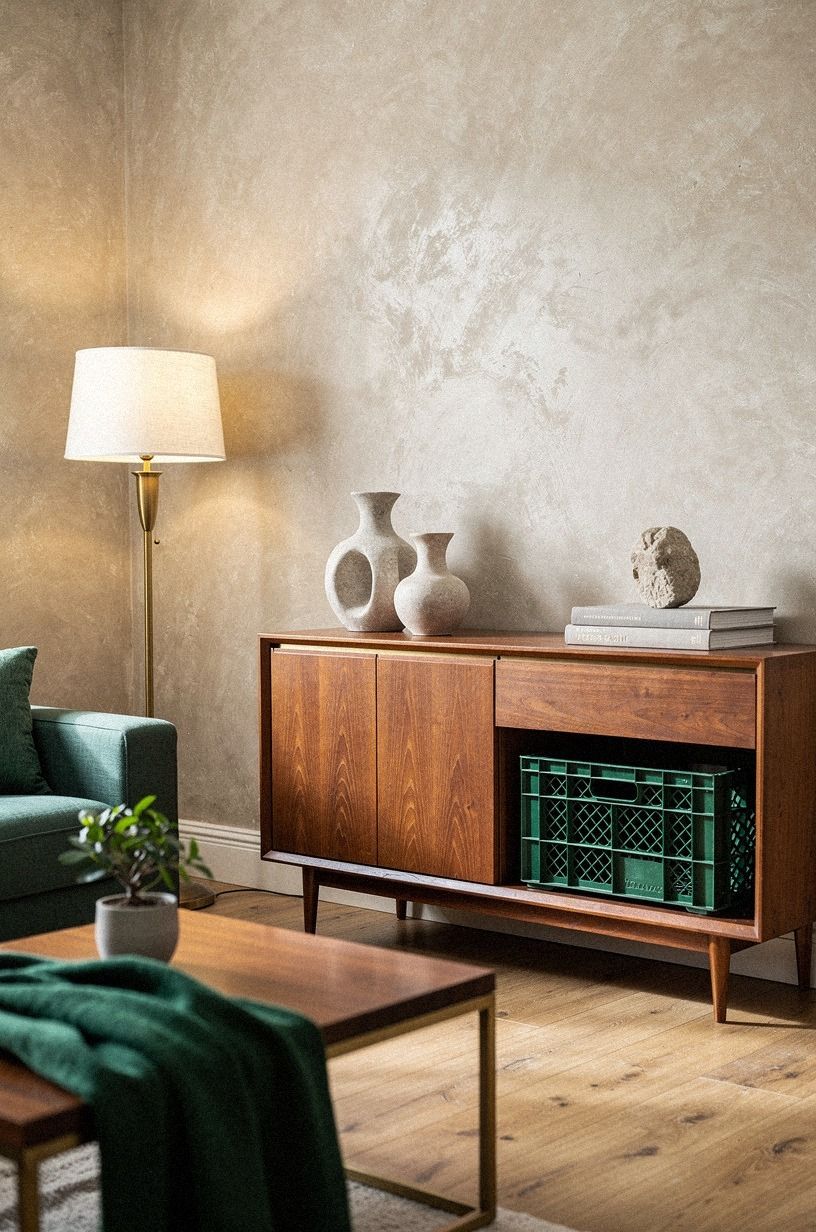
Crates don’t have to disappear completely, but they should have a visual boundary. Place a natural oak crate cover around the sides and top, leaving the front open for airflow and access. Finish the surrounding frame with hand-applied Venetian plaster in a muted forest green so the dog corner feels connected to the room instead of looking like a separate plastic object.
Choose 3/4-inch natural oak if you’re building the cover yourself, and sand the edges until they feel smooth to the touch. You’ll want to measure the crate before buying materials because even a small mistake can block the door. Don’t cover ventilation panels, and don’t use a heavy top that could shift when your dog moves inside.
A narrow ledge above the crate gives your eye somewhere to land. Add one framed print, a ceramic bowl, and a leash hook. That’s enough.
More objects will make the corner feel crowded, especially if your dog already brings toys into the room.
The result can feel handsome and built-in without becoming fussy. For a broader home perspective, this story about a historic Spanish city above a river is a good visual cue for layering old and new without making either one feel forced.
4Build the Two-Wood Rule Around the Bed
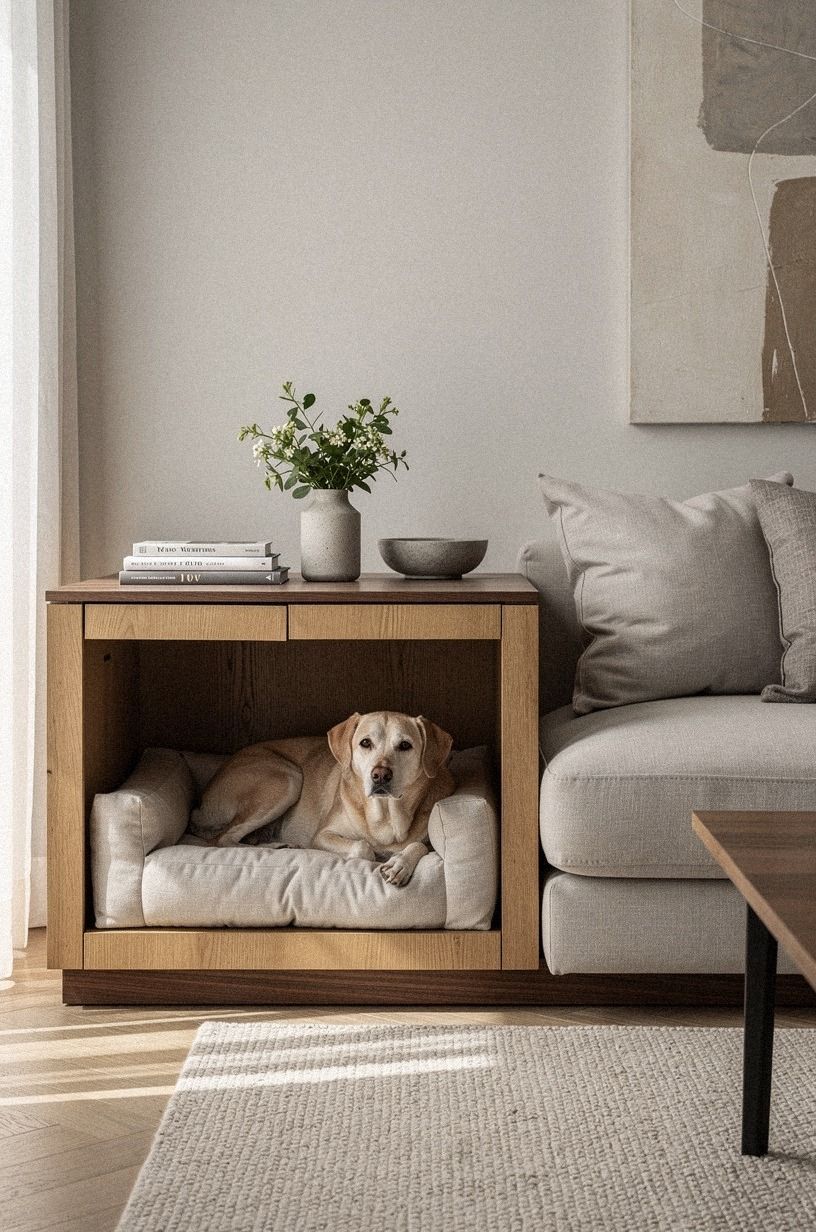
The Two-Wood Rule keeps a dog bed corner from looking accidental.
5Paint the Wall Behind the Dog Bed
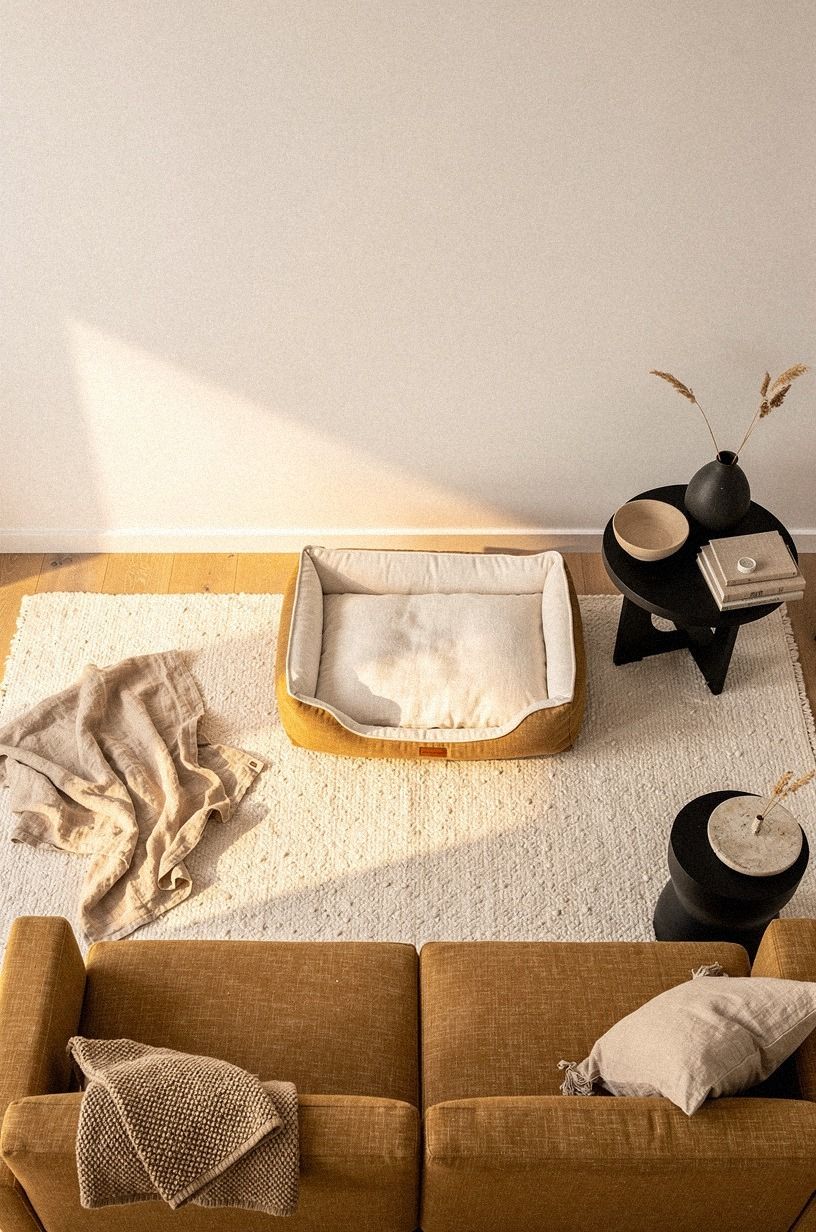
Paint can give a dog corner its own identity without adding another piece of furniture. Benjamin Moore White Dove OC-17 is a reliable warm white for a living room because it works with camel, black accents, and medium wood. Paint only the wall behind the bed if you want a defined zone that won’t overwhelm the room.
You’ll want to test the color beside your sofa and rug in both daylight and lamplight. A wall that looks gentle at noon can feel much heavier after sunset.
I’d avoid a sharp white if your dog sheds visibly because the contrast will make every stray hair announce itself. A warm white gives you more forgiveness between cleanups.
For a richer room, add washed Belgian linen to the dog bed or throw, then repeat a small black accent nearby. Keep the surrounding pieces simple, though. One painted wall, one framed print, and one textured bed are enough.
If you’re comparing tones for a full-room refresh, this guide to a timeless preppy style shift offers useful ideas for pairing classic colors with newer textures. A painted nook can feel warm, elegant, and deeply personal without becoming dramatic.
6Anchor the Dog Bed With a Washable Rug
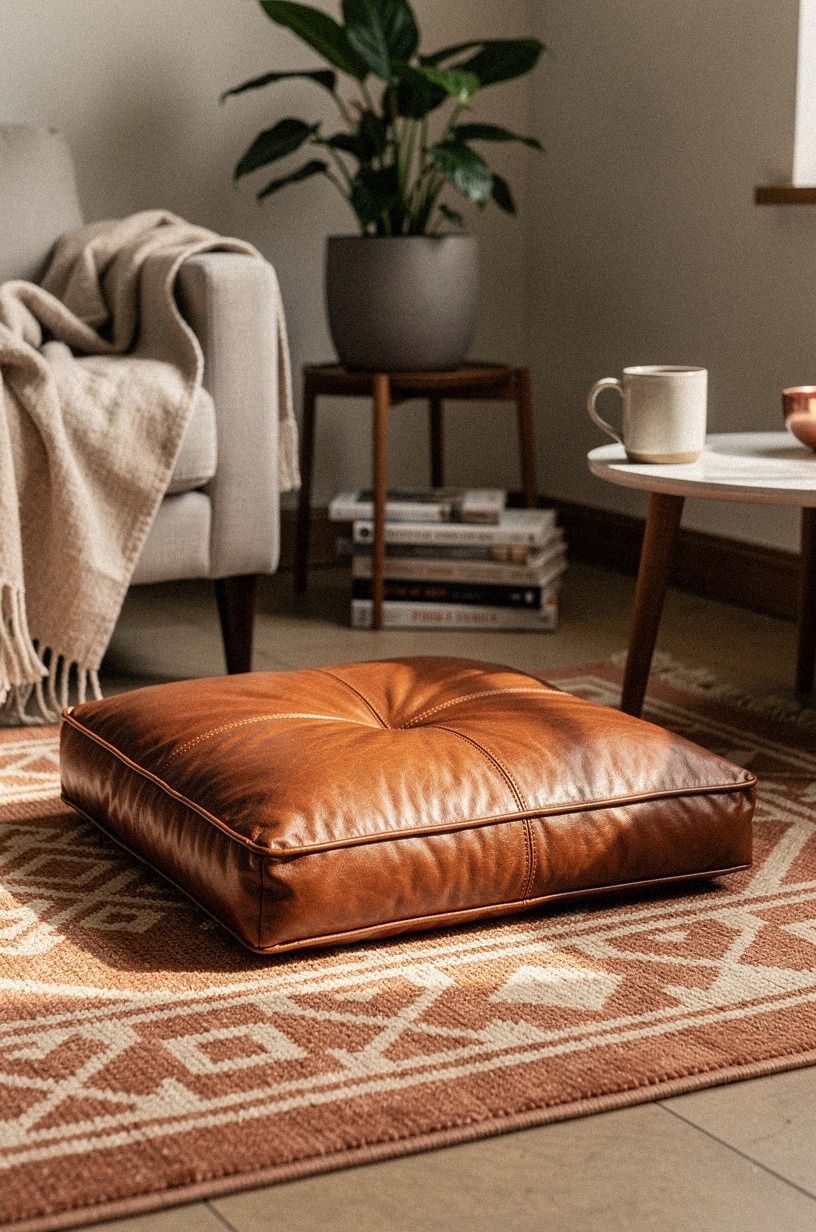
A rug makes the dog corner feel finished, but only if it can handle real life.

7Choose Oak Over Plastic for the Toy Station
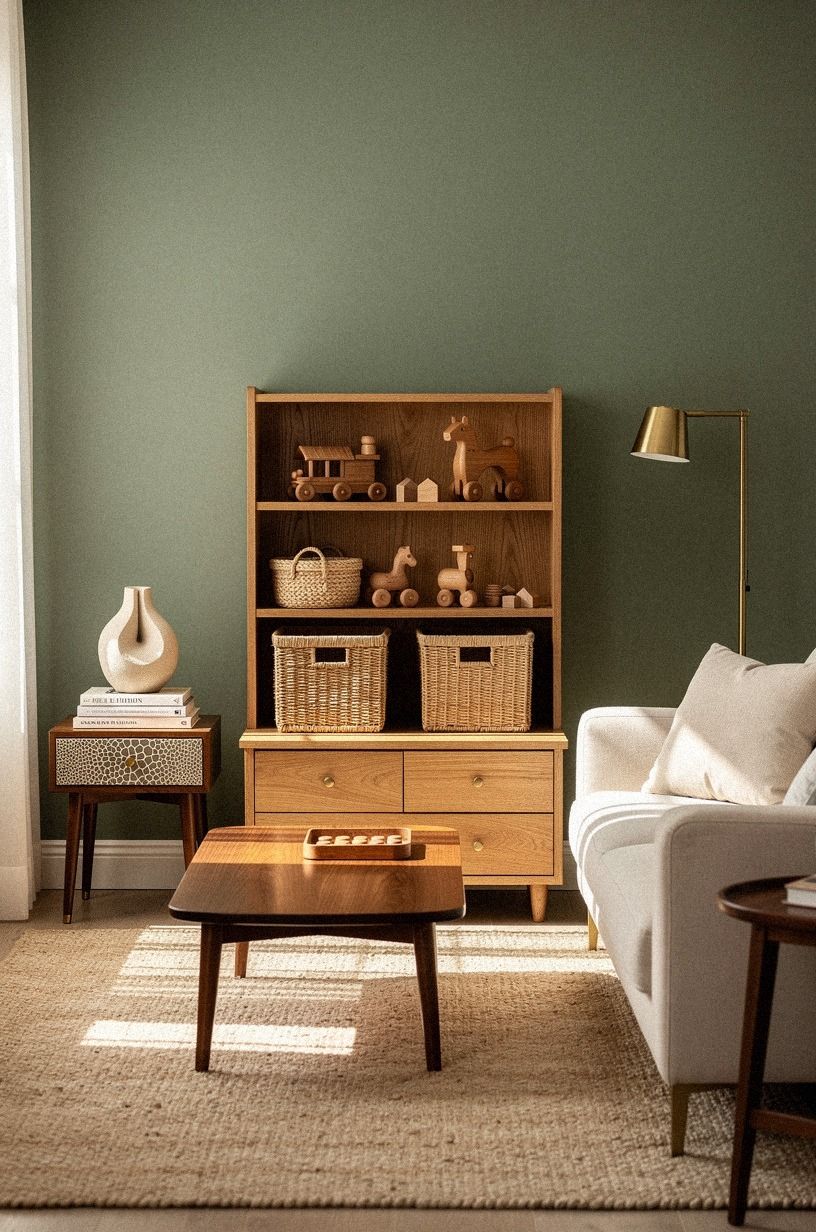
A toy station beside the dog bed keeps the living room from collecting squeaky objects in every corner. Use a natural oak storage basket or a shallow oak crate, then limit the visible toys to three or four. Your dog won’t care about the arrangement, but you’ll notice it every time you sit down.
Keep the basket open so your dog can reach safe toys without pulling everything across the room. A washable cream basket with a subtle shagreen accent works well beside a sofa, especially when its handles make it easy to lift during vacuuming. You’ll want the basket low enough that it doesn’t become a tempting climbing point for a small dog.
I’d choose wood or woven fiber over glossy plastic because the surface catches less light and reads as furniture. If you’re buying a budget version, look for a sage green or warm cream finish with natural wood details rather than a shiny synthetic surface.
For a different kind of proportion lesson, this wide-hip jean guide shows how small changes in scale can create better balance. A toy basket may be humble, but the right one makes the entire nook feel calmer.
8Hang the Leash Station at the Right Height
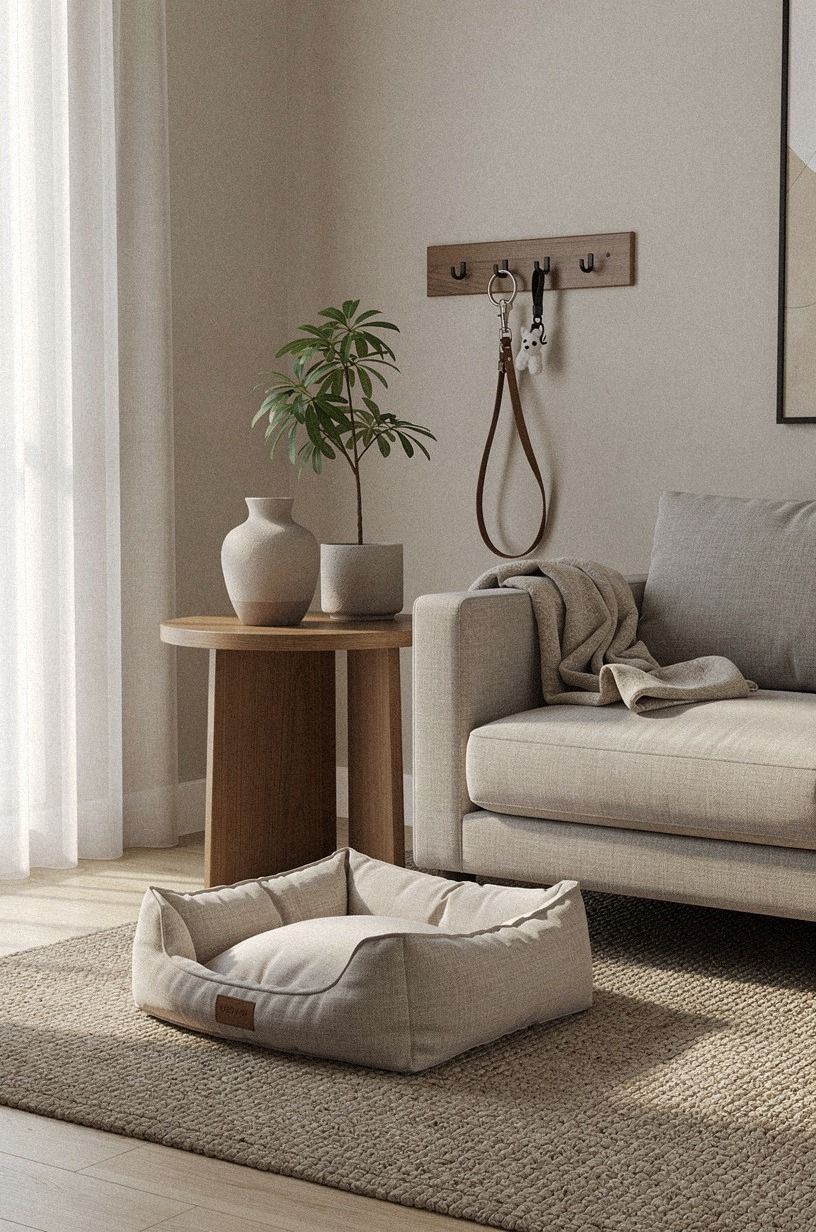
A leash station should be convenient enough that you’ll use it every day.
9Mix the Three-Height Light Stack
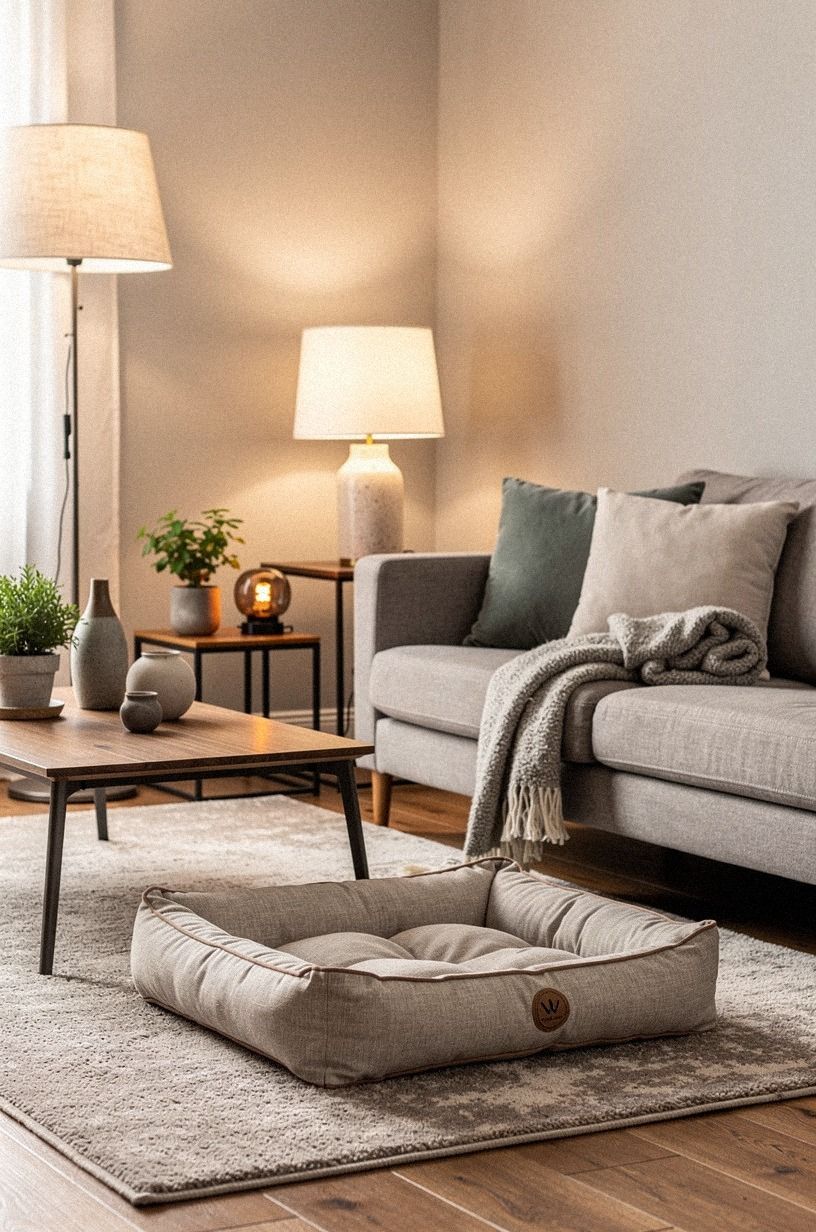
The Three-Height Light Stack gives a dog corner depth after sunset. Start with the bed at floor level, add a basket or low table around 18 to 24 inches high, and finish with a framed print or wall light above eye level. You’ll get a layered composition without buying a large cabinet.
Use an aged-brass table lamp with an organic bouclé shade if there’s an outlet nearby, or choose a rechargeable puck light inside a shelf. The lamp should cast a warm pool that stops near the rug’s edge, not a bright beam across the whole room. I’d skip cool white bulbs because they make soft fabrics look gray and turn an inviting corner into a waiting room.
A 2700K bulb gives the area a gentle, flattering glow. You can use this stack even in a small apartment. A wall-mounted ledge replaces the table, and a shallow basket handles toys below.
If you’re styling around a television, keep the lamp off the screen axis so glare doesn’t bother you.
For a color reference, this preppy style update shows how classic tones can feel lively when the surrounding textures stay restrained. The right light makes the dog corner feel intimate, not forgotten.
10Frame the Corner With a Narrow Console
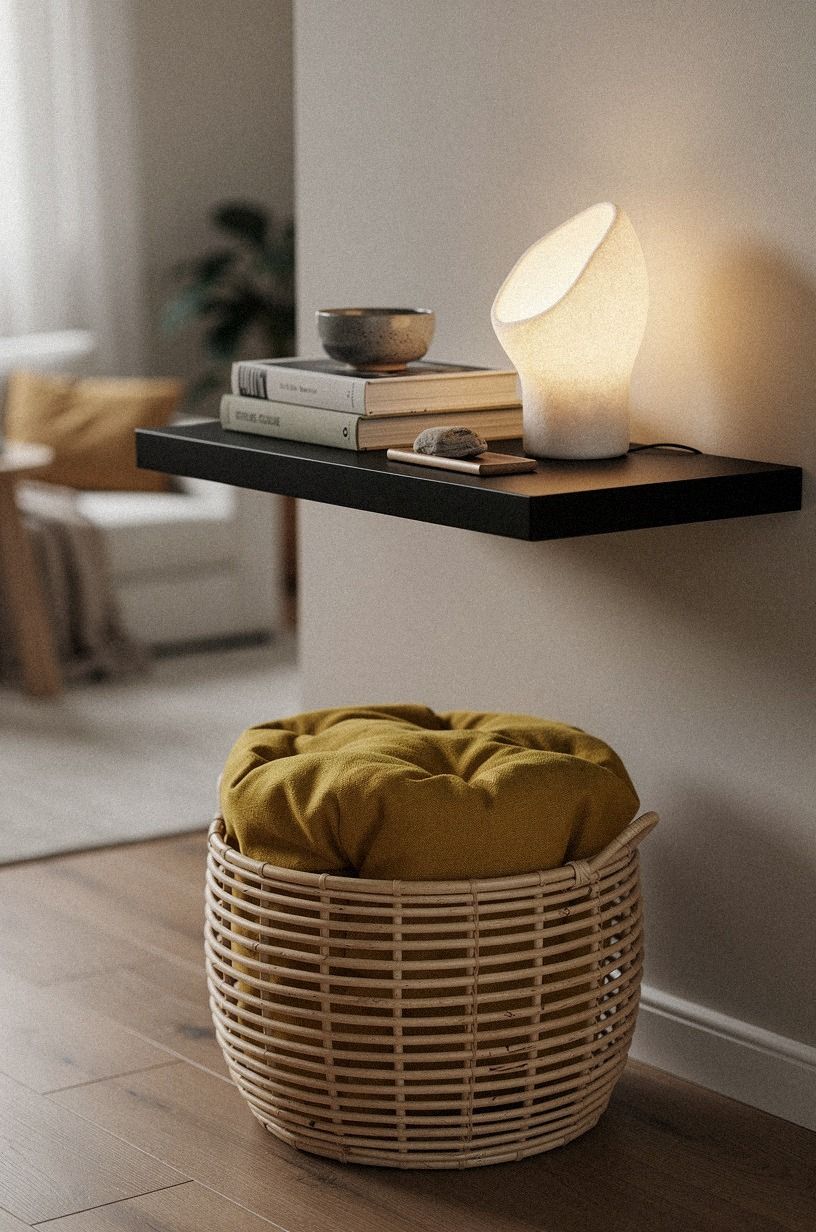
A narrow console can create a visual wall around your dog’s area without closing it off. Choose a grey console with rose-gold details and an unlacquered brass accent, then keep the surface edited to one lamp, one bowl, and one small stack of books. Your dog gets a defined place, and your living room still has useful storage.
Measure the walkway before you commit. You’ll want enough clearance for people to pass without brushing the console or stepping around the bed.
If the room is tight, choose a piece under 12 inches deep. I’d avoid a bulky cabinet because it makes the dog corner feel like an obstacle rather than a welcoming nook.
Use the console drawers for brushes, spare covers, and treats that shouldn’t sit within reach. A performance-fabric sofa beside it can handle the same daily wear, with typical US prices ranging from $1,200 to $4,000.
For more ideas about keeping a visual line clean, read this medieval skyline feature and notice how distinct elements can still feel connected. You can also revisit this visual-balance guide when the room has too many competing edges.
11Swap the Pet Store Bed for a Bench Cushion
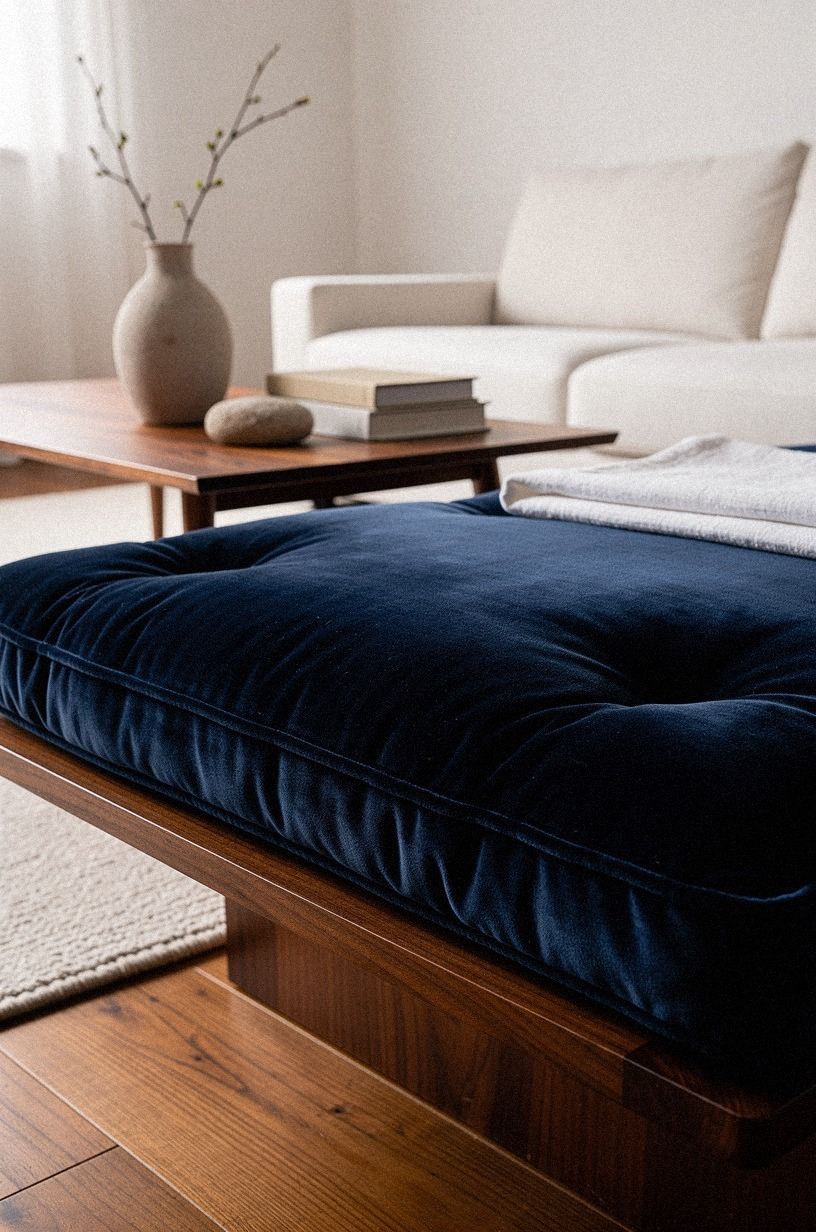
A bench cushion makes a dog bed look like part of the architecture. Choose a navy deep-pile mohair velvet cushion only if your dog won’t chew the fabric, or select a durable fabric in the same navy and white palette with a removable cover for a more practical finish. A low storage bench can hold blankets underneath while the cushion becomes the visible sleeping spot.
You’ll want the cushion to be thick enough for comfort but not so tall that your dog struggles to climb up. A firm foam core with a washable cover usually looks neater than a loose pillow that collapses at the edges. I’d skip a white bouclé if your dog spends a lot of time outdoors.
It feels soft and inviting, but it can show every muddy paw.
The advantage is visual continuity. A bench cushion can echo the sofa while still giving your dog a separate place. Walnut wood nearby can warm the palette, though I’d keep the dog cushion in fabric rather than leather because claws can leave permanent marks.
For more color balance, this wide-hip silhouette guide reinforces the same idea: one strong shape needs a calmer shape beside it. A related classic-style update also makes a useful case for mixing familiar forms with fresh texture.
12Can a Dog Bed Look Like Furniture?
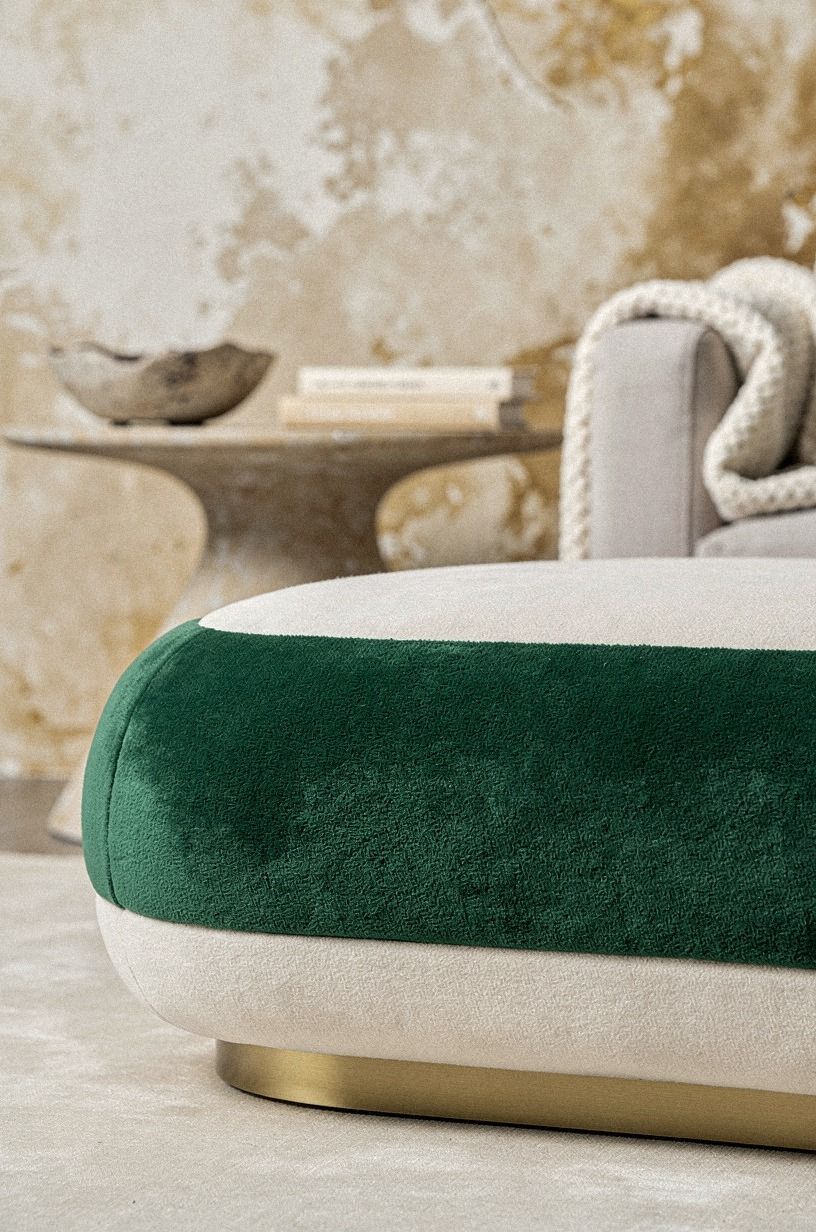
Yes, a dog bed can look like furniture when its frame, fabric, and position follow the room’s existing language. Choose a cream dog bed with a gold-toned frame, or use an emerald cushion beside warm metallic accents. A touch of hand-applied Venetian plaster can connect the pet area to a plastered wall or console instead of introducing five new materials.
You’ll want to think about sightlines from the sofa and the doorway. If the bed is the first thing you see, give it a clean outline and a limited palette.
If it sits beside a bookcase, let it be quieter. I’d avoid novelty shapes unless the rest of your room is playful, because a crown-shaped or car-shaped bed can pull the whole space off course.
A dog corner can still feel personal. Add one framed photo, a small gold tag, or a folded blanket in a color your dog already wears well. If you’re unsure, ask yourself: would this material make sense on a chair or ottoman?
If the answer is no, it probably won’t settle into your living room.
For another lesson in visual layering, revisit this historic skyline feature. You can also use this texture-focused guide as a reminder that subtle variation often feels richer than visual clutter.
13Create a Small-Space Dog Bed Area Without Blocking Flow
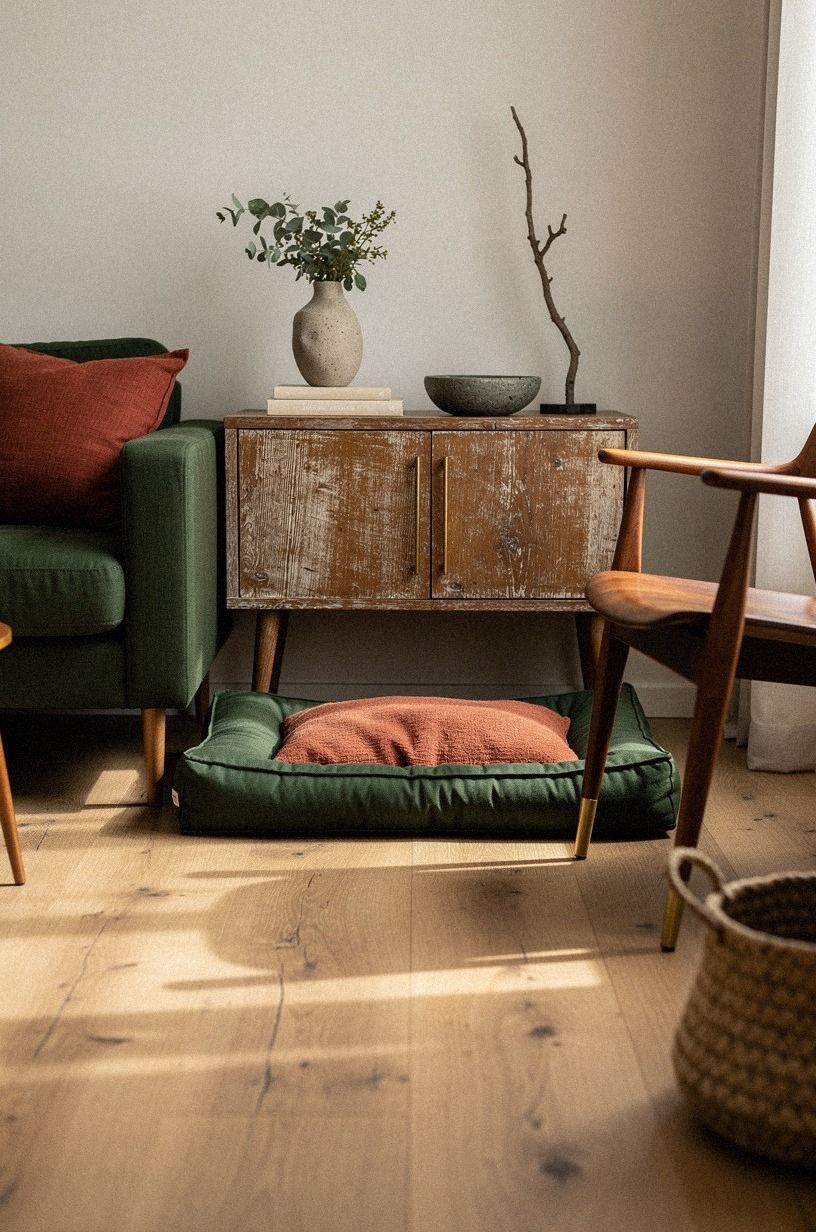
In a small living room, the best dog bed area often sits beneath a console, beside the sofa, or at the end of a media unit. Use a low reclaimed weathered teak platform with a forest green cushion and a small rust-colored accent so every inch works. You’ll want the corner to support circulation rather than force everyone into a narrow path.
Measure from the bed edge to the nearest coffee table before you buy anything. A coffee table often sits 16 to 18 inches high and around two-thirds the sofa length, so a dog bed that projects too far can make the arrangement feel cramped. I’d rather see a smaller bed with clear space around it than a large cushion that creates a daily tripping point.
For renters, removable hooks, a tension-mounted shelf, and a washable mat can do most of the work. A forest green wall can add a grounded note if painting is allowed, while rust-colored art and natural oak accessories give you the same visual anchor without damage.
You can also revisit this preppy style update when you need a classic pattern that won’t overwhelm a compact room. This proportion guide is useful for the same reason: a narrow space needs clear relationships between shapes.
What These Dog Corners Get Right
I’ve come around to a slightly unfashionable opinion: the best dog corner isn’t the one that hides every sign of the dog. It’s the one that makes the dog’s things look chosen. A woven basket, a washable cover, and a bed placed where your dog can still see you will feel more lived-in than a spotless room where the pet supplies are shoved behind a door.
The mistake I made was treating the dog bed as a leftover object. I bought the size first, then tried to make it disappear.
That approach gave me a bulky rectangle in the wrong corner and a leash hanging from a cabinet knob. Now I start with the room’s circulation, then choose the bed, then give it one material connection to the sofa or console. That’s the entire approach.
Your budget doesn’t need to be dramatic. The typical US cost for a living-room refresh varies widely by tier:
For a dog corner alone, you can start with what you own, wash the cover, move the bed into better light, and add one basket. That small edit can change the room more than another decorative object. And if your dog ignores the new bed for a week, don’t panic.
Put a familiar blanket on it, sit nearby, and let the corner become part of your routine. Small, but powerful!
The most successful corners feel calm, useful, and quietly joyful. They don’t look staged. They look like a real home made room for a real dog.
What People Always Want to Know
What is the best dog corner idea for a small living room?
A low-profile bed beneath a console or beside an IKEA KALLAX works well because it uses dead space without blocking circulation. Choose a washable neutral cover, a shallow basket, and one wall-mounted hook. Your room will feel more open when the dog bed stays below the main furniture line.
Where can I find dog-corner pieces on a budget?
Look at IKEA, Wayfair, Target, Facebook Marketplace, and local thrift shops. You can often find a wooden bench or basket second-hand, then add a new washable cushion cover. I’d spend first on the cover and rug because those pieces make the biggest daily difference.
How much does a dog-corner makeover cost?
A simple refresh can cost about $100 to $300 if you reuse the bed and buy only a basket, cover, or mat. A larger living-room update may fall within the typical $300 to $1,200 budget tier. Your free starting points are rearranging furniture, washing textiles, and editing visible toys.
Can I create a good dog corner on a budget?
Yes, and you can begin with three low-cost moves: relocate the bed near your seating, store toys in a basket you already own, and use a folded towel or cotton throw as a washable layer. A clearer floor path often makes the biggest difference. Start there!
Is a defined dog corner worth it in a small space?
Yes, because a defined dog corner stops supplies from spreading across the room. Keep the bed under 30 inches wide if your layout is tight, and place it near a wall rather than beside the coffee table. Your small room can feel calmer when every pet item has a home.
Is a dog corner a good idea for a rental?
Yes. Use removable hooks, a tension rod for a lightweight shelf, peel-and-stick art, and a freestanding basket.
You won’t need to drill into the wall or paint the room. A washable rug and a furniture-style crate cover can make the corner feel finished without permanent changes.
For another renter-friendly styling reference, this classic pattern guide offers useful ideas.
Where I’d Start First
If I had to pick one, I’d start with the low-profile bed beneath a console. It keeps your dog close, hides the visual bulk, and leaves the main walkway clear.
Pin this dog corner idea for later, then move the bed before you buy anything. You may already have the right pieces.
That first adjustment is often more powerful than a full shopping trip. Give the bed a clear boundary, repeat one material from the room, and keep the leash and toys contained. The corner will feel intentional before it feels expensive.


